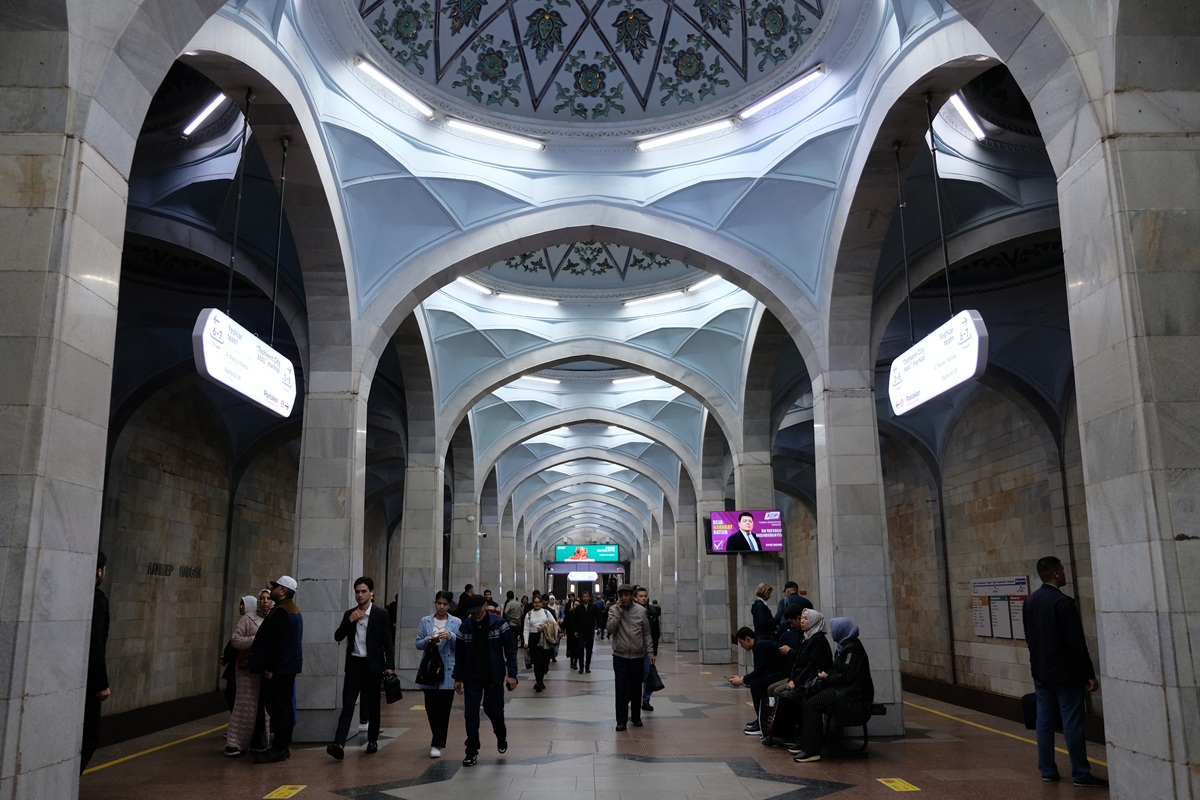
Alisher Navoiy station adorned with beautiful dome ceilings
The majority of people who visit Uzbekistan probably have Samarkand, Bukhara, and Khiva on their minds when they plan a trip to this country. Understandably so, given the sheer number of impressive centuries-old mosques, madrasahs (Islamic educational institutions), bazaars, city walls, and ruins each of these historic cities boasts. Meanwhile, a stay in the nation’s capital Tashkent is often treated as merely a necessary stopover before continuing one’s journey to the former Silk Road trading hubs. This is due to the city’s role as the country’s main gateway to the world, with its international airport serving flights to destinations across Asia, the Middle East, Europe, and even North America.
Admittedly, this was also what James and I did. Arriving at night in Tashkent from Jakarta (when Uzbekistan Airways still flew nonstop to the Indonesian capital) was not ideal since neither of us had been to this part of the world before. The stories about the Uzbekistani capital that I read from a memoir written by an Indonesian journalist who had worked and traveled extensively in this region many years ago, before the Central Asian countries began to open up to foreign tourists, certainly didn’t help. In his book, Tashkent was depicted as a rough and rather unsafe city where the author himself experienced violent crime that could’ve ended worse for him.
We didn’t know what to expect as we stepped out of the arrival hall of the airport with Uzbekistani sum banknotes in our hand. We walked for a few minutes trying to locate the taxi stand, and moments later we stumbled upon a middle-aged taxi driver who was looking for customers. “Korea?” a local woman sitting nearby asked us. “Indonesia,” we replied. With a big grin she then relayed our answer to the man, and shortly after we were already on our way to the hotel through the unfamiliar streets of Tashkent.
Almost two weeks later, when we returned to the city after exploring the country’s ancient Silk Road trading posts, we encountered a similar drill. “Where do you come from?” a stern-looking young security officer asked me before the turnstiles at Toshkent metro station, located right next to the city’s main train station. We woke up around 3am that day to catch the 5am express train (not the high-speed train) from Bukhara to Tashkent. So, when I was suddenly questioned by him, my brain had not been fully awake to process it. “Bukhara,” I instinctively replied. “No, I am from Bukhara,” he quickly responded. It took me a few seconds to finally realize what he was truly asking me. “Oh, Indonesia!” I corrected my answer as soon as I got what he meant. It was then followed by a friendly laugh among the three of us.
Despite what I had read about the Uzbekistani capital prior to the trip, the Tashkent we encountered was far from being intimidating. It was definitely not a Southeast Asian city where the people are generally friendly and smiling, but it was nowhere near as sinister as what I had read before. And that was a good start. What wasn’t so great about our visit to Tashkent, however, turned out to be the weather.
In both of our stays in the city – at the beginning and toward the end of our trip to Uzbekistan – we made sure to book accommodation that is within walking distance to a metro station. So, naturally that was where we started our exploration. Tashkent itself was an important center of trade and education during the height of the Silk Road. But a powerful 1966 earthquake that struck right beneath the central part of the city caused massive destruction to most of its historic buildings. The Soviets then rebuilt the city soon after, which also came with the planning for the Tashkent Metro, the seventh metro system built in the Soviet Union, as well as the first in Central Asia.
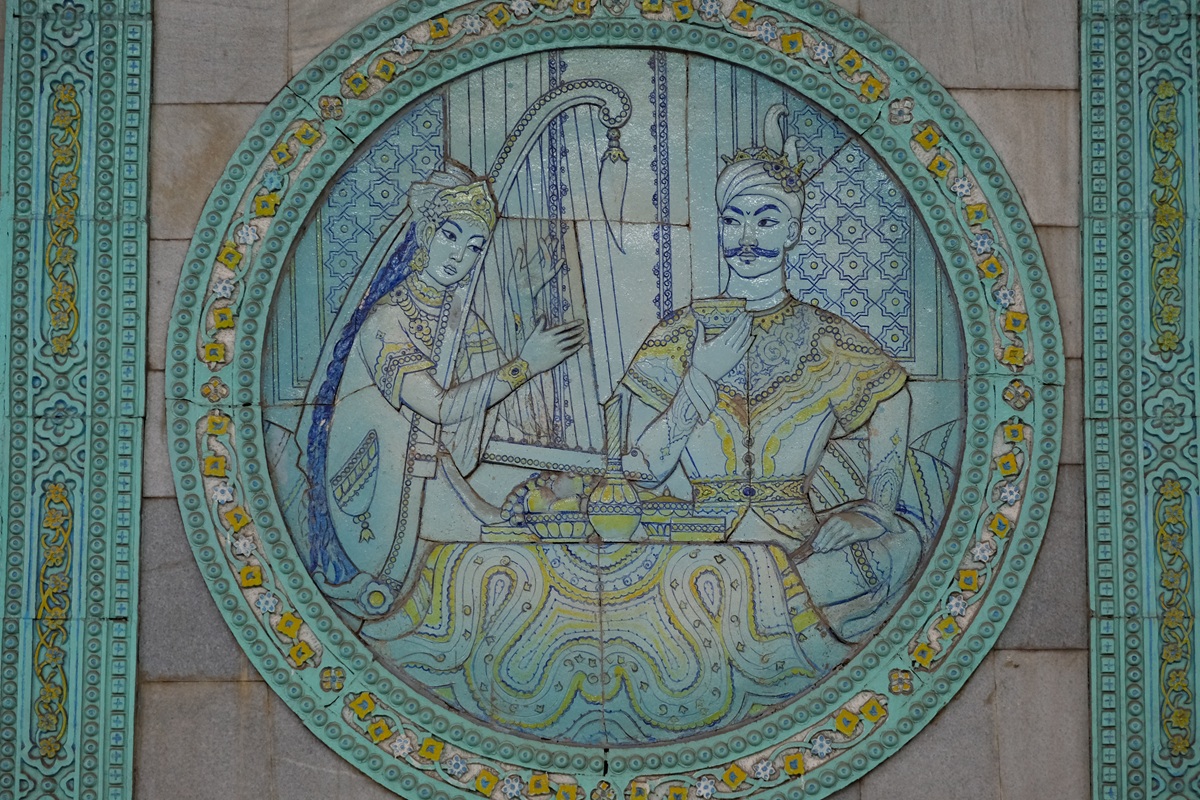
An artwork inspired by the Seven Travelers, one of Alisher Navoiy’s five epic poems collectively known as the Khamsa
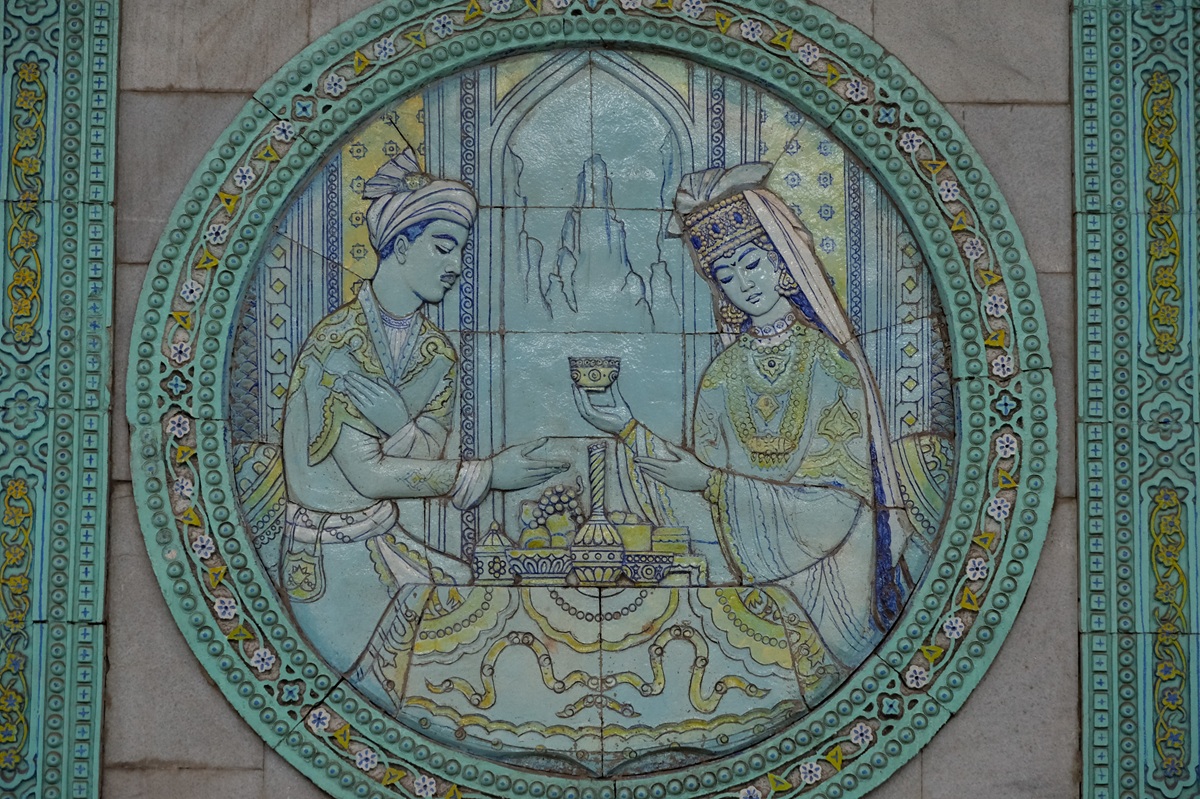
This one depicts Farhad and Shirin, another poem that is part of the Khamsa
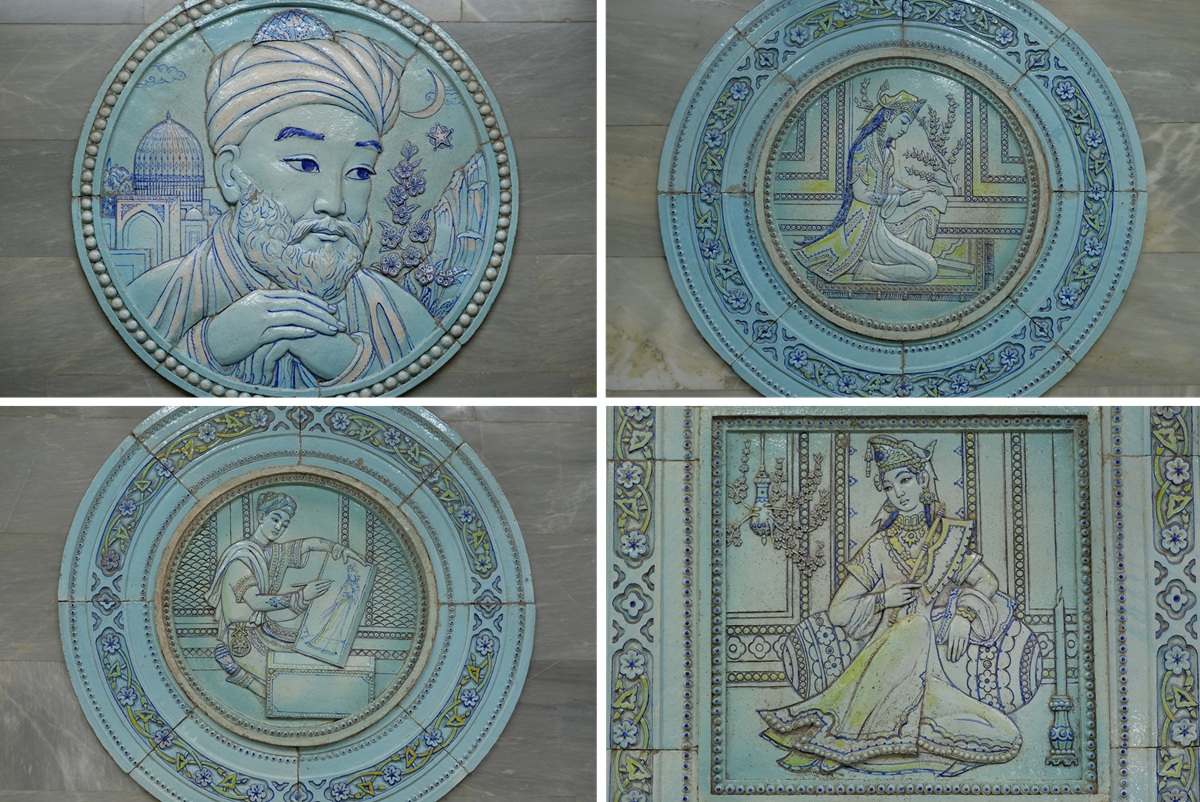
The image of the poet himself and illustrations of characters from his works
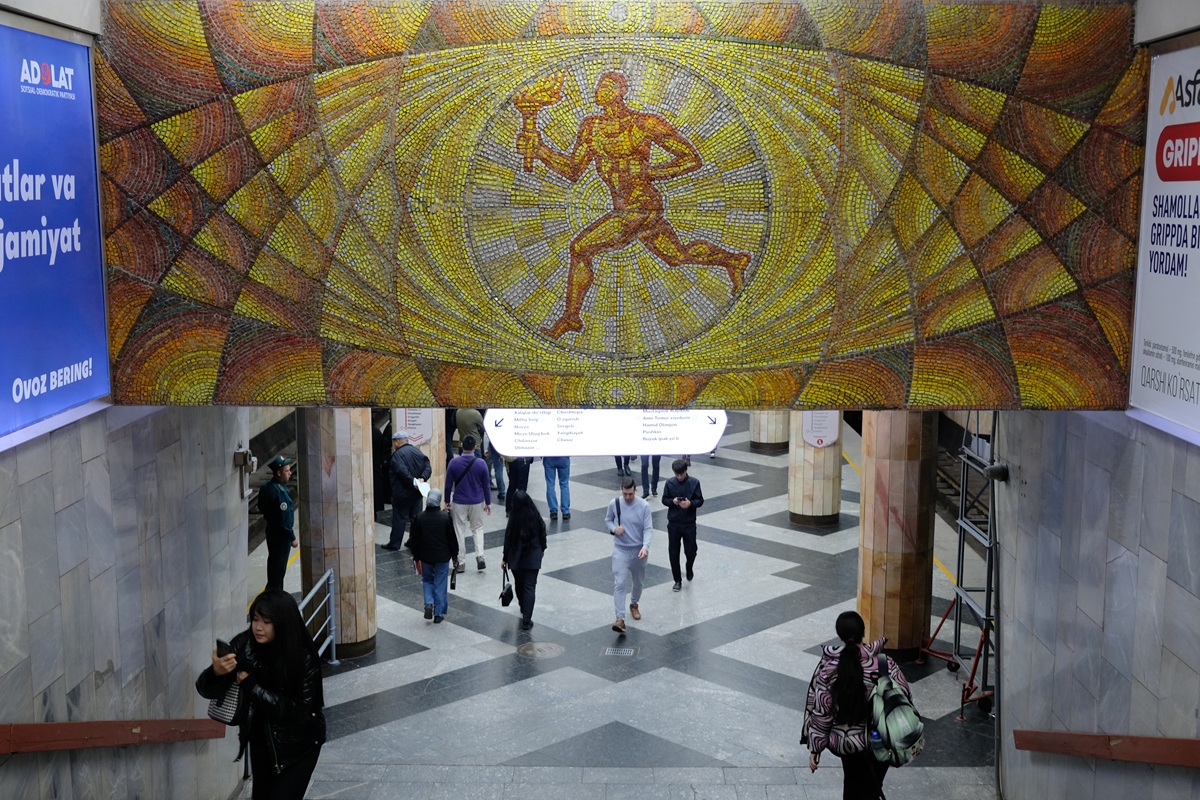
This mosaic at Alisher Navoiy station looks more Soviet in style
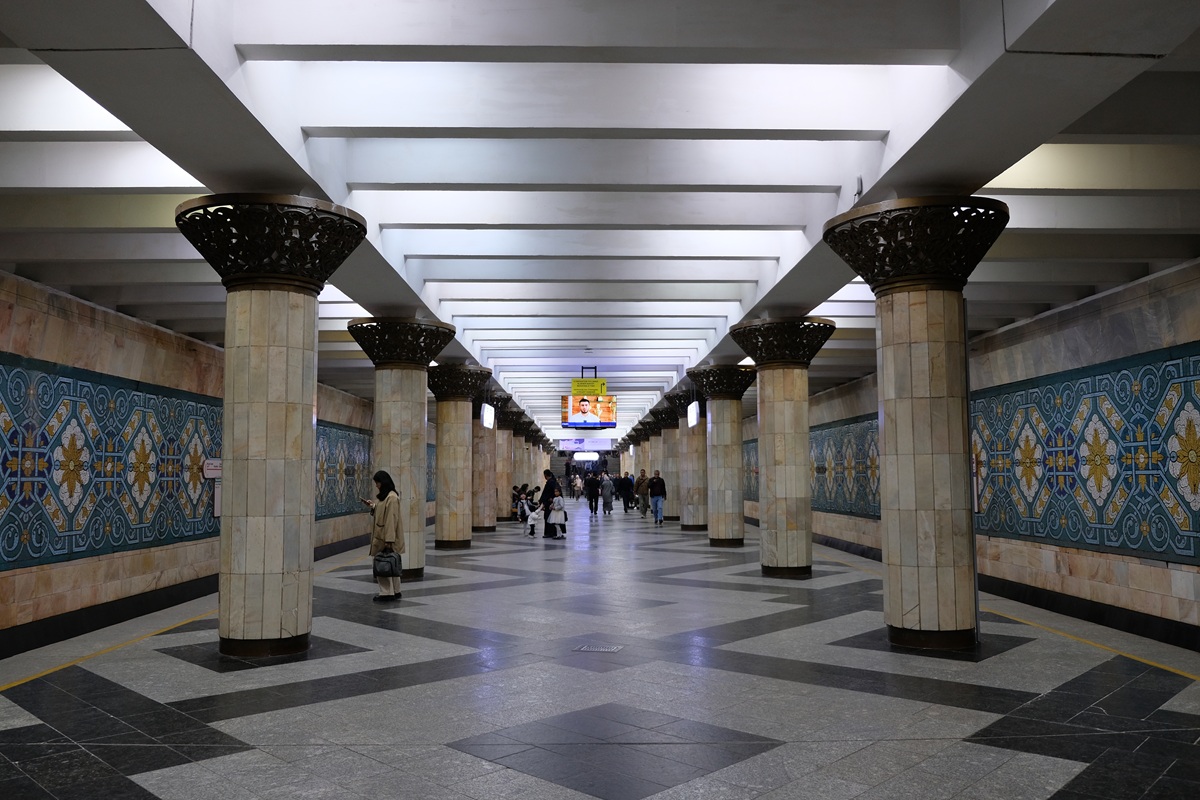
On the platform of Paxtakor station
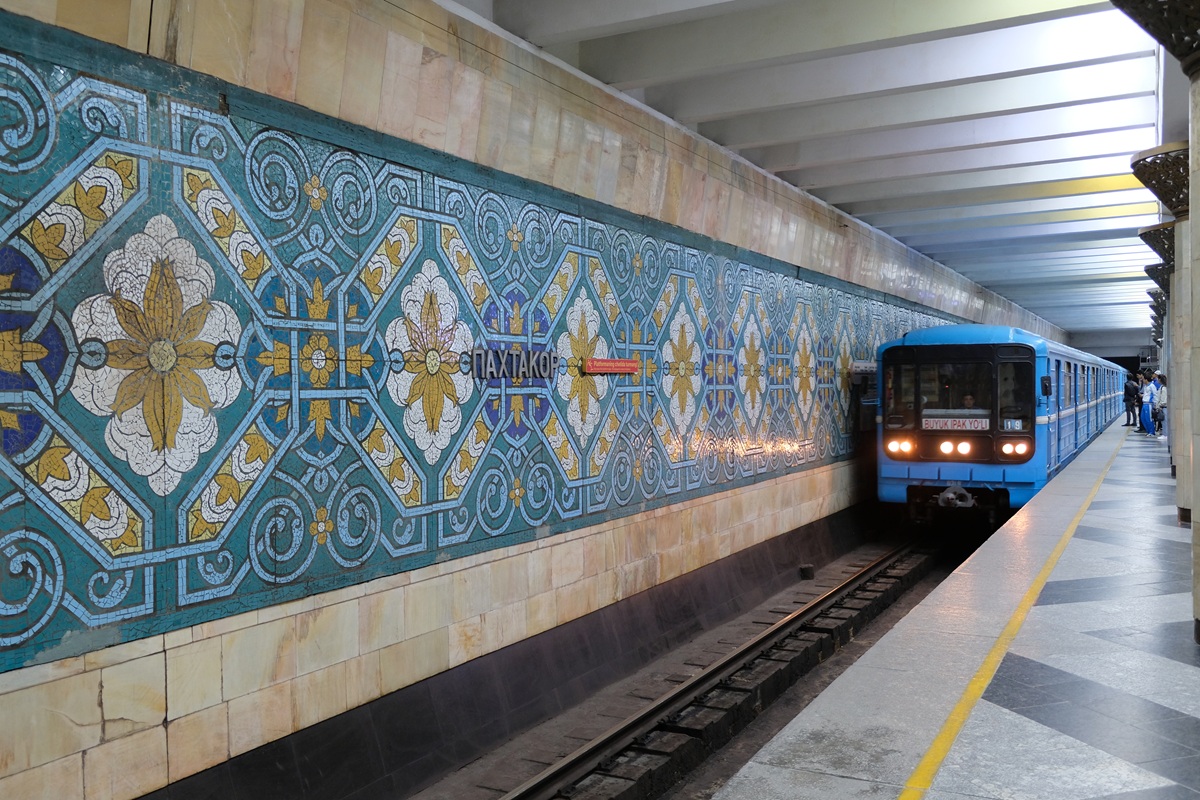
An older trainset arriving at Paxtakor
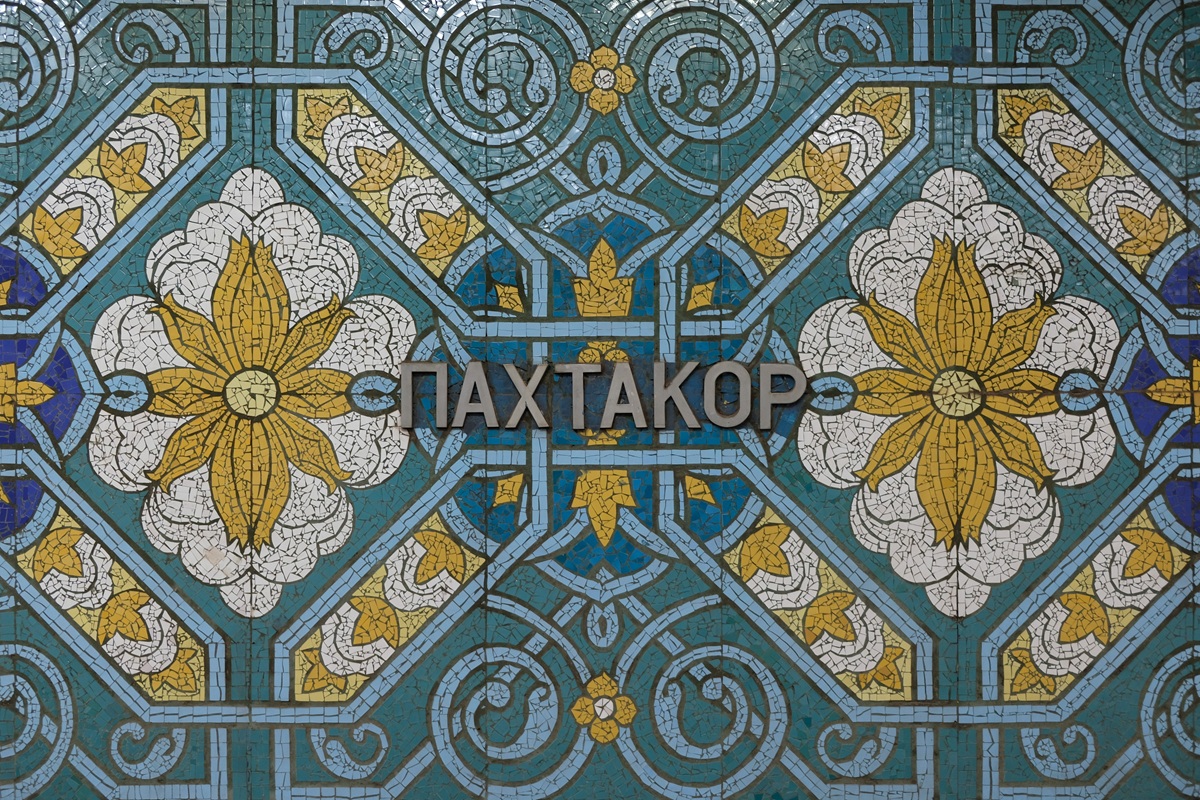
Notice the cotton flowers?
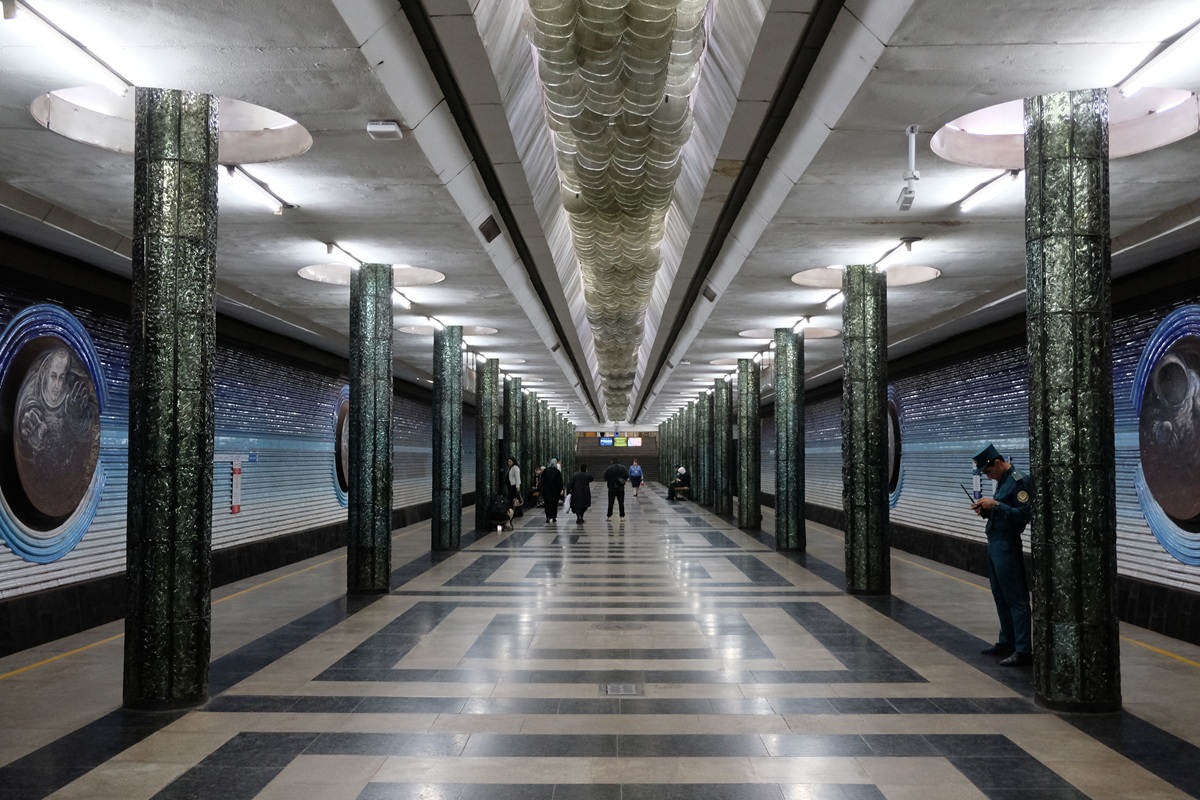
Kosmonavtlar with its space-age theme
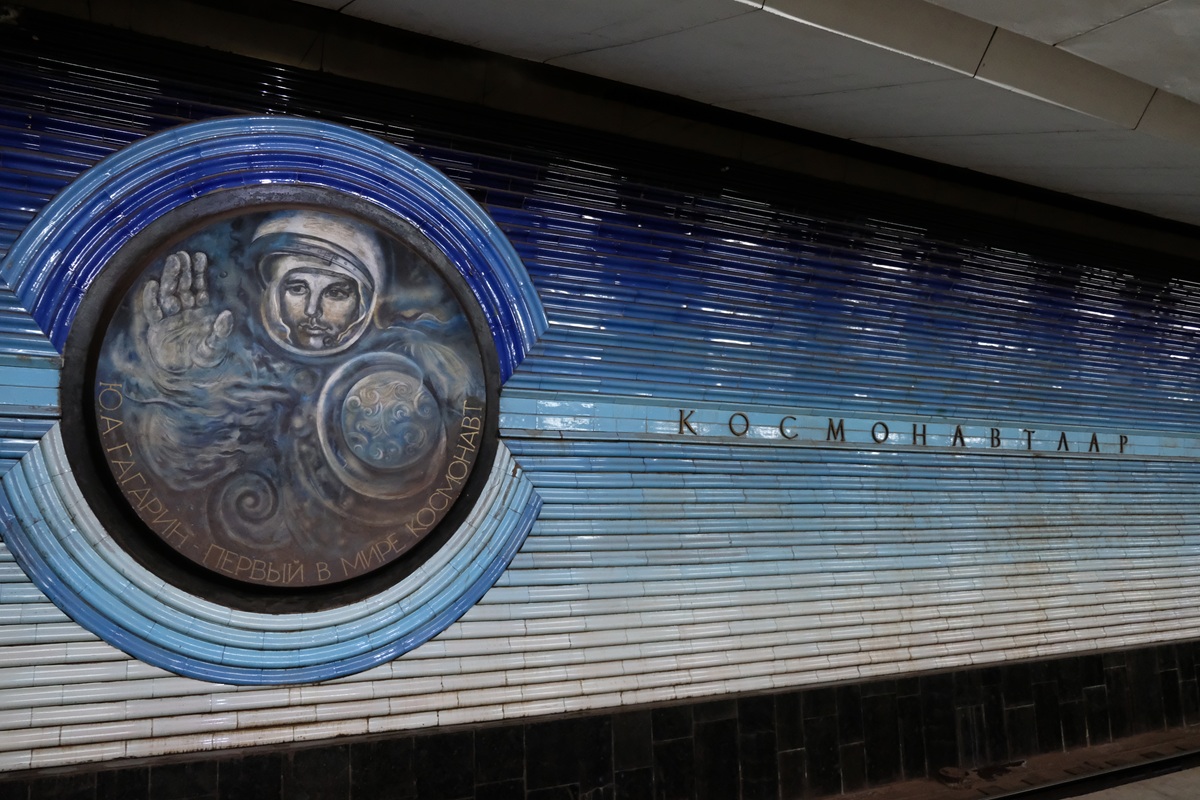
Yuri Gagarin, the first person ever to journey into outer space
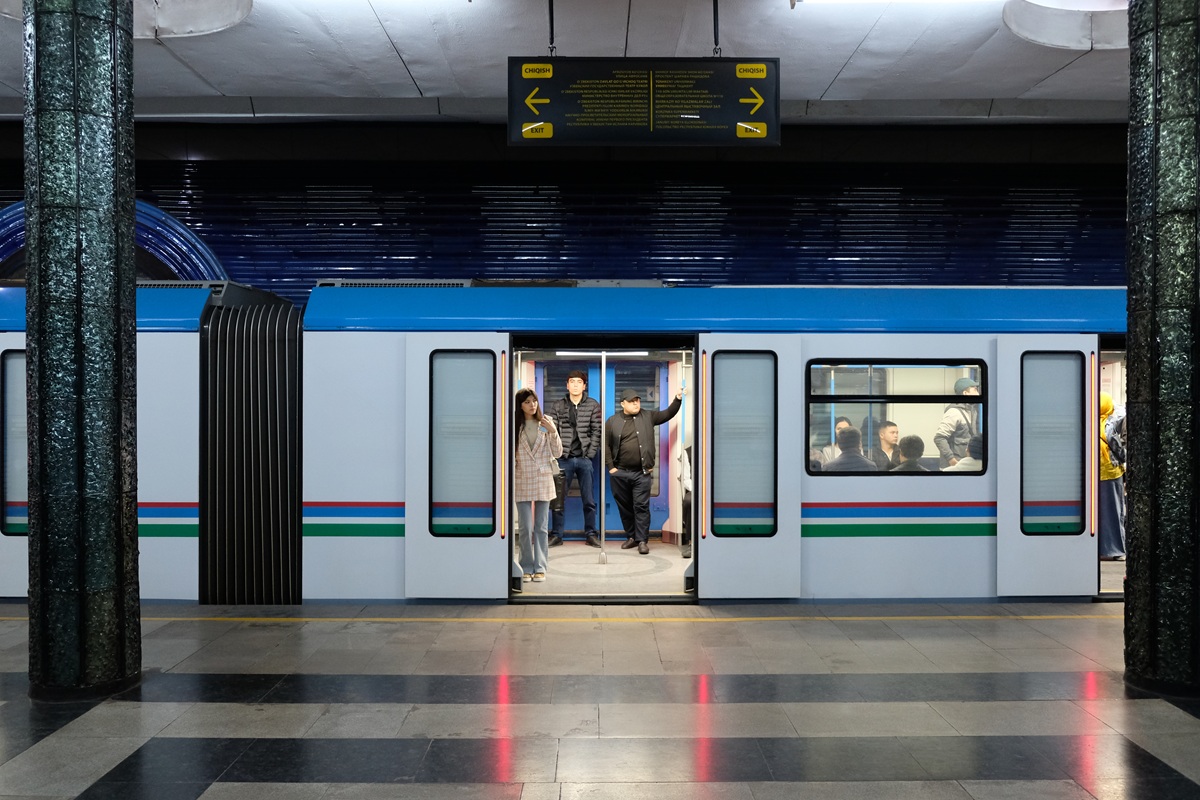
The newer trains are equipped with lights to indicate whether the doors are opening (green) or closing (red)
I had read about the beautiful, and often whimsical, design of some of the city’s metro stations. But pictures of them only began to emerge in the middle of 2018 as the government lifted the decades-old ban on photography in the metro system following its declassification as military infrastructure. (However, this limitation seemed to still be in place when a fellow blogger went there in 2019.) The inclement weather during our stay was even more reason for us to explore this underground world beneath what is today the most populous city in Central Asia that is home to more than three million people. As we began taking pictures with our cameras, I looked around trying to gauge the situation. Some security personnel did stare at us, but they quickly looked away, seemingly unfazed by the sight of tourists doing something that for a long time was illegal.
First, there is Alisher Navoiy with its ornate dome ceilings that allude to the old buildings from the Silk Road era. Named after the prominent 15th-century Timurid poet, linguist, painter, and mystic, the station is also decorated with beautiful tiles depicting scenes from the Khamsa, a collection of five epic poems which include Layla and Majnun, a love story that is popular in the Arab, Persian, and Turkic worlds – an Islamic and much older version of Romeo and Juliet, if you will. Then there is Paxtakor (the letter x is pronounced as “kh” in the Uzbek language), a station embellished with colorful mosaic tiles of stylized cotton flowers. The name itself means “cotton grower” in Uzbek, an homage to the economically important crop that contributes to around 7% of the country’s exports.
Another metro station with unique decorations is Kosmonavtlar. Its cosmonaut theme will immediately catch your attention as illustrations of Yuri Gagarin and Valentina Tereshkova – the first man and woman in space – adorn the station’s walls. The shades of blue along the horizontal lines of the tilework imply the multiple layers of Earth’s atmosphere. On the other hand, Chilonzor is bedecked with medieval-style gilded chandeliers that evoke a bygone era, while Novza’s hexagonal light fixtures will bring you to yet a different period in history. This miscellany, however, didn’t stop at the architectural and decorative styles of the metro stations. The rolling stock, too, consisted of at least three varieties: from the decades-old Soviet-made electric carriages to the sleek and spacious trains made by Metrowagonmash, a Russian transport machine manufacturer.
Navigating the Tashkent Metro during rush hour was no mean feat. But as long as you know where to go and when to turn, you should be fine. We joined the commuters who made beelines for whichever directions they needed to take, synchronized our pace with them, and kept walking with a certain degree of confidence so that we wouldn’t disrupt the rhythm of the locals. Although Uzbekistan has officially adopted Latin for its writing system, it would certainly be helpful if you can read Cyrillic since some places still have their names written in this script, a hangover from the Soviet era.
But you don’t think we spent our time in Tashkent only underground, do you?
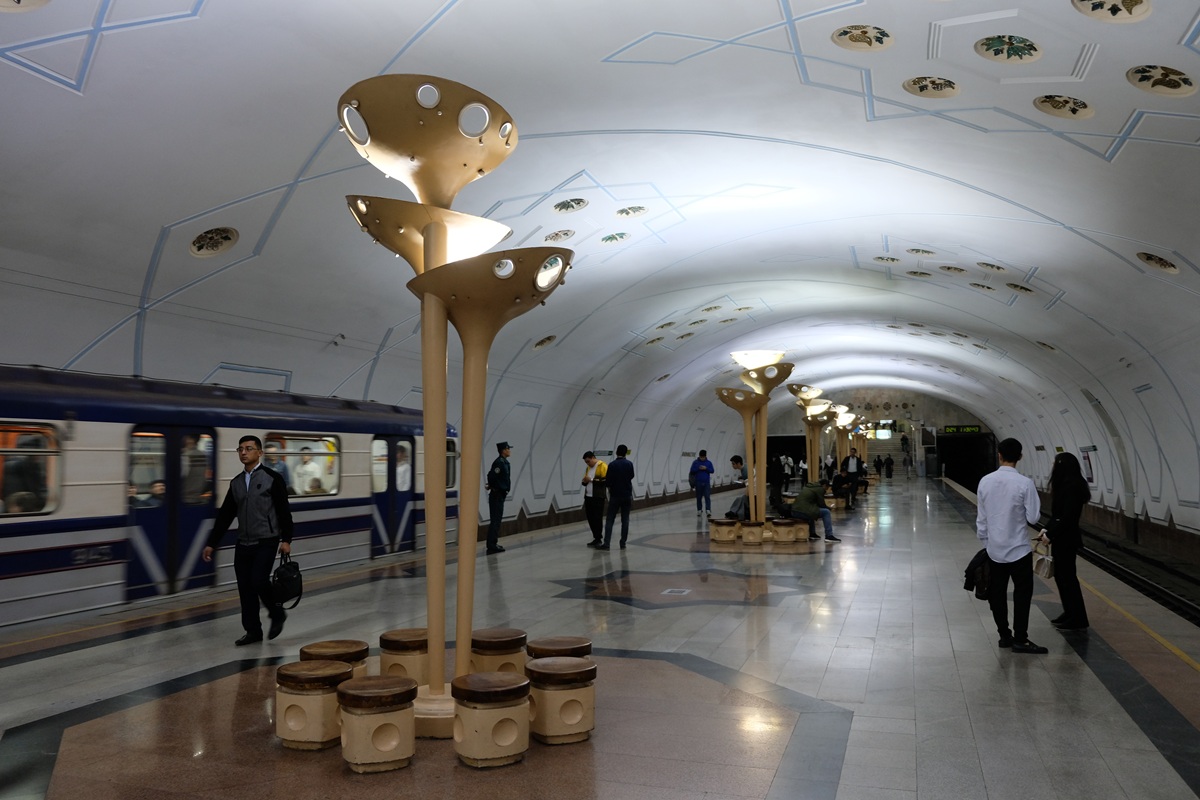
The rather comical-looking lamps at Bodomzor
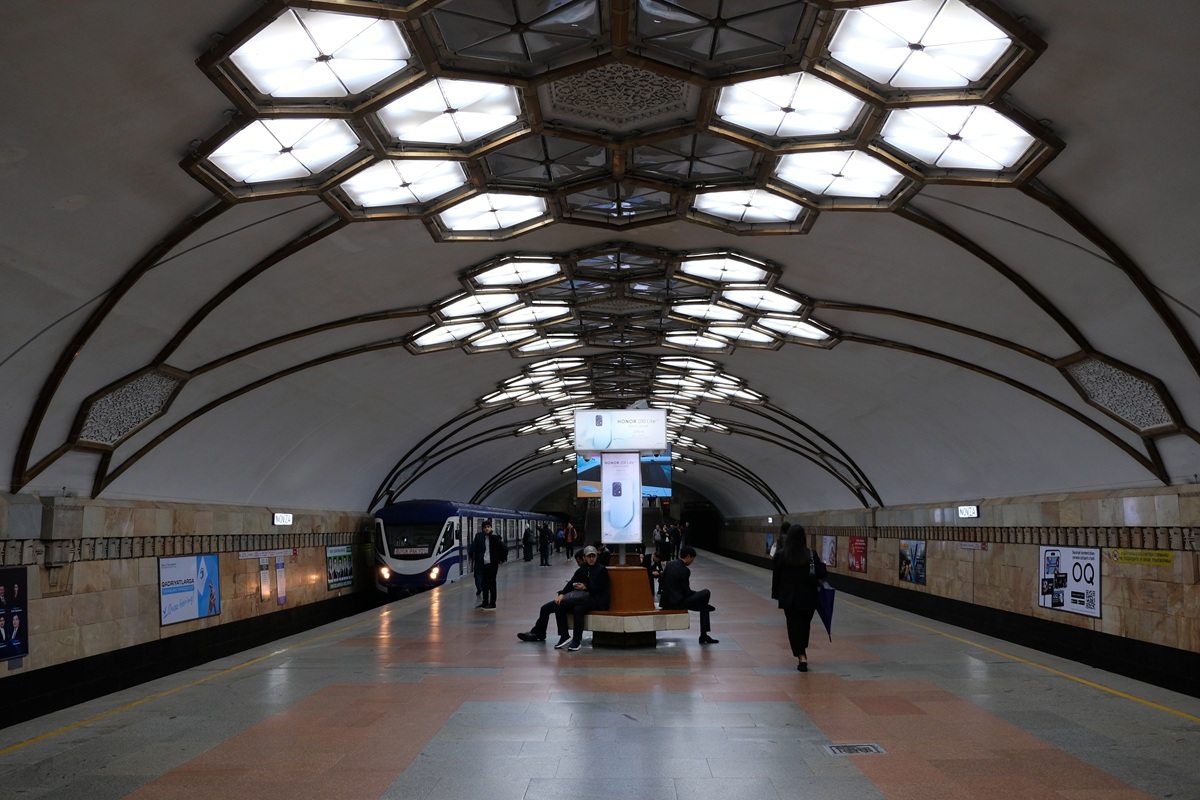
Novza with its distinctive hexagonal lights
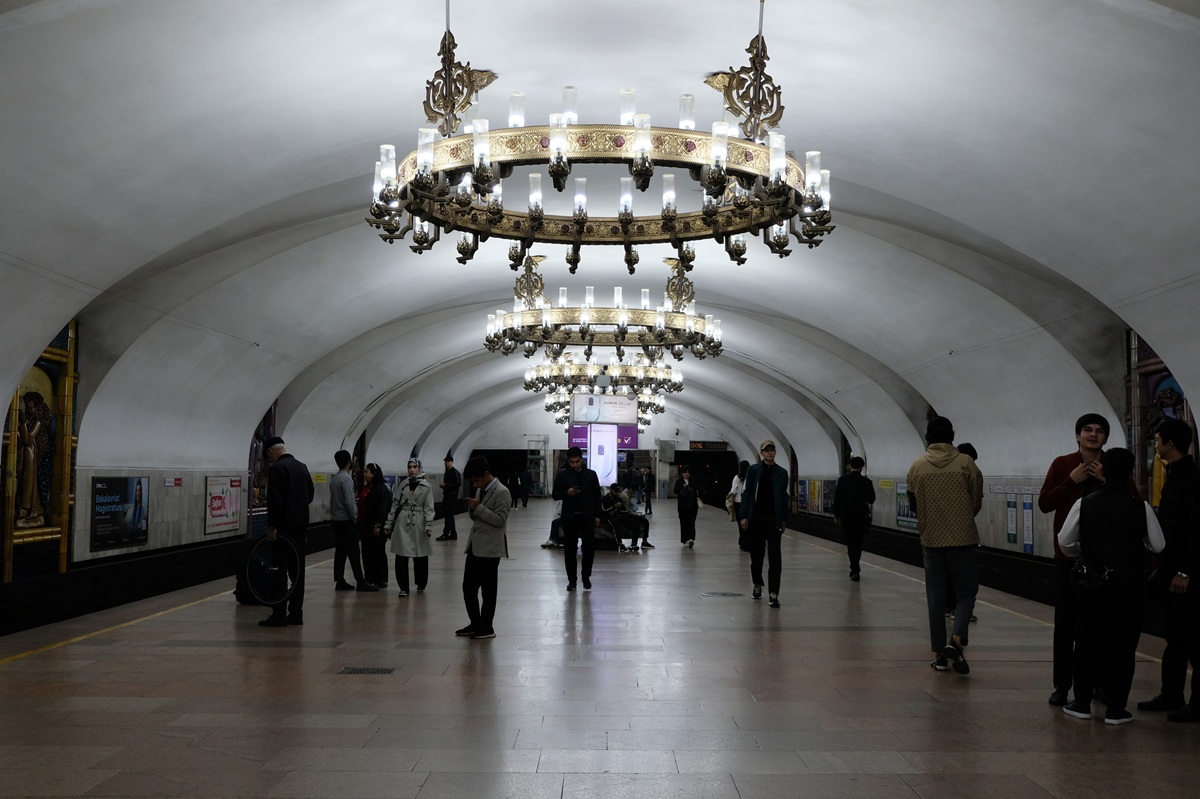
Chilonzor has rather unique, medieval-looking chandeliers
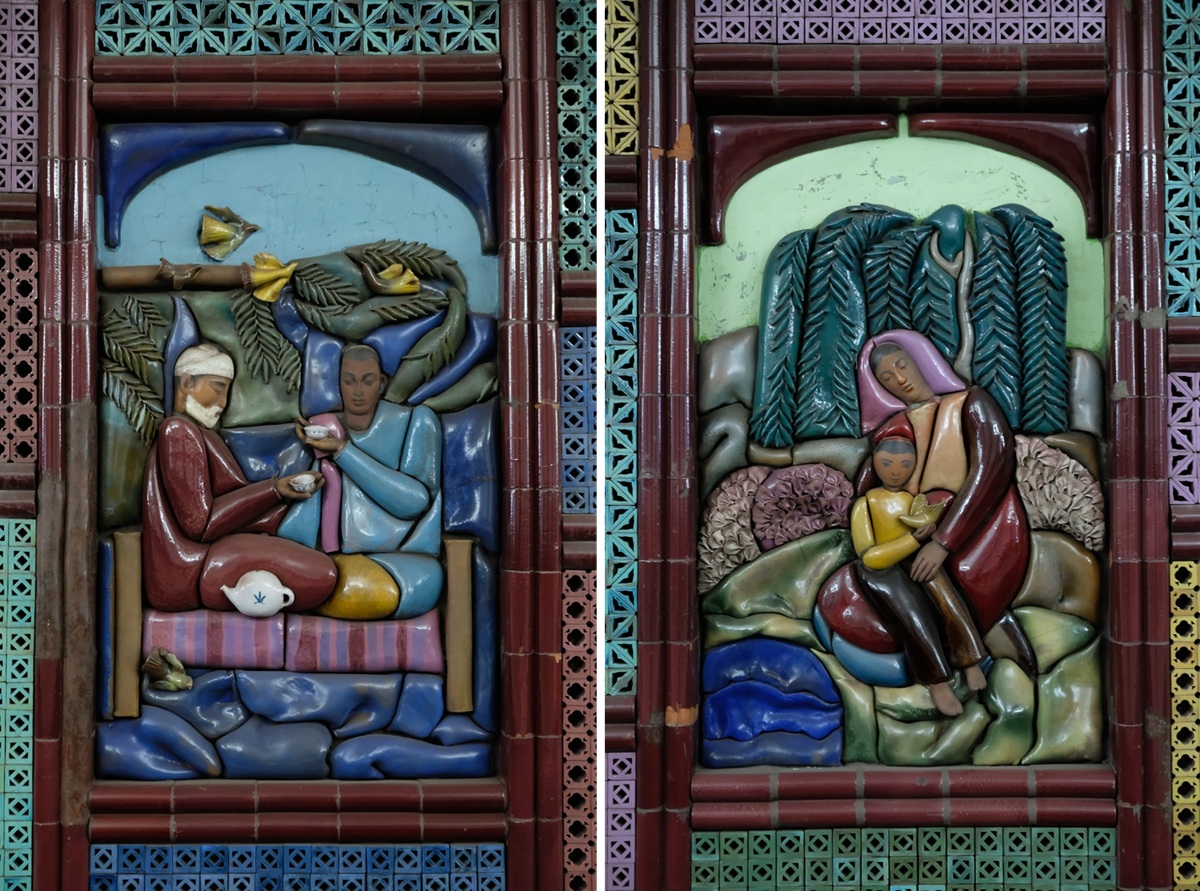
Decorative elements at Chilonzor, one of the earliest stations of the Tashkent Metro that was opened in 1977
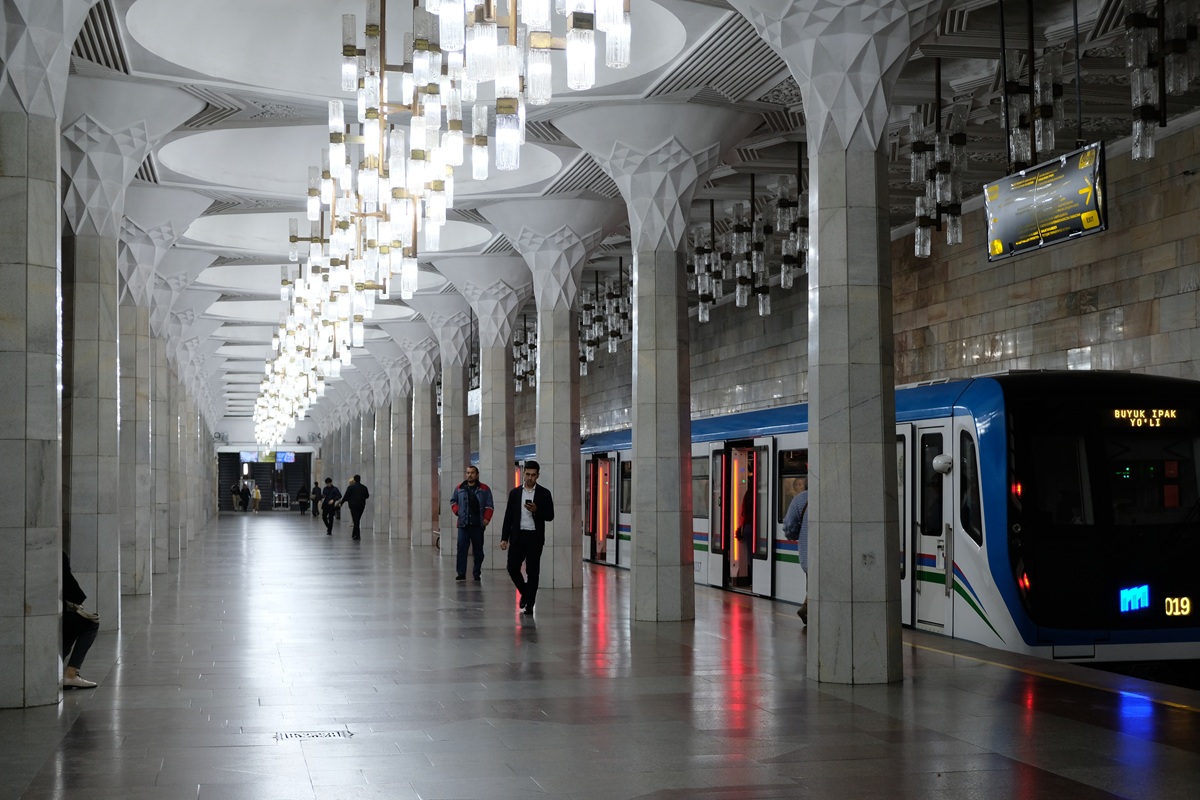
At Mustaqilliq Maidoni, one of the stations at the heart of Tashkent
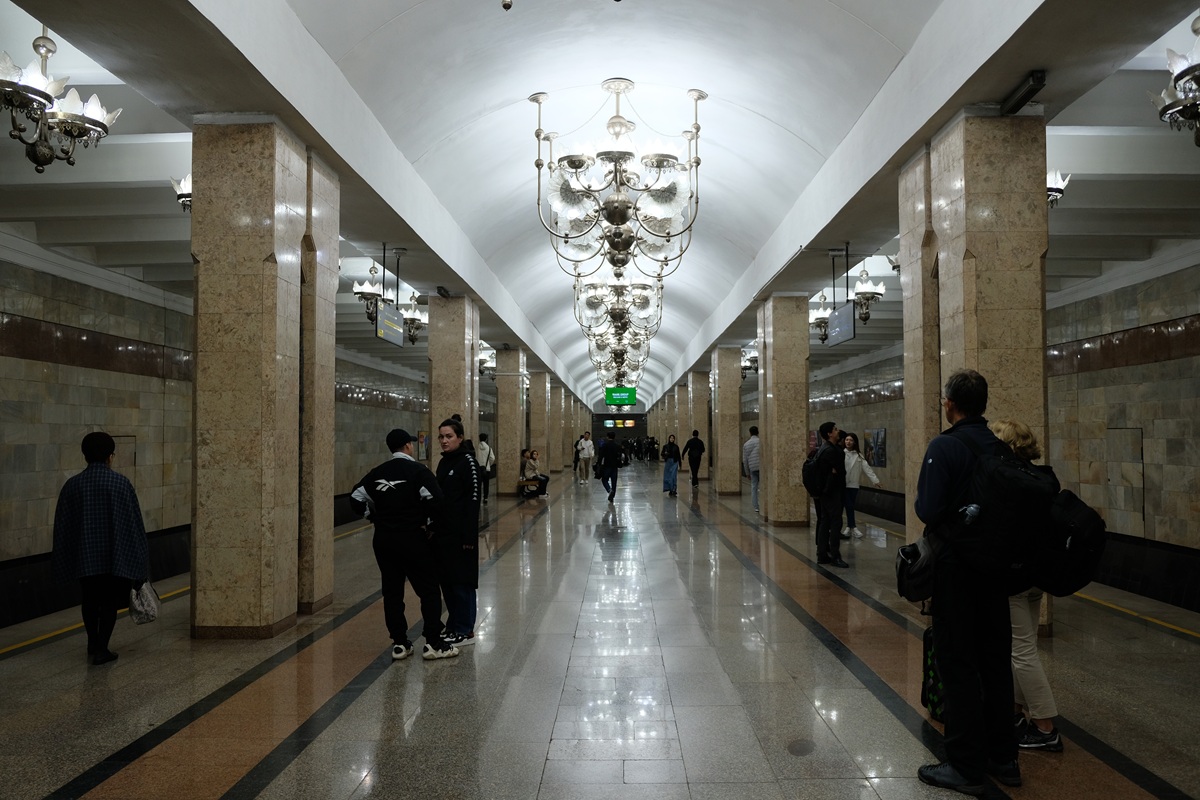
There is something beautiful about the lamps at Abdulla Qodiriy station
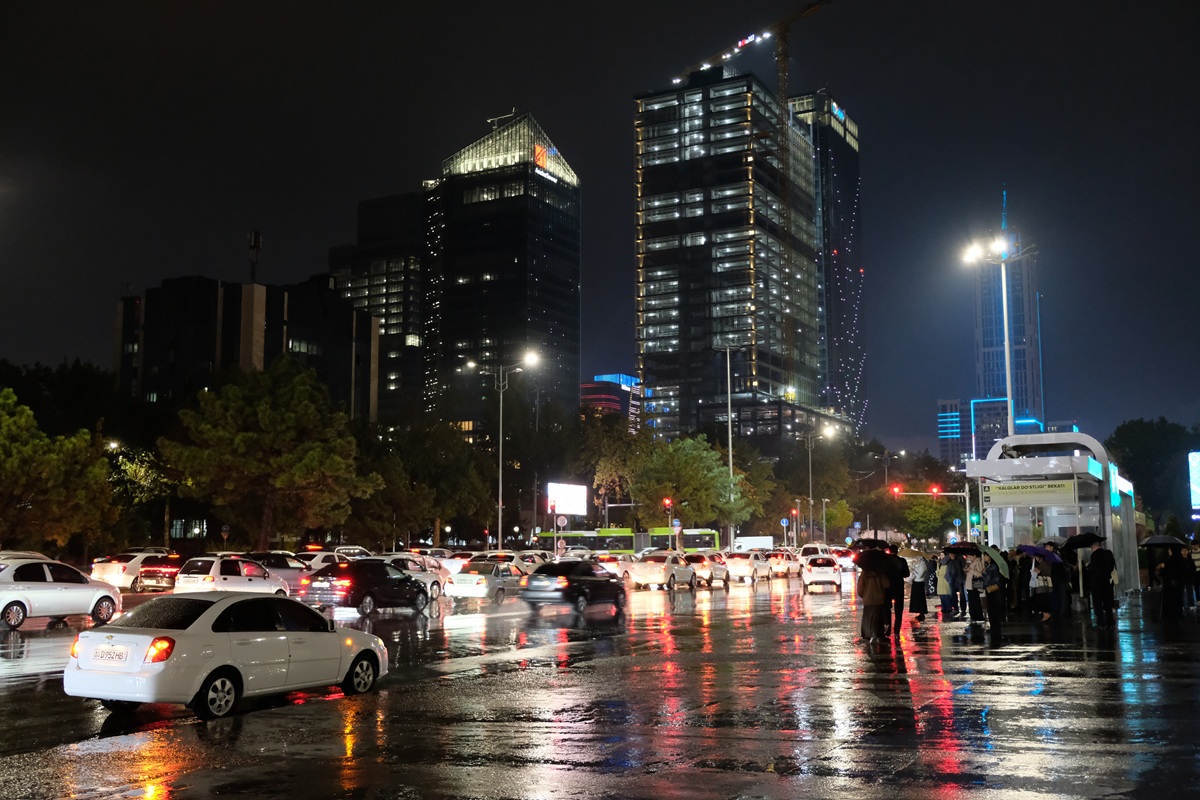
Downtown Tashkent on a particularly wet night
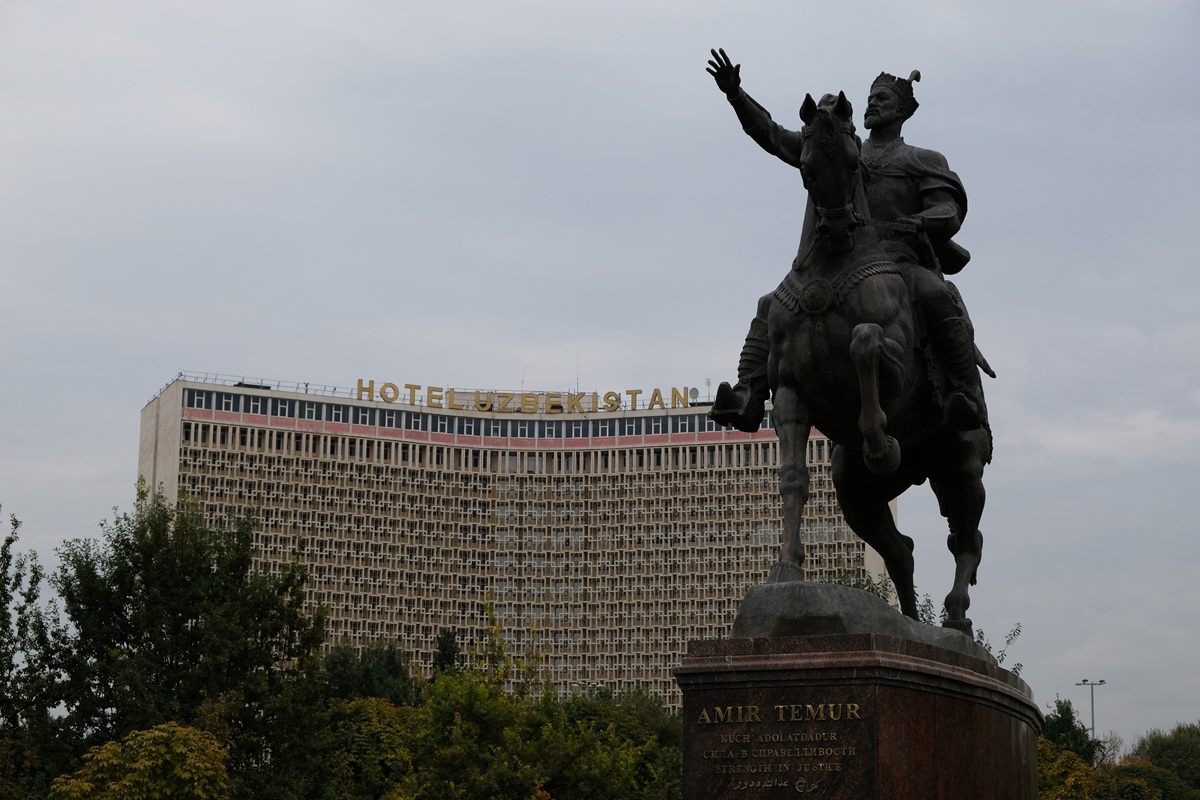
At Amir Timur Square, arguably the most important square in the Uzbekistani capital
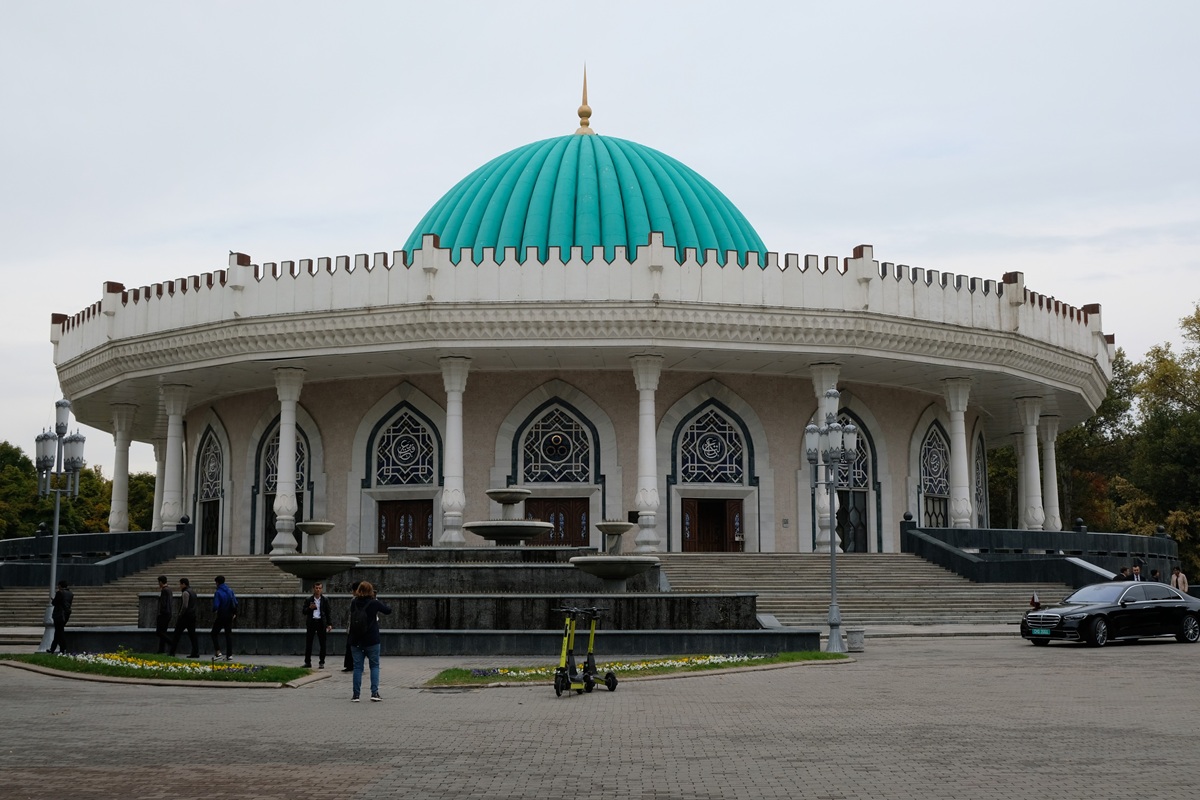
The State Museum of the Temurids, also known as the Amir Timur Museum
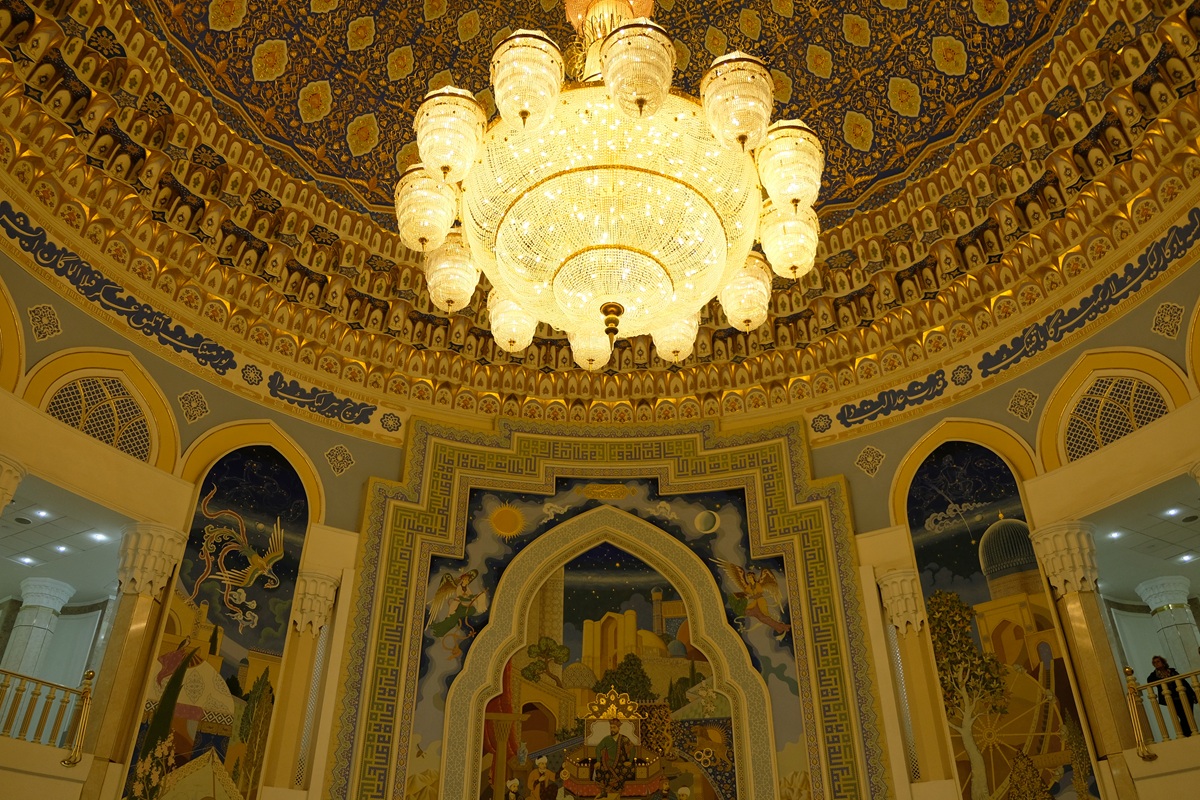
Inside the museum were some quite impressive murals (this photo was taken before a museum staff member told me that photography was prohibited)
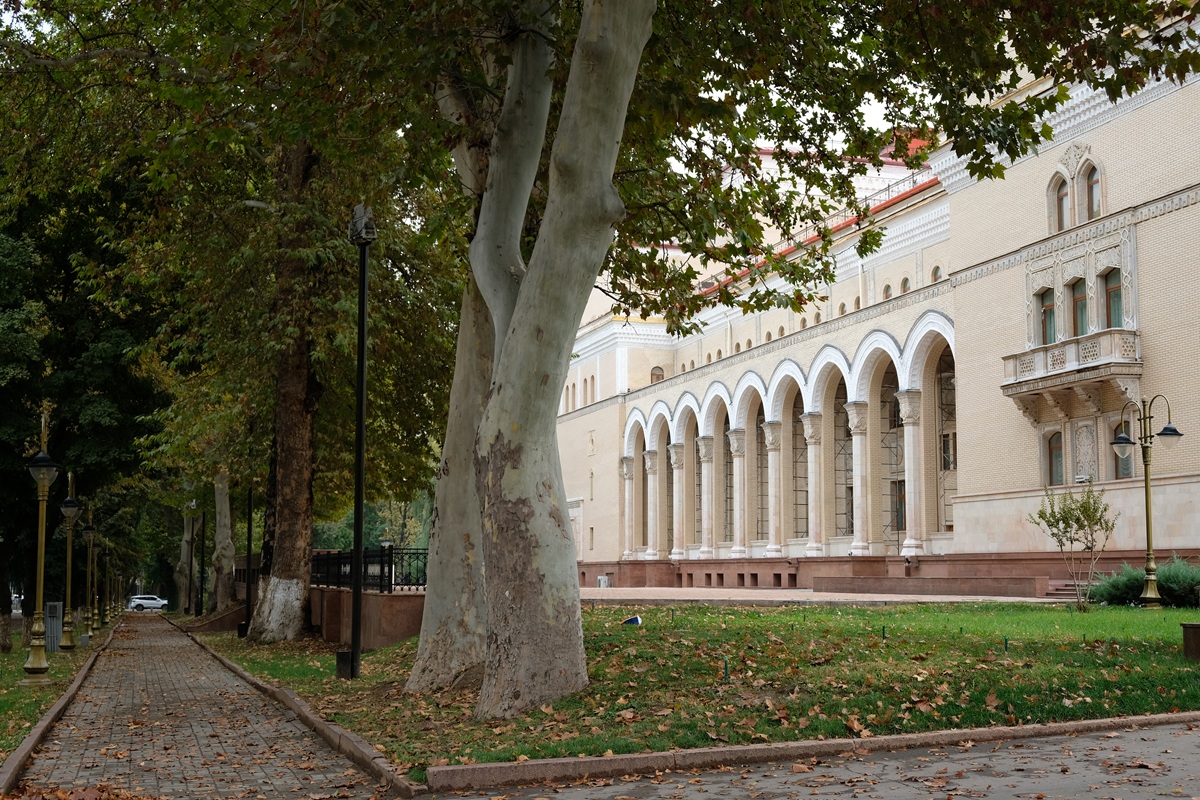
Walking around the stately Alisher Navoiy Theater
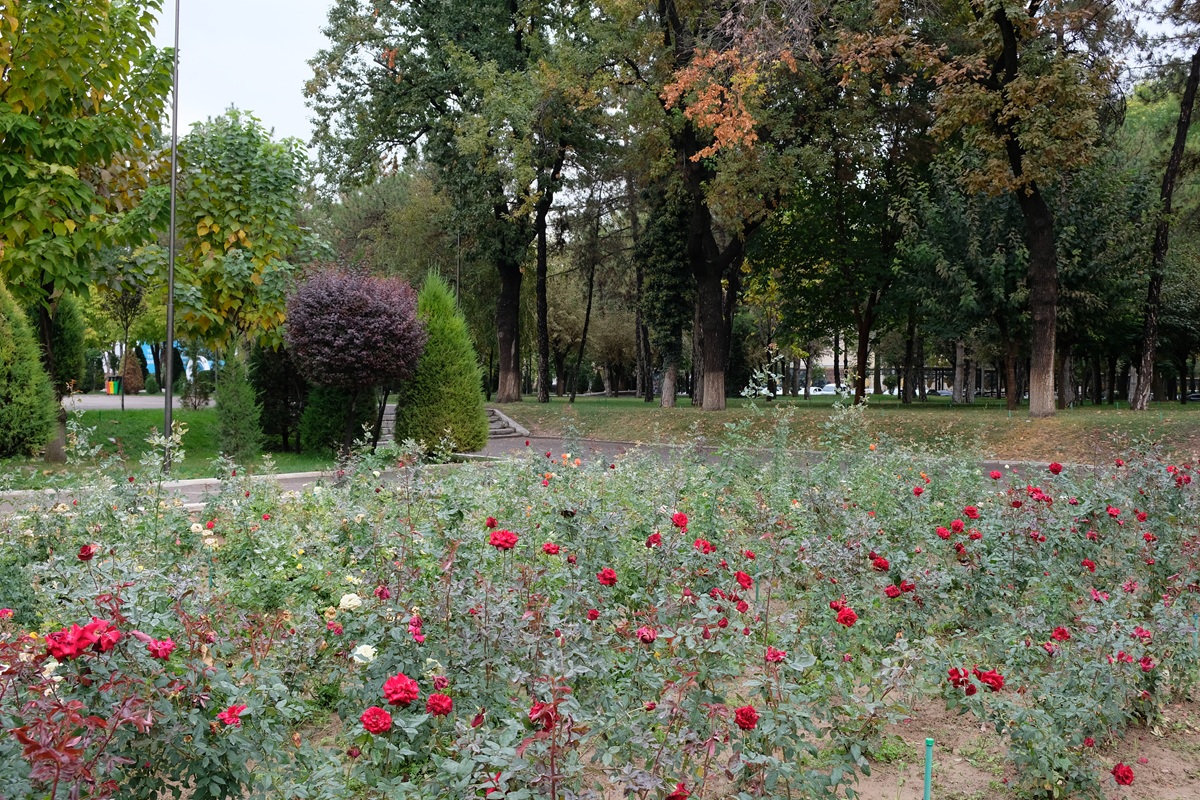
A bed of roses on a cloudy day
Unlike in Bukhara and Khiva where the weather was perfect, the skies over Tashkent were persistently gray and gloomy during our stay. Luckily, the metro network reaches some places we wanted to check out so we didn’t have to worry too much about getting drenched in rain while exploring the city. Amir Timur Square is perhaps the most important square in the Uzbekistani capital where the statue of the founder of the Timurid dynasty stands today, replacing the likeness of Karl Marx, which itself was installed to take the place of a figure of Stalin. Behind it is the infamous Hotel Uzbekistan which was commissioned as part of the reconstruction of Tashkent following the devastating earthquake. Completed in 1974, this prime example of Brutalist architecture in Central Asia has now become something of a landmark of the city.
Meanwhile, in another part of Tashkent there was a more interesting place to emerge from the depths of the metro. We were trying to get to Chorsu Bazaar, but as we exited the station we found ourselves standing in the middle of a labyrinth of makeshift stalls that was like an extension of the main market itself. When we finally managed to escape the maze, we were presented with a large half-dome structure under which hundreds of vendors vied for customers. The lower section of the bazaar was filled with a variety of stalls selling dairy products, pickled vegetables, poultry, and meat, among other things. Upstairs was arguably where most tourists went since it was primarily occupied by vendors of dried fruits, nuts, as well as sweets which we ended up buying.
If anything, Chorsu Bazaar was almost like a microcosm of Uzbekistan. You can find foodstuffs and delicacies from different parts of the country. Obviously, we saw many pomegranates, a fruit that originates in the Iranian plateau but is now much-loved by different cultures in the Turkic world – of which Uzbekistan is a part. We also saw apples, a fruit that is easily found worldwide today but is actually native to Central Asia. Through the entirety of this trip, we learned that the culinary tradition of this country is a lot more storied and appetizing than what stereotypes suggest. It’s a wonderful world which I cannot wait to show you in my next, and final, post from Uzbekistan.
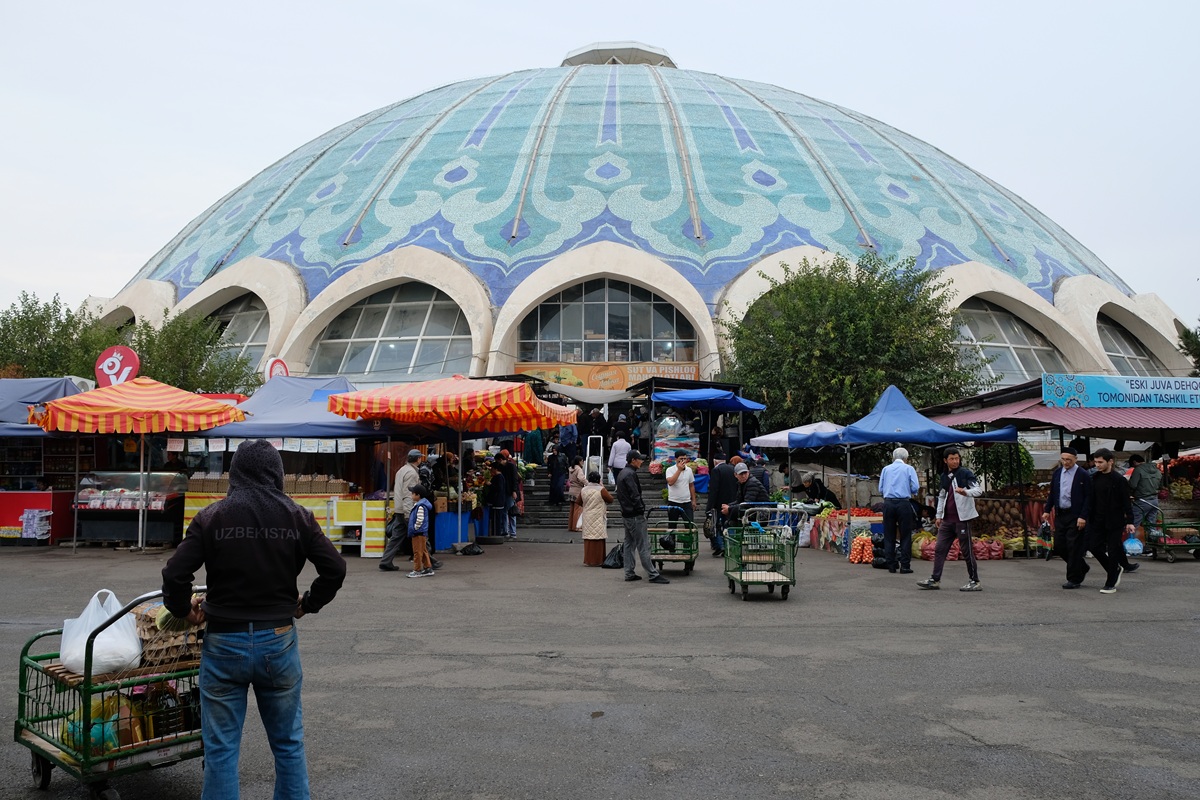
Chorsu Bazaar, the most famous market in town
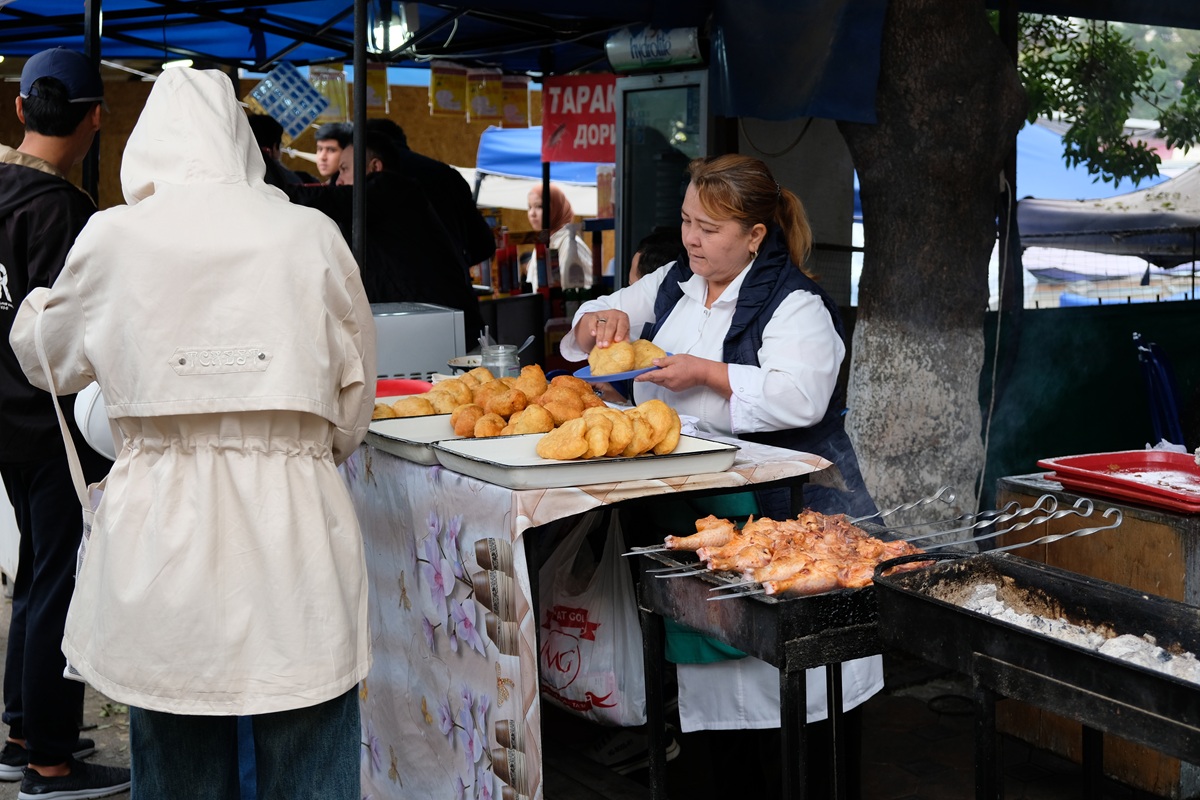
One of the vendors selling breakfast meals
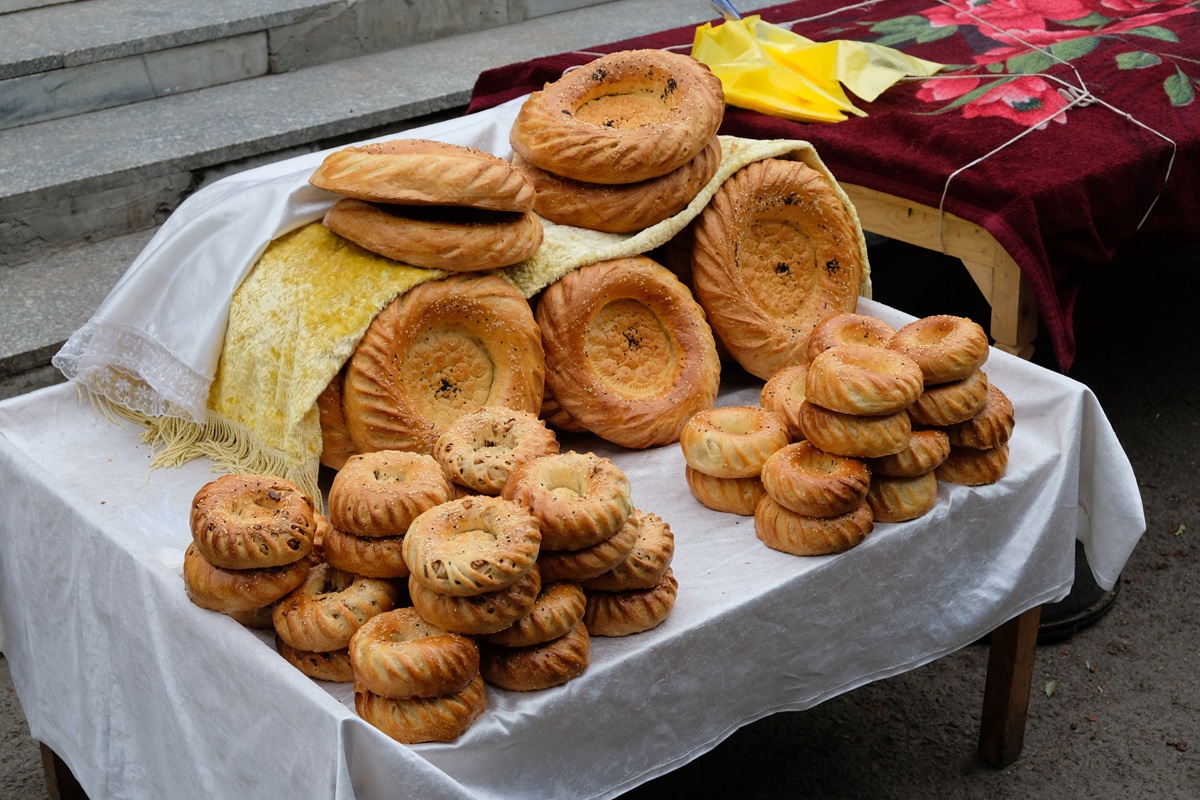
Fresh bread for sale
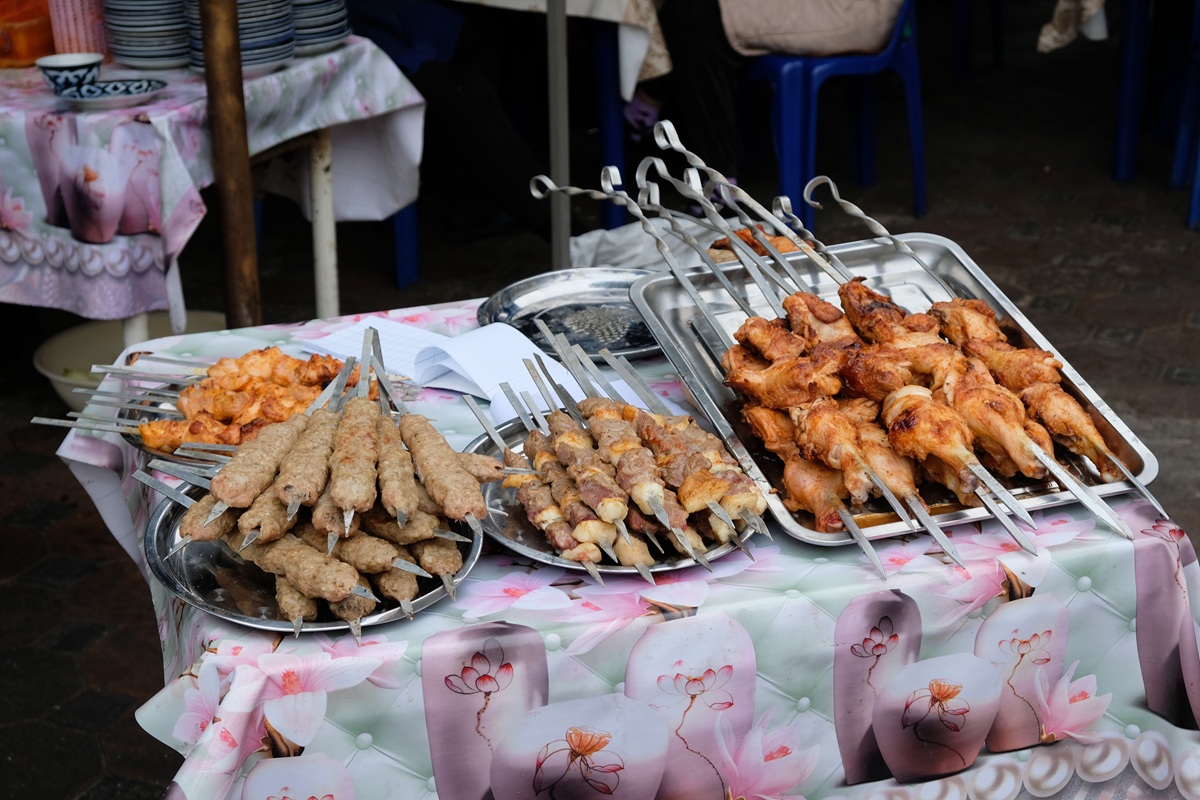
Choose your protein
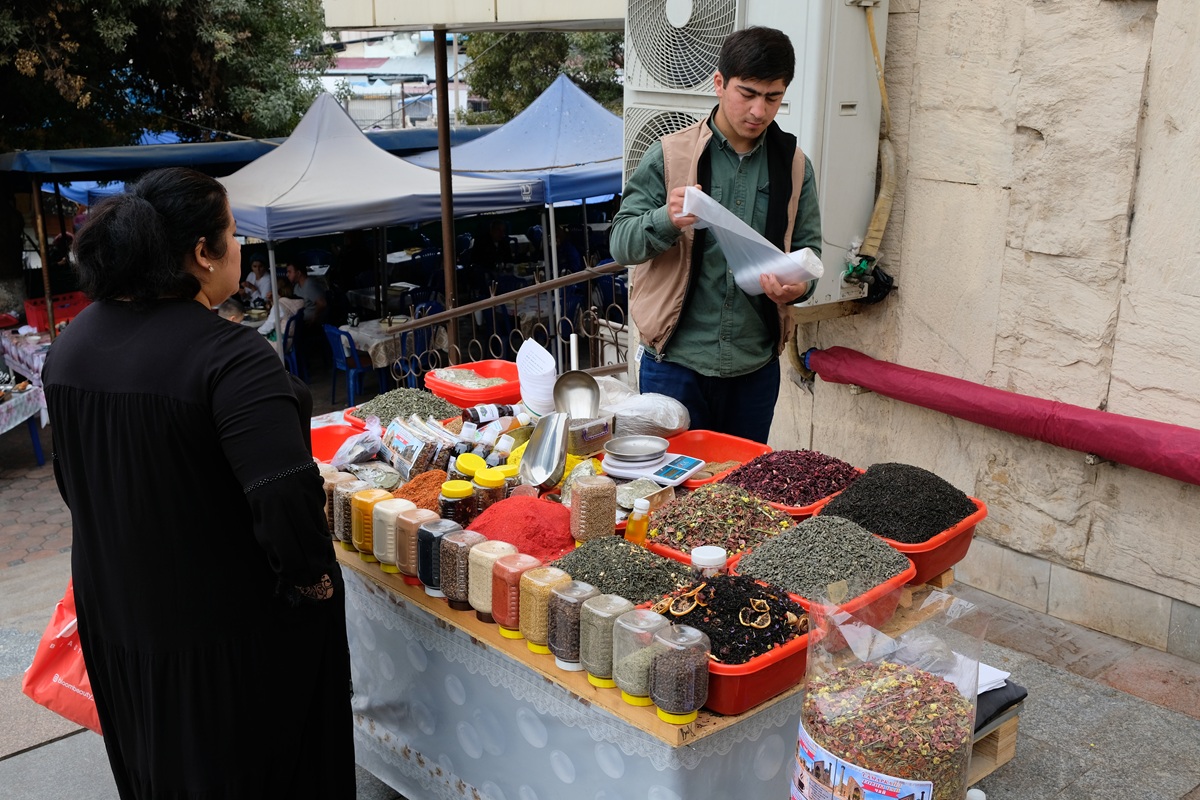
Mix the herbs as you please
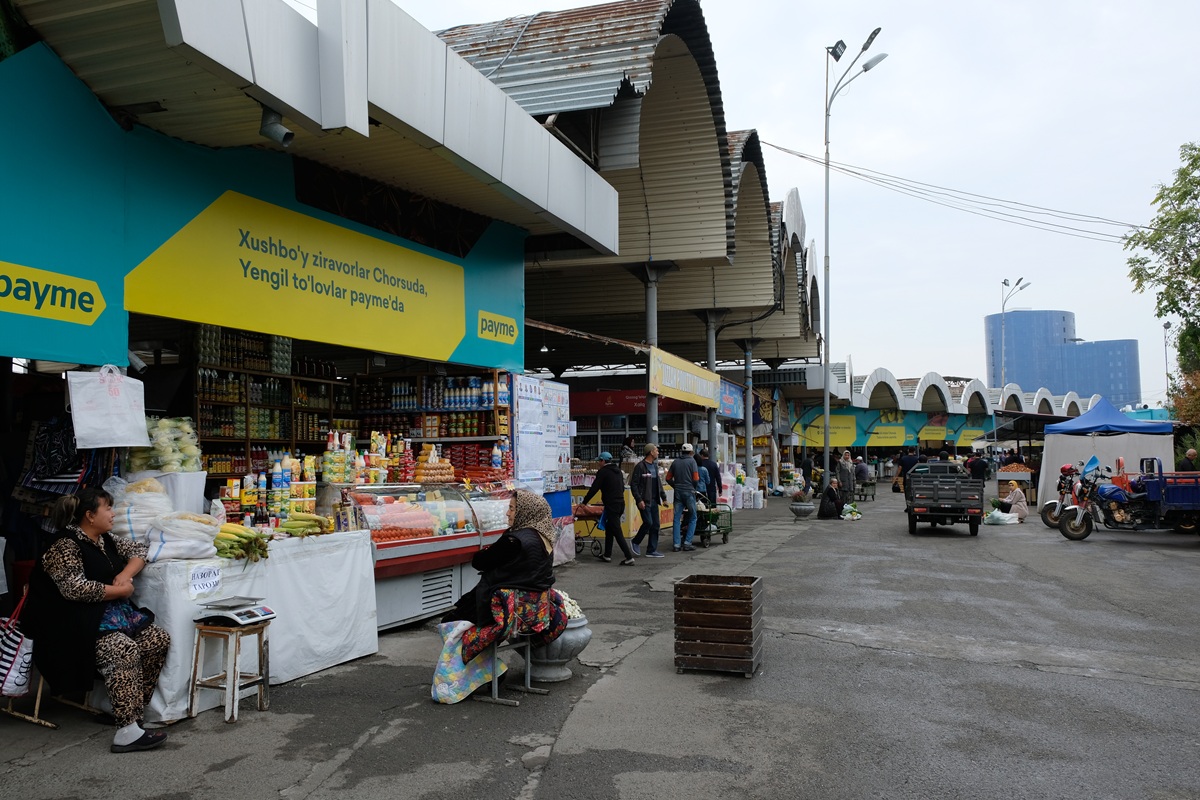
The semi-outdoor section of the market
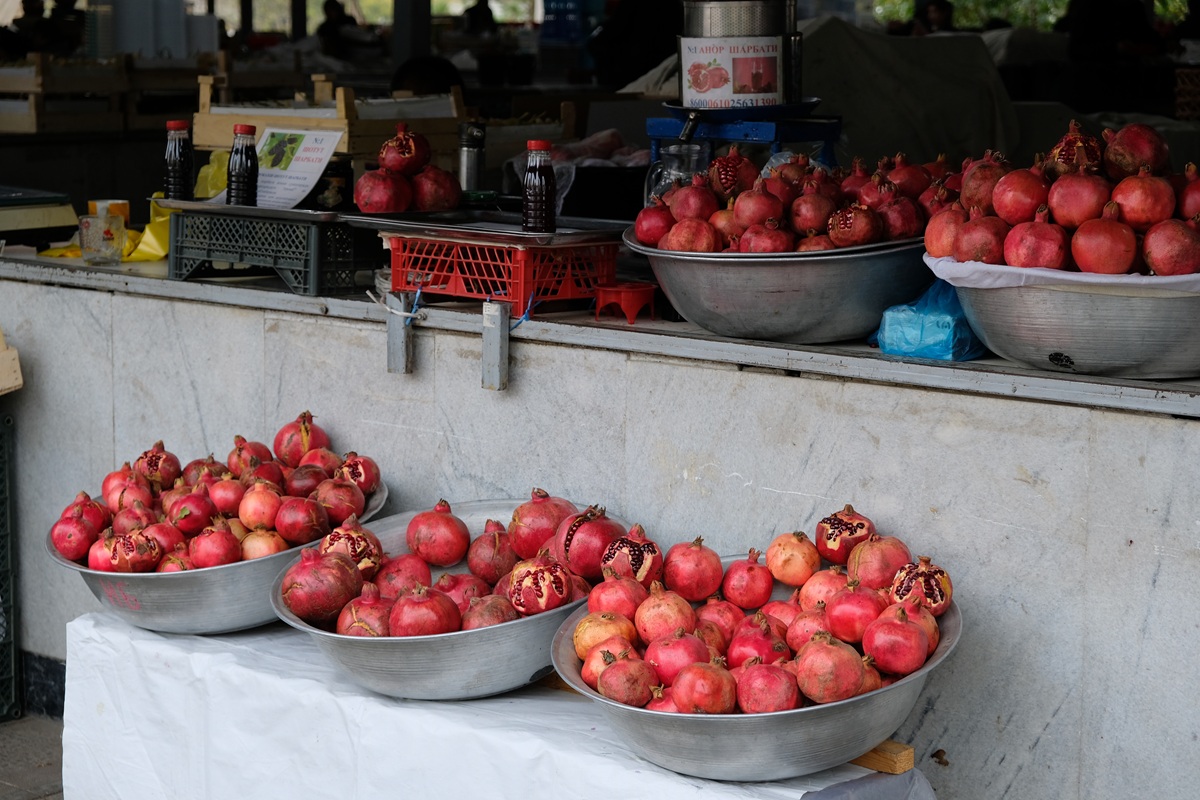
Pomegranates, culturally important in the Turkic and Persian worlds
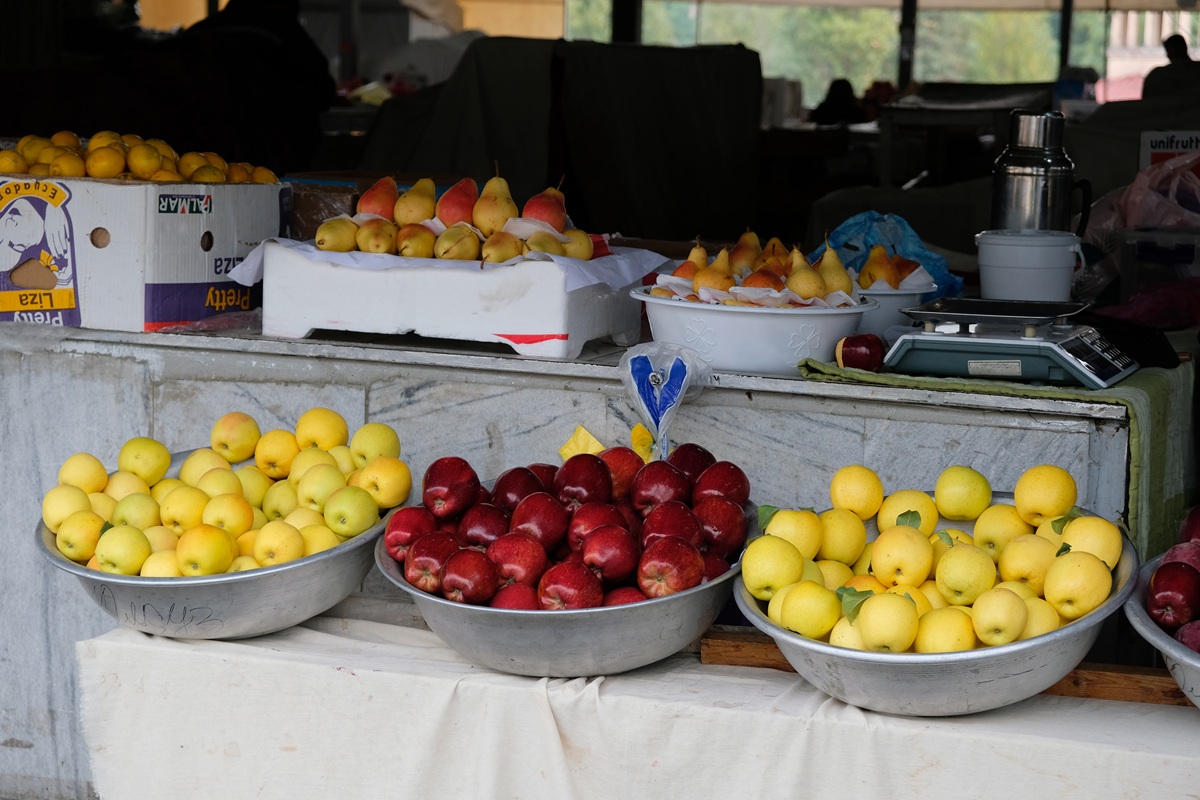
Apples in their native land
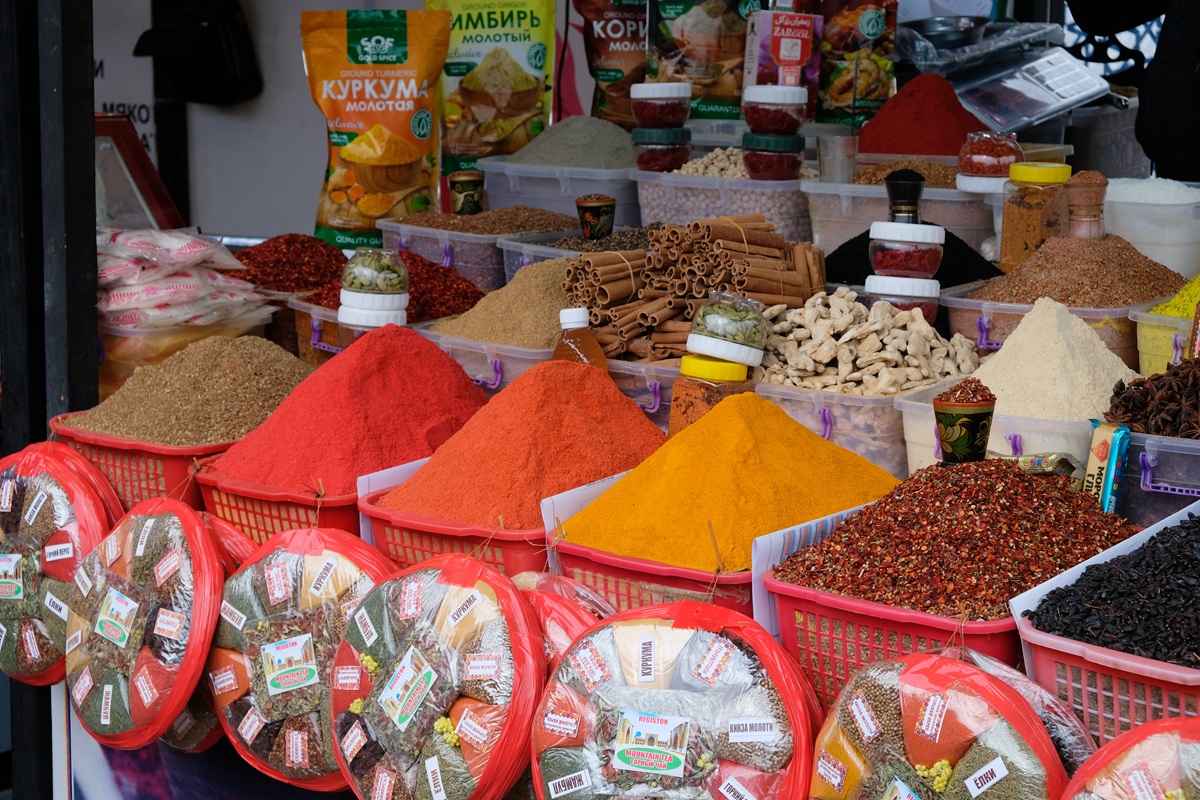
It’s always pleasing to the eyes to see mounds of different spices like these
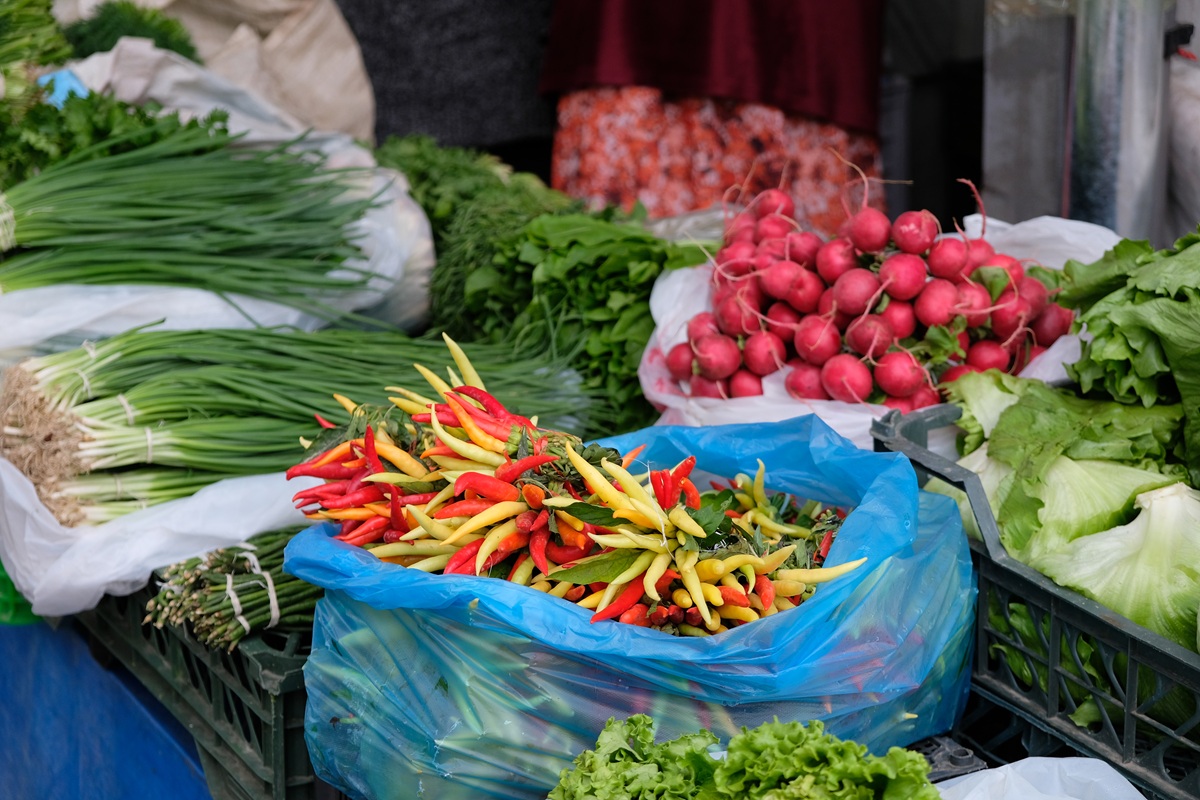
Fresh produce to grab
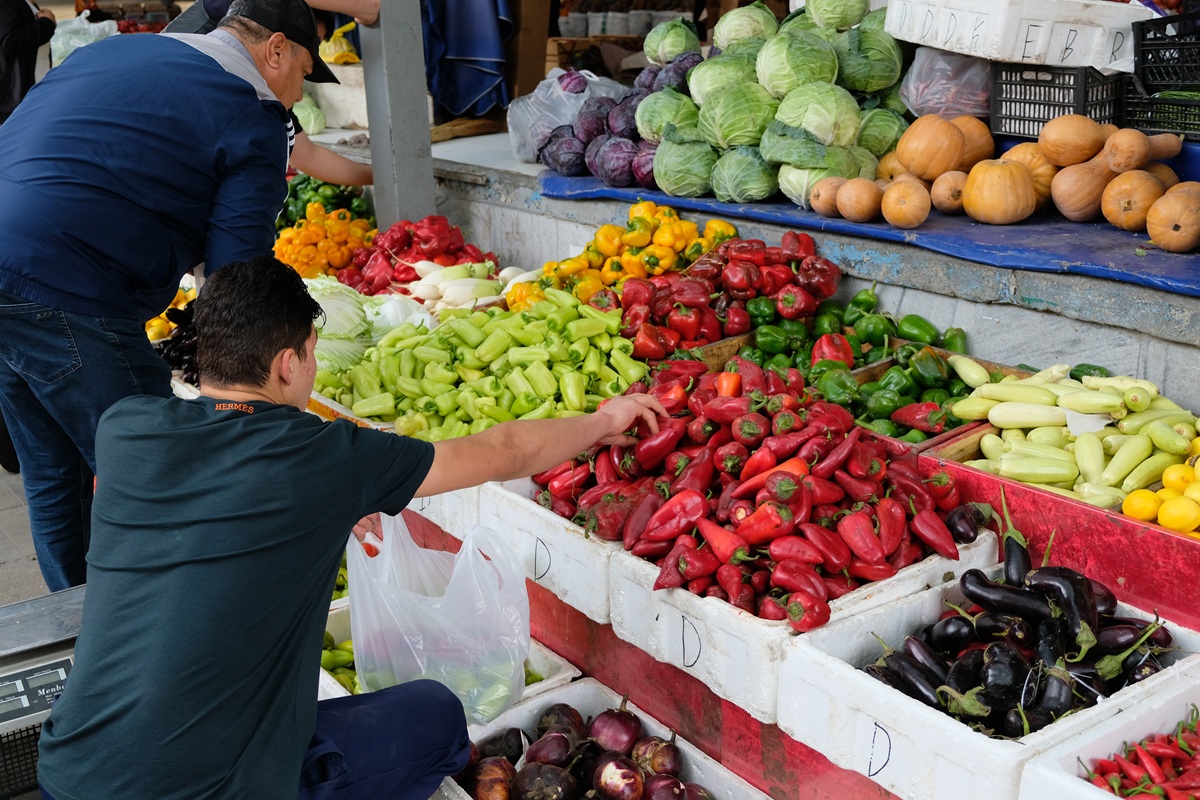
Delicious-looking varieties of capsicums
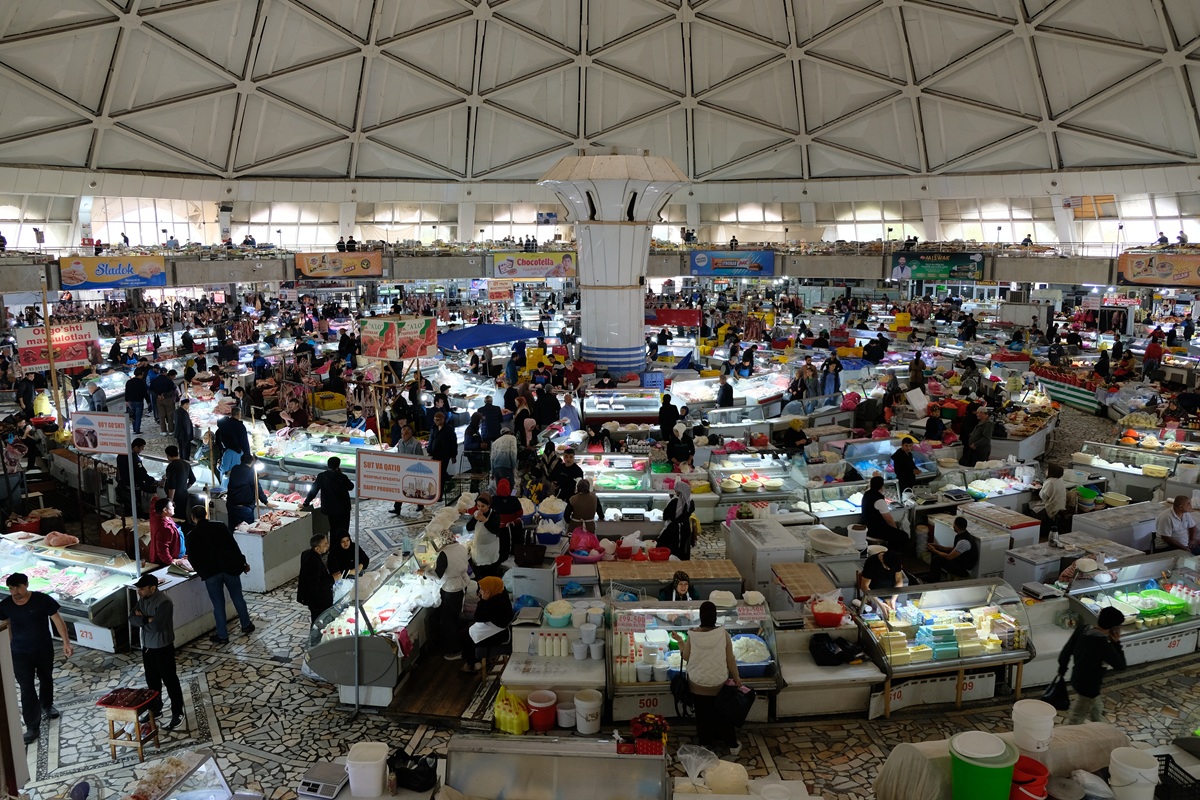
Inside the main building of Chorsu Bazaar
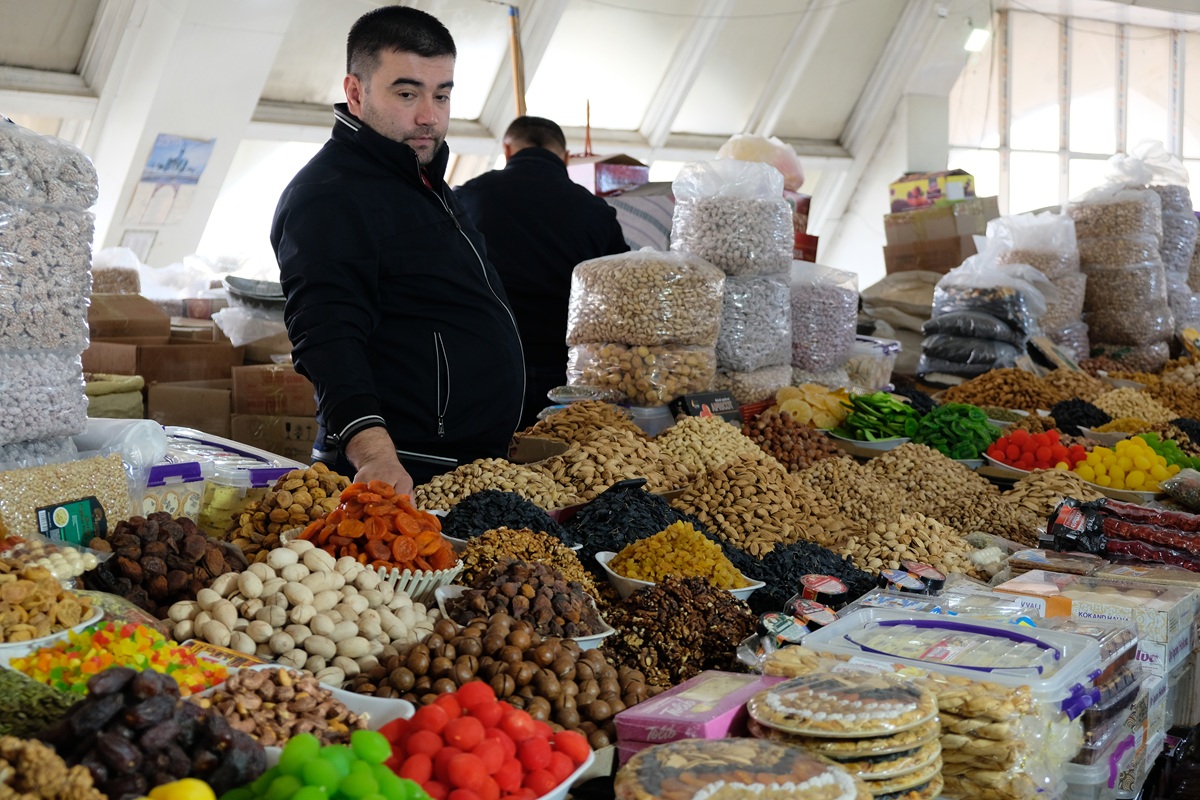
We spent most of our time on the upper level with dried fruits and nuts vendors around us
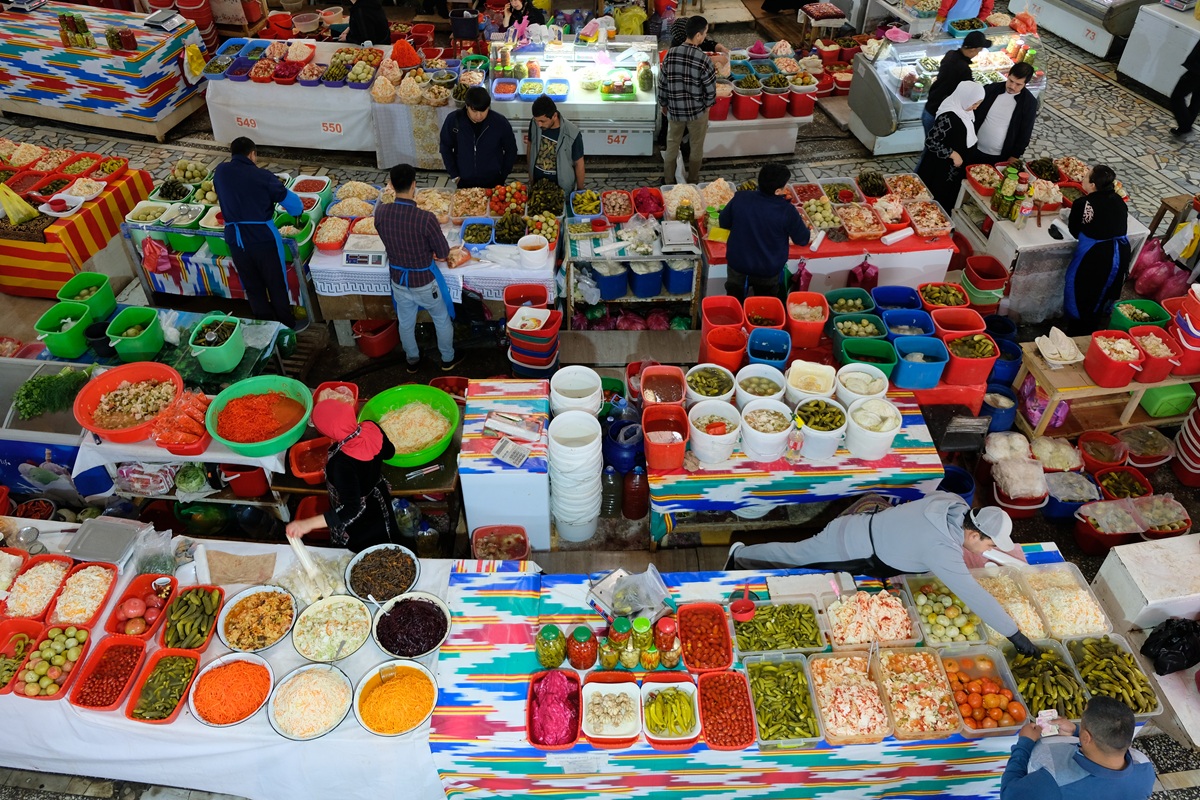
Pickled vegetable vendors on the lower level


It looks an exciting place, Bama xx
LikeLiked by 1 person
We would’ve explored Tashkent more had the weather been better, Jo. But for the limited time we had in the city at least we managed to see the highlights.
LikeLiked by 1 person
We spent a good half day in the metro system, it’s so different from the rest of the country that we really enjoyed it. Too bad you had bad weather in Tashkent, but at least it was just there and not the rest of the country with the sites you really want to see. I’m assuming you liked the food. I found it bland, but I guess I’ll see what you say in the next post. Maggie
LikeLiked by 1 person
Apart from the unique architecture of the stations, I found Tashkent Metro very efficient and quite easy to navigate. But you’re right, at least the weather was much nicer when we were in Samarkand, Bukhara, and Khiva. There were a few dishes that were a bit bland, but I was pleasantly surprised by the rest.
LikeLiked by 1 person
Looks like there’s more to Tashkent than a mere stopover enroute to other parts of Uzbekistan! There are some lovely gems worth checking out, including the architecture of that museum (wow!). Love just how fresh the produce look with the street vendors selling them, especially those pomegranates.
It’s funny that, even when traveling in Asia (well, Central Asia, in this case), local still ask where you’re from. I’ve been asked that question even in Taiwan (my family’s home country), but it was more due to my bad Chinese than physical appearance, haha. It’s a wild card when I visit Europe, though, as I’ve been mistaken for even Filipino! Funny how the world works, eh? Thanks for sharing more of your time in Uzbekistan, Bama!
LikeLiked by 1 person
Tashkent does have several sites that are worth checking out. If the weather had been nicer, we would’ve probably gone to the Tashkent TV Tower as well, which in the 1980s was among the world’s tallest structures.
Actually Asia is where people often mistake me for someone from a different country than my own homeland. But that’s actually fun because I get to tell them about Indonesia in the end. It’s funny how you were mistaken for a Filipina in Europe. It’s the other way around for me as someone said “ni hao” to me.
LikeLiked by 1 person
Tashkent was quite a blast, for me. We went there back when taking photos in the metro was forbidden (and inevitably got bollocked for it) and we precisely went to the Hotel Uzbekistan to revel in its terrible service – which was as advertised!
It really was quite nice to get there after Bukhara, and a throwback to those times we never saw.
LikeLiked by 1 person
I think you wrote about your experience at Hotel Uzbekistan, didn’t you? I kind of vaguely remember how bad you said it was. But it was indeed very interesting to explore Tashkent on foot.
On an unrelated note, yesterday I finally watched Angine de Poitrine and I was blown away by their music. Absolutely brilliant! And I quite like the overall aesthetics of the band too.
LikeLike
It’s always a relief when a city’s more dangerous reputation is not what you experience. It’s also cool when you are able to bridge the language divide and make a connection with the locals.
I love the very cool subway stations – very striking and eye catching! It says a lot of a city’s character when you step into and out of one of them.
As an aside, I heard about the wildfires in Indonesia and I hope you and your loved ones are ok!
LikeLiked by 1 person
My first impression of Tashkent was actually quite positive, especially when I noticed the many parks it had. I was certainly relieved to find the city easier and safer to explore than what I initially thought.
Having different themes for the metro stations is absolutely a brilliant idea! I wish Jakarta’s MRT stations had more personalities, like the ones in Tashkent. But as long as the system works and it takes people to wherever they need to go efficiently, I’m not complaining.
The wildfires were (still are) really bad particularly on the island of Borneo. The very strong El Niño definitely makes it easier for fire to burn the forests. But to make matters worse is that a lot of palm oil plantations deliberately set those forests on fire to save cost for land clearing (to plant even more oil palms). It’s really sad and frustrating. Fortunately, Jakarta isn’t really affected by it — the air pollution in the city is already bad enough from the coal power plants around it though.
LikeLiked by 1 person
I’m sorry the wildfires are still bad but glad your part is relatively unbothered.
I agree too about subway stations – so long as they work as planned, I’m not too fussed about the aesthetics!
LikeLiked by 1 person
The national meteorological agency said that rainy season will come late this year, but when it does it will definitely provide a much-needed respite from the wildfires.
Speaking of subway station aesthetics, I watched some videos about Auckland’s new metro stations, and they look absolutely beautiful! I appreciate the incorporation of traditional Maori designs and patterns, and I can imagine they probably make commuting a bit less stressful too.
LikeLiked by 1 person
Let’s hope the rain comes sooner than forecasted! 🙏
LikeLiked by 1 person
Great review of your time in the capital. There’s a world apart between Khiva and Tashkent. It’s true that I also came to Uzbekistan to rediscover the splendours of the Silk Roads. From Khiva to Samarkand, I was captivated by all those monuments left behind throughout history and now proudly showcased to foreign visitors. By the end of my trip, Tashkent seemed rather pointless to me, and yet it felt like a journey in itself – a large city whose centre is filled with tree-lined parks and monuments on a scale befitting a capital. I didn’t have much time, but I don’t regret the time I spent there – the metro, of course, but also the National Museum, with its surprisingly modern exhibition design, which served as a summary of what I’d seen on my journey.
LikeLiked by 1 person
Khiva is indeed a world away from Tashkent. But now a brand new high-speed rail connects both cities, cutting travel time to less than eight hours. The downtown area of Tashkent was quite nice. But unfortunately the National Museum was temporarily closed at the time of my visit. At the Amir Timur Museum, however, we saw some interesting models of the ancient monuments we visited in the other cities.
LikeLiked by 1 person
I really enjoyed Tashkent and was glad I allowed some extra time there. And those metro stations are just something else aren’t they? The most beautiful I’ve ever seen!
LikeLiked by 1 person
Tashkent was surprisingly quite easy to navigate. Exploring it on foot turned out to be an enjoyable experience too, especially in the downtown area. But of course, checking out the metro stations was a must. The food was another thing that surprised me, in a good way.
LikeLiked by 1 person
Those underground metro tunnels alone make Tashkent worthy of a visit, they are absolutely amazing!! You’ve done such a good job in bringing it to life and I’m glad you found the city to be much more friendly than perhaps you were initially expecting. I feel I get travel privilege from being European, it’s very rare I’m asked where I’m from (perhaps it’s just so obvious they don’t bother!). I have really enjoyed all your Uzbekistan posts Bama, and I can’t wait to visit myself some day.
LikeLiked by 1 person
When you go to Tashkent one day, you definitely should take the metro and check out the different stations, Hannah. The unique decorative elements at each station also make it easier to know where you are, especially if you take the older trains where there is no announcement. If you go to Indonesia one day, you might get asked where you’re from a lot, especially at less touristy places. The locals do it genuinely out of curiosity though.
LikeLiked by 1 person
I was not expecting subway stations like these ones. They are quite ornate!
LikeLiked by 1 person
Indeed. They’re so different from how subway stations typically look like in most other cities across the globe. And that makes them worth exploring.
LikeLike
I’m impressed at how beautiful and clean the metro stations are. Wild to hear there was once a photography ban on the metro system. Bummer about the miserable weather, but it sounds like you still made the most of your visit to Tashkent.
LikeLiked by 1 person
I guess things worked different in the Soviet Union. It’s a good thing the government lifted the decades-old ban on photography at the Tashkent Metro so that people from all over the world can now appreciate the unique designs of its stations. The weather wasn’t ideal, but at least we managed to see the places we most wanted to check out in the capital.
LikeLiked by 1 person
Photos of the art gallery-like metro stations were forbidden the first time I was in Tashkent (2015) as were a host of ordinary things. Despite some anxiety-ridden moments on exiting the country, I prefer that to what Uzbekistan has become now. In 2019 it was already too touristy for the likes of me!
Fantastic photos!
Isn’t Chorzu Bazar a delight?
LikeLiked by 1 person
I read about how exiting the country back then was quite a hassle as you had to present the hotel slips to the officers at the airport, and you must prove that the amount of money you had was less than what you brought into the country. When I went two years ago, some places had already shown early signs of mass tourism. Fortunately, Chorsu Bazaar still seemed to cater mostly to the locals though.
LikeLiked by 1 person
Good to know not all has changed drastically. 🙂
LikeLiked by 1 person
Those metro stations are truly works of art! And they’re pretty clean, unlike in other European cities 🙂 Was it easy to use the metro system there? The interior of the Amur Timur Museum looks amazing. I’m not sure why they forbade photography, as it’s not an active religious site per se.
LikeLiked by 1 person
Some of the stations could definitely benefit from a little TLC. But as you can see, they’re quite clean. We didn’t find any problems using the metro system in Tashkent. But you need cash to buy ticket — it was very cheap though. Sometimes I also question some places’ decision to ban photography. It’s not like people like us have bad intentions with the photos we take.
LikeLiked by 1 person
Funny how you take a place that is generally a transit point, and turn it into an adventure. Wonderful post, and it inspired me differently than your posts usually do. The metro stations alone are extraordinary—part public transport, part underground museum—and your photos make their variety of history, art, and Soviet-era imagination come alive. These are the moments of travel I love—along with the Chorsu Bazaar; which gives Tashkent a warm, human dimension beneath the grander architecture. You’ve convinced me that the city merits time in its own right 😊.
LikeLiked by 1 person
I tend to be restless when I’m in an unfamiliar place. I want to see it, explore its nooks and crannies, and try its food. It’s probably more comfortable to stay at the hotel, but my mind will still wander beyond the property’s walls nonetheless. A city like Tashkent definitely rewards curious souls, and visiting places like Chorsu Bazaar really gives me a better idea of the local life. Glad you enjoyed this, Randall.
LikeLike
Tashkent surprised me too. Our first night in Uzbekistan felt like a bit of a teaser; I was fascinated by all the different products we saw at that supermarket behind the hotel. The weather may not have cooperated on our return to the city, but that didn’t dampen my enjoyment of modern Uzbekistan. Most memorable of all was Chorsu Bazaar and our multiple rides while sightseeing on Tashkent’s unusually beautiful metro system. If we ever get the chance to go back, I would love to see how the city has changed and evolved since our 2024 visit.
LikeLiked by 1 person
Tashkent was quite fun to explore. I’m really glad that the metro system goes to a lot of the places we wanted to see, and riding it was quite an experience too. When I saw the different architectural details of the metro stations in Tashkent, I kind of wished that this was the case in Jakarta too. I think it makes commuting slightly more bearable. We will probably go back to the Uzbekistani capital at some point in the future, especially when we plan to explore more of Central Asia. But Almaty’s airport is also relatively well-connected, so we’ll see.
LikeLiked by 1 person
I love reading about your experience in Tashkent, Bama, especially as I was just there earlier in the week. I must admit that by the time I arrived I was exhausted, so instead of visiting any of the places I planned to initially (except for the State Museum of the History of Uzbekistan), I simply allowed myself to wander around, and experience random things, which was the perfect way to end my trip. I did book a vegan food tour in the initial planning stages, and I’m so glad I did, as it was wonderful to meet a young Uzbek, who has chosen a life of activism, giving me an insight in a very different life path compared to some of the other young people I met along the way. What a revelation this country was. It exceeded my expectations, and I had fairly high ones to start with.
LikeLiked by 1 person
Jolandi. I’m so so happy to hear that Uzbekistan lived up to your (already high) expectations. I think you made the right decision to just wind down and enjoy Tashkent slowly. I must admit, I was a bit worried that you would find it hard to find something you can eat in this meat-loving country. But I’m really glad that you managed to find a vegan food tour. I believe you tried Samarkand’s famous non, didn’t you?
LikeLike
I did a lot of research before the time, as I didn’t want to spend too much time looking for food, so as a result, I had no problem finding really good vegetarian food everywhere, Bama. I managed to try a lot of the traditional dishes as vegetarian options (including plov and Khiva’s Shivit Oshi). Samarkand actually even has a vegan cafe with really good food, and I liked the owners, as they have a tip box for cat food, as they feed a lot of the cats in the area. I did try Samarkand’s non, but did not like it. Ironically only twice did I think the bread was really good (in Termez and Tashkent), but I think it was because it was hot out of the oven. I heard so much about the good bread that I must admit it was a bit of a let down when I didn’t think it was that great. I love bread in general, and am perhaps a bit spoiled, as there is really good bread in Portugal. That said, the food I had was absolutely fantastic in general, and even as a vegetarian I got a really good sense of the different local dishes, and I didn’t have to resort to some weird interpretations of Western food.
LikeLiked by 1 person
That’s great! Now I’m curious about the vegetarian versions of plov and shivit oshi. I imagine that they probably simply add more yellow carrots and/or potatoes to substitute the meat. I’m sorry that you didn’t find the bread in Uzbekistan too exciting. But what you said about how Portugal does really good bread makes me want to go there even more!
LikeLike
I think I would take some time in Tashkent just for those stations! Truly remarkable.
LikeLiked by 2 people
They certainly make us think, why can’t our metro/subway stations look as interesting and beautiful? You might actually find Tashkent quite exciting to explore, Lex.
LikeLiked by 1 person
Your blog on Tashkent and the accompanying photos are marvellous as always, Bama. I find the metro stations the most fascinating – they are true pieces of art and look impeccable. I think it’s a feature in many post-Soviet countries. I am not a fan of Bruatalist architecture – some of it is also visible in Poland although the country has been going through rapid modernisation over the past decades. I can’t wait to read your final post on Uzbekistan, definitely an interesting and underrated part of the world.
LikeLike
I have read about the beauty of the Tashkent and your pictures really shows that it well worth visit. The Chorsu market seems also very interesting. I love visiting markets around the world as they tell stories of the daily life of the place. (Suzanne)
P.S. We are back from our trip to Madagascar and we should start posting soon. We loved the country and its very warm and welcoming people. More to come…
LikeLike