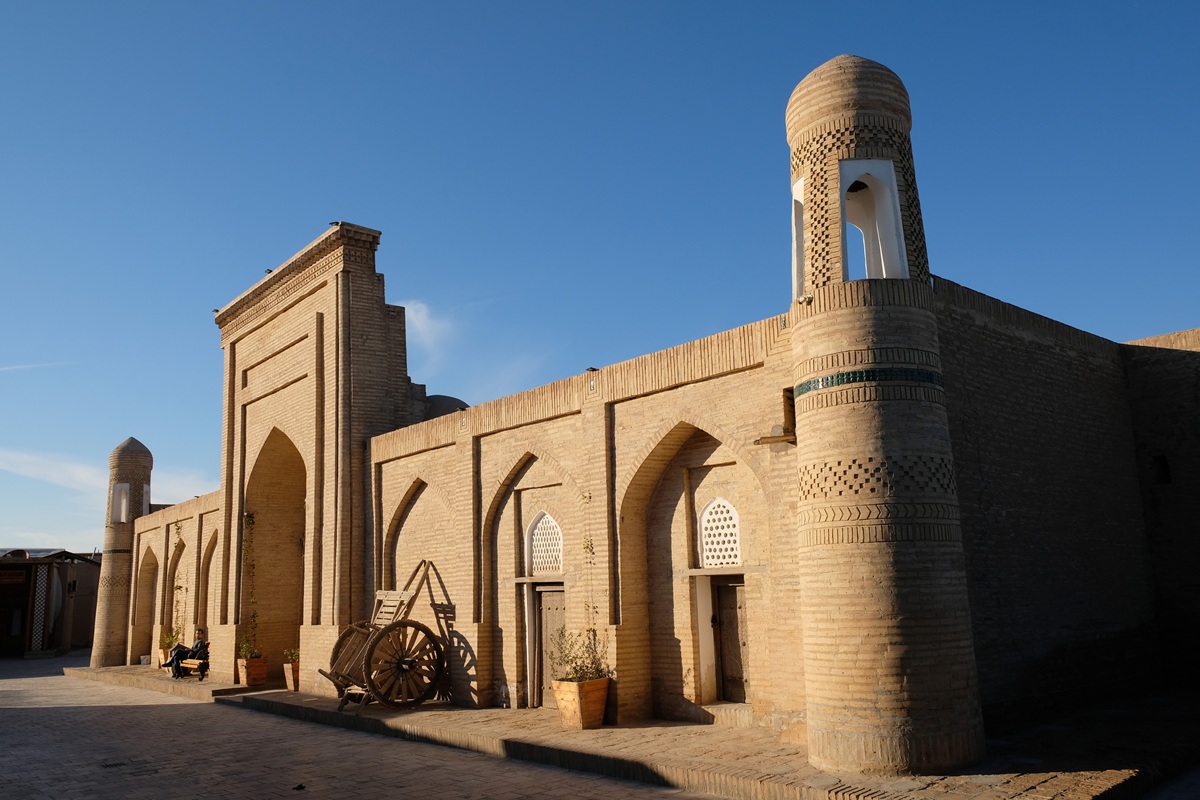
Our accommodation in Itchan Kala which was once a madrasah
I woke up from my slumber. And as my eyes squinted, trying to focus on the things around me, I was reminded that this was neither my bedroom in Jakarta, nor any of the familiar-looking hotel rooms I had stayed at before. It felt almost… Aladdin-esque, for lack of a better word. I looked around, and what Dorothy says to Toto when they arrive in Oz immediately came to mind.
We had arrived in Khiva the day before after a long and rather monotonous car ride on the mostly straight road from Bukhara across the Kyzylkum Desert. Apart from the views of barren land as far as the eye could see, and the occasional appearance of strange- and bone-dry-looking plants – which I later learned to be the asafoetida – there was not much to see through the window. At one point, somewhere between Bukhara and Khiva, our calm-mannered driver pointed at a long river to our left that glistened under the sun. It was the Amu Darya, the fabled river which in antiquity was known as the Oxus that now flows through modern-day Afghanistan, Tajikistan, Turkmenistan, and Uzbekistan.
Hours after we left Bukhara, the famous walled city of Khiva – known as Itchan Kala – finally came into sight, and what an arresting view it was! My anticipation began to build as we were drawing closer to the centuries-old defensive walls within which lie mostly 18th– and 19th-century structures that together make up Uzbekistan’s first-ever UNESCO World Heritage site, inscribed in 1990. However, our driver pulled over near the west gate to the compound and explained to us that it was as close to the heart of Itchan Kala as he was able to take us. No big deal. After unloading our suitcases, we continued on foot to reach our accommodation within the city walls.
As we stepped inside Itchan Kala, it immediately felt as if we had stepped back in time. There were mud-brick buildings everywhere we looked, and moments later I finally saw in person the most iconic structure of this walled city: Kaltaminor. Commissioned in the mid-19th century by the khan (ruler) of the Khanate of Khiva, it was planned to be the tallest minaret in the Muslim world, reaching a height of at least 80 meters. (Other sources mention that it was meant to be 110 meters tall.) However, only three years after construction started, the project was halted due to the sudden death of the khan, leaving the structure unfinished. This explains its appearance, which is rather unusual for a minaret.
But I knew I had to push back the urge of taking a closer look at Kaltaminor since we needed to check in at our hotel first. I followed James who led the way to our accommodation through the cobblestone streets of Itchan Kala, and after a few minutes’ walk, we finally arrived at what appeared to be an old madrasah (Islamic educational institution), tucked away in a quieter neighborhood of the walled city. Once the formalities were settled, we were shown to our bedroom, and what a space it was! The main bed was decorated with carved wooden panels – which were painted with colorful floral patterns – and wooden frames, from which maroon satin curtains hung down. At one corner, accessed through a ladder was another mattress placed within a niche. In addition to this dramatic welcome, the room was further accentuated by patterned wall tiles and rugs with intricate details. Above our heads was an Uzbek-style chandelier suspended from the domed ceiling of the former madrasah.
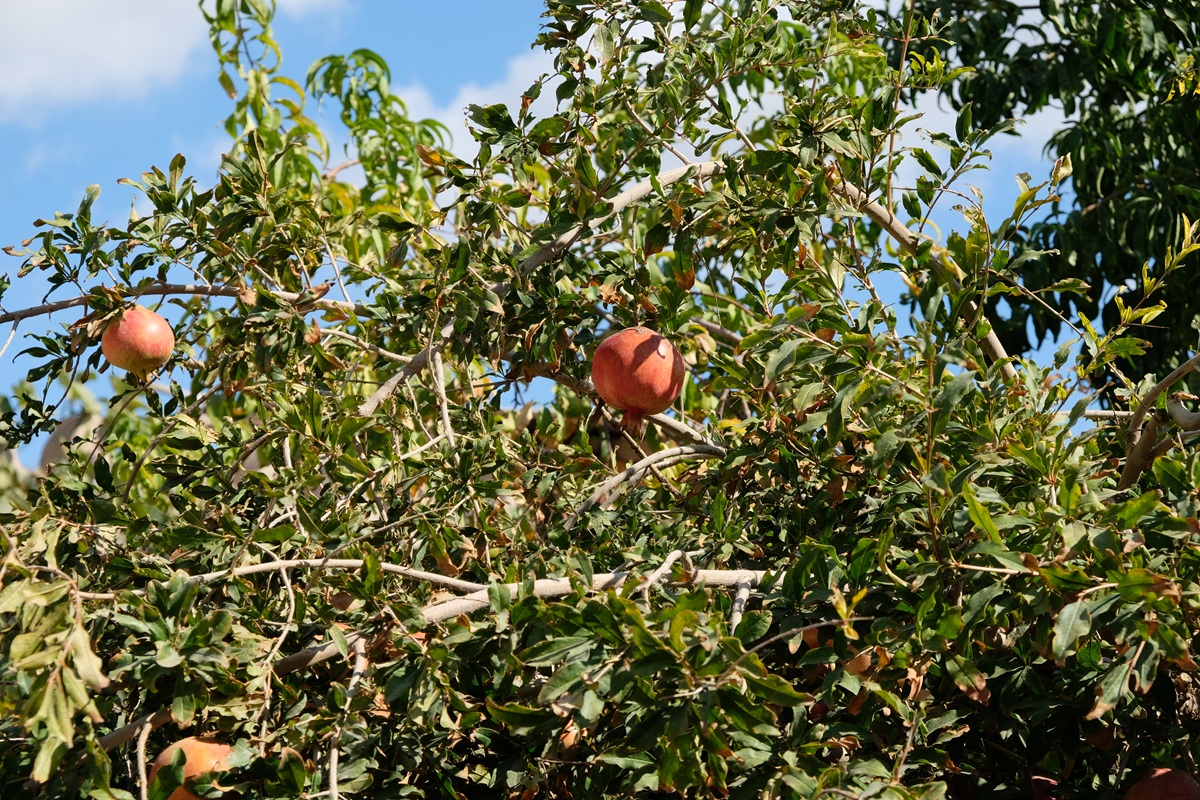
Pomegranates at a house near the hotel
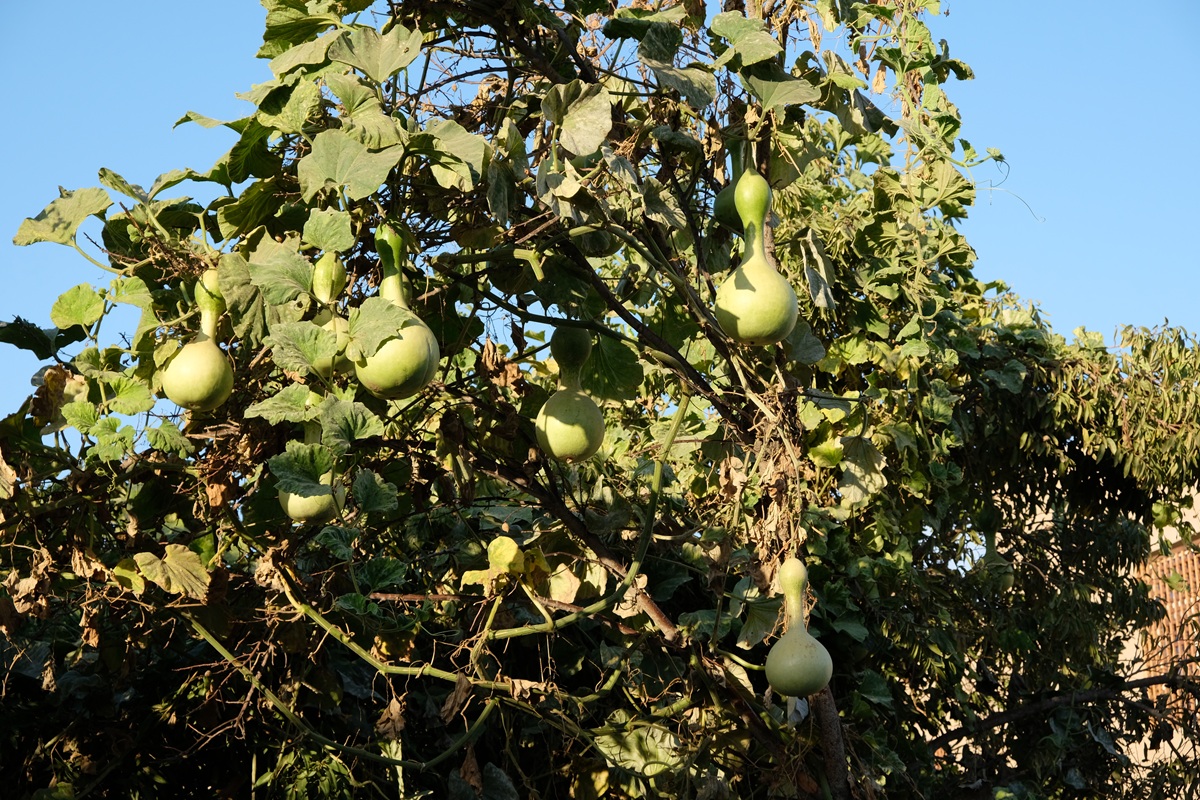
Bottle gourds spotted at the same house
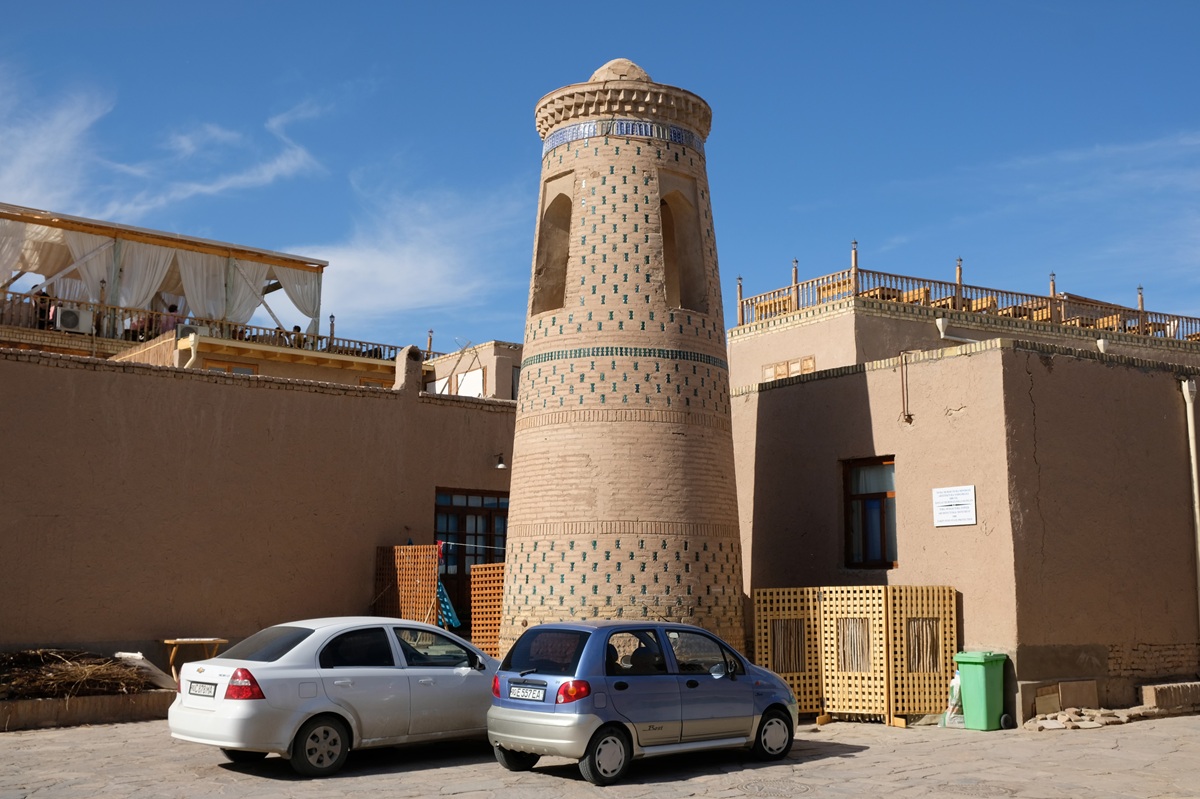
In the past, instead of cars, camels might have been tethered around this small minaret
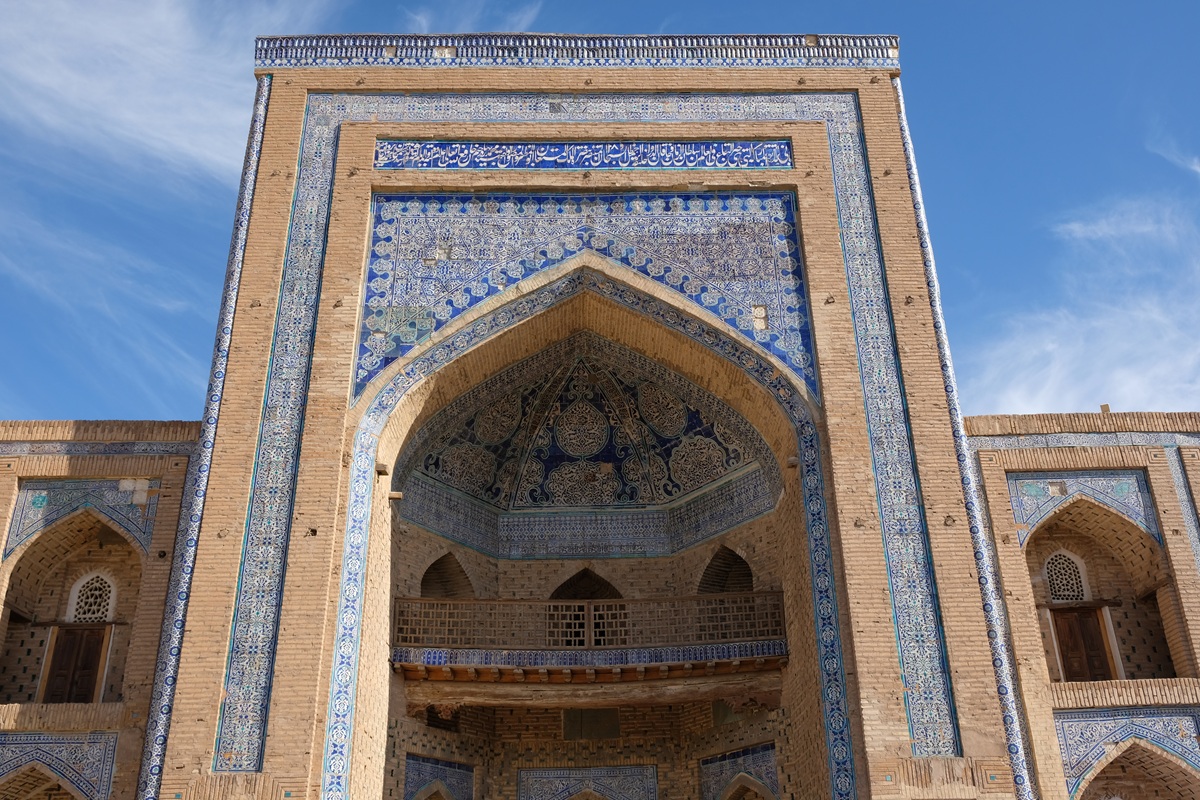
Standing before the 19th-century Muhammad Rahim Khan Madrasah, one of the largest in Itchan Kala
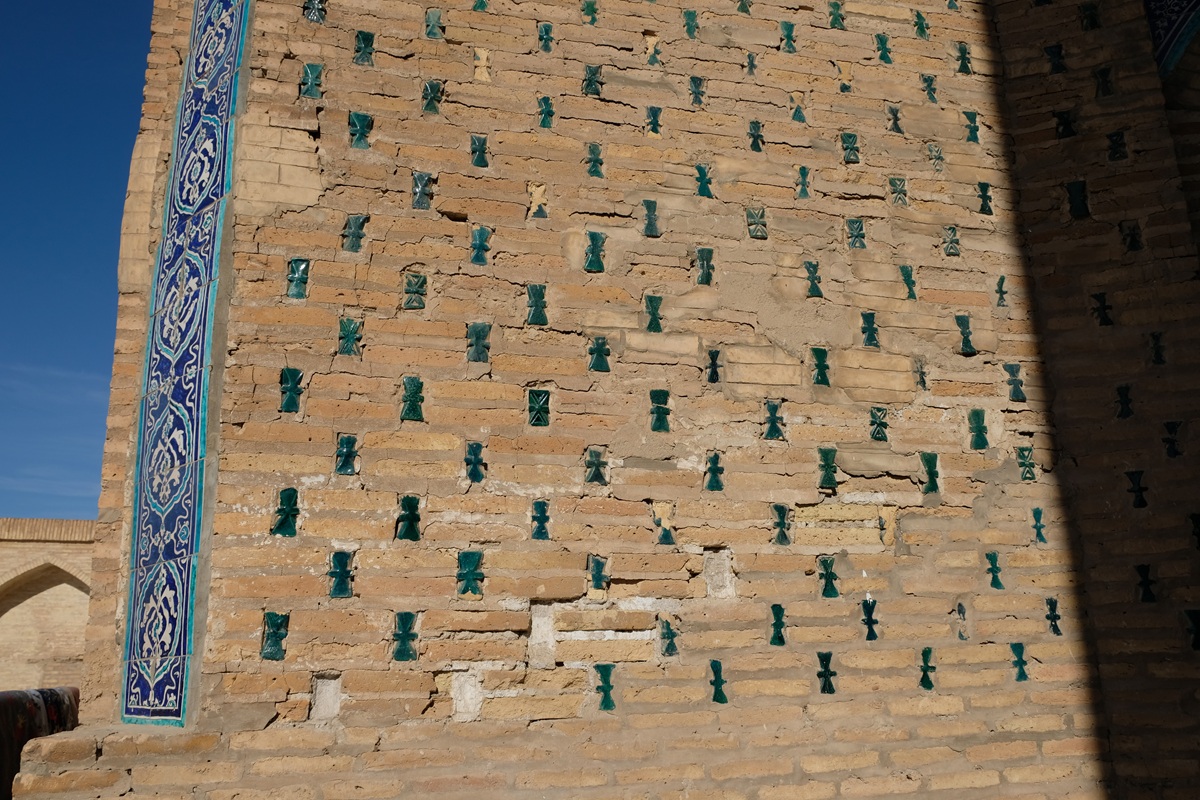
The design of these green butterfly-shaped tiles originates from Zoroastrian times
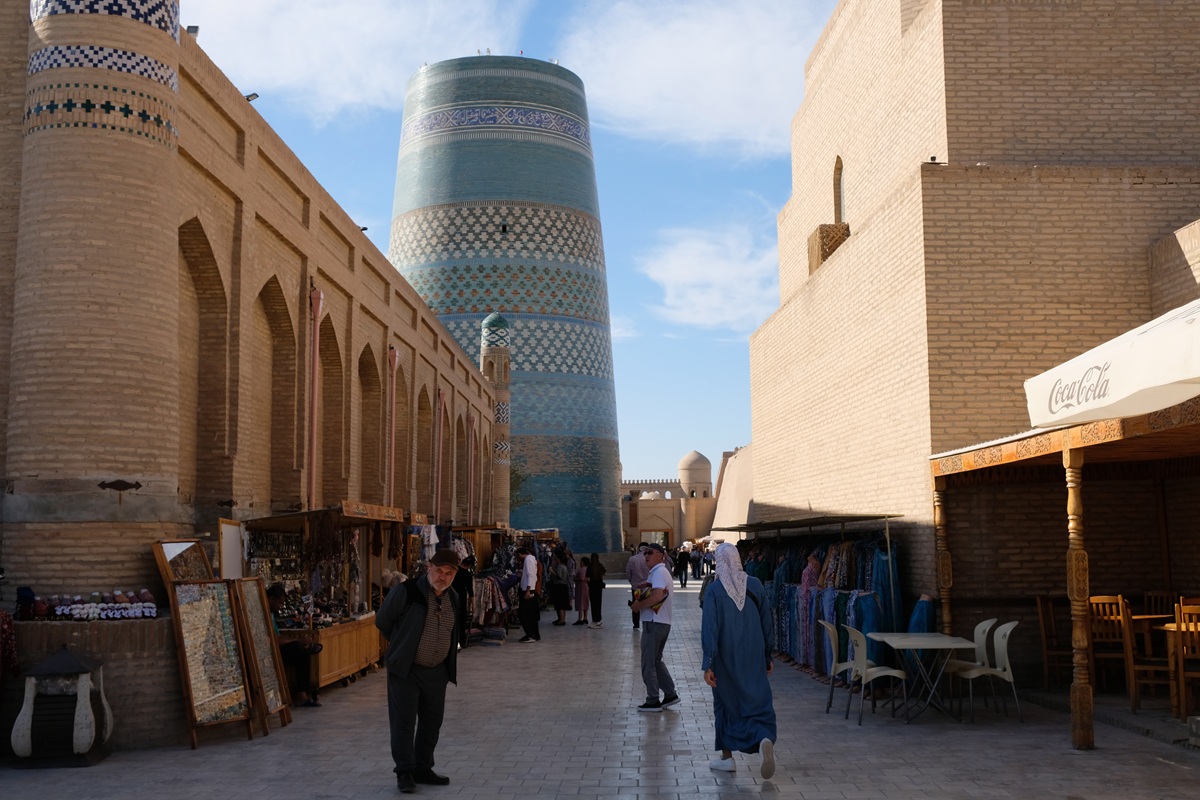
Souvenir stalls near Kaltaminor
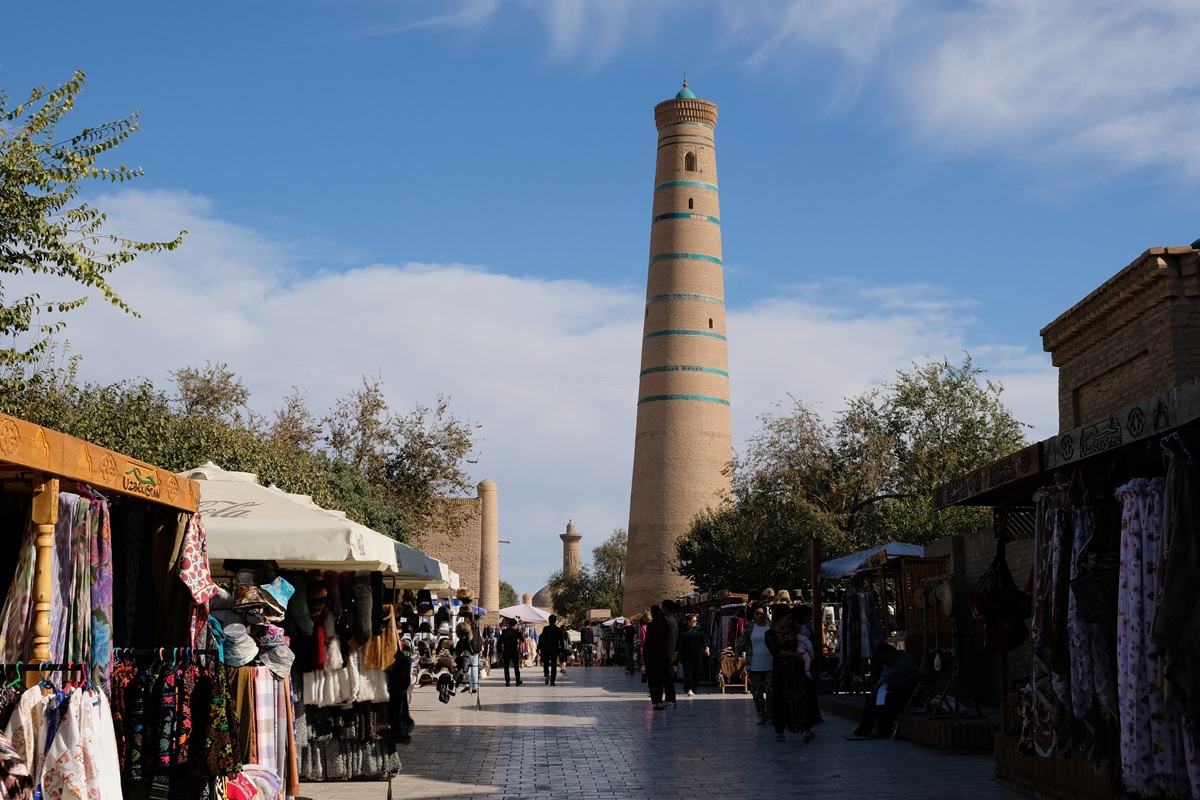
The minaret of Juma Mosque along the main east-west thoroughfare of Itchan Kala
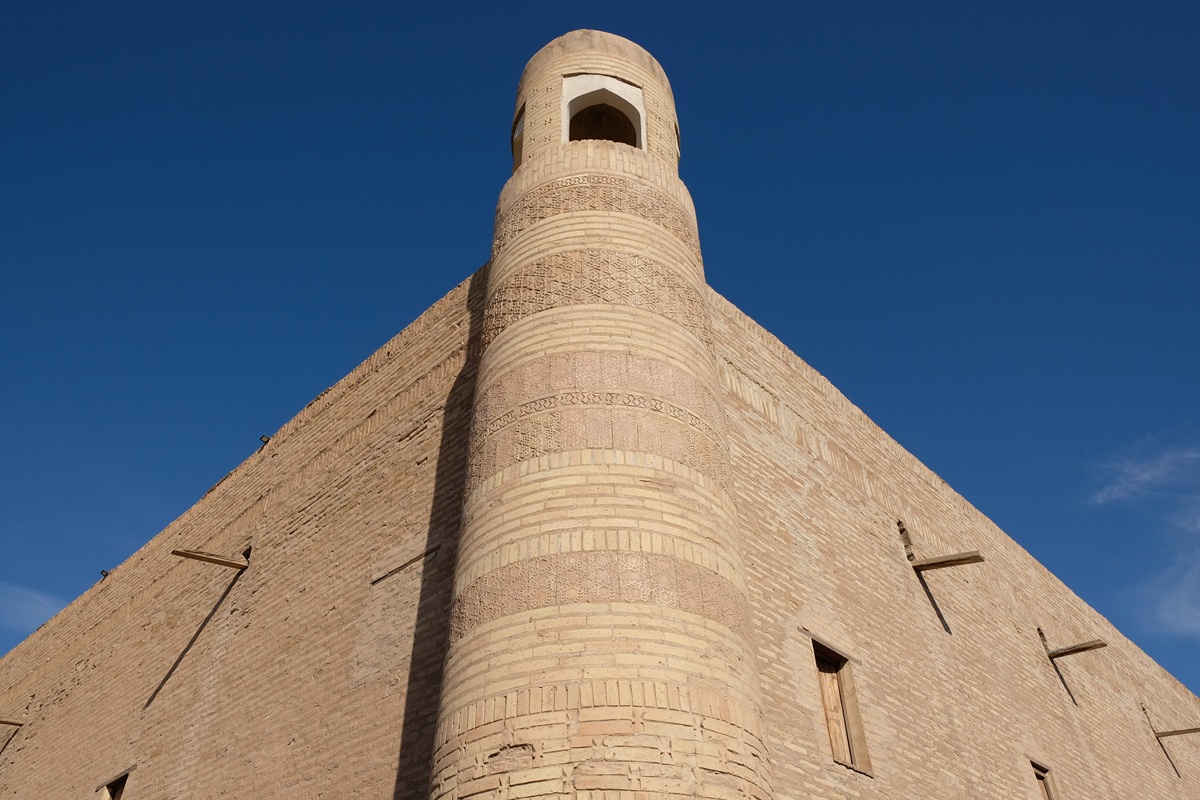
When you see an unpainted building, look closer, for it is probably covered with intricate decorations
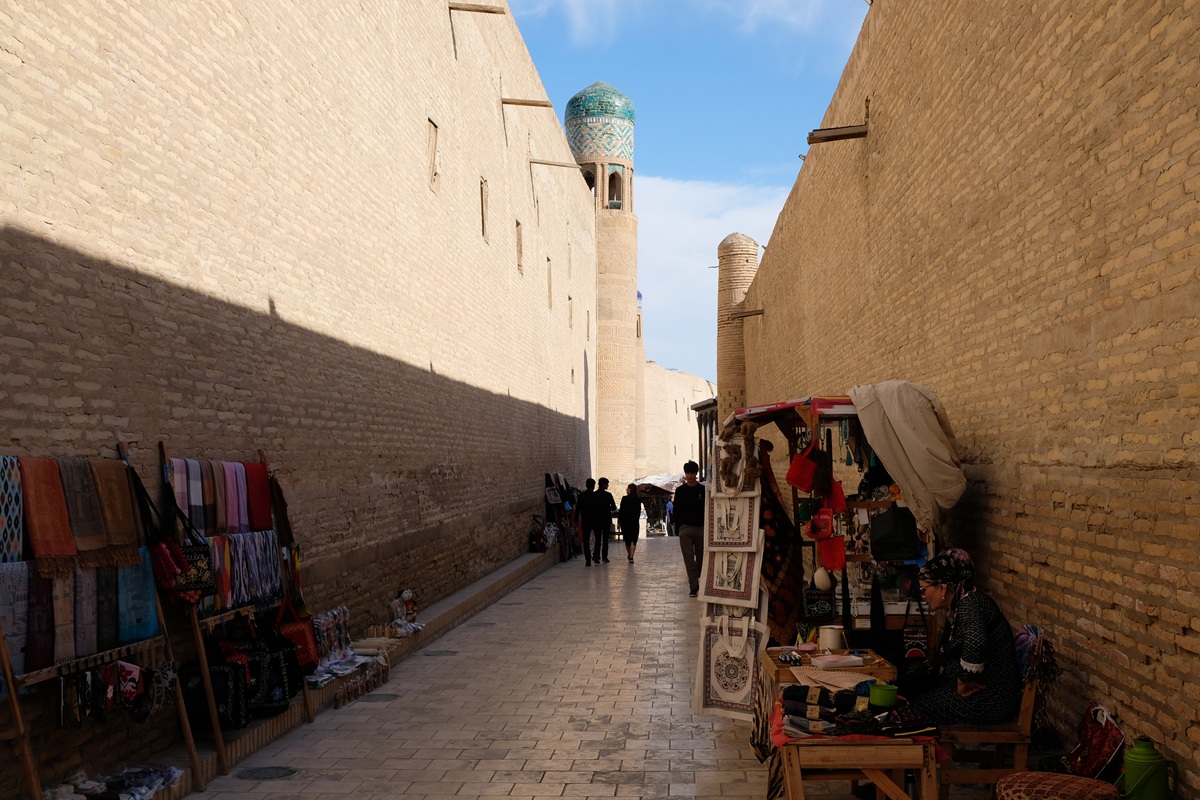
Walking down one of the many narrow alleys of Itchan Kala
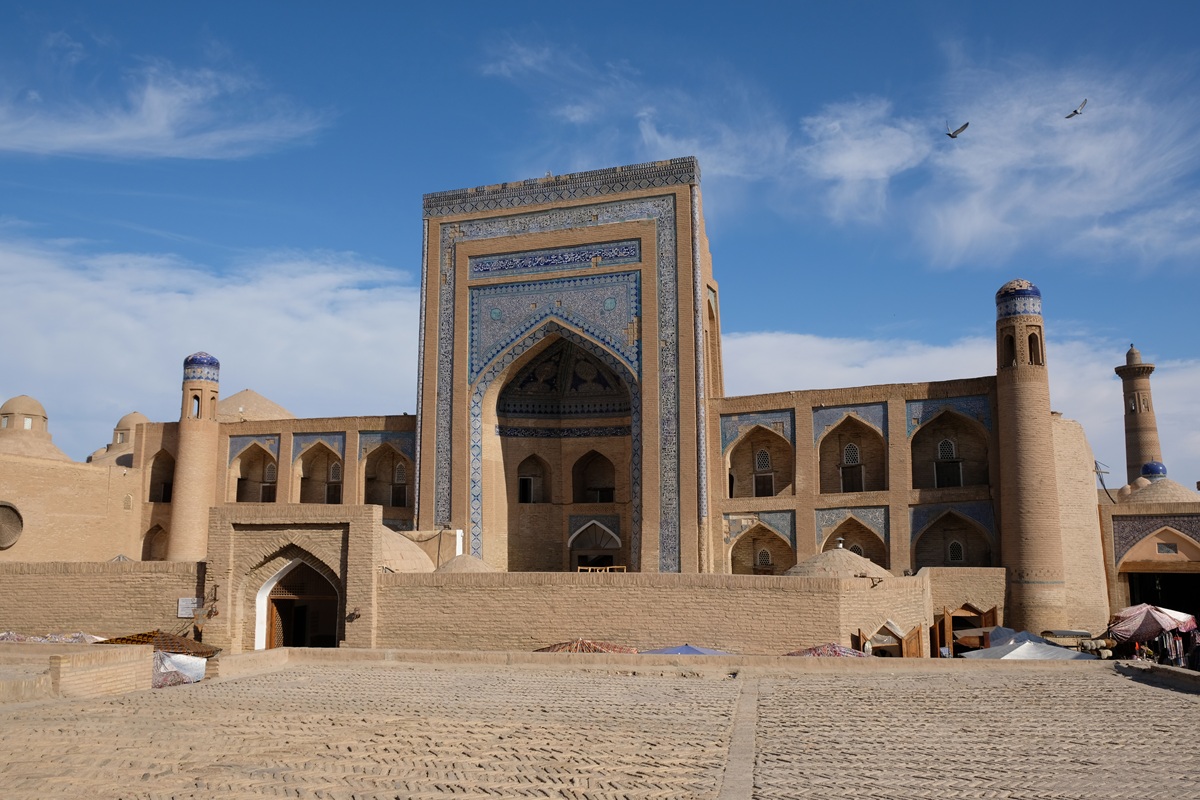
A view of the 19th-century Alla Kouli Khan Madrasah near the Polvon Gate
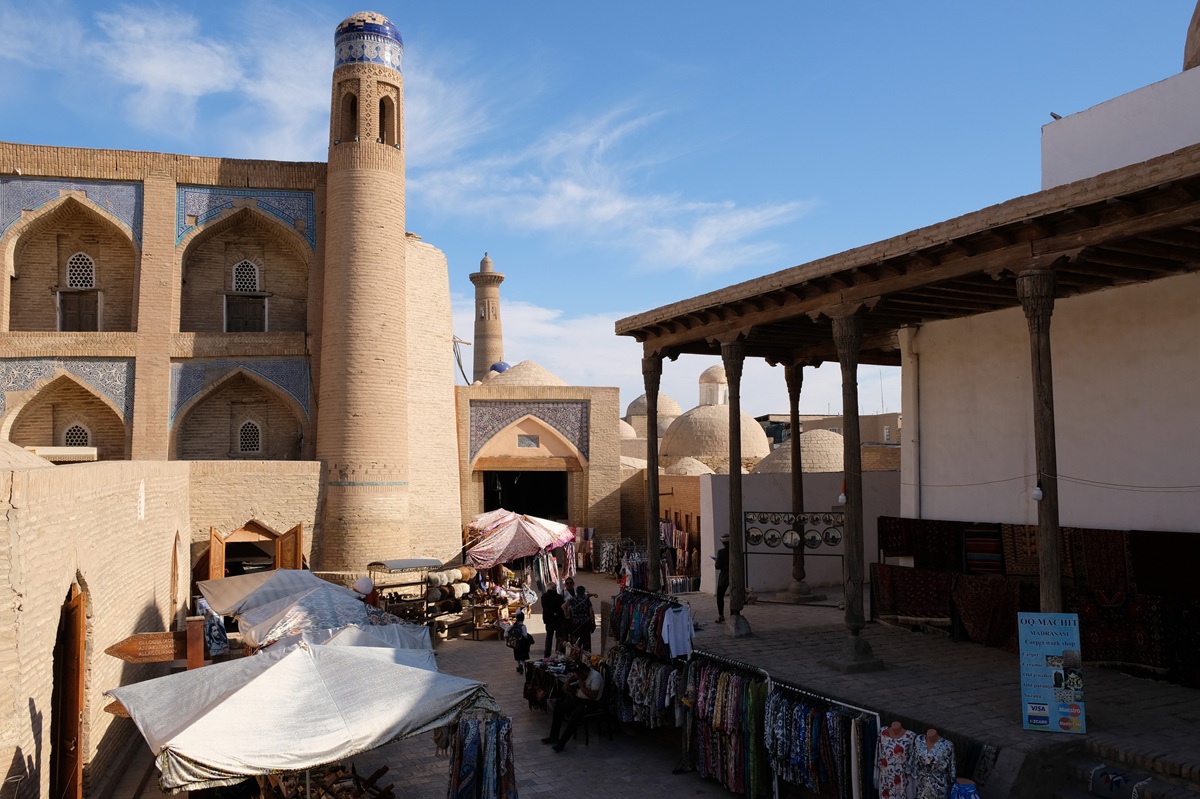
The street that leads out of the Polvon Gate
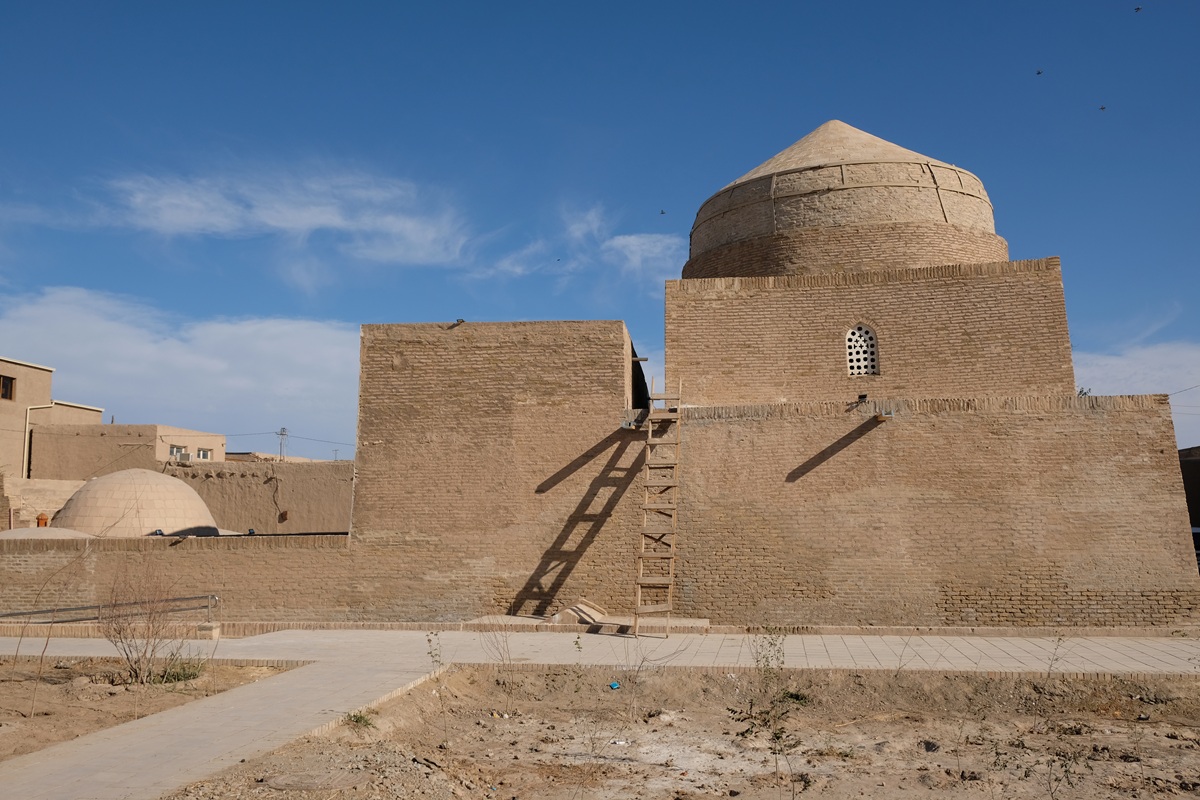
The Bagbanli Mosque, originally built in the 15th century then reconstructed in the 19th century
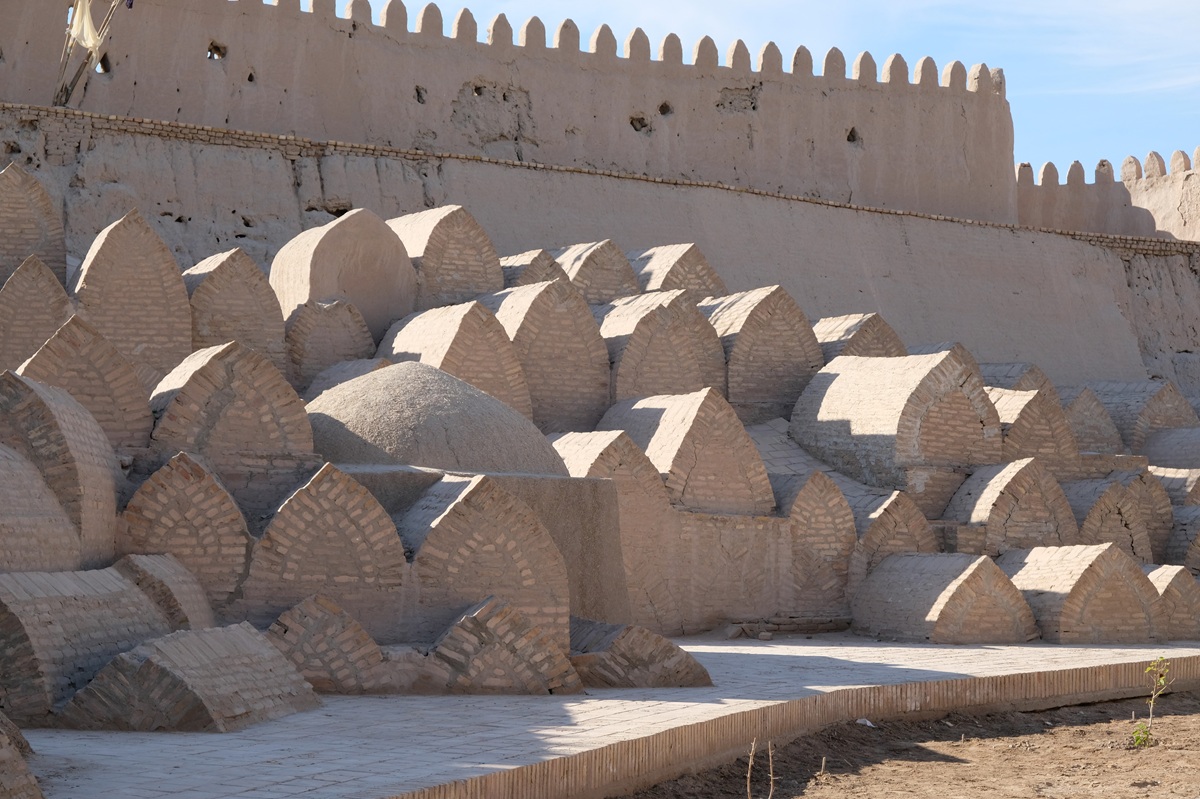
A cemetery in the southwestern corner of the walled city
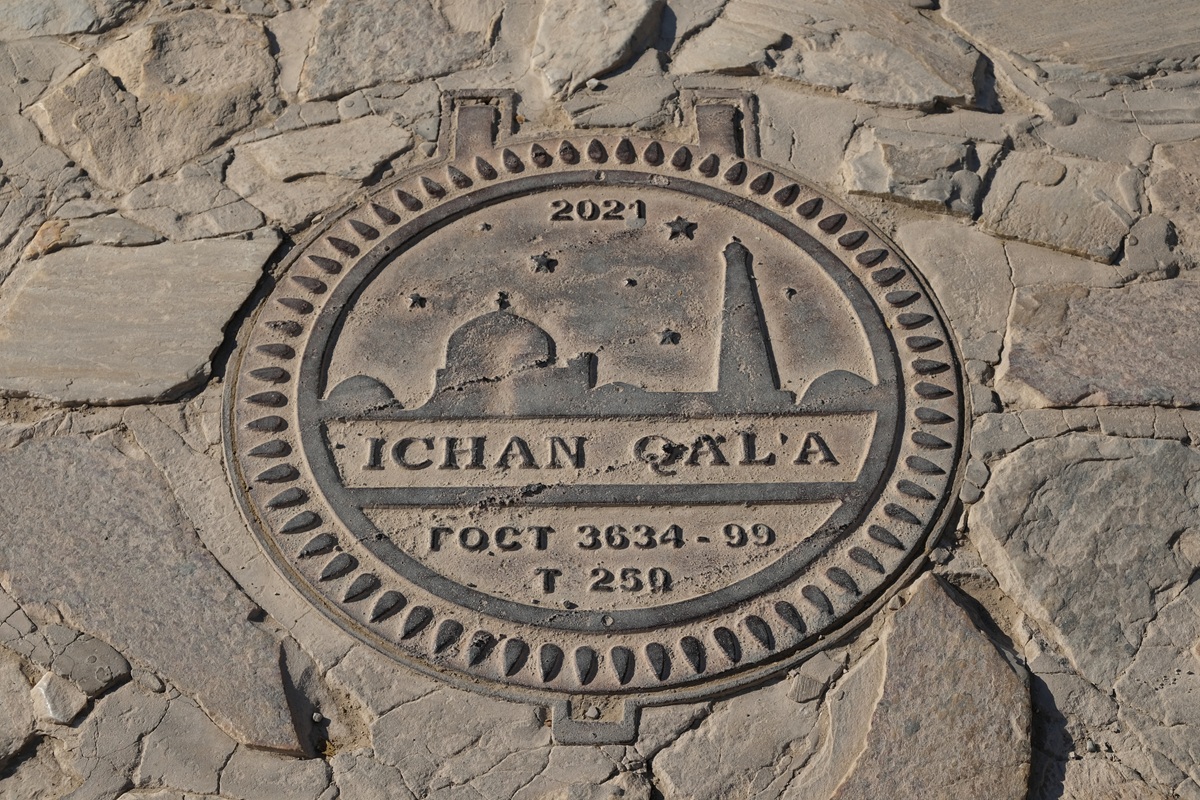
I always appreciate manhole covers that highlight the landmarks or the uniqueness of a place
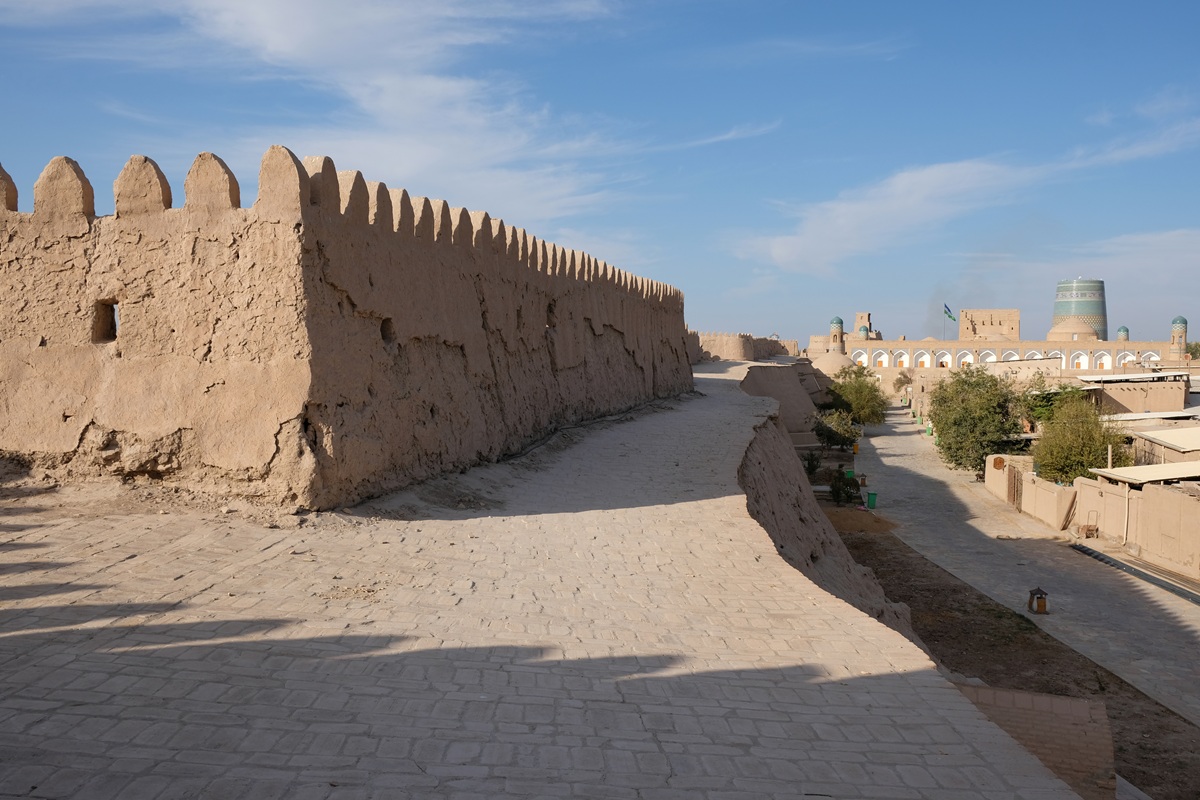
Walking on the defensive walls of Itchan Kala
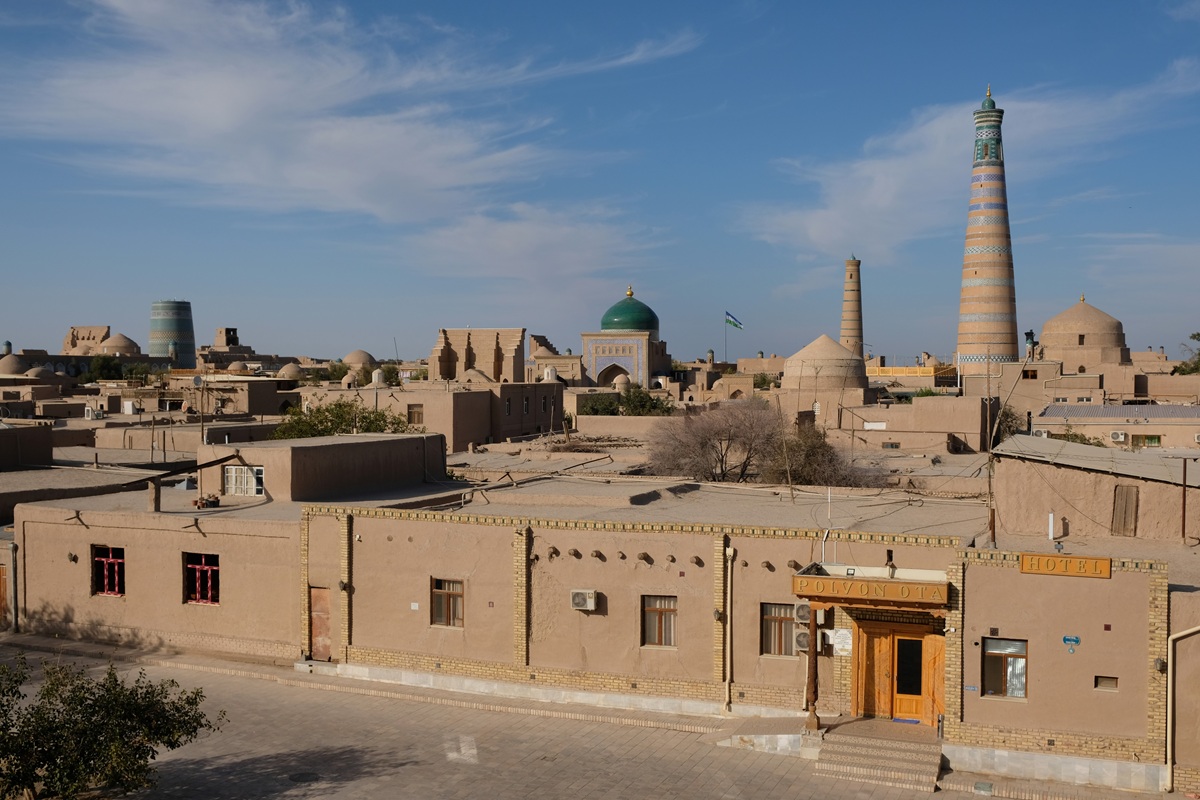
Itchan Kala’s skyline as viewed from the walls
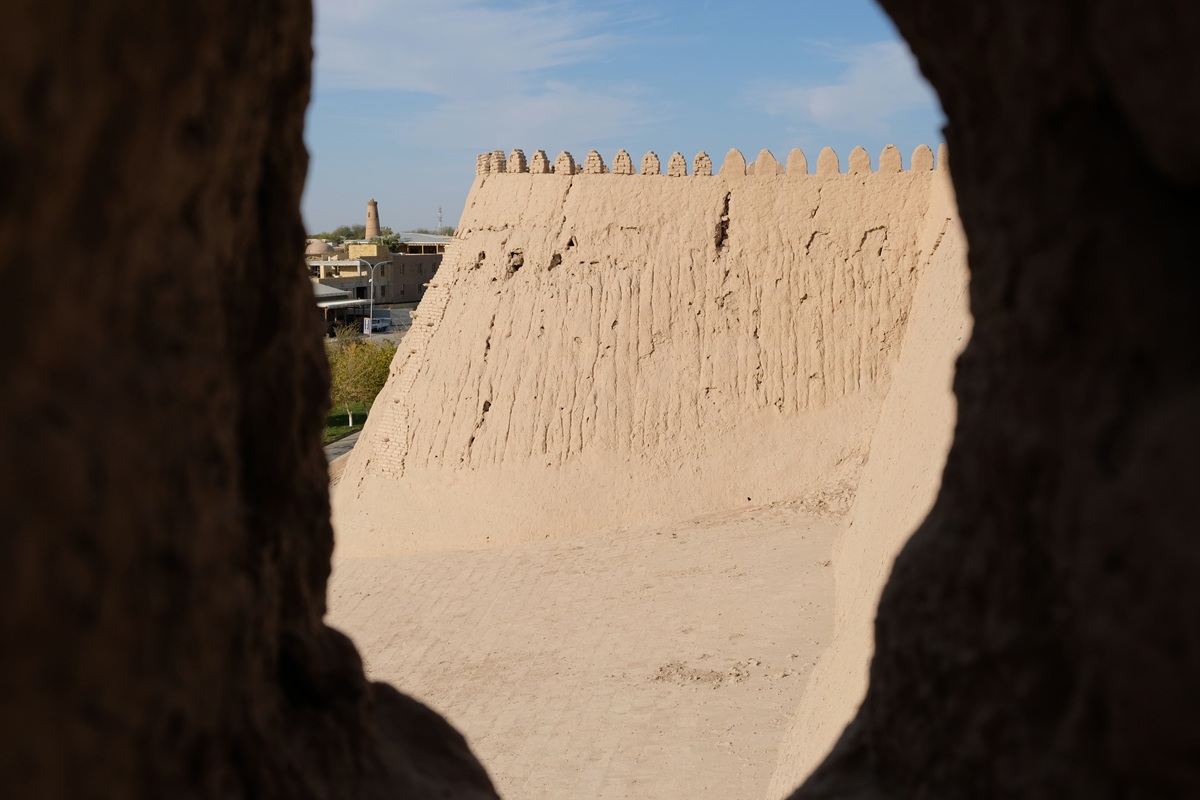
Taking a peek at the world outside the walls
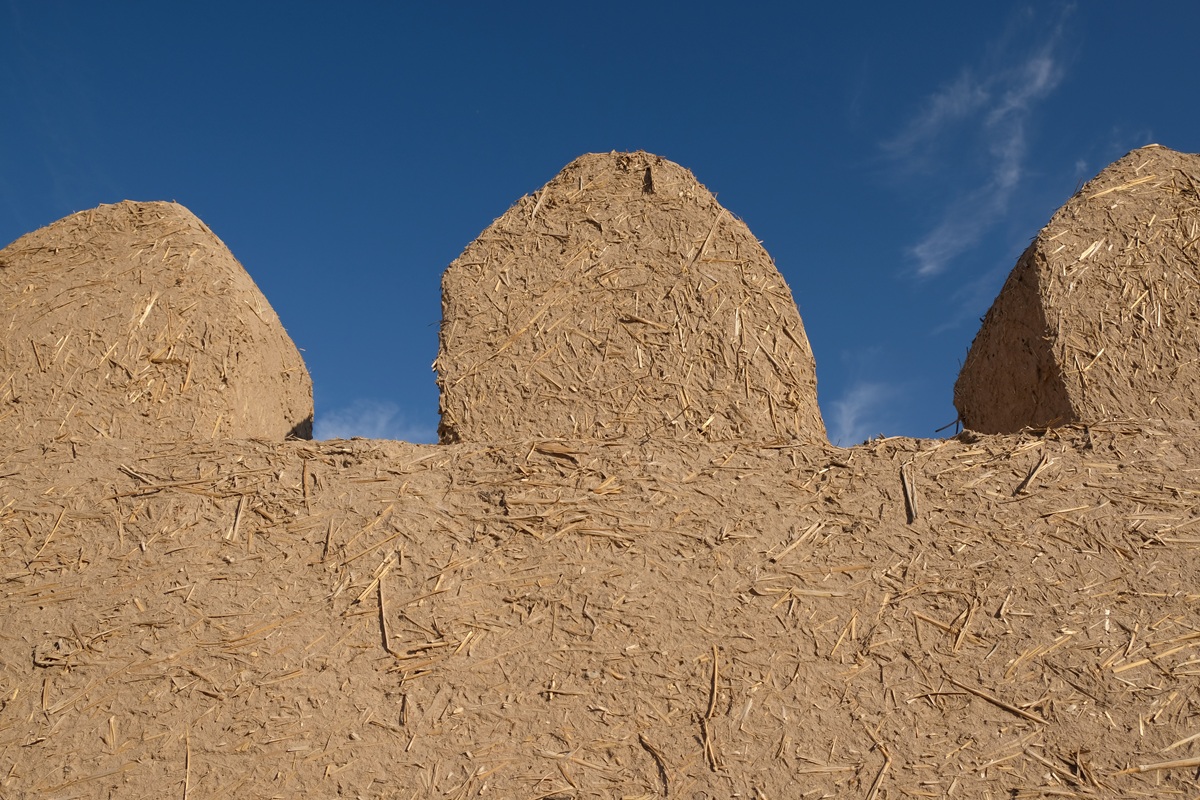
A closer look at one section of the adobe walls of the old town
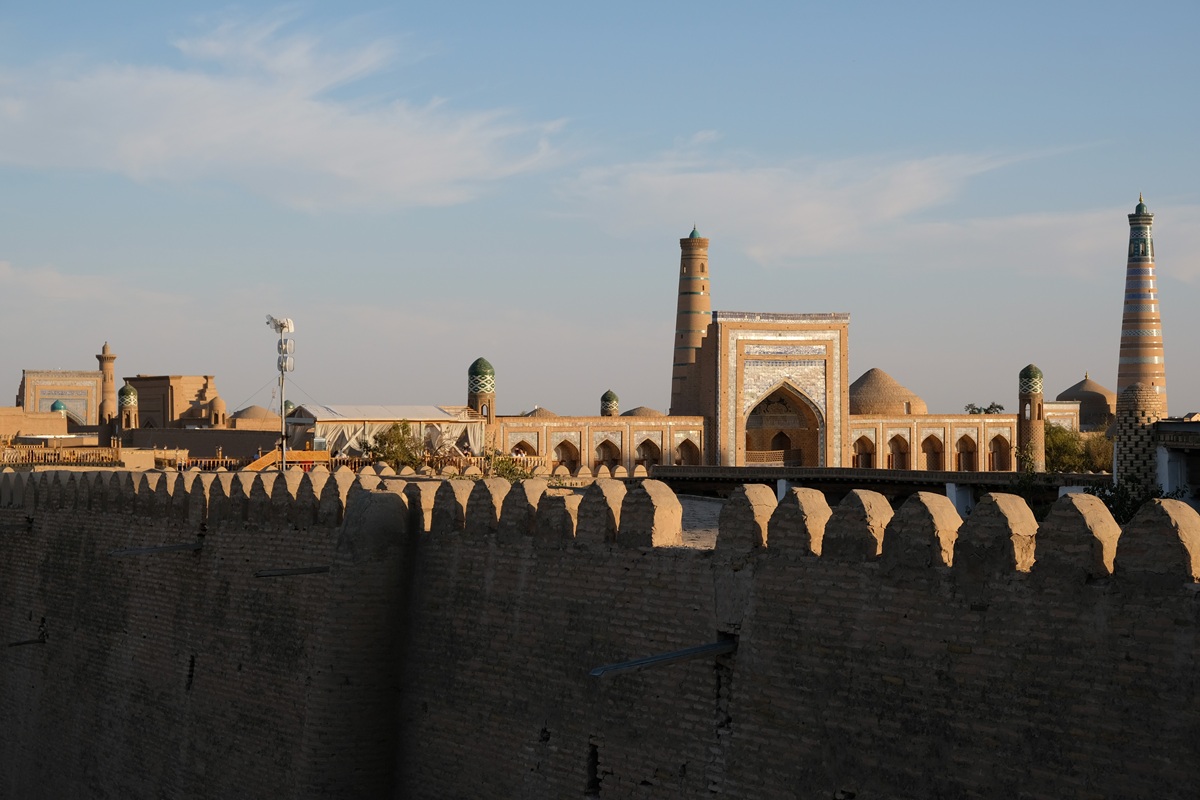
The minarets of Itchan Kala in the late afternoon sun
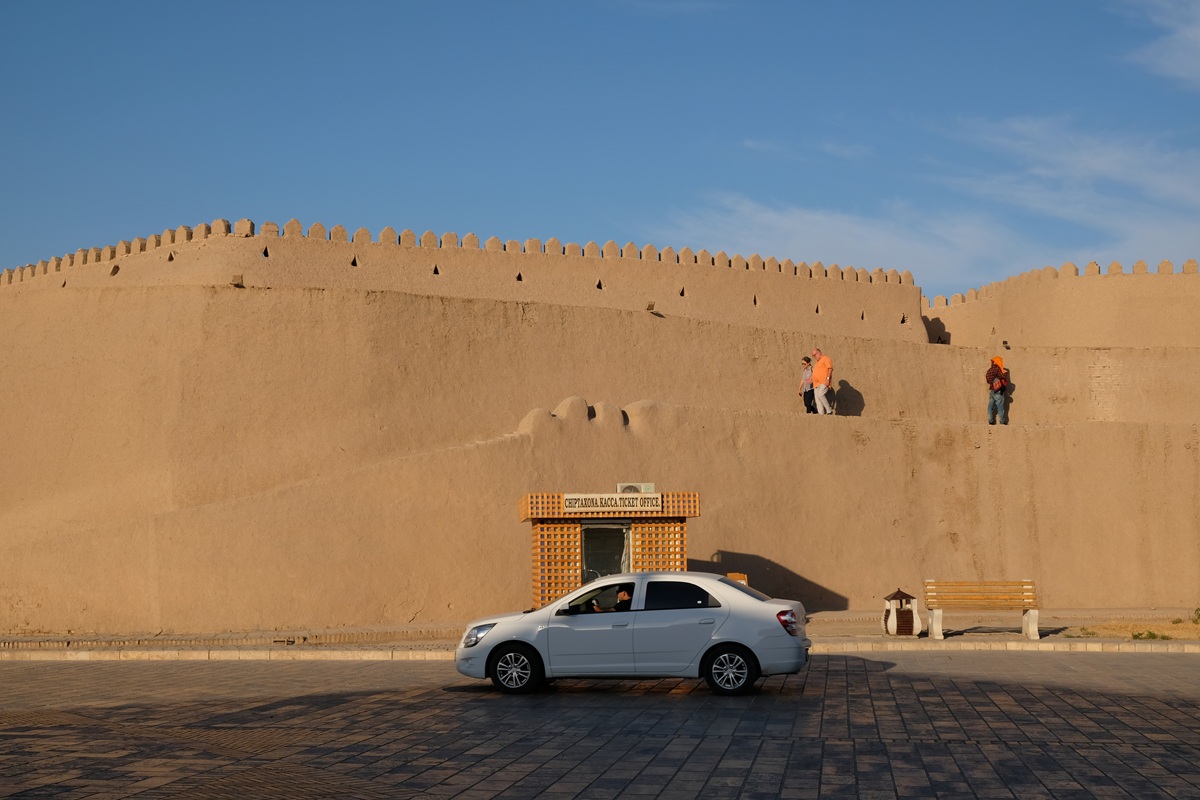
Near the Bogcha Gate in the northern part of the walled city
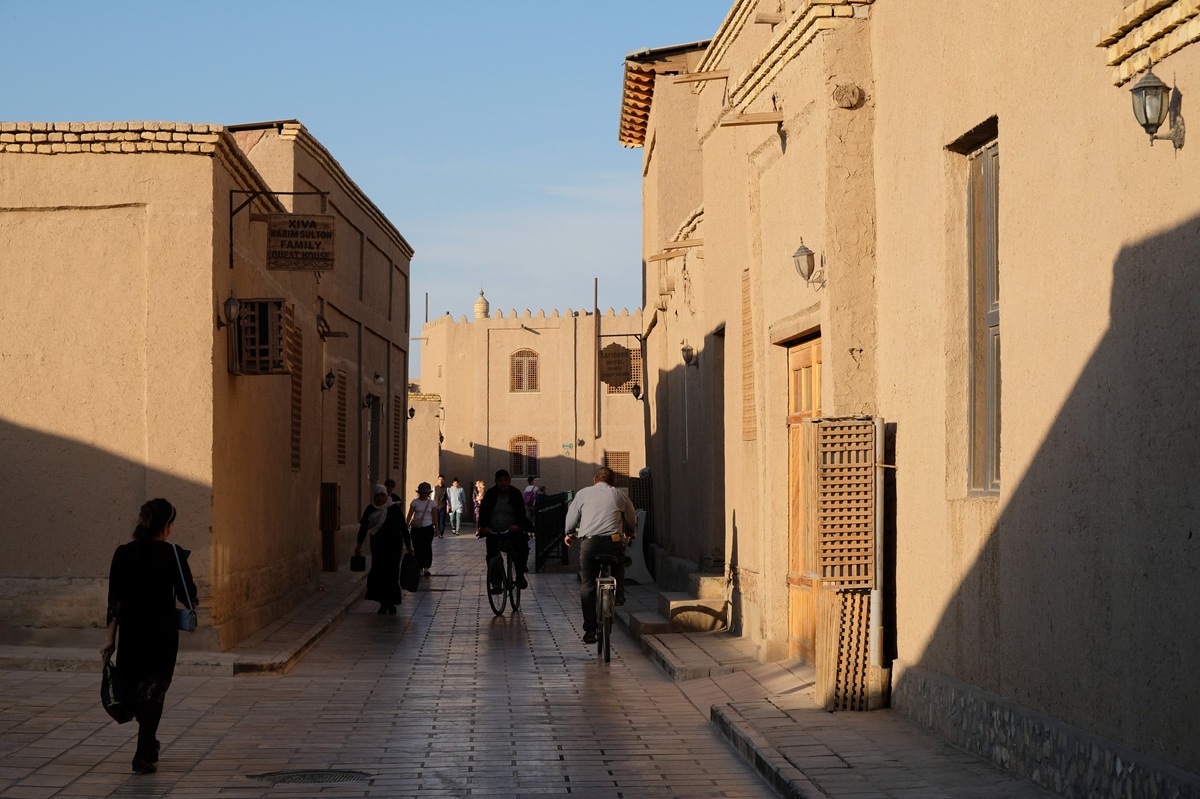
The afternoon “rush hour” in Itchan Kala
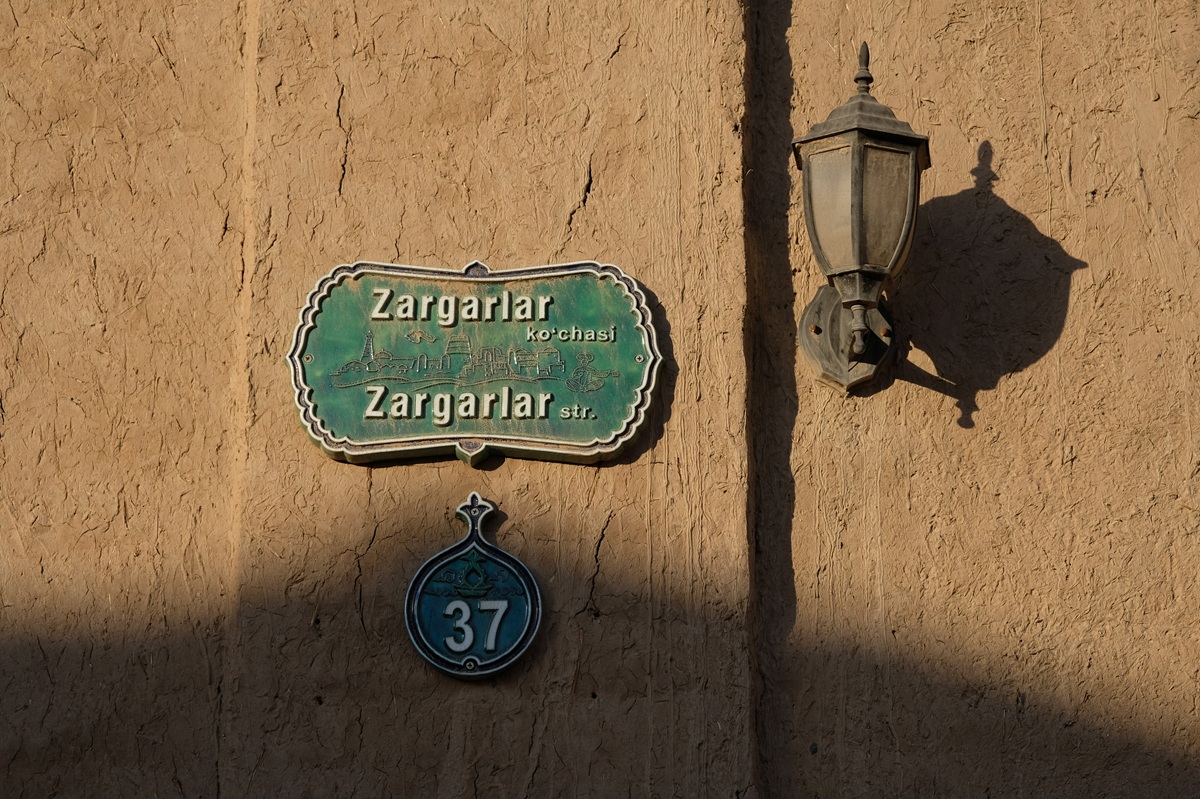
A street sign written in Uzbek and English
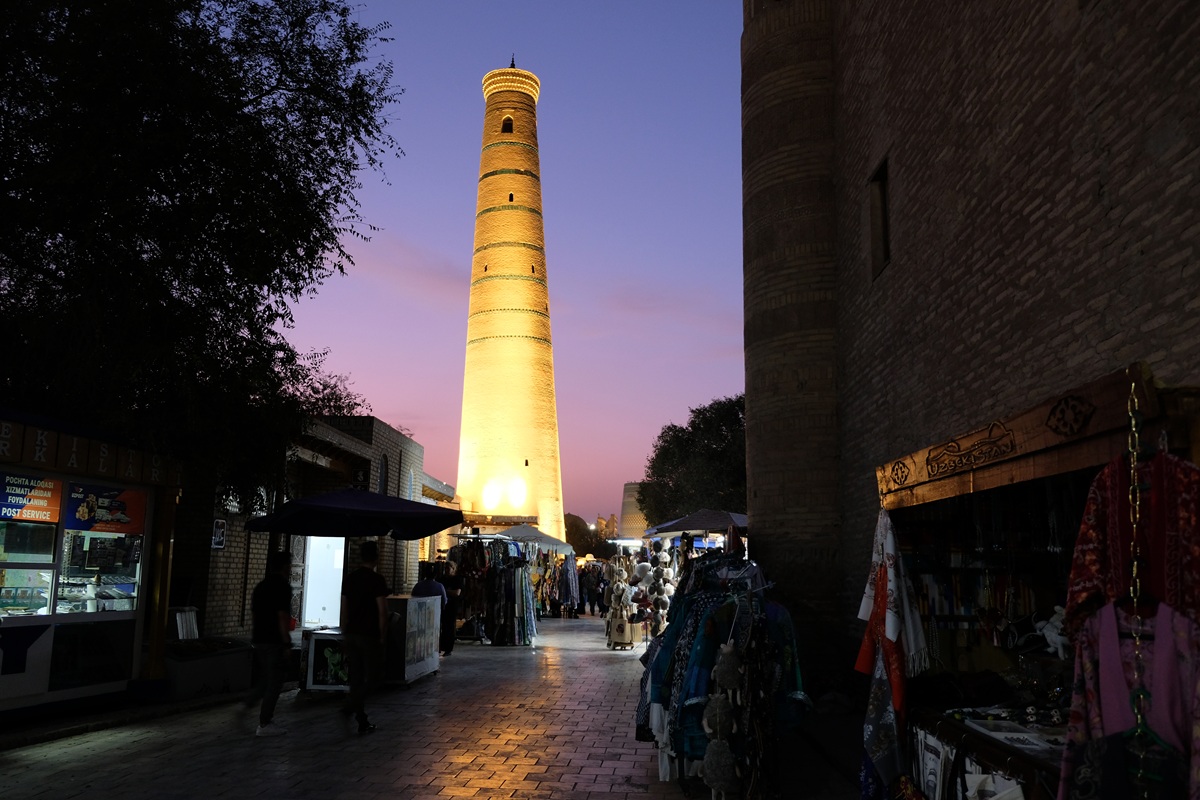
The minaret of Juma Mosque at dusk
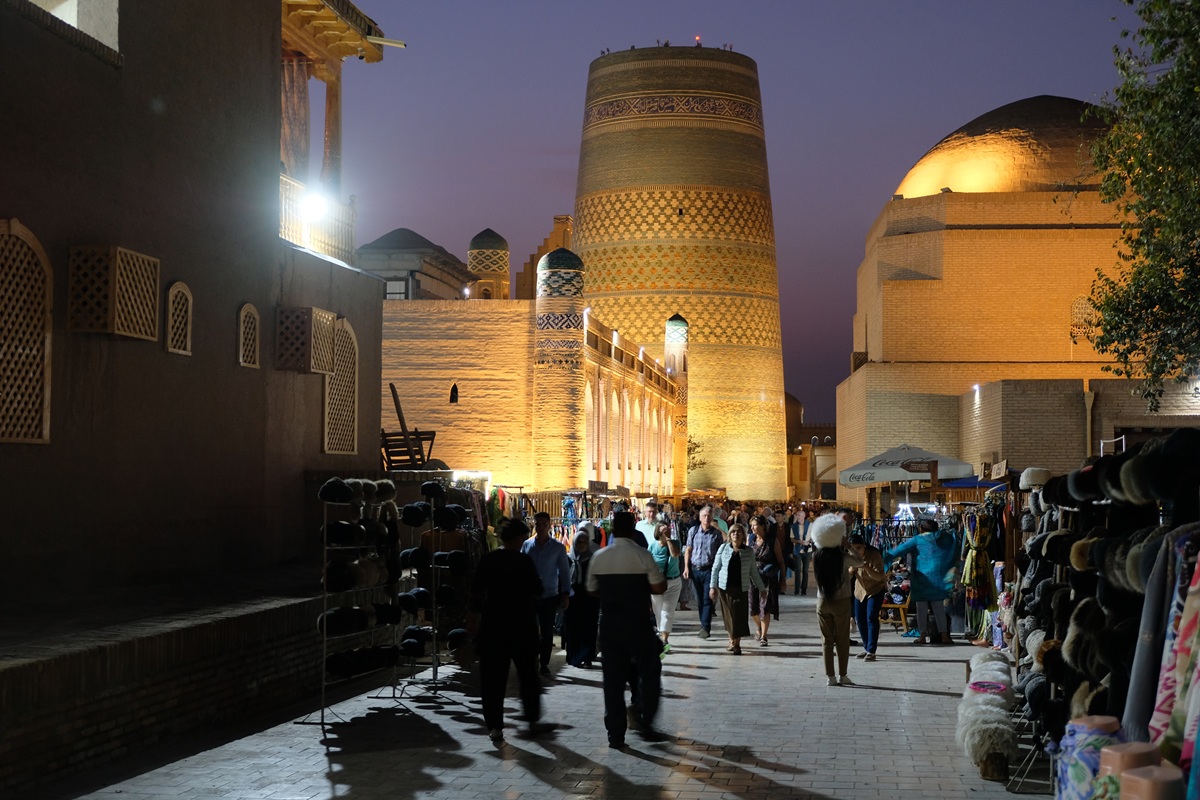
Kaltaminor at night, always the busiest time of the day
Needless to say, we were impressed with our bedroom. However, our itchy feet couldn’t wait any longer to begin wandering around the walled city of Itchan Kala, especially as it happened to be a nice and sunny afternoon. And what place could have been a better starting point of our exploration than the defensive walls themselves? Navigating through the atmospheric and often lively narrow alleys of Itchan Kala, we made our way to the southern gate of the old town, also known as the Tosh Gate. There, after we paid the entrance fee, a friendly lady manning the ticket booth at the base of the gate gave us leaflets with a map of places of interest in this old part of Khiva. Soon enough we were already walking on parts of the fortifications around the perimeter of this historic city to get a better vantage point of its minaret- and dome-studded skyline. Three towers particularly stood out: the iconic Kaltaminor, the Juma Mosque minaret, and the Islam Khodja Minaret – which is the tallest in Itchan Kala at 56.6 meters.
Staying in the walled city for a few days gave us enough time to check out both the most famous sites as well as those that were less frequented by visitors. On another day, we started early when most other tourists were probably still sleeping. The previously lively alleys were now peaceful and quiet, and the soft morning sun made the mud-brick structures glow. It was very atmospheric and mesmerizing. We walked through the eastern gate of Itchan Kala, also known as the Polvon Gate, to exit the walled compound and headed to the remains of Dishan Kala, the outer defensive walls of the old city of Khiva. Only parts of it still survive to this day, including the Hazorasp Gate, a 19th-century construction that now stands between Itchan Kala and Khiva station. Along the way, we encountered cute schoolchildren in their uniforms, some of them saying hello to us with big smiles.
Before the sun rose too high, we returned to Itchan Kala. And as we drew closer, the Islam Khodja Minaret came into sight once again while the rest of the old town was hidden behind the walls. The minaret’s loftiness would certainly beckon anyone to come closer and enter the compound to marvel at the many centuries-old buildings inside. But it would also spark curiosity for those who wonder how the walled city looks when viewed from the minaret. And we were among those people.
We went to the base of the minaret to pay the entrance fee, and frankly the structure looked even taller when I stood right next to it. I even began to question our decision to go up – is it safe? The moment we entered the monument and started scaling its narrow spiraling steps, it immediately dawned on me that this was definitely not a place for people with claustrophobia. As we climbed higher, at times we had to stop to make way for other visitors going down. Luckily, it was a rather short climb, and a few minutes later we were already at the viewing platform, 45 meters above the ground. From this height, the panoramic views of Itchan Kala were marvelous: old madrasahs, former palaces, ancient tombs, and mosques standing next to each other, some dating back to the 17th century CE, and a few as old as the 14th century, when the ancient Silk Road was still an active trade network, connecting merchants from Asia and Europe.
The Islam Khodja Minaret was built in the beginning of the 20th century, but from up there the echoes of the Silk Road were somewhat still palpable. We took in the magnificent 360-degree views before our eyes, with the cool autumn breeze caressing our faces. Now, we were more eager to check out some of the monuments we were looking at from this bird’s-eye perspective. With each step going down the minaret via the same narrow staircase, my excitement to explore more of Itchan Kala only grew bigger.
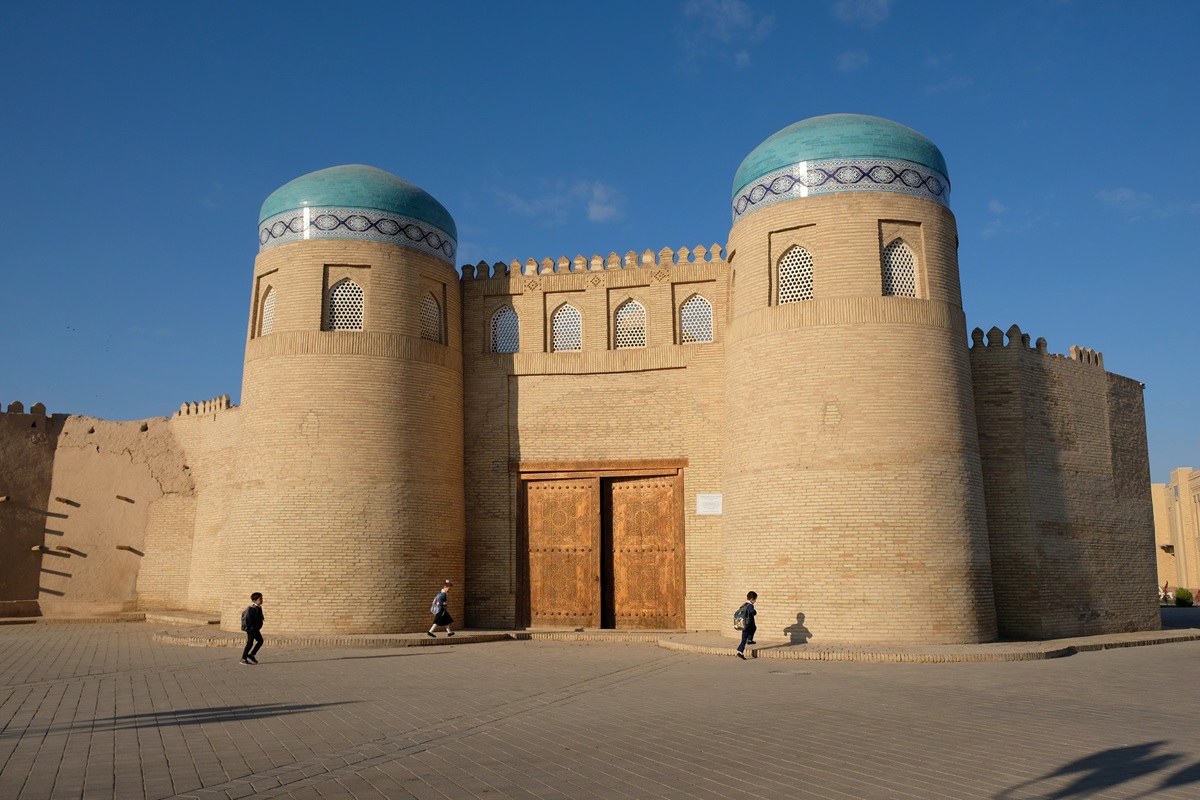
The Hazorasp Gate of Dishan Kala
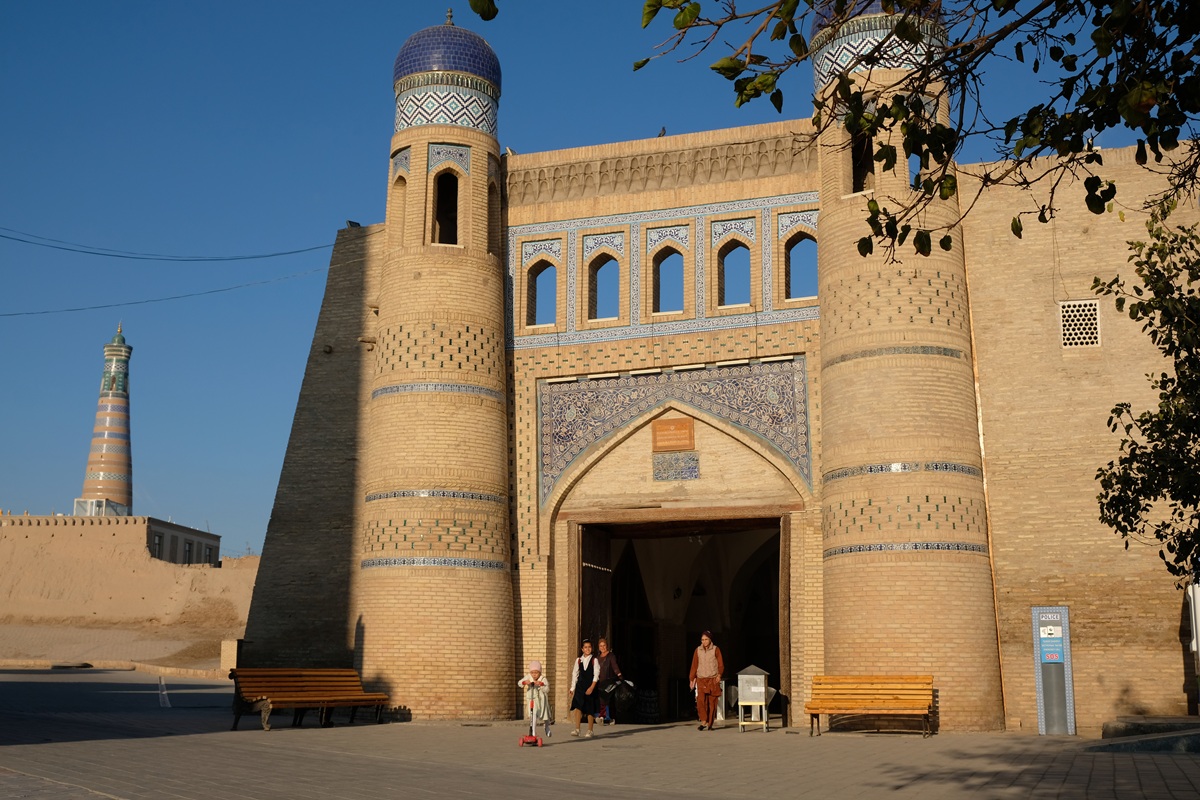
Entering Itchan Kala via the Polvon Gate with the Islam Khodja Minaret looming in the background
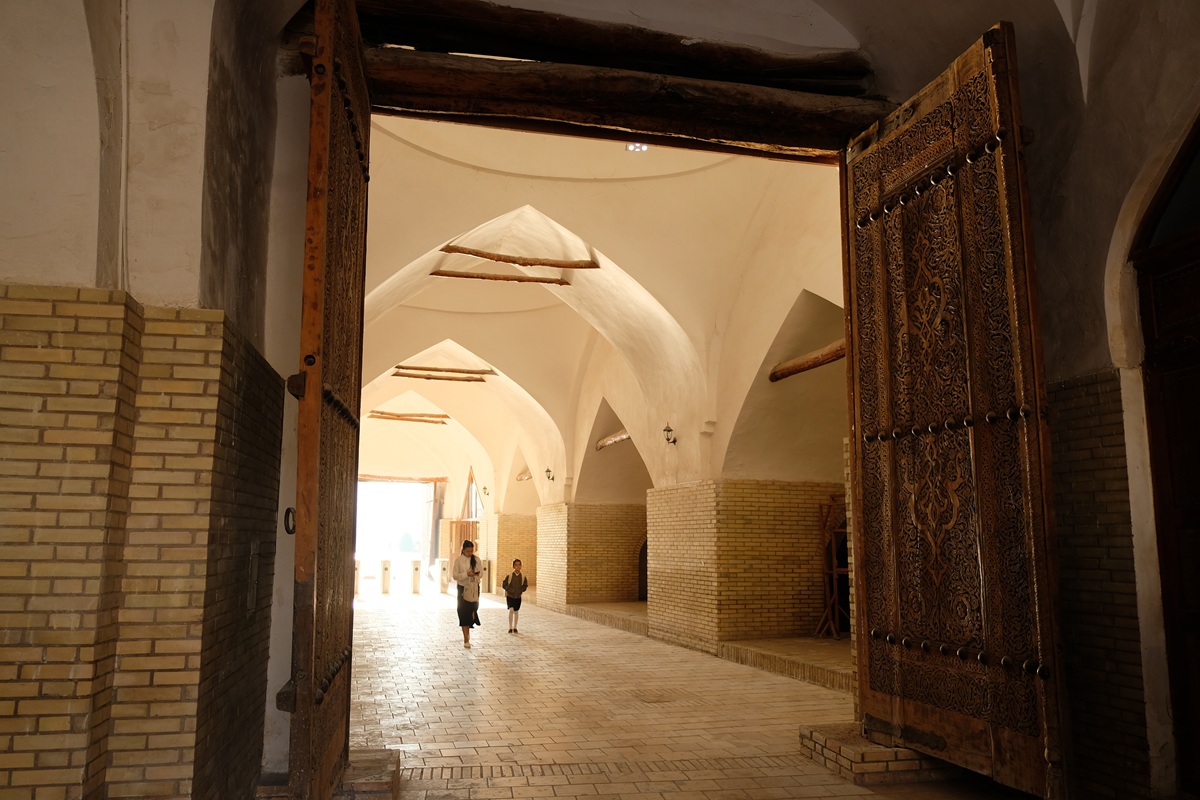
The ornate wooden doors of the Polvon Gate
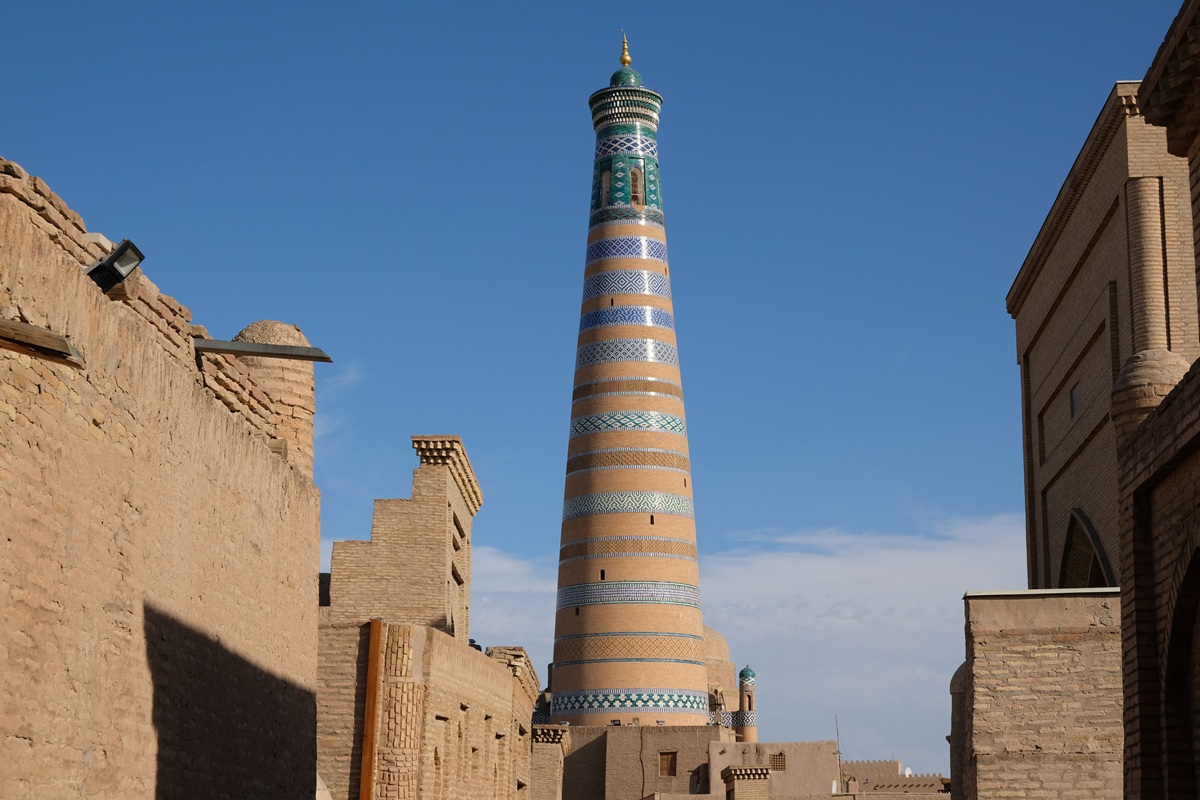
The lofty Islam Khodja Minaret was visible from almost every corner of Itchan Kala
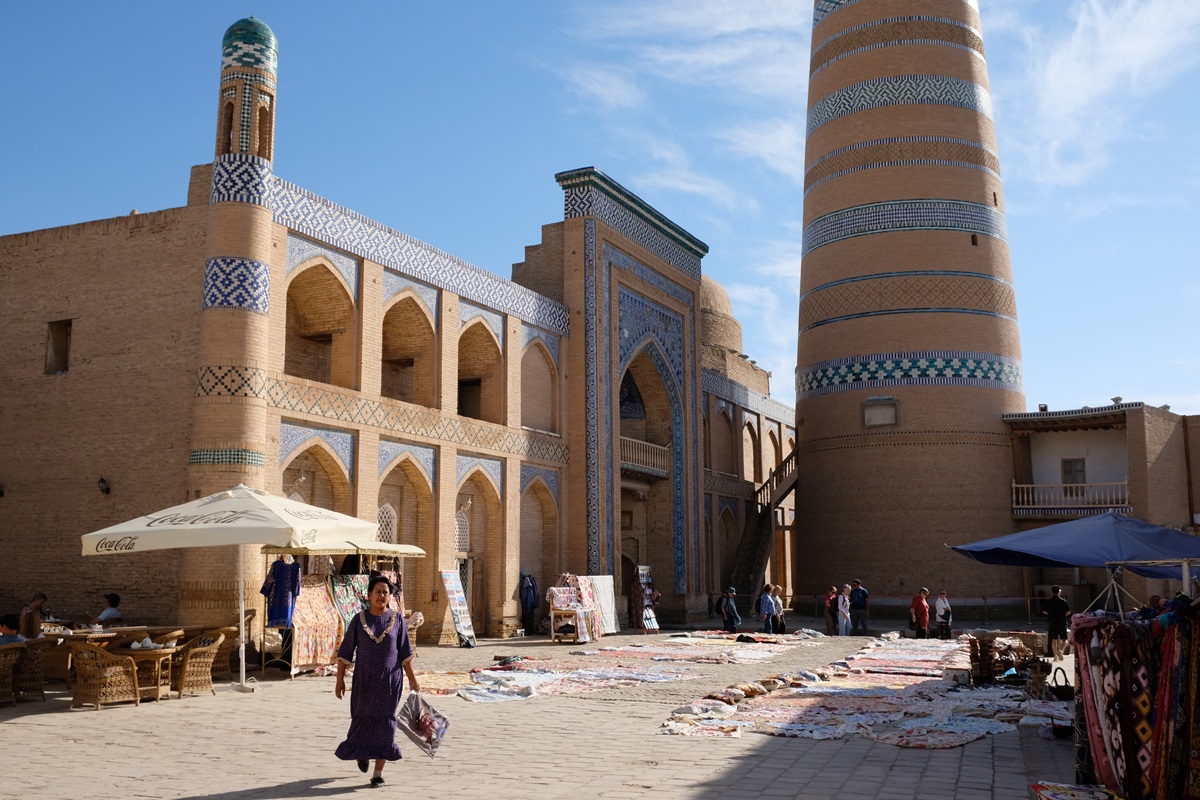
The minaret rises next to the namesake Islam Khodja Madrasah
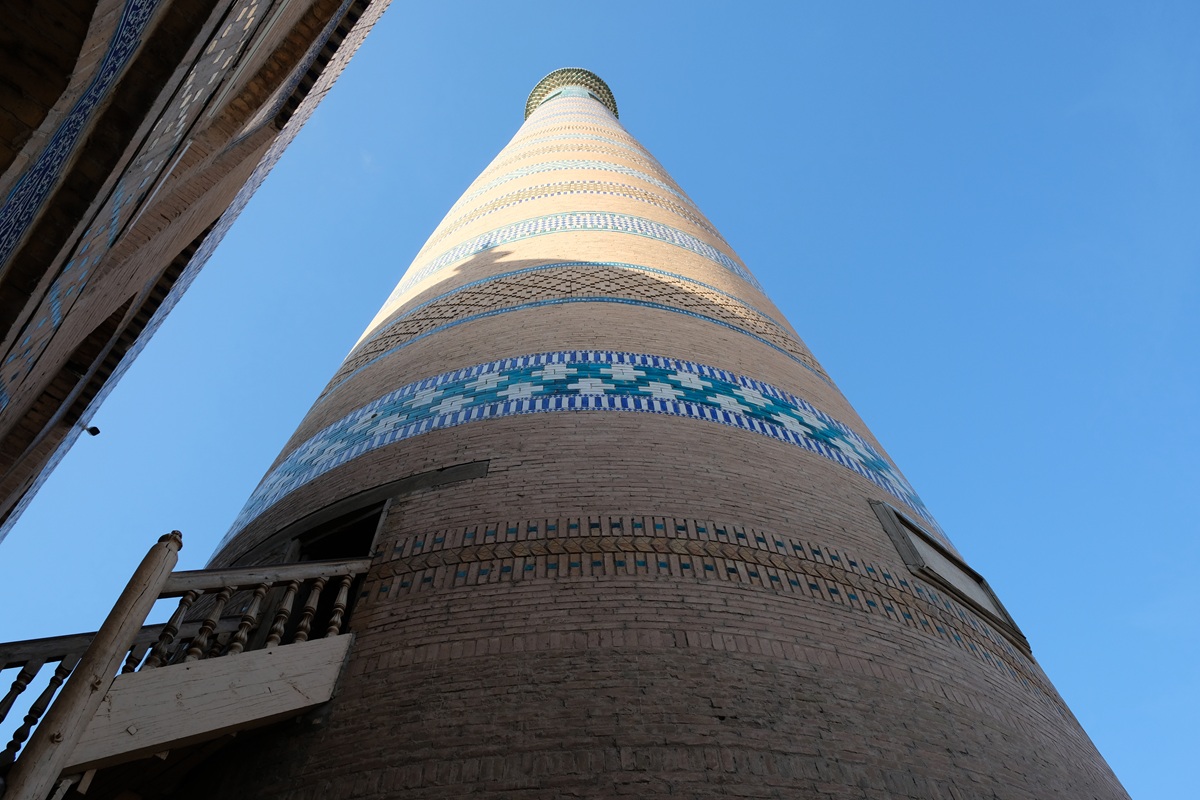
When I looked up, I began to question many things
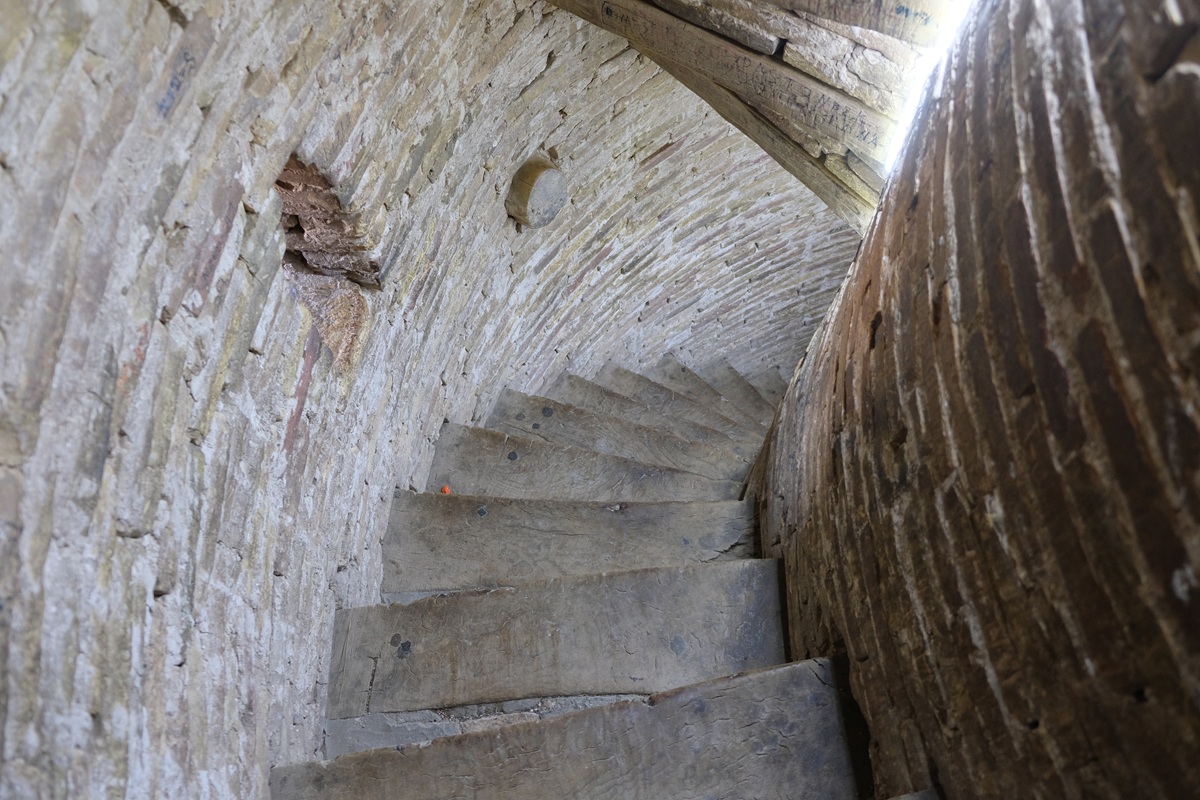
The narrow and steep staircase inside the minaret
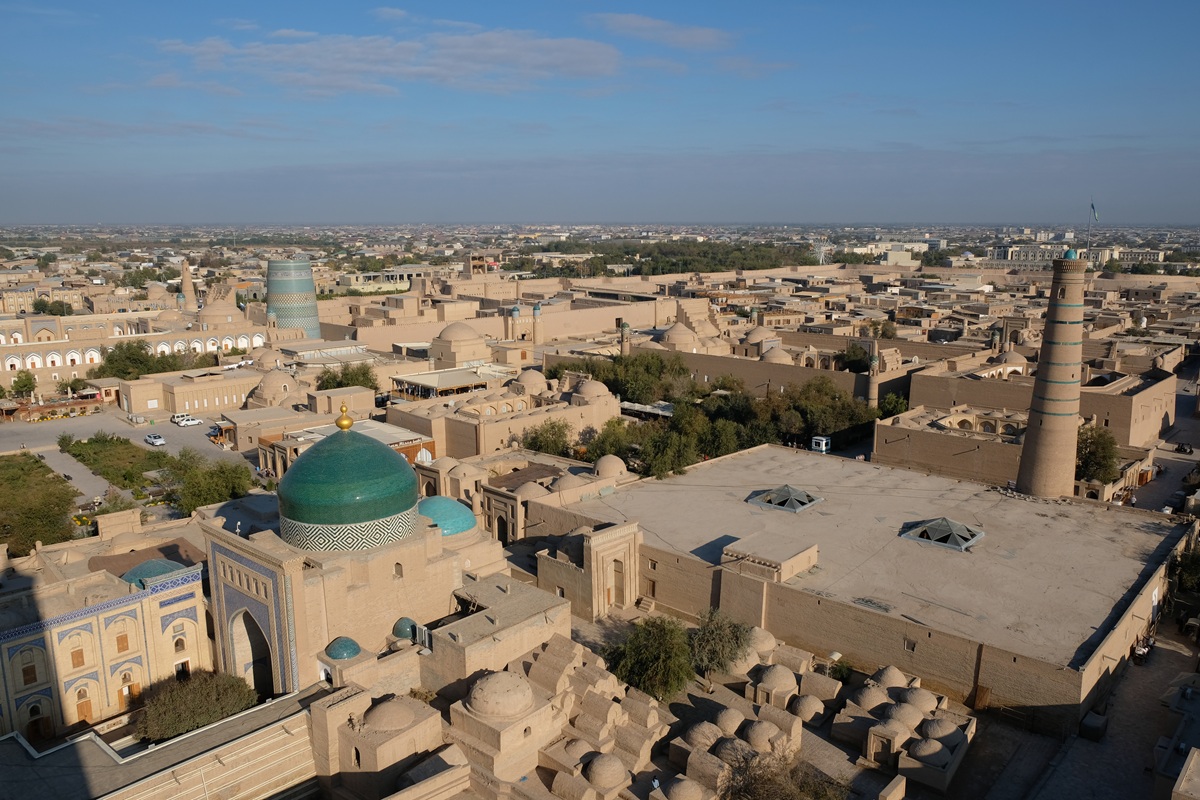
The views were definitely worth the climb
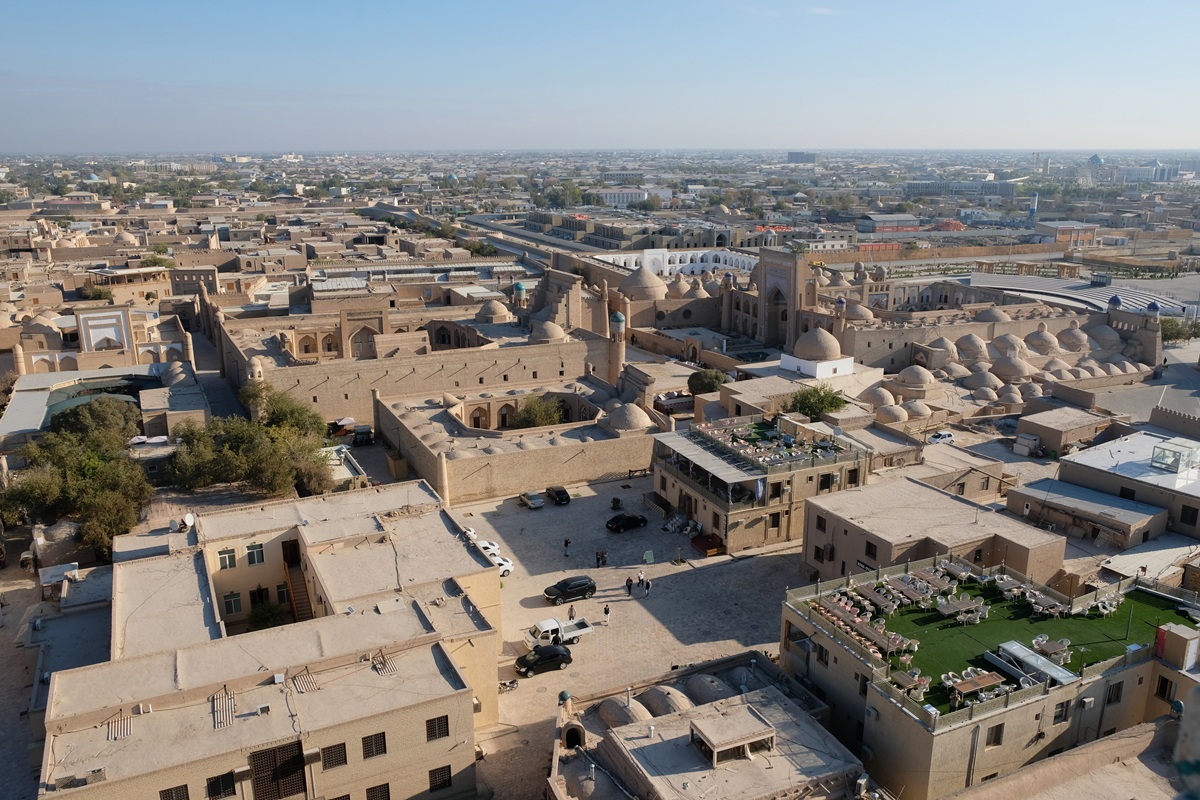
The many madrasahs of Itchan Kala as viewed from the Islam Khodja Minaret
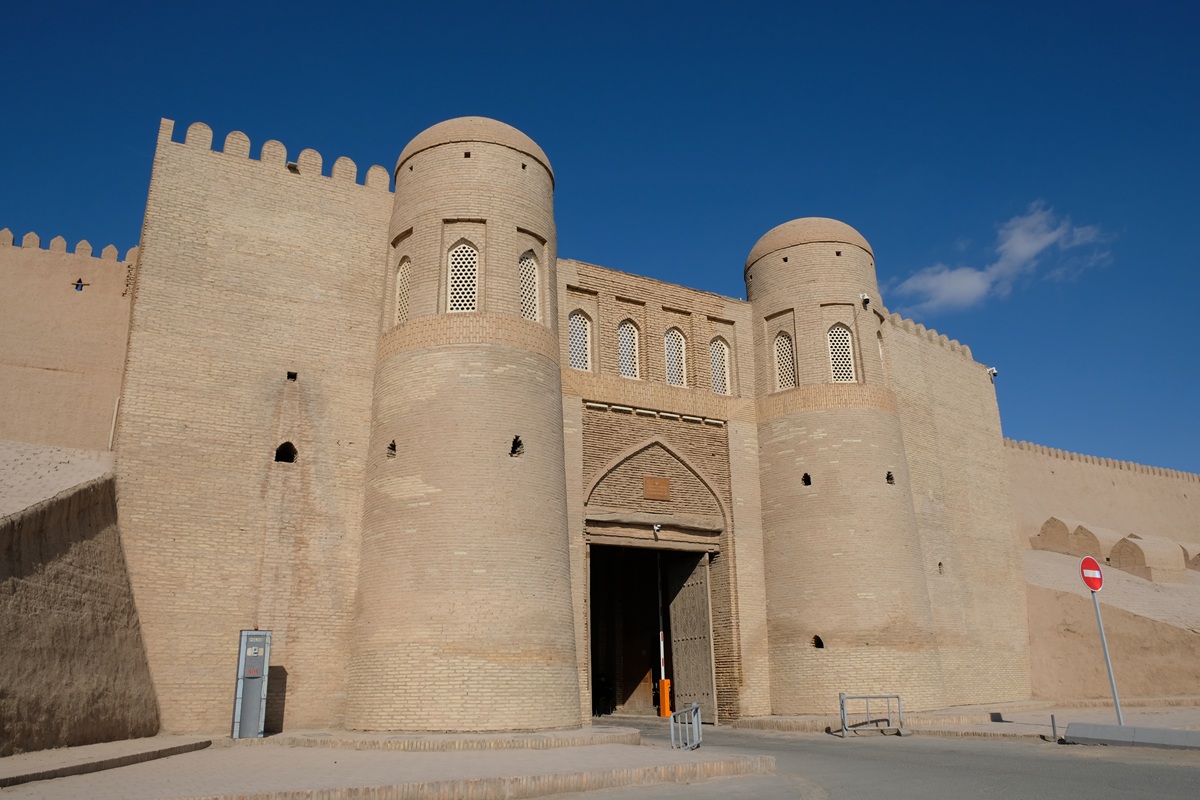
The Tosh Gate from outside the walls
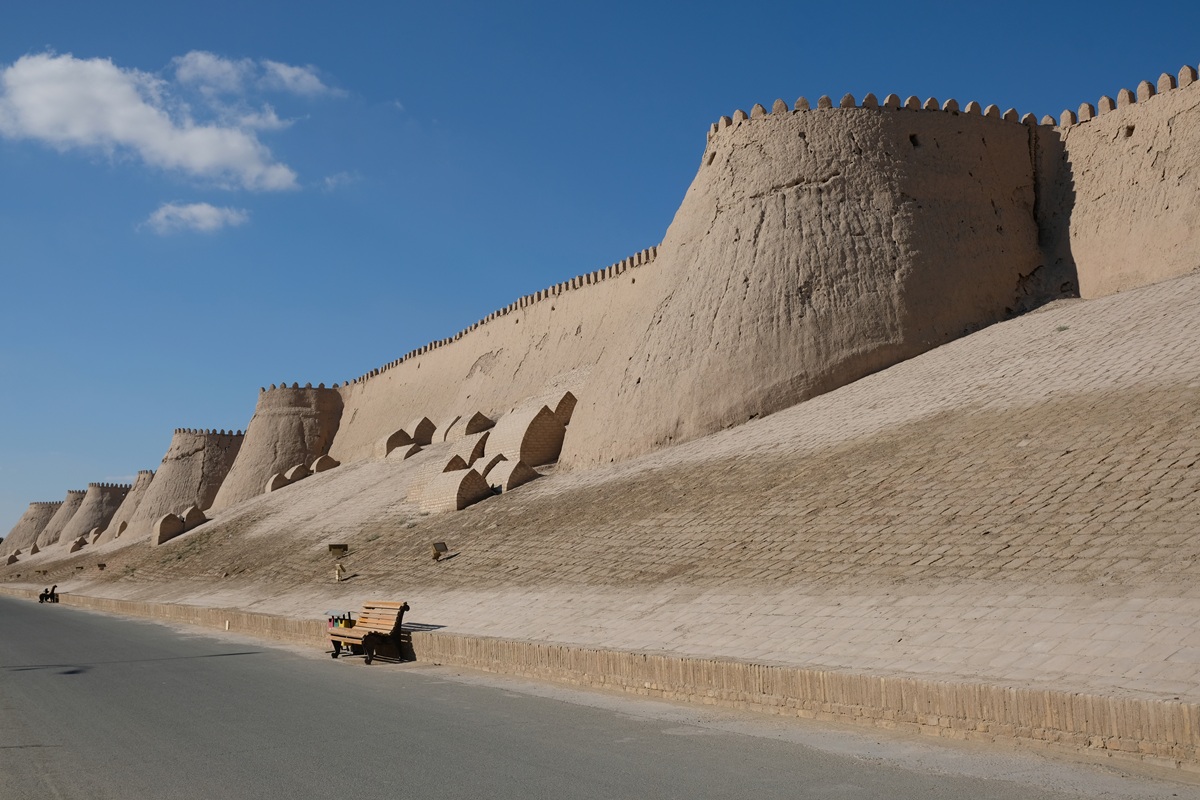
The impressive defensive walls of Itchan Kala
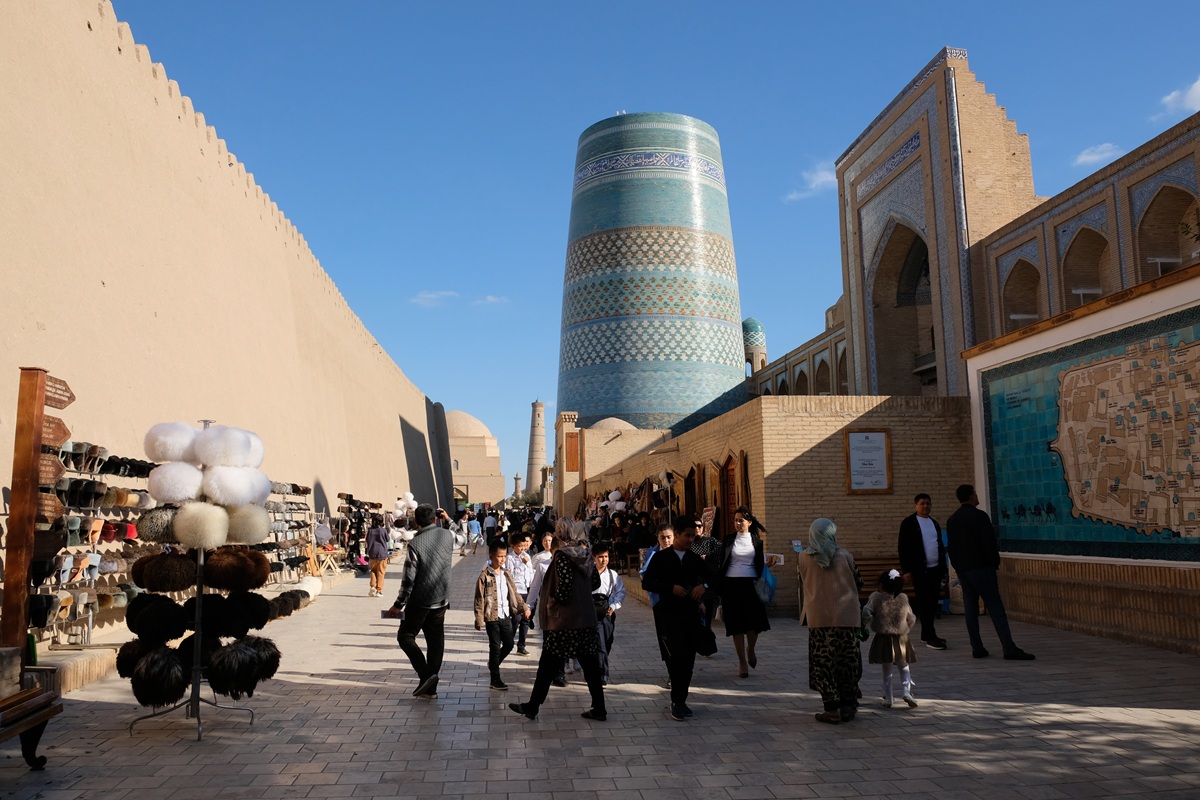
The area around Kaltaminor understandably has among the highest concentrations of souvenir stalls within the walled city
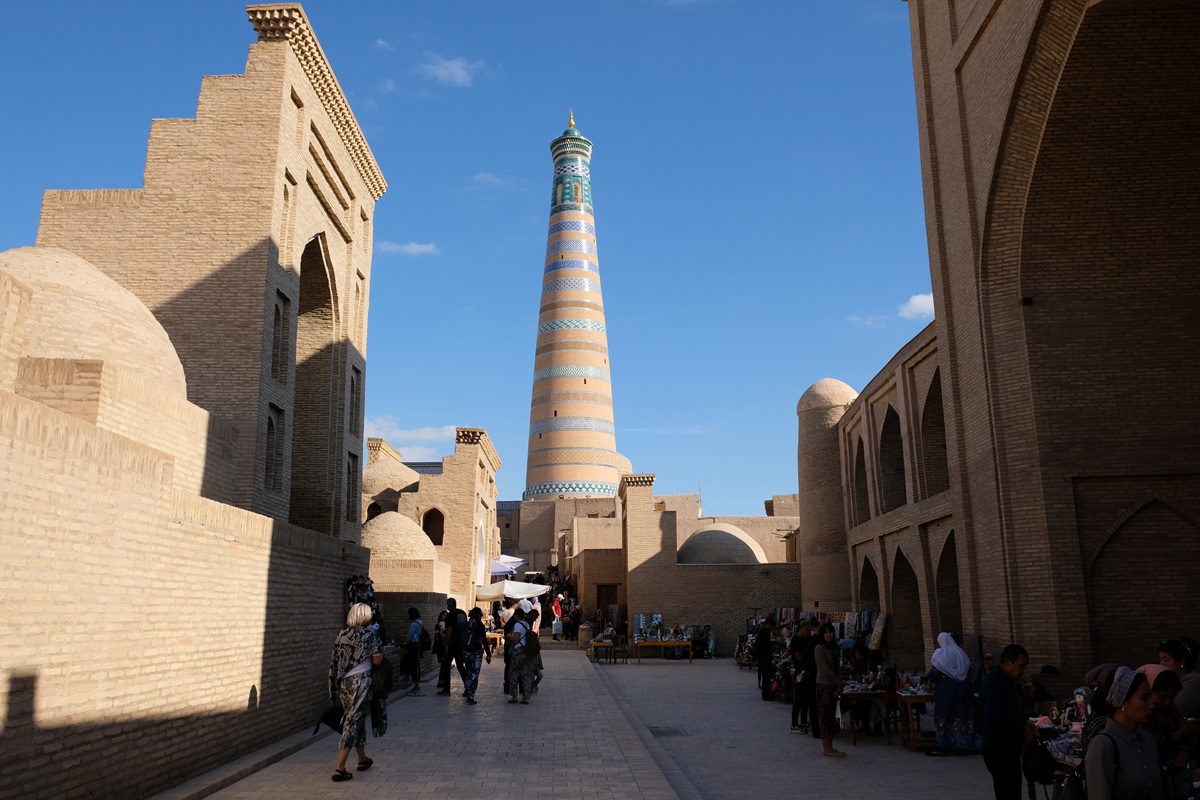
You will often stumble upon the Islam Khodja Minaret when exploring Itchan Kala
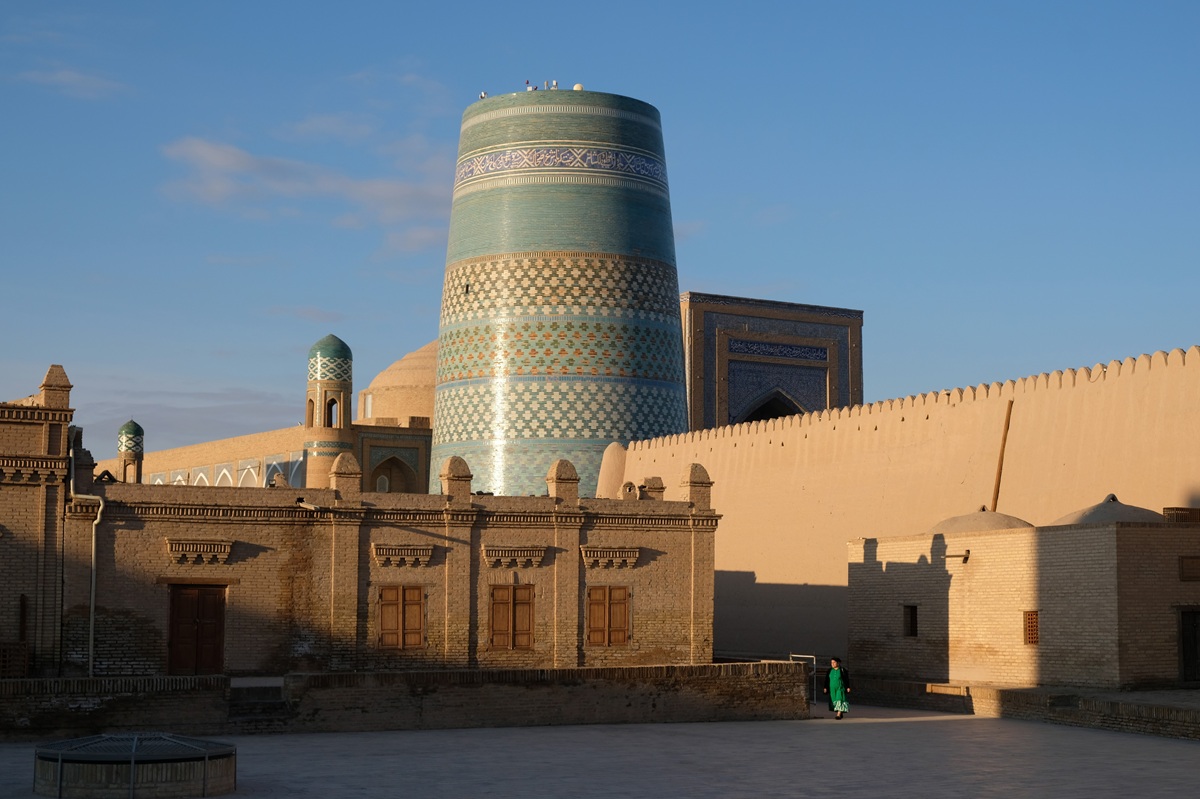
Kaltaminor in the soft morning light
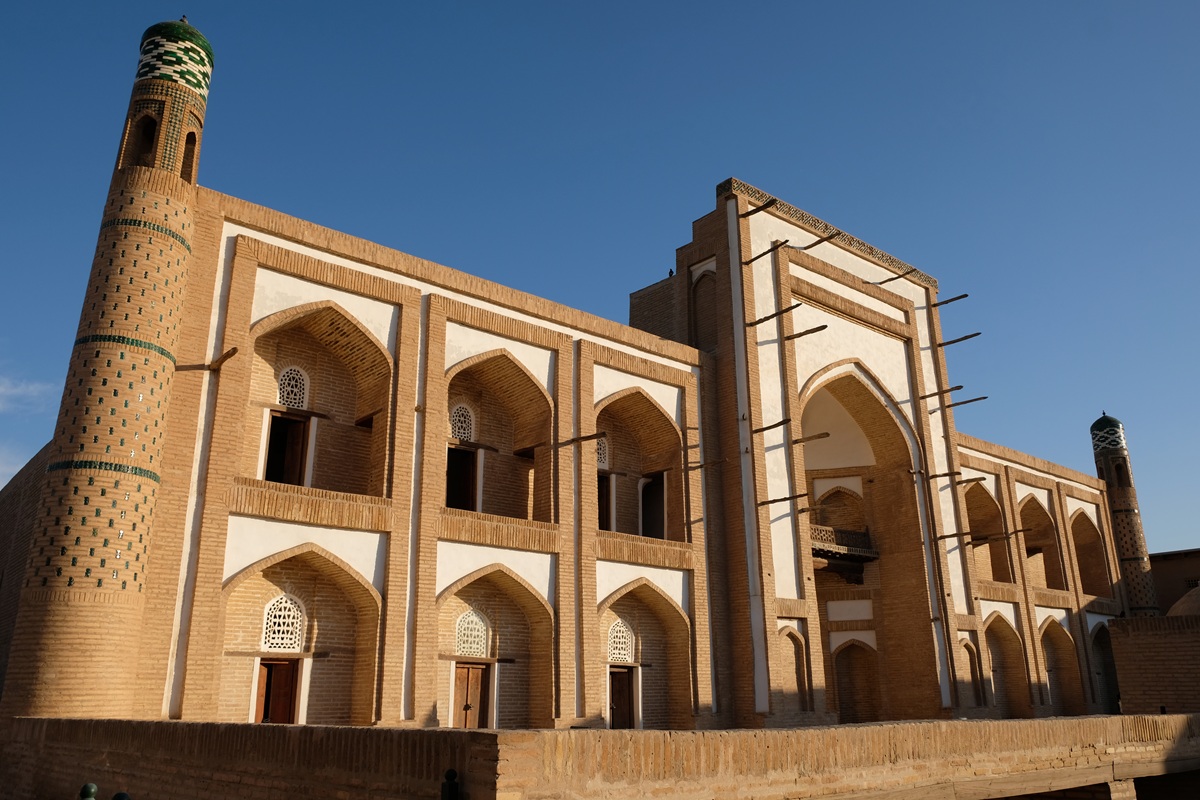
The 19th-century Amir Tora Madrasah in the northern part of the walled city
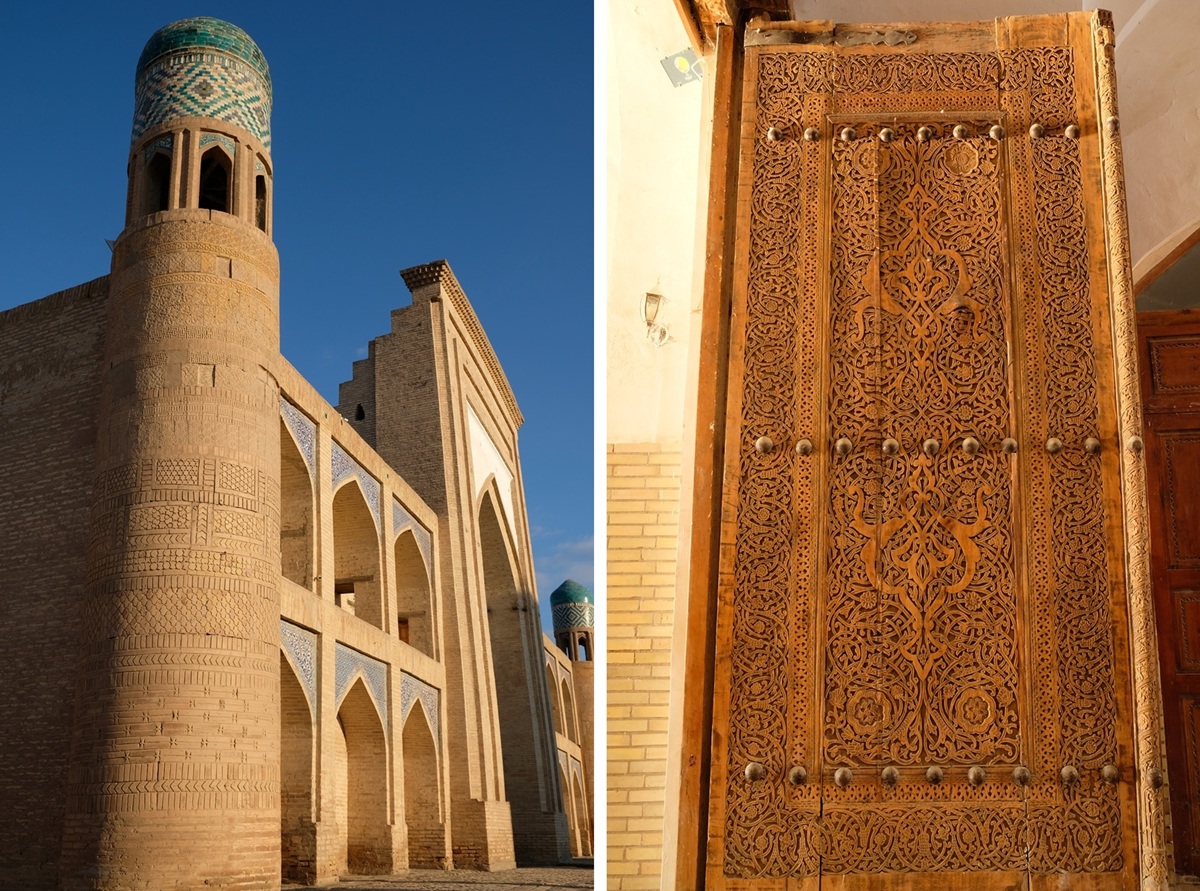
Intricate details of Itchan Kala
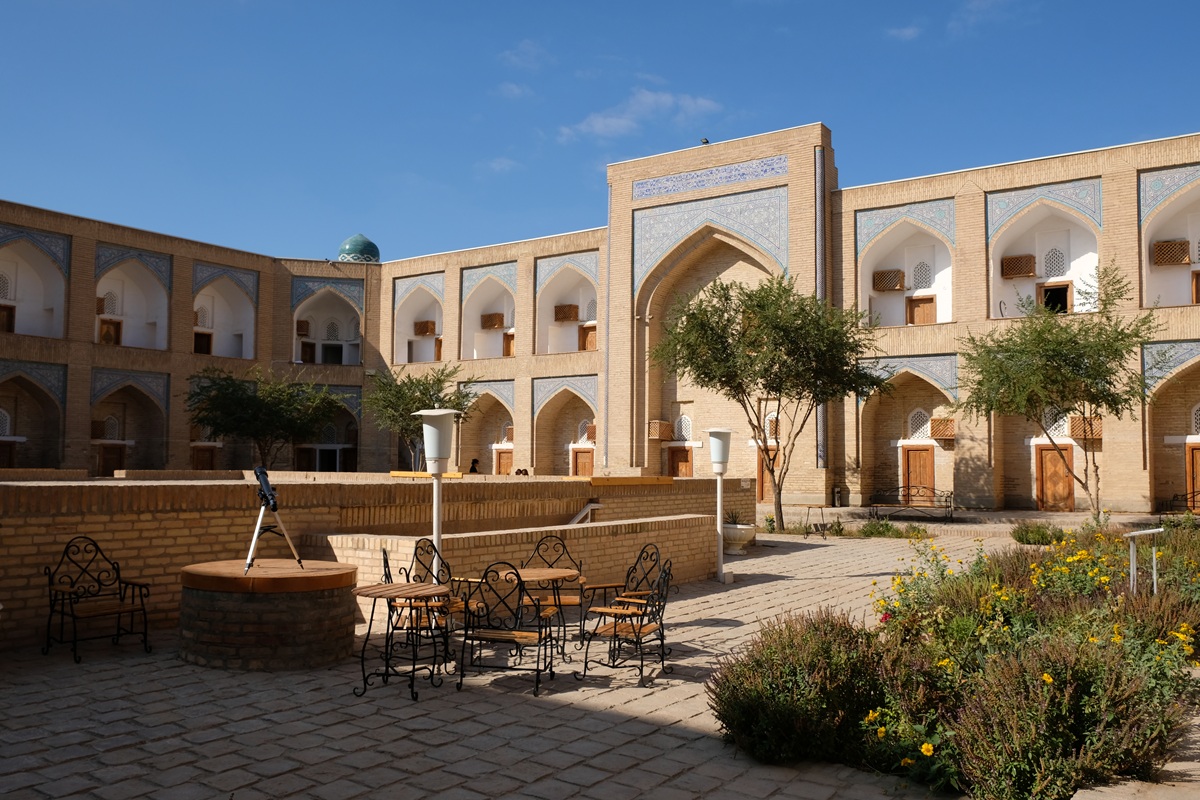
The courtyard of the Muhammad Aminkhan Madrasah, also built in the 19th century
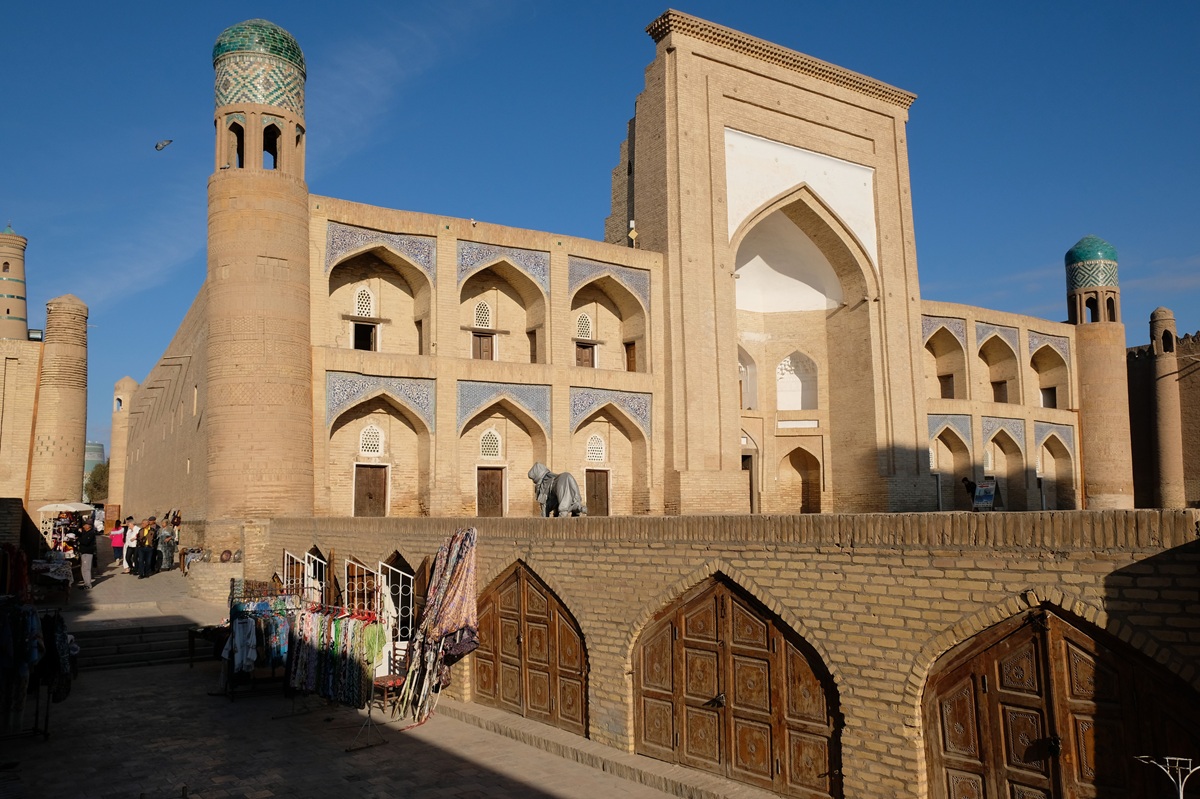
The early 19th-century Kutlugmurad Inak Madrasah near the Polvon Gate
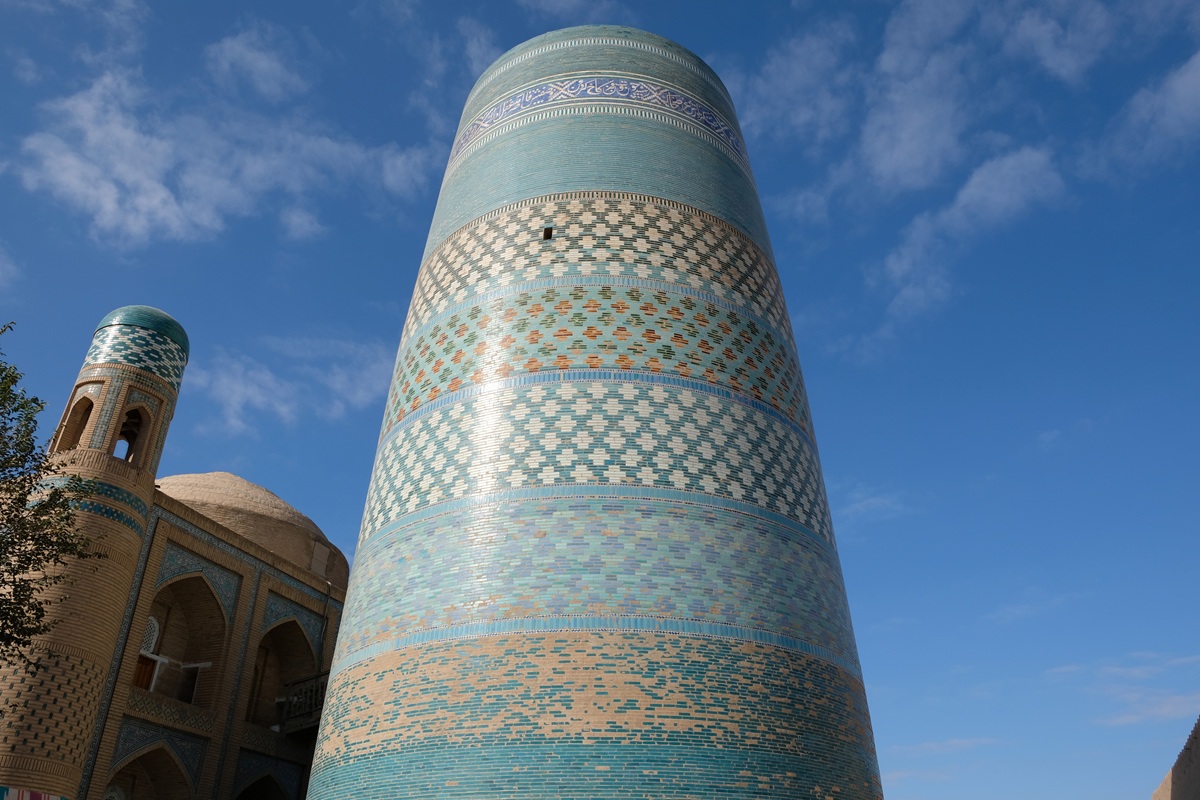
Standing before the iconic Kaltaminor


Very beautiful ❤️
LikeLiked by 2 people
It really is a beautiful corner of the world.
LikeLiked by 1 person
A step back in time, indeed! The sand-colored fortifications definitely look like something out of Aladdin (although the story’s not necessarily based there!), and it’s amusing to think that there are cars parked next to the minaret, “tethered” like the camels which preceded them. Itchan Kala looks fantastic, and I’m determined more than ever to make it over to Uzbekistan (and Central Asia, in general) sometime next year! Planning as we speak…thanks for sharing, Bama!
LikeLiked by 2 people
Doesn’t Itchan Kala look magical? It’s the kind of place that provided inspiration for tales and stories. I’m excited to hear about your plan to visit this part of the world next year! The good thing is, now the high-speed railway has reached Khiva (it wasn’t opened yet when we went two years ago). So, going there should be easier for you.
LikeLiked by 2 people
Absolutely magnificent. Thanks for the thorough virtual tour. (Suzanne)
LikeLiked by 2 people
Much appreciated, Suzanne!
LikeLiked by 1 person
I would have loved to see a photo of an asafoetida plant as I used its powder in cooking lentils. From the top of the minaret Itchan Kala appears large, yet the number of people in the streets don’t reflect this. Was your visit during summer?
LikeLiked by 2 people
I think I really should have taken a few shots of the asafoetida plants I saw along the way. They looked very interesting. Itchan Kala is actually quite compact. You can walk the entire perimeter of the walled city in probably under an hour. We went in autumn, which was nice because it wasn’t hot at all.
LikeLiked by 2 people
Those mud-brick walls and striking tilework look icredible and I can easily see why it felt like stepping back into a 19th-century Silk Road outpost. It’s quite amazing that locals still reside alongside ancient mosques, minarets, and palaces that make Itchan Kala a “living museum”. Thanks for sharing, and have a good day 🙂 Aiva xx
LikeLiked by 2 people
The fact that there are still people living in Itchan Kala makes it even more appealing. It was interesting to see the morning and afternoon “rush hour” in the walled city. I hope this place won’t reach a point where the number of tourists gets so high that the locals will be pushed away. Thanks Aiva!
LikeLiked by 1 person
Isn’t Khiva just magnificent?? Can you believe so many people miss it? I was just reading a forum the other day where someone said they were short on time and should they miss it and people were saying yes that there isn’t much in Khiva etc. I’m like are you serious??? So much to see and do!! That tower climb was scary at times hey? I nearly slipped going back down! Fun times! Thanks for the memories! X
LikeLiked by 2 people
I think with the opening of the extension of the high-speed railway to Khiva, more and more people will eventually come to Itchan Kala as well. There were already quite a lot of foreign visitors when I went. But yeah, from what I’ve been seeing on social media, it seems like Khiva is often skipped by many, which is a shame. I’m not a fan of climbing narrow towers, but I’m glad I did in Itchan Kala. I’m glad you were not injured, Anna! That sounds quite scary actually.
LikeLiked by 1 person
It was quite scary actually! Buy my fault for wearing old Birkenstocks without grip! Haha. I had to quickly grab the side walls to stop me going on my butt! Gave me a fright for sure!
LikeLiked by 2 people
I guess the benefit of it being a narrow space is the walls are always within reach.
LikeLiked by 2 people
Wonderful tour of a fascinating city.
LikeLiked by 2 people
Thanks for reading, Marie!
LikeLiked by 2 people
Amazing place. I’ve been putting this trip off, but your lovely photos make me want to go immediately.
LikeLiked by 2 people
Maybe after your trip to Indonesia? Uzbekistan is closer to you after all.
LikeLiked by 2 people
Won’t be this year, unfortunately
LikeLiked by 2 people
There’s always another year!
LikeLiked by 2 people
Wonderful photos and stories! Indeed Khiva is magical, especially at dawn and dusk. I remember getting up early to catch that first light when the world is still sleeping. I can relate to your experience! 😀 Did you get cramps climbing Islam Khodja minaret? I did, maybe I’m too short! Hahaha!
LikeLiked by 1 person
This post bring a flutter to my stomach, Bama. Khiva will be my first experience of Uzbekistan, which will make it extra special for me, I think. I’m glad Turkish Airlines fly into various cities, which means I don’t have to backtrack at all. I’ve bravely booked a tour to Nukus to go to the Savitsky Museum and three of the desert fortresses for my very first day, as my flight lands at 7 am. I think you’ve mentioned somewhere that you visited the fortresses, so I will look forward to that post. (No pressure. 😆)
LikeLiked by 2 people
I know Turkish Airlines serve more destinations than any other airline, but the fact that they fly to Urgench really surprised me. If James and I had more time, we would’ve probably gone to Nukus as well. I might be able to publish that post on the fortresses before your trip. But we shall see! 😄
LikeLiked by 1 person
I love that I can fly into Urgench and then fly out of Taskent, Bama. That makes for some nice linear travel. The biggest problem I often find, and I’m sure you do too, is which places in a country (or even part of a country) one has to skip, because of the logistics within a time and money constraint. I’m quite happy with how I’ve planned my trip to include some places away from the usual tourist circuit, but of course I will only know afterwards if the choices I made were the best ones. And as always, so much of the fun for me is embedded in the planning of a trip.
LikeLiked by 2 people
In the end, no matter how well we plan, we won’t be able to see everything. And it’s okay.
LikeLiked by 2 people
I love that term, Aladdin-esque. It does look like you’ve travelled back in time. Beautiful captures, especially with the golden glow from the afternoon sun and early morning light. Love the panoramic views from the top of the minaret too. It does look like it was worth the climb.
LikeLiked by 2 people
It really helped that Itchan Kala still mostly retained its old-world charm. If only more ancient trading posts from the time of the Silk Road had survived to this day, that would’ve been really cool. Despite my initial hesitation, the climb was really worth it.
LikeLiked by 2 people
What a truly amazing place to wake up! It looks stunning, especially in such beautiful light. The courtyard of the Muhammad Aminkhan Madrasah looks like the perfect place to sit and do nothing with a coffee 🙂
LikeLiked by 2 people
Every corner of this walled city was very photogenic. I could definitely sit and do nothing (well, probably do people-watching) with, in my case, a cup of tea. 😄
LikeLiked by 1 person
Your description of Khiva is very realistic and matches what I saw just a month ago. I wandered through the same narrow streets, crowded with the same stallholders, evoking the atmosphere of the cities along the Silk Road. Khiva’s historic centre is the place in Uzbekistan that most evokes that era.
LikeLiked by 2 people
Nice to hear that you had a similar experience in Khiva. Its relative isolation and good state of preservation really make Itchan Kala such an intriguing destination.
LikeLiked by 2 people
I love that you stayed in an old madrasa, it really makes the trip even more magical doesn’t it? This wasn’t Asian Star though was it?
Khiva is such a special place, I loved this return visit, and re-walking every step with you. As Anna said, I can’t believe that some people say it isn’t worth it. Khiva is magical and you showed its magic. Maggie
LikeLiked by 2 people
Our accommodation is called Muso Tora. I don’t know how close it is from where you stayed, but ours was near the Muhammad Rahim Khan Madrasah. The very popular Terrassa Café & Restaurant was just a short walk away.
I’m really glad the inner defensive walls of Khiva are still intact. I think that’s one of the reasons why Itchan Kala looks very photogenic. If you look closely on Google Maps, you can actually trace the outline of the former outer walls as well!
LikeLiked by 1 person
I agree, and the wall is very interesting in its own with its curves.
LikeLiked by 2 people
Love that you included detailed pictures (doors, green tiles) and I also enjoyed how the two of you headed out in the morning and bumping into school kids. I think it’s a good way to see the city / town when it’s waking up. You must have an excellent memory or keep notes when you travel.
LikeLiked by 3 people
While the scale of a structure is usually what sets people’s first impression of it, it’s the little details that make a place even more beautiful and enchanting. A city is usually at its most serene early in the morning when it’s waking up, and I love that. And speaking of taking notes when I travel, every night I always try to write down what I experienced during the day and how I felt about the different things I saw. This helps me remember many things for a long time.
LikeLiked by 2 people
What a beautiful time you had in Itchan Kala and the surrounding area. Absolutely reminds me of Aladdin and being in a whole new world.
Islamic architecture and craftsmanship stand the test of time – and the colour of the buildings, minarets and the surface texture shimmer especially beautifully against the golden hour light.
The minaret stairs indeed look claustrophobic but I guess people back then were tinier than they are today!
LikeLiked by 2 people
Itchan Kala was like a whole new world, indeed. Shining, shimmering, splendid.
Islamic architecture is endlessly fascinating. What began as simple geometric patterns developed into intricate decorative elements where the architect’s imagination was the limit.
You made a good point about how tinier people must have been in the past. I guess back then food portions were smaller than what they are today.
LikeLiked by 2 people
I also just woke from my slumber to find your beautiful pictures. What lovely colors and designs.
LikeLiked by 2 people
Waking up in a place like Itchan Kala really felt special. I’m glad to know that this post brightened up your day.
LikeLiked by 1 person
Wow what a historic and charming place. Your write-up is fabulous as always, Bama. I love the use of blue and green in Islamic architecture – it’s very calming. I have been more and more interested in Central Asia over the years. Mostly for their nature, but the culture and history is of that region is fascinating as well.
LikeLiked by 2 people
Thank you, Pooja. I heard that for nature Kyrgyzstan and Tajikistan offer spectacular mountain landscape. Meanwhile, Uzbekistan has the most interesting historical sights in the region.
LikeLiked by 2 people
I’ve heard of Khiva before, but I didn’t realize it also had such beautiful historic buildings. Uzbekistan really has a lot of amazing places.
LikeLiked by 2 people
Khiva’s relative remoteness probably helped preserve its old structures. But you’re right. Uzbekistan does have so many great places that will keep anyone interested in history and architecture busy.
LikeLiked by 2 people
Despite having visited Khiva and seen the sights, as always, I learn new things from your posts. Thank you! Please forgive my long silence, won’t you? I’ve had too much on my plate the last several months.
LikeLiked by 2 people
I know that feeling of “revisiting” a place through other people’s perspectives, which is always interesting. No worries, Ani. I suppose you had been traveling to some fascinating destinations?
LikeLiked by 2 people
Nah, unfortunately been immobile for quite a few months following surgery. Hoping make up for it. 😉
LikeLiked by 2 people
Oh, I’m sorry I didn’t know. I hope it went well and I hope you’re recovering fast so you can hit the road again very soon!
LikeLiked by 1 person
After experiencing it firsthand, I can see why my adventurous aunt and uncle in Hong Kong said Khiva was their favorite of Uzbekistan’s three ancient Silk Road cities. Entering the gates of Itchan Kala really felt like stepping back in time, and I’m glad any new structures built within the walls have to be in a sympathetic style with traditional materials. Our stay in a converted madrasah only added to the magic. Climbing the Islam Khodja Minaret was a lot of fun – I was not hesitant at all about going up, but coming back down was the tricky part!
LikeLiked by 1 person
The fact that they visited Khiva many years before we did means that they probably saw a lot less other tourists, which must have been really nice. The way Itchan Kala keeps its visual integrity reminds me of what the government of Bhutan stipulates when it comes to constructing new buildings: they have to incorporate elements of the local culture. I remember it was you who found that former madrasah, so thank you for that!
LikeLiked by 1 person