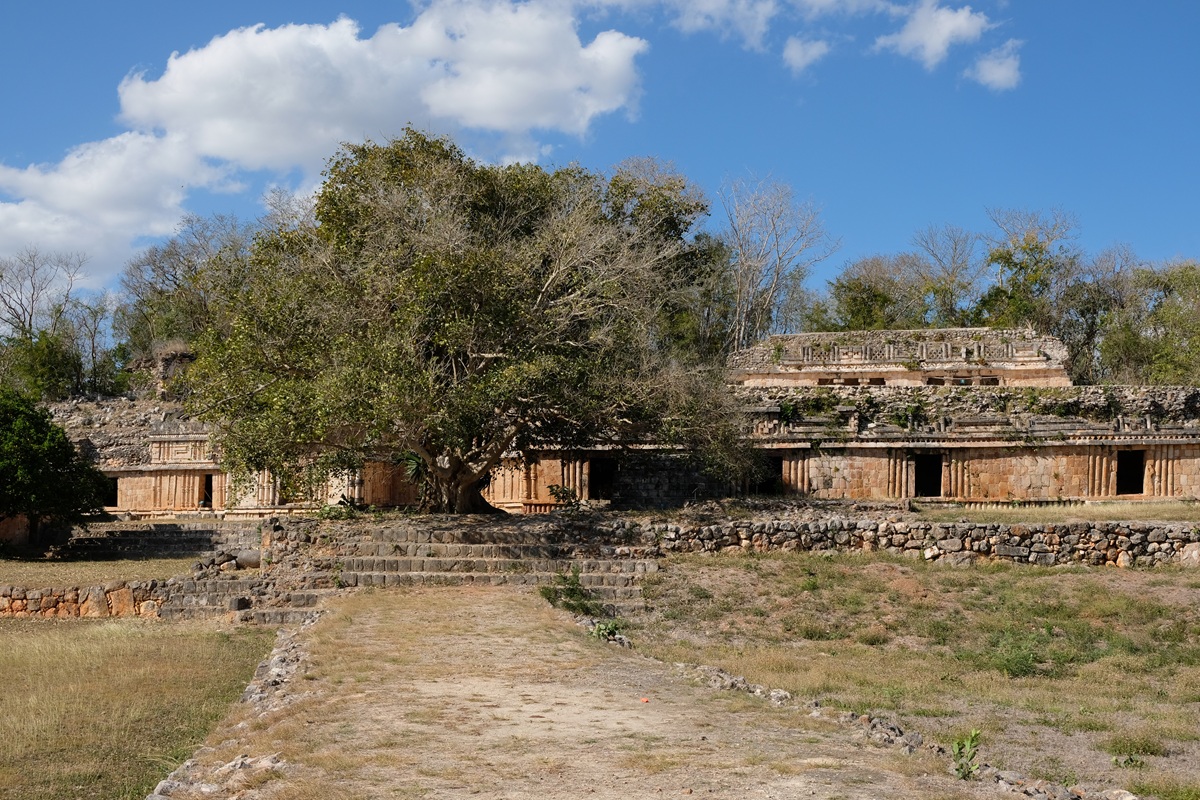
El Palacio, the first structure one will encounter in Labna
The sun was getting lower when we arrived in Labna, our last stop along the Ruta Puuc. We started the day in Uxmal – the most important and impressive city in the Puuc region of the Yucatán Peninsula – then continued to Kabah (home to the eccentric Codz Pop) and Sayil (where the ruins made me feel as if I were Indiana Jones exploring a mysterious site). But Labna supposedly has something the other places don’t, and that was what we wanted to check out before calling it a day.
Labna’s apogee occurred around the same time as Kabah and Sayil, a period between the ninth to the tenth centuries CE known as the Terminal Classic. Some even suggest that Labna might have been the squash and maize bowl of this region to support larger populations in Uxmal and Kabah, in addition to its function as a frontier post to gather intelligence regarding rival Maya states of the Chenes region (in the modern-day Mexican state of Campeche).
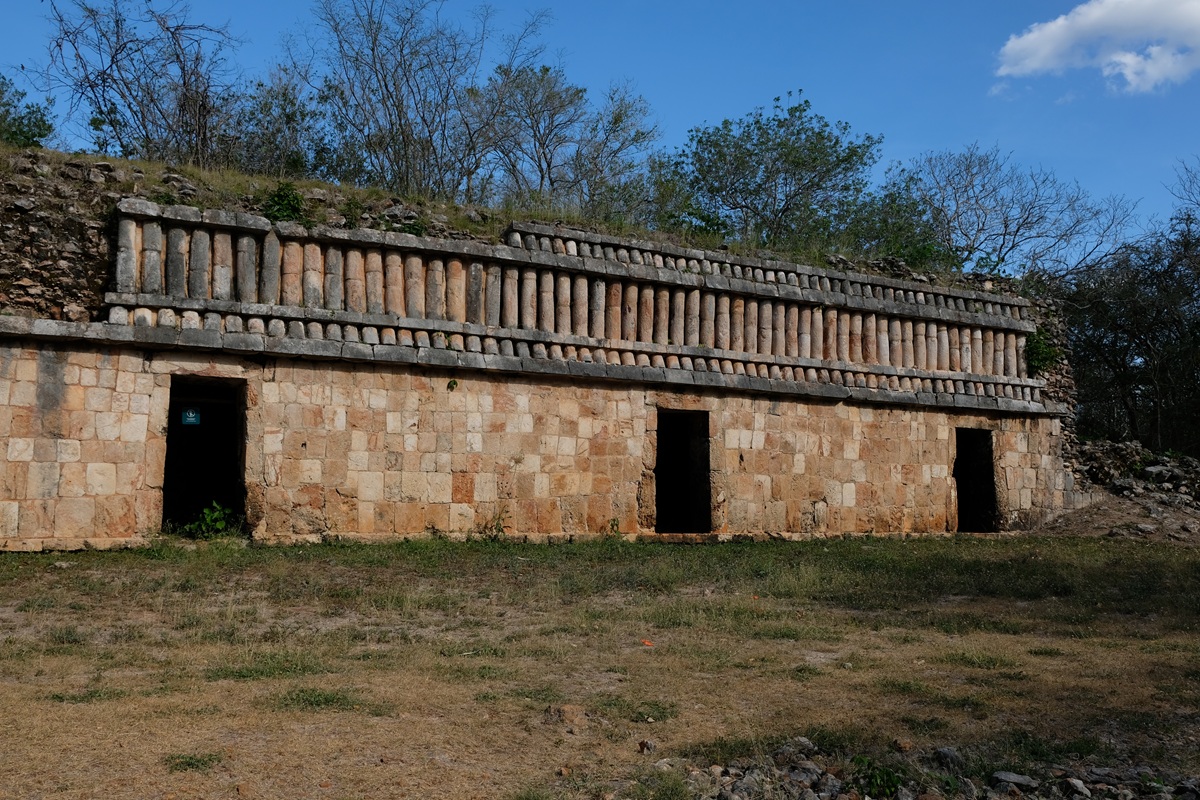
This past significance of Labna was immediately evident as we came across a large two-story palace (El Palacio) soon after we entered the archaeological zone. Typical of the architectural style of the Puuc region, the lower part of the structure was mostly devoid of ornaments, except for the colonnettes that framed each door. Above it, however, a profusion of sculptures ran along the edifice’s upper band. Unsurprisingly, Chaac was present, easily distinguishable by his long, curved nose. But one particular corner caught my attention, for it portrayed a human head emerging from inside the open jaws of a reptile. Is this related to the depiction of Kukulkan at Uxmal’s Nunnery Quadrangle, implying a similar cult practiced at both places? I don’t know, but that would be an intriguing subject to study.
Interestingly, the palace was never completed for an unknown reason, and apparently there is evidence that the residents of Labna conducted a ritual to destroy the main entrances to the building prior to abandoning it.
We left El Palacio behind and walked down the sacbe (raised paved road built by the ancient Maya) that connects the grand edifice with the southern compound within the archaeological zone. First, we saw El Mirador (literally “the Lookout”), a pyramid topped by a structure with an opening on its southwestern façade. Its height will undoubtedly catch the attention of any visitor to this site. To its west, however, stood something special that is purportedly the most elaborate of its kind in the ancient Maya world: El Arco.
Literally “the Arch”, it is a fine example of the so-called Mosaic Puuc style where finely-cut stones were used to create features that include lattice panels, niches (once adorned by human figures in a seated position), geometrical patterns, and cresting with decorative elements. It is believed to have functioned as a gateway to the residential compound of a high-level family that separated it from the central plaza of the city. Unfortunately, only parts of the ornaments survive to this day.
Labna was rather off the beaten path to begin with, and the fact that we visited this site toward its closing time meant that we had this place almost to ourselves. We were taking photos of the arch in such a peaceful setting, until suddenly we heard a crescendo of a big group of local schoolchildren coming right toward us! They eventually gathered around the other side of El Arco, and while they were listening to their teacher explaining about the structure in front of them, we quickly sneaked out and found our way back to the sacbe. If this was in Indonesia, the kids would probably have ambushed the unsuspecting foreign visitors and gleefully asked them random questions to practice their English.
The sun was really low at this point, and we rushed to the final structure within the archaeological zone: the Temple of the Columns. The discovery of chultuns (underground cisterns built by the ancient Maya) and stone grinding tools around the temple suggests that this might have been the residence of another high-ranking family within the city.
The Yucatecan sun which had been very generous since the start of the day in Uxmal suddenly dimmed its light, thanks to the thick clouds on the western horizon, and that signaled us to wrap up our visit. We returned to the parking area where Abdiel was patiently waiting, and moments later we were once again on Federal Highway 261, going back to Mérida. It had been a long yet satisfying day, but now it was time for us to rest.
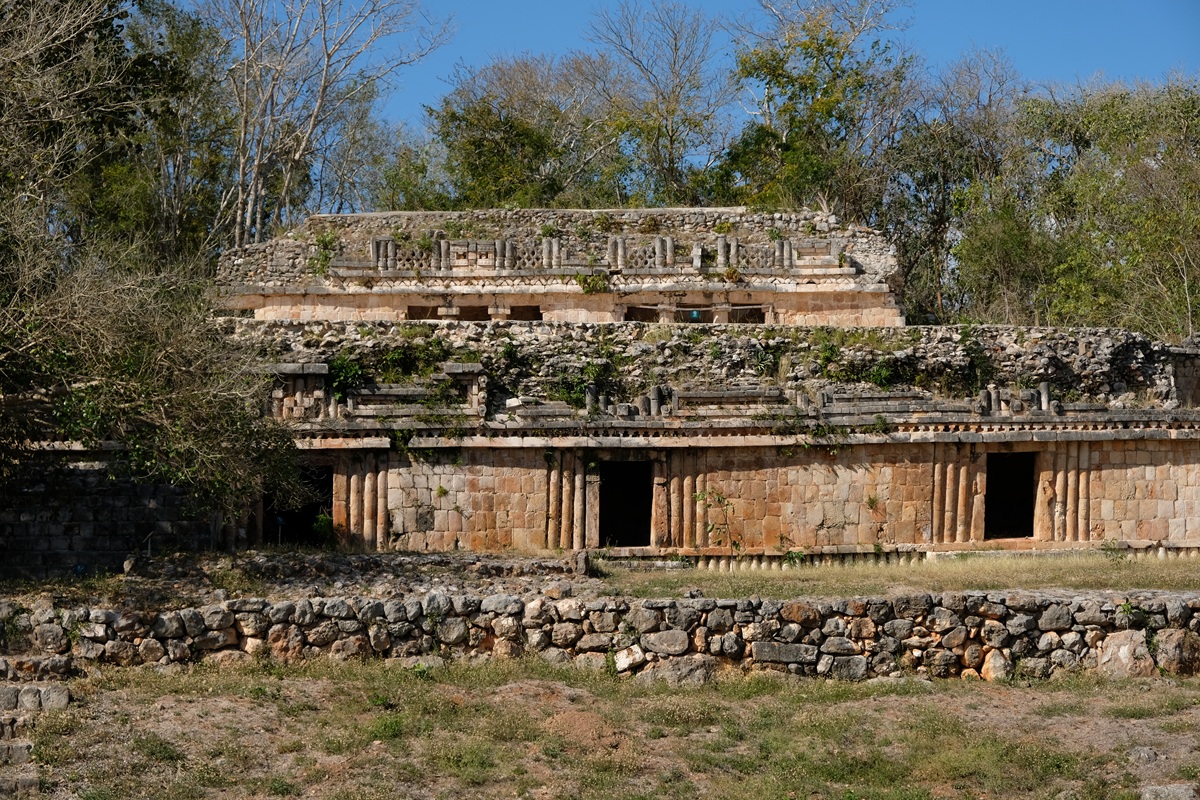
The palace is a two-story structure that has more than 50 rooms
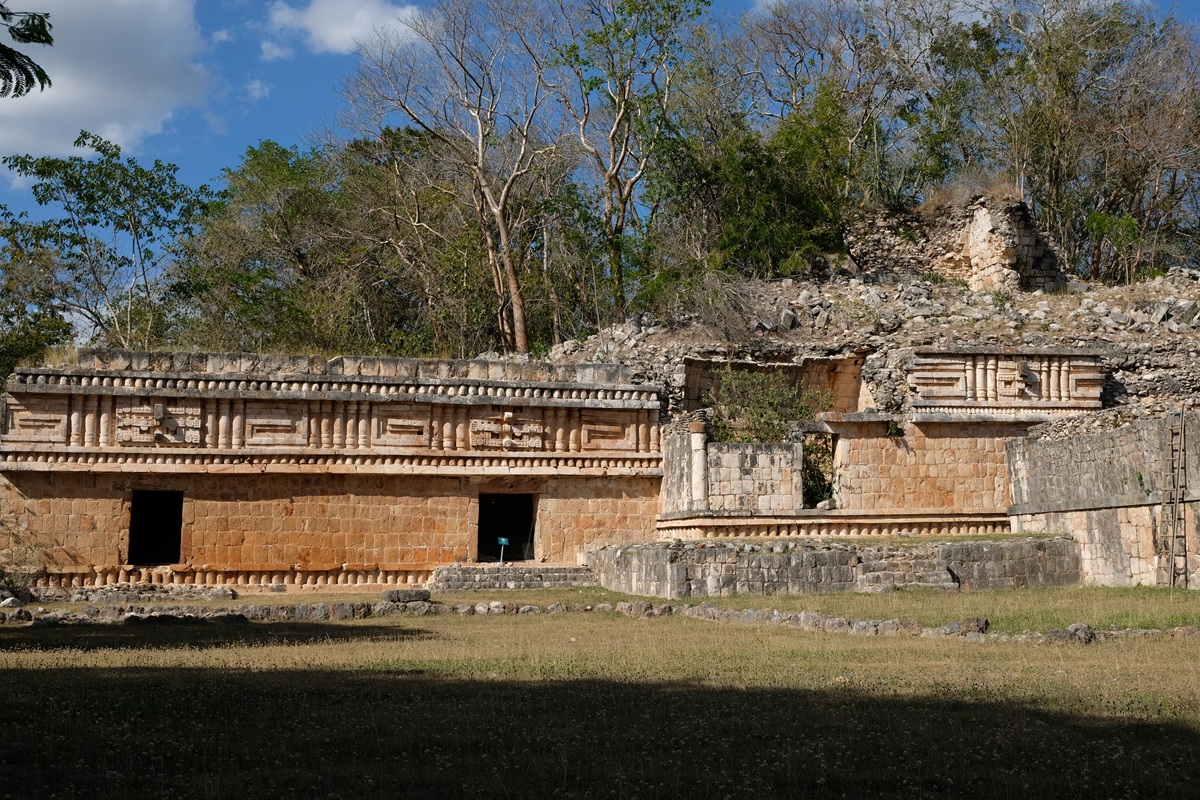
Distinctly Puuc: an austere lower part topped with elaborate decorations above
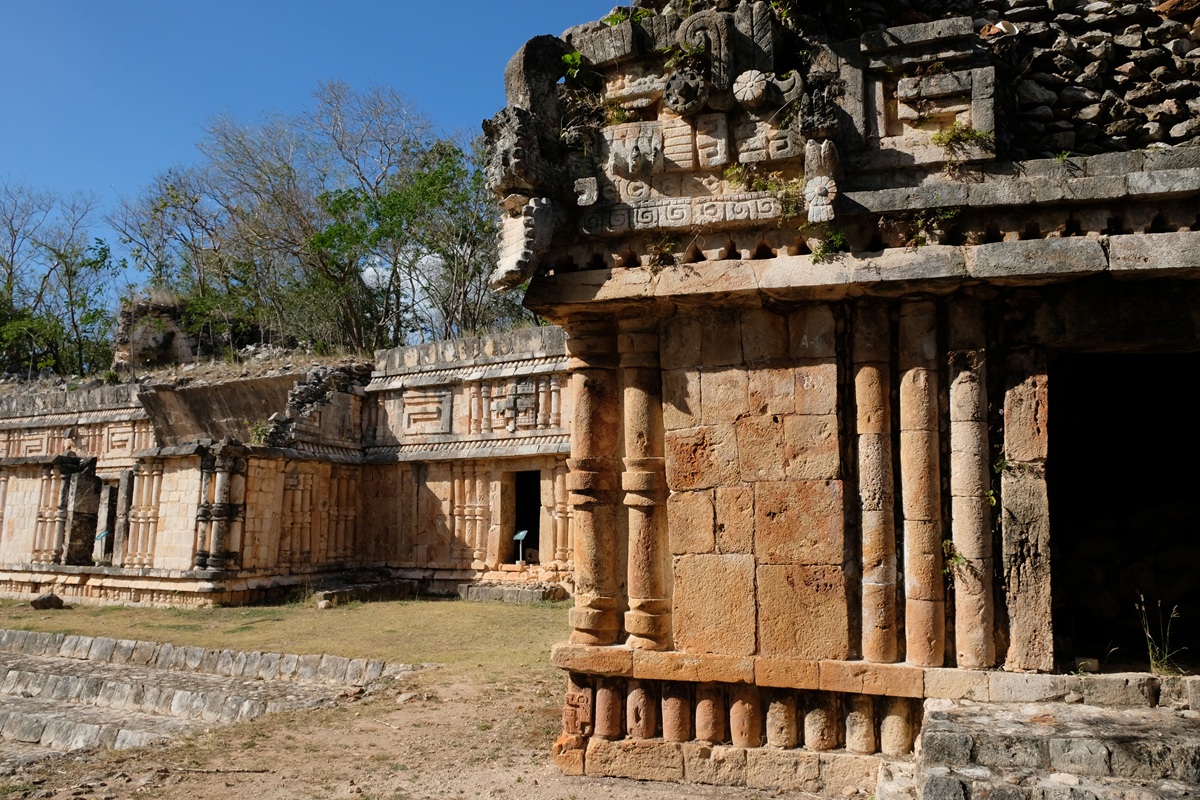
Are those the jaws of a serpent or a caiman?
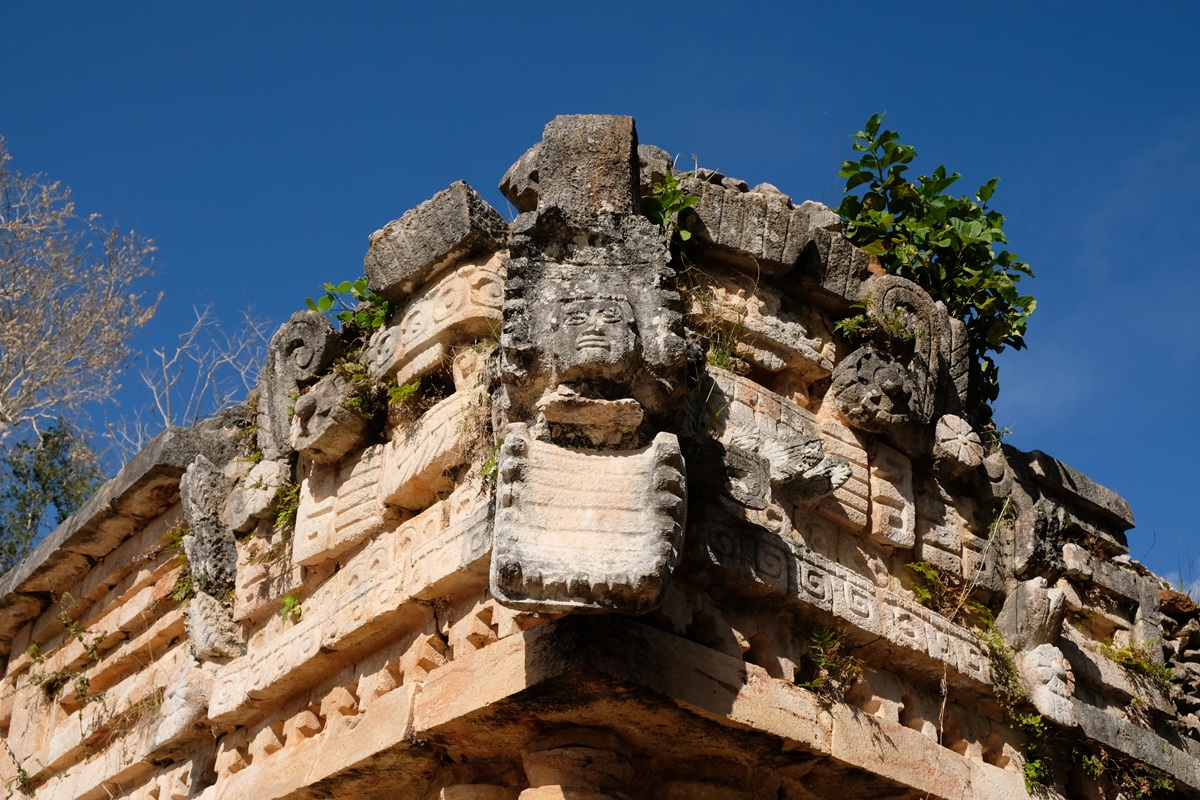
A human head emerges from inside the reptile’s mouth
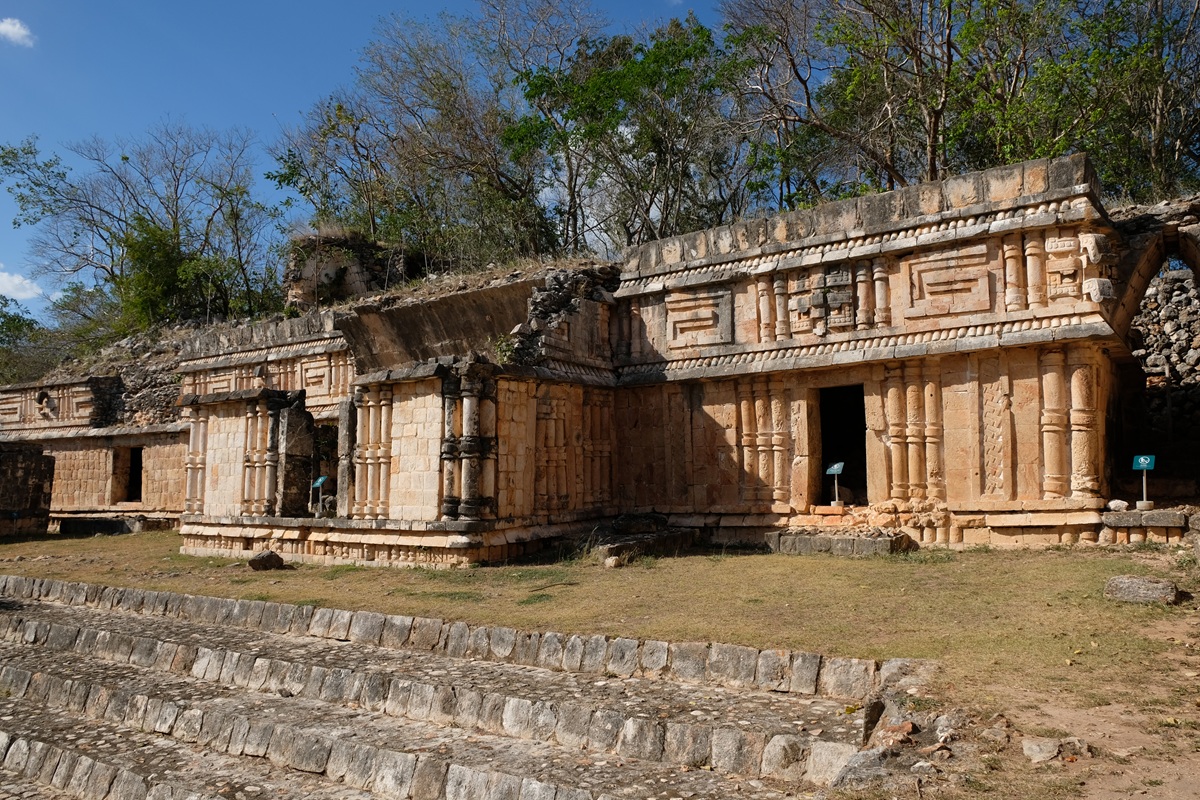
We couldn’t get any closer to the palace than this
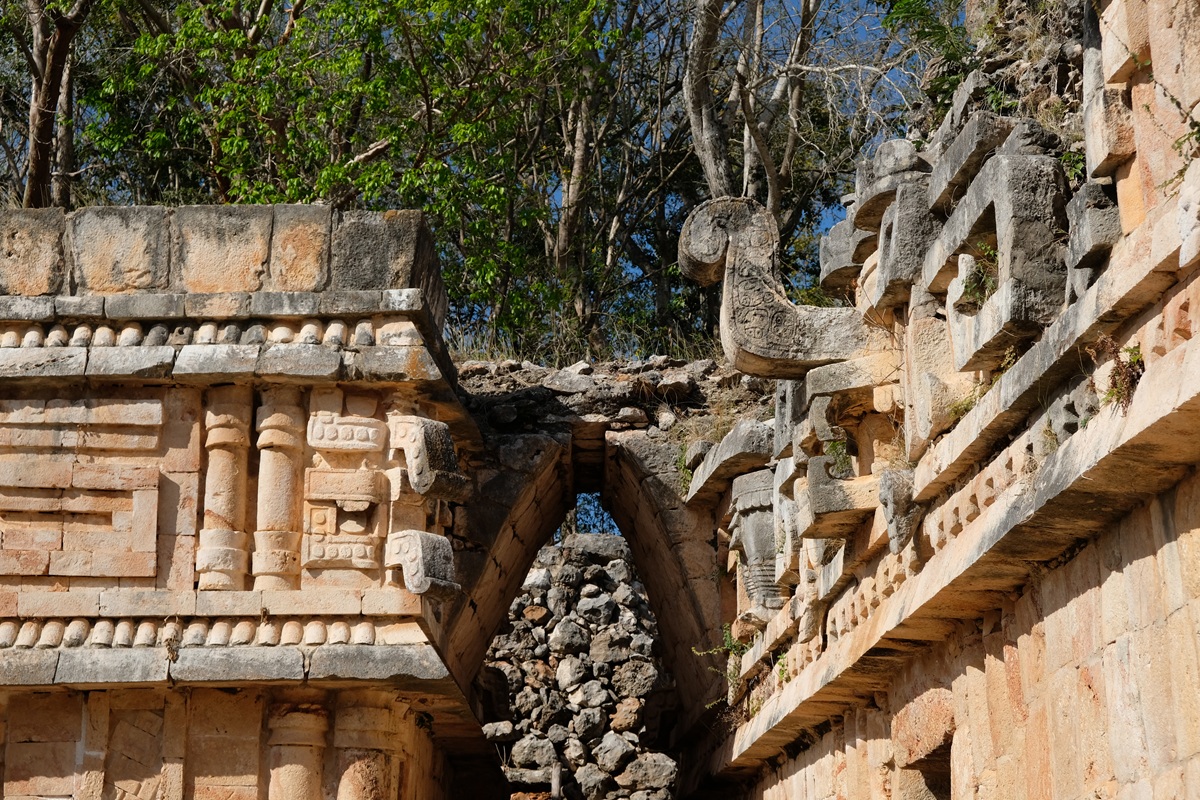
The unmistakably big nose of Chaac
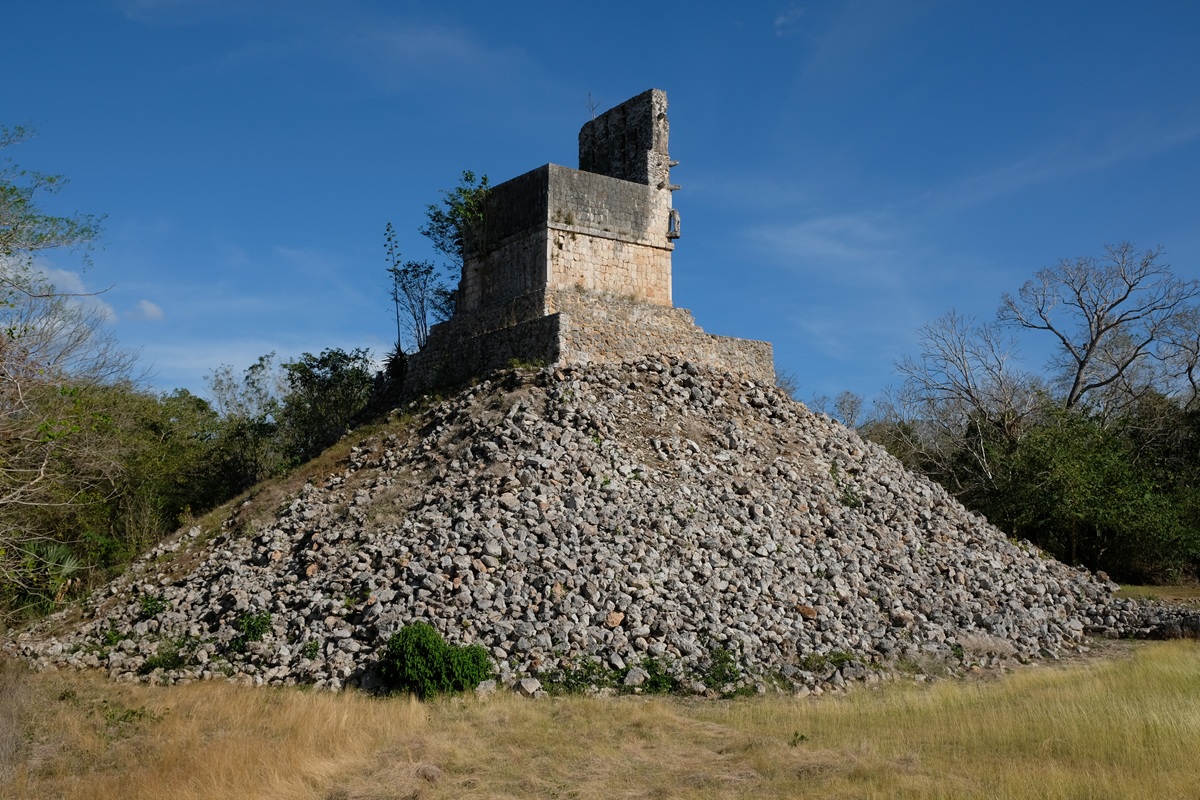
El Mirador and the ruined pyramid underneath
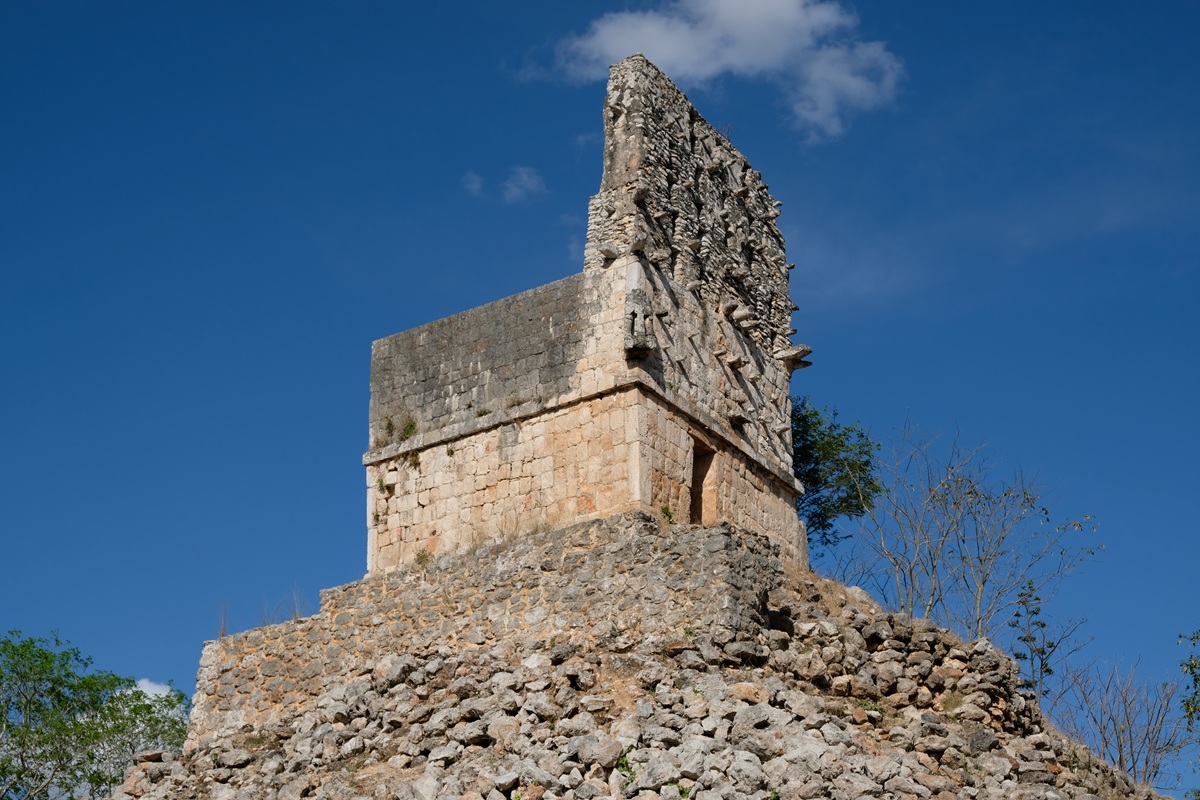
El Mirador’s entrance on its southwestern façade
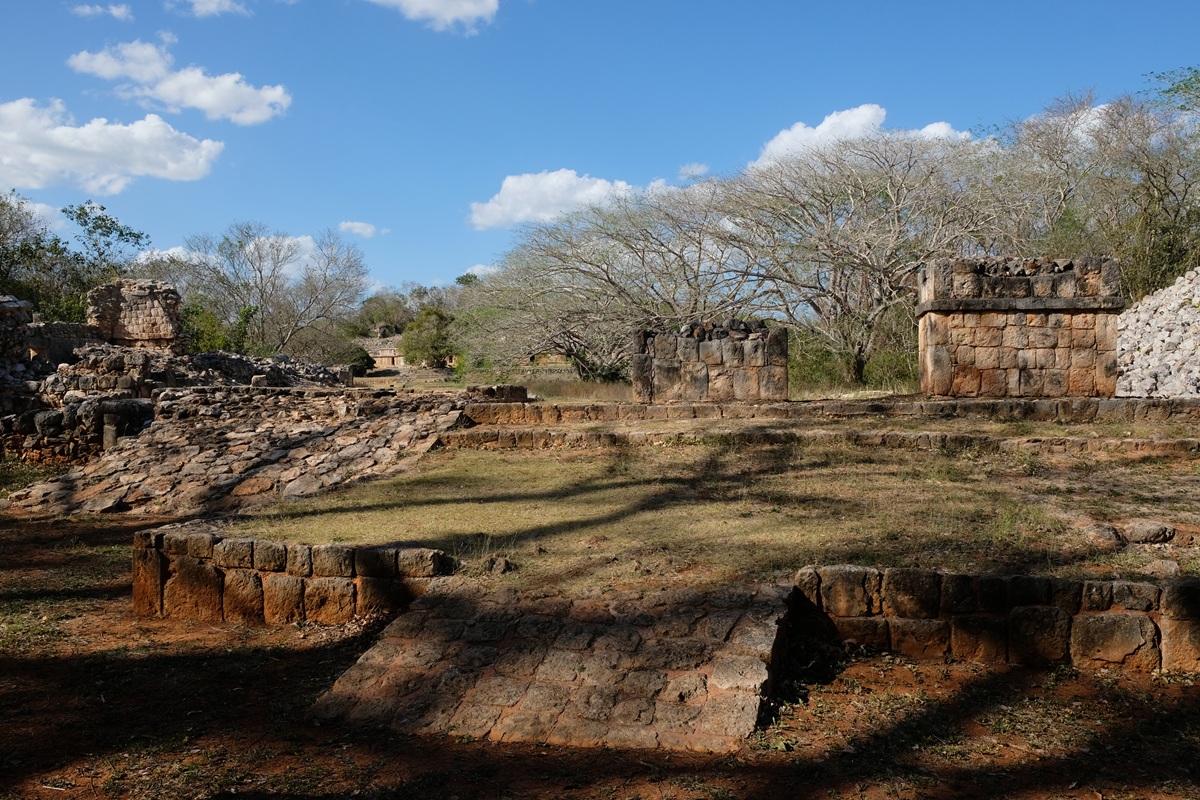
The structures between El Mirador and El Arco
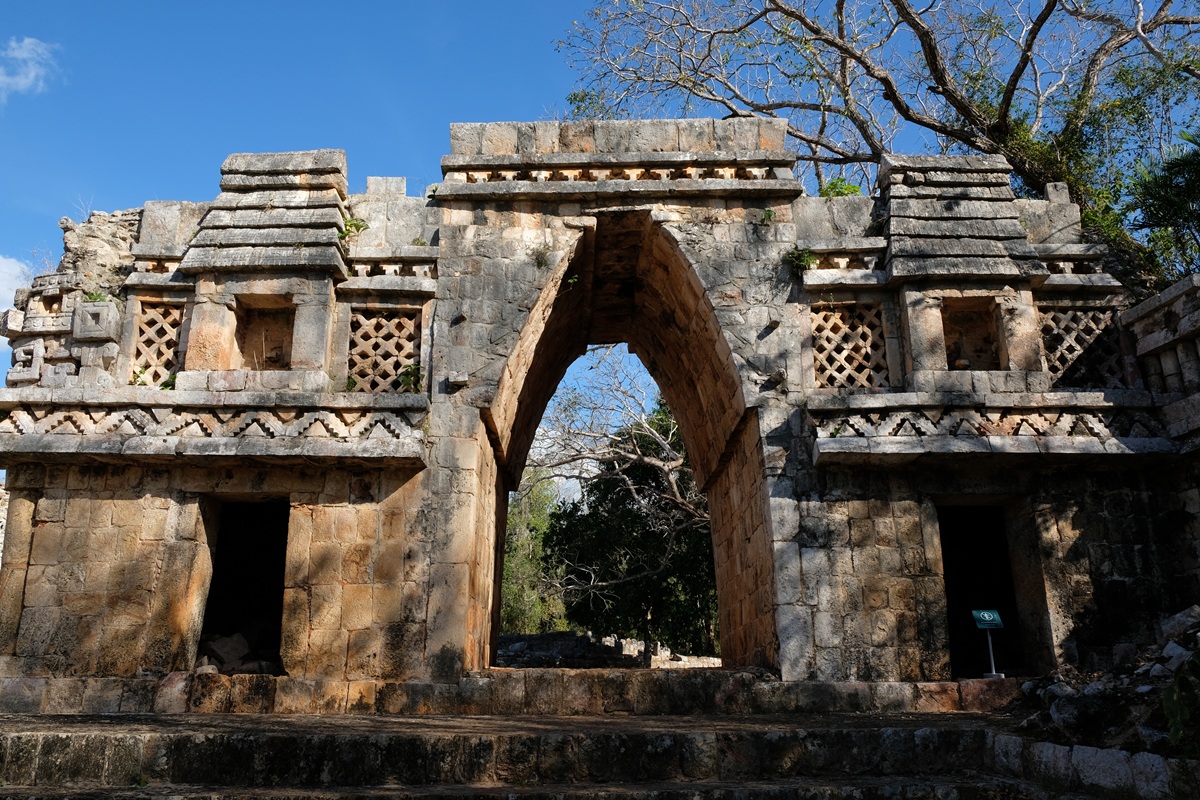
El Arco, the most emblematic edifice in the archaeological zone of Labna
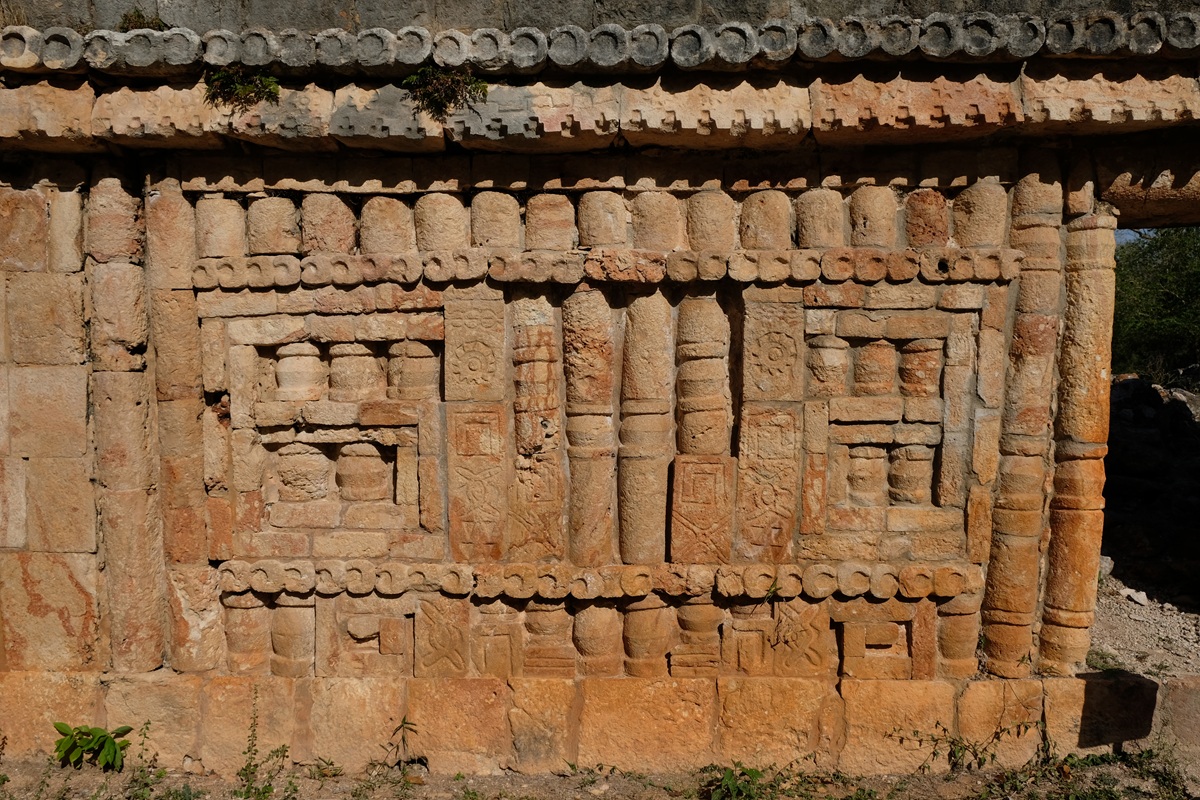
Different styles of carvings on a wall next to El Arco
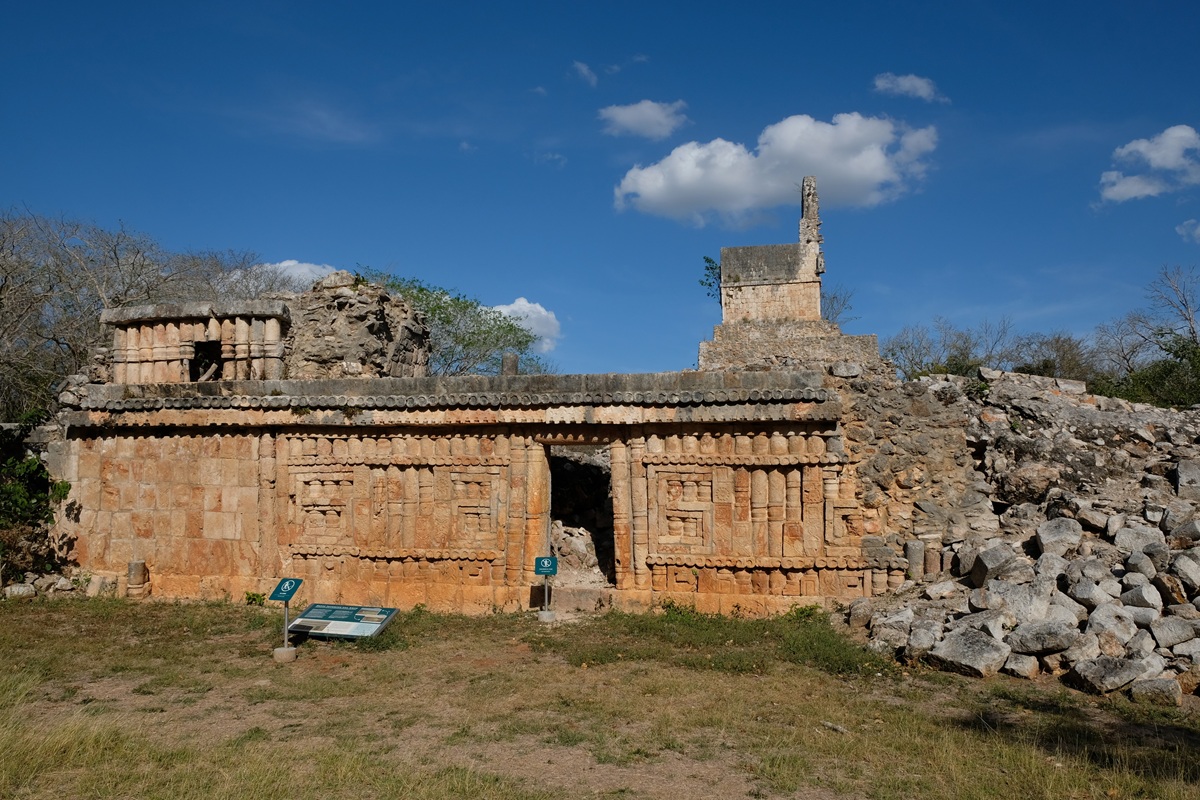
Imagine how magnificent this would have looked if more of this structure had been intact
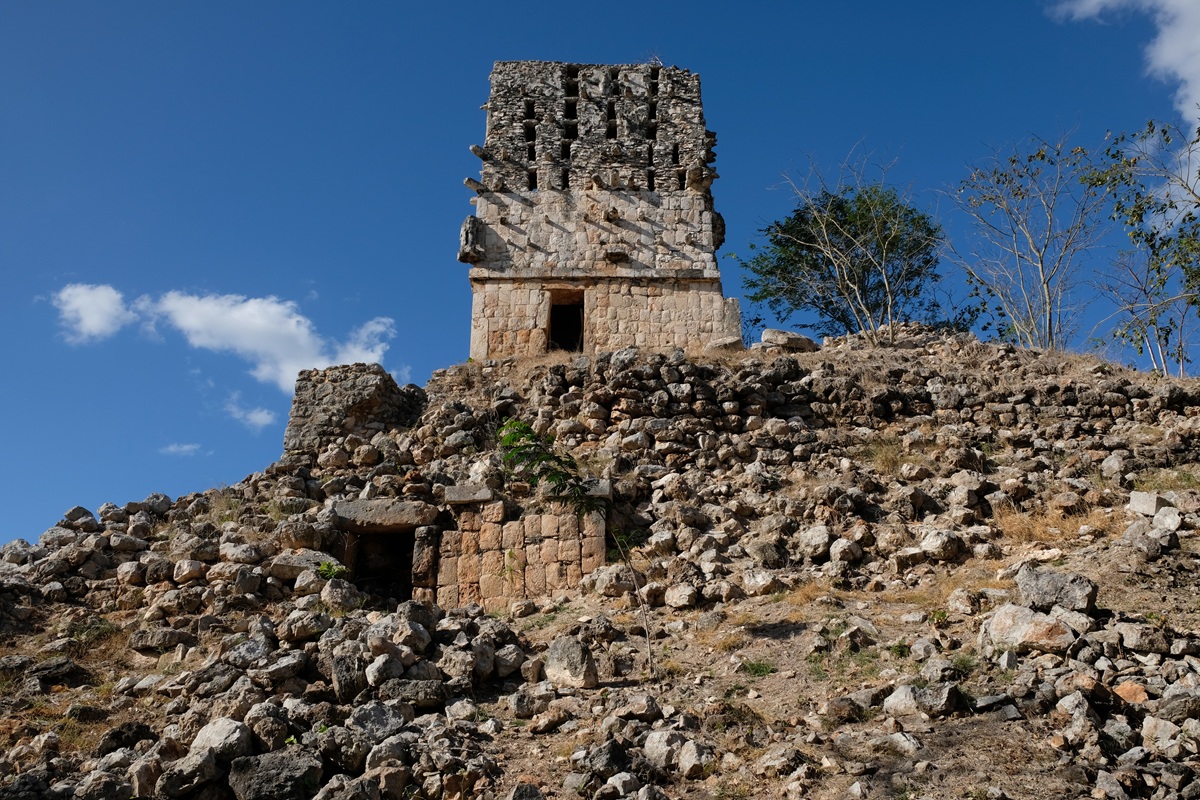
One last look at El Mirador
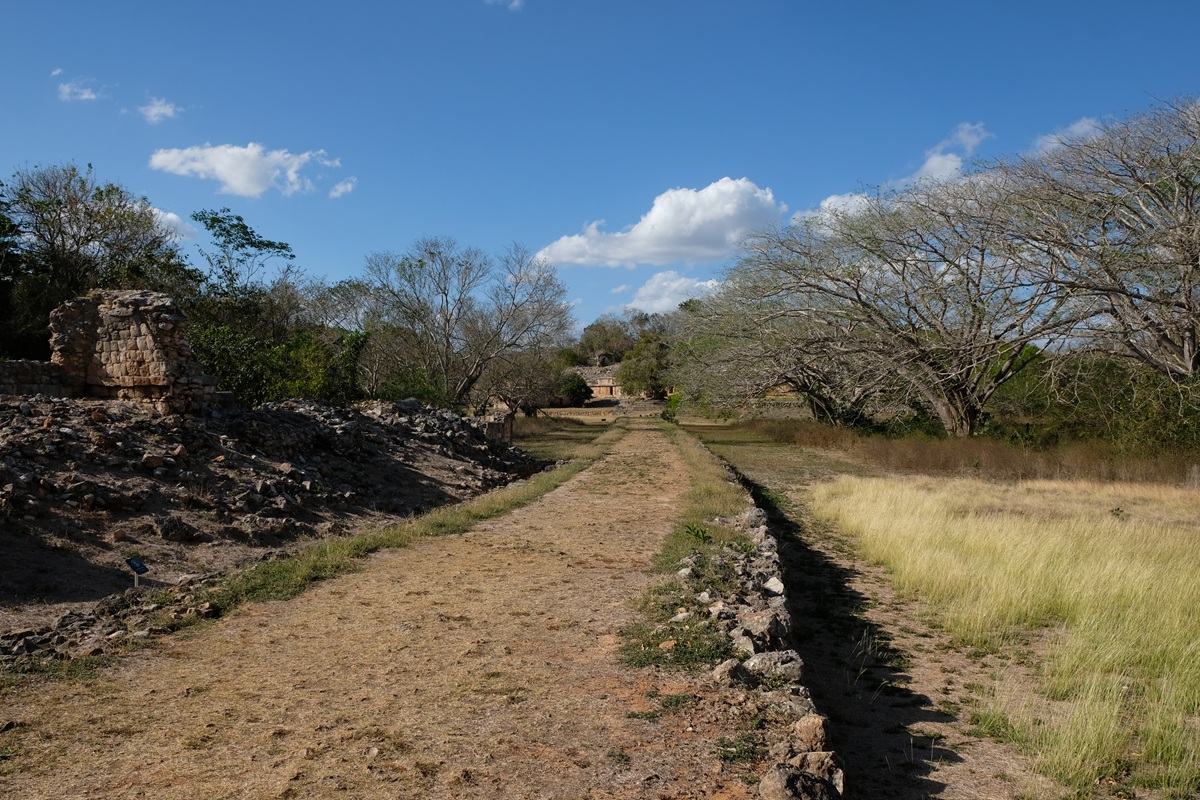
Walking down the sacbe back to El Palacio
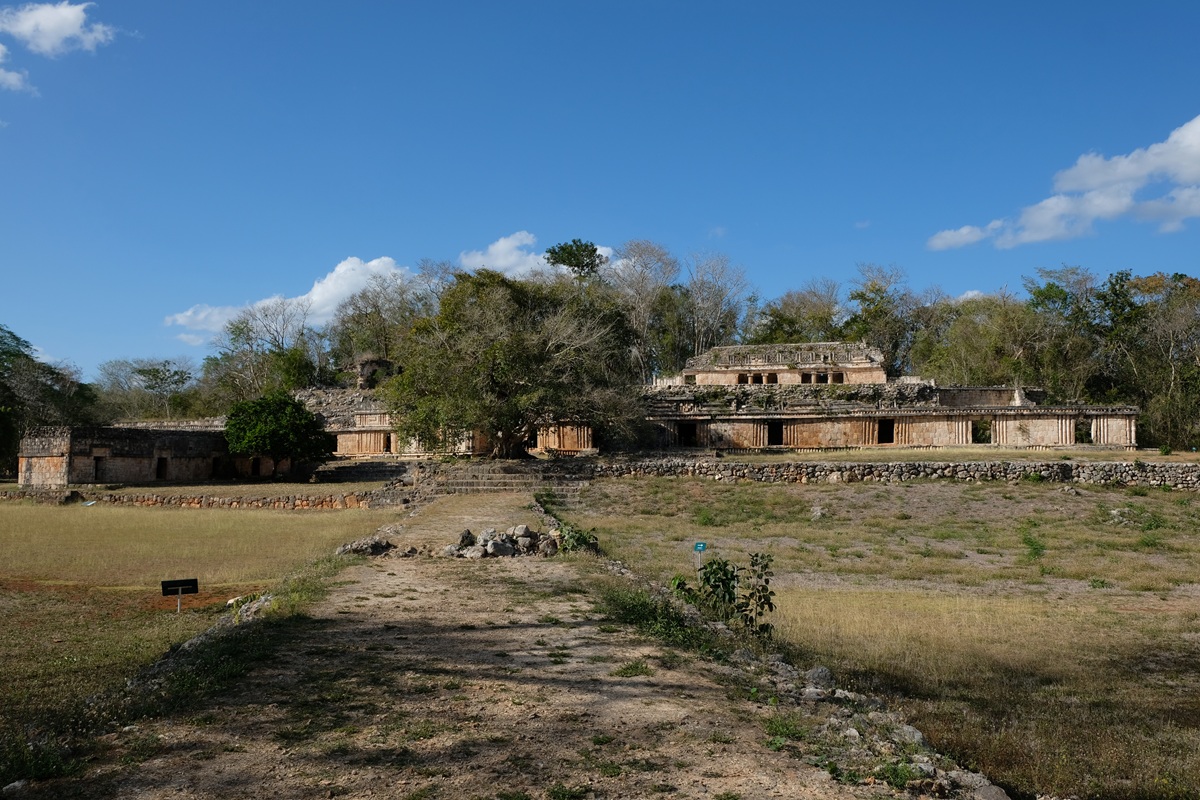
Halfway between El Palacio and El Mirador
The Temple of the Columns, the last ancient Maya site for the day


This is amazing, and it’s so interesting trying to understand the stories still unknown there
LikeLiked by 2 people
This part of Mexico really has so many interesting ancient sites that are still relatively unknown to most people outside of the country. When I was researching the background story of Labna, I learned about the ancient Maya of the Chenes region. And when I looked up the archaeological sites built by them, I became really intrigued.
LikeLiked by 2 people
Very fascinating place. Your comment about Indonesian kids swarming foreign visitors to practice their English reminded me of Indian kids who did exactly the same and also ask for a photo with them. (Suzanne)
LikeLiked by 2 people
I think that happens in places where the local kids rarely see foreign visitors. I can’t imagine the same thing in Bali where people are more used to seeing tourists from different parts of the world.
LikeLiked by 1 person
When I saw your cover photo, I thought it could * almost * be Angkor. The history of these Mexican ruins is incredible, I absolutely love the intricacies of the carvings and really hope I can see them for myself one day 🙂
LikeLiked by 2 people
I guess it’s because of how these ruins are set against the backdrop of the forest, just like many ancient temples in Angkor. In every archaeological site I visited in this part of Mexico, the ruins always left me awestruck. I hope you’ll get to see them in person sooner than later, Hannah!
LikeLiked by 2 people
Excellent post. One thought: the buildings and/or motifs might have been painted. I don’t know whether traces of paint have ever been found.
Thanks for the trip back to Labna.
Jumpa lagi.
LikeLiked by 2 people
You’re right, Brian. The ancient Maya also applied paint/colors to the buildings they erected. Red, for instance, often came from cinnabar. Thanks for reading, and have a great weekend!
LikeLiked by 2 people
Red, red… Yes! Yes! I saw that in Mitla, Oaxaca.
Happy Sunday.
LikeLiked by 2 people
Unfortunately I didn’t have enough time to visit Oaxaca. But the next time I go to Mexico, I will definitely put it on top of my list.
LikeLiked by 2 people
👍🏻
LikeLiked by 2 people
Labna was the perfect ending to our journey along the Ruta Puuc. We had just enough time to wander around and admire the warm stone of El Palacio and El Arco illuminated in the late afternoon sun. I hope the schoolchildren we encountered there were inspired by its lesser-known Maya ruins. Perhaps one of them will eventually become an historian or archaeologist! Seeing the scale of Labna’s remaining buildings makes me wonder how the whole area looked during the heyday of these ancient sites, and how long it would have taken to travel between Uxmal and Labna on foot.
LikeLiked by 2 people
By the time we left Labna, I guess Abdiel had already realized how much we wanted to see the ancient sites of the Yucatán. After that, I don’t recall him offering to take us to the touristy places he mentioned to us the day before when we first met him anymore. It would be really cool if someone in that group of schoolchildren turns out to be an archaeologist one day! (One who works alongside AI or whatever technology the future holds.)
LikeLiked by 2 people
Glad you managed to squeeze in a visit to Labna before the end of the day. Sounds like the timing worked out well. It was super interesting to hear that they conducted a ritual to destroy the main entrances to the building. Lovely captures with the golden glow from the afternoon sun.
LikeLiked by 2 people
It really was a long day filled with awe-inspiring ancient ruins. And the weather couldn’t have been better. It was very intriguing to learn about how the locals conducted a ritual before abandoning Labna as this is probably the first time I read about such a thing.
LikeLiked by 2 people
The low-slung, horizontal nature of the buildings in the first photos reminded me of mid-century modern architecture, strangely. Maybe the 9th/10th century version of it! 🙂
LikeLiked by 2 people
I understand what you mean, Lex. Interestingly, the decorative patterns at some ancient sites can appear modern to my eyes as well, including what I saw at some of the centuries-old structures in Uzbekistan. Sometimes, recycled ideas can indeed come up as fresh.
LikeLiked by 2 people
Makes me wish we spent more time in this area, this may be my favourite or your Puuc architecture sites. The Kukulkan with a human head is wonderful. Great find Bama. Maggie
LikeLiked by 2 people
The good thing is Mexico is relatively close to you. If you ever go back to the Yucatán, you might want to check out the ancient Maya sites built in the Chenes architectural style as well. We didn’t have enough time to see them, but from the photos I found on the internet they surely look very interesting.
LikeLiked by 1 person
I’ll look it up!
LikeLiked by 2 people
I just read a bit about Chenes. We were planning on going to Campeche, but then changed our minds. We would have been so close! But now I know where they are. I’ll try to remember when we go again, as I’m sure we’ll go diving again.
LikeLiked by 2 people
We wanted to go to Campeche as well, but we didn’t have enough time. I hope you’ll go to that part of Mexico one day and share the stories and photos with us!
LikeLiked by 1 person
I always have this feeling of attending a university class when I read your travel blogs. You deftly combine the history of the places with how you experience them. It’s always well done.
It would be interesting to see what they would have looked like in their prime.
LikeLiked by 2 people
Really appreciate your kind words, Matt. The ‘downside’ is it usually takes some time to finish writing a post. That’s why you’re still reading stories from trips that happened last year and even two years ago.
I love the idea of being able to see these ancient sites during their heyday.
LikeLiked by 1 person
The site is in good enough condition to allow us to begin to imagine the way of life that may have existed in ancient times. Whilst our understanding of the Maya is growing, there is still much we do not know.
LikeLiked by 2 people
The more we learn about something, the more we realize that there’s still so much that we don’t know. But I guess that’s what makes archaeology remain relevant today. The introduction of new technology to uncover the secrets long hidden from plain sight only makes it even more interesting.
LikeLiked by 2 people
Very beautiful photos of Labna, Bama. I’m glad that both had the place mostly to yourself. The buildings are beautifully preserved (mostly) and I bet from the design, they are well insulated inside and cool. I like that you like to find the off the beaten path adventures.
Your comment about Indonesian children practicing English did pique my interest: how did you learn English growing up? You’re very well written – and spoken, I imagine. Was English part of your curriculum studies?
LikeLiked by 2 people
Ancient ruins always feel more special when there are not many other visitors around. But I know people who prefer otherwise because the silence can make them uncomfortable.
In Indonesia, people at my age typically started learning English at secondary school (around the age of 11 or 12). But in general, the quality of English teachers in Indonesia (at least when I was growing up) was not really good. Watching American movies and TV series helped me a lot. But my parents decided to enroll me in a privately-run English course, and I was lucky to have this tutor (I still remember his name — Tony) who was very good and was able to teach key things to master English in an easy and effective way.
LikeLiked by 2 people
Your parents had wonderful foresight to do that!
LikeLiked by 2 people
They hardly understood English, but they wanted me to be able to speak it.
LikeLiked by 2 people
💕💕💕
LikeLiked by 2 people
This is a really lovely site, Bama, and I particularly like all the details of El Arco. I also find it interesting that the palace was never completed and the fact that some evidence points to a ritual to destroy the main entrances to the building before it was abandoned. It just shows one that there are still so many mysteries out there that archaeologists can only guess at. I always love encountering this snippets, as I not only love ruined buildings, but also those little mysteries they leave us.
LikeLiked by 2 people
The little mysteries ancient civilizations left us make exploring ruins like Labna so enticing, indeed. It certainly helps when the structures they built were decorated with fine carvings or intriguing patterns, showing their level of sophistication.
After this I will continue with the stories from Uzbekistan — I try to publish more stories from this country before your trip.
LikeLiked by 1 person
I’d like that, Bama. Thank you. I’m on a research frenzy at the moment, digging into the layers and layers of history, as I think it will make my trip so much more meaningful. And now that I am getting to understand just how much there is to see and experience, I am grateful for your previous advice, and am glad I booked 5 nights in Bukhara for instance, and not just 4, as I’ve done for both Samarkand and Khiva.
LikeLiked by 2 people
I can imagine the amount of research you are currently doing, Jolandi. I think five days is perfect for Bukhara. There were a few sites we didn’t have enough time to see because they’re a bit further away from the the city’s old town district.
LikeLiked by 1 person
I have quite a list of sights that are further away from the main ones, and have actually just booked a guide to some of them for my first morning there. I’m definitely planning to also download the Yandex Go app, as I suspect I will need it. I must admit that I quite love the planning part, and I think I’ve given myself a lot of flexible time to allow my days to unfold in a way that won’t feel rushed, and more organic.
LikeLiked by 2 people
In hindsight, I should’ve probably also downloaded Yandex. But luckily things worked out in the end. Booking a guide to visit sites that are further away from the historic core of Bukhara is a great idea. The way you plan a trip actually sounds quite similar to how I do it.
LikeLiked by 2 people
It does sound like we do! 😁
LikeLiked by 2 people
The race to see all of the sites before sundown is harrowing, but thrilling at the same time. Labna looks stunning, Bama, and I appreciate you sharing more of Mexico off the beaten path!
LikeLiked by 2 people
Haha, it was! At first, Labna was only optional. But when we were in Sayil, we thought why not visit Labna as well since it was in the area. I’m glad we went. Anyway, congratulations on the wedding!
LikeLiked by 2 people
Your photographs are absolutely stunning!
LikeLiked by 2 people
Much appreciated, Natasha!
LikeLiked by 1 person
This seems like a fascinating place to visit, and having it almost all to yourselves probably adds to the magic! I also noticed in South Korea that kids were kind of eager to speak English to foreigners and that surprised me a lot, because I feel like kids in Europe (and apparently Mexico) are very shy about speaking another language – and I would have been as well! Everyone should have this eagerness and curiosity about speaking a foreign language!
LikeLiked by 2 people
It was quite magical indeed to explore the ruins of Labna before those schoolchildren arrived. I wonder if eagerly practicing your English with random foreigners is an Asian thing. But I myself was one of those kids who would grab the opportunity to talk to foreign visitors at ancient sites in Indonesia.
LikeLiked by 1 person
Maybe it is then ahah! But I think it’s great, in Europe many kids grow up afraid of speaking a foreign language because they don’t want to seem too eager or to have an accent… that’s very sad!
LikeLiked by 1 person
Maybe it’s a cultural thing as well.
LikeLiked by 1 person
I’ve been saving your Mexico travelogues to savour at leisure Bama, I did read a few of James’ posts earlier, and then got bogged down by a whole lot of issues (also travel). I am intrigued by all the little details and mysteries of this ancient Mayan site, especially the human head emerging from the jaws of a serpent! Must have been special having it all to yourselves.
We’ll be in the Yucatan in early Nov, but I doubt I’ll have time to visit the lesser sites on the Ruta Puuc with my relatives in tow. Shall have to find a way to lose them 🙂
LikeLiked by 1 person
Madhu, I’m so excited to know that you’ll be visiting Mexico later this year! Chichen Itza is really popular now, but you should still go because it was very impressive. I definitely recommend checking out Uxmal as well. And if you’re lucky, you’ll only see a handful of other tourists there.
The more I read about the different ancient Maya sites, the more intrigued I become. Each place seems to have its own unique character, like the human head emerging from those jaws at Labna.
LikeLike
Great photos!
LikeLiked by 1 person
Thanks, John and Susan!
LikeLike