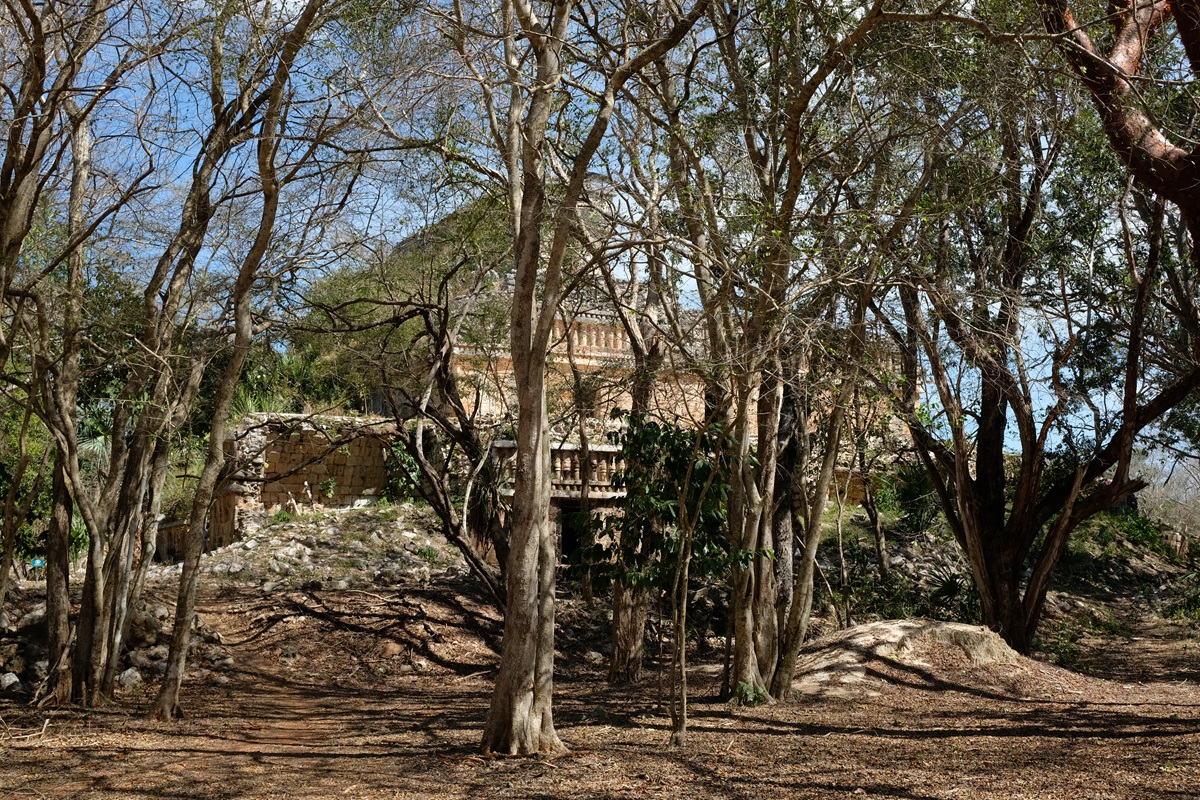
Catching a first glimpse of the Great Palace of Sayil
Abdiel started the car, and soon we were back on Federal Highway 261. A few kilometers after leaving Kabah, we exited the highway and took a turn to the left to stay on the so-called Ruta Puuc, a route that connects the impressive ancient Maya ruins of Uxmal with several other sites which together make up the UNESCO-listed Pre-Hispanic Town of Uxmal. Moments later, we started seeing signs mentioning Sayil – our next destination. However, as opposed to the structures of Kabah that could be seen from the road, those of Sayil were hidden behind the dense forest of this part of the Yucatán Peninsula. The few signboards we encountered were the only clues that we had arrived at our next site.
We got out of the car and walked toward a modest ticket booth before following the shaded pathway inside the archaeological zone. Like Kabah, Sayil was also an important Maya city that began to flourish around the ninth century CE until its abandonment in the mid-tenth century, a period in Mesoamerican history known as the Terminal Classic. Of all structures that survive to this day, the Great Palace of Sayil is undoubtedly the most emblematic of this site, so much so its replica was chosen to grace the ancient Maya section at Mexico City’s Museo Nacional de Antropología.
After walking past a few rather worn-out stelae, with thatched roofs placed above them to protect the invaluable relics from the elements, we caught our first glimpse of the palace. The approach to this three-story edifice that’s also known as the North Palace made me think of Indiana Jones and his adventures among ancient ruins – sans the giant ball – thanks to the partially-restored state of the monument. Upon closer inspection, the structure had an important sculpture that is also present at other ancient Maya cities in the Yucatán: the face of Chaac. It is not without reason that depictions of the Maya god of rain, thunder, and lightning are more ubiquitous in this region than in the lush jungles of Central America – another realm of the ancient Maya. Dry season was long and aboveground rivers were nonexistent, leaving the local population with only two sources of water: from the sky above and from the cenotes underground.
However, another god was also sculpted into the Great Palace of Sayil, though his image is absent both in Uxmal and Kabah. Known as the Descending God due to his portrayal as an upside-down figure, not much is known about this deity apart from his association with Ah-Muzen-Cab, the Maya god of bees and honey. (Interestingly, this lesser-known god was also sculpted into one of the temples at Tulum, an important Maya site built centuries after Sayil.) And as if that wasn’t fascinating enough, other carvings on the Great Palace caught my attention too: the depiction of two serpents flanking Ah-Muzen-Cab which I personally found very intriguing due to their visual resemblance with the makara at ancient Hindu/Buddhist temples in Southeast and South Asia – including those closer to home in Java. This is a good example of how two geographically isolated societies can develop similar ideas without having interactions between them, just like the case with how ancient pyramids exist both in Egypt and Mexico.
From the palace, we retraced the sacbeob (singular: sacbe) – a network of pathways built by the ancient Maya to connect different structures and cities – to explore other parts of the archaeological zone under the trees whose leaves were beginning to thin out. First, we checked out the so-called El Mirador, a “lookout” older than the Great Palace itself which in the past was a temple sitting on top of a pyramid. From there, we took a little detour after noticing a sign indicating Stela 9, which turned out to be a sculpture of Nohoch Kep, the god of fertility who was depicted as having a larger-than-life phallus. We then moved to the Templo de las Jambas Jeroglíficas which got its name from the Maya glyphs that were sculpted along its “door jambs”. Unfortunately, most of it was in ruins and we could only catch a glimpse of the worn-out script.
At this point, we were right in the middle of the archaeological zone. But we knew at the southern end of the sacbe another supposedly significant structure was waiting to be explored. The South Palace was more remote than the rest of the structures within the compound, and the walk to get there felt longer too. When we arrived at the monument, we found a formerly two-story structure that was partially in ruins. This and the quiet surroundings definitely made this far side of Sayil very atmospheric and rather mysterious.
Knowing that we still had one more archaeological site to check out before dark, James and I concluded this visit. We walked down the same sacbeob back to where we started and met our trusted driver Abdiel who was patiently waiting for us in the car. Before long, we were heading to Labna, the final Puuc site for the day that has its own distinct character.
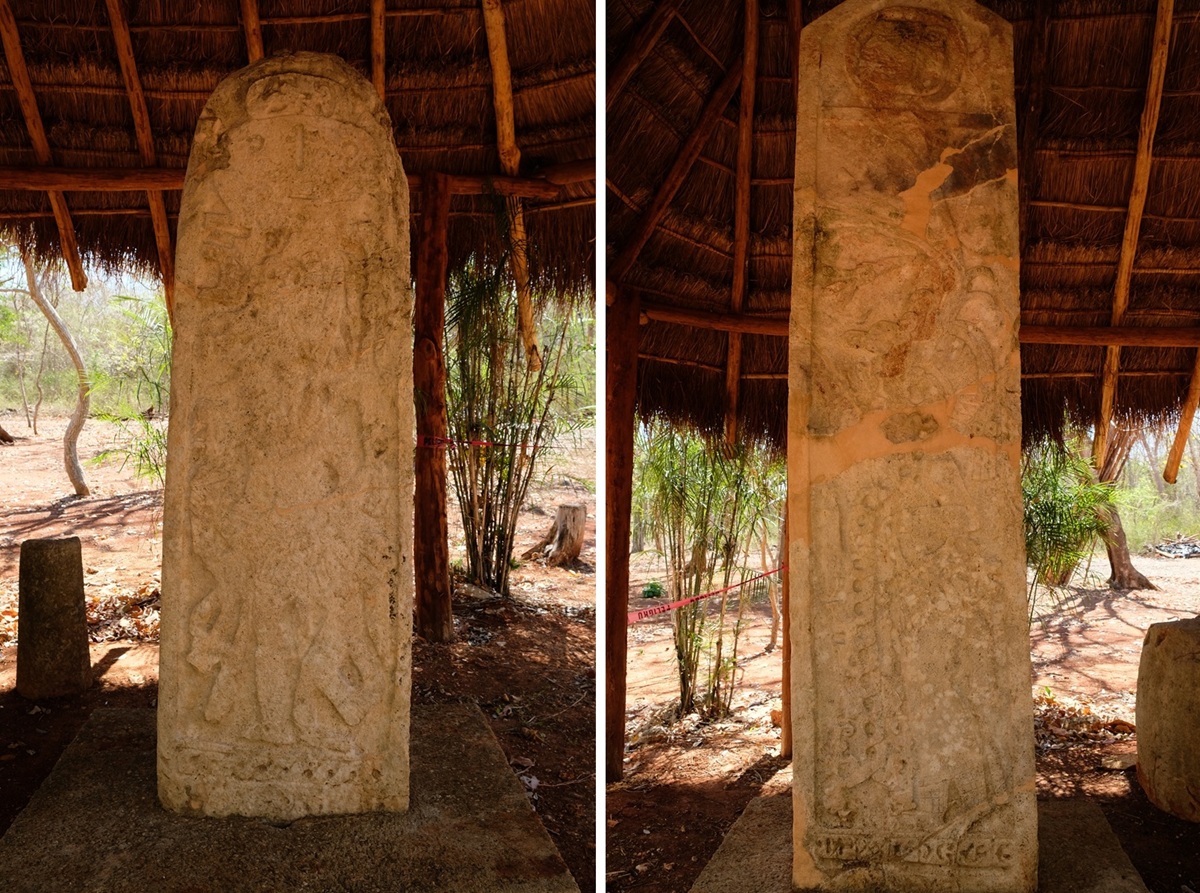
Worn-out stelae we encountered right after the entrance to the archaeological zone
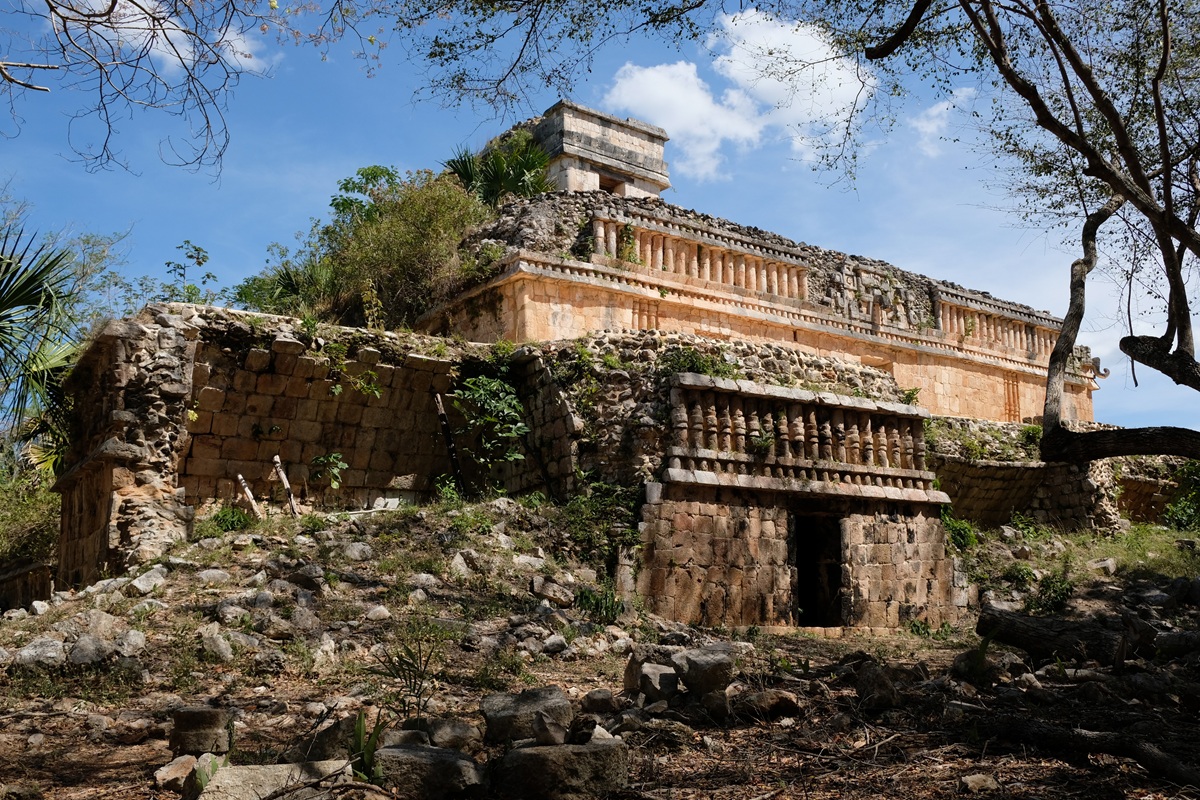
When I saw this, I couldn’t help but feel like Indiana Jones
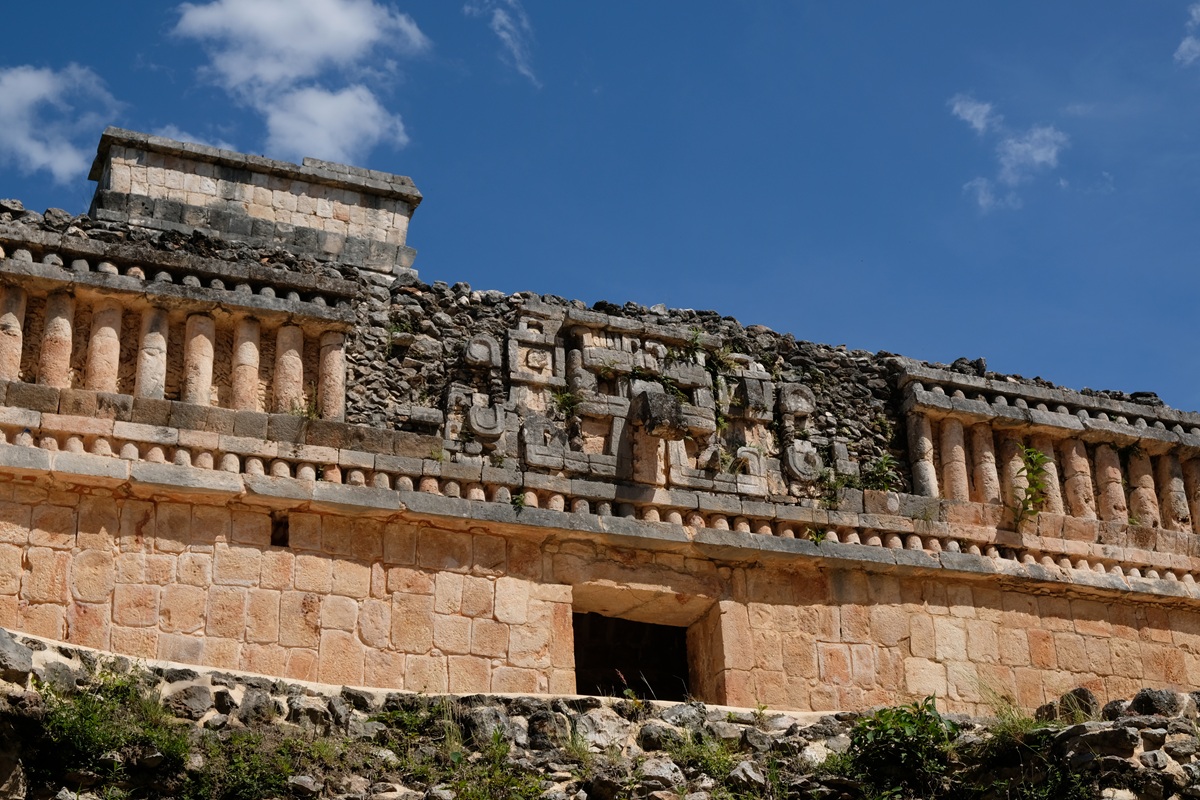
One of several Chaac masks at the Great Palace
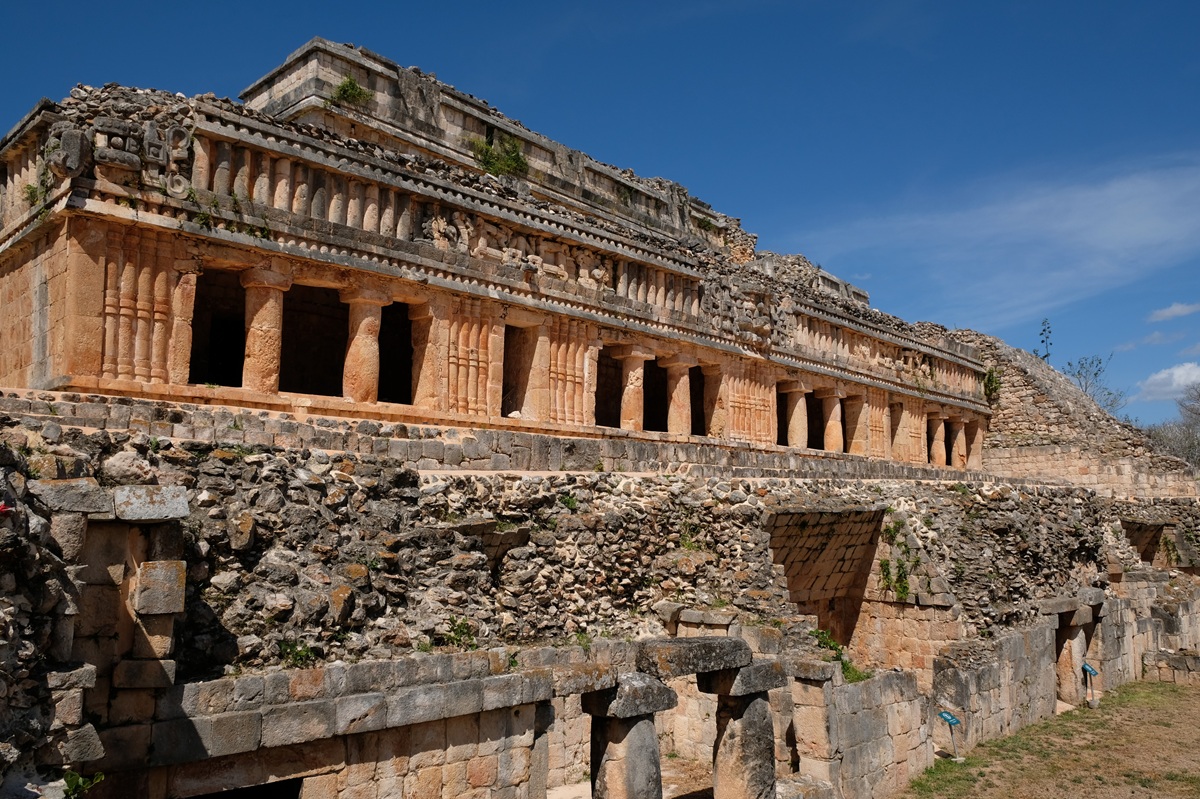
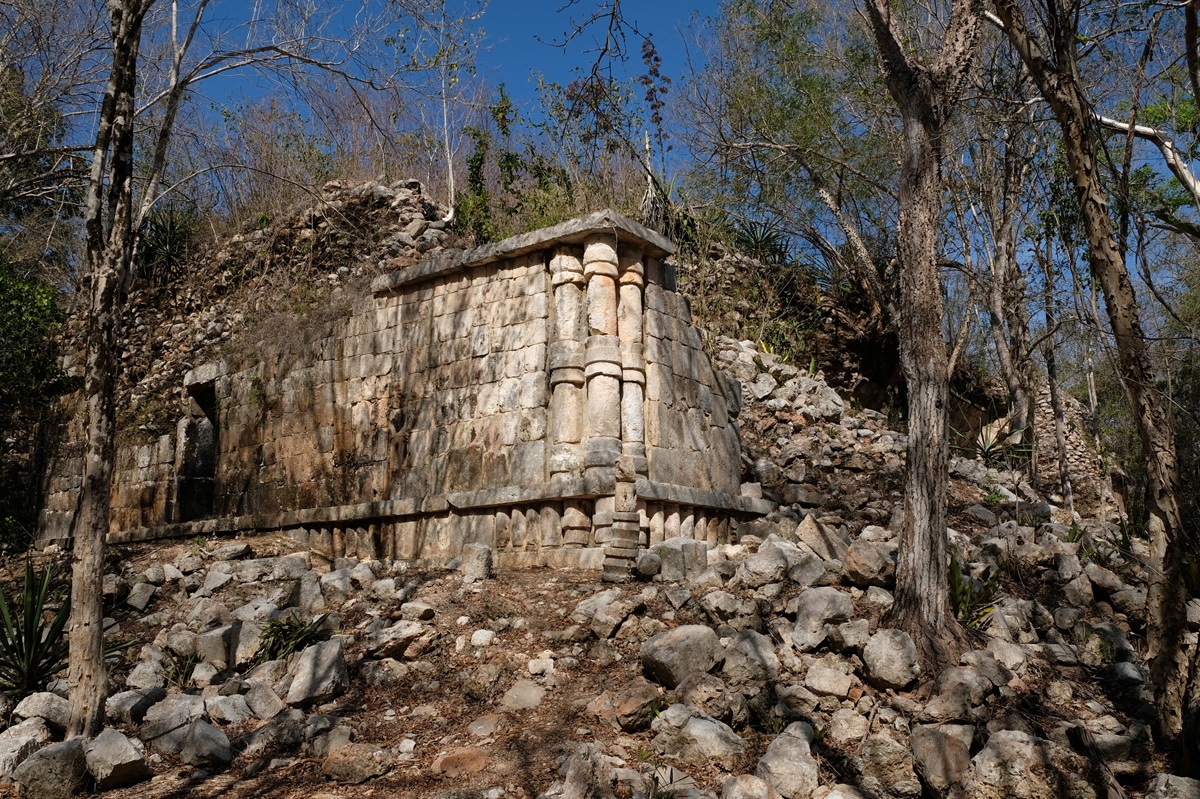
Taking a closer look at the ruined parts of the large structure
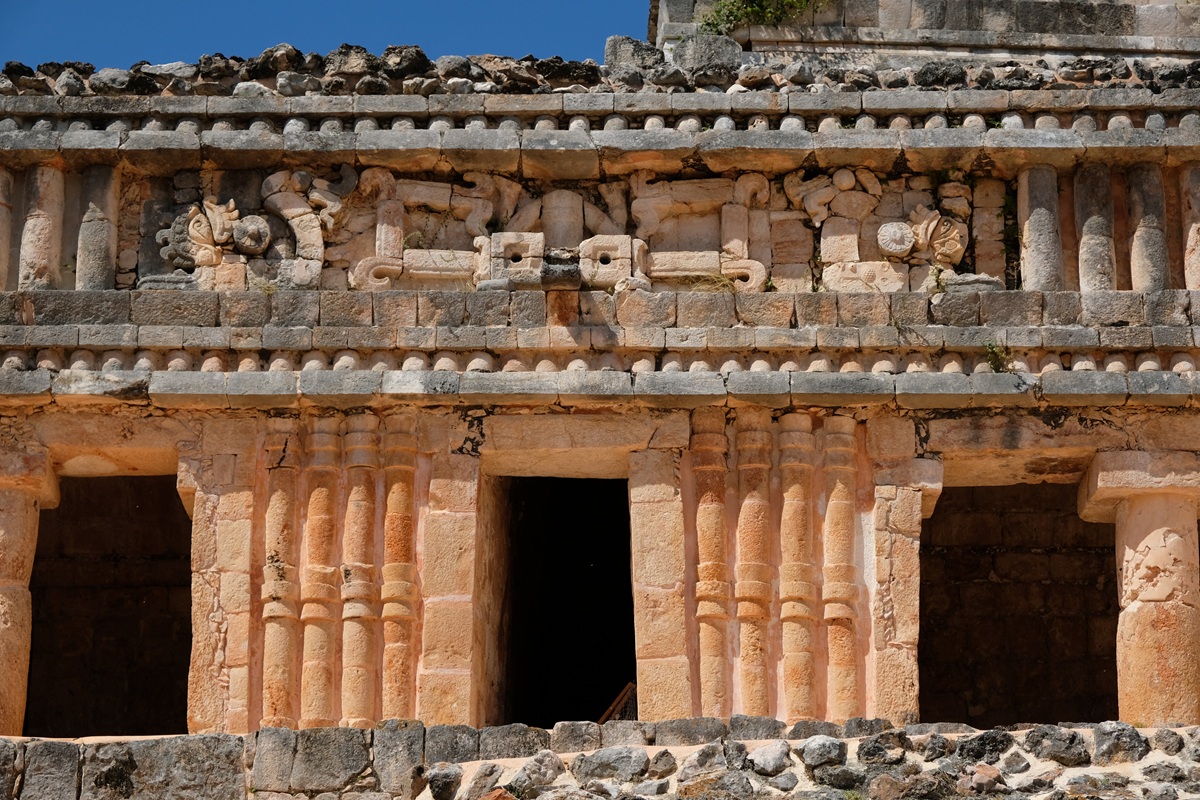
A depiction of Ah-Muzen-Cab (at the center) who is flanked by serpents that remind me of the makara from Hindu/Buddhist cosmology
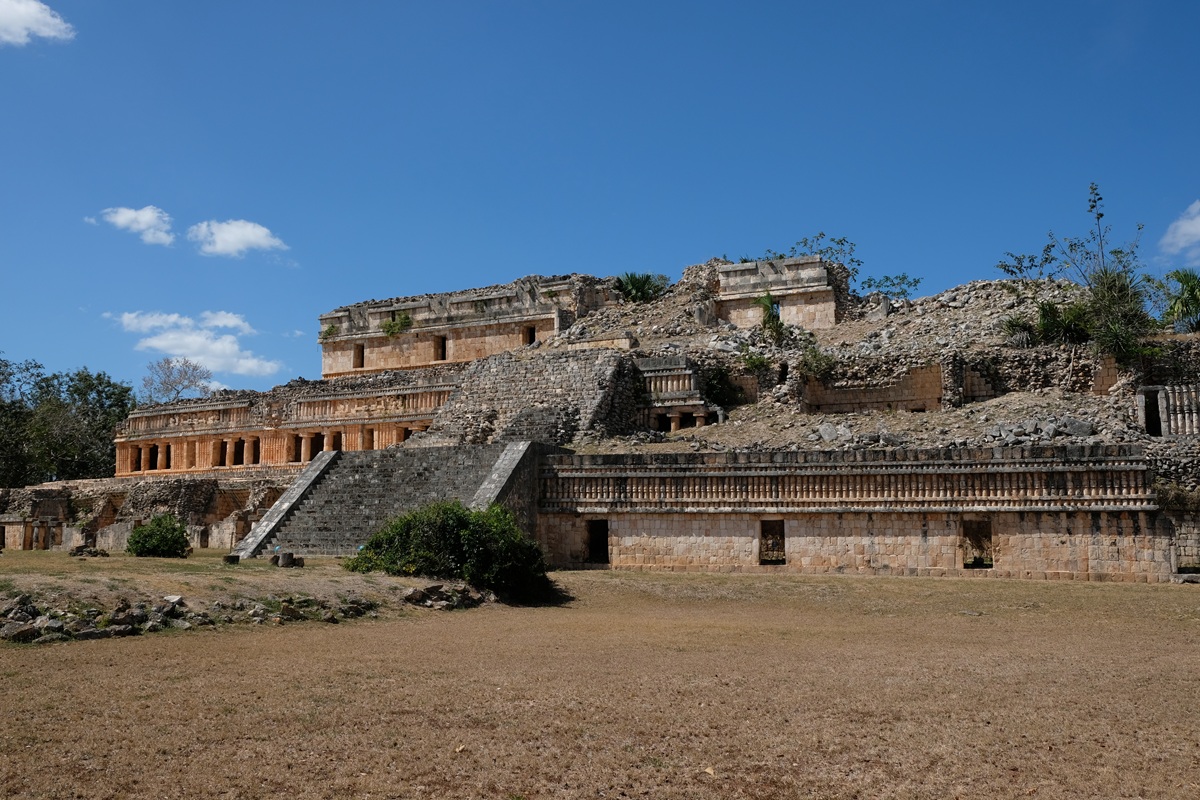
The Great Palace of Sayil provided the inspiration for the replica of this monument at the Maya section of Mexico City’s Museo Nacional de Antropología
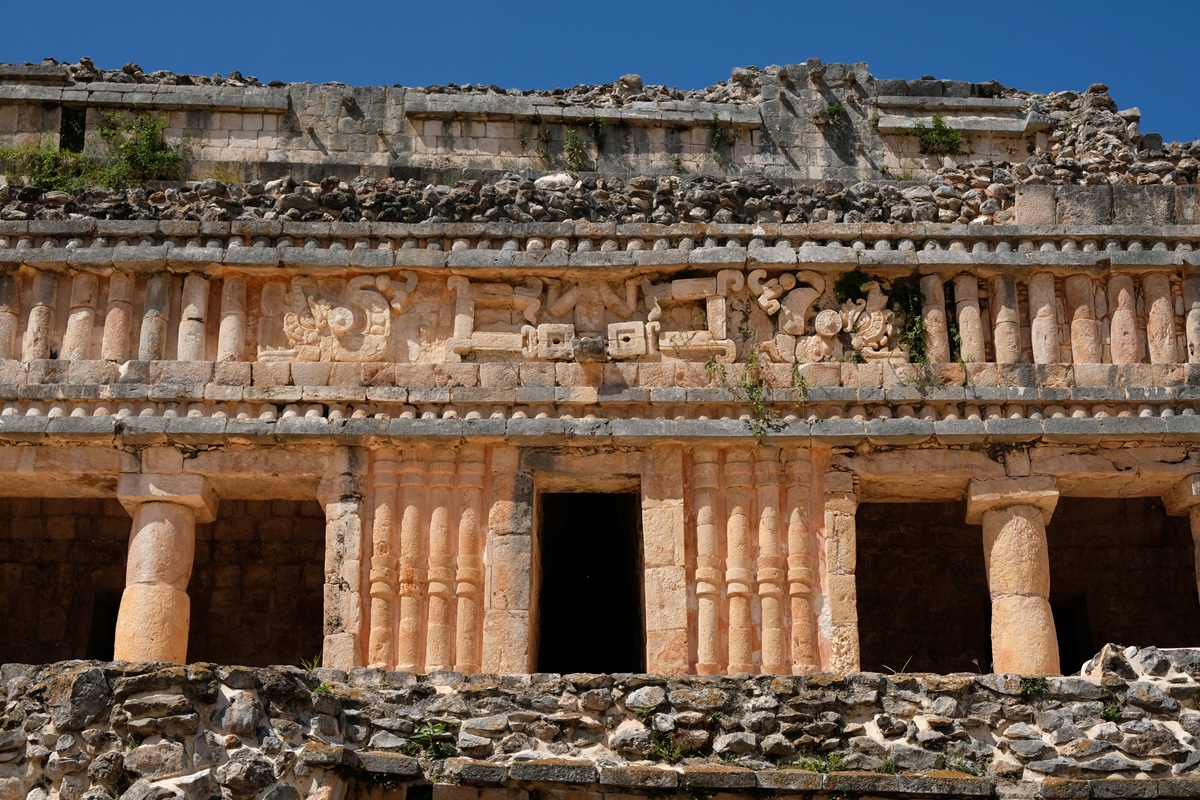
Another relief of Ah-Muzen-Cab, who is curiously also depicted at a structure in Tulum built centuries after Sayil
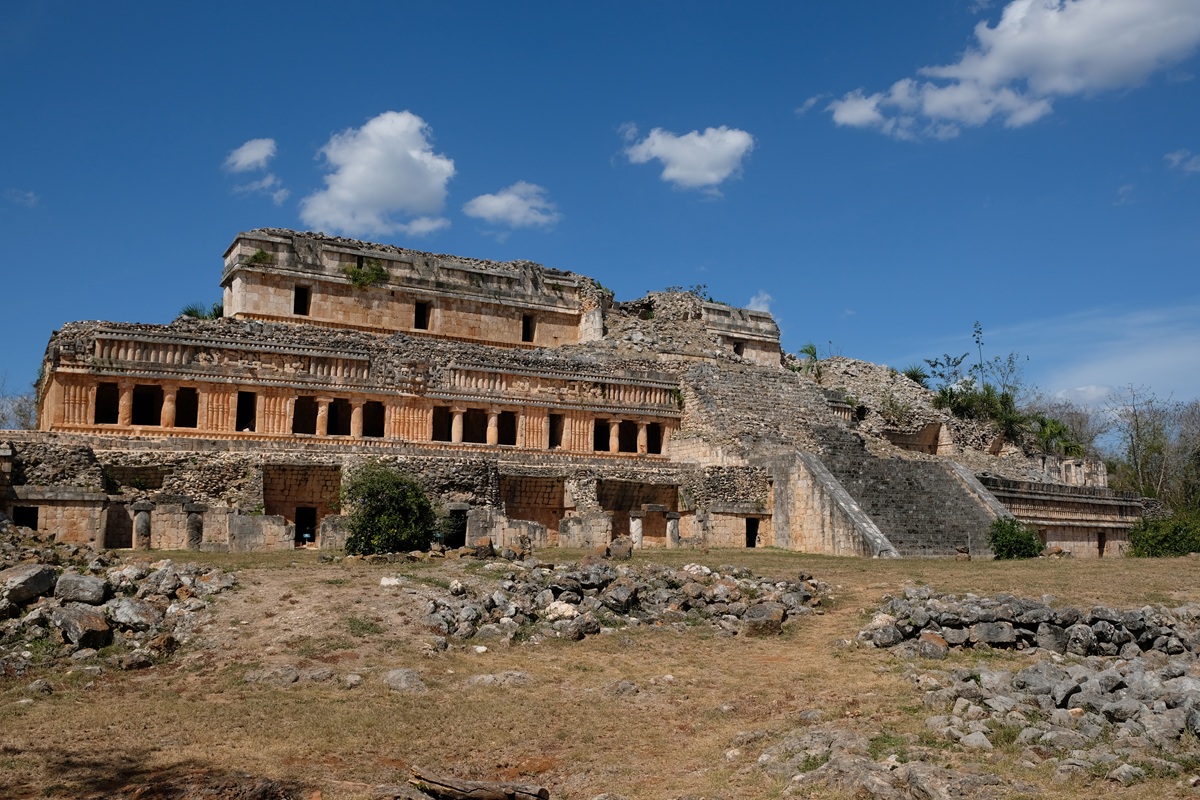
One last look at the palace before moving on to other parts of the archaeological zone
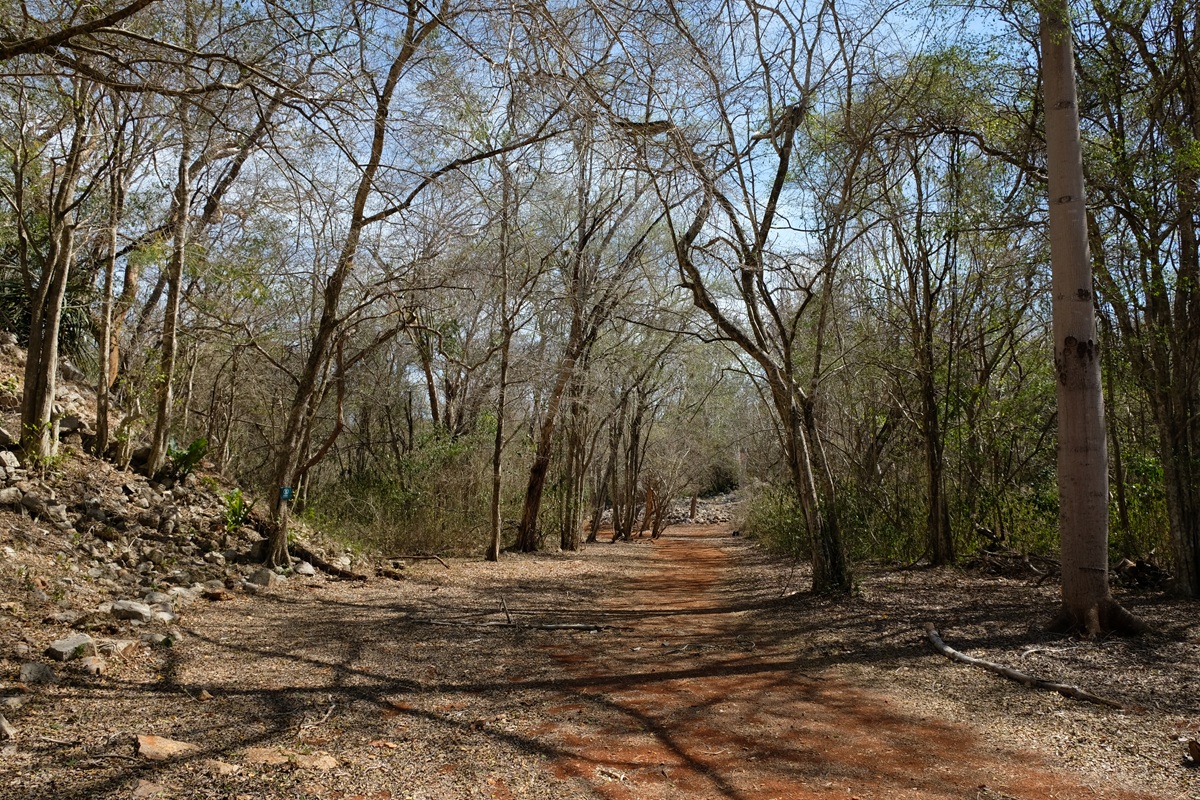
Walking down the sacbeob of Sayil
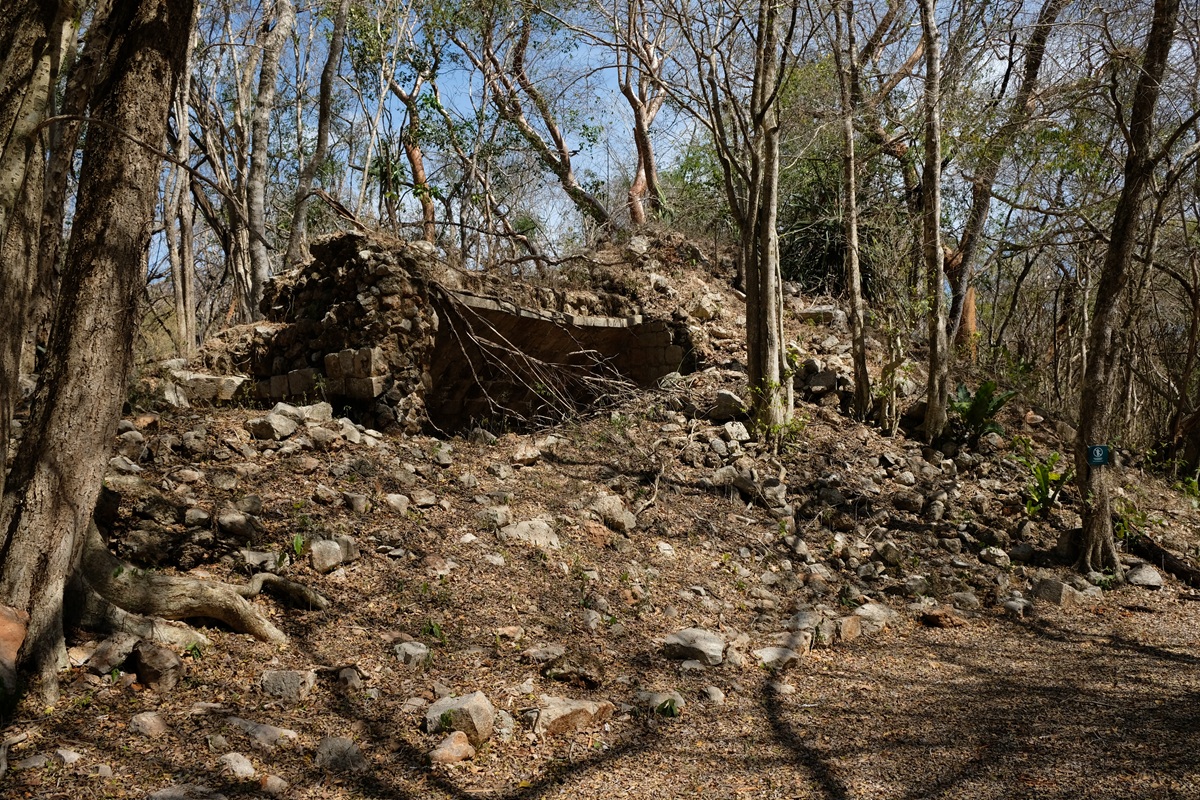
It was not uncommon to stumble upon unrestored ruins along the way
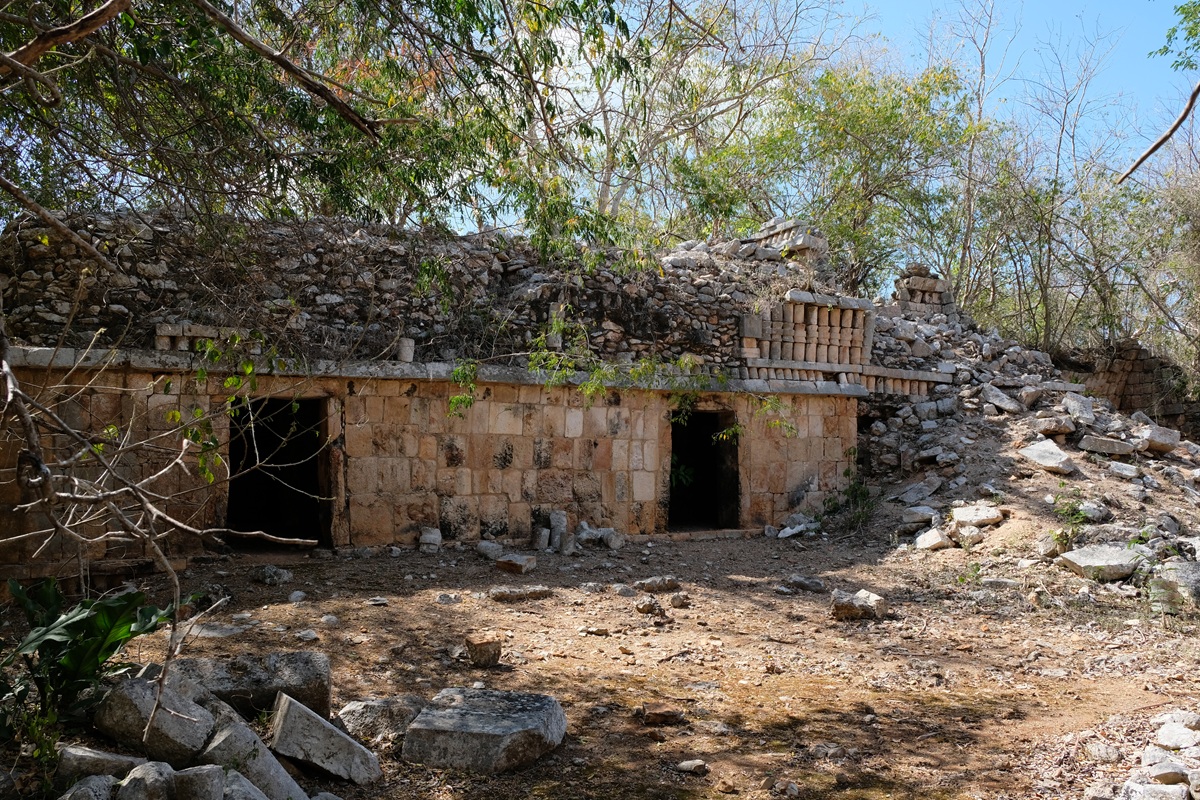
Partially-ruined structures like this made Sayil a very exciting place to explore
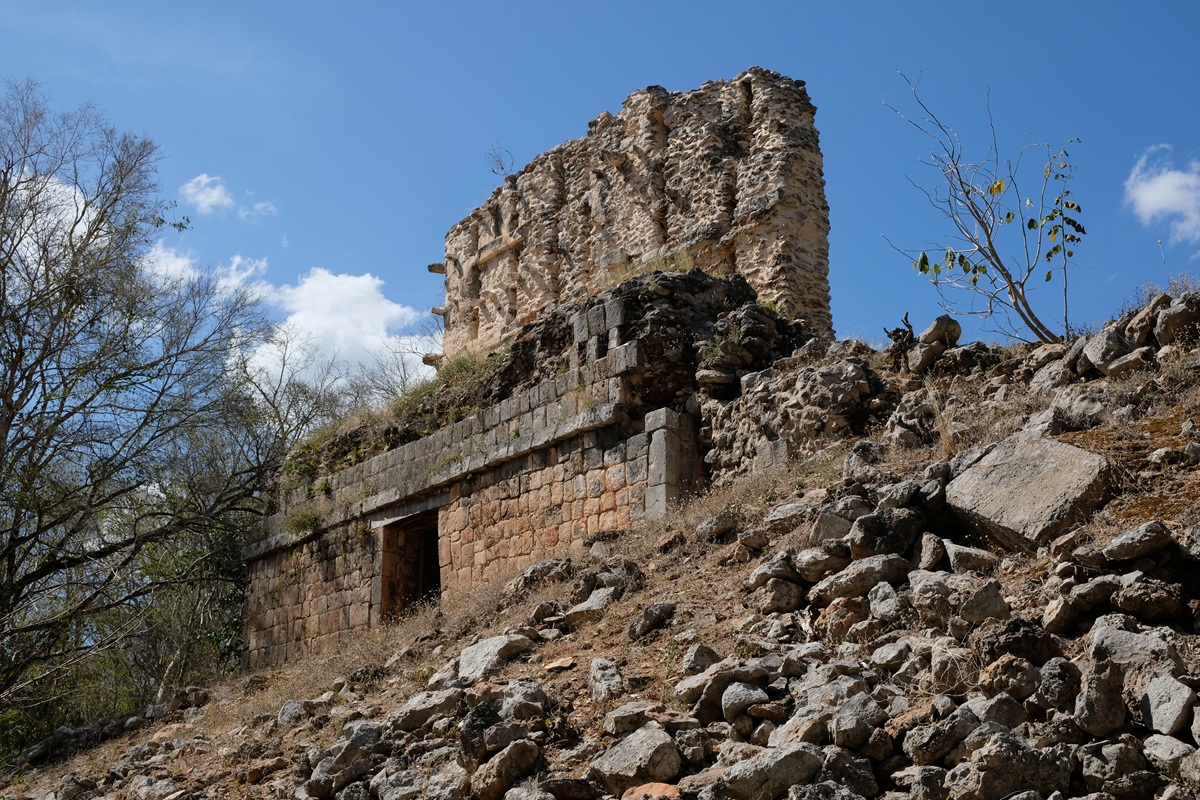
El Mirador, the remains of a pyramid older than the Great Palace
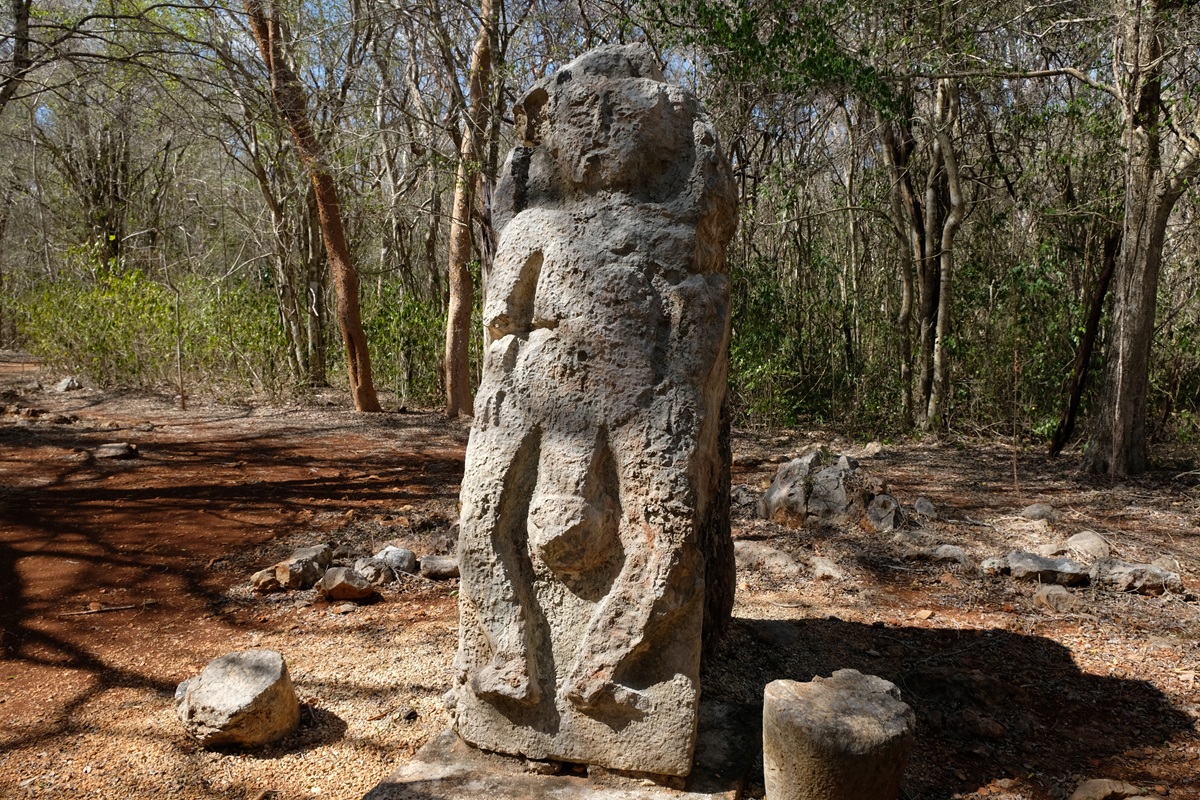
A sculpture of Nohoch Kep (also known as the god of fertility), tucked away in one corner of the ancient site
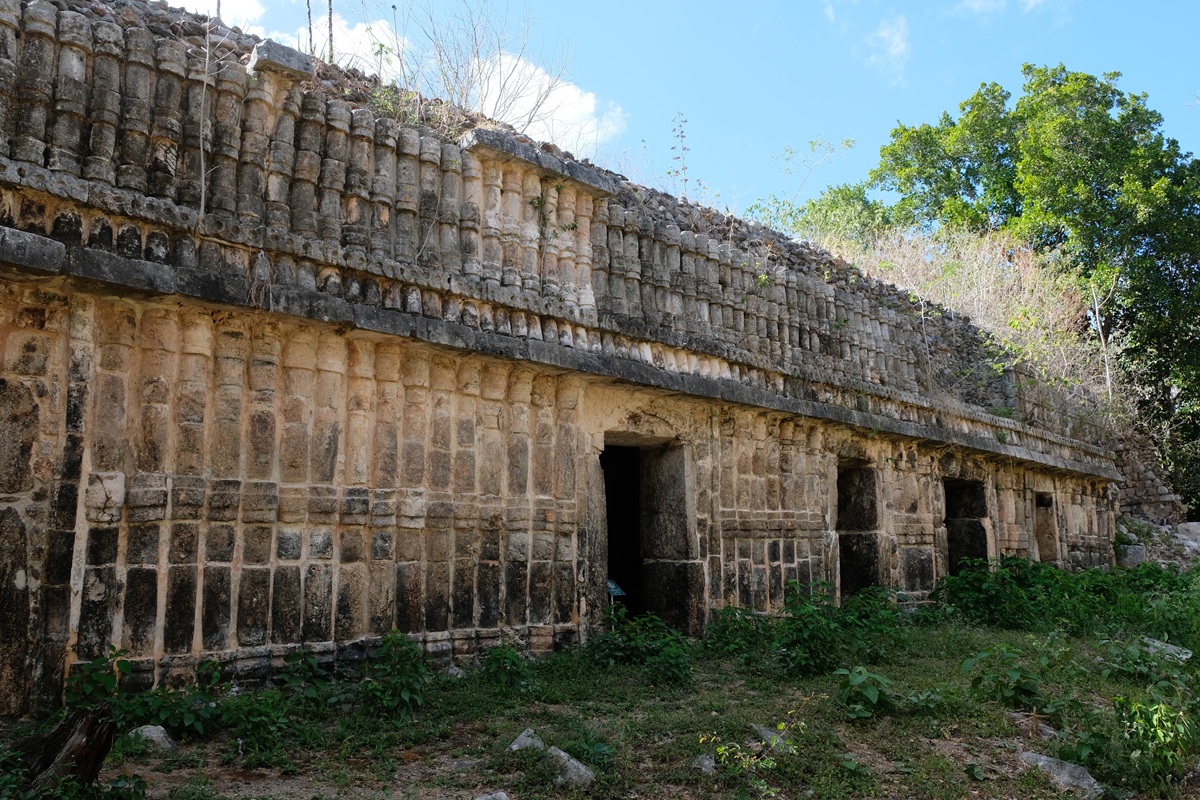
The South Palace at the very end of the sacbeob
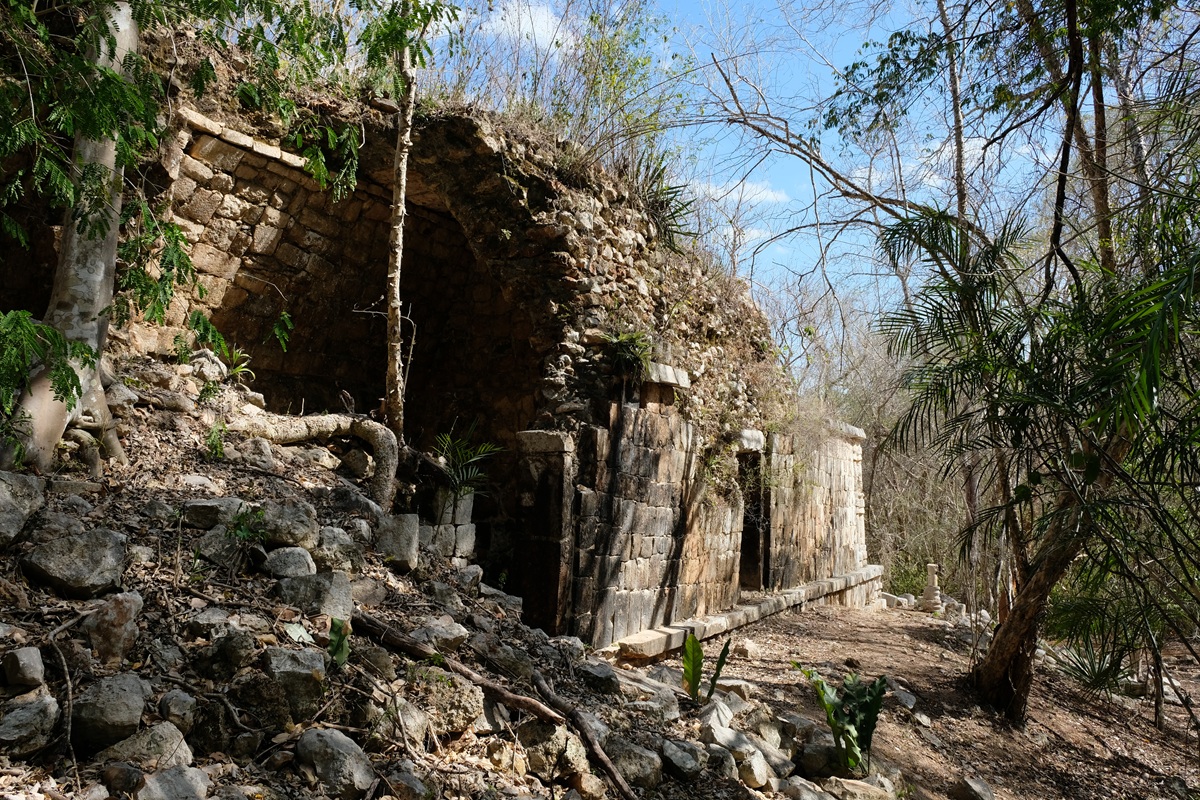
At the other side of the remote structure
The South Palace is situated farther away from most structures within the archaeological zone


Very impressive, and yes, the Great Palace of Sayil looks reminiscent of a scene in Indiana Jones! The columns and reliefs are so intricately-designed and despite the ruins, there’s no doubt that it still shows just how powerful the Mayan Empire was back in the day. Thanks for sharing, Bama!
LikeLiked by 1 person
Places like Sayil are the reason why I travel. Seeing them in person makes me appreciate the achievements of the ancient Maya civilization even more. When they wrote Indiana Jones, I’m sure they were inspired by ruins like these. But because it’s Hollywood, of course they had to add suspense! Thanks Rebecca.
LikeLiked by 1 person
I really love Mexican ruins… something about them appeals. Great photos and writings as always mate! 👍🏻
LikeLiked by 1 person
Exactly! I’ve been thinking of a future trip to Mexico to see some other ruins James and I didn’t have time to visit last year. Much appreciated, Anna!
LikeLiked by 1 person
The Great Palace of Sayil is beautifully even in its aged and ruin state! I’m glad you both, and Abdiel, enjoyed your visit and avoided any perilous giant boulders barreling down towards you!
Interestingly, I thought about what the ancient people created statues and carvings in tribute of – and what our modern society will leave behind for future to find. For us, I imagine people will try to make sense of our celebrity and influencer worship! 🤣
LikeLiked by 1 person
And the weather was perfect too. The afternoon light made those ruins look even more photogenic. I looked around to make sure there was no giant boulder chasing us! 🤣
Ab, I’ve had similar thoughts before. I wonder, centuries from now what will the people in the future think of us? The celebrity and influencer worship will definitely be an interesting subject to look at (maybe it will even become a branch of archaeology in the distant future!).
LikeLiked by 1 person
The golden hour is perfect time to experience and photograph the ruins and the rocks and stones!
And digital archeology in the future will be so fascinating to think about and to make sense of. Today’s social media and blogs will likely be seen as archaic as cave writings!
LikeLiked by 1 person
Absolutely! And that is why I prefer to take outdoor photos either early in the morning or late in the afternoon, whenever possible.
I still can’t wrap my head around the idea that our blogs will one day be seen as archaic!
LikeLiked by 1 person
I’m not surprised you felt like Indiana Jones, it’s an absolutely amazing place!! I love all the detail in the architecture, it’s really so impressive.
LikeLiked by 1 person
And the best part was there weren’t many other visitors when we went. You have to love ancient ruins to be at this place because it’s quite a detour from the main touristy parts of the Yucatán.
LikeLiked by 1 person
Smaller sites are ideal for exploring in more detail and imagining what life might have been like in the past. I remember stopping at a site where, according to the visitor book, the previous visitor had been there three days earlier.
LikeLiked by 1 person
That site you visited is exactly the kind of place that usually turns out to be the highlight of my trip. I couldn’t agree more with you about the allure of lesser-known sites.
LikeLiked by 1 person
Yup, its looks like scenes from that Indiana Jones and the Temple of Doom film
LikeLiked by 1 person
Indiana Jones movies are not only fun to watch, but they also make us feel like Indy himself when we go to ancient ruins, especially those that are not too touristy.
LikeLiked by 1 person
The Great Palace of Sayil looks impressive and it’s neat to hear about the different carvings. I was totally getting Indiana Jones vibes just looking through your pictures.
LikeLiked by 1 person
Sayil is the kind of place that would make a great setting for Indiana Jones or Tomb Raider movies. The partially ruined state of the structures, the dense forest, and the lack of visitors definitely helped create a rather mysterious atmosphere.
LikeLiked by 1 person
So interesting, I would love to explore Mexico some day!
Christie
LikeLiked by 1 person
Hi Christie. I noticed you’ve been to Chichen Itza and Tulum. If you enjoyed both sites, then I highly recommend exploring the Ruta Puuc as well.
LikeLiked by 1 person
Something to add to our future travels🥰
Thank you!
LikeLiked by 1 person
I can really see the similarities in the Puuc architecture to Uxmal. If I knew it was in such good condition, we probably would have added another day. I can’t remember if you went to Tulum. The descending god was very faint there, as I remember anyway, good to see it here. I feel like I’ve see Nohoch Kep somewhere else too, but can’t quite place it. Maybe under a different name? I’ll have to look at my notes. Another great post Bama. Maggie
LikeLiked by 1 person
Kabah, Sayil, and Labna are the kind of places I know you would enjoy exploring, Maggie. I haven’t been to Tulum, but I remember seeing photos of its version of the Descending God. There are just so many interesting places in Mexico that I would love to see. But if I get the chance to go back there, I think I wouldn’t want to miss Oaxaca. Thanks Maggie!
LikeLiked by 1 person
Oaxaca is a great choice, but there are soooo many in Mexico 😊
LikeLiked by 1 person
Exactly! The more I read about the country, the more places I want to visit there.
LikeLiked by 1 person
What struck me most about Sayil was the sense of mystery and surprise that we found while exploring the site. I really enjoyed wandering down the ancient sacbeob through the forest and getting sudden glimpses of ruins like the Palace and El Mirador. Seeing only a small handful of other visitors there added to the feeling that we’d truly gone off the beaten track – it was such a contrast to what we experienced a few days later at busy Chichén Itzá!
LikeLiked by 1 person
I wonder if 20-30 years ago Angkor Wat and the nearby ancient temples felt like how Sayil was when we visited this site. There’s something magical about seeing ancient ruins before they become too famous, although I doubt Sayil will ever get as busy as Chichen Itza.
LikeLiked by 1 person
What an amazing site, Bama. I also love exploring places where not everything has been restored. It also makes one wonder how much is still hidden away.
LikeLiked by 1 person
Exactly. Even here in Java, ancient Hindu and Buddhist temples that have been buried by layers of volcanic ash for centuries are still being rediscovered. Just a few weeks ago, a large Buddhist stupa was unearthed in Central Java!
LikeLike
How amazing. I love how many layers of history there is that are still hidden, and I’m glad that money is still spent to excavate and study these places.
LikeLiked by 1 person
When it comes to budget, I believe the government could’ve provided more money for archaeological excavations. But it’s still better than nothing, I guess.
LikeLiked by 1 person
Wow, this is such a cool place! I think the Maya’s history is so fascinating and each time I learn more about ancient civilisations I want to learn more about them. This place seriously seems like a movie set, and it must have been amazing to witness such great monuments in real life. Thanks for taking us with you!
LikeLiked by 1 person
Exploring ancient sites like Sayil is absolutely very rewarding, and I think you would enjoy it too! Reading about the ancient Maya civilization is one thing, but seeing what they built in person definitely made me appreciate them even more. I hope you’ll get to visit some of them in the future, Juliette!
LikeLiked by 1 person
The Great Palace is truly impressive! It’s ruined state adds to the magic, somehow. I am in love with Mexico even before stepping foot there, thanks to you guys.
LikeLiked by 1 person
I believe November should be the end of rainy season in the Yucatan. So, I think you’ll find the landscape a lot greener than what you see in my photos. Will you visit Mexico City as well?
LikeLike