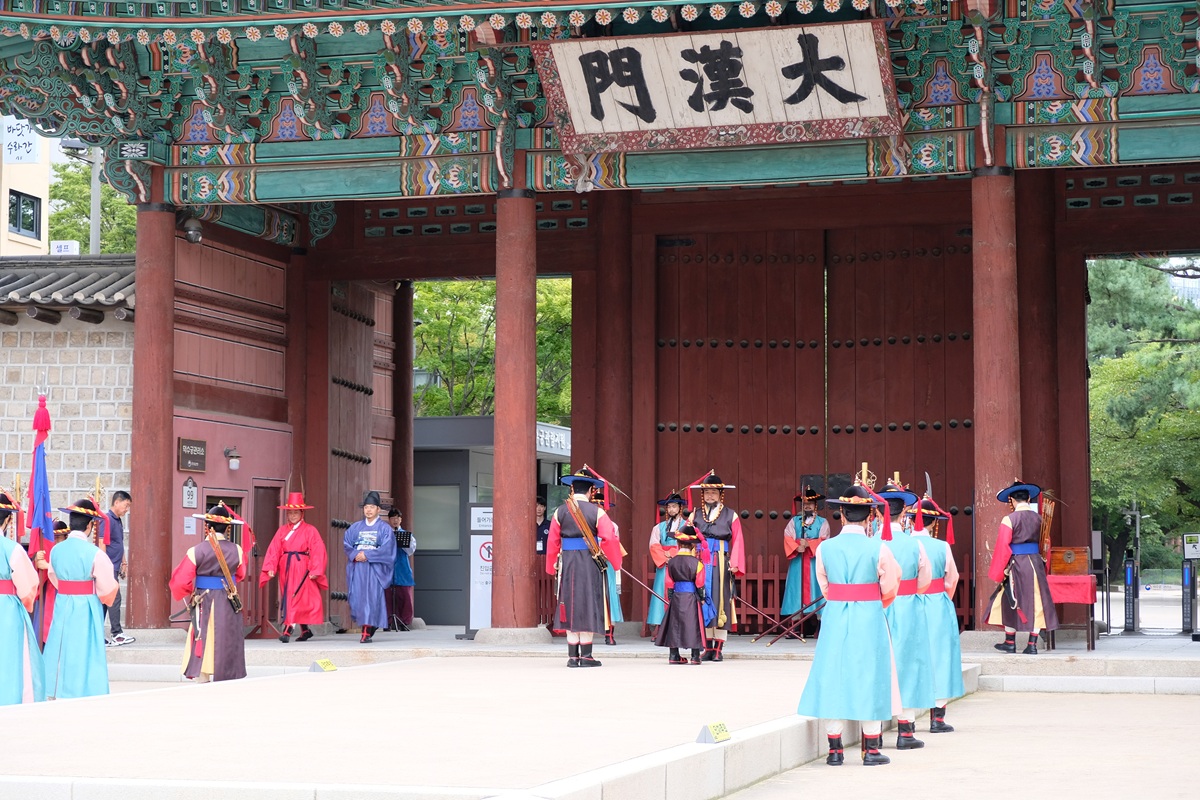
The changing of the guards in front of Deoksugung
Business trips are inherently stressful, at least for me. The ones I’ve taken usually involved a lot of meetings, dinner events, and all sorts of commitments that often resulted in sleep deprivation. Last September, I was sent to Busan, South Korea with some of my colleagues as part of the organizing committee for our company’s annual event as an appreciation for our top-grossing clients. We had to make sure every single program ran smoothly and our guests were happy, which meant we had to be on standby most of the time because last-minute changes and requests are not uncommon in this kind of setting.
However, whenever possible in every business trip I also like to squeeze in some time for sightseeing, no matter how brief, so that in the end I come home not only with a fresh pile of tasks to follow up, but also the memories of the place. For the Busan trip, I made a plan to fly out of Seoul instead for two reasons: the airport at Incheon that serves the South Korean capital has more international flights than Busan airport, which meant I would have more options for my flight back to Jakarta, and by moving to a different city I would have the time to be by myself and recharge after days of pushing my social battery to its limit. (Introverts do what introverts need to do.)
In the morning after the final program, most guests and some people from my office (including me) checked out of our hotel and parted ways. The majority of them headed straight to Busan airport, but I went to the city’s main train station instead, for I had reserved a seat on the high-speed KTX train to Seoul. South Korea’s bullet train systems were derived from France’s TGV, and as soon as I stepped inside the car it immediately felt different from the Shinkansen or the Chinese-built high-speed train (which is what Indonesia chose for the country’s first ever high-speed railway) I have taken before – not in a bad way though. Sure enough, it departed on time, and as soon as we left Busan’s urban area, the speed immediately picked up and kept increasing to a point where the trees outside began to blur away.
However, my arrival in Seoul was rather tardy – for Asian bullet train standards – as we pulled into the capital’s main train station six minutes later than scheduled. With less than 12 hours in the city before my flight back to Jakarta later that night, planning what to see in such a limited time was crucial. Luckily, Seoul is home to what is arguably among the largest and most comprehensive metro networks in the world, which is essential to move around a big city efficiently. But first, I needed to deposit my suitcase at one of the lockers available at some metro stations. To my delight, the whole process proved to be quite straightforward: I just had to download an app, choose the station, pick a locker that suits the size of my luggage, and make the payment.
On our first brush with the South Korean capital in 2018 – which was also a rather short trip – James and I managed to visit two of the five royal palaces in Seoul: the impressive Gyeongbokgung and the elegant Changdeokgung. This time around, I had Deoksugung in mind, the smallest of them but also the easiest to access since it’s located adjacent to a metro station and directly across the City Hall, one stop away from Seoul station. My plan, however, was to check it out right before sunset so that by the end of my visit I would have the palace compound bathed in artificial lights.
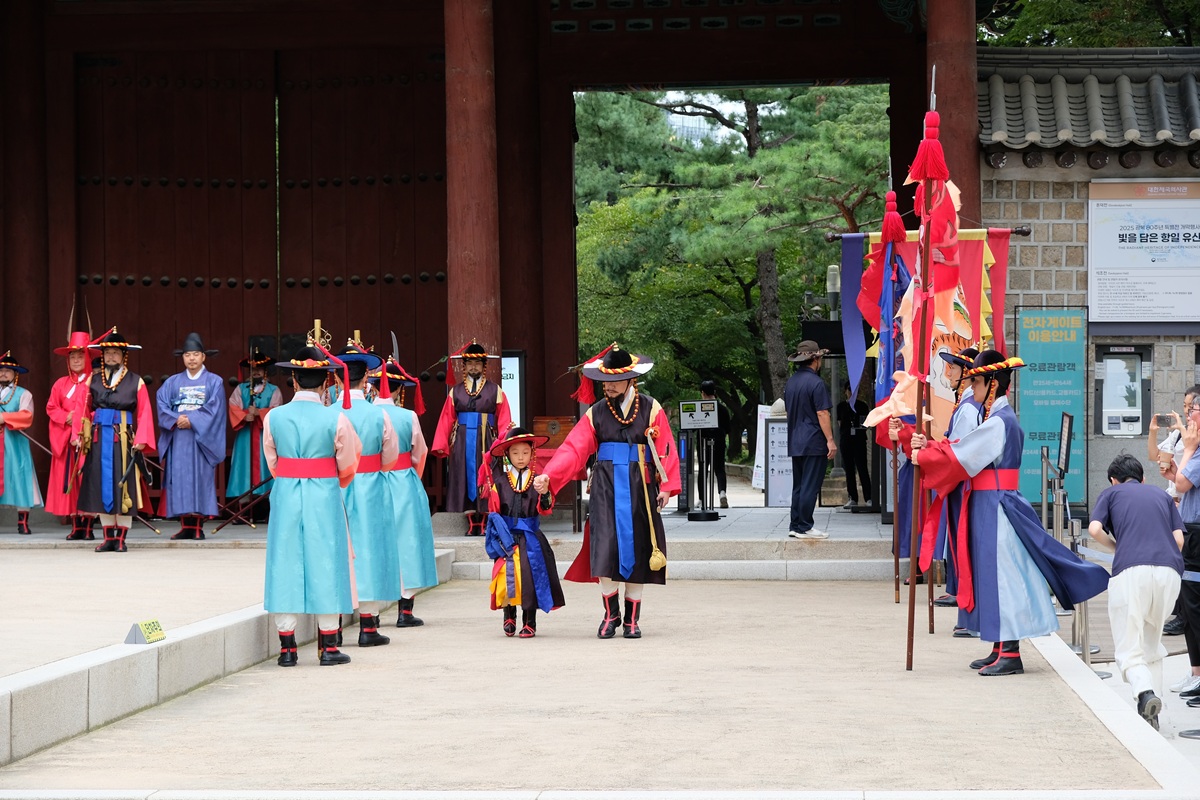
I was lucky to be around the area as the spectacle began
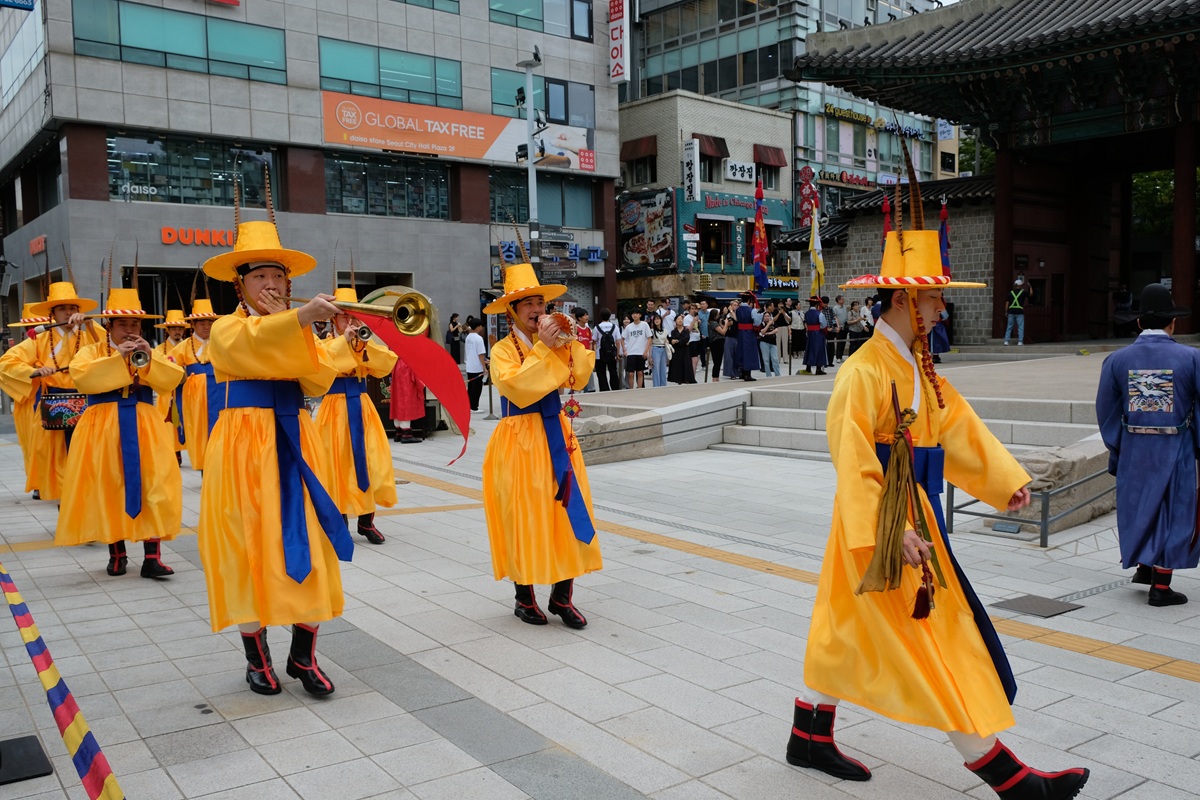
A group of men wearing Joseon-era costumes reenacting the ceremony
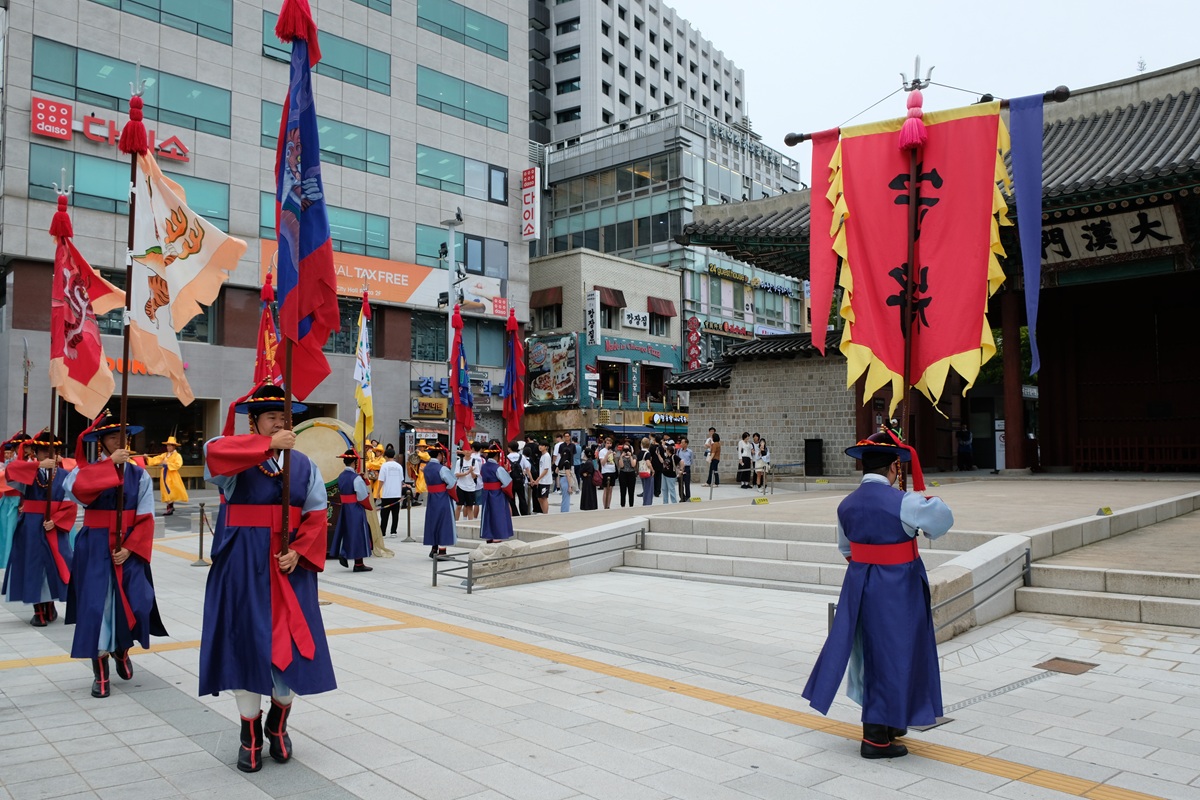
The colorful traditional attire brightened up the gloomy day
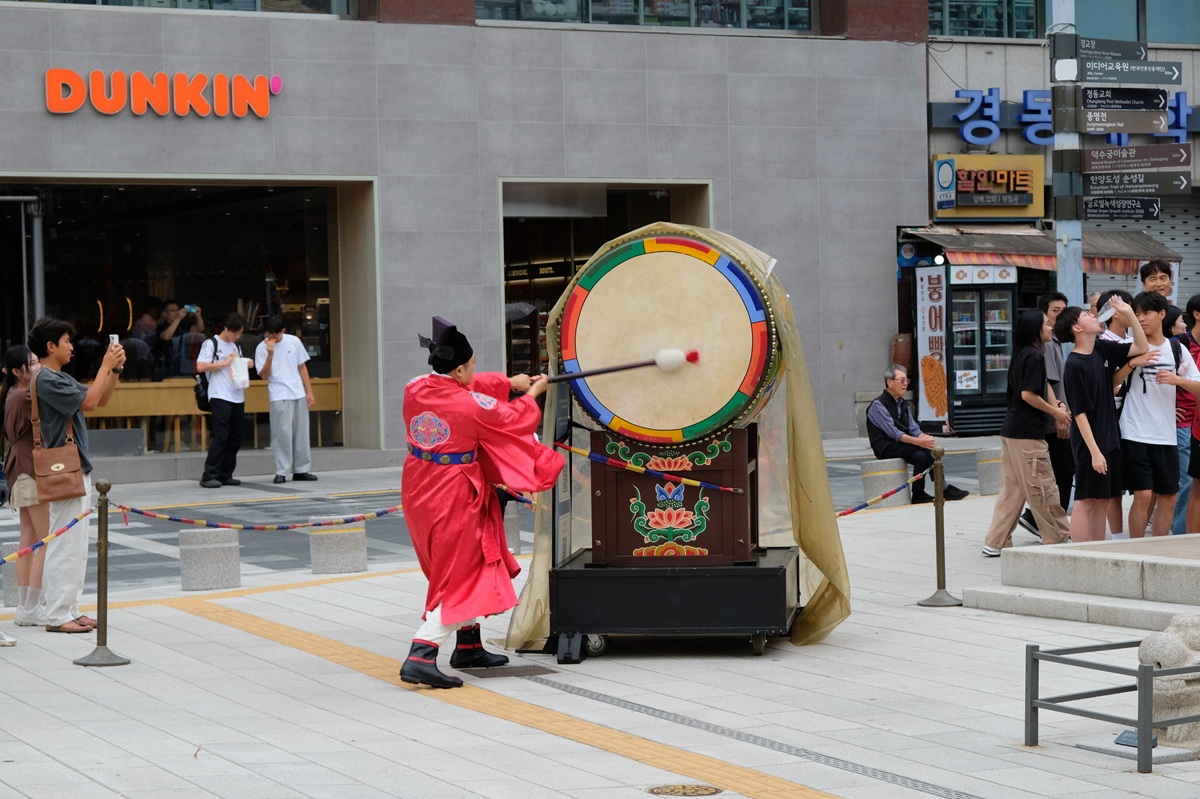
Dunkin’ and beatin’
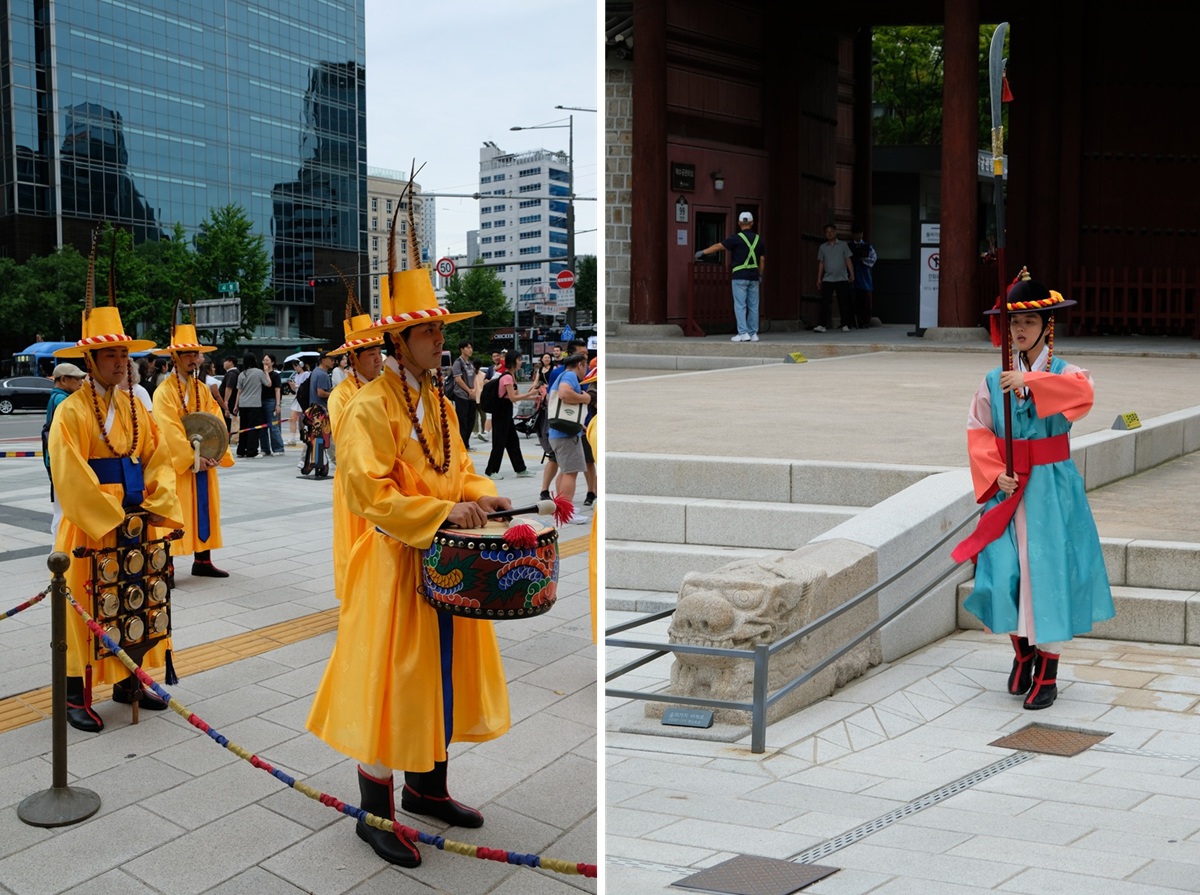
A closer look at the actors
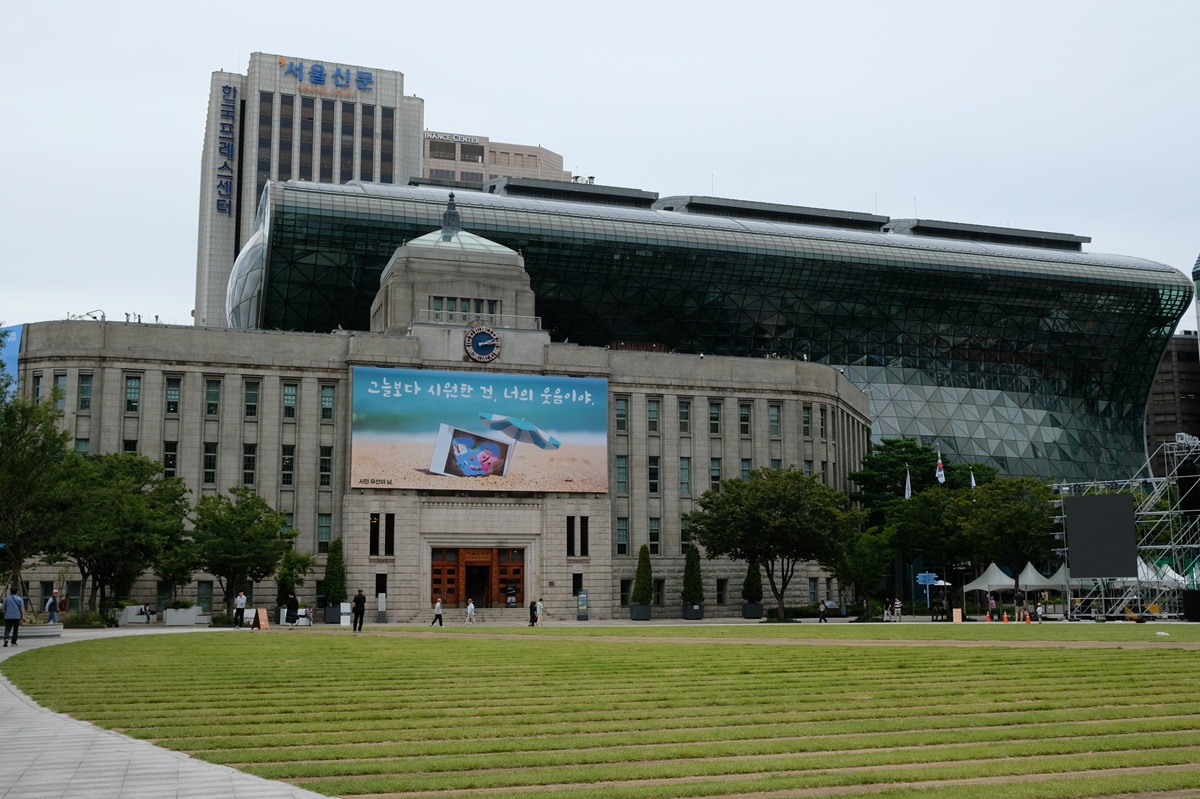
The City Hall of Seoul located across the wide avenue from Deoksugung
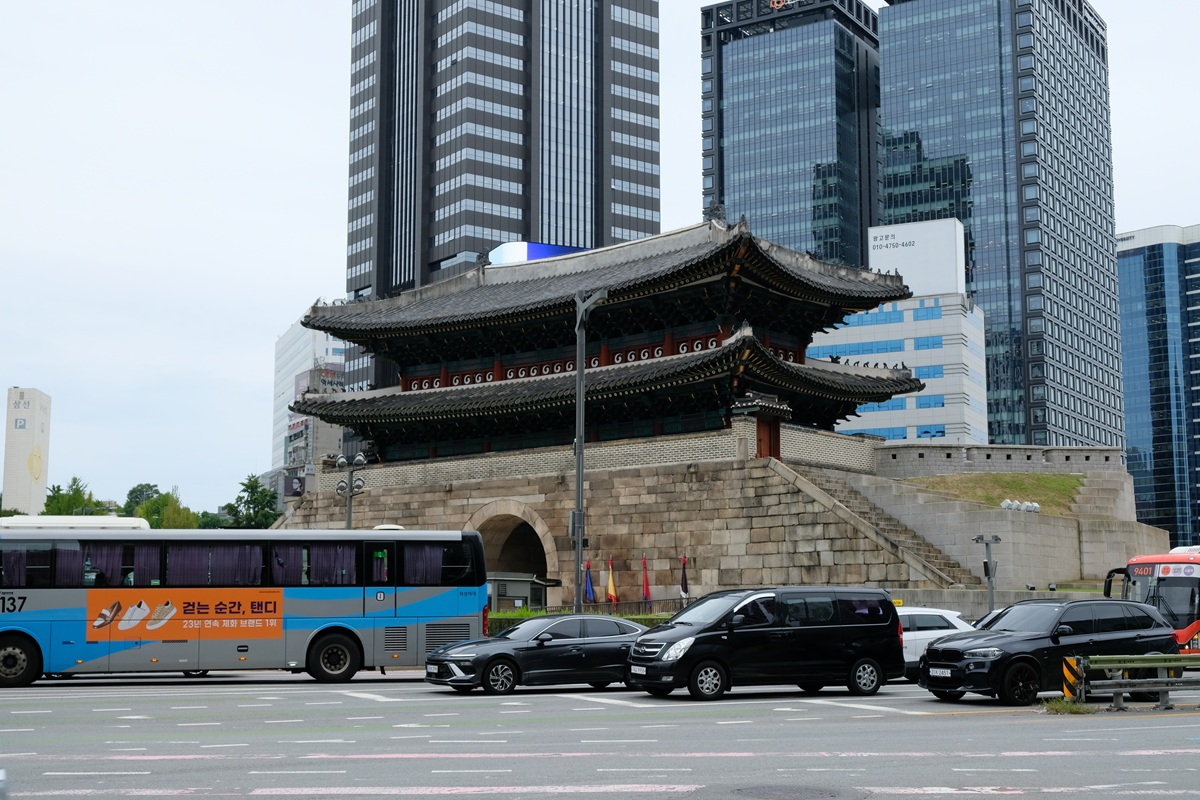
Sungnyemun (Namdaemun), a historic city gate of Seoul dating back to the 14th century
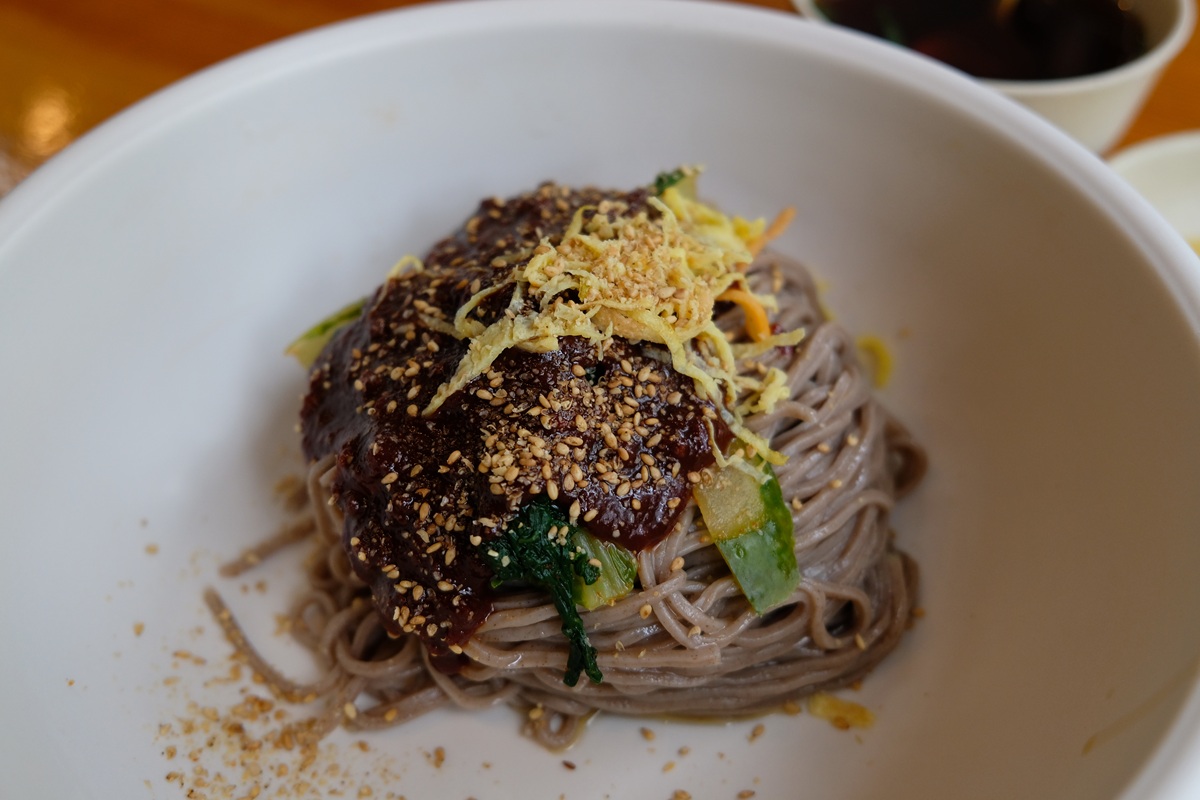
Delicious bibim-guksu for a late lunch
After depositing my luggage, I exited the metro station and sat at a bench near the entrance of the palace to have two kinds of bread I had bought earlier at Seoul station. As I was halfway through munching the second piece of flaky goodness, suddenly a troupe of men draped in colorful costumes playing South Korean traditional music emerged from my left. They were all marching in front of me toward the palace gate. I immediately realized that it was the changing of the guards! I quickly gobbled up the rest of the bread, grabbed my camera, and dashed toward the entrance of the palace to watch the performance. I had read about how a similar ceremony at Gyeongbokgung has become a spectacle, drawing a large number of curious tourists every single day. But the one unfolding before my eyes at Deoksugung didn’t feel too crowded, and there was this solemness in the air that was quite captivating. I couldn’t believe my luck for being nearby just as it started!
Once the ceremony was over, it was time for lunch. I walked down the main avenue from the City Hall to Seoul station to look for a place that does Korean food – preferably serving dishes I can’t find in Jakarta. But this proved to be quite a challenge. The menus at some restaurants didn’t look too special, and some eateries were closed altogether. I turned to Google Maps for help and searched the area to find a place that seemed interesting. This took a while before I finally settled with one particular local joint that does cold buckwheat noodles.
Yurimmyeon is situated on a quiet alley hidden behind another taller building. This is one of those places that you really need to look for instead of going to as an afterthought. It was what I read on the internet that convinced me to check it out: it’s a family-run eatery that has been in business for more than five decades, and it’s listed as a Bib Gourmand eatery in the Michelin Guide. Luckily, as it was already past lunchtime, the place wasn’t crowded at all. I pointed at one particular dish on the menu (it was solely in Korean, but luckily there were pictures) and the server with a thick Korean accent asked me, “spicy?” I nodded.
As is the custom in Korean restaurants, while I was waiting for the main dish, I was served banchan (side dishes) including the largest slices of pickled turnip I’ve ever seen in my life. And before long, the noodles arrived. Later I learned that what I ordered is called bibim-guksu, a cold, sweet, savory, and spicy noodle dish that is popularly eaten in the summer. In fact, Seoul was still a little hot and humid in early September, so having this for lunch was actually quite refreshing.
My stomach was full and happy, and after saying kamsahamnida to the ladies who ran the restaurant (which was met with big smiles from their end), I was finally ready to explore Deoksugung which was just a few steps away from this eatery. The sky only got grayer as the day progressed, but it didn’t dampen my excitement to explore my third Korean former royal palace. Deoksugung’s history goes back as far as the 16th century, but it only rose to prominence at the turn of the 20th century when Gojong, the penultimate Korean monarch, ascended the throne. He was the last king of the Joseon dynasty, which ruled Korea for more than five centuries, and the first emperor of the Korean Empire, a relatively short-lived state whose existence ended 13 years after its formation when Korea was colonized by Japan in 1910.
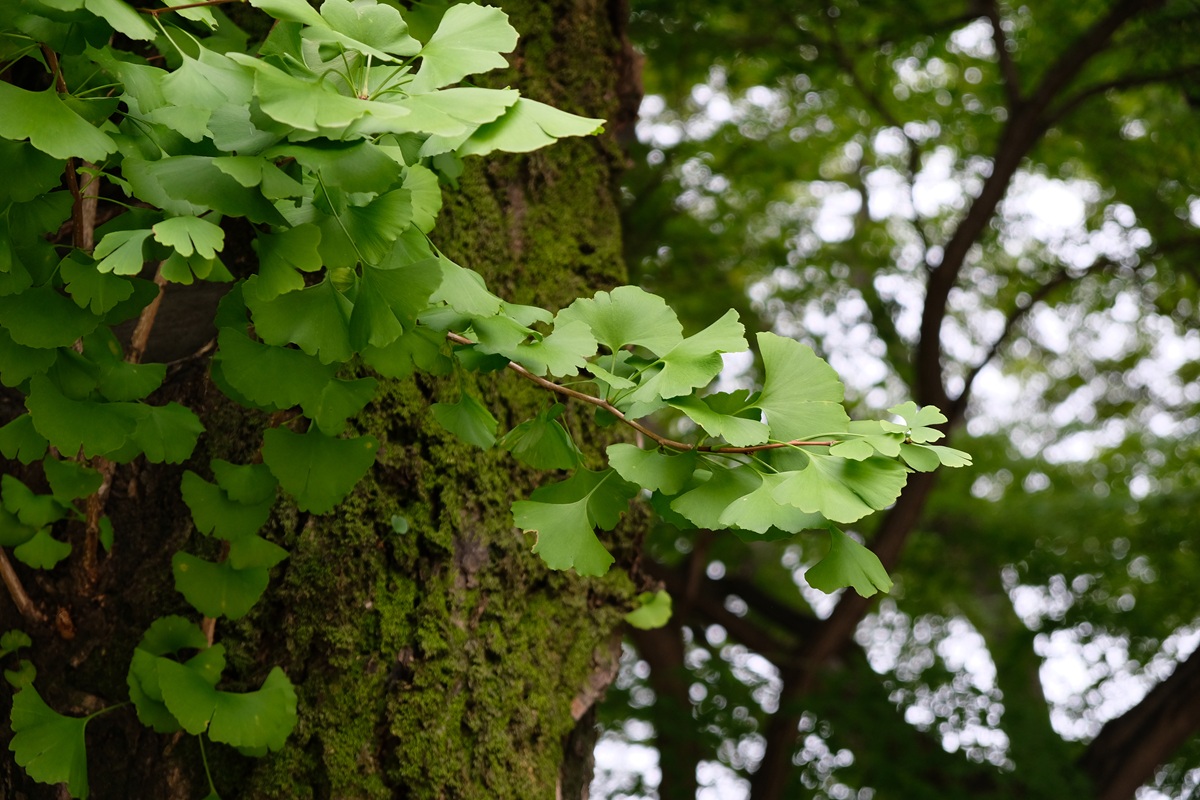
A ginkgo tree inside the palace compound
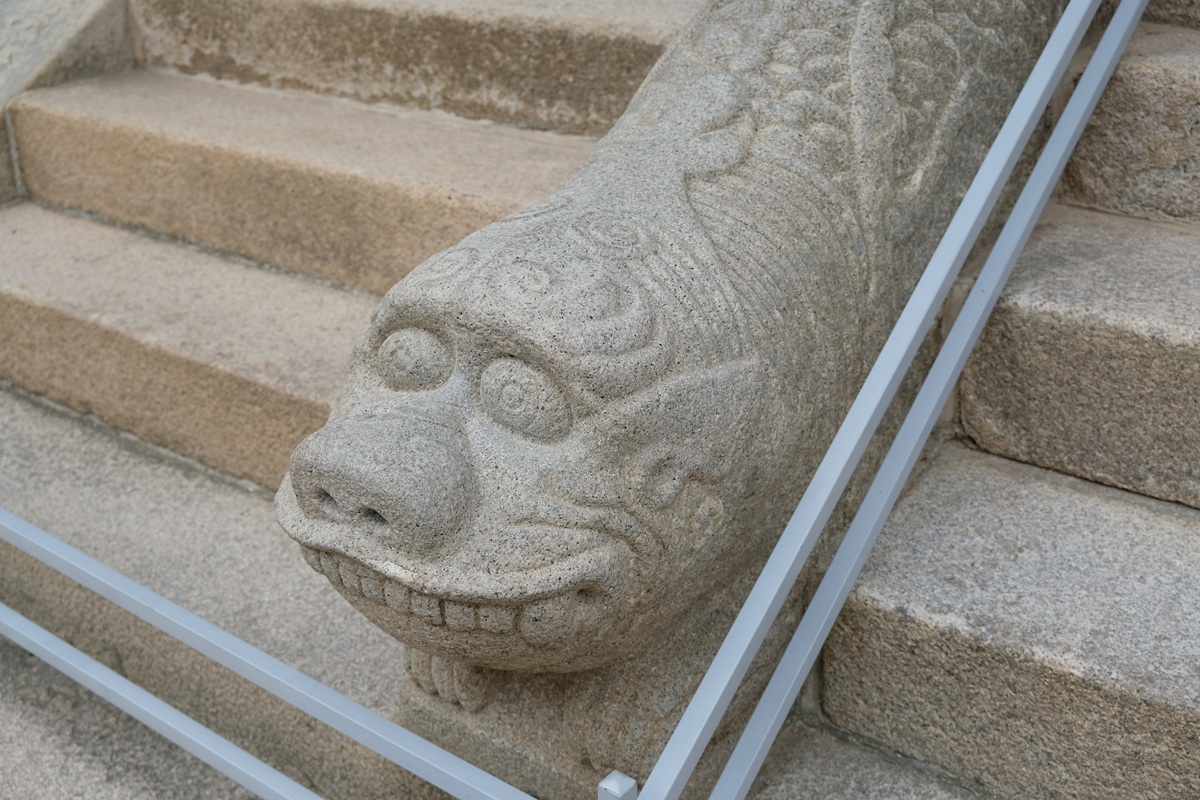
One of the guardian creatures of Junghwamun, the main gate to Junghwajeon (the main hall of the palace)
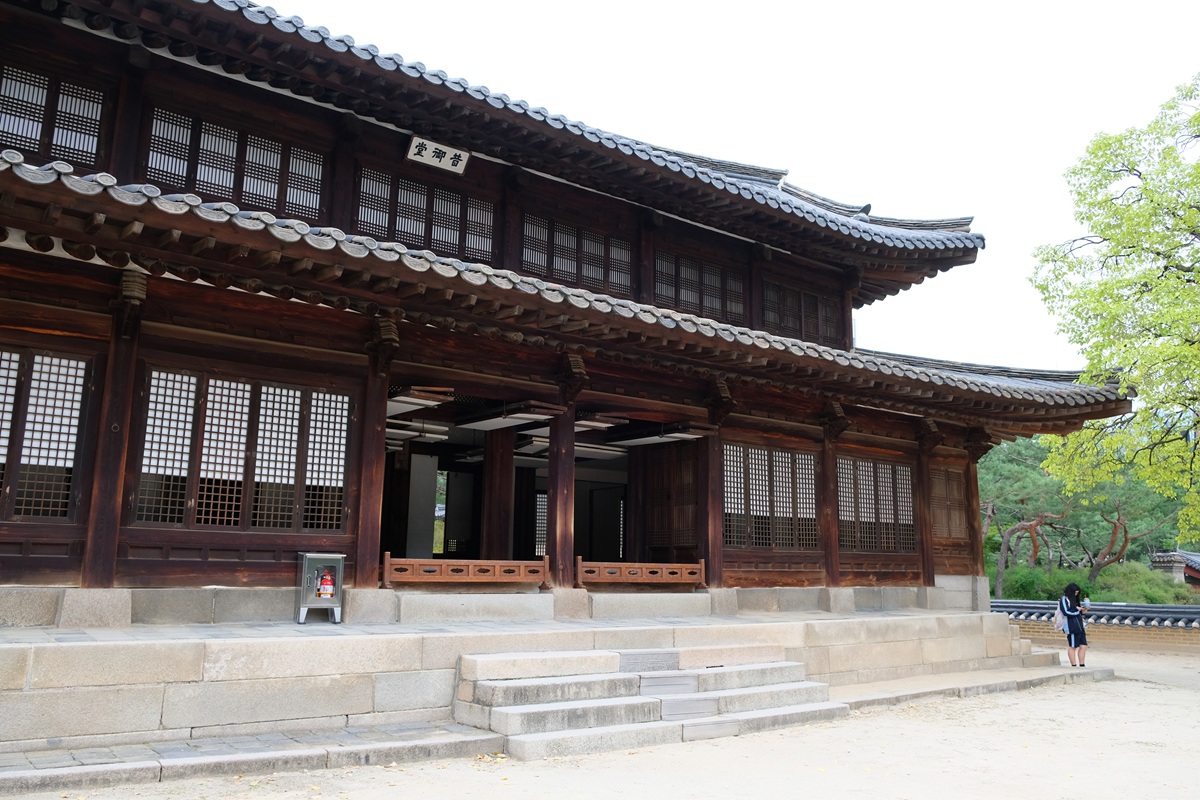
Seogeodang, the residence of King Seonjo (the 14th monarch of the Joseon dynasty) in the 16th century
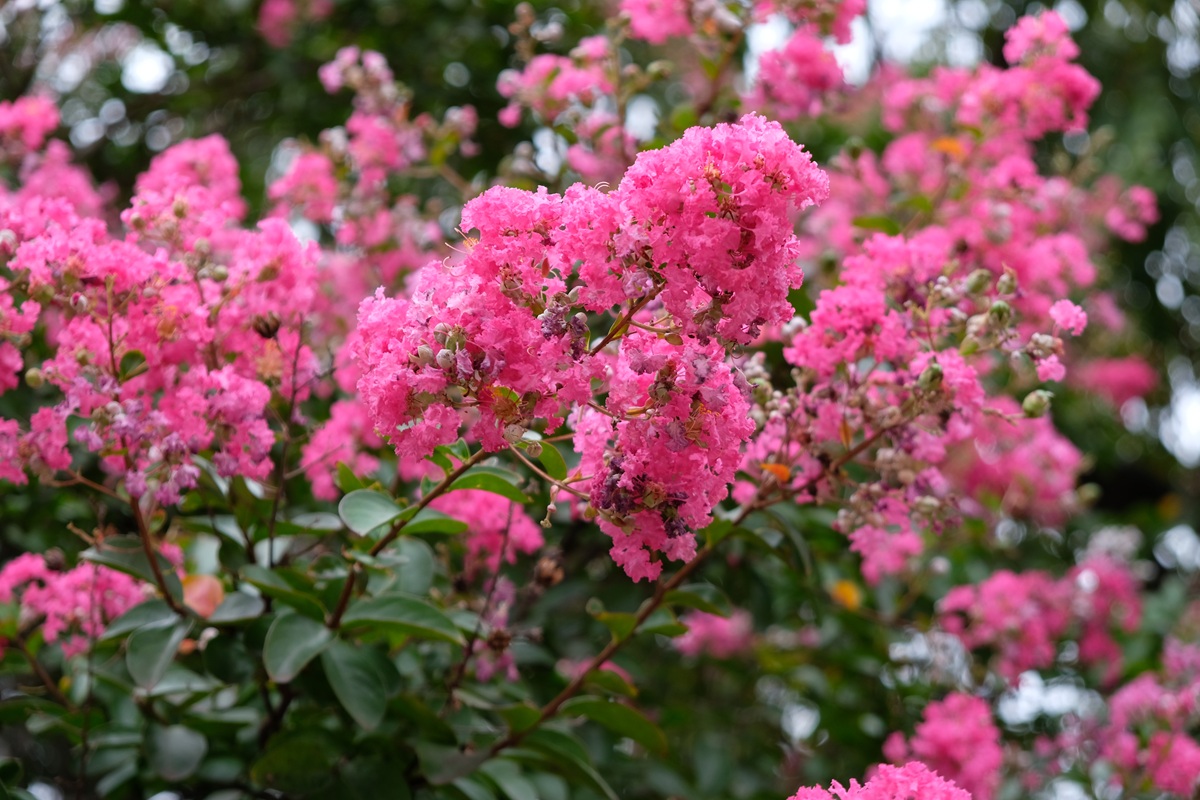
A pop of colors on a dreary day
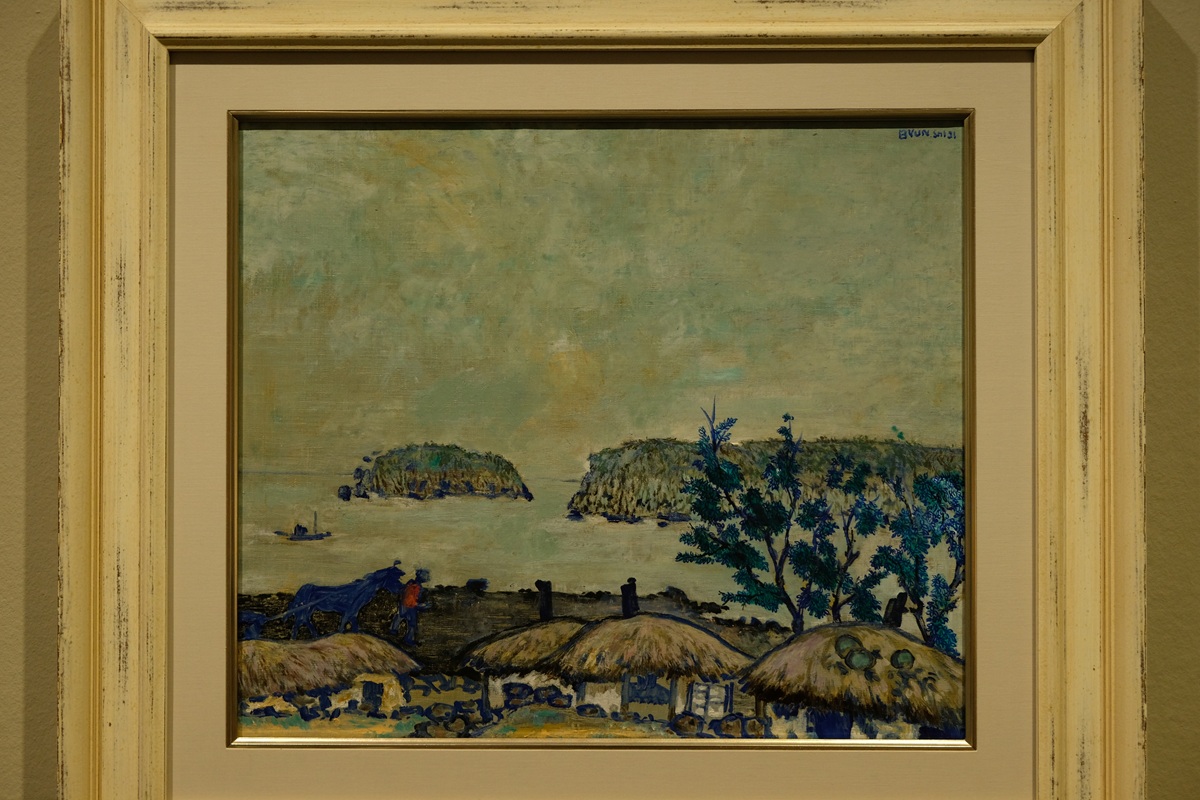
Seogwipo by Byun Shiji in 1977, depicting what is now Jeju Island’s second largest city
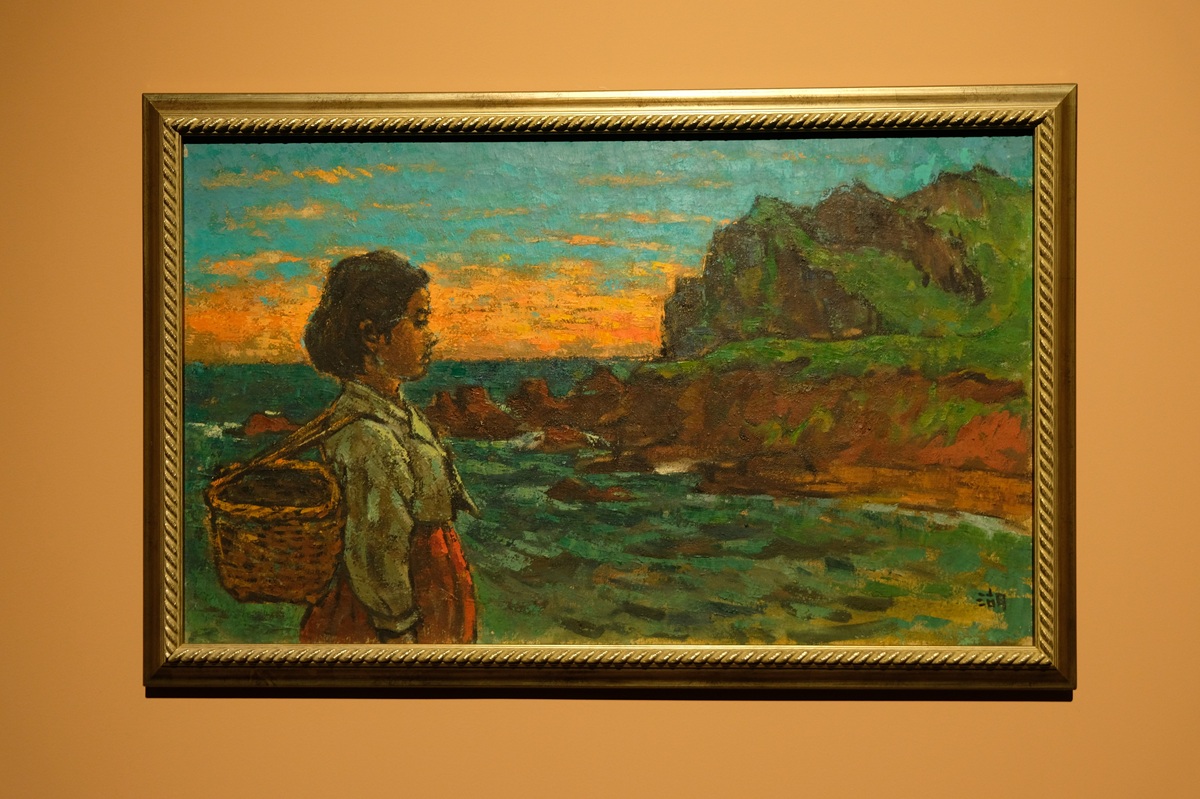
An untitled painting by Lym Ho, from the collection of Gyeongnam Art Museum
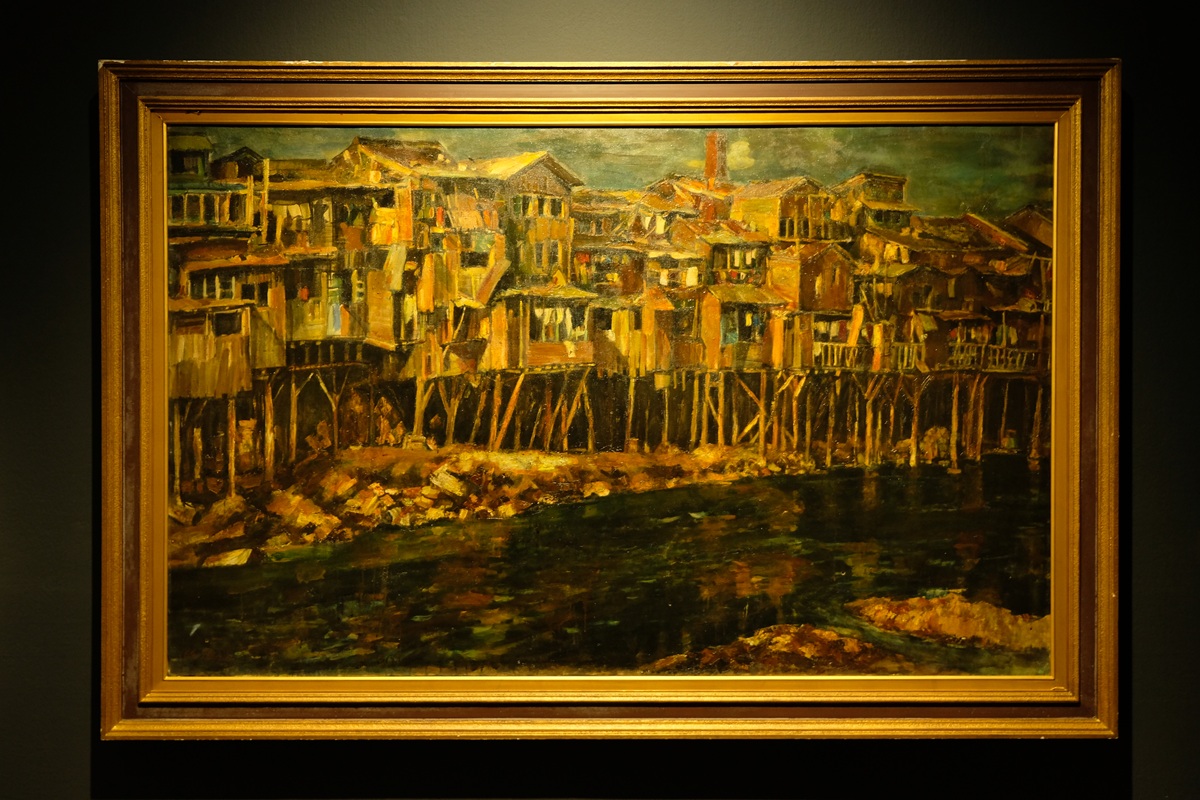
Lee Manik’s 1964 impression of Cheonggyecheon, a stream in Seoul that in 2005 was turned into a beautiful and inviting public space
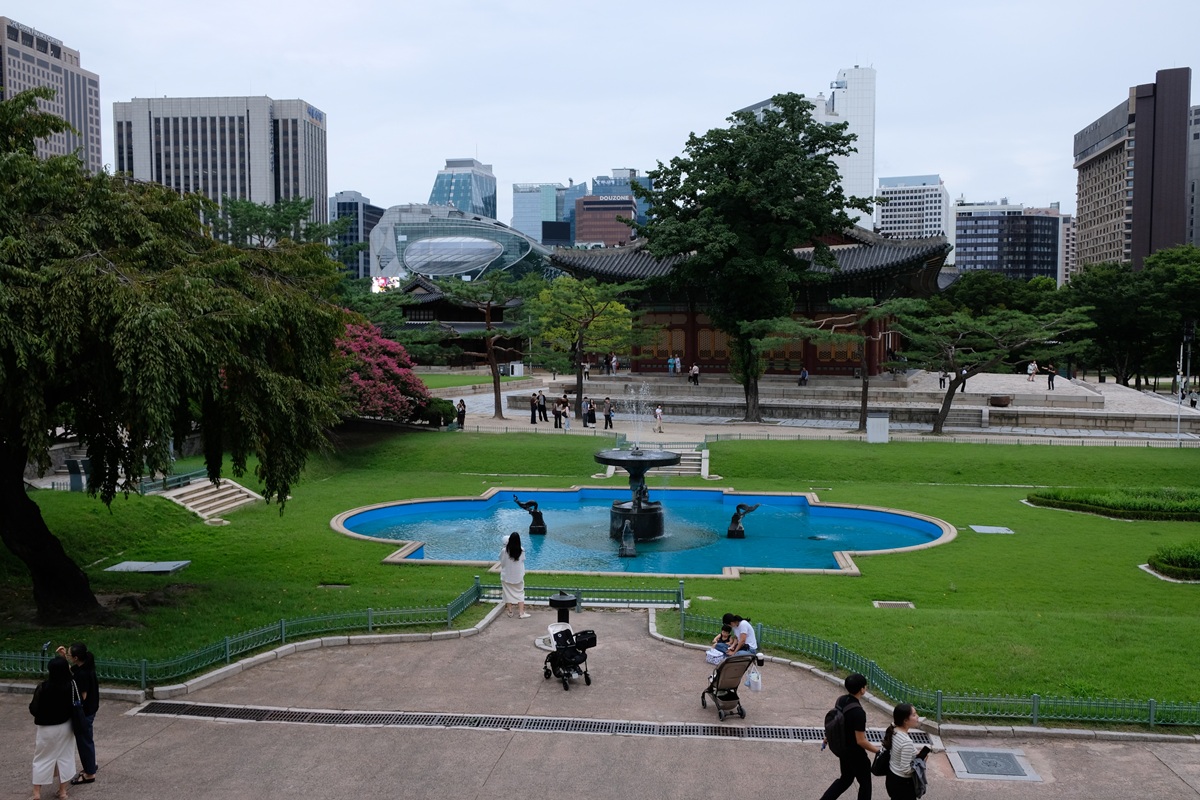
The view of the palace ground from the west wing of Seokjojeon
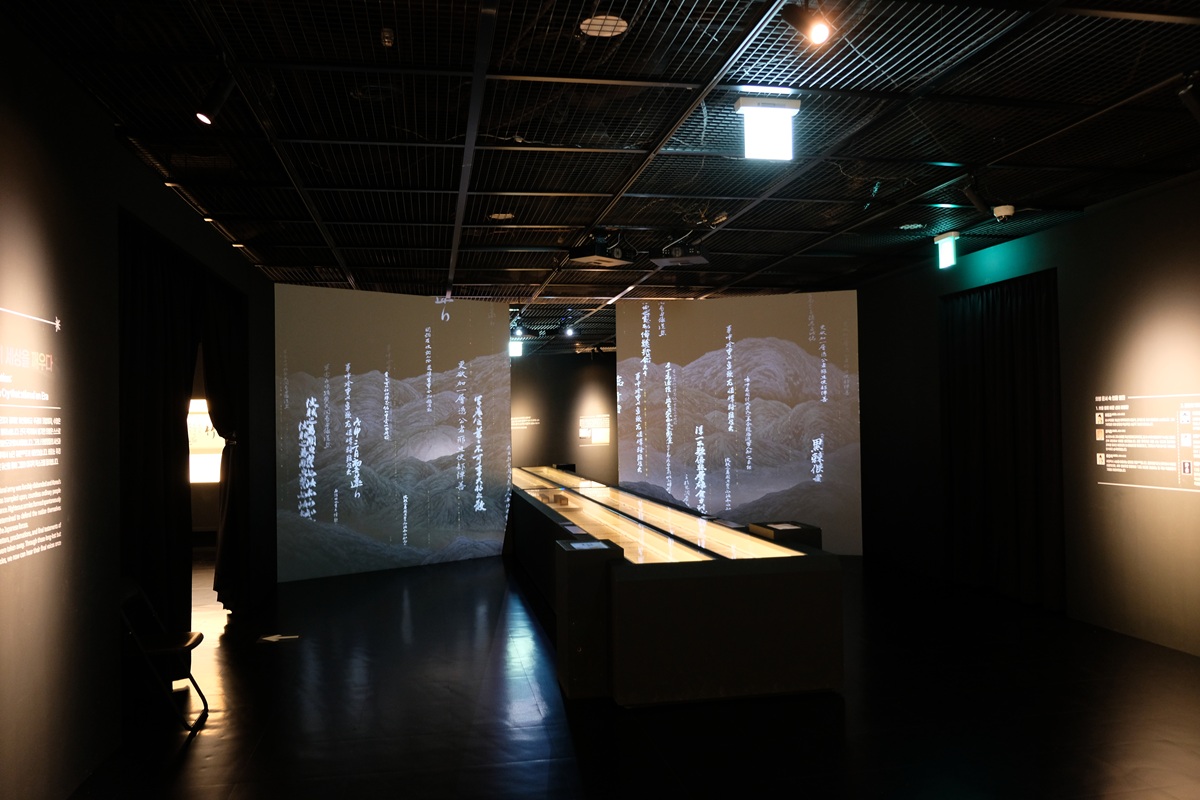
An exhibition at Dondeokjeon focusing on the Korean independence struggle
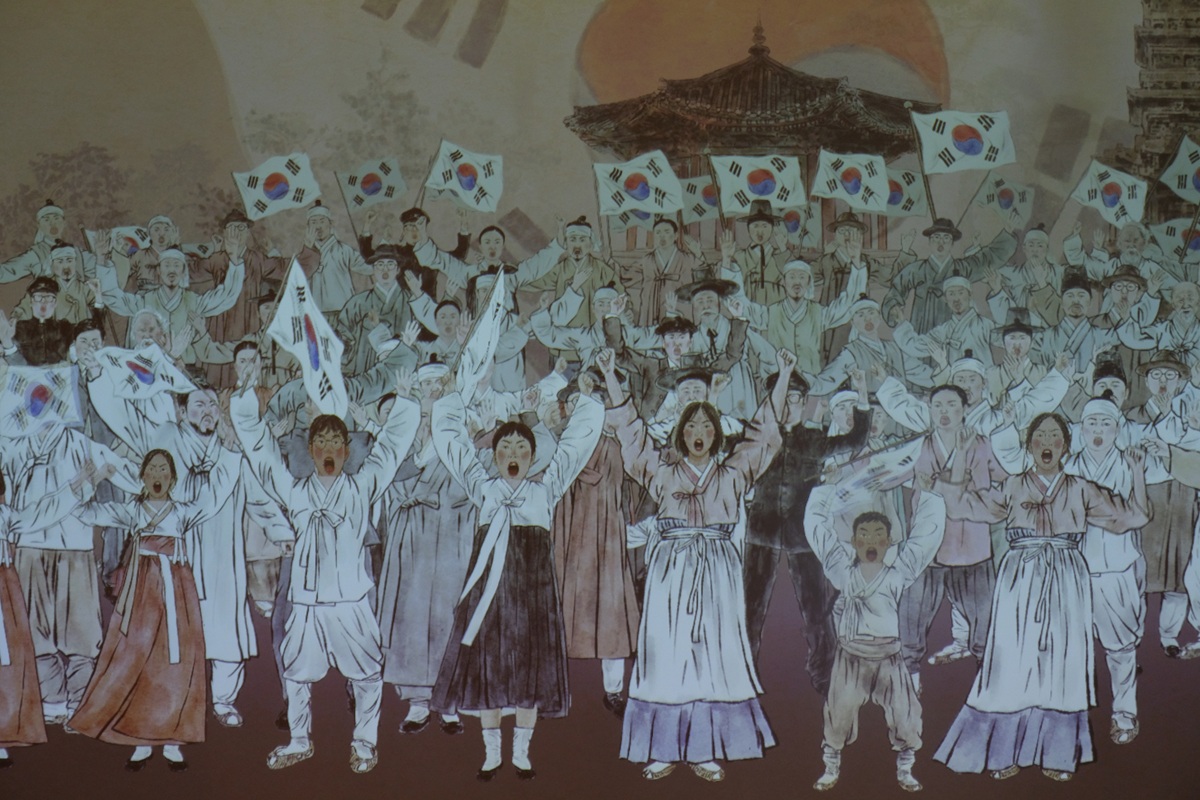
The roaring fervor for Korean independence
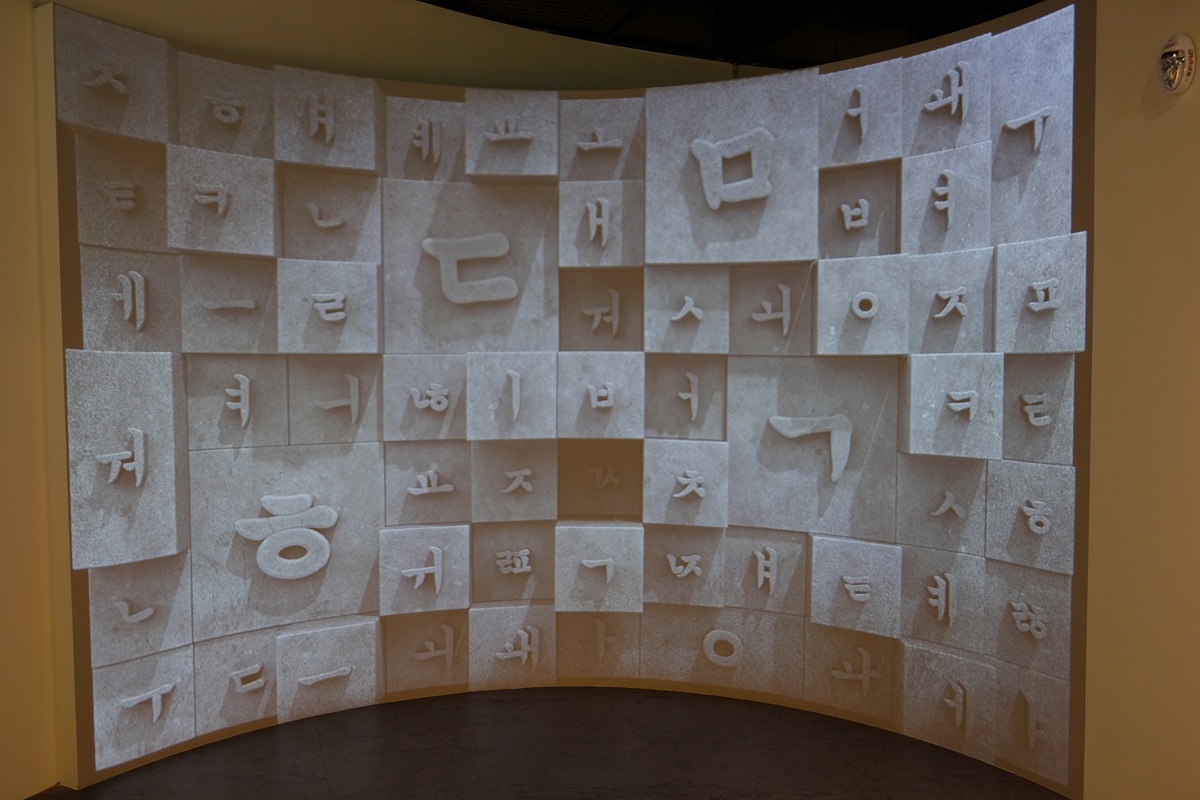
A sobering part of the exhibition highlighting efforts from the Japanese colonial administration to suppress Korean nationalism by repressing the use of Hangul (the Korean alphabet) among the local populace
Walking past Daehanmun, the main gate of the palace, I was immediately met with a row of ginkgo trees on my left and a few low-rise old buildings to my right. However, as the lighting was not ideal for outdoor photography, I saved Junghwajeon (the main hall within the palace grounds) for later and decided to go straight to Seokjojeon, a neoclassical building completed in 1910. This and a few other Western-style structures within the compound are what make Deoksugung unique compared to the other former royal palaces in Seoul that were built in traditional Korean architectural style. The juxtaposition of East and West is a reflection of the zeitgeist at the beginning of the 20th century and the desire of the monarch to modernize his country.
At the west wing of Seokjojeon, which is a separate building constructed in 1938, is the Deoksugung branch of the National Museum of Modern and Contemporary Art. When I went, there was a special exhibition commemorating the 80th anniversary of Korea’s independence from Japan. Korean landscape paintings from the colonial period to the modern era were showcased with a central theme of ‘hometown’, capturing Koreans’ affection for – and longing for – home. The artworks covered territorial loss and rediscovery, war-induced separation and division, survival amid destruction, and hope for reconstruction. Sadly, these are the things many people across the globe still have to deal with today.
North of the west wing of Seokjojeon, tucked away in the far corner of the palace compound, was Dondeokjeon, an early 20th-century French-style building that initially functioned as a guest house and audience hall for dignitaries. Unfortunately, it was demolished in the 1920s, although luckily a multiyear reconstruction effort completed in 2023 managed to bring it back to life. Inside, there was an exhibition on Korea’s independence struggle from Japan where one particular object caught my attention the most. At a glance, it looked like a worn-out Taegukgi – the South Korean flag. But on a closer look you could tell it was originally a Japanese flag which was then defaced by the additions of blue paint on the red disk and four sets of black lines on the four corners of the banner. This Taegukgi was discovered at Jingwansa Temple when renovation works were underway, and now the relic has been designated a national treasure.
By the time I exited Dondeokjeon, the sky was getting darker and the drizzle becoming more intense. I looked for a place to sit and settled at a bench under tall trees near the foot of Junghwajeon, the main hall. While patiently waiting for the staff to turn on the lights, I was delighted by what I heard being played from across the wide avenue from the walled palace compound. A few hours earlier, I noticed a stage was being set up in front of the City Hall, and when night came, the multi-award-winning hit song Golden from Netflix’s unexpected summer sensation KPop Demon Hunters blasted from the loudspeakers. It is loved by millions of people worldwide for its catchy tune, profound lyrics, and incredibly high notes.
Eventually, the lights at the palace were turned on, highlighting the elegant beauty of Junghwajeon that stood proudly before my eyes. And just like that, despite the exhaustion from my lack of sleep for days and the inclement weather in Seoul, the brief visit to Deoksugung ended on a high note with the song being the unexpected icing on the cake.
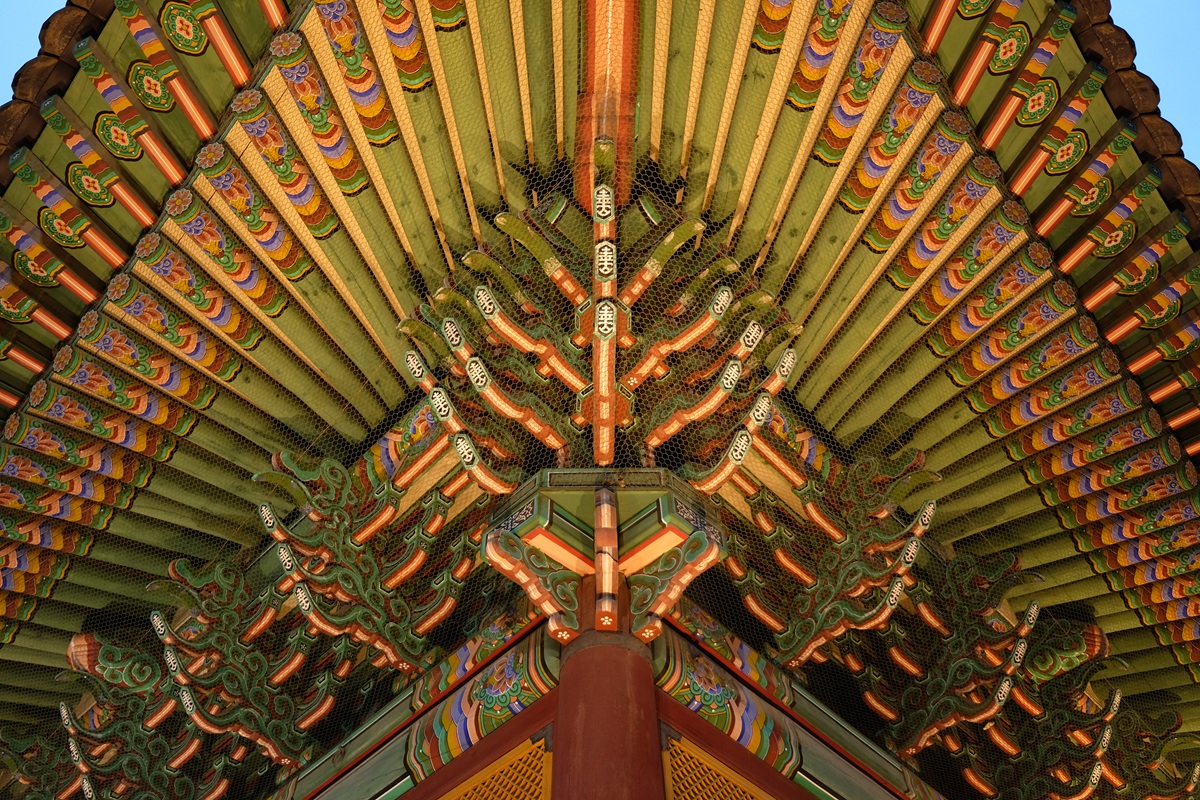
The colorful and highly ornate wooden rafters of Junghwajeon
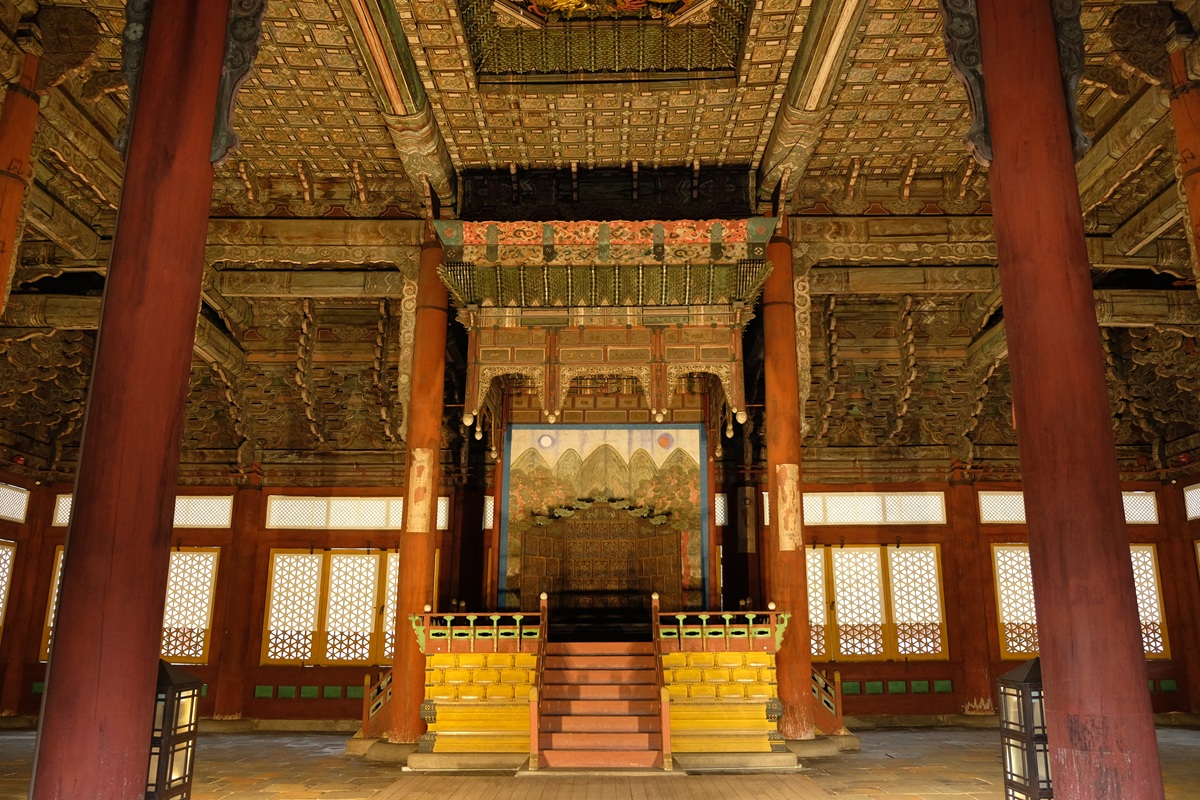
Taking a peek at the interior of Junghwajeon
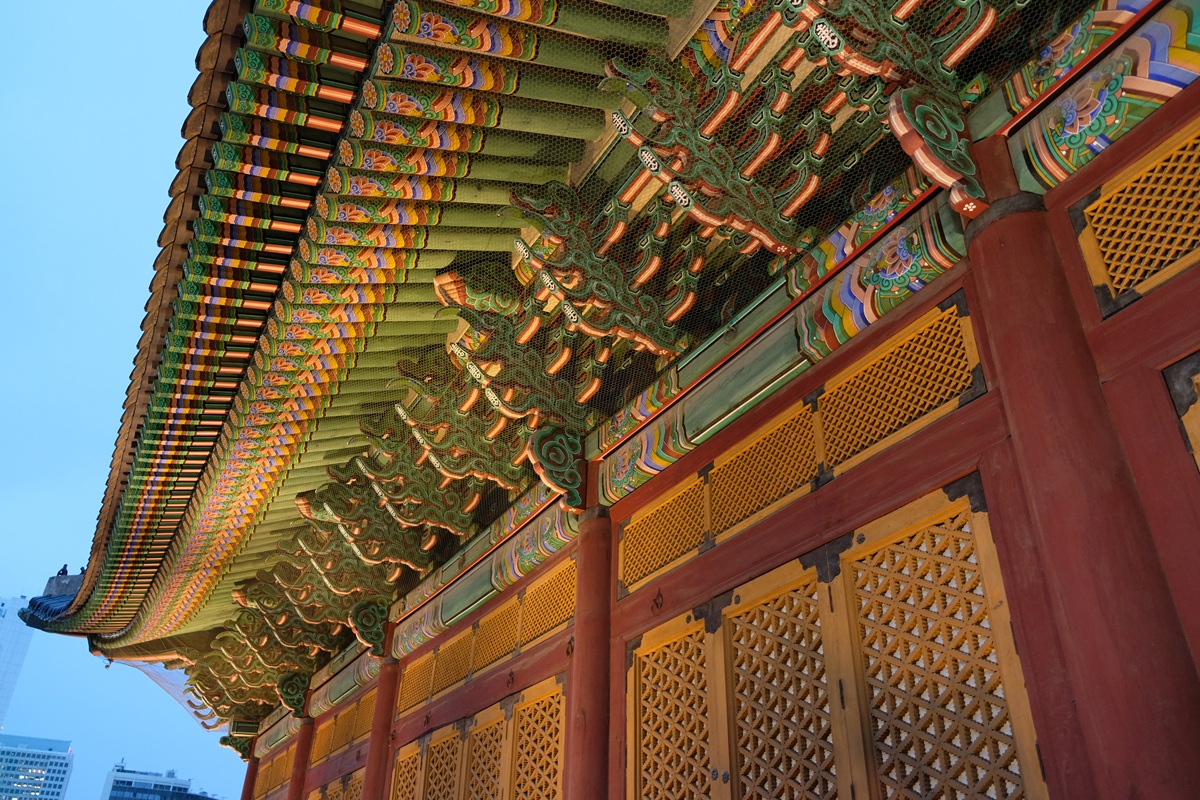
A fine example of dancheong (Korean decorative coloring style)
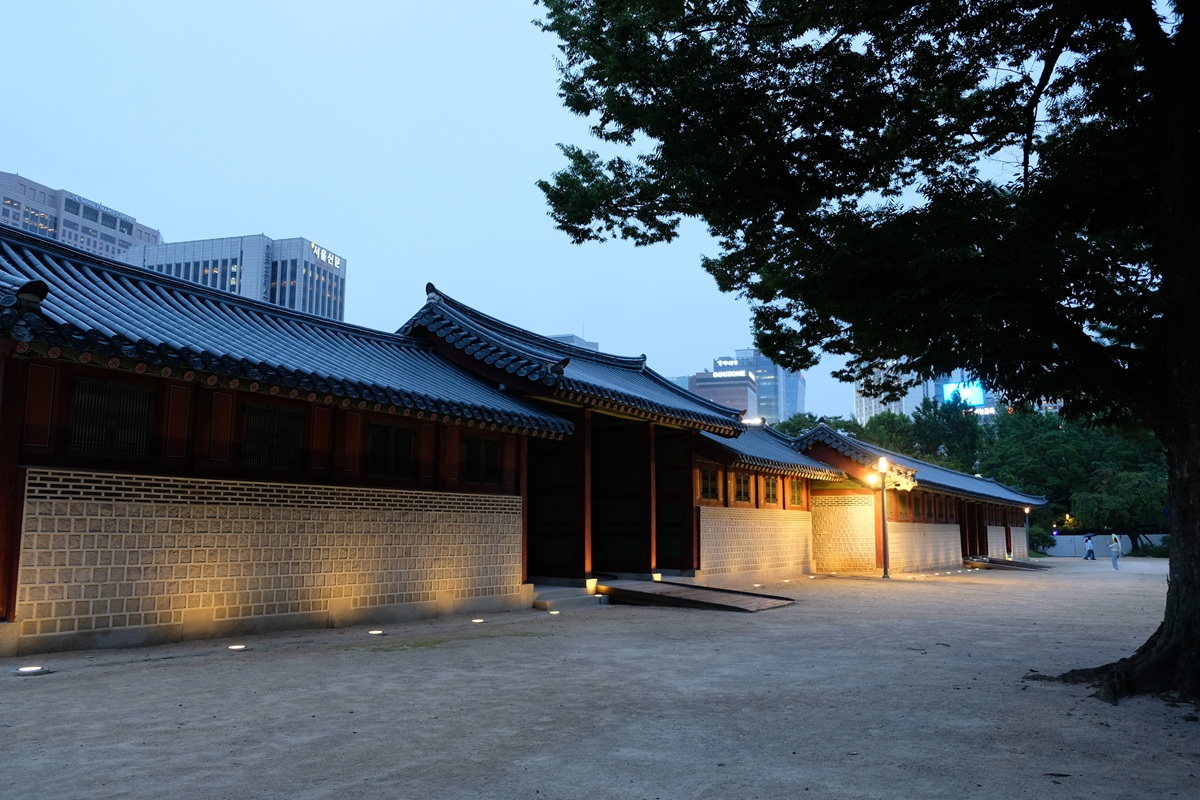
Part of what used to be Gojong’s sleeping quarters
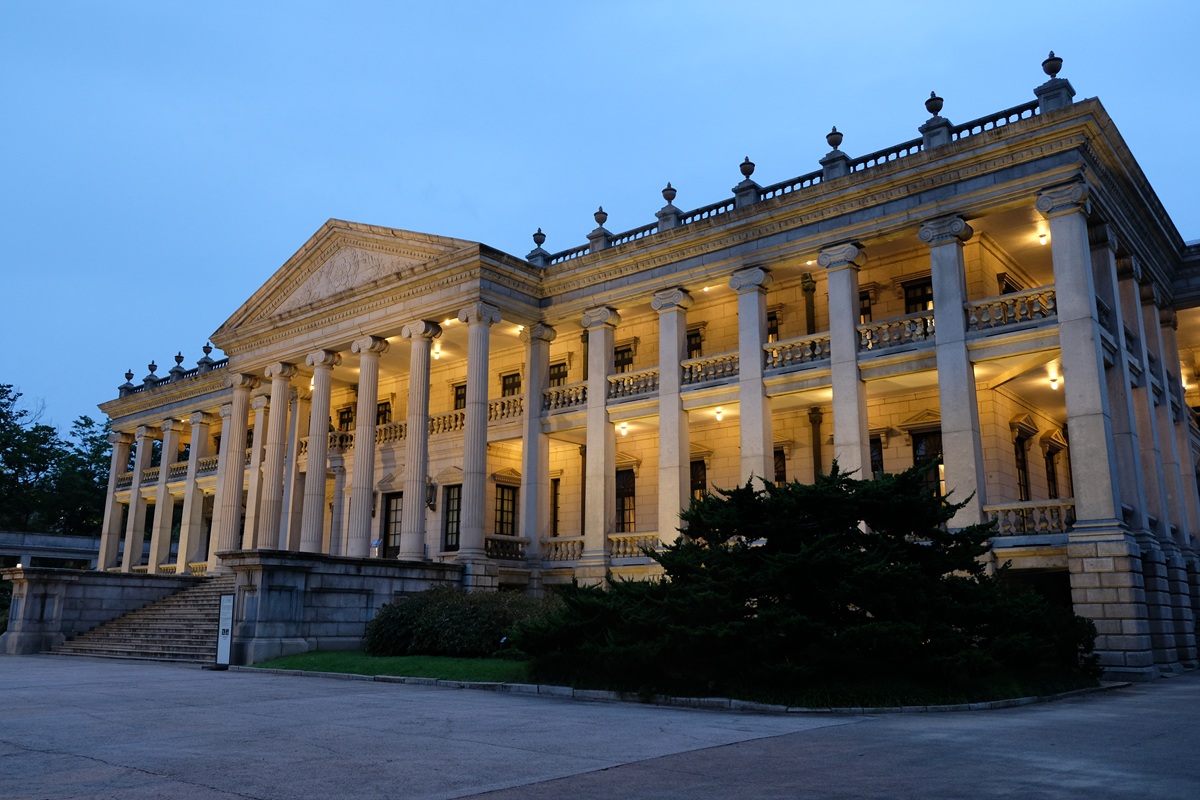
Seokjojeon, an early 20th-century neoclassical building within the palace grounds
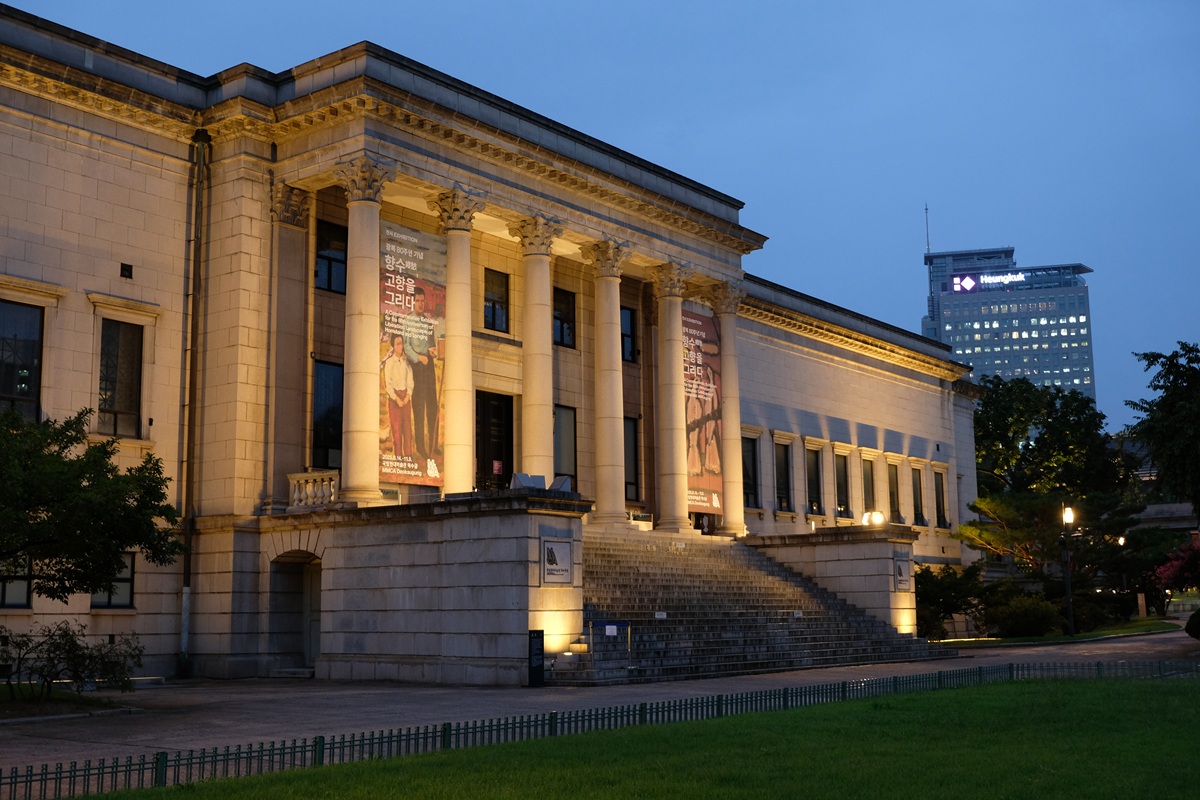
The west wing of Seokjojeon
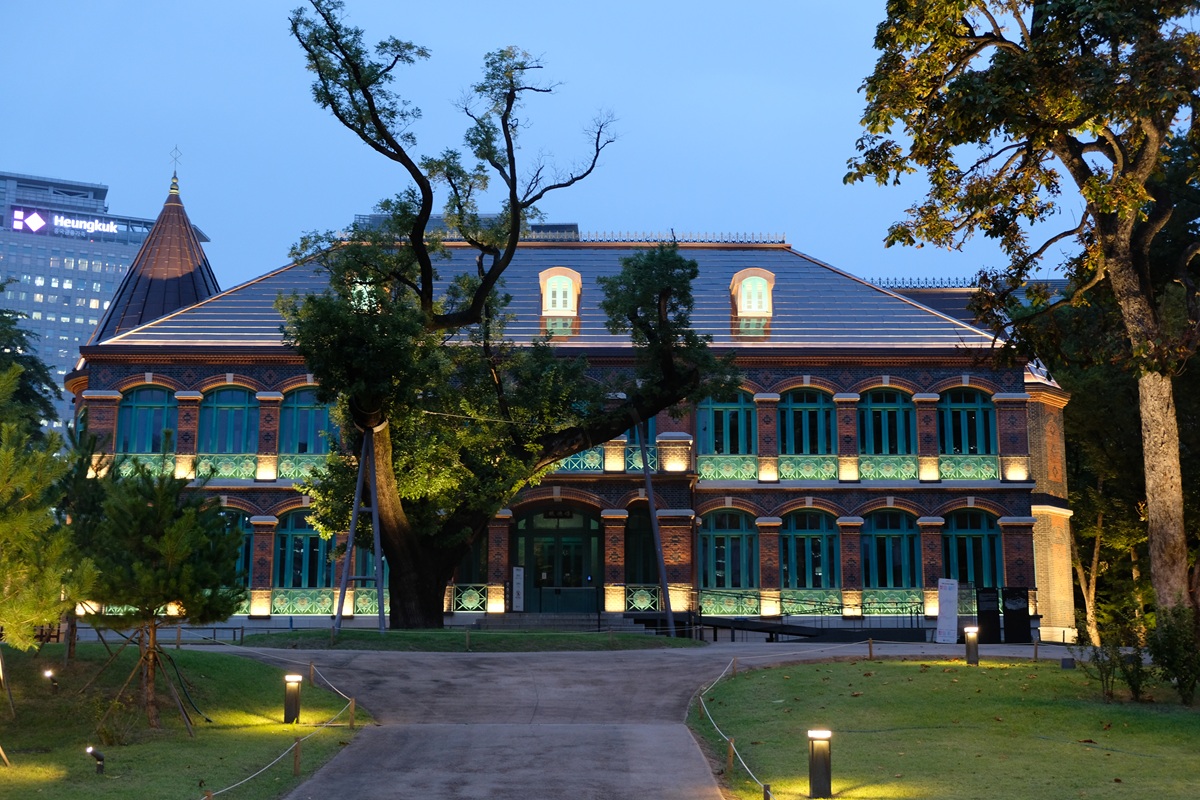
Dondeokjeon, a French-style building formerly used as a guest house for dignitaries
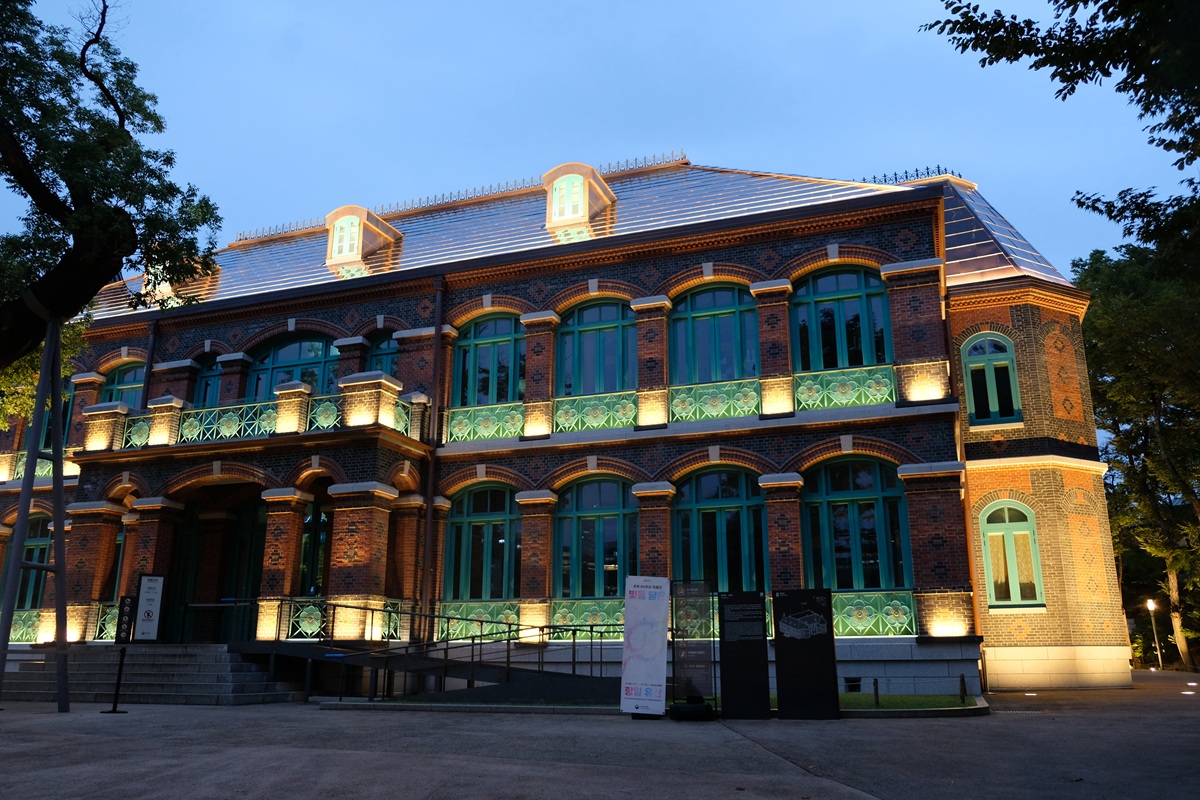
While the museums are closed at night, you can still explore the palace grounds to see the buildings lit up
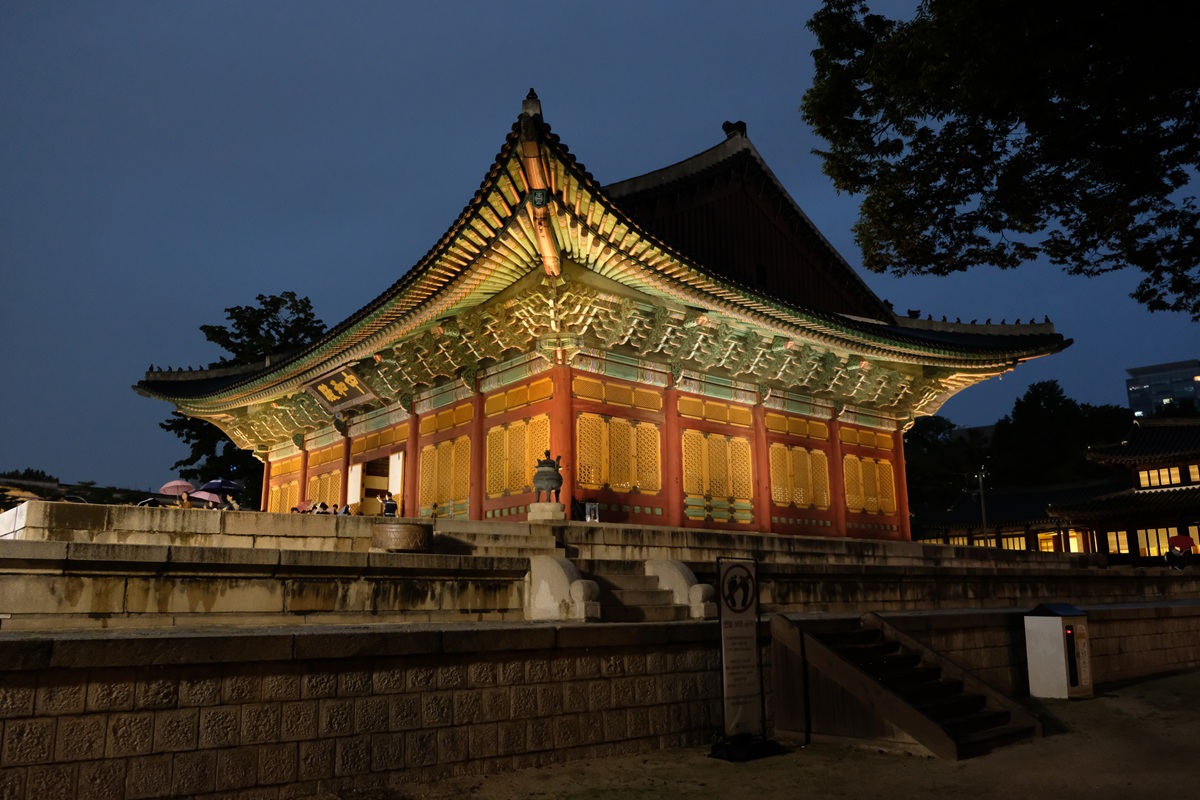
Junghwajeon at the heart of Deoksugung palace compound
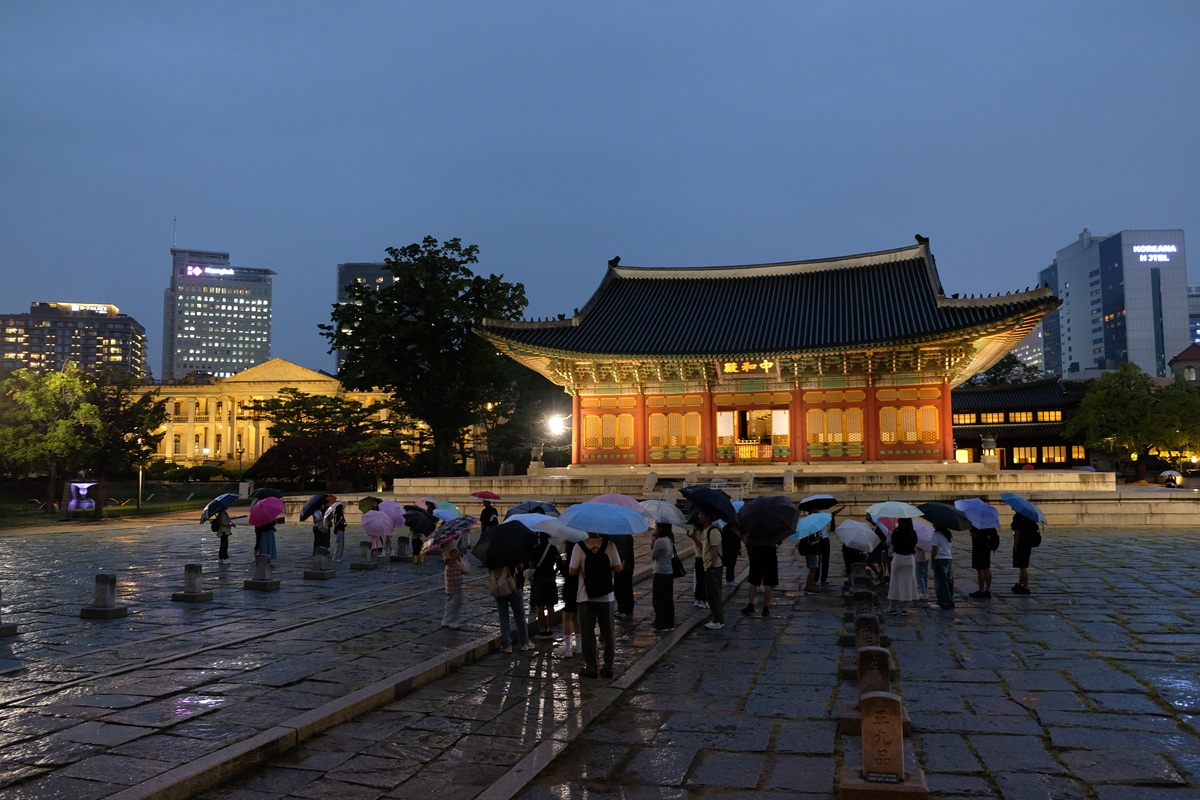
A rather wet night to end my brief visit to Seoul

 What an Amazing World!
I remember the changing of guards as a really colourful ceremony. You managed to do a lot in your day there. I hope you got to see a couple of the temples around Busan as well.
LikeLiked by 1 person
I was so lucky to be right outside Deoksugung when the ceremony began. Actually I wanted to visit another place before going to the palace. But I was too tired and I thought it would be better to focus on just one site. I was hoping to see Haedong Yonggungsa in Busan, a temple famous for its seaside location. Unfortunately, in the end the organizing committee decided to skip it because of time constraints. If I were the one to make the decision, I would have kept the temple and taken other places off the list instead. Ha!
LikeLiked by 1 person
Bama, did you know that the main throne hall of Deoksugung (Junghwajeon) is the only throne hall among all the five grand palaces of Seoul to have golden/yellow door frames to symbolise the rise of the new Korean empire? The frames of other palaces are the typical green!
LikeLiked by 1 person
Abhinav, I wasn’t aware of that fact. That’s really cool! Thank you for sharing this interesting information.
LikeLike
My daughter wants to go to Korea because of the whole K-pop phenomenon … maybe our next mother/daughter trip? (Surely more exciting than Brunei at least!!!) 🤣
LikeLiked by 1 person
It’s really crazy to think of the global reach of K-pop. When my mom was still around, one day I even heard her humming one of Blackpink’s songs! I’m sure your daughter would have a lot of things to do, stuff to buy, and activities to try in South Korea. It’s a world away from the quietness of Brunei. 😆
LikeLiked by 1 person
What a beautifully told layover, Bama – I could really relate to your mix of work-trip fatigue, recharge time, and the relief of being just one place on your time, instead of rushing around. I lived through something similar in January…exhausting but as you wrote, it allows for a little magic to happen like your perfect timing for the Deoksugung guard ceremony–and things all fell into place from there.
That final image of Junghwajeon glowing in the rain while K-pop blares from City Hall Square captures Seoul’s character so well – modern, energetic, and yet you show how it is still deeply rooted in its past. These adventures of yours show the beauty of finding/making time for the introvert in us all. Cheers!
LikeLiked by 1 person
Much appreciated, Randall. I think it’s really important to take breaks, no matter how short, so that we can breathe and appreciate the beauty around us before going back to the grind of work.
Making time for the introvert in us, that’s exactly what this brief visit to Deoksugung was all about. And Seoul allowed me to do that efficiently.
LikeLike
I love how you can pack an adventure into the short window of time available during a business trip! Seoul is a place I’d love to visit one day and I enjoyed following along on your post. The City looks so clean; the Joseon-era heritage sites, gardens art and cultural attire are so nice to admire; and the food sounds delicious.
Train to Busan is one of my favourite horror movies so I can only think of zombies when you mentioned the bullet train. Glad you were safe!
Congrats on organizing and hosting your clients. I know how much work goes into these events but they do make a positive impact on cultivating lasting relationships. 😊
LikeLiked by 1 person
South Korea is worth a longer visit though, and I told myself one day that is exactly what I will do. But I’m glad this brief stop at Seoul worked out quite well despite the rain and my exhaustion.
I can happily report to you that no zombie was seen on that train ride! 😂
Thanks Ab. My main responsibilities were taking care of around two to three VIP clients at any given time as well as taking notes of everything the speakers shared during the sessions — I then had to write articles for the magazine that the company publishes.
LikeLiked by 1 person
VIP clients are important but I can also imagine the stress of meeting expectations. Glad you got some downtime after, even though it was short!
LikeLiked by 1 person
Exactly! And I’m glad that I wrapped this business trip with this short visit to Deoksugung and the surprisingly delicious meal on the flight back to Singapore (from where I took another flight to Jakarta).
LikeLiked by 1 person
Sounds like it was the perfect way to end a trip that was clearly quite exhausting, Bama. What lovely pictures, and how wonderful that you managed to get an excellent meal before heading to the palace.
LikeLiked by 1 person
This brief visit to Seoul turned out to be what I needed after all the exhaustion from the event. But I need to stay longer the next time I go to South Korea. The country really deserves more time.
LikeLike
I agree. Hope you can schedule a longer trip there one day for some deeper exploring, Bama.
LikeLiked by 1 person
I surely hope so.
LikeLike
“Introverts do what introverts need to do” – I completely relate and did a very similar thing on a recent work trip to India. And what a wonderful way to make the most of a short layover! So great to stumble upon the changing of the guards just as it began, and I love the contrast between the traditional palace buildings and the Western-style Seokjojeon. Plus your bibim-guksu sounds like the perfect reward after all that exploring. I’d really love to visit Korea one day 🙂
LikeLiked by 1 person
How exciting that you had a work trip to India! The country can feel intense, but it is indeed possible to get the time to explore a city ourselves. Last October I was supposed to go to Mumbai for another work trip, but in the end the schedule didn’t work out.
I hope you’ll get to visit South Korea one day, Hannah!
LikeLiked by 1 person
I know of Changing of the Guards in many countries in Europe and South America, even attending a few of them (e.g. the UK, Chile, etc). I had no idea that countries in Asia, let alone South Korea, had their versions, too! Then again, I suppose any country with kingdoms, past and present, has a Changing of the Guards’ tradition. I can imagine it was a cool experience, and now I’ll need to head over to South Korea to check it out for myself. Thanks for sharing, Bama!
LikeLiked by 1 person
Given how much it can attract more visitors to come, I think royal palaces across the globe are jumping on the bandwagon of putting up elaborate changing of the guards ceremony complete with colorful traditional costumes. I’m not complaining though as it gives spectators a glimpse of how things were like in the past. When you go to Seoul one day, I hope you’ll get to see one of those ceremonies, Rebecca.
LikeLiked by 1 person
Wow! You certainly packed a lot into half a day! If you are lucky enough to return, the country has some of the most beautiful scenery that tops anywhere I’ve seen elsewhere.
LikeLiked by 1 person
Its natural landscape along with centuries-old sites in and around Gyeongju are among the main reasons why I still want to go back to South Korea one day.
LikeLiked by 1 person
I spent six days in Gyeongju which is packed with history from the Silla Dynasty, but Ulsan is also worth a visit for its natural beauty.
LikeLiked by 1 person
Glad to hear you managed to do a bit of sightseeing on your business trip. You managed to do quite a bit in those 12 hours before your flight back. Fabulous timing to catch the changing of the guards! Despite the rain, the pictures you captured in twilight are exceptionally beautiful.
LikeLiked by 1 person
It was only possible because of Seoul’s excellent public transit system. And I couldn’t believe my luck to be there as the changing of the guards began. Moments earlier I was still fixated on how good that bread was!
LikeLiked by 1 person
What a perfect day! I often squeeze in days like this myself, and when things go according to plan (or even better), I feel like I’ve gotten a little bonus trip!
LikeLiked by 1 person
That’s true, Lex, and I will probably do something like this again in the future when the company send me on business trips.
LikeLike
A great use of a work trip, Bama. First, you happened upon the changing of the guards ceremony, and then the palace. Smart to wait until evening to go. Junghwajeon especially looks beautiful when lit at night. Maggie
LikeLiked by 1 person
Admittedly, I got the idea of visiting Deoksugung at night after seeing the photos of a fellow blogger who did just that. When I saw them, I thought that it might actually work for me at the end of this trip.
LikeLiked by 1 person
Well now you’ve passed it on to the rest of us to use 😊
LikeLiked by 1 person
Always happy to share something that might come handy. 😊
LikeLiked by 1 person
You are so fortunate to be able to see so many wonderful places. Thank you for taking the time to share them with us. Stay safe, Steve
LikeLiked by 1 person
Hi Steve and Annie. I certainly won’t take the opportunities to travel for granted, especially at a time like this when disruptions can suddenly happen. Stay safe to you too!
LikeLike
You did a lot for a stopover of 12 hours. Thanks for virtual tour…Obviously South Korea is on our list we haven’t been yet…(Suzanne)
LikeLiked by 1 person
Many people prefer Japan to South Korea as a travel destination. But I think the latter does have its own appeal. I hope you’ll get to see this country one day soon!
LikeLike
Thanks for the virtual tour! I didn’t get to see this palace when I was in Seoul so I’m glad to have discovered something new! I loved cold-noodle dishes in South Korea, and that one looks amazing! How did the Korean spice level compare to what you are used to?
LikeLiked by 1 person
The pleasure is mine! I remember how much you enjoyed your trip to South Korea. I hope you’ll get the chance to go back and see what you missed from the first visit! I would say both Koreans and Indonesians have the same level of tolerance for spiciness, generally speaking, of course. When I first went to Seoul, I was surprised to find the local food quite spicy. Too often when I travel abroad I am told by the locals to be careful of what I eat because it’s “very spicy”, which in many cases turned out to be just mildly spicy or not spicy at all for me. 😆
LikeLiked by 1 person
Yes, I’d love to go back to South Korea and see what I didn’t get to see the first time! I am not surprised about your spice tolerance but wondered how Indonesian and Korean compared 😁 needless to say, I have the opposite problem and find that even the “non spicy food” of some countries is too spicy for me 🥲 Korean food was tough for sure 😂
LikeLiked by 1 person
You can train your palate if you want, so the next time you’re in South Korea you can eat more of their spicy dishes. It will take time (and perseverance) though! 😁
LikeLiked by 1 person
Bama, your solo outing by high-speed train to Seoul must have been such a treat after those stressful few days in Busan. It’s intriguing that Deoksugung has palace buildings in traditional Korean architecture and others in neoclassical and French-inspired designs — thank you for explaining the history and showing us why that was! Although the weather wasn’t ideal, I’m glad that didn’t spoil your excursion. Unexpectedly seeing the changing of the guard was clearly the icing on the cake! I look forward to exploring more of South Korea with you on a future trip.
LikeLiked by 1 person
I’m glad I decided to fly out of Seoul and do a little bit of sightseeing. Otherwise I would’ve gone back to Jakarta only with the memories of work. Initially I wanted to check out Seoullo 7017 as well, but I was too tired. We should definitely go back and stay longer!
LikeLiked by 1 person
i already commented on this post as above… and now its coming true. Hahah. I just knew back when i commented in march that somehow this would be my next trip 😂
LikeLiked by 1 person
I guess that means you’ve booked the flights! Again, don’t forget to bring lots of warm clothes! 😂
LikeLiked by 1 person
Hahaha yep!!! All booked flights and accomodation! Super excited! We will be there for new years celebrations! Might actually stay up past 9pm for it 🤣🤣🤣
LikeLiked by 1 person
I always make the same exception as well for New Year’s Eve, although it’s really a struggle to stay awake past 10pm! 🤣
LikeLiked by 1 person
🤣🤣🤣
LikeLiked by 1 person
I’m re-reading this article in preparation for a trip to South Korea. I’ve made a note of a few interesting places. Thank you.
LikeLiked by 1 person
Oh have fun in South Korea! It might still be rather hot though. But as long as you’re prepared.
LikeLiked by 1 person
Not just yet – in a couple of months’ time.
LikeLiked by 1 person