
Flowers – Museum Bahari
Horrendous traffic. Gray sky. Choking air.
It is not a surprise why Lonely Planet says Jakarta is a city many find it hard to love. With more than 10 million people sprawling over narrow streets, dense neighborhoods and filthy riverbanks, many struggle for a quality living in this city. But looking back to its history, one would comprehend why Jakarta has grown into such a megacity. Founded in the 4th century as Sunda Kelapa, it has always been an important port for spice trading even before the arrival of the European explorers. In the early 16th century, the Portuguese was the first European nation to arrive at the port, en route for the source of the spices. Their expeditions opened up a direct access for the Europeans to the once-as-precious-as-gold spices – instead of buying them from the Arab traders.
However, it also started a new chapter of centuries of ferocious battles amongst European powers to gain control of the spice route – hence the dawn of European colonization in Asia.
The Dutch emerged as one of the most prominent powers in the region which lasted for centuries. They arrived at Sunda Kelapa in the late 16th century and completely gained control of the port in the early 17th century by defeating local ruler and sending all the British home. Under their rule, the Dutch changed the name of the port town into Batavia, which over centuries grew as a major port in the spice trade route in Southeast Asia. Under the Dutch Empire, Batavia and other colonies in the Dutch East Indies contributed to the rapid increase of wealth for the growing European power who had gained independence itself from Spain in the 16th century.
Decades after gaining its own independence in 1945, Indonesia as the main successor to the Dutch colonies in Southeast Asia has grown rapidly alongside other Asian economies. Jakarta – the new name for Batavia – as the economic and political center of the country lures people from other provinces to come in hope for a better life.
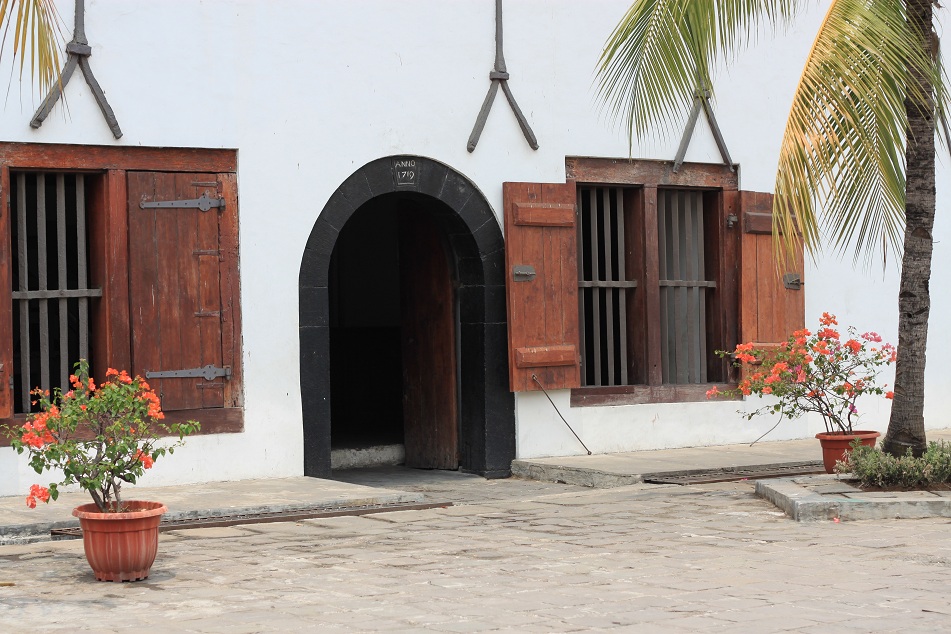
Museum Bahari – Once the Warehouses of the Dutch East India Company

Windows – Museum Bahari
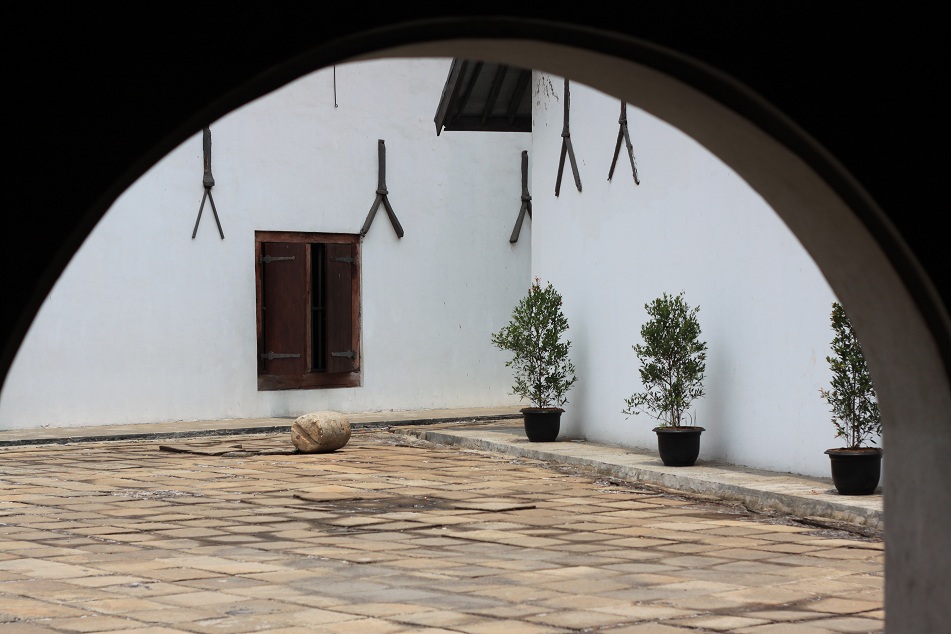
Peeking Into A Courtyard
It is a typical Tuesday in the ever busy Jakarta. James and I head to the old quarter of Jakarta in search for the remnants from the time of the Dutch colonization. Any trip around Jakarta on weekdays will not be complete without getting stuck in the notorious traffic jam – called macet in Bahasa Indonesia. In a deserted area on the embankment of a polluted river that flows through Kota Tua – Jakarta’s main old town quarter – I park my car and continue to our destination on foot.

Pinisi Boats at Sunda Kelapa
Sunda Kelapa. It still bears the name of the old port on which the Dutch first set afoot on the island of Java. But today, Sunda Kelapa is only a minor port, serving small-scale trades between Indonesian islands. In a hot and humid day, we arrive at the port after a detour due to a misleading sign which brought us to a busy street loaded with heavy trucks.
Rows of pinisi boats – the traditional boats originated from Sulawesi – dock on the port with their bows facing the open sea, ready for their next sails the following night. Only slightly modernized – motorized and equipped with cranes and most likely also GPS receivers – the boats are vital to the economies of some regions across the archipelago.
After getting some pictures of Sunda Kelapa and Museum Bahari – Maritime Museum – which we visited on our way to the port, we walk to the heart of Jakarta’s colonial district, following a path we should have taken before.
Fatahillah square – named after the national hero who ousted the Portuguese from Sunda Kelapa and renamed it into Jayakarta – is the main square of the old district which is surrounded by some of the most important buildings in the Dutch colonial time, including the Governor General’s office, the supreme court and the central post office. Today, most of them have been converted into museums.
Crumbling old buildings and the stench from the polluted river give a mixed feeling for anyone visiting this place. If more efforts are taken seriously to restore and revitalize Kota Tua, one day this old quarter will undoubtedly radiate its past allure and become an oasis in this ever-bustling city.

 What an Amazing World!
I love the photos, the pink flowers are so lovely
LikeLike
Thanks! I tried to find out the name of that flower, but to no avail.
LikeLike
If I may help you, that is bougainvillea flower
LikeLike
Oh thanks a lot Chris!
LikeLike
I think the top photo features a pink azalea. I love that photo too – well done!
LikeLike
Thanks Marina! Well, I’m never good at telling the difference between one plant from another. 🙂
LikeLike
Hey Bama! Yup, I also think they’re boungavilla flowers. There are quite a lot in my hometown while I was a kid. 🙂
LikeLike
Yes, they are. Actually thinking of it, when I was little someone told me the name of that flower because a friend had them in her house. Silly me to have forgotten such thing! 🙂
LikeLike
Musium Bahari dan Sunda Kelapa … hasn’t changed that much …. Nice shots. Kota the only historic quarter still ok preserved is my favorite place in Jakarta 🙂 Thanks for sharing this memorable post …
LikeLike
I hope not only they remain preserved, but in the future Kota Tua can be an idyllic place. My pleasure to share this post! Thanks!
LikeLike
Thanks for taking me around Bama, it was such an experience! Kota Tua is really a beautiful part of Jakarta, there’s so much potential there and I can only hope the authorities invest in restoring it and cleaning up the rivers/canals.
LikeLike
My pleasure James! Yeah, I surely wish the same. It would be great to have a well-maintained Dutch quarter in Jakarta. I would come to this place every now and then when it is cleaned up.
LikeLike
These pictures are beautiful! Jakarta has been on my list to visit for sometime. 🙂
LikeLike
Thanks! Maybe you can do that after your trip to Africa! 🙂
LikeLike
Reblogged this on Voices and Visions and commented:
A glimpse of Jakarta’s history and present…
LikeLike
Reblogged this on Rashid's Blog.
LikeLike
Awww…. nice pictures of the city where I grew up. They remind me of my elementary school years when we went on a study tour to Kota Tua. Just last month I watched a program on CNN International that focuses on Tanjung Priok and Sunda Kelapa. http://www.cnn.com/2012/08/30/travel/jakarta-maritime-travel/index.html
I love reading and watching everything about my home country 🙂
LikeLike
Oh actually I also watched the same program last month. So,Semarang and Jakarta are the cities where you spent your childhood, I assume. I would love to share more stories and pictures about other places around Indonesia in the future. 🙂
LikeLike
Nice photos. Here’s an interesting read from 2010 about the red tape and business interests (and the flooding) that may prevent Kota Tua from being restored: http://www.thejakartaglobe.com/specialissues/the-obstacles-old-batavia-is-wrapped-in-red-tape/271634
LikeLike
Oh wow! Those are tons of problems! I hope one day a great team would come up with better ideas to revitalize Kota Tua. Thanks for sharing the article!
LikeLike
Hope the Jakarta will change in next 5 years 🙂
LikeLike
Well, I hope Jakarta will change soon! 🙂
LikeLike
Interesting! Thanks for sharing!
LikeLike
Thanks for dropping by, Hero!
LikeLike
Excellent post Bama, interesting to read about the rich history of Jakarta. I visited for about 4 days a few years ago and though huge and crowded, I as fascinated by the life, and the action. I would love to return again for another visit and some exploration.
LikeLike
Thanks Mark! Honestly you are one of only a handful of other travelers that I know who want to go back to Jakarta. I hope when you return, Jakarta will be a much better city.
LikeLike
glad you found some beauty there, the flower photo is beautiful. We found it to be the arm pit of southeast Asia. We road bicycles around Indonesia (Bali, Lombok, Sumatra, Java) for four months, I don’t think I have ever breathed so much engine exhaust in my life as we did in Jakarta.
LikeLike
Oh wow, riding bicycle around Bali, Lombok, Sumatra and Java sounds really amazing and so much fun! About the engine exhaust, I hope the new governor brings some changes so that Jakarta can be a better city to live in. Thanks Nancy!
LikeLike
Hi Bama, very nice narrative of the history of Jakarta. Does the world Jakarta means anything? I enjoy your photos of the museum, especially the ones with windows and courtyard.
LikeLike
Thanks Marisol! I just checked on Wikipedia and it says Jayakarta, after which the city got its current name, means “victorious deed” or “complete victory”.
LikeLike
You managed to capture some of the charm Bama. Jakarta sounds like any large Indian city. We too live in the hope that a visionary government will sort out all our infrastructure issues. Seems more and more like wishful thinking though.
By the way Jayakarta means victorious deed in Sanskrit as well! In fact Jaya is a common Indian name!
LikeLike
I guess it’s a problem shared by many cities in developing countries. In the end, many blamed at the lack of funding. But I believe creativity and the willingness to cut down bureaucracy would help a lot.
Oh, there are a lot of names (places, people, etc) in Indonesia which were derived from Sanskrit. After all, we’re so familiar with Ramayana and Mahabarata here. 🙂
LikeLike
I enjoy the sunda kelapa shot. I have to see the boats my self 🙂
LikeLike
Thanks Senjaya! It’s quite easy to get to the port. Just follow the street parallel with Kali Besar.
LikeLike
Nice photo shoot, i love to be there also but it is very humid
LikeLike
Thanks Anggara! As a port, Sunda Kelapa was and always is very hot and humid. Make sure you bring enough water. 🙂
LikeLike
Pingback: Politics, Religion and Art at Jakarta’s Focal Point | What an Amazing World!
Pingback: Jakarta..oh Jakarta… | indahs: travel story & photography