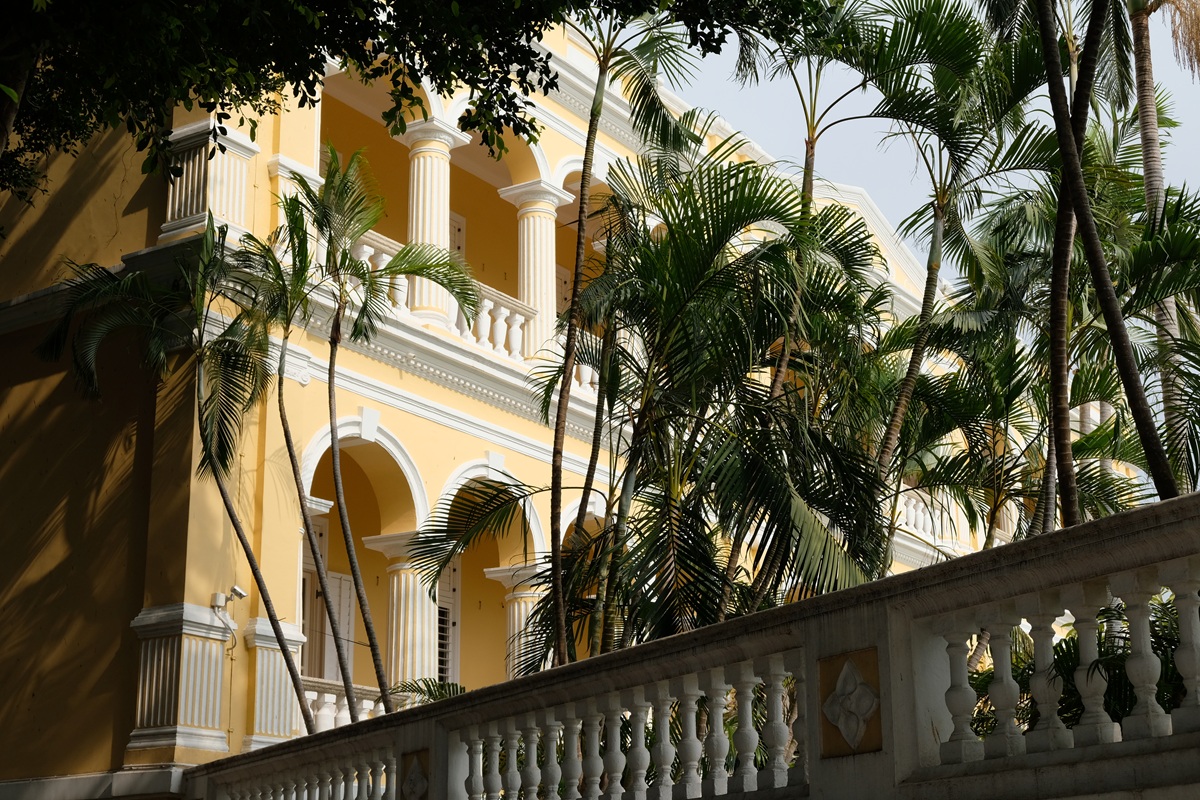
The official residence of the Consul General of Portugal in Macau
Long-time readers of this blog might have noticed my affinity for Hong Kong. Despite the culture shock I experienced on my first trip there in 2012 – sharing a table with strangers at restaurants and keeping up with the fast-paced locals, among others – the city gradually grew on me, thanks to James who is instrumental in making my trips to his cherished hometown a relative breeze. Over the subsequent years, I kept returning there almost every Christmas. And with each trip, the lists of local dishes I’ve tried, cultural sights I’ve visited, hiking trails I’ve done, and small islands I’ve been to only get longer. I’ve even come to a point where I find Cantonese – the mother tongue of most Hong Kongers – more endearing than Mandarin. (I don’t speak either of them, but I do prefer the sound of the former.)
Cantonese is also a language spoken in Macau, Hong Kong’s sister from a different father (one is Portuguese, and the other British), as well as the neighboring Chinese province of Guangdong. However, in spite of this and Macau’s proximity to Hong Kong, I had only been to the former Portuguese colony twice, with the last visit back in 2015. A decade later, for the 2025 Christmas trip to Hong Kong, I pitched James the idea of also visiting Macau with trying more Macanese dishes as the top agenda. It was an easy sell. Most of my photos of the dishes we had in Macau in 2015 turned out blurry, and so did my memories of our meals back then. This trip ten years later, therefore, acted like a reset button.
There are three ways to reach Macau from Hong Kong. The most popular, which is also our favorite, is by ferry. Hydrofoils shuttle tens of thousands of tourists and residents of both cities every day. Efficiency is key here since passengers can get on the ferry from centrally-located terminals – one in Central and the other in Tsim Sha Tsui – directly to Macau, a journey that takes roughly one hour. The opening of the somewhat controversial Hong Kong–Zhuhai–Macau Bridge in 2018, however, offered a cheaper – albeit slower – travel option between the two Special Administrative Regions (SAR) of China. But if one is short on time but not on budget, another alternative is on the table: by helicopter.
Just like our previous trip together to Macau a decade earlier, James and I arrived at the city’s Outer Harbour Ferry Terminal that is situated in the east of the Macau Peninsula, one of the three main areas of Macau – the others being the islands of Taipa and Coloane. But don’t let the numbers fool you. Together, including the reclaimed zone between the two islands, they constitute only around 33 square kilometers, which means this territory is smaller than some microstates like San Marino and Liechtenstein. Yet, there are more than 700,000 people living in Macau, making it the world’s most densely populated country/territory.
This fact probably escapes most people’s mind, and many of us are more likely to think of gigantic casinos when the name Macau is mentioned. No one blames you if you do, though. When I first visited Macau in 2012, from the ferry terminal I took the free shuttle bus provided by Grand Lisboa, one of the largest upscale gambling dens in the city, that picked up and whisked hundreds of visitors each day to the heart of its economic engine. I remember finding my way out of the massive casino was rather confusing, as if the place was designed to intentionally keep people inside and spend their money for hours.
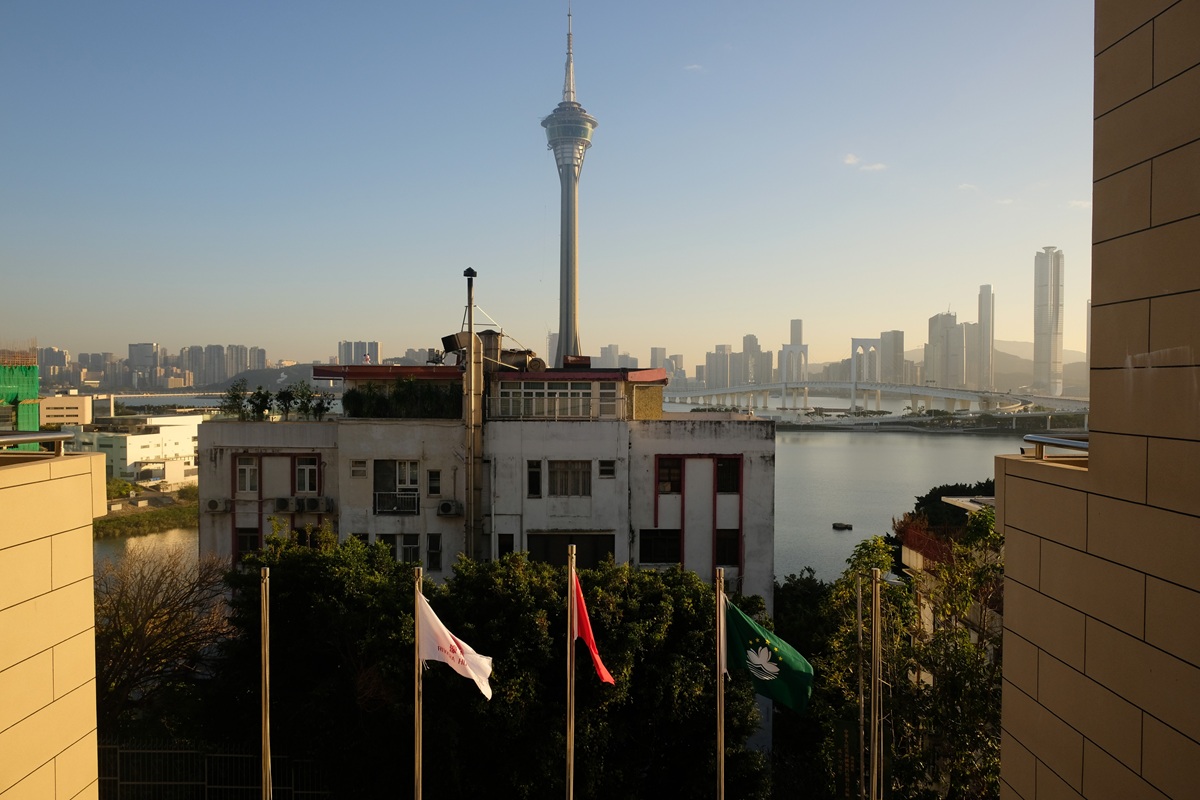
Macau Tower as viewed from our hotel
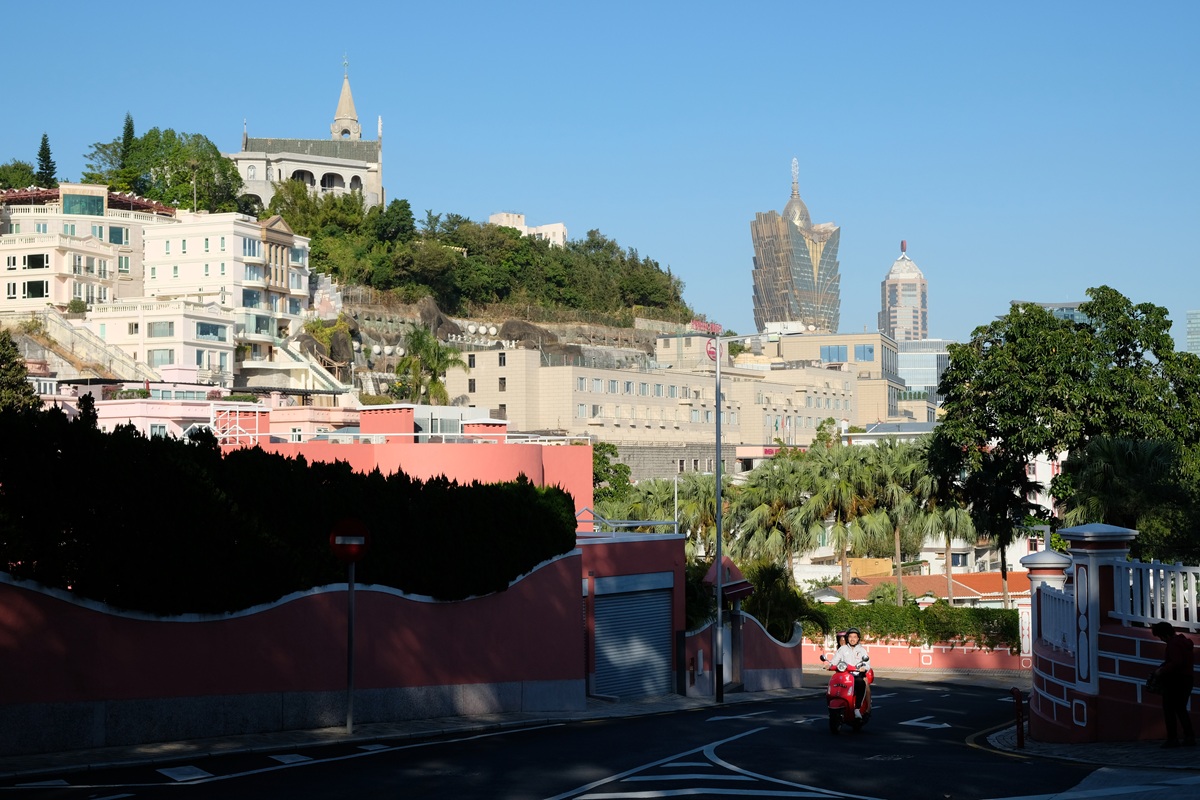
The spires of the Chapel of Our Lady of Penha and the Grand Lisboa casino
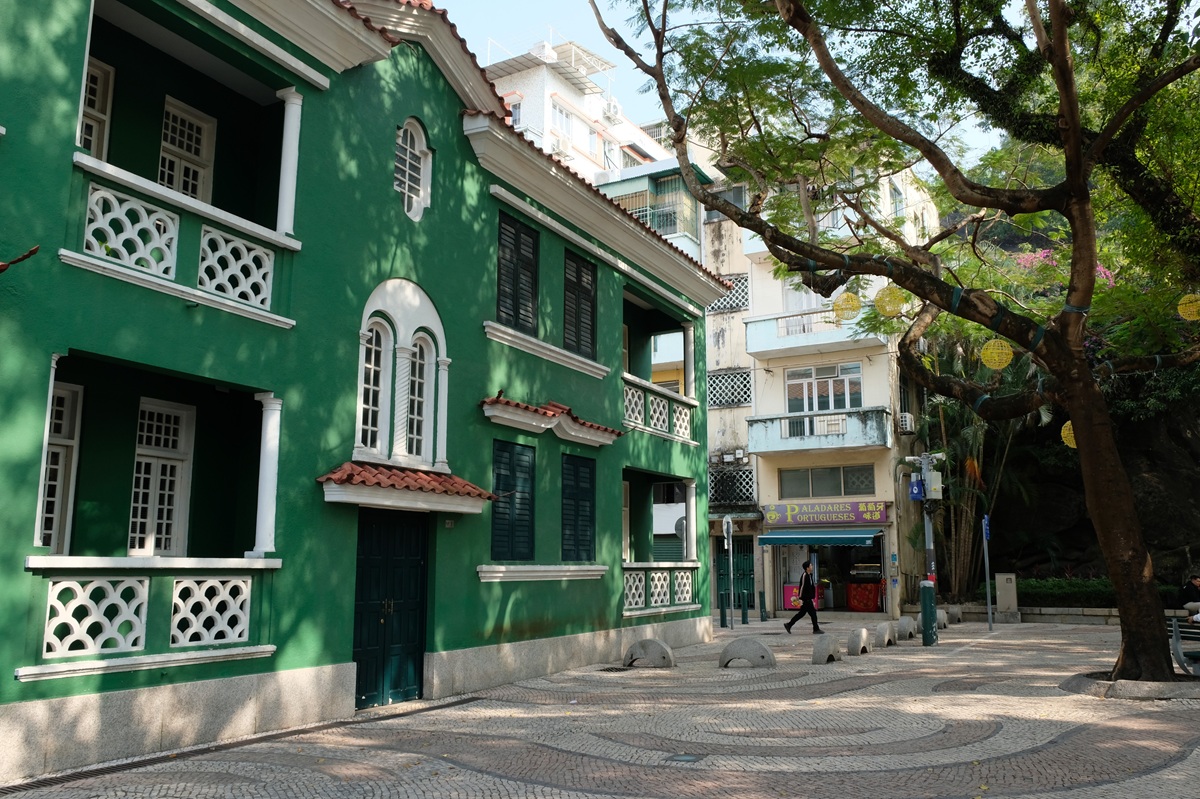
The administrative building of the Maritime Museum of Macau
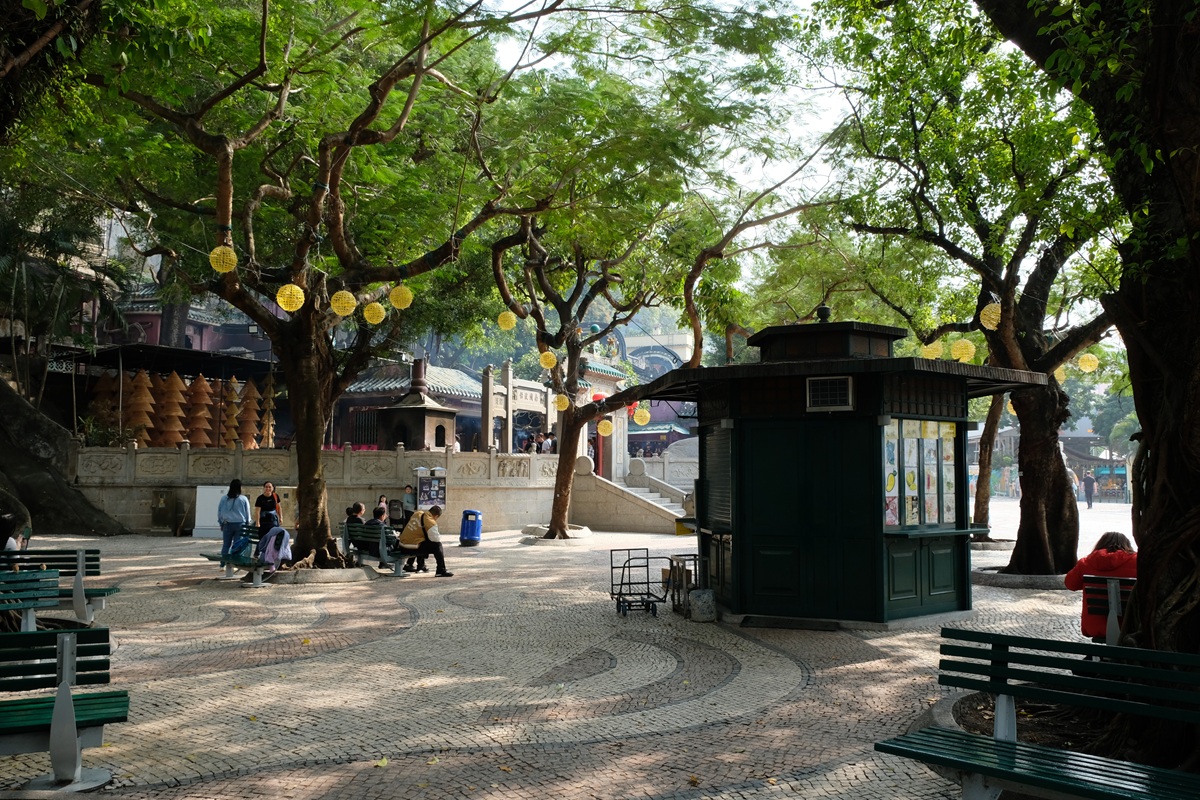
The leafy square in front of the historic 16th-century A-Ma Temple
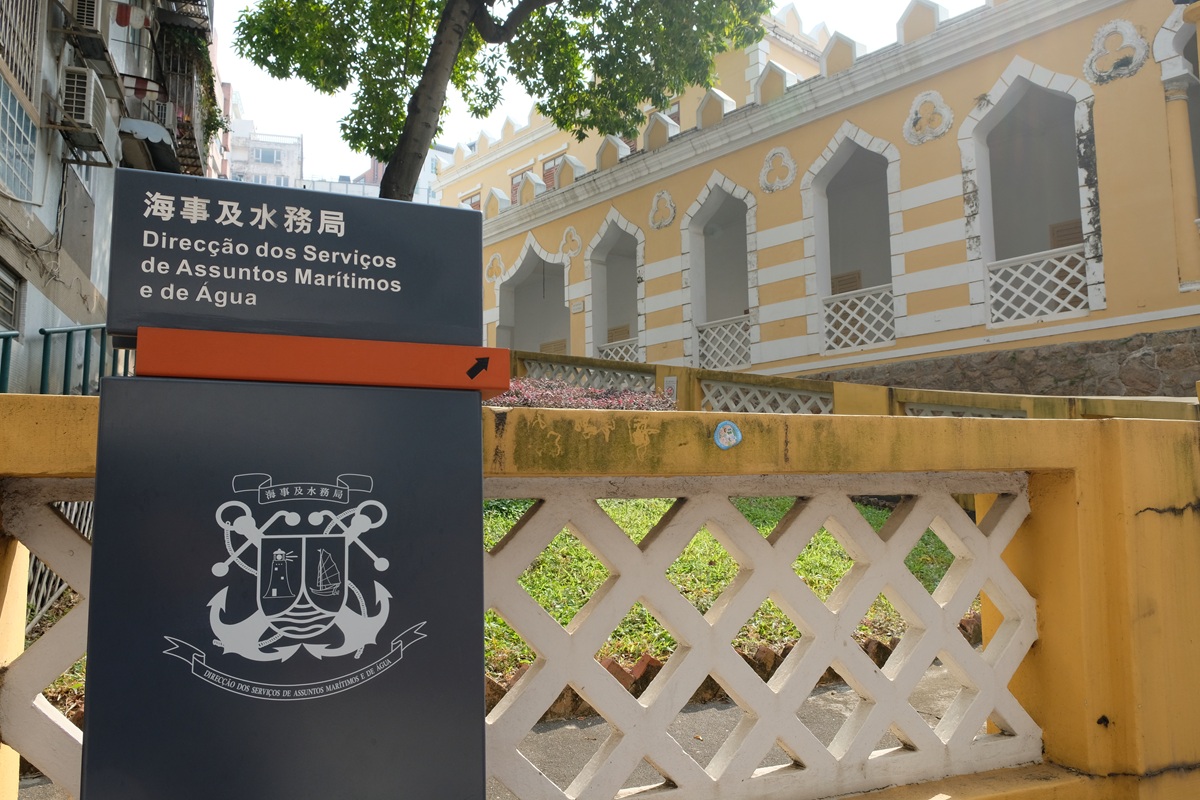
The 19th-century Former Moorish Barracks is now the headquarters of Macau’s Marine and Water Bureau
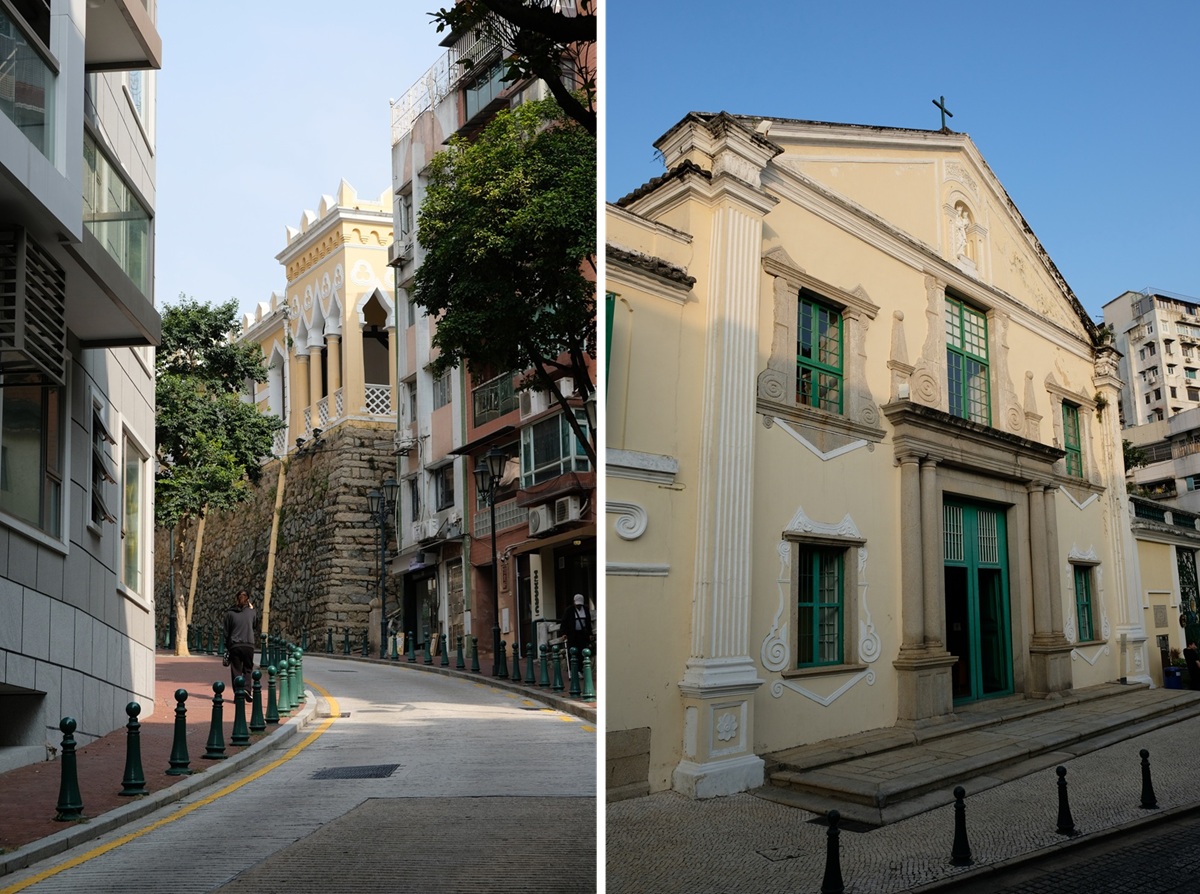
Left: a typical narrow street in the city; Right: St. Augustine’s Church, one of the oldest churches in Macau
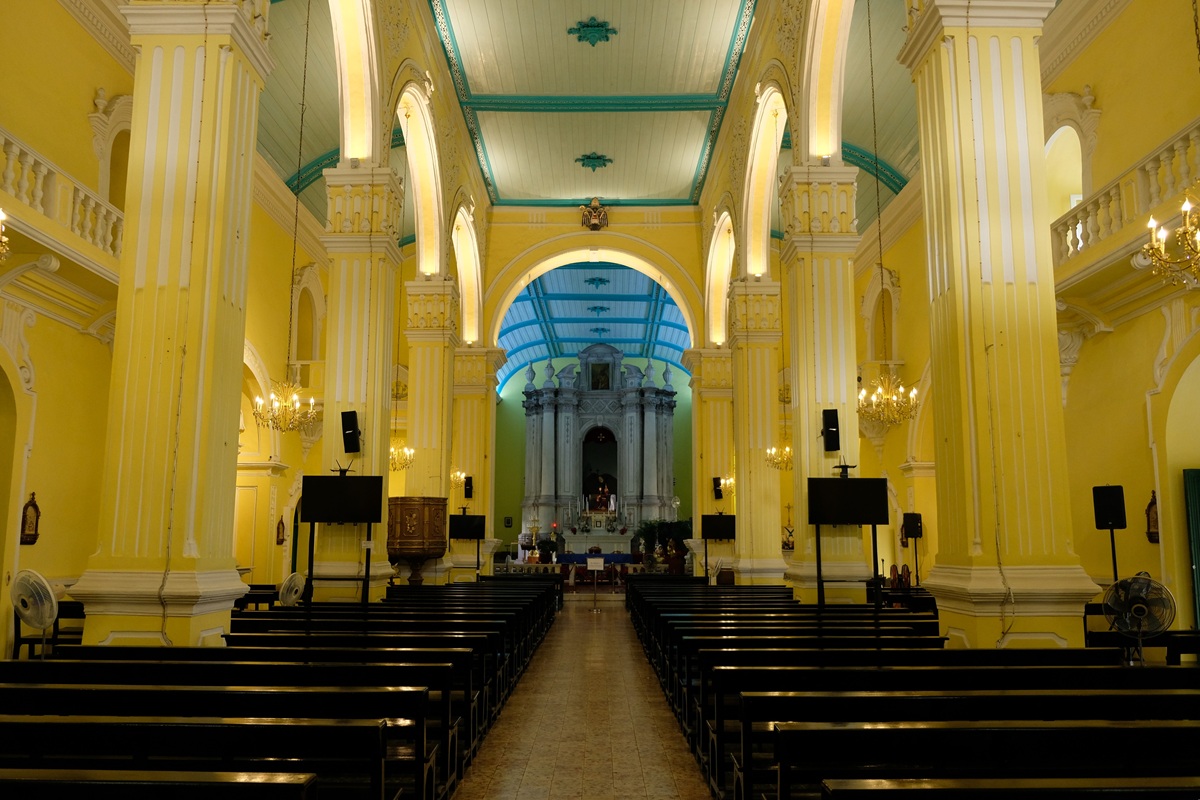
The rather austere interior of St. Augustine’s Church
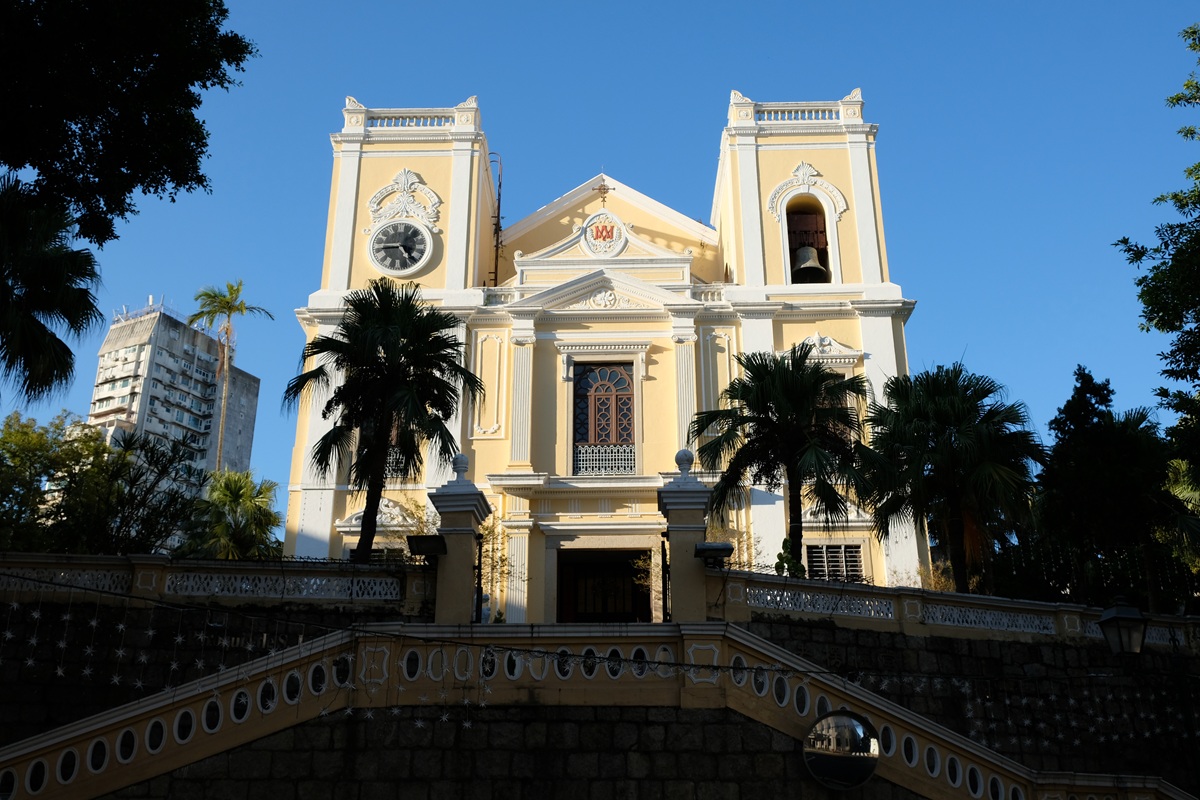
St. Lawrence’s Church, first built in the 16th century then rebuilt three centuries later
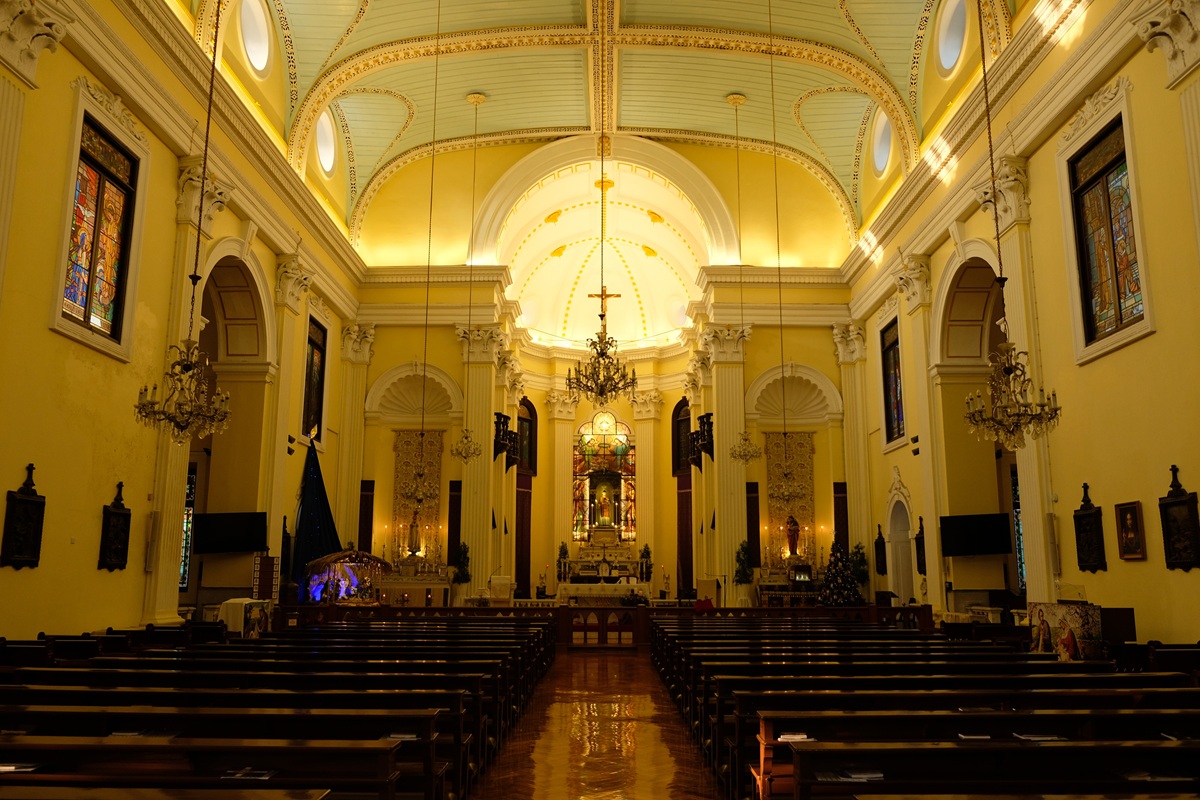
Inside the church
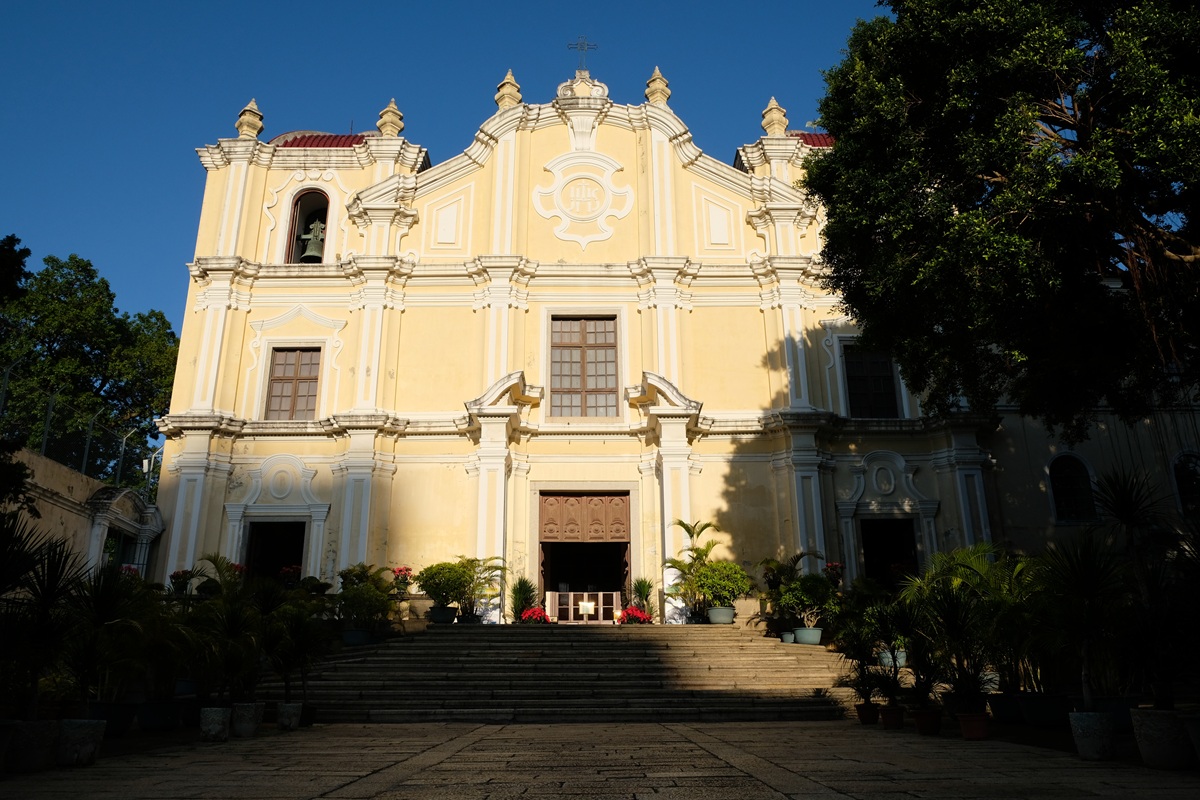
St. Joseph’s Church in warm afternoon light
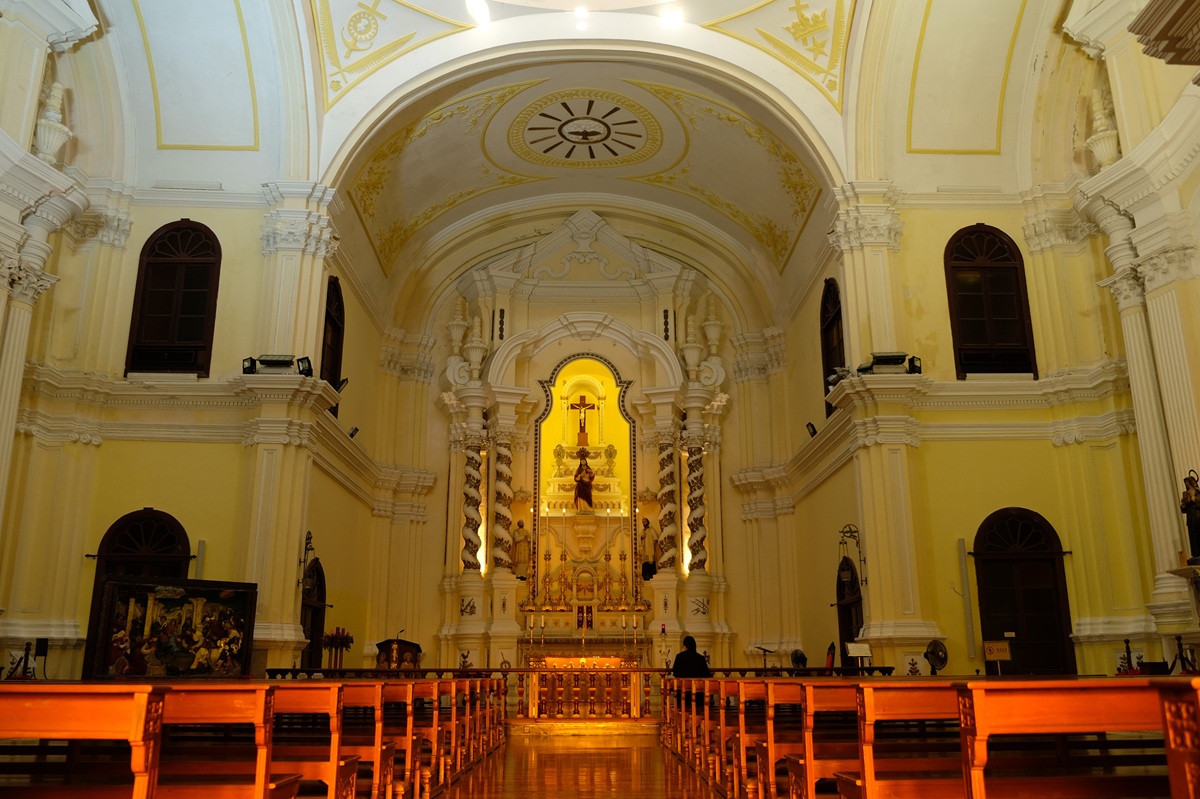
At the nave of the church
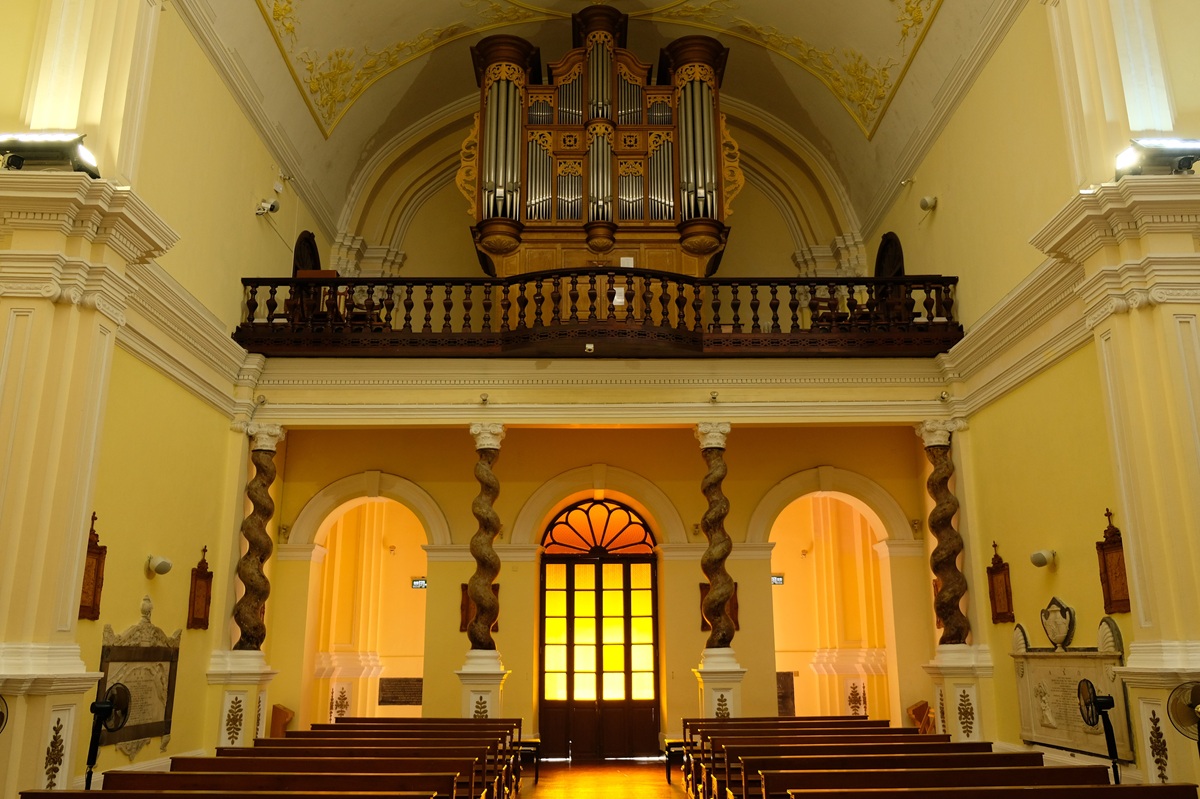
An old organ and unique twisted pillars of the church
This time, we took a taxi which conveniently dropped us directly at the doorstep of our hotel – the same accommodation where we stayed toward the end of our six-month Spice Odyssey in 2015. Along the corridor to our room, I caught a glimpse of Macau Tower, a 338-meter giant needle piercing the sky, soaring high above other buildings in the territory. We took advantage of the hotel’s location to revisit some of the Portuguese-era churches that we saw ten years earlier, most of which were within walking distance from one another. From the humble-looking St. Augustine’s Church, to the more ornate St. Lawrence’s Church and St. Joseph’s Church, this time around we made sure to also check out their interiors.
We wandered along Macau’s narrow and maze-like streets, and stumbled upon pretty squares surrounded by handsome colonial buildings that lent these pockets of the city an undeniably atmospheric Old-World charm. However, trying the local Macanese cuisine was of course on top of our minds, and Restaurante Litoral was our first stop.
With a better camera in hand, my anticipation began to build as we stepped inside the cozy-looking, Michelin Bib Gourmand-listed establishment for a late lunch. This place is famous for its galinha africana (“African chicken”), which we obviously ordered. There are conflicting accounts regarding the origin of this dish, but it is unmistakably a product of centuries of Portuguese colonialism in Asia where influences from Goa (in present-day India) and Malacca (in what is now Malaysia) were introduced to the East Asian trading port of Macau. As it was accompanied by arroz de pato (baked duck rice) and porco balichão tamarinho (pork stew cooked with tamarind and fermented shrimp paste), our stomachs ended up very full, but happy.
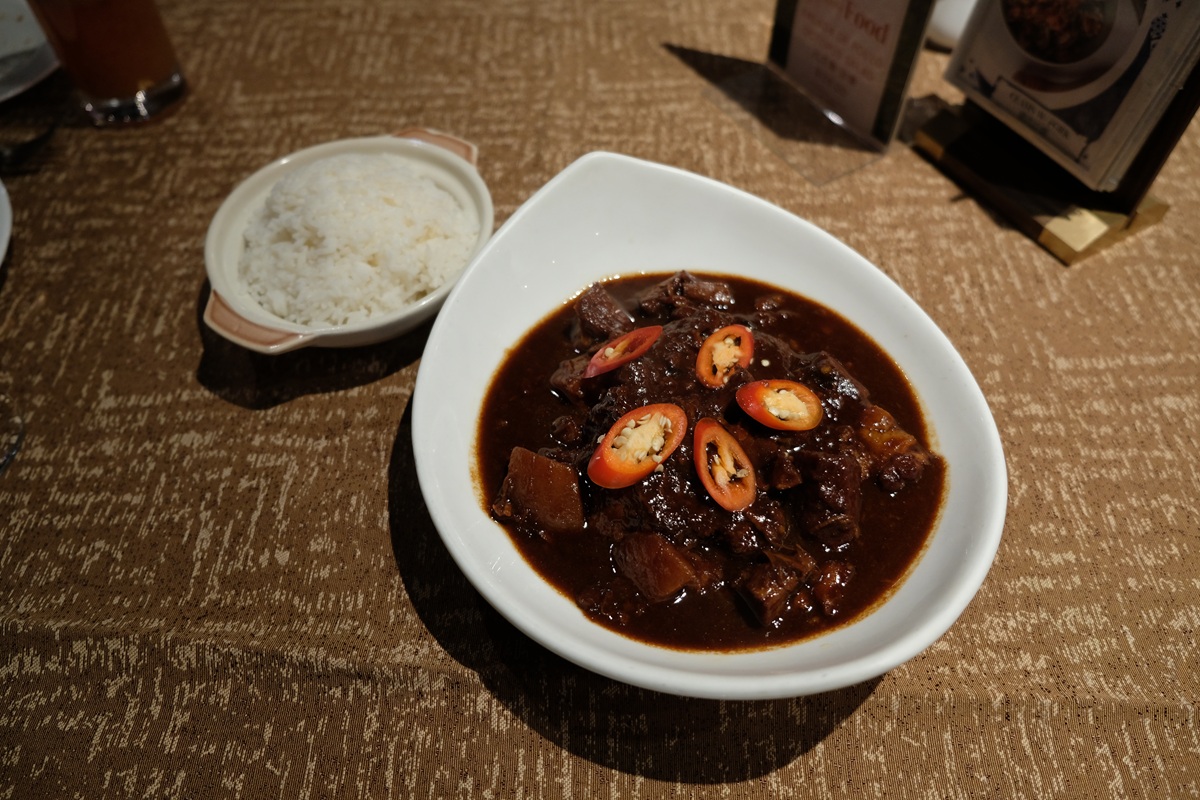
Restaurante Litoral’s porco balichão tamarinho
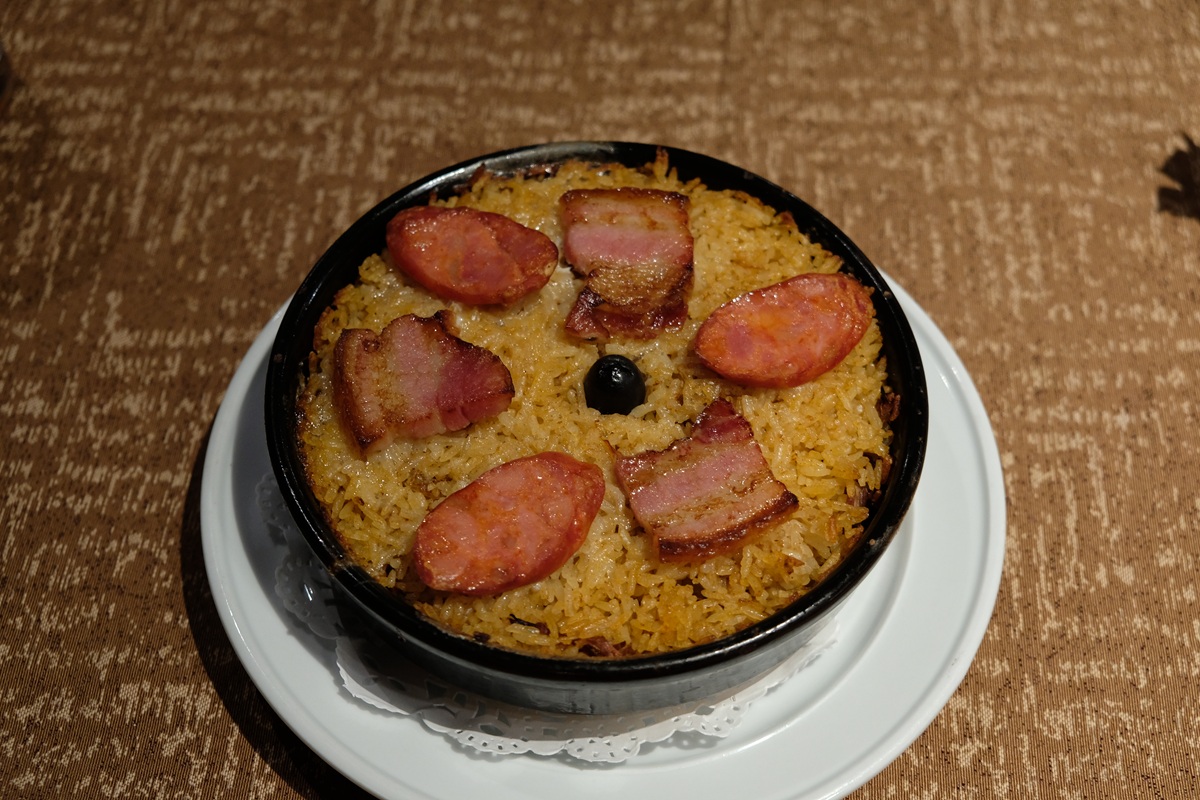
The restaurant’s rendition of arroz de pato
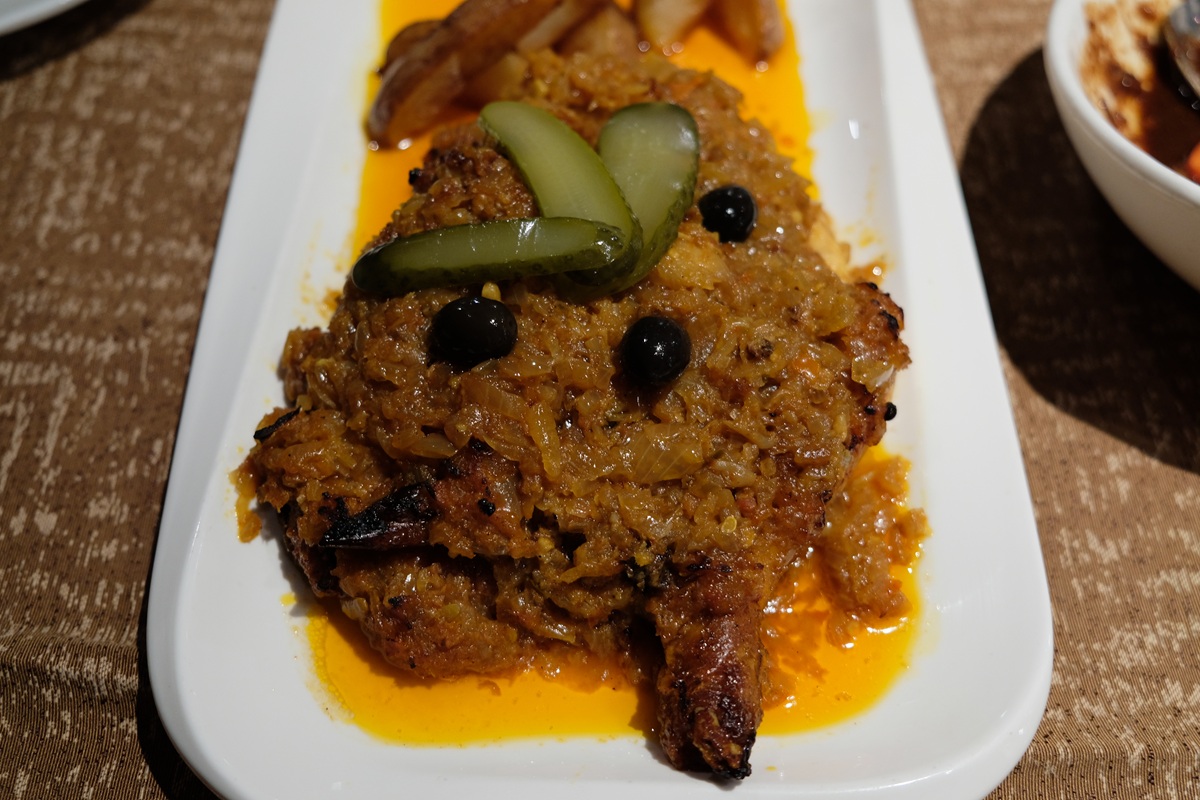
Galinha africana is arguably one of the most well-known Macanese dishes
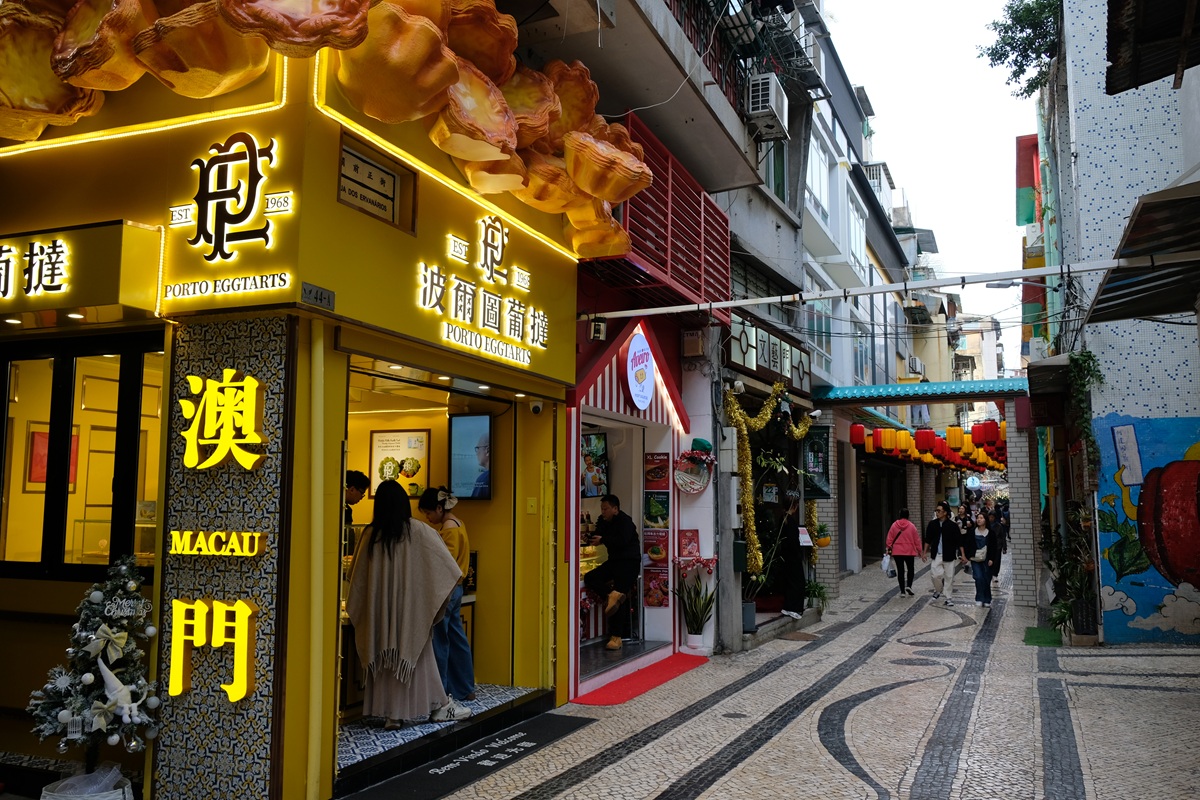
Rua dos Ervanários, a pedestrian-only part of Old Macau that has been seeing a surge in cute-looking shops and cafés
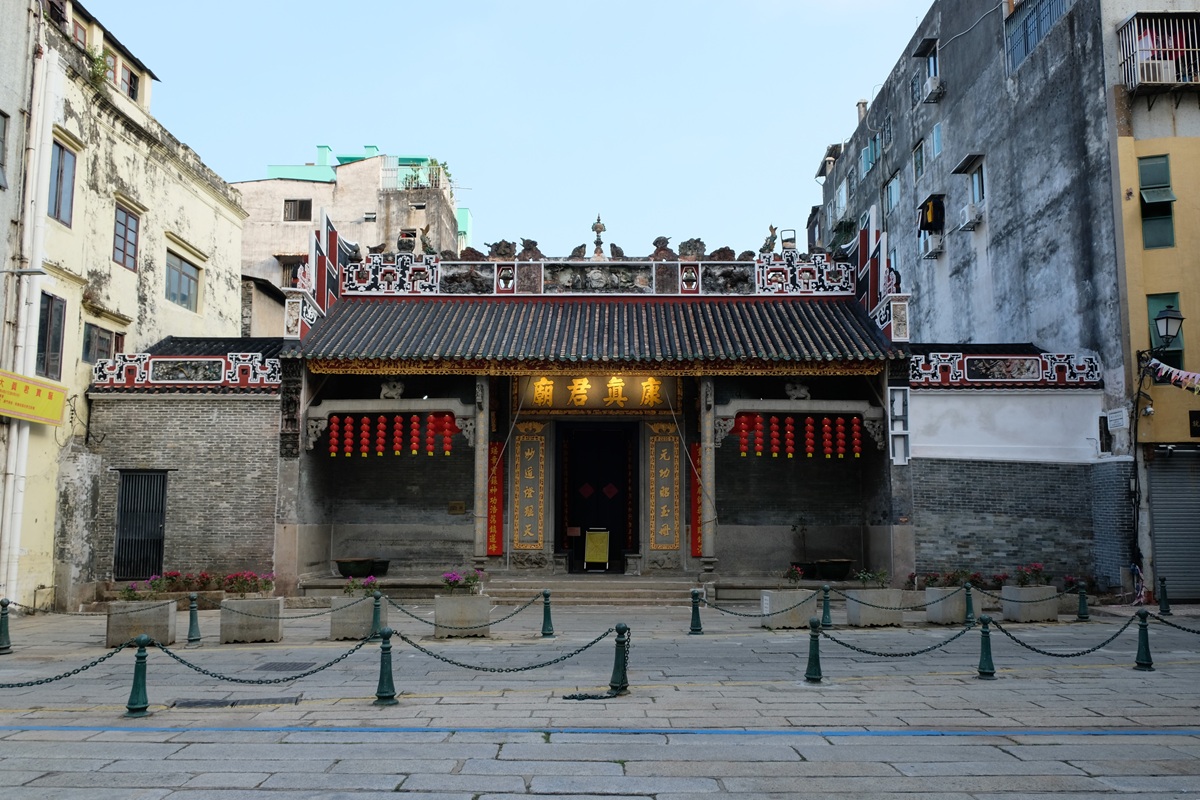
The 19th-century Hong Kung Temple situated at Largo do Pagode do Bazar
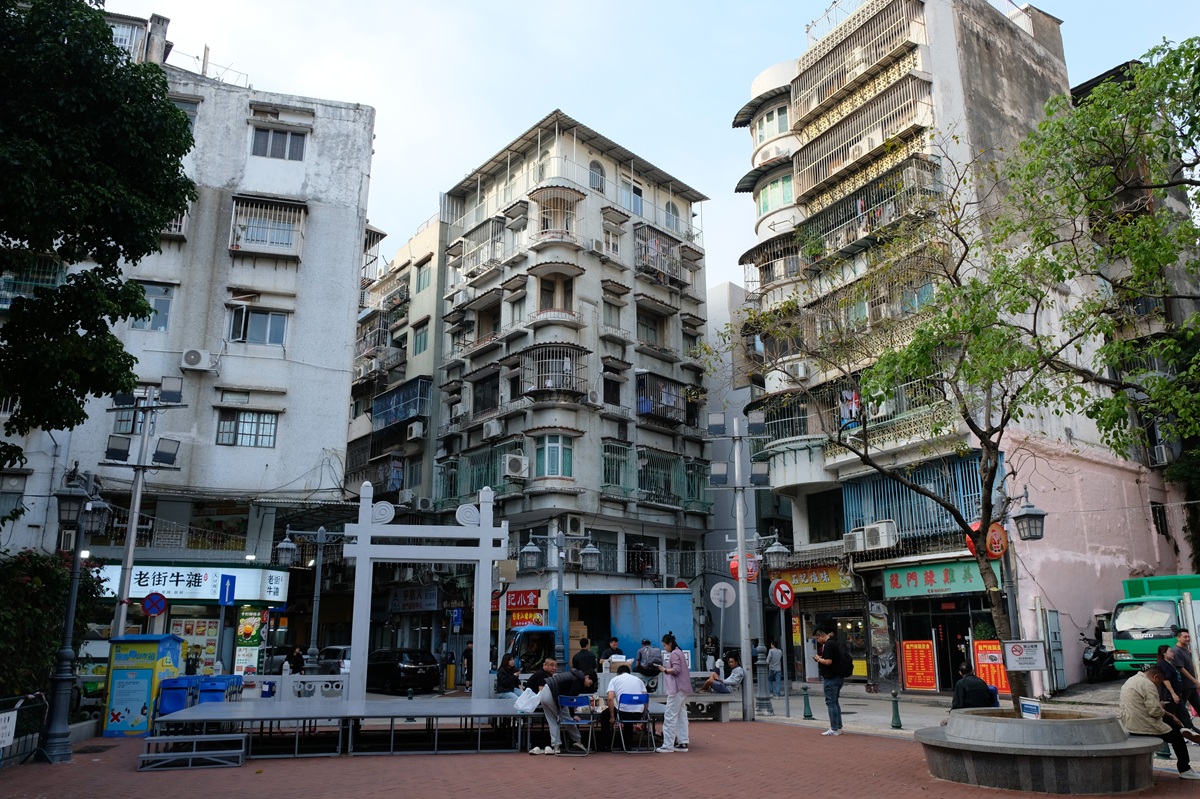
A glimpse of how densely populated Macau is
Reliving our memories from the 2015 trip was not the only thing we had in mind. In my two previous visits to Macau, I only explored the peninsula, but had never set foot on Taipa or Coloane (and the reclaimed land in between). I had my reasons though; this southern part of Macau is home to colossal resorts bearing the names long associated with Las Vegas’ gambling and entertainment scene, including Wynn, MGM, and The Venetian – the latter is especially popular among tourists for its indoor gondola experience. If you’re into this kind of attraction, that’s fine. But it has never appealed to me. Fortunately, James knew a place in Taipa, aptly called Taipa Village, where old colonial buildings are still relatively well-preserved, offering a promising antidote to the glitzy casinos and hotels.
To reach Taipa from the peninsula, we took the Macau Light Rapid Transit (LRT), the city’s first-ever railway system. It is a subsidiary of the MTR Corporation, the operator of Hong Kong’s rapid transit which is often dubbed as one of the most reliable metro systems in the world. However, unlike its older sibling whose extensive network spans almost 250 kilometers, Macau’s LRT’s 16.3-kilometer length is meagre in comparison. The good news is more lines are either under construction or planned.
As the sleek Japan-made train pulled in at Barra station in the Macau Peninsula, we hopped on the automated people mover (APM) which then traversed the channel that separates the two sides of Macau. Moments later, the vehicle glided across the elevated track in Taipa, moving past tall apartment buildings, a forlorn-looking horse racing track, and a 16,000-seater stadium which hosted the 2005 East Asian Games, before arriving at Pai Kok where we alighted.
Immediately to the northeast of the station was Taipa Village, and a short walk later we came across a well-preserved Portuguese colonial building beautifully painted in celadon green. The former seat of the Concelho das Ilhas (“Municipality of the Islands”), which exercised governance over the islands of Taipa and Coloane, is now the Museu da História da Taipa e Coloane (“the Museum of Taipa and Coloane History”). And it was the perfect place to start our exploration of the village.
The museum itself was not the most exciting that I have ever been to, but the displays and the information panels were sufficient to give me a better understanding of Taipa’s (and Coloane’s) history. Its location along the main narrow thoroughfare of the village that funnels visitors to the area’s highest concentration of eateries – around what was once the Old Taipa Market – and the so-called Taipa Houses nearby means that even if you’re generally not interested in museums, you will most likely stumble upon it. So why not pop your head in and take a brief look anyway?
Joining a throng of other visitors, we walked toward the former market of the village, also known as the Feira do Carmo (“Carmo Fair”). The earliest historical records of this market were found in the Boletim da Província de Macau e Timor (the “Bulletin of the Province of Macau and Timor”, the latter referring to what is now the Southeast Asian country of Timor-Leste) mentioning 1886 as the year it was commissioned by the Portuguese colonial administration. What we saw at the time of our visit, however, was a lively quarter filled mostly with tourists who were curious to try the many local snacks and delicacies on offer. We opted to have one freshly-baked pastel de nata (also known as the Portuguese egg tart) each, probably the most emblematic of all desserts associated with Macau. It was just as scrumptious as I remembered from my previous trips to this city. While I also enjoy the Hong Kong-style egg tart, if I really had to choose, the Macanese version would be my pick.
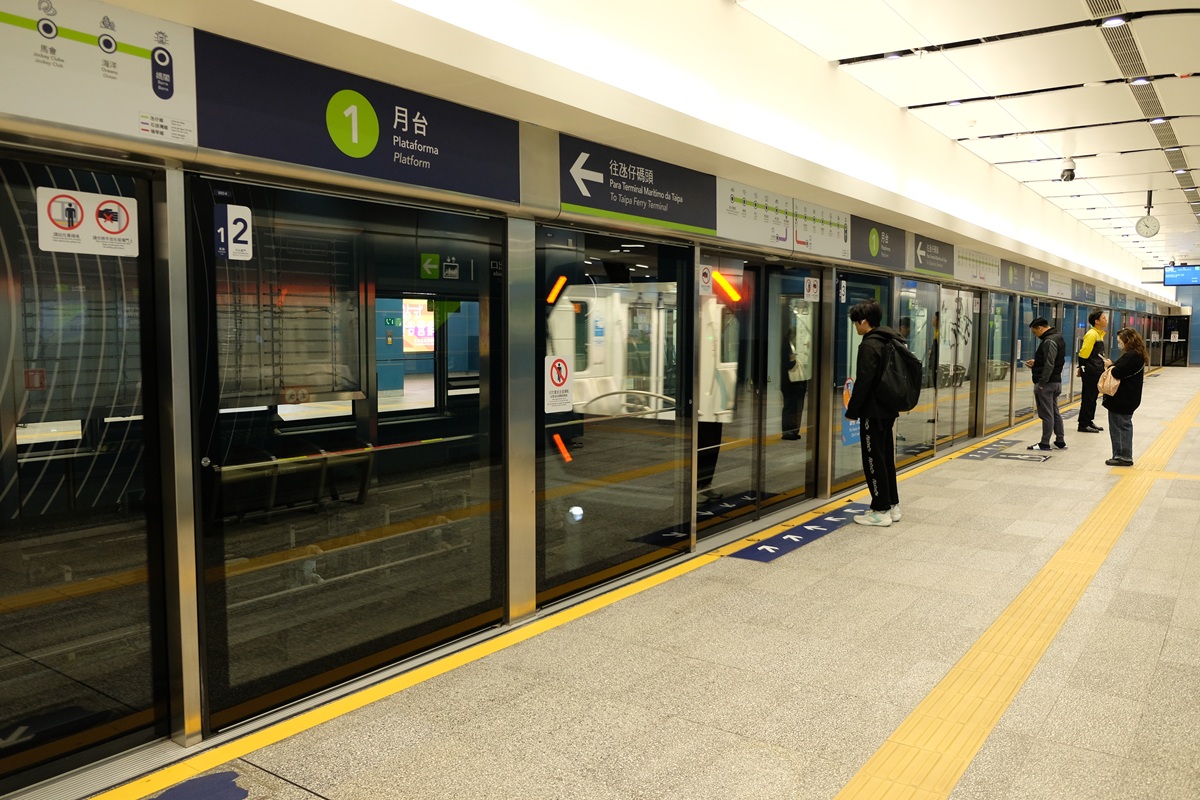
A light-rail train arriving at Barra station
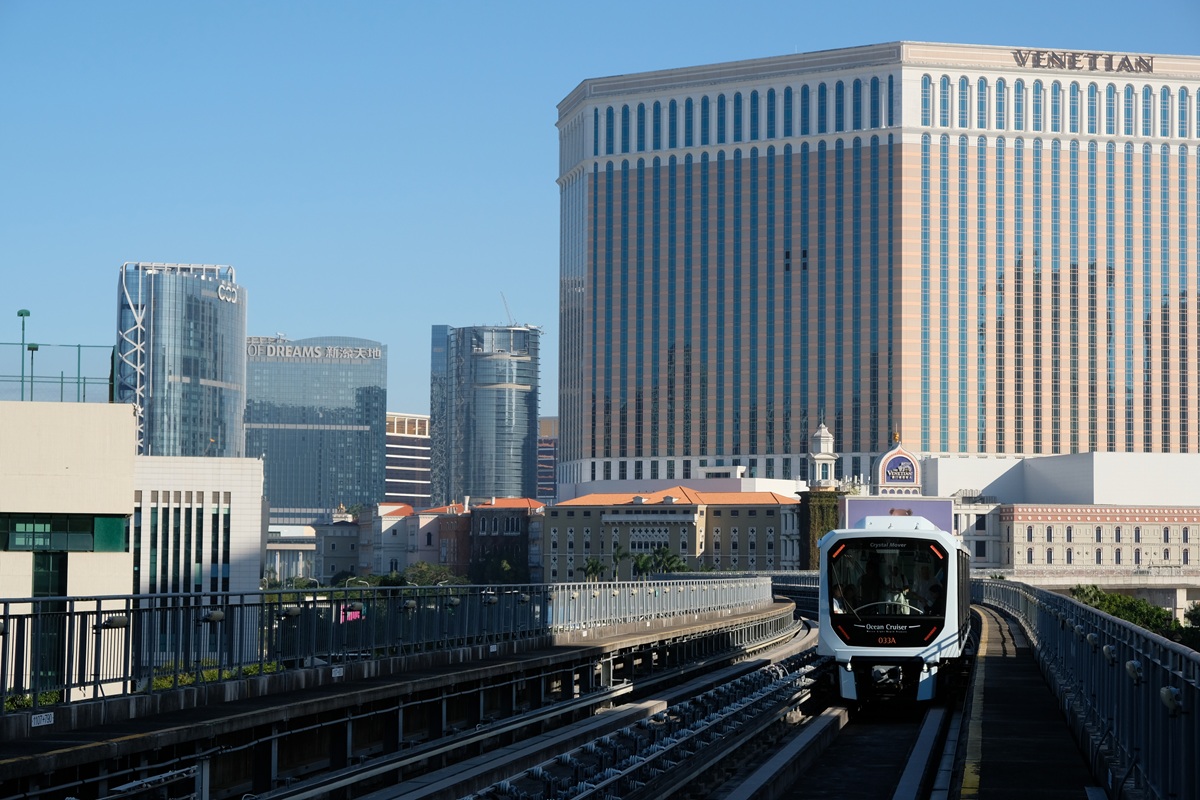
Macau’s LRT line snakes past colossal casinos and hotels
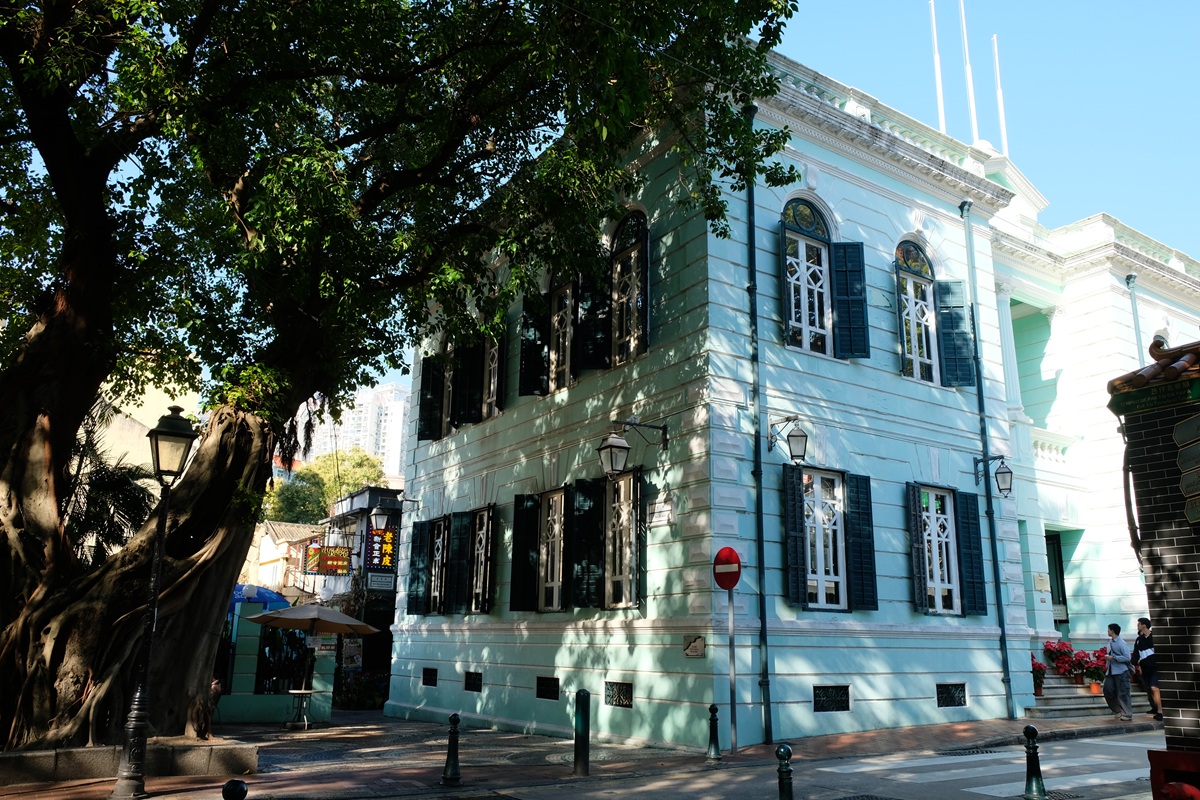
The Museum of Taipa and Coloane History in Taipa Village
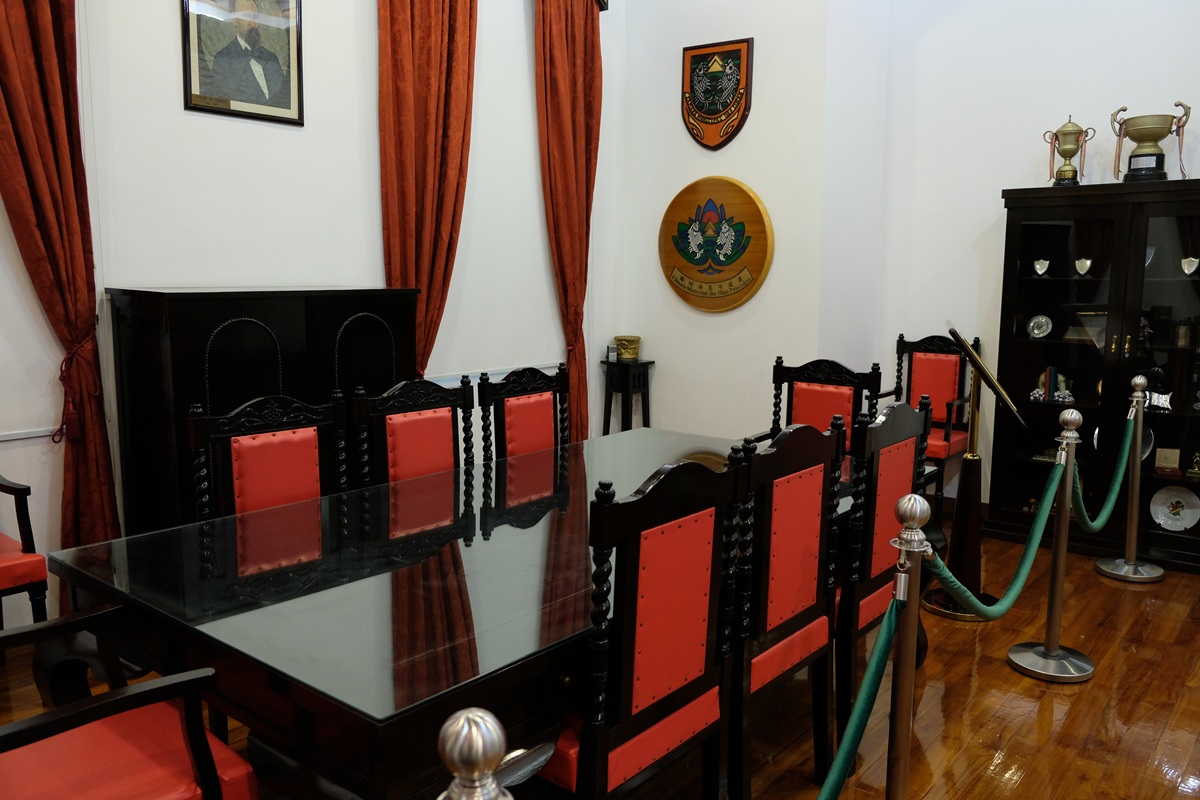
The conference room of the former colonial administrative building
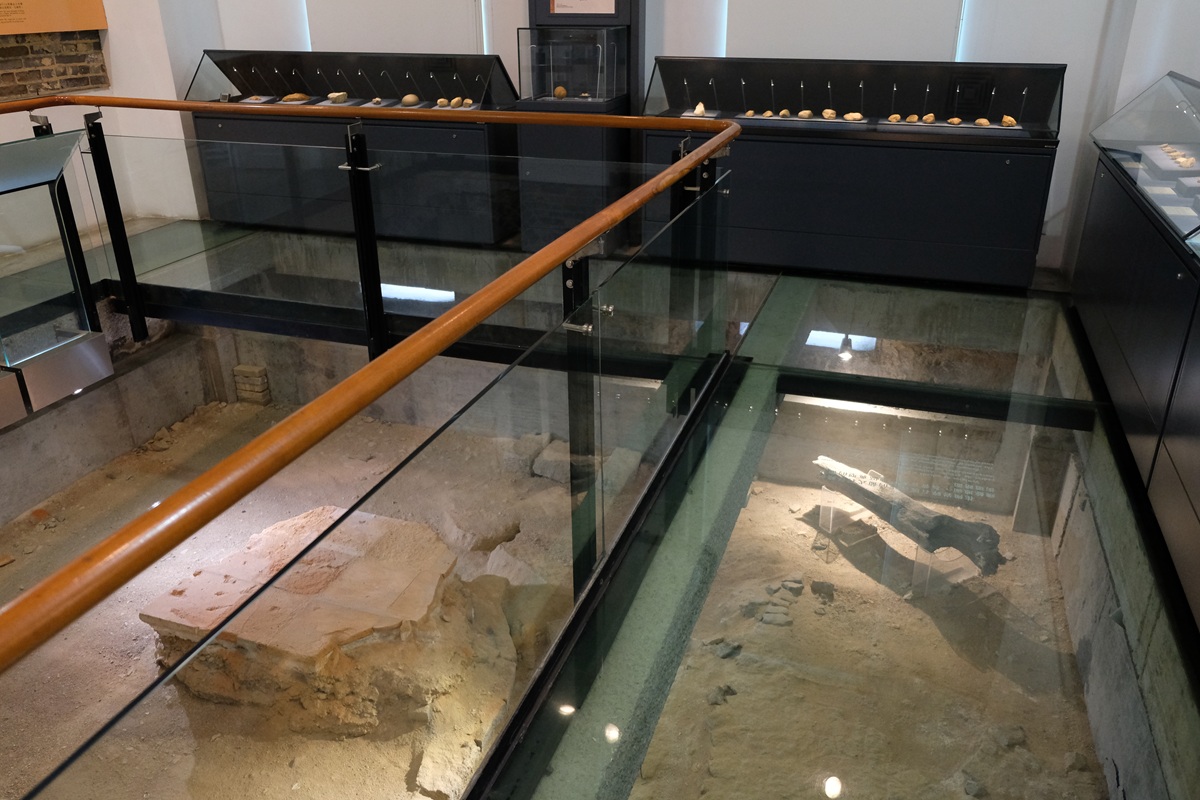
The floors in parts of the museum were left exposed to show the building’s layers of history
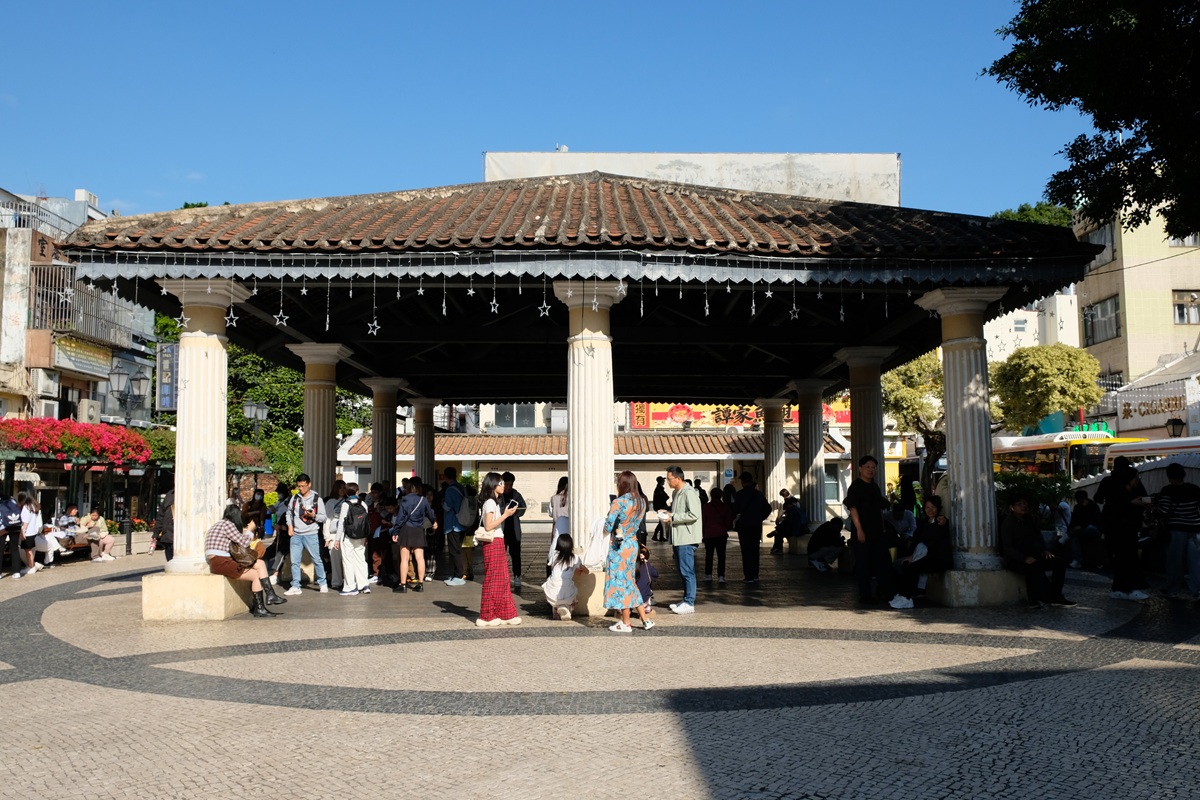
At the old market of the village
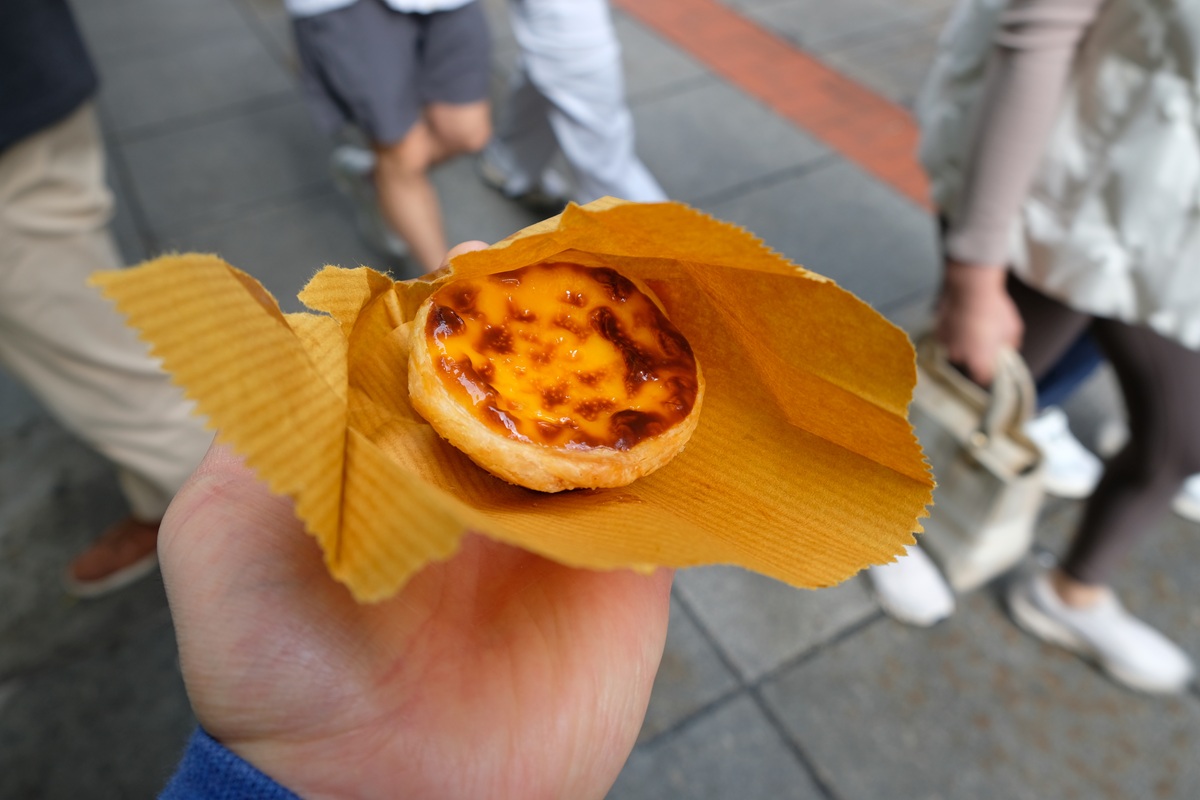
A pastel de nata – I could’ve definitely eaten more than one
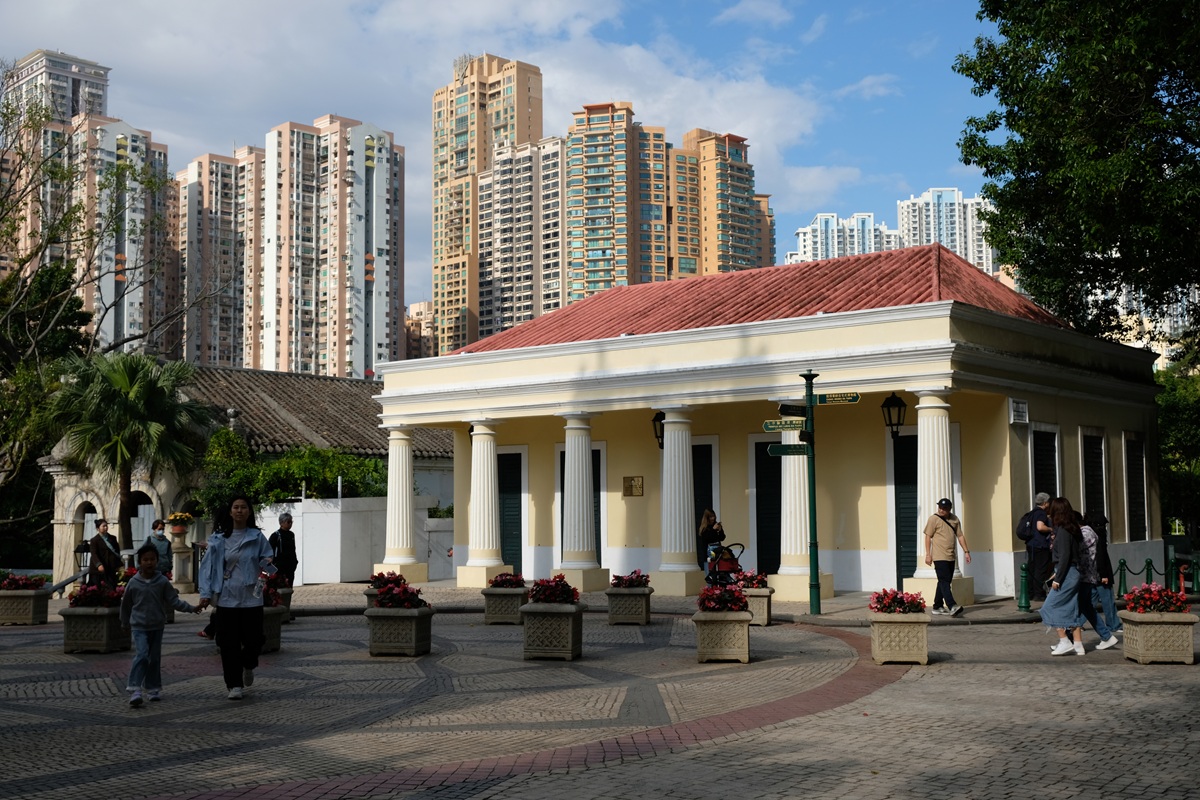
In Macau, Portuguese colonial buildings are dwarfed by towering apartments
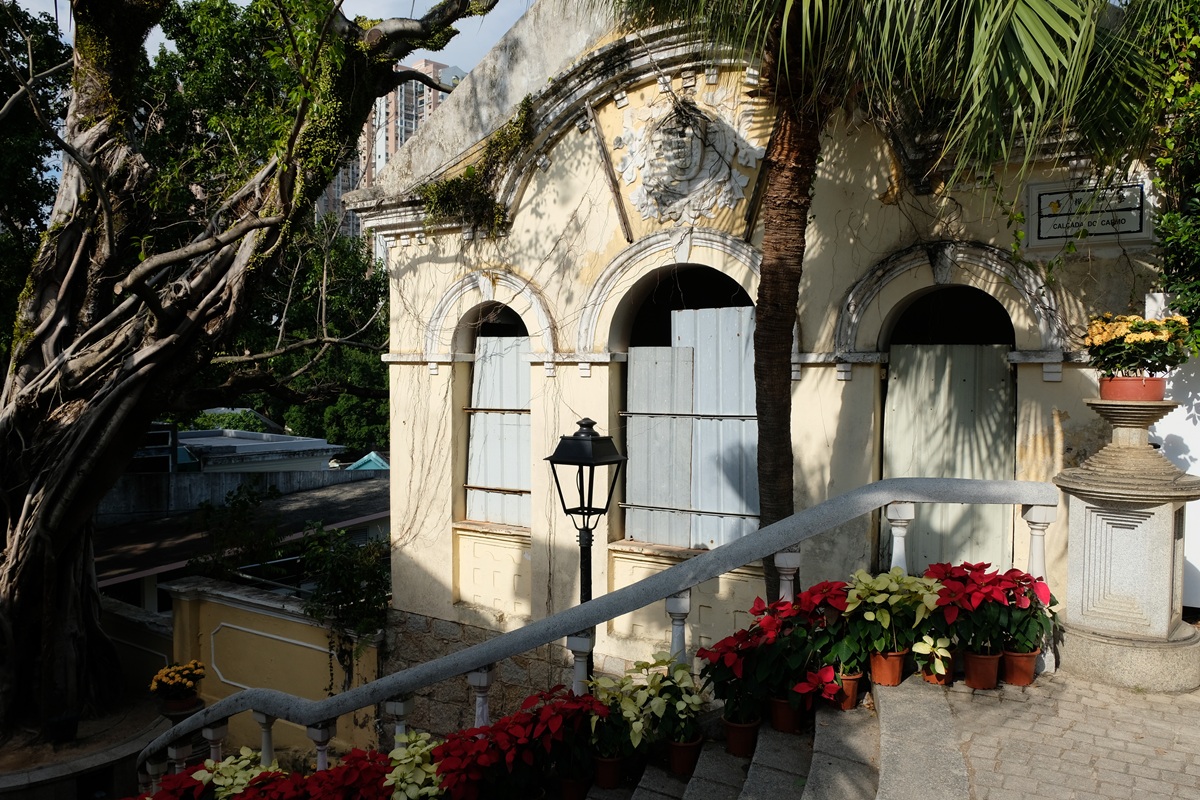
This structure from the Portuguese colonial era had clearly seen better days
We continued strolling east, following the main thoroughfare of the village, before stumbling across the late 19th-century Igreja de Nossa Senhora do Carmo (“Our Lady of Carmel Church”). Nearby was the Jardim Municipal de Taipa (“Municipal Garden of Taipa”) where a statue of the 16th-century Portuguese poet Luís Vaz de Camões stood at the highest point of the small but inviting garden. He was the author of The Lusiads, an epic poem that narrates the history and maritime explorations of Portugal that became a masterpiece, so much so the Portuguese language was influenced by his work. His death is now commemorated as Portugal’s national day.
Directly to the south of the garden housing the statue of the literary juggernaut was a group of five houses from the Portuguese colonial era, collectively known as the Taipa Houses. The early 20th-century former residences once looked out over the sea from the southern shore of the island of Taipa. But today, the views were dominated by casinos and hotels occupying the reclaimed land between Coloane and Taipa known as Cotai (a portmanteau of the two islands it connects). Each of the house now serves a specific function: a museum, an exhibition gallery, a creative space, a “nostalgic” house, and a restaurant called Casa Maquista which happened to be where we were having lunch.
Making a reservation is highly recommended at this establishment due to its popularity, and this was something we didn’t do. At first, we were told that a table for two would only be available an hour later. But we didn’t mind since we had the other former residences to check out anyway. We even watched an impromptu performance by a man with his guitar singing Cantonese songs near the museum, which was a delight.
An hour had passed, and we went back to the restaurant where one of what appeared to be a predominantly Filipino crew welcomed us and showed us our table. As we studied the menu, we were discussing what dishes to order, before deciding with a medley of Macanese specialties: ovos recheados a moda de Macau (stuffed eggs fried in golden and crispy batter), chilicote (turmeric dumplings filled with Iberico pork and turnip), sambal de beringela (a vegetable dish made with tomatoes, onions, and eggplants – called brinjal among South Asian communities including in the former Portuguese colony of Goa), caril de camarão com quiabos (shrimp curry with okras), and the so-called capela (a meatloaf made with Iberico pork, smoked sausage, black olives, pine nuts, and bacon).
Minutes after our order was taken, another waitress came to our table and brought a bottle of still water. “Air?” she asked. We were surprised to hear the Indonesian word for water spoken to us. She must have heard us mixing English and Indonesian when we were perusing the menu. One by one the plates arrived, and with each dish we made small conversations with her. We eventually learned that she comes from a part of Java where my maternal grandparents were also from, and when we thanked her in Javanese toward the end of the meal, she had a big grin on her face. The dishes were delicious, but it was this unexpected warm interaction that made the experience even more memorable.
Later in the afternoon, we found ourselves returning to the Macau Peninsula. But the day had not ended yet. Before leaving the city the next morning, we had one more place to check out: Carlos da Maia roundabout, or the Three Lamps District as the locals call it, an area known for its high concentration of Burmese restaurants.
In 1962, when the military staged a coup in Burma (present-day Myanmar), ousting the country’s civilian government, many Burmese of Chinese descent fled to Macau for safety. The Southeast Asian country was then ruled by an authoritarian military regime – under different guises – until 2011 when it seemed to be opening up to the world, followed by a general election in 2015 when the NLD led by Aung San Suu Kyi won a historic landslide victory. Lamentably, the democratic progress of the nation was crushed overnight during the 2021 coup, bringing Myanmar once again firmly under military rule. However, despite the tumultuous decades in their homeland, the Burmese émigrés in Macau seem to be thriving, evident in the businesses they run in the Three Lamps District.
It was in 2015 when I had Burmese food the last time when James and I were visiting Myanmar for two weeks. The absence* of any restaurant in Jakarta serving dishes from this country made this underappreciated cuisine even more elusive for me, until I learned about the Burmese community in Macau. We settled at a local joint, then ordered mohinga (rice noodles served in fish soup which is often considered the national dish of Myanmar) and lahpet thoke (fermented or pickled tea leaf salad). The mohinga was very delicious – it’s actually my favorite Burmese dish – but we found the salad a little too salty, unfortunately. Nevertheless, it was really nice to be able to taste dishes from this country again, and before we left the place I threw in one of the very few Burmese expressions I know to the owner: ကျေးဇူးတင်ပါတယ် (pronounced “che-zu-tin-ba-de” which means “thank you”).
This trip to Macau was a success. Despite some periods of clouds, we did have beautiful blue skies in the end. Speaking of the food, the Macanese dishes we had not only were delicious, but they also provided a tantalizing window into the past cultural exchanges between Portugal and their former colonial possessions across Asia, evident in the use of ingredients and spices from Goa, Malacca, and beyond in the kitchens of Macanese households. And I’m deeply grateful for those who persevered in preserving this unique cuisine.
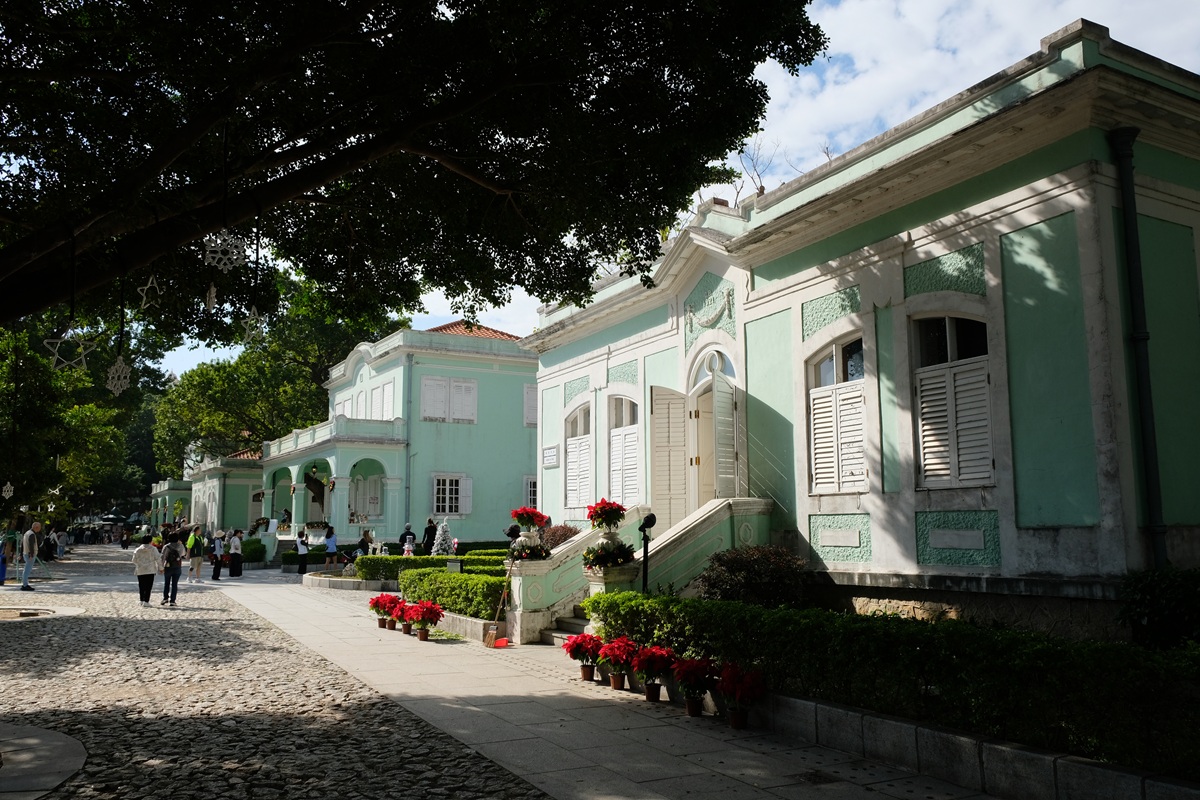
The Taipa Houses, a collection of five well-preserved Portuguese colonial houses
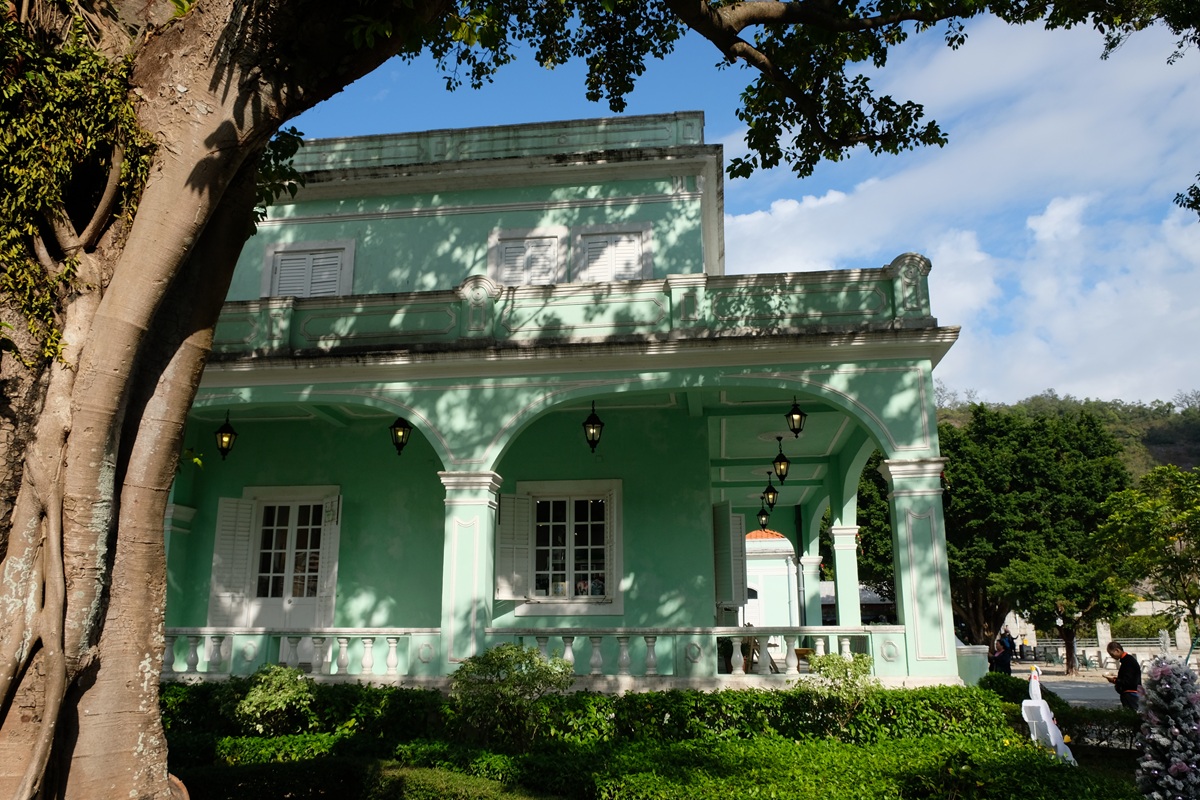
Each house serves a different function today
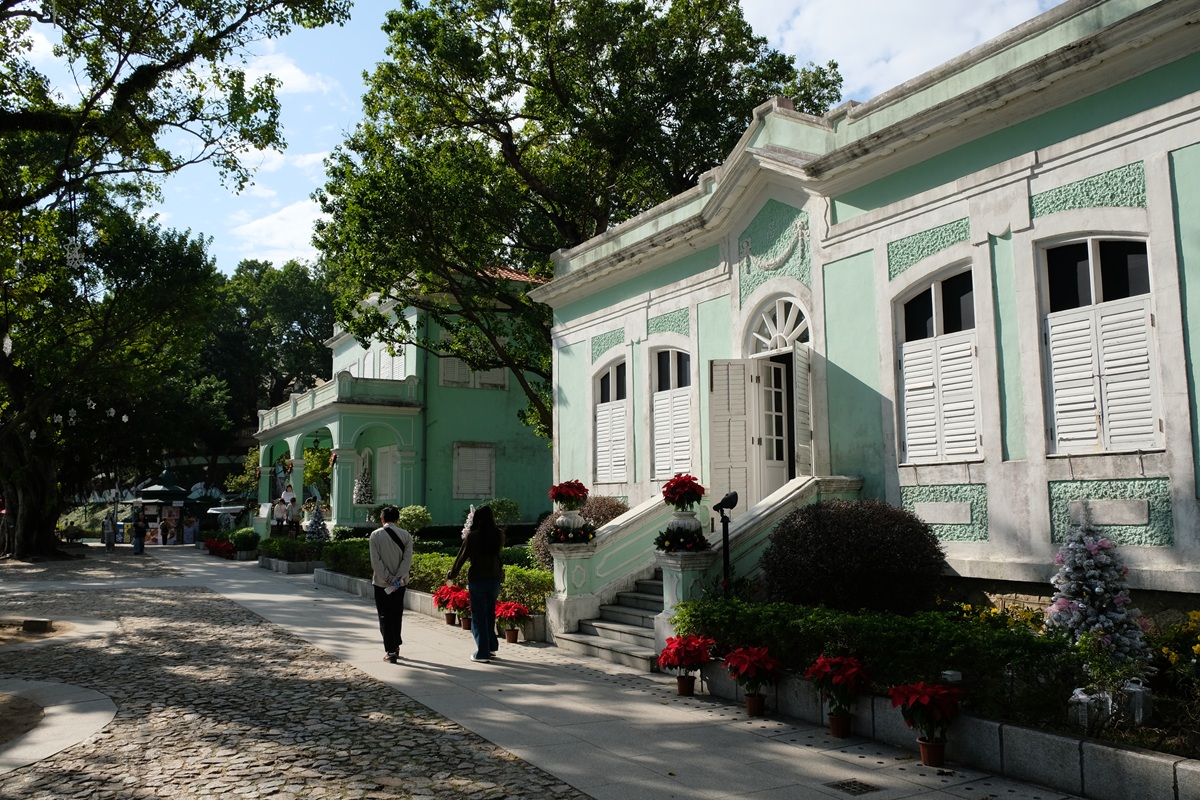
The house at the end of the row is now a museum
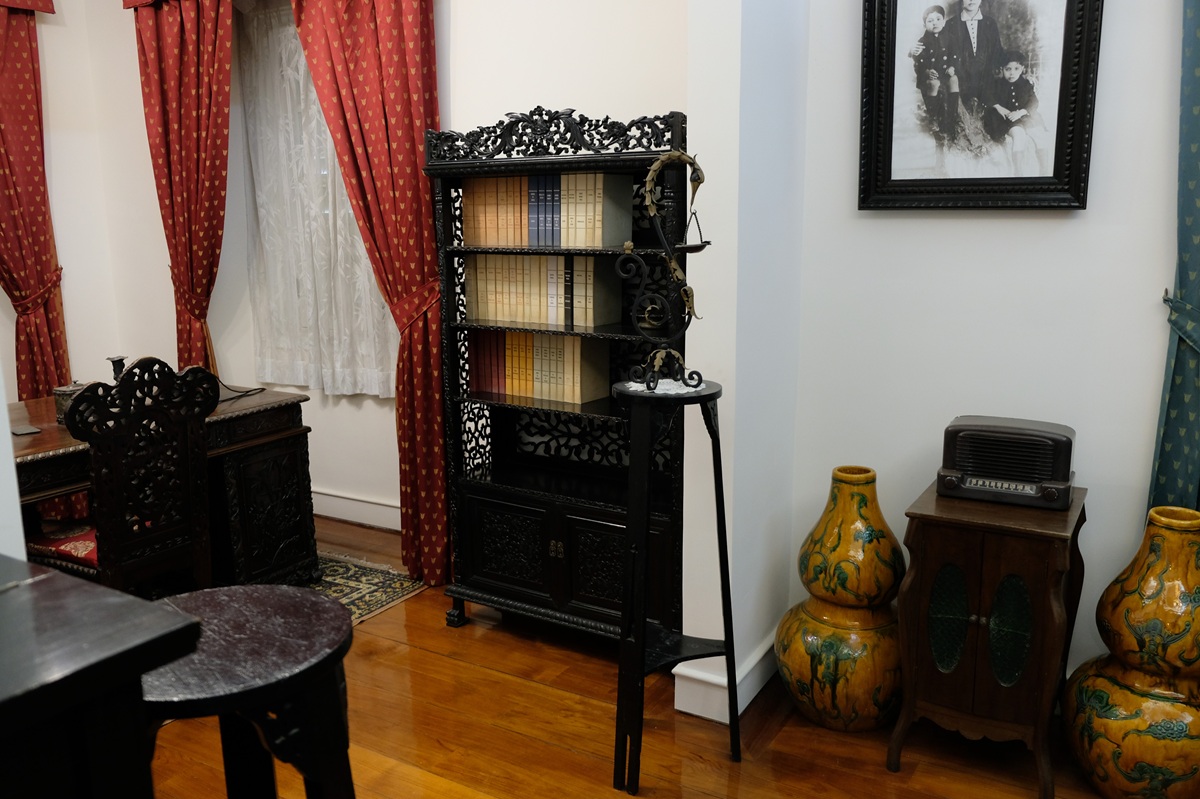
Inside one of the former residential buildings of senior civil servants during the Portuguese colonial rule
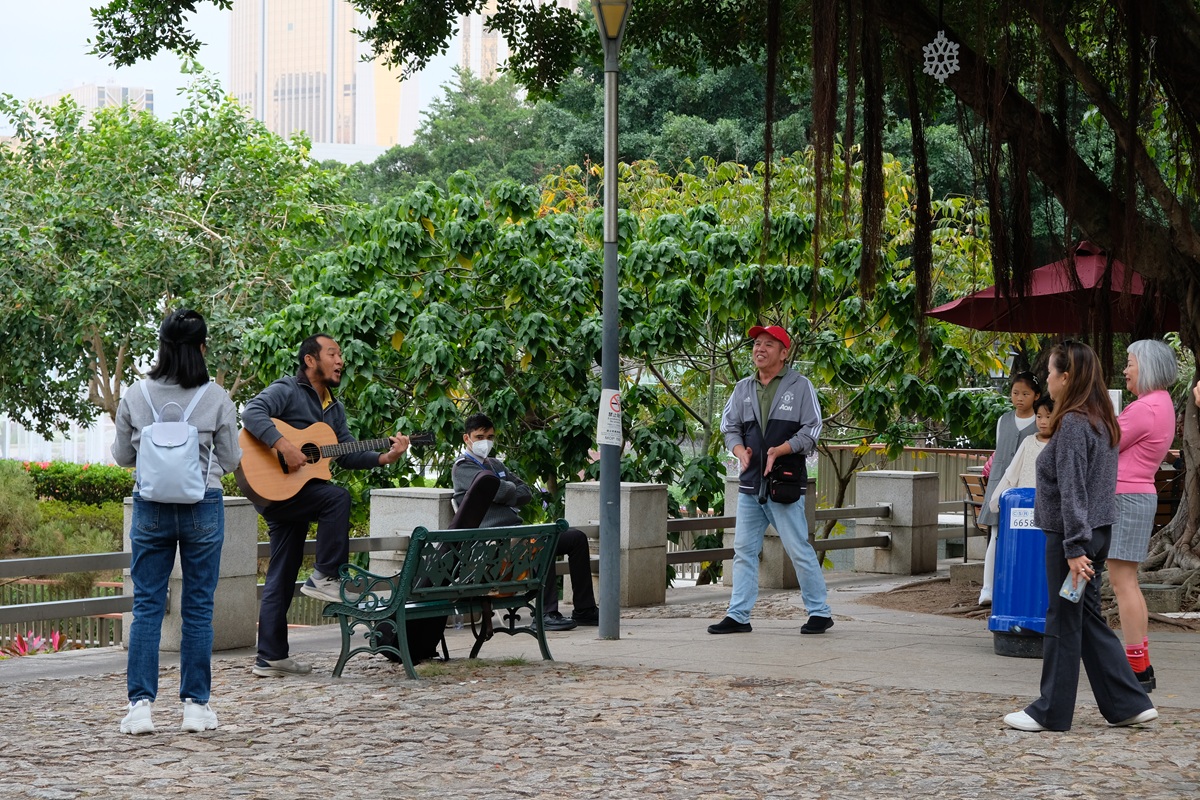
An impromptu live performance in front of the museum
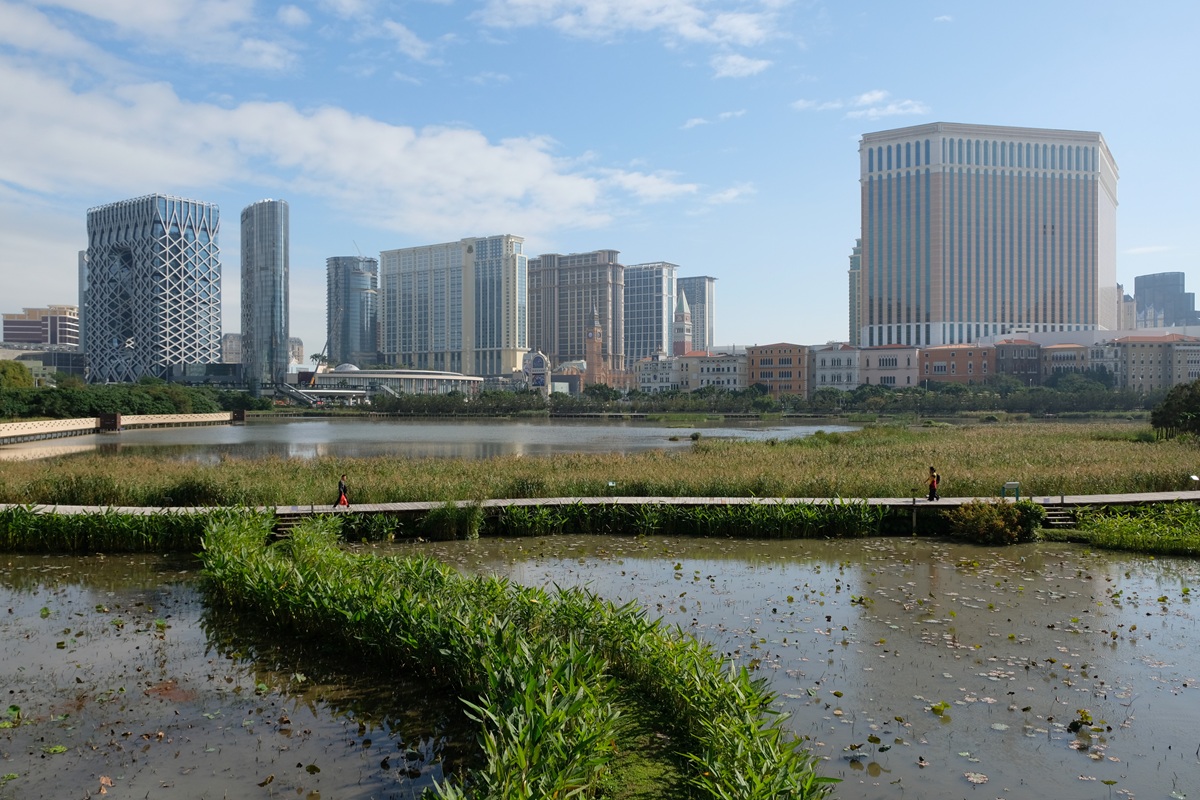
The view directly in front of the Taipa Houses
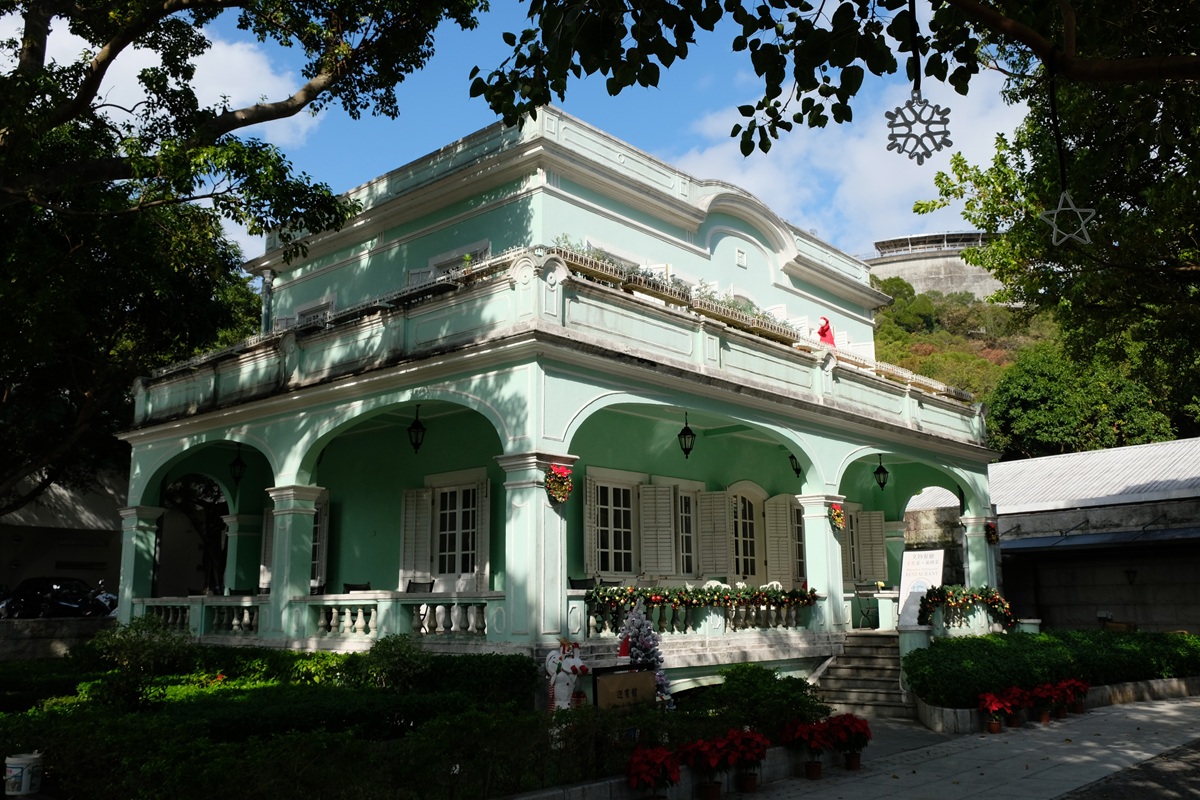
At the other end of the row is this house that now functions as a restaurant
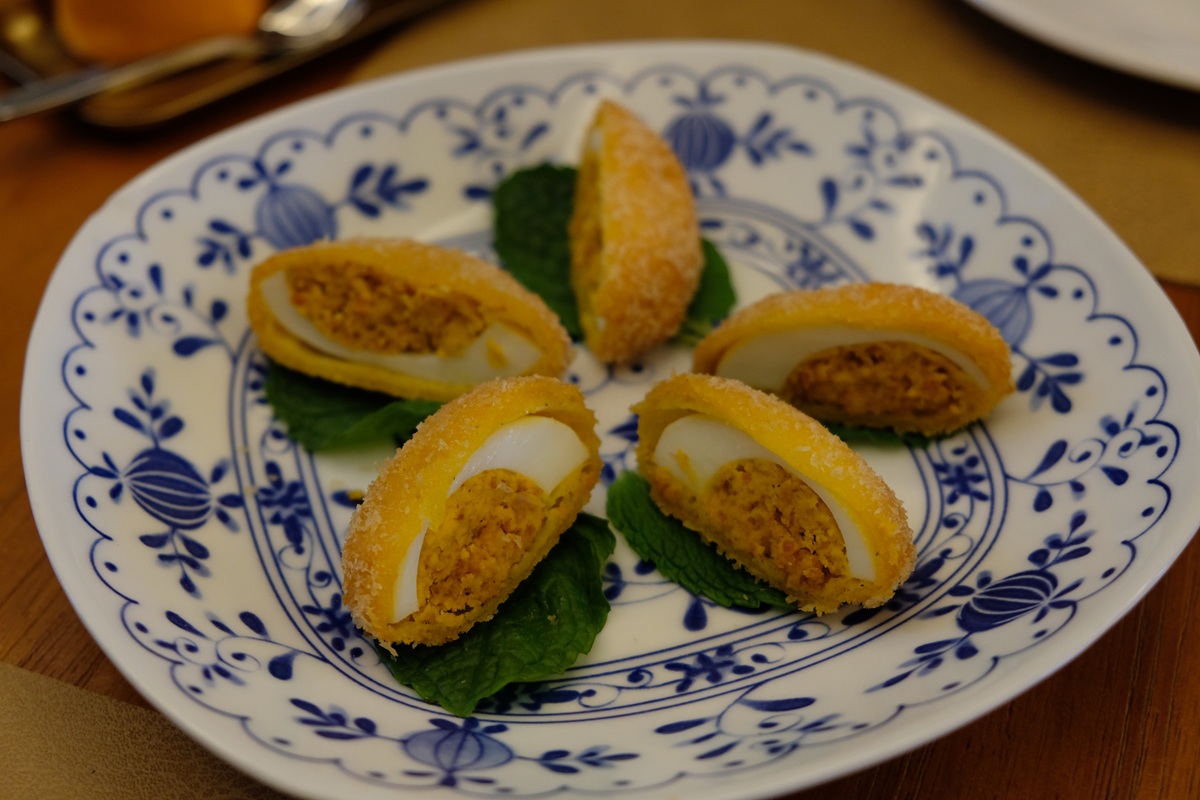
Stuffed eggs for starters at Casa Maquista
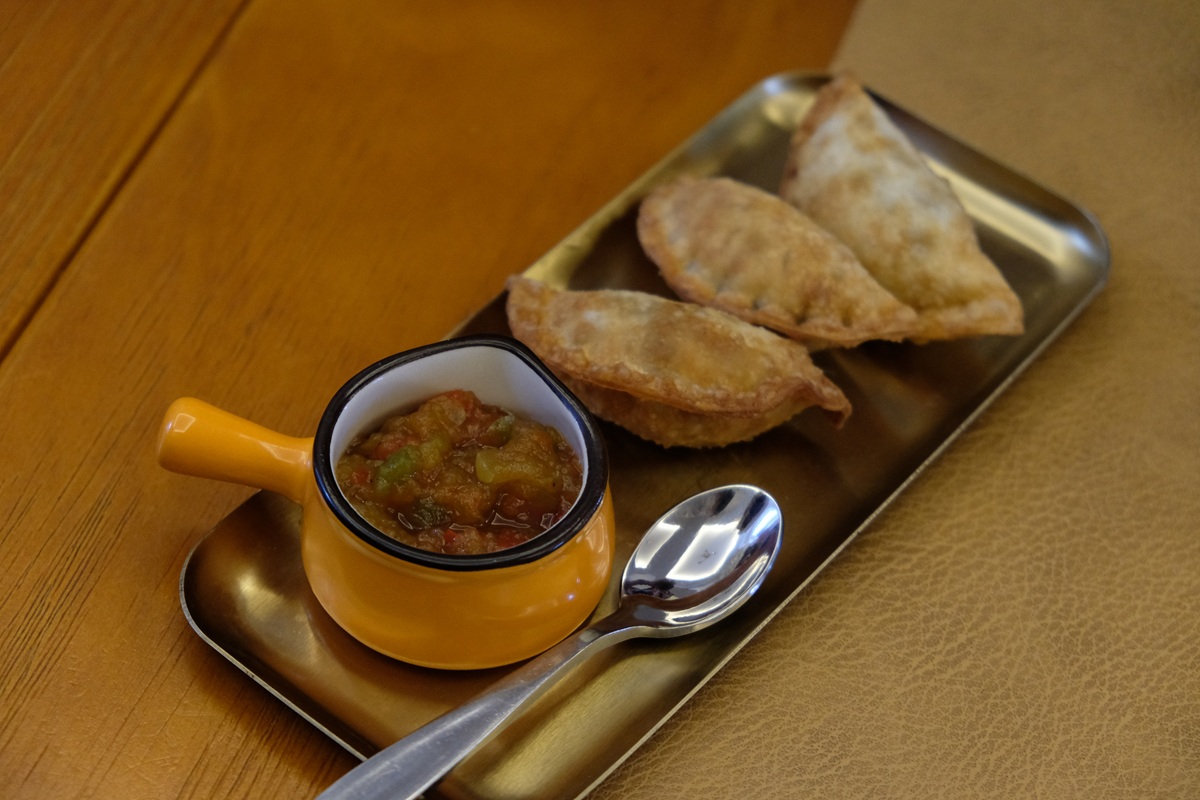
Chilicote, served with this tasty relish
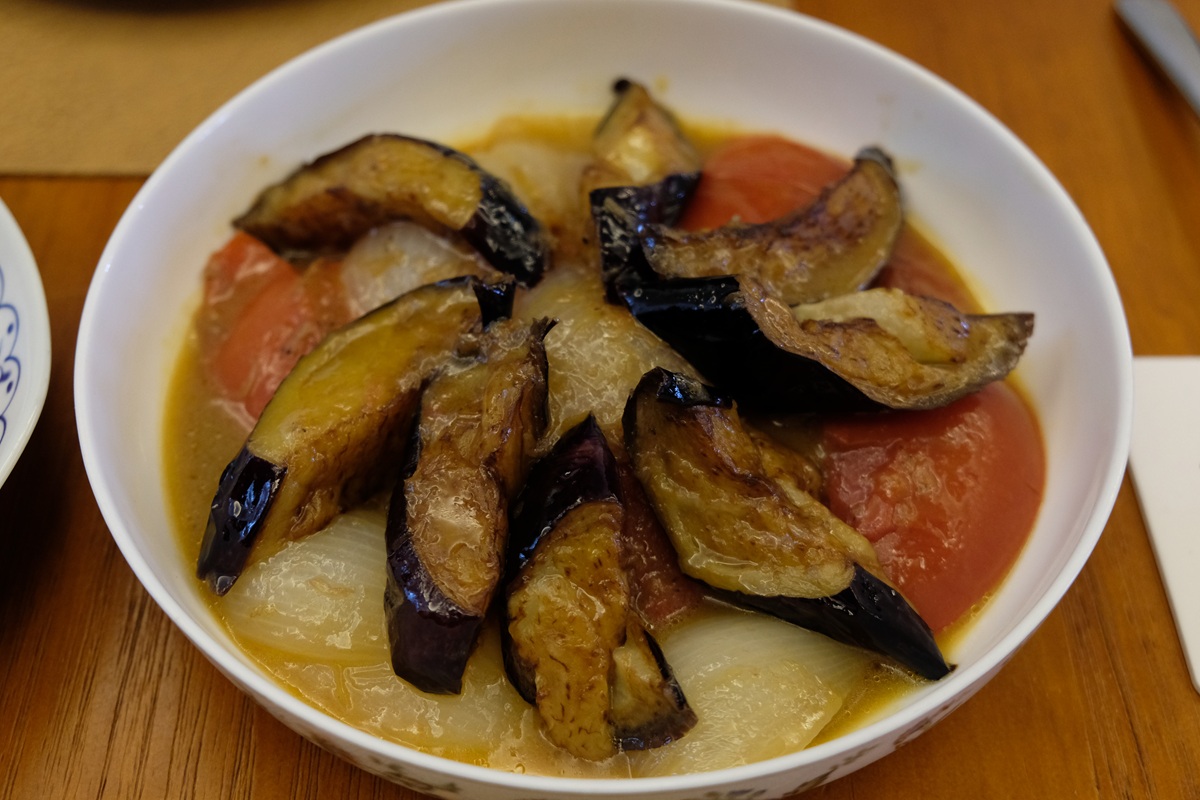
Despite its name, sambal de beringela does not have the heat of the sambal I’m used to having in Indonesia
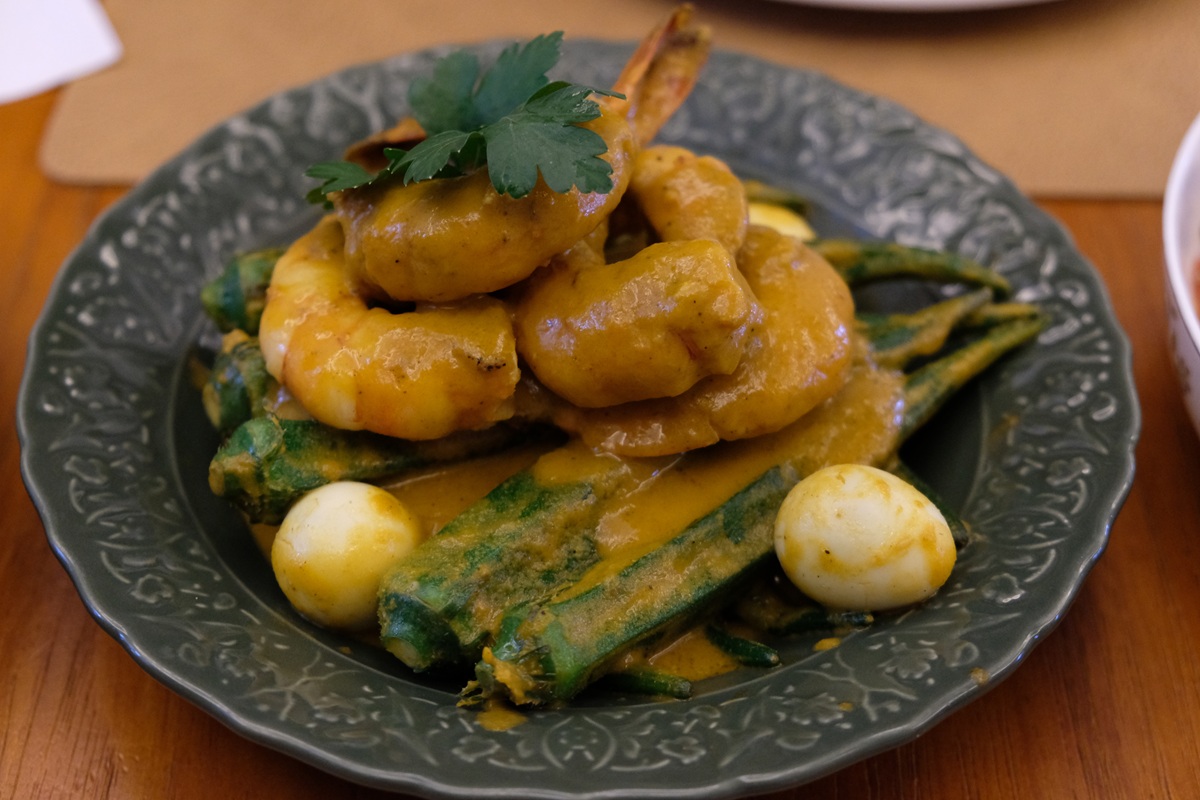
The caril de camarão com quiabos came with big, succulent prawns
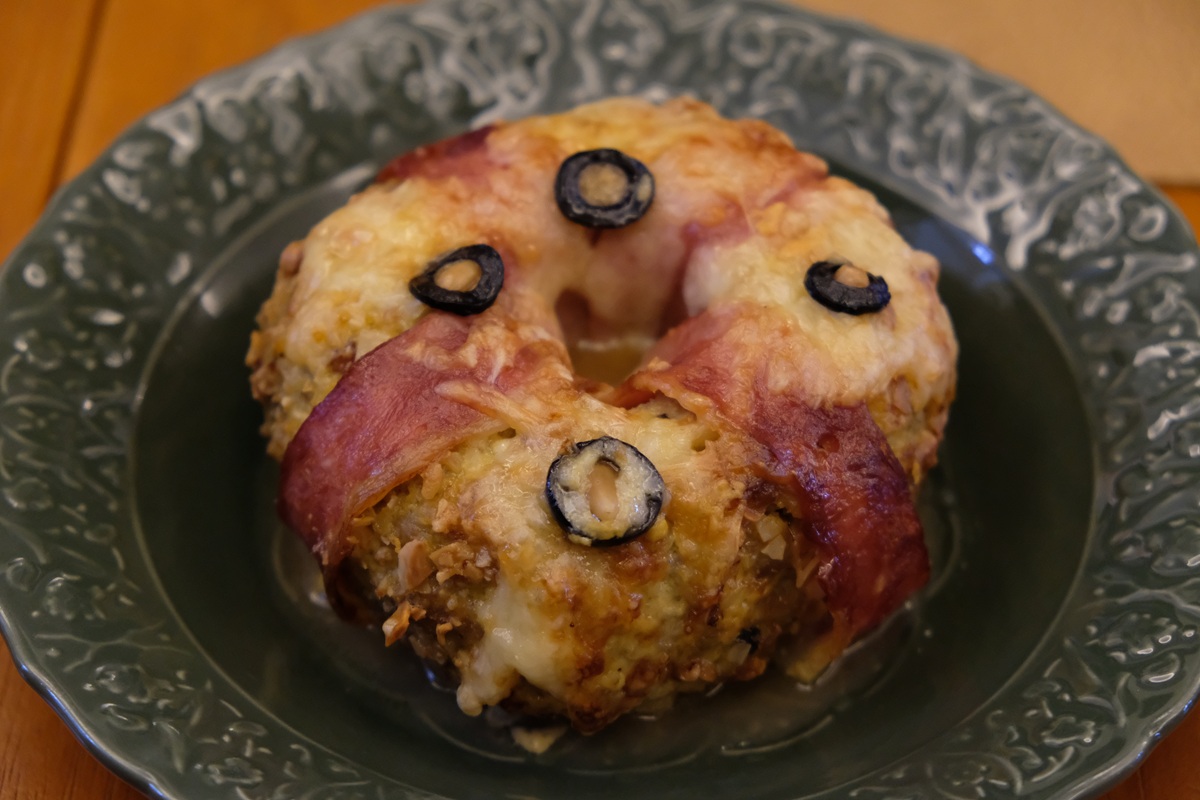
Capela tasted much more complex than the simple name would otherwise suggest
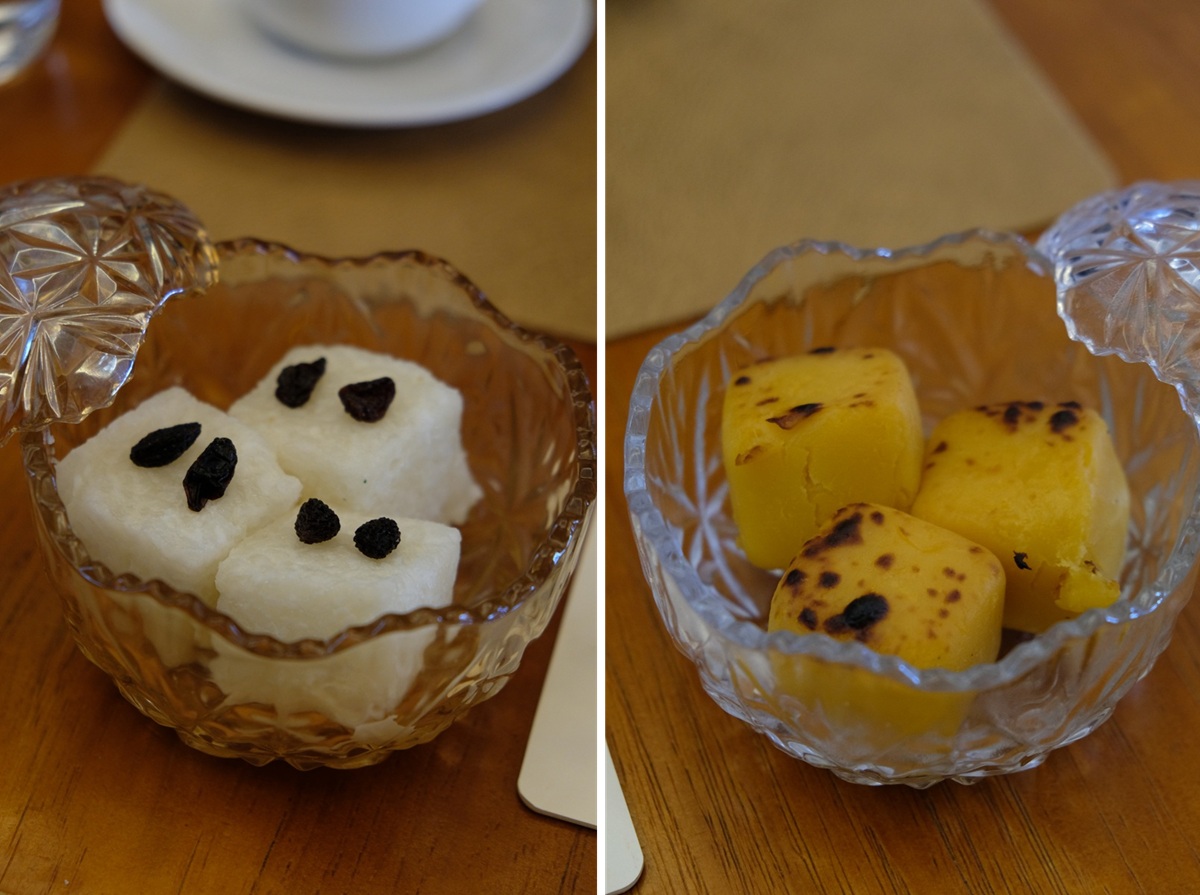
We got these free desserts at the end of our meal
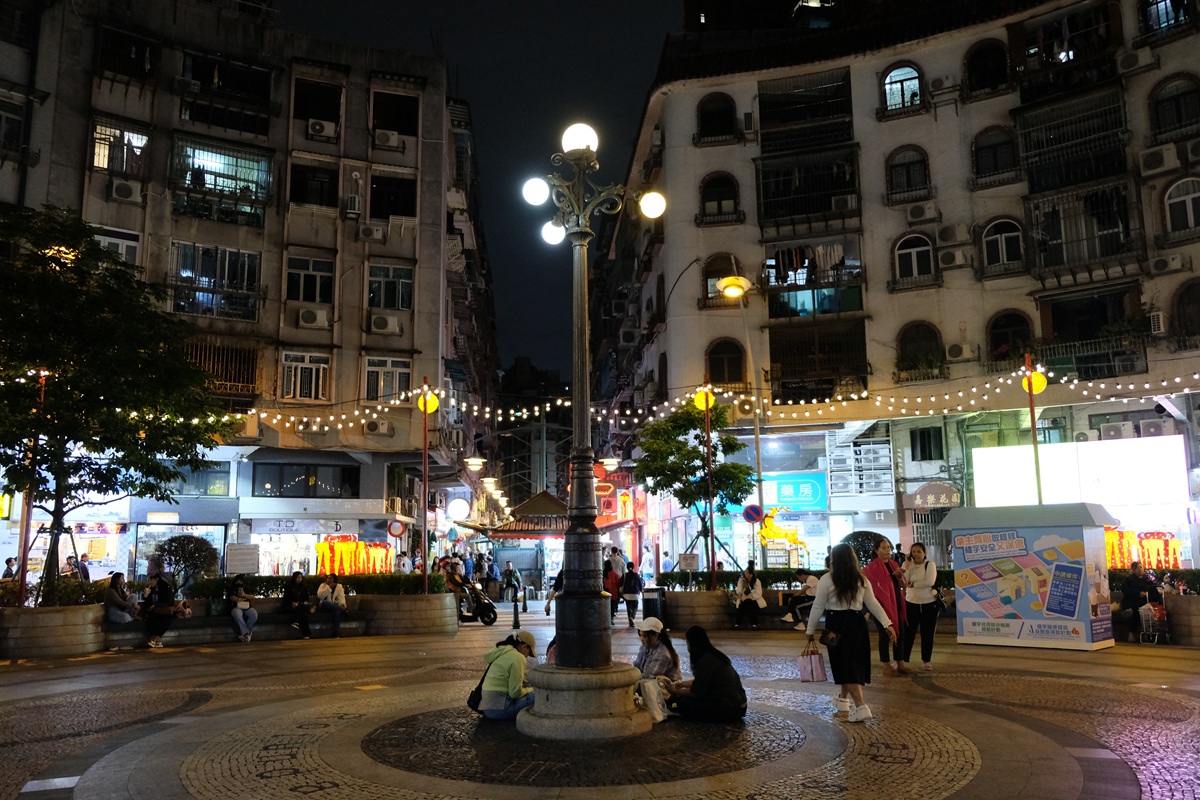
At the Three Lamps District
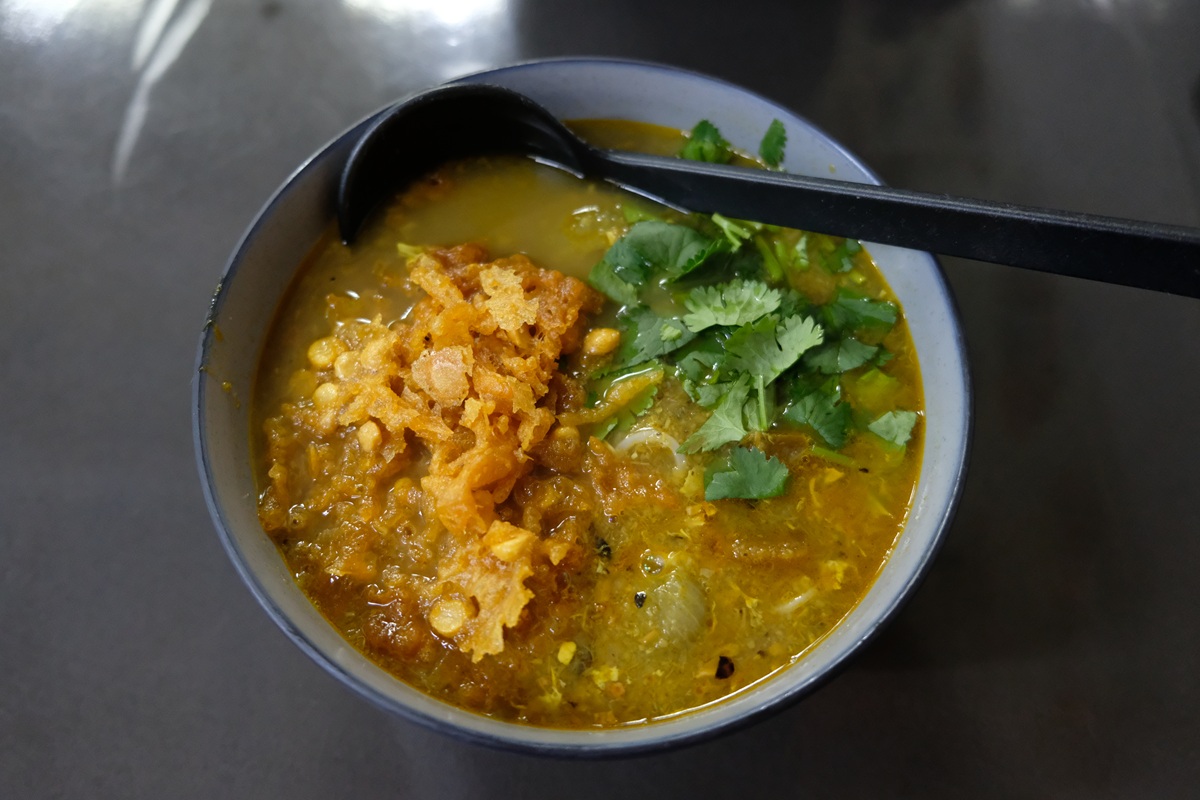
The first mohinga I had since my last trip to Myanmar in 2015
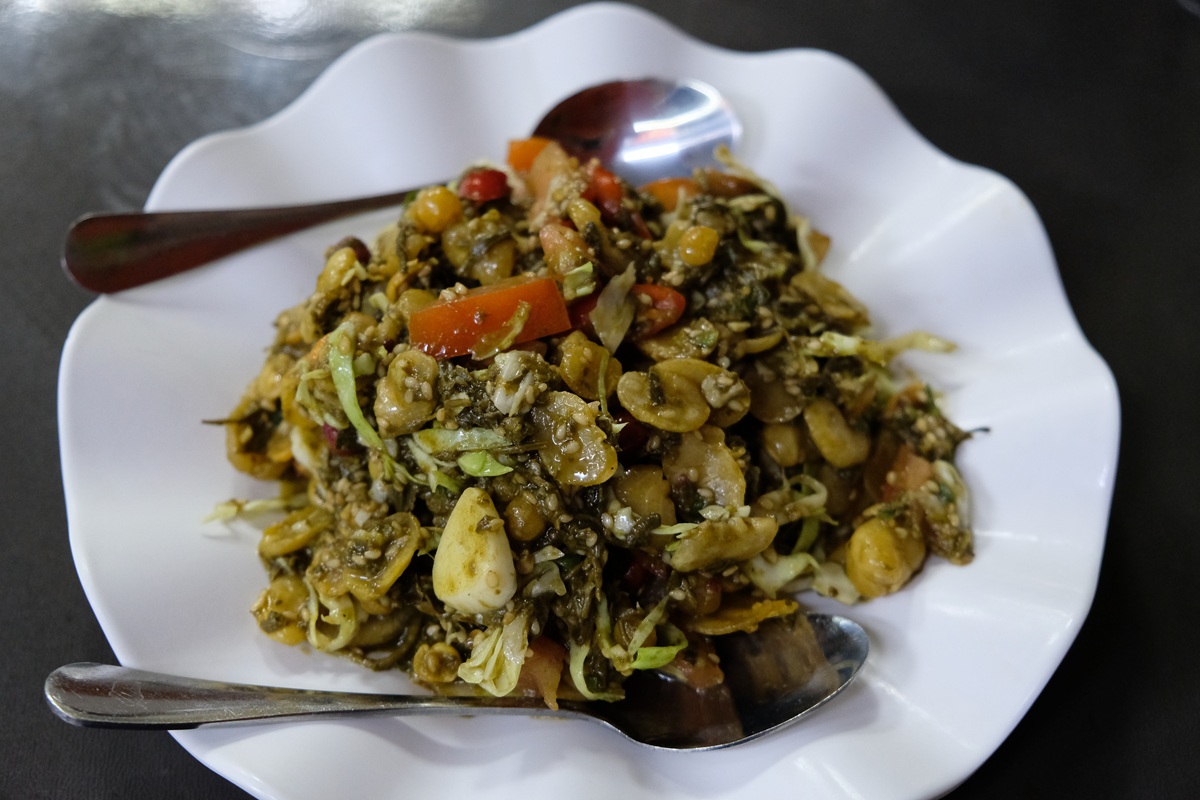
This lahpet thoke was unfortunately a bit too salty
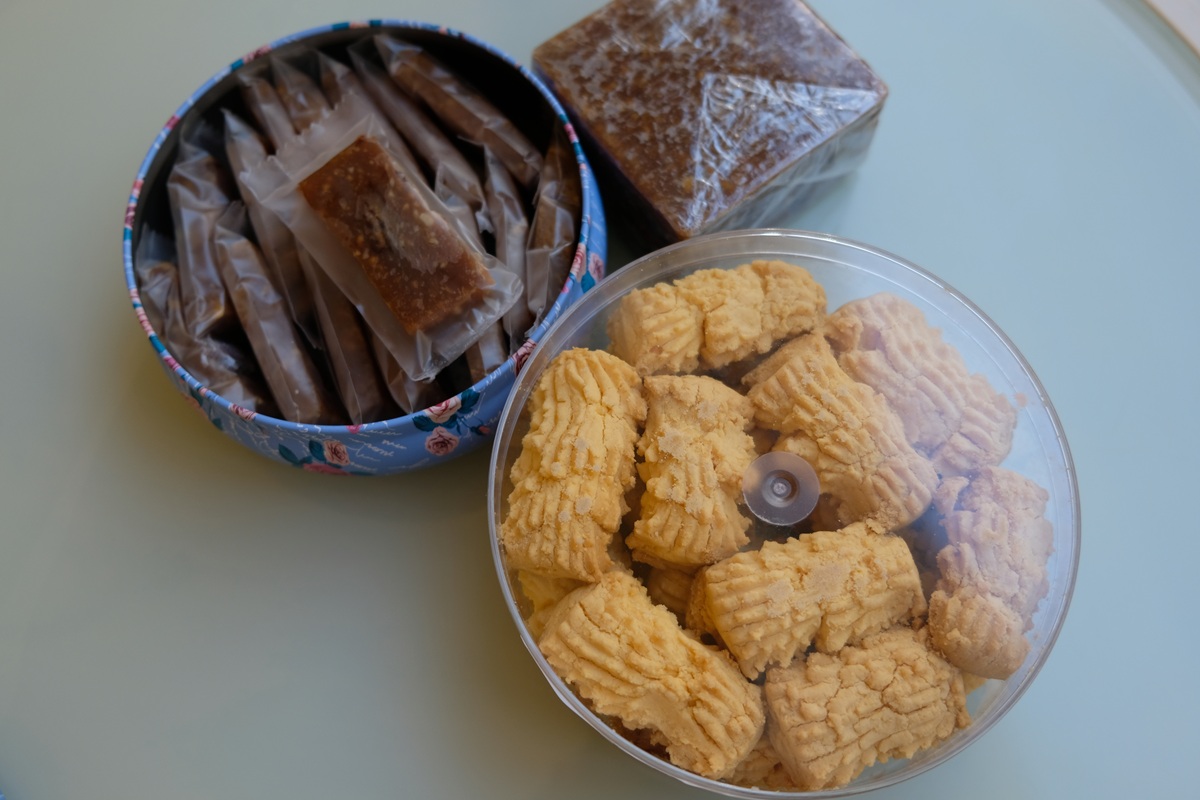
A sample of Macanese snacks: bicho-bicho (in the front) and alua (at the back)
*A month after this trip to Macau, we were delightfully surprised to find out that the first ever Burmese restaurant in Jakarta had just opened. We have dined there twice so far, and we agree that the food tasted authentic, thanks to the fact that the chef is actually from Myanmar.


I really enjoyed your in-depth travelogue on Macau – and relishing the sumptuous meals, photos of older buildings juxtaposed with the modern side of Macau and the cute shops, and learning more about the Portuguese influences.
When I last visited Hong Kong in 2008, we enjoyed a whirlwind daytrip to Macau – although taking the ferry. We did the more touristy things – including stopping by the Venetian, where my niece (who is elder) choreographed a show at the casino. And the hubby and I did the “edge walk” outside the top perimeter of Macau Tower.
I’m glad your post showed me all the interesting things that I missed! It’s really nice you have Hong Kong as an annual Christmas tradition.
LikeLiked by 1 person
Much appreciated, Ab. While it’s not that hard to find good Hong Kong/Cantonese dishes in many places across the globe, I don’t think the same thing can be said about Macanese dishes.
I wonder how Macau was like when you went; I picture it to be less touristy than it is today since back then there was no Instagram yet. How cool that your niece put up a performance at the Venetian just a year after it was opened to the public! Speaking of the “edge walk”, I don’t think I have the gut to do that.
If you ever go back to Macau, I highly recommend trying the local food. I think you would enjoy it.
LikeLiked by 1 person
I hope to try more of the local foods one day. I don’t even remember what he ate while we were there.
I remember it not being overly touristy or crowded. But I imagine a lot has changed in 18 years!
LikeLiked by 1 person
Well, now you know where to go to try Macanese dishes when you visit Macau again one day!
LikeLiked by 1 person
Despite having travelled so close to it (i.e. mainland China), I’ve actually never stepped foot in Macau, nor visited Hong Kong, for that matter. I had preconceived notions of Macau as being just one big casino, but it turns out that there’s a lot more to do there than just gambling! Although I knew of its Portuguese colonial history, I was still fascinated to learn just how much influence Portugal retained in Macau, from its architecture to its food– I even heard that some of the older Macanese still speak Portuguese (although it’s rapidly dying out)…I didn’t think I’d be interested in visiting Macau (only Hong Kong), but thanks to your post, I think I might have to stop by! Thanks for sharing, Bama 🙂
LikeLiked by 1 person
In that case, you know you will need at least a week when you visit Hong Kong and Macau, Rebecca. There are so many interesting things to see in both cities. And yes, there’s more to Macau than its gambling scene. Patuá is a Portuguese-based creole language with influences from Cantonese, Malay, and Sinhala (the language of the Sinhalese people of Sri Lanka). Unfortunately, as you said, there are not that many people who can speak it today. I hope it won’t go extinct anytime soon though.
LikeLiked by 1 person
Thanks for showcasing Macau.
So much history has past through the area.
The intermixing of different cultures has produced a great tourist hotspot.
I have not an opportunity to visit these places. So it so cool to have reveal a bit more of the world to us.
Many thanks
LikeLiked by 1 person
And thank you for sharing your thoughts about Macau. It really is a fascinating place to visit, thanks to its history.
LikeLike
You’re never going to tempt me anywhere for food, Bama (it’s simply not my thing- though I do eat, of course) but I was curious about Macau, with its Portuguese connection. With just an hour’s ferry ride I’d be sure to visit, if I ever made it to Hong Kong. Thanks for sharing xx
LikeLiked by 1 person
Ha! no worries, Jo. I think you would still enjoy Macau anyway since there are so many Portuguese colonial buildings to explore and other vestiges of the European power’s colonial period in this city to delve into. I hope you’ll get there (and Hong Kong) sooner than later!
LikeLiked by 1 person
All I remember of Macau was going there in 2018 in the throes of a historic hangover. It felt both odd and familiar to be seeing the sort of architecture I know from Portugal so far away from home.
Much is said of the ills of colonialism, and the Portuguese weren’t saints (much to the contrary, see what the rulers of Goa and Kerala said of them) but I must admit that their navigation feats were pioneering. To set sail on a glorified bathtub from Cascais, aiming for Asia, required guts I’ll never have (or desperation I hope never to feel).
Now I want a Pastel de Nata though!
Fabrizio
LikeLiked by 1 person
Gosh! A hangover in Macau sounds rough, given the city’s maze-like streets and hilly terrain. Speaking of the Portuguese, they really were brave to embark on voyages across the oceans, which is why I also have a deep respect and admiration toward the ancient Polynesians who reached far corners of the Pacific. If I had lived among them, they would’ve never picked me to join their explorations, for I would simply throw up too many times on Day 1 only.
I’m really curious about how the Macanese pastry compares to the one in Portugal. If only we could swap places temporarily, so it wouldn’t be too far for us to try them — you in Macau and I in Lisbon.
LikeLike
Well, I haven’t tried the pastel in Macau, but the HK egg tarts aren’t that different from those in Lisbon, at least according to my uneducated palate. The egg tarts served by Cathay Pacific, to name one name, are kinda sorta the same as those you can find in a Carrefour in Lisbon.
(No offense intended to any Lusitan reading 😀😀)
LikeLiked by 1 person
Oh I was pleasantly surprised by how good the egg tart was on the Cathay Pacific flight from Hong Kong to Toronto. I guess I just need to go to Lisbon then (and maybe try the pastel de nata from Carrefour as well 😀).
LikeLike
You’d love Lisbon!
LikeLiked by 1 person
Thank you for the memory trip down the Macau way – more than 20 years ago for me. I have a soft spot for Hong Kong too. 😊
LikeLiked by 1 person
It’s funny to think that we not only have a shared interest in ancient sites, but we also have a soft spot for Hong Kong.
LikeLike
My visits to Macau were pretty superficial. Great to read your very in depth description of this small city.
LikeLiked by 1 person
For such a small place, Macau does have many things to offer. Its density also means that a lot of its interesting sights are located relatively close to one another.
LikeLiked by 1 person
So good to read all of these traditional places in Macau. I’ve never been, mostly because I thought it was only casinos. We often have a long stop over in Hong Kong on our trips to Asia, so maybe next time we’ll stop for a few days to visit Macau. I’ve been to Goa and Malacca, and loved the food, but I also would love to have the Burmese fermented tea leaf salad again. Like you, I haven’t had it since our trip there almost 10 years ago. Thanks for the great ideas in Macau. Maggie
LikeLiked by 1 person
Even among my Indonesian friends, Macau is better known for its gambling scene. If you liked the food in Goa and Malacca, I think you would also enjoy Macanese dishes. Burmese fermented tea leaf salad is so unique, isn’t it? I hope you’ll get to Macau soon, Maggie!
LikeLike
What a great write up of your trip to Macau – it’s really nice to see beyond the casinos. It’s so interesting to see the Colonial buildings against a backdrop of those high rise apartments. The food scene also sounds (and looks) delicious.
LikeLiked by 1 person
Thank you, Hannah. Those casinos are massive, but they make an interesting backdrop against the city’s heritage buildings. When I had those Macanese dishes, I could definitely tasted Southeast Asian influences in some of them, which was very fascinating.
LikeLike
I enjoyed learning about Macau from your blog, Bama. Prior to this, I only knew about Macau’s casinos and it being a former Portuguese colony. I am really surprised that it’s smaller than San Marino! I have actually been to the latter. Portuguese influence on an East Asian country is a unique blend indeed. I have never tried Burmese or Macanese cuisine; I suppose both are hard to come by here in Poland.
LikeLiked by 1 person
For sure, those casinos are Macau’s main economic engine. But the government has been trying to diversify and promote the city’s cultural sights and dining scene to attract visitors like me who are not interested in gambling. Speaking of the food, I guess there’s a better chance of finding Macanese dishes in Lisbon.
LikeLiked by 1 person
I really need to consider Macau (and Hong Kong) for a future trip!!! No excuse for me since I’m not that far! Macau looks wonderful and all that food looks amazing!
LikeLiked by 1 person
You should go to both places, Anna, since Cathay Pacific flies to Perth from their home base in Hong Kong.
LikeLiked by 1 person
Yes for sure! Have been thinking about that Cathay Pacific to HK flight for a while now, but always forget there is Macau too! Your post was a friendly reminder!
LikeLiked by 1 person
I’d be happy to help if you need recommendations of places to see in Hong Kong!
LikeLiked by 1 person
I’ve never been to Macau, but the colonial architecture is certainly appealing; the fact that it’s one of the most densely populated territories appeals to me less though.
LikeLiked by 1 person
Despite the city’s rapid development, thankfully there are still a lot of beautiful Portuguese colonial buildings that survive to this day. Macau is dense, however it didn’t always feel that way whenever I went there.
LikeLiked by 1 person
It’s always neat to return to a place you’ve been to previously to visit familiar sites, as well as others you might not have had time to explore. I love how you stayed in the same accommodation from when you were there a decade ago! Glad to hear you had a wonderful trip and that the food was fantastic. Your pictures of the architecture and dishes you sampled are all beautiful.
LikeLiked by 1 person
Although the hotel was a little dated, it was nice indeed to return to this side of Macau. At times, it felt as if I was visiting the city for the first time. But the Macanese egg tart tasted just as good as how I remembered it from my previous trips. Thanks Linda.
LikeLiked by 1 person
Never been. Hope to go. I loved Hong Kong. Wish I had added Macau to my itinerary too, after reading your post. 🙂
LikeLiked by 1 person
I hope you visit Hong Kong again one day. And when you do, you know Macau is just a short ferry ride away.
LikeLike
What a wonderfully diverse set of kitchens you sampled in this visit! My first, and last, taste of Burmese food was in 2015, when I travelled in Myanmar. Interesting that you can find it in Macau along with much else.
LikeLiked by 1 person
I think you would enjoy Macanese food as much as we did, and maybe you can taste traces of influence from Goa in some of the dishes. You should also add Burmese food in the list of things to have in Macau then, when you decide to visit it (and Hong Kong) one day.
LikeLiked by 1 person
Thanks for the virtual visit of Macau; a place we have never been but probably should add to our list as it looks very interesting and different. As for the pastel de nata, we never forget to have plenty when we visit Portuguese regions. We had quite a few of them while visiting the Azores. They are simply delicious. (Suzanne)
LikeLiked by 1 person
Macau is a place where different things are juxtaposed against each other, which makes it very interesting to explore. I keep hearing good things about pastel de nata. So, I have a feeling when I go to Portugal one day I will probably have it quite often.
LikeLike
Not only the population of Macau escaped my mind – nearly all of the facts here did! Like others, I have always associated Macau with gambling, but your visit and post are great reminders that places are rarely one-dimensional. In addition to its proximity to Hong Kong (which you know I am eager to visit), the Portuguese roots would appeal to me as well. My eyes locked onto the wavy-patterned cobblestone sidewalks and the pastel de nata immediately!
LikeLiked by 1 person
For sure, gambling is still huge in Macau. Taxes from gambling-related activities even make up 75% of the government revenue. But its Portuguese colonial buildings, old churches, and traditional cuisine are definitely worth exploring. When you eventually plan to visit Hong Kong, you really should also add Macau to your itinerary, Lex.
LikeLiked by 1 person
It’s unfortunate the fermented tea leaf salad we tried at that Burmese restaurant was overly salty — at least their mohinga lived up to expectations! I don’t recall why we didn’t step inside the churches of St. Lawrence, St. Joseph, or St. Augustine when we visited Macau at the end of 2015. And Taipa Village was a completely new experience for me too; before Christmas last year I’d only ever glimpsed it from afar while staying at one of those high-rise hotels in Cotai. Hopefully we’ll have the chance to revisit Macau again in the near future. There are still places (including some beautiful little parks/gardens and a hilltop fort) on the peninsula that neither of us have been to yet!
LikeLiked by 1 person
While we’ve satisfied our craving for mohinga, a good lahpet thoke somehow still eludes us, including at that newish restaurant in Jakarta. I don’t remember either why we didn’t go inside those churches in 2015. Maybe because we wanted to see other parts of the city as well so we thought we might not have enough time. I would certainly say yes to going back to Macau — and having Macanese egg tarts again!
LikeLiked by 1 person