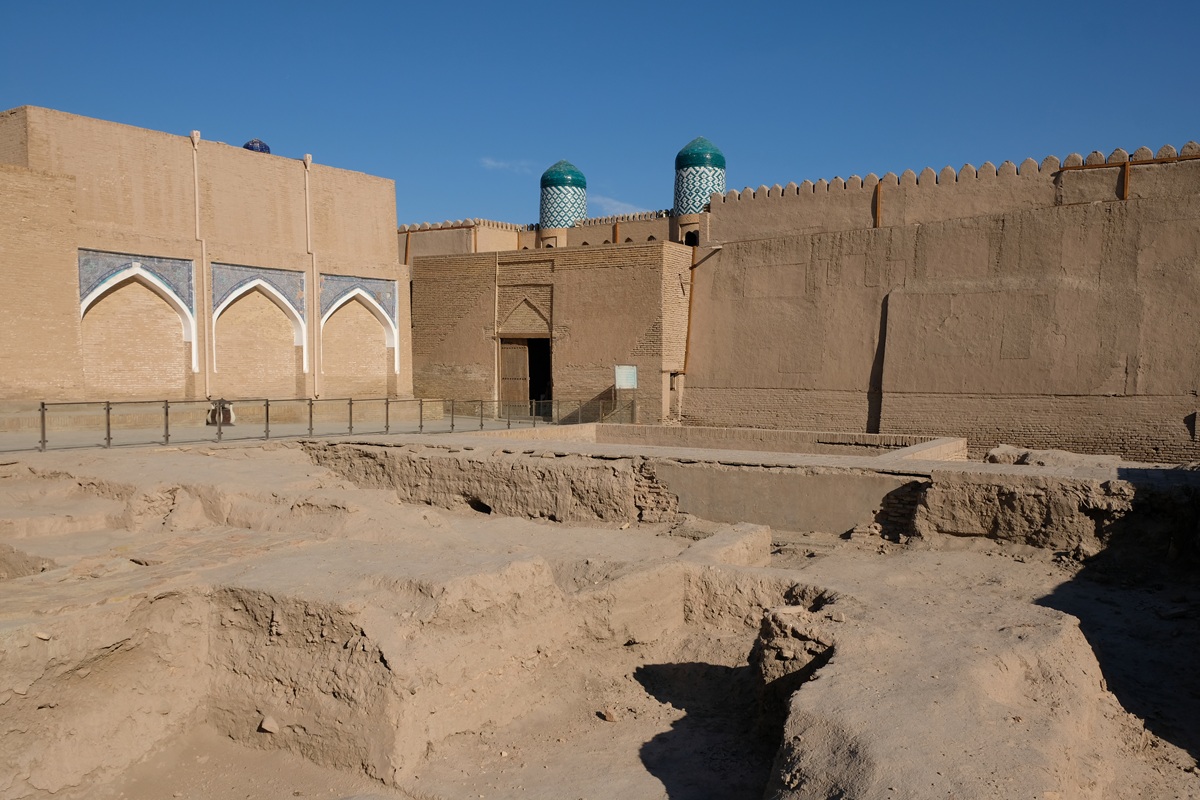
Entering the Konya Ark, which at this point looks rather unassuming
From a bird’s eye perspective, Itchan Kala – the old walled city of Khiva – looked absolutely amazing. Minarets, madrasahs, green and turquoise domes, and sand-colored structures stretched as far as the eyes could see. However, one has to leave the sky and return to the ground to properly appreciate the intricate details of the centuries-old monuments within the defensive walls, for they were all built to impress the mortals.
Just like most rulers throughout human history, the one who controlled Khiva in the 17th century CE commissioned an imposing building from which he ruled his domain, because power has to be projected, doesn’t it? A large citadel within Itchan Kala was subsequently constructed over a 12th-century structure which would then become what we know today as the Konya Ark (also spelled the Kuhna Ark). Situated on the western side of the walled city, this compound is easily distinguishable by the two-story Ak Sheikh Bobo watchtower that rises above other buildings within its vicinity – which proved quite handy as a landmark in navigating the narrow streets and alleys of Itchan Kala that could at times feel like a maze.
We stood before the gate to the citadel, and as we stepped inside it was evident that this compound was created as a city within a city. Its current appearance is largely attributed to multiple restorations carried out in the 19th century following its destruction in the 18th century at the hands of Afsharid Iran led by Nader Shah, the shah (Persian for “king”) of Iran at that time. Not only did he conquer the Khanate of Khiva, but he also defeated the once-mighty Mughal army and entered Delhi, the capital of the Mughal Empire. Among the treasures he plundered from the Mughals was the legendary Koh-i-Noor, one of the largest cut diamonds in the world. After changing hands multiple times, it now adorns the Queen Mother’s Crown, a property of the British monarchy.
As we wandered deeper into the compound, we came across a courtyard where a beautiful iwan or ayvan (the front entrance or veranda of a Central Asian traditional building) welcomed visitors who probably did not expect to stumble upon such a magnificent sight. Known as Kurnysh Khan, the early 19th-century structure served as the residence of the khans, as well as a reception hall for foreign dignitaries. And as is the norm for a palace, it is richly adorned both inside and outside, where blue majolica tiles with floral and geometric patterns fill every inch of the façade. From this site, we went further inside the compound and found the staircase to reach the highest point of the Konya Ark. Interestingly, the foundation of a previous structure was exposed on a wall next to the steps, giving visitors an idea of the multiple stages of construction that resulted in the citadel we see today.
The Ak Sheikh Bobo (also spelled Akshih Bobo) tower, which is the tallest structure within the citadel, stood before us. And as we went further up, it became clear why the past rulers of Khiva chose to erect this watchtower at this exact spot: it afforded a commanding view of the old city sans the acrophobia-inducing height of the Islam Khodja Minaret. However, there hasn’t been any khan standing at this place since the abolition of the Khanate of Khiva in 1920, replaced by the short-lived Khorezm People’s Soviet Republic before the region’s full absorption into the Soviet Union four years later. Today, only tourists and soon-to-wed locals flock to this lofty corner of Itchan Kala, lured by the promise of a magnificent view of the walled city.
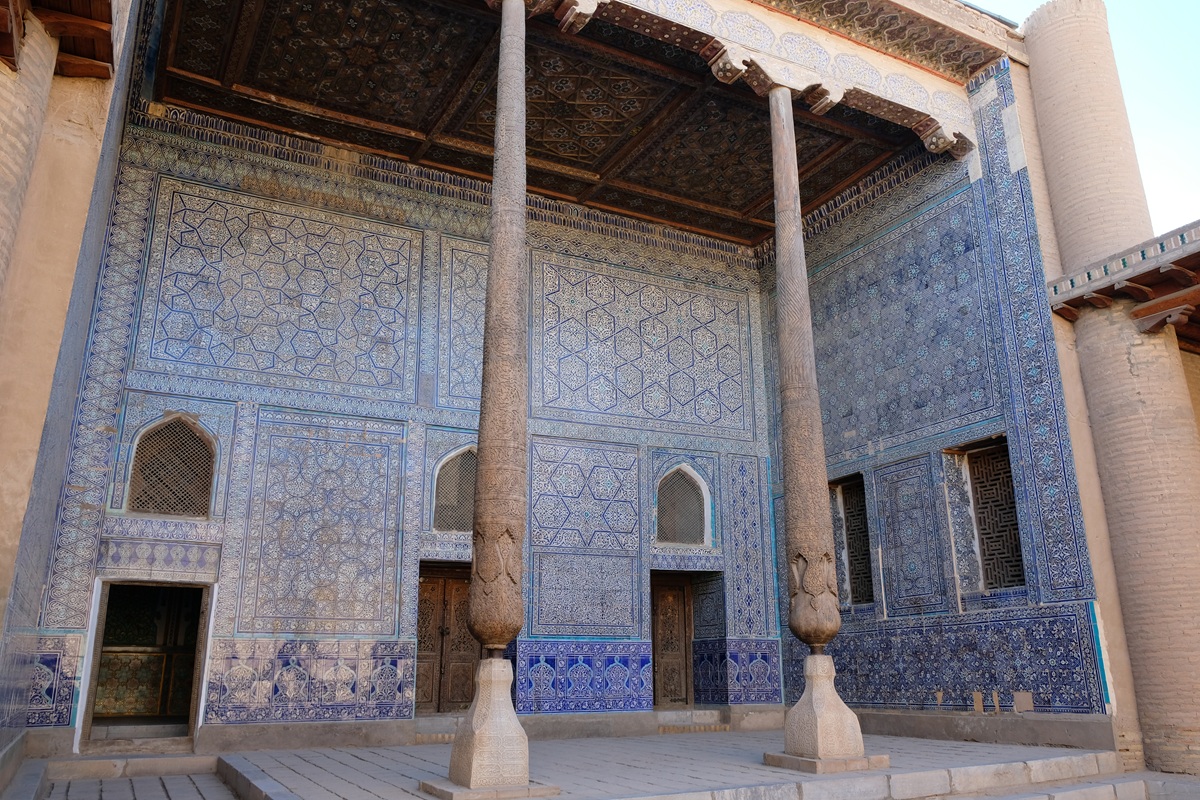
Kurnysh Khan, a part of the Konya Ark that served as the residence of the khans
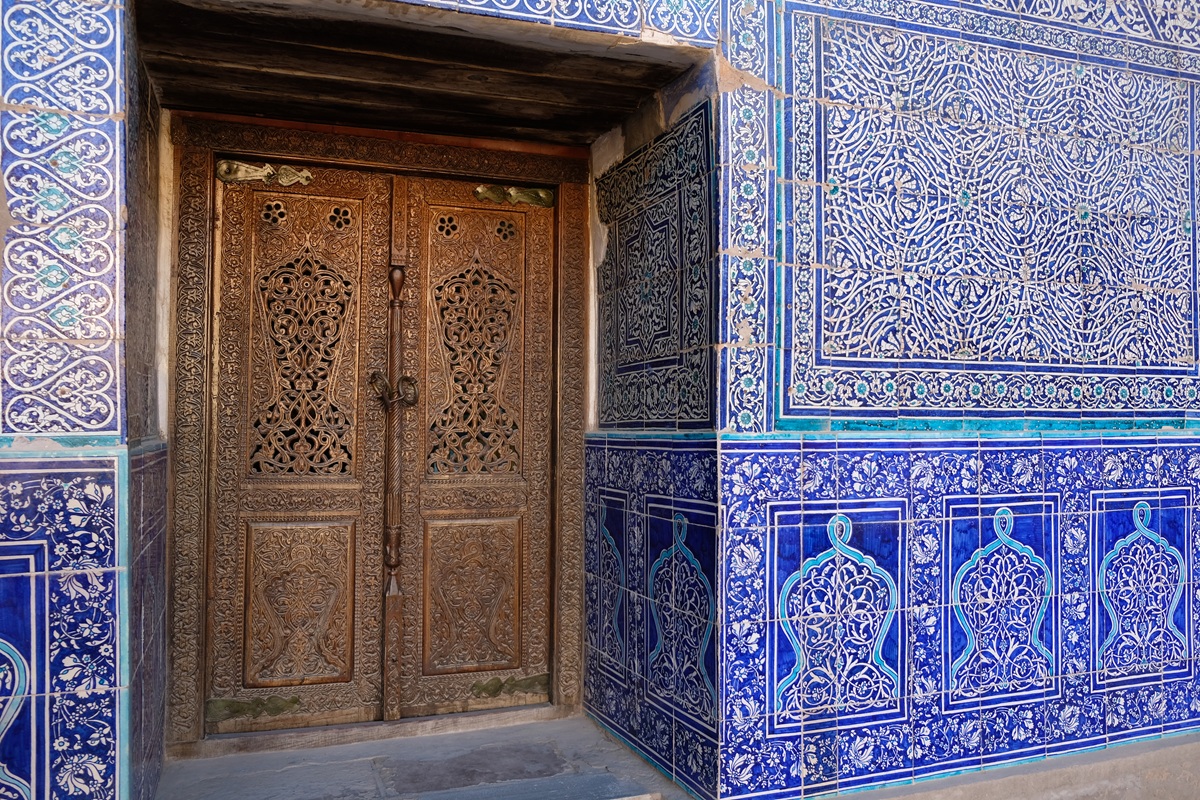
Intricate majolica tiles and ornately decorated doors at Kurnysh Khan
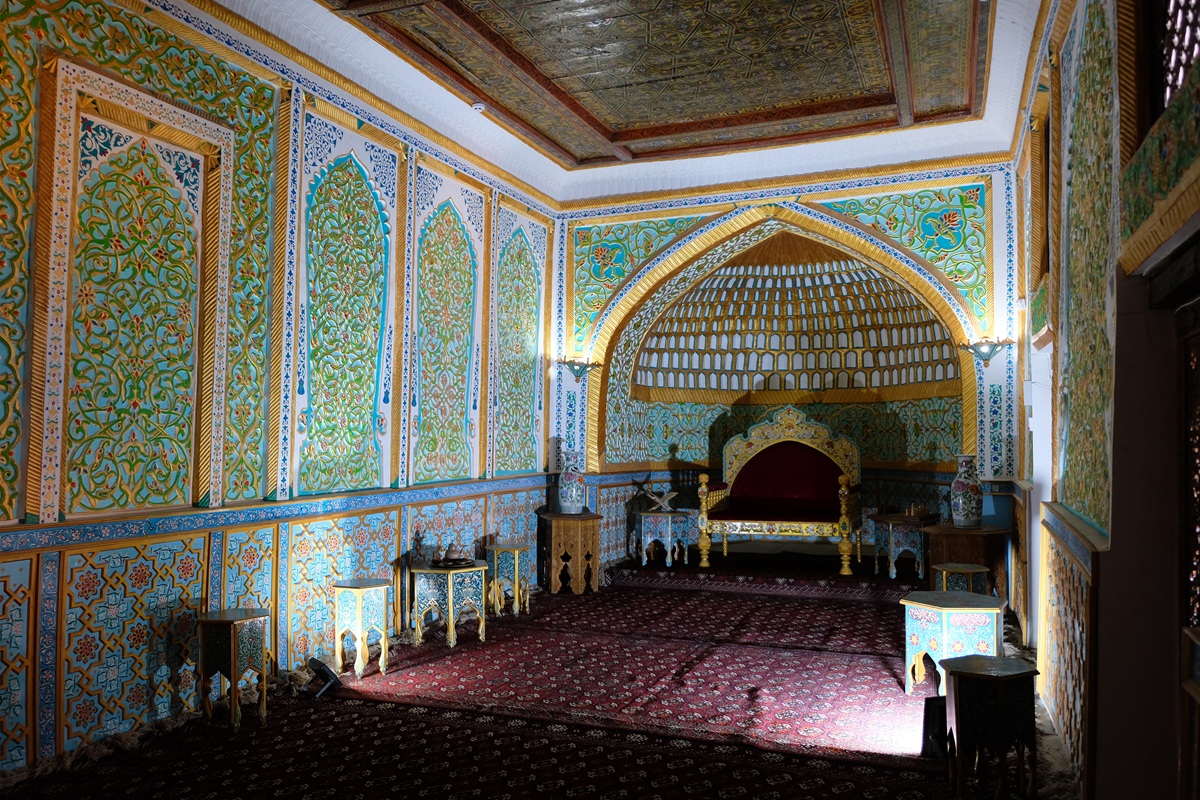
Inside Kurnysh Khan
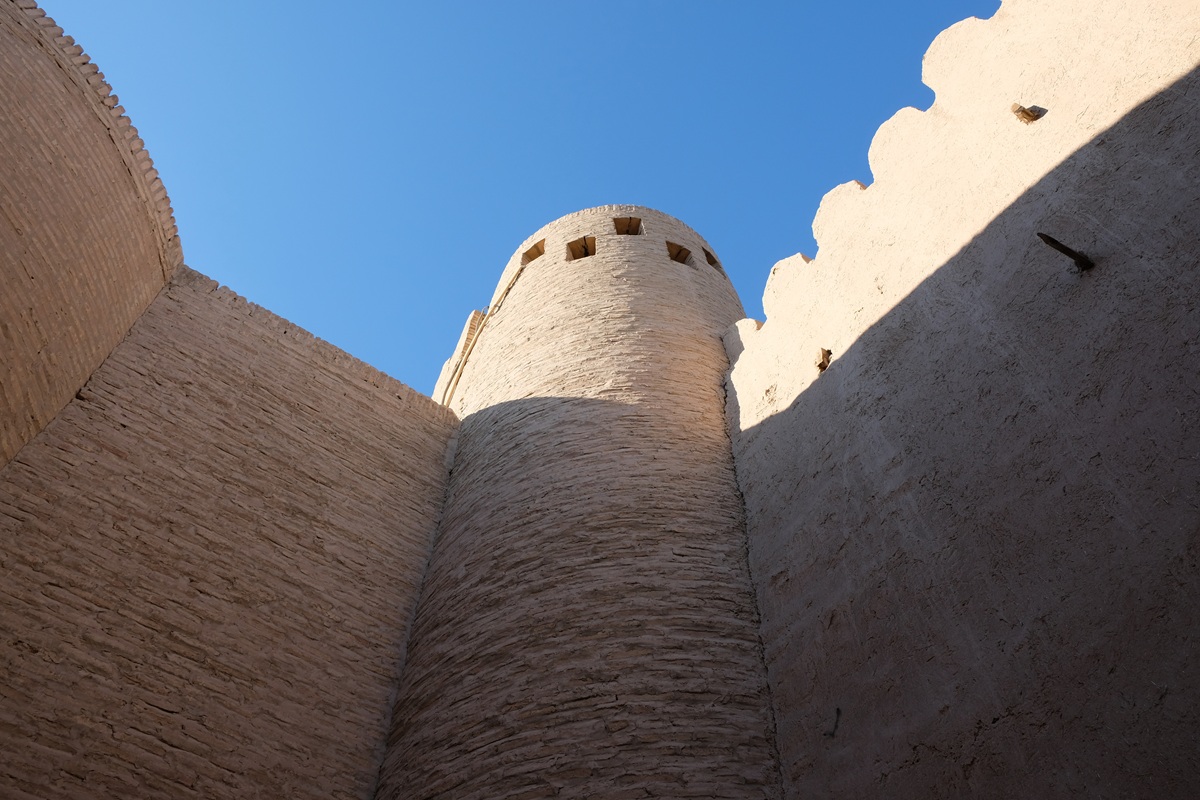
Going up to reach the highest point of the Konya Ark
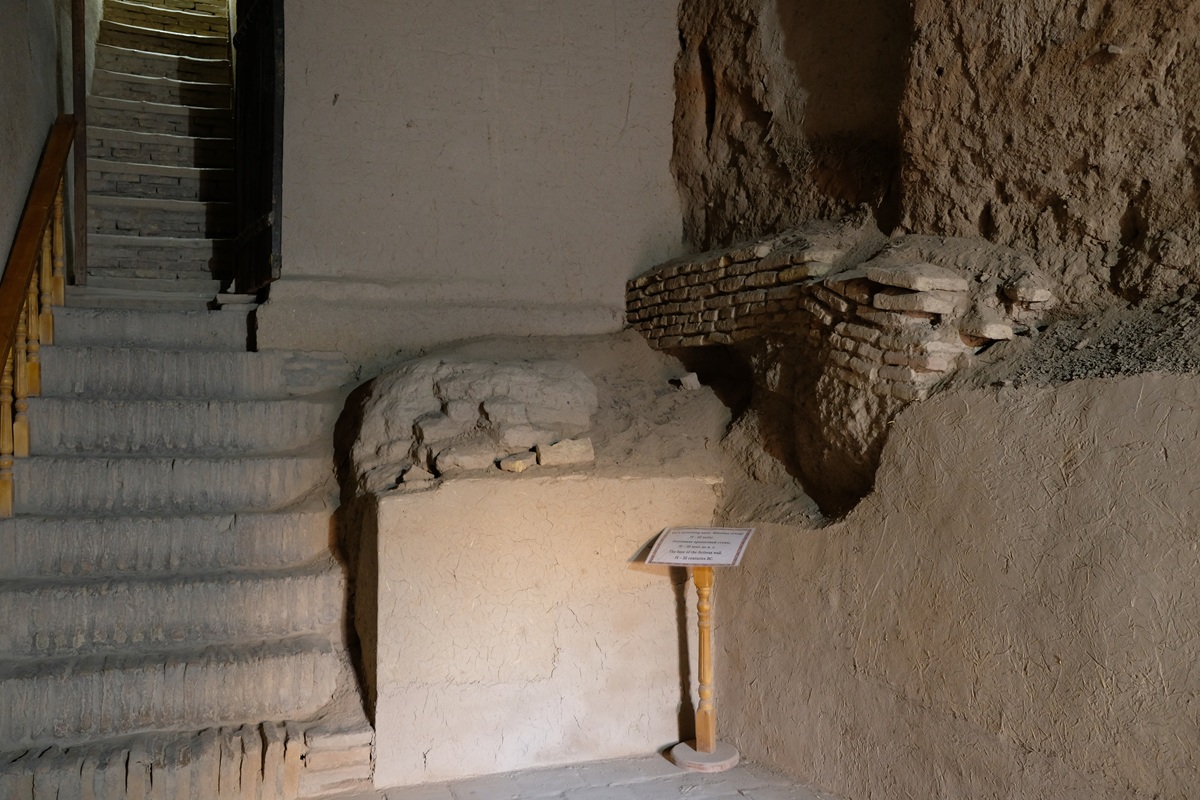
It was very interesting to see sections from the previous structure, like these exposed bricks to the right
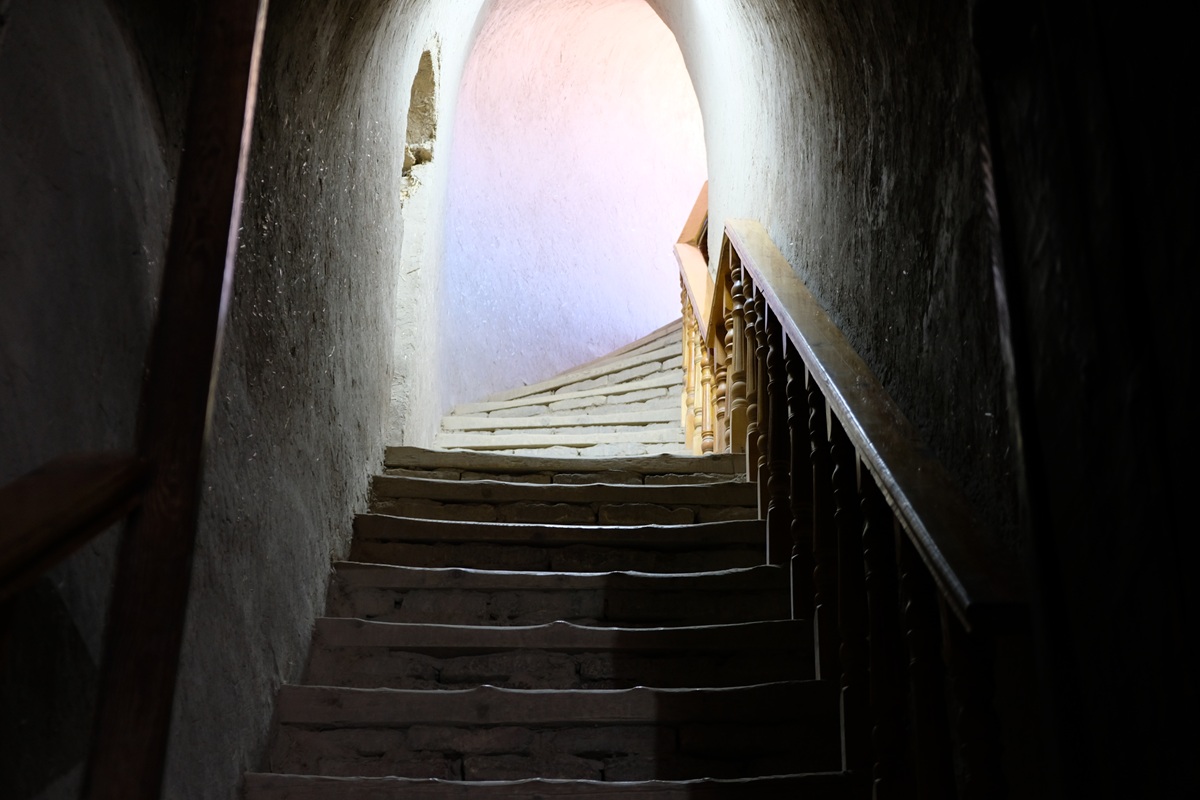
The staircase to the Ak Sheikh Bobo
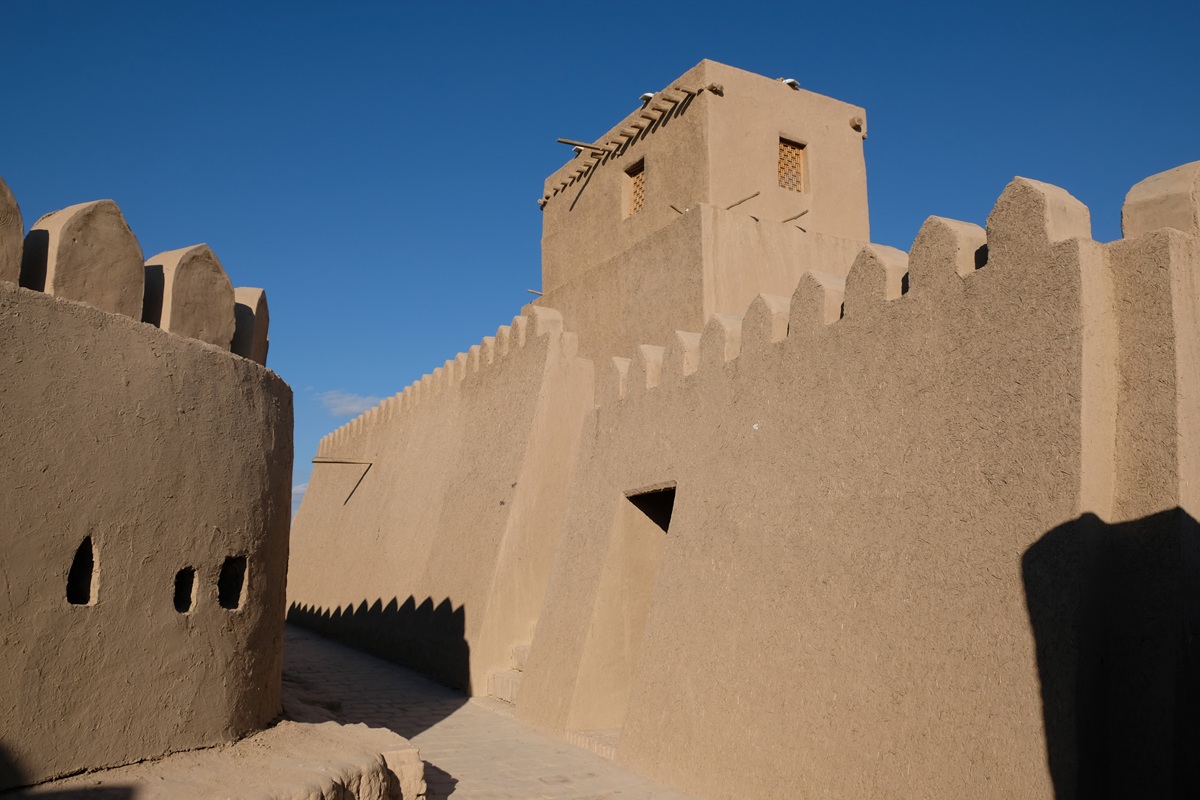
The corridor behind the citadel’s watchtower
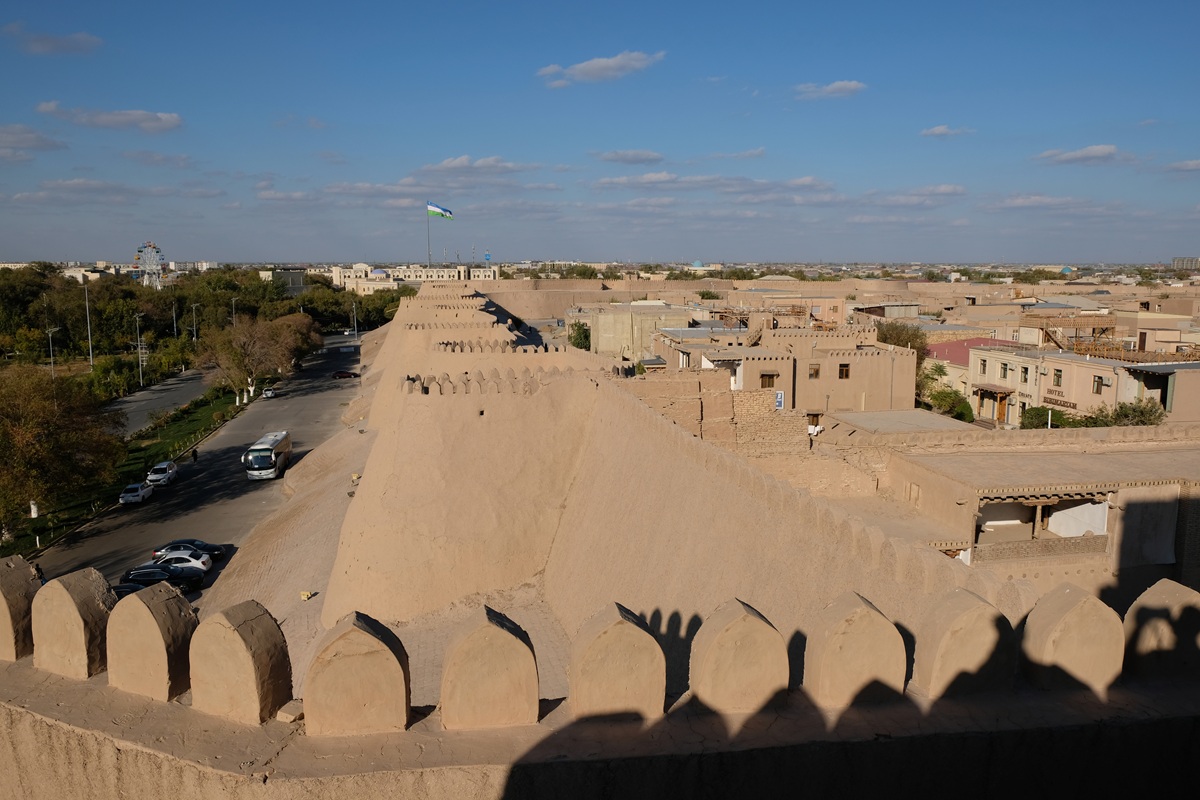
The western side of Itchan Kala’s defensive walls
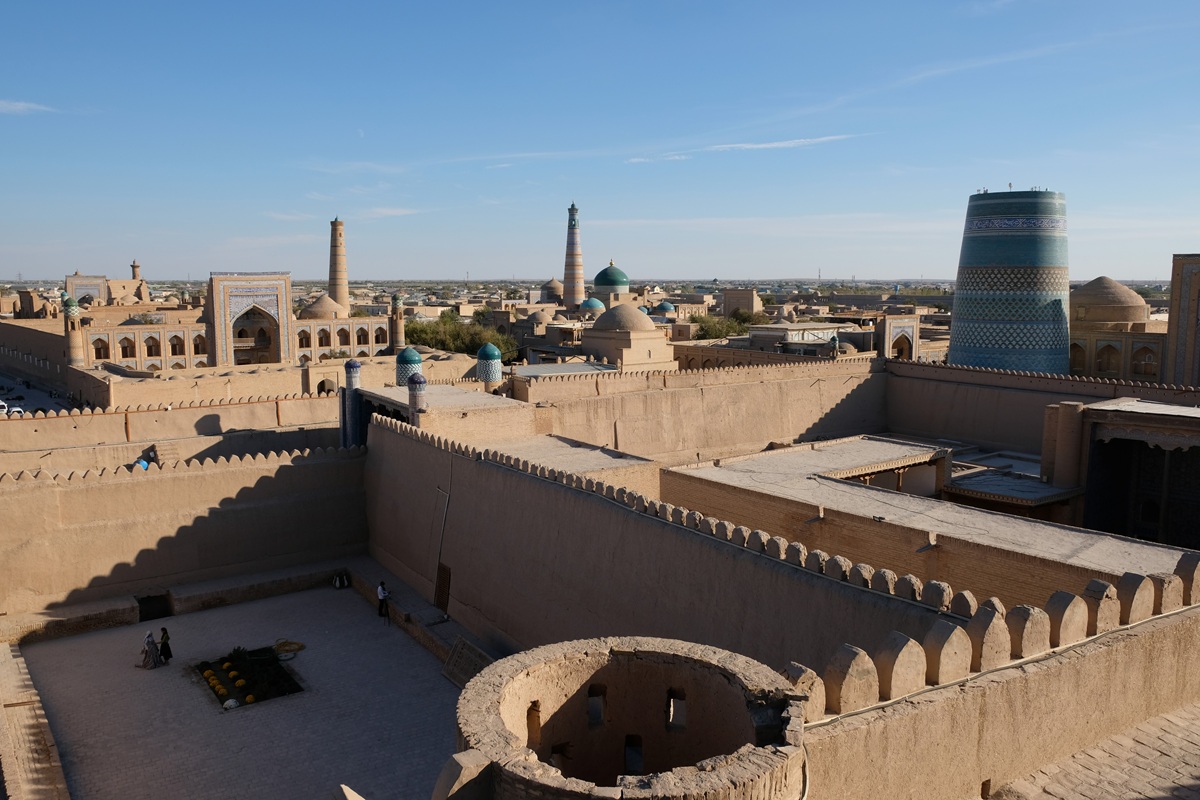
A beautiful view of the skyline of Itchan Kala
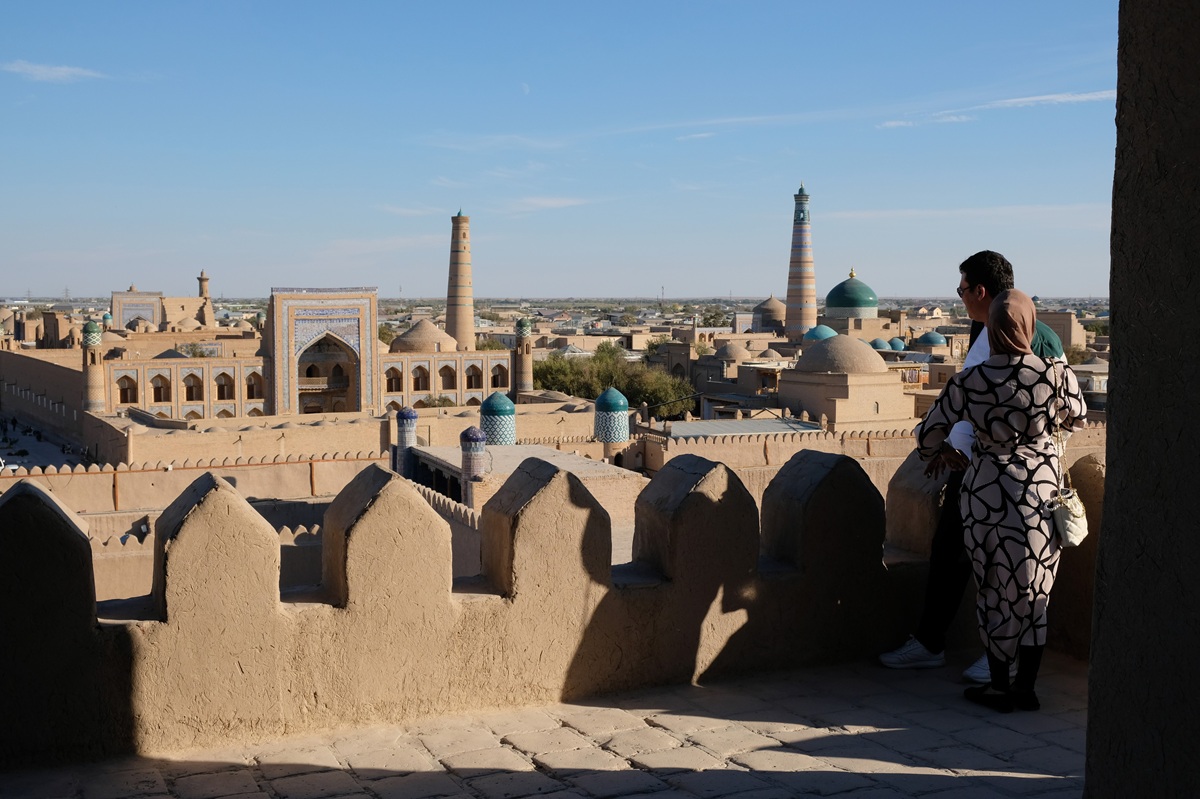
Clearly we were not the only ones who were enamored by this sight
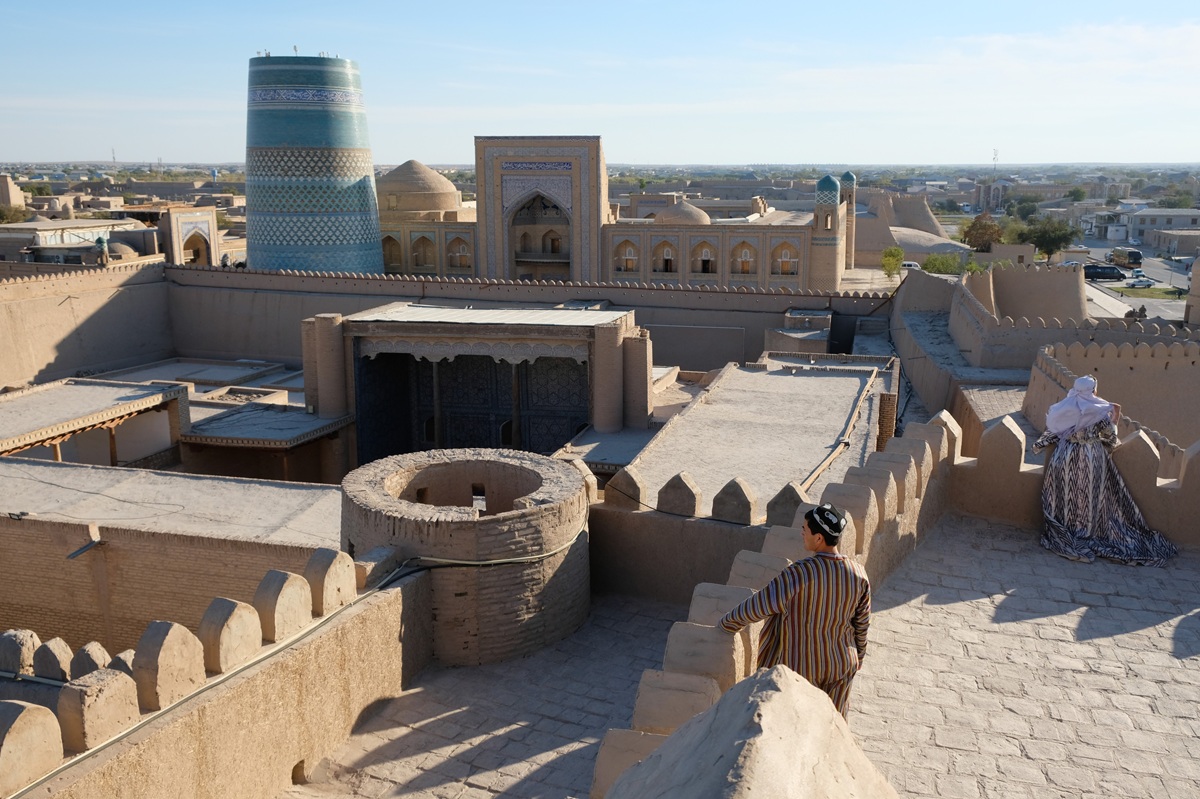
This couple were having their pre-wedding photos taken
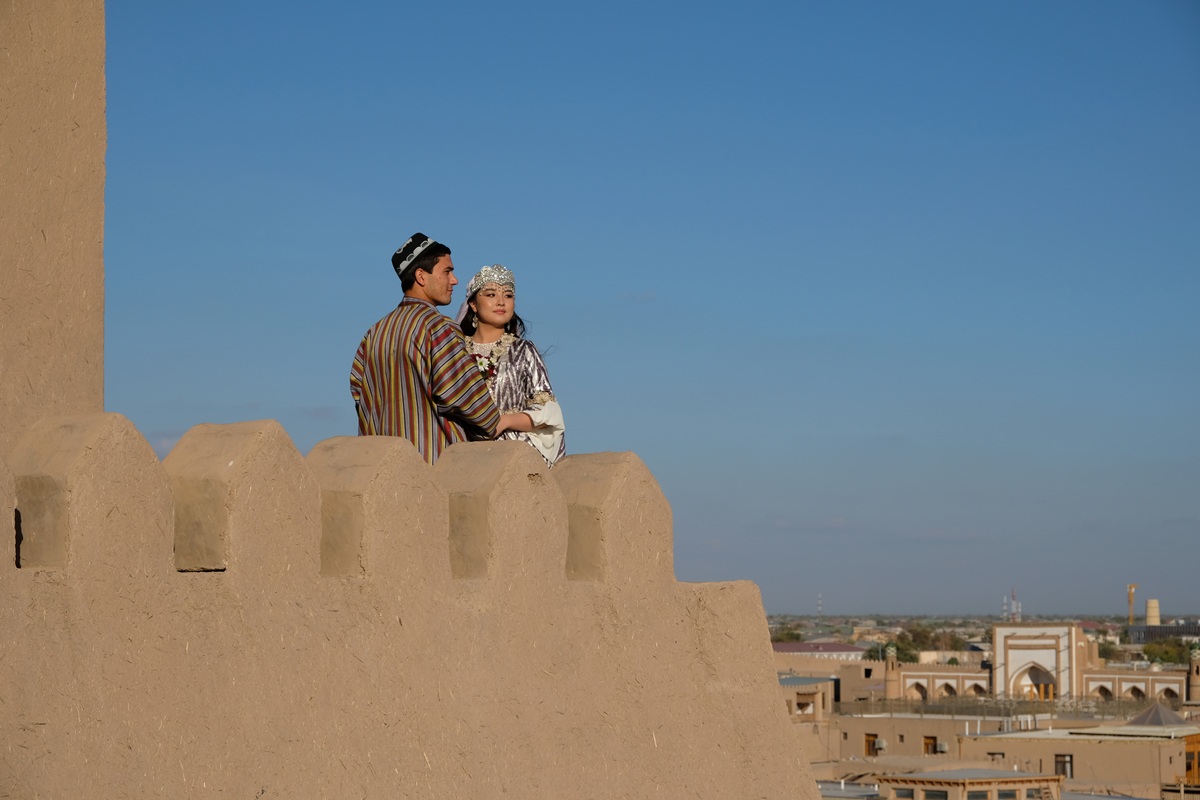
Facing the bright future, together
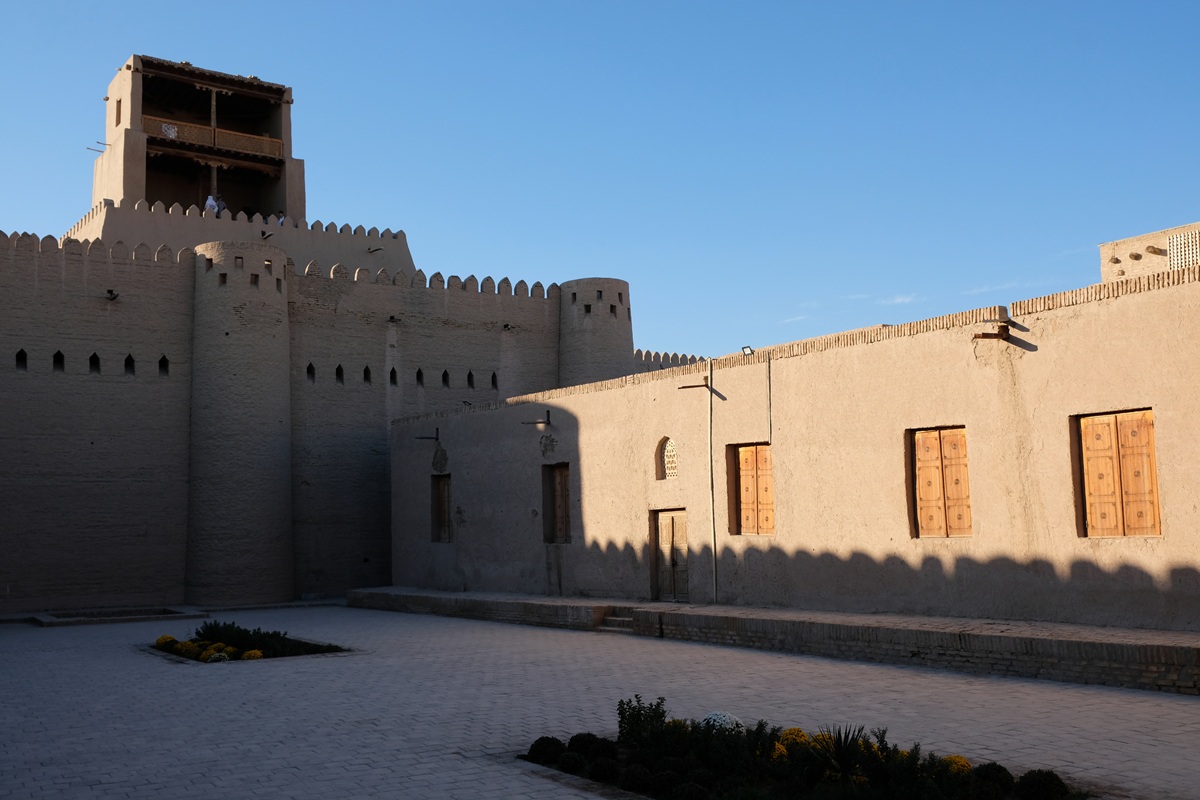
The watchtower of Ak Sheikh Bobo overlooks the citadel
The Konya Ark might have been a fitting place for the khans of Khiva, but the khanate wasn’t always ruled from there. On the other side of Itchan Kala near the Polvon Gate, another palace was commissioned in the first half of the 19th century. Called the Toshhovli Palace, this royal abode was equipped with hundreds of rooms and three courtyards serving different purposes. After showing our tickets to the ladies at the counter, we were directed to follow a pathway that we later realized was part of the maze of corridors crisscrossing the compound.
First, we were presented with the Arz Khaouli (also spelled Arz-Khovli) that once functioned as the ceremonial court of justice. All sides of the courtyard were covered by blue majolica tiles done in a style not too dissimilar with what we saw at Kurnysh Khan of the Konya Ark. The iwan was impressive, and I can’t stress enough the importance of looking up when you visit any historical monuments in Uzbekistan, for what sits above your head is usually just as magnificent as what lies before your eyes.
We moved on to the southeastern corner of the palace and found ourselves in the middle of another elaborately-decorated courtyard known as the Ichrat Khaouli (also spelled Ishrat-Khovli). In the past, it was used for private receptions and entertainment with rooms for guests located on the second floor of the buildings surrounding the space. A yurt was also provided to receive invitees from the many nomadic tribes across Central Asia. Today, the intricate majolica tiles, exquisite wood carvings, and beautiful ceiling would certainly keep any photographer busy taking photos of the incredible details.
Behind the grandeur of the palace, however, were hundreds and probably thousands of slaves who were forced to finish the construction as fast as the khan wished. This was largely attributed to Khiva’s position as a major hub of the slave trade in Central Asia from the 17th to the 19th centuries, supplying other khanates in the region with enslaved individuals mainly from Persia and Russia. Fortunately, this once lucrative business has now been abolished.
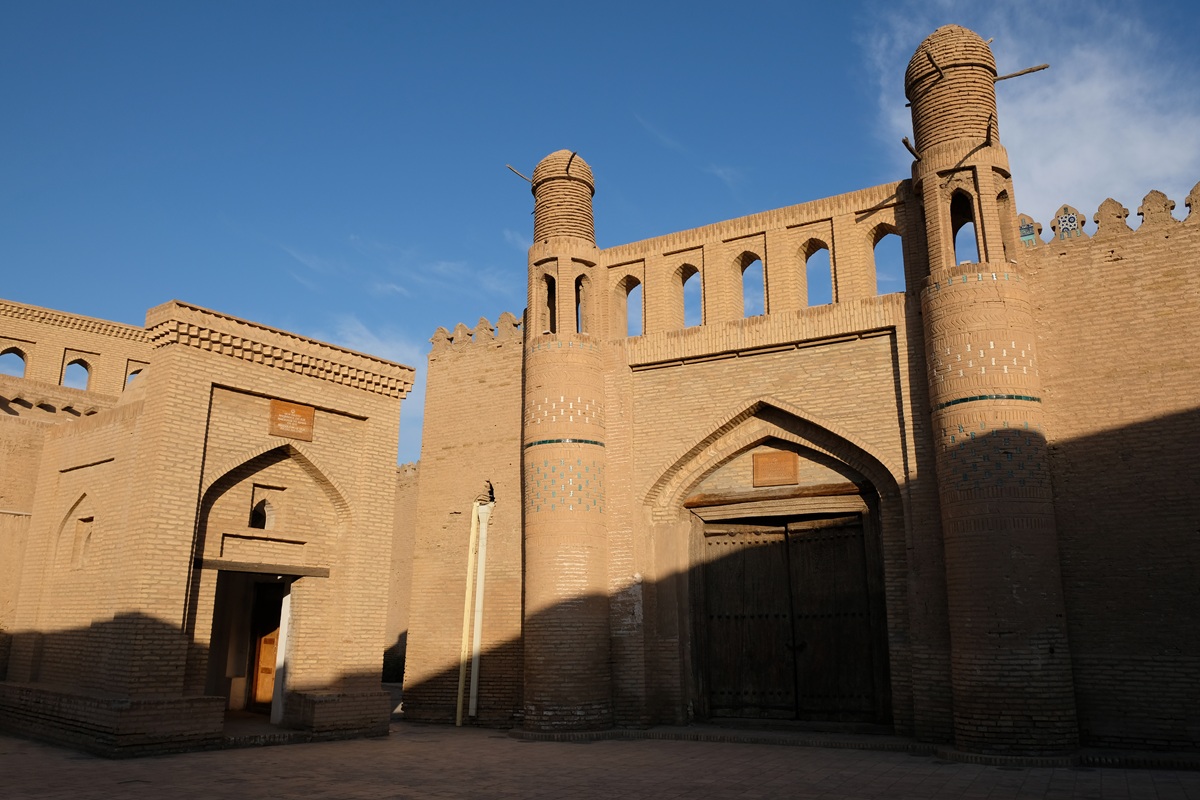
A gate at the western side of the Toshhovli Palace
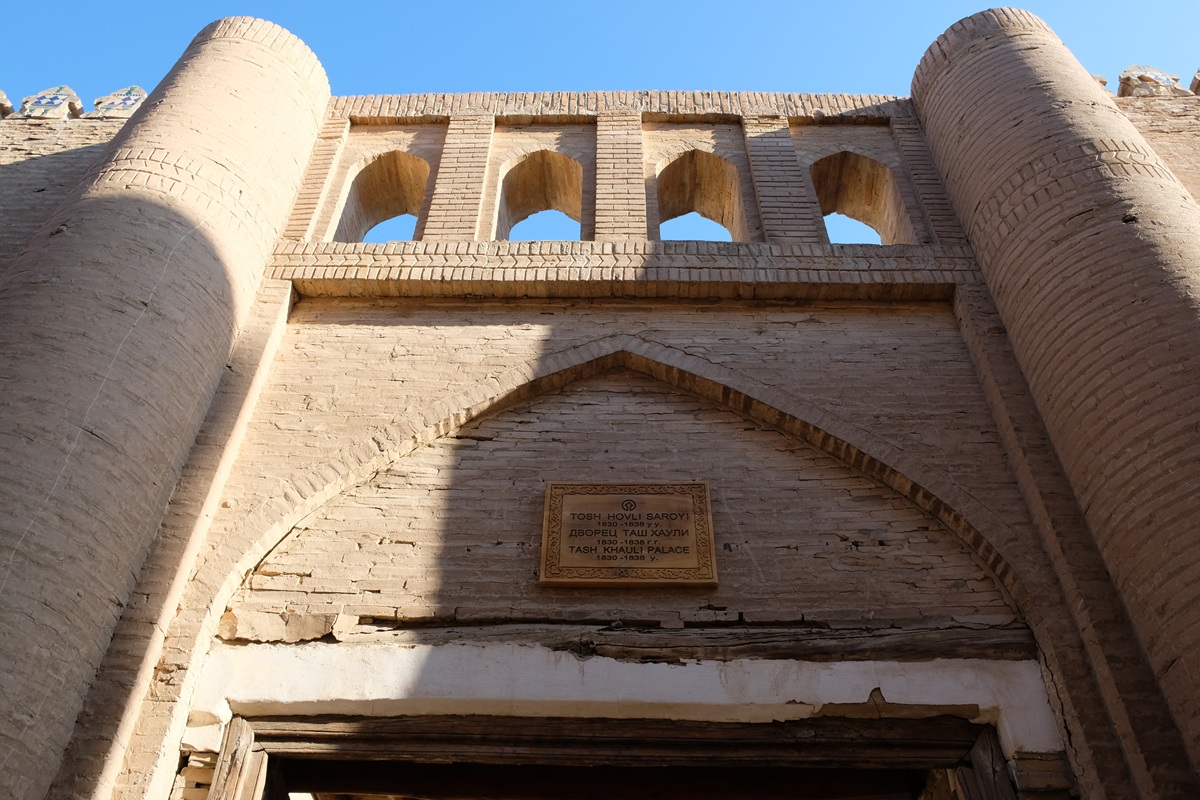
The main gate to the palace is the one to the south of the compound
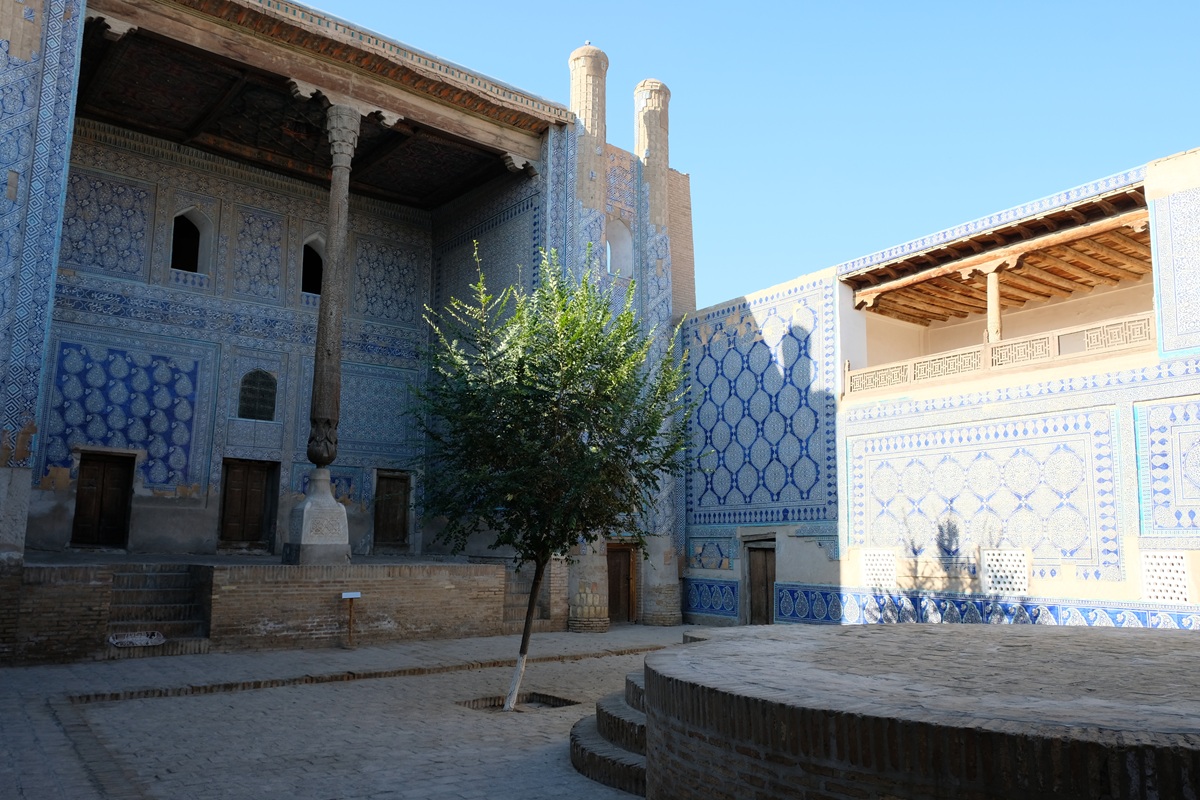
The Arz Khaouli, a former ceremonial court of justice within the palace
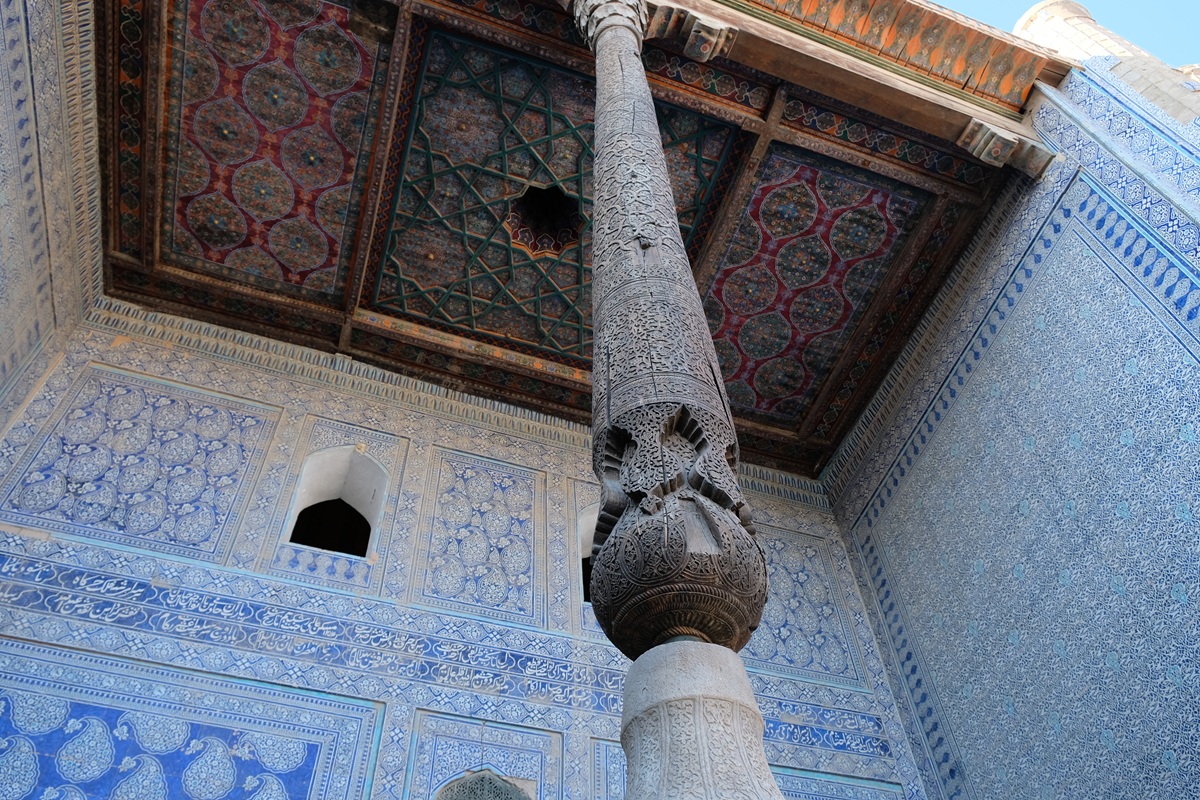
No surface was left unadorned
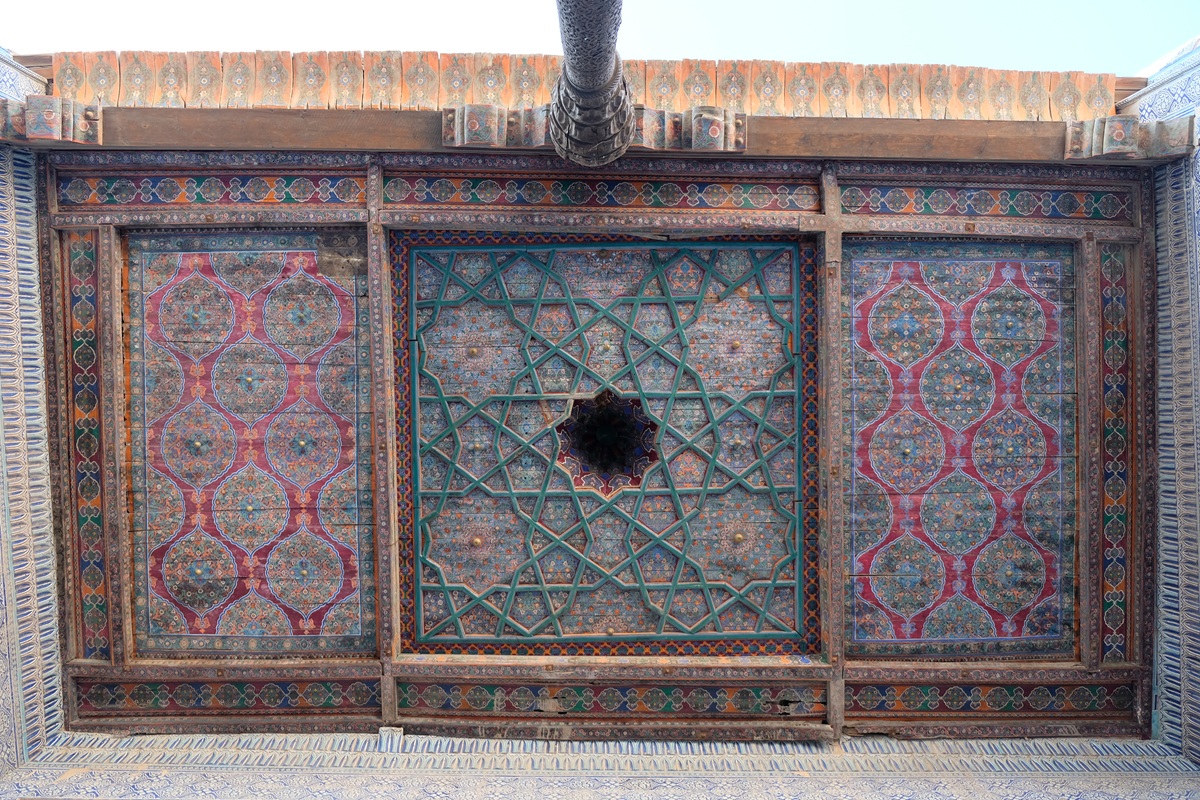
The ceiling of the iwan at the Arz Khaouli
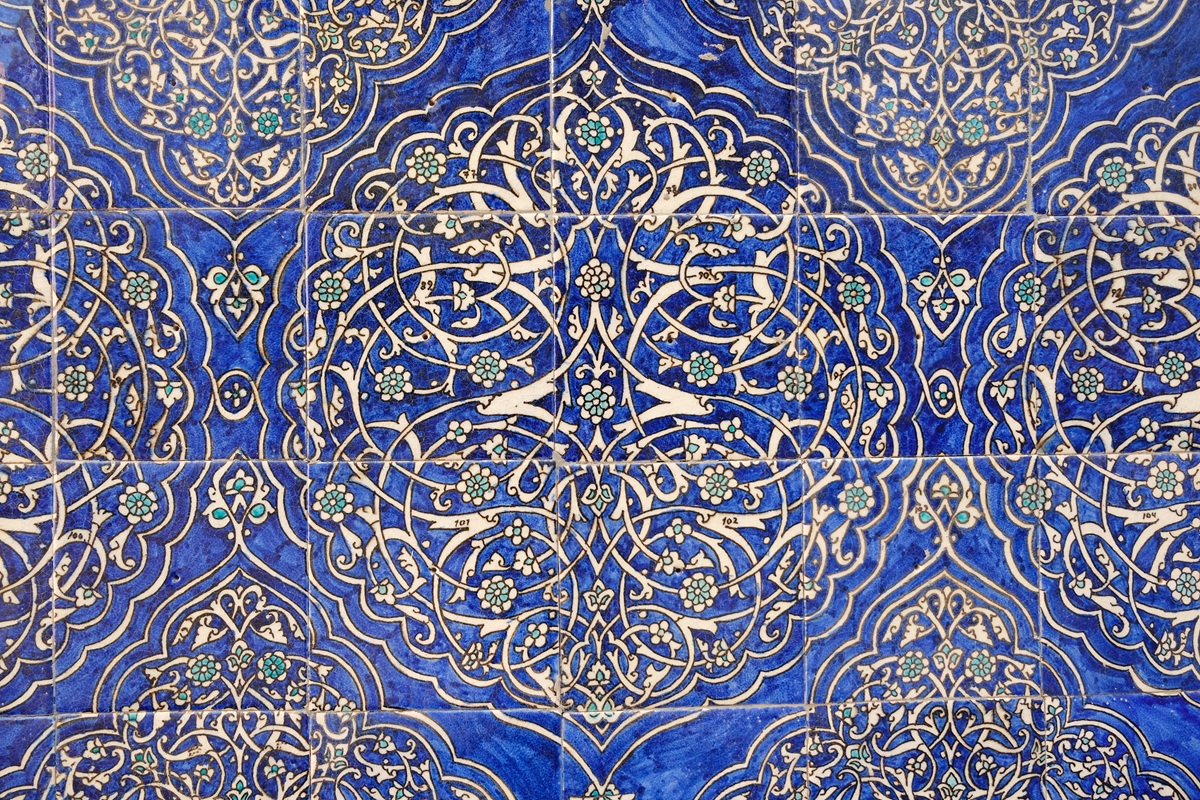
A closer look at the majolica tiles decorating the Arz Khaouli
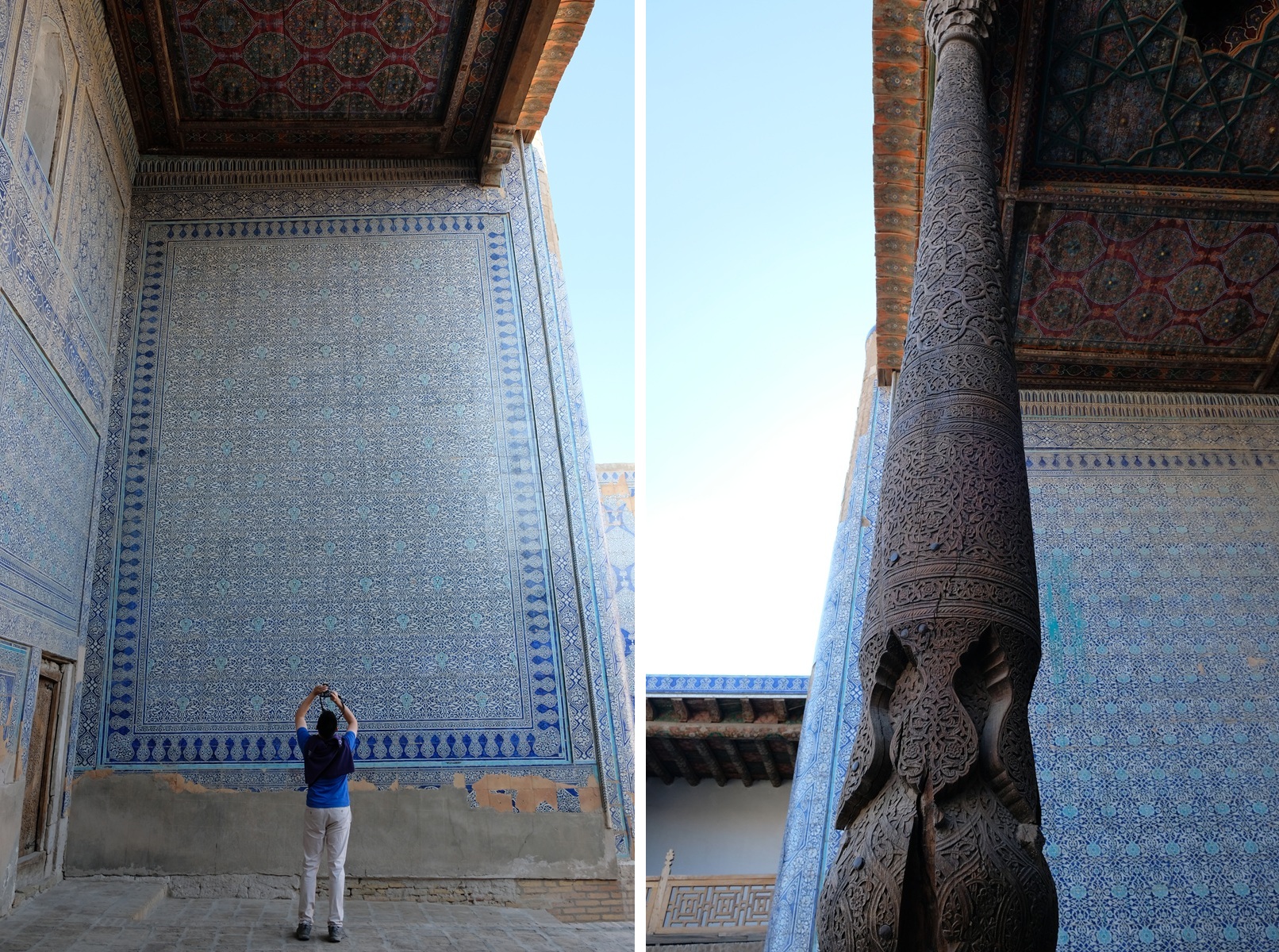
In Khiva, like in other ancient Silk Road cities of Uzbekistan, don’t forget to look up
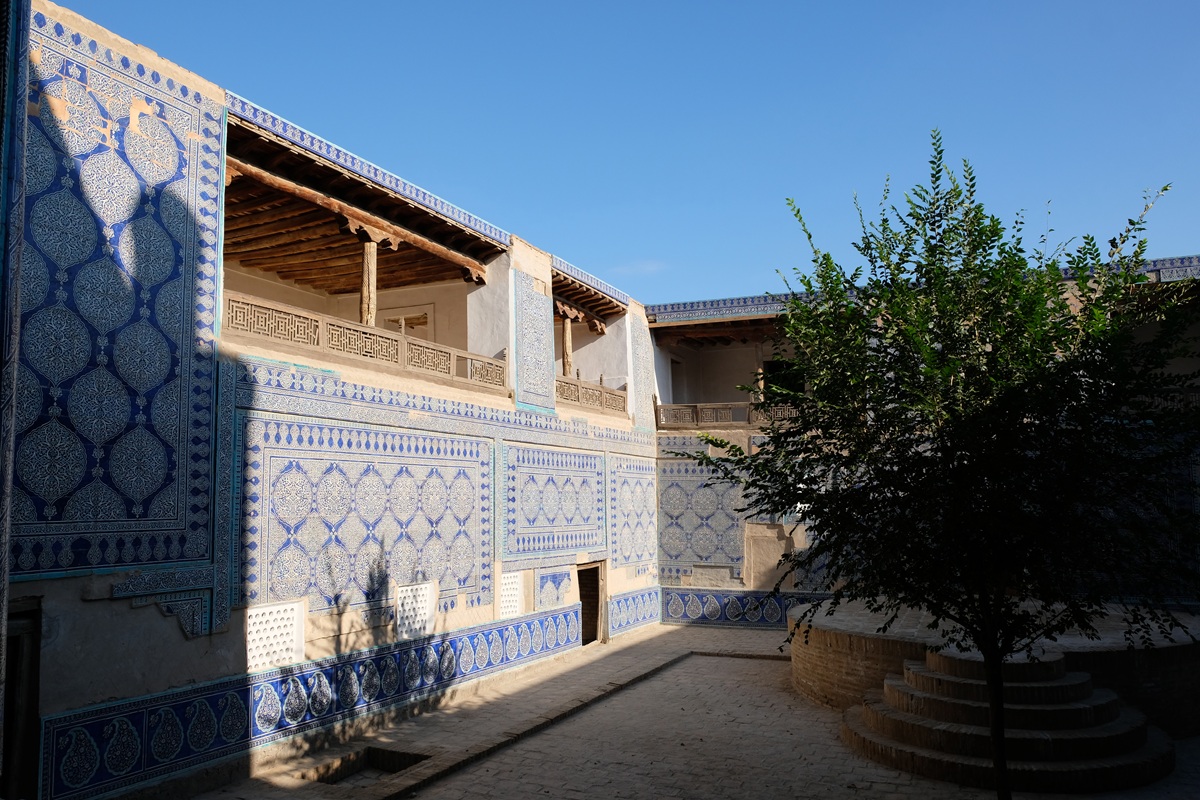
The buildings around the courtyard of the Arz Khaouli
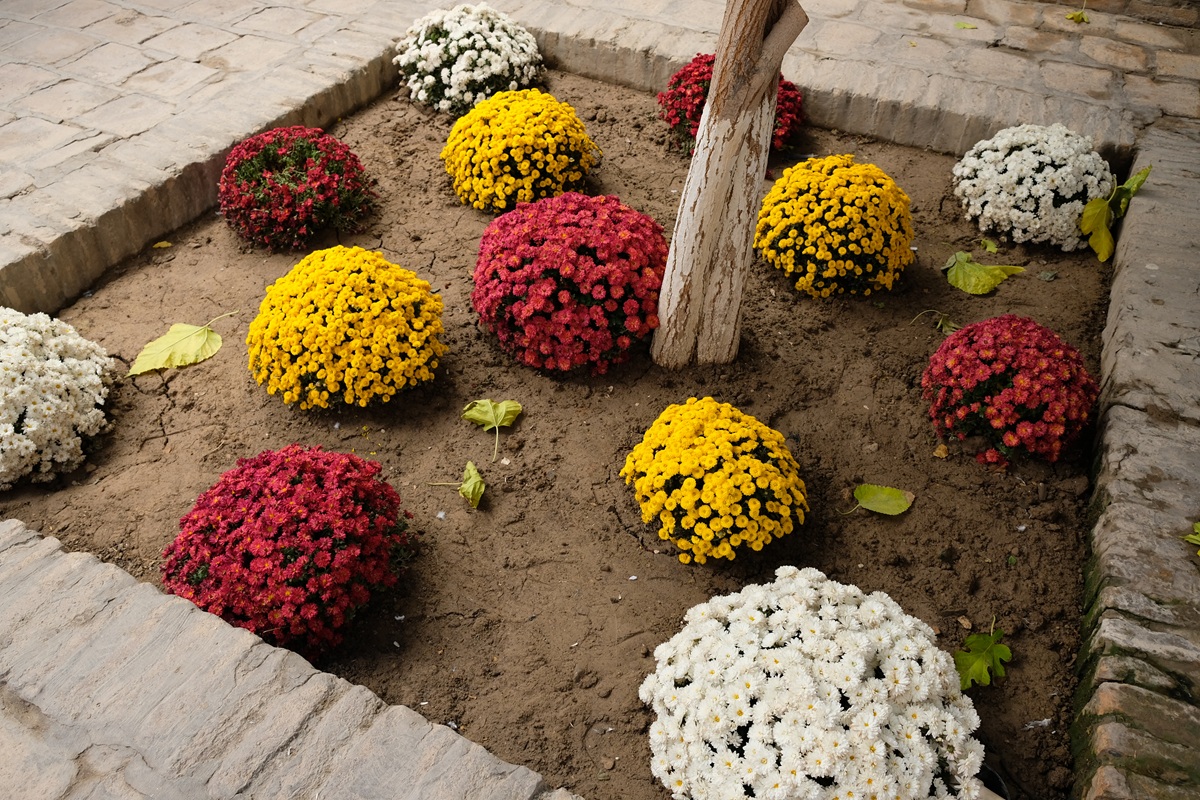
Autumn blooms inside the palace
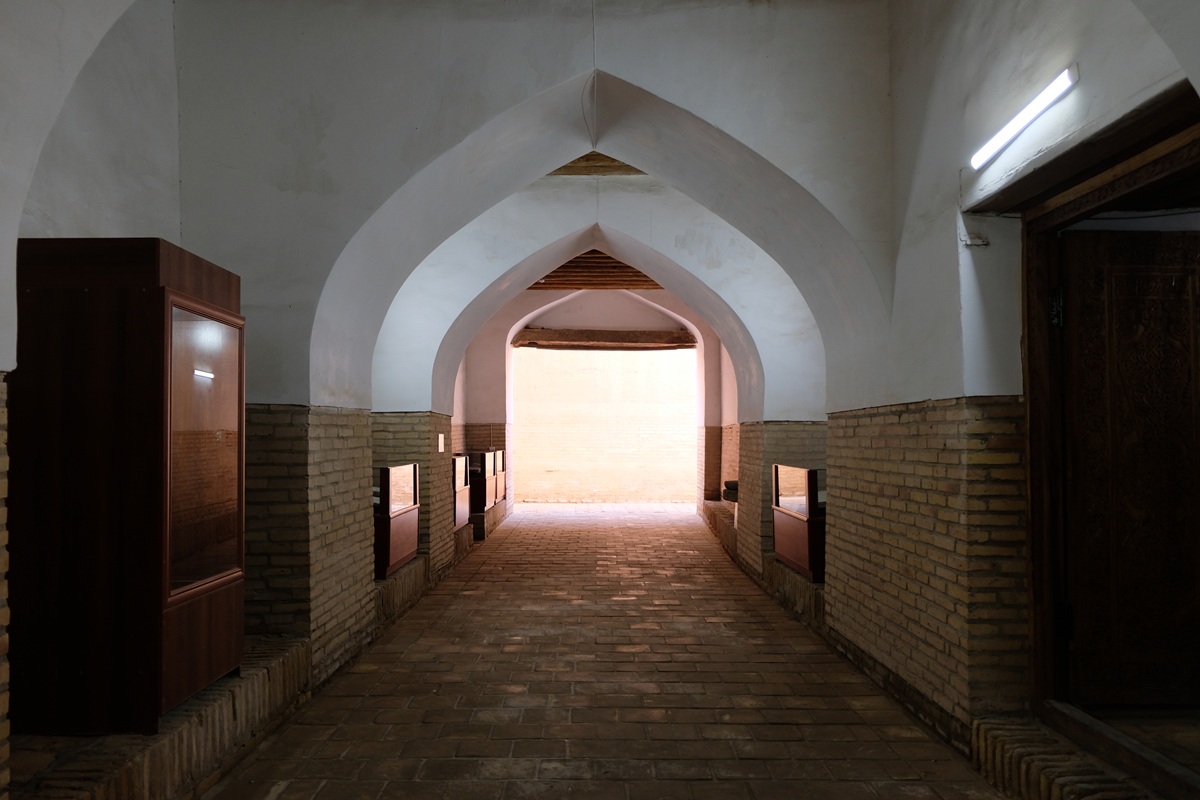
Along the maze-like corridors of the Toshhovli Palace were displays of artifacts from the past
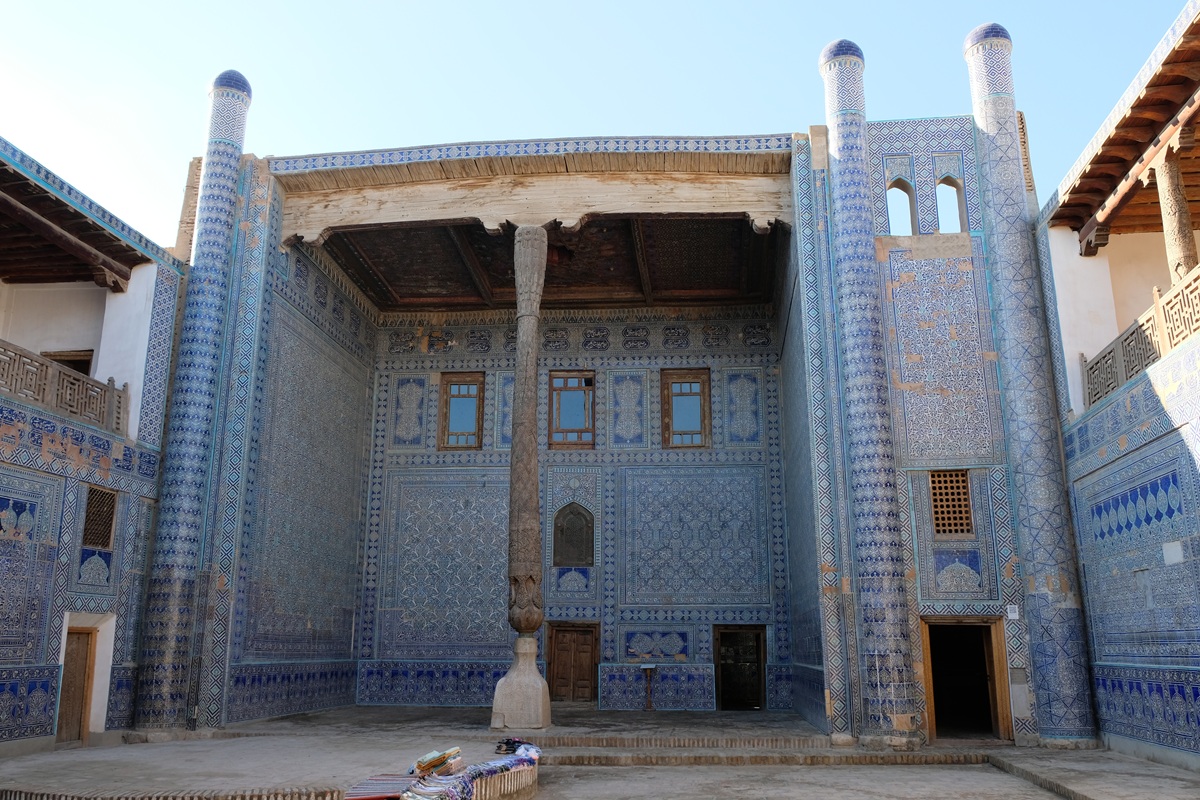
At the equally-impressive Ichrat Khaouli
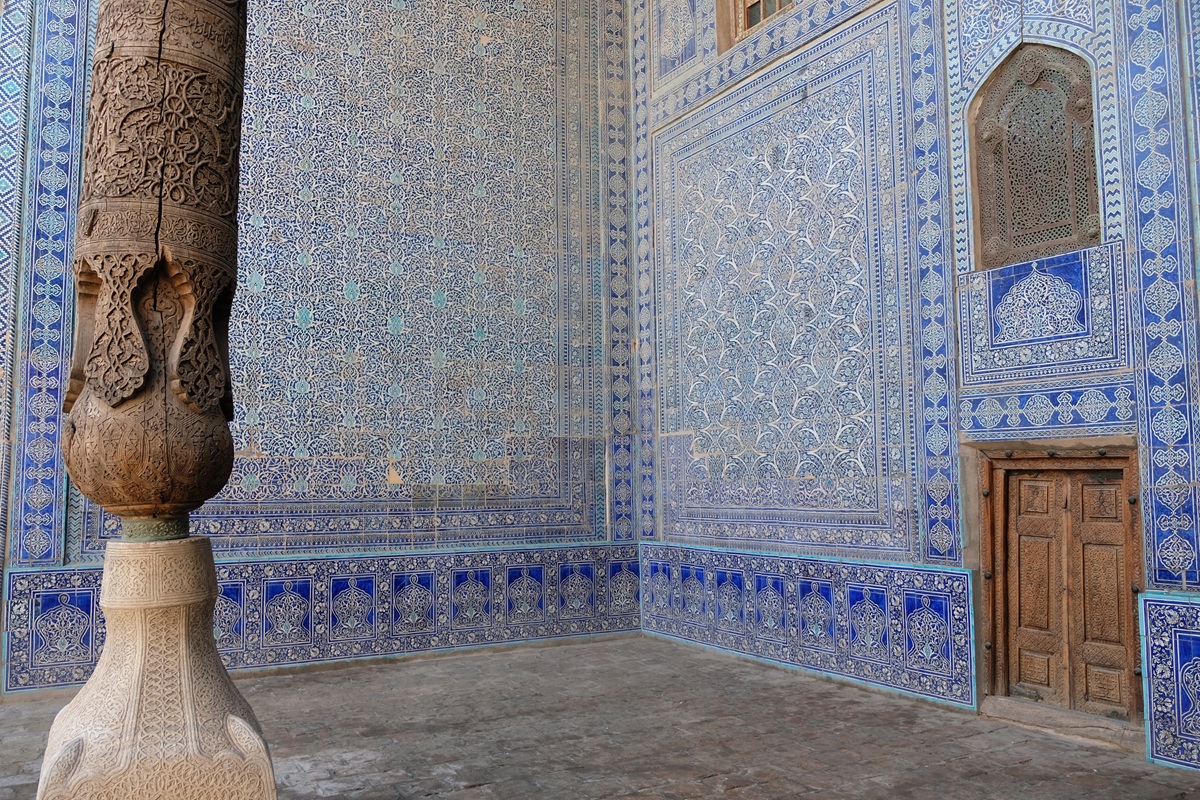
A centuries-old beauty
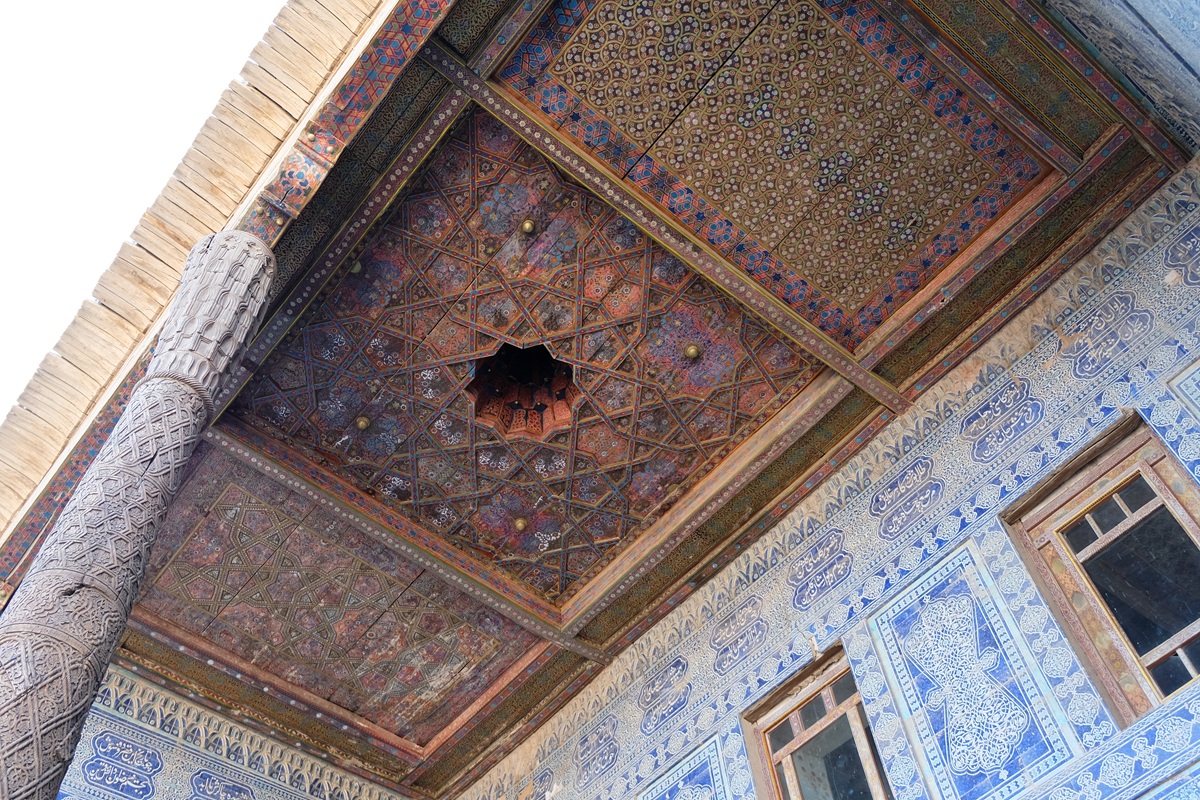
The ceiling decoration of the Ichrat Khaouli’s iwan
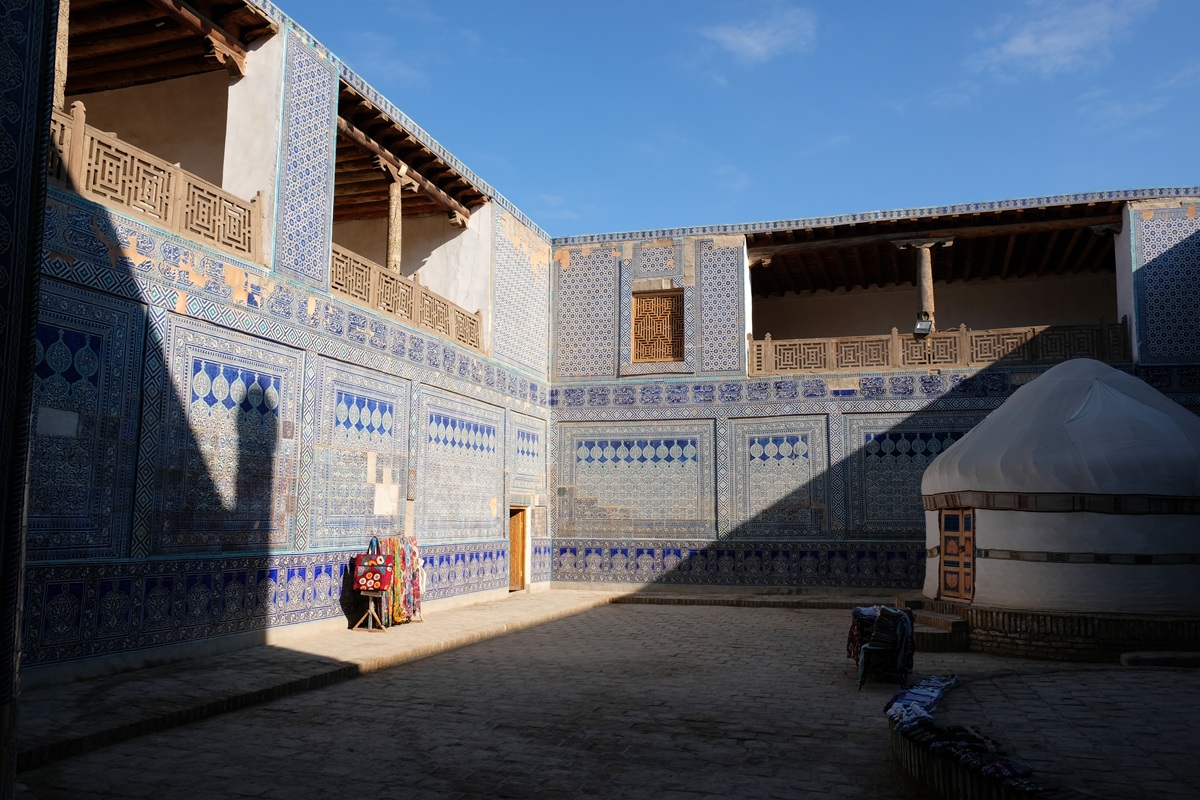
The rooms on the upper floor (and the yurt) were once used by visiting guests and dignitaries
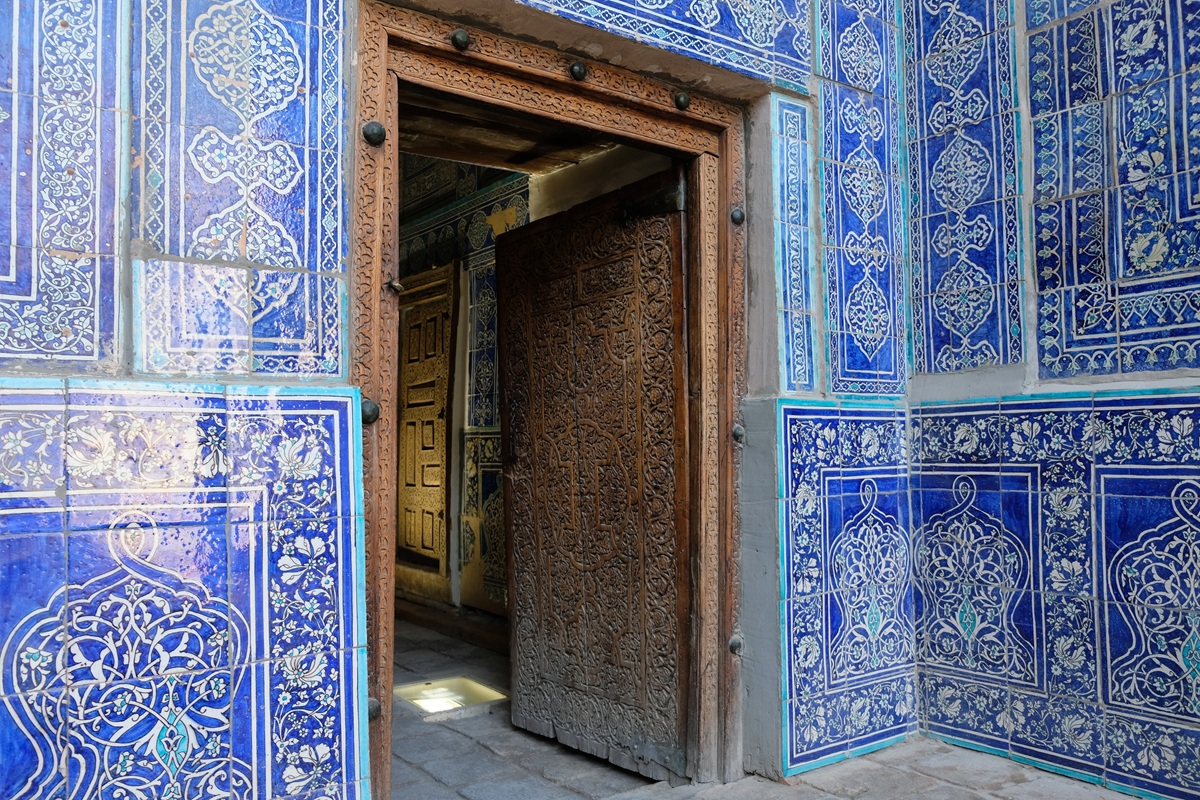
More intricate artwork inside
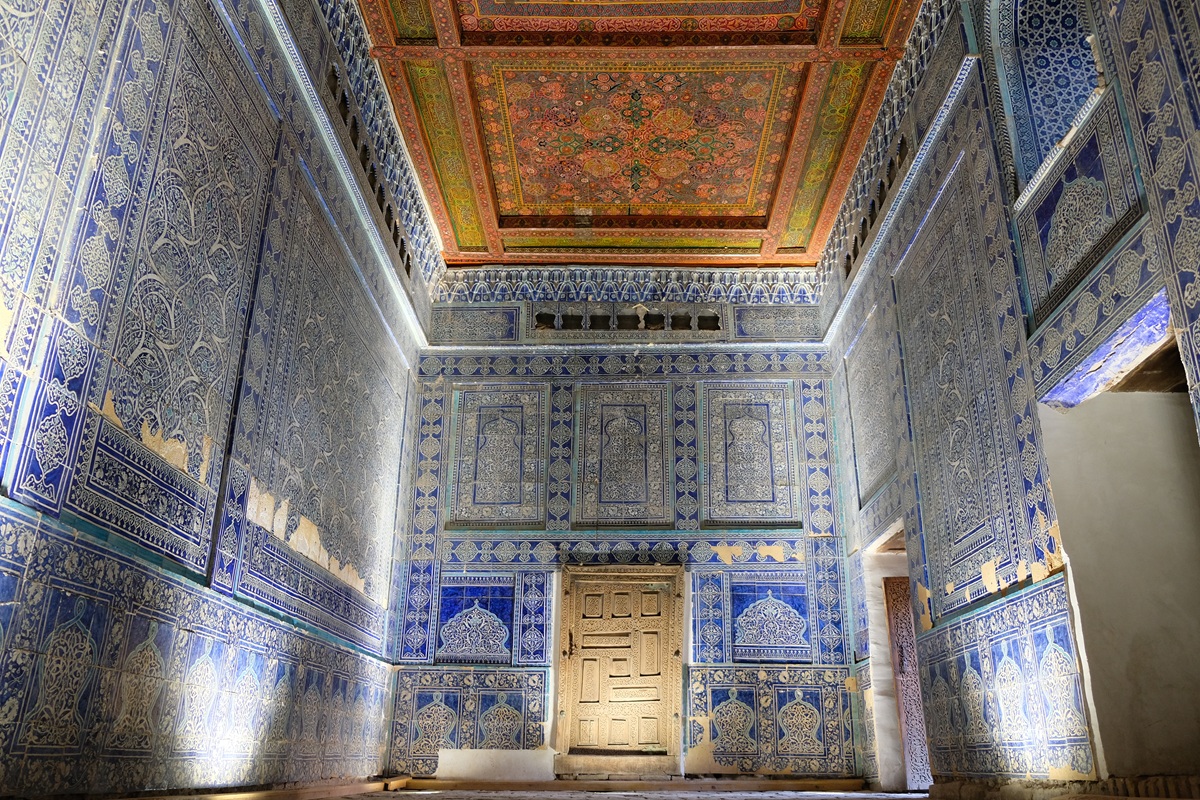
One of the most ornate corners of the Toshhovli Palace
Not all opulent buildings in Itchan Kala were built at the behest of an ambitious khan to be his residence. Situated within the southern half of the walled city is a complex dedicated to a Sufi teacher and poet who lived during the period of Mongol rule in Central Asia. Pahlavon Mahmud’s humble beginnings, his reputation as an undefeated wrestler, and his works of literature were among the main reasons that eventually led to people’s reverence for him. In one of his books titled Kanz ol-Haghayegh (Persian for “The Treasure of Truths”), he wrote a couplet that reads:
Learn modesty if you desire knowledge,
A high land would never be irrigated
When you see his mausoleum today, however, modesty is probably not what comes to mind. It is believed that according to his will, the poet wished to be buried in his own leather workshop in Khiva – although others believe he actually died in the city of Khoy in Iran. But due to the popularity of his tomb among a growing number of pilgrims, over the course of centuries his final resting place was gradually expanded, and each iteration brought in more lavish decorations. Some of the khans of Khiva were even buried here.
When we went to this complex, it was rather busy both with pilgrims and foreign visitors. But as soon as we entered the mausoleum, a solemn ambiance permeated from the different chambers within the building. At one corner, a man – probably the caretaker – led one small group of devotees after another in reciting certain verses from the Quran.
Directly to the northeast of the mausoleum complex is where we headed next: an old mosque with a history that dates back to the 10th century. Juma (literally “Friday”) Mosque is considered one of the most important structures in Itchan Kala and is famous for its hundreds – 213 to be precise – of carved wooden columns that create a rather atmospheric scene. Most of what people see today is from the 18th century when the mosque was rebuilt. But some elements from the 10th – 16th centuries of the place of worship’s previous incarnations are remarkably still standing. And as the icing on the cake, within the mosque’s compound is an 18th-century minaret decorated with horizontal turquoise bands that give it its distinct appearance.
As I looked up at the towering structure through an opening from inside the mosque, it dawned on me that our time in the ancient Silk Road cities of Uzbekistan had almost come to an end. From the magnificence of Samarkand, to the charm of Bukhara, and the photogenic walled city of Itchan Kala in Khiva, each place and its historical monuments enchanted us more than we had anticipated. Tashkent, the capital of modern-day Uzbekistan would be our final stop. But before that, we made a detour from Khiva to check out some of the ancient walled cities and fortresses of Khorezm (also known as Chorasmia) that have partially been reclaimed by the desert.
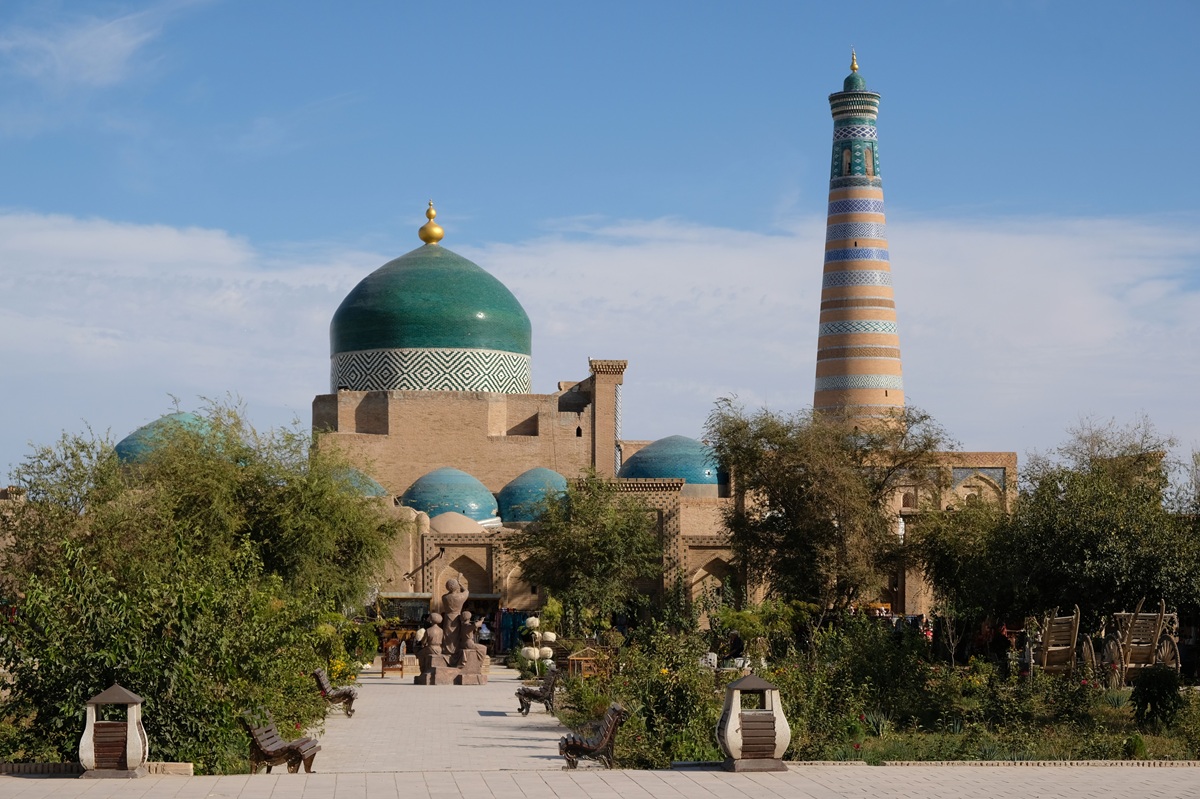
Beneath the green dome is the mausoleum of Pahlavon Mahmud
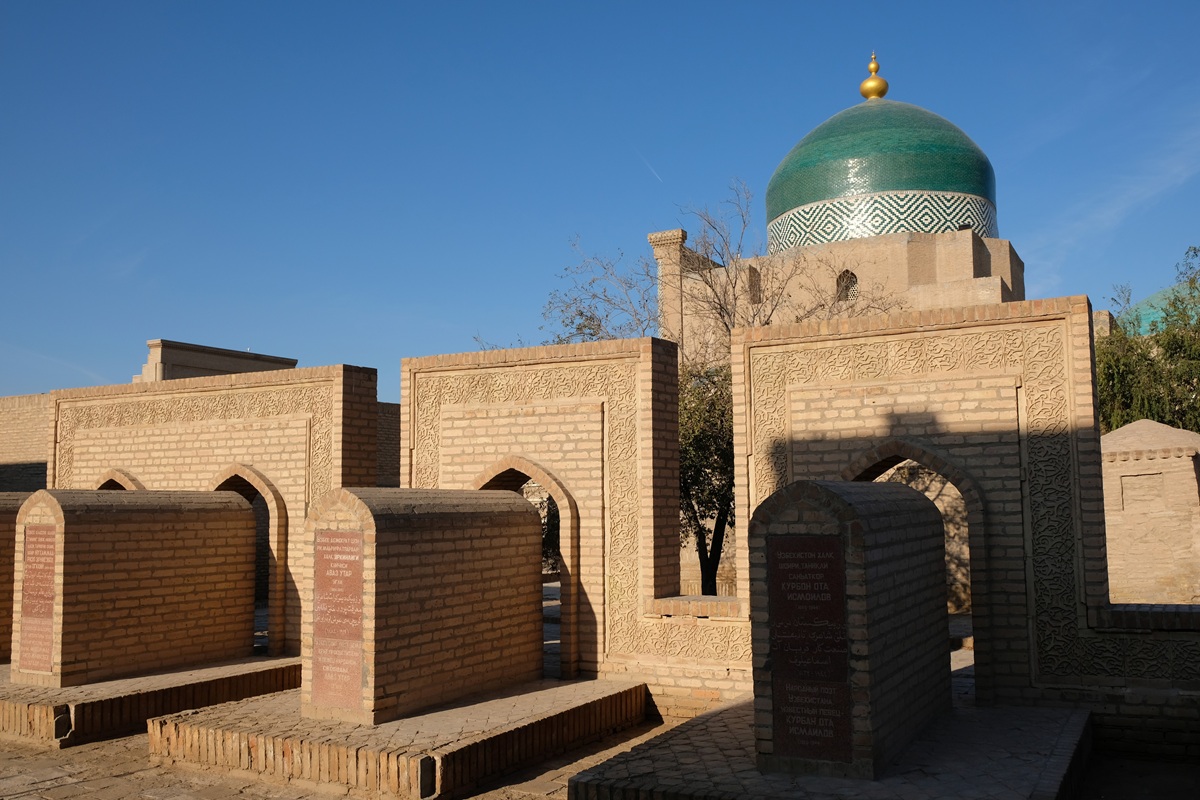
The mausoleum is located in a cemetery next to Juma Mosque
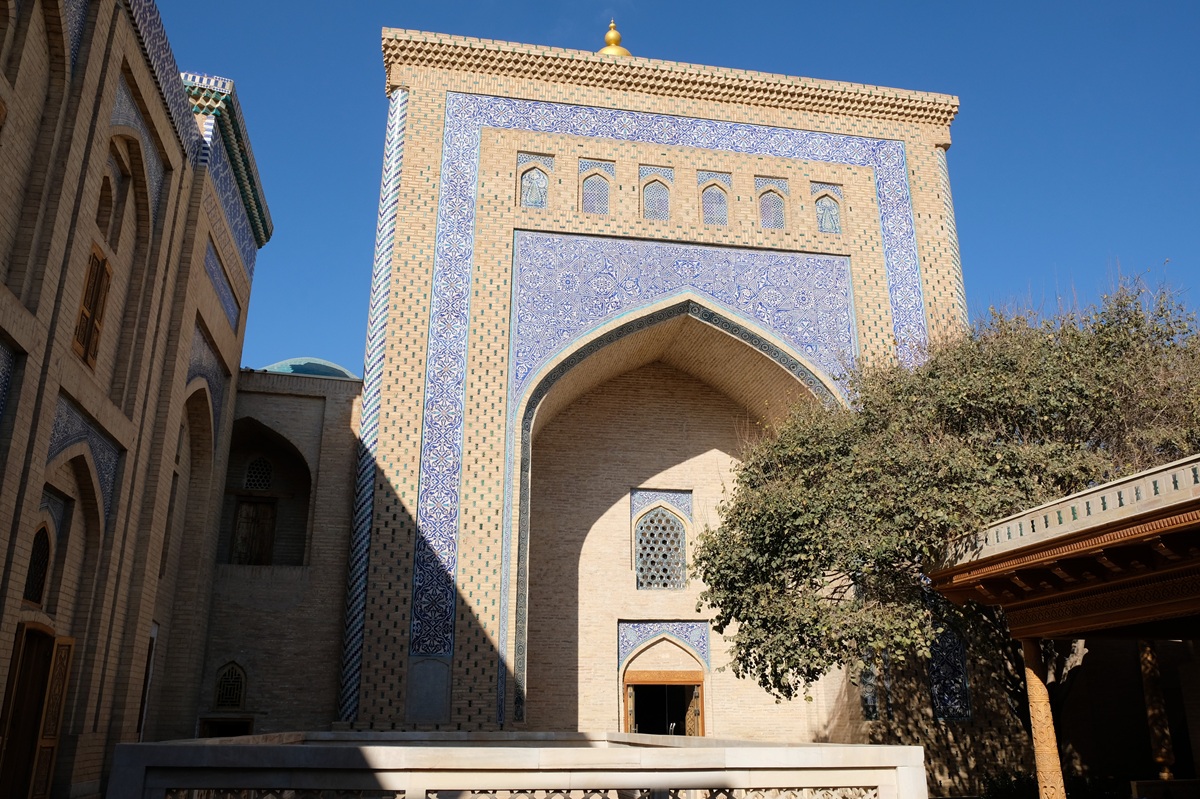
Entering the mausoleum complex
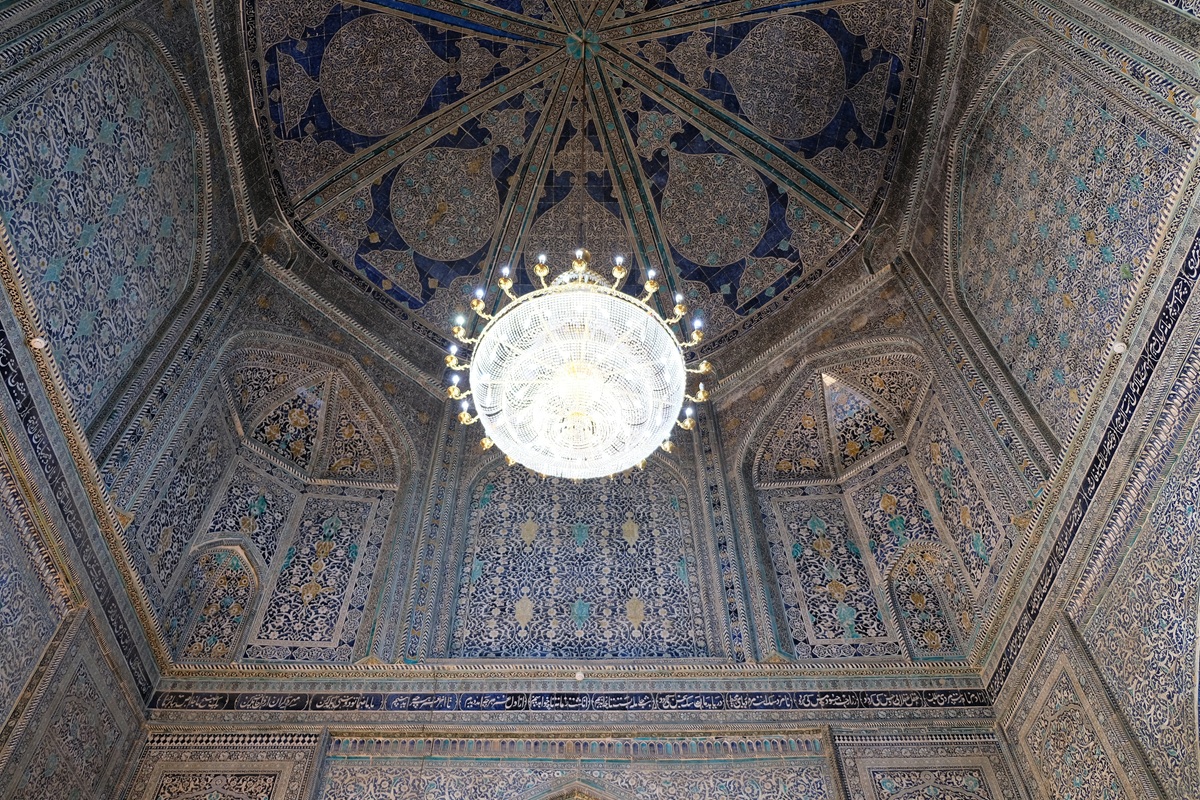
Despite the poet’s wish for a modest tomb, this is today a lavishly decorated mausoleum
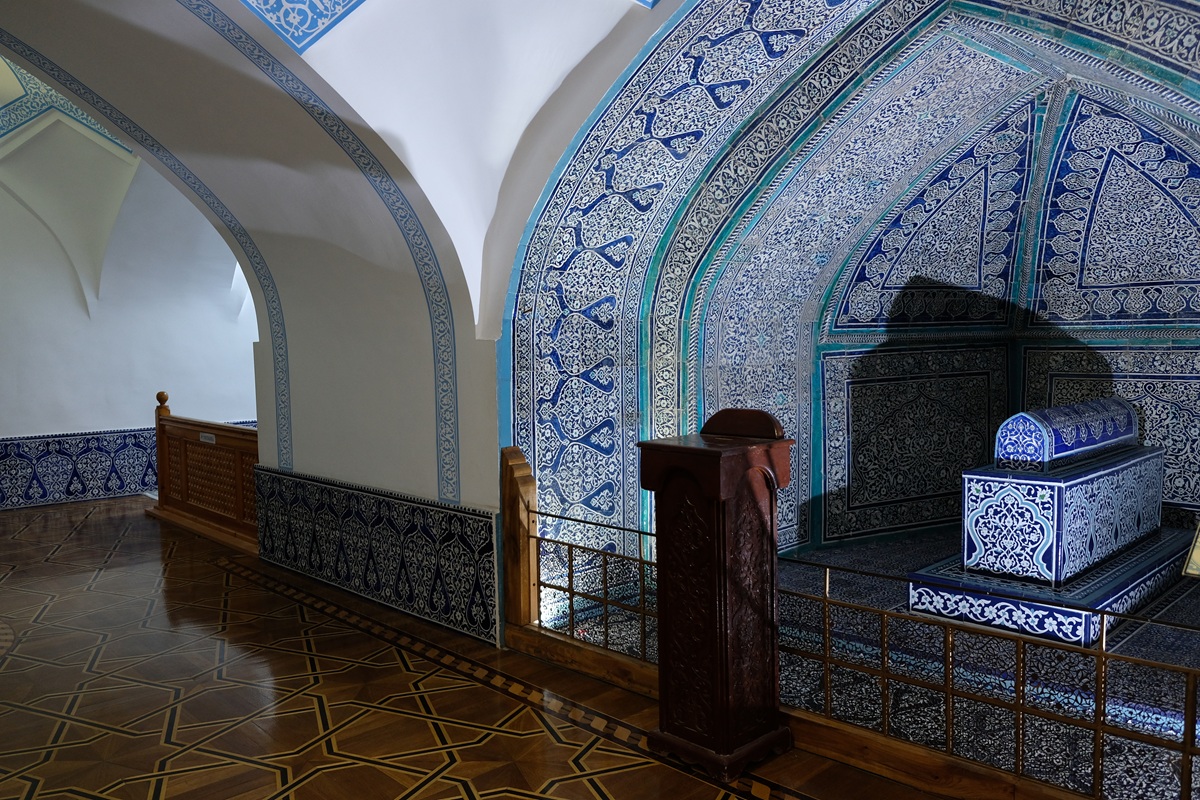
There are chambers inside the main structure, housing multiple tombs
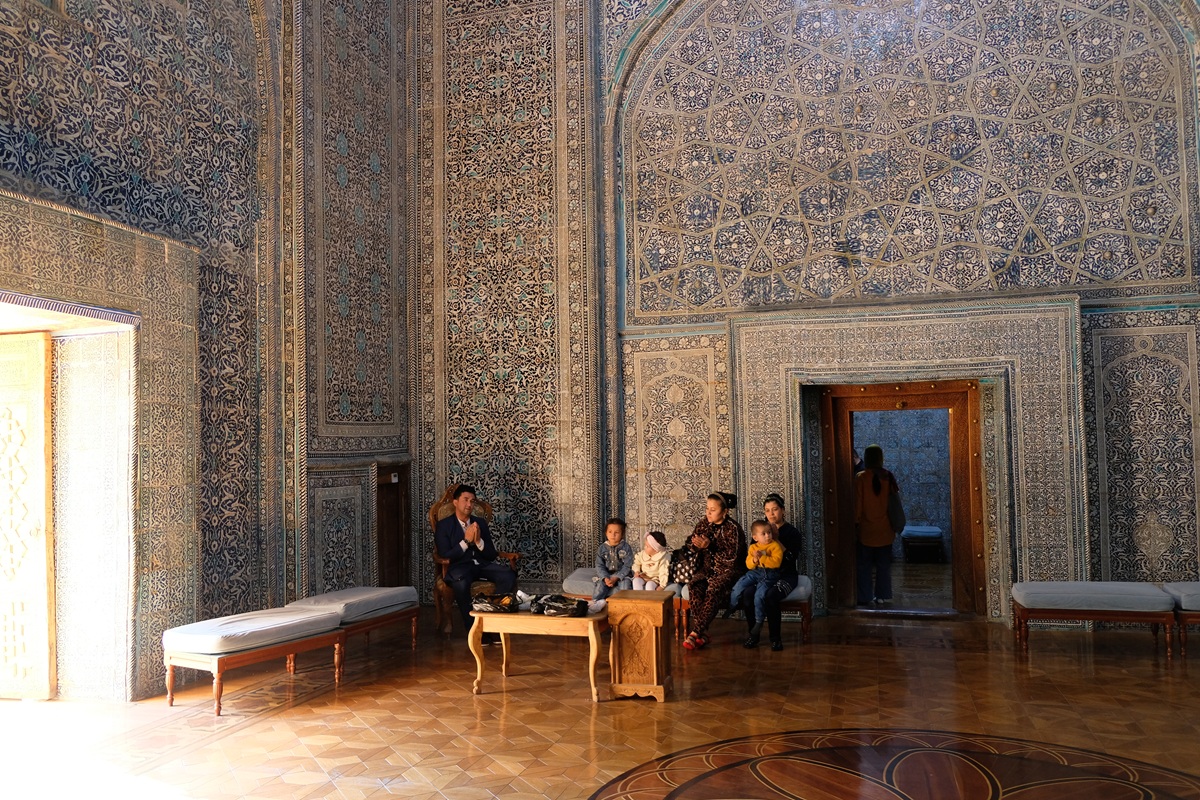
A man leads a group of pilgrims in reciting verses from the Quran
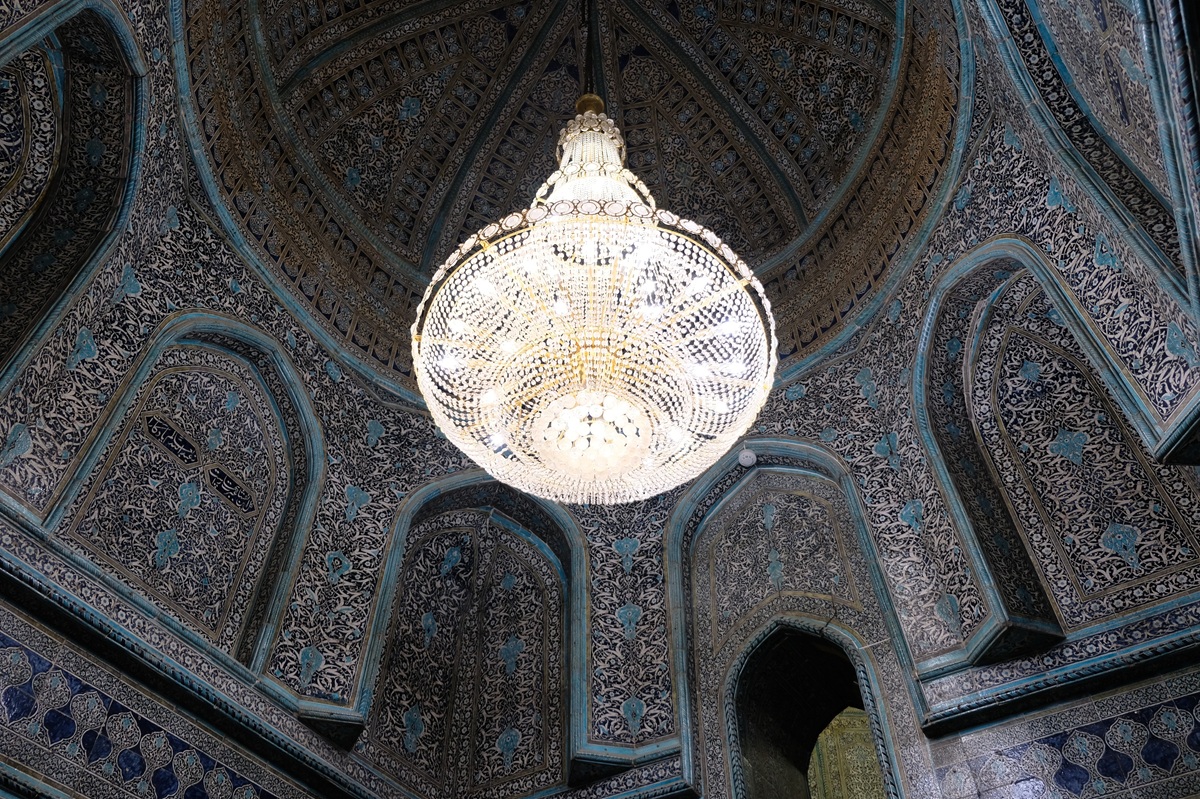
Blue majolica tiles covering almost every inch of the structure
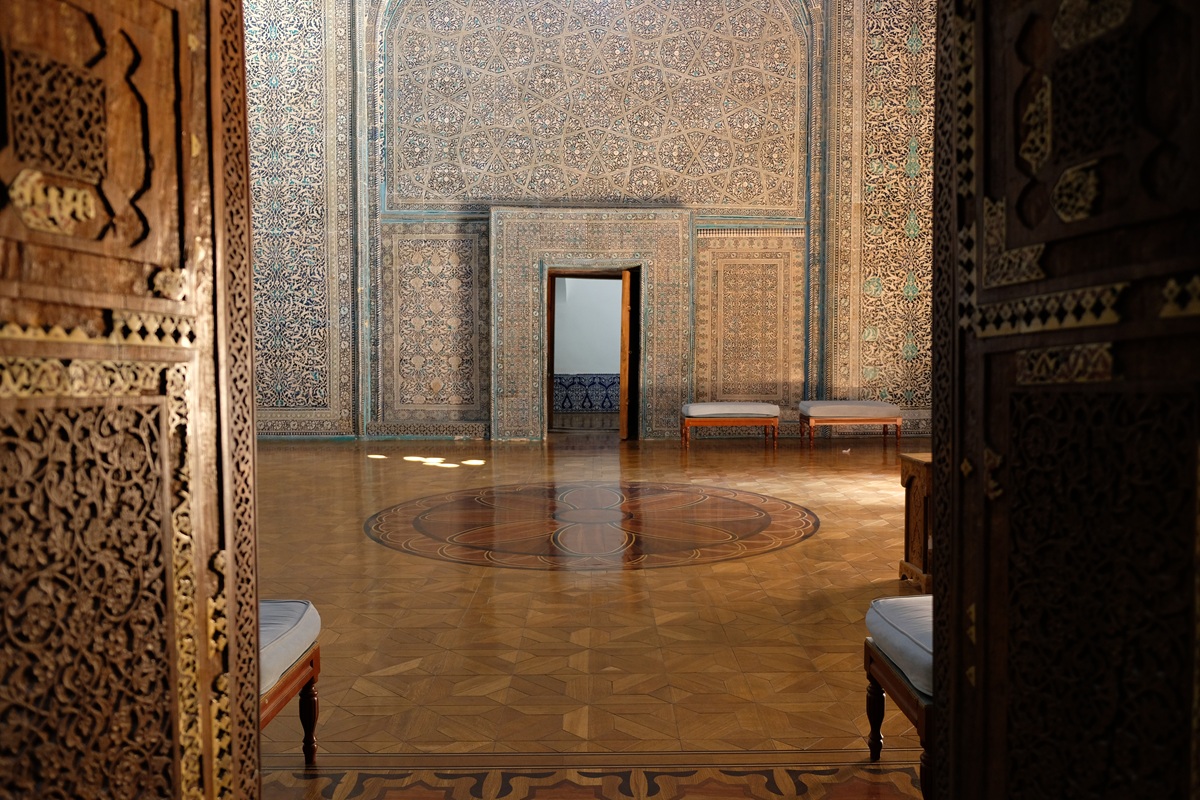
A solemn and peaceful ambiance inside the mausoleum
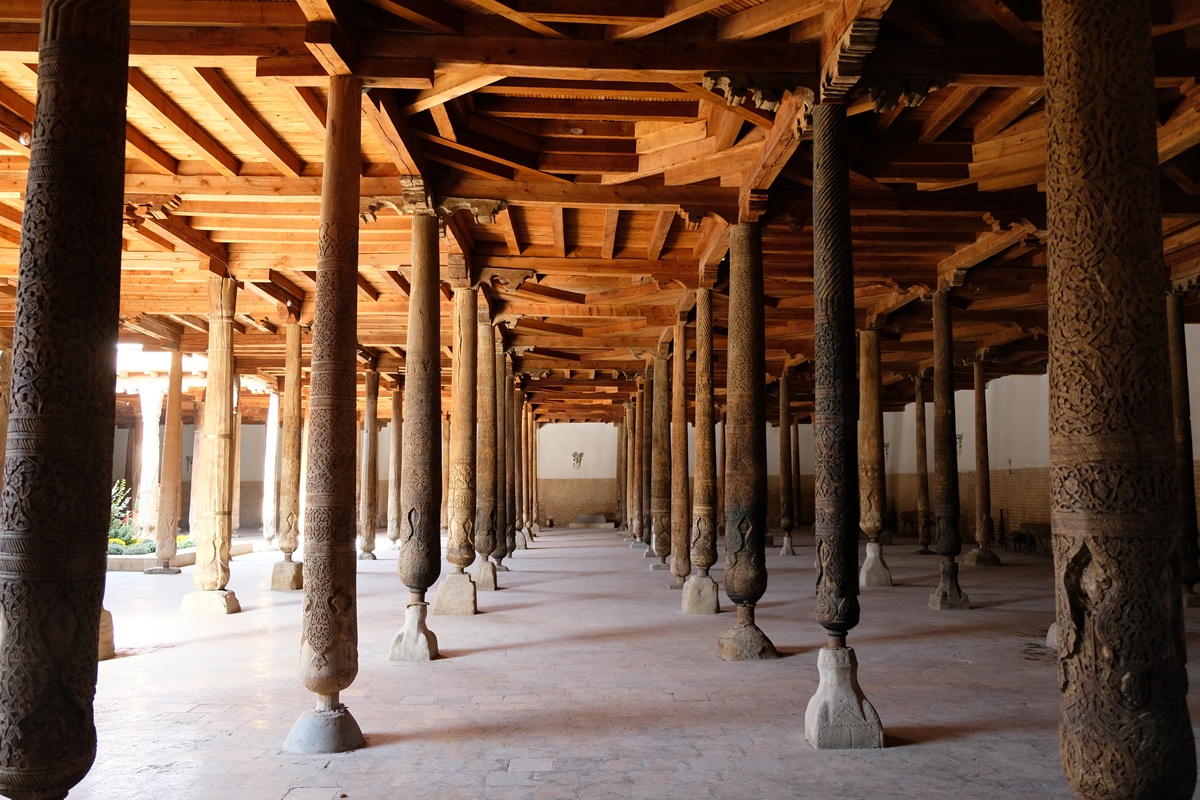
The many wooden columns of Itchan Kala’s Juma Mosque
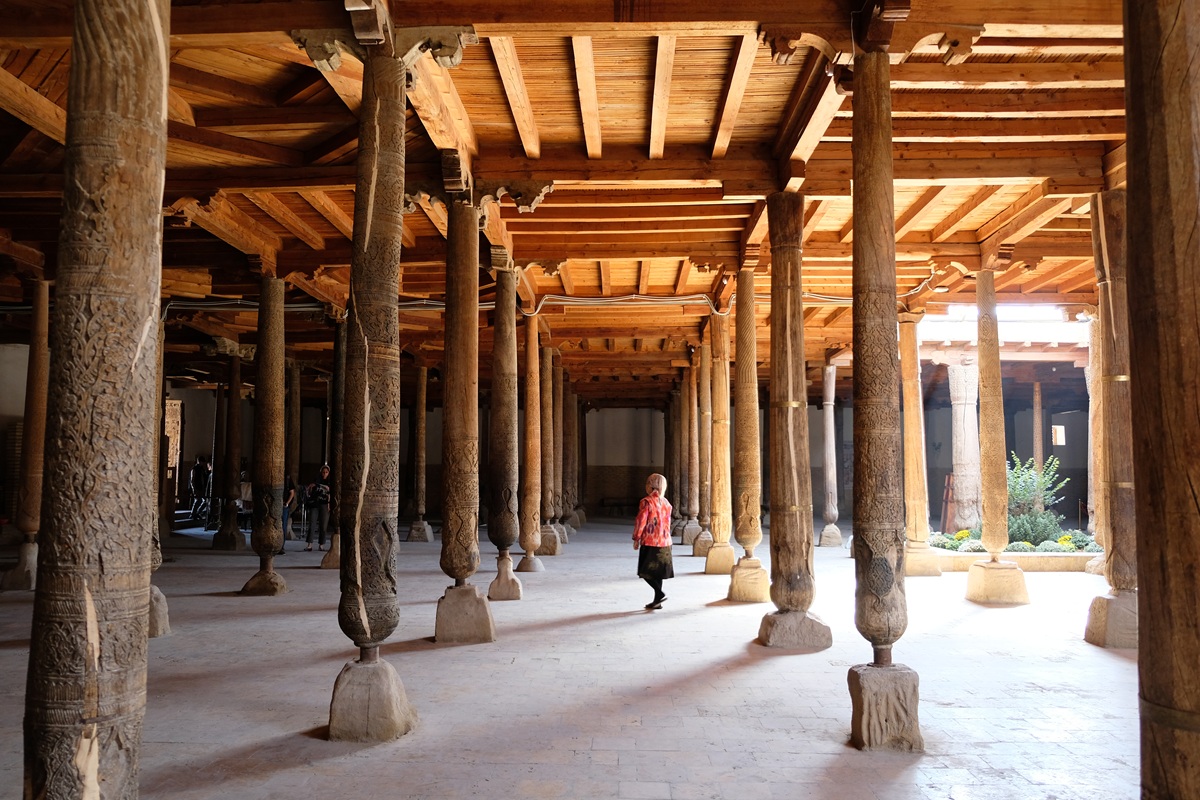
Some of the columns date back to the 11th century
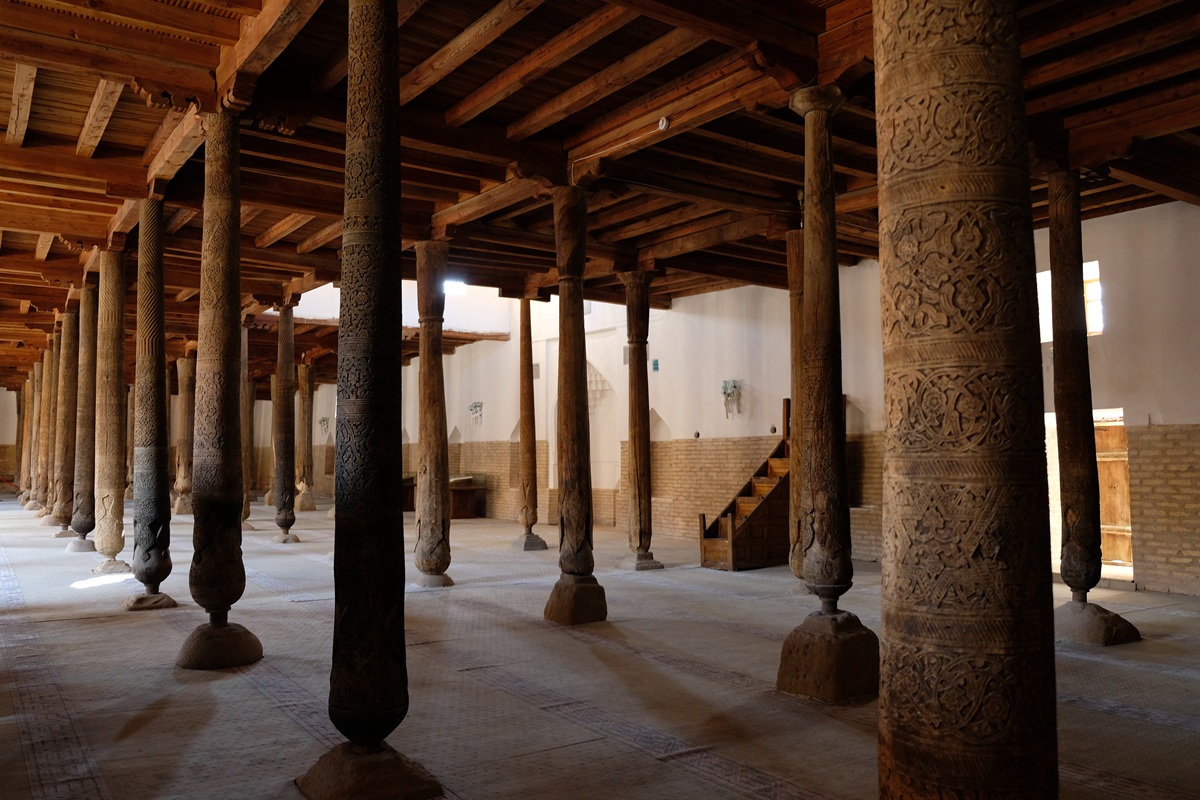
This part of the mosque was off-limits to visitors and strictly for praying
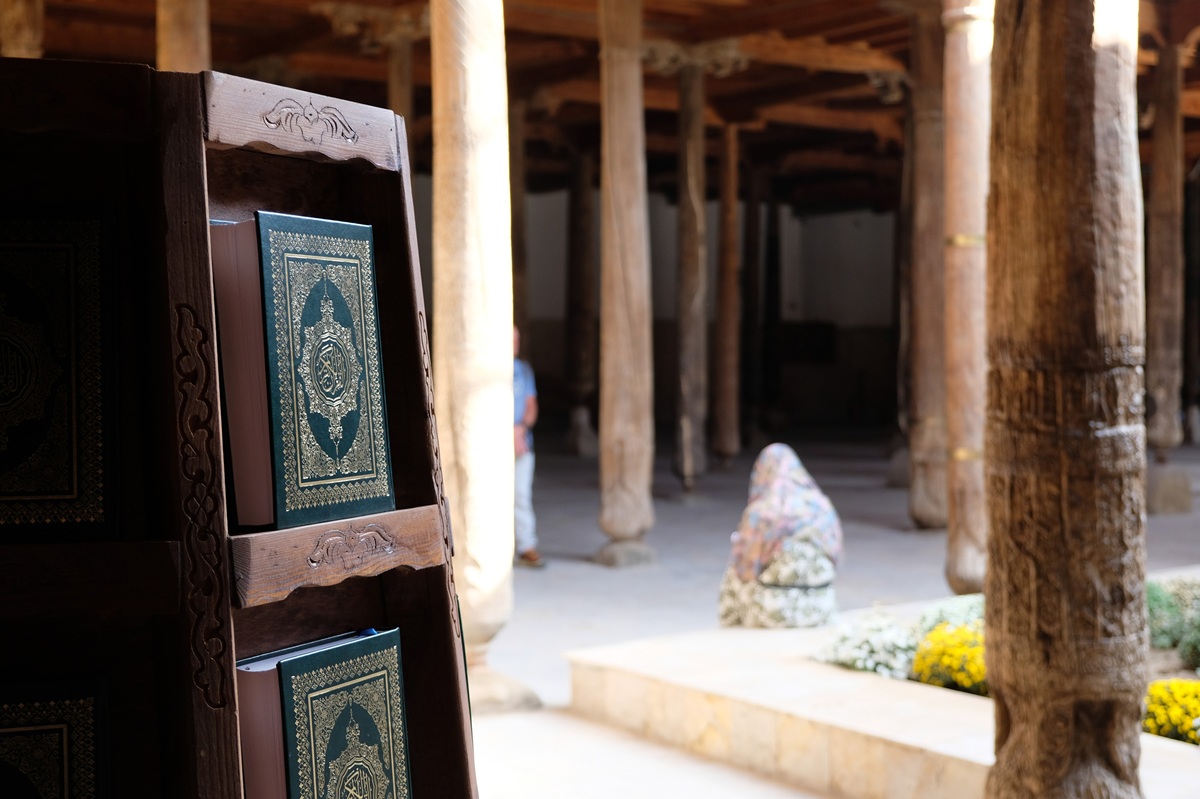
The Quran provided by the mosque
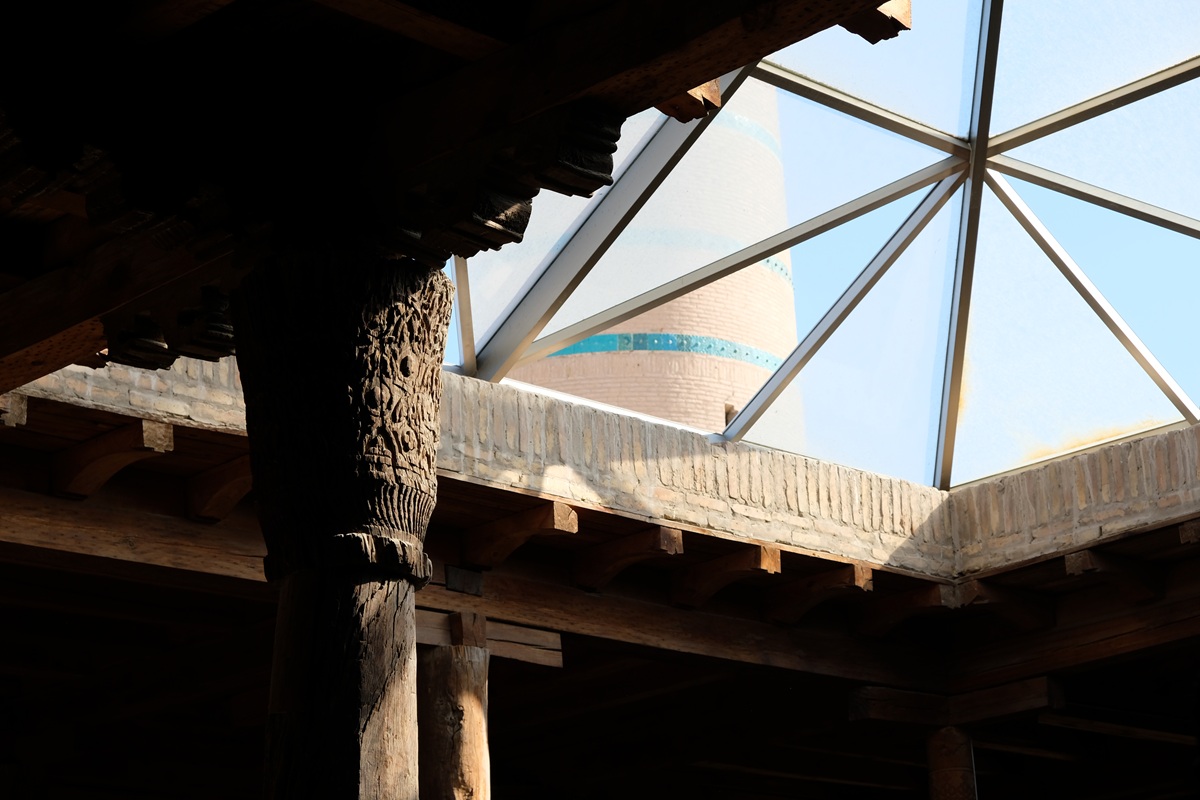
Catching a glimpse of the 18th-century minaret of the mosque

 What an Amazing World!
Absolutely magnificent. Your photos are great and tell a story by itself. Certainly a place not to miss when visiting the area. Actually a friend of ours went to Central Asia in May and told us that Khiva had been her favourite place.
LikeLiked by 1 person
Merci, Suzanne. Khiva might feel somewhat remote, but it certainly is not to be skipped when traveling in Uzbekistan. The intact city walls definitely add to its charm. And I totally understand why your friend really enjoyed this place. It was very photogenic!
LikeLike
A wonderfully detailed post on these secular buildings in Khiva. Like you, I always love to see the decorated ceilings and not many do it better than Uzbekistan. I also love seeing the city from above and I think that was my favourite part of Khiva. Maggie
LikeLiked by 1 person
I learned since my first day in Samarkand that in Uzbekistan you really have to look up because the ceilings of an ancient building might be among the most ornately decorated things you’ll ever see in your life. Seeing Khiva from above really helped me appreciate the beauty of the city even more.
LikeLike
Thank you for prioritising another Uzbekistan post, Bama. I can feel a flutter of anticipation in my stomach looking at your gorgeous photographs. I hope it was wonderful to relive your time there, while working on this post.
LikeLiked by 1 person
I had you in my mind when I planned when to publish this post, Jolandi. However, I think I might not be able to finish the rest of my stories from Uzbekistan by the time you go there. I believe you’ll have a great time nonetheless!
LikeLike
That was very kind of you, Bama. Thank you. Your stories will have a different resonance once I’ve been, so either way I will enjoy reading them. And I know that you still have many other stories to tell about your other trips.
LikeLiked by 1 person
I do have many stories in the backlog which will keep me busy writing on weekends for many months to come. 😆 I enjoy it though.
LikeLike
Impressive! Khiva looks so magical, with its intricately-blue artwork; it sort of reminds me of the architecture I saw in Morocco. The wedding photo shoot you witnessed also looked sublime, and I hope that couple remains together forever. Your posts on Uzbekistan are inspiring me to look up flights and (hopefully) head over there in the next year or so! Thanks for sharing, Bama 🙂
LikeLiked by 2 people
Morocco is another country I really want to visit because of its architecture. There’s just something so fascinating about old buildings with intricate decorations. Feel free to drop me an email when you start planning for that Uzbekistan trip, Rebecca!
LikeLiked by 1 person
Will do, Bama!
LikeLiked by 1 person
I am curious about the Arz Khaouli’s iwan ceiling where there is a hole. Did it have some kind of hook inside so that a light could be suspended? It not, I wonder why it was designed that way.
LikeLiked by 2 people
As far as I remember, that “hole” was basically a small ribbed dome, created purely for decoration. I don’t know if it was ever used to hang a light though.
LikeLiked by 1 person
Thanks
LikeLiked by 1 person
Oh what a fantastic post!!! Your photos are magnificent and took me back to my time there. What I wouldn’t do to escape a chilly Perth winter and be in Khiva right now!
LikeLiked by 3 people
Can you believe it’s been almost two years since we went to Uzbekistan and almost crossed paths in Tashkent! Speaking of winter in Perth, I actually always like July in Java because that’s when the cool air from Australia blows toward the Indonesian island where I live, making the temperatures here less hot and more bearable.
LikeLiked by 1 person
Only 2 years? It feels like a lifetime ago!!! This year especially has been so crazy I’m losing track of time!!!
LikeLiked by 2 people
It’s a good thing that you’re going to South Korea in December so 2026 will at least end in a high note!
LikeLike
Yes that’s what I thought. Has been such a crummy year I deserve an end of year treat!
LikeLiked by 1 person
Thanks again for the great commentary and pictures. After each of your posts I go back and reread some of Annie’s blog posts and realize how fortunate we are to have seen such incredible sights. There is just no place like Uzbekistan.
Steve
LikeLiked by 2 people
Much appreciated, Steve. We really are lucky to have seen those impressive Silk Road cities in Uzbekistan. Every place had its own charm, and it’s really hard to pick a favorite (although I do tend to gravitate toward Bukhara).
LikeLike
Just beautiful, Bama. The intricate detail viewed up close and so lovingly preserved over time. I agree that with Islamic architecture, you also can appreciate the detail by just looking up at the ceiling. No detail left untouched.
Your post does raise into context the role that slaves played in the construction of ancient empires – including the Egyptian pyramids – and certainly a practice that’s not acceptable today.
Also interesting to see the prominent role and value placed onto teachers and poets in ancient times – as trusted people within the inner circle of the rulers.
LikeLiked by 3 people
Thank you, Ab. While depiction of humans and animals is generally shunned in Islamic architecture, the geometric patterns and floral motifs more than make up for it. I’m always amazed by the intricate details of ancient buildings in Muslim-majority countries, like Uzbekistan.
Slaves really helped build among the most awe-inspiring monuments mankind has ever built. I’m glad the practice has been largely abolished today. Even when we, modern-day workers, feel that our rights are violated we have the right to protest! For sure, this was something unimaginable for those slaves.
I feel like in the past people had better appreciation toward poets, writers, and other artisans. Of course, back then they didn’t have social media and other things the internet offers today to distract them.
LikeLiked by 2 people
The intricate details for sure are amazing. The meaning and intention are also just inspirational!
I’m glad for modern worker rights today even if it means our buildings and monuments can’t compare to the past ones. 🤭
I long for the more simple days of digital disconnection!
LikeLiked by 2 people
True. While the buildings and monuments we build today can’t compare to what were constructed in the past, I still hope that the craftsmanship is here to stay. I myself have been curious about the art of stone carving and wish to learn it someday.
Digital disconnection can really feel like a bliss today, indeed!
LikeLiked by 1 person
Sounds like a fun hobby to learn!
LikeLiked by 1 person
I also visited Khiva on my recent trip to Uzbekistan; it’s certainly the city that most reminded me of the ancient Silk Roads. The concentration of historic architecture within the walled city makes it a very photogenic place, and you’ve certainly made the most of it.
LikeLiked by 2 people
It really is the concentration of old buildings within the walled enclosure that makes Itchan Kala a special and photogenic place. I’m glad that no one had the idea to demolish the inner city walls back then.
LikeLiked by 1 person
It is truly beautiful, the tiles in particular are just spectacular. It’s amazing what these rulers built to signify their power, and your photos capturing it all are wonderful. I really hope I can make it to Uzbekistan one day 🙂
LikeLiked by 2 people
The tilework on the old structures in Khiva is a testament to the level of craftsmanship the artisans of this former Silk Road trading post achieved. I really hope you’ll visit Uzbekistan sooner than later, Hannah.
LikeLiked by 1 person
Fabulous views from the top of the watchtower. All the decorative tiles are so beautiful and add such a nice splash of colour and creativity. Sounds like you had a wonderful time exploring Uzbekistan and learning more about its history.
LikeLiked by 2 people
The bright colors and the intricate patterns really add to the charm of those historical buildings, which I happily took photos of. Uzbekistan really is the perfect place for those who are interested in seeing the remnants of the ancient Silk Road.
LikeLiked by 1 person
Looks like you have enjoyed wandering around the Uzbekistan, Bama. Khiva sounded like a wonderful way to end the trip. Beautiful images and I like that you kept reminding yourself to look up and really see the artwork and majolica tiles for what they are. Looking at some of your photos, it seemed like you really tried to capture the height of the grand architecture in the shot, almost hard to fit in 😄
It must have been such a big feat to build everything, and the slaves probably had not much of a choice but get the job done – and a stunning result. Fascinating how the role of slaves has such an important impact on history and the present today – probably just as much as those who were in power. It is interesting to learn about Pahlavon Mahmud’s and that quote from him. Sounds like a mark of respect in the air for him where you visited his complex. Thank you for sharing, Bama 🙂
LikeLiked by 1 person
I had been dreaming of visiting Uzbekistan for so many years, and when I finally got the chance to go there, it surely didn’t disappoint. The ancient monuments were very impressive and the local dishes were surprisingly better than what I thought they would be.
LikeLiked by 1 person
Lovely photos, Bama! Happy to see that Khiva at least has (not yet) been converted to the shopping malls that Bukhara and Samarkhand have become in recent years. I much preferred the fly-blown feel of years ago.
LikeLiked by 1 person
It’s funny because in my experience the impact of the growing mass tourism industry in Uzbekistan was more palpable in Khiva than in Bukhara. Probably the compact size of Itchan Kala made it more visible to me.
LikeLike
Great post Bama, although had to look up Khiva. Did not know which “Stans” it is located in. 😃
Adding this post to our Stans itinerary. Thanks!
LikeLiked by 1 person
Much appreciated, John and Susan! Of all the Central Asian countries, Uzbekistan seems to have the highest amount of historical buildings, so naturally that’s where I went. 😃 I hope you’ll get there sooner than later!
LikeLike
Wow – the place is breathtaking. I would be so engrossed taking pictures here. And those wooden columns in the mosque, the slender base leaves me a bit worried but I’m sure it’s quite strong to have lasted so long.
LikeLiked by 1 person
Those places are amazingly ornate, Matt. I’m sure you would spend a lot of time taking photos of the details, just like I did. I also had the same concern about those wooden columns. But then most of them have stood the test of time.
LikeLiked by 1 person
Absolutely amazing! Can’t wait to see these places 🙂
What surprised me most is that those sites are maintained very well. Some cracks and flaws can be found here and there, but overall, you don’t see a trace of negligence. I think the dry climate also helps to keep them intact.
LikeLiked by 1 person
I’m sure you will have a lot of fun exploring Uzbekistan! Based on what I saw, it seemed that the government of Uzbekistan does take a good care of its historical sites, especially those inscribed in the UNESCO World Heritage list.
LikeLike
How stunning! The pictures look amazing but I imagine how impressive these must be in person. I love visiting palaces and compounds like these and have a soft spot for colourful traditional tiles all around the world, I’m sure I’d love Uzbekistan for it! Thanks for sharing!
LikeLiked by 1 person
I think you would be enchanted by the historical sites of Uzbekistan. I just read your latest blog post, and speaking of train journeys, now Khiva is served by the high-speed railway that connects it to other Silk Road cities in the country as well as the capital, Tashkent.
LikeLiked by 1 person
It is amazing just how many palaces/forts and religious sites are contained within the walls of Itchan Kala. Bumping into the soon-to-wed young couple in traditional dress was the icing on the cake during our visit to Konya Ark – I really like your photo of them peering out from the ramparts. And I remember being awed by the mystical and deeply spiritual ambience of Pahlavon Mahmud’s mausoleum, thanks to the live Quran recital echoing off those gorgeous walls of intricate majolica tiles. Thank you, Bama, for taking me back to Khiva in this post!
LikeLiked by 1 person
We were lucky with the timing of our visit to Konya Ark. I remember Jeff Bell also saw a soon-to-wed couple when he was in Khiva. So when I saw them, I immediately thought of him. The solemn ambiance inside the mausoleum was so different from how it was outside of the building. In a way, the recital of the Quran made me think of similar scenes back home in Java.
LikeLiked by 1 person
Ooh so nice! I do love a train ride, so I might add that one to my trip if I am on this part of the world one day!
LikeLiked by 1 person