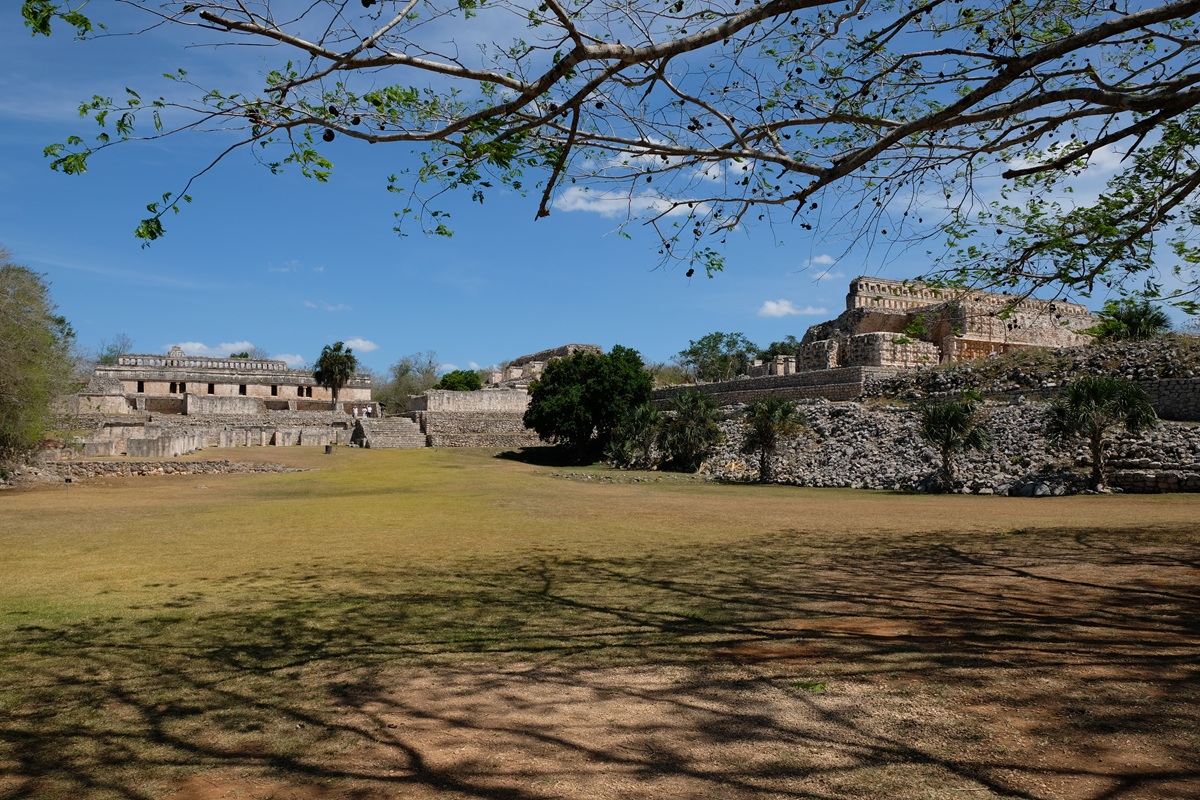
Entering the East Group of the archaeological zone of Kabah
After decades of continuous research and studies, we now know that the Maya developed one of the most sophisticated civilizations in the ancient world. They were not only among the most prolific builders in antiquity, leaving us with awe-inspiring monuments, but they were also masters of astronomy and mathematics, among other things. Their complex calendar system, which incorporated different counts, was able to accurately predict eclipses and other alignments of celestial bodies. They also devised the Maya hieroglyphs, considered the only true writing system developed in the pre-Columbian Americas.
However, since reading Maya glyphs is not necessarily a walk in the park, what we modern humans can readily appreciate more are the magnificent buildings the ancient Maya constructed many centuries ago. And that was exactly the main reason for me and James to visit the Yucatán Peninsula in modern-day Mexico, a region that is home to among the highest concentrations of such structures, including the world-renowned Chichen Itza. Toward the last centuries of what historians defined as the Classic Period (roughly between 250–900 CE), a unique architectural style called Puuc emerged in a part of the Yucatán that is dominated by vast karst hills. (In Yucatec Maya, a Mayan language spoken in the peninsula, puuc means “hill”.)
Among the distinctive features of this style is the incorporation of “concrete” to build the skeleton of a structure as opposed to piling large stones on top of one another using lime and mud mortar as a binding agent. The former method allowed for a relatively more stable interior compared to other Maya ruins that were constructed using older techniques. To decorate the façades, cut veneer stones were added along the upper section, usually leaving the lower part rather plain. As a result, this created a visually-striking horizontal appearance that is typical of ancient Maya structures from this region.
The Maya ruins of Uxmal have the biggest and among the finest structures built in the Puuc architectural style. But this compound wasn’t inscribed on the UNESCO World Heritage list alone as it was joined by three other equally impressive sites, each with its own unique character. Located along the aptly named Ruta Puuc (“Puuc Route”), they were where James and I headed after our visit to Uxmal and a lunch stop at the small but interesting town of Santa Elena (also known as Nohcacab in Yucatec Maya). Our Cuba-born driver Abdiel admitted that while he had taken multiple guests to Uxmal, this was his first foray into the three archaeological sites that we were going to check out for the rest of the afternoon. This reminded me of a similar situation with our driver in Quy Nhon, Vietnam three years ago who took us to ancient Cham temples he didn’t know existed – we do realize though that sometimes the places we want to see are not necessarily where most tourists go.
First, we stopped by Kabah, the second-largest ancient Maya site in the Puuc region after Uxmal. As Abdiel’s dark red sedan pulled over, from outside the fence of the East Group of the archaeological compound the structures appeared like a number of horizontal edifices, each sitting on top of a raised platform. Feeling intrigued, we started our exploration from the one closest to us. At ground level, what was standing before our eyes seemed to be piles of loose rocks with the main structure positioned on the highest point of the man-made construction. But as we went up the stairs, a sight like no other welcomed us.
A structure covered with dozens of the masks of Chaac – the Maya god of rain, thunder, and lightning – presented itself as if it was a sentinel that had been keeping an eye – well, many eyes – on the world around it. It is known as the Codz Pop (also spelled Codz Poop), which in Yucatec Maya means “rolled mat/blanket”, a moniker given to the building thanks to parts of its decorative elements that are said to resemble the quotidian item. But to be honest, it was the ubiquity of Chaac faces all over the façade that we found utterly impressive. “Now that is something else!” James exclaimed. Although it wasn’t the first time we stumbled upon a visual interpretation of this particular Maya deity, easily distinguishable from his long and curved nose, I wouldn’t dispute it if someone claims the Codz Pop as the most Chaac-forward ancient Maya monument that has ever been erected.
We continued exploring other parts of the intriguing structure before moving on to the central plaza of Kabah, surrounded by three different edifices in varying degrees of preservation. Archaeologists have found evidence that the ruling dynasty of this Maya city abandoned it around the year 950 CE after making it their seat of power for centuries. But it took James and I a surprisingly short time – roughly half an hour – to wander this fascinating archaeological site, not because we ran out of things to see (I realized much later than we actually missed seeing two interesting anthropomorphic figures sculpted on the other side of the Codz Pop), but because we still had two other places to visit before sunset.
“Muy bien?” Abdiel asked us as we got into the car. With a resounding sí, off we went to the next ancient wonder along the Ruta Puuc: Sayil.
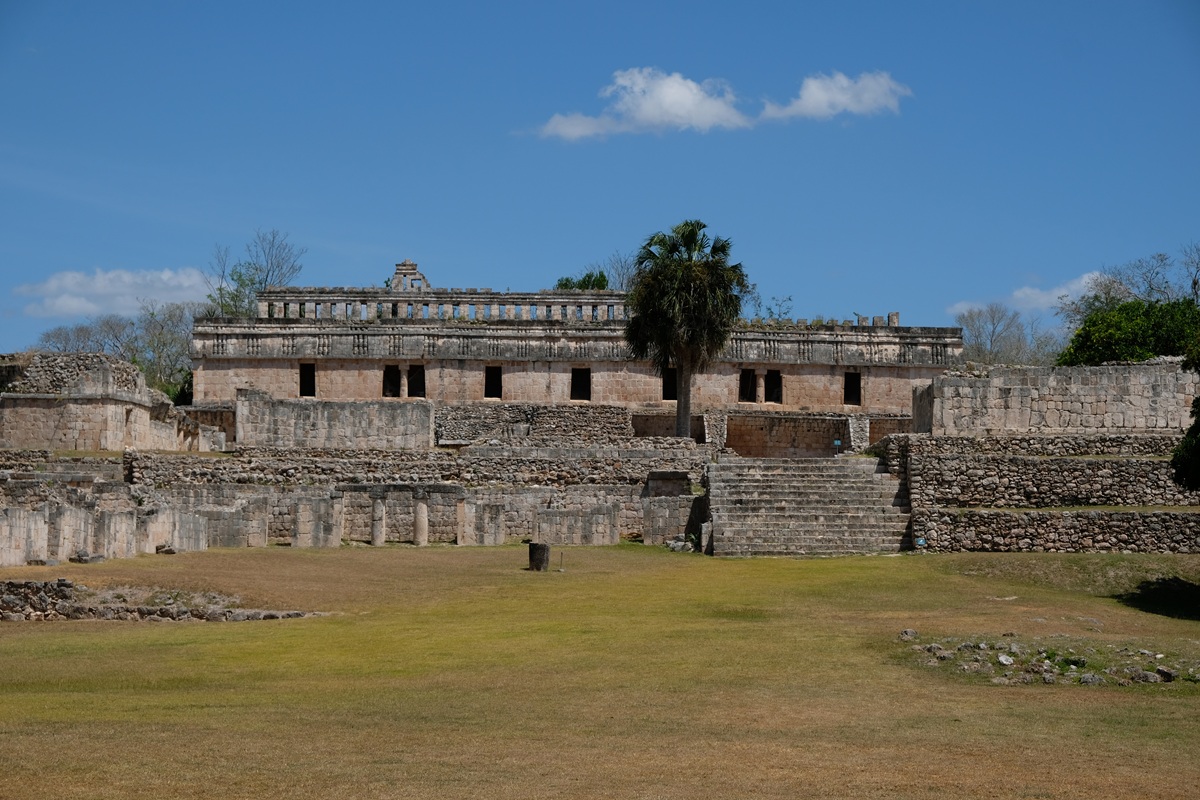
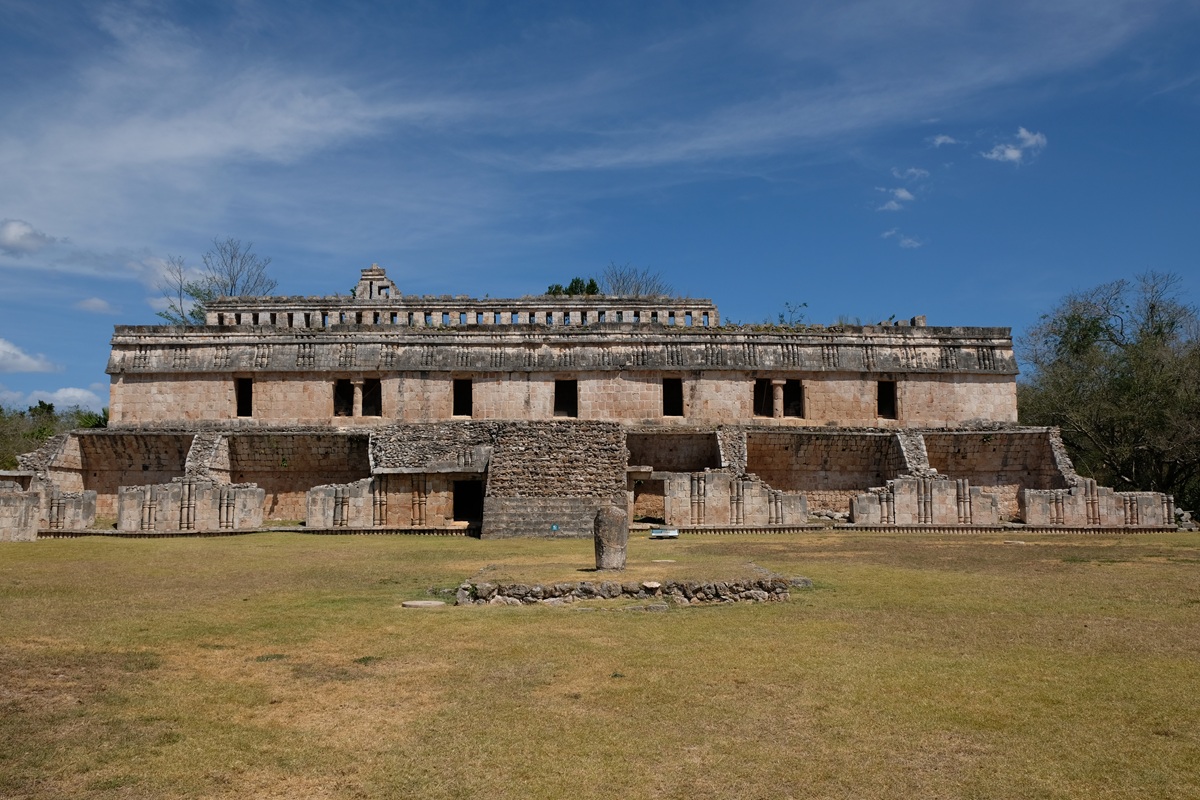
A structure known as The Palace (El Palacio) at the far end of the compound
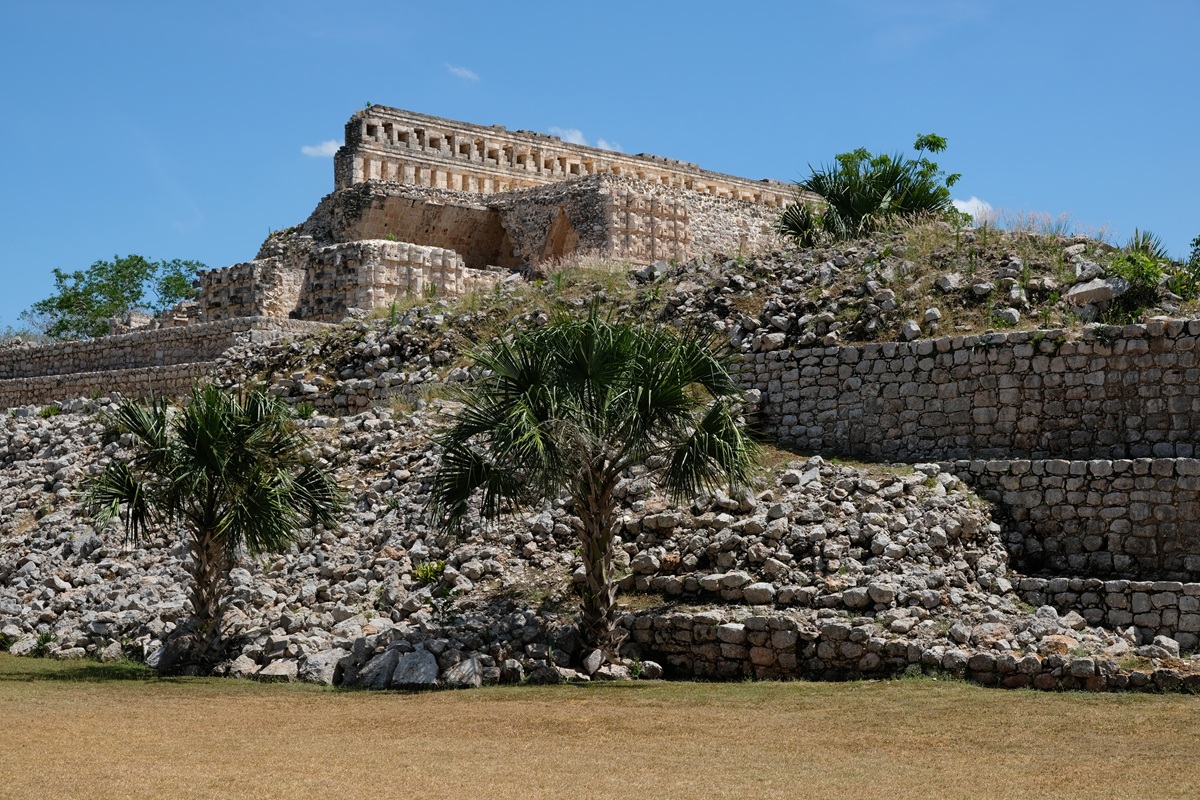
At this point, my anticipation began to build up upon seeing glimpses of the Codz Pop
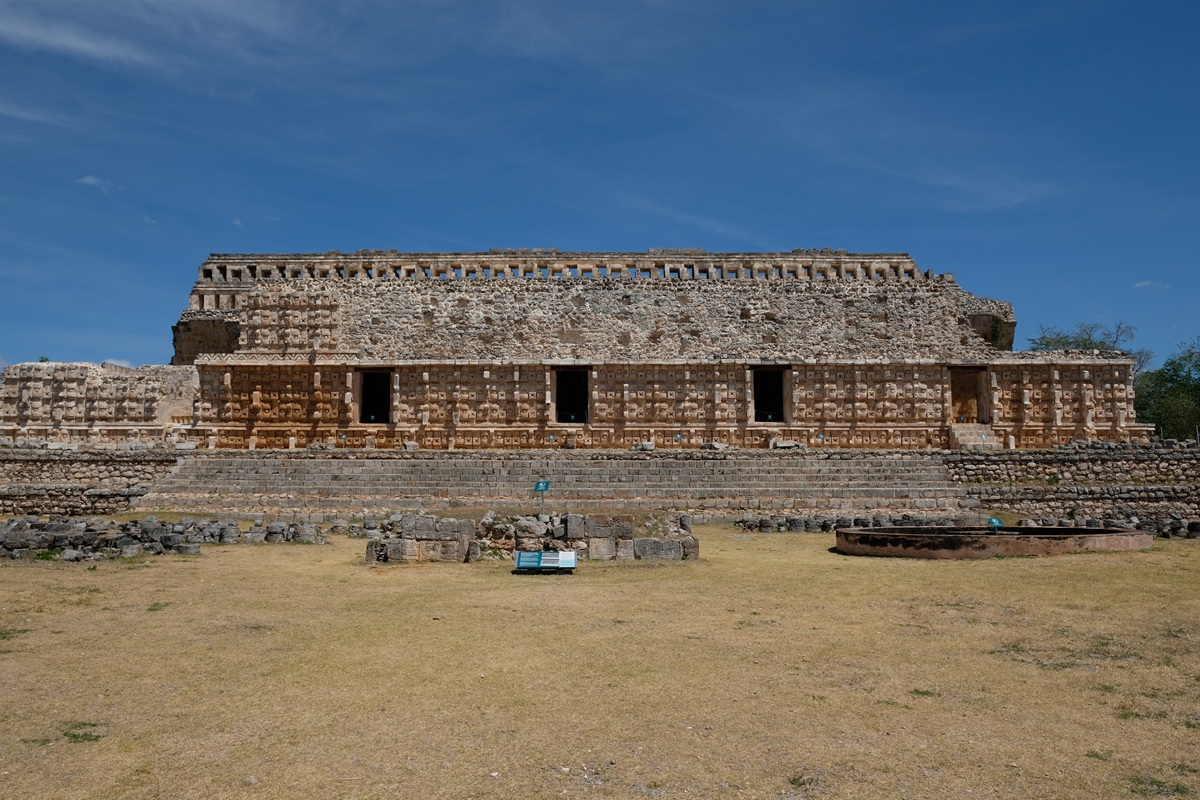
Standing before the Codz Pop, an ancient Maya structure like no other
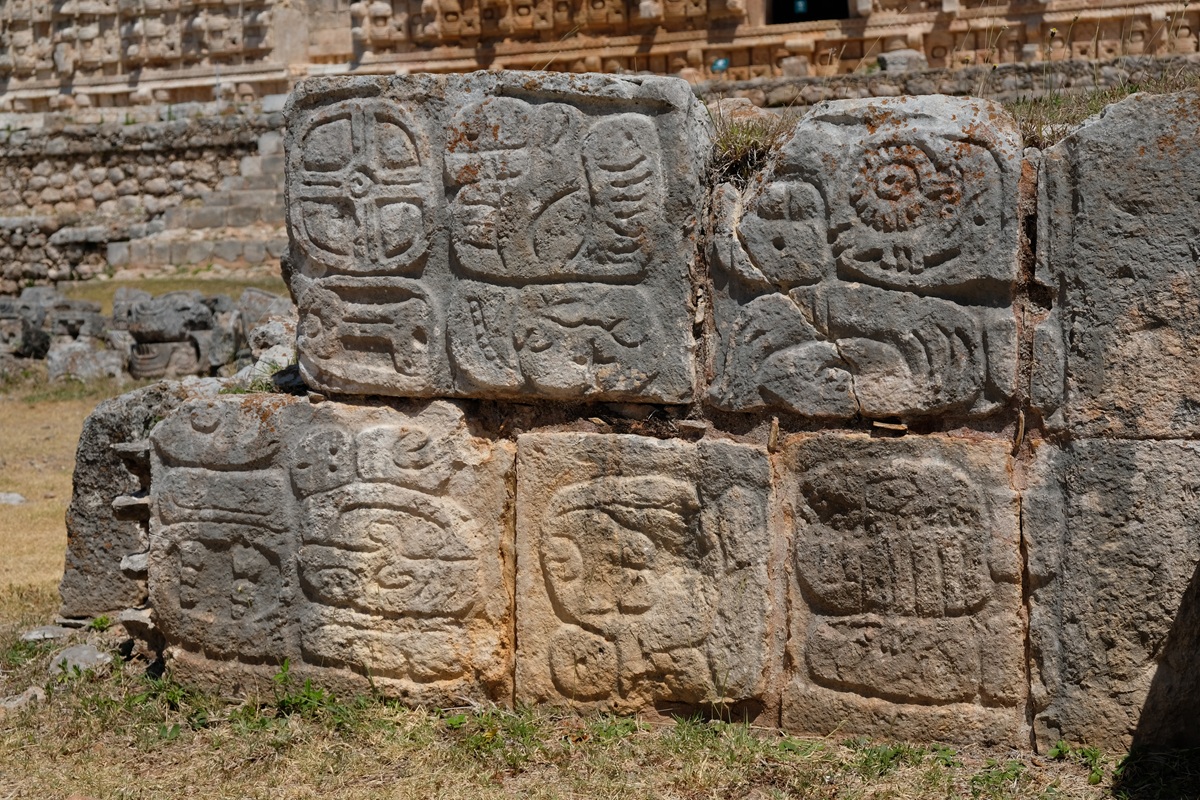
Fragments of the hieroglyphic altar in front of the Codz Pop
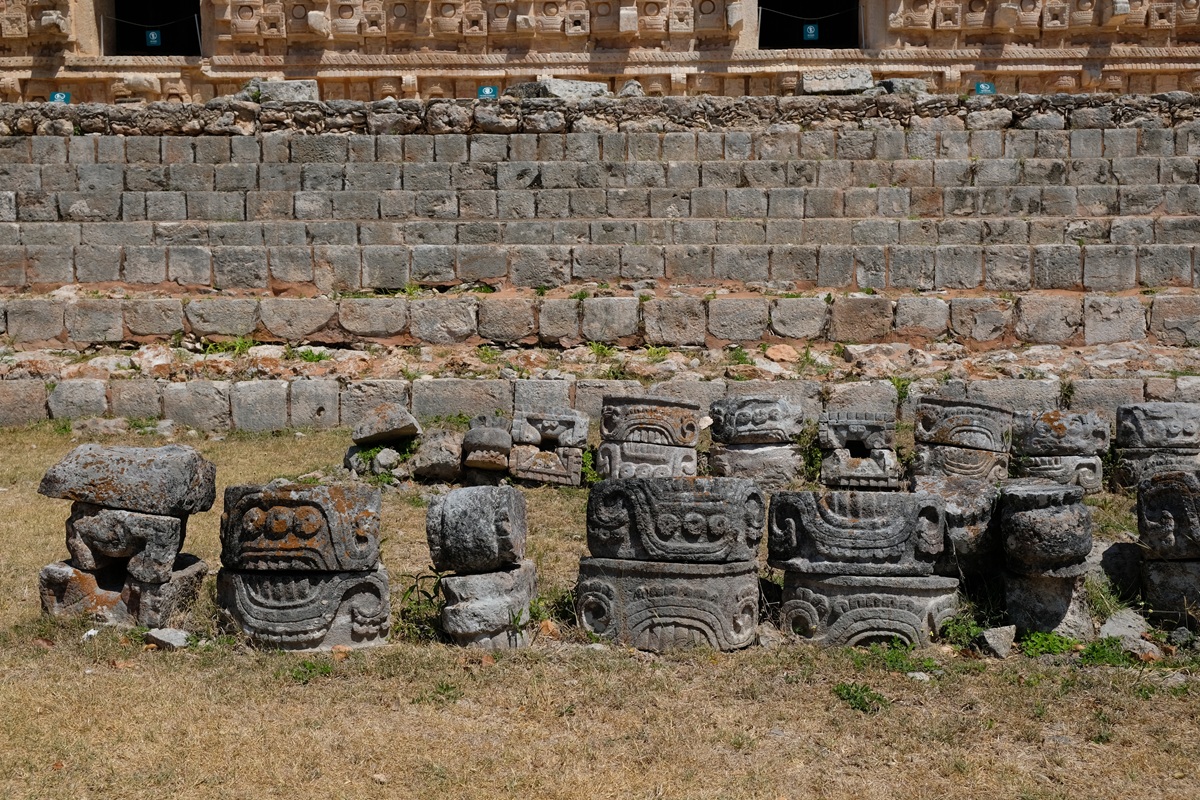
Pieces of art from the past
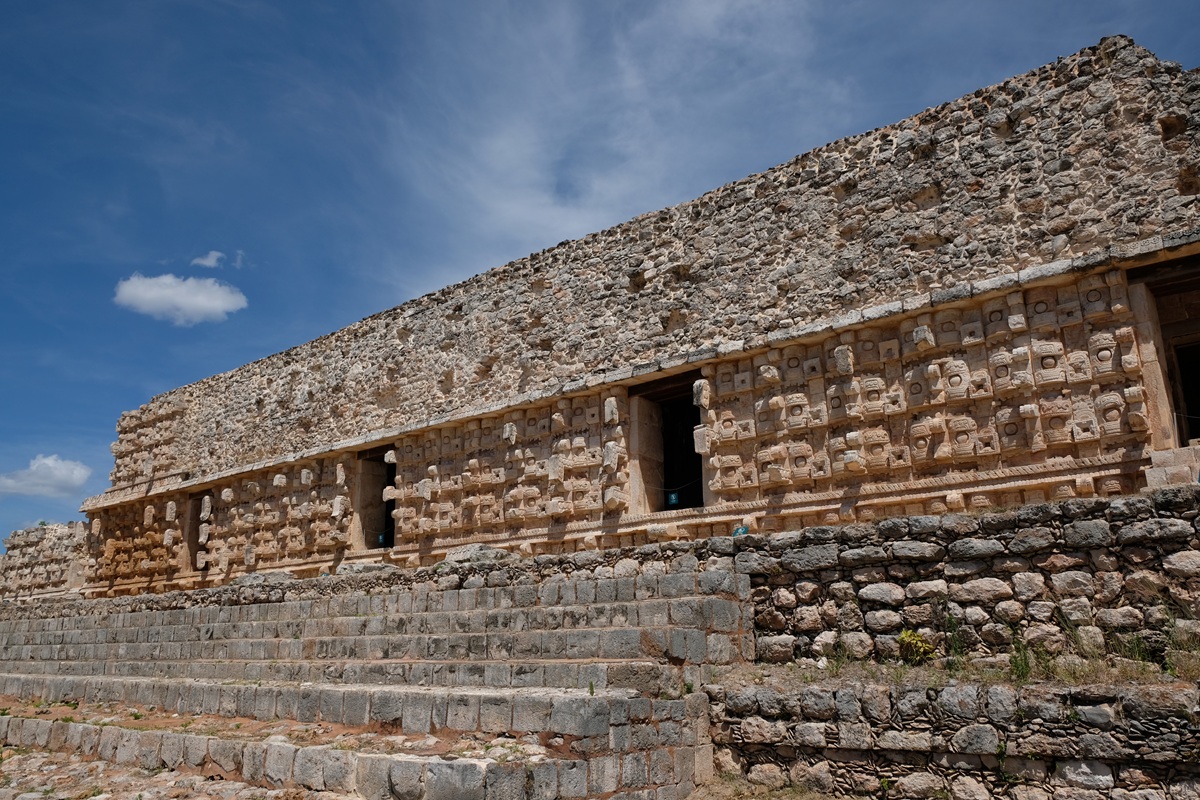
Row upon row of Chaac masks
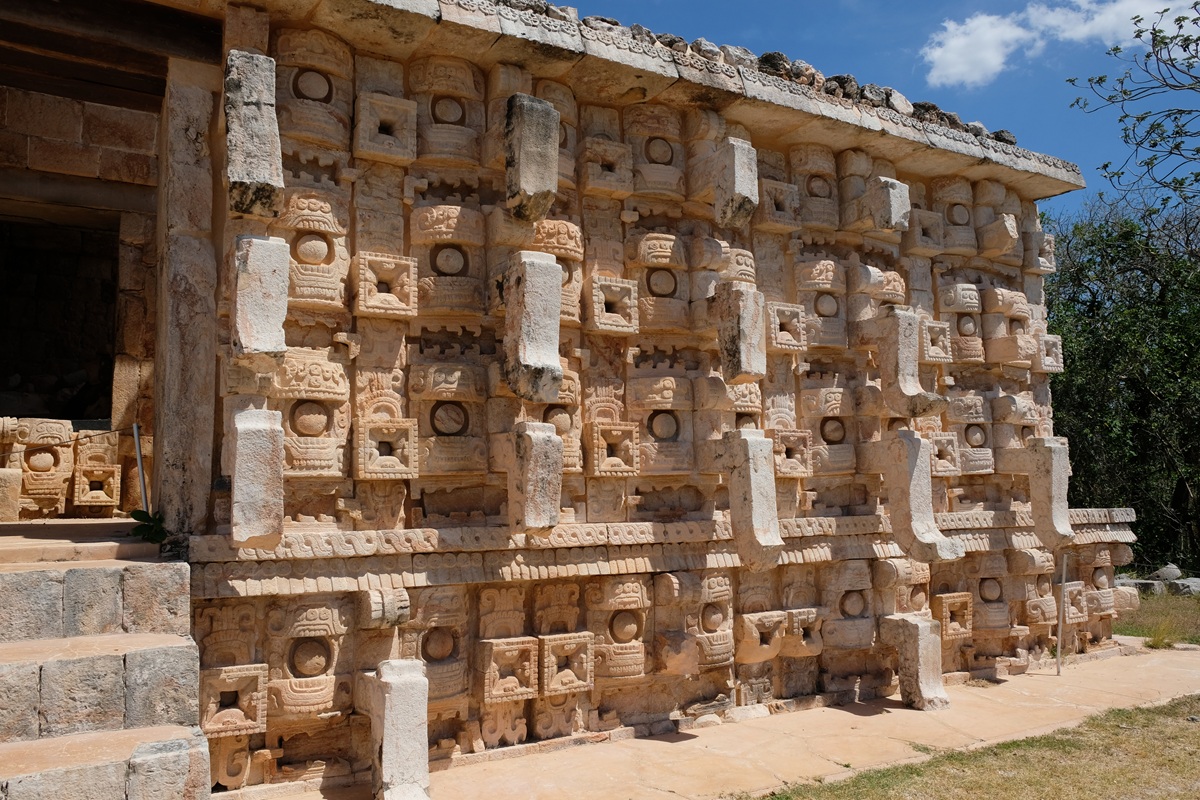
Archaeologists estimate that the structure was once embellished with 358 Chaac masks
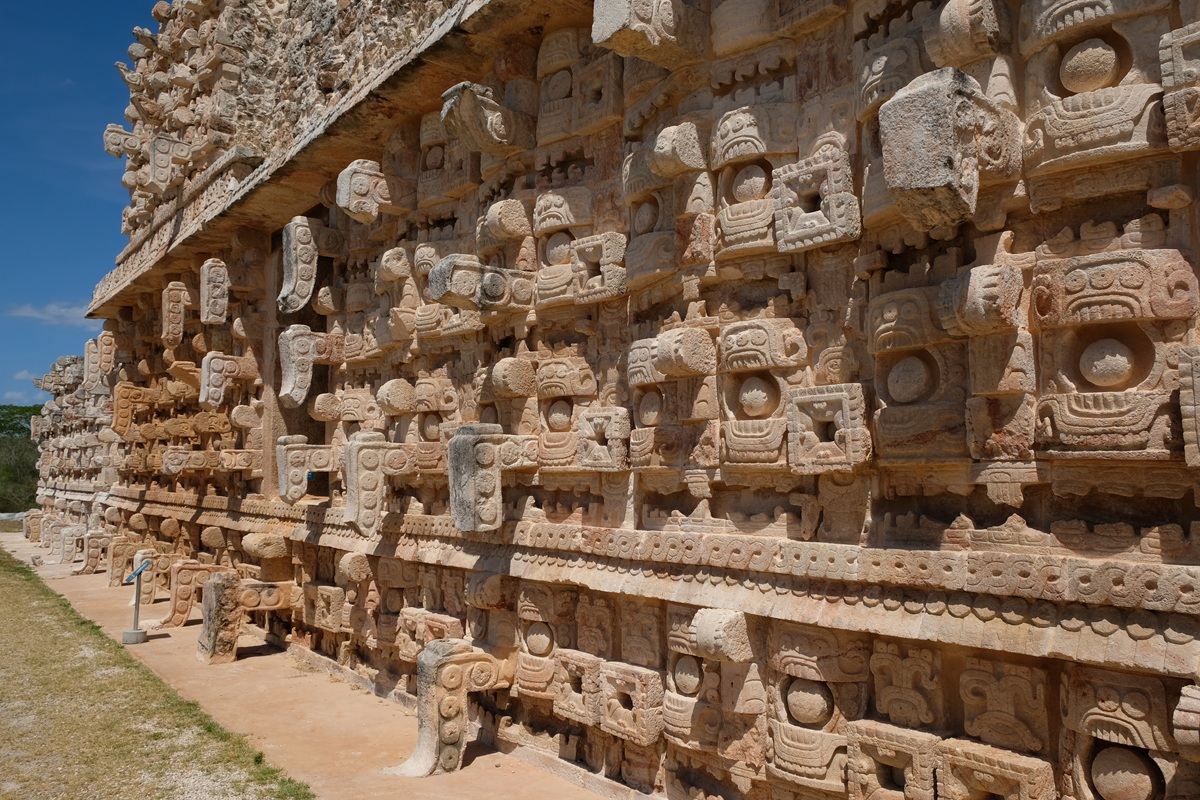
Faces of the Maya god of rain, thunder, and lightning
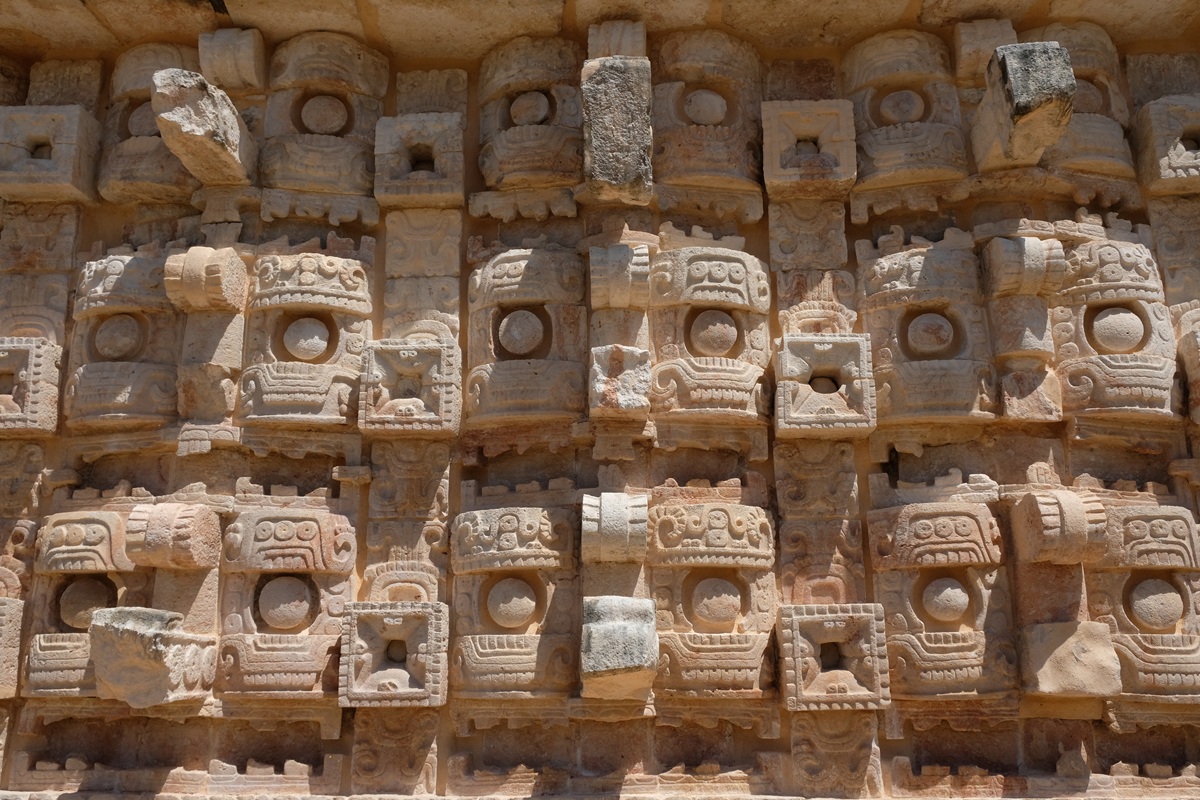
The ones that have lost their long curved noses
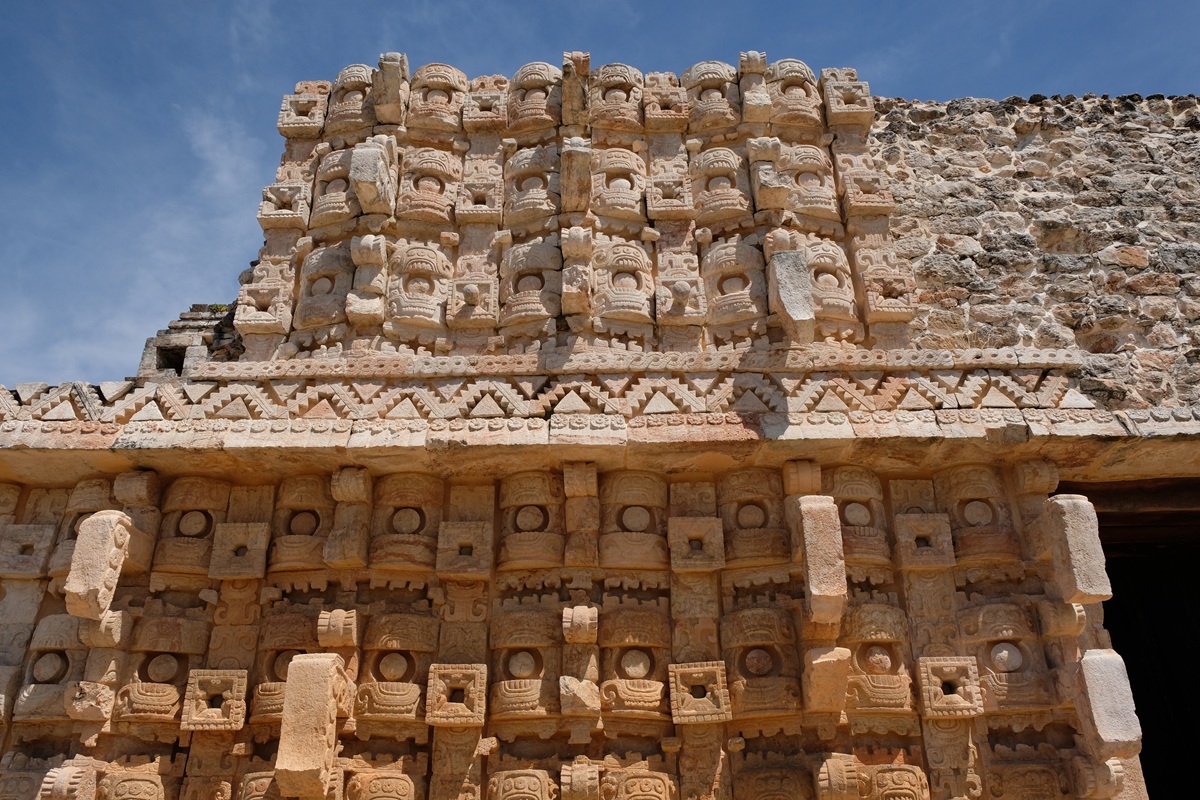
Under the watchful eyes of Chaac
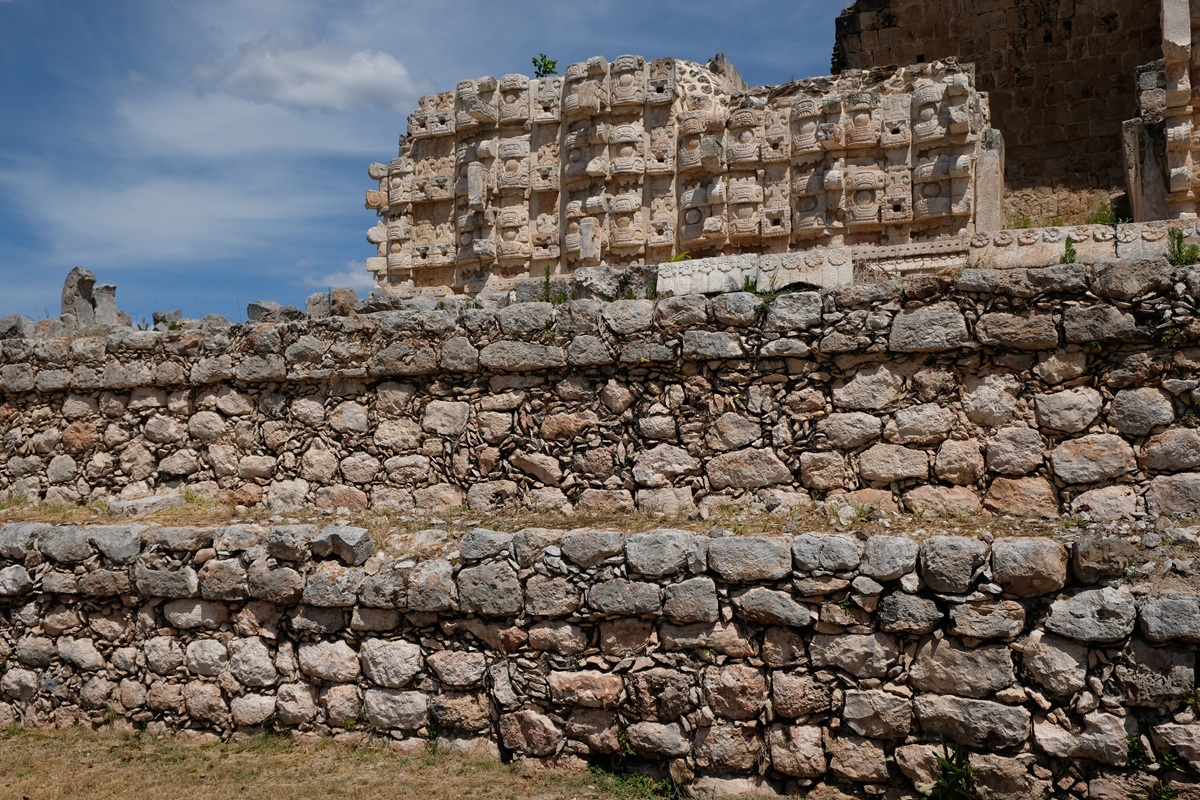
Layers of history, quite literally
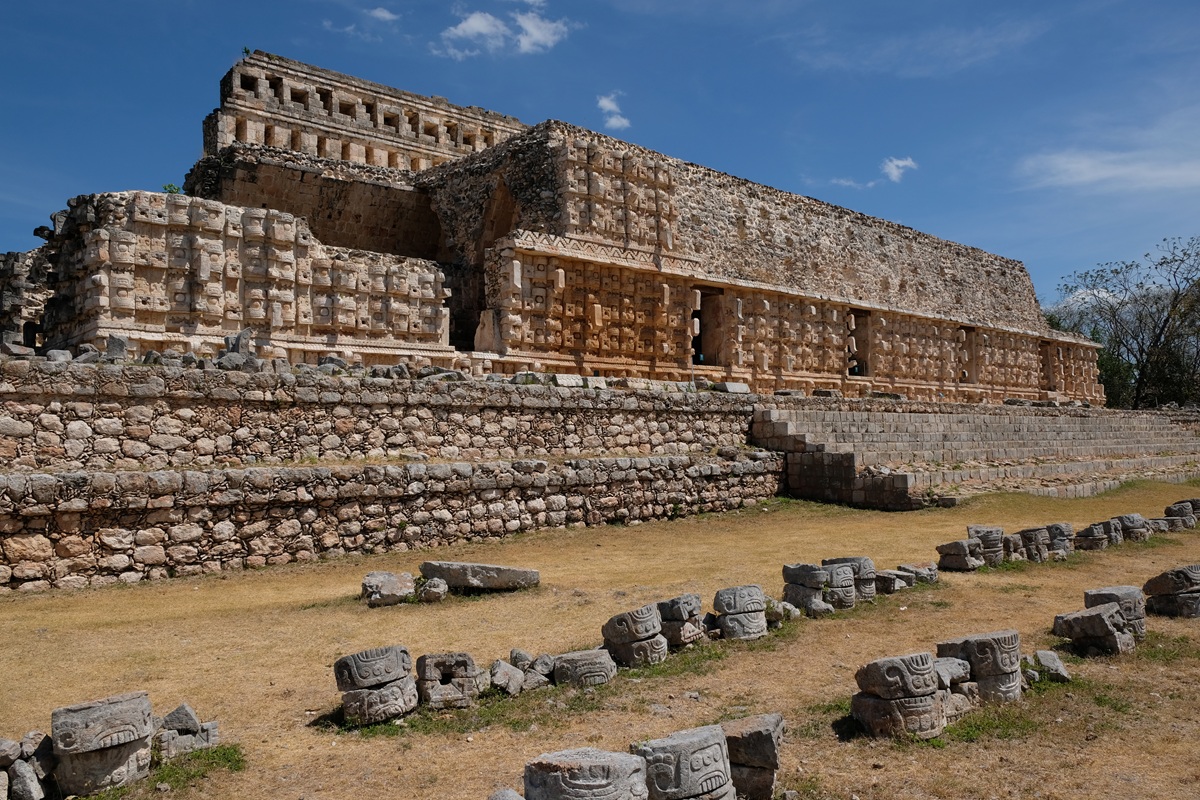
The magnificent Codz Pop
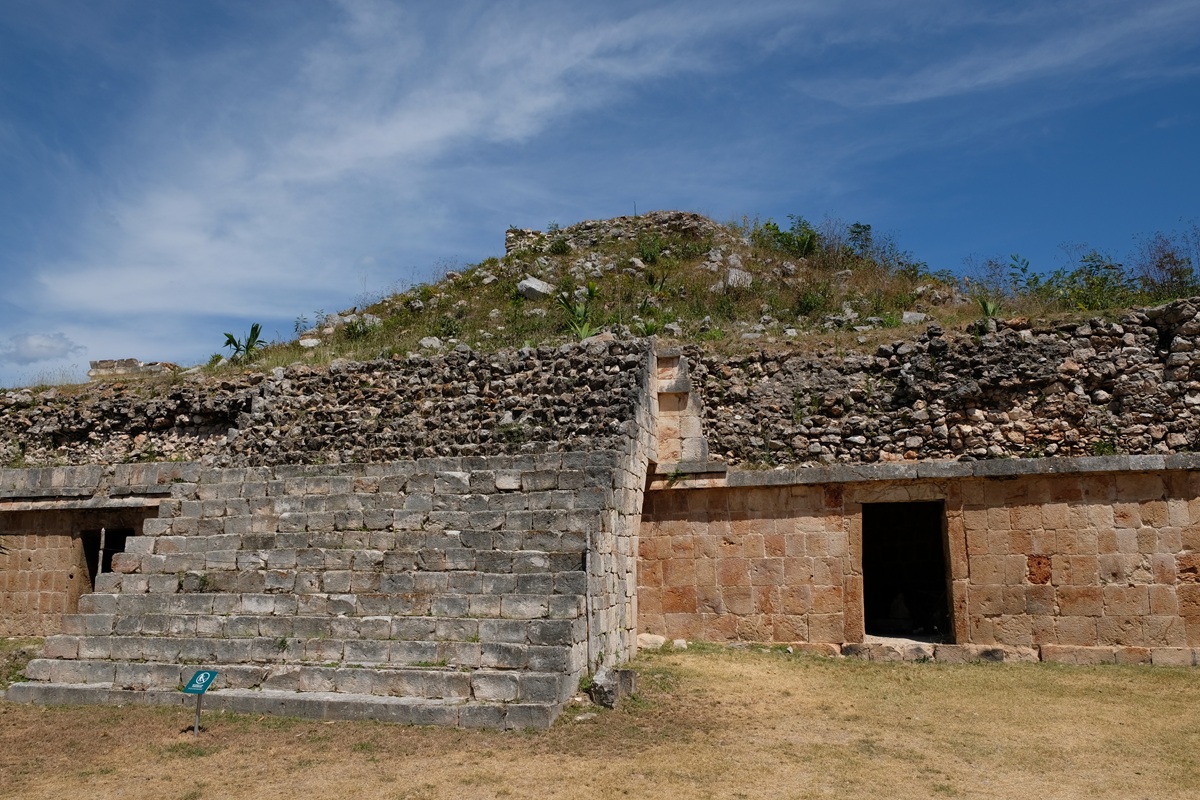
One corner of the compound that was in a partially ruined state
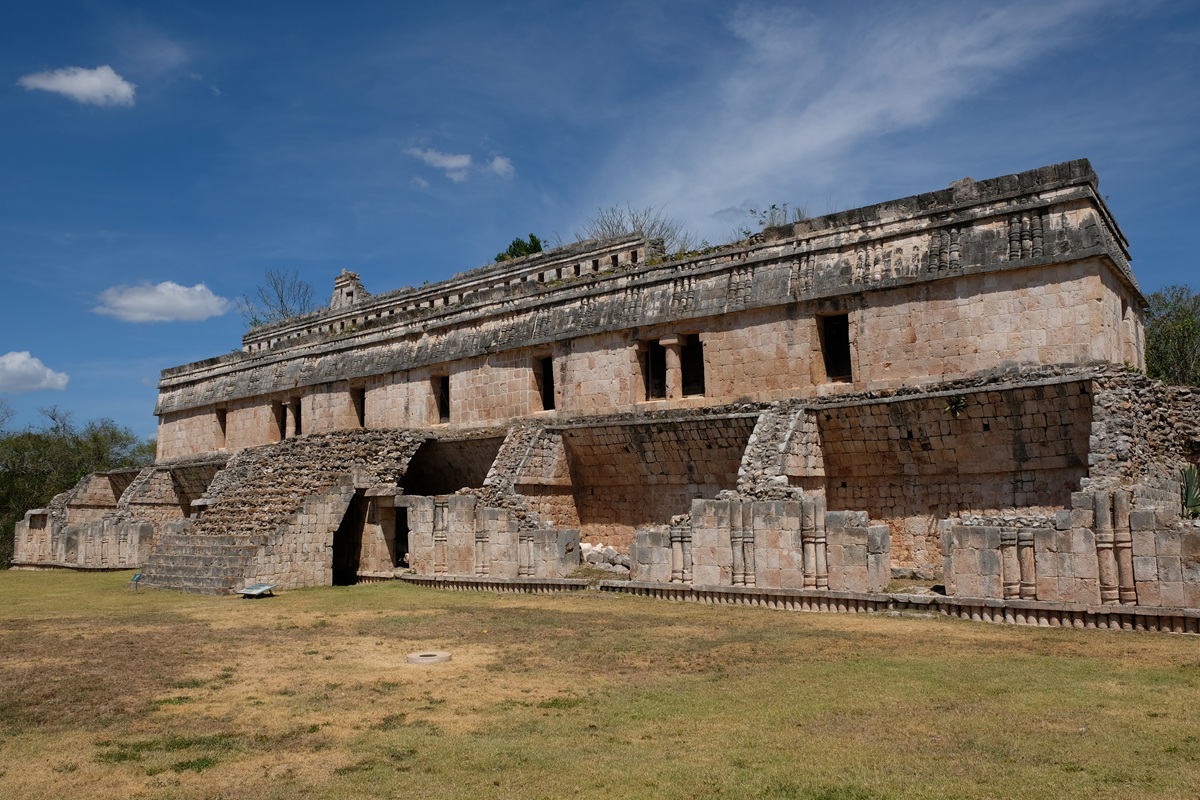
The Palace was probably the most important structure in the East Group of the archaeological zone of Kabah
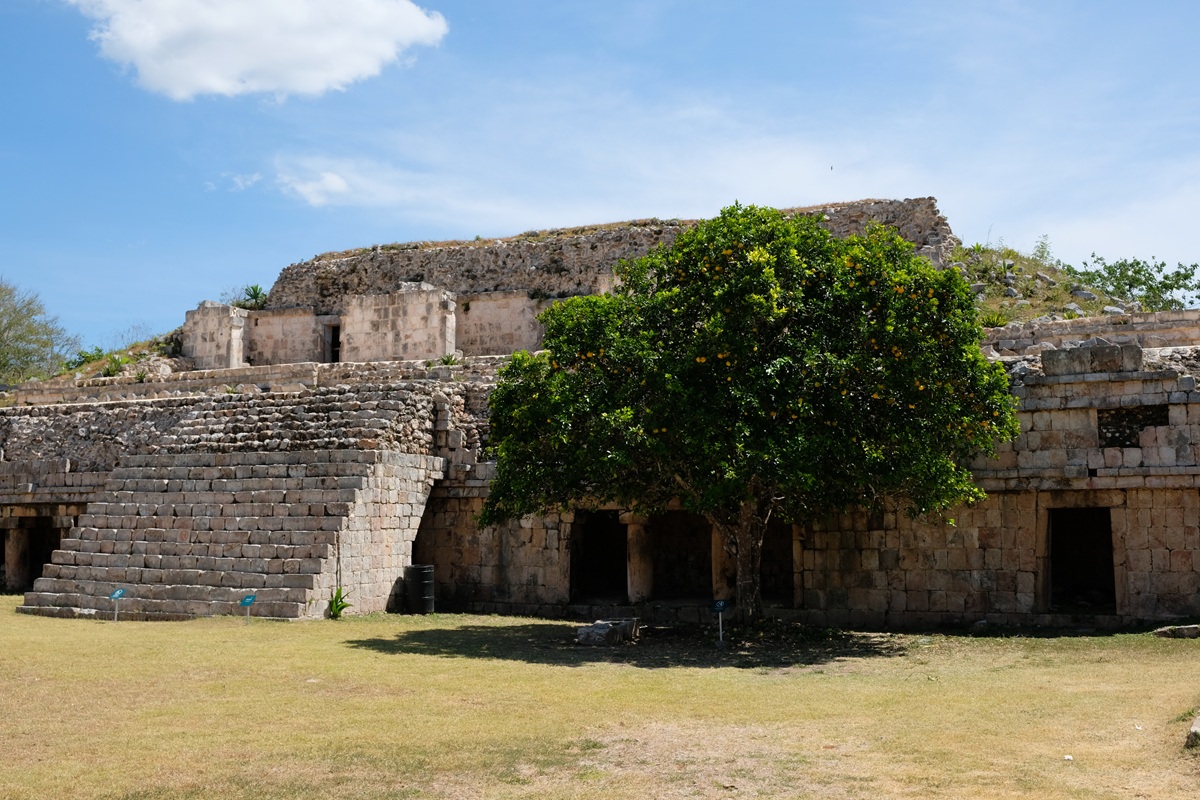
The Teocalli, a two-story structure directly behind the Codz Pop that used to have 37 vaulted chambers
One last look at The Palace before we continued to Sayil


I remember reading about other Maya sites along Ruta Puuc, but we didn’t think they would still have so much to see. I always love the curved nose version of Chaac, and looks like there were plenty of him in these. Great find Bama. Maggie
LikeLiked by 2 people
The three sites James and I went to after Uxmal (Kabah, Sayil, and Labna) were in different states of preservation. But each of them was absolutely impressive. I agree with you, Maggie — the curved nose of Chaac really makes this ancient Maya god such an intriguing character.
LikeLiked by 1 person
Just WOW! What an absolutely incredible site; Codz Pop in particular blows my mind. I can’t believe how advanced the Mayans were; this architecture and design, the ability to predict eclipses etc – it’s really amazing.
LikeLiked by 1 person
That was exactly my reaction when I saw the Codz Pop with my own eyes. I had never seen any ancient building quite like it before. The ancient Maya were incredibly advanced, and I’m really impressed with their highly-complex calendar. Just incredible!
LikeLike
Wow indeed…amazing sights and well worth the effort to get there. So many of those are being ignored but it makes them more wonderful for those who have a more adventurous spirit. You feel more like a real explorator! (Suzanne)
LikeLiked by 1 person
Admittedly, visiting places like Kabah can be quite a detour from the main sights where most tourists go. James and I really had to choose wisely which places we wanted to see given the limited time we had in Mexico. I’m glad in the end we decided to explore the ancient Maya sites along the Ruta Puuc!
LikeLike
Kabah is a precious site. Looking forward to Uxmal. (Another impressive site)
Jumpa lagi.
LikeLiked by 1 person
Kabah was very impressive, indeed. I’ve actually published my blog post on Uxmal earlier this year. The next post is on Sayil, another fascinating archaeological zone along the Ruta Puuc. Thanks Brian.
LikeLiked by 1 person
That’s right. I saw that post.
Take care.
LikeLiked by 1 person
What a truly wonderful and enjoyable post, dear Bama and a great reminder that the Maya civilisation was indeed truly amazing in its peak, especially as they built massive, complex city-states and pyramids in the middle of dense jungles. I’d love to see the Codz Pop and the stunning facade covered in hundreds of repeating masks of the rain god, Chaac, in person one day. Thanks for sharing, and have a good day 🙂 Aiva xx
LikeLiked by 1 person
I’m glad you enjoyed this post, Aiva. The ancient Maya peoples were such great and prolific builders. And now I have an even deeper admiration for them after seeing some of their ancient monuments, including Kabah. I hope you’ll get to see the amazing sites along the Ruta Puuc one day! I’m sure you’ll be impressed by the Codz Pop too.
LikeLiked by 1 person
🥰🥰🥰
LikeLiked by 1 person
That’s fascinating. My trip to the Mayan Yucatan also left a lasting impression on me. I’m left with one question: why didn’t the Maya, with their many city-states, did not manage to build a unified empire, like the Incas further south, for example?
LikeLiked by 1 person
That’s an interesting question. Similarly, the ancient Cham people of Vietnam were never unified under one central rule either. And recently, I learned that this was also the case with the Etruscans. I guess this is an example of how no single form of governance works for everyone.
LikeLiked by 1 person
I love how you and James visit lesser known and visited sites, Bama. Perhaps because it is what I’m forever searching for as well when I travel. It makes for a very different experience when one visits places where one is often alone, instead of being surrounded by lots of people.
LikeLiked by 1 person
These days whenever we travel, we always try to check out lesser-known places as well in addition to visiting the obvious main draw. As you said, it does offer a different experience, and a much quieter one!
LikeLiked by 1 person
Wow – it’s great that these are still around. I’ve always wondered how a sophisticated civilization like theirs just faded away. I also like your approach in seeking out non major attractions – it looks like you had the place to yourself.
LikeLiked by 1 person
The decline of the ancient Maya civilization can be attributed to several factors, but it happened gradually over the course of centuries. It’s great though that many things that they built in the past are still standing today. There were a few other visitors at Kabah when we were there. But at Sayil (the next destination after Kabah) there were even less people.
LikeLike
Beautiful photos and travelogue, Bama!
I bet the locals enjoy tourists like you and James, because you take them to off the beaten paths and also help them discover a different part of their community, like Kabah.
The chaac masks are interesting and so intricate and it truly is stepping back in time. The Mayan are very interesting people and their influence and beliefs are still felt today. 2012, remember that year of supposed doom?
Look forward to reading about Sayil next time!
LikeLiked by 1 person
Much appreciated, Ab!
I too would certainly appreciate foreign visitors who come to Indonesia and explore its lesser-known places. With mutual respect, this is how cultural exchanges happen.
When I read about how the Maya calendar works, I was honestly overwhelmed. It’s really incredible! Oh yes, I do remember 2012, and also the movie.
Sayil was a place I felt as if I was Indiana Jones. That’s for the next story.
LikeLiked by 1 person
I look forward to your Indiana Jones recap!
LikeLiked by 1 person
Despite spending such a short time at this site, you still covered a lot of ground! It’s incredible just how advanced Mayan civilization was back in the day, and the Puuc architecture is mesmerizing to the eyes. Goes to show there’s a lot more to Yucatan than just Chichen Itza! Thanks for sharing, Bama 🙂
LikeLiked by 1 person
If we need to, we can be very efficient when it comes to exploring a site. 😆 But of course, we prefer to take our time whenever possible. The Puuc architectural style is just so unique and fascinating. Structures built in this style are among the most elaborate in the ancient Maya world.
LikeLiked by 1 person
The Mayan civilization is so fascinating. It’s remarkable how much they were able to accomplish. Their craftsmanship and construction were incredible. I really liked all those masks of Chaac. I wonder how long it took to come up with estimating that there were 358 of them!
LikeLiked by 1 person
They really were among the world’s greatest builders, and their achievements in science were also quite remarkable. We’re lucky that a lot of their monuments still survive to this day so we can marvel at their accomplishments. The Chaac masks of Kabah are fascinating, aren’t they?
LikeLiked by 1 person
Mayan art and writing feels so futuristic, it’s the sort of glyphs I’d expect to find in some alien spaceship. I loved watching the Mayan codexes in the Museum of Anthropology over in CDMX!
LikeLiked by 1 person
Maya glyphs in an alien spaceship… somehow that sounds familiar! I wonder if I’ve seen it in a movie many years ago. I remember those codexes at the museum in Mexico’s capital, and I too was completely mesmerized by them.
LikeLike
Amazing story! I have not seen these ruins. I can’t remember but did you go to Tikal? For me that was my favorite of the ruins I’ve seen in Mexico, Belize and Guatemala. And when we went we were the only ones there. So rare!
LikeLiked by 1 person
I haven’t been to Tikal yet, but it’s among the places I most want to see the next time I visit that part of the world. I remember your blog post on Antigua in Guatemala from many years ago. So, that and Tikal certainly put the Central American country really high on my wish list.
LikeLike
These posts of yours on the Mayans are special, even though I’ve heard of them since I was young, it’s great to see (and read) how they truly were master builders, astronomers, and mathematicians—the Puuc architectural style is a good example. And I had to smile as you continued the fascinating travel piece I love reading about, visiting lesser-known sites. The photos you have, along with your description of Codz Pop’s sea of Chaac masks, really convey how otherworldly Kabah must feel in person. Seeking out these quieter, lesser-visited sites; it makes the achievements of the Maya that much more special—such a tremendous civilization. A beautiful read this Sunday, as always—I learn a little bit, and dream even more 😊.
LikeLiked by 1 person
I read that ancient Mesoamerica was among the world’s most important cradles of civilization. Now I understand why, especially after visiting some ancient Maya sites in Mexico. Their achievements were really amazing, and lucky for us that some of them are still standing to this day, like the Codz Pop which, as you can see, was quite impressive. Thanks Randall!
LikeLike
Bama, our brief visit to Kabah was a wonderful introduction to the other sites along the Ruta Puuc – I think we would have stayed a little longer had the temperatures been a little cooler and more bearable! It amazes me that Codz Pop remains so well-preserved more than a thousand years after it was built. A shame we missed the unique sculptures on the back of Codz Pop, but then again they would have been backlit and very hard to photograph. I remember how my camera, which was fine at Uxmal, began to overheat and malfunction at Kabah.
LikeLiked by 1 person
If you didn’t mention about the heat I almost forgot how hot it was when we were at Kabah. But you’re right about the sculptures we missed — the timing of our visit would’ve probably made it difficult for our cameras to capture them. Nevertheless, I’m glad that we managed to see the main structures of this archaeological site. I actually wasn’t aware of the problems with your camera when we were there!
LikeLiked by 1 person
Another incredible site. And I love how your words make the history accessible and interesting.
LikeLiked by 1 person
Much appreciated, Jolandi. I have one more post from the Ruta Puuc before continuing with stories from Uzbekistan.
LikeLike
Looking forward to that!
LikeLiked by 1 person
Ooh the Codz Pop with all those Chaac masks is magnificent! And your photos do it justice. Kabah is definitely on my list. Hoping to add in Sayil if I can.
LikeLiked by 1 person
The moment I stumbled upon images of the Codz Pop, I immediately knew I shouldn’t miss this place on my trip to Mexico last year. I hope you’ll have enough time to visit some of the lesser-known ancient Maya sites as well!
LikeLike
Such an impressive palace! It took me a while to identify the eyes of those Chaac masks. At first, I assumed that each mask had three eyes and a mouth (full of teeth) holding a ball inside. But when I read that it has a long curved nose, I realized that those balls are actually eyes 🙂
LikeLiked by 1 person
The depiction of Chaac is so different from what we’re used to seeing at ancient sites in our part of the world, isn’t it? And that makes it very fascinating. Sometimes, you do have to use a little imagination to interpret some ancient carvings though.
LikeLike