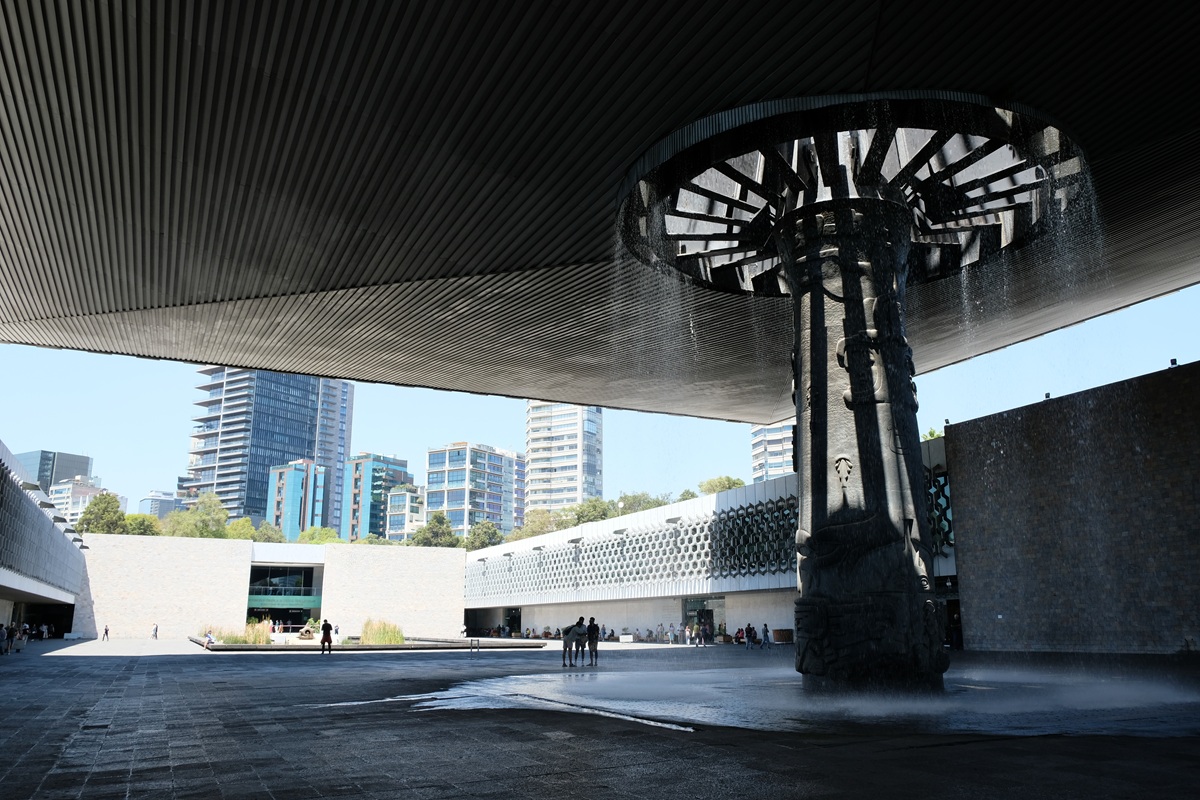
The iconic umbrella at the Museo Nacional de Antropología
Visiting a new country with a completely different culture and where the people speak a language you don’t understand can undoubtedly be daunting. But everyone has their own way of getting their bearings. And for James and I, we usually visit the national/most important museum of a country (usually in the capital or biggest city) to get a better understanding not only of the history of the sites we will see throughout the trip, but also the nation itself. This was exactly what we did the day after we arrived in Seoul, as well as in Beirut before we ventured deeper into the mountainous region of Lebanon, and in Amman prior to leaving the capital for the Jordanian desert. Language-wise, Mexico was easier for James than it was for me. However, culturally the Latin American country is so different from our home in Asia.
James, with his Hong Kong upbringing, can point out the cultural similarities among East Asian countries. And I, who grew up reading and listening to stories inspired by Hindu epics, can see traces of Hinduism in local customs and traditions across Southeast Asia. Along with trade activities between kingdoms and empires in Europe, the Middle East, and Asia since antiquity, there have also been cultural exchanges among these regions for millennia. While some influences were palpable, others were more subtle. Greco-Roman facial features on Buddhist statues found in Pakistan and Afghanistan, Chinese-inspired porcelain made at workshops across Europe, and Islamic architectural elements incorporated into mosques that resemble ancient Hindu temples in Java are only a few examples of such exchanges.
However, on the other side of the globe, separated from Eurasia and Africa by vast oceans, was Mesoamerica. It was a cultural region where ancient civilizations developed their own beliefs, technology, systems of governance, and architectural styles, among other things, independently from the rest of the world, thanks to its geographical isolation. All of this created unique cultures, reflected in everything from food to monumental structures, that were the main reason for James and I to put this part of the world among the places we most wanted to visit.
Prior to our trip to Mexico almost two months ago, we had read great reviews about the Museo Nacional de Antropología (MNA) in Mexico City. The modern institution’s history, however, can be traced back to the 18th century when the country was still part of New Spain. An Italian-born historian and ethnographer by the name of Lorenzo Boturini amassed a collection of pre-Columbian artifacts from various parts of the Spanish-controlled territory, copied inscriptions written by ancient Mesoamerican peoples, and made drawings of the ruins and sculptures he stumbled upon throughout his explorations. Following the independence of Mexico from Spain in 1821, Boturini’s collection was transferred to different state institutions, before in 1940 its custody was finally entrusted to the then newly-formed Museo Nacional de Antropología.
In the early 1960s, three Mexican architects were tasked with designing a new compound for the museum. And in 1964, the current premises of the institution were inaugurated. On our second day in Mexico City, under bright blue skies and blooming jacarandas, we joined other visitors lining up to get inside the modernist structure. From the outside, the museum looked rather austere. But once we went past the first building and walked into the courtyard, a giant umbrella (“el paraguas” in Spanish) with water running down along its edges welcomed us and other visitors. Apart from the artifacts themselves, this unique structural and artistic element of the compound must be among the most photographed objects at the museum. After marveling at it, we then had to decide where to start, and we opted to go to the right where the hall of Teotihuacan awaited.
Teotihuacan and the Toltecs
The pyramids of the ancient city of Teotihuacan that are situated to the northeast of Mexico City were firmly on our list of places we wanted to see on this trip. That’s why we knew we had to check out a section of the museum dedicated to the civilization that built those imposing monuments.
While the Pyramid of the Sun, the Pyramid of the Moon, and the Pyramid of the Feathered Serpent are among the most impressive ancient structures in Mexico today – almost 2,000 years since they were constructed – relatively little is known about the society that erected them due to the lack of written records about them. What archaeologists managed to salvage from the ruins, however, were then relocated to the MNA as their permanent home. Some of the artistic creations left by the same people were then reproduced at the museum so that present-day visitors can get an idea of how festive and colorful the walls of Teotihuacan were during the heyday of this city.
As we entered the hall, the Disk of Mictlantecutli beckoned visitors to come closer and explore this section further. Although the artifact was discovered in Teotihuacan, it is unclear whether it was created by the residents of Teotihuacan or by the Aztecs, a Nahuatl-speaking people who would dominate this region centuries later. We followed the path to the right, and moments later as I walked to the main exhibition hall, I was wonderstruck with my mouth agape and goosebumps all over my arms. Standing before me was a giant structure that was a reproduction of a portion of the Pyramid of the Feathered Serpent. This was how the structure must have looked like almost two millennia ago when it was still painted in brilliant colors.
Elsewhere in the gallery, numerous artifacts unearthed from Teotihuacan were displayed to shed light on this rather mysterious culture. One giant statue of Chalchiuhtlicue, in particular, caught my attention as it was carved out of andesite, a type of volcanic rock that is also abundant in Java, making it the preferred material for building many of the tropical island’s most impressive ancient Hindu-Buddhist temples. Another thing I found so interesting about the MNA was the fact that in addition to indoor halls, each section of the main exhibition halls has an outdoor area that is cleverly used to give visitors more context about what they are seeing. In the Teotihuacan section, for example, a model of the great ancient city complete with the pyramids sits directly outside the main hall to give an idea of its scale.
Walking further to the adjacent hall brought us to the section on the Toltecs with their iconic giant Atlantean pillars. We didn’t spend too much time in this area since we weren’t planning to see Tula or any other regions of Mexico with significant Toltec-era ruins. However, it was neat to get a closer look at the vestiges of another ancient culture of this country that one day I hope I will get the chance to see at their original locations.
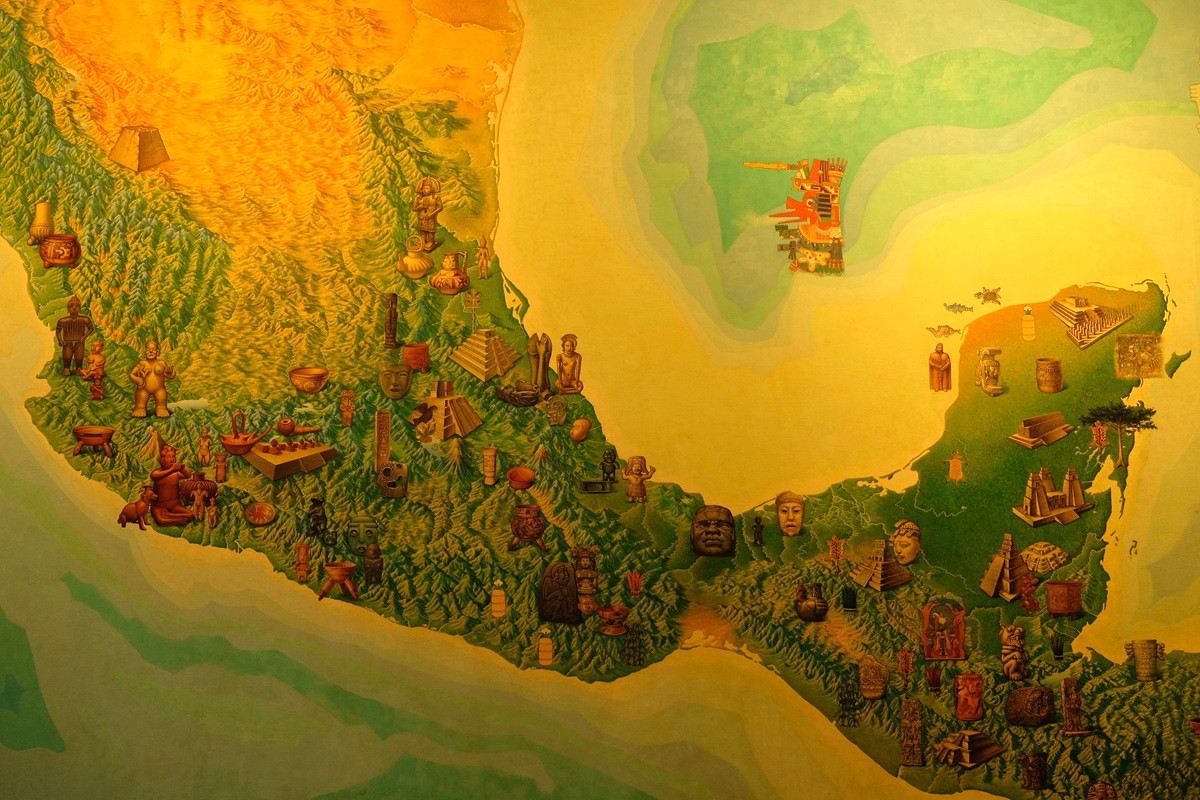
A map of the pre-Columbian cultures of Mesoamerica
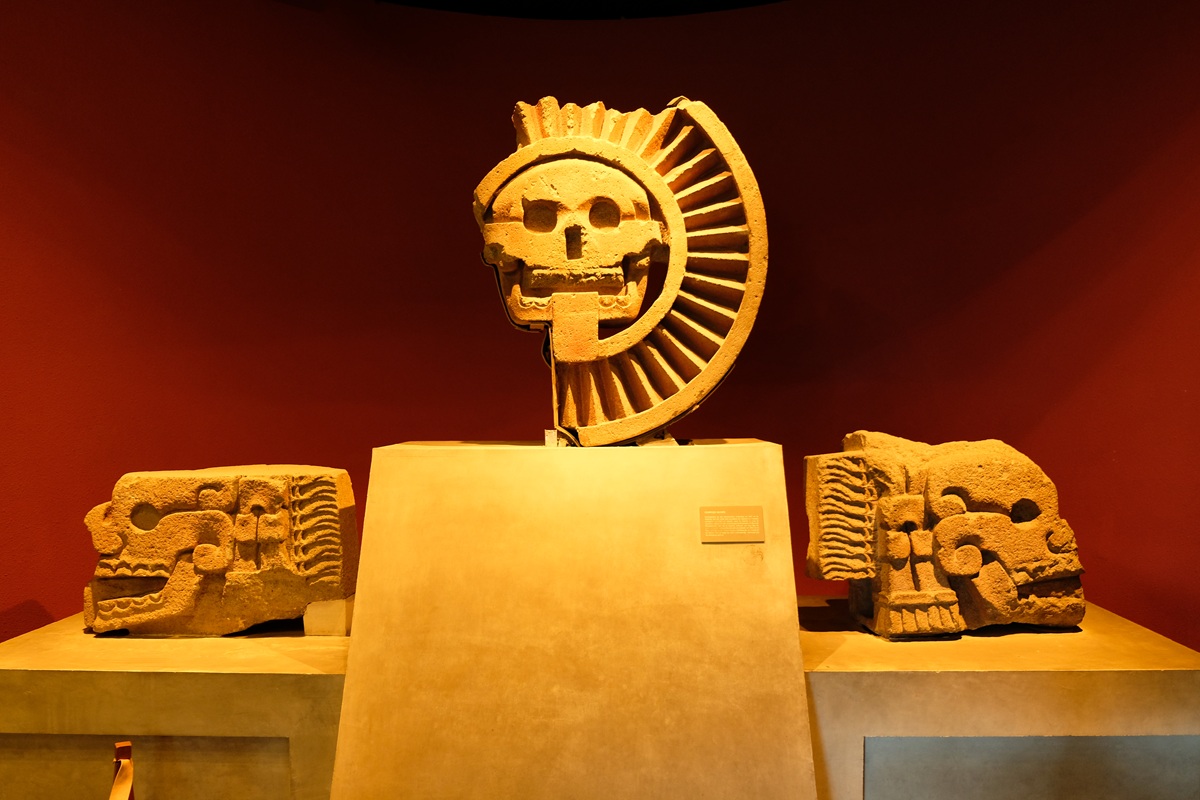
The Disk of Mictlantecutli (the Aztec god of death), discovered at Teotihuacan
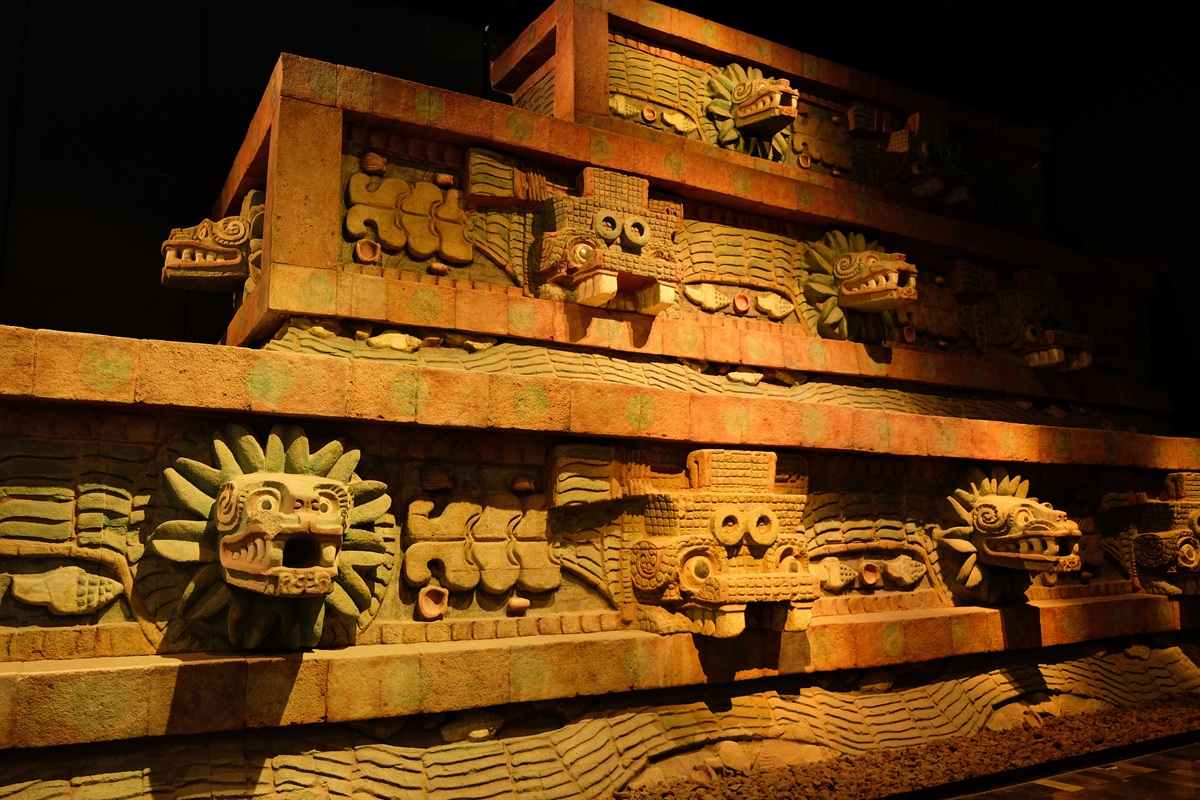
A reproduction of parts of the Pyramid of the Feathered Serpent
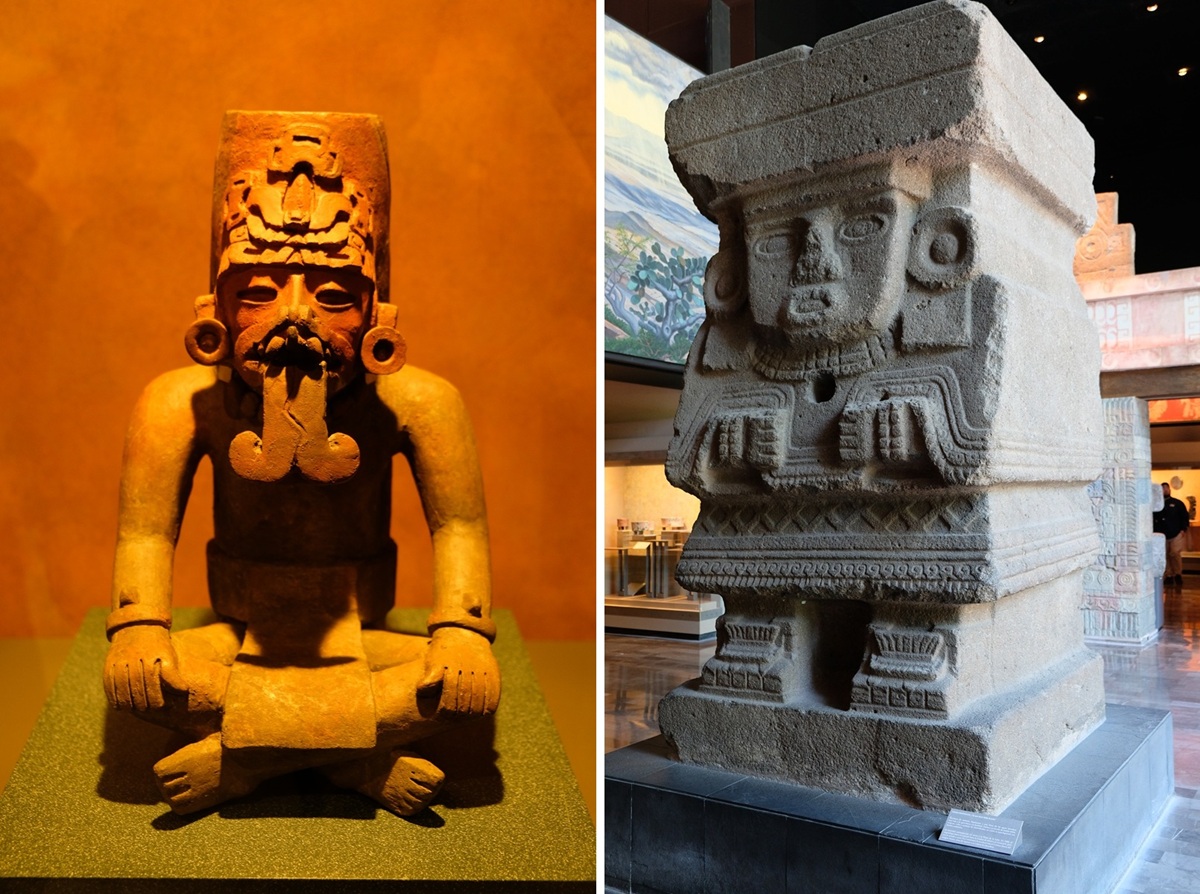
Left: A figure of Cocijo, the Zapotec god of rain, thunder, and lightning; Right: A monolith of Chalchiuhtlicue, the Aztec goddess of water, seas, oceans, rivers, streams, and baptism. Both are non-Teotihuacan cultural elements found in the ancient city
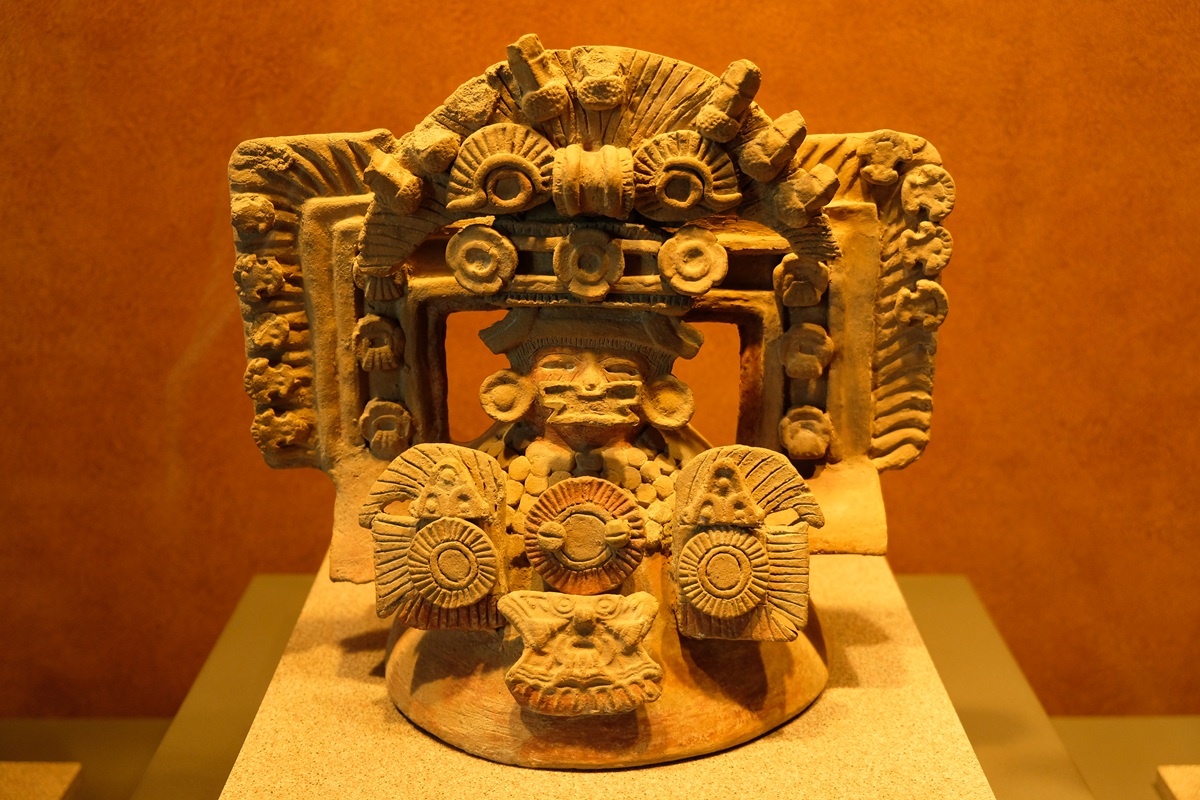
A highly ornate brazier, usually presented during rituals
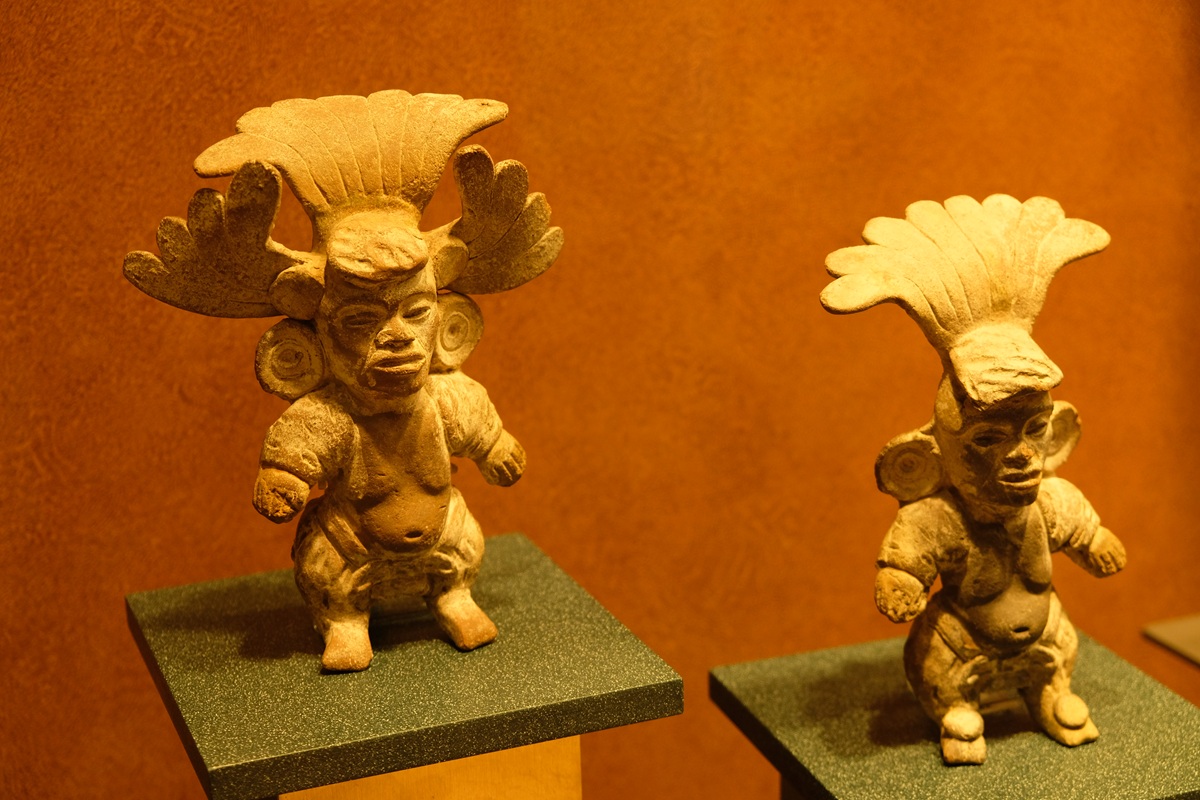
Ceramic figurines

A statue of Huehueteotl (a god associated with fire) in a room filled with reproductions of colorful painted walls of the structures at Teotihuacan
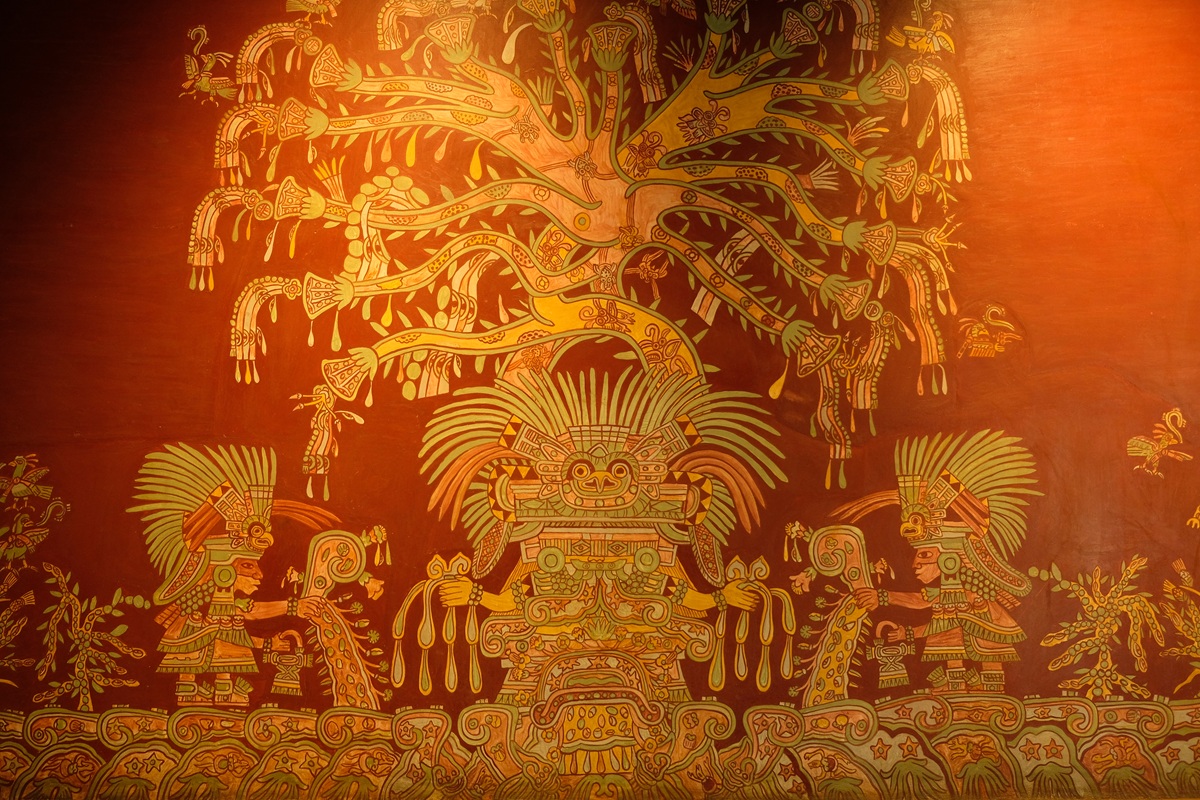
A reproduction of a mural depicting Tlalocan (an underworld ruled by Tlaloc, the Aztec god of rain)
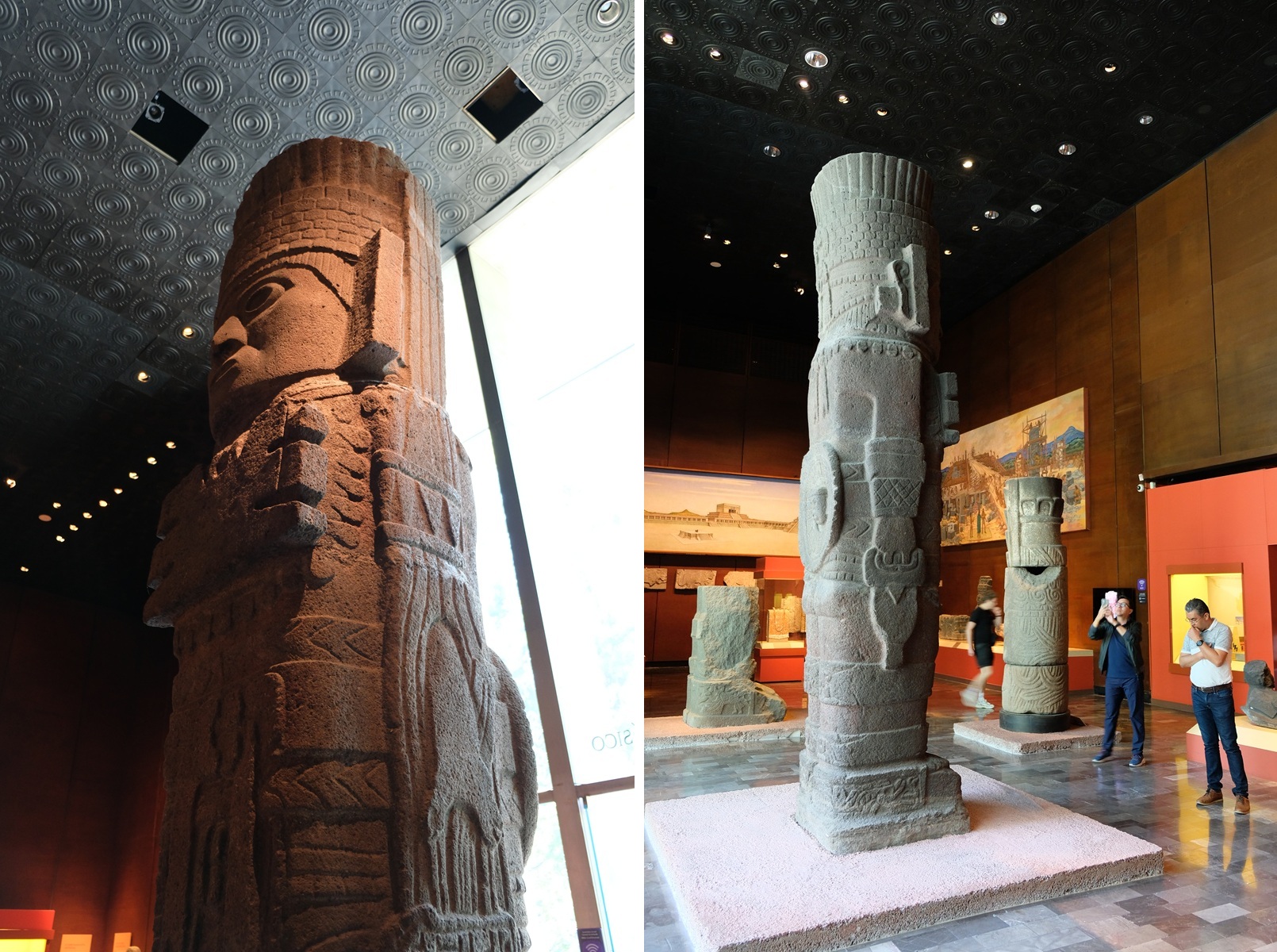
Huge Atlantean pillars at the Toltecs section of the museum
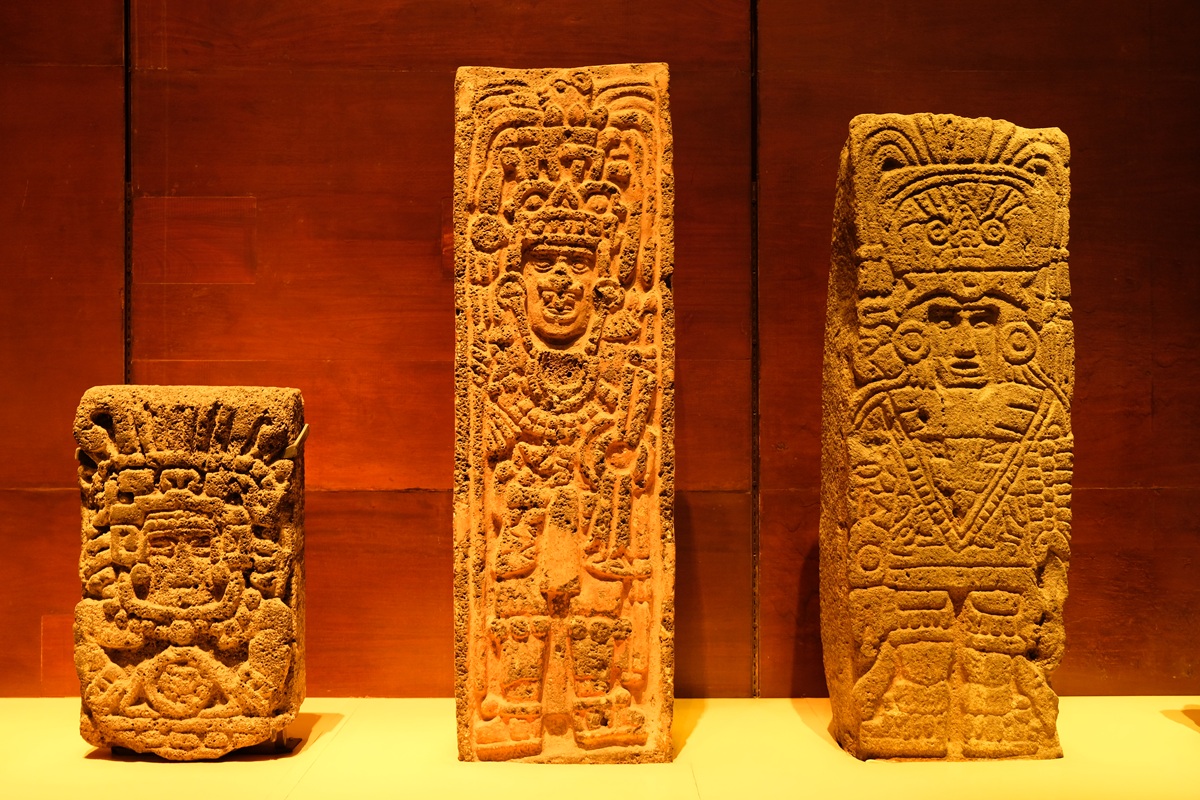
Sculptures from Tula, the heartland of the Toltecs
The Maya
Despite their lack of a writing system, the people of Teotihuacan were very successful in expanding their influence to far corners of Mesoamerica, including the realms of the Maya people in what is now southeastern Mexico. After the decline of Teotihuacan, the Maya civilizations began to flourish, a period that witnessed a construction boom in Mayan city-states over the centuries. Seeing the great monuments the ancient Maya left behind were the very reason James and I decided to travel halfway across the globe to Mexico.
From Mexico City, we would travel to Palenque in Chiapas then Mérida in Yucatán to visit among the most famous ruins built by the Maya civilization. That’s why we knew we should also check out the Maya section of the museum to gain a better understanding of this unique culture before seeing the actual ancient sites. Unlike Teotihuacan (or the Aztecs centuries later), the Maya peoples of Mesoamerica were never united under one central government. However, the different Maya city-states had one thing in common: they employed among the finest sculptors in Mesoamerica to carve out exceptionally detailed inscriptions (glyphs) – replete with iconography of Maya deities – as well as beautiful and often whimsical ornamental elements for their great palaces and temples. It was incredibly exciting to see some of the best works of art created by the ancient Maya at the museum. But don’t skip the underground gallery as it is now home to the original jade mask of Pakal the Great, the ruler of Palenque for 68 years, making him one of the longest-reigning monarchs the world has ever seen.
While the Teotihuacan section has an impressive replica of parts the Pyramid of the Feathered Serpent, the Maya section has an equally spectacular reproduction of the Northern Palace of Sayil – a lesser-known archaeological site we also visited later on this trip. Meanwhile, the outdoor area of the gallery had replicas of a few Maya structures from remote sites that are rather difficult to reach, including Bonampak whose centuries-old murals provide a glimpse into the colorful world of the ancient Maya peoples.
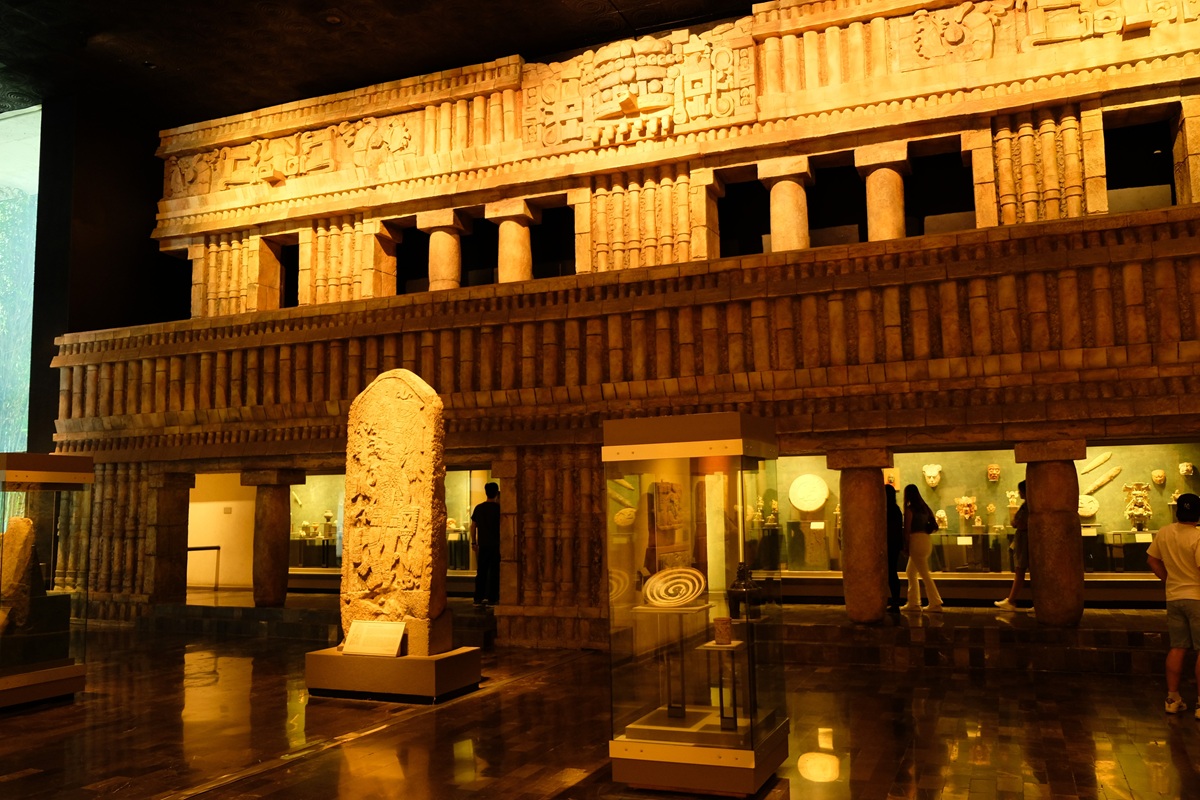
Enter the world of the Maya
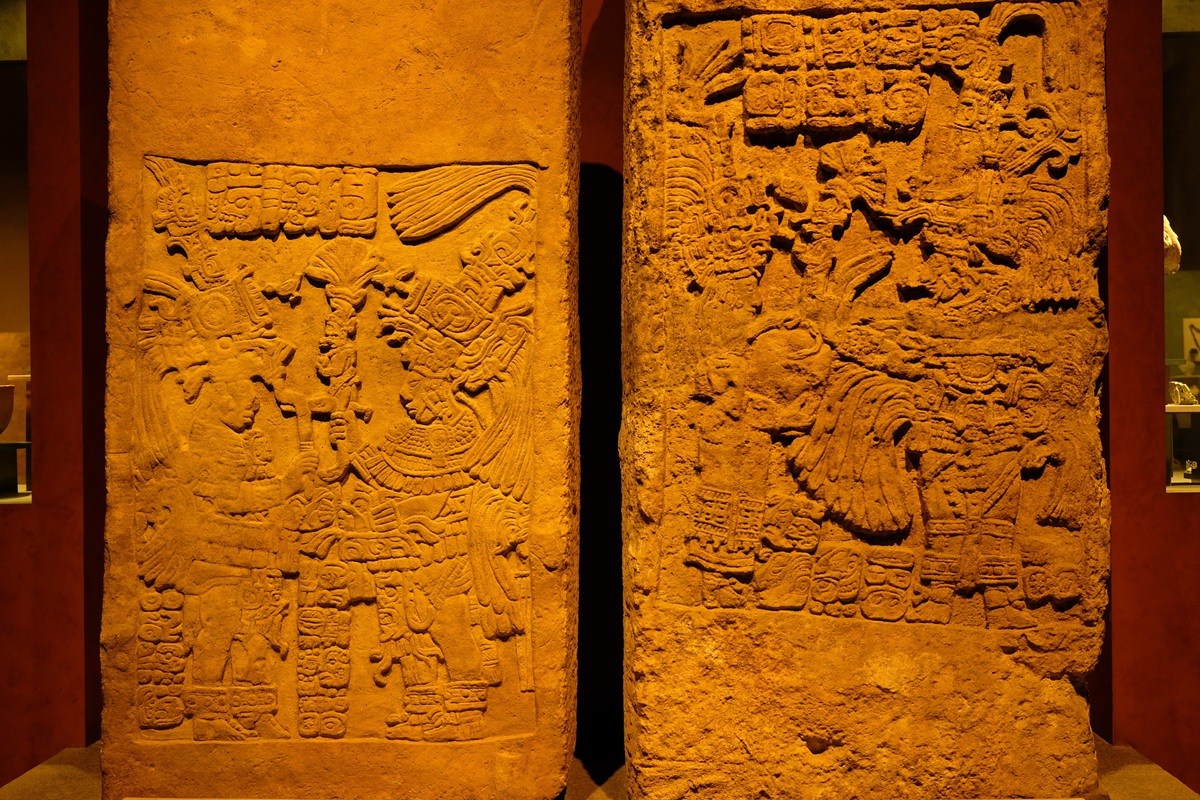
Stelae found at Yaxchilan, a remote Maya site on the Mexican-Guatemalan border
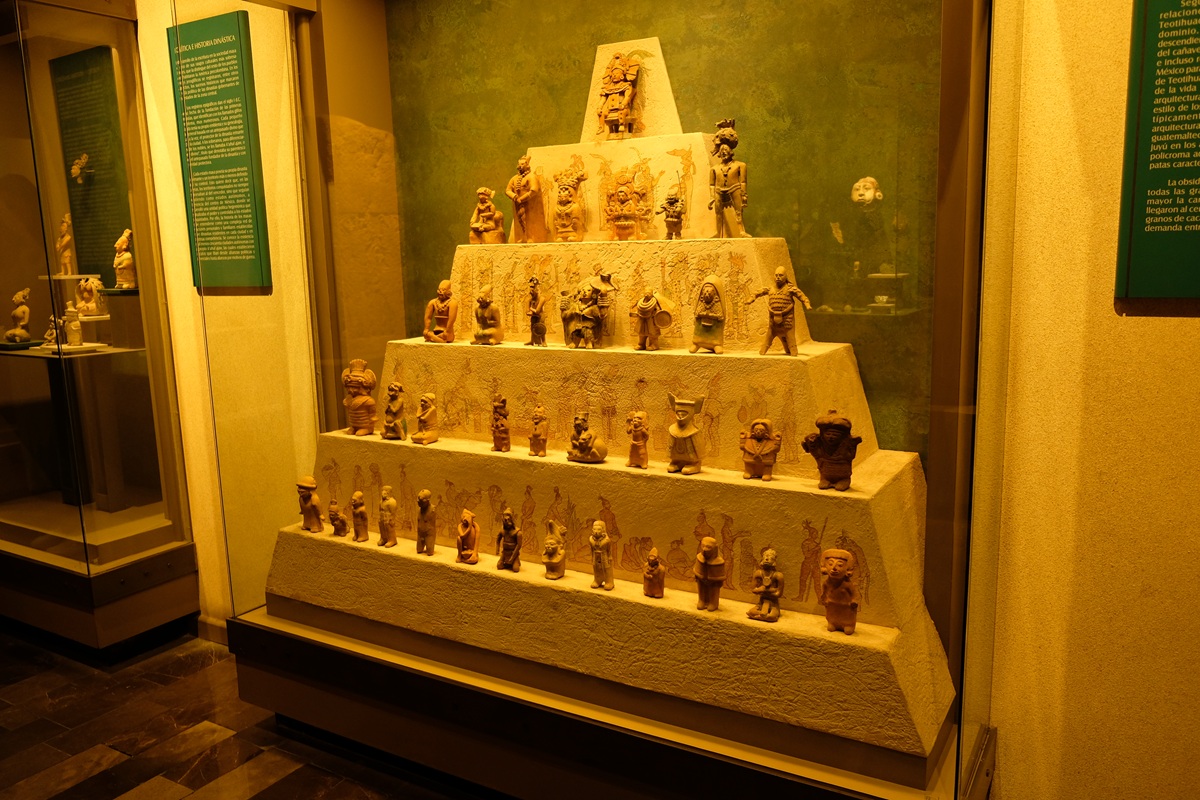
Different social classes in a Maya society
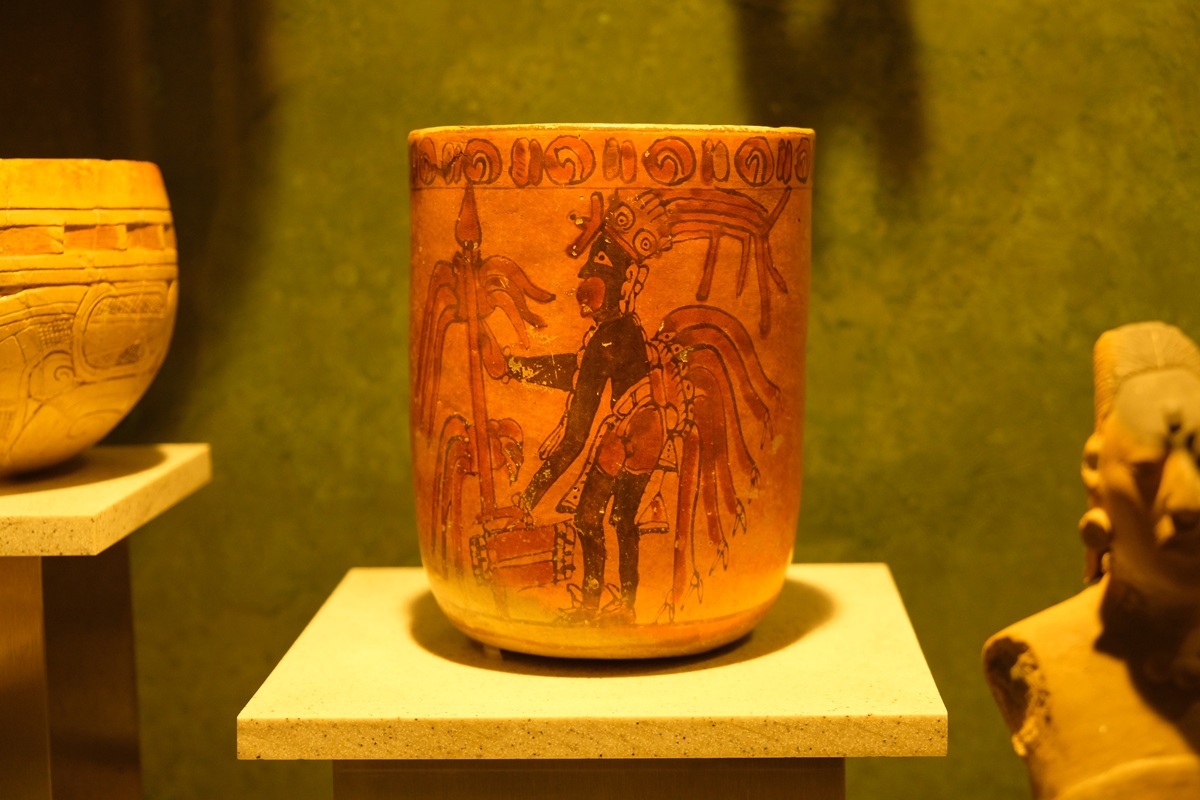
A polychromatic Mayan vase

Looking at the Maya glyphs made me wonder how they came up with this idea in the first place and standardized it as their writing system

Anthropologists must have found this Maya codex very exciting to study
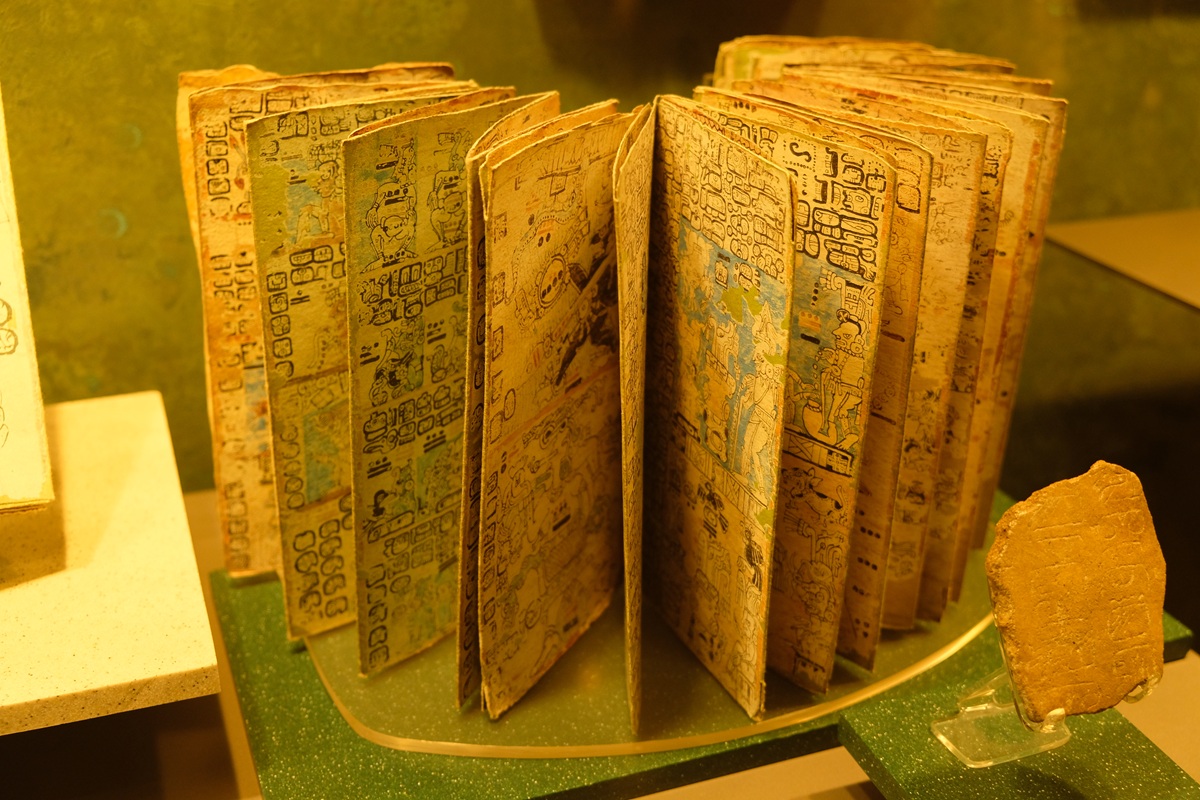
Prior to the arrival of the Spaniards, the Maya peoples had already written down records in books like this one
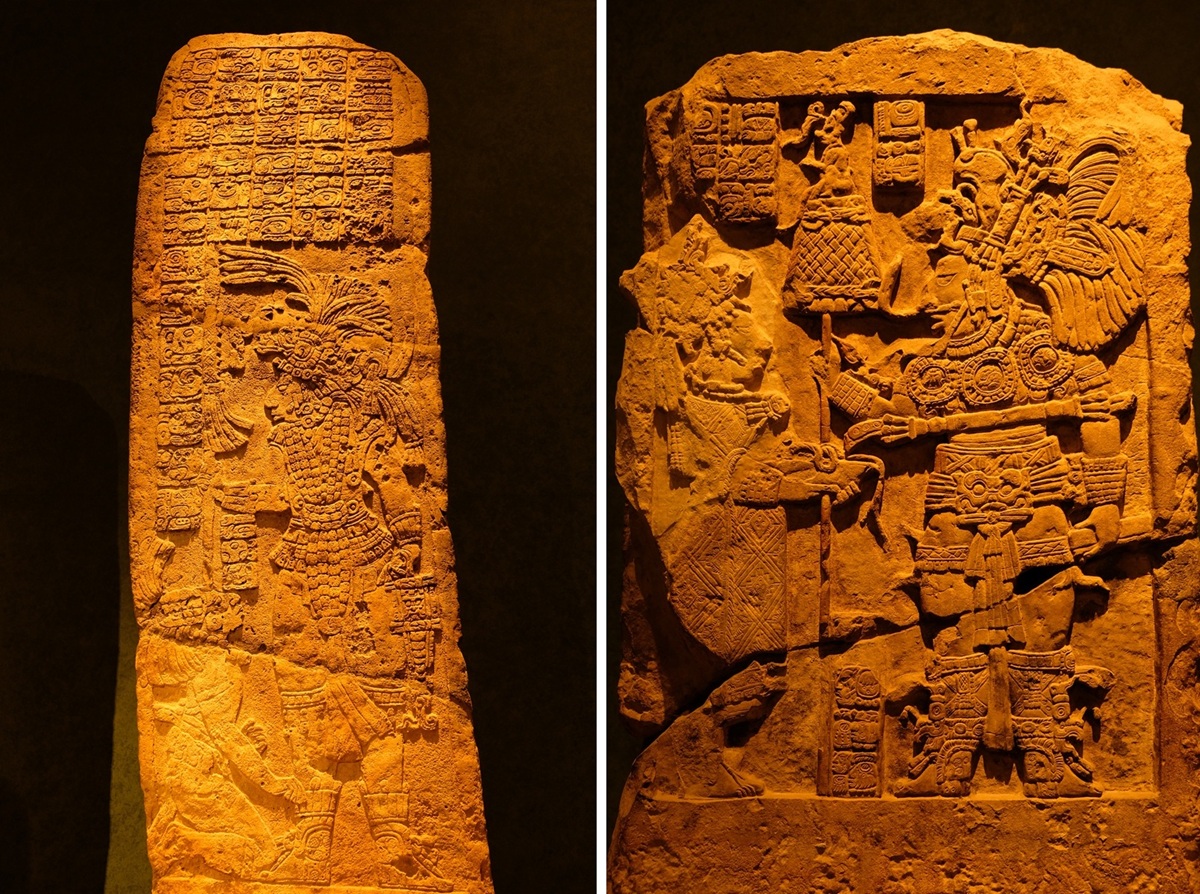
The ancient Maya civilization produced among the finest and most ornate carvings in Mesoamerica
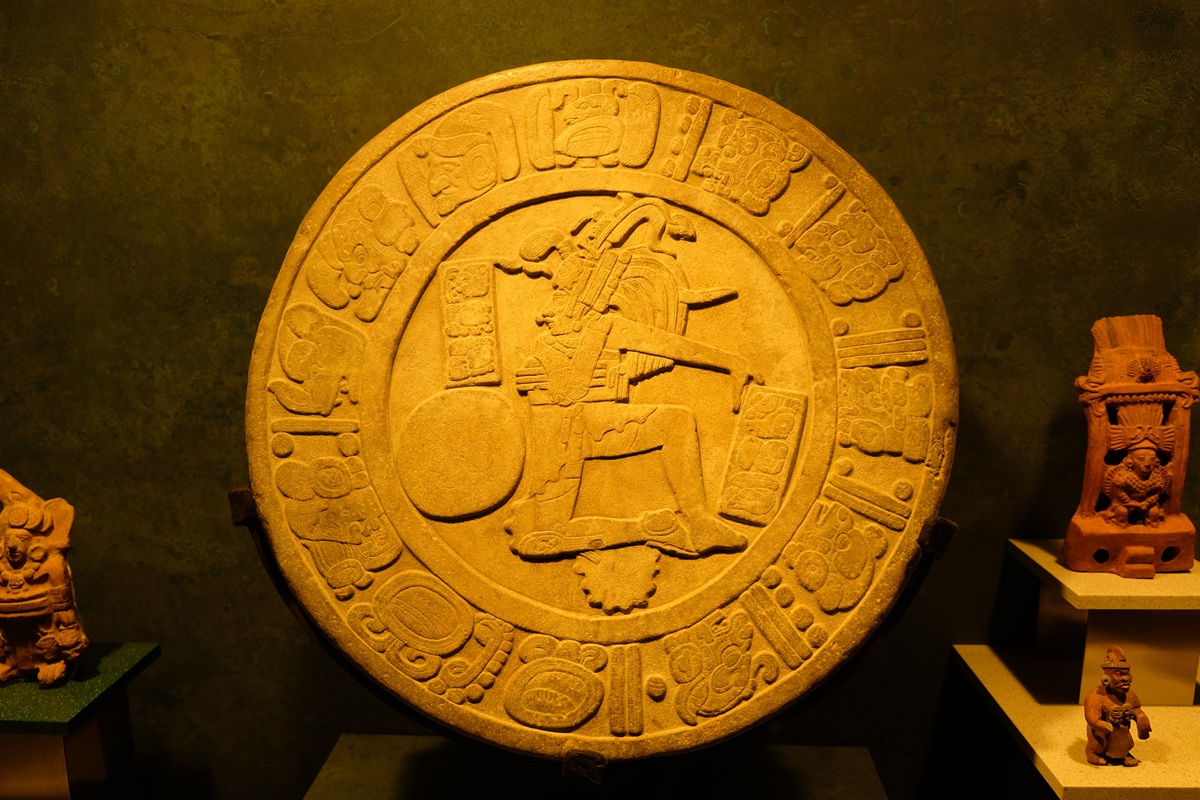
The Disk of Chinkultic, a Maya site in Chiapas
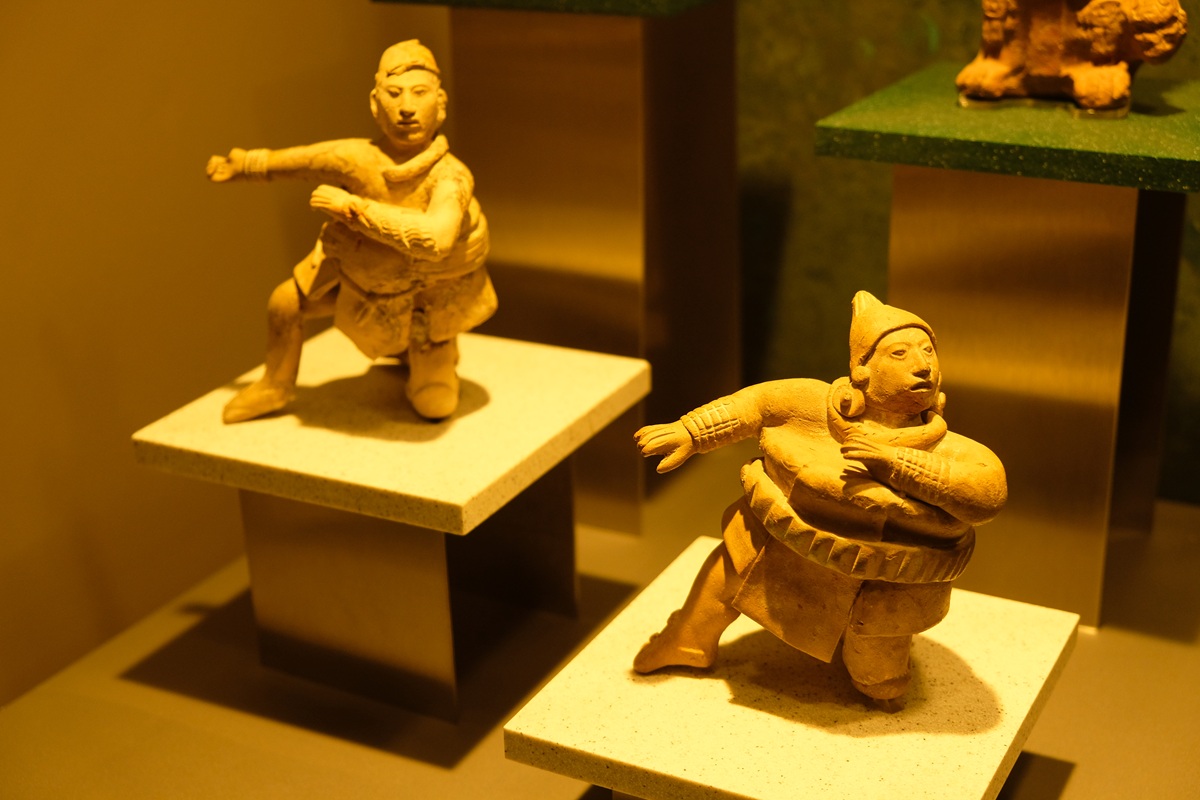
Figurines of Mesoamerican ball game players
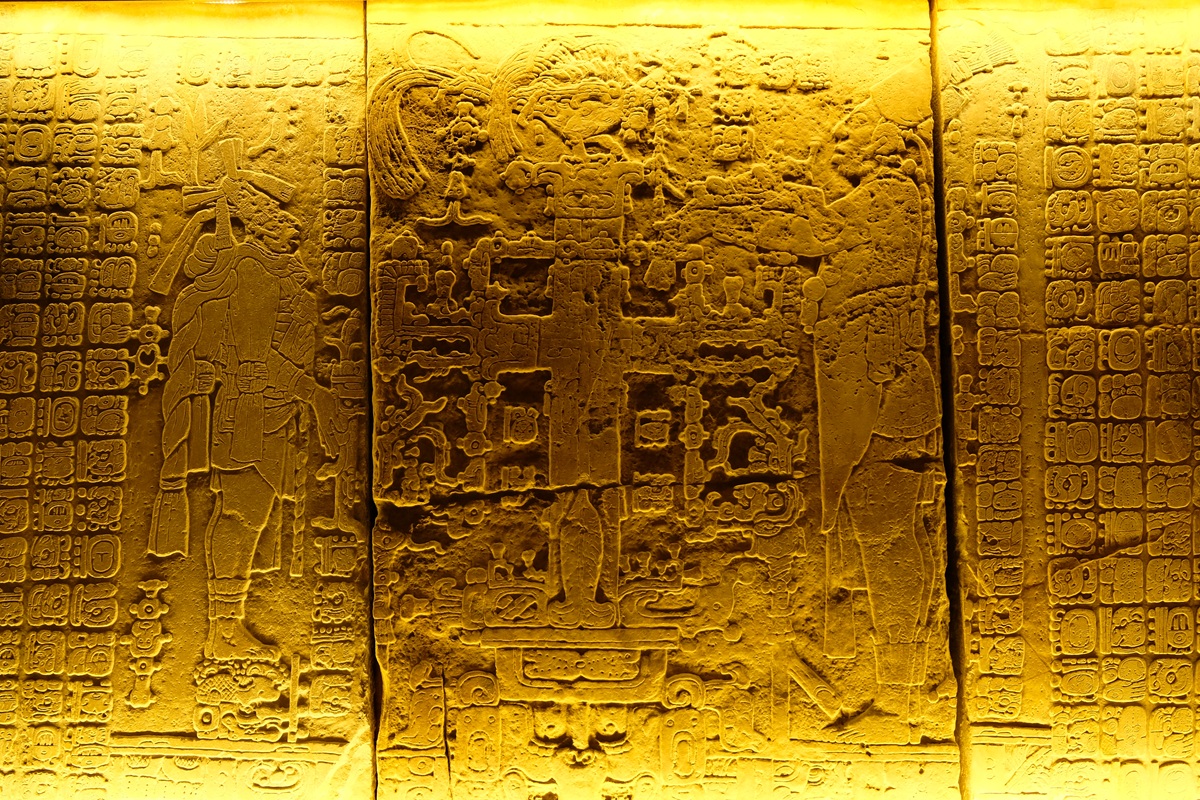
The highly ornate tablet from the Temple of the Cross in Palenque
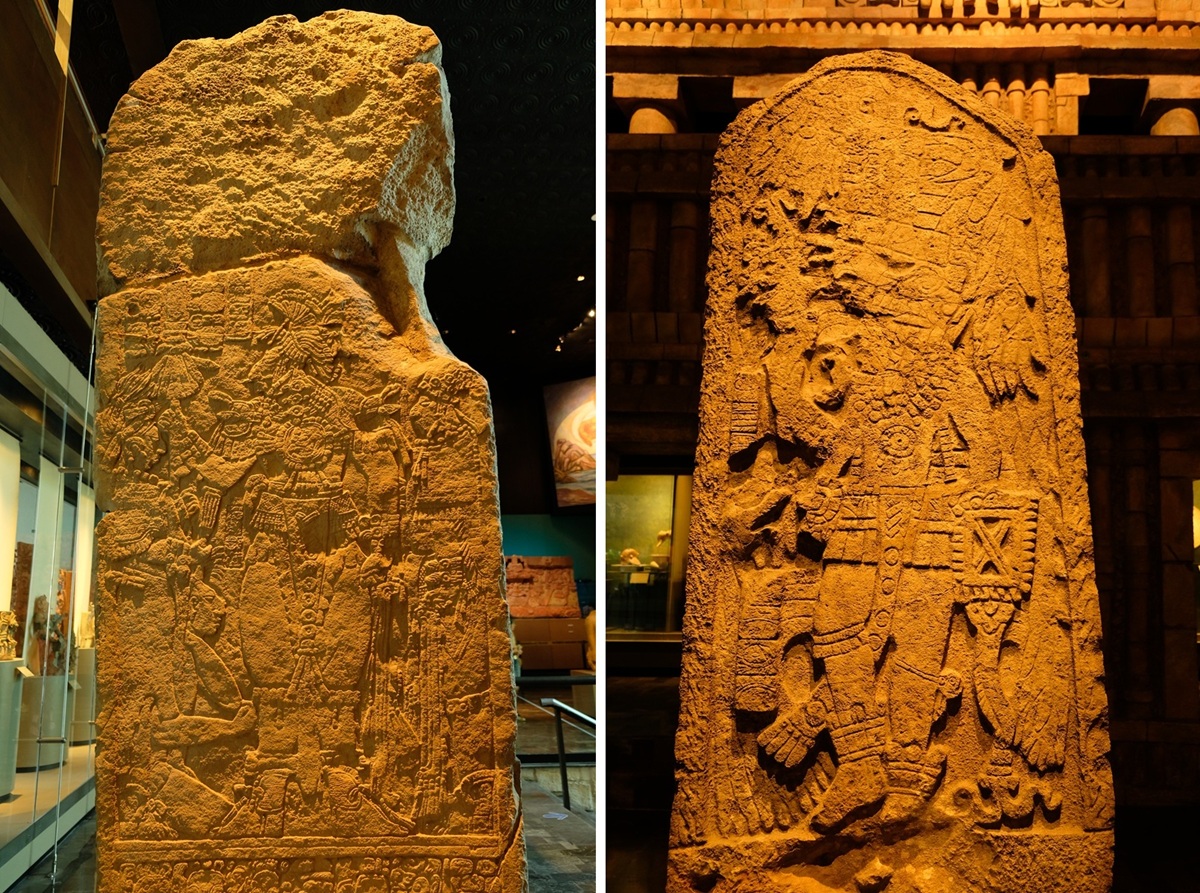
These carvings are more weathered, but they are still beautiful nonetheless
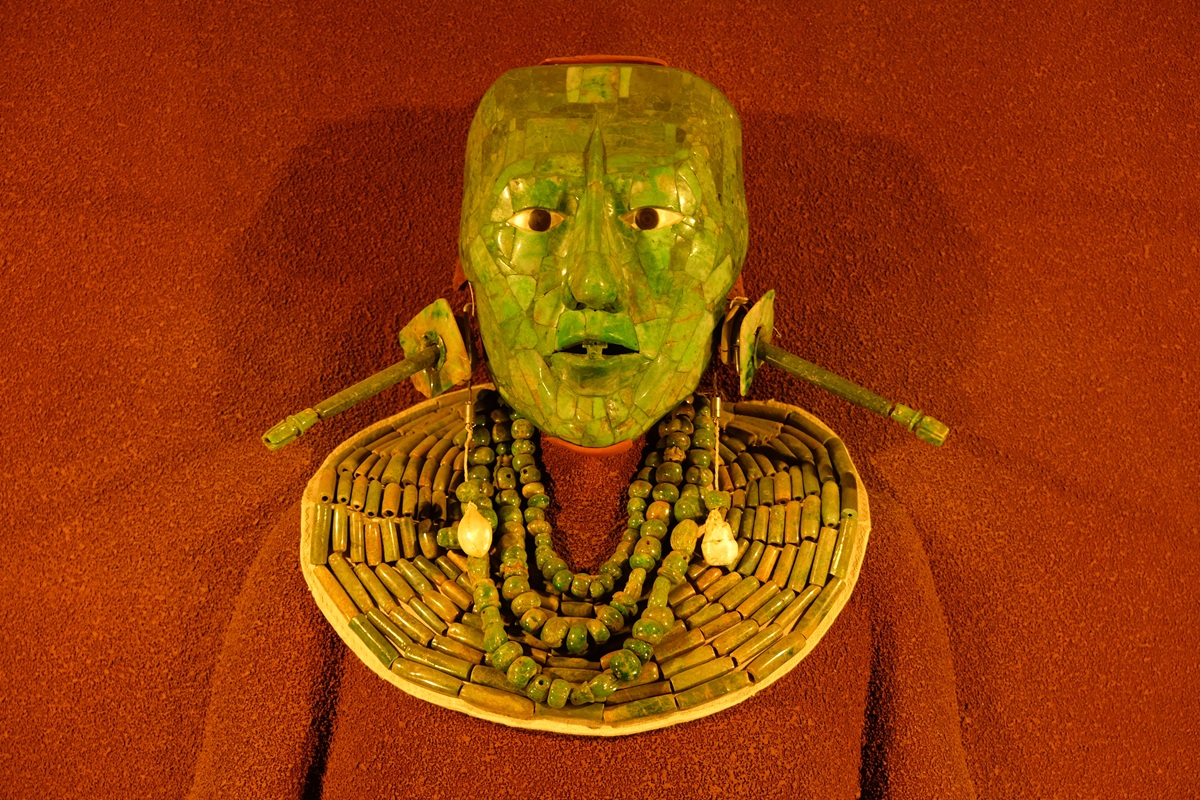
The jade mask of Pakal the Great
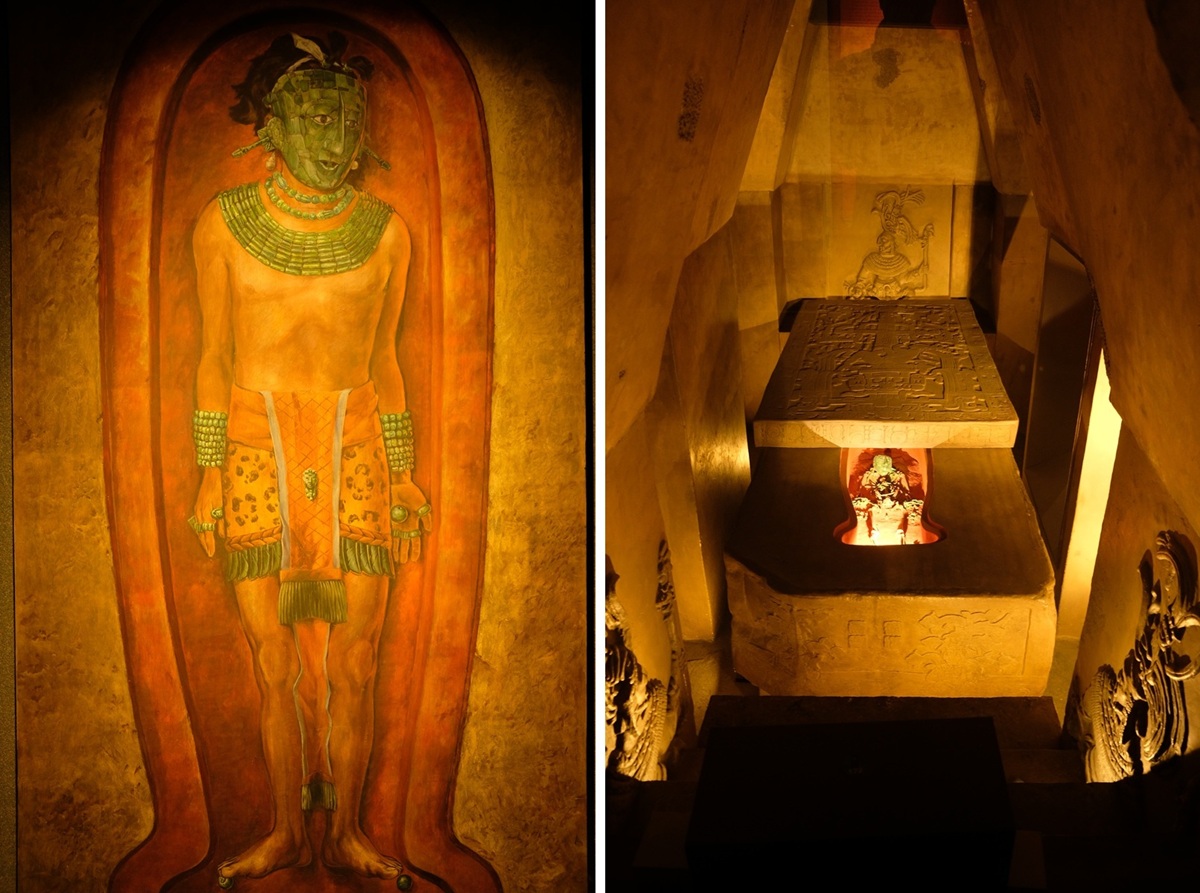
Left: A depiction of Pakal, the great ruler of Palenque; Right: A reproduction of Pakal’s tomb
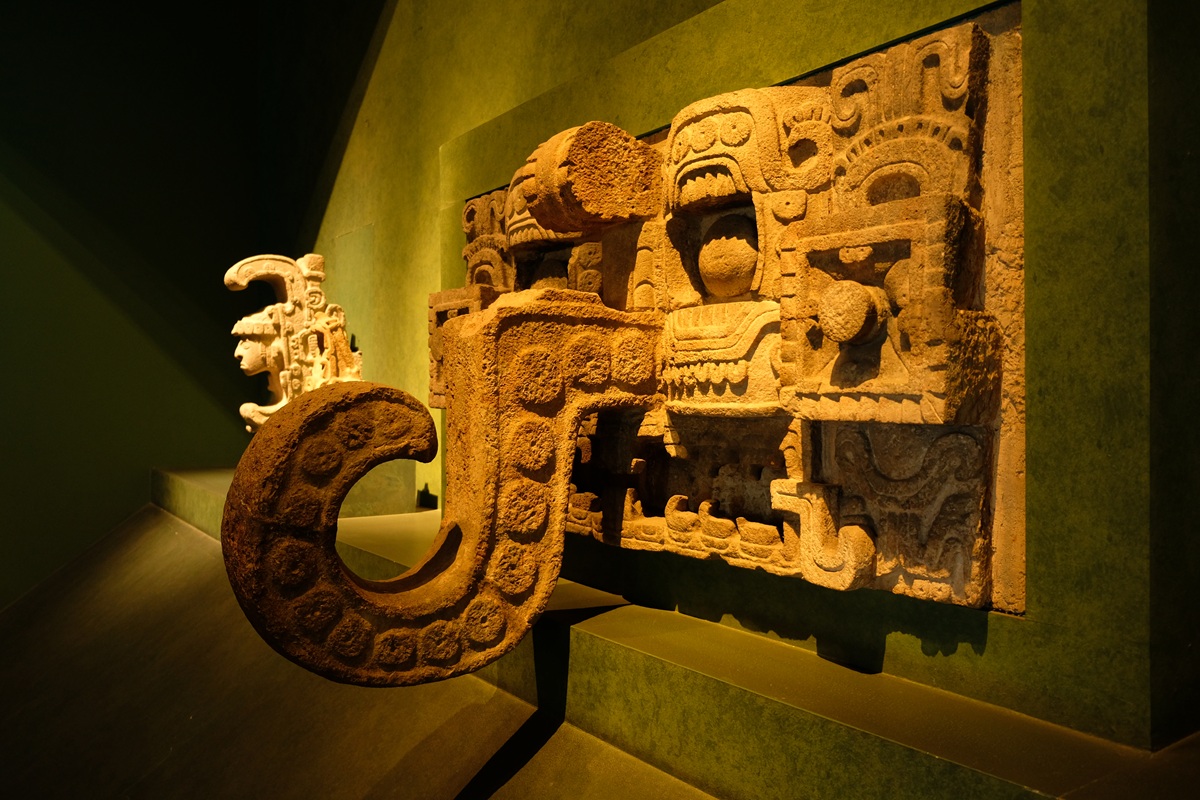
Chaac, the Maya god of rain, thunder, and lightning
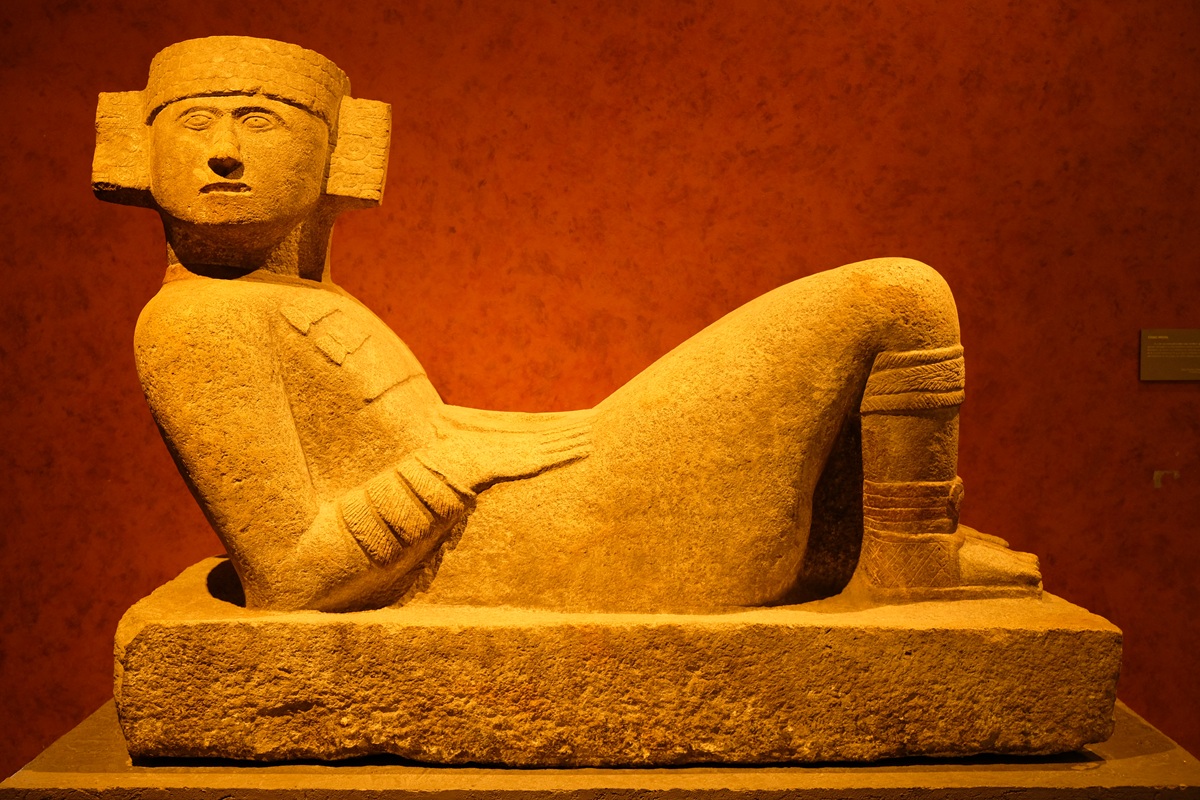
The chacmool from Chichen Itza

Gold disks from Chichen Itza
The Mexica (Part of the Aztec Empire)
Situated at the center of the museum compound is what seemed to be the most popular gallery among visitors. Showcasing the archaeological finds discovered in the ruins of Tenochtitlan, the awe-inspiring capital of the Mexica (Nahuatl-speaking people who held dominance over the Aztec Empire) upon which Mexico City was built, this part of the museum is where the Aztec sun stone is located. This artifact must be among the most photographed items from the museum’s collection, and I could see why. Placed on a pedestal above a center stage, its size and awe-inspiring details will definitely catch everyone’s attention.
The Mexica lived in a period archaeologists defined as the Late Postclassic, a chapter in the history of Mesoamerica that saw the rise of the Aztec Empire and the decline of the Maya civilization, which ended with the arrival of the Spanish. Continuing the long-standing tradition carried out by indigenous Mesoamerican peoples of creating intricately-decorated buildings and objects, the Mexica produced among the most ornate objects ever unearthed in Mexico. However, they also ruled during a period that also saw the rise of the predominance of militarism in all aspects of life. Their main gods were the patrons of military conquests, and the most important ceremonies revolved around the capture of prisoners and human sacrifice. This, unfortunately, is what often shapes the image of the ancient Mesoamerican peoples in popular culture today, eclipsing the many achievements they attained in different aspects of life, from science to architecture.
The stone carvings the Mexica made were undeniably incredible. But what is more mind-blowing for me is the fact that they built their capital – Tenochtitlan – on a small island in the middle of a lake. It has been mostly drained since then to allow the construction of more buildings for the capital of New Spain: Mexico City. However, centuries later, this idea is proving to be not so brilliant as it might have sounded at first. Now, the modern capital of Mexico is sinking fast, and many of its old buildings are visibly leaning. But that’s for another story.
After around three hours exploring the four galleries of the Museo Nacional de Antropología, we realized that it’s simply impossible for us to see all the parts of the museum in one visit. We decided to skip the sections on the cultures of Oaxaca (including the Zapotecs), the Gulf of Mexico (this is where you can see the iconic giant heads created by the Olmecs), and the rest since we were not visiting any of those regions on this trip. However, when we return to Mexico one day to explore more ancient sites in this fascinating country, we know we have to go back to this awe-inspiring museum.
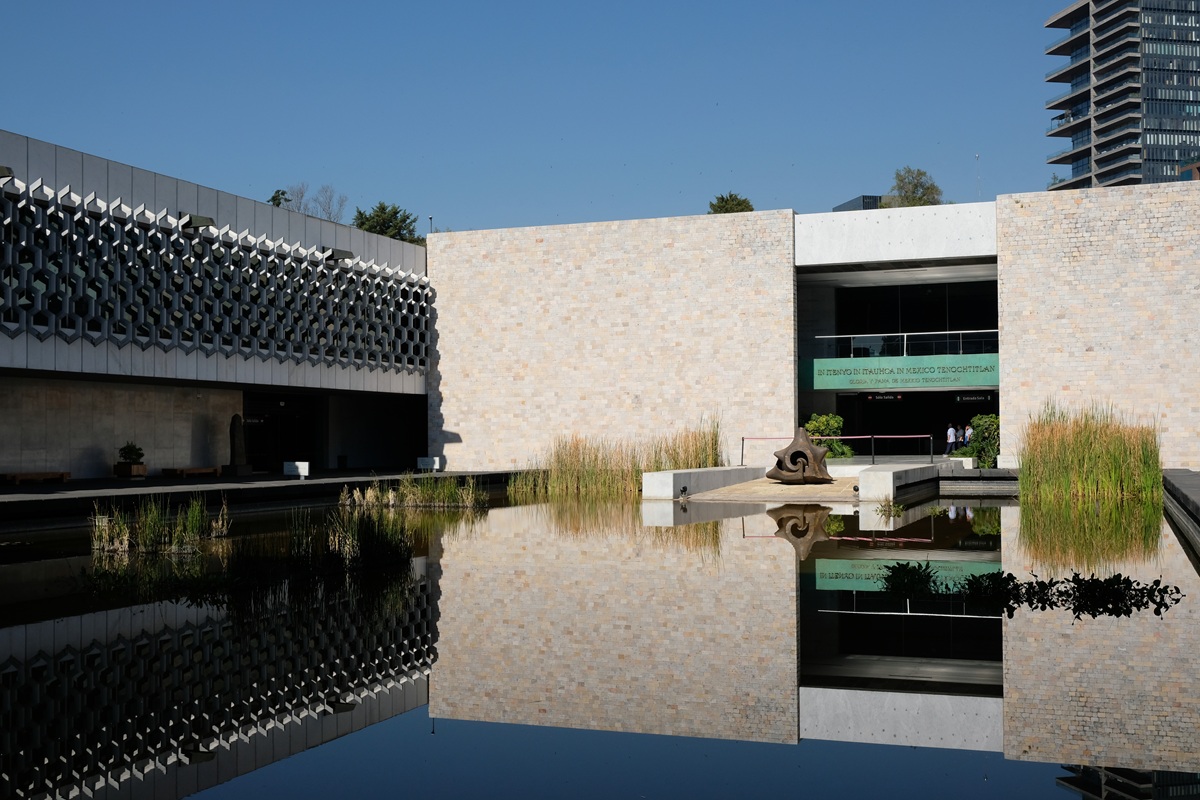
The hall of the Mexica at the center of the museum

This was the busiest part of the museum, largely because of the enormous Aztec sun stone in the background
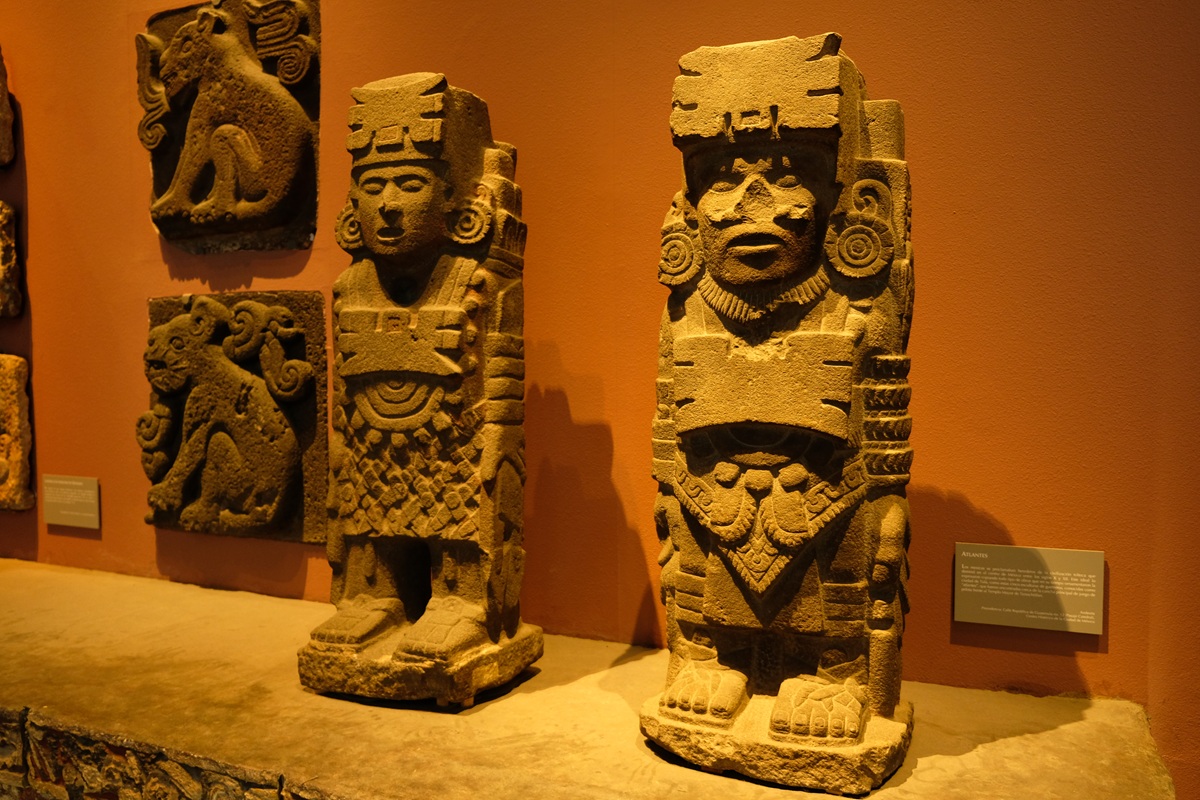
The Mexica version of the Atlantean statues
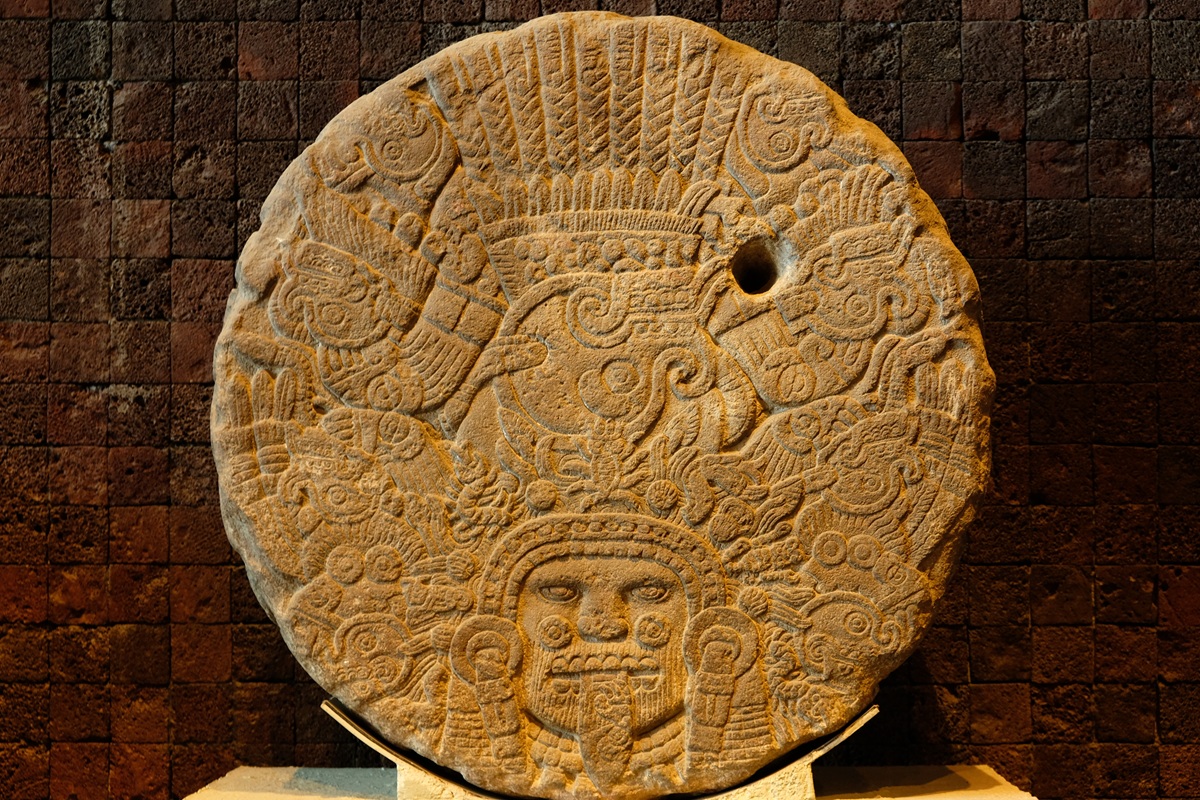
Tlaltecuhtli, a deity worshipped by the Mexica who is considered the source of all living things
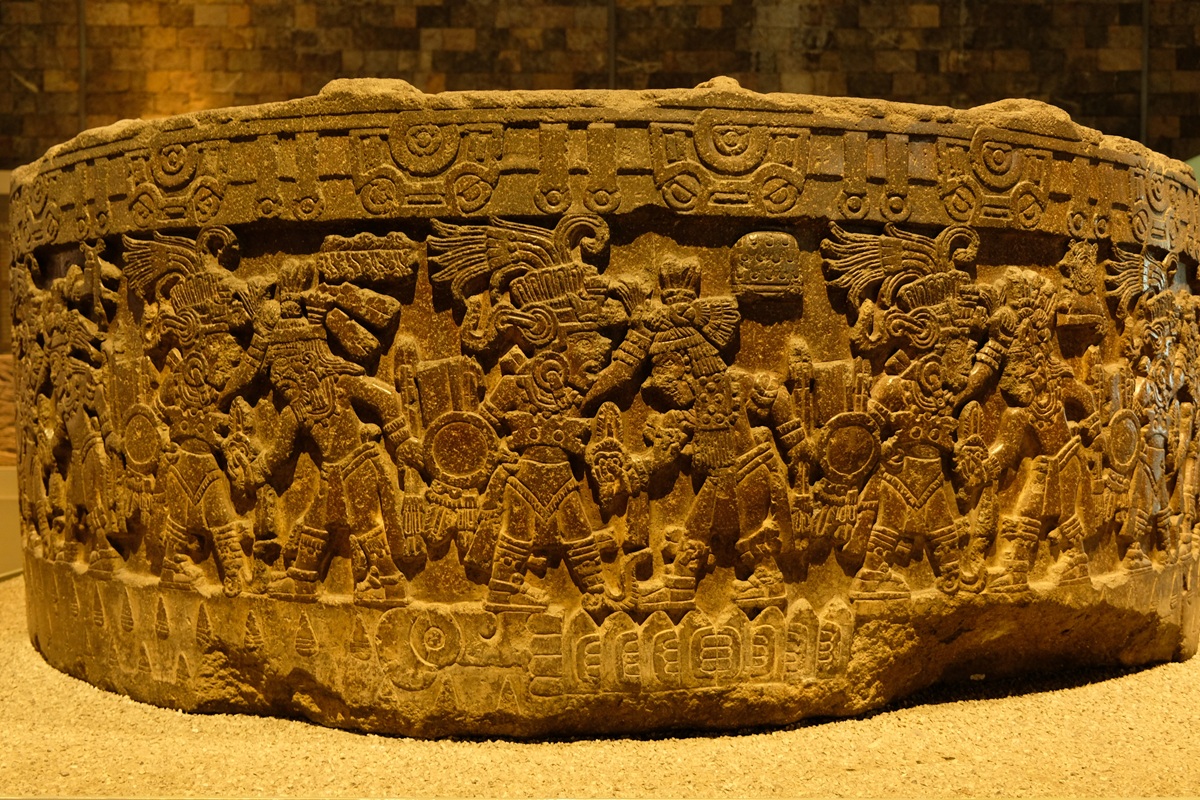
Temalcatl, a sculpture commemorating the conquests carried out by Tizoc, a ruler from Tenochtitlan
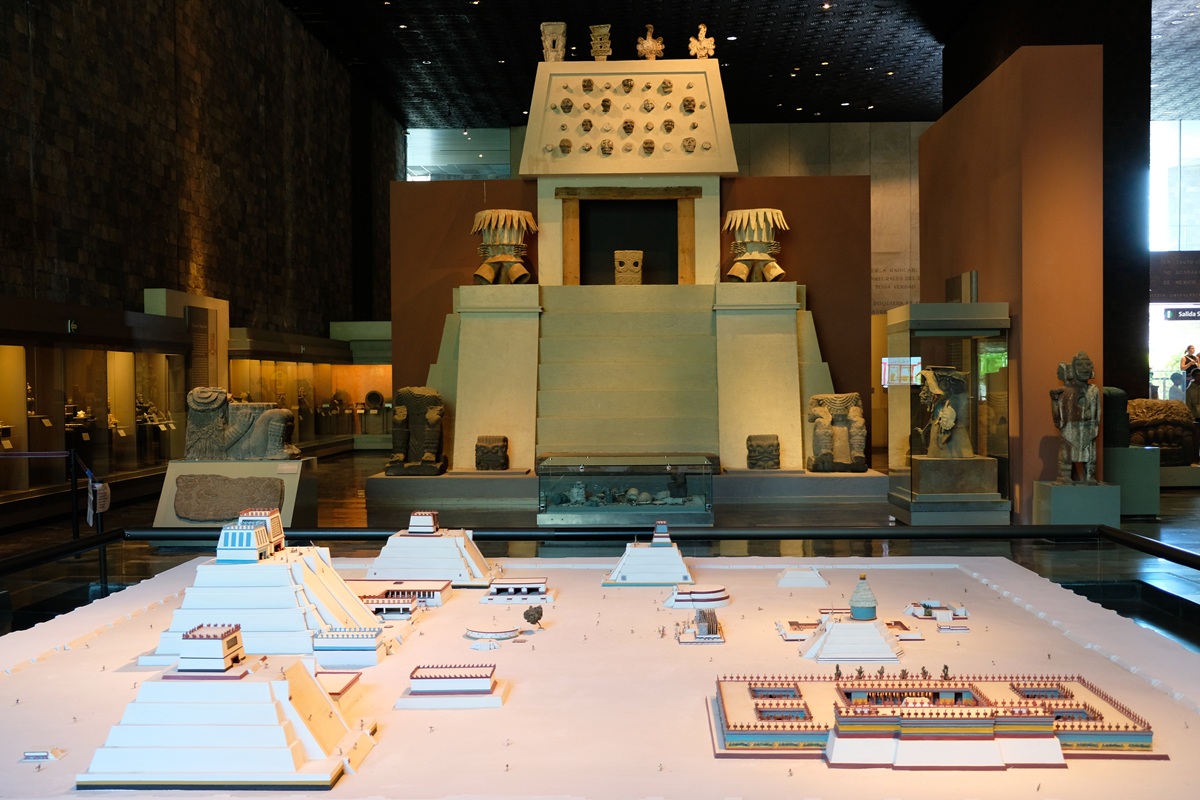
A model of the sacred precinct of Tenochtitlan, capital of the Mexica, upon which Mexico City was built
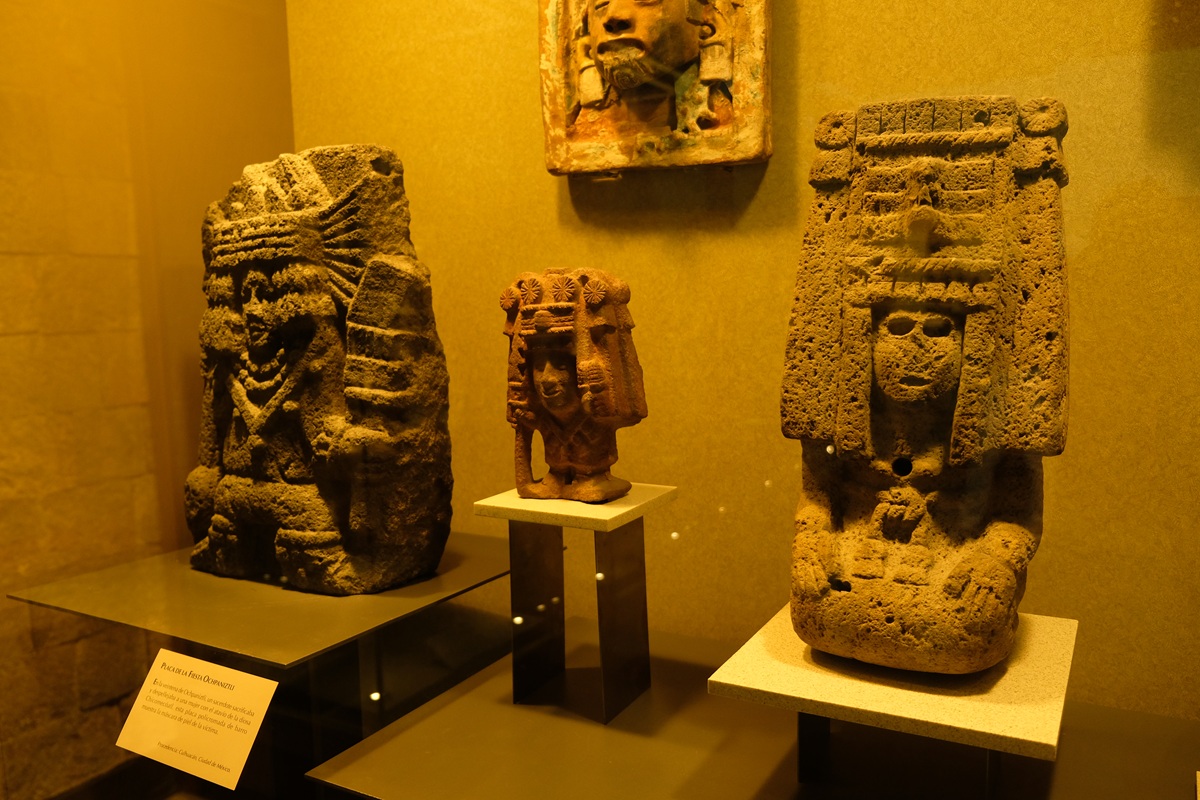
Sculptures of Chicomecoatl, the Aztec goddess of agriculture
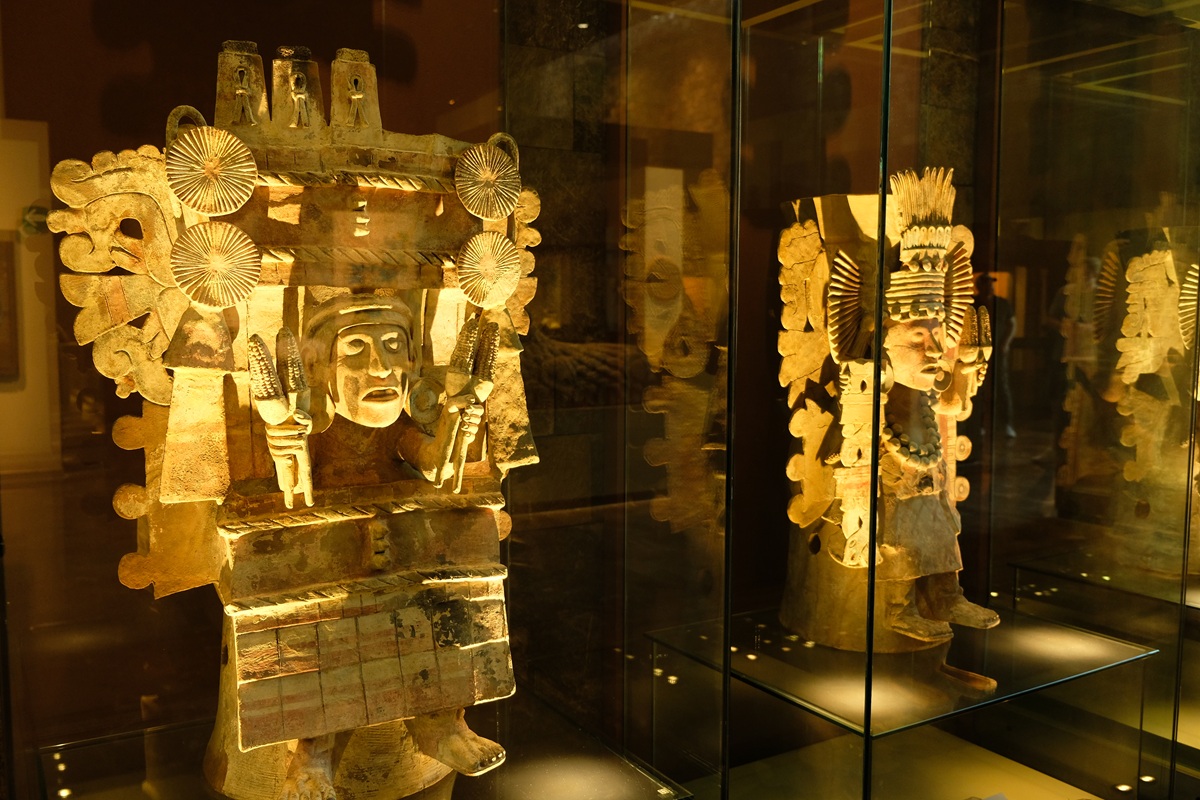
Braziers of different gods worshipped by the Mexica (notice how some of them hold ears of corn)
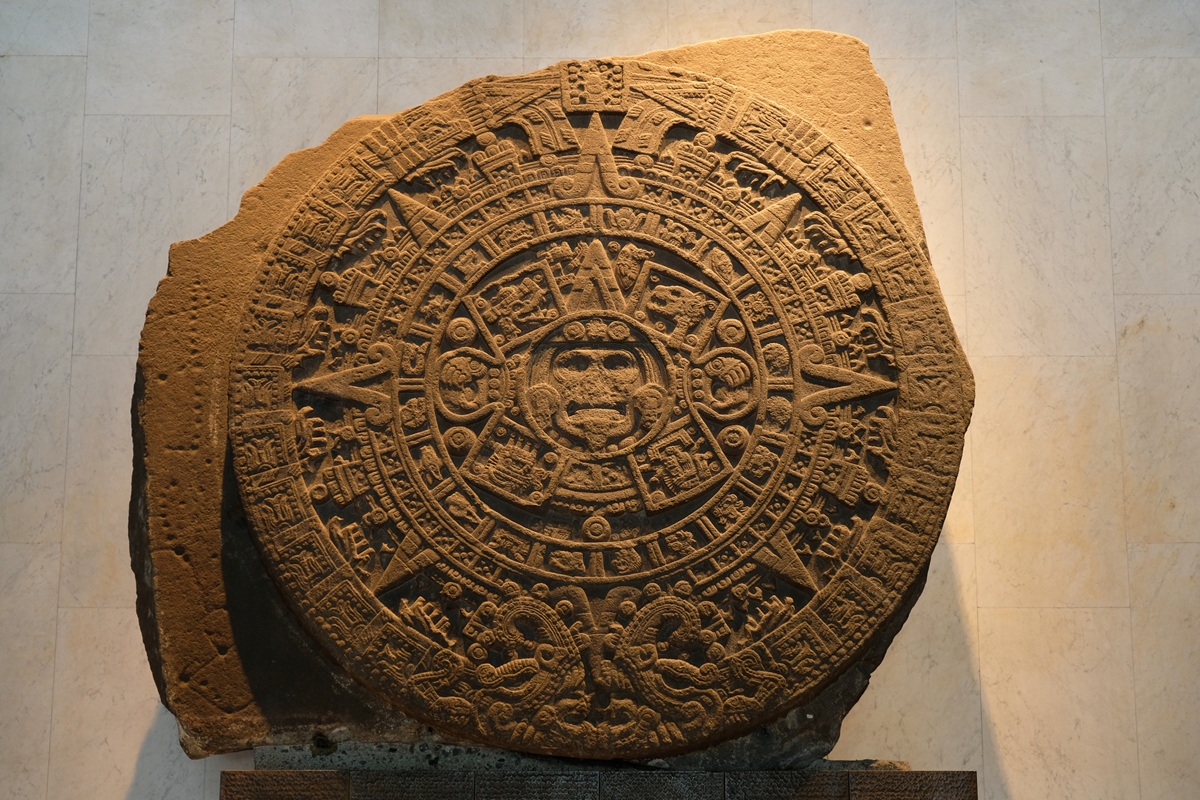
The impressive 16th-century Aztec sun stone
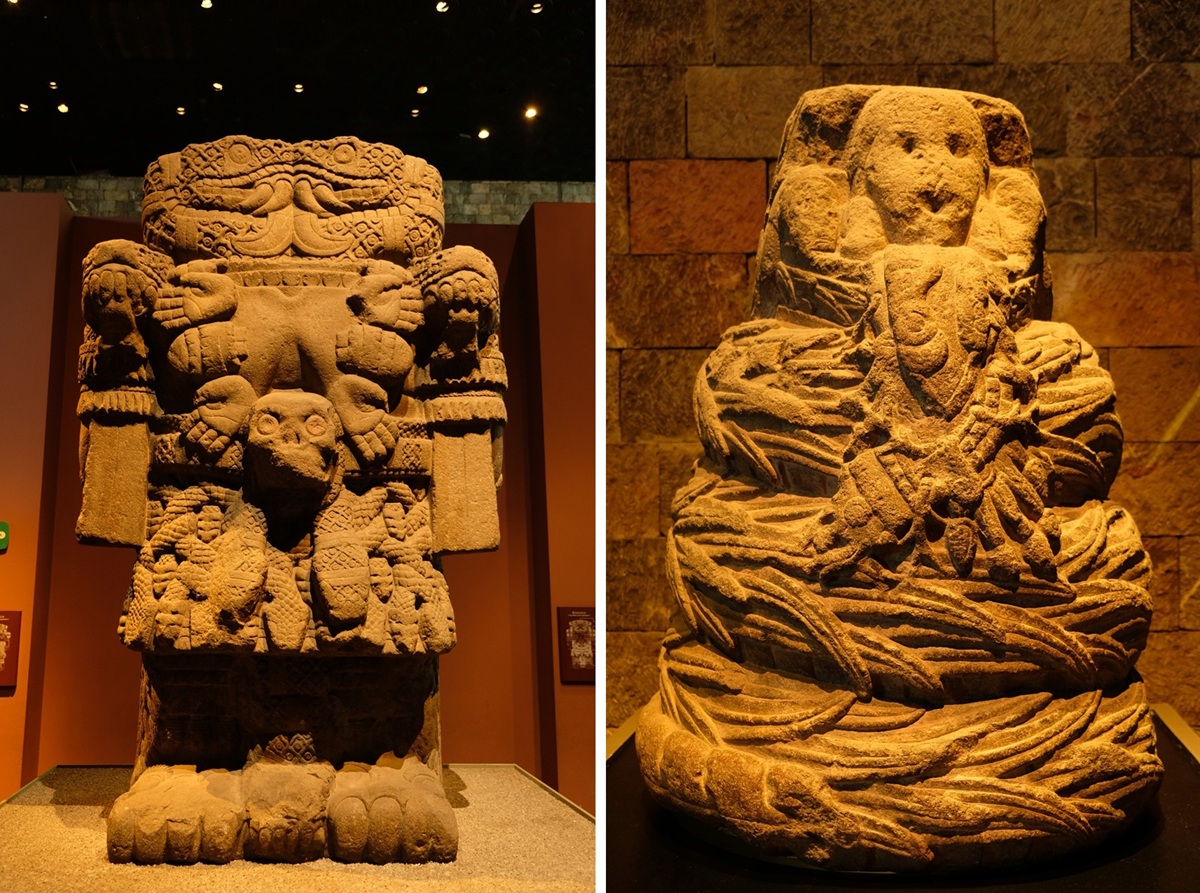
Left: A tall statue of Coatlicue, the goddess who gave birth to the moon, stars, and the god of the sun and war; Right: A rare depiction of Ehecatl, the god that produced the wind
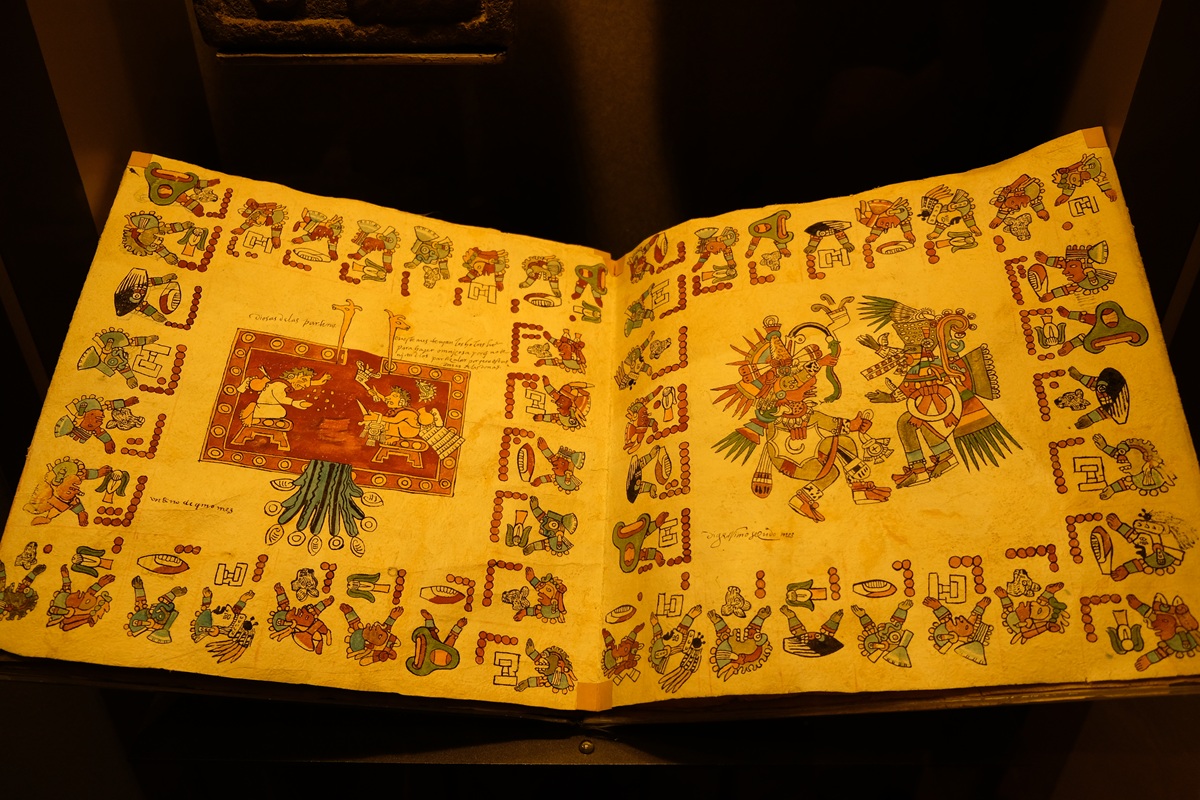
The visualization of Mesoamerican cultures is always so colorful
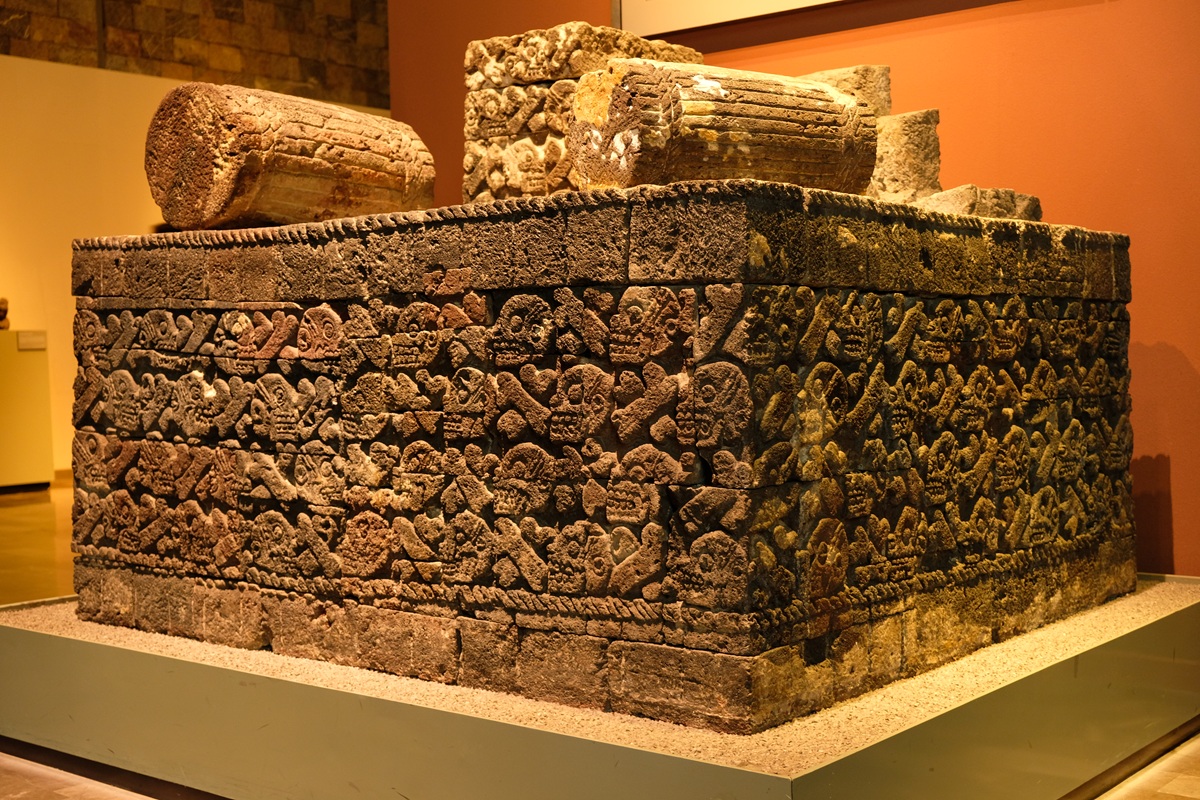
Decorative elements of human skulls became more apparent during the Mexica period
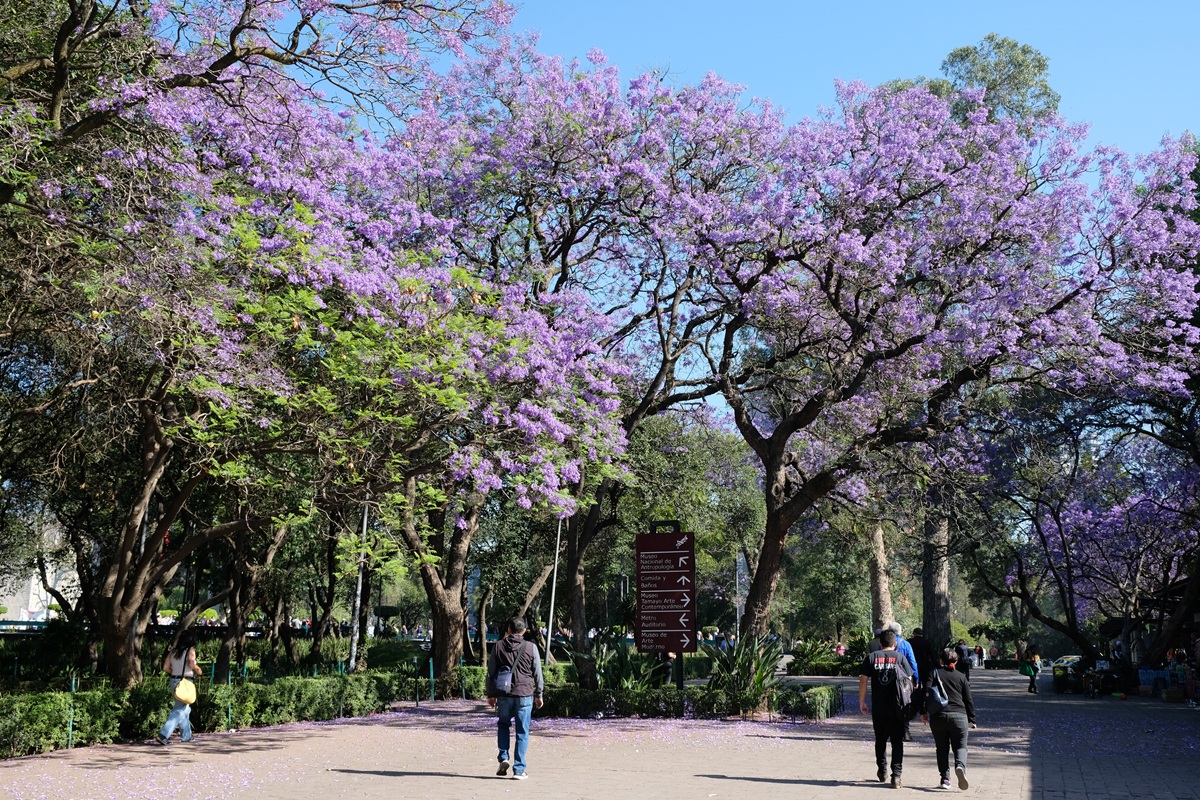
Blooming jacarandas right outside the museum
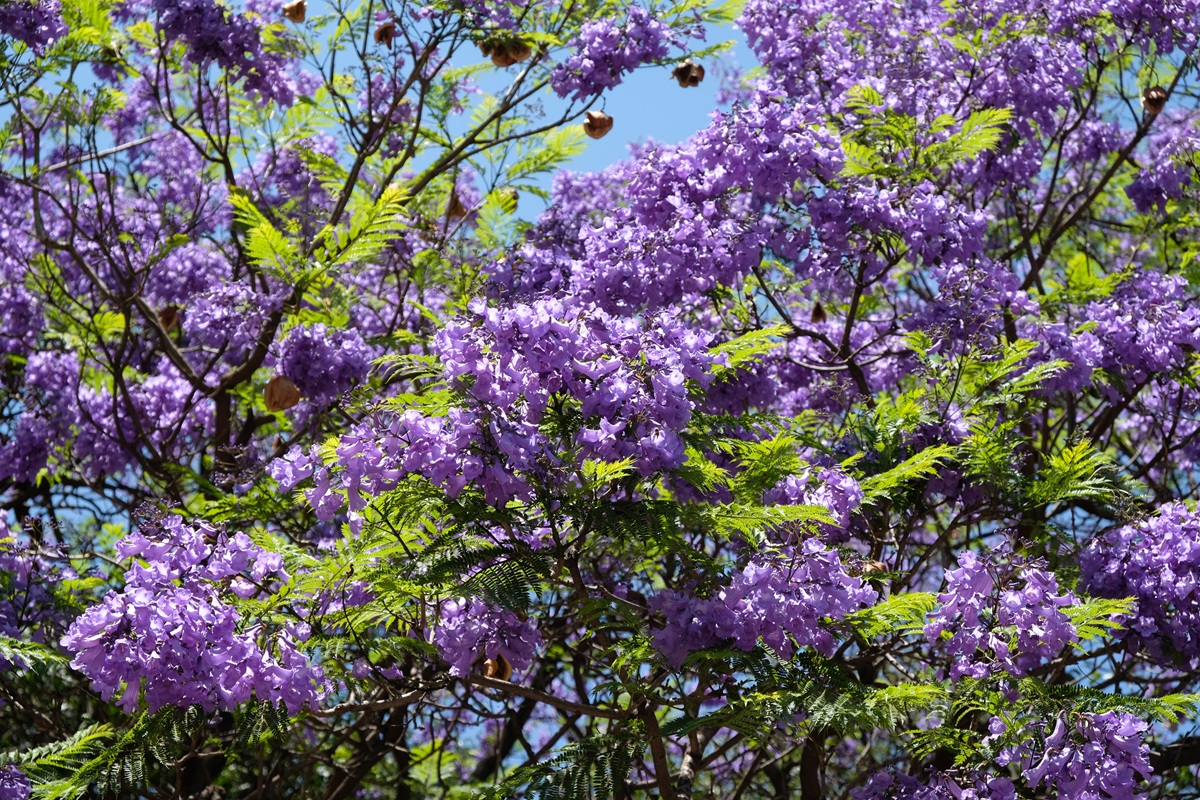
I had always dreamed of seeing these flowers, but I never thought I would see them in Mexico City


I’m so happy that you got to see a place you’ve longed dreamed of visiting! Your passion for the place just comes off so strongly in your writing.
As someone who lives accessibly to Mexico, I only ever thought of it as a beach vacation. But seeing your photos and descriptions of the pyramids, the Mexica people, the history and those beautiful jacarandas flower – and the modernist museum itself invites me to take another look at Mexico.
I hope you and James get to visit again one day soon!
LikeLiked by 1 person
I can’t really hide my excitement, can I? I don’t remember exactly when I first found out about this museum, but I do remember how I felt when I saw photos of those ornate sculptures. Seeing its collection with my own eyes was truly a dream come true.
I think Mexico can be a great destination for T to learn about the ancient Mesoamericans. But maybe wait until he’s a little older. 😄
We surely hope one day we’ll get the chance to go back to Mexico. There are still so many things we want to see and explore.
LikeLiked by 1 person
If you go back to Mexico and time permitting, you should venture further south. I think you two will love Peru.
LikeLiked by 1 person
Oh Peru is also high on our list! But we know the journey to get there will be even longer than going to Mexico.
LikeLiked by 1 person
What a lovely, in-depth review of your visit to the Museo Nacional de Antropología! The exhibits look stunning, and they really capture the long, rich, and vibrant history of pre-colonial Mexico. I’ve only read about the Aztecs and Mayas in history books, so it’d be cool to visit this museum to see the artifacts from those times first-hand. It’s also interesting you pointed out the jacarandas: I see them everywhere here in LA, especially in the springtime; I had no idea you hadn’t seen them before!
LikeLiked by 1 person
Stunning is the right word to describe the museum’s collection, Rebecca. The ancient Mesoamerican peoples were such prolific builders and patrons of art. Luckily, many things they created survive to this day. Speaking of the jacarandas, I don’t think I’ve ever seen them anywhere in Indonesia — we plant other flowering trees in my part of the world. That’s why when I saw those bright, purple blooms in Mexico City I was so ecstatic.
LikeLiked by 1 person
I understand your enthusiasm for visiting the museum. I’ve been there too, impressed by the amount of quality work collected from all the sites in Mexico. That also partly explains why there are only walls left on site. The best decorations are in Mexico City. Admission is free on Sundays, which makes it even more lively on that day.
LikeLiked by 1 person
Sometimes when I visit ancient sites that are stripped off their original decorations, I wonder how much more impressive it would be if they were still at their original places. But then there are threats, like looting or armed conflicts, that can pose danger to such artifacts. In the end, the most important thing is ensuring the safety of those invaluable objects. I did realize that a lot of archaeological sites in Mexico are free to enter on Sundays, but it’s usually only for locals or residents. It’s a good way though to bring people closer to their country’s ancient heritage.
LikeLiked by 1 person
I love the excitment in your words Bama. It is one of the best museums I’ve visited I think. We went to the same areas that you did, so I can still picture where most of your artefacts are placed. What I really liked about the museum was the sectioning of the different Dynasties, allowing you to fully express one before moving to another section. I also loved, as I assume you did, seeing the sites that the artefacts came from soon after.
And to think, after 3 hours, you still didn’t see it all, nor did we. My brain couldnt take anymore of it in. Maggie
LikeLiked by 1 person
I remember reading your post on this museum, Maggie, and when I saw the reproduction of the Pyramid of the Feathered Serpent, I immediately thought of what you wrote about it. The way the museum grouped different artifacts in their collection actually helped me understand the history of Mesoamerica better, because sometimes when everything is jumbled together, my mind can get lost along the way. As much as I wanted to see the rest of the museum, I thought it was a better idea to go back one day in the future.
LikeLiked by 1 person
The Feathered Serpent was one that I found so fascinating to see the recreation and the original in such a short time span. It’s true, that museum helped a lot to put the pieces together of the long mesoamerican history. I’m assuming you saw the Temple of the Feathered Serpent in Teotihuacan. I remember you mentioning it in a comment on our post.
LikeLiked by 1 person
Thanks to you, yes I did. I made sure to go there first before visiting the larger pyramids in the northern part of Teotihuacan.
LikeLiked by 1 person
I love the pictures — everything looks so exquisite! Mexico is definitely going on my list for the next trip 🙂 It’s also really interesting to see how your background can shape your experience — a great reminder for museums, especially those welcoming lots of international visitors.
LikeLiked by 2 people
Hi Sophie. Those who love museums will be blown away by the Museo Nacional de Antropología. But I believe even those who don’t will still find it quite impressive, at least some items in its collection. I hope you’ll get to visit it sooner than later!
LikeLike
Great summary of this amazing museum. I remember spending a full day visiting all of the rooms and be totally amazed by the various sculptures and art works. An even after spending a day, we hadn’t seen everything. Jacarandas are beautiful trees…(Suzanne)
LikeLiked by 1 person
Wow! It’s amazing that you managed to visit all the rooms. Later on, I realized that there are even upper floors at some of the galleries. Did you happen to check them out too? It’s such a great museum, isn’t it? I would definitely go back in a heartbeat, with or without the jacarandas blooming.
LikeLike
We did go to the upper level but we ran out of steam and left the museum without walking through the exhibits. It certainly is a wonderful museum and even if we visited all of the rooms on the lower level I can’t say we saw everything there was to see so I would definitely go back if we ever make it to Mexico City again.
LikeLiked by 1 person
I agree with you. This museum definitely deserves a second visit, or more.
LikeLike
The museum sounds very comprehensive and like a great way to learn more about the history of Mexico. I find ancient civilizations like the Mayans and Aztecs so fascinating. It must have been hard for them to leave so much behind. And it’s amazing how much still remains that help give a glimpse into the past. The blooming jacarandas are gorgeous.
LikeLiked by 1 person
It truly is one of the best museums I have ever been to, and I agree with you about how fascinating the ancient sites in Mexico are. In a way, I can draw similarities with the ancient Javanese who built great Hindu and Buddhist temples more than a thousand years ago. As a Javanese myself, sometimes I wonder if we can still make something as impressive today.
LikeLiked by 1 person
This looks like a fantastic museum indeed! So much to see and learn from! And I love your enthusiasm too, it really shines in this post!
LikeLiked by 1 person
I think you would also be fascinated by the collection of this museum, Anna. You can tell I was in my element when I was there, can’t you?
LikeLiked by 1 person
What an amazing museum. I’m glad so many treasures have been saved. The Mayan script are fascinating.
Did you study history? You seem to have a very good understanding and interest in it.
LikeLiked by 1 person
Actually I didn’t. But I’ve been fascinated by history since high school because I found it very cool to learn about what was behind an important event in the past, and how many things were actually intertwined. In another life, I would probably be a historian.
LikeLiked by 1 person
Wow, this looks like an impressive museum showcasing Mexico’s rich pre-Columbian heritage, including artefacts like the Aztec Calendar Stone and Olmec heads. I would love to see its iconic umbrella-like structure in the central courtyard. You know, whenever I visit a new country, I always stop by the museum or two as they serve as repositories of cultural heritage, offering safe spaces for exploration and discovery. Thanks for sharing, and have a wonderful day 🙂 Aiva xx
LikeLiked by 1 person
History lovers would be in heaven at this museum. If only I had the whole day to explore its collection! We had to skip the Olmec section although we knew there were the iconic giant heads. Glad to know that you also enjoy visiting museums, Aiva.
LikeLiked by 1 person
🥰🥰🥰
LikeLiked by 1 person
What an absolutely amazing museum, and thank you for the information on the various periods of history. I had never appreciated that the Aztecs followed the Mayans and ran right until the Spanish arrived. I love all the intricate carvings and statues; the Figurines of Mesoamerican ball game players are my favourite 🙂
LikeLiked by 1 person
Before I became really interested in the history of Mexico and the Mesoamerican peoples, I wasn’t really aware of the timeline of the different civilizations that lived in this part of the world prior to the arrival of the Spaniards either. Glad you enjoyed this, Hannah. Those ball game players definitely look very unique and intriguing with the dynamic movement.
LikeLike
Wow, wow, wow! This is incredible, Bama. What a fantastic way to start your travels. I love this strategy you and James employ before moving on to specific sites. I appreciate a good museum, and this one looks like one of the best there is.
LikeLiked by 1 person
Oh, you would love this museum, Jolandi (and you’d probably spend more time there than I did). The collection was impressive and the architecture marvelous, I wouldn’t be surprised if anyone makes a list of the world’s greatest museums and this one coming out near the top.
LikeLiked by 1 person
Have you traveled much in Central and South America? If not, there’s a whole new continent to explore! 🙂 You HAVE to visit the Museo de Oro in Bogota, Colombia someday! Promise yourself.
LikeLiked by 1 person
Mexico is my first country in all of the Americas, and it won’t definitely be the last. I often think of this part of the world these days, wondering when I’ll be back. If only it wasn’t so far away from where I live. I have read great reviews about the Museo de Oro in Bogota. Now that you also recommend it, I know I have to go there.
LikeLike
You are so thorough in your approach to travel! While I am a lifelong learner and always like to build new knowledge of foreign places, I am nowhere near your level in terms of real preparation. So impressive! I have visited this museum and really loved it, and I suppose it has informed my viewing of some of the ruins in Mexico, but I just can’t claim a straight-line relationship between my homework and my sightseeing! I am really happy you finally got to Mexico; I know how long you had waited to see it.
LikeLiked by 1 person
Maybe you can say that I’m one of those people who can be described as “methodical”? I never really think of it that way though. But really, I believe every lesson we learn when we travel is a valuable one, no matter how small or big. Ha! I probably have said it too often on many people’s blogs (including yours) how much I wanted to go to Mexico. So, to finally be there felt really special.
LikeLiked by 1 person
Jacarandas! Such a beautiful flower.
It never crossed my mind to visit South America other than Peru for their Macchu Picchu, but you’ve opened my mind. Mexico looks worth to visit.
Thank you, Bama.
LikeLiked by 1 person
I can totally understand why Peru is on everyone’s list — it’s also on mine. But Mexico had always been on top of my list of the places in the Americas that I want to visit. I have a feeling you would enjoy it too, Wulan.
LikeLiked by 1 person
Thanks, Bama! I feel challenged and excited now. =D
LikeLiked by 1 person
Woow, what a stunning museum! I find those cultures fascinating and so mysterious, so I loved reading more about them and seeing pictures of all these ancient artifacts and works. I can’t imagine how impressive that must be in person!
Thank you for sharing!
LikeLiked by 1 person
The cultures of the ancient Mesoamerican peoples are just so unique and fascinating, and this great museum does them justice. I hope you’ll see those artifacts in person one day, Juliette!
LikeLiked by 1 person
You are completely right. The visual arts of the pre-Columbian Americas is very different from the diverse visual arts of Asia. It always gives me the feeling that I have not quite understood their visual code. I find it wonderful that there can be such a difference between the cultures of the Eurasian and old-American worlds.
LikeLiked by 1 person
And those differences make the temples and artifacts created by the ancient Mesoamericans very interesting in my eyes.
LikeLiked by 1 person
Bama, we couldn’t have asked for a better place to really kick off our first full day in Mexico. Museo Nacional de Antropología went far beyond my expectations and it left me wishing Indonesia had similar ambitions with its National Museum instead of reusing a colonial building left behind by the Dutch. Apart from being so well-designed and well-laid out, with its priceless and varied collection divided into more digestible themed galleries, the institution did such a good job of showcasing Mexico’s remarkable diversity of indigenous cultures. MNAM is definitely one of the best museums I’ve been to, and I look forward to going back someday and seeing the galleries we missed this time.
LikeLiked by 1 person
Exactly what I have in mind! I must say I envy the Mexicans for having such a great museum that showcases among the greatest achievements of the ancient civilizations that once thrived there. The National Museum of Indonesia can definitely learn a lot of things from Mexico City’s Museo Nacional de Antropología, especially at a time when they’re trying to improve many aspects of the museum management following the fire incident in 2023.
LikeLiked by 1 person
Finally, I have some time to read your new posts, Bama. I was buried under pending work and thousands of photos from previous trips :P. This museum is indeed a great place to start, especially for many of us who are largely unexposed to the culture and history of this region. Without visiting the museum, it would be nearly impossible to differentiate the ancient civilizations. The Aztec Sun Stone is a pleasant surprise! I didn’t expect it to be that big. I thought it would be a small elaborate disc 🙂
LikeLiked by 1 person
C’est la vie. We do get swamped with work from time to time, but it’s fine as long as we can still take breaks and go on holidays. To be honest, before visiting Mexico, I often confused the cultural aspects of one ancient Mesoamerican civilization with another. I thought adding a photo of the Aztec sun stone with people in front of it would indeed give a sense of scale.
LikeLiked by 1 person
Oooh…quite the Ali Baba’s Cave for people like us, isn’t it? Another excellent post that I’ll be using as a guide, Bama. I am wishing we could have fitted this in right at the beginning like you guys did. What a great introduction to the trip. We’ll be in CDMX at the tail end, sadly. Looking forward to it regardless.
LikeLiked by 1 person
I think it’s okay, Madhu, as long as you go to this museum. This is indeed a place that will keep people like us hooked for hours. The carvings, the artistic expressions, the variety of the crafts, everything I saw at this place was so mind-boggling. It’s hard to wrap my head around the fact that these were made centuries ago.
LikeLike