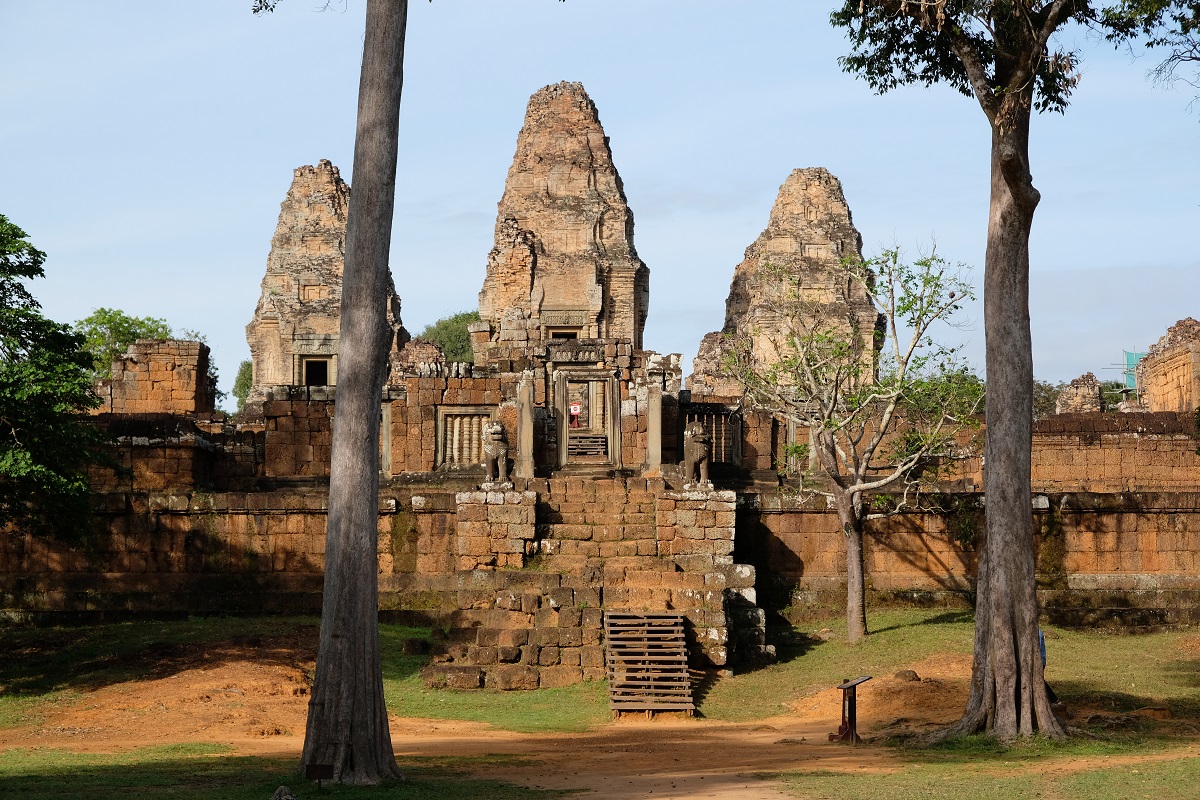
The East Mebon was once situated in the middle of an artificial lake
In the late ninth century CE, the Khmer people witnessed the establishment of a new capital of their fledgling empire under the rule of Yasovarman I, whose predecessors previously ruled from Hariharalaya. Called Yasodharapura (modern-day Angkor), the new center of administration began seeing the construction of grand edifices fit for the capital of an aspiring regional power. Apart from building a large state temple, a tradition that began with Bakong which was then carried on by subsequent Khmer kings for many more decades and centuries to come, Yasovarman I also commissioned a large artificial lake whose original purpose remains a mystery. Better known today as the East Baray, it is a body of water no more, for it is now filled with crop fields tended by local farmers.
More than three decades after the death of Yasovarman I, the empire saw the ascension of a new ruler called Rajendravarman II. Commencing his reign in the mid-tenth century CE, the king began the construction of a temple on an artificial island right in the middle of the East Baray. The East Mebon – the present-day name of the structure – was completed right before the end of the first decade of the king’s 24-year reign. It consists of two enclosures with the main shrines located atop a three-tiered foundation. Thanks to the use of bricks and laterite – a type of rock that is rich in iron oxide which gives it a reddish hue – among other construction materials, the East Mebon must have been, and still is, an eye-catching edifice particularly on sunny days.
While quite impressive architecturally, the East Mebon today is often known for its elephant statues which are in a much better state of preservation compared to those found at other temples. True to the tradition that had been carried out since the days when Hariharalaya was still the capital, Rajendravarman II dedicated the East Mebon to the main deity, Rajendreshvara, as well as to his ancestors. Why did the king and the deity have similar names? You may ask. This is an example of the cult of devaraja, literally the “god-king”, established by Jayavarman II himself – the founder of the Khmer empire – which set a precedent for later kings to assert their undisputed position of power. The suffix -eshvara itself indicates the Shaivite (worship of Shiva) nature of the religion.
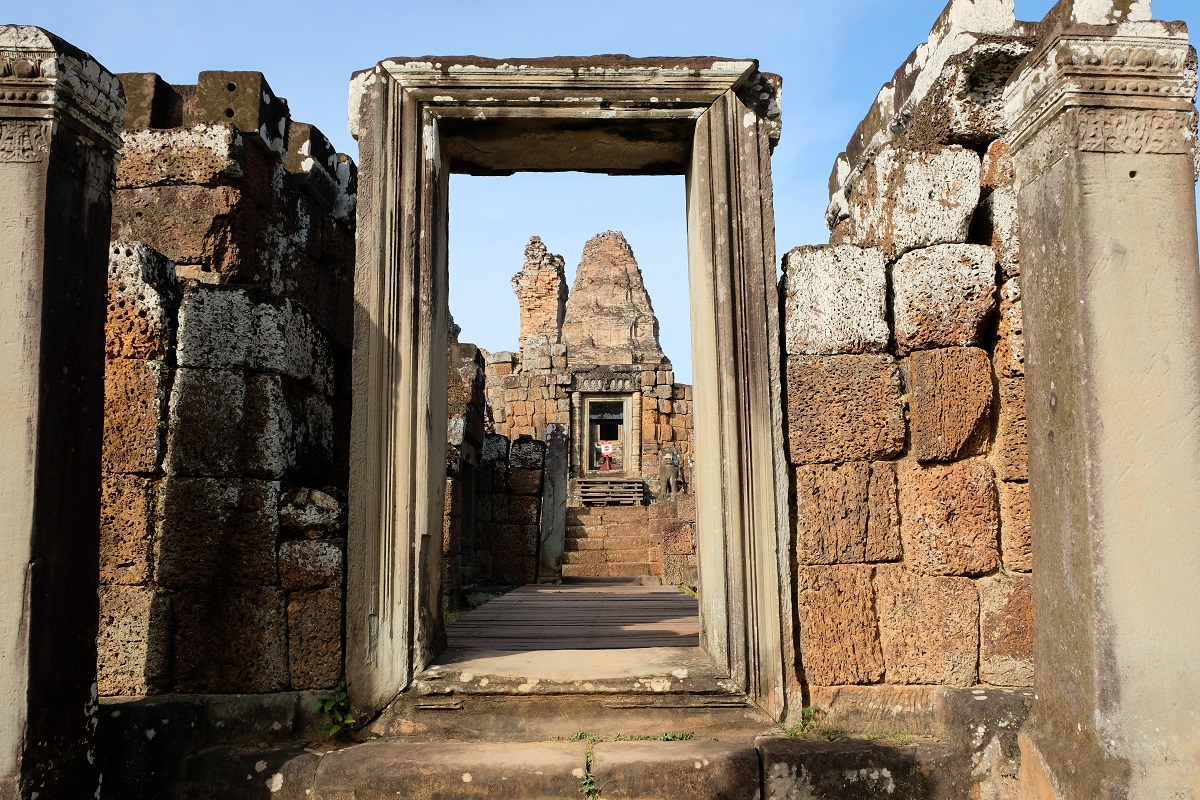
Entering the temple compound

Elephant statues are among the first things visitors will notice at this site
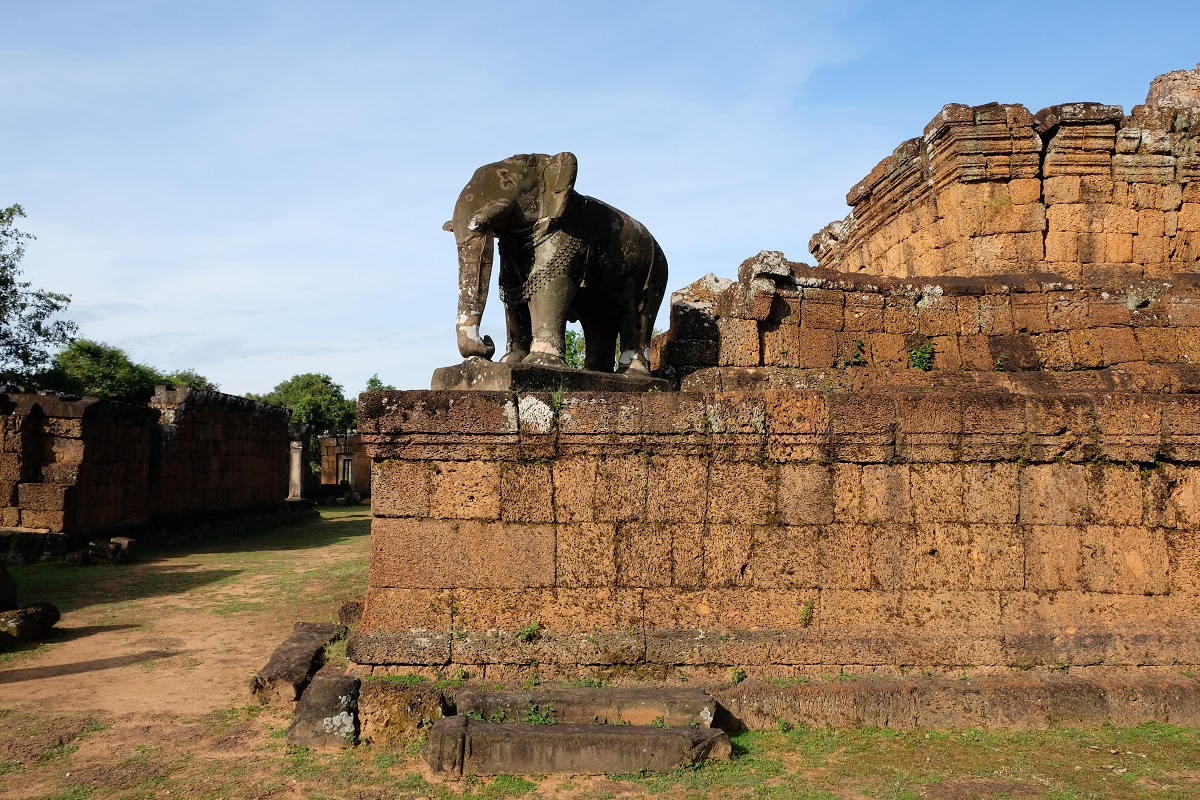
The stone elephants at the East Mebon are in a much better condition than those at other temples
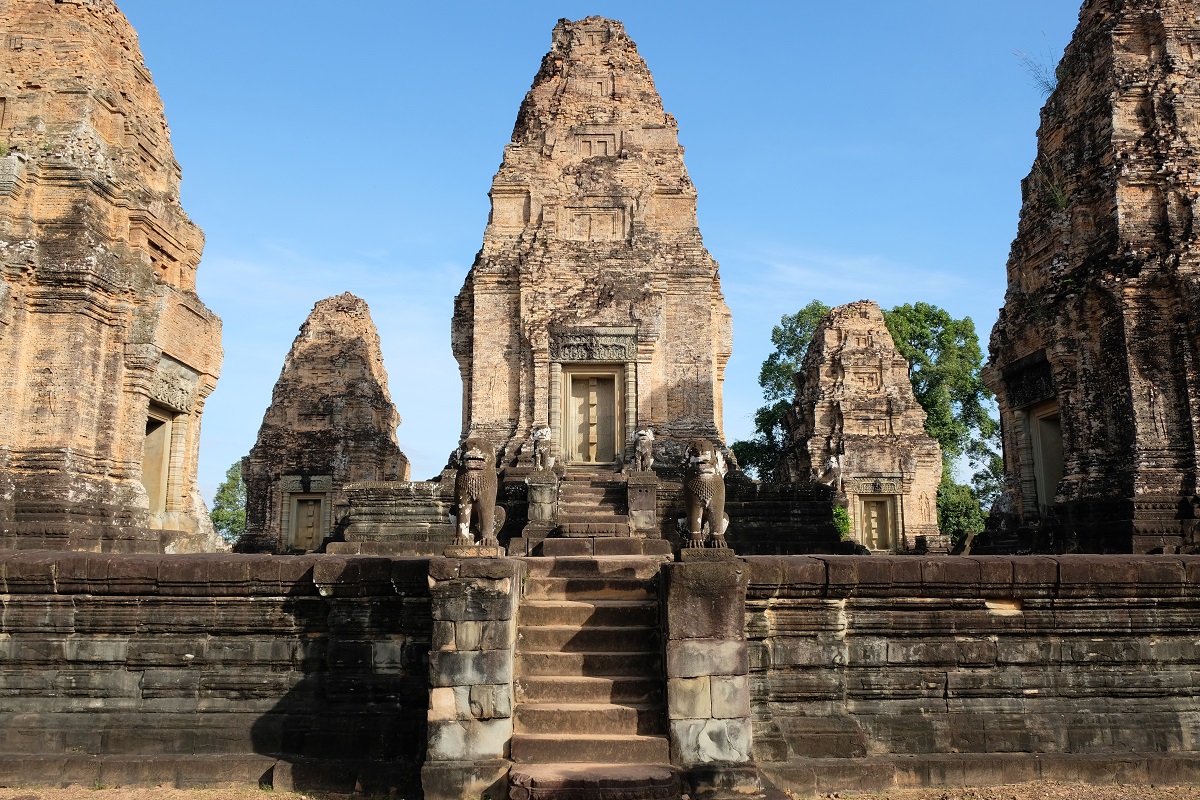
The inner courtyard
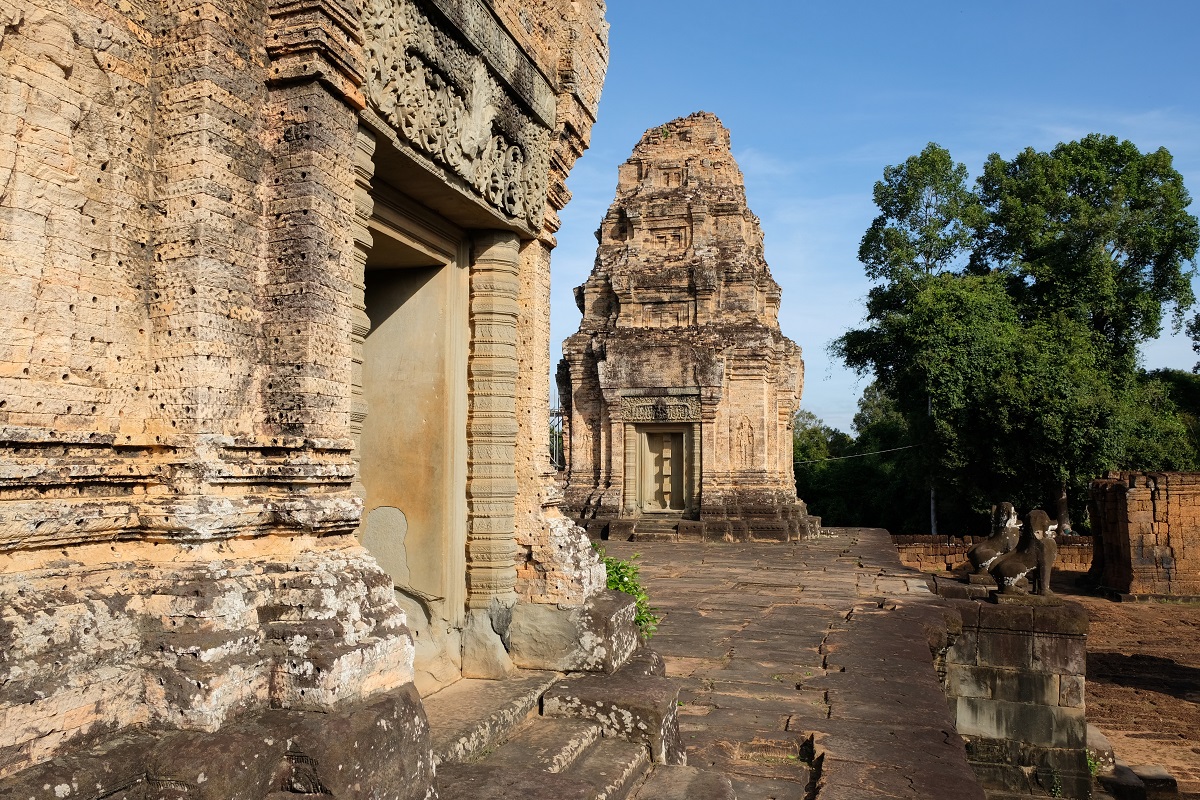
Wandering around the main sanctums

The central sanctum bathed in the soft morning sunlight
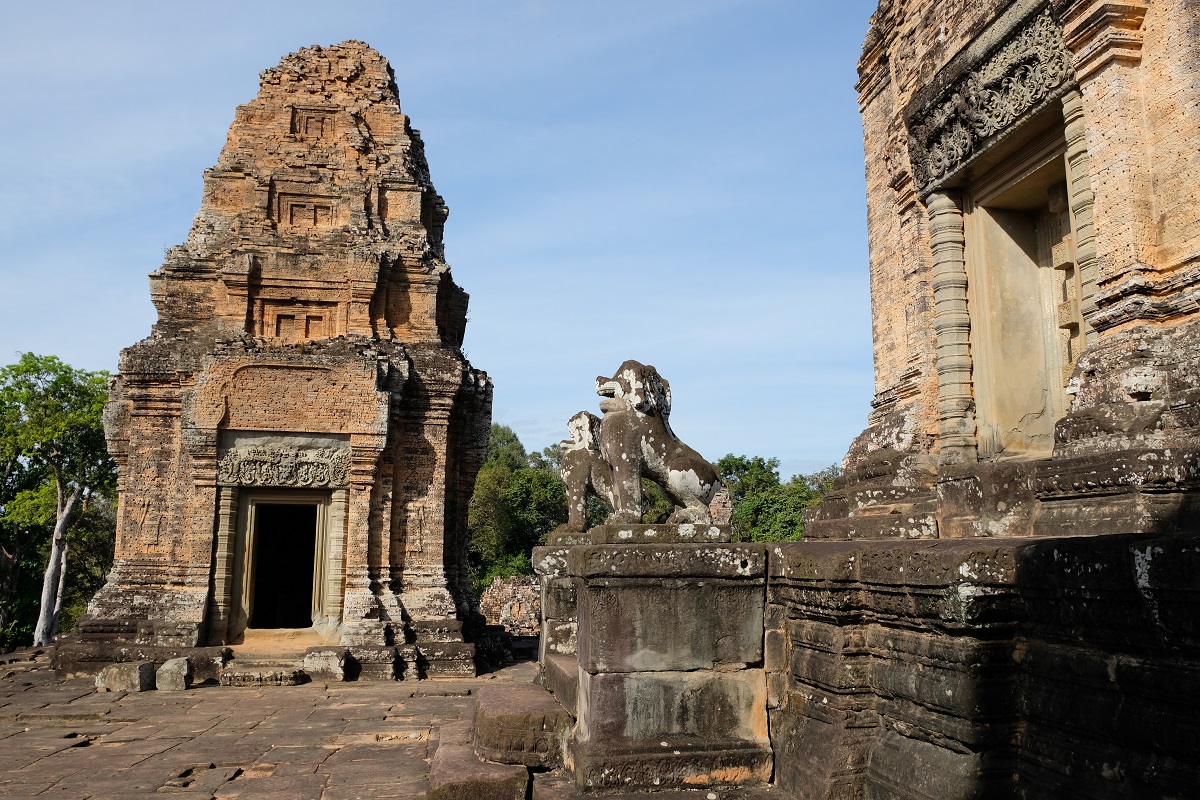
Two guardian lions

Survivors of the elements
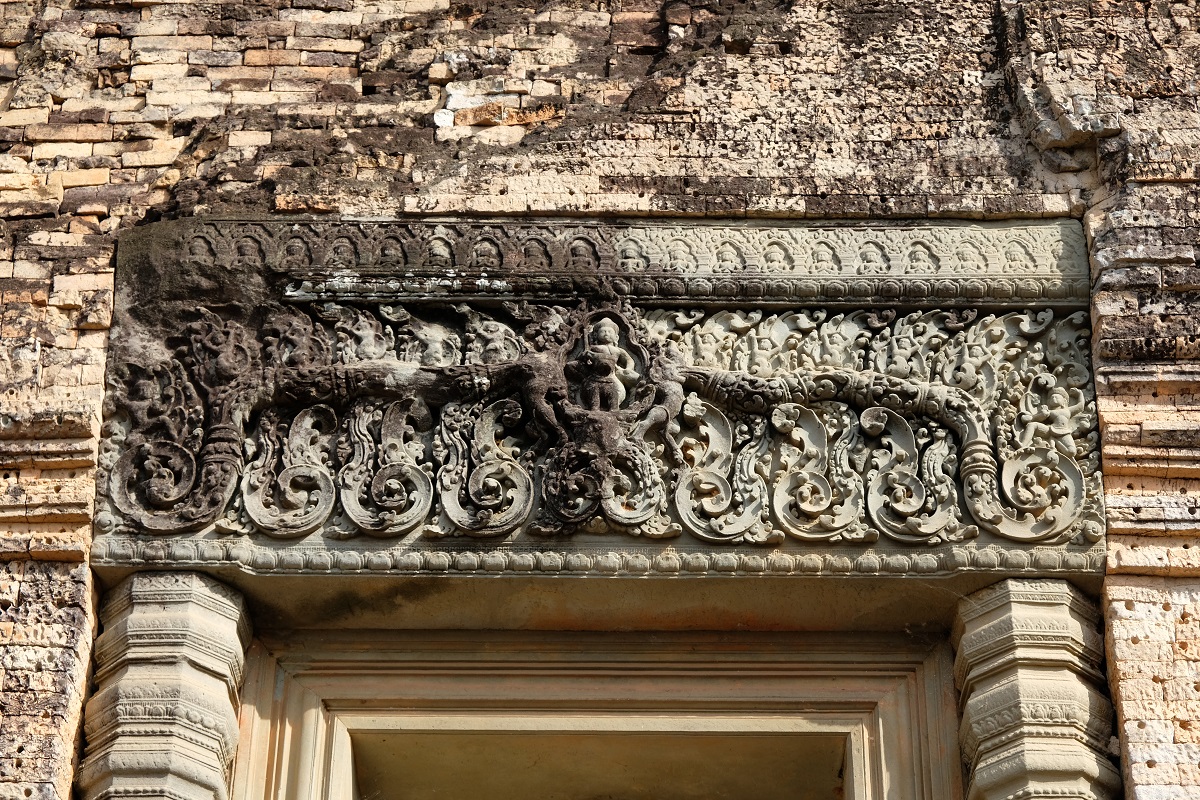
One of the best-preserved lintels at the East Mebon
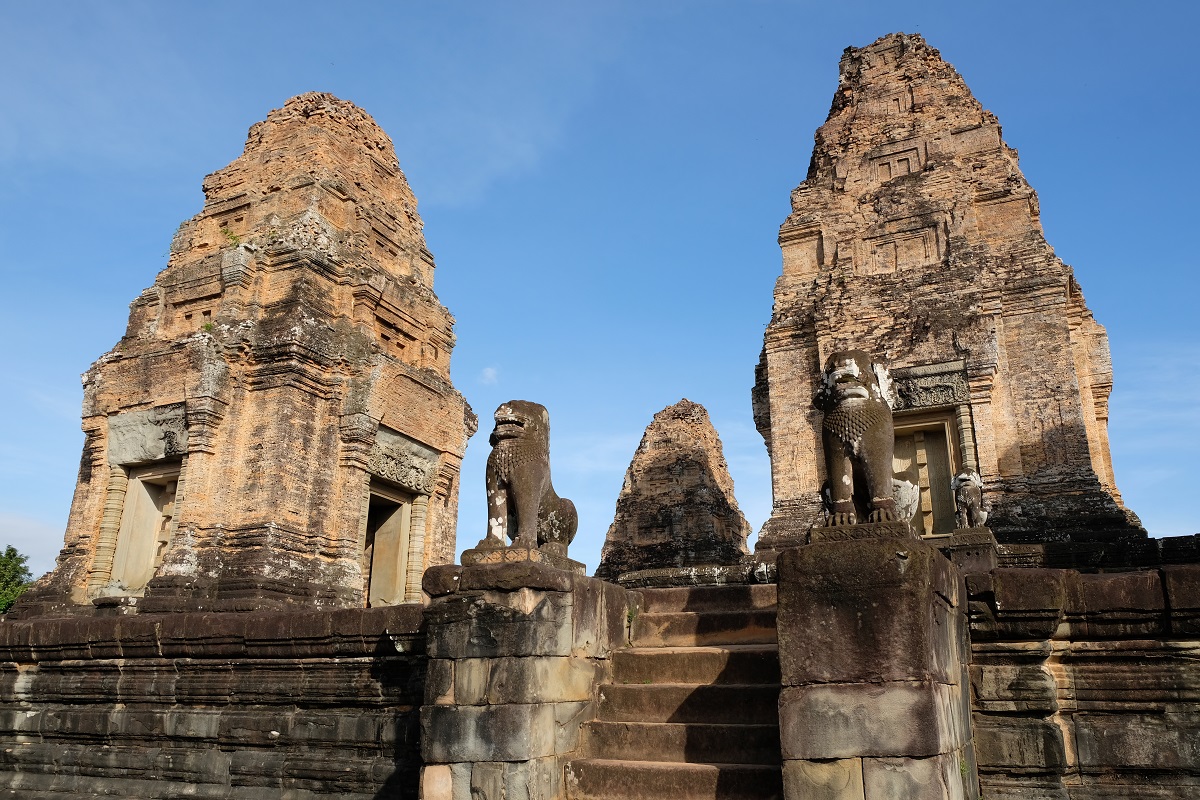
They will guard the inner courtyard for many more decades and centuries to come
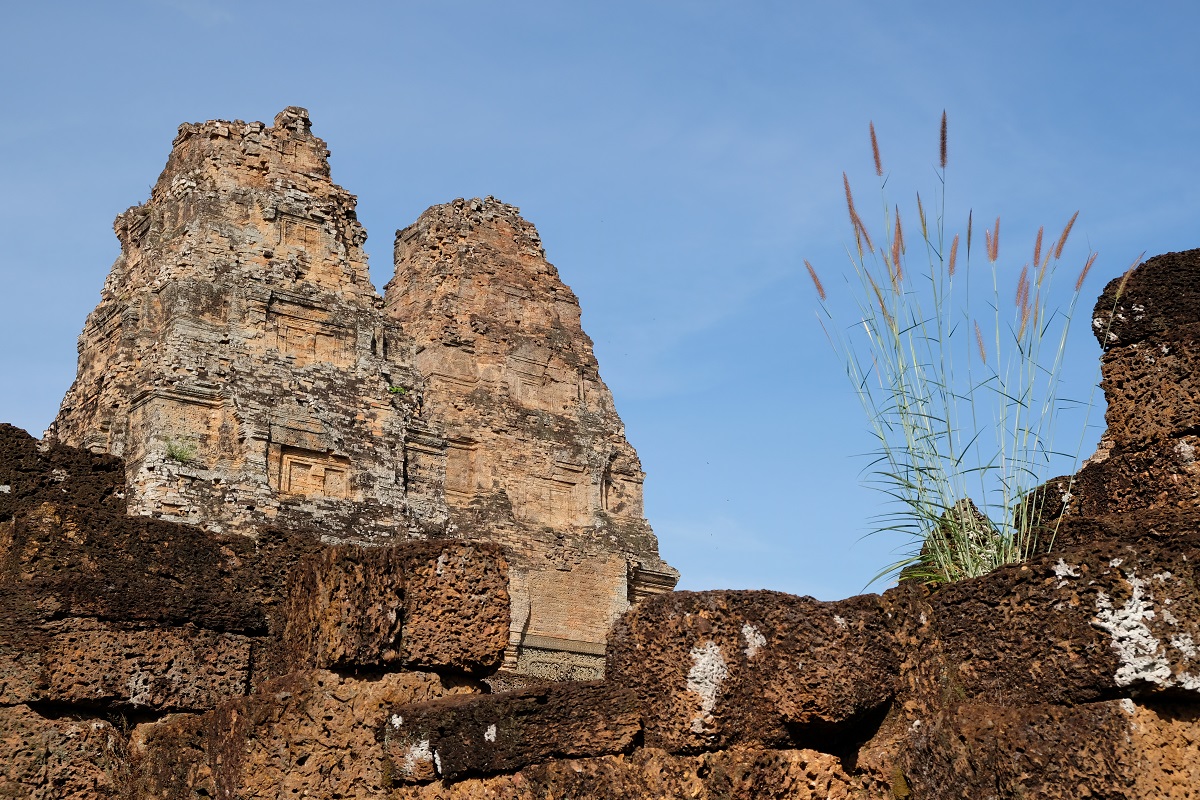
Mother Nature trying to reclaim her place

The enclosures of the East Mebon
Almost a decade after the completion of the East Mebon, Rajendravarman II inaugurated his own state temple, an even larger structure located directly to the south of the East Baray. Taking some key architectural features of the former as inspiration, the new shrine – known today as Pre Rup – occupies a much larger plot of land with its main sanctums built on top of a stepped pyramid much higher than those at the East Mebon. Despite the wear and tear caused by a millennium’s exposure to the elements, it is still quite a sight to behold today, especially for those taking the so-called Grand Circuit of Angkor Archaeological Complex. I can imagine how impressive it must have looked upon its completion more than 1,000 years ago.
The main sanctums on the highest level of Pre Rup were once dedicated to Shiva and Vishnu with their respective consorts, Uma and Lakshmi. The presence of Vishnu at the state temple of a king who was evidently a Shaivite does make me wonder if this was the beginning of a shift of religious practice in the empire, culminating in the construction of Angkor Wat, a magnificent Vaishnava (worship of Vishnu) temple completed almost two centuries later. Or, perhaps the two beliefs had in fact coexisted in Khmer society for centuries.
Standing on the highest level of this east-facing temple affords a sweeping view of the plains as far as the eye can see. Probably Rajendravarman II himself did the same thing as he looked far to the east, the direction from where the Khmer empire was ruled for a brief period of time. It was under Jayavarman IV, who reigned between 928–941 CE, that the capital moved from Yasodharapura to a remote location known today as Koh Ker following a power struggle among the successors of Yasovarman I. Koh Ker remained the center of administration until Rajendravarman II ascended the throne in 944 CE following the death of Harshavarman II – his cousin and Jayavarman IV’s son. Thanks to the new ruler, Yasodharapura was reinstated as the capital of the empire, a fact about the king that is curiously not often mentioned today.
Rajendravarman II not only reaffirmed Yasodharapura’s position at the center of the growing empire, but he also asserted Khmer influence eastward to Champa, a collection of independent states of the Cham people which is now in modern-day central and southern Vietnam. In the following centuries, relations between the two regional powers would be marked by alternating subjugations, as well as sustained trade activities and cultural exchanges despite the perennial enmity. However, to me personally the most impressive legacy from the reign of Rajendravarman II was neither his state temple of Pre Rup, nor the East Mebon, but a rather small temple commissioned by some of his courtiers situated further away from the capital. A sublime beauty like poetry in stone, as if it was created by the celestial beings themselves.

The imposing Pre Rup in the morning sun

This was once the state temple of Rajendravarman II

As a state temple, it was built even larger and higher than the East Mebon

The steps to the upper level
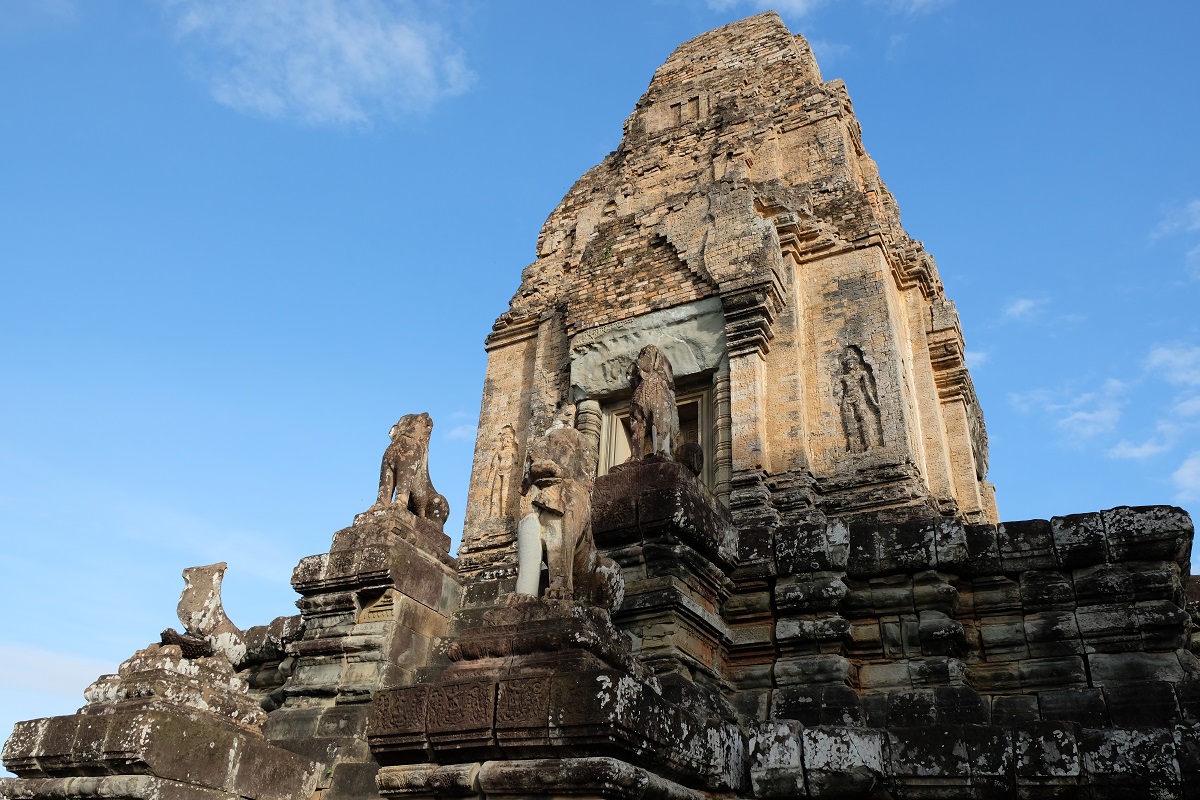
The central sanctum
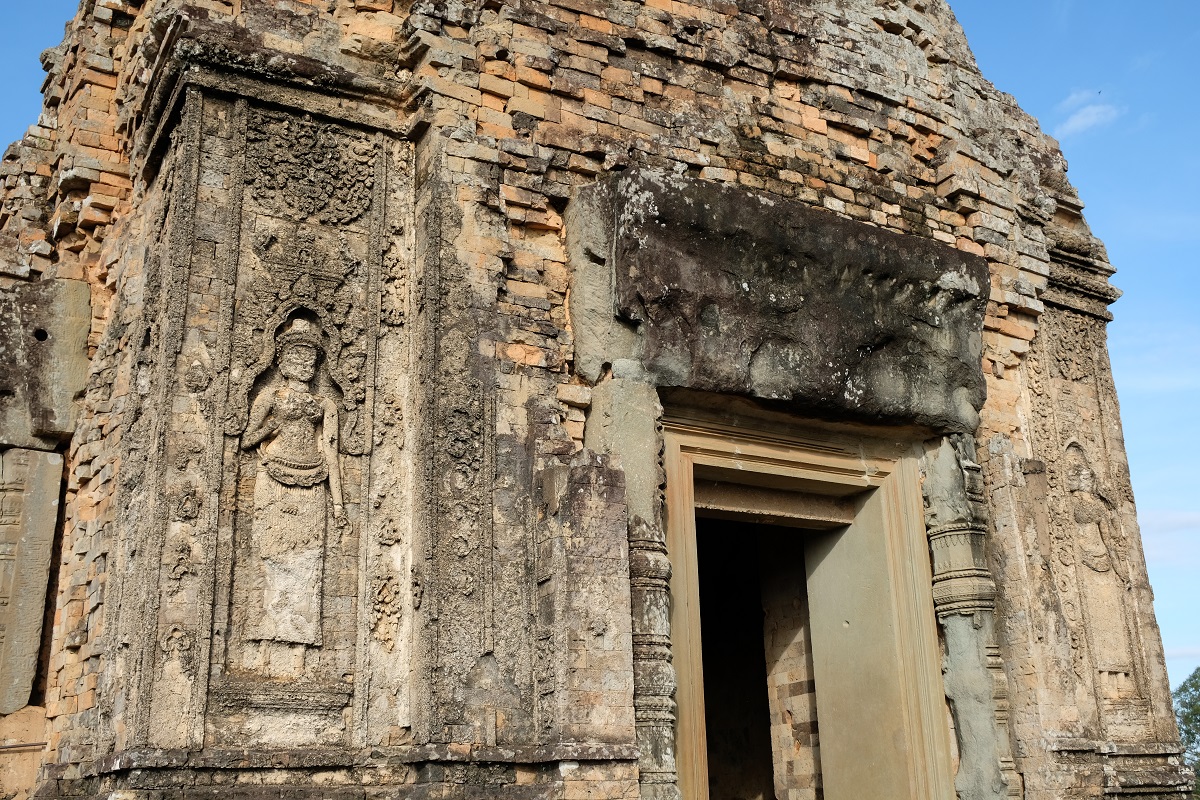
A weathered beauty

This lintel has seen better days
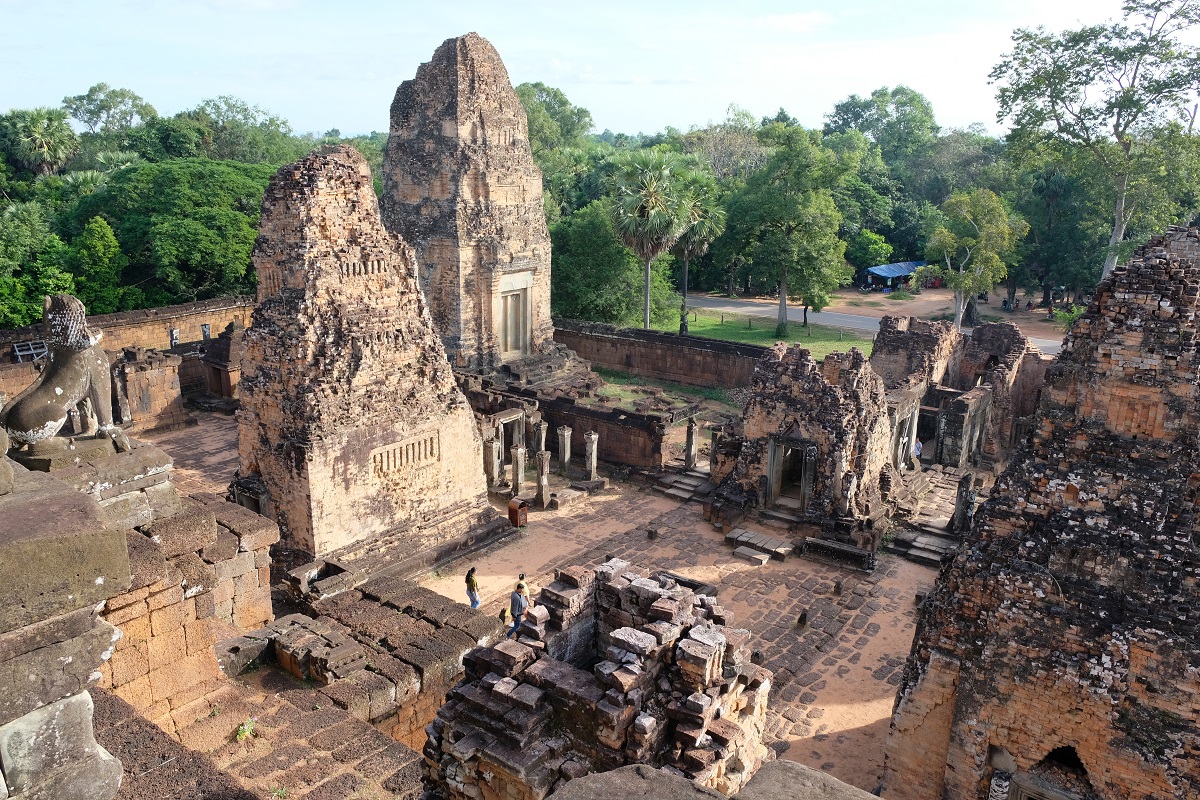
Other structures on the ground level of the compound
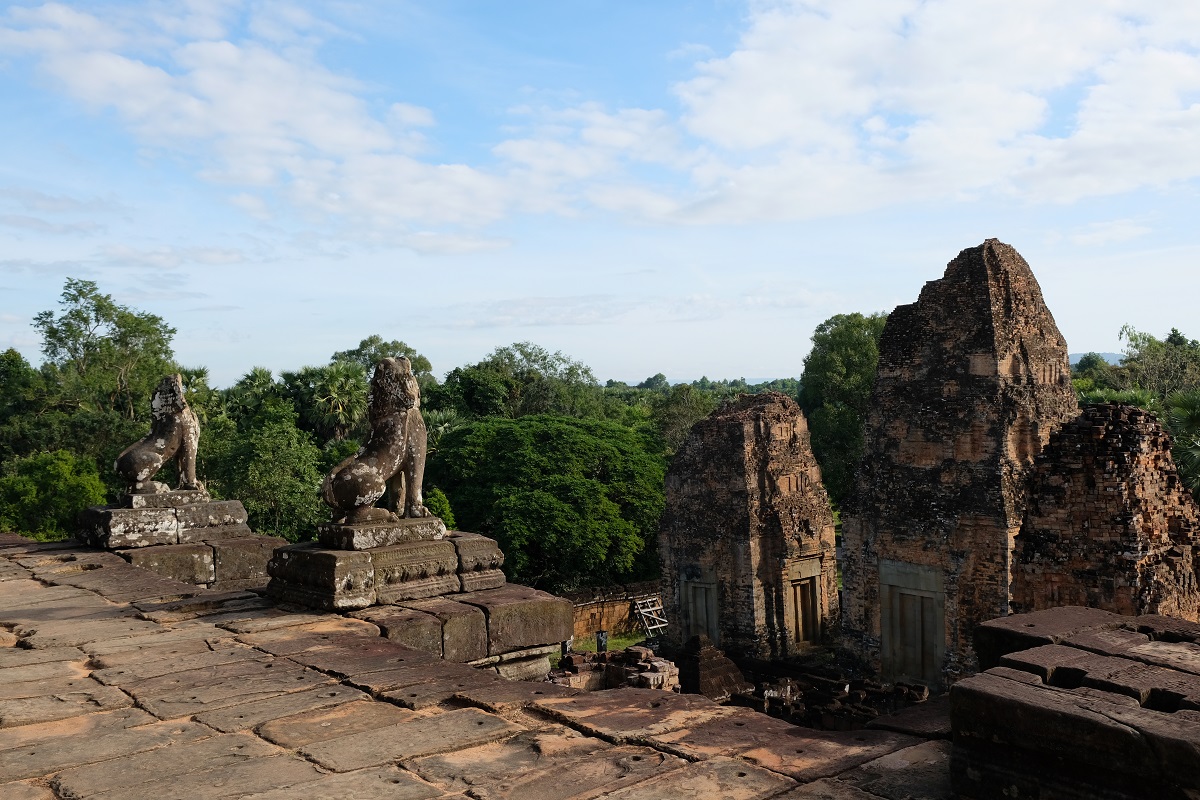
A nice vantage point to contemplate

Thick forests as far as the eye can see
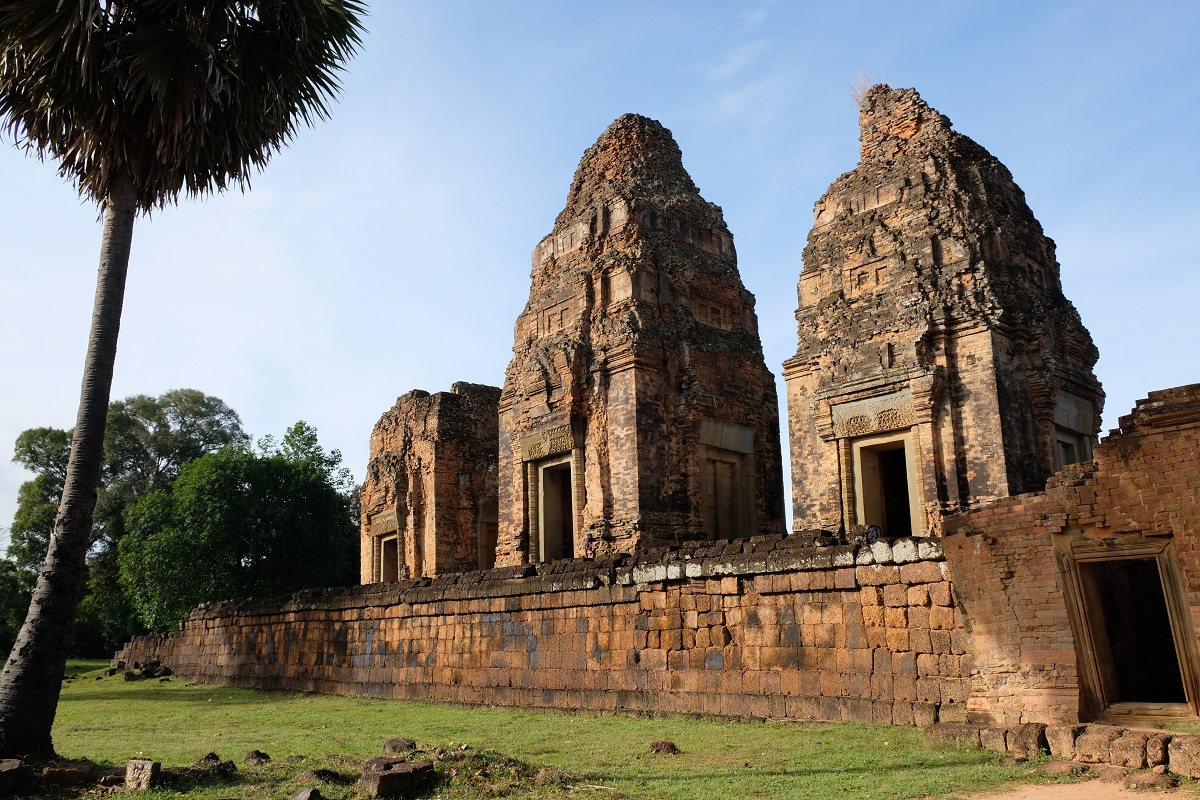
These structures are purportedly later additions

When in Angkor don’t forget to look up
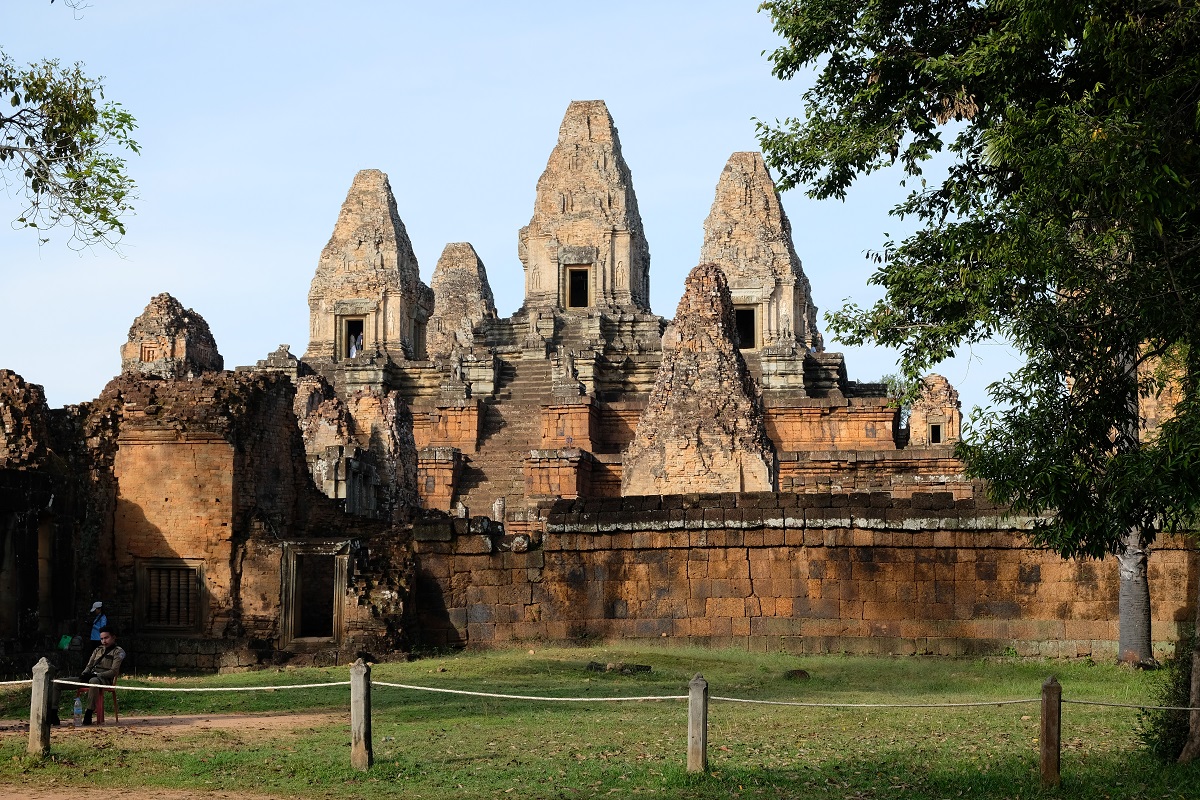
Pre Rup, a 10th-century temple at Yasodharapura, known today as Angkor

 What an Amazing World!
Bama, your pictures and description reminds me of what we called Bakong Wat. It was a few years ago and with so many wats, I’m not sure if these are the same places or just similar. 😊 If it’s the same I remember it specifically because we had a gorgeous sunset alpenglow-style reflection off the complex. Maggie
LikeLiked by 1 person
I guess you’re referring to either Bakong (which is featured in my previous post) or Bakheng (which I didn’t go). The latter is a popular place to see the sunset, so it might actually be what you have in mind. Watching the sun dipping into the horizon creating alpenglow-style effect to the entire complex must have been really beautiful!
LikeLike
Oh must be Bakheg, but they look very similar.
LikeLiked by 1 person
Gorgeous photos! The lintels and other details on both temples look spectacular – I wish I had taken the time to see more temples when I was in Angkor. And once again, it looks like you had the place pretty much all to yourself.
LikeLiked by 1 person
Thanks Zac! There are just so many ancient temples in and around Angkor it’s impossible to see them all in one go, unless you stay in Siem Reap at least for weeks. There were a few other visitors when we were there. One in particular was extremely loud, but luckily you can’t hear that person through my photos. 🙂
LikeLike
I loved these two temples when i visited! Pre Rup was our last of the day and with the afternoon light it was gorgeous! Thanks to your lovely post for the sweet memories of roughly 6 months ago! (Gosh how time flies!)
LikeLiked by 1 person
Actually we went to these two temples also on our last full day in Siem Reap, and when we arrived in Pre Rup it was just opened. Do you already have plans for future trips? I might be following your footsteps again just like Jordan and Cambodia where I went literally months after you did.
LikeLike
Japan in 3 weeks!!!! Taking my daughter and 3 other school mum friends and their daughters are coming along too! We are visiting Japanese friends who had to leave Perth and move back when their work contracts finished. Will be a big happy reunion! So excited but this trip is all about the kids…. No hiking Fuji, or exploring temples etc. More like Disneyland and Hello Kitty stuff! Lol. Should still be fun though and I’m looking forward to seeing my mum friends again! You gonna go to Japan now? 😝
LikeLiked by 1 person
Ha! Japan is always a good idea. It’s been more than six years since my first trip there, and I’ve been thinking of going back. We’ll see — I know for sure I’ll be more interested in seeing ancient temples than Disneyland or Hello Kitty! Lol.
LikeLiked by 1 person
Im trying to be a good mum … but I’m gonna struggle with all the cutesy kawaii crap my kid wants to buy! Lol. Uzbekistan in 2024… come join me!
LikeLiked by 1 person
Those kawaii stuff can be hard to resist though. 😆 Whoa, Uzbekistan has been one of the countries I most want to see! But I might have to read your stories first and go later, as usual.
LikeLike
I’ve been dying to visit UZ for years but something always comes up. Im making next year the year for uzbekistan no matter what!! What ideas for travel do you have for this/next year??
LikeLiked by 1 person
I’ll be traveling to Vietnam in two weeks’ time. And in November I’ll be going to Denmark for a friend’s wedding. December will likely be Hong Kong (my last time was right before the pandemic). I might also go to one more country, but nothing is fixed yet. It’s a busy year, so next year I might want to slow down a little bit and choose one or two that are really special.
LikeLiked by 1 person
Sounds good! At least you have some cool travels to look forward to! I look forward to your future pages about these destinations!
LikeLiked by 1 person
Likewise, Anna!
LikeLiked by 1 person
The elephants here are indeed the best. Somewhat chubby but more realistic than at other temples. I haven’t been to these places, but they bear resemblance to the Champa temples, from the material used to the shape of the sanctums. But the decoration is markedly different. I found the sculptures here to be more delicate. And I guess you will show us the best one in the next post 😛
LikeLiked by 1 person
Exactly. Usually elephants are often depicted in a stylized version, but the ones at the East Mebon do look more realistic to me as well. My next post will be on Banteay Srei, the most ornately-decorated ancient temple I’ve ever seen. Plus, we went there when the weather was perfect.
Speaking of temples of Champa, I’ve only been to My Son and I can’t wait to see more soon!
LikeLiked by 1 person
I enjoyed this tour Bama and the photos are beautiful. It’s interesting to see how the new ruler builds upon what came before him but also tries to make it bigger and better.
It’s interesting how elephants – and also lions – play a prominent part in architecture in East and South Asian culture as well and how they are both a symbol of strength and protection in the design of these massive complexes.
LikeLiked by 1 person
Thanks Ab. I guess the build bigger part is still somewhat true today among many in power to show that they’re better than the others.
You’re right about how both animals have been incorporated in architecture across Asia which in my opinion is largely attributed to Buddhism and Hinduism.
LikeLiked by 1 person
Yup, I look at places like Dubai and New York and it’s definitely about trying to make a power statement for sure. But it is nonetheless a marvel to look at too. Who know how our current structures will be viewed hundreds of years from now, if they even last that long.
LikeLiked by 1 person
I have the same curiosity. Will people who live centuries from now look at the skyscrapers we build today with the same fascination as we do when studying about those ancient temples? For sure, we will never know.
LikeLiked by 1 person
Wonderful post and outstanding photos!
LikeLiked by 1 person
Much appreciated, Mike and Kellye!
LikeLiked by 1 person
It’s always fascinating to learn more about the history of an area and how these temples and structures came to be. The East Mebon and Pre Rup look quite impressive. I love those stone elephant statues. It’s interesting to think how these sights must have looked back in their full glory.
LikeLiked by 1 person
Imagining how places like these looked like during their heyday is among the reasons why exploring ancient temples is so interesting. It certainly helps when there is enough information to tell us, modern-day visitors, about who built them and why they were constructed in the first place.
LikeLiked by 1 person
Such an interesting post Bama. I wish I’d had you with me when we went to Angkor. We had a guide book but it contained far too many words! 😂 You’ve managed to distil it down to something comprehendable. And what I comprehend is that ruling men the world over and throughout history love to build big structures to themselves and to the gods. Oh and to call themselves god-kings. I bet even Charles would do the same if he thought he could get away with it. 😂 It’s a practice that goes back to the beginning of time. I suppose it was part of establishing and maintaining power.
Did you know that when western white explorers first discovered Angkor they thought it must have been built by the Romans. They couldn’t believe that and Asian race could be this accomplished. Such breathtaking arrogance!
Alison
LikeLiked by 1 person
Ha! I don’t always have all the important information with me when visiting such ancient sites. But before going on a trip, I do try to take notes on what makes a temple special, or what features it has that others don’t. I chuckled at what you said about Charles. 😂 Good thing people are a lot more critical today.
Oh yes, I vaguely remember reading about how European explorers believed that Angkor was built by people like them, not people they saw in this foreign land. The level of arrogance is really shocking.
LikeLiked by 1 person
Beautiful structures seen on a beautiful day! How far are these from the main Angkor temples? I’ll be there in a mere 4 days – in Vietnam now and so eager to get to Cambodia! I sound like a broken record, but I am always so struck by what ancient civilizations were able to build.
LikeLiked by 2 people
If you take the so-called Grand Circuit, you will definitely see these, Lex. They’re very prominent you won’t accidentally miss them. Along this route you can also see some more intriguing temples with less people around. Pre Rup is less than 10 km to the northeast of Angkot Wat. So it’s really not that far from the most famous sites within the archaeological complex. I hope you’ll get to see them!
LikeLiked by 1 person
Beautiful photos, Bama – and your advice to remember to look up is spot on. Those elephants are stunning and far superior to any others we saw when we were there several years ago. I find the compact nature of the site to be very appealing – a small gem in the midst of much larger structures. Now I have another site to look forward to when we return. ~Terri
LikeLiked by 1 person
Thank you, Terri. As you also noticed, a lot of elephant statues in Angkor were in poorer conditions than those at the East Mebon, which was exactly the reason why I wanted to go there. It would be cool if you also visit Cambodia during your upcoming RTW trip! Siem Reap itself has changed a lot. I was pleasantly surprised to know how walkable the city has become.
LikeLiked by 1 person
Southeast Asia is always on our radar and can’t be missed! We love it there. Cambodia is particularly special, as is Laos. Vietnam is next for us.
LikeLiked by 1 person
You always do a good job of including the history and background of these temples and other sites you visit. You must take good notes when you do your research. I feel like I’m reading a history book … and there’s a quiz afterwards (no, just kidding).
I always like the details on these ruins. Where possible, I touch them to “connect” with these magnificent relics from the past.
LikeLiked by 1 person
Much appreciated, Matt. The research I do for my posts usually begins with questions: when was this built? Who built it and why? What makes it different from the others? and all sorts of questions that follow which often lead me down the rabbit hole. In the end I have to choose what goes into the blog post.
Ha! The quiz would be a turnoff for a lot of people. 😆
LikeLiked by 1 person
Such a stunning place with a very interesting history! Standing there around these beautiful temples must be quite impressive too, and I hope I’ll see them with my own eyes one day! Thanks for sharing!
LikeLiked by 1 person
Nothing beats the feeling of being at an ancient site on a sunny day with no one around you. I hope you’ll get to see Cambodia’s centuries-old temples sooner than later, Juliette!
LikeLiked by 1 person
What an amazing world that you always capture and explain so well.
LikeLiked by 1 person
Thank you! Have you been to Cambodia? I think you would love it.
LikeLike
Not yet! But in the plans once we are based in Spain.
LikeLiked by 1 person
Bama, visiting these two great temples early in the morning was the perfect way to start off our day-long tour of the Grand Circuit. I loved how the sun seemed to make the red laterite blocks glow – and the fact that neither of the two had the crowds we encountered at Angkor Wat or Ta Prohm.
As usual, your detailed explanation of the history and the ambitious figures behind their construction complements all the architectural shots. 🙂 The East Mebon must have looked even more beautiful when the East Baray was still filled with water… imagine the whole complex, stone elephants and all, with its reflection a little after sunrise!
LikeLiked by 1 person
It’s always a good idea to visit places like these early in the morning. The nice weather certainly helped us enjoy both temples even more, although I have to admit Pre Rup glowed brighter the morning we went to Banteay Srei. But I have no regrets for choosing to see the latter on that particularly sunny day.
If only there were a machine which would allow us to travel back in time to see how the East Mebon looked when the East Baray was still a reservoir!
LikeLiked by 1 person
You know, I often wish the space between the present and past can thin so that I can see these ancient structures in their original forms and settings, Bama. It must have been magnificent surrounded by water.
LikeLiked by 1 person
That would be really cool, Jolandi. But I guess the mystery is part of the reason why we find a lot of ancient monuments very appealing. I agree about how the East Mebon must have looked very beautiful with its reflection on the calm water of the East Baray.
LikeLike
Amazing photos Bama. And we love the depth of description you give of the culture and history. Such a rich history indeed!
LikeLiked by 2 people
Thank you, Sue. Sorry for the delay as I’m currently traveling in Vietnam, and it’s good to ‘see’ you again.
LikeLike
“…but a rather small temple commissioned by some of his courtiers situated further away from the capital” which one is this?
Fantastic article, as usual.
LikeLiked by 2 people
Thanks! That will be in my next post, which I plan to publish next week. 🙂
LikeLike
It was strange while there to see how first Hinduism and later Buddhism had conquered the region. While wandering these ruins I often wondered how big an impact religion had on the Khmer culture. Was it merely something enforced by royalty or a daily lived experience of the population? Thanks so much for these summaries of the kingly histories of the area.
LikeLiked by 1 person
Probably it was a combination of both, although as we all know it’s Buddhism that eventually became the dominant religion of the Khmer people. If only there were a time machine for us to peek into the past.
LikeLiked by 1 person
Haha. Well I suppose in a way archaeology is that time machine for us.
LikeLiked by 1 person