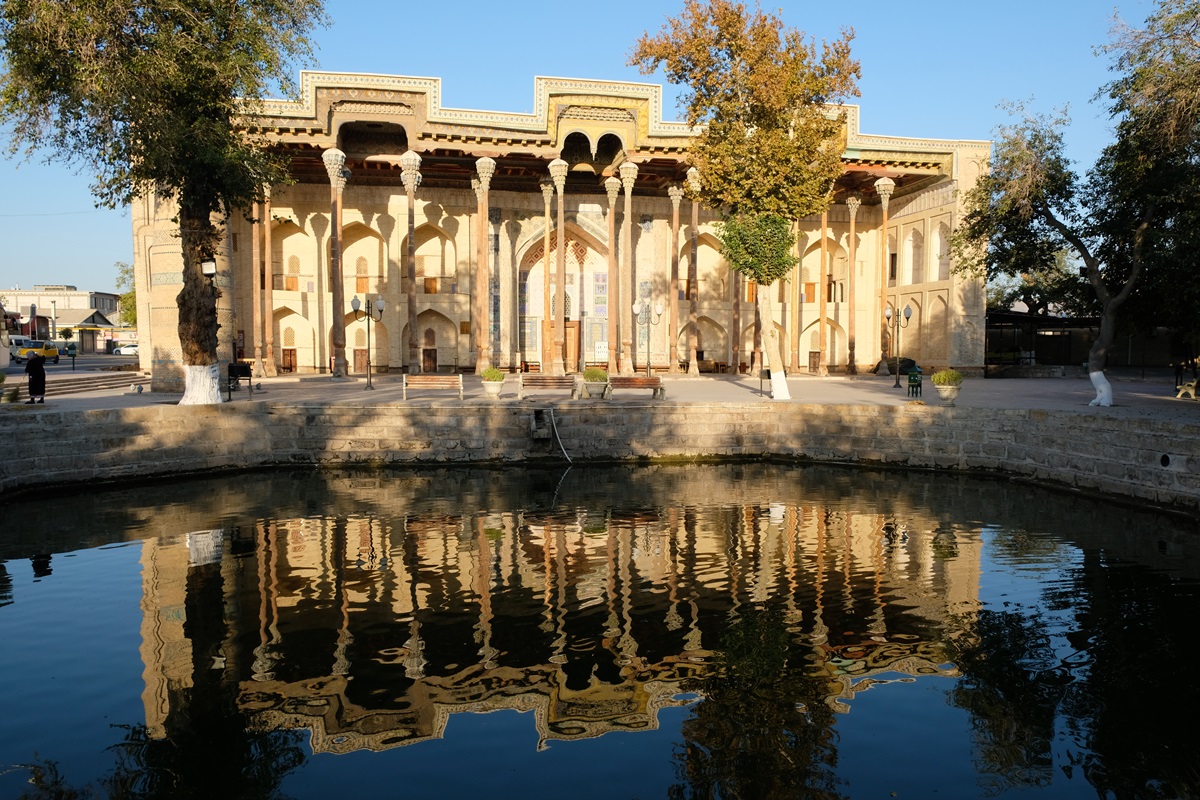
Morning reflections of Bolo Hauz Mosque
Bukhara had been immensely charming. We were fascinated by the relatively intact core area of its historic center where madrasahs and trading domes that were built centuries ago sit side by side with row after row of old houses and former caravanserais. What made it even more atmospheric was the fact that the city’s legendary artisanal craftsmanship was alive and well, with the genuine friendliness of the local people toward visitors further adding to the allure. However, if you walk a little farther away from the historic center, you’ll find even more gems from the past that are worth exploring.
On a chilly yet sunny morning in early October, right after breakfast James and I headed to Bolo Hauz Mosque, a small but beautiful monument directly opposite the formidable Ark. The photogenic 18th-century mosque sits in front of an octagonal hauz (artificial pond) with its calm water reflecting the sun-bathed façade of the structure. We took a closer look and we were in awe of the intricacy of the iwan: the front entrance of the compound decorated with slender wooden carved pillars and ornate ceiling. However, this was in fact only added in the early 20th century, and fortunately it was spared from destruction during the 1920 siege of Bukhara that almost obliterated the Ark. The turbulent times have long gone, and at the time of our visit, the stillness of the mosque’s surroundings exuded an undeniably peaceful ambiance.
Taking advantage of our early start ahead of most other tourists, we continued to a place less than a kilometer to the west where another monument from the past that arguably holds even greater historical significance stood in solitude. It was the 10th-century Ismail Samani Mausoleum, named after the founder of the Samanid Empire – a regional power that controlled parts of what is now Central Asia, Iran, and Afghanistan – that was once under the rule of the Abbasid Caliphate. Today, due to his legacy, Ismail Samani’s name is even immortalized in the currency of neighboring Tajikistan, the somoni.
Although relatively modest in size, the mausoleum’s intricate brickwork was quite a visual delight, with the soft morning sun accentuating the patterns created by different decorative elements of the walls. But its excellent state of preservation might raise the question: how did a structure built more than two centuries prior to the Mongol invasion survive the onslaughts of the nomadic empire that hailed from the steppes of the East? As fate would have it, this very mausoleum was buried in mud and sand from flooding and landslides that eventually concealed it from the Mongols. It wasn’t until the 1920s to 1930s when major excavation works carried out by Soviet experts finally unearthed the monument and brought it to public attention. It is considered the only remaining structure from the Samanid era, further cementing its historical significance.
A stone’s throw away from the mausoleum was another centuries-old historical site that is linked to Job (known as Ayyub in the Muslim world), a prophet mentioned both in the Bible and the Quran. Called Chashma-Ayub (literally “Job’s Well”), it is believed to be where he struck the ground with his staff to create a well. The current appearance of the compound is a result of different construction stages that spanned centuries, including in the 14th century when Bukhara was under the rule of Timur, the great conqueror who is now a national hero in Uzbekistan. A fitting conversion given the origin story of the site, today the cavernous structure also houses a museum dedicated to the history of Bukhara’s water supply.
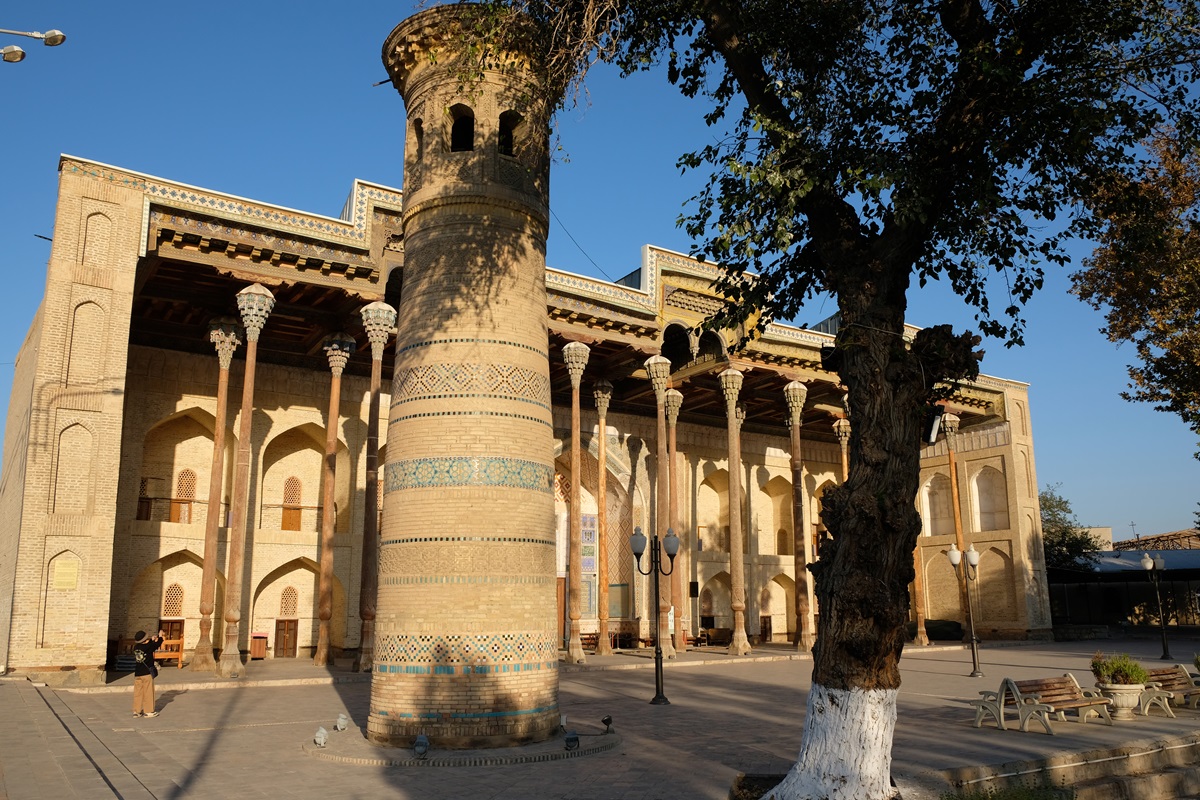
The rather modest minaret of Bolo Hauz Mosque bears a resemblance with the iconic Kalyan Minaret
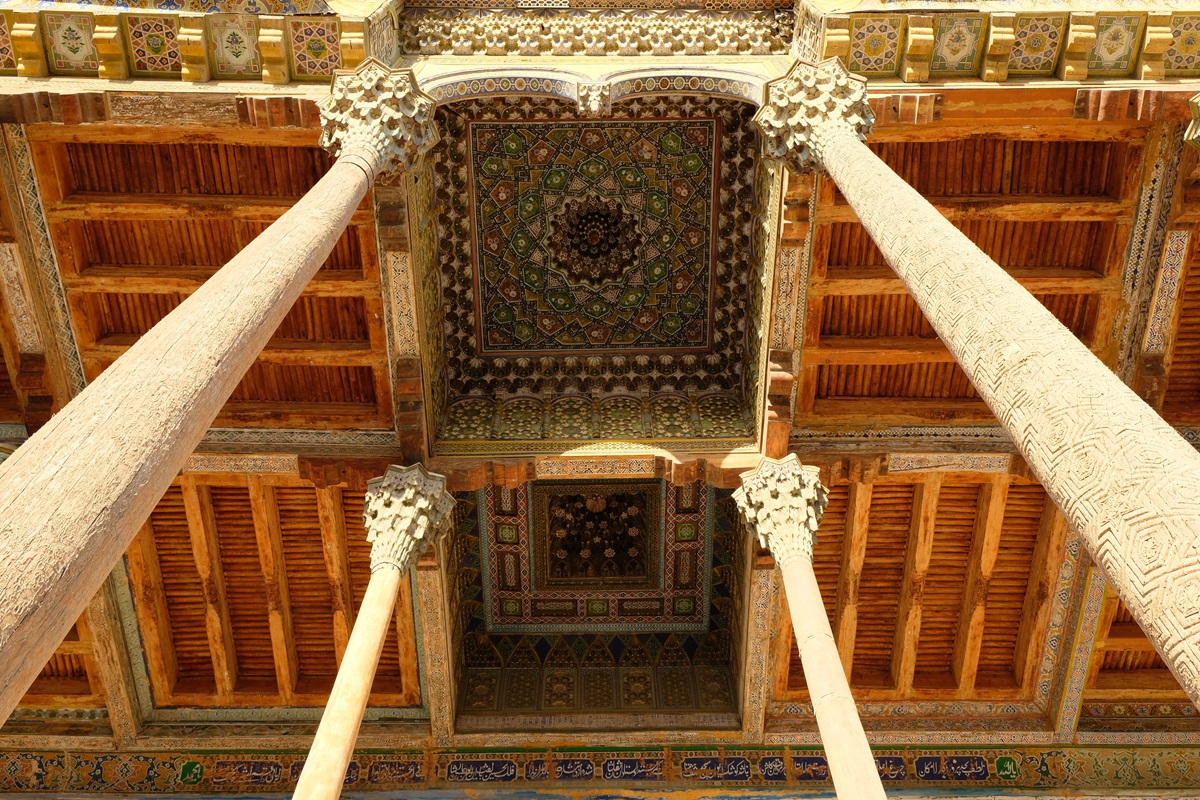
The ornate ceiling of the iwan of the 18th-century mosque
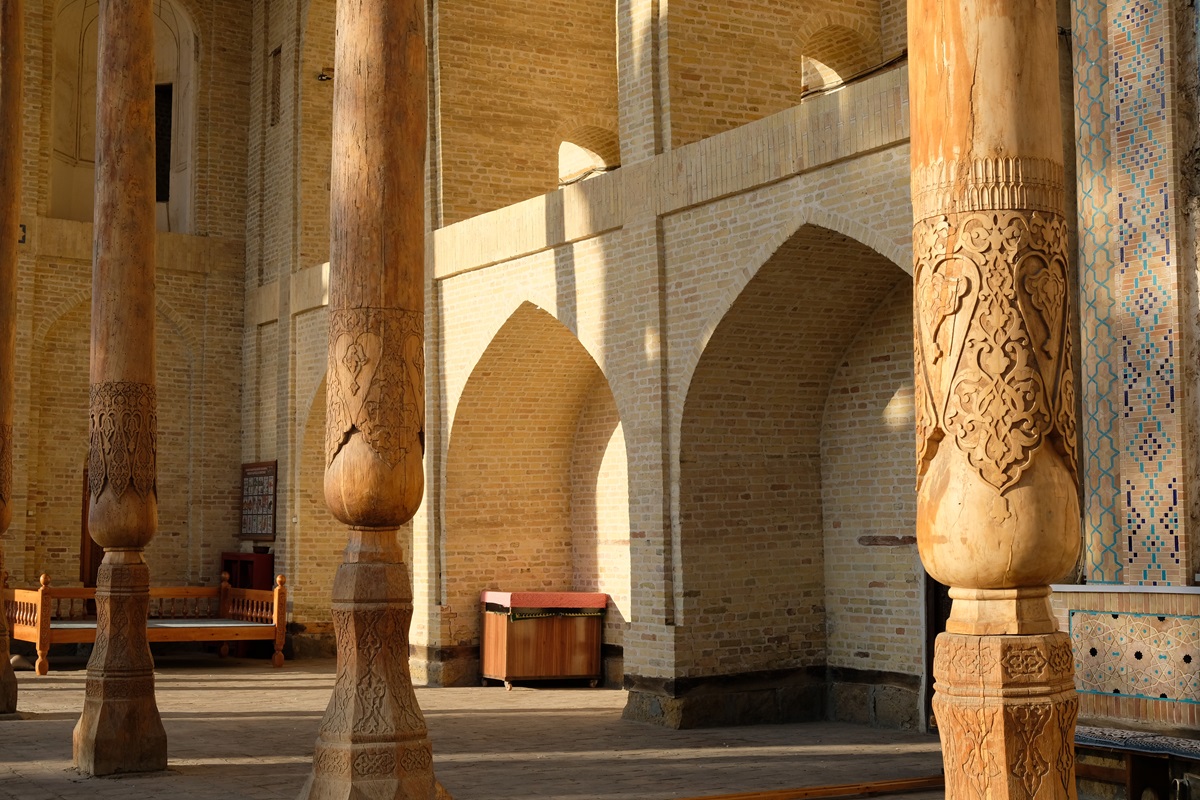
The style of these wooden pillars is unmistakably Central Asian
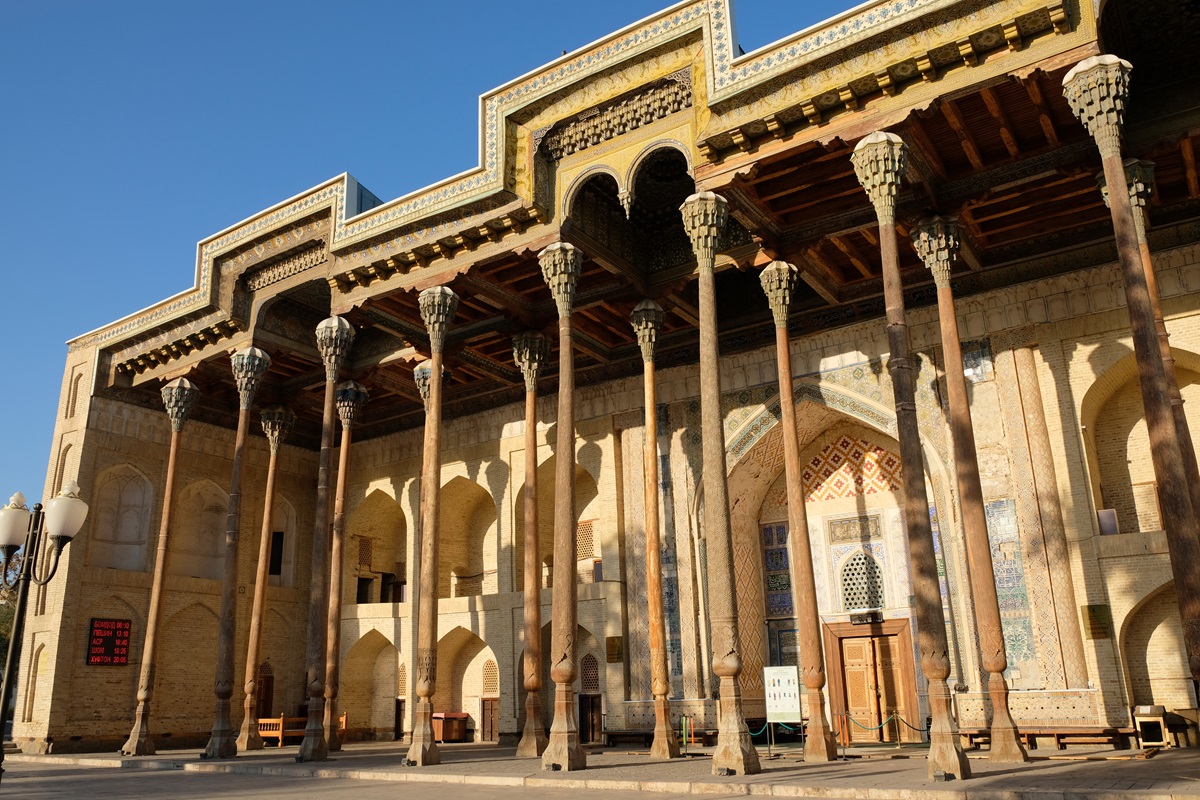
Bolo Hauz Mosque in the soft morning sun
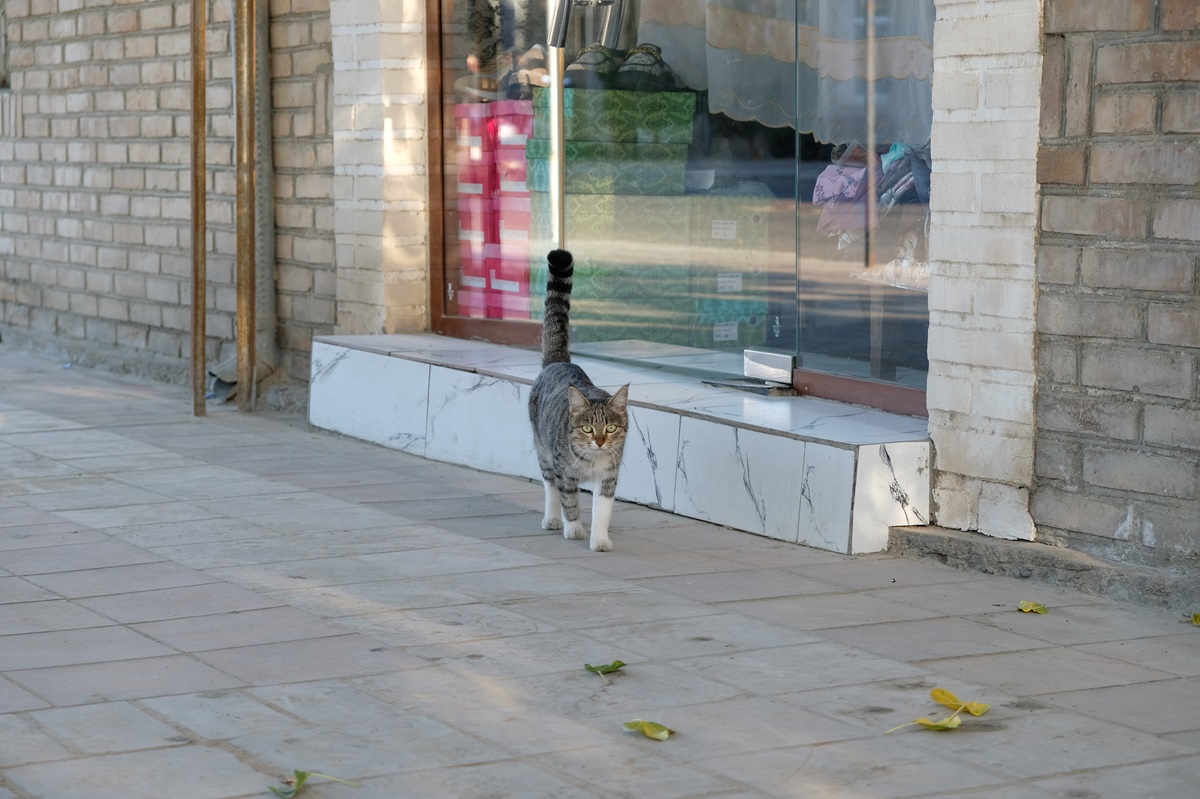
Bumping into a local resident
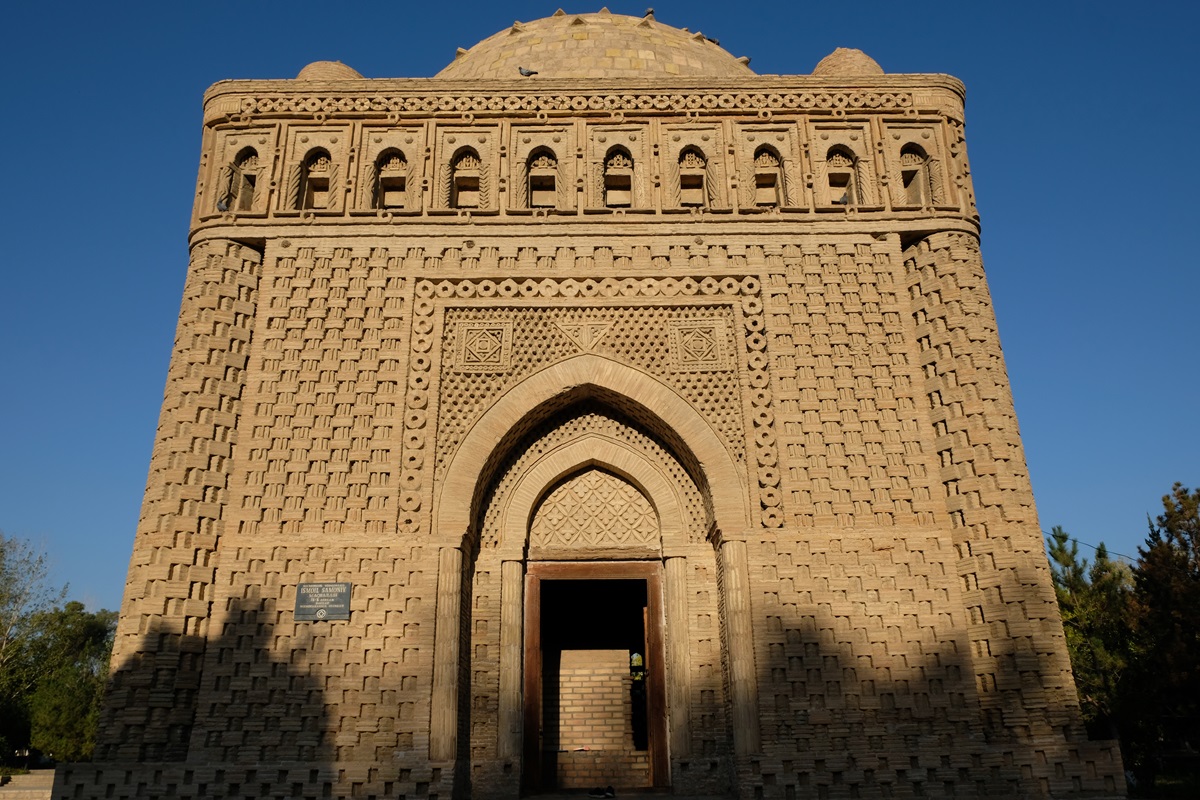
The incredibly well-preserved Ismail Samani Mausoleum
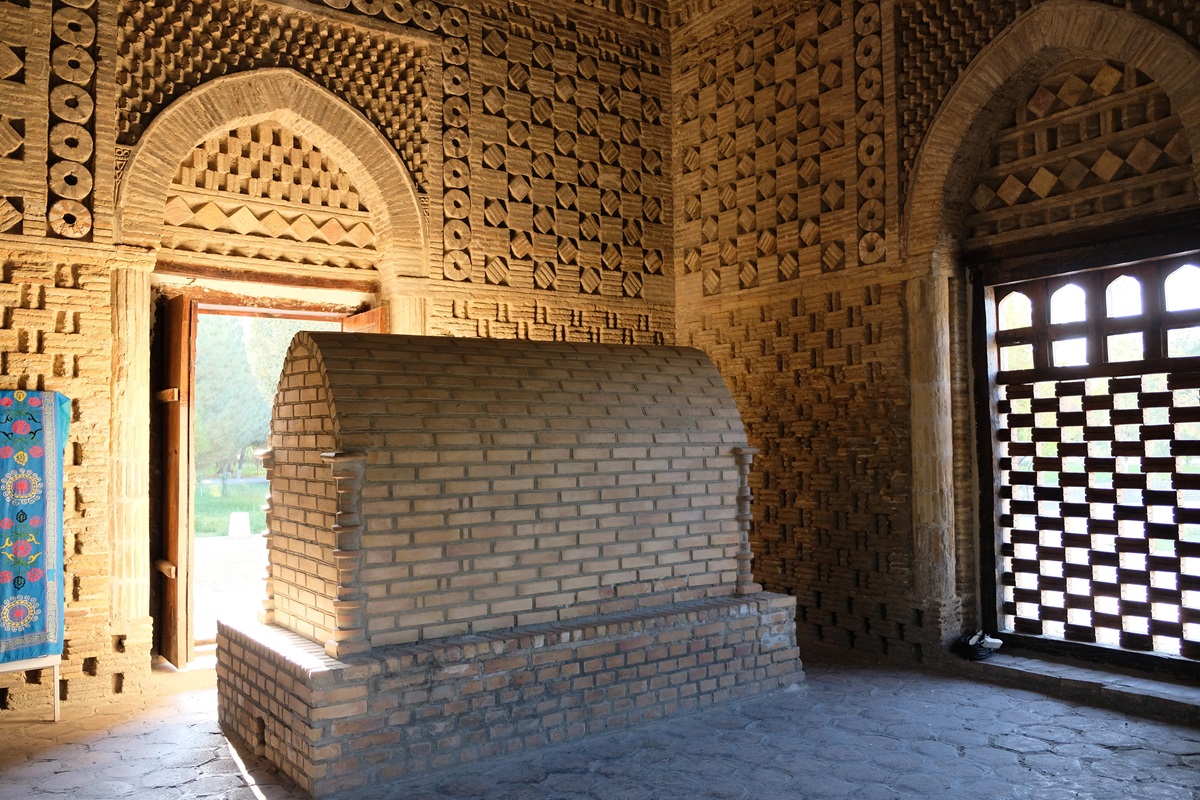
One of the tombs inside the mausoleum
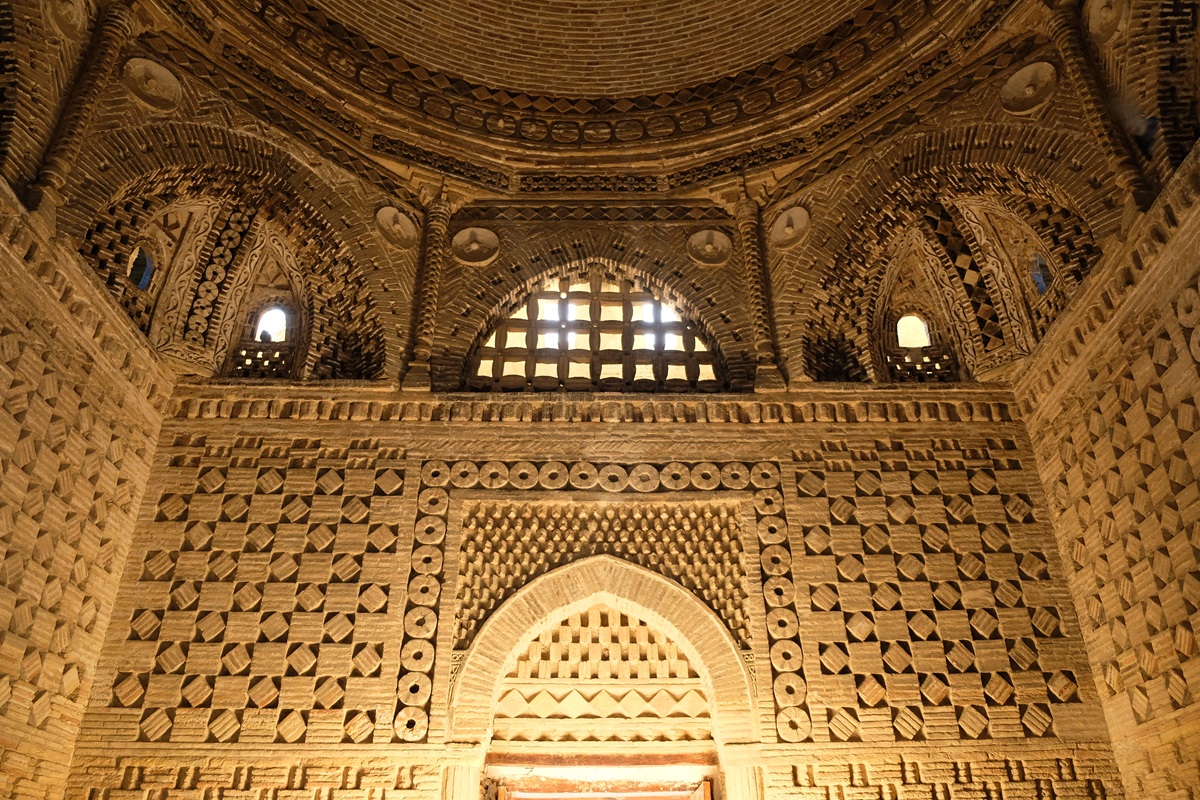
An architectural beauty that has survived many upheavals
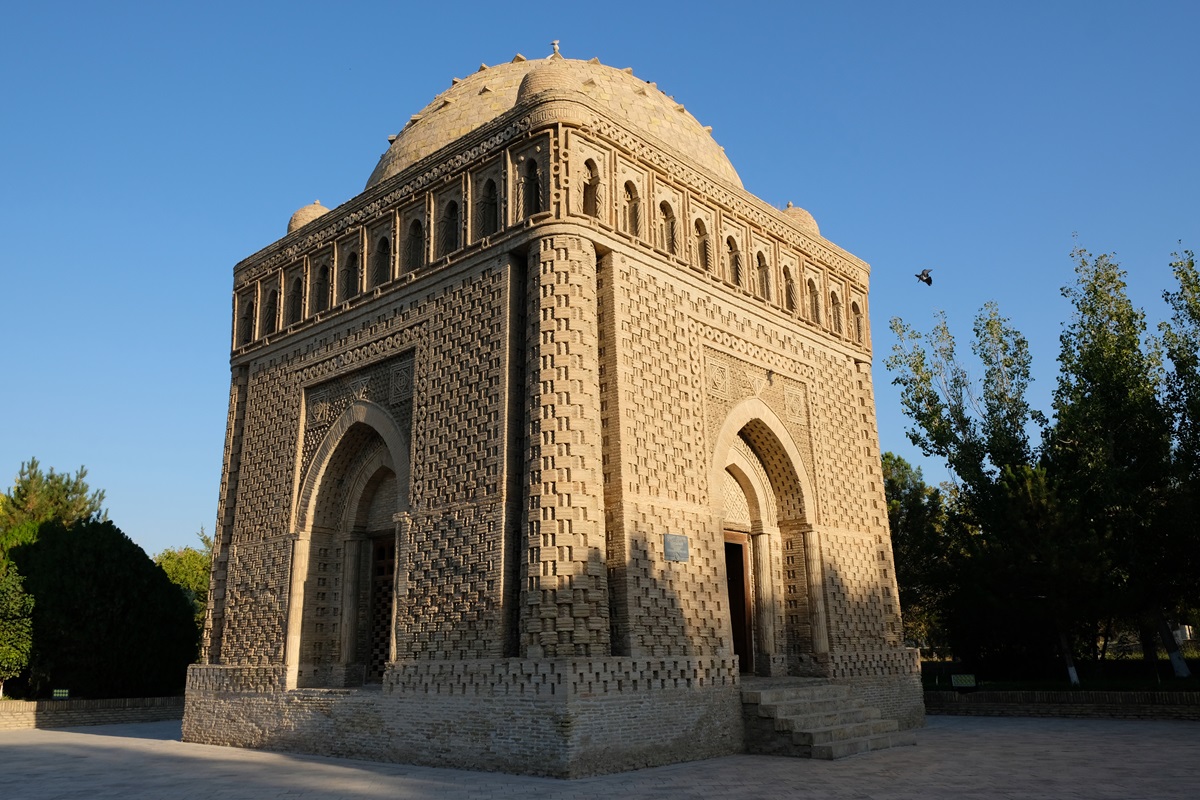
Standing in solitude in the middle of a peaceful park
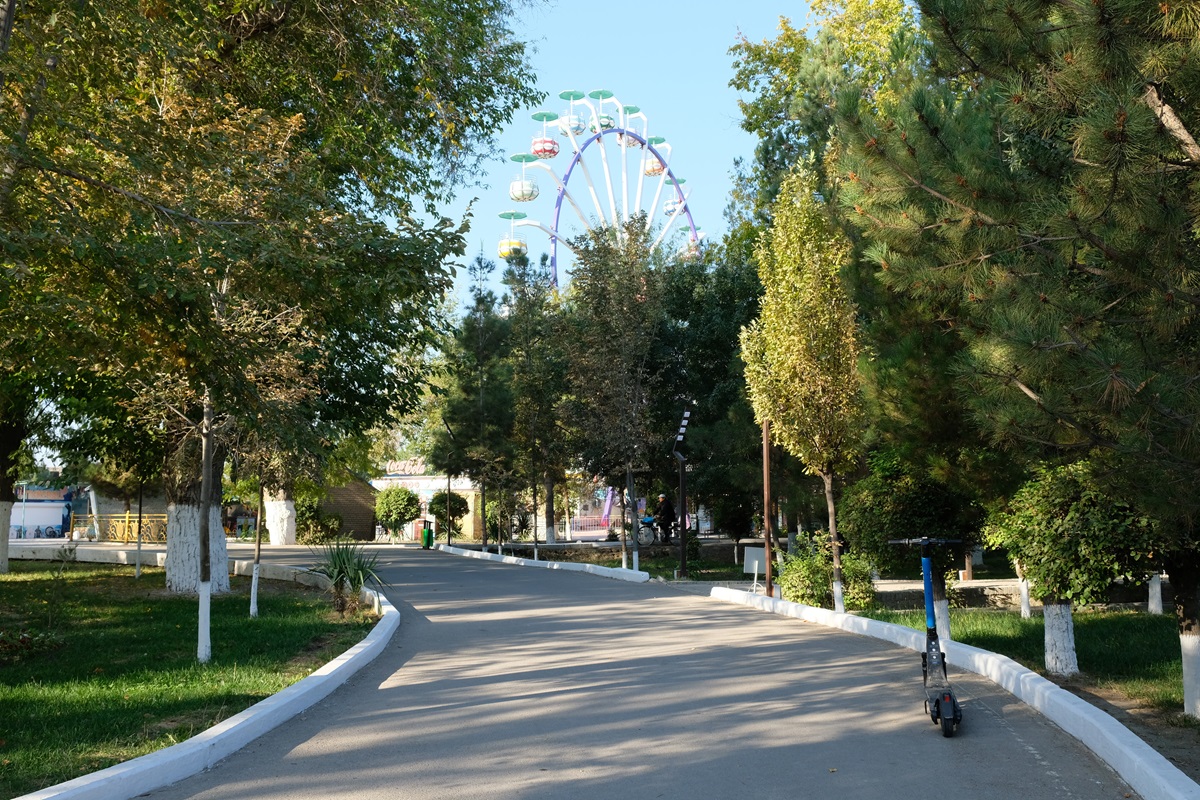
A Ferris wheel near the mausoleum
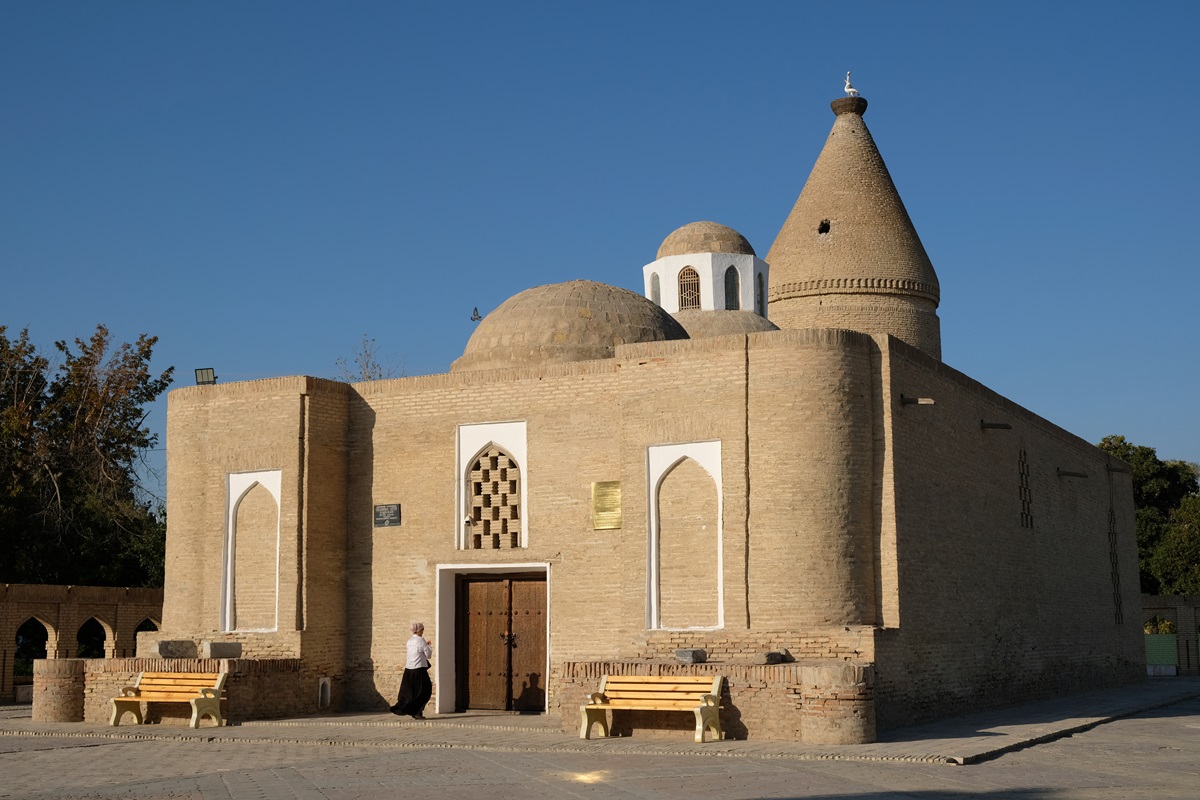
Chashma-Ayub, a historical site linked to Job (Ayyub)
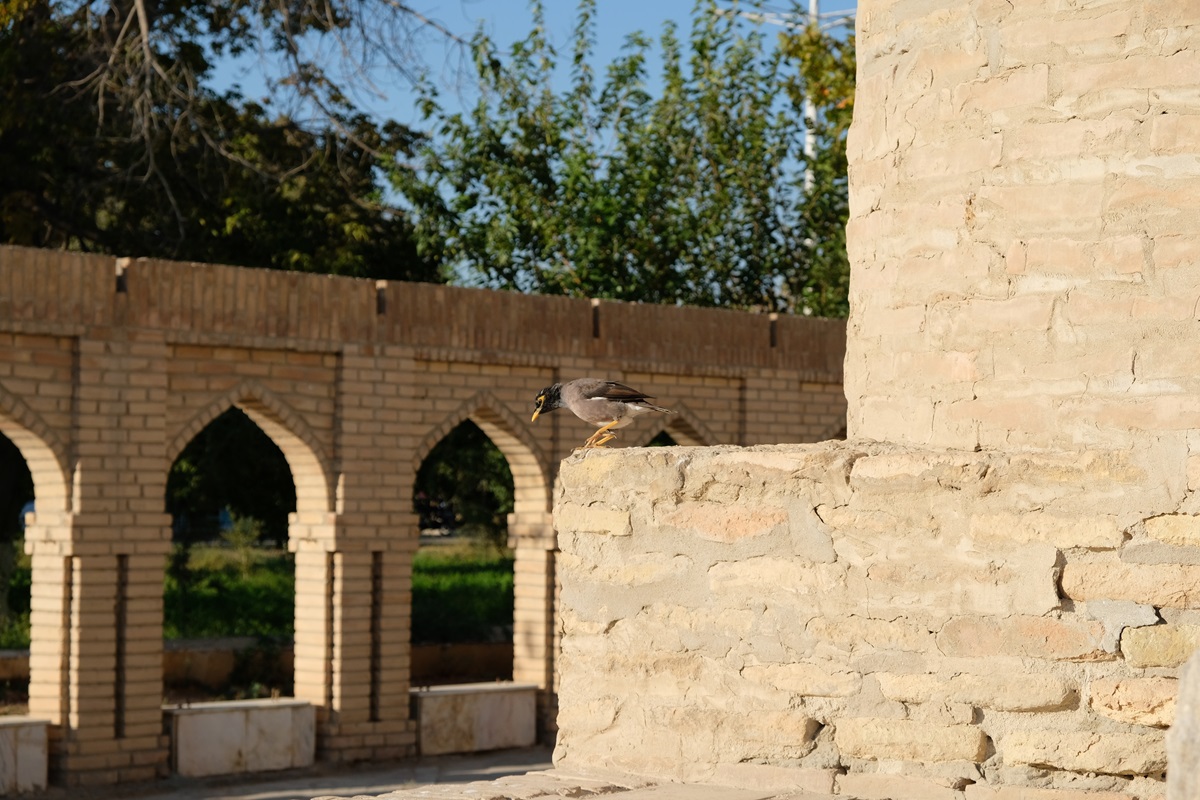
A myna outside of what is now a museum of the history of the water supply in Bukhara
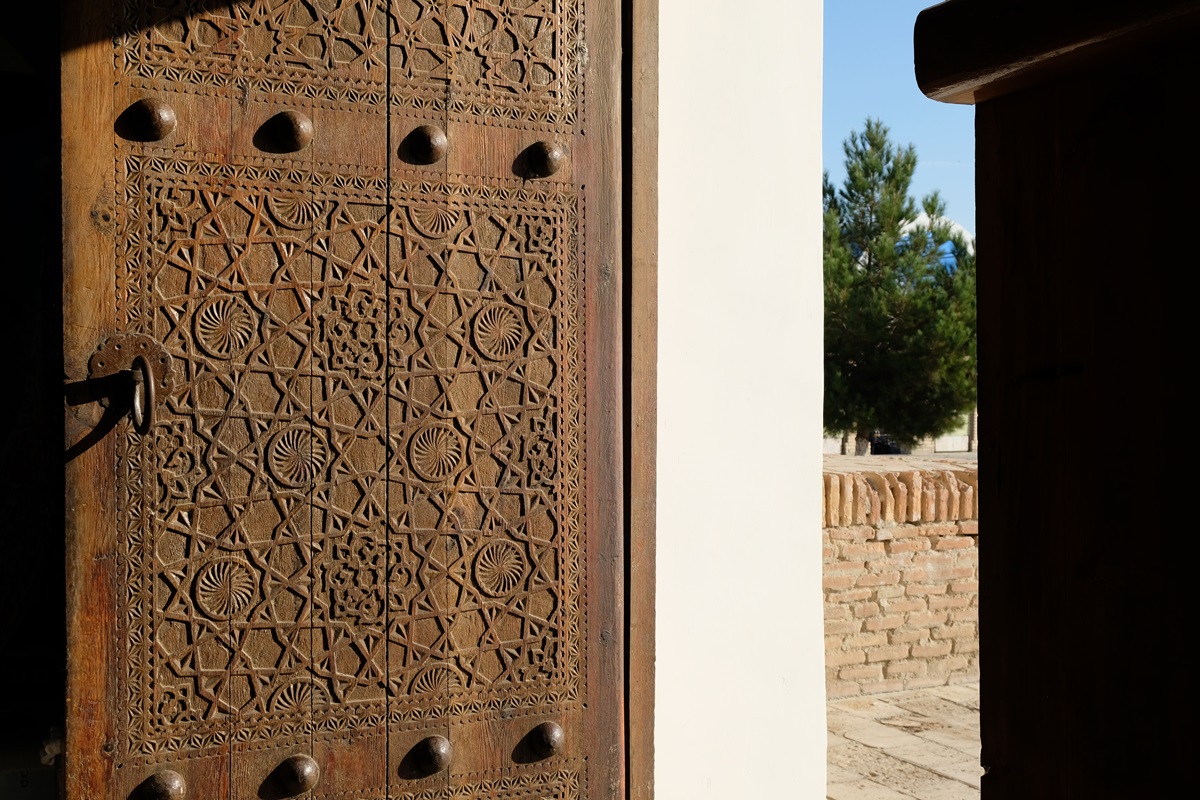
Beautiful doors abound in Uzbekistan
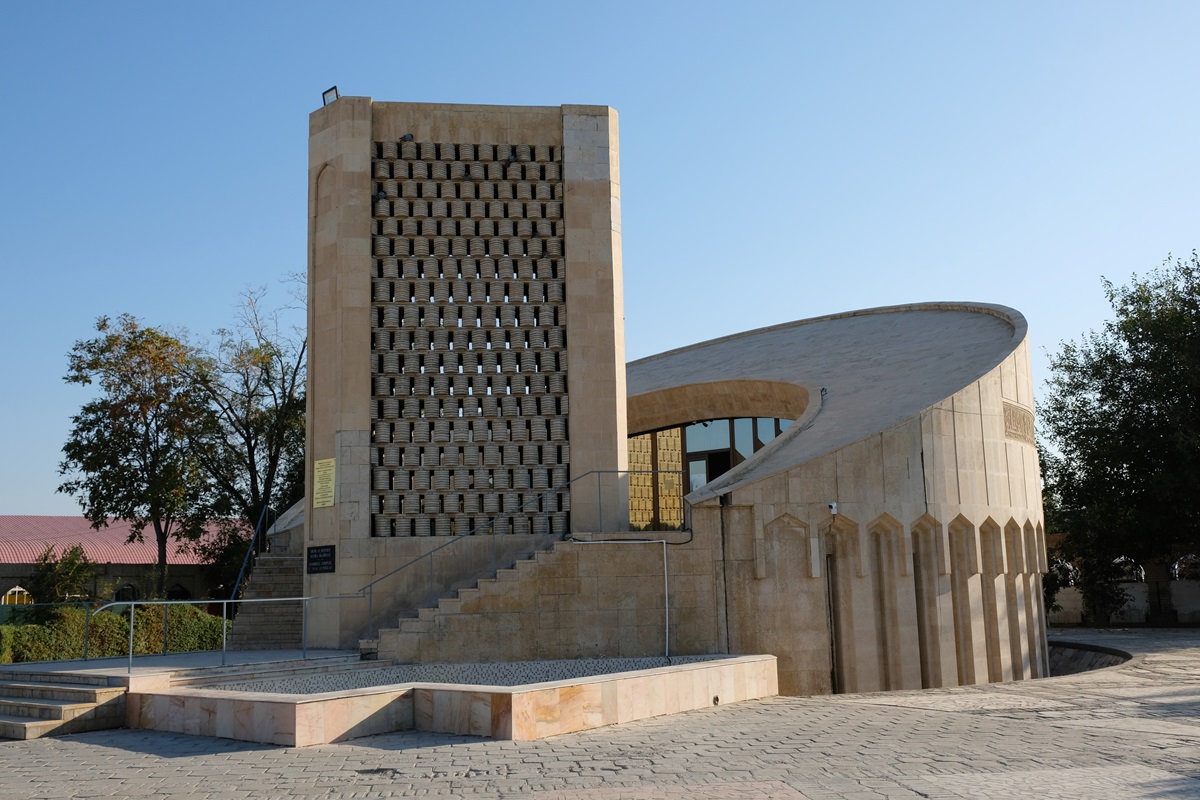
Opposite Chashma-Ayub is a memorial to Imam Al-Bukhari, one of the most influential chroniclers of Muhammad’s actions and sayings (the hadiths)
From the western edge of Bukhara’s old town, we moved to its eastern fringes where a structure like no other was tucked away in the middle of low-rise residential buildings. Chor Minor (Persian for “four minarets”) is believed to be the former gateway of the Madrasah of Khalif Niyaz-kul which was built in the early 19th century when Bukhara was under the control of the Manghit dynasty, the last ruling dynasty of the Emirate of Bukhara before its abolition in 1920 following the incorporation of this region into the Soviet Union. But if you are from India, when you hear the name Chor Minor you will probably think of Charminar, the 16th-century four-minaret monument in the southern Indian city of Hyderabad which may or may not have inspired the architect of the structure in Bukhara.
Today, only the four towers of Chor Minor – which are actually not true minarets but a type of structure known as guldasta – with their iconic bulbous turquoise domes survive, while the rest of the madrasah has long gone. When we were there, I overheard a nearby tour guide explaining to his group of European tourists that the guldastas were adorned with mosaic tiles that allude to four religions: Islam, Christianity, Buddhism, and Zoroastrianism. When I did further research on the topic, however, I came to the conclusion that this is rather conjectural as there is no written record to support this theory. It is an interesting one though.
For the final site, I need to bring to your attention a person who was instrumental to the fate of the city in the early 20th century. Fayzulla Khodjaev (also spelled Xo’jayev) was born into a wealthy family of sheep traders in 1896. At the age of 11, he was sent by his father to study in Moscow. In the Russian capital, he was exposed to the contemporary fervor of European-style reforms and was particularly inspired by the Jadid movement that emphasized the revival of Islamic teachings while at the same time embracing modernity. With the wealth he inherited, Khodjaev organized a secret society known as the Young Bukharans with the main goal of bringing a fundamental change in the Emirate of Bukhara. With the support of the Soviet’s Red Army who bombed Bukhara and occupied it following the flight of the last emir of Bukhara in 1920, he became the leader of the Bukharan People’s Soviet Republic when the former realm of the emirate was fully absorbed into the Soviet Union.
Today, Khodjaev remains a divisive figure. Some see him as a Russian collaborator, but others believe what he did was necessary at that time to get rid of the old-fashioned and despotic leadership of the Khans. The house where he was born, however, survives the test of time and is now a museum that provides a glimpse into the life of upper-class Bukharans in the late 19th century. Because it is located further away in the south of Bukhara’s old city, we had to find our way through dusty streets with nondescript houses along them. But when we arrived at the museum, graced by a nice small garden at the front yard, it was closed. A young man saw us, took out his phone, and started talking to it, muttering words in Uzbek. I could faintly hear a Google Translate reply in English saying “we are closed”. I believe he was trying to tell us that, but didn’t know how. Disappointed, we sat down on a bench while trying to think of where to go instead. Moments later, a woman suddenly showed up from the street and signaled us to follow her. We soon learned that she was the official ticket counter staff, and the museum was open only after she arrived.
If you happen to walk past this residential complex, you probably wouldn’t realize that a beautiful and stately house is hidden behind the garden and the modest structures in the front – and there was no signage either. But that is the point as it was purposefully designed to provide its owners a peaceful abode away from the cacophony – or danger – of the street. As soon as we walked through the previously closed door, we were in awe. Before our eyes was a courtyard with a partially sunken lower level overlooked by a lofty and ornately-decorated mansion. We entered the house through the living quarters to the east and found it even more lavish from the inside, where intricate Persian motifs and niches filled with fine antiques adorned every inch of the walls. Following the floor plan clockwise, we walked through one room after another – separated by antechambers – and marveled at the beauty.
It didn’t take us long to see everything. But as we were leaving this museum, I couldn’t help but think of the many charming monuments we saw during our stay in Bukhara, most of them located in such a relatively compact area. That combined with the friendly locals, delicious food, and fascinating sights really made this city a very enjoyable place to explore and to just be there. We fell in love with it, but we must go on to the next destination, an even more remote Silk Road city that is situated next to a desert. We were ready for Khiva.
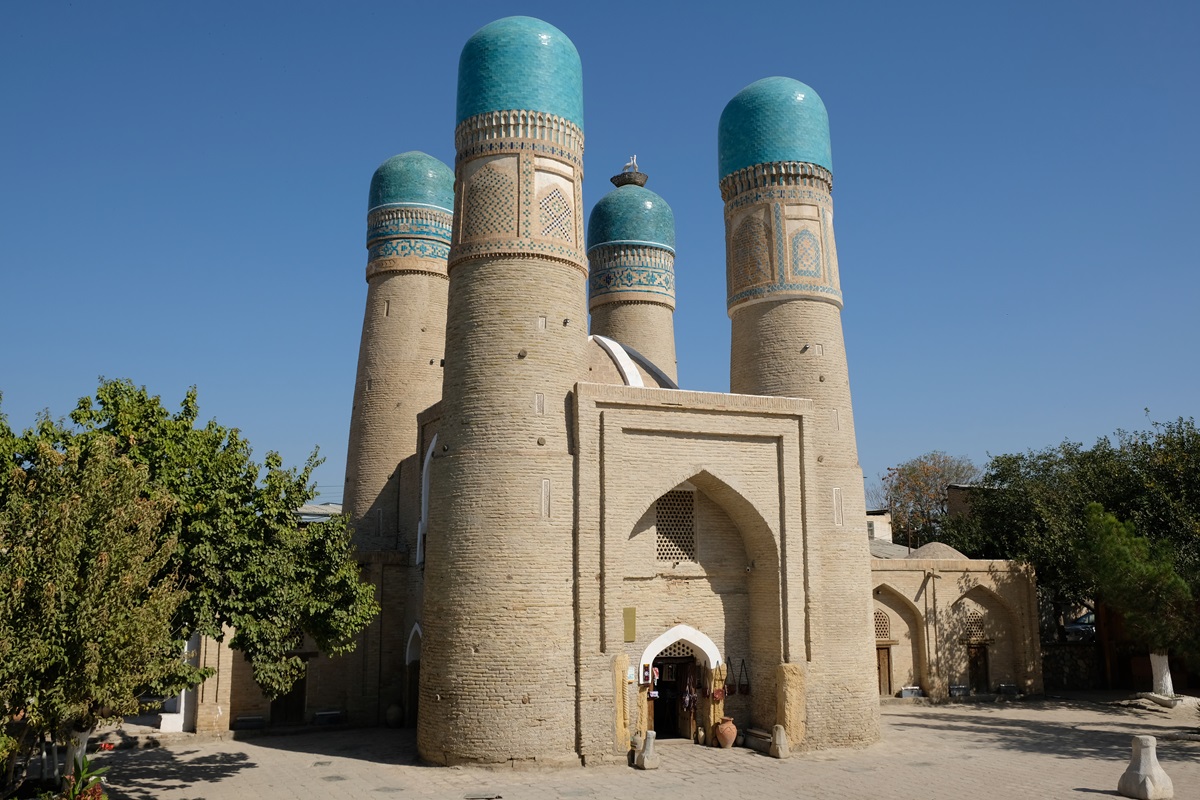
The whimsical Chor Minor at the eastern edge of Bukhara’s old town
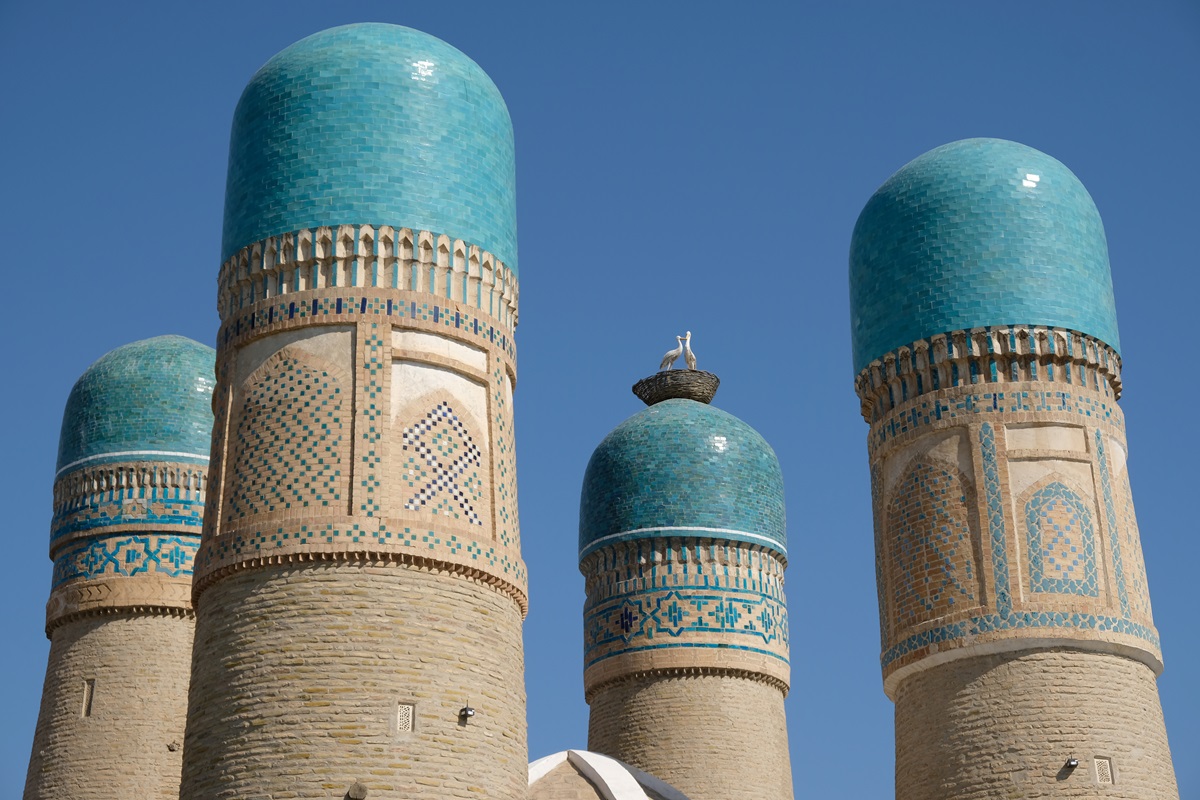
The ichthys on one of the guldastas is often conjecturally interpreted as a reference to Christianity
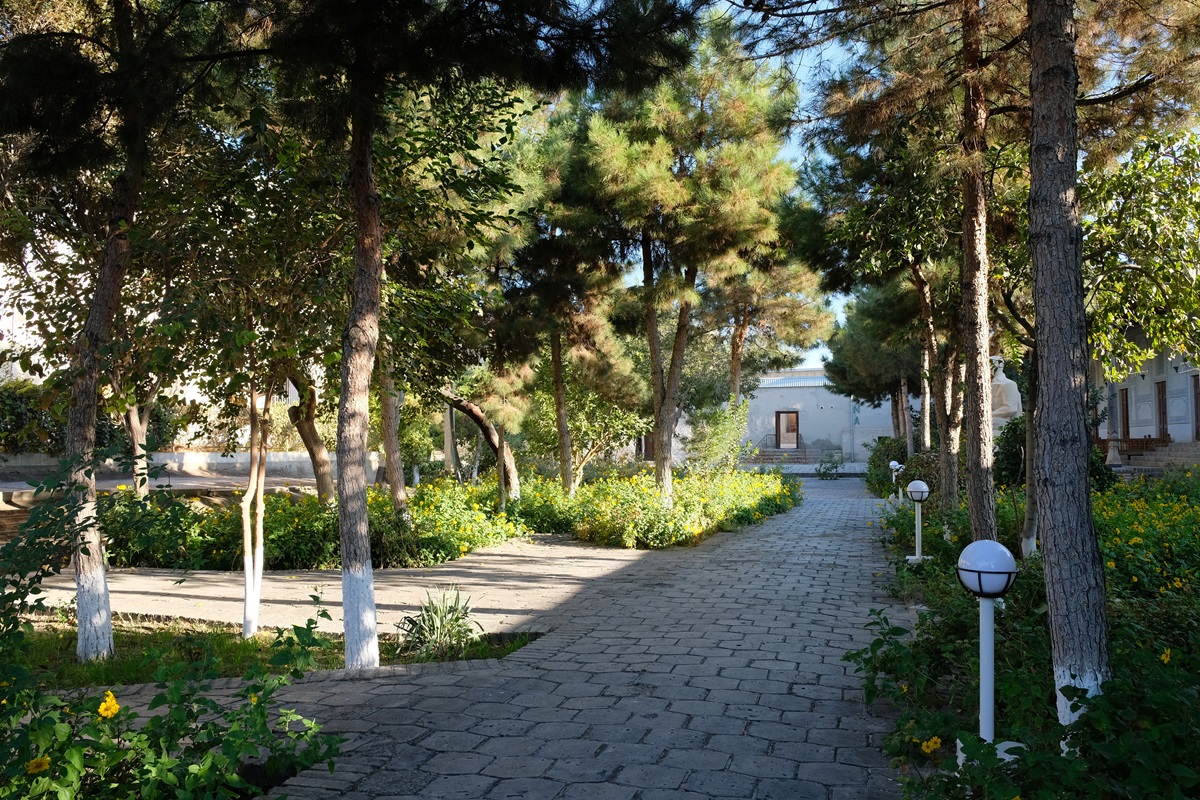
The garden in front of the former house of Fayzulla Khodjaev
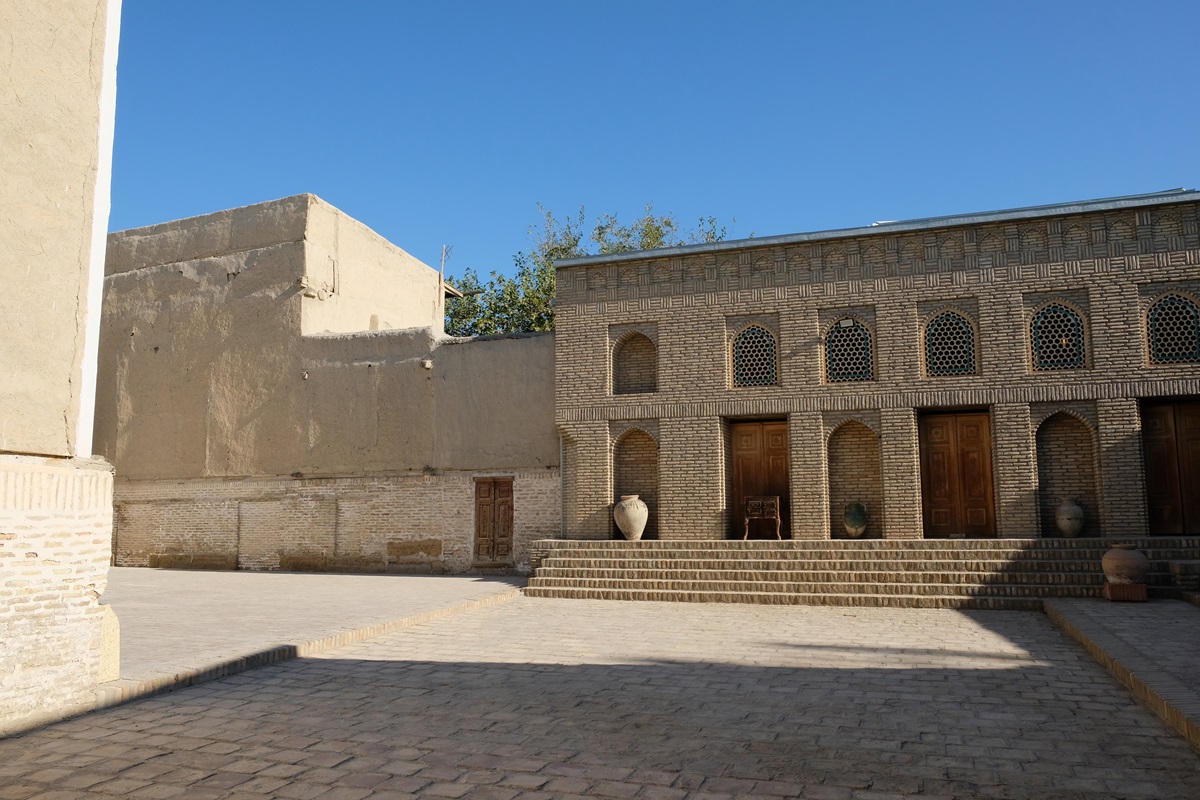
Past the garden, you will stumble upon some more structures before arriving at the main house
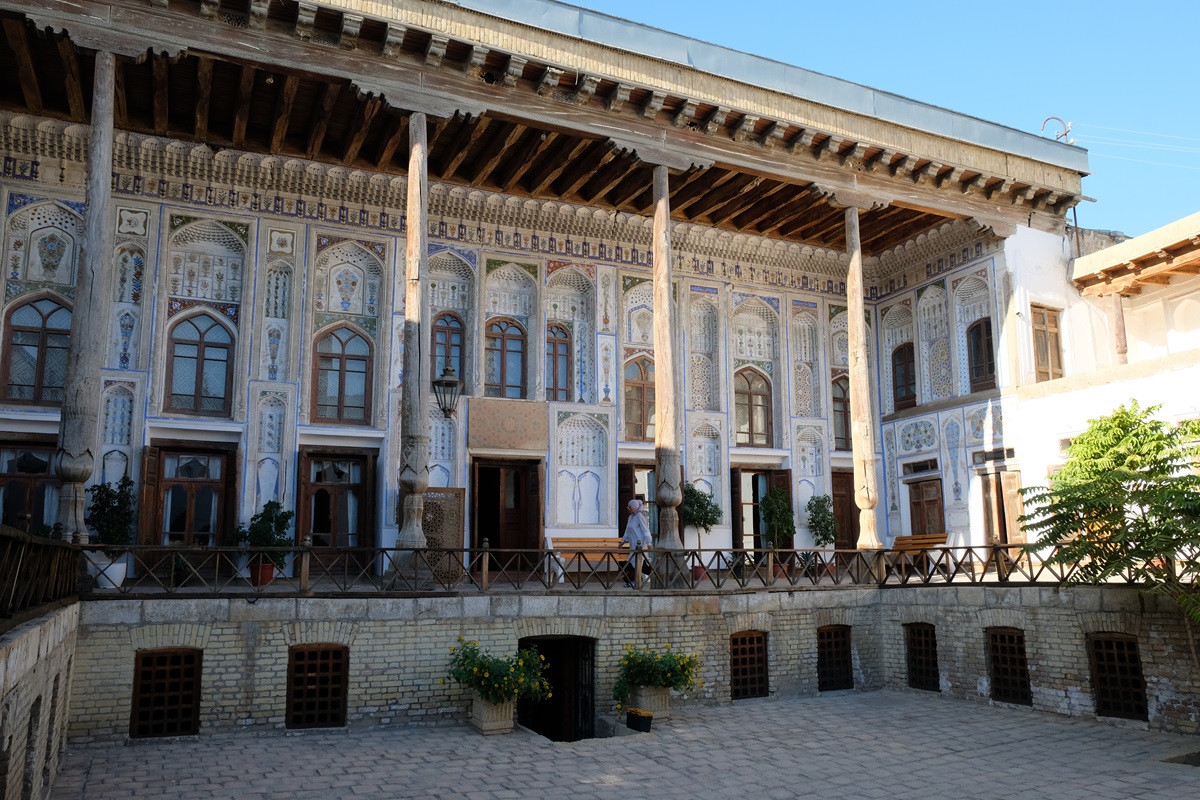
The beautiful mansion where Khodjaev was born
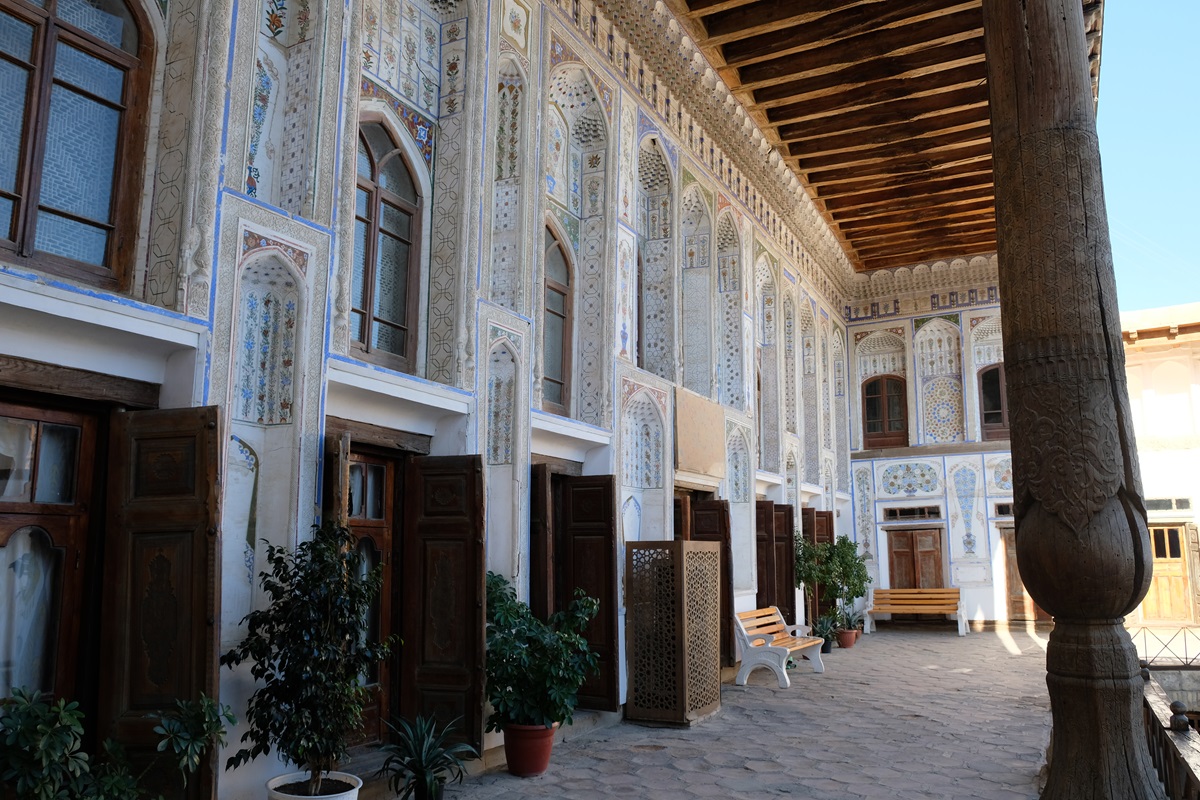
This house provides a glimpse into the life of upper-class Bukharans in the pre-Soviet era
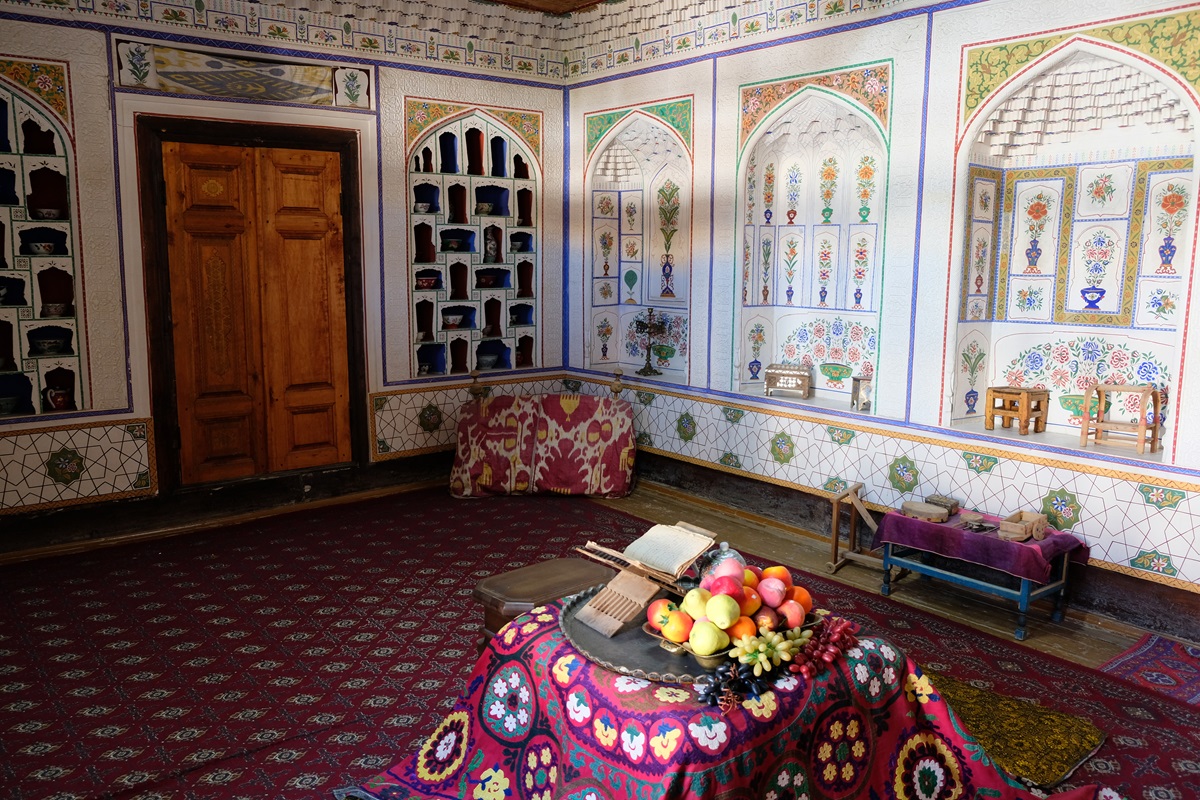
One of the living quarters in the house
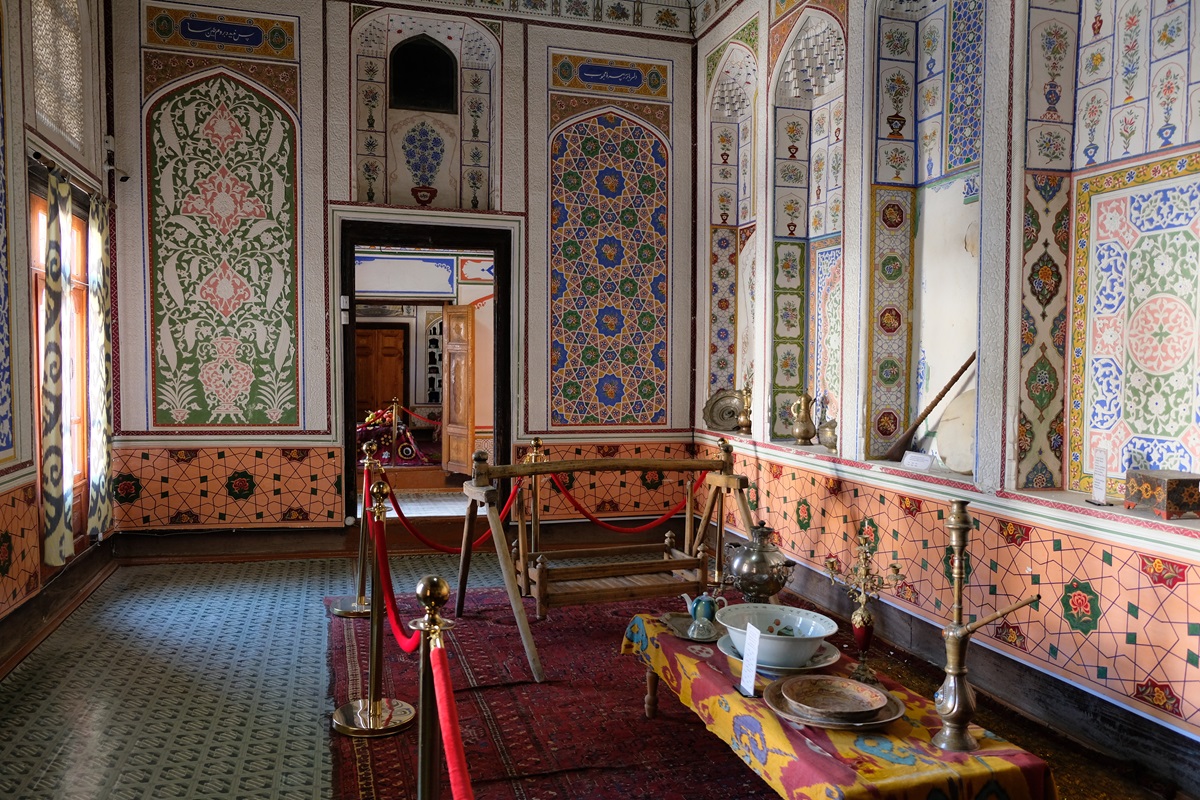
Each chamber was ornately decorated, a testament to the wealth of Khodjaev’s parents
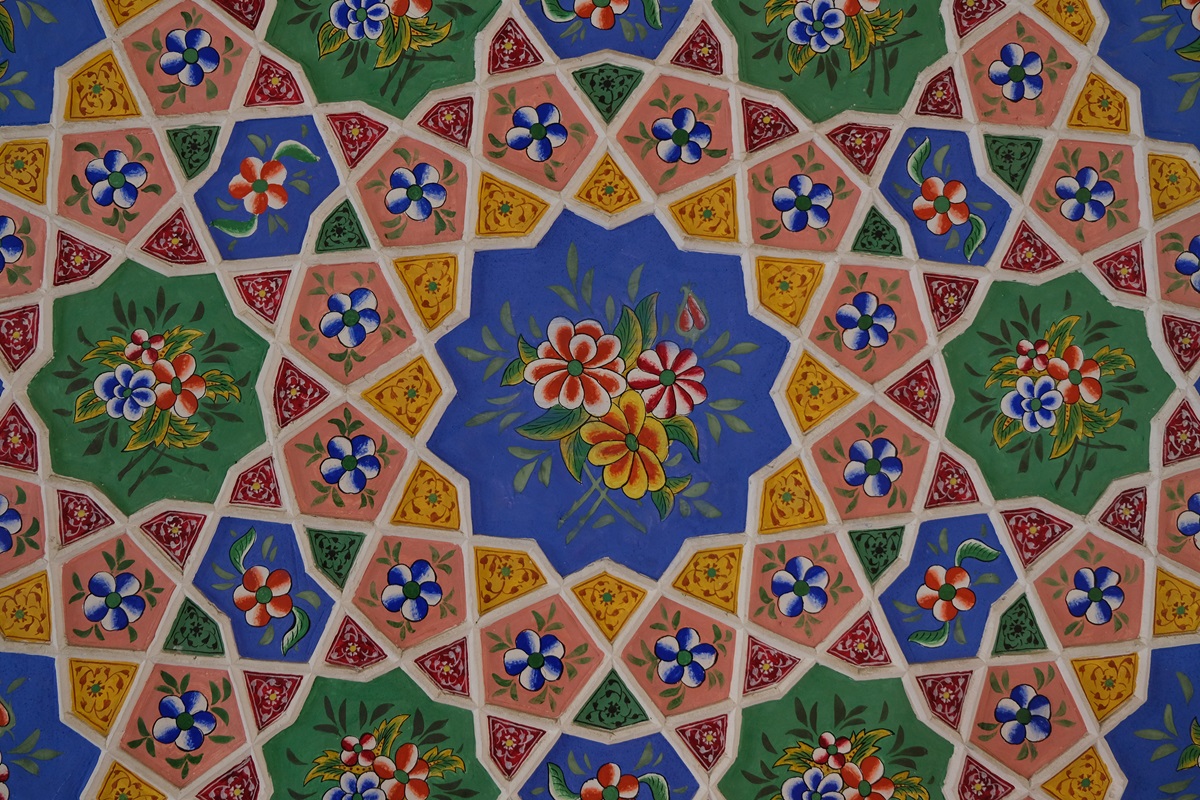
Floral motifs everywhere we looked
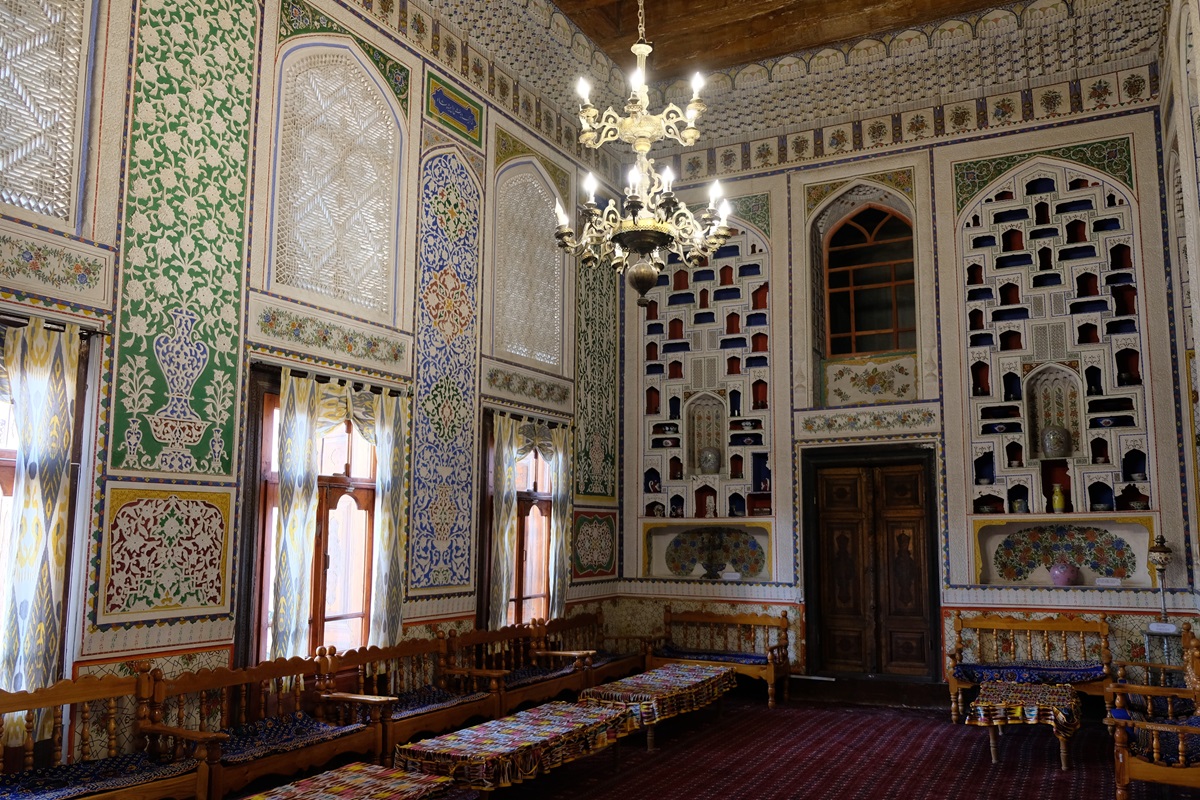
The niches on the right were used to display fine antiques
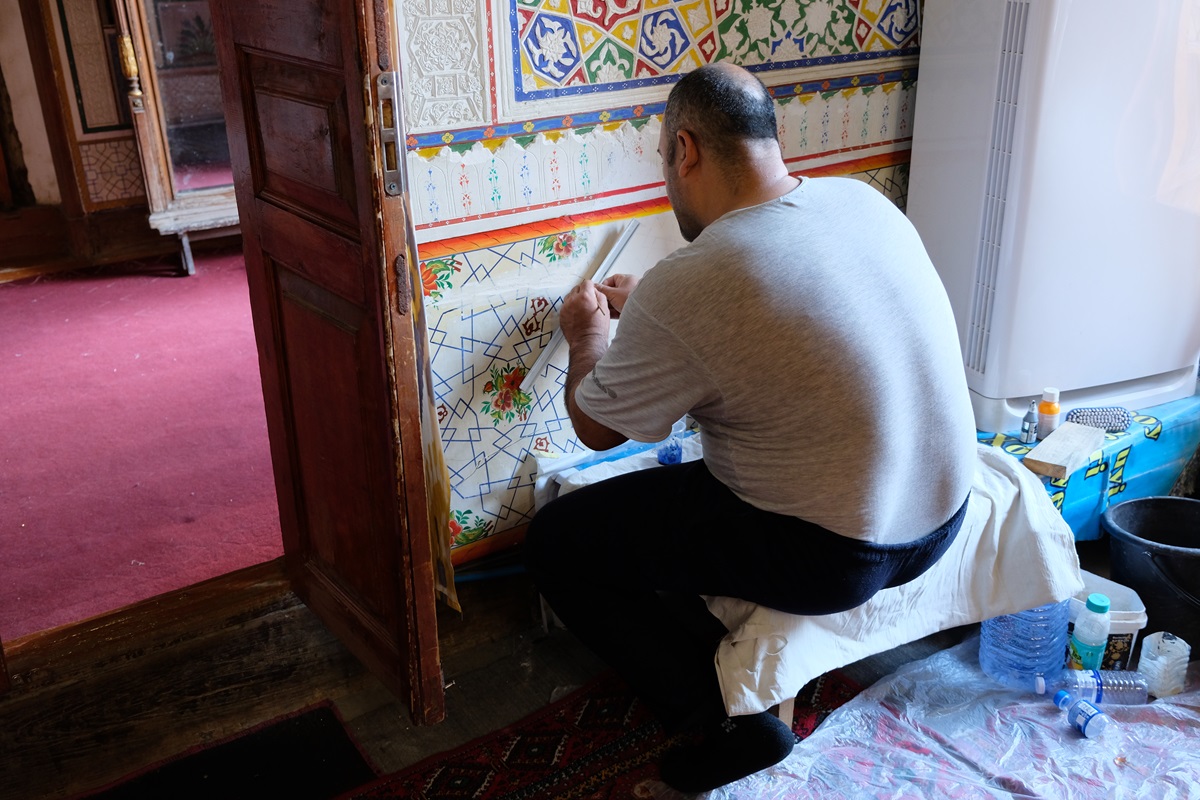
Ongoing restoration work being done during our visit
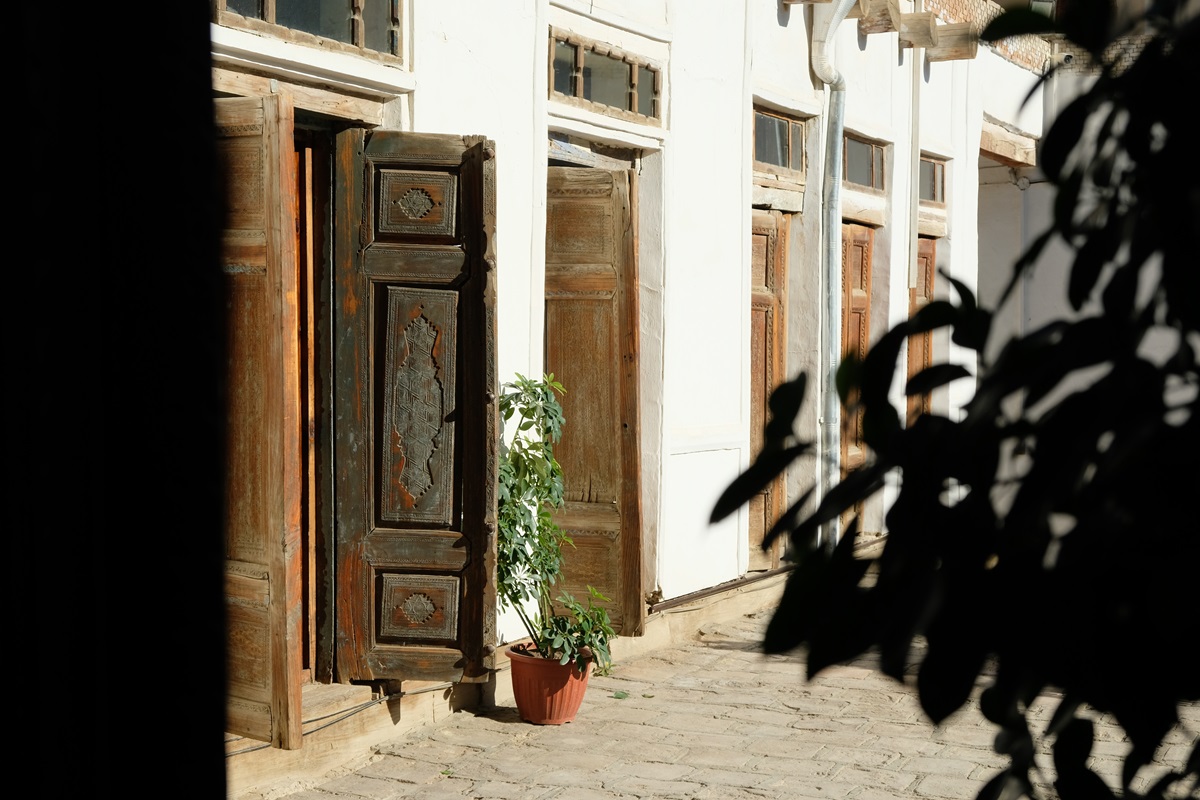
This place is now better known among the locals as the “home of a wealthy merchant”
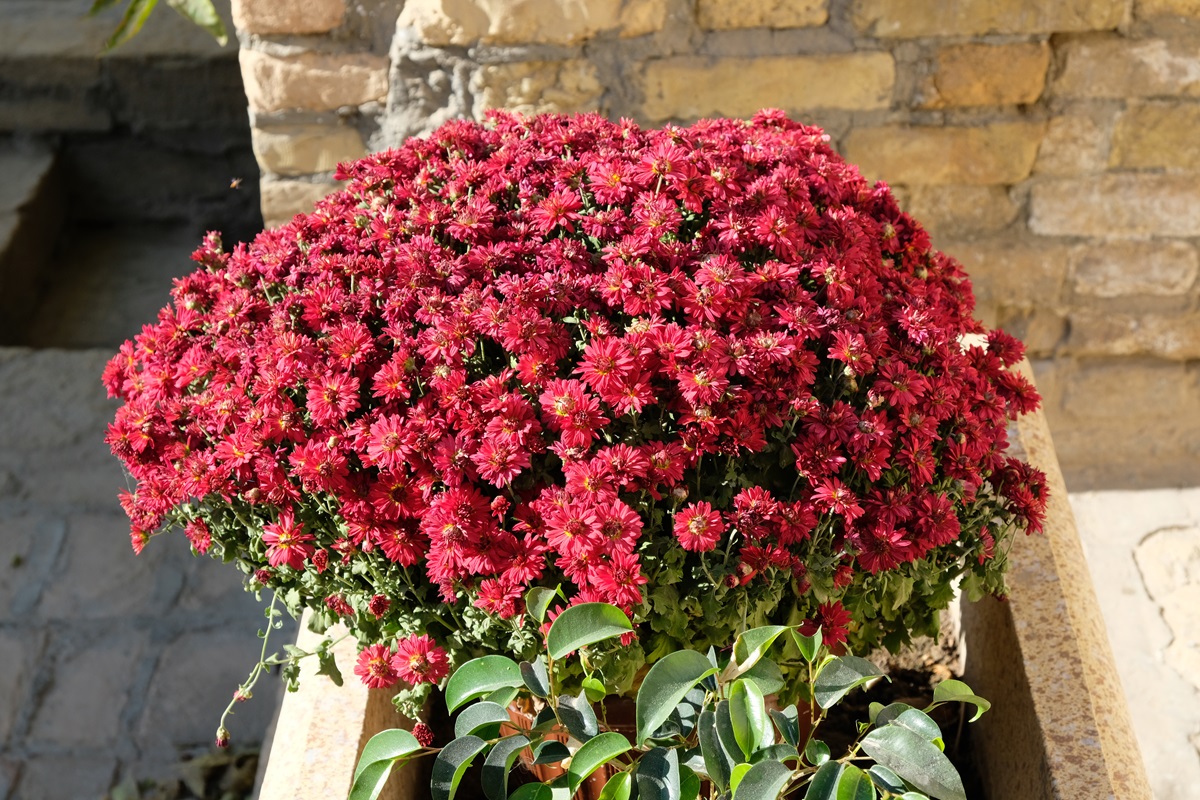
Red chrysanthemums blooming in autumn
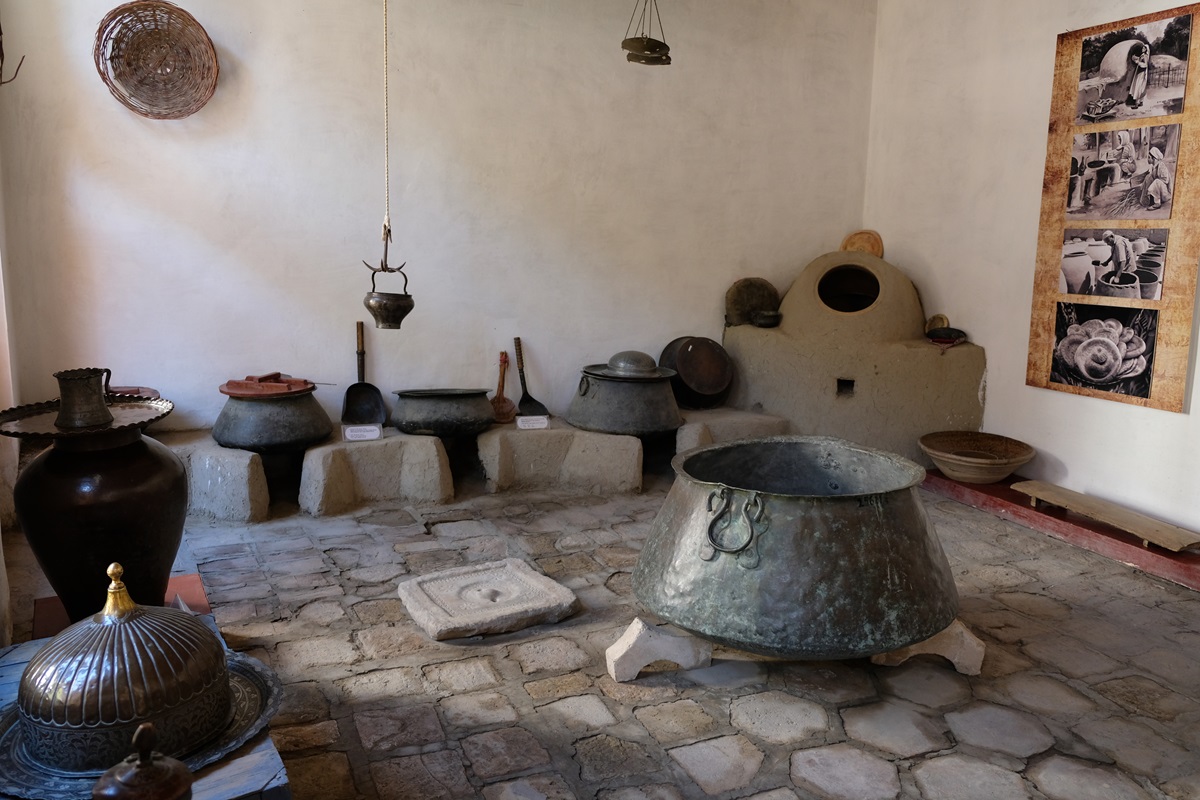
The former kitchen of the mansion
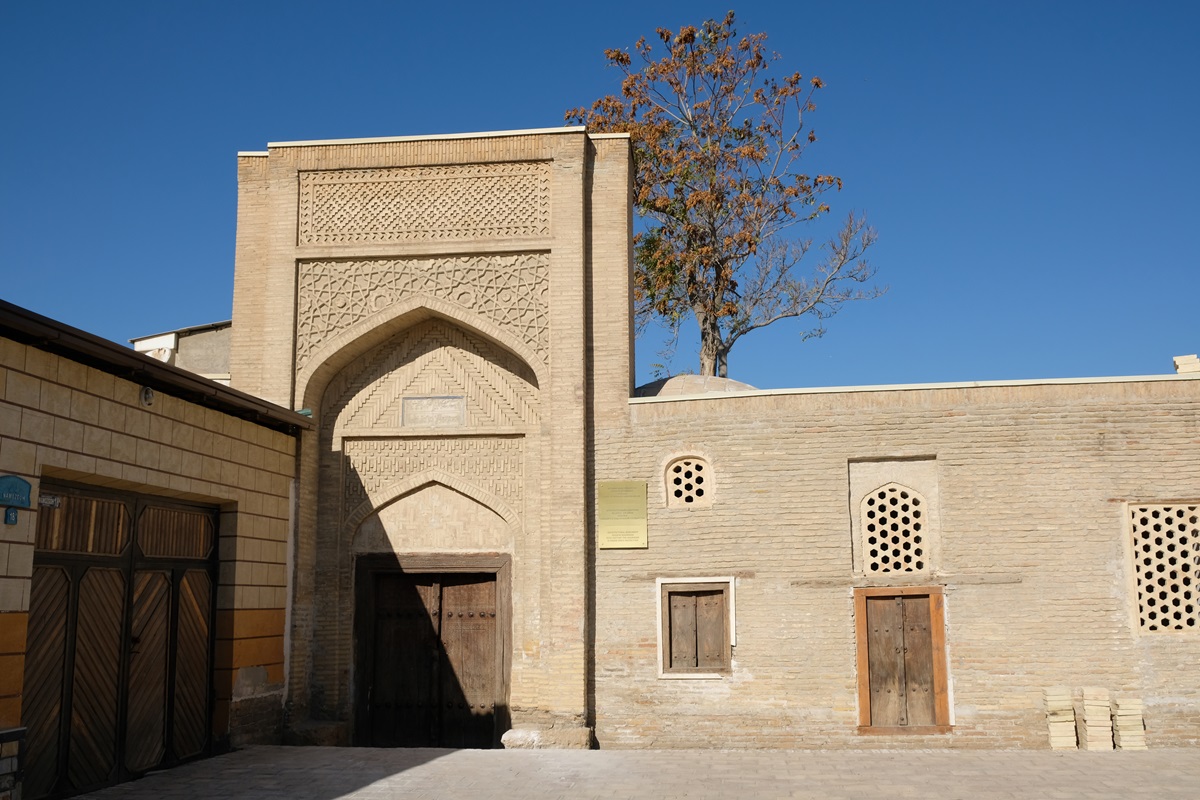
The 18th-century Husayni Madrasah that we saw on our way back to the center of the old town
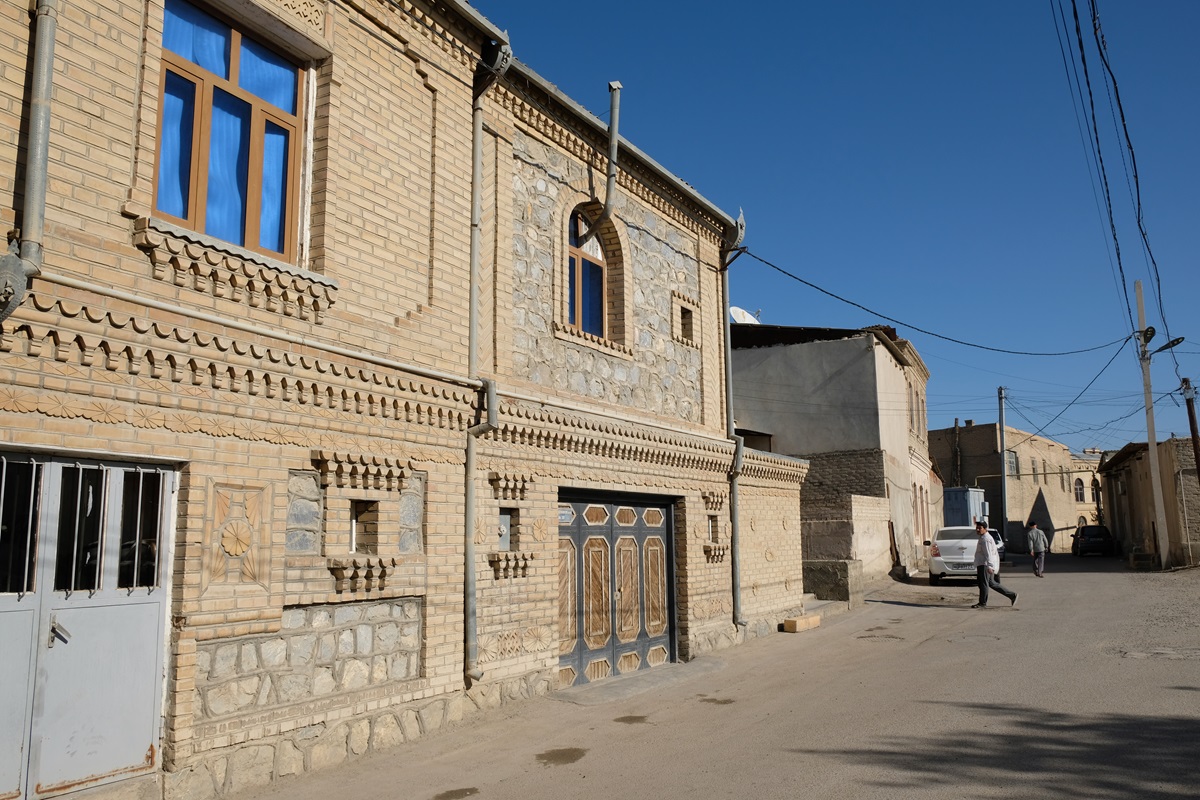
Typical Bukharan houses within the historic center, away from where most tourists go


Every piece of architecture is stunning from the Bolo Hauz Mosque to the museum. I thought the main entrance to Khodajaev’s mansion was beautiful, but the interior was even more so. What an exceptional day you must have had.
LikeLiked by 1 person
I guess by now it’s easy to see why I fell in love with Bukhara. It was such a beautiful and atmospheric place, and there was history everywhere I looked.
LikeLiked by 1 person
Thanks Bama for the wonderful virtual tour of Bukhara. Certainly a city not to be missed on a trip to the region. (Suzanne)
LikeLiked by 1 person
My pleasure, Suzanne. Bukhara ended up being my favorite city in Uzbekistan, and I highly recommend it to anyone interested in the history of the Silk Road and Central Asia.
LikeLike
What a great read, Bukhara is now on the travel to do list!
LikeLiked by 1 person
Bukhara is indeed a special place. Those visiting Uzbekistan for the history should visit this ancient Silk Road city.
LikeLike
So beautiful, Bama. The mosques, minarets and even the whimsical Chor Minor have such striking architecture and a precision of detail that stands the test of time. Thankfully these have been preserved or restored over time.
I have a good friend who was planning to visit and I was telling them about your beautiful photos. Unfortunately the plan is on hold due to the turbulent geopolitical times we’re in. One day!
LikeLiked by 1 person
Exactly the reason why I love visiting ancient structures, Ab. Many of them fortunately stand the test of time or have been carefully restored.
Unfortunately we’re living in a world that has become increasingly turbulent these days. I hope the worst case scenario remains a scenario, not a reality. And I hope sooner than later your friend can fulfill their dream of visiting Uzbekistan.
LikeLiked by 1 person
Khodjaev’s home is just stunning! I’m glad you were able to get inside.
I was also impressed by the Chor Minor and even looked up the old photos (which had real storks nest on top).
I’m a bit behind on your blog but I’ll catch up!
LikeLiked by 1 person
I’m glad we waited a little bit at the garden! We were also thinking of visiting the centuries-old Bukhara Synagogue. But it seemed closed every time we walked past it.
No worries, Matt!
LikeLiked by 1 person
You do this magnificent place justice with your post! I learnt more from you than any tour guide! 🤣🤣
LikeLiked by 1 person
Haha.. There was a time when the idea of becoming a tour guide crossed my mind. But then I wouldn’t be able to choose my customers, and some tourists’ behavior can turn really ugly. So I thought nah, forget it! 🤣
LikeLiked by 1 person
Haha I hear ya! I thought similar in the past but realised I hate most people and wouldn’t last a week 🤣
LikeLiked by 1 person
Spending a week with people you don’t like might actually feel a lot longer!
LikeLiked by 1 person
Beautiful captures!! Great read too!!
LikeLiked by 1 person
Thank you for reading, Jyothi!
LikeLike
Sounds like a lovely day in Bukhara! Fascinating history of Khodjaev, and it was great the ticket lady showed up right on time to visit. Thanks for sharing, Bama!
LikeLiked by 1 person
I’m glad we didn’t leave the place right away! Otherwise we would’ve missed seeing the beautiful interior of this rather impressive mansion. We really loved Bukhara, and it seems like to many other bloggers who have been to Uzbekistan, it’s also their favorite city in the country.
LikeLiked by 1 person
We were very lucky the place we stayed at while in Bukhara was within easy walking distance of Bolo Hauz Mosque, Chashma-Ayub, and Ismail Samani Mausoleum. Heading out early right after breakfast was the right move. All three were so peaceful and I couldn’t believe just how well-preserved Ismail Samani Mausoleum was, considering the structure is more than a thousand years old! And the former house of Fayzulla Khodjaev was utterly fascinating, too. Its beautiful halls are a lasting testament to his parents’ wealth — I’m thankful the mansion is now open to the public as a museum.
LikeLiked by 1 person
Oh I loved our small hotel in Bukhara! It really made our experience staying in the city even better. I’m glad that Ismail Samani Mausoleum is still standing today despite all the upheavals in the past in this corner of Uzbekistan. Imagine if more Samanid-era structures had survived to this day! Fayzulla Khodjaev’s former house was such a gem. It’s a good thing we didn’t leave the place immediately after we found out that it was closed.
LikeLiked by 1 person
What a stunning place! Your photos are just beautiful, I love the details of the tiles, the blue domes and the gorgeous architecture. I would love to visit one day 🙂
LikeLiked by 1 person
Thank you, Hannah. My only suggestion is to go to Uzbekistan before it gets even more popular. I do hope that Bukhara will retain its charm for many more years to come. That was the main reason why I fell in love with this city.
LikeLike
Bolo Hauz Mosque and Samani Mausoleum were two highlights in Bukhara. We didn’t visit Khodjaev, partly/mostly because we thought it was a Russian house, but wow, we missed out. Funny about the info from the tour guide. I often find that they tell half truths or theories as facts, that’s one of the reasons I usually do my own research rather than a guide. I loved revisited Bukhara with you today. Maggie
LikeLiked by 1 person
Your blog post on Bukhara helped me a lot in planning what to do and see in the old city. So, thank you for that! Some tour guides do like to make up stories that might be interesting to hear but not necessarily based on facts. I first realized this when I went on a solo trip to Sri Lanka back in 2012. My driver told me to explore the sites in Anuradhapura myself exactly for the same reason.
LikeLiked by 1 person
I really need to visit the ‘stan’ countries soon 😁
LikeLiked by 1 person
You really should, Edwin. And from what I see on the internet, places like Uzbekistan and Kazakhstan seem to become more and more popular.
LikeLiked by 1 person
Fascinating and inspiring, Bama. I checked my Google maps and am happy to report that all the places you mentioned are securely marked on it. I just need to get my visa sorted, but I booked an extra night’s accommodation in Madrid when I fetch Michael at the end of May so that I can pay a visit to the embassy. Although they have not responded to an email I sent, I will simply make use of my experience of applying for Schengen visas and take all the paperwork I think they may request. 😁
LikeLiked by 1 person
You plan well, Jolandi. 😁 I imagine the paperwork required for an Uzbek visa shouldn’t be as complicated as what is needed to apply for a Schengen visa. But it’s always better to come prepared. I hope all goes well!
LikeLike
Thanks, Bama. I trust it will all work out without a problem. Fingers crossed, of course. 😇
LikeLiked by 1 person
Such beautiful architecture. Wonderful to hear that the local people were friendly towards visitors. We typically like to get an early start to the day too, which is always a great way to avoid the crowds. I was surprised to see a ferris wheel near the mausoleum.
LikeLiked by 1 person
I hope there won’t be a point where Bukhara is overrun by tourists. Its old-world charm really is what makes it such a special place. From what I read, that Ferris wheel was built during the Soviet rule. There is another structure in the city which was also built around this time, and it’s called the Shukhov water tower. I wasn’t really fond of it, to be honest.
LikeLiked by 1 person
Wow, all these buildings and places look incredible! At each one I thought “the other ones can’t possibly look as beautiful”, yet they all are stunning and unique! It is incredible to think that such a large construction like the mausoleum is so perfectly intact after centuries and used to be buried. As always, thanks for the virtual tour! I loved learning more about this part of the world I’d love to visit and seeing all your beautiful pictures!
LikeLiked by 1 person
It’s really hard to pick a favorite in Bukhara’s old town district since, as you said, each building is uniquely beautiful. Despite its rather modest size, the mausoleum was quite stunning. And all those small details… just magnificent! What are the odds that it survived the Mongols while other contemporary structures were completely razed?
LikeLiked by 1 person
Beautiful photos! I absolutely love the views and architecture! And the cat is adorable! Thank you so much for sharing your journey! Warm greetings from Montreal, Canada.
LikeLiked by 2 people
Thank you, Linda. The architecture of Central Asia is indeed very special. But when it comes to cats, no place beats Istanbul — at least based on my own experience. The feline residents of Turkey’s largest city were just so friendly and adorable.
LikeLike
Great captures!!
LikeLiked by 1 person
Much appreciated, Jyothi!
LikeLike
One thing I’ve always noticed with your posts, Bama, is you bring out something beyond the “headline” monuments or main draw of the places you visit. You’re always looking behind and beyond the main attractions, which give us such a richer view and atmospheric feel of the places you visit – and you’ve done it again with your walk beyond Bukhara’s postcard-famous core. These outlying mosques, mausoleums, and mansions show how the city’s character lives in these in‑between spaces as much as in its grand squares. It made me realize when I visit places, I’m always more attracted to wandering side streets slowly, before the crowds, and to just absorb the people, culture, and history in a quieter moment. A wonderful write-up!
LikeLiked by 1 person
In my early years of blogging, I only went to the main sights just like most people. But over the years, I learned that traveling more slowly gives me ample amount of time not only to see the usual touristy places, but also to wander around and stumble upon equally fascinating sites with only a few other people in sight. James and I are glad we budgeted enough time in Bukhara so we could also check out these monuments that are a little farther from the historic core of the city. It’s people like you, Randall, who keep reminding me of the beauty of traveling slowly. So, thank you!
LikeLike
I’ve just been to Bukhara and I also loved the early hours of the morning, when the streets are still empty and the vendors haven’t yet laid out their tourist goods. It’s also a must in June, when the temperatures rise quickly.
LikeLiked by 1 person
How nice that you were recently in Bukhara! I can imagine how hot it can be in June, given the city’s proximity to the desert.
LikeLiked by 1 person
Indeed, Khiva and Bukhara were hot—too hot. In addition, the light isn’t great for photos at midday, so it’s time for a nap.
LikeLiked by 1 person
When the light is too harsh, I’m usually either in a restaurant or back in my hotel room.
LikeLiked by 1 person