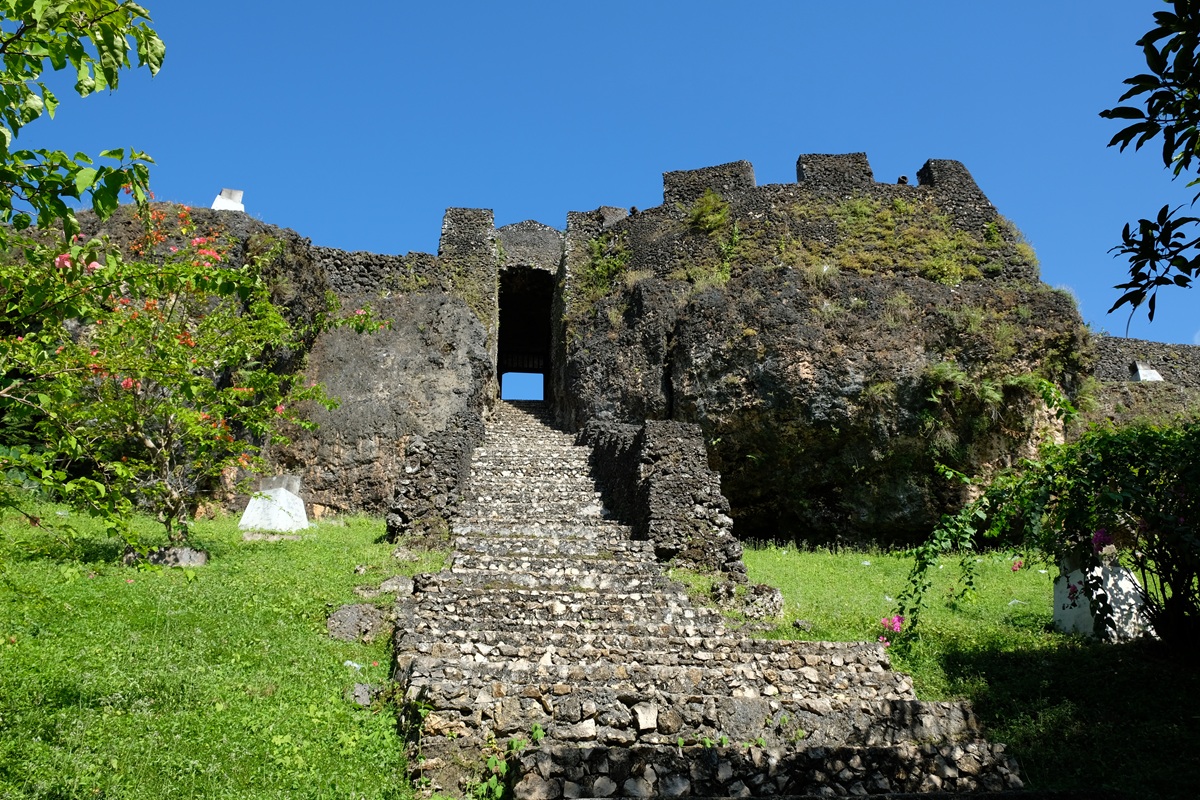
Entering the citadel through Lawana Labunta
Throughout the history of humanity, we have been attracted to and fascinated by higher ground. Some regard these sites as the abode of gods, while others see more practical reasons to favor such locations. Their prominence would afford anyone who holds a grip on the place a sweeping view of their immediate surroundings – an ideal condition for defense. One such example of this is situated on the island of Buton in eastern Indonesia, and seeing it was one of the main reasons for James and I to take a week-long break from work last August to visit Baubau, the largest city on the island.
In the late 16th century, the third ruler of the Sultanate of Buton commissioned a fort on the edge of the hills that overlook Baubau. At first, this took the form of a simple fortification around the palace. However, the fourth sultan (who also introduced a constitution to the monarchy) added more defensive walls which eventually resulted in the enlargement of the fortified compound. Today it is often touted as the largest fortress in Indonesia, and what makes it even more special is the fact that it was not built by any European powers who back then constructed numerous forts across the vast archipelago to secure their economic interests.
With a total circumference of 2,740 meters, enclosing an area of around 23 hectares (roughly half the size of Vatican City – the world’s smallest country), Buton Palace Fortress had to some extent helped the sultanate to establish itself as one of the key players along the Spice Route. Unsurprisingly, conflicts arose multiple times in the 18th century between the sultanate and the Dutch East India Company (VOC), which at that time dominated the lucrative maritime trade routes between Asia and Europe. But the former largely managed to remain independent, until the signing of a treaty in the early 20th century between the 33rd sultan of Buton and the Dutch colonial administration which resulted in the latter’s control of the sultanate’s foreign affairs and legal matters, among other things. Eventually, the long line of Buton’s hereditary rulers ended when the 38th sultan passed away in 1960, followed by the full absorption of the sultanate into the Republic of Indonesia.
On a sunny day, after spending a few hours at a café to escape the midday heat, we hiked uphill toward the fortress, which is also known as Fort Wolio. The dense foliage we encountered along the walk obscured the views of the supposedly imposing structure. But as we reached the perimeter of the fortress, there it was: one of the many gates to the compound stood proudly above us overlooking the city of Baubau. We scaled the steep stairs and entered the walled enclosure through Lawana Labunta (lawana means “gate” in the local Wolio language). I thought there would be a ticket booth on the other side of the gate, but there was none, and just like that we were inside the large compound.
We took a quiet saunter down the road along the defensive walls, and learned about the different names of the gates and the bastions (called baluara). There are conflicting sources about the number of lawanas and baluaras of this fort. Some say there are 12 and 16, others cite 14 and 18, respectively. I lost count of them as we were more fixated on taking photos of the walls as well as the houses within the enclosure, many of which were built in the traditional Butonese architectural style, complete with the pineapple-and-dragon ornaments. If this fort were in Europe, it would’ve probably been crowded with summertime holidaymakers. However, we had the lawanas and baluaras mostly to ourselves, except from a few local tourists we occasionally encountered. Quite amusingly, some inquisitive locals thought we were either from Japan, South Korea, or China. They looked puzzled when I spoke to them in Indonesian and told them we’re from Jakarta.
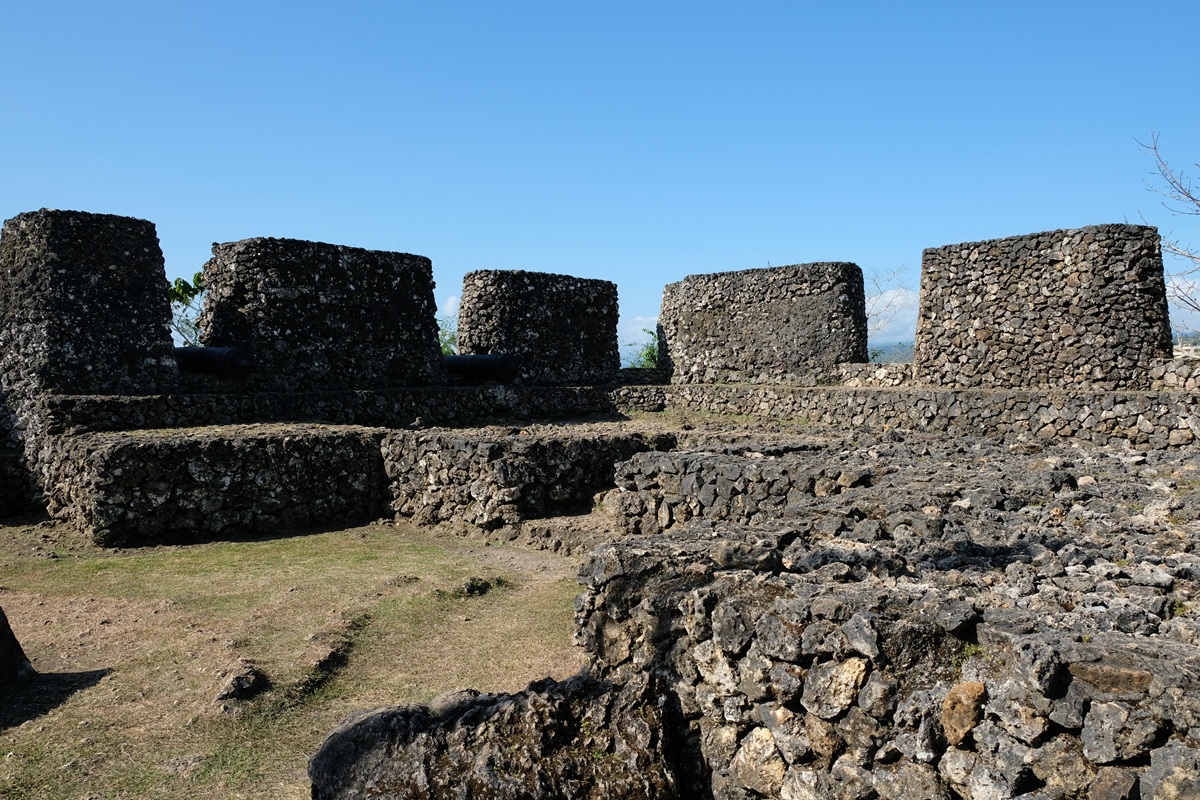
The rampart near where we entered the compound
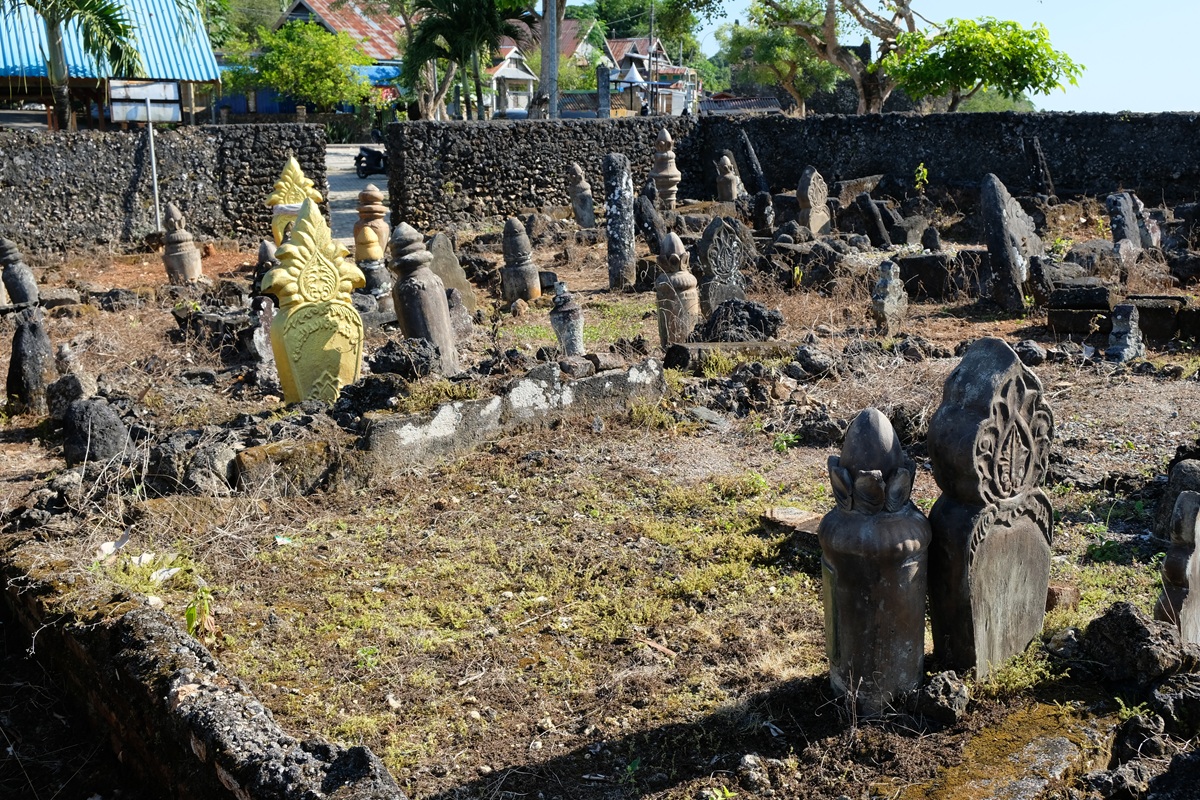
The graves of the 25th sultan of Buton and probably his close relatives
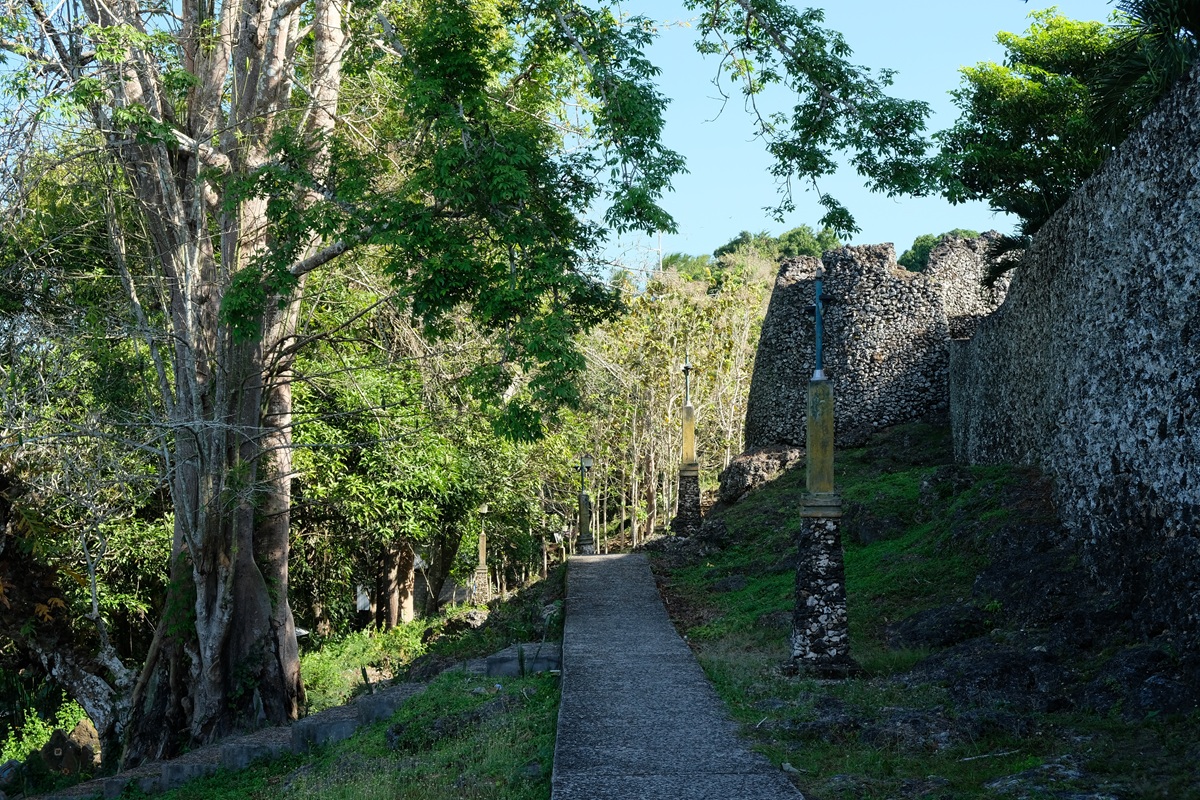
A path out of the walls
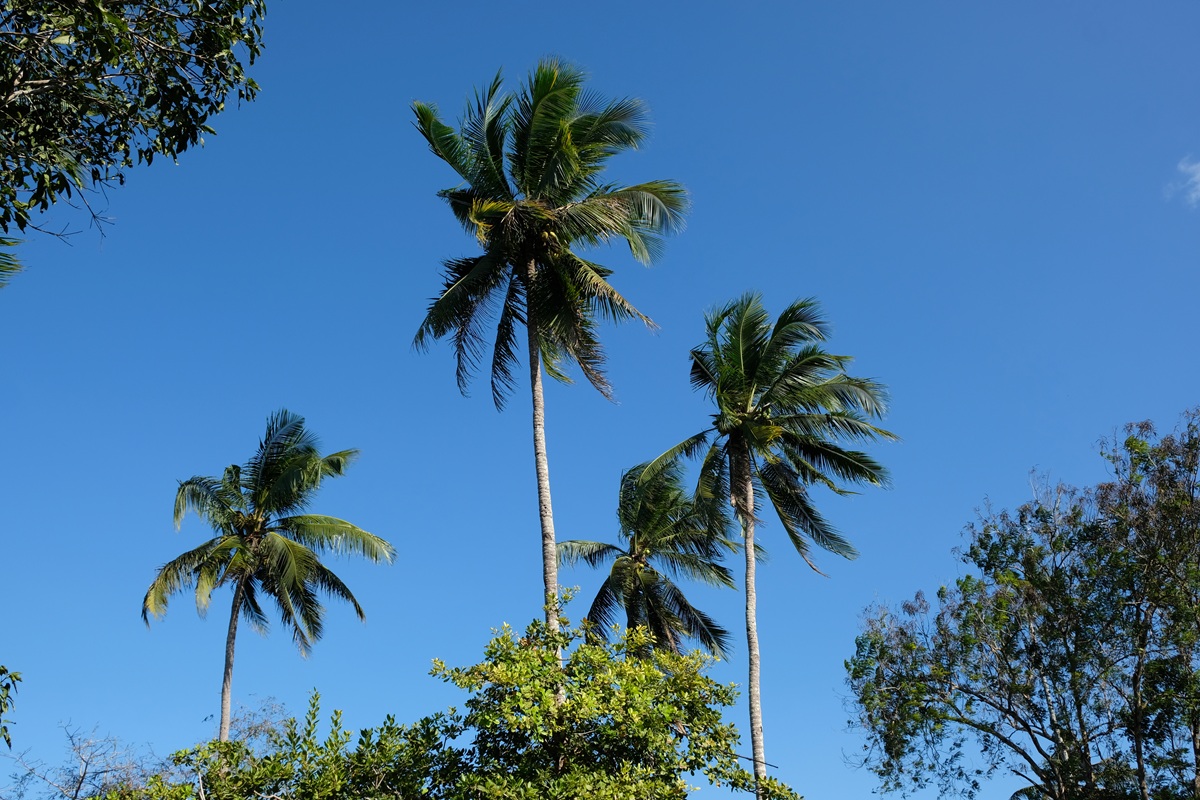
Reminders that we were in the tropics
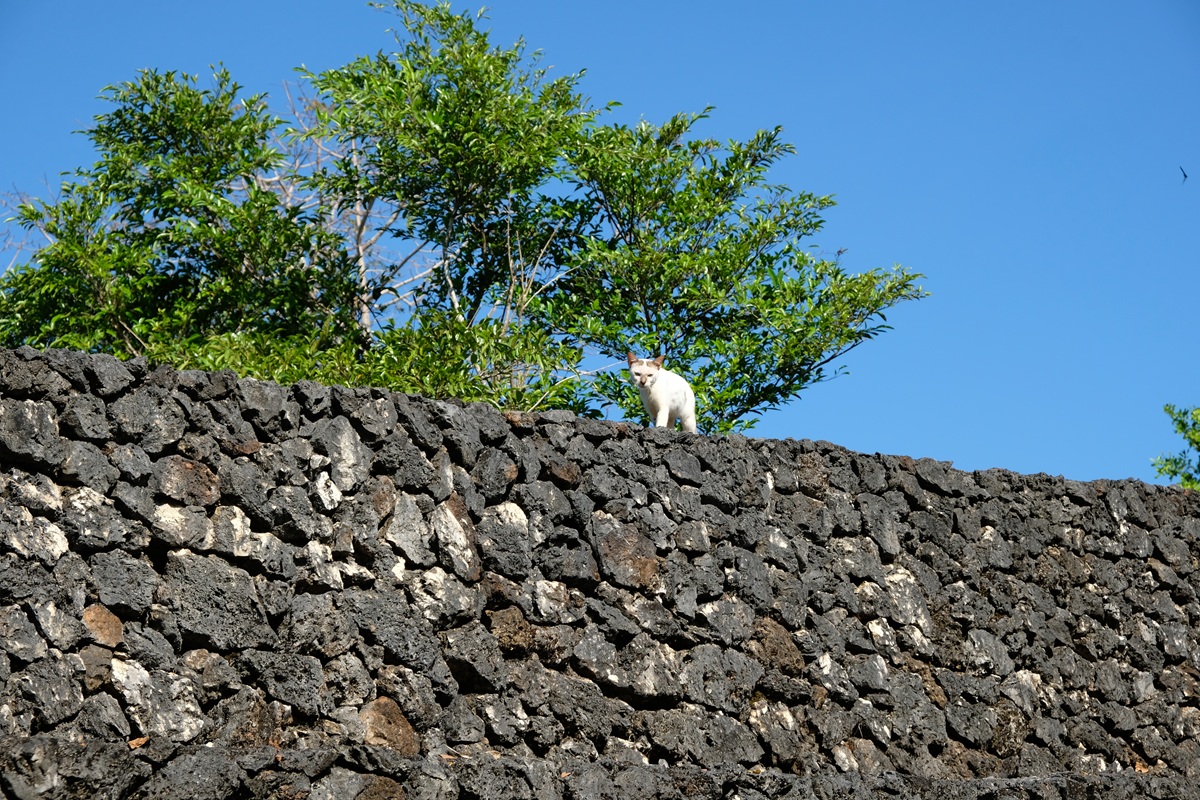
A local resident checking us out
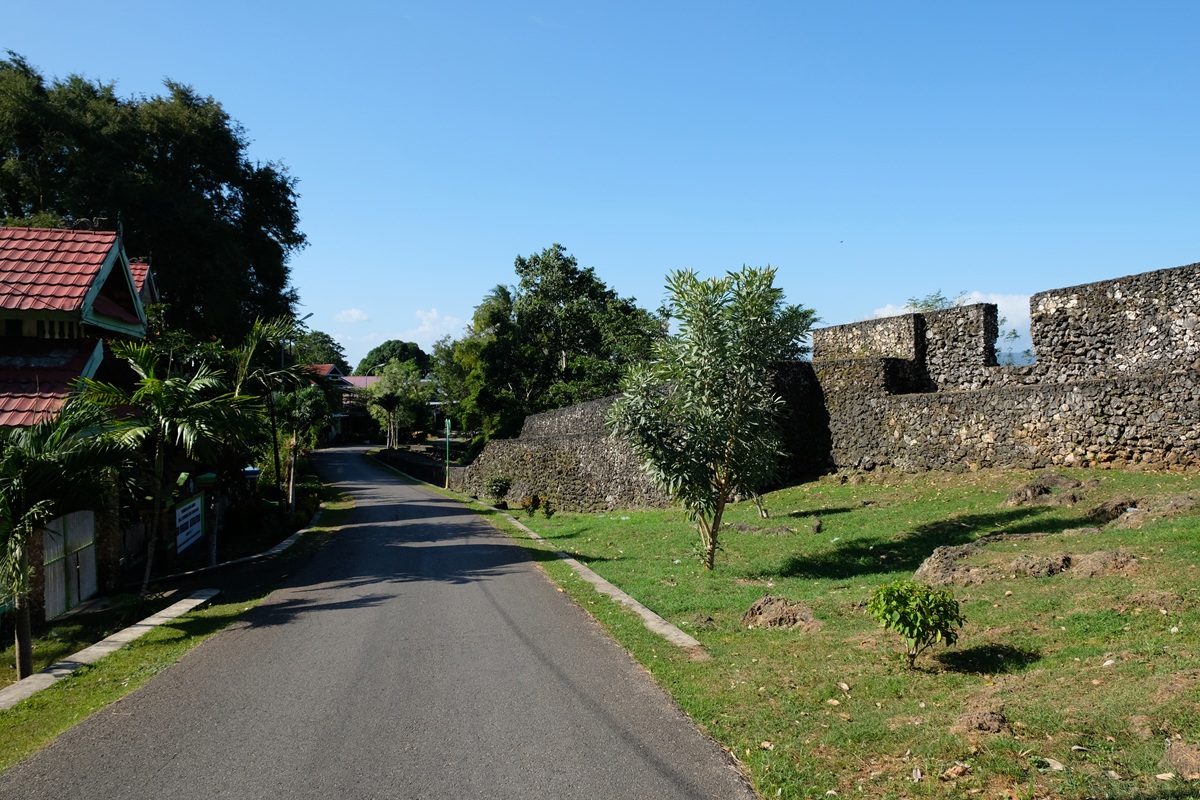
One of the quiet streets within the fortress
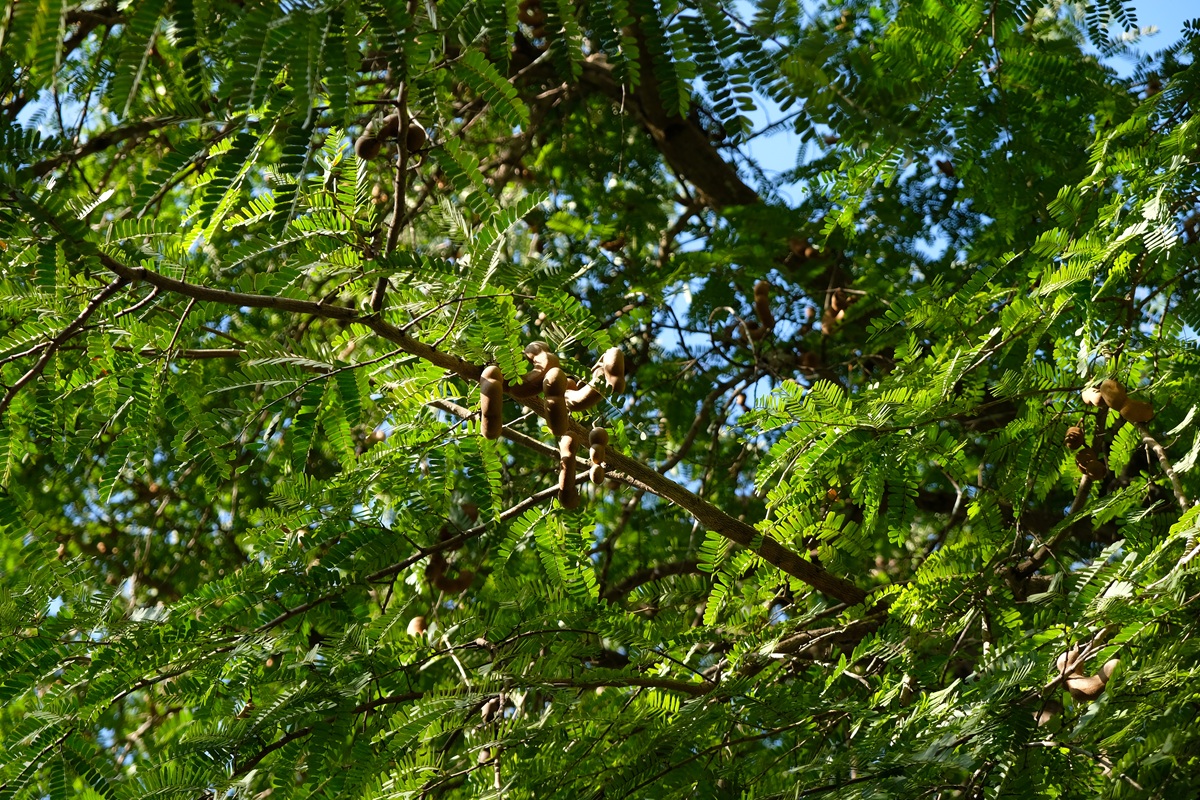
Tamarind, an important ingredient in the local cuisine
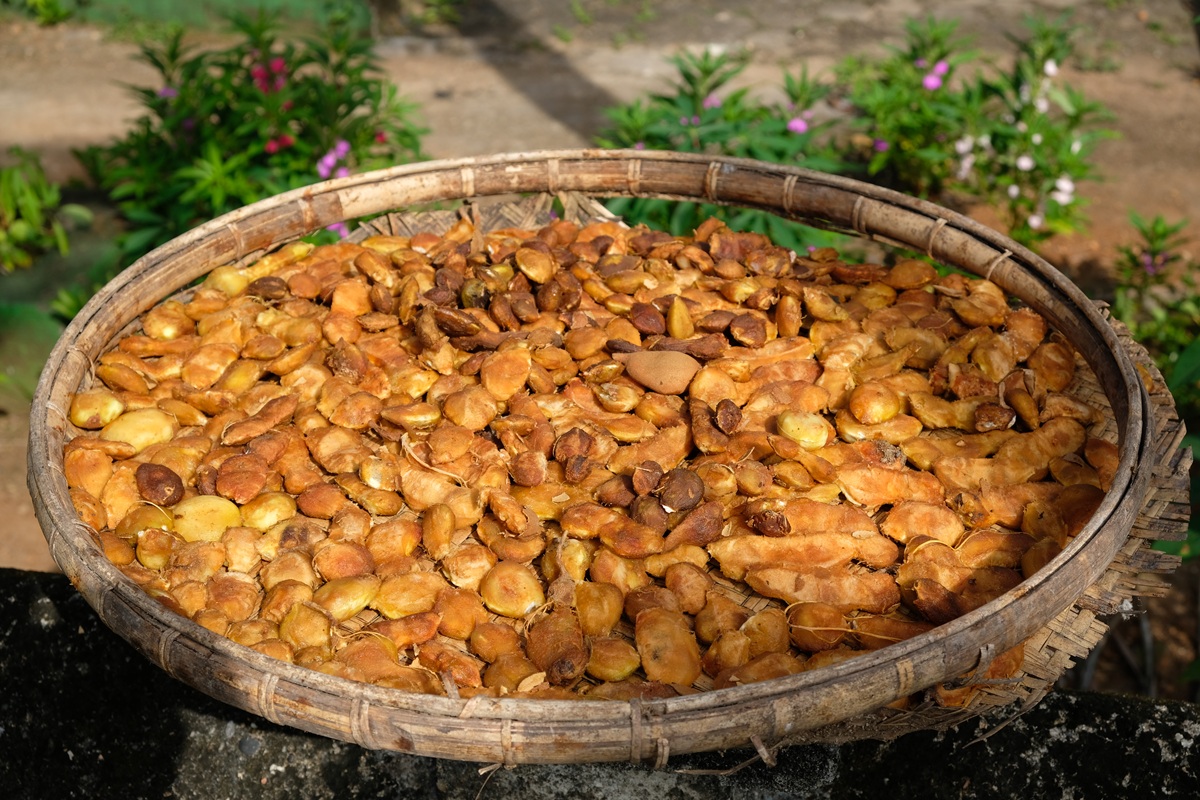
The same ingredient drying in the sun
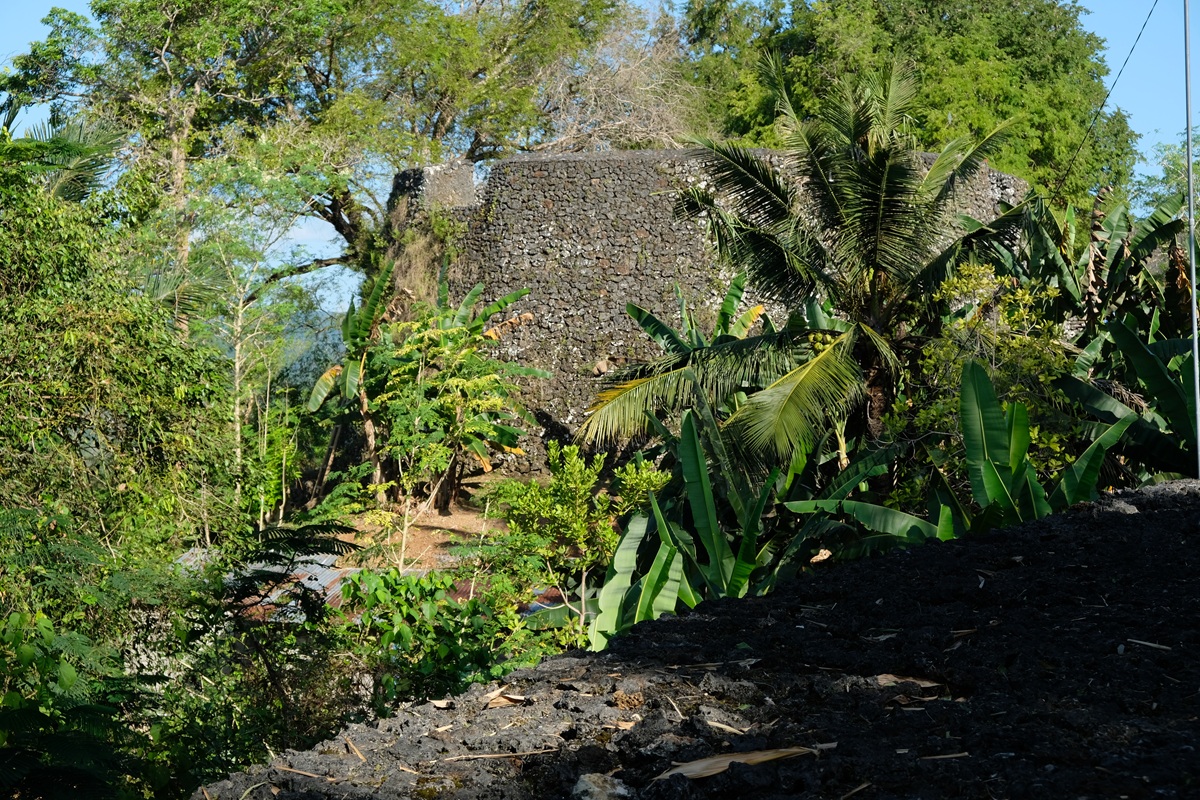
Not the usual sight for us big-city dwellers
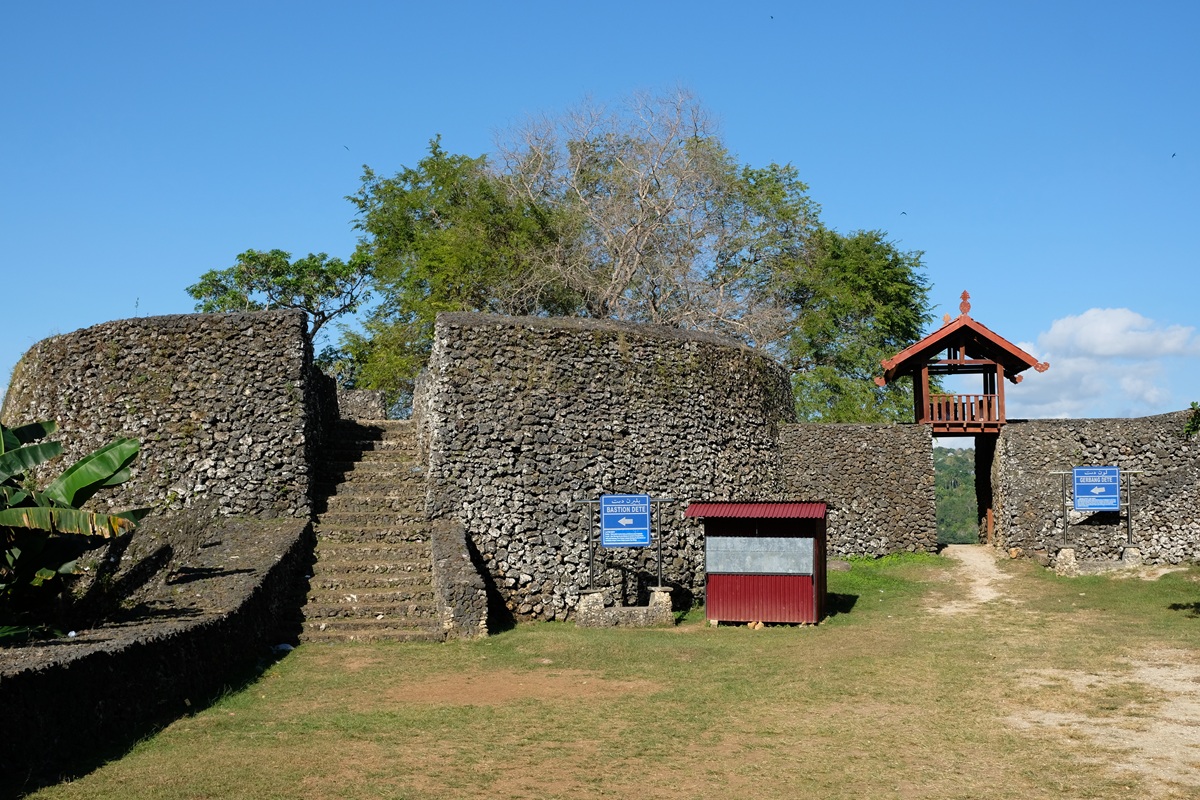
Baluara Dete (left) and Lawana Katapi, among the many bastions and gates of the fortress
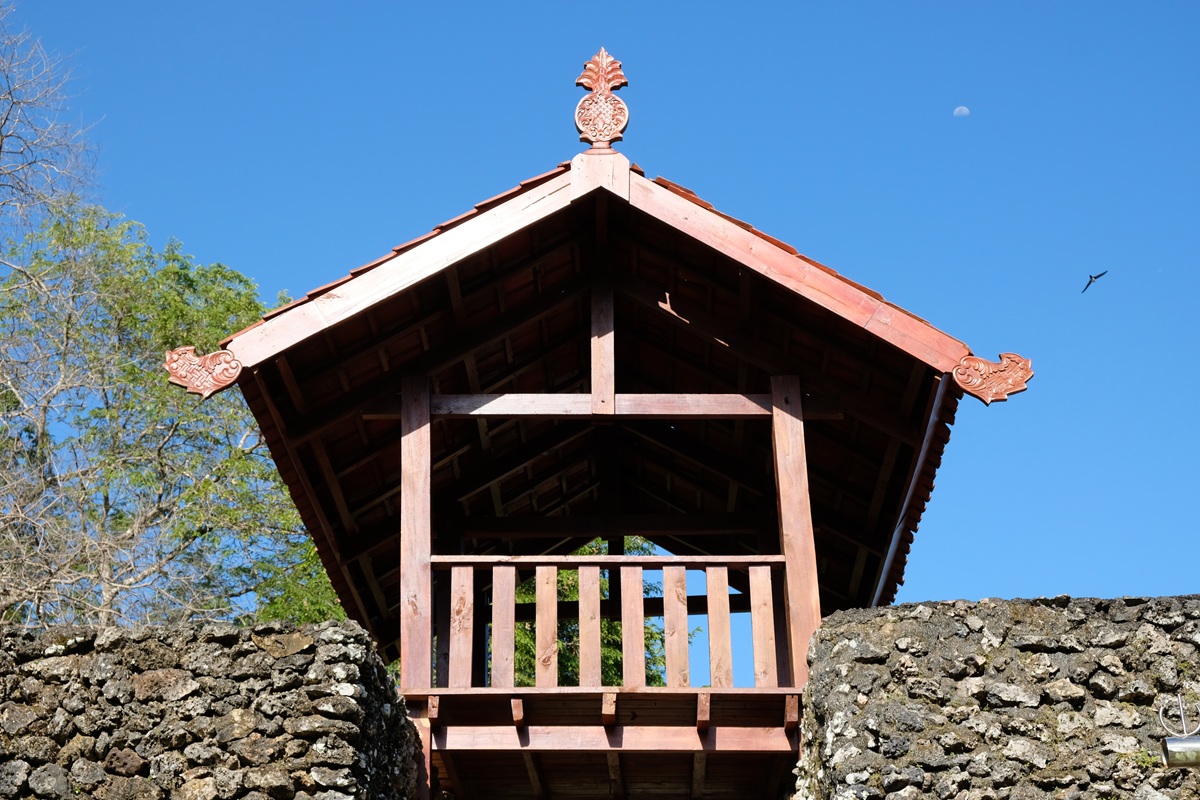
Wherever you go in Baubau, you will always see pineapples
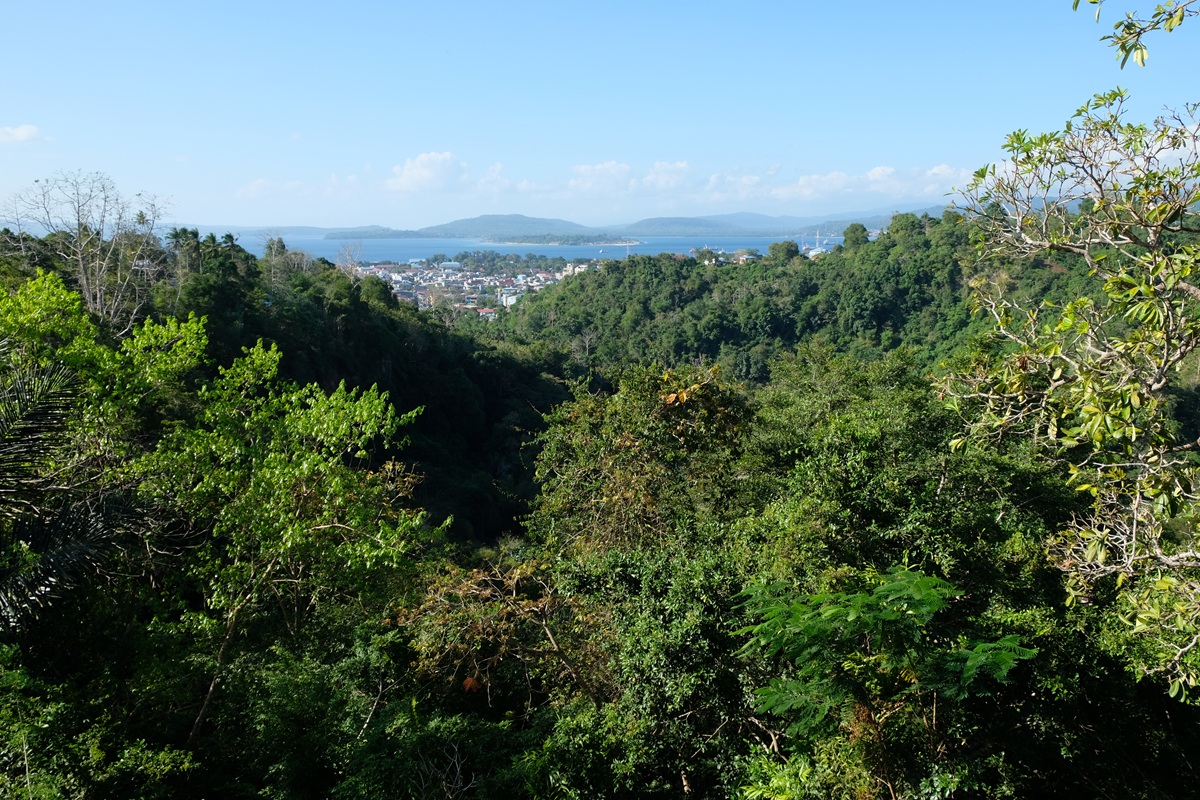
The view of the eastern side of Baubau with the island of Muna in the far background
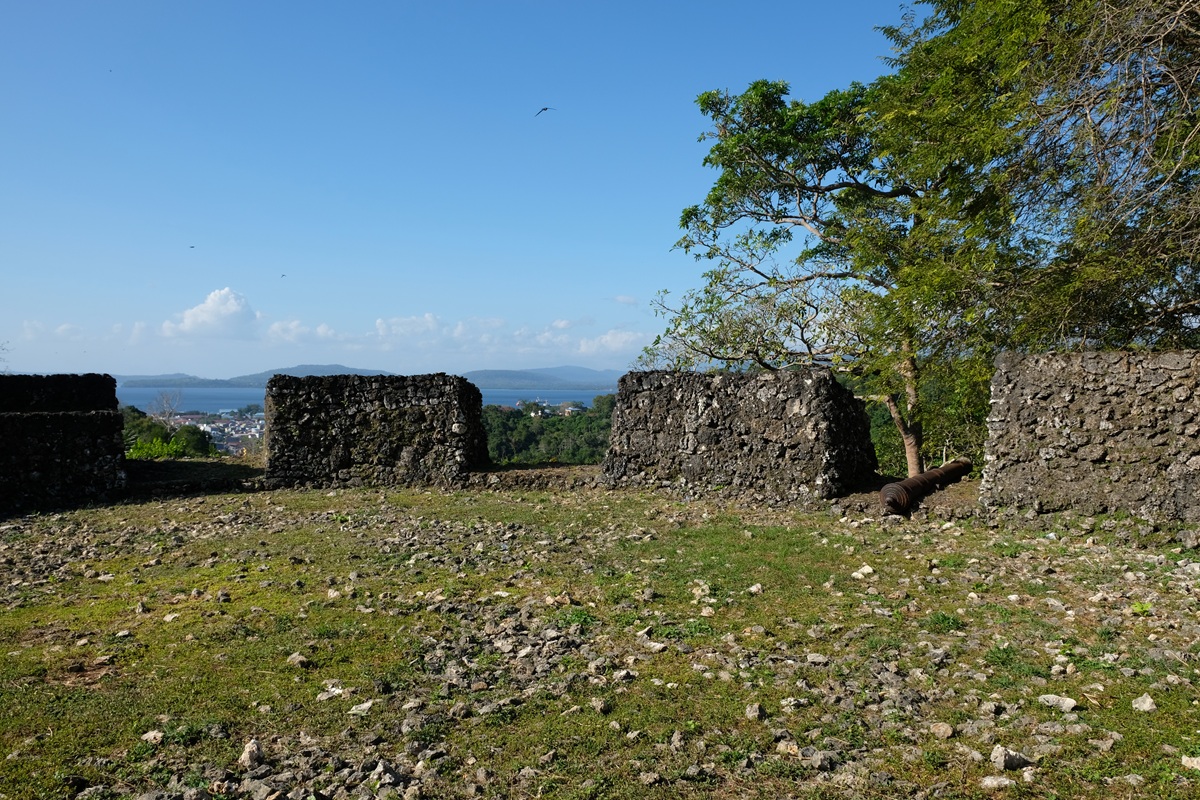
Some bastions still have cannons, a reminder of its defensive purpose
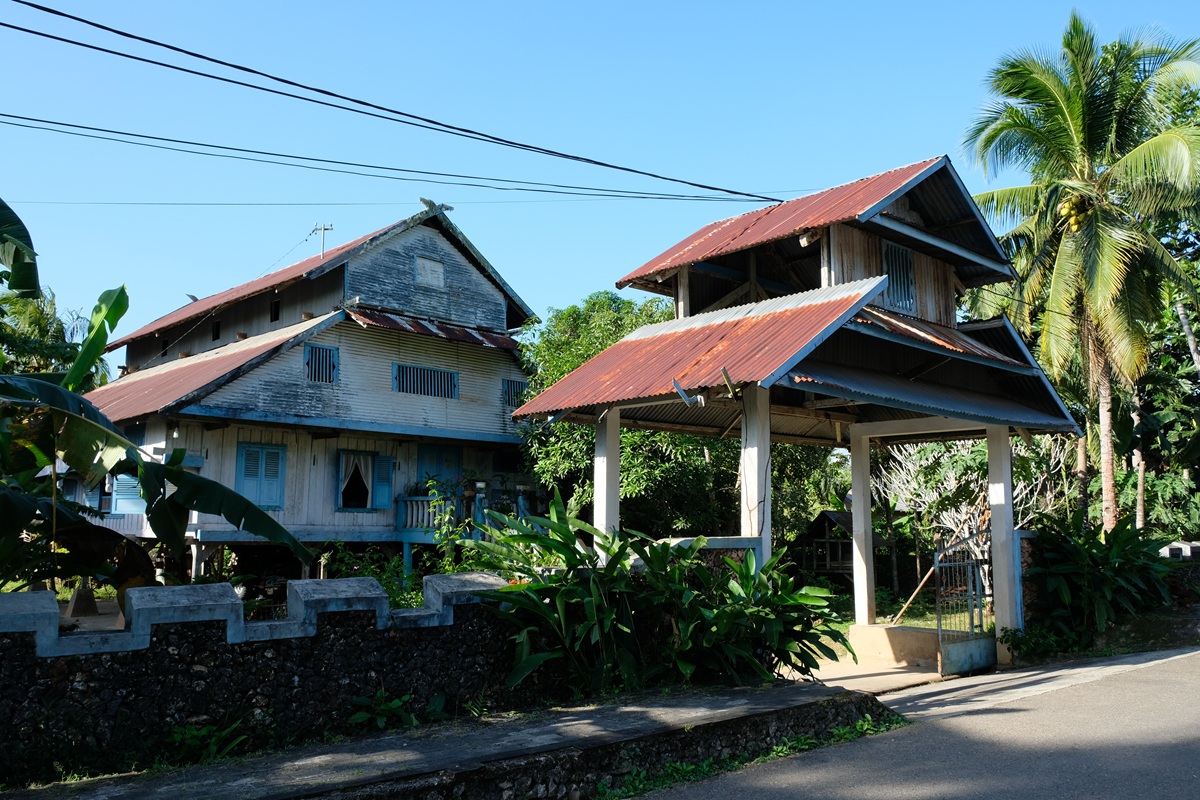
One of the houses built in traditional Butonese style that we saw inside the citadel
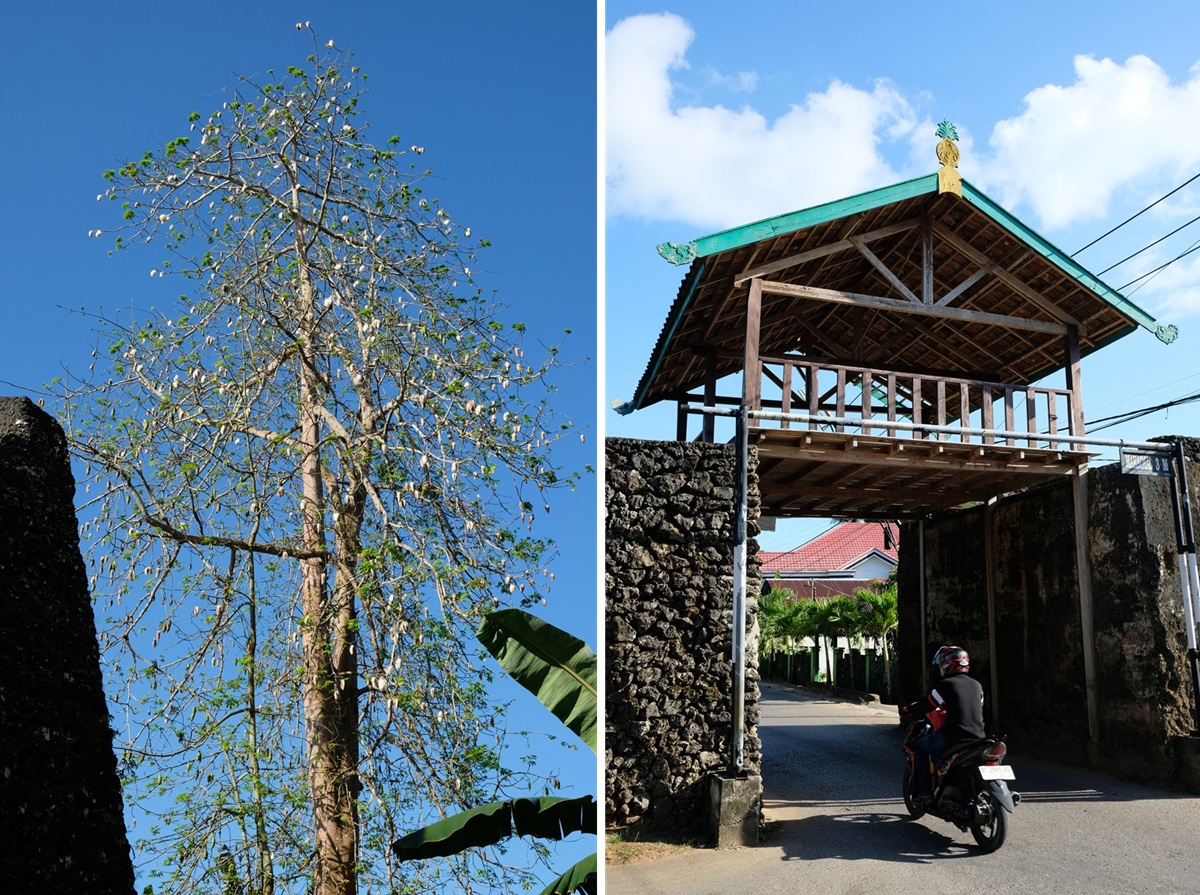
Left: A tall kapok tree near Lawana Wajo; Right: Lawana Burukene, the main gate in the southern side of the fort
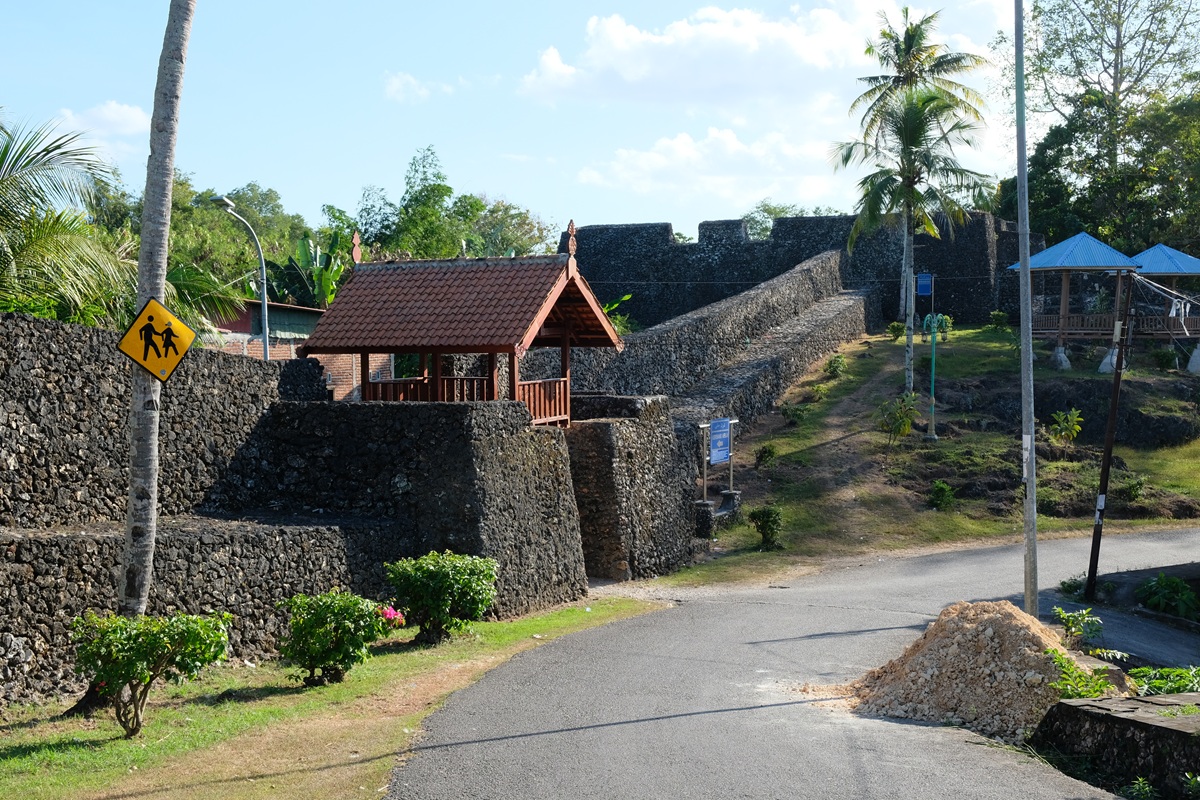
Lawana Melai near the southwestern corner of the citadel
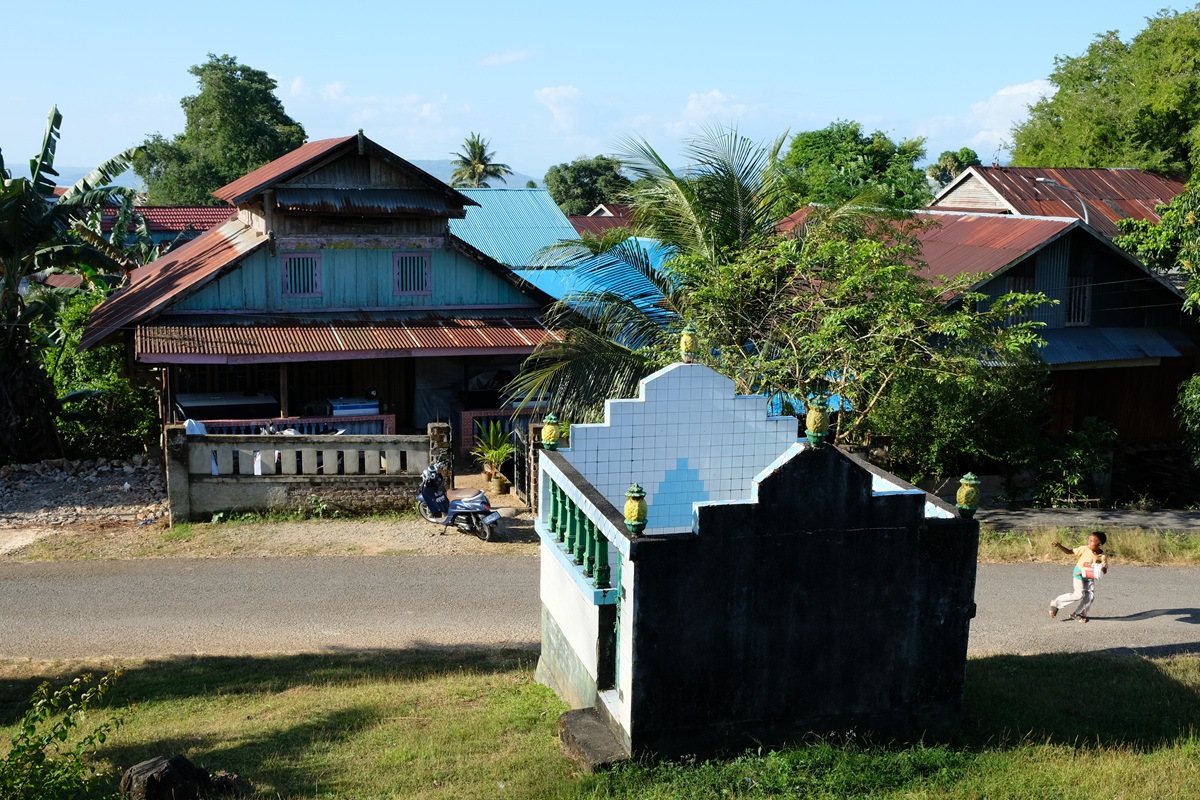
Even some tombs have pineapples too
Along the eastern and southern sides of the enclosure, we were treated with refreshing views of the verdant forests covering the hills around the fortress. The color of the stones on some parts of the walls was visibly different than the rest, indicating restoration work done in the past. While circumambulating the perimeter of the walls certainly helped us appreciate the scale of this citadel, we knew we had to also check out the historical heart of the compound, none other than Masigi Ogena, the palace’s mosque near the main gateway of the fortress.
First commissioned toward the end of the 16th century as a modest prayer hall, the mosque was upgraded in the 18th century under the auspices of the 19th sultan of Buton. The wooden walls were replaced with more durable stones, and the fronds of the nipa palm were used for the roofs. In 1929, the 37th and penultimate sultan gave the order to substitute the fronds with corrugated iron sheets, giving the structure its current appearance. Next to it was Kasulana Tombi, a tall pole made of teak wood that was standing on struts. Commissioned around the same time as the mosque, it was used to hoist the sultanate’s triangular banner called Longa-longa. However, in the 19th century a lightning strike damaged it, and today it is enclosed in protective steel frames to ensure its survival for many more years to come.
We checked out the area around the mosque and saw several other buildings that are significant to the sultanate’s history, including a roofed structure that protects a sacred stone from the elements. This was where Buton’s rulers were sworn in, and an old tradition dictated that a new king or sultan would place his or her left then right foot on the stone during the ceremony. As we strolled around the area, a middle-aged woman approached us with paper tickets in hand. Apparently, this was the only place within the fortress with a ticket ‘booth’ – for the lack of a better word. She explained to us that officially the compound was open to tourists from 8 a.m. until sunset – when she or her colleagues were around. But technically we could go in whenever we wished since the gates were always open.
On another day, we returned to the fortress to visit the former palaces. A little further uphill from the mosque were Kamali Bata and Kamali Kara, the former being the residence of the 32nd sultan of Buton who ruled at the turn of the 20th century, while the latter was built by the 37th sultan who also commissioned Malige Palace in downtown Baubau. Curiously, the royal residences built within the fortress are much smaller and less impressive than Malige Palace, and they were also in a worse state of preservation during our visit.
At the northern side of the defensive walls, the low-rise skyline of Baubau as well as the Buton Strait and the island of Muna were laid before our eyes. It truly afforded a commanding view of these strategically important waters during the height of the maritime spice trade centuries ago, a vantage point fit for rulers. Today, however, Baubau is a small city with a pace that is much slower and more relaxed than that of Jakarta, the beating hub of trade and commerce of modern-day Indonesia where we live. As we stood near some beautiful traditional Butonese houses looking out to the north of the city, a passenger jet took off and banked to the west. It was one of only two scheduled flights serving the island – one in the morning and another in the afternoon.
The sun began to slip toward the horizon, and soon we left the walled citadel with a deeper respect for the place and the people who built it. But we knew this was not the only fortification the Butonese erected, and the prospect of seeing other lesser-known forts on the island got us even more excited.
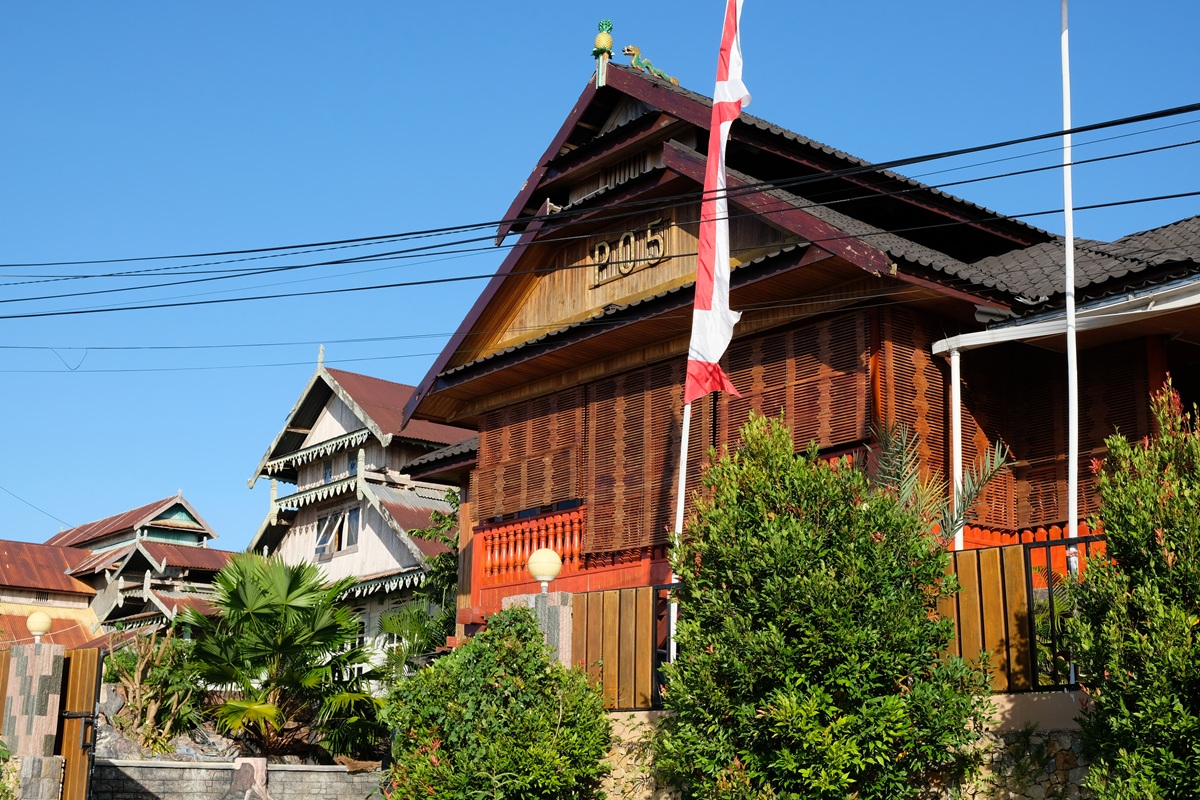
These Butonese houses have the best views of Baubau
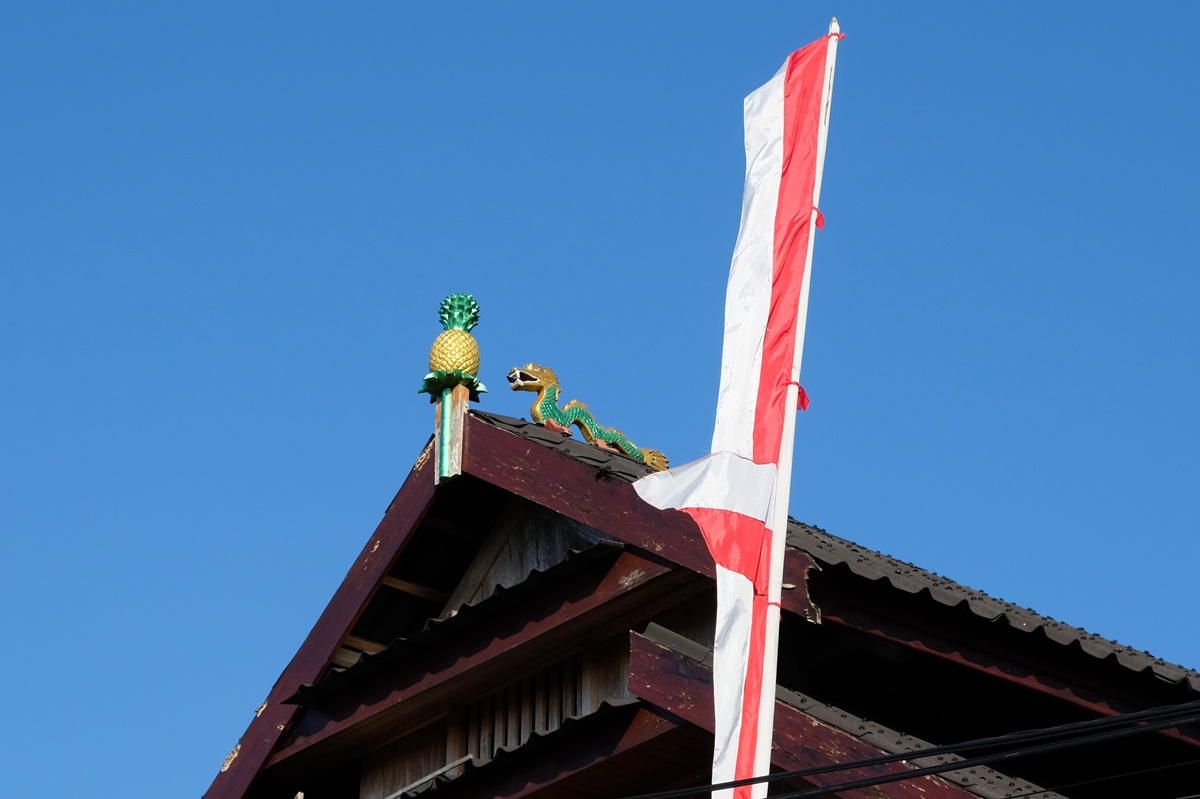
Of course, there is a dragon and a pineapple
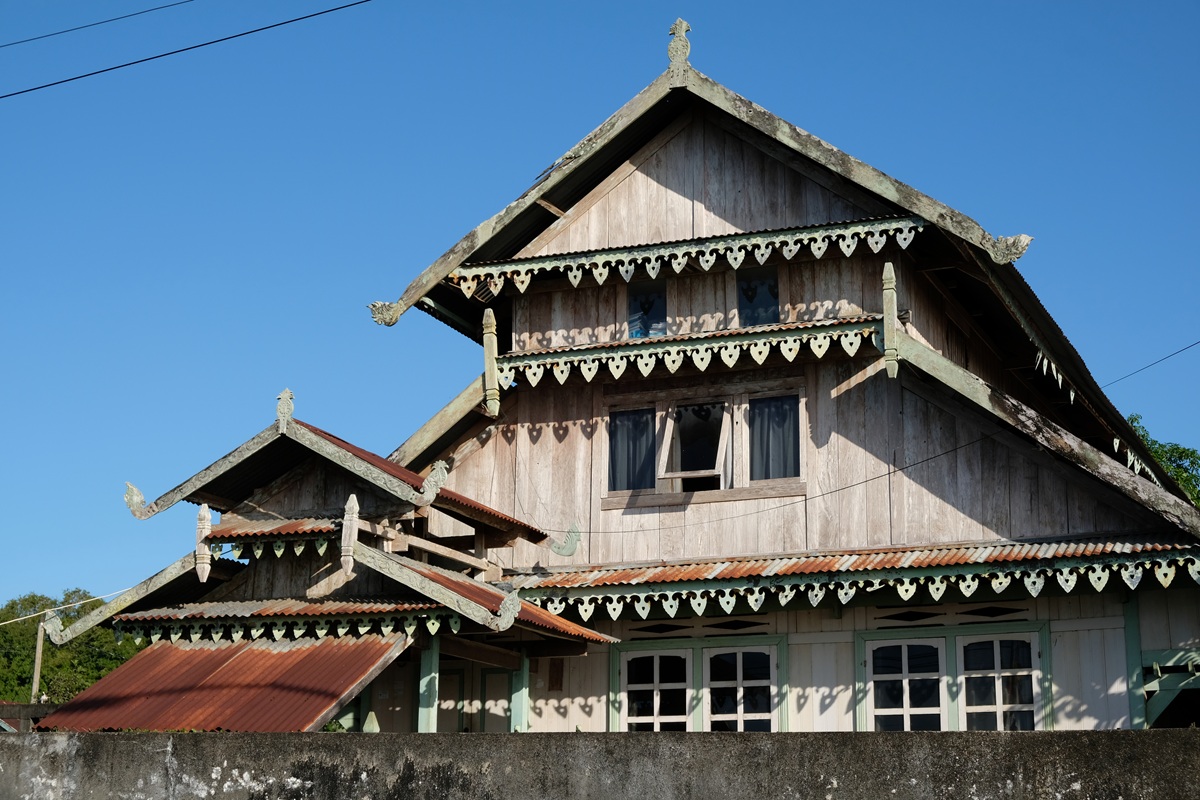
There is something visually appealing about this architectural style
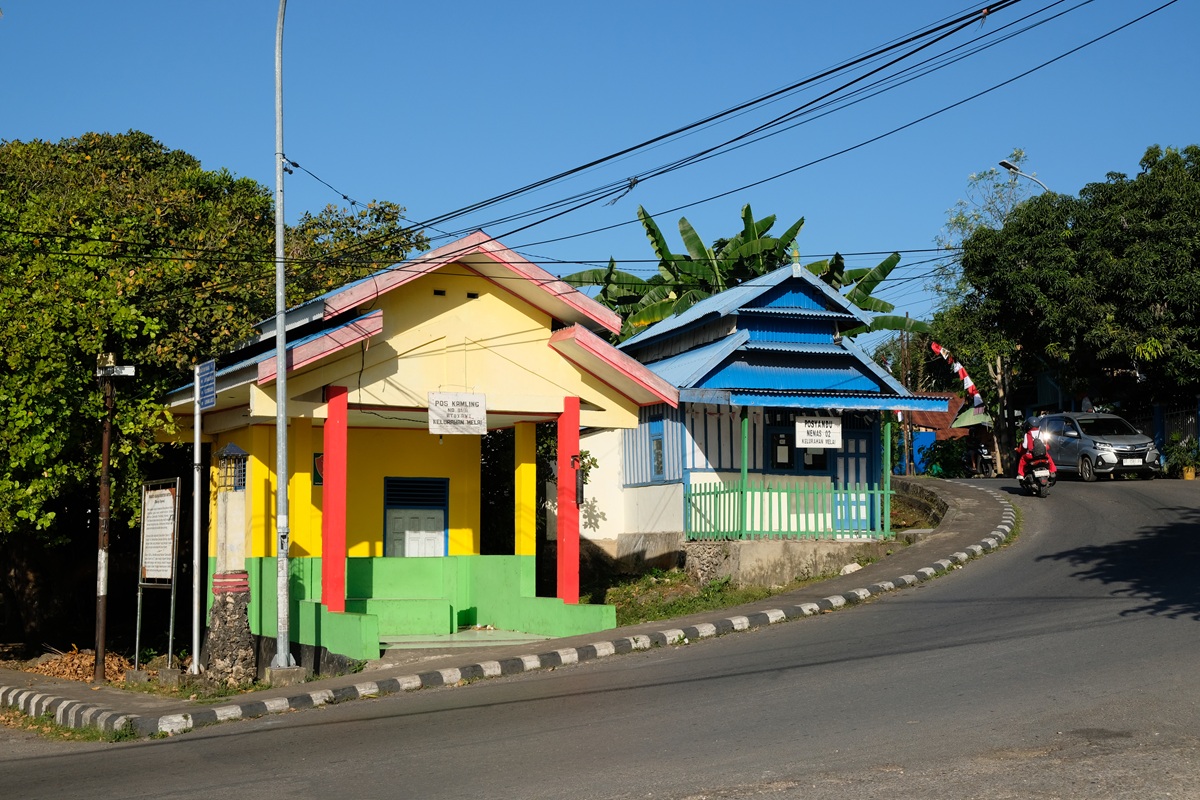
Some newer structures still conform to the essence of Butonese architecture
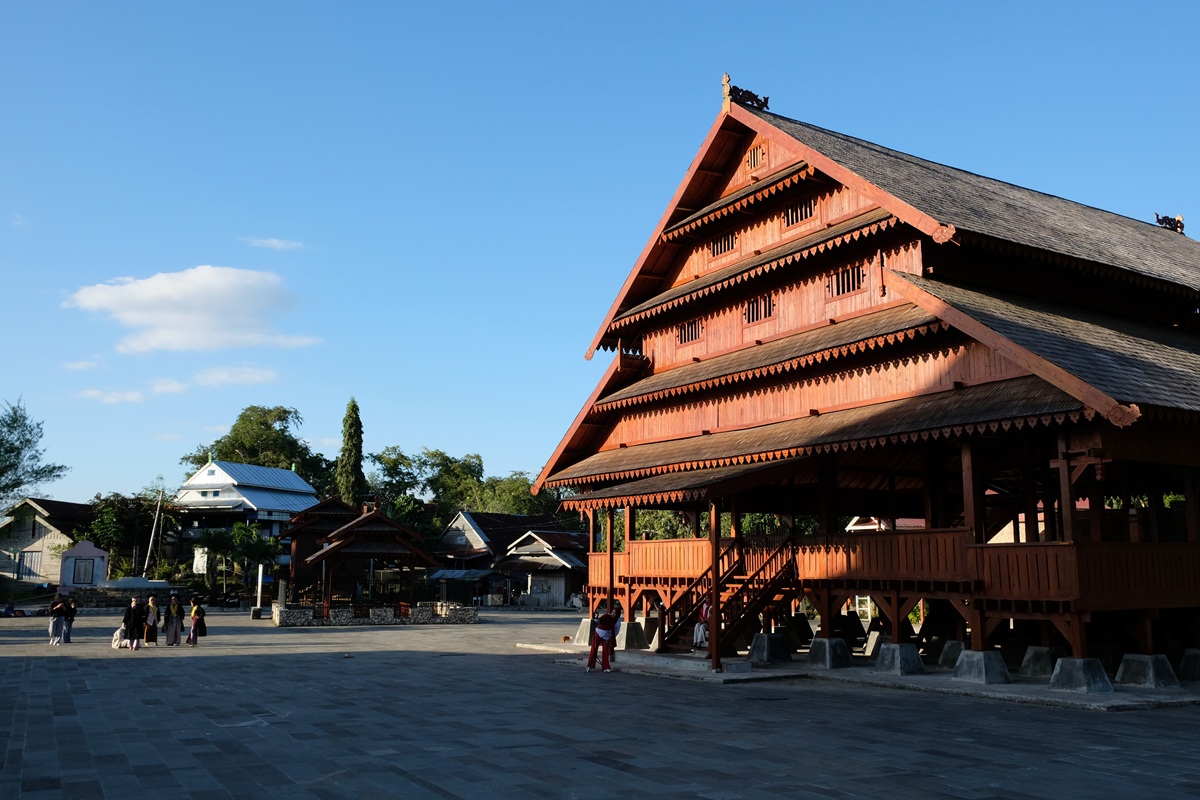
Exquisite buildings near the main mosque of the sultanate
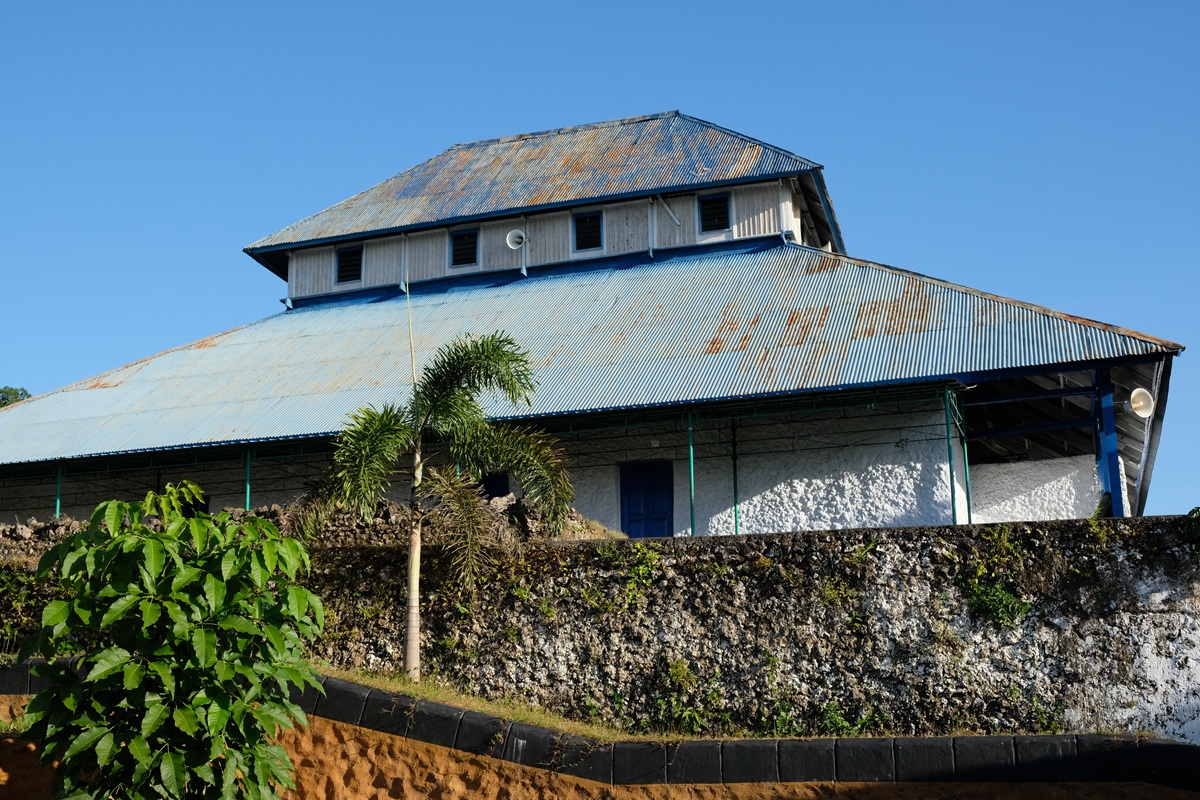
The current incarnation of Masigi Ogena
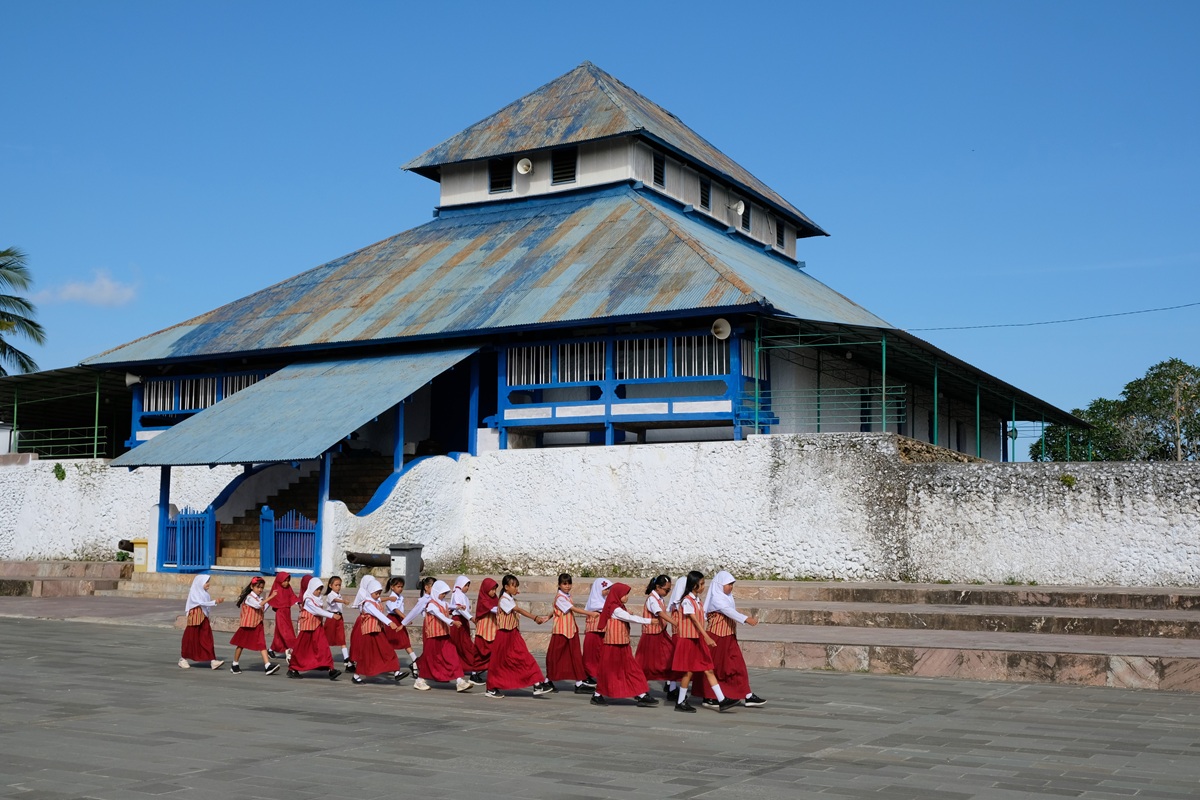
Schoolchildren practicing for the celebration of the independence day of Indonesia
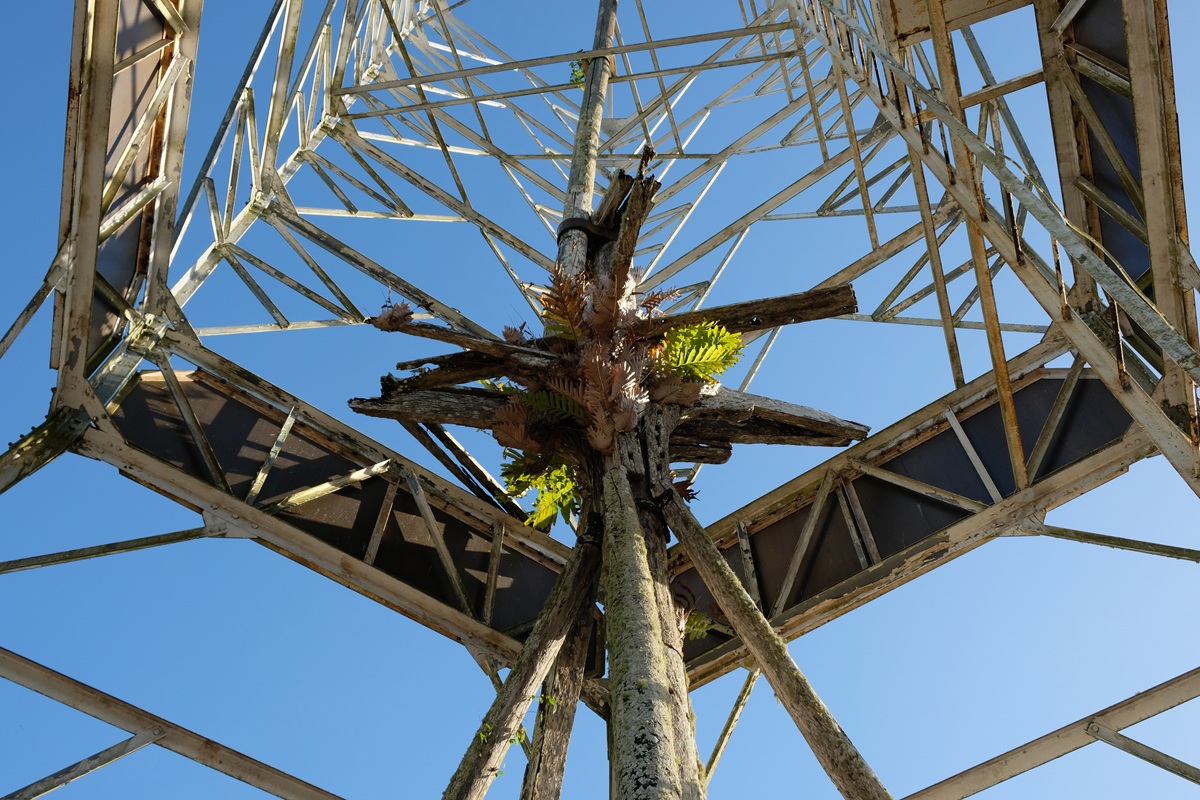
Kasulana Tombi and the steel frames around it
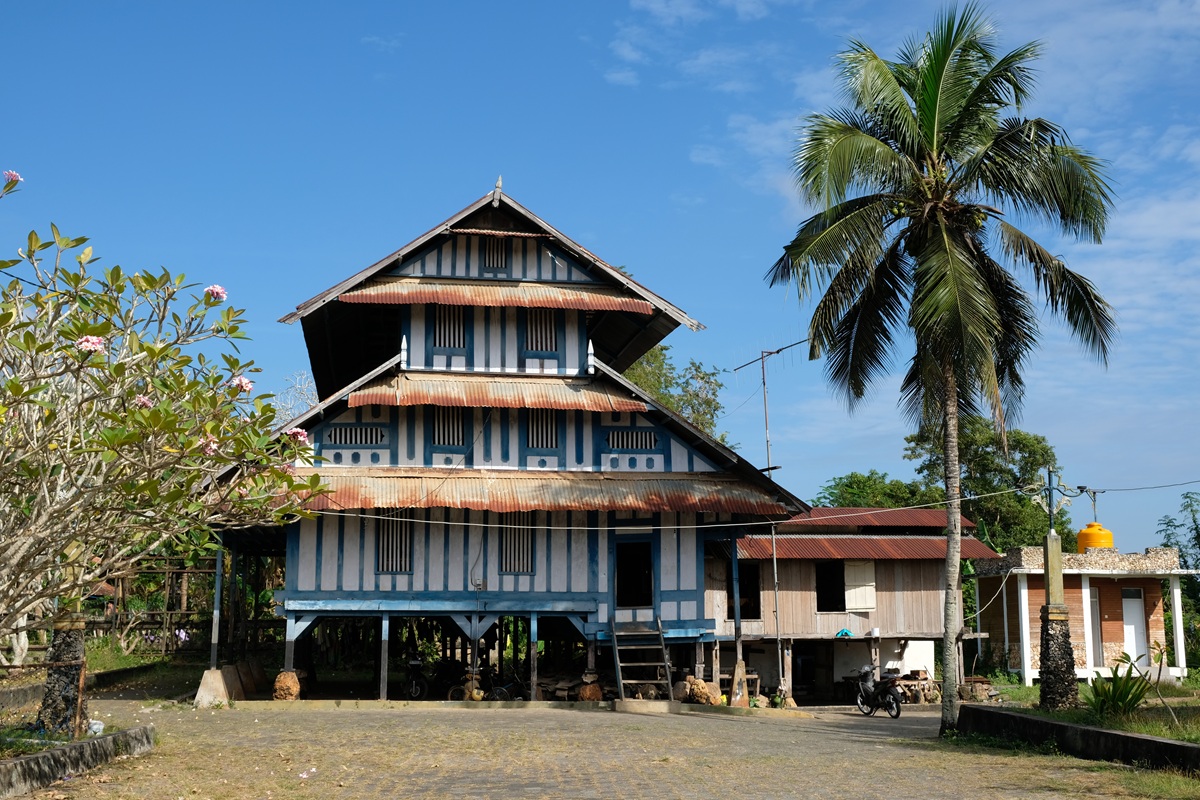
Kamali Kara, built by the same sultan who commissioned Malige Palace
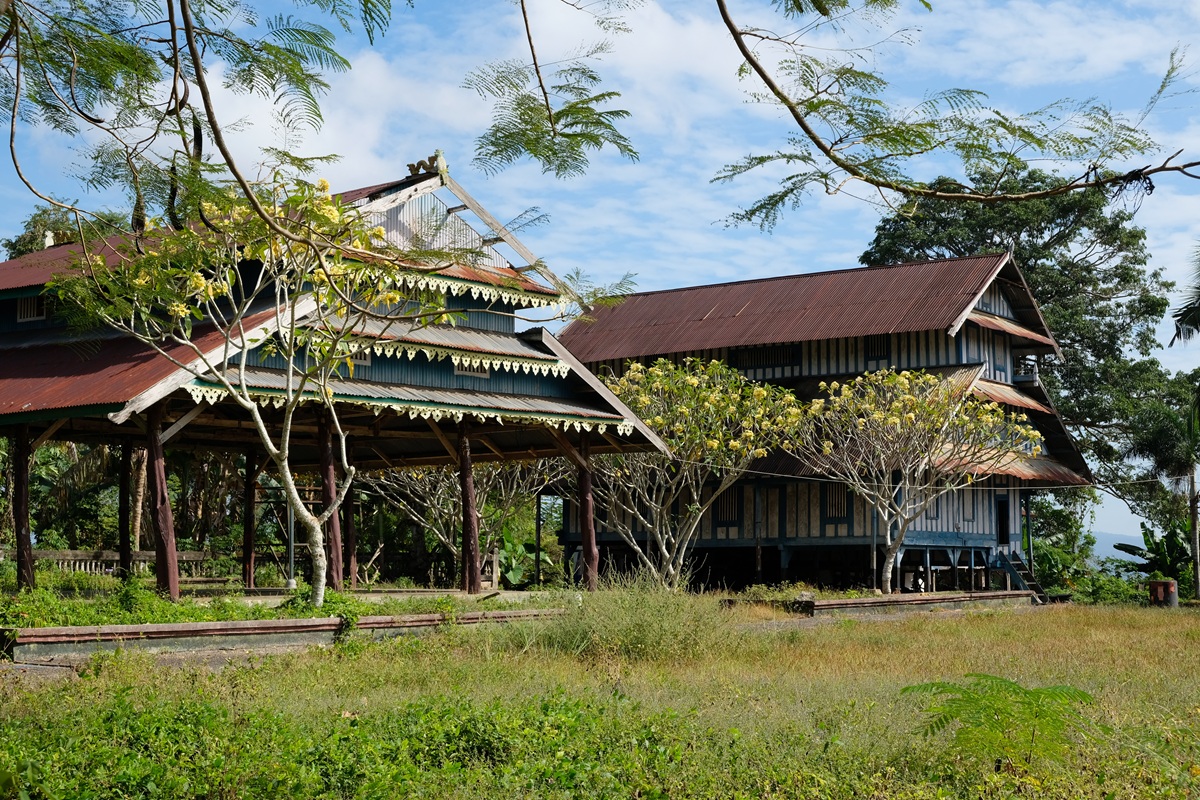
The former royal enclosure of the now-defunct Sultanate of Buton
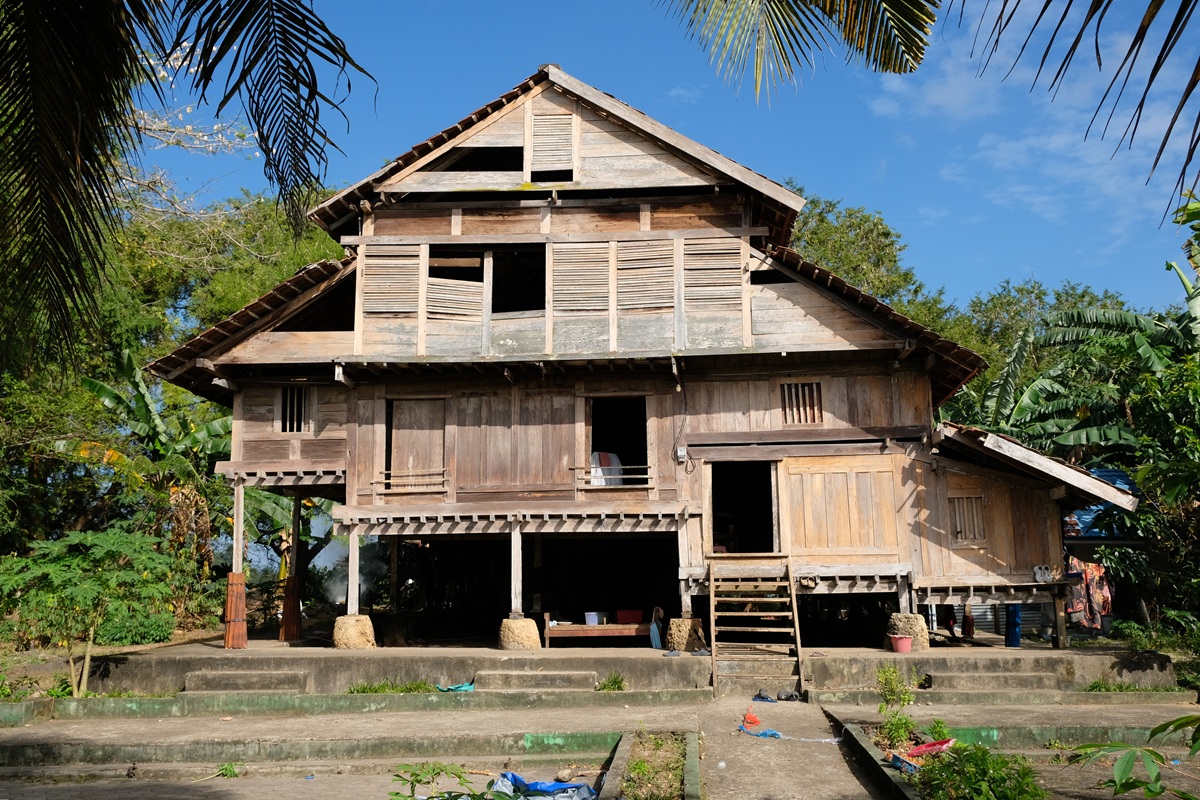
Kamali Bata, the residence of the 32nd sultan of Buton
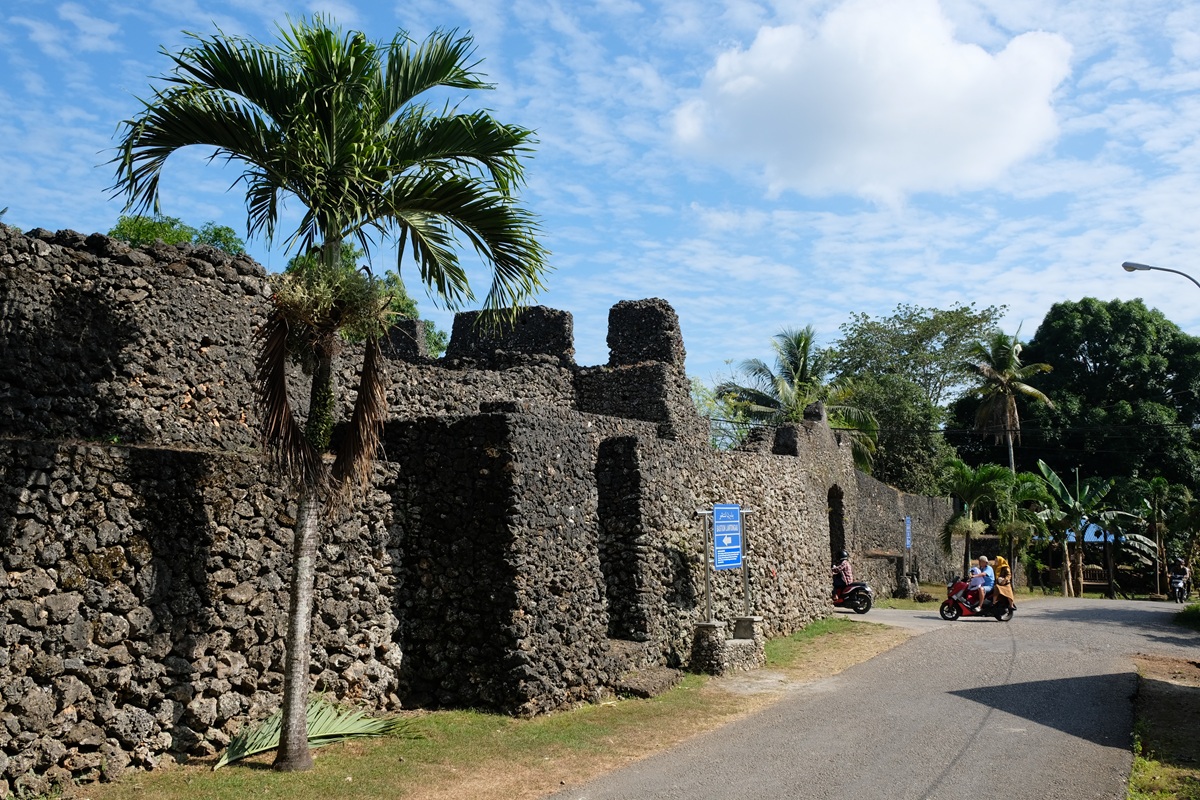
Baluara Lantongau at the western side of the fortress
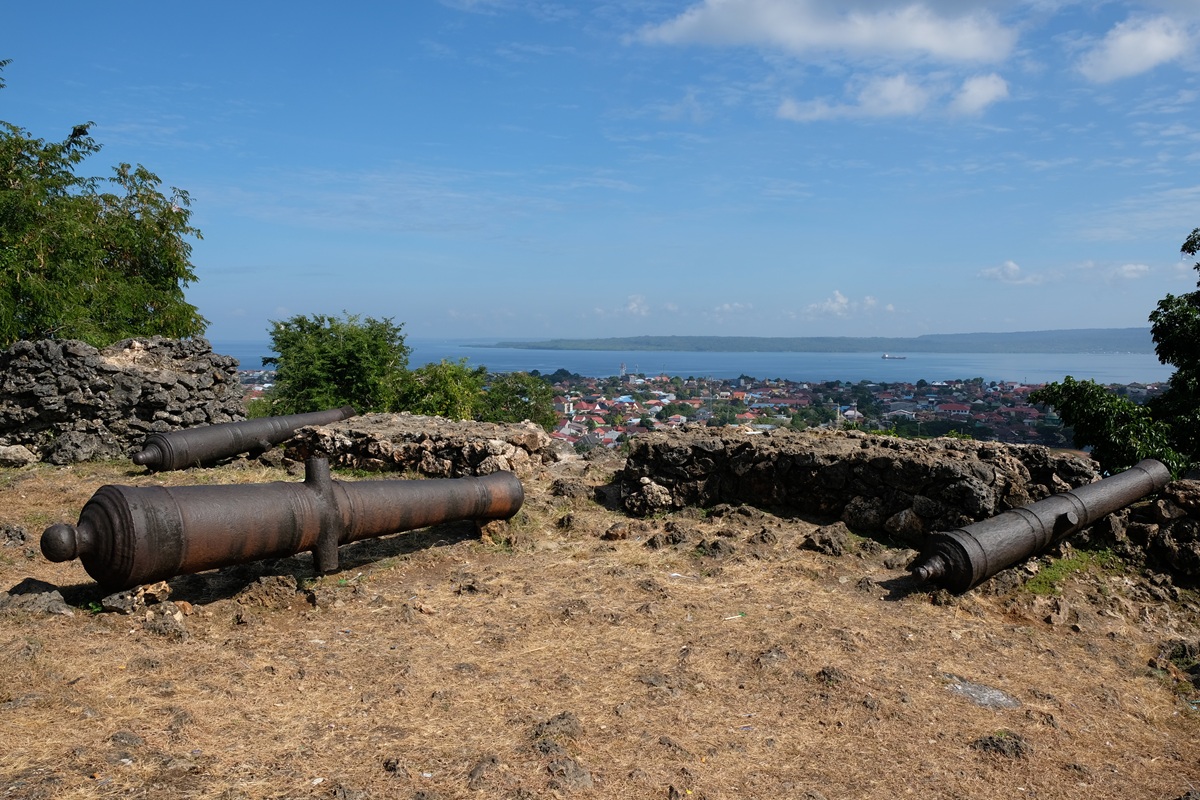
Old cannons at Baluara Gundu-gundu at the northwestern corner of the citadel
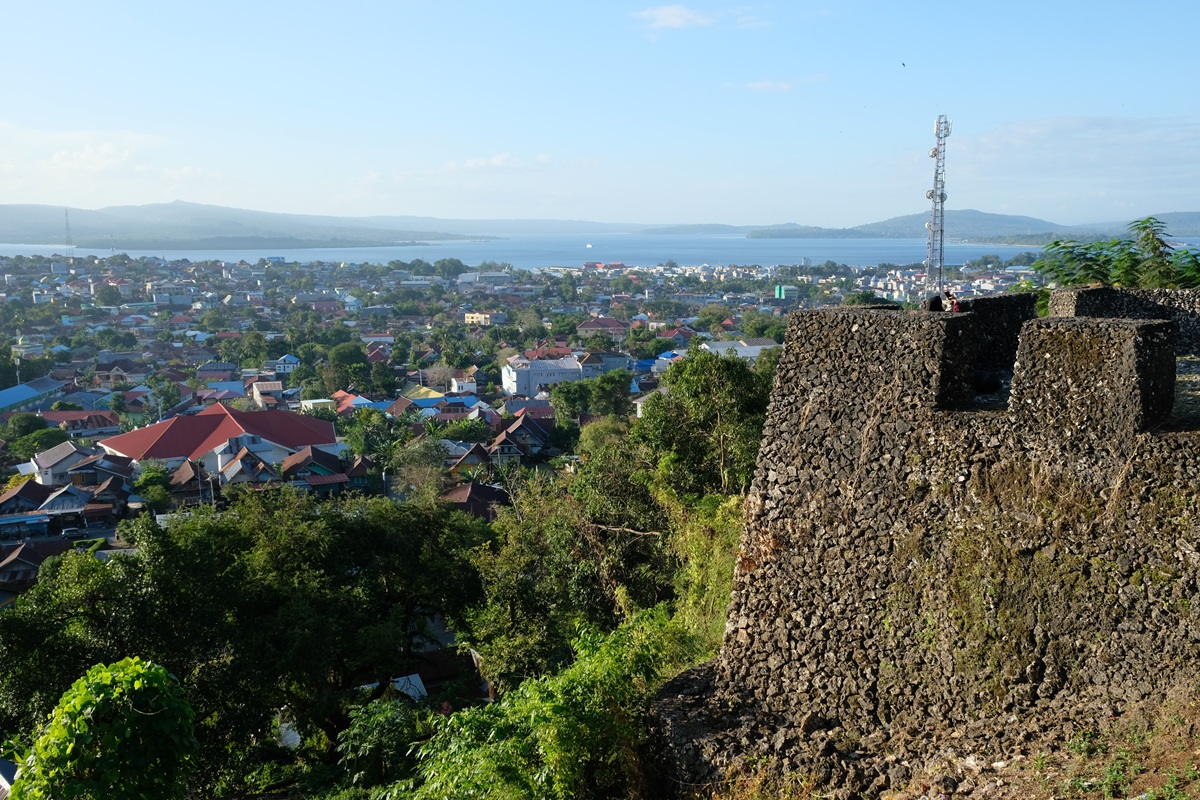
The city of Baubau as viewed from the fortress
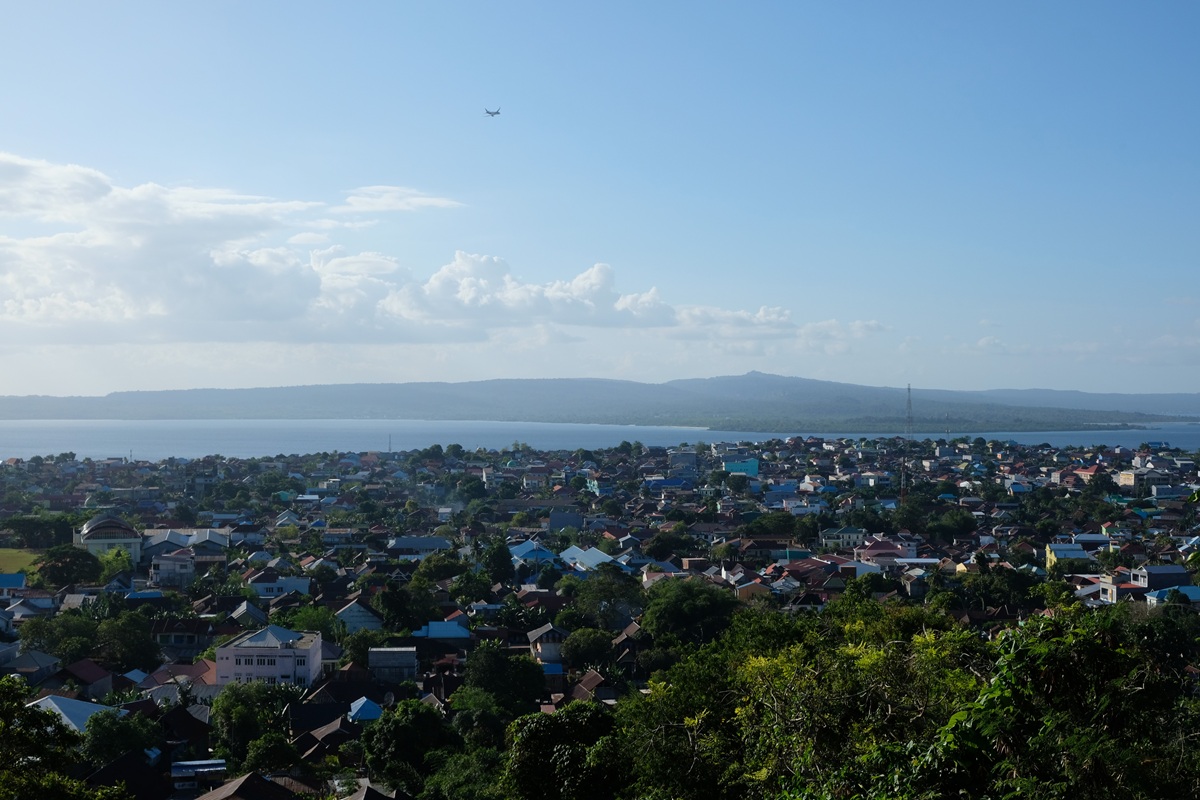
That plane was leaving for Makassar as one of only two scheduled flights serving Baubau

 What an Amazing World!
Lovely! An Indonesian Acropolis, indeed! Very surprising that locals thought you weren’t Indonesian, but perhaps it goes to show just how ethnically-diverse the country is? The ruins look stunning and there’s a lot of Indonesian history that much of the world doesn’t know about! Thanks for sharing the Buton Palace Fortress with us, Bama 🙂
LikeLiked by 1 person
I don’t know why, but sometimes other Indonesians think I’m a foreigner. But it is true that Indonesia is such an ethnically-diverse country with hundreds of languages spoken. When I was exploring this fortress, I thought to myself that the would should know more about this place. Thanks for reading, Rebecca!
LikeLiked by 1 person
Quite lovely. They must have been surprised when you spoke Bahasa…
(Jumpa lagi!)
Brian
LikeLiked by 1 person
They certainly were. But I think one or two kids kept insisting on saying a few Japanese or Chinese words they knew. We just smiled at them.
LikeLike
How interesting. It must have been a relaxing trip as well as informative. The graves markers within the fort reminded of ones in Singapore’s Muslim Quarter.
LikeLiked by 1 person
It was nice that there were almost no other tourists in sight, but I think more people should know about this fascinating place. I understand why those grave markers remind you of the ones you saw in Singapore. There are indeed similarities.
LikeLike
wow, how stunning !
LikeLike