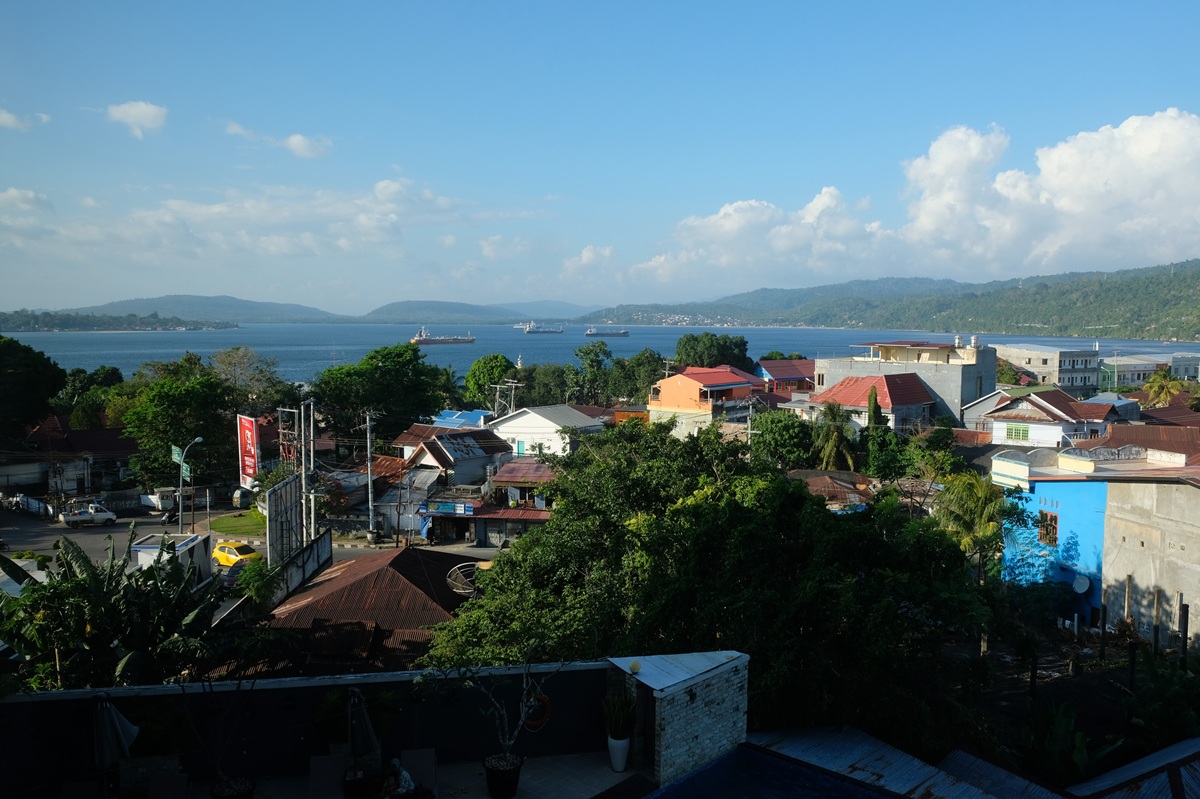
The view from our hotel room in Baubau
Sitting in the upper-floor dining area of a seafood restaurant in Baubau, having one of the freshest and most delicious grilled fish dishes that had ever passed my lips, I suddenly had a series of revelations. The very fish I was eating was probably, until a few hours earlier, still swimming in the waters around Buton (where Baubau is located), a small island off the southeastern coast of Sulawesi – one of Indonesia’s biggest islands that appears on maps like a scraggly-looking letter K. These waters at the heart of the vast Indonesian archipelago have been known for being home to abundant marine life, thanks to its location between the Pacific and the Indian Oceans. And because of this, strong, nutrient-rich currents flow continuously around thousands of islands in this region, creating the perfect conditions for a multitude of tropical fish species to thrive.
Sulawesi is also home to among the world’s oldest figurative cave arts to date. While ancient cave paintings exist in other parts of the globe, the ones found on this Indonesian island are significant and particularly thought-provoking because of its location. The islands in the western part of the country (including Sumatra, Java, and Borneo) were once connected to mainland Asia, while those in the far eastern corners of Indonesia were a continuation of Australia. Sulawesi, however, has always been an island on its own. How humans got there is still a mystery. Did they arrive by boats? Did they swim over? Or did they accidentally drift away on dead tree trunks? But one thing is for sure: the figurative paintings they created are important pieces of the great puzzle in understanding the evolution of art.
In the relatively less distant past, Baubau, as the main port of Buton, benefitted from the lucrative spice trade thanks to its geographical location between maritime trading hubs in the west of the archipelago (especially those in Java, Sumatra, and the Malay Peninsula) and the Spice Islands (the Moluccas) in the east – the world’s sole source of nutmeg, mace, and cloves at that time. And like in other port cities, peoples from different cultural backgrounds who once frequented Baubau left their marks on this relatively remote corner of the world in many forms.
Throughout our week-long trip to the island of Buton (and neighboring Muna) last August, when we were not savoring delicious seafood, James and I were busy exploring the streets, forts, and beaches of Baubau. Apart from the unique local architecture, we noticed one intriguing decorative element that was ubiquitous on government buildings and some houses, as well as in city parks: pineapples and dragons. Why did a fruit native to South America and a mythical beast revered in East Asian mythology become a much-loved symbol of this small city of less than 200,000 people?
In an oft-recounted version of the origin of this pictogram, the pineapple is an allegory to how the Butonese people are expected to be: able to thrive wherever they are planted in the world, just like the fruit itself. Meanwhile, the Chinese-looking dragon is often cited as a reference to the first ruler of the Kingdom of Buton who is believed to be a Chinese woman. What are the chances of a polity formed by local lords (themselves descendants of Malay settlers) who agreed to elect a non-indigenous female ruler as their head of state in the 14th century? Unfortunately, historical records from primary sources are scarce and what we know today about her is mostly based on oral tradition. It is said that she was one of only two women who ever ruled this kingdom before it became a sultanate in the 16th century, following the conversion of the Butonese king to Islam.
Baubau, and the island of Buton in general is not really a place people have in mind when they think of a vacation. When we were there, we rarely saw other Indonesian tourists, let alone international visitors. Those who make their way to this city usually stay only briefly before continuing their journey to Wakatobi National Park – reputedly home to among the best diving spots in Indonesia. Even I, for a long time, only knew Buton as a top producer of bitumen, and only learned about its fascinating historical sites in the past decade or so.
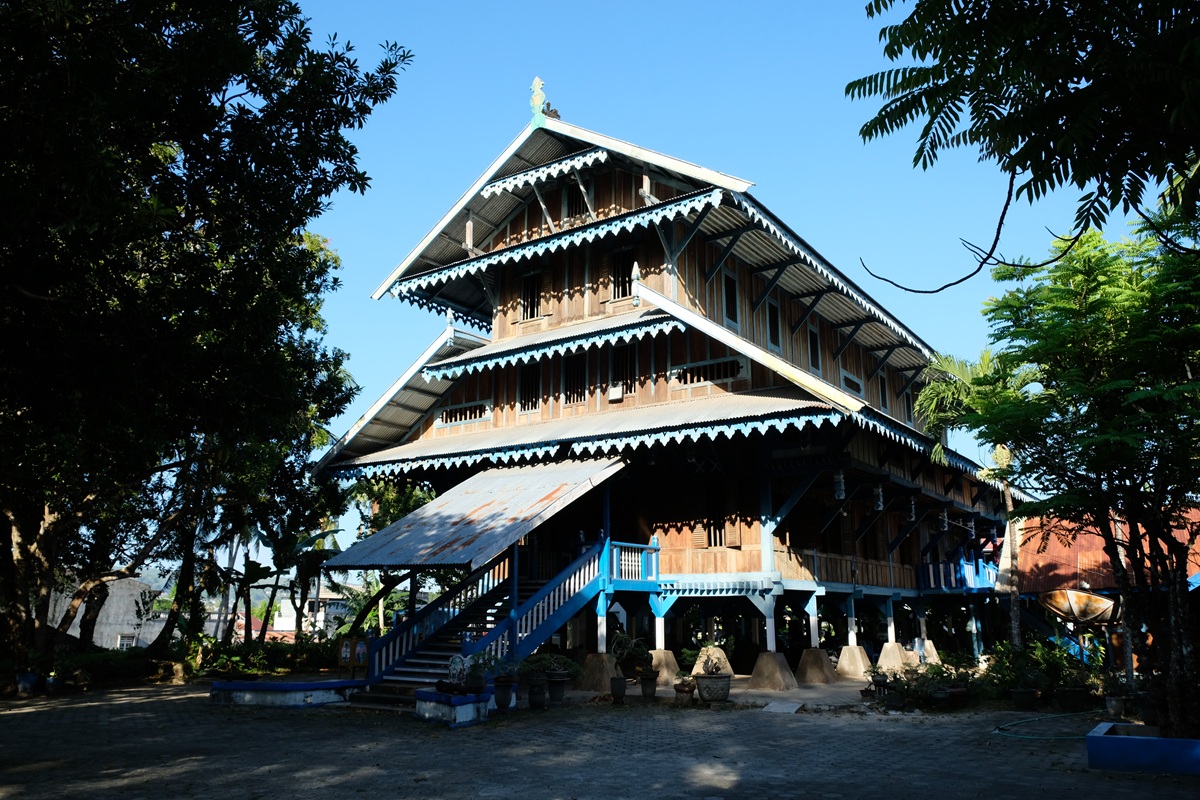
Malige Palace, the last royal residence of the sultan of Buton
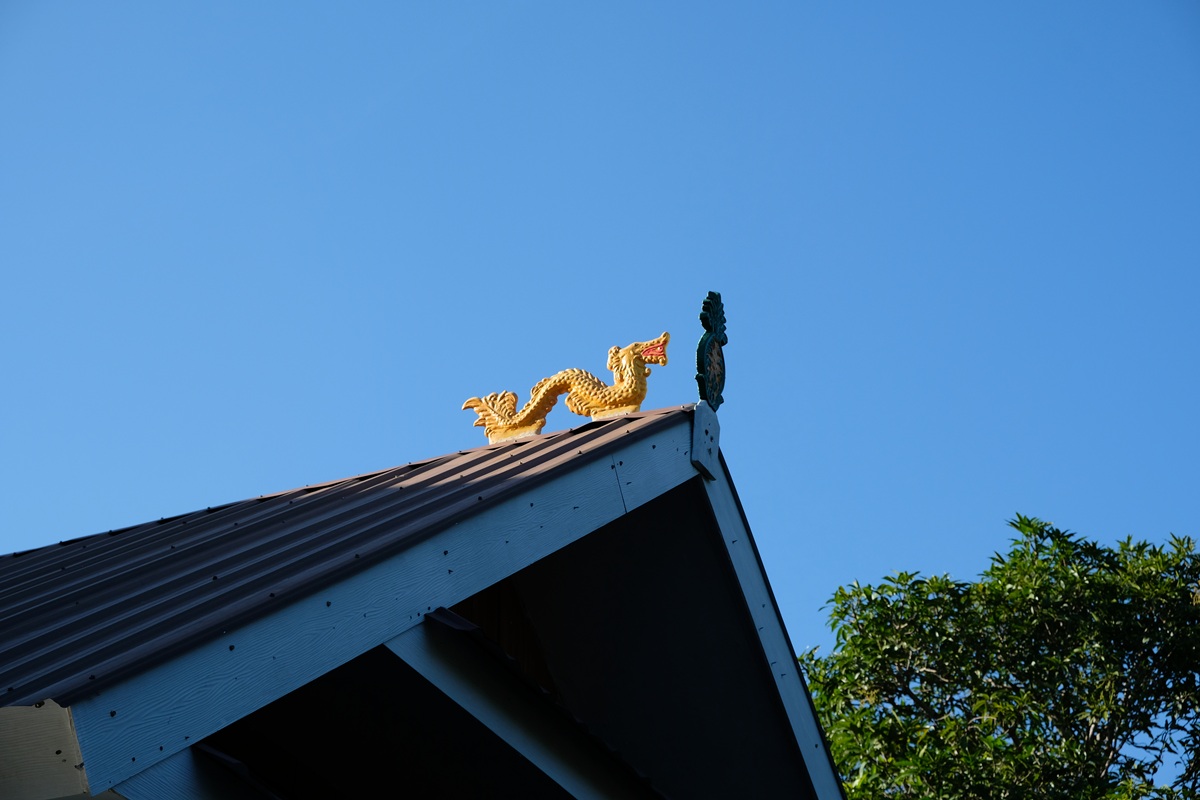
This decorative element is unmistakably Butonese
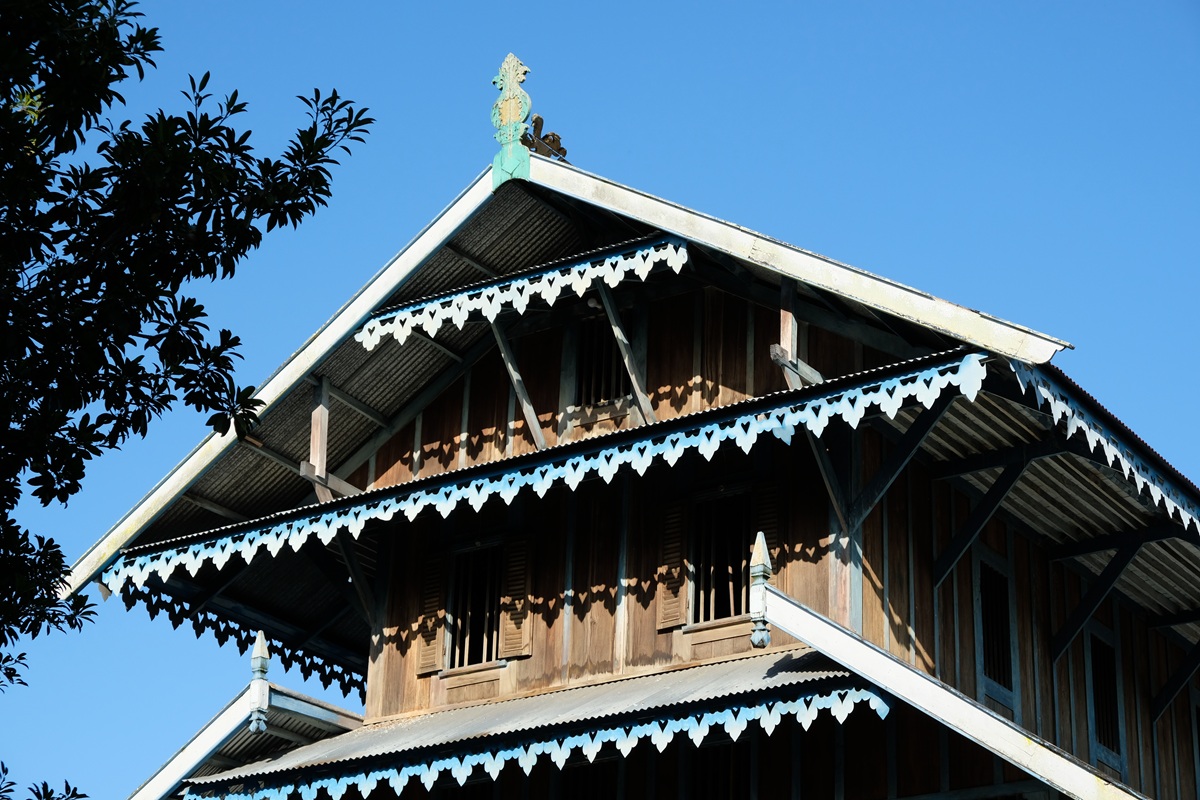
A closer look at Malige Palace’s upper floors with a pineapple at the pinnacle of the structure
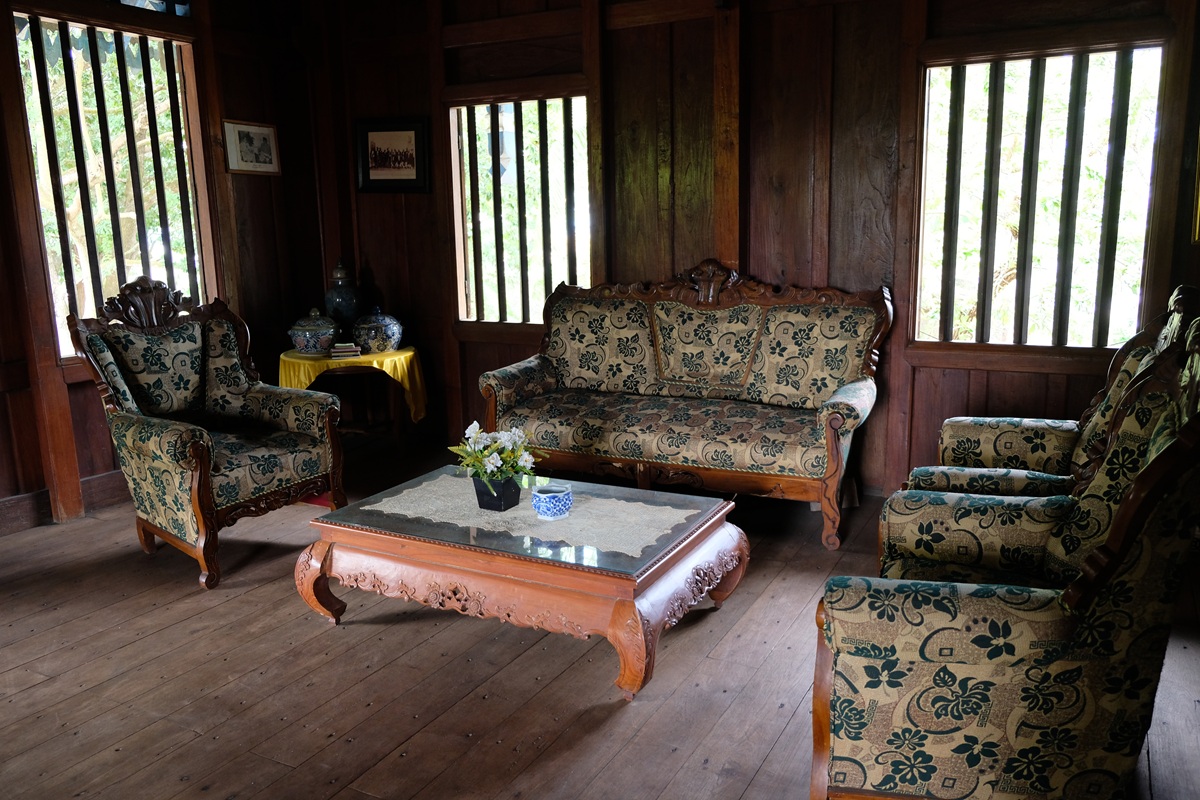
The reception room of the palace
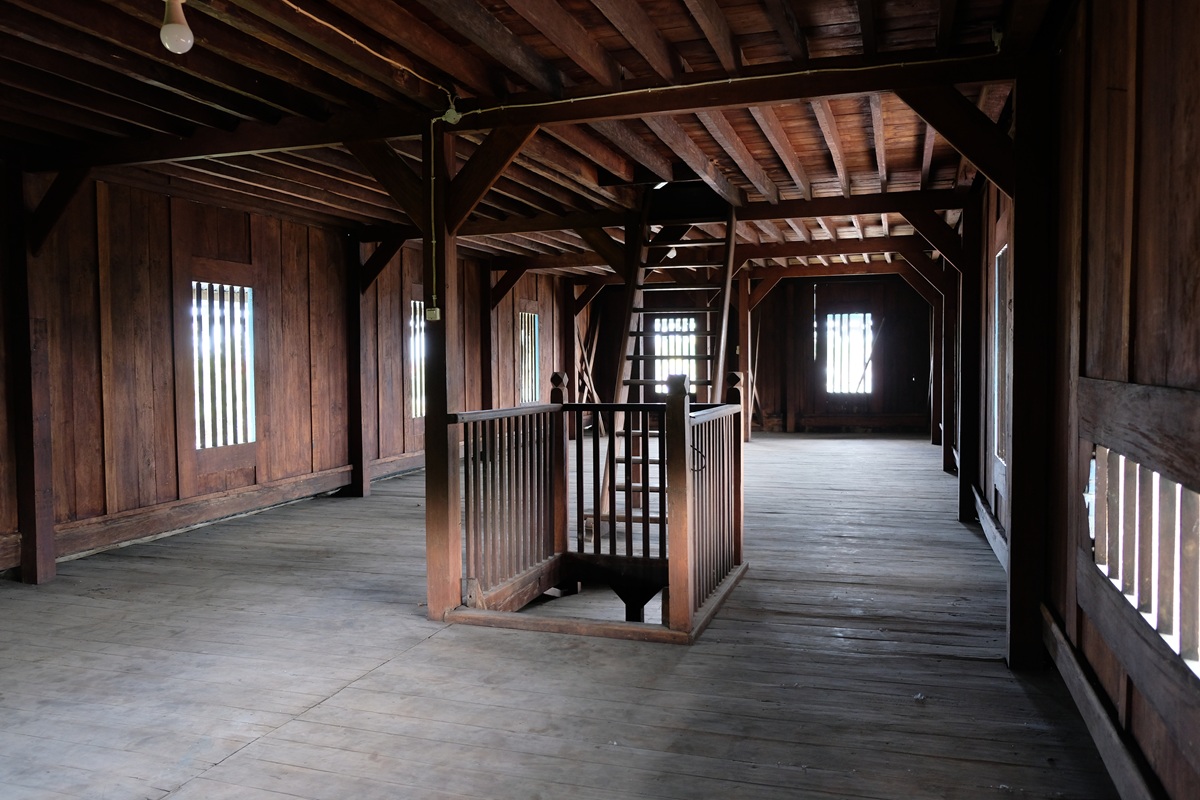
The building’s upper floors were mostly empty
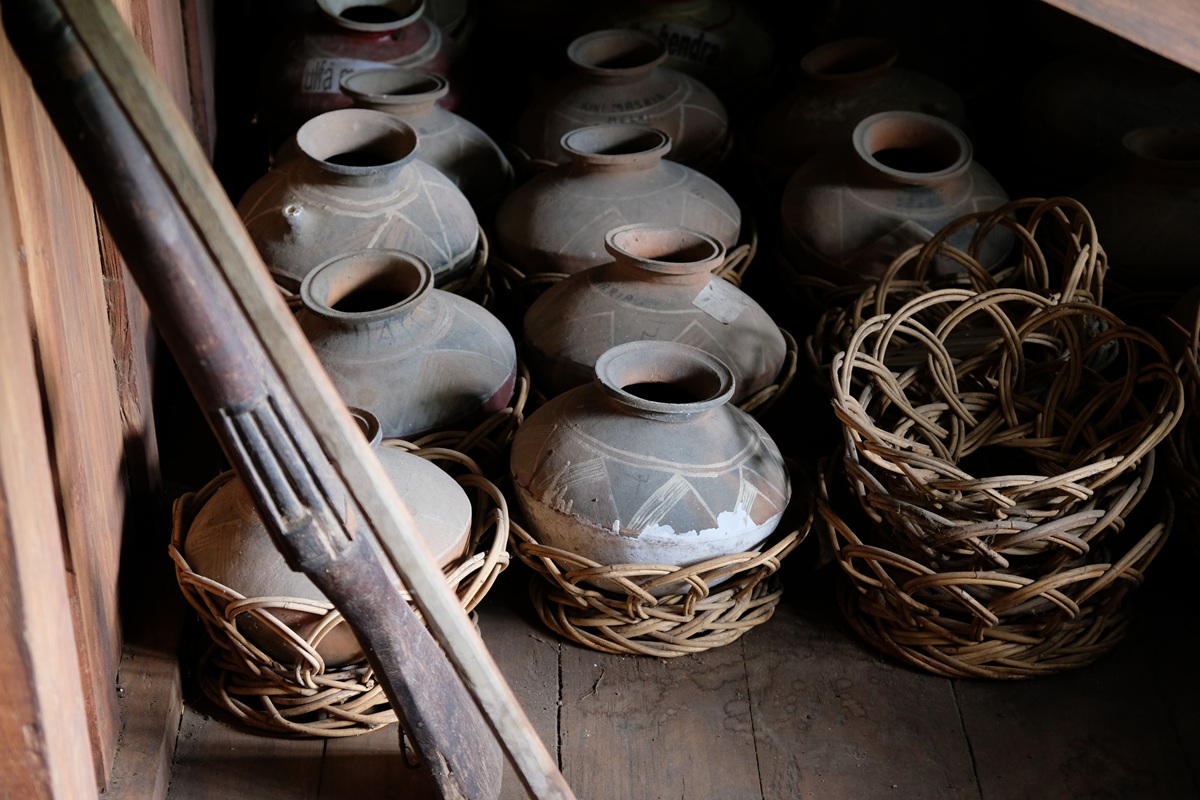
Decorated pottery stored on the highest floor of the palace
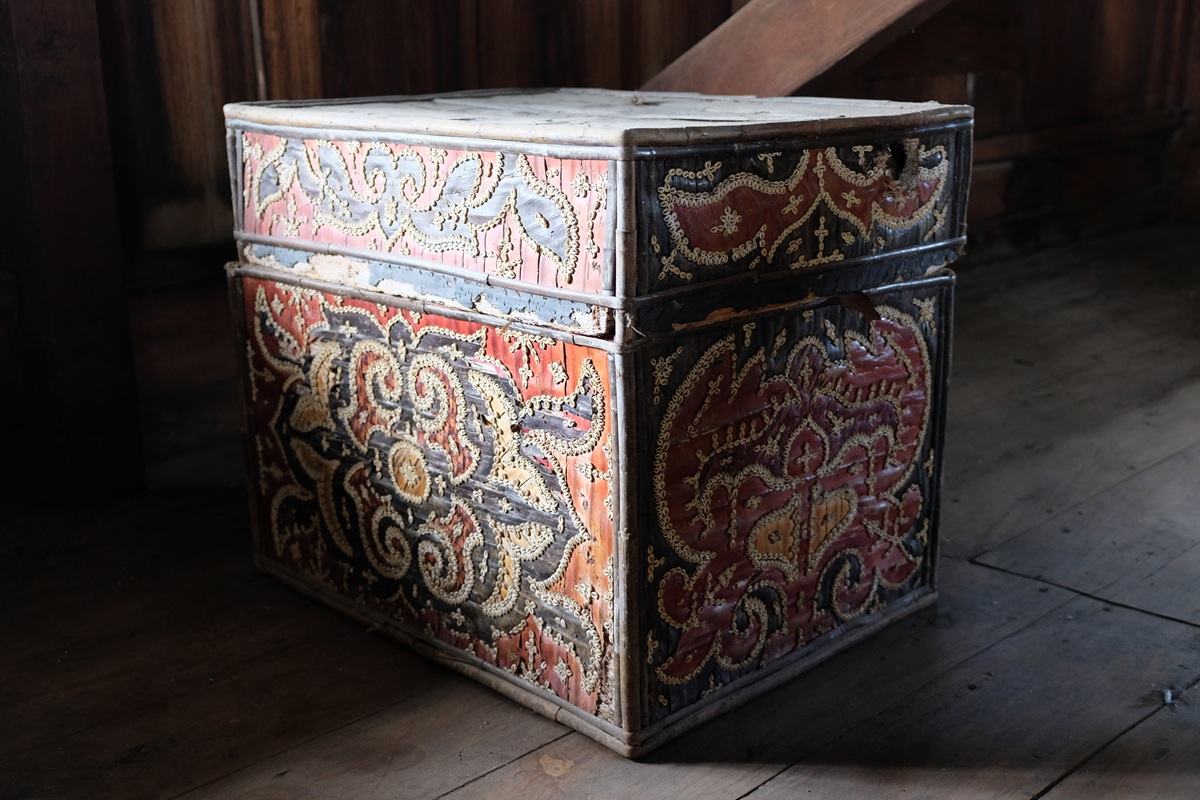
A beautifully adorned and curious-looking chest
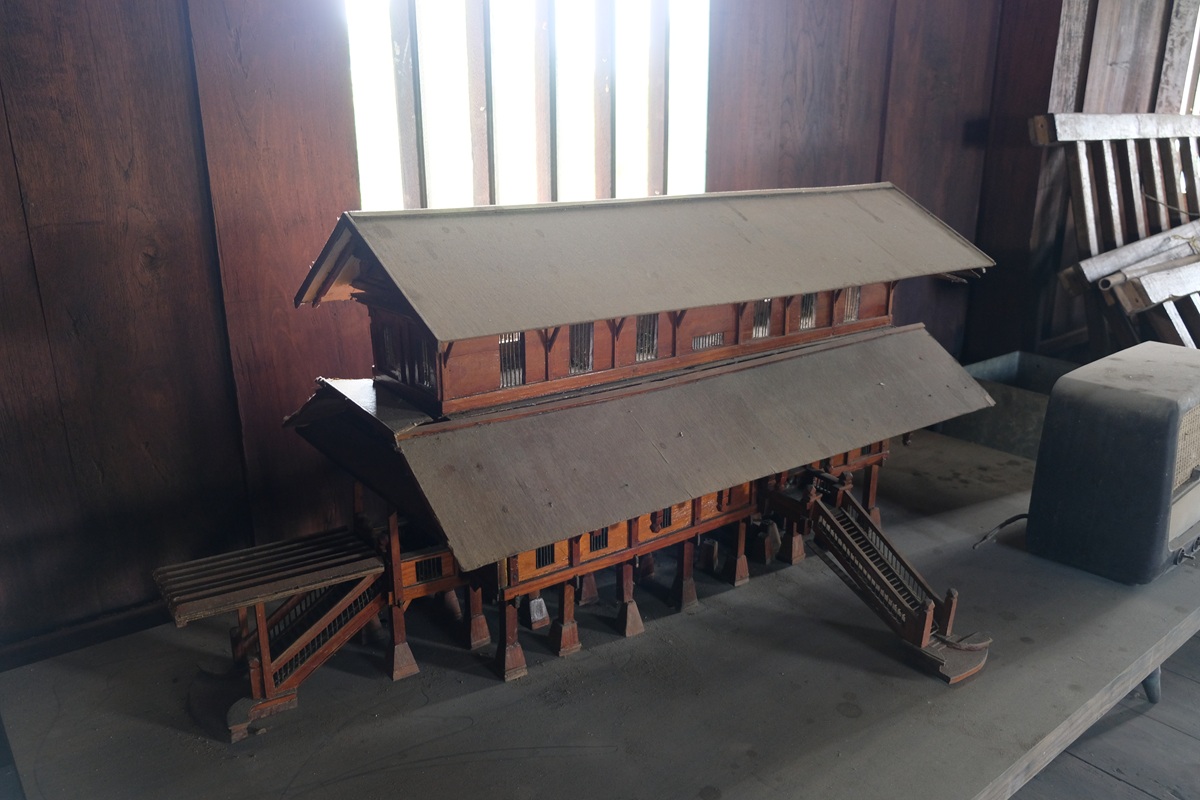
A model of the palace
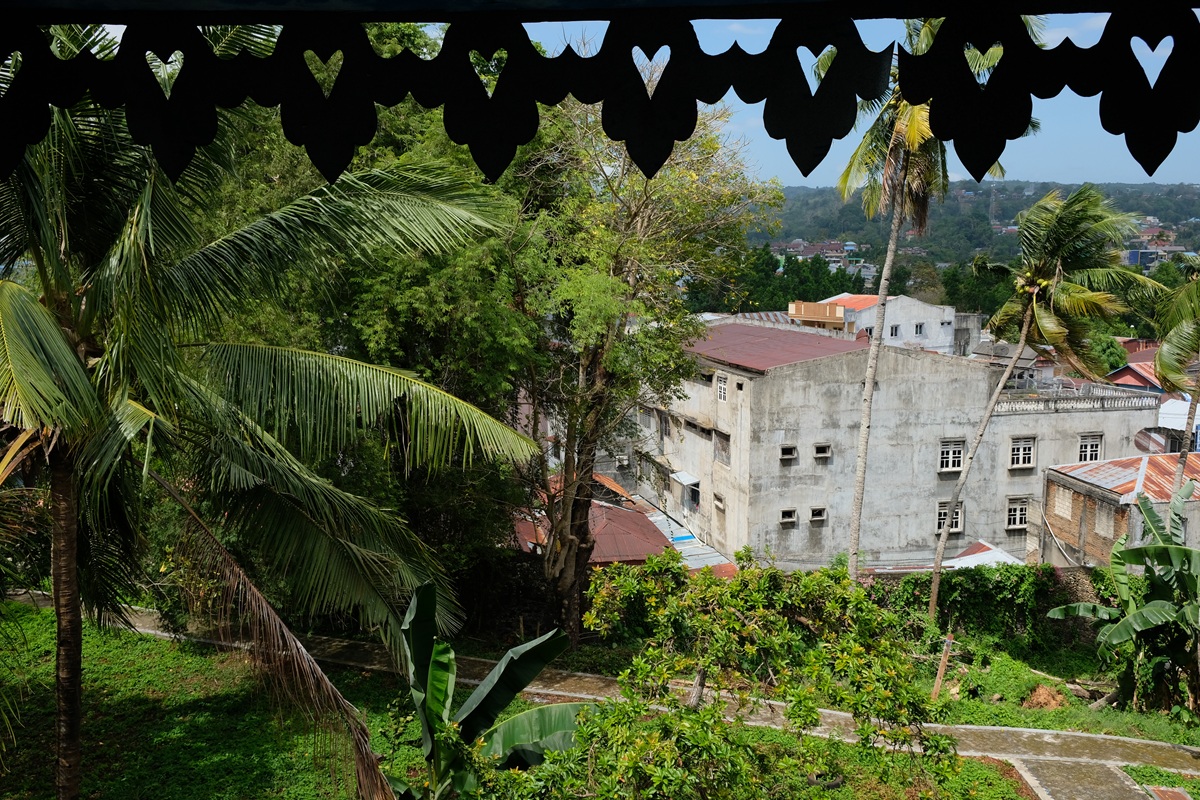
The view from the highest floor
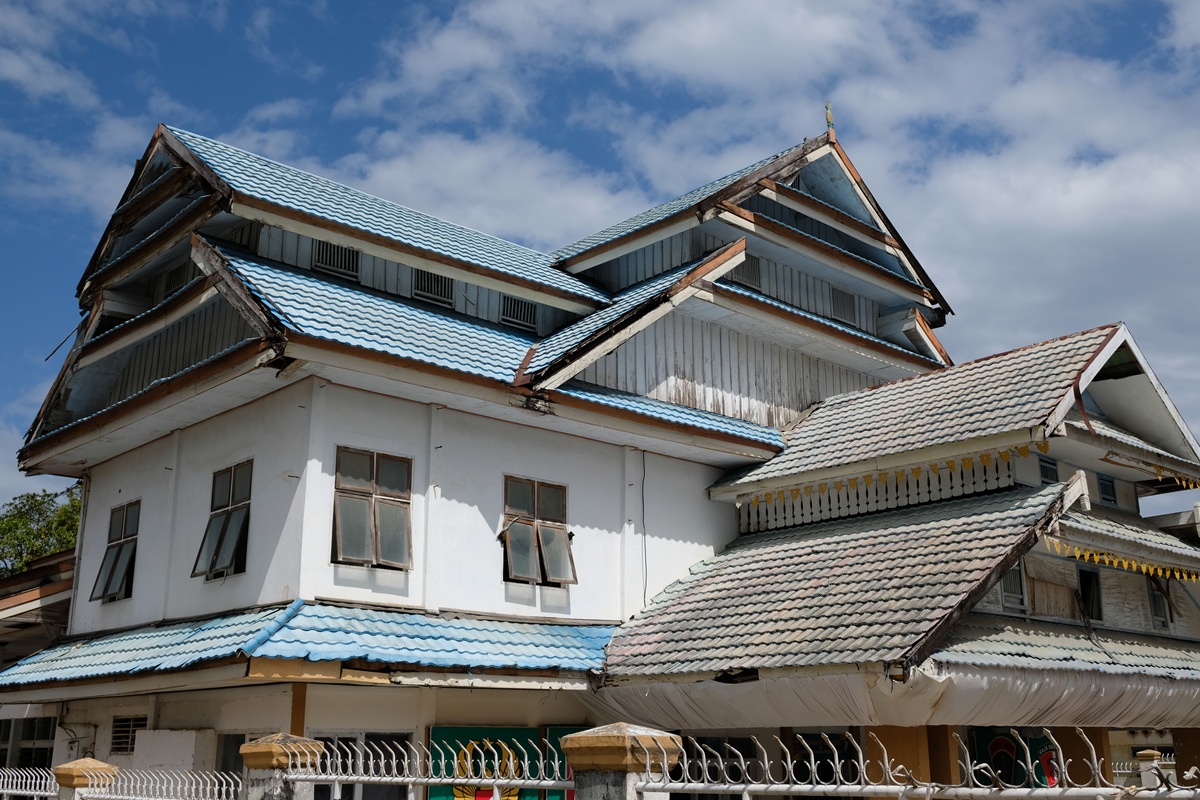
Many structures in Baubau were built in the same architectural style as Malige Palace, like this office building
However, despite Baubau not being well-known as a holiday destination, we still went anyway because we knew there are things worth checking out. Its relative obscurity in fact made this corner of Indonesia feel refreshing and exciting. Among the places on our list is a former palace situated in a leafy plot of land tucked away in the middle of a mix of houses as well as government and commercial buildings in downtown Baubau. Malige Palace was built in 1929 under the administration of the penultimate sultan of Buton. At the location, we were mentally prepared for only taking photos of the building from the outside, for I had read prior to the trip that access inside the palace is rarely granted to the public. But when we thought we’d taken enough photos and were ready to leave, a middle-aged lady emerged from inside the palace and waved at us, inviting us to come in.
As we went up the wooden stairs at the building’s entrance, the doors were opened, and the woman in a flowing violet daster (a loose dress typically worn at home in Indonesia) was standing inside waiting for us. Then she started speaking in English, and was surprised when I replied in Indonesian and told her that we came from Jakarta. “I thought you were foreigners,” she said to us while pointing at the guestbook for us to fill. “I actually wanted to call the kids outside to come to my house and help me with the water pump, and then I saw both of you. I thought you look like nice people, that’s why I invited you to come and have a look.” We couldn’t believe our luck. Later she explained to us that she is one of the grandchildren of the last sultan of Buton who passed away in 1960. For a fee, she allowed us to go to the upper levels of the structure which were mostly empty, leaving the first floor as the only part of the building that is occupied. She even said to us that we could take a look at her bedroom, but James and I agreed it would be unnecessary. After the brief exploration of the palace, we bid adieu to her and thanked her for granting us access inside this special building.
A short walk away was Kamali Beach where a giant dragon head appeared to have emerged from the ground. Of the many dragon statues in Baubau, this is arguably the most striking. Its tail is located further uphill, giving the impression that the creature’s long body is hidden underneath the city. I like to think of it as a metaphor of Baubau’s openness to foreign cultures, adopting and making them uniquely Butonese by weaving them deeply into people’s everyday lives.
While the sea breeze was pleasant, Baubau felt significantly hotter than Jakarta. And despite our penchant for exploring new places on foot, at midday we thought it would be wiser to go around Buton’s largest city by car. Online taxis are common across Indonesia, especially in urban areas, and naturally I ordered one through the same ride hailing mobile app I use in Jakarta. Little did we know that this would later bring us to a person from whom we learned a lot about this place.
On my smartphone screen, it said the person who picked my order was Arif, and then it showed the distance from his car to where we were waiting, which was quite far, and I wondered why. But we were not in a hurry. A short while later, his small car arrived, and once we got in, he drove the clean vehicle to a café where we would spend hours just chilling while having cold drinks to escape the heat before going to the imposing Buton Palace Fortress in the afternoon. (More on that impressive site on a later post.) Later that day, when I ordered a ride to bring us back to our hotel, we were surprised to find out that it was Arif again who picked up the order. Along the way, he explained to us that apparently most people in Baubau use another app (which I downloaded later), and only people from outside the island use the same app as I did, which explained the rarity of drivers registered with the latter.
“In the future, Buton will become its own province, separate from Southeast Sulawesi,” he told us and quickly added that today it takes around five to six hours to get to Kendari (the provincial capital) from Baubau by boat. Becoming the capital of a new province would not only make it more convenient for the residents of Baubau, but it would also create jobs, he argued. “A government minister [from Jakarta] also said that a bridge would be built connecting Buton and [the nearby island of] Muna.” We could clearly hear the enthusiasm in his voice, but we know politicians do what politicians do best: they make promises that are often too good to be true.
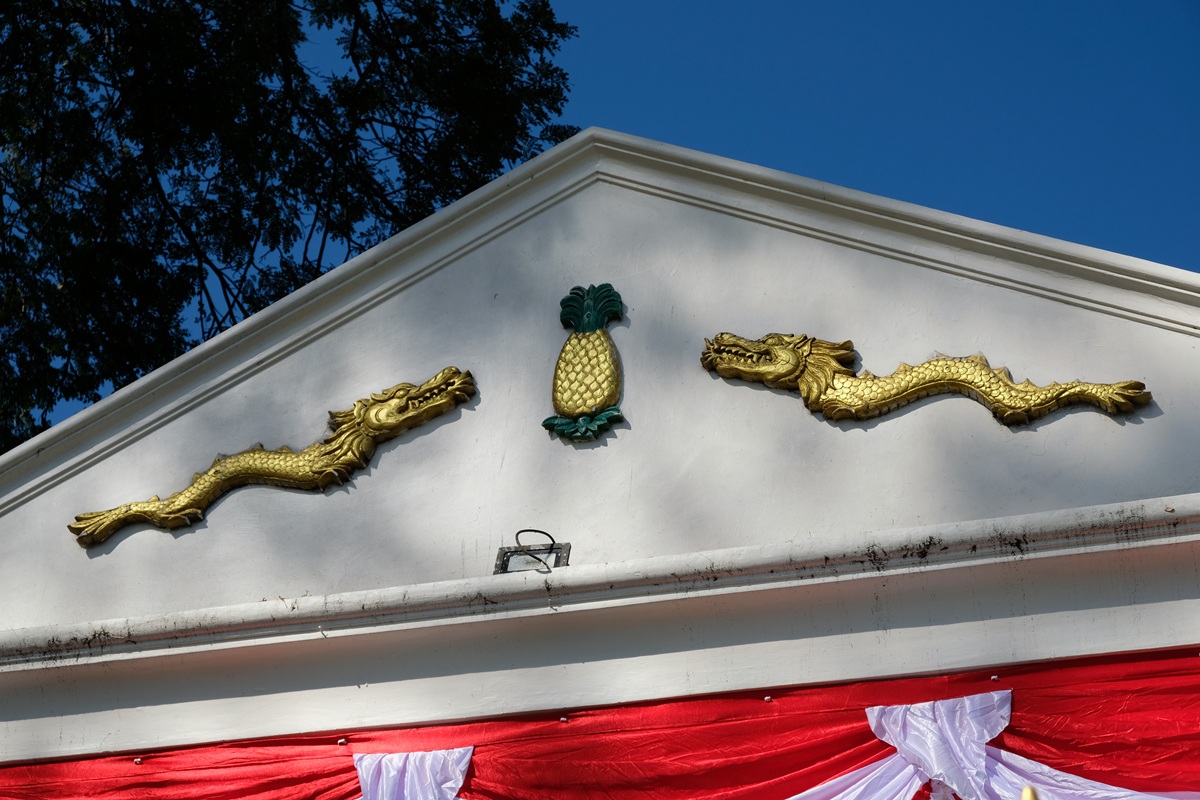
Two dragons and a pineapple at the official residence of the mayor of Baubau
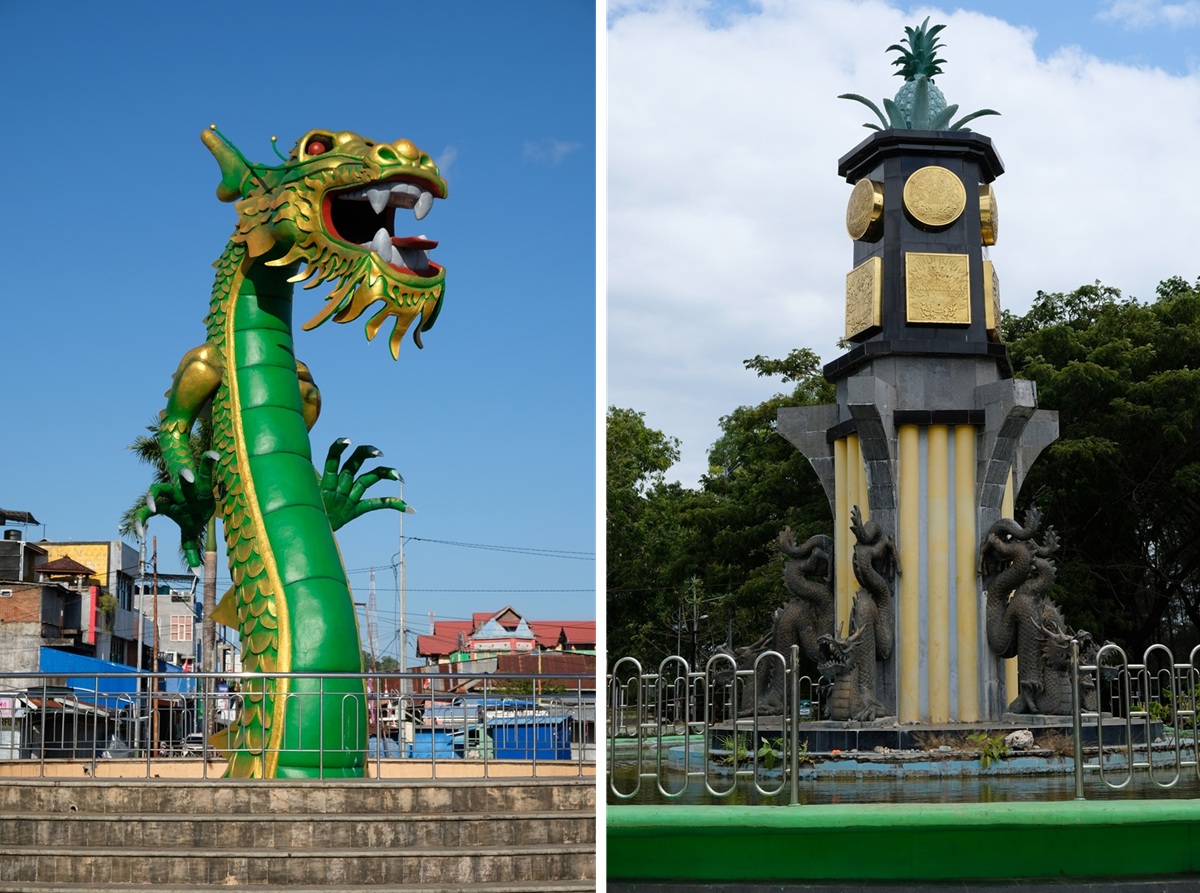
Left: the dragon at Kamali Beach; Right: the pineapple and the dragons near Baubau’s main square
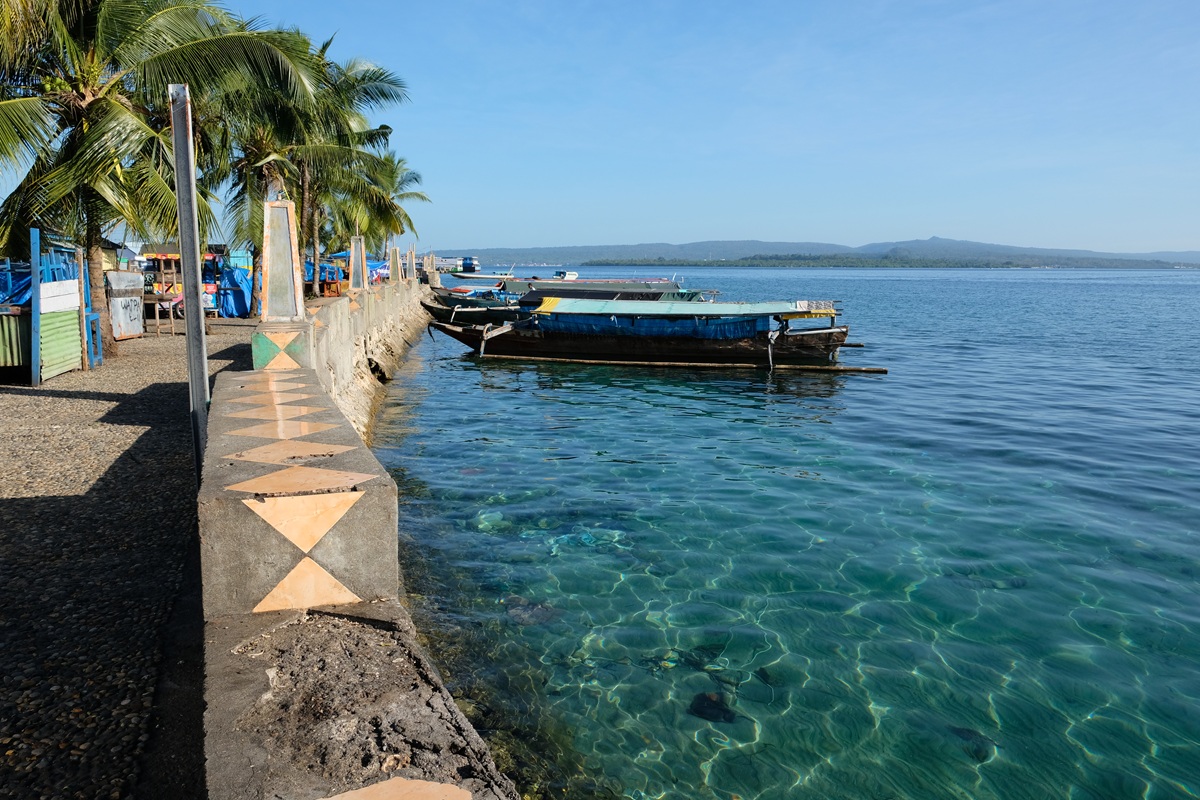
The clear water is such a feast for the eyes
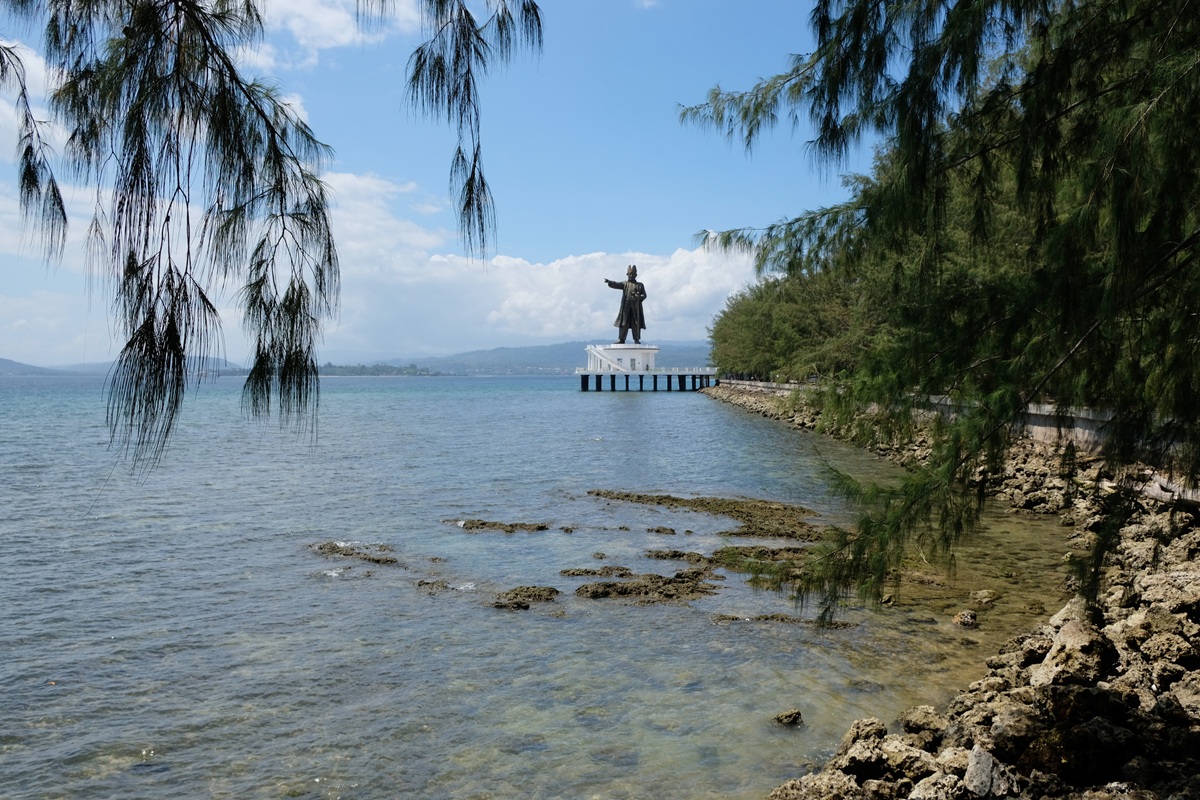
Along the seaside promenade at Kotamara in downtown Baubau
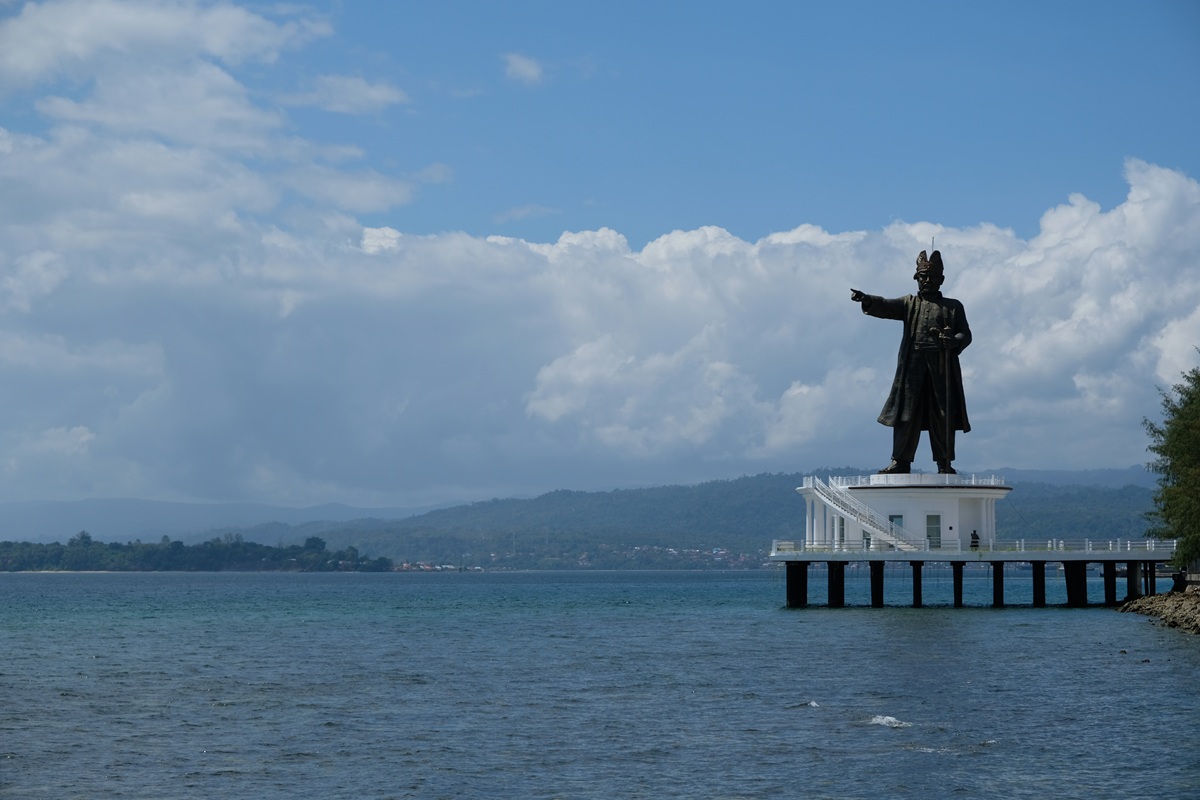
The statue of Sultan Himayatuddin Muhammad Saidi, the sultan of Buton in the 18th century
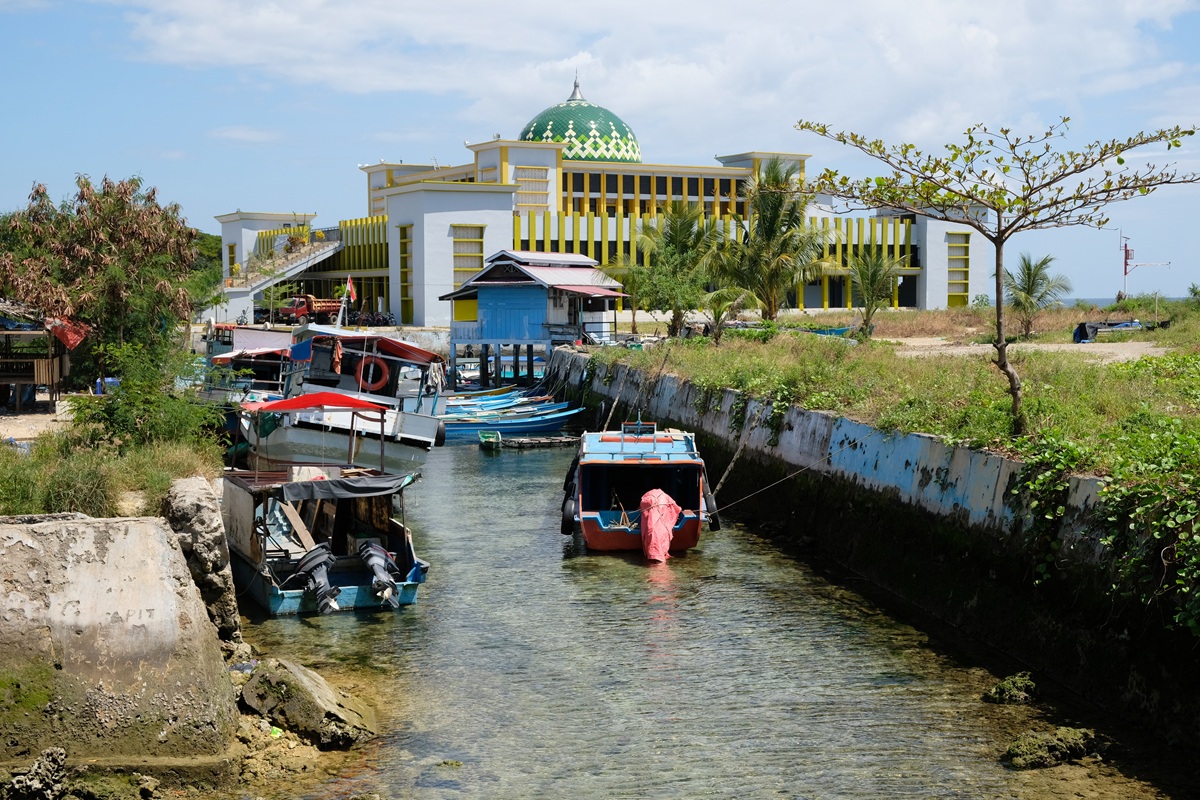
Local fishing boats moored near the Islamic Center Mosque of Baubau
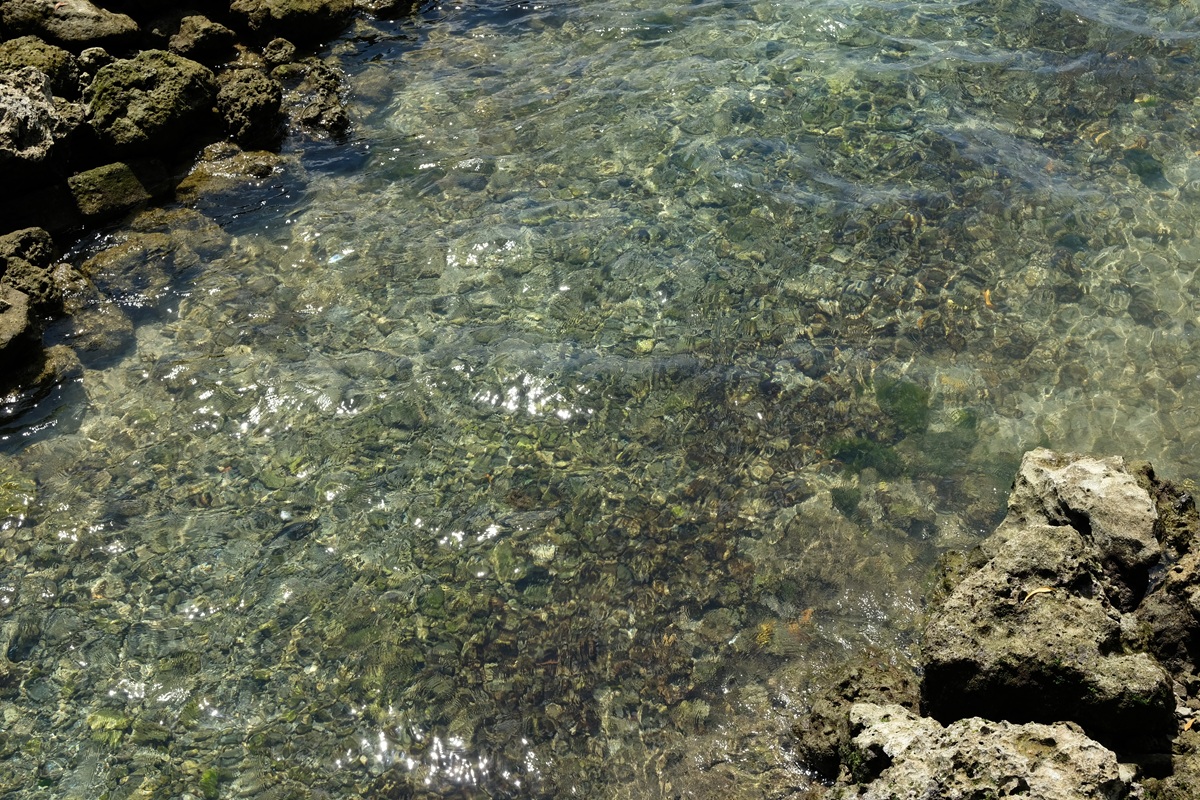
I took a lot of photos of this clear water since such a thing sadly does not exist in Jakarta
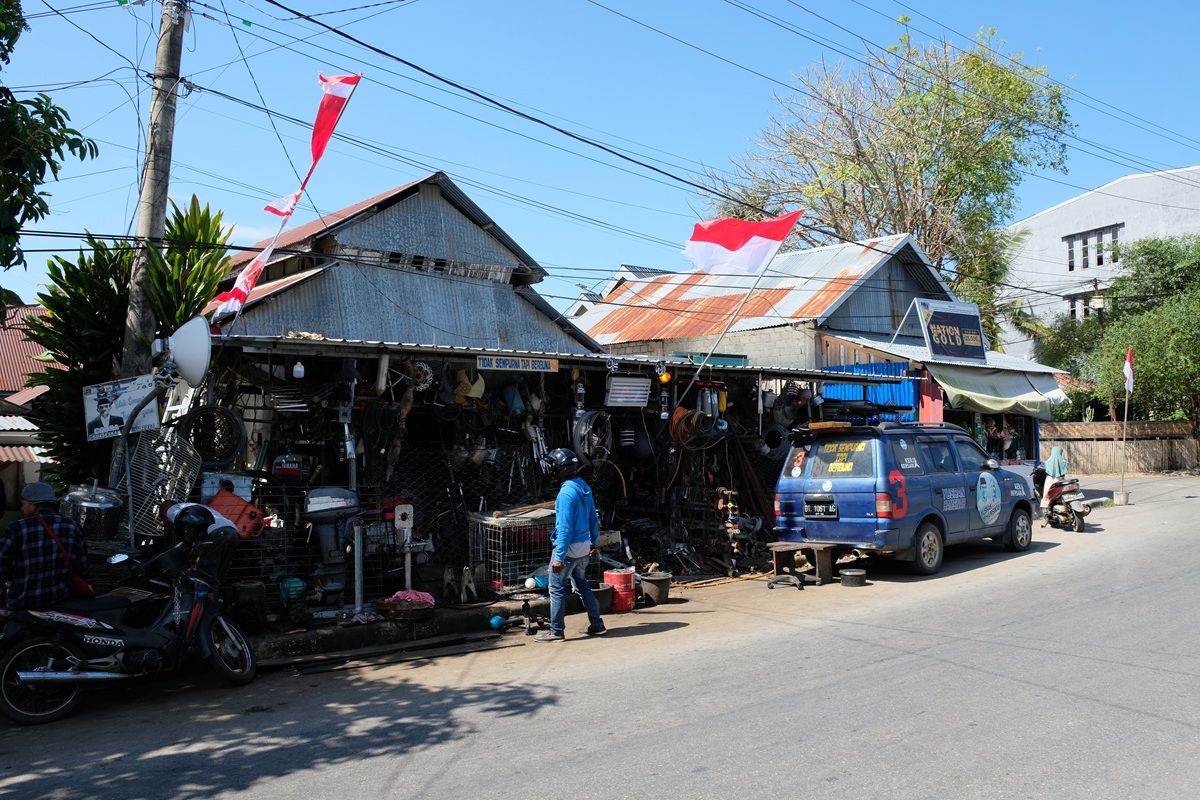
A random workshop with the roofs shaped in typical Butonese style
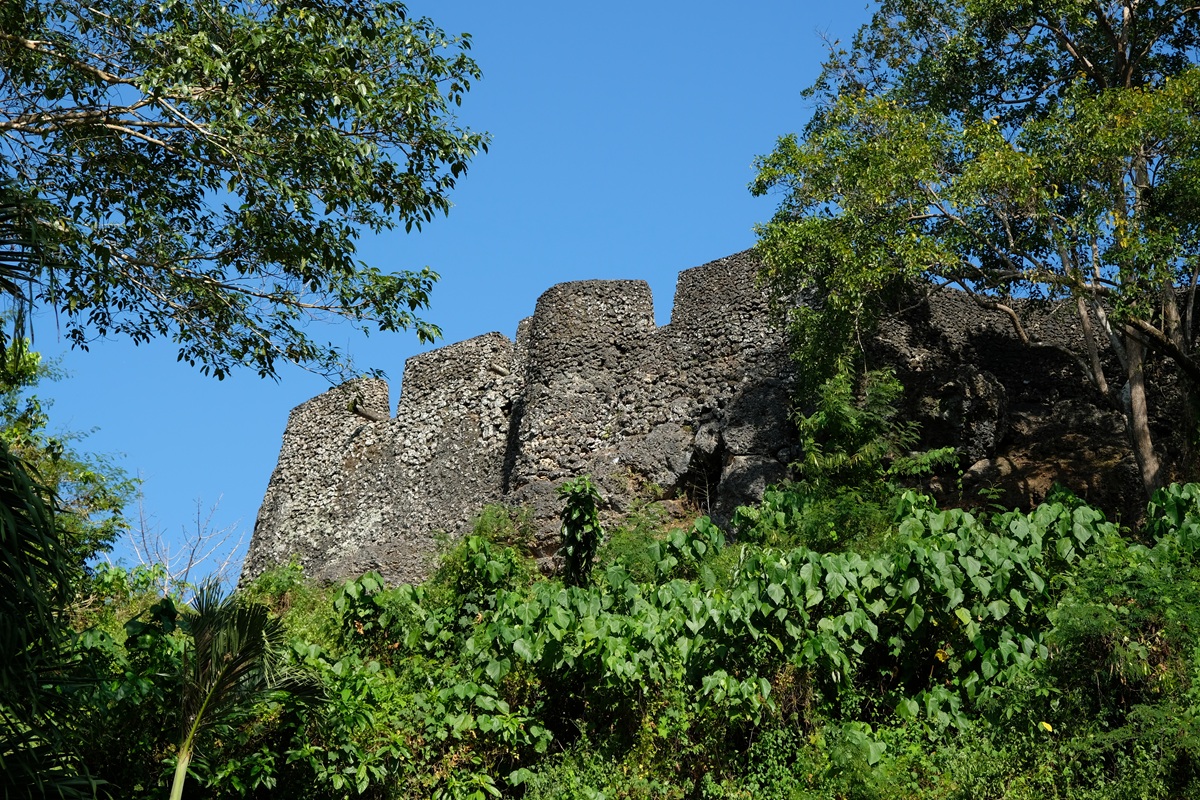
Taking a peek at the Buton Palace Fortress
On another day when Arif took us places, I asked him about the signs I saw the afternoon we arrived in Baubau warning residents of crocodiles. “Is it true that there are crocodiles in the rivers on this island?” I inquired. “There are, but so far only the juveniles have been spotted,” he said to us while reassuring us that no one has lost their lives to the reptiles, at least according to him. “But in the island’s south, a python did kill a person and swallowed him.” He mentioned a case I also happened to read about a few weeks before leaving for Baubau. Our conversations, however, were not only about us trying to wrap our heads around life in Buton. “I’ve been to Jakarta once, in 2013,” Arif shared with us and explained that he went to Tanah Abang to buy clothes to be resold back home in Baubau – referring to what was often dubbed the largest textile market in Southeast Asia before the pandemic. “But I don’t like the traffic jams,” he laughed, citing what is probably the singular reason that makes Indonesia’s biggest city hard to love at first sight. We convinced him that it is a somewhat better city now, thanks to the MRT, the LRT, and the widened sidewalks, among other upgrades.
The thought of sighting a crocodile was a little nerve-racking, I must admit. However, the prospect of seeing a white sand beach just southwest of the city, especially after noticing how clear the waters were in the downtown area, was too hard to resist. Arif drove us through Baubau’s hills before joining the main road, and before long we arrived at Nirwana Beach. Reading that it could get quite busy on weekends, we went there on a quiet Tuesday afternoon. The weather was perfect, the sand soft, the waves lapping gently. Except for a few local children frolicking on the beach, we only saw a handful of other visitors. It was bliss.
Two days before the end of our week-long trip to Buton, we asked Arif’s help once again to take us to a place on the island that is probably among the most unusual corners of Indonesia. Visitors at Karya Baru, a village roughly half an hour from Baubau, would probably be confused with what they see. On the one hand, it doesn’t look dissimilar from other small towns in the country. But on the other hand, something seems out of place. In addition to Latin script, the residents also use Hangul (the Korean alphabet) for street names and signboards. Is this because of the popularity of K-pop, K-drama, and K-beauty among the local population? This aspect of South Korea’s soft power has undoubtedly reached millions, or even billions of people across the globe. But the usage of Hangul in this place is born out of necessity, not a trend.
Cia-Cia is one of the main ethnicities of Buton. However, the Cia-Cia language – which is spoken in Karya Baru, among other places on the island – didn’t have its own writing system, and this put it at serious risk of disappearing in the future. In 2005, a symposium was held in Baubau to address the issue, and one of the participants was a representative from the Hunminjeongeum Society, an organization based in Seoul dedicated to promoting Hangul to minority, unwritten languages primarily in Asia. Upon hearing how the Cia-Cia language is spoken, he told the mayor of Baubau that phonetically it is similar to Korean. In the subsequent years, the first teacher from South Korea came to Baubau to teach Hangul, followed by a program which facilitated local language teachers from Baubau to study the letters in South Korea.
Before going to Karya Baru, I stumbled upon a video on YouTube by a Korean who had lived in Indonesia for many years. He was also curious about the Cia-Cia language and decided to go to Baubau. In the city, he met with three Cia-Cia students who showed him a text in their native language that is written in Hangul. When the YouTuber read the sentences, they were all shocked and commented on how his pronunciation matched that of a Cia-Cia person, even more so than how a Wolio (the language of the predominant ethnic group in Baubau) speaker would sound when reading a Cia-Cia text that is written in Latin script. Apparently, the introduction of Hangul also sparked interest among young Cia-Cia people in learning the language of their parents and grandparents. It’s still a long way, however, to say that Hangul has successfully saved the Cia-Cia language from extinction, but from what I read there seem to be some promising results.
We didn’t linger too long in this village as there was not really much to see apart from the Hangul signs. But on the way back to the city I was reminded about what I had in mind when I was having that delicious grilled fish in Baubau. This relatively unknown part of Indonesia has indeed been a confluence of different cultures which were then incorporated into the local people’s unique way of life. The result is a fascinating place to explore and learn about, and there is no better place to understand the history of Baubau than the imposing Buton Palace Fortress. That’s where I will take you next.
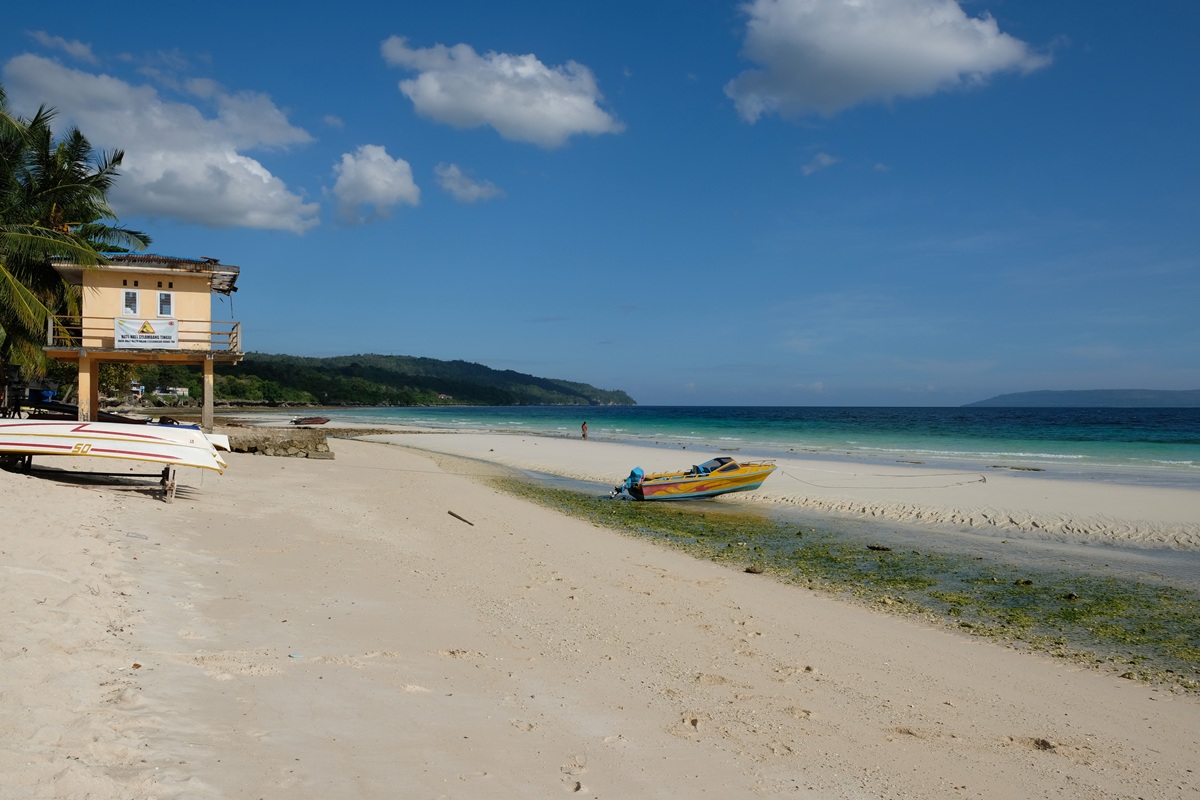
Nirwana Beach to the southwest of Baubau
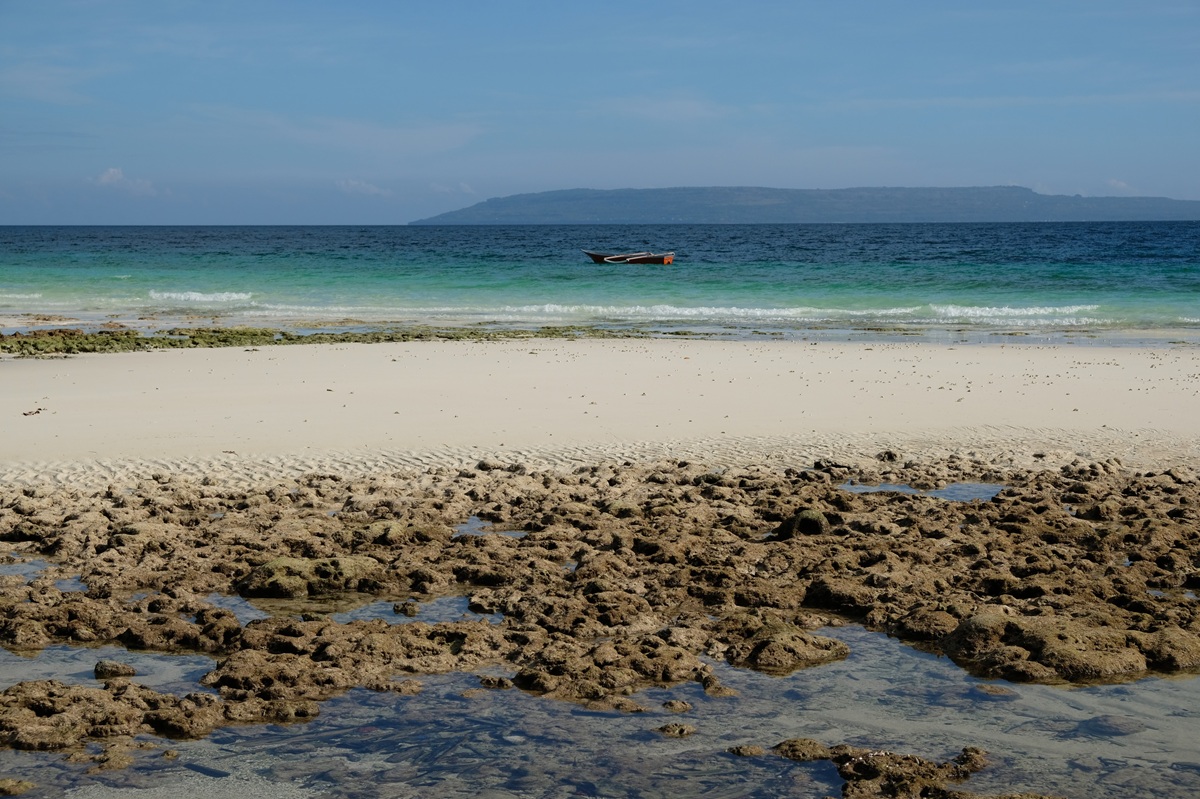
We arrived during low tide
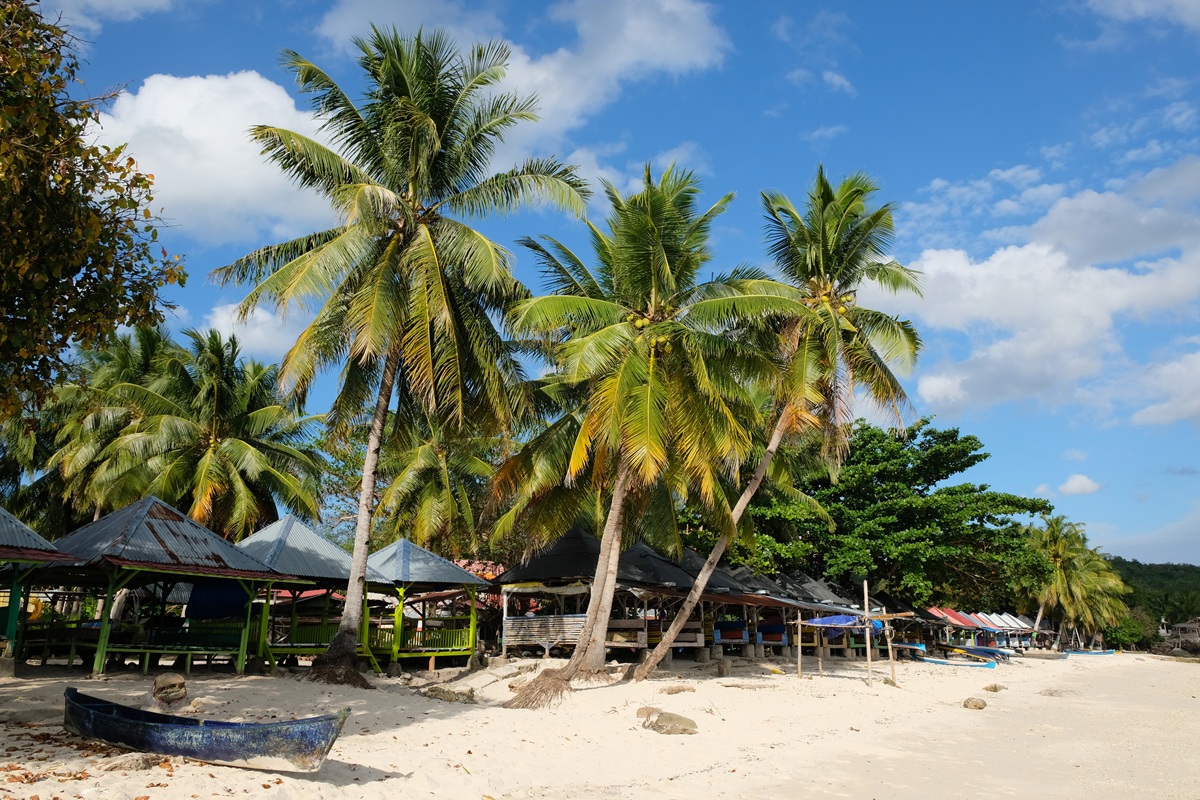
The beach offered a laid-back, tropical vibe when we went
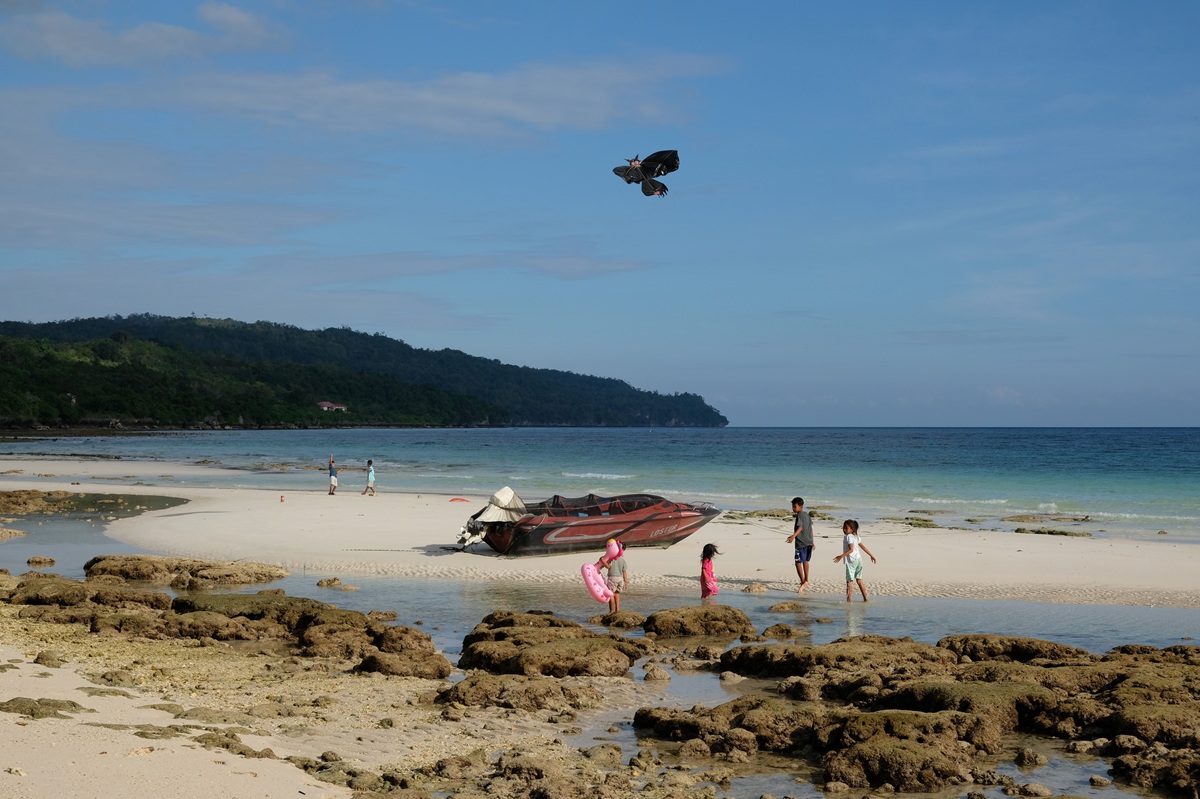
Local children playing at the beach
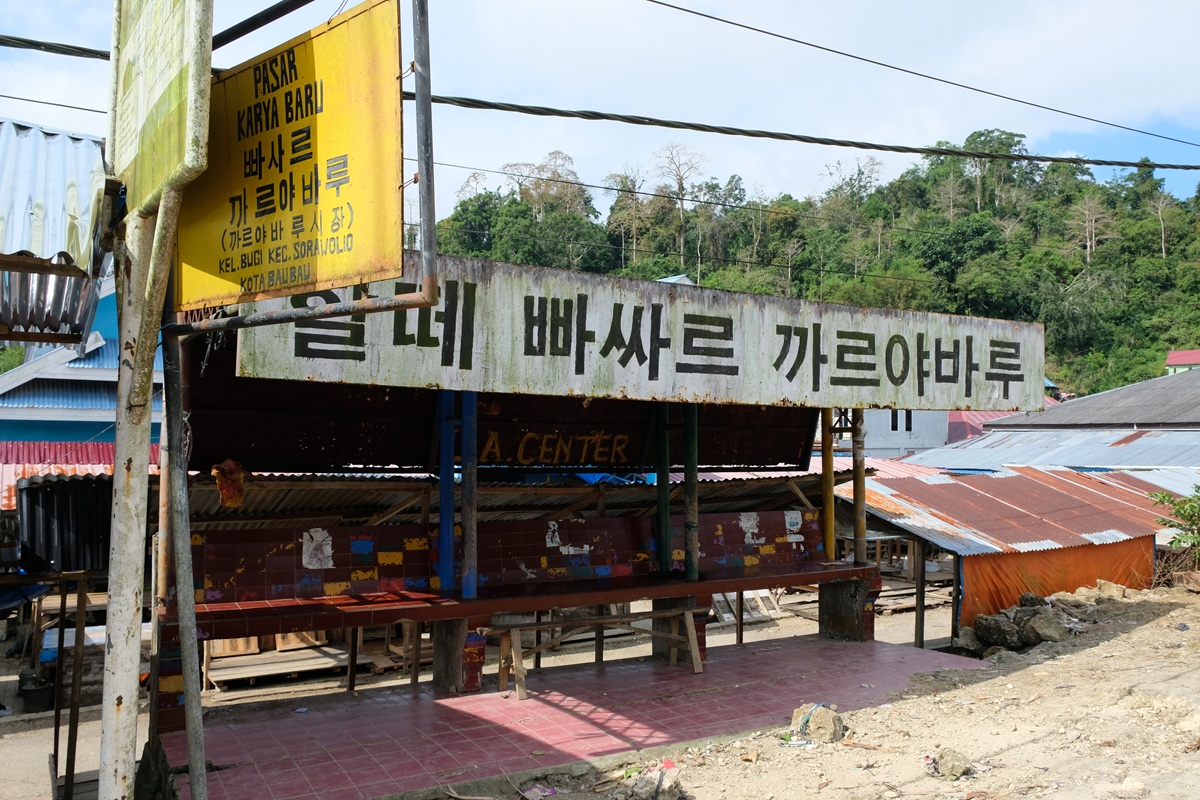
Hangul at Karya Baru’s bus stop
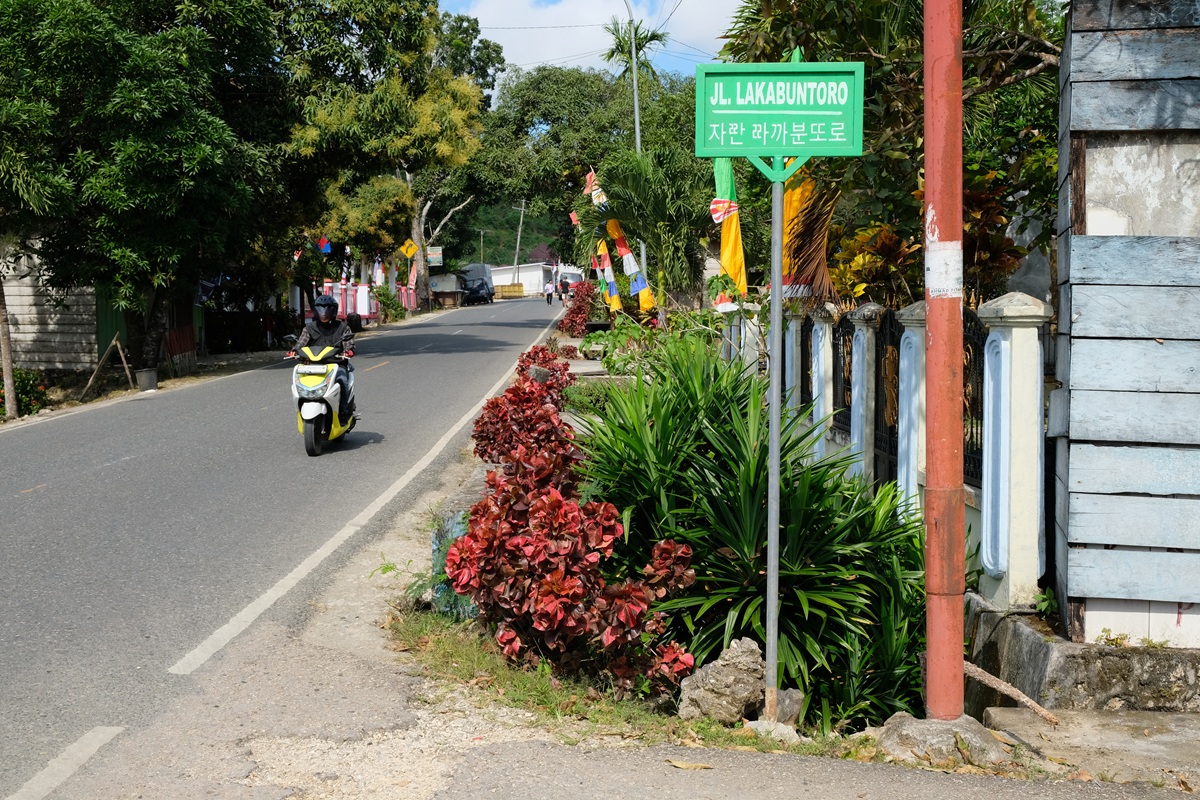
A street sign written in Latin script and Hangul
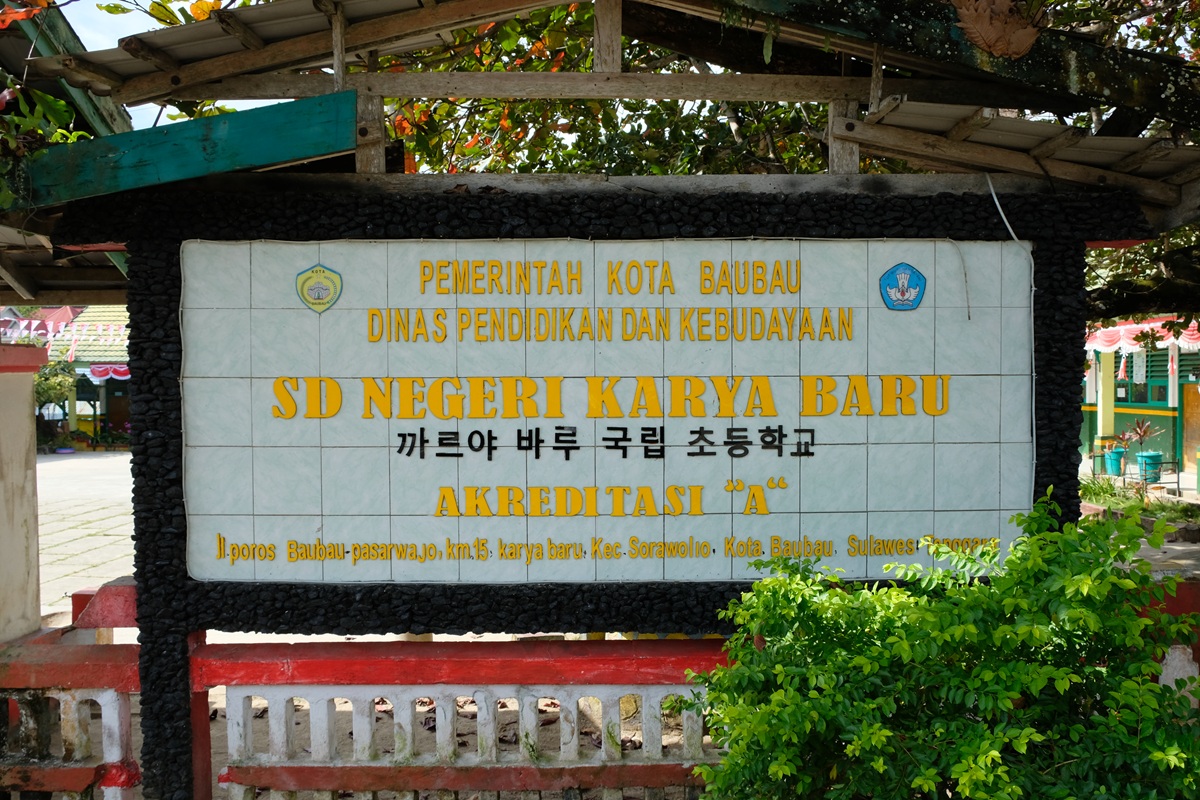
Hangul is taught at local schools in Karya Baru
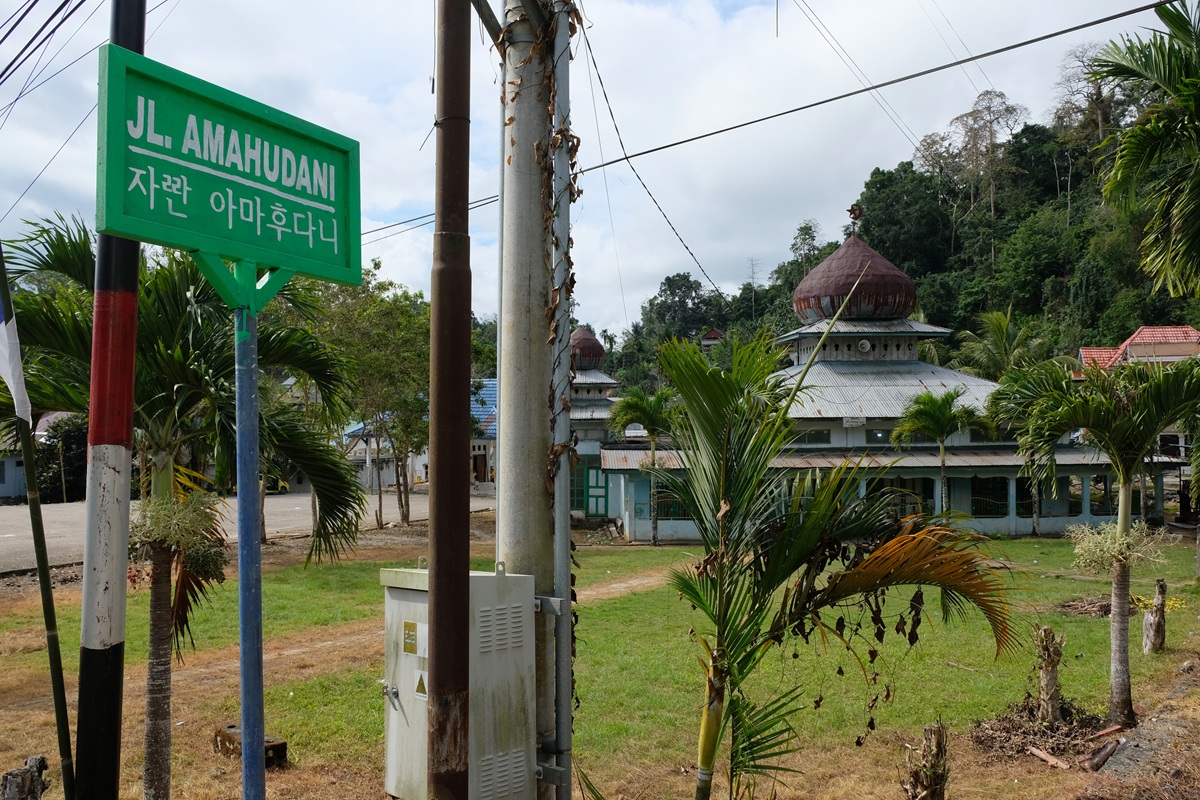
Korean letters and a mosque, not a usual sight
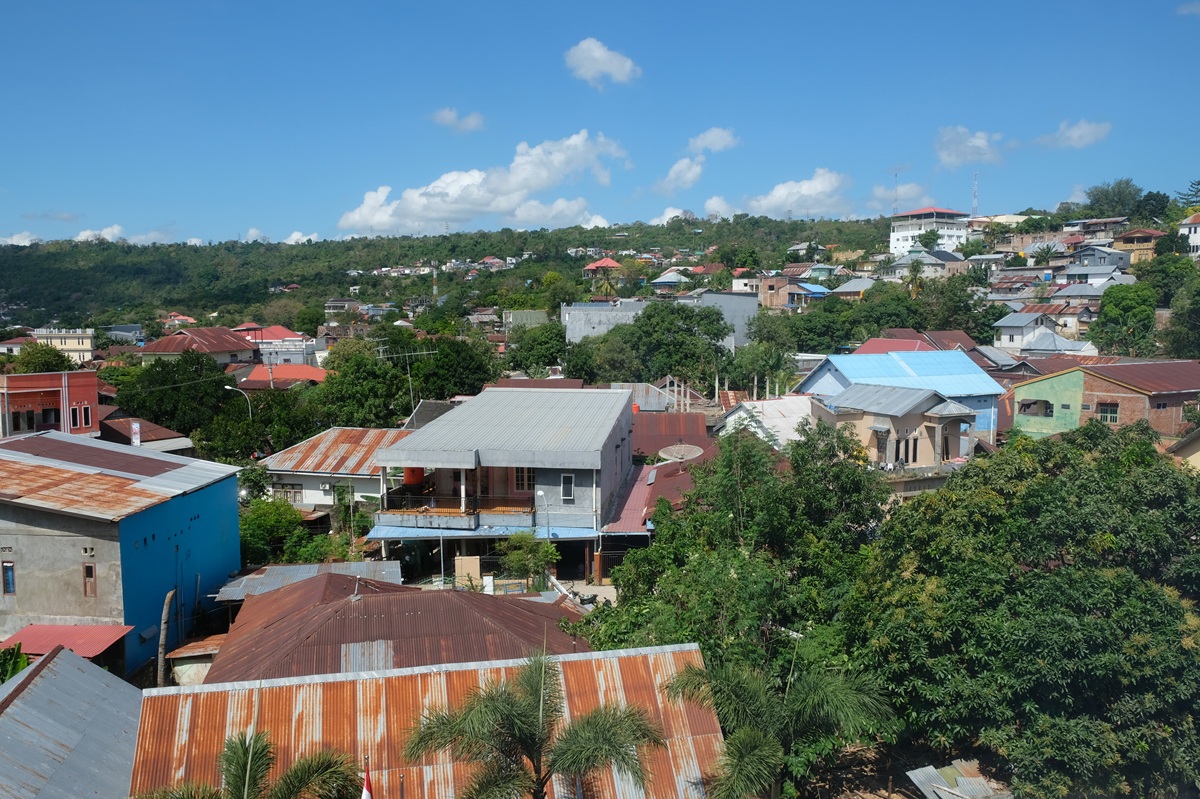
The view of Baubau’s hills from our hotel
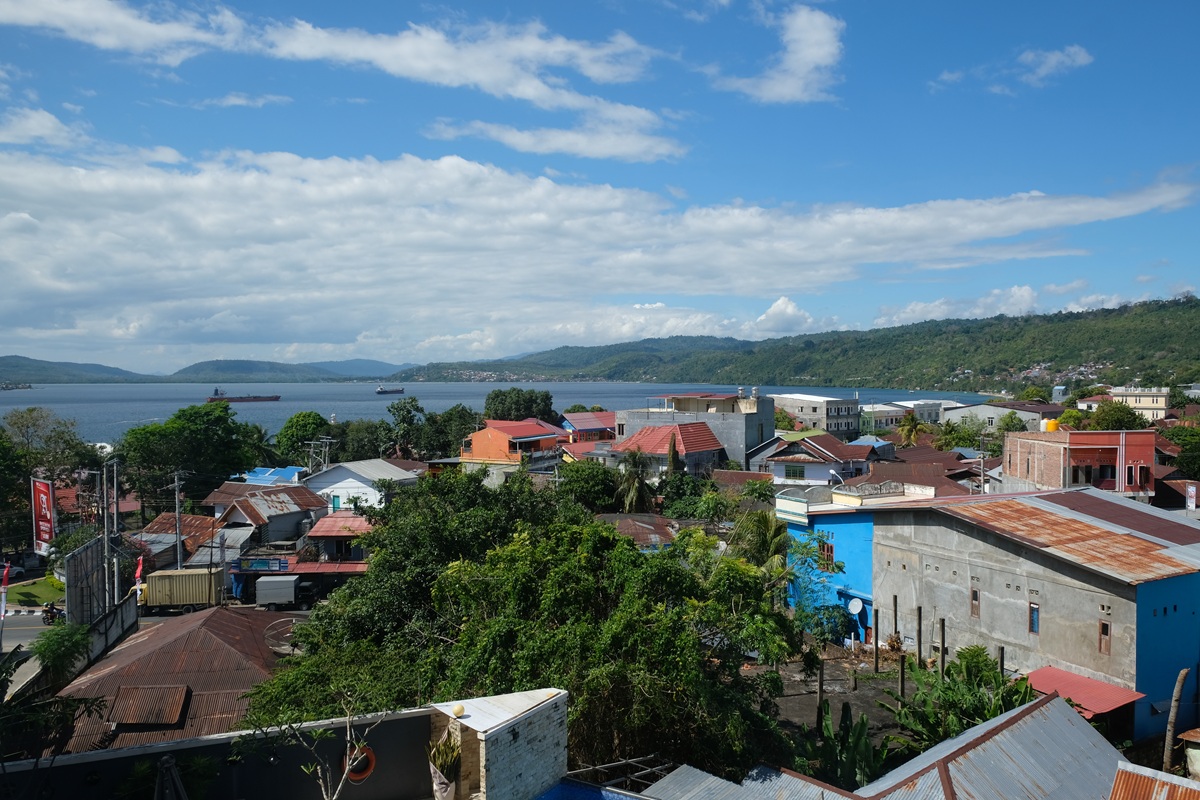
One last glance before flying back to Jakarta

 What an Amazing World!
I’ve not heard of Baubau, but what a beautiful place! Well, maybe not so much the crocodiles…it’a fascinating not only to learn about the diversity of ethnic groups and languages in Indonesia, but also the fact that one of them, Cia-Cia, uses Korean hangul for written language! An example of where two very-different cultures collide…thanks for sharing another lesser-known part of Indonesia, Bama!
LikeLiked by 1 person
I’m happy to report that we didn’t see any crocodiles during our week-long stay on the island. It’s indeed very interesting to learn about the Cia-Cia language and the use of Hangul in an effort to preserve it. Glad you enjoyed this, Rebecca!
LikeLiked by 1 person
What an interesting place! I had never heard of Baubau and it has such a fascinating history! Those beaches also look amazing – even though it is winter here, I’d love to go on a swim there! It was also very interesting to learn about the “borrowing” of Hangul to save the Cia-Cia language! I had heard that it was a very “efficient” alphabet, and it is quite easy to learn, but it is amazing to see it used even for a completely different culture!
LikeLiked by 1 person
I could use some sunshine and white sand beaches too right now as currently it’s the peak of rainy season where I live. I think the use of Hangul is brilliant, especially given how it serves the Cia-Cia language better than Latin.
LikeLiked by 1 person
I enjoyed this tour of Baubau, the first time I’ve heard of this location. It’s nice when you can explore a lesser known part of the world – it does feel more chill and less crowded. The beaches look beautiful and the blue water so clear. The grilled seafood must’ve tasted so fresh and delicious (where are the photos?! 😆).
The locals sound lovely too and to meet a descendant of a sultan is very cool too. Good call to not peek into her private chambers!
I can’t imagine being swallowed by a python. Absolutely terrifying. Glad you were unharmed and also did not run into a crocodile!
LikeLiked by 1 person
Glad you enjoyed this virtual tour, Ab! This trip to Baubau reminded me that there are still many parts of Indonesia I have yet to explore. Speaking of the food, I did plan to include the photos of the seafood in this post. But then I decided to keep them for a future post dedicated to everything I ate in Baubau. Apart from the very delicious fish and shrimp, I was pleasantly surprised by other dishes I had. So please bear with me! 😆
We were really lucky with the timing of our visit to Malige Palace. Had we arrived a little too early or too late, we would’ve probably missed the chance to go inside the building.
When I was much younger, I had this idea of people being swallowed by snakes was only in movies. But apparently (and unfortunately) it does happen in parts of the world.
LikeLiked by 1 person
I look forward to your food post. You seem like a foodie with good taste!
Yes, snakes can be terrifying. Have you ever eaten snake? I had snake soup once in Hong Kong!
LikeLiked by 1 person
James really turned me into a foodie. While I’ve always loved food since I was little, in my backpacking days some 15 years ago I wasn’t too adventurous with local food.
I haven’t tried any snake dish, but I think I know that snake soup you had in Hong Kong. I would certainly give it a try one day.
LikeLiked by 1 person
Thanks Bama for this virtual tour of an island off the beaten path; Indonesia is so large that I am certain that are many places that don’t get the attention they deserve. This looks like a lovely place. (Suzanne)
LikeLiked by 1 person
The pleasure is mine, Suzanne! You’re right about how vast Indonesia is. This trip to Baubau really made me think that I should explore more places in my own backyard.
LikeLike
wow, this island is new to me –
LikeLiked by 1 person
Glad to introduce you to this lesser-known corner of Indonesia, Beth!
LikeLiked by 1 person
Thank you very much, Bama, for this wonderful post!
LikeLiked by 1 person
My pleasure, Martina! For everything it offers, Baubau really deserves more attention.
LikeLike
I sometimes have the Impression that there are also advantages in not beeing so known! Many thanks x your answer!
LikeLiked by 1 person
That is true though. The ‘good’ thing is Baubau is not that easy to access as you’ll need to take at least two flights from Jakarta (or more if you’re visiting from outside Indonesia) just to get there.
LikeLike
👍🤣🌺
LikeLiked by 1 person
What a wonderful and quirky place! I know of Raja Ampat, but didn’t know of great diving near Sulawesi. Actually most of what I know of Sulawesi is from our climbing guides from Carstenz Pyramid, they were all from Sulawesi. What an honour to get a personal tour of the palace! And I love that you got to know the local taxi driver, they can be the best characters can’t they?
LikeLiked by 1 person
I feel like Baubau is up your alley, Maggie! It’s the kind of place you’d enjoy exploring. I will write more about the interesting things I saw on the island of Buton, as well as the neighboring island of Muna.
Sulawesi is home to some famous diving spots in Indonesia. If you’re interested, apart from Wakatobi, I’ve been told that Bunaken in North Sulawesi is also worth checking out.
We were lucky that the first taxi driver we got in Baubau happened to be a nice guy with interesting stories to share. He really made the trip even more memorable.
LikeLiked by 1 person
I’ll look up those dive sites, Raja Ampat is high on our list right now, so hopefully soon.
LikeLiked by 1 person
Make sure you visit in the right season to get the perfect underwater visibility!
LikeLiked by 1 person
I really enjoyed following you on the tour of the palace; I find that the reception room of the palace is quite similar in style to what was done in Europe, but with a local touch.
LikeLiked by 1 person
Glad you enjoyed this! I can see what you mean, which is another example of how the locals adapt to foreign influences and incorporate them in their daily lives.
LikeLiked by 1 person
Baubau sounds even more appealing given that it’s not considered a holiday destination and is a bit off the beaten path. Looks peaceful. Glad to hear you got to take pictures inside the palace and even got to explore the upper levels.
LikeLiked by 1 person
It was indeed such a random choice for a holiday destination. At one point, I even thought of whether I should’ve picked another place or not. But in the end, we really enjoyed it. The food was great, the historical sites interesting, and the city itself rather relaxing.
LikeLiked by 1 person
It’s always nice to see a part of Indonesia that aren’t on the tourist map. The use of Hangul is fascinating to read. I also love that you got some local perspective from Arif too. The tour of the sultan’s home was interesting too. I agree with her assessment of both of you (” I thought you look like nice people.”).
LikeLiked by 1 person
I really need to explore more of Indonesia as there are still so many interesting places in this country that I’ve never been. Isn’t it cool to see Hangul in such a quiet corner of the archipelago? If there were more people like the sultan’s granddaughter, I think our travels would have been a lot easier because when visiting a place we really have no other intention than to learn about it and take some photos of it for our blogs.
LikeLiked by 1 person
The clear water and white sand beach are simply gorgeous. I love the picture of the children playing on the beach. And what an unexpected and lovely experience you had at Malige Palace. It is precisely these interactions that make travel exciting, especially as they cannot be planned for. I really love that you went somewhere that feels so unexplored and shared that, Bama. Thank you for this delightful glimpse into a way of life that I would otherwise not have known anything about.
LikeLiked by 1 person
I have a feeling Baubau is the kind of place you would also enjoy, Jolandi. Despite my initial worry, it turned out James and I had enough places to check out during our week-long stay there. When a place is not overly touristy, I feel like it’s easier for us to make genuine connections with the locals. I’m happy to know that you find this post delightful!
LikeLike
I think you are right in that genuine connections with locals are easier in less touristy places, Bama. In places where tourism forms a vital part of the economy, interactions can often feel more like potential financial transactions than interactions that are sparked by mutual curiosity that lead to moments of connection, even if these are brief.
LikeLiked by 1 person
Exactly. Naturally, I’m inclined to talk to people who are friendly. But in overly touristy places friendliness from the locals can unfortunately lead to unpleasant situations where the only thing they’re interested in you is your money.
LikeLike
Yip, those can be tricky interactions that can wear one down a bit. I had to negotiate quite a couple of those recently in Zanzibar, but luckily I also had some lovely interactions that made up for those more tricky ones.
LikeLiked by 1 person
I’ll take a mental note of what you said to prepare myself for that trip to Zanzibar one day!
LikeLiked by 1 person
There’s so much to see in Indonesian and beautiful architecture. The style of the palace is tasteful and you were lucky to see inside. I wrote a post Hangul (under South Korea) and mentioned Cia-Cia. It is a very efficient script devised by King Sejong in the 1400s because Chinese calligraphy that they were using at that time was too difficult for the general population.
LikeLiked by 1 person
I know you’re interested in Indonesian vernacular architecture, and I have a long list of places in this country I’ve never been to that I think are right up your alley. It’s indeed fascinating learning about the history of Hangul. King Sejong was definitely a man with a clear vision, and Koreans will forever be grateful for his creation.
LikeLiked by 1 person
I hope you’ll get to visit those places in Indonesia as I would love to see the architecture. I’m tempted to come back one day.
LikeLiked by 1 person
What a fascinating read! I had never heard of Baubau before, but your post really brought this hidden gem to life! I love the incredible history of cultural exchange to the vivid symbols like pineapples and dragons that tie so much together. The mix of traditions, languages, and even the use of Hangul to help preserve the Cia-Cia language was so interesting to learn. And wow are those beaches stunning!!!
LikeLiked by 1 person
To be fair, I believe many Indonesians don’t know about this place either. But the lack of tourists really made this city such an enjoyable place to explore. Of course, its history was what drew my attention in the first place. However, my week-long stay there really opened my eyes to so many fascinating things it offers.
LikeLike
A rich portrait of a place I’ve never heard of, let alone imagined in such detail. From that grilled fish in Baubau to Sulawesi’s ancient cave art and the spice routes, the island feels both deeply rooted in history and very alive in the present. I think I mentioned the book Nathaniel’s Nutmeg to you before about the spice trade… and I’ve always dreamed of seeing these places in person, so thank you for this post. I enjoyed reading about your chance encounter with the sultan’s granddaughter; a wonderful example of how layered those histories are when you look closely. Beautifully written, all your stories and reflections on your travels always sit in my mind as an immediate invitation to take off and go see & taste the beauty you describe.
LikeLiked by 1 person
Randall, I think you would love exploring places like Baubau that were once important trading ports along the spice routes. And speaking of history, only a few days ago I learned that one of the caves James and I went to in the nearby island of Muna is in fact home to the world’s oldest rock art to date, which is 67,800 years old! Places like Buton really reminds me that visiting lesser known destinations can be as rewarding as going to more popular places with famous star attractions.
LikeLike
Like many other readers, I had never heard of Baubau before reading your post. The introduction of the geography really grabbed me; I thought it was so cool that Sulawesi has always been an island of its own and not part of the landmasses that used to be on either side of it. And yet, despite what would seem like its earlier isolation, it now reflects an openness to different cultures and styles. One of them is probably only in my own head, but I was struck by how the architecture of the Malige Palace almost seemed alpine to me! The importation of a whole different language’s script for Cia-Cia was even more fascinating. I’m not sure where I might have seen or read this, but I think Hangul has been used to help encode other languages that do not have written forms because its script is so flexible phonetically. SOOOO cool … I just love linguistic stuff! Oh, and the fresh fish sounded pretty great also!
LikeLiked by 1 person
Sulawesi is really a world of its own. If you remember, when James and I went on the Spice Odyssey in 2015, we also visited Tana Toraja in South Sulawesi. This community is known for its elaborate traditional houses and the emphasis of death in people’s lives. There are many parts of the island I really want to see, but they’re not necessarily the easiest places to get to. It’s interesting that the architecture of Malige Palace comes across as almost alpine to you! But separate communities in different places can indeed develop similar ideas despite the far distances. What you read about Hangul makes me even more curious about it. How cool that this centuries-old script finds its relevance in the modern world beyond the Korean borders!
LikeLike
This is such an enjoyable read about Baubau. Although it’s a place that’s not on many tourists’ radar (which makes it not crowded!), it sounded like it was a lovely surprise for you and James. It’s fascinating to read that Sulawesi has always been an island on its own even though its part of Indonesia and in close proximity to parts of Asia. The pineapple and dragons much loved in Baubau is interesting to learn about – both symbolise resilience and strength, perhaps also of prosperity.
I also really enjoyed reading your encounter at the palace with the woman who was one of grandchildren of the last sultan of Buton. It must have felt very special. Also Arif was very kind to show you around, like a private chauffeur of some sorts. To him Jakarta is a big city and Baubau is where the simple, content and humble life is at. Beautiful images as usual, Bama. Thank you for sharing and taking us along 😊
LikeLiked by 1 person
Glad you enjoyed this virtual tour, Mabel. Baubau really surprised me because it turned out more interesting than what I had anticipated. And yes, the fact that it wasn’t touristy at all only added to the appeal. Also the food! I can still remember how sweet and delicious the grilled prawns were.
LikeLiked by 1 person
Well this was certainly a geographic education. So many islands and beautiful dive spots!
LikeLiked by 1 person
I actually have a list of the islands I have visited in Indonesia, and it turns out I’ve been to 32… of the 17,380 islands in this vast archipelago. So many places still to be explored, indeed!
LikeLike
Over 17,000 islands! Need a couple of lifetimes to see them all! 😃
LikeLiked by 1 person
Exactly! 😃
LikeLike
Bama, thank you for coming up with the idea of going to Baubau in the first place — I didn’t know what to expect but ended up loving this lesser-known gem of a destination. And we had so many serendipitous moments, too, from being welcomed into Malige Palace to finding that delicious fish-based snack at the market. The city’s inherent openness from its history as a port town was another plus. How nice it was to see its people adopt and embrace outside influences including Hangul!
LikeLiked by 1 person
A few weeks before the trip I was actually worried if we would be disappointed with the lack of things to see and explore in Baubau. But I’m glad the trip turned out better than what I expected. The seafood dishes we had are certainly hard to beat! It was really nice to see traces of different cultures in many aspects of life in the city.
LikeLiked by 1 person
Good to see a post about a part of Sulawesi, even if it wants to become a separate province. The place is scenic and the water looks so clean and pure.
LikeLiked by 1 person
Coming from a very polluted city like Jakarta, I really appreciated the clear water I saw in Baubau. Sulawesi in general is such an interesting place to explore.
LikeLiked by 1 person
I’ll be eager to read more about Sulawesi. I knew an Indonesian diplomat in Hong Kong who is from there, and interestingly he was Christian.
LikeLiked by 1 person
Sulawesi is actually home to sizeable Christian communities. One province (North Sulawesi) is even predominantly Christian.
LikeLiked by 1 person
That’s interesting and really good to hear. I’m Christian as well.
LikeLiked by 1 person