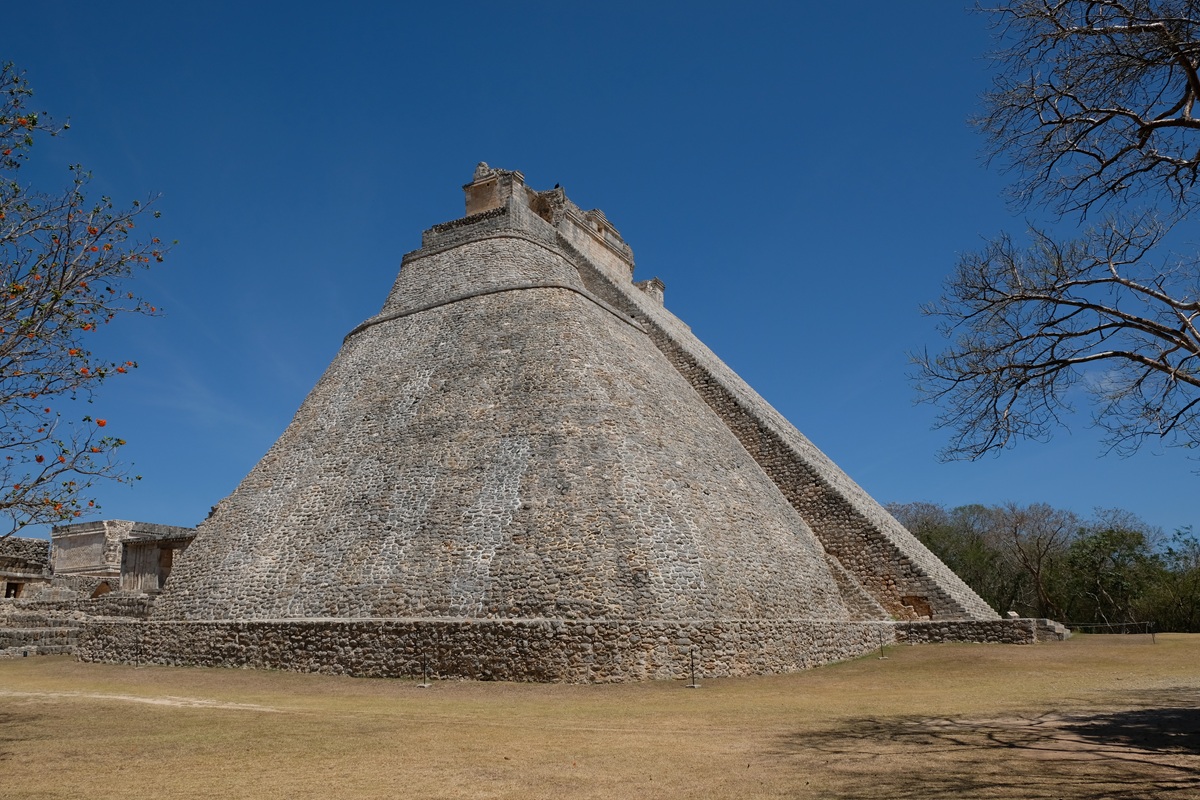
The Pyramid of the Magician, the first structure one will encounter at Uxmal
Many centuries ago, the dense jungles of what is now Southeastern Mexico, Guatemala, Belize, as well as the western parts of Honduras and El Salvador witnessed the rise of a sophisticated civilization that would later produce among the finest and most impressive monuments in the Western Hemisphere. Known today as the Maya, they erected towering pyramids, ornately-decorated palaces, and vast ceremonial ballcourts that would outlast this ancient civilization, leaving us with majestic ruins that are both intriguing and inspiring. However, these great builders were never unified under one central ruler. Instead, they belonged to different city-states that were as busy waging war against each other as they were constructing grand edifices.
Palenque was one of the most consequential Maya polities that emerged from these lush forests, a region blessed with abundant water that witnessed the rise and fall of different city-states for millennia. However, far from these rivers, a subset of the ancient Maya civilization settled in the north of the Yucatán Peninsula due to a combination of factors. In this less hospitable land, they not only managed to survive, but also thrive. Here, the dry season was long, and despite the ample amount of rainfall this region received annually during the wetter months, the porous limestone of this land prevented rivers from forming. There was no aboveground body of water back then, and there is still none today. But the ancient Maya of this area knew where to look.
Below the surface, a dark and mysterious world – known today as cenotes – was believed to be the gateway to the afterlife, as well as a source of life for the living. These are natural pits created when the limestone bedrock of the Yucatán collapsed, revealing the clean groundwater underneath. Think of them like cisterns or massive wells that sustained large populations around them. And these were instrumental to the expansion of Maya settlements in this region to eventually become great city-states in their own right, like Chichén Itzá and Uxmal – the latter being the Maya ruins I most wanted to see.
From the lushness of Palenque, we had a change of scenery when we arrived in Uxmal. When we went in early April, some of the trees at the site had shed most of their leaves, and the grass began to look parched. The air was noticeably drier too, but the skies were marvelously blue.
Barely a few minutes after we entered the compound, we were already presented with a magnificent pyramid that is unique in the Maya world. The Pyramid of the Magician (or La Pirámide del Adivino in Spanish) is visually distinguishable from other Maya pyramids thanks to its smooth curved edges. Being the tallest structure in the archaeological zone, it actually consists of five layers of temples, built on top of each other with the oldest estimated to date back to the 6th century CE. Such superimposition was a common practice among the ancient Maya who did it for different reasons, including to symbolize the transformation a new ruler brought upon his subjects, or to mark societal shifts. In fact, the name Uxmal itself means “three times built”, denoting the multiple layers of history of this place throughout the centuries.
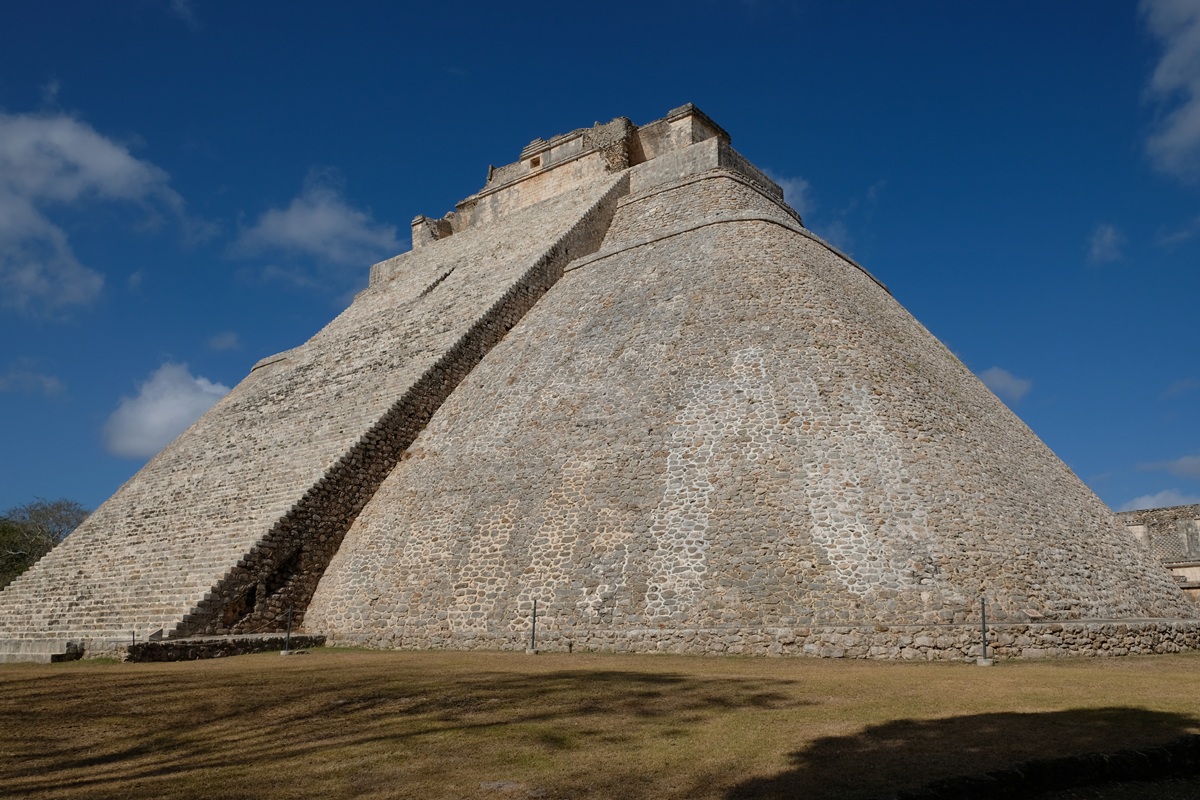
The Pyramid of the Magician with its distinctive rounded edges
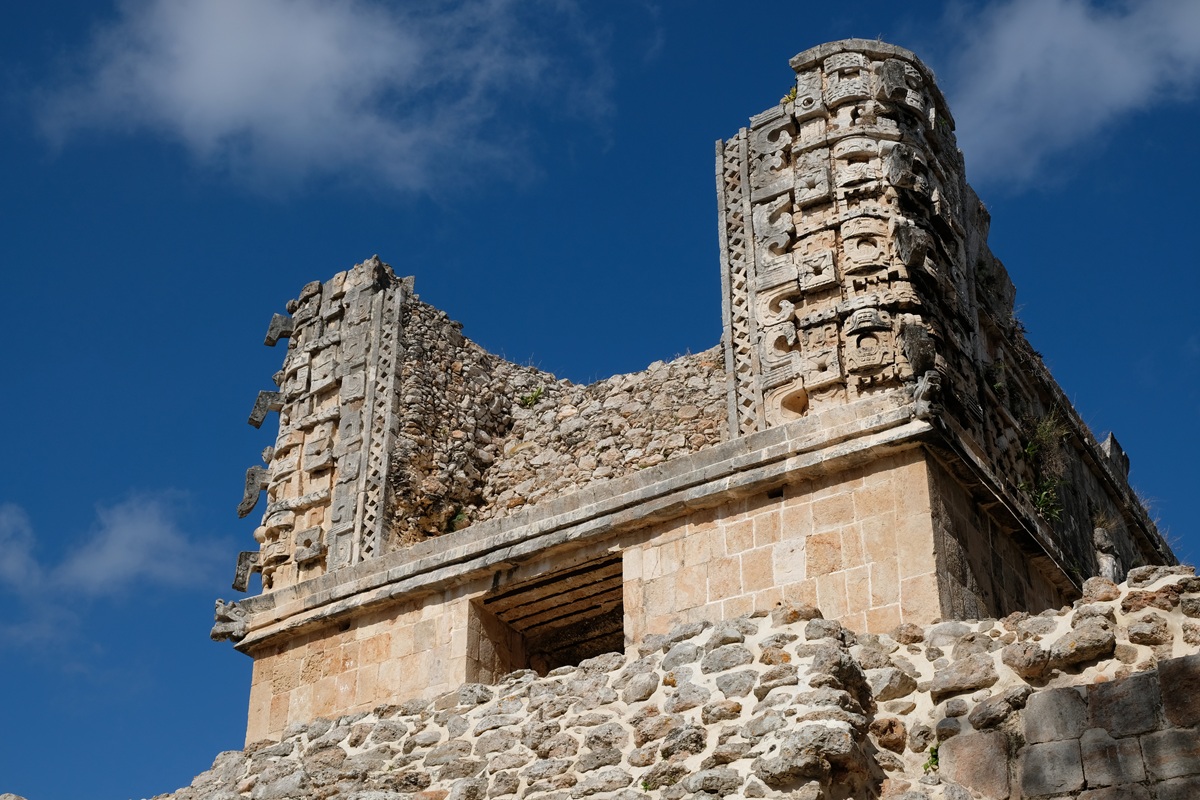
Stacks of Chaac masks

The Maya rain god unfortunately lost his iconic nose in these carvings
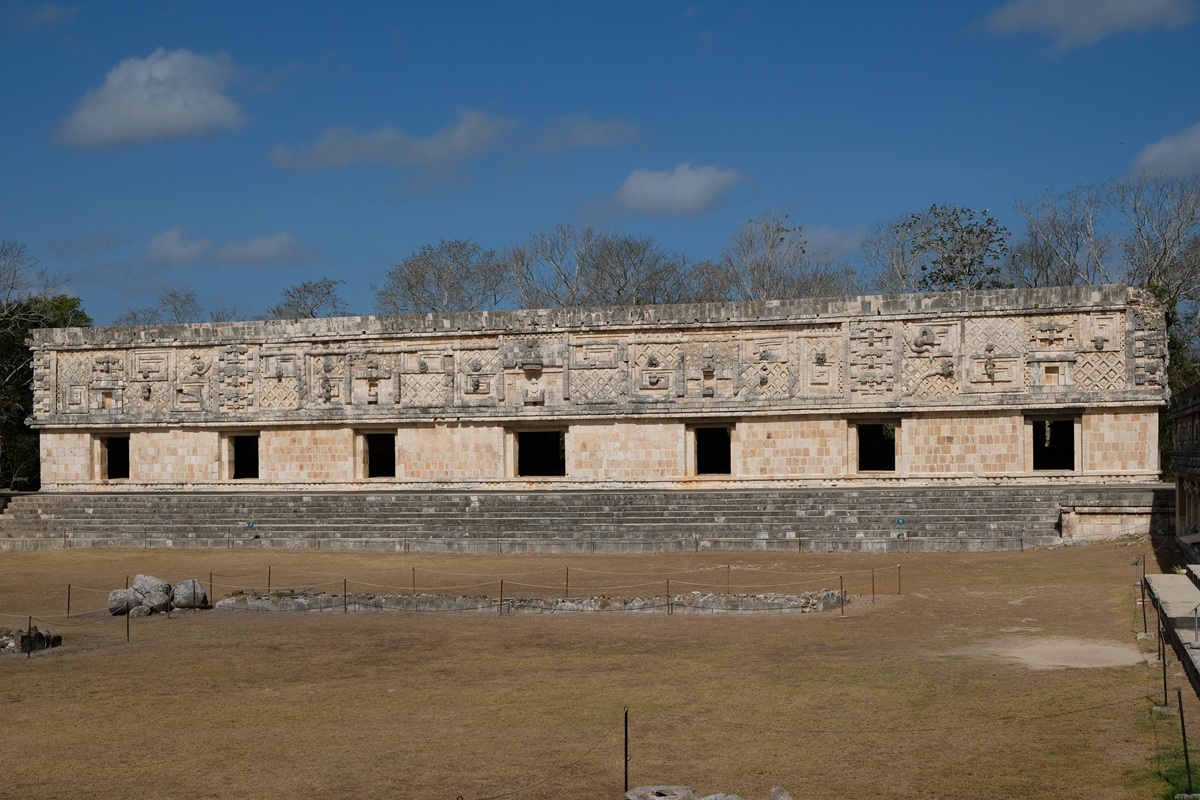
The west building of the Nunnery Quadrangle
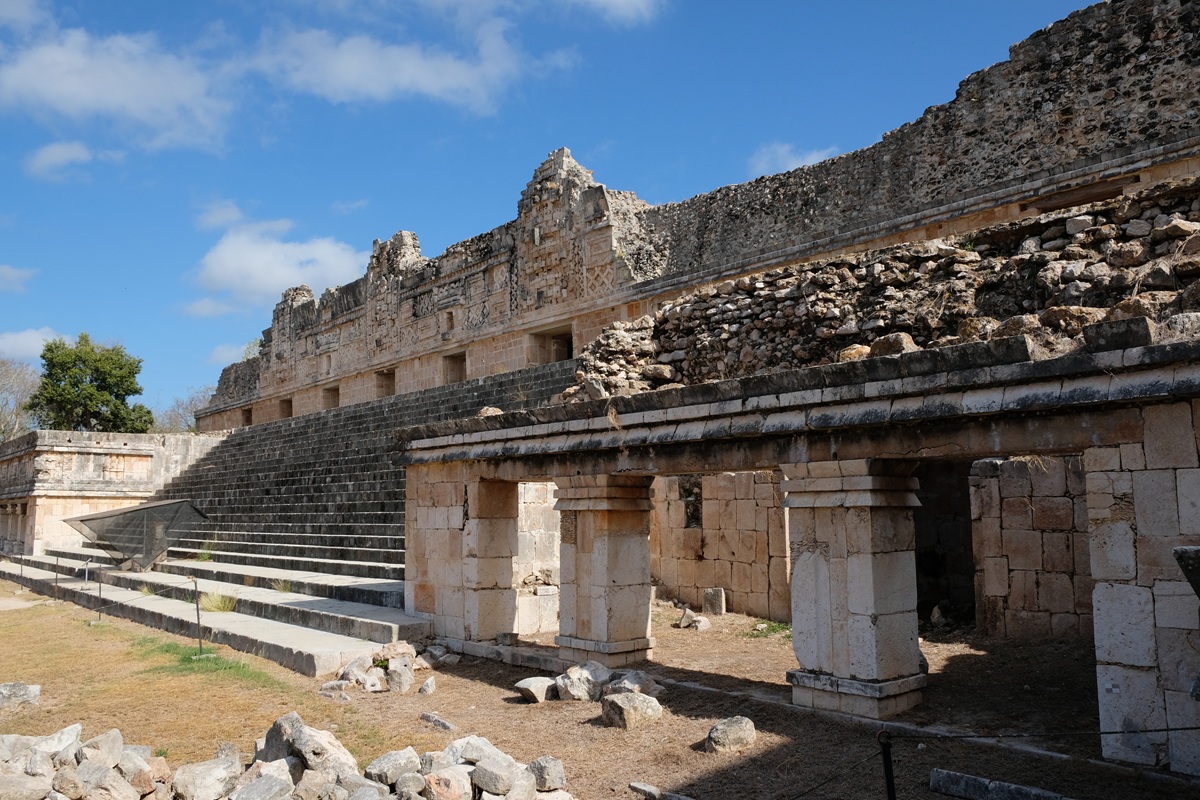
A partially collapsed section of the north building at the Nunnery Quadrangle

A very worn-out hieroglyphic inscription in front of the north building
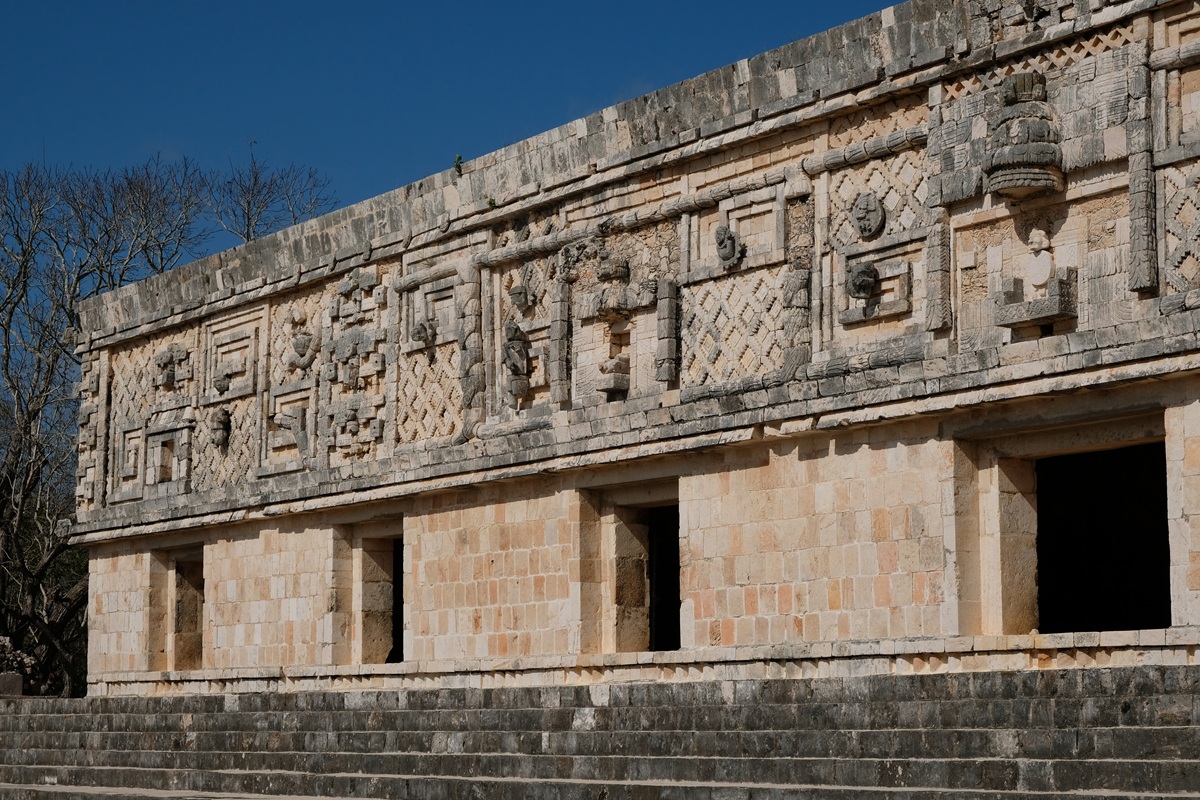
Typical Puuc architectural style on display: plain lower walls meet highly ornate upper sections
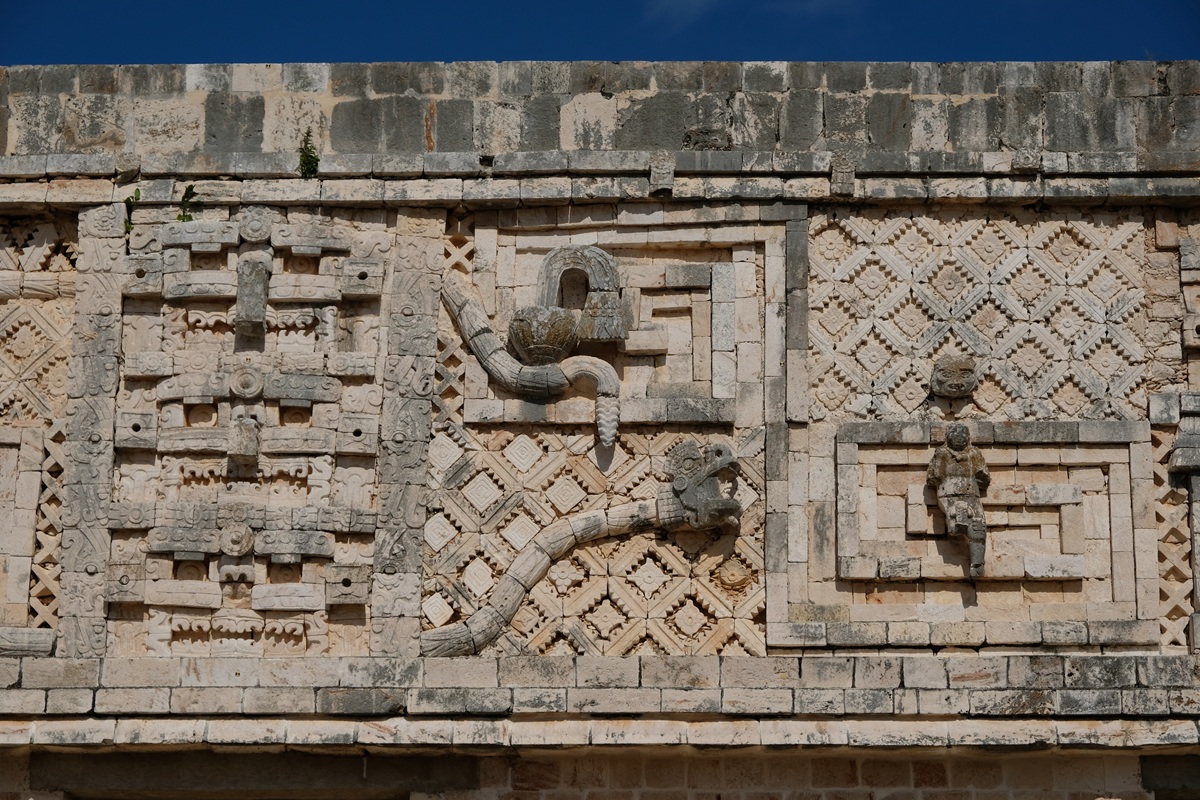
A depiction of Kukulkan with a stack of Chaac masks to its left

These decorative elements are vastly different from those found in Palenque, our first-ever Maya ruins

One last look at the Nunnery Quadrangle before moving on to other parts of Uxmal
We followed the pathway that goes behind the Pyramid of the Magician and arrived at the Nunnery Quadrangle (El Cuadrángulo de las Monjas), a name given by 16th-century Spanish surveyors who thought this compound reminded them of convents back home. Constructed in the 10th century, it was our first of many in-situ encounters with one of the most ubiquitous sculptures in the Yucatán: the image of Chaac, the Maya god of rain, thunder, and lightning. While different interpretations of this deity existed in Mesoamerica with various names (including Tlaloc and Cocijo), the ancient Maya of the Yucatán took his depiction to a whole new level. We were greeted by multiple faces of Chaac, stacked on top of each other, as we drew closer to the Nunnery. A plausible explanation for this can be linked to the lack of aboveground water in this region, prompting the local populace to turn to this particular god and venerate him fervently.
We explored this compound and marveled at the fine carvings while noticing something we didn’t see in Palenque. All the buildings that make up the Nunnery seemed to have lower walls that were plain, with the profusion of decorative elements concentrated on the upper sections of the structures. This is apparently the Puuc architectural style, prevalent in the southwestern parts of the Yucatán Peninsula where a large range of karst hills dominated the landscape. (Puuc itself means “hill” in the local Maya language.) Apart from Chaac, I observed another deity prominently depicted at the Nunnery: Kukulkan, also known as the Plumed Serpent. Closely related to Quetzalcoatl (a similar god in the Nahuatl-speaking people’s mythology as portrayed at Teotihuacan’s Pyramid of the Feathered Serpent), the Kukulkan at the Nunnery takes the form of a rattlesnake with a human figure emerging from its open mouth. I was utterly fascinated, for the themes and characters of these carvings were a world away, both literally and figuratively, from those adorning ancient temples back home in Southeast Asia.
Our exploration of Uxmal continued as we scanned the ballcourt – a rectangular field for playing the Mesoamerican ballgame – from the portal arch of the south building at the Nunnery. In the far background was the stately Governor’s Palace (El Palacio del Gobernador), built on higher ground compared to the rest of the site. But before going there, we had to figure out how to get past a beast looking at us with its rather inquisitive gaze. It was our first introduction to the black spiny-tailed iguana (Ctenosaura similis), a lizard species native to this part of Mexico. Luckily, after exchanging stares with me, it budged, making just enough space for us to amble safely through without having to worry about inadvertently stepping on its spiky tail.
We walked through the ballcourt, with my mind imagining how lively this place must have been when different opposing teams who tried to hit the ball (made of natural rubber) using only their hips played against each other in the past. But before my imagination started to take me to scenes of what might have happened to the losing team, we were already at the base of the hill upon which the longest structure in Uxmal stands: the Governor’s Palace itself. Next to it and directly above us was the House of the Turtles (La Casa de las Tortugas), a name attributed to the turtle carvings decorating the structure’s upper section. To access this higher complex, however, we had to circumambulate the foot of the hill to find the steps that take visitors to the open court in front of the palace. Constructed on top of a large multi-tiered platform, this grand monument is often dubbed as one of the greatest architectural achievements of the ancient Maya.

Looking out to the ballcourt and the Governor’s Palace in the distance

Going toward the imposing Governor’s Palace…

…but first, we had to get past this black spiny-tailed iguana

The vaulted arch of the Nunnery Quadrangle’s south building
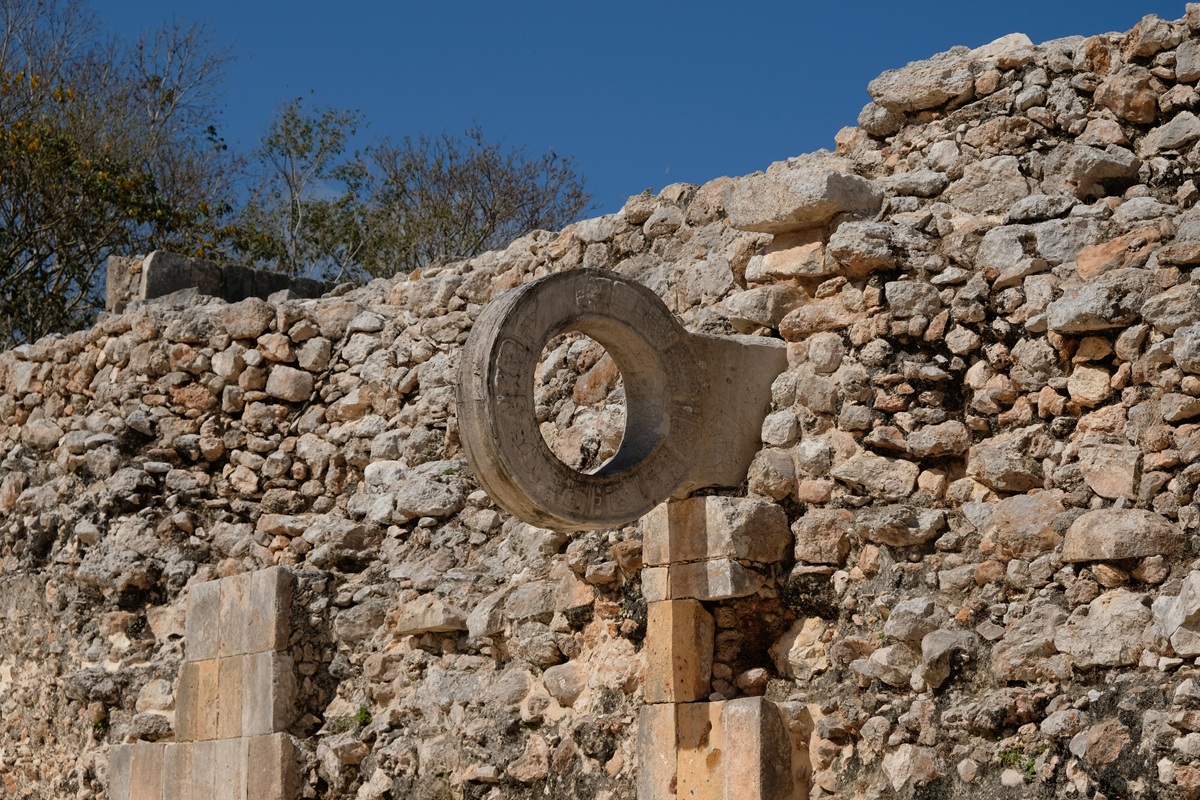
A Mesoamerican ballgame goal

The House of the Turtles (right) and the Governor’s Palace on top of the hill
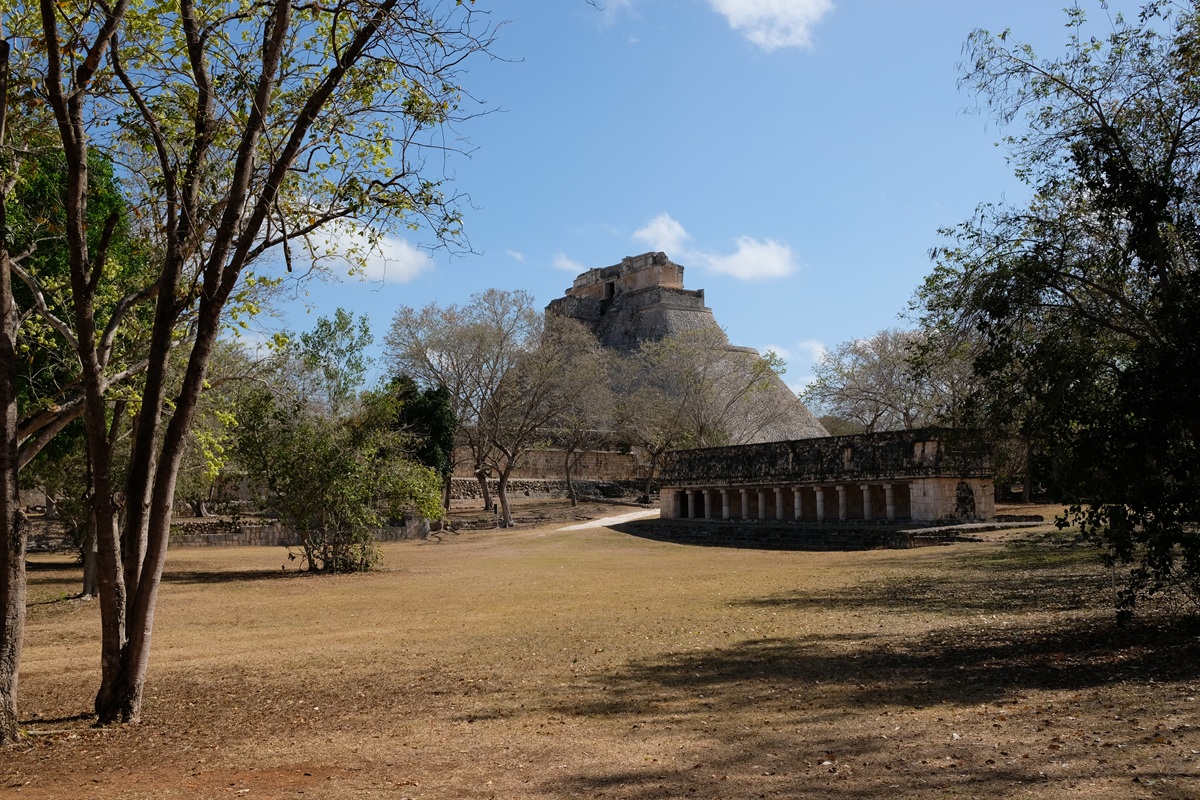
Taking a glance at the Pyramid of the Magician
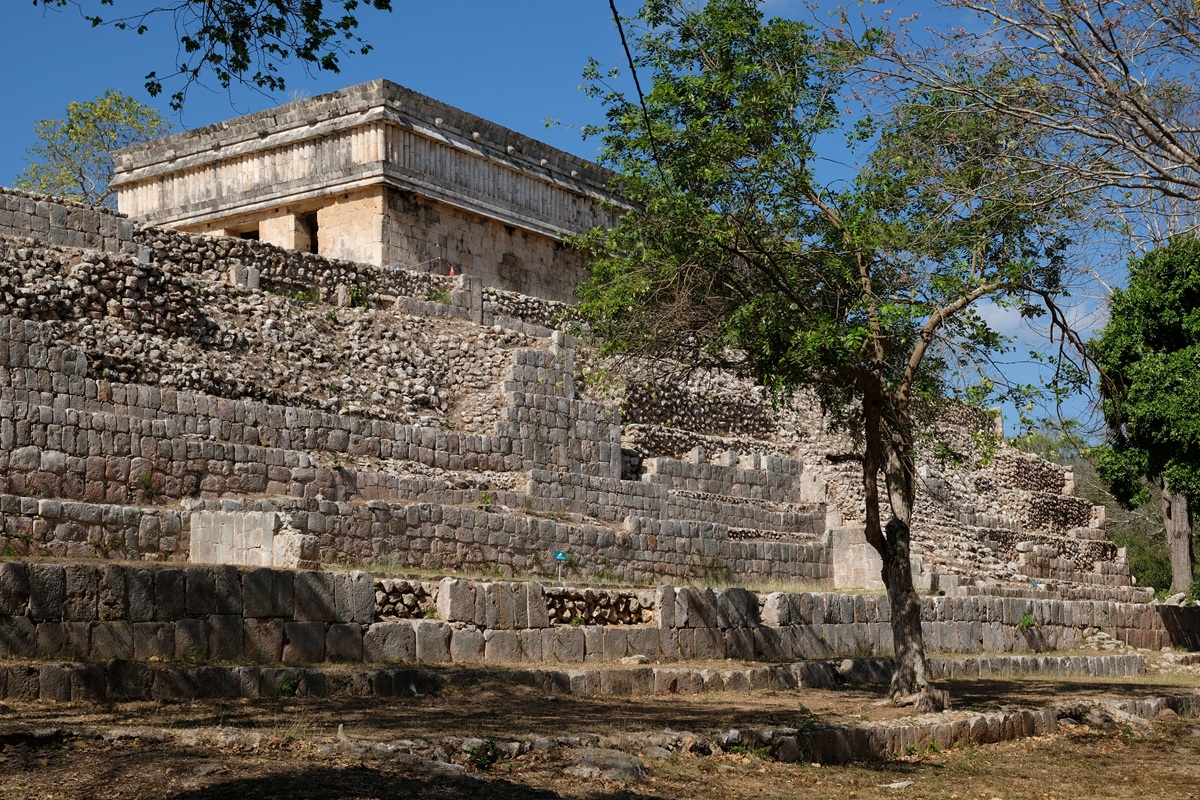
We had to walk the other way to go up there
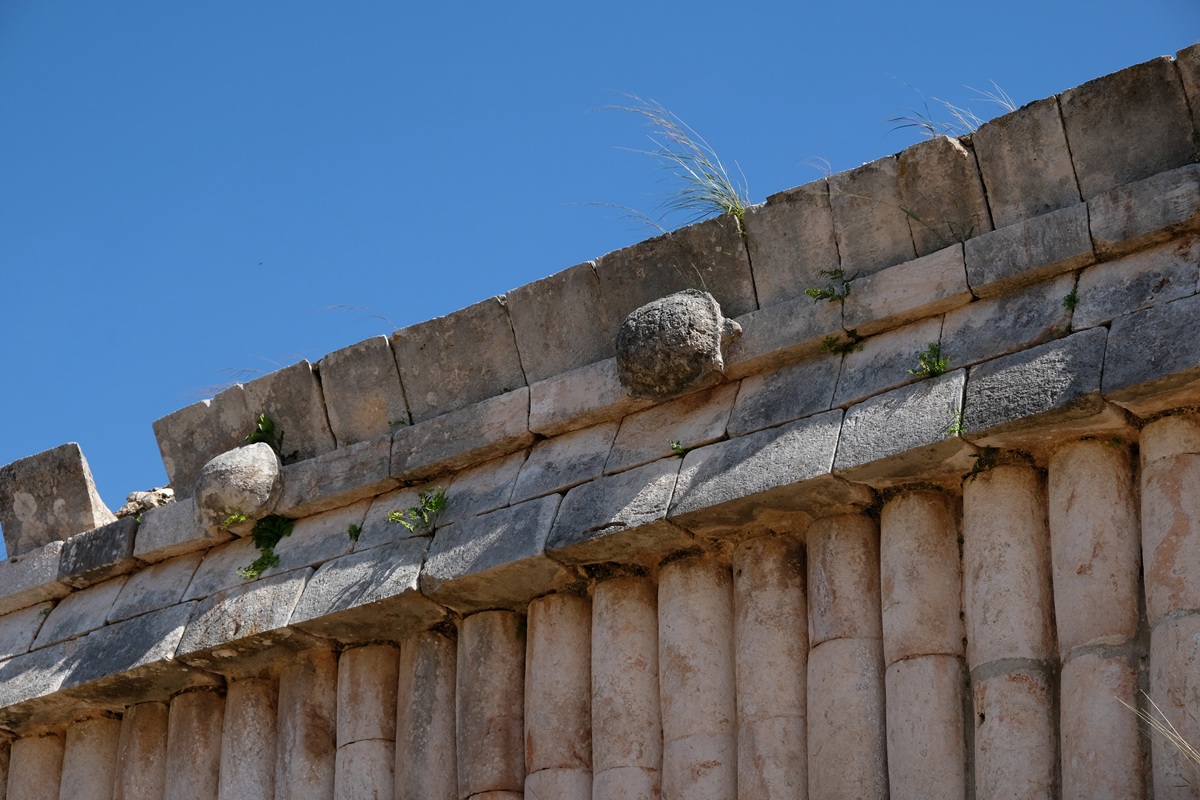
Some of the turtles of the namesake structure
K’ahk’ Pulaj Chan Chaahk, also known by his regnal name Chan Chak K’ak’nal Ajaw, was the ajaw (Maya ruler) who was responsible for commissioning the Governor’s Palace as well as the Nunnery Quadrangle. Ascending the throne at the end of the 9th century, he would commence a construction spree that further cemented Uxmal’s status as an important Maya city-state. However, unlike the plethora of hieroglyphic inscriptions found in places like Palenque, in this part of the Yucatán they are a lot scarcer, leaving us more questions than answers about him (he was also called Lord Chac) and other rulers of Uxmal.
The Governor’s Palace is not only richly embellished with faces of Chaac, but it also bears suggestions about the ancient Maya’s Venus cult. Each visage of the rain god have decorative patterns underneath the eyes that indicate reverence for this planet, upon which predictions of rains and agricultural cycles were made. Even the edifice’s alignment was intentional so that at its completion the person standing at its central doorway could view the top of a pyramid about 5 kilometers away, which Venus rose above as the morning star at its southernmost declination.
Simply put, the Governor’s Palace was incredible. However, as we were taking photos of the Pyramid of the Magician from this higher location, I spotted yet another pyramid at the back of the palace which looked just as tall. We descended the hill and followed the pathway before arriving at the foot of the so-called Great Pyramid (La Gran Pirámide). Only one side of this colossal structure has been restored, while the other three were still in a rather ruined state. It was still a sight to behold nonetheless, making me wonder if one day we would see the entire structure brought back to its original appearance. One can certainly dream!
We kept walking to the west of the pyramid, past another iguana that was lazing in the shade next to what seemed to be a fragment of an ancient stone pillar, and reached another awe-inspiring structure called the House of the Doves (La Casa de las Palomas). The collapsed front portion of the long edifice exposed the remaining half of the building with the striking decorative roof comb right above it. Quite a dramatic sight, really. A sign suggested that there was yet another pyramid directly behind this compound, but all we could see was dense, albeit dry, vegetation.

The magnificent Governor’s Palace

The Throne of the Jaguar in front of the palace
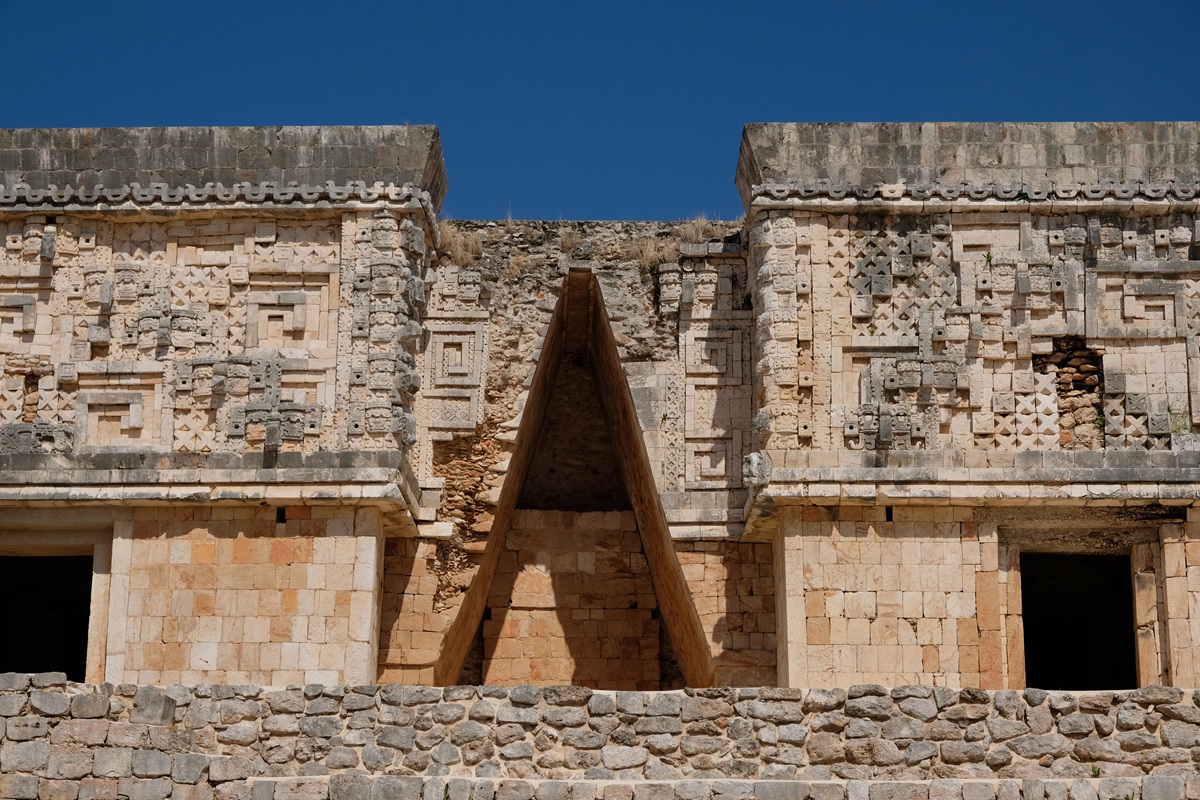
One of the vaults that divide the structure into three sections

The central figure is believed to depict Lord Chac himself

Chaac masks with elements of Venus
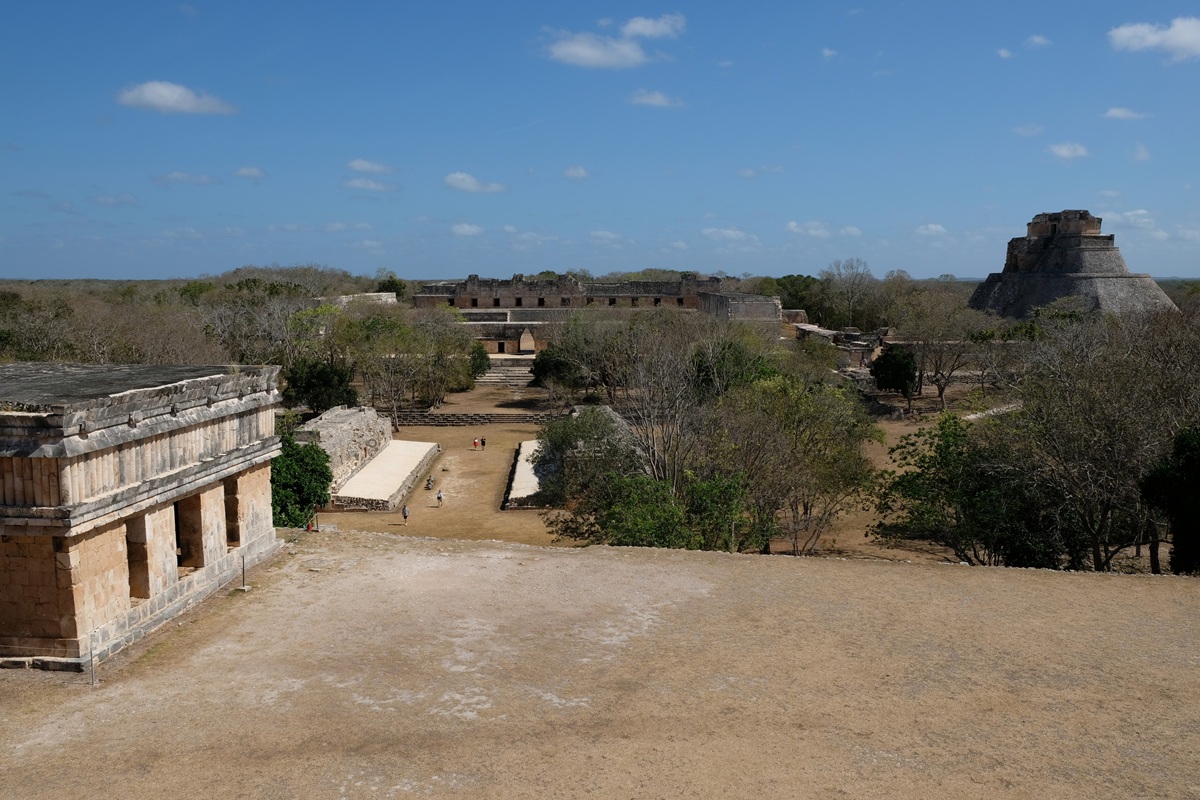
A commanding view of the ancient city-state
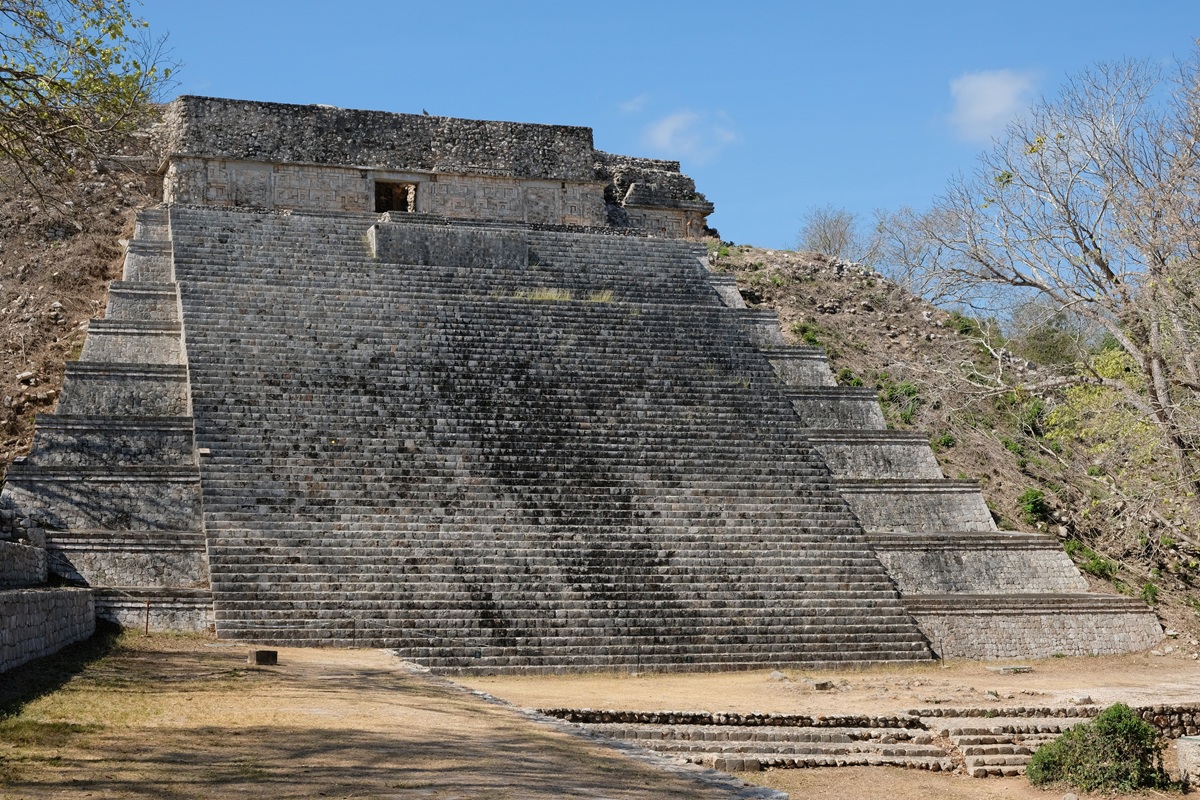
The Great Pyramid directly behind the Governor’s Palace

The north part of the Great Pyramid is the only part of the structure that has been restored

A glimpse of the House of the Doves

One of the many iguanas we saw at Uxmal
We were pleasantly surprised to see only a trickle of tourists at Uxmal. But around the House of the Doves, the number of visitors thinned out even further, which made exploring this part of the archaeological zone even more enjoyable. However, as we made our way to the final site, we saw just two others who went in the same direction.
The Cemetery Group (El Grupo del Cementerio) was indeed a little off the main track, but could its moniker have deterred most people from seeing it? When we arrived, it immediately dawned upon me that the name might have been attributed to the presence of skull-like carvings at some of the structures at this site. The lone staff member who manned this part of Uxmal raised his head when he saw us, before looking back at his smartphone seconds later. It was hot, but quiet, and it was really nice to have the place to ourselves once the other two visitors left.
As we were ready to wrap up our visit to Uxmal and head toward the exit, I made sure to check other signboards within the archaeological zone to see whether we missed something or not. And sure enough, there was one pathway that seemed to skirt the eastern perimeter of the hill where the Governor’s Palace stood. “Let’s check this last place out!” I convinced James that whatever was at the end of this track was probably worth seeing.
A few minutes’ walk under a contiguous canopy of trees eventually brought us to los falos, “the phalli”. These large stone penises were in fact gargoyles mounted on ancient structures to carry rainwater away from the buildings’ walls and foundations. And with that came the end of our two-hour exploration of Uxmal, arguably one of the most awe-inspiring ancient sites not only in the Yucatán Peninsula, but also in Mexico. It was a great introduction to the Puuc architectural style, and this visit prepared us to embark on a journey hopping between Maya sites along the Ruta Puuc (the “Puuc Route”) where other awe-inspiring structures built in this particular style were waiting to be explored.
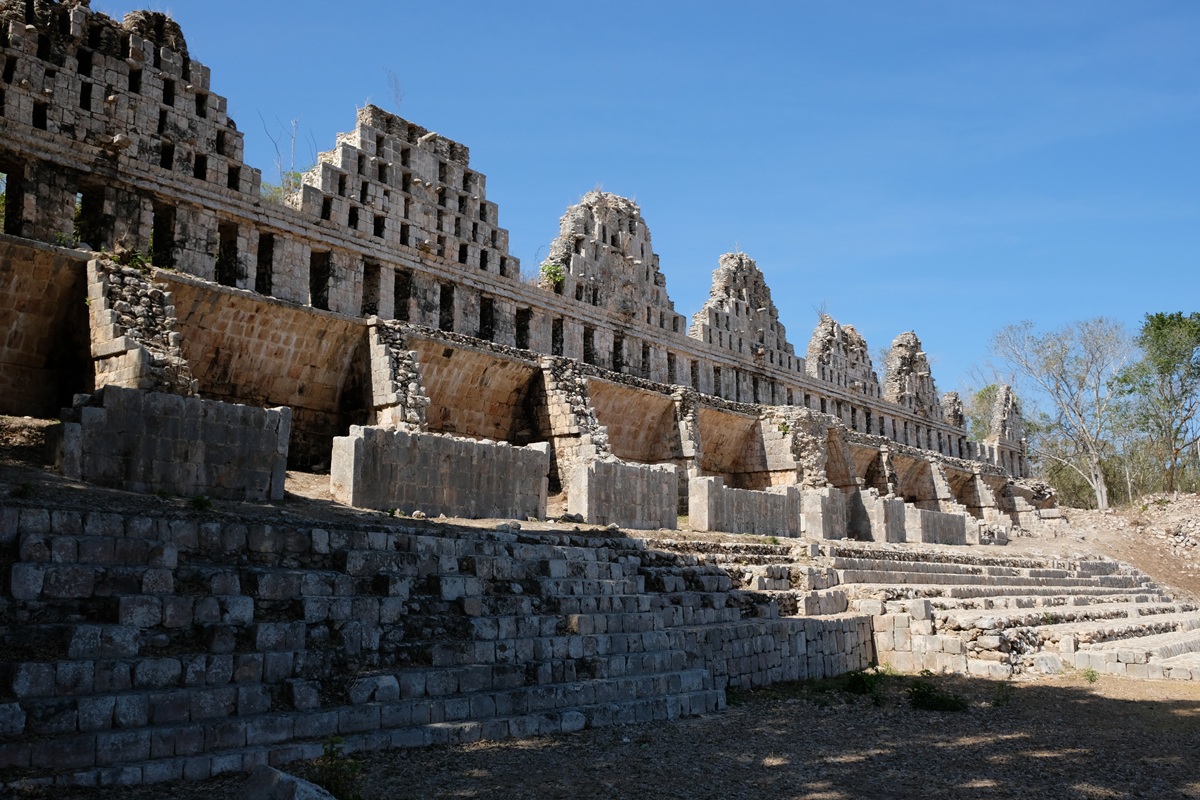
Taking a closer look at the House of the Doves

The courtyard in front of the House of the Doves

Following those two people to reach the Cemetery Group
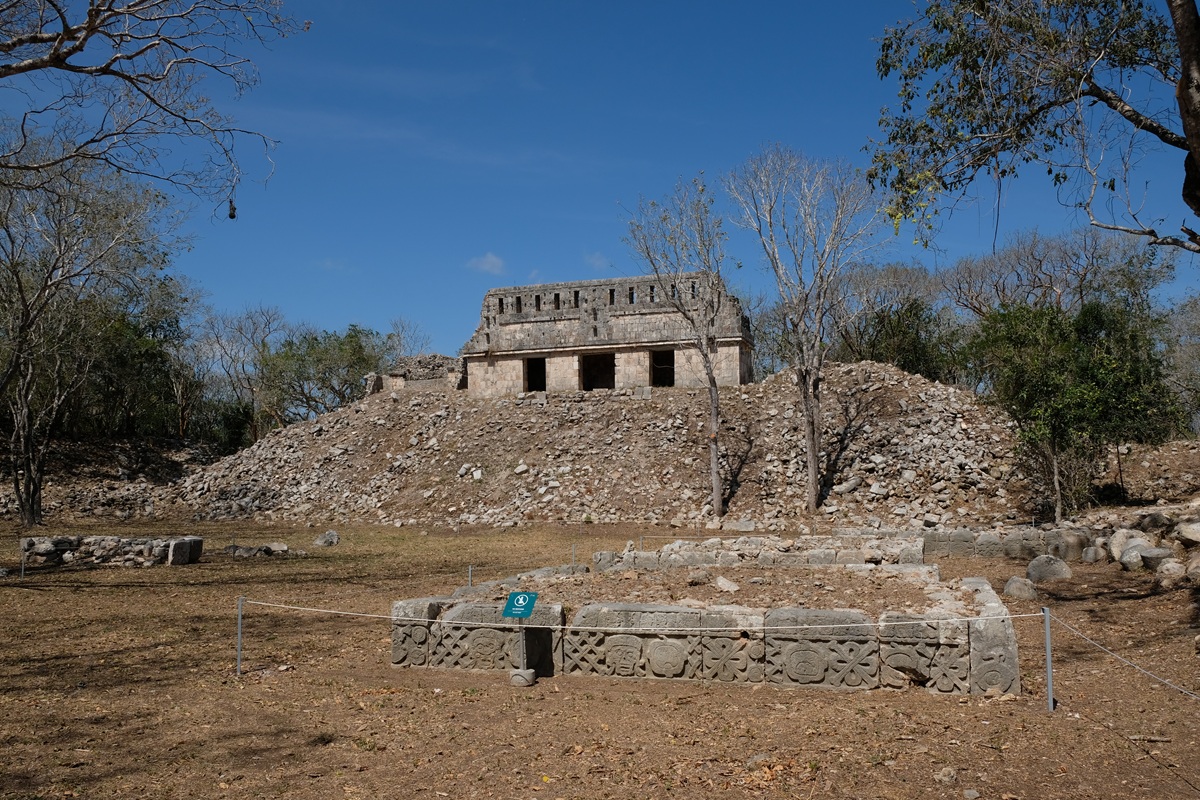
At the Cemetery Group, a very quiet corner of Uxmal

Carvings like this were probably the reason for this site’s current name
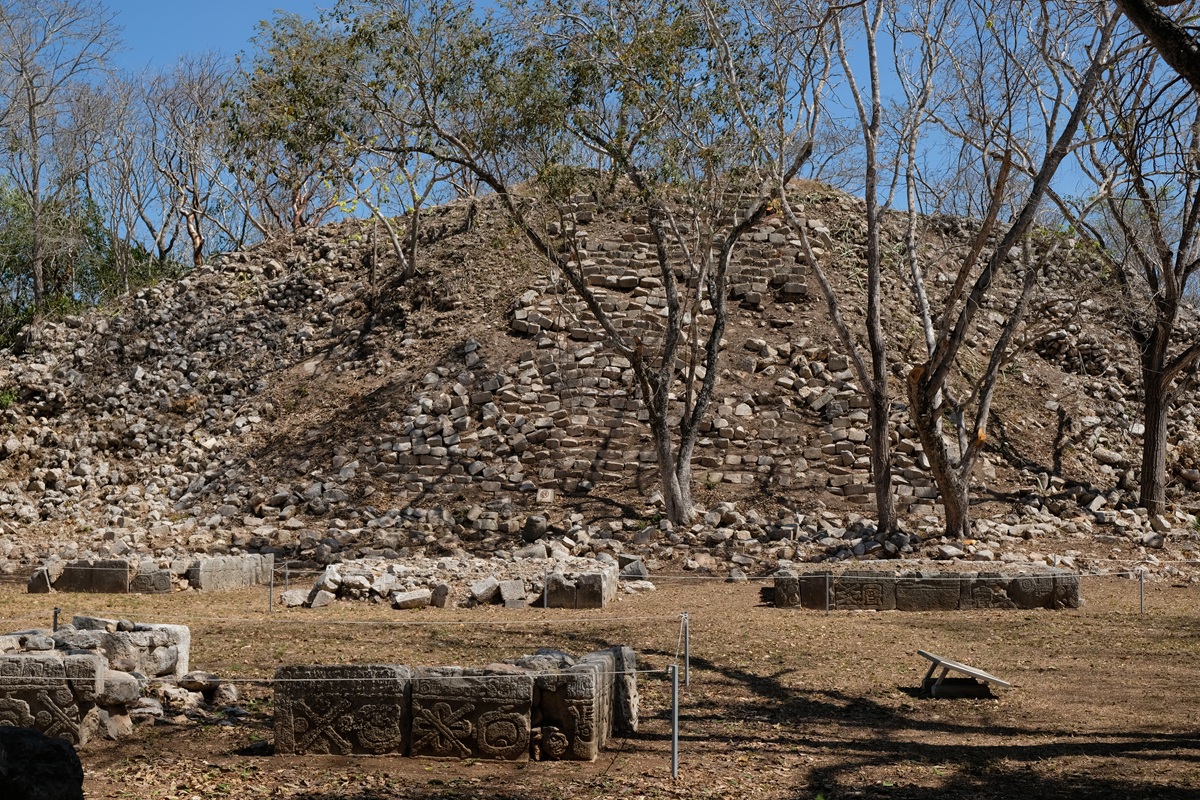
An unrestored structure at the Cemetery Group
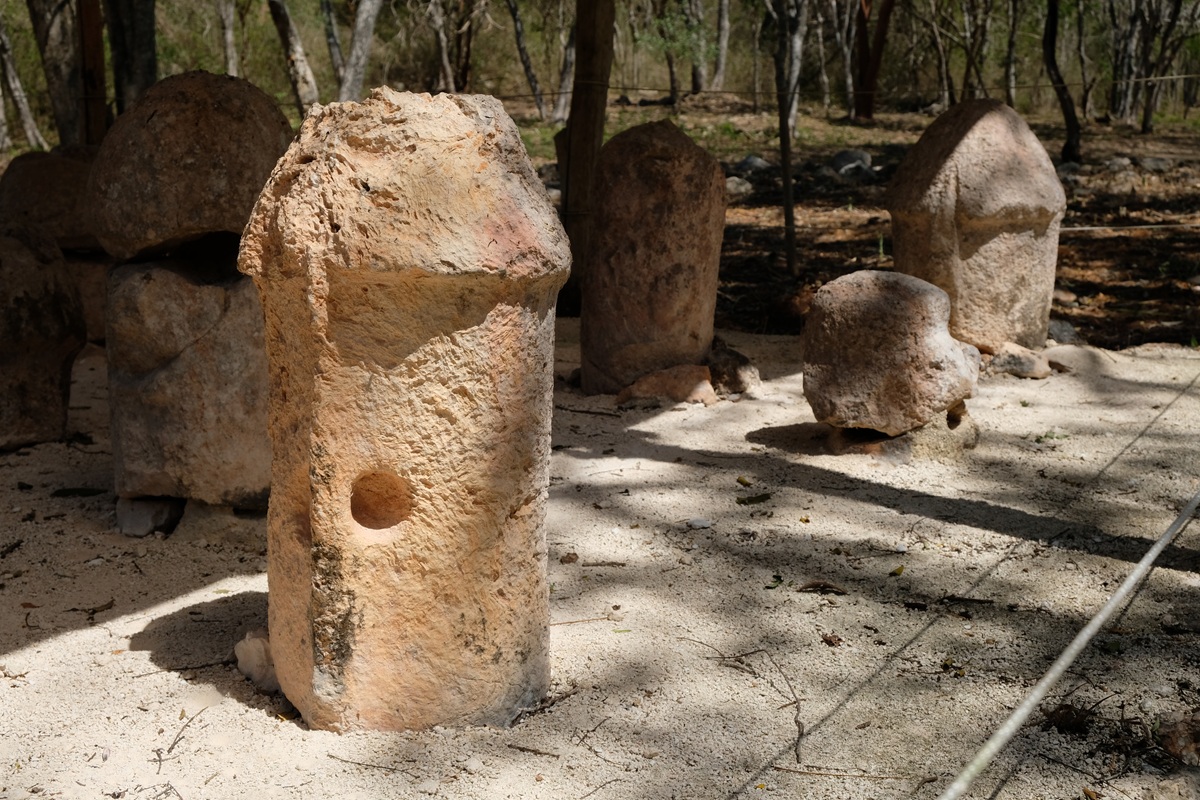
The phalli of Uxmal

 What an Amazing World!
“Wonderstruck,” indeed! Uxmal seems to be lesser-known than Palenque, but equally as rich in history and architecture, if not more. The Mayans were truly a powerhouse back in the day, and the ruins really show it! The iguanas roaming around are adorable, and I’m glad you and James had an insightful visit in Uxmal!
LikeLiked by 1 person
I knew Uxmal would be amazing, but I wasn’t aware of the scale of this archaeological site until I went there. Uxmal and Palenque were indeed very impressive, and each of them has its own unique character which makes me grateful to have visited both.
LikeLiked by 1 person
Uxmal was also on my wish list of Maya ruins to visit, so it’s so great you made it a priority for our recent trip to Mexico. The architecture looks so different stylistically from what we saw in Palenque. And the scale of Uxmal’s archaeological zone suggested how important it must have been as a powerful city-state back in its heyday. I’m thankful our visit there and the smaller sites along the Puuc Route was met with blue skies — even if it was insanely hot out in the sun!
LikeLiked by 1 person
There is this National Geographic documentary about Uxmal that I need to share with you. It tells about the power struggle between different cults/factions at the heart of this city-state which helped shape its visual appearance. Our timing was perfect — remember that gloomy and rainy day when we left Mérida for CDMX?
LikeLiked by 1 person
I feel like I say this about every Maya site, but Uxmal is truly spectacular. The puuc architecture gives it such a unique look. I didn’t realize that there are no iguanas in Indonesia, and I guess not in Asia. How fun to have a stare down with your first one 😊 Maggie
LikeLiked by 1 person
Uxmal really was spectacular. And it was so fascinating to see the faces of Chaac as well as the depiction of Kukulkan. Imagine how grand this city-state was during its heyday! Here in Jakarta we have monitor lizards (sometimes I see them when I take the bus to work), but all the iguanas I had seen before were people’s pets, and they were much smaller than the ones we encountered at Uxmal. So it was quite exciting to see those black spiny-tailed iguanas.
LikeLiked by 1 person
😊
LikeLiked by 1 person
I was totally impressed by the Pyramid of the magician; it is so different from all of the other Maya pyramids I have seen so far. This looks like a truly amazing site. (Suzanne)
LikeLiked by 1 person
The Pyramid of the Magician truly is one of a kind. I’m glad that it still retains its shape long after it was completed. If only the third pyramid in the archaeological zone had also been restored and opened to the public.
LikeLike
This is such a wonderful post with so many wanderlust-inducing photos, dear Bama. It is quite obvious that the Pyramid of the Magician offers a unique architectural marvel with its oval shape, steep steps, and detailed rain god masks. As I won’t find any iguanas in Ireland – our only native land reptile is the viviparous lizard, I’d be very happy to see one! Thanks for sharing, and have a good day 🙂 Wishing you a peaceful, joyful, and successful Happy New Year 2026. Aiva xx
LikeLiked by 1 person
I hope one day you’ll get to see Uxmal (and other equally impressive Maya sites) in person, Aiva. It was a very impressive site, and I hope when you do go there one day, it will remain uncrowded. Happy New Year to you too! I wish you a great year ahead!
LikeLiked by 1 person
Thanks so much 🥰 take care xx
LikeLiked by 1 person
Uxmal is such a photographer’s dream. Unlike the crowds at Chichen Itza, this site offered a peaceful atmosphere to capture the stunning Puuc architecture. From the unique oval-shaped Pyramid of the Magician to the intricate stone mosaics of the Governor’s Palace, the lack of visitors makes every shot feel like a private discovery.
LikeLiked by 1 person
You said it well. Chichén Itzá was amazing, but it was very popular. That’s why I really enjoyed exploring the many corners of Uxmal. I hope it won’t get too crowded in the future. But the good thing is there are so many impressive Maya ruins in Mexico to choose from.
LikeLiked by 1 person
Congrats on surviving your encounter with the Mexican iguana! 😁 Kidding aside, I enjoyed your travelogue and beautiful photos of Uxmal. It’s fascinating to see how different cultures approach architecture and despite the geographic distance between Mexico and Indonesia, similar sensibilities to incorporate gods and deities, as well as animals into the engravings and designs emerge.
You both must’ve just been in awe walking through the preserved grounds and getting lost in your imagination of the history all around you!
We’re heading back to Mexico again in about two months and I do wanna do an excursion off the resort finally this time. Have been inspired by your travels!
LikeLiked by 1 person
Haha! It was definitely bigger than the pet iguanas I had seen before. So when I saw it at Uxmal for the first time, I was a little shocked.
Visiting different ancient monuments made me realize that while it is inherently human to build grand edifices for religious purposes, the artistic expressions can come in so many different forms. And that’s very intriguing.
We loved every single moment of our visit to Uxmal, iguanas and all. If we get the chance, we would definitely go back to this part of Mexico in a heartbeat!
How exciting that you’re going back to Mexico! If I ever go back there, first I have to mentally and physically prepare myself for the loooong flights. I look forward to your upcoming trip!
LikeLiked by 1 person
It’s funny to hear you talking about mentally prepping for the long flight to Mexico. I feel the same about Asia. It’s all relative! Hope you get to go back soon! 😁
LikeLiked by 1 person
That’s true. Likewise, Ab. I hope in the not-too-distant future you can go back to Asia for holiday!
LikeLiked by 1 person
What a beautifully written piece, your descriptions really made me feel wonderstruck alongside you! Uxmal’s unique Puuc architecture and the way the ancient Maya adapted to a challenging landscape are truly inspiring to see and read about. Your photos and reflections brought the site to life, and now I’m adding it to my own travel wishlist when we visit Mexico later in 2026!
LikeLiked by 1 person
Much appreciated, Hannah! The ancient Maya created some of the most fascinating artistic styles the planet has ever seen, really. And the diversity is amazing: from architecture, to murals, effigies, and even to their writing system. How exciting that you’re visiting Mexico later this year! Feel free to drop me an email. I can give you some recommendations of the places I’ve been to.
LikeLike
How lucky to have the site almost to yourselves. Perhaps your picked the right time of year to visit as I can’t imagine more visitors would want to miss out of this historic place.
LikeLiked by 1 person
We intentionally visited Uxmal on a weekday, and we also made sure to arrive quite early in the morning. So maybe that’s why there were only a few other tourists when we went.
LikeLiked by 1 person
Really good post, Bama. I’ve heard of Chichen Itza before (we learned about the Mayas in high school in Trinidad), but not Uxmal. However, from your photos and very detailed post, I can see it’s very impressive and I’d definitely want to explore it if I ever visit that part of the world. The structures and carvings remind me a little of Angkor Wat – there were a few large temples that had a slightly pyramidic shape.
I’ve also seen iguanas while growing up in Trinidad but only once in a while; it’s interesting to be able to come across a bunch of them.
LikeLiked by 2 people
Thanks Hilton. Uxmal is definitely worth checking out, not only for its unique architecture but also for its scale. I get it why Chichén Itzá is often cited as one of the finest examples of the ancient Maya’s artistic achievements. But due to its popularity, it was a bit too crowded for me. But then when one goes to Cambodia, seeing Angkor Wat is a must, isn’t it? Chichén Itzá is like that.
Were the iguanas you saw in Trinidad similar with those in Uxmal?
LikeLiked by 1 person
I’d definitely go see Chichen Itza too but I’m glad to know about Uxmal now. It’s always good when there are less well-known sites near famous sites that are just as spectacular. It’s nice to have variety and a different sensation of similar sites.
The iguanas in Trinidad were green and usually quite shy, you’d only see them in a garden or tree and not in open ground.
LikeLiked by 1 person
For some reason I imagined the iguanas in Trinidad to be green, and you confirmed it!
LikeLiked by 1 person
I’ve finally realized that what I need to do is have YOU go to a place I want to visit, do all the research about it, present it clearly and concisely in a photo-filled blog post, and then I will go with my head full of the things I never take the time to learn during or after a trip! Of course, I research the basics before traveling, read things while there, and generally absorb what I am seeing, but I just don’t take the time to bone up on all the history. I think I do strongly register the feeling of the places I visit, and maybe that’s enough! (Says the lazier person – haha)
P.S. I particularly love the photo taken through a shaded doorway to the ballcourt and palace.
LikeLiked by 1 person
Aww, that’s really kind, Lex. You know, even after all the research I’ve done prior to a trip and the things I learn at the location, when I’m writing a blog post there’s usually something else I find out about the place. I hope when you make it to Indonesia one day, I won’t bore you with too much detail that will distract you from soaking up the ambiance of a place. 😄
LikeLiked by 1 person
I find lost civilizations like the Mayans so fascinating. It’s remarkable how well designed and constructed their communities were. The ruins are impressive. Glad to hear that there weren’t many tourists around, which always makes for a nicer experience. And good that you double checked that you saw everything before heading out. I’ve made that mistake before.
LikeLiked by 1 person
I’m glad that centuries after its abandonment, Uxmal remains an impressive site filled with beautiful buildings. It really is fascinating to learn about ancient civilizations who built the world’s greatest monuments. I made sure to double check the signs because if I missed anything, Mexico is not a place where I can just go. It’s so far away!
LikeLiked by 1 person
A mesmerizing tour of Uxmal, Bama – it blows me away how ancient civilizations adapted their architecture to the landscape, and gets me thinking of how we do this in modern times (especially water scarcity). The world of the Mayans always holds such mystery for me… and I want to explore these places, especially to photograph them, as you have put together such a series to match your words. Wishing you a wonderful 2026 filled with new paths to discover. I look forward to seeing more of your creations.
LikeLiked by 1 person
As water scarcity will likely become a bigger challenge in the future, city administrators can definitely learn a lot from ancient civilizations that built cities in the most unlikely places, like Uxmal and Petra in Jordan. I hope you’ll get to explore the many ancient Maya sites in Mexico sooner than later, Randall. And I wish you a year filled with many memorable travels ahead!
LikeLike
These monuments are indeed intriguing and inspiring, Bama. The shape of the Pyramid of the Magician is definitely my favourite. I love how you managed to eventually be alone amongst a part of these ruins. There’s something magical about that. I also love all your close-up photographs showing the incredible detail. I’ve never even heard of Uxmal before reading this post, so it was a lovely introduction.
LikeLiked by 1 person
While the carvings are impressive in their own right, the Pyramid of the Magician really is special. It’s very rare for an ancient structure to have smooth curved edges like that. I came to Uxmal with quite high expectations, and it truly didn’t disappoint.
LikeLike
Bama, as you may remember, we’ve posted on both Uxmal and Palenque, and as always it’s interesting to see a place you’re familiar with through someone else’s eyes. You’ve obviously done your research and as usual, I’ve picked up lots of new information. One of my first trips outside the US was to Belize, where I became smitten with the Maya and their history. As you know, Uxmal and Palenque each have their own unique feel, and in my estimation, a trip to each of these sites will give the curious Maya enthusiast a well-rounded feel for the history of the culture. It’s a fascinating part of the world, and I’m glad you had a chance to visit. ~James
LikeLiked by 1 person
James, your post on Uxmal really convinced me that if I could only visit one ancient Maya site, it would be this place. I’m glad I heeded your advice. Later I also learned about a Maya site called Lamanai in Belize, and it certainly looks very impressive! I hope I’ll get the chance to see it myself one day. How nice that you went to this country back in the days when mass tourism wasn’t like how it is today. Again, thank you for the inspiration!
LikeLiked by 1 person
Well this was very educational. Was not awsre of this. Thank you!
LikeLiked by 1 person
The pleasure is mine!
LikeLiked by 1 person