
The wantilan of Pura Taman Ayun
We were on a mission. A few months prior to our visit to Bali in June 2024, James went on a business trip to this island and had a local delicacy that he raved about when he came back to Jakarta. Called oret in Balinese, it is a pork sausage made from minced pork liver, rice flour, coconut milk, sugar, and pork blood. “It’s like the local version of morcilla,” James enthusiastically told me while alluding to the Spanish blood sausage. I’m not particularly excited for dishes made from blood since they often taste somewhat metallic. But when in Rome…
Earlier that day, we explored the three volcanic lakes in Bedugul which were sublimely beautiful. However, for the rest of the day we still hadn’t decided on where to go but already had a rough idea of what to eat. James insisted we should find a place that serves oret, and as our driver carefully navigated the twists and turns of Balinese highland roads, my travel companion diligently looked up lunch options on Google Maps. Eventually, he stumbled upon a local joint which, based on the online reviews, supposedly had the sausage. The ratings and what people said about the food there were enough to convince him. But there was one problem: it’s located in Mengwi in the central part of Bali. Going there all the way from the highlands just to eat at a place we had never been to would be nonsensical. James’ fingers were busy zooming in and out of the map of the area, trying to look for interesting-looking sites to justify the excursion. And he spotted a familiar name.
Pura Taman Ayun was first built in the 17th century as a family temple for the Mengwi royal family. In 2012, together with four other sites across Bali, it was inscribed on the UNESCO World Heritage list as part of a cultural landscape showcasing the island’s unique water management system called subak. I was met with gray skies and light drizzle on my first encounter with this compound during the rainy season in 2011. My second time a few years later, I came with James in better weather. While I remember the fine carvings at this temple, it never crossed my mind to visit this place again for the third time, until James proposed that very idea since it’s quite close to where we were thinking of having lunch. As we left the highlands, the weather gradually turned nicer the further south we went. But first, food!
We arrived at the eatery just after lunchtime. Manned by a middle-aged woman – supposedly the owner herself – and her assistant, this place clearly showed signs that many people had dined here or ordered takeaways earlier that day. “Do you have oret?” I inquired to the older lady, only to find out that it was already sold out. What was left on the food display still seemed decent though to make hearty meals for the three of us. We sat down, and not long afterward the food came: a delicious-looking Balinese babi guling (spit-roasted pig) served with a cornucopia of side dishes typical of the island. No oret, but it’s alright.
A happy stomach is a guarantee for a happy mood, at least for us. However, as the sun was still a little too strong for outdoor photography, we thought it would be too early to visit the temple and opted to check out a small museum just outside the compound first. Dedicated to showcasing the art of ogoh-ogoh (traditional giant puppets made to welcome Nyepi – the Day of Silence – in Balinese Hinduism), this place looked deceptively closed when we came. We peeked into the darkened hall, and started discussing about what to do since it didn’t seem open that day for some reason. Probably hearing our murmurs, an old man suddenly emerged from the dark, welcoming us with a big grin. He immediately switched on the lights, and there they were.
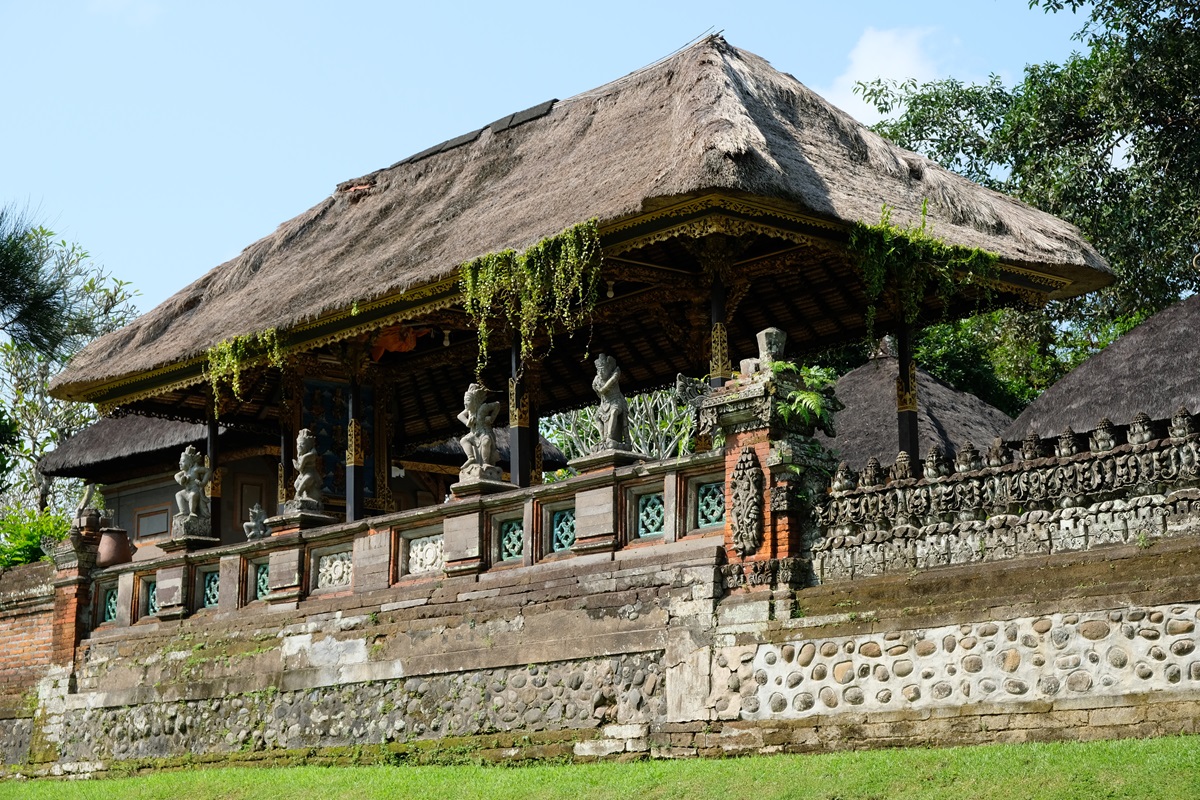
Smaller structures on the right side of the walkway to the heart of the compound

Bale pengubengan, one of the many bales (pavilions) within the compound
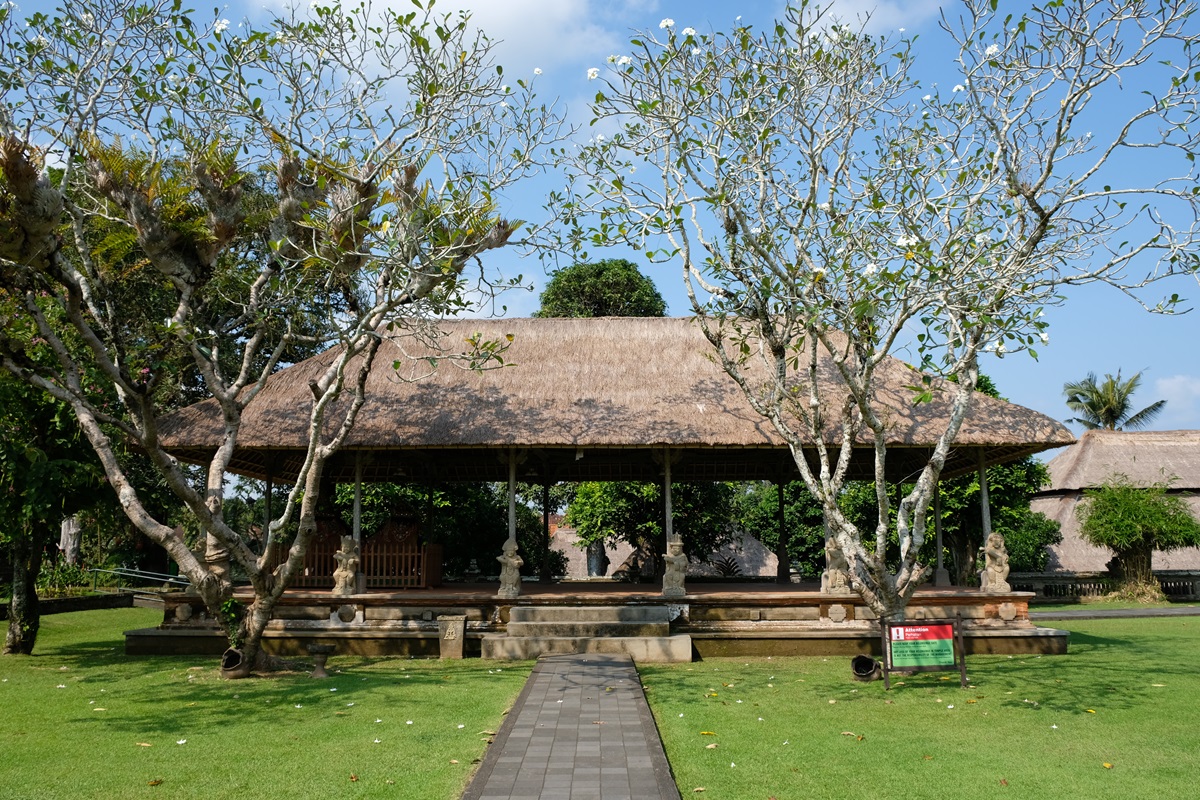
I particularly love how the trees frame the structure

The kori agung (main gate) of the most sacred part of Pura Taman Ayun

Even the bridge in the inner part of the temple compound is very ornate

Only being able to see this from a distance actually made the core area of the temple feel even more sacred

Exquisite stone carvings

A section of the temple that is off-limits to the public

Apart from beautiful carvings, Pura Taman Ayun also boasts towering merus
Ogoh-ogoh are not for the faint-hearted. Often inspired by characters from Balinese Hindu mythology, these larger-than-life figures usually take the form of macabre-looking ogres or animals. This is because they are supposed to represent evil or negative human traits. Traditionally they are paraded and burned on the eve of Nyepi, before the whole island shuts down for the Day of Silence when people stay in their houses, fast, meditate, and refrain from turning on lights or fires – even Bali’s busy international airport is closed once a year during this period. We stepped inside the museum and found ourselves standing underneath colossal figures. It was not a big place, but it was enough to give you an idea of how much time it must have taken to create those giants, each adorned with an intricate outfit and meticulously-crafted ornaments. But had I come to this place as a kid, I would’ve probably been terrified.
When we left the museum, the sun wasn’t as strong as before, creating the right conditions for us to start exploring Pura Taman Ayun. Surrounded by a forest to the north and water on the other sides, the temple compound can be accessed via a pedestrian bridge in the south. After paying the entrance fee at a ticket counter near a beautiful little heap of frangipani and marigold, we followed the path northward. At this moment, I felt something was different about this compound than how I remembered it from my previous two visits. Somehow it appeared to be more well taken care of, more regal even. The wantilan (a communal pavilion often used as a cock-fighting arena, at least in the past) on my right side was in a much better condition, and the other smaller structures too seemed more charming than before. Is it because of the brilliantly shining sun and the lovely blue skies?
The closer we were to the heart of the compound, the more peaceful the ambiance became and the more elaborate the structures appeared to be. After passing the bale pengubengan, we arrived at the gate to the most sacred part of the temple, which is off-limits to the public. Instead, visitors can follow the pathway to the left, walk clockwise around the moat, and marvel at the magnificent craftsmanship before their eyes. The exquisite display of elaborate stone carvings and towering merus (principal shrines with multi-tiered thatched roofs) made me feel as if I was seeing this place for the very first time. It was magical.
Pura Taman Ayun’s outer moat is an integral part of the subak of this area, a primary reason for its inclusion in Bali’s UNESCO-listed sites. In addition to that, its stately appearance further cements its significance not only for Mengwi, but also for the whole island. Multiple renovations in the past had helped the entire compound to remain standing to this day, keeping it relevant in an otherwise modern, fast-paced, and hyperconnected world. We were particularly impressed with the nicely done visitor center one would have to go through when exiting the compound.
There are no signs that mass tourism in Bali will slow down anytime soon, although I personally believe that it should happen for the island’s own sake. Major global airlines (including Emirates with their Airbus A380 – the world’s largest passenger airplane) keep bringing in loads of international visitors from across the globe, on top of the already high number of domestic tourists coming from other islands in Indonesia. Parts of Bali that are already very popular will likely remain that way in the foreseeable future. But there will always be places, like Pura Taman Ayun, that offer tranquility far from the crowds. And they are the main reason for me to come back to the island, sooner or later.

This section of the inner courtyard always catches my attention the most…
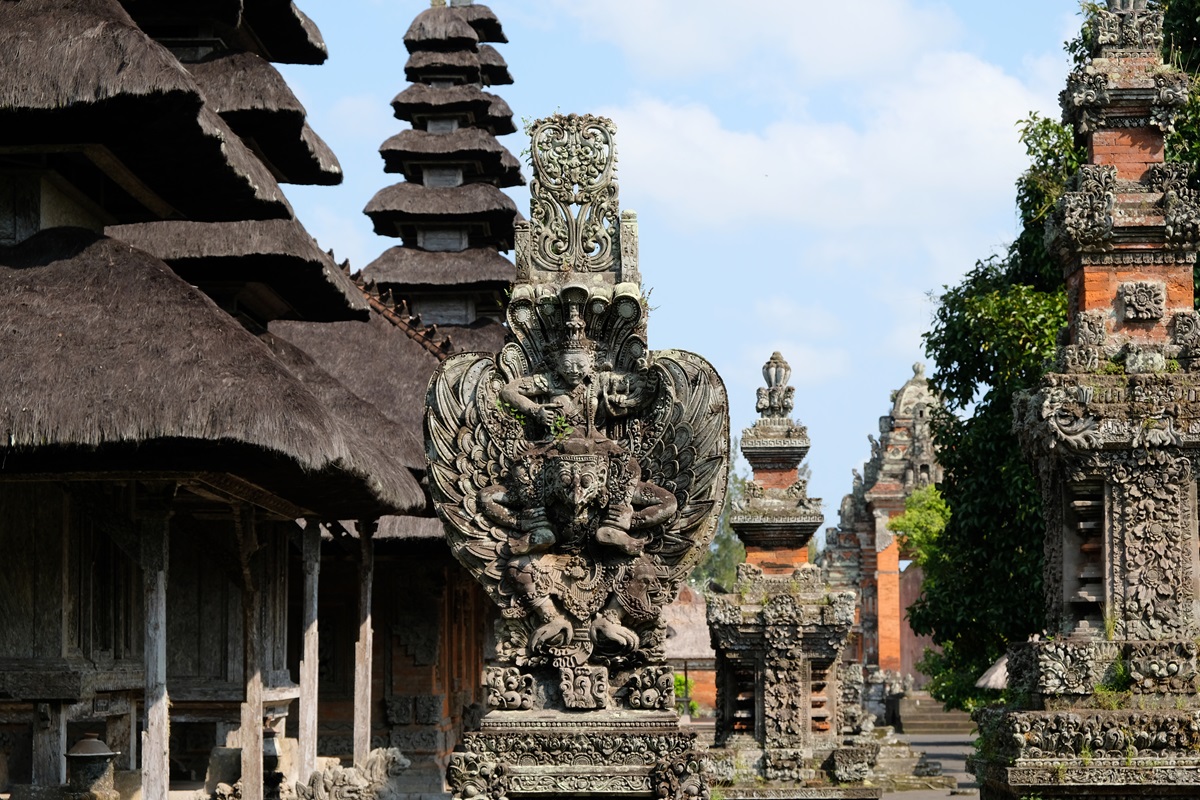
…because of this very fine sculpture of Vishnu riding Garuda

Sadly, newer temples are no longer built as elaborate as this

I can’t get enough of the beauty

One of the most photogenic angles of the temple compound

Left: A closer look at the kori agung; Right: A statue of Dewi Sri, the pre-Hindu goddess of rice venerated in Java and Bali

Barong (in the middle) and Rangda (to the right and left), symbolizing good and evil in Balinese mythology

Kenanga (Cananga odorata), a plant native to Southeast Asia with flowers so fragrant they are often used in traditional rituals as well as in perfumes
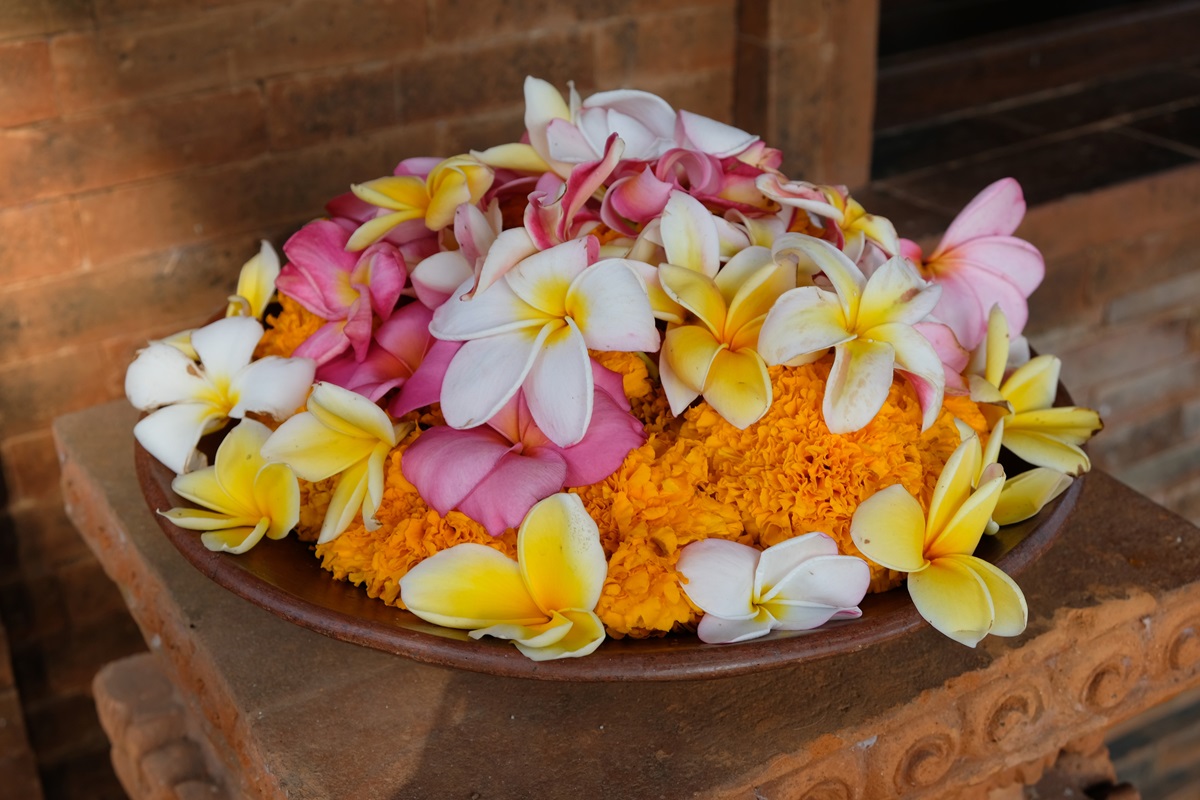
Frangipani and marigold, a common sight in Bali

An ornate fountain near the entrance of the temple compound

Pura Taman Ayun as seen from across the outer moat

Inside the Ogoh-ogoh Museum
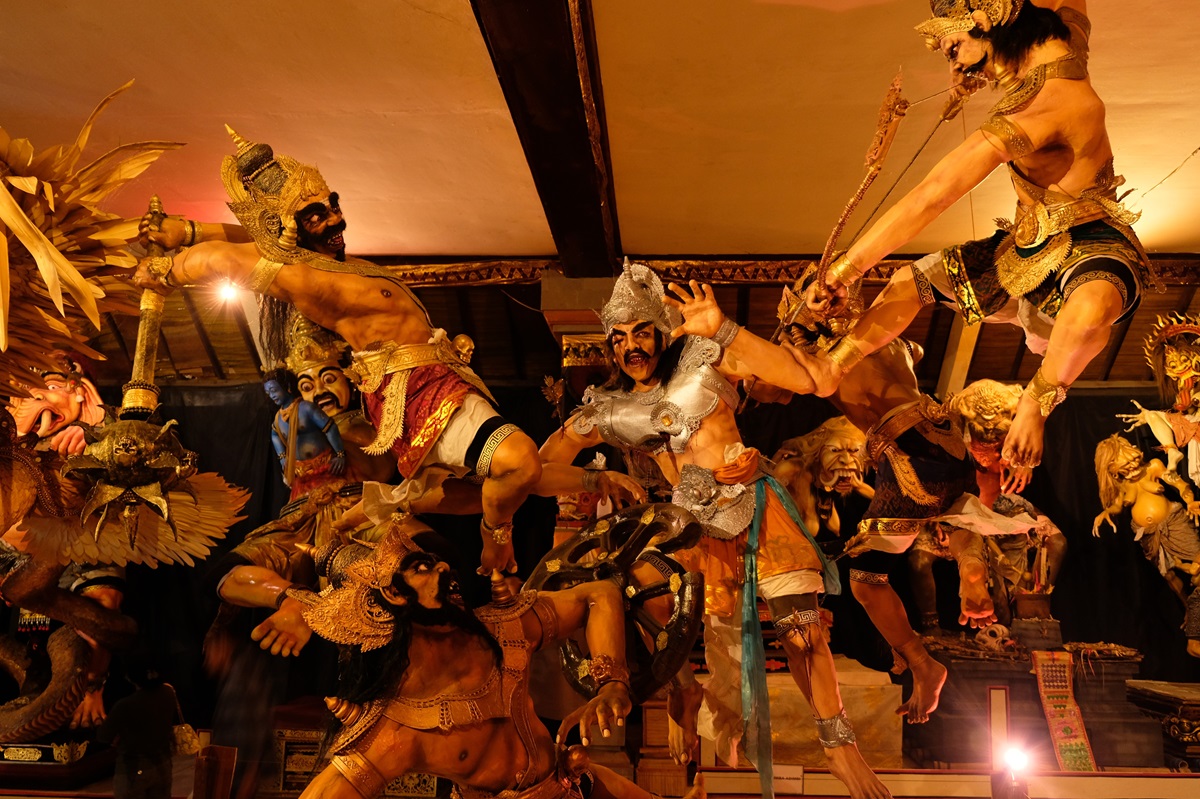
Not a sight for the faint-hearted

The lunch that led to our visit to Pura Taman Ayun

 What an Amazing World!
You two are my kind of travellers, building a day’s itinerary around exploring local cuisine! 😆 Too bad the oret was already sold out but your lunch looked delicious otherwise. I see a lovely pork skin crisp on top, so you got your dose of pork!
Pura Taman Ayun looked lovely and you had great weather for it too! It’s nice when you can visit a beautiful place at different points in your life and I bet each visit had a different reaction, feeling and context for you.
The ogre statues would’ve terrified me as a child too. It’s fascinating to learn about the local customs such as the Day of Silence when the nation slows down for a day to personal prayers and meditation. Very interesting to see how cultures vary at different parts of the world!
LikeLiked by 2 people
Haha! I believe this was not the first time we planned an excursion with a particular dish/restaurant at the heart of it. You can tell that we really are foodies.
I’m glad that we visited Pura Taman Ayun again because somehow this time around it felt more peaceful and looked more beautiful than before.
Tourists who happen to be in Bali during Nyepi often share photos and videos of how quiet the island is. They are, of course, advised to stay at their hotels and not wander around.
LikeLiked by 1 person
One of my colleagues is in Bali now. A little jealous but happy for her too!
LikeLiked by 1 person
Bali is halfway across the globe from Canada. So I hope she’s having a great time!
LikeLiked by 1 person
Thanks for your pictures and wonderful descriptions. A wonderful trip for me. And all for free.
LikeLiked by 1 person
I’m glad you enjoyed this visual tour to what I think is one of the most beautiful Hindu temples in Bali.
LikeLiked by 1 person
what an amazing trip, I love your pics and the food you showed
LikeLiked by 1 person
Much appreciated, Beth. I’m glad you enjoyed this post.
LikeLiked by 1 person
So funny that a meal James had, only once, in another restaurant, dictated your afternoon plans! We actually visited Pura Taman Ayun when we were in Bali. I don’t know what the festival was, but the entire place was decorated in bamboo penjors (if, with my lack of knowledge, I got the name right) and sashes. We really enjoyed it. Maggie
LikeLiked by 2 people
Crazy, right?! But because of that we got to see Pura Taman Ayun again, and we loved it even more than before. Yes, those ornate bamboo decorations are called penjors. How lovely that you visited this temple during that festival (there are many, but I’m guessing it was either Galungan or Kuningan).
LikeLiked by 1 person
I’m not sure we even knew at the time what it was, but it was beautifully decorated, as was most of the town.
LikeLiked by 1 person
Penjor is used by Hindu communities in Indonesia to signify a celebration. But even in predominantly Muslim Java, it is still used especially at weddings, although it’s nowhere as ornate as what you would find in neighboring Bali.
LikeLiked by 1 person
Vishnu on Garuda was indeed a fine sculpture.
LikeLiked by 1 person
I loved every little detail of it. Did you know that there is a giant version of it on a hill in the south of Bali? I’ve never been there though, but it’s quite popular among tourists.
LikeLiked by 1 person
No, I didn’t. Haven’t been to Bali yet… Maybe one day.
Jumpa lagi. 😉
LikeLiked by 1 person
Really cool that the two of you spent the day visiting Pura Taman Ayun just to eat a particular dish! It’s unfortunate that you didn’t end up having said dish, oret. All the same, it still looked like a great excursion! Similarly, I’ve heard about Bali’s overtourism and hesitate to visit because of that; however, I’d happily visit the less-frequented parts of Indonesia, Mengwi included! Thanks for sharing, Bama 😊
LikeLiked by 1 person
Although we didn’t get to have oret, it was still a fun excursion. And to our surprise, Pura Taman Ayun left an even deeper impression than in our previous visit. It requires careful planning if one wishes to see Bali’s charming side away from most tourists, indeed.
LikeLiked by 1 person
Pura Taman Ayun is so photogenic, Bama. I love how no two visits to the same place is ever the same, and I’m glad that this was a particularly lovely experience seeing that the restaurant didn’t have the sausage you made the detour for. I would have been terrified of the Ogoh-ogoh too – not just as a child, but I suspect they will give me nightmares as an adult too. 😆
LikeLiked by 1 person
After this trip, I looked up the photos of Pura Taman Ayun that I took in my previous visits. The structures are practically the same, but somehow the temple in its entirety looked very elegant this time around. I remember going to a fair in Jakarta as a child, and I was terrified by someone who dressed up in a zebra costume (with a zebra head!). And don’t get me started on clowns!
LikeLiked by 1 person
I’ve heard about people being terrified of clowns. Although I don’t find them scary, I cannot say that I find them very funny looking at all.
LikeLiked by 1 person
As I get older, I’m no longer scared of them. But I still don’t find them pleasant to look at.
LikeLiked by 1 person
I wouldn’t have thought to add Bali if I ever come to Indonesia but you have convinced me that it is worth a stop but going outside the beach and resort areas…Pura Taman Ayun is absolutely stunning.
P.S. I have read about the major flooding in Sumatra and other places in Indonesia so I certainly hope you and your family & friends are safe… (Suzanne)
LikeLiked by 1 person
You can always drop me an email if you’re thinking of going to Indonesia and wondering if you should include Bali or not. I can give you recommendations of where to go and what to see on the island, away from most tourists.
Tropical cyclones are a rarity in this part of the world. So when Cyclone Senyar happened, people were not really ready for that much water in a relatively short period of time. The deforestation in Sumatra only makes things worse. Thank you for your thoughts, Suzanne.
LikeLike
What a bonus that searching for oret ended in a wonderfully unexpected temple visit! Your descriptions of the temple — from the water-moat and the carved gates to the serene pavilions and meru towers — really evoke how special and calming the place must have felt. It’s a nice reminder that travel rarely follows a perfect plan — sometimes the detours (and missed sausages!) lead to the most memorable experiences 🙂
LikeLiked by 1 person
You put it well, Hannah. Sometimes it’s the things we didn’t plan that turn out to be among the most unforgettable moments of our travels. I think you would enjoy this Balinese temple as well because of its lush setting.
LikeLike
Now you will have to return at least ONE more time, to get your oret! This is a beautiful post with so many interesting bits of information. I would love to visit Bali, and this temple in particular – and the museum would be fabulous too and I’m pretty sure with your warning, I would be ok with the graphic depictions.
I came to your blog today because I am worrying about you and the people you love and hoping everyone is safe in the flooding. The extent of the devastation is hard to grasp, and especially hard from such a distance when my news is not very clear over here.
LikeLiked by 1 person
I will surprise myself if I actually go back to Bali to try my luck with oret! But this island, despite its popularity, remains one of my favorite places in Indonesia. So, I will definitely visit Bali again — for oret or something else.
Thank you for checking in on me, Crystal. The recent flooding in parts of Sumatra caught everyone by surprise because being in the equator means that Indonesia almost never gets cyclones. There was a warning issued by the state agency for meteorology, though. But environmental degradation in parts of the island is widely accepted as one of the main reasons for the scale of the disaster. So far, Jakarta (the city where I live) is safe and it’s more than 1,000 kilometers away from parts of Sumatra hardest hit by the flooding.
LikeLiked by 1 person
Thank you for explaining. I heard Jakarta mentioned in the news reports, so I misunderstood the location of the threats. I am glad for you, but so pained to hear about the widespread devastation in Sumatra, and also in Sri Lanka, where the families of other friends of mine live.
LikeLiked by 1 person
Honestly, this reminds me of the devastating 2004 tsunami that hit the northern part of Sumatra and Sri Lanka especially hard. I hope the families of your friends are safe.
LikeLiked by 1 person
Thank you Bama. I, too, thought of that catastrophe, and was sad to learn that the devastation (at least in Sri Lanka) is worse in 2025 than in 2004. My friends” families are safe, but are worried about the future economic impacts. I think this will also be a concern for the other flood-ravaged areas.
LikeLiked by 1 person
Oh my! I didn’t know that in Sri Lanka the destruction caused by this year’s flooding is worse than what happened in 2004. The country was still reeling from its worst economic crisis in decades. And now this. I hope the worst is over, and the people can slowly start rebuilding their lives.
LikeLiked by 1 person
Love how you planned the rest of your day around where you wanted to eat. Seems like it worked out well though as Pura Taman Ayun looks beautiful and sounds interesting. And you know what they say, the third time’s a charm!
LikeLiked by 1 person
I might do more trips like this in the future where food is the main reason to go (I already have a few places in mind). This detour to Pura Taman Ayun was fun. And you’re right, third time’s a charm!
LikeLiked by 1 person
What an amazing temple, Bama! Here’s to hoping it stays clear of the onslaught of tourism that seems to be plaguing Bali. Love those roofs, so impractical (and so great because of that!)
Fabrizio https://www.there-yet.com/
LikeLiked by 1 person
I really hope so, Fabrizio. But the ‘good’ thing is most tourists only go to the usual places, leaving many quieter corners of Bali remain largely that way. Aren’t those roofs impressive? You make a great point about practicality vs. beauty. Today, we tend to gravitate toward the former, and as a result uniformity becomes the norm, unfortunately.
LikeLike
And even when practicality is at the forefront of our thought the results are, well, rubbish. My father lives in a block of flats built in 1903. The balconies, there, are made of a solid slab of stone resting on stone plinths. They have cast-iron railings with beautiful designs. In living memory, no one has ever had to do any work to maintain these, apart from painting the railings. Rain, snow, sleet, ice, heat… as if they’ve never been there. Here in London, instead, they bolt the balconies on and already the one in the block of flats next to mine are in need of maintenance.
LikeLiked by 1 person
Sadly, many things people use these days are intentionally made not to last that long (more sales!). And because of this, those that do are often sold at exorbitantly high prices (high demand, low supply).
LikeLike
I kept reading even after the intro paragraph with the description of oret … I am the opposite of a foodie! But it was worth it for you and me as a reader to go there anyway to see Pura Taman Ayun. The buildings are impressive, but it was the setting (and the way you showed that in the framing of your photos) that really drew me in.
LikeLiked by 1 person
And the lack of visitors when we went only made the experience even better. Pura Taman Ayun is located inland and away from the island’s tourism hotspots, which means those who visit are usually the kind of people who are interested in learning about the local culture and history.
LikeLiked by 1 person
I hope to visit Bali one day, and I must remember Pura Taman Ayun because your presentation highlights the quality of its architecture.
LikeLiked by 1 person
I think you should visit Bali sooner than later. It’s already very popular now, but as you can see you can still find peaceful corners on the island far from where most tourists go.
LikeLiked by 1 person
Absolutely. Now, I’m not looking for a quiet holiday, but like you, I’m interested in the island’s main attractions, mainly monuments and landscapes. The good places are popular for a reason, so I expect there will be a few people around me.
LikeLiked by 1 person
I agree with you that a lot of places are popular for a reason. Despite the crowd, I still went to Angkor Wat and Chichen Itza, and I’m glad I did. I will probably not want to miss Venice when I go to Italy, or Barcelona in Spain. I just have to manage my expectations.
LikeLiked by 1 person
You paint Bali so wonderfully with your words and photos, and what makes this post so perfectly ‘Bama’ is how a ‘failed’ food mission still turns into the ideal travel day 😊. The combination of that quiet babi guling lunch, the awe‑inspiring ogoh‑ogoh museum (which really might be my favorite stop if I ever visit…), and your third encounter with Taman Ayun really brings out how layered Bali can be once you leave the usual beach circuit behind. As someone who isn’t a fan of tourist beaches, this post hits a great mark. What you say about today’s tourism pressures also shows how much it takes to keep places like this both sacred and alive, and I’d sure love to see it for myself someday. Cheers to a great holiday season, Bama!
LikeLiked by 1 person
Haha, I guess you’re right, Randall. But honestly if we couldn’t find anything interesting in that area, we would’ve probably gone somewhere else to have lunch. We surely didn’t regret visiting Pura Taman Ayun again. I don’t remember the last time I went to the beaches in Bali, because in my opinion neighboring Lombok has much nicer beaches. It’s always the cultural sights on the so-called the “island of gods” that I’m more drawn to. I wish you a joyful holiday season too, Randall!
LikeLike
This looks like a truly wonderful place to visit for its stunning Balinese architecture, tranquil “beautiful garden” setting with lily ponds and moats, historical significance as a royal temple, and its UNESCO World Heritage status. I love how it offers a peaceful cultural experience, great photo opportunities, and a less crowded alternative to bigger temples. Bali truly offers a spectrum of experiences, and it’s nice to see that it is still possible to find peaceful corners if you venture beyond the main tourist hotspots. Thanks for sharing, and have a good day 🙂 Aiva xx
LikeLiked by 1 person
For those who are more interested in Bali’s cultural sights than its beach clubs and party spots, Pura Taman Ayun is definitely a must. And I’m glad that it was still a very peaceful place when we went. Thankfully, this temple is not the only site where you can witness the old charm of Bali that made this island famous in the first place.
LikeLike
Bama, as several others have alluded to in their comments, I guess we’ll have to track down a place with a reliable supply of oret the next time we return to Bali! Pura Taman Ayun was clearly one of the highlights of our week on the island — I too was surprised at how quiet it was and what had been done since our previous visit to spruce up the temple grounds. Perhaps that has something to do with its UNESCO World Heritage listing. And getting a personal tour of the nearby ogoh-ogoh museum from its artist founder was the cherry on top!
LikeLiked by 1 person
If I remember it correctly, our driver brought us an urutan the next day after realizing how much we wanted to have the other sausage. It was already cut into smaller pieces, and it was really good. But you’re right, we need to find a place that does oret the next time we’re in Bali! I’m really glad that we decided to visit Pura Taman Ayun again. I think it is now one of my favorite Hindu temples on the island.
LikeLiked by 1 person
It’s good that Bali still has tranquil places with such beautiful buildings, merus and sculptures. It’s noticeable that almost all photos of Bali on social media are of beaches or the same several places in Ubud.
LikeLiked by 1 person
Yes, fortunately. But mass tourism is really putting a lot of pressure on the island’s environment. I certainly hope decades from now Bali will still retain its charm.
LikeLiked by 1 person
I understand and I hope so too. Ironically, if I visit Indonesia, my first choice wouldn’t be Bali but Yogyakarta for the massive historical Buddhist and Hindu structures there.
LikeLiked by 1 person
Yogyakarta is another part of Indonesia I can never get enough. It’s a perfect place to delve deeper into Javanese culture, and of course the ancient Hindu and Buddhist temples are also impressive.
LikeLiked by 1 person
I’m glad that it’s perfect for experiencing and knowing more about Javanese culture. I understand that it also used to be a royal capital so that interests me as well.
LikeLiked by 1 person
It actually still is the royal capital of the Sultanate of Yogyakarta, the only province in Indonesia where the local sultan retains his political power following the country’s independence from the Netherlands. The new republic decided to grant Yogyakarta this special status due to the latter’s pivotal role as the temporary capital of Indonesia during the war of independence (when Batavia — present-day Jakarta — fell under Dutch control again).
LikeLiked by 1 person
That’s impressive that it’s still a royal capital and makes it more interesting to visit.
LikeLiked by 1 person
And the royal palace is now part of the UNESCO World Heritage-listed Cosmological Axis of Yogyakarta. So, it’s definitely worth a visit.
LikeLiked by 1 person
I intend to visit that palace if I go there.
LikeLiked by 1 person