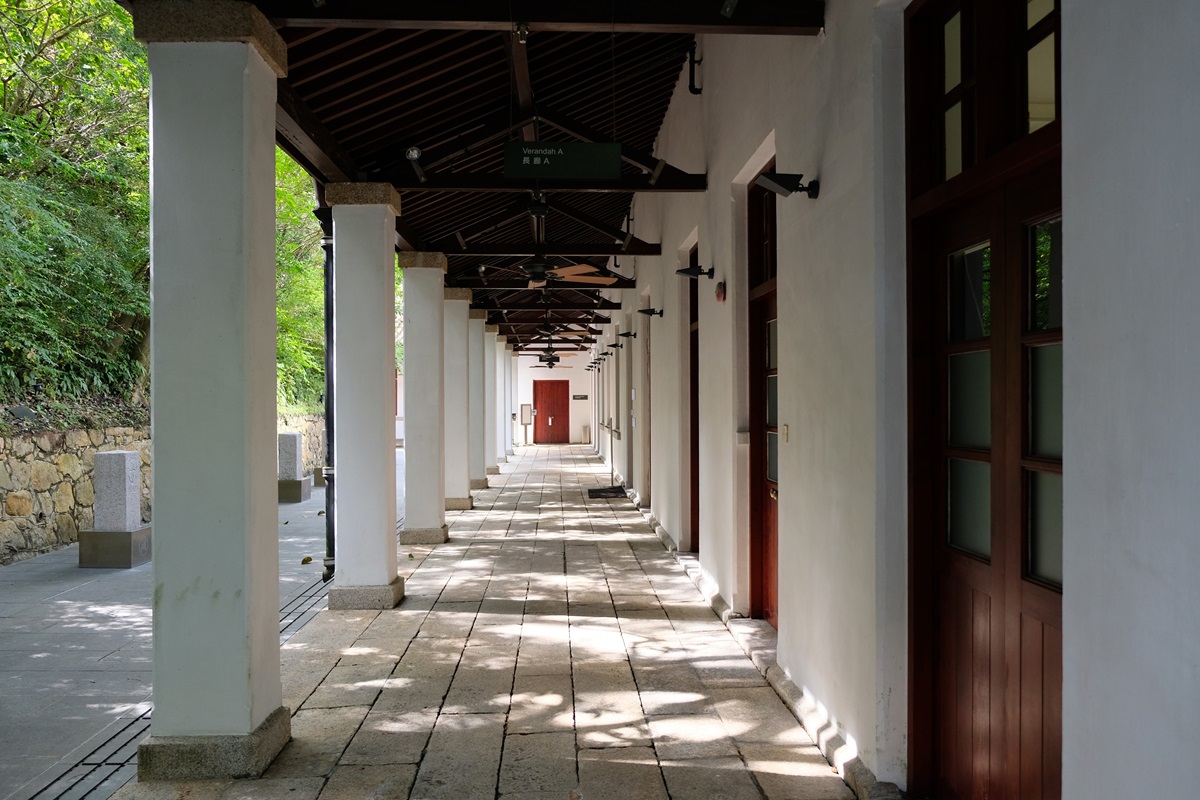
The former laboratory of the British-era compound in what is now the Asia Society Hong Kong Center
I don’t remember exactly how it started, but apart from my penchant for ancient sites, now I also have a soft spot for urban renewal projects. These are initiatives and programs aimed at revitalizing dilapidated parts of a city to make them more lively, more accessible, and healthier – generally turning them into better versions of themselves. Different cities have their own way of achieving this goal, but it often involves preserving heritage buildings and transforming them into spaces that are relevant to the current needs of the local community. Also known as adaptive reuse, this is a trend that doesn’t seem to be abating anytime soon, and I genuinely think it is a good thing.
From a half-empty traditional market that is partially turned into a hub for independent small-scale retailers to a former post office that is better known today for hosting creative events, Jakarta joins a slew of urban areas in the region that embrace adaptive reuse in earnest. However, there is one city close to my heart that has been doing this exceptionally well: Hong Kong. Before the pandemic, I visited two particularly interesting sites there that were excellent examples of urban renewal: the former police station of Tai Kwun and the old warehouses of a textile company collectively called The Mills. And when Hong Kong finally reopened its borders to the world, I immediately booked my flights and returned to this endlessly fascinating city to check out similar projects it has to offer.
Despite its location close to the heart of the financial district on Hong Kong Island, it was only in December 2023 that I finally set foot in the Asia Society Hong Kong Center, one of the outposts of the namesake New York City-based nonprofit organization that was initiated by the Rockefeller family in 1956. Built in the 19th century to store explosives for the British Army, the compound was given a new lease on life in 2012 following a conservation and restoration effort that saw not only the refurbishment of the old structures, but also the addition of elevated walkways that crisscross the hillslopes on which the original buildings were constructed.
Once James and I stepped inside the compound, I couldn’t help but feel peaceful, thanks to the dense foliage covering the hills and the soothing sound of water running down the concrete drainage channel underneath. During our visit, a temporary exhibition was held at one of the old buildings, showcasing some of the best works of Pang Jiun, a prolific Taiwanese painter hailed as a master of “Eastern Expressionism”. Deeper within the compound were beautifully-restored former explosives magazines, a laboratory, cannons, and munition tracks from the British period. And if one gets hunger pangs while exploring this cultural and intellectual center, a rather fancy-looking restaurant aptly named Ammo can be found two floors beneath the reception level. We didn’t dine there though.
Across Victoria Harbour in Kowloon’s Mong Kok neighborhood, the Urban Renewal Authority (URA), a body responsible for accelerating urban redevelopment in Hong Kong, had carried out an equally interesting project. The facades of ten historic buildings constructed in the 1920s between No. 600 and 626 Shanghai Street were preserved and revitalized by the URA following their decline decades after their heyday as a commercial hub. Now collectively called 618 Shanghai Street, this cluster of old shophouses has been transformed into spaces filled with attractive independent retailers, from vintage stores selling household items that were popular across Asia during the time when Hong Kong was a manufacturing hub to a Japanese-inspired wabi-sabi ceramics studio.
Beautiful murals evoking the past adorned some corners of the compound, including a wall depicting the now-demolished Bird Street, once famous for the many stalls specializing in pet birds. But not everything in this mall is about nostalgia of the good old days. At a rooftop restaurant called Poach, we were joined by James’ cousin E for an al fresco lunch of grilled eel, poached egg, and pickled vegetables. While the food was good, E noticed the rather surly server with James quickly adding that Hong Kongers should learn from Southeast Asians when it comes to hospitality.

A modern bridge connecting the Asia Society Hong Kong Center’s separate structures
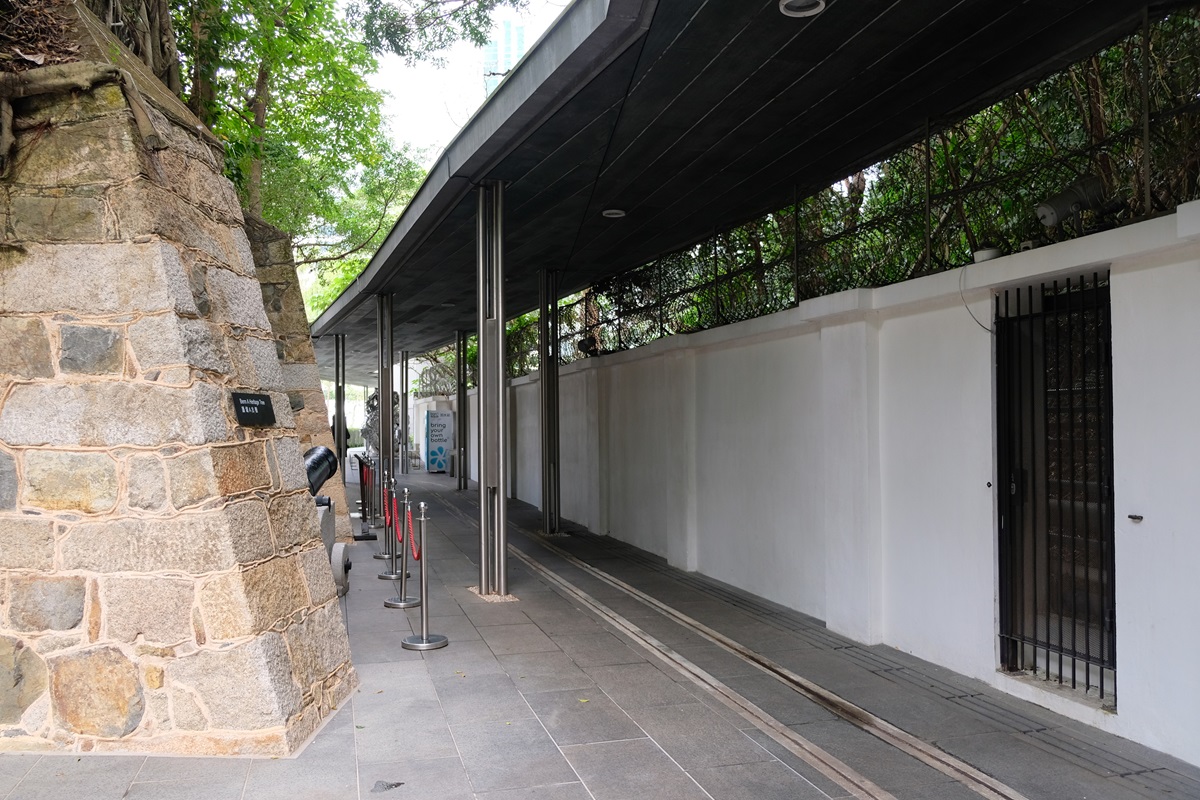
I really like the juxtaposition of old and new in this place

Old British cannons on display

The dense foliage around the old buildings was another reason I really enjoyed my visit

A path to follow

One of the former explosives magazines

This structure now functions as a theater

I loved that the place gave the sense of it coexisting in harmony with nature
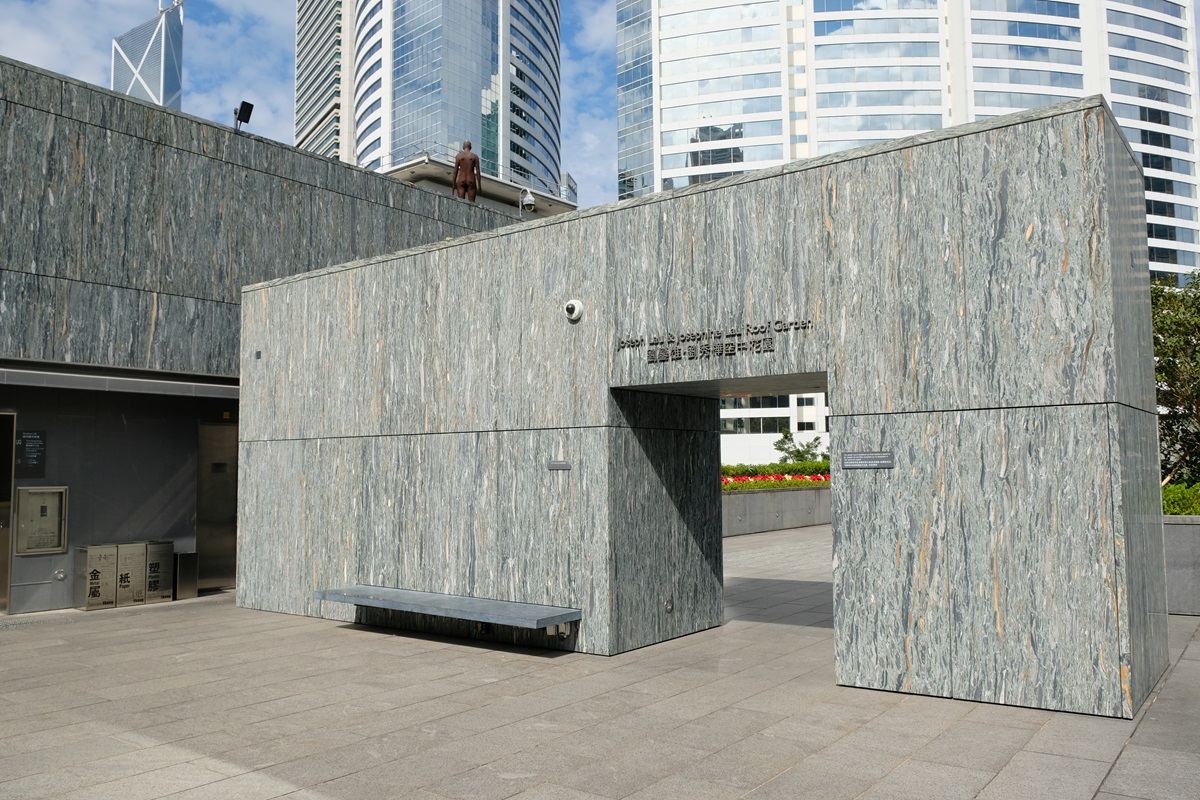
The rooftop area of the compound

An art installation inspired by the head of the Buddha
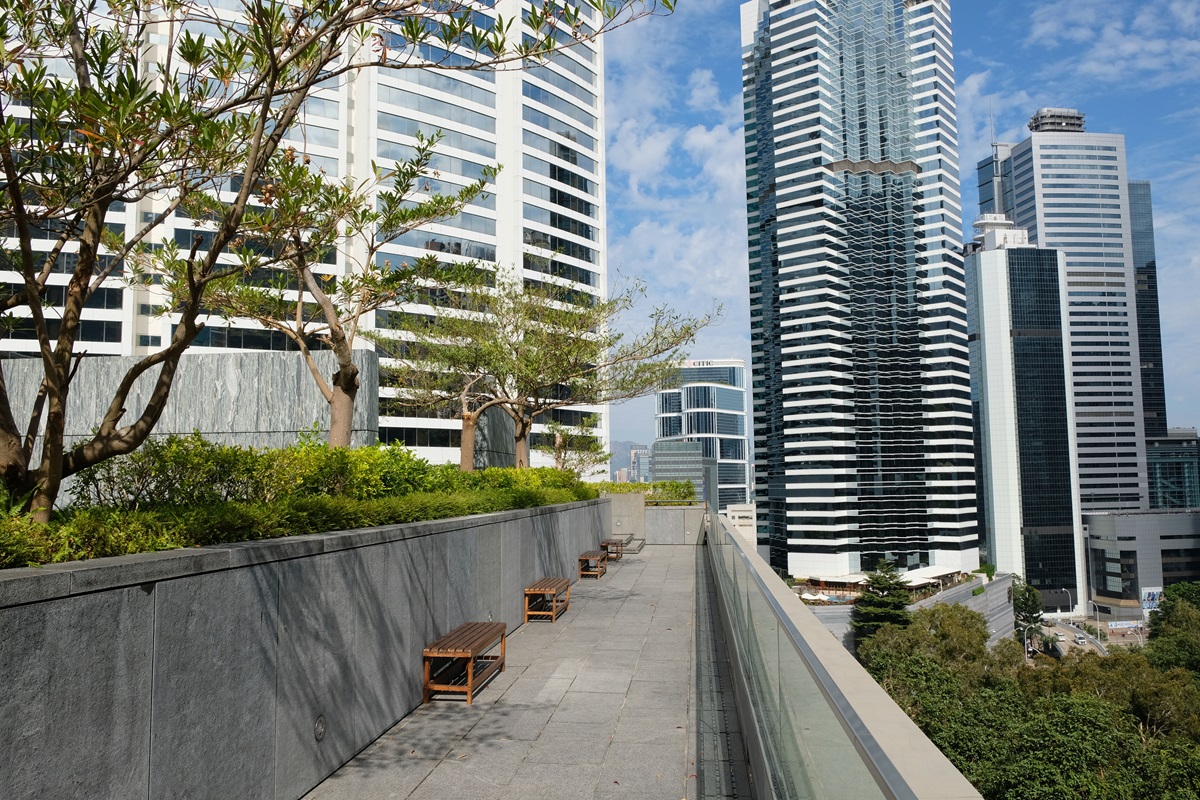
It’s probably nice to sit on one of those benches in the late afternoon

Another perspective on the Hong Kong outpost of the Asia Society

618 Shanghai Street in Mong Kok

How the street looked in the past
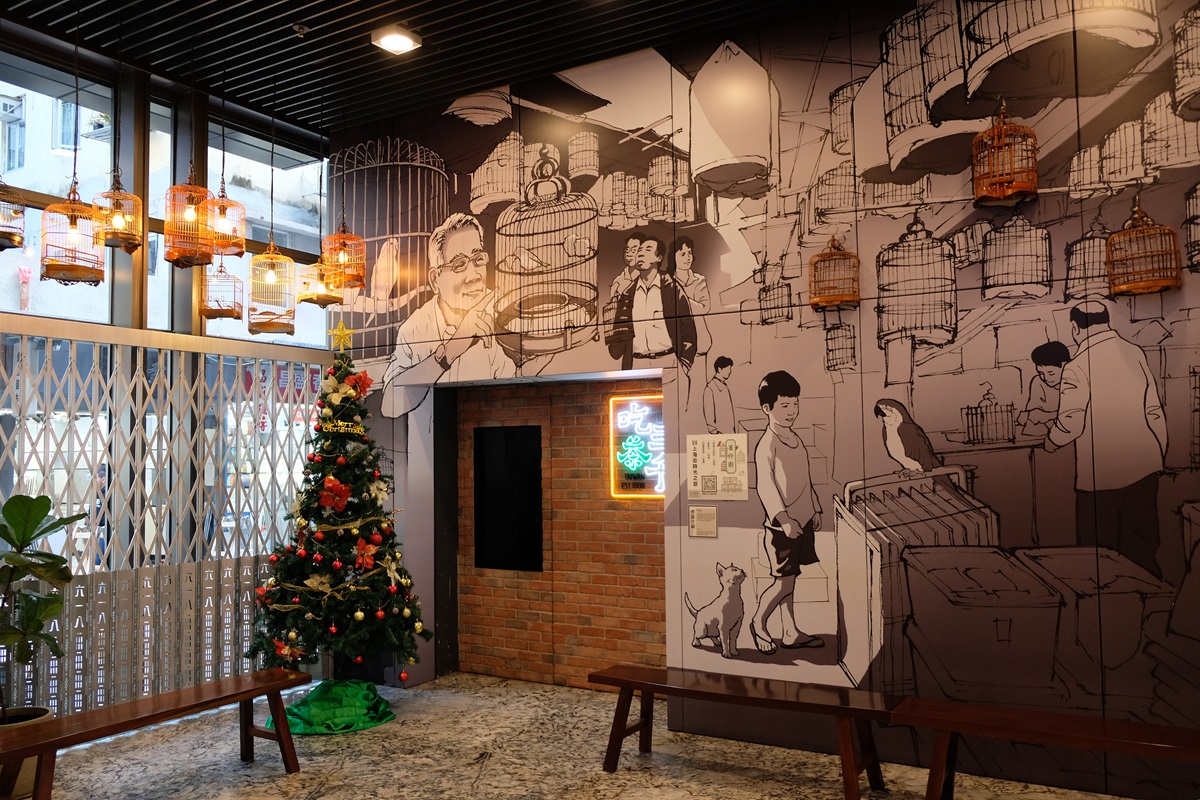
This mural pays homage to the former Bird Street
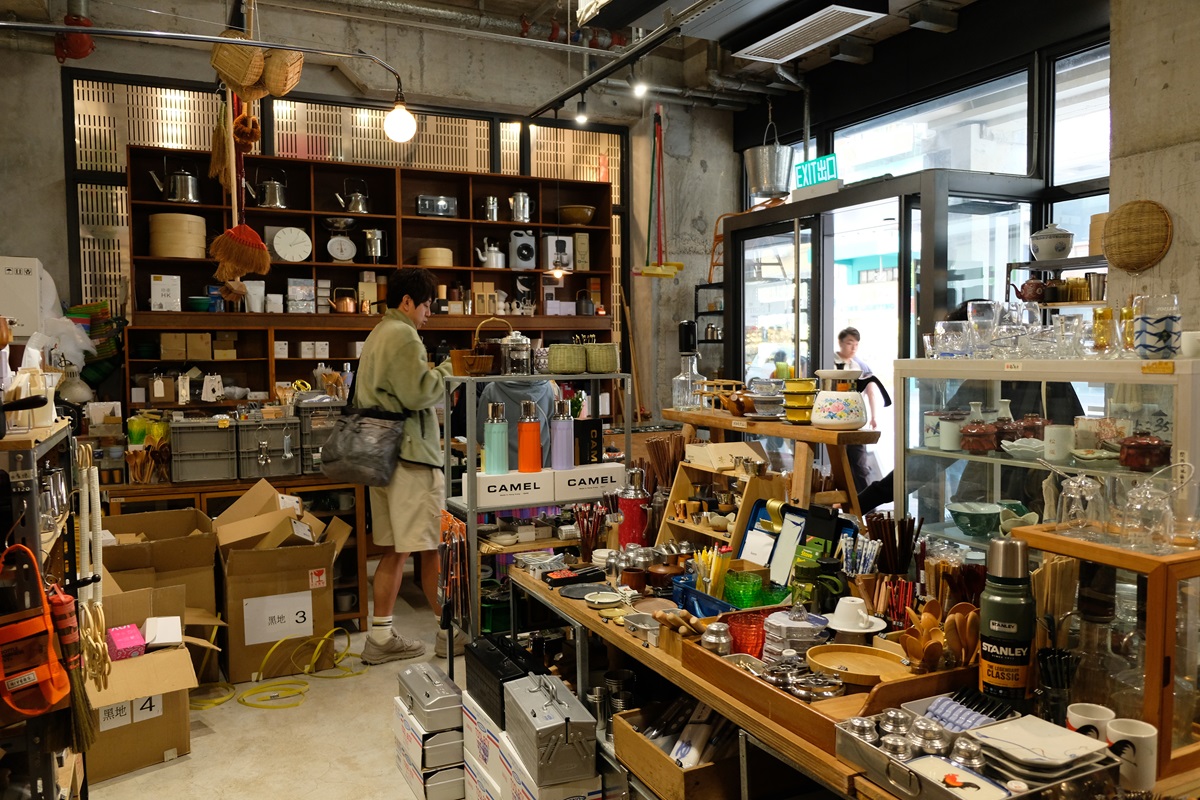
Some of the items at this shop reminded me of my childhood when Hong Kong-made goods were widely available in Indonesia

Another interesting independent retailer at the mall

A thrift store with items so random you wouldn’t expect to see them in this part of Hong Kong
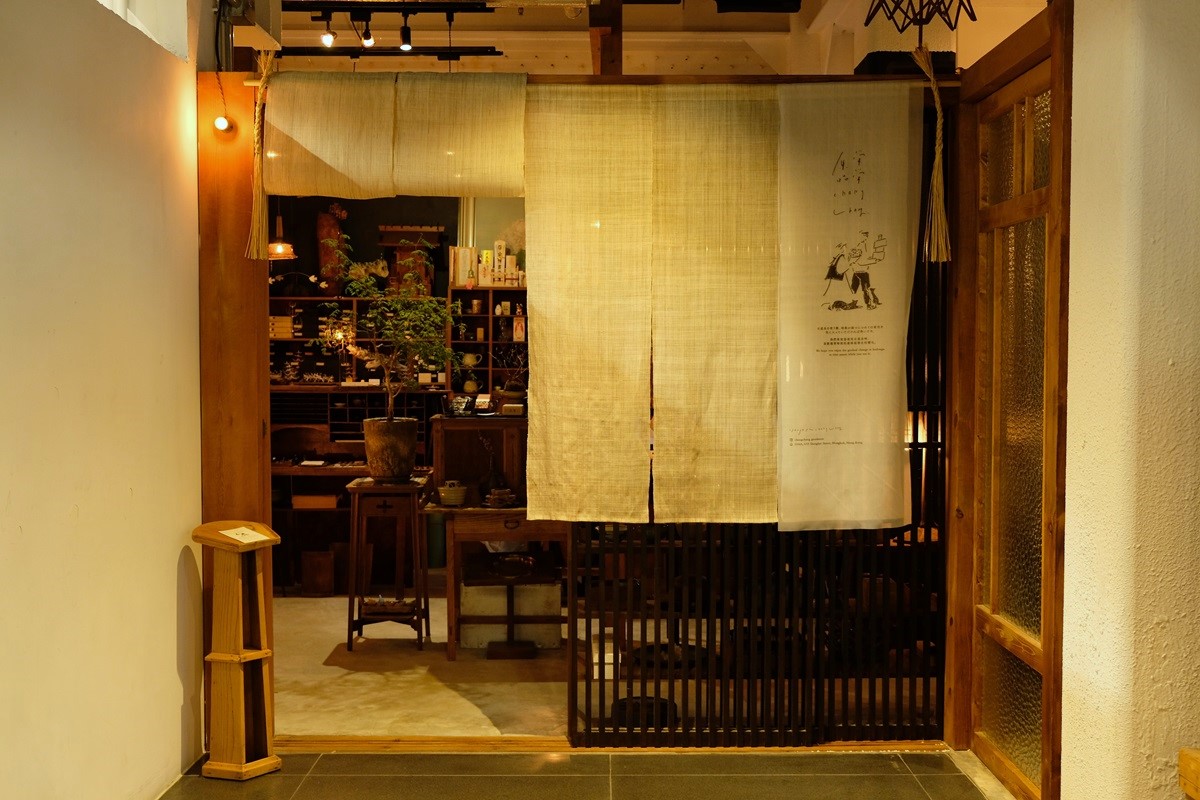
A Japanese-inspired ceramics studio
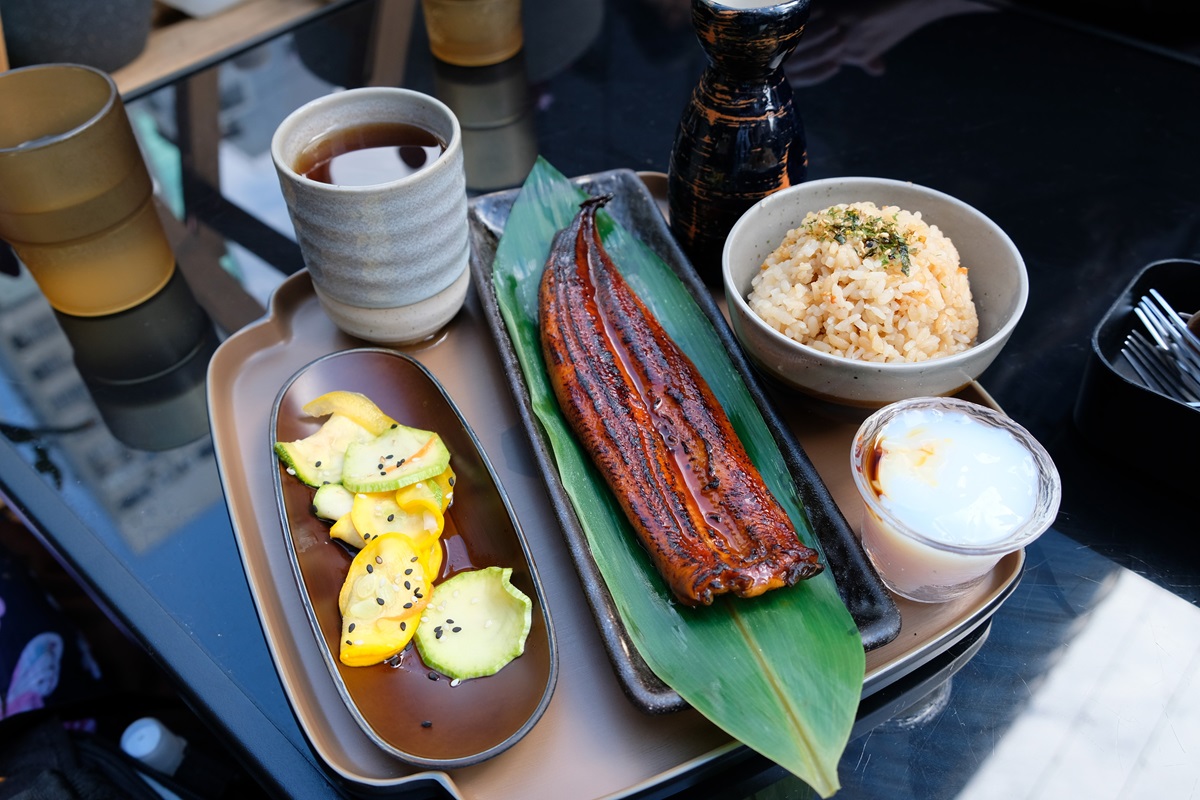
Grilled eel for lunch

Another view of 618 Shanghai Street
Back on Hong Kong Island, a bigger urban renewal project had been implemented by the URA and was reopened to the public in 2021. Central Market traces its history back to the 19th century when it began as a wet market – the first in the former British colony. In 1937, the old building was demolished and replaced with a new structure designed in the Bauhaus and Streamline Moderne architectural styles. This incarnation of the market was inaugurated in 1939 and operated for decades. However, the 1990s saw the market’s fortunes declining as customer behavior began to shift. Parts of the market were torn down to make way for the construction of the Central–Mid-Levels escalator, the world’s longest outdoor covered escalator system – which itself is very impressive. By 2003, the market was largely abandoned with only a few shops that remained open. In 2017, the URA finally stepped in and a four-year preservation project commenced.
Compared to the compact mall we visited earlier in Mong Kok, Central Market is a lot bigger and, in some ways, flashier. It also benefits from its central location. When we went, there was a Christmas-themed children’s piano competition in the atrium with curious onlookers watching the performances from the terraces above it. My favorite part of this place, however, was the beautifully-designed bright-looking vintage signage as it gave the redeveloped market a touch of sophistication.
Further to the east of Hong Kong Island in North Point, there was yet another adaptive reuse project that proved to be a favorite place for hanging out among the locals. In 1908, the Royal Hong Kong Yacht Club built their headquarters and clubhouse on this location which used to be by the harbor. However, subsequent land reclamation made this compound lose its prime waterfront location and pushed it further inland. After World War II, it was used by the Government Supplies Department until 1998 when the premises were rented out. This attracted a number of artists to lease the space and turn it into the Oil Street Artist Village. But a few years later, the government decided to evict the tenants and handed the management of the compound to the Antiquities and Monuments Office.
In 2007, the Hong Kong government assigned the Leisure and Cultural Services Department to redevelop the site, a project that would take six years to finish. It was then reopened as Oil Street Art Space (marketed as Oi!), an organization that promotes visual arts by providing a platform for the city’s aspiring talent to showcase their works, which are intended to spark discussions among the public. When we visited, there was a visually-intriguing exhibition by Inkgo Lam, a homegrown artist specializing in bamboo craftsmanship. Among her works on display were bamboo-inspired kinetic sculptures that drew parallels with how human organs work, figuratively speaking.
As I left the final of these four sites, each a brilliant case of inspiring urban renewal project, I couldn’t help but think of how far Hong Kong has come in the sense of conserving its architectural treasures. It appears that the city no longer favors razing old buildings to erect new ones. Now it sees great potential in preserving its decades- and centuries-old heritage structures and making them relevant today, which adds more charm to the city itself. I won’t be surprised if the next time I come the metropolis offers even more exciting urban renewal projects to explore and learn about.
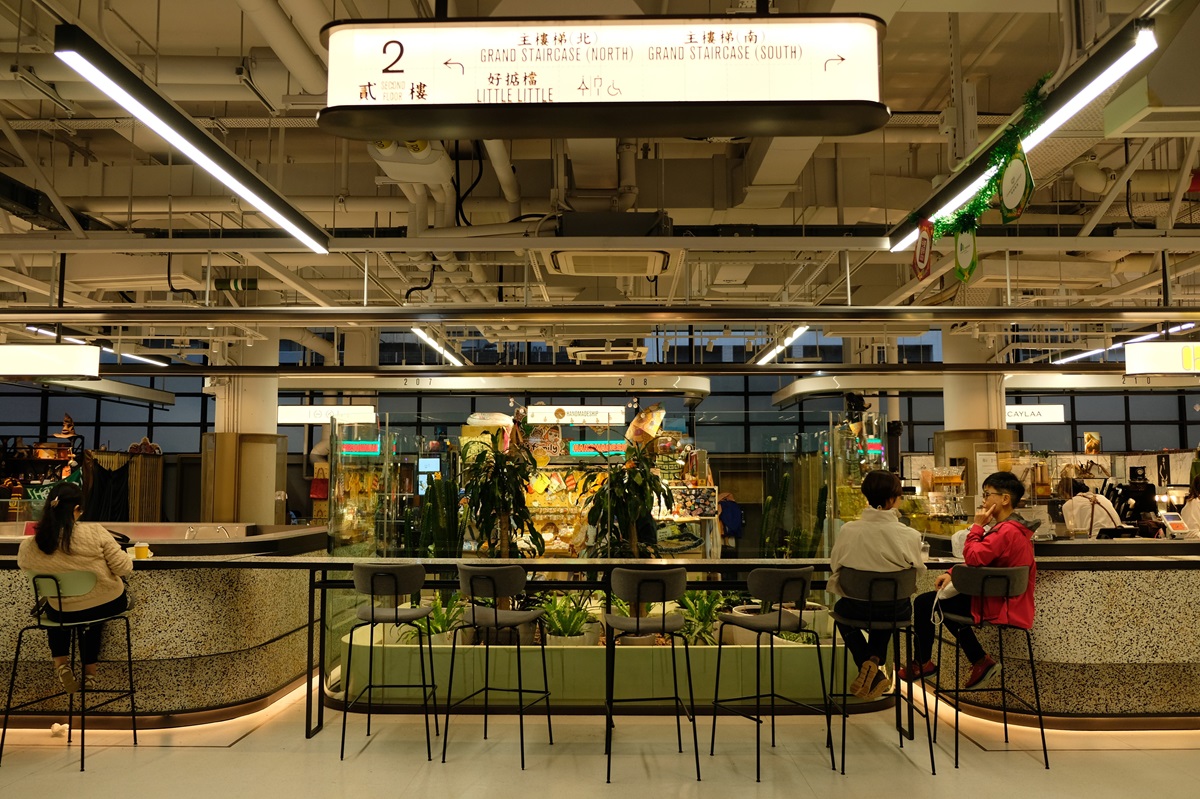
Inside Central Market

I love the signage

Colorful decorations with a lively children’s piano competition in the atrium below
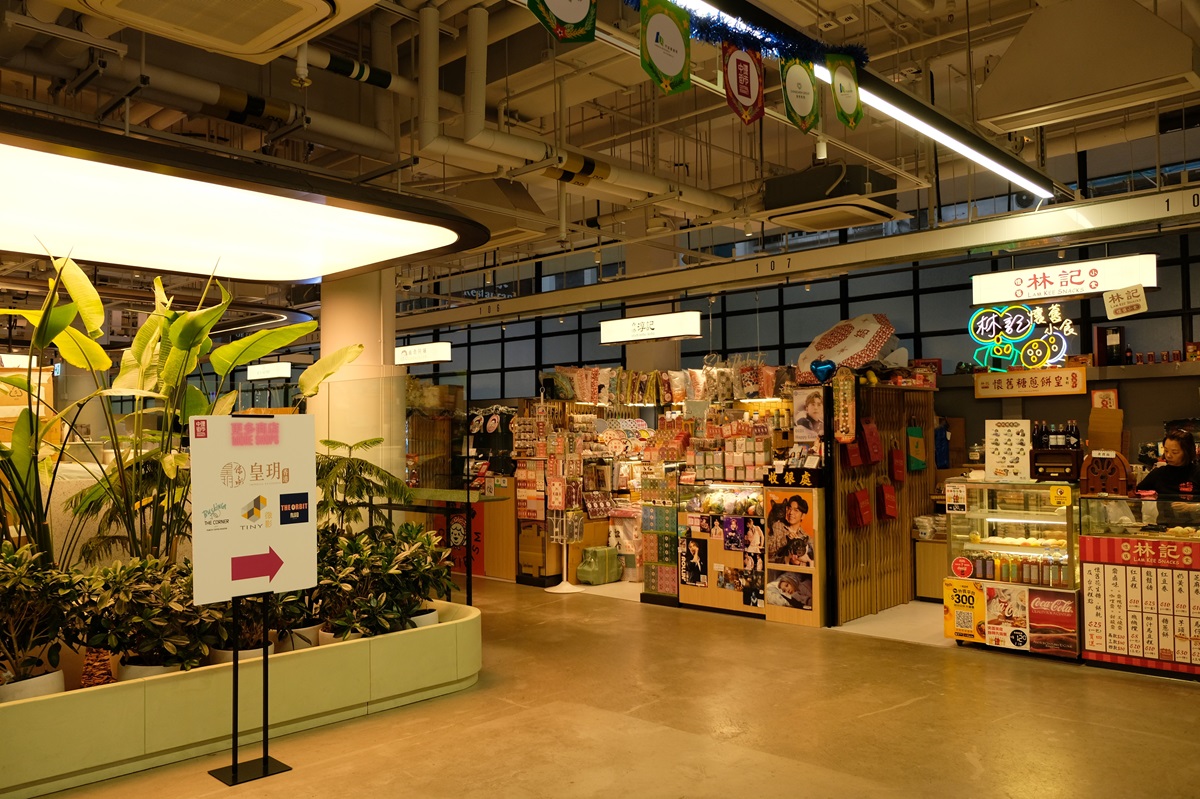
An aesthetically-pleasing market
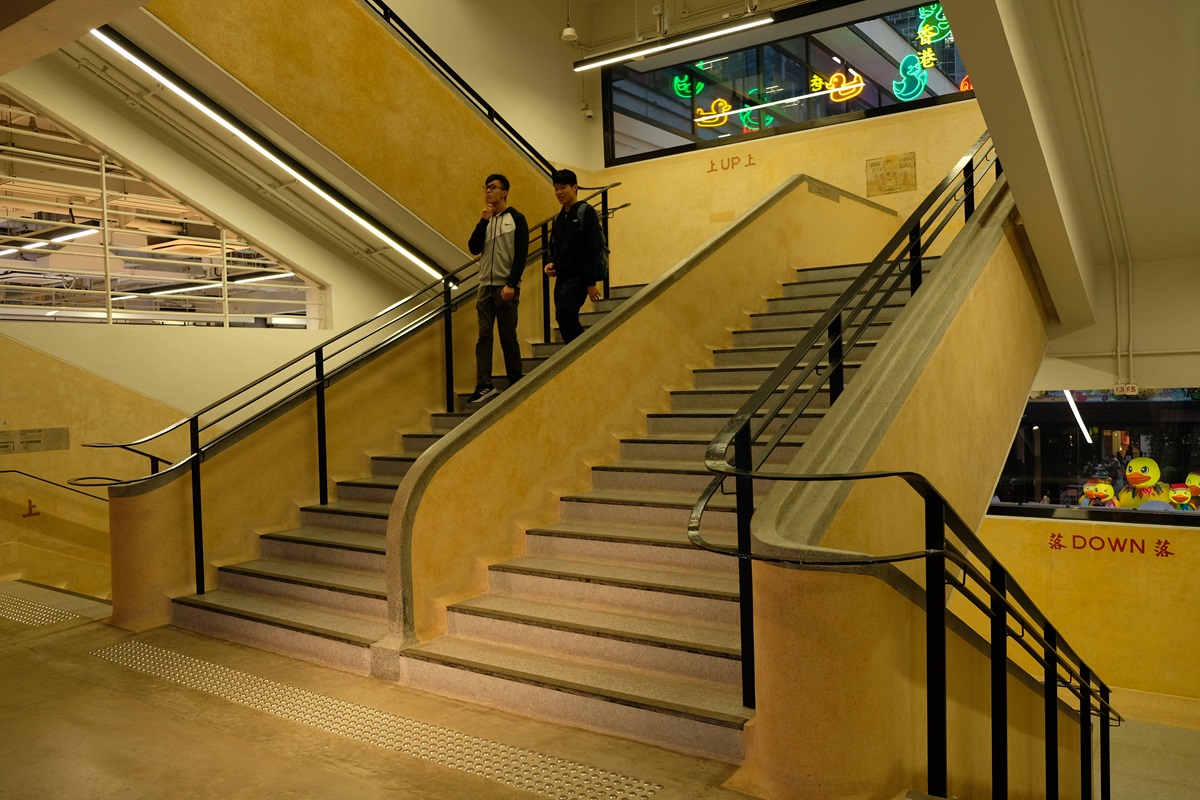
They retained the look and feel of Central Market’s old staircases

Oi! in North Point

Chilling in chilly Hong Kong
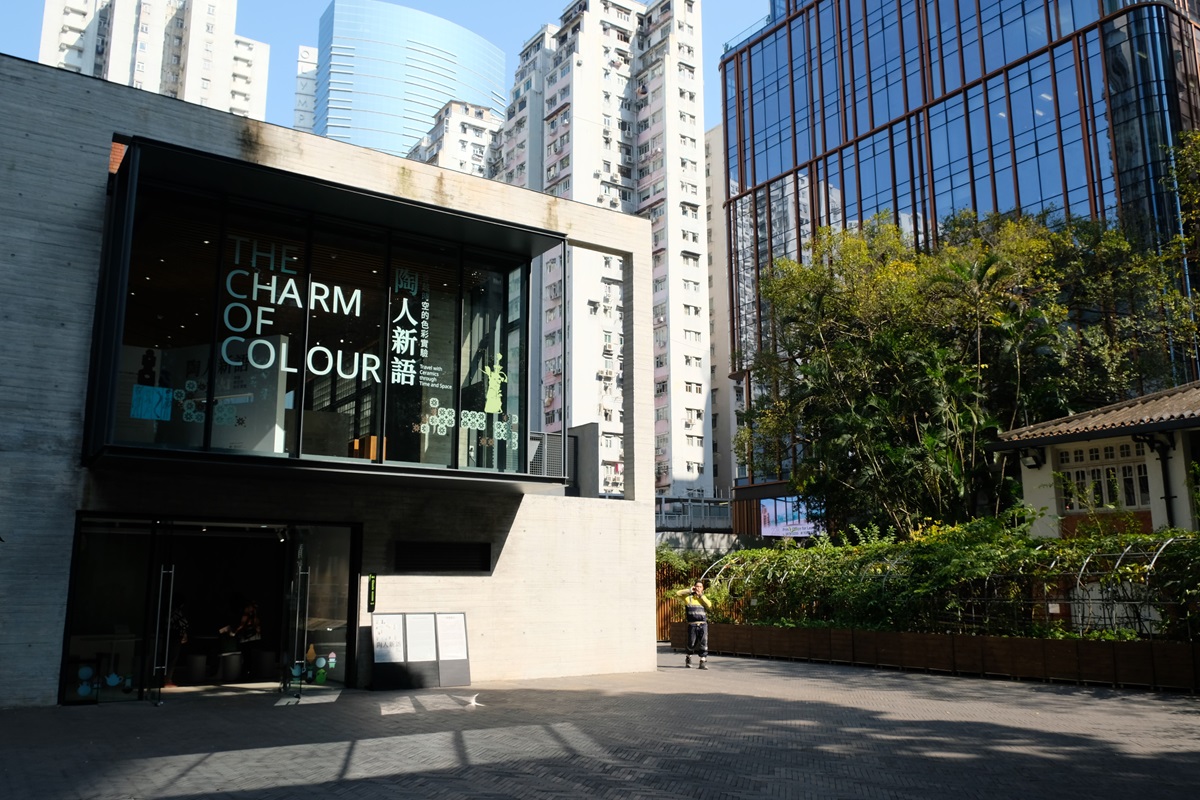
How nice it must be to have an art gallery within short walking distance from where you live

An exhibition showcasing the works of three artists from China and Hong Kong

One of Inkgo Lam’s artworks titled Activate
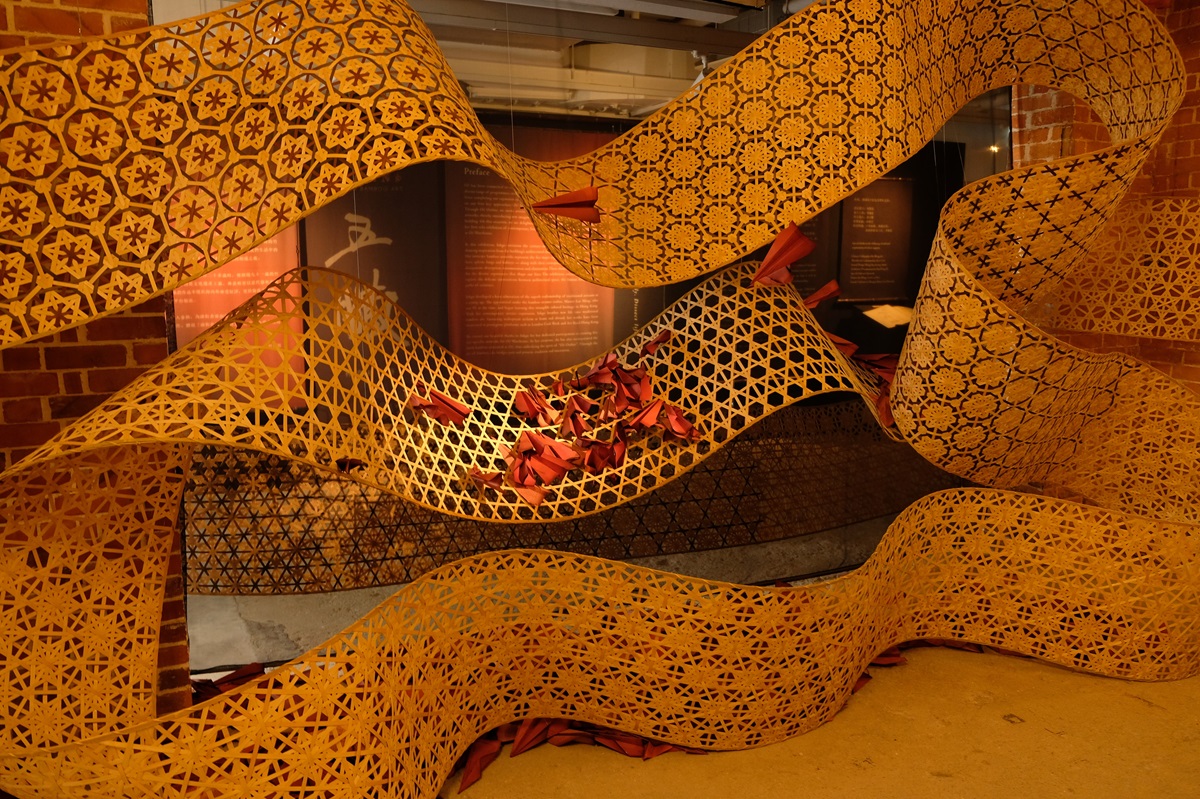
This was a collaborative work between the artist and 638 visitors who folded a page from a copy of the 17th-century book called The Art of Worldly Wisdom, turned it into a paper plane, and launched it into the artwork
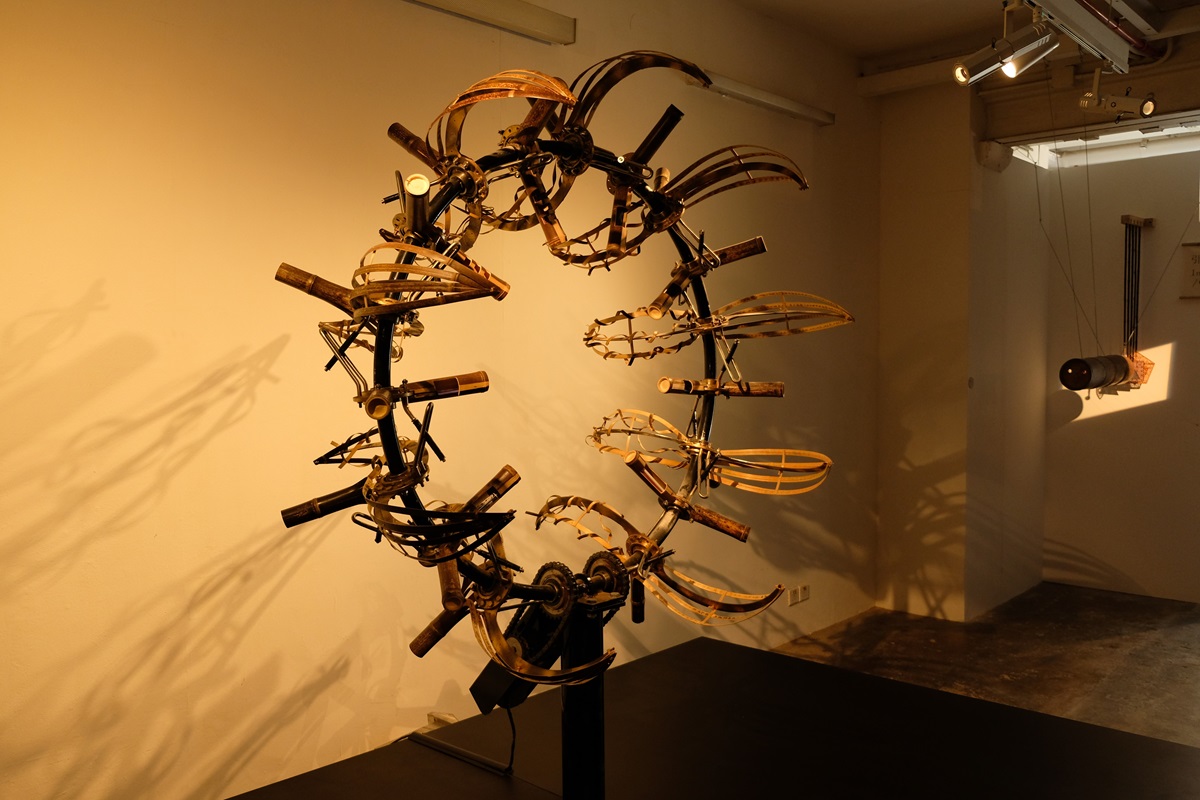
This kinetic sculpture was called Dissipate
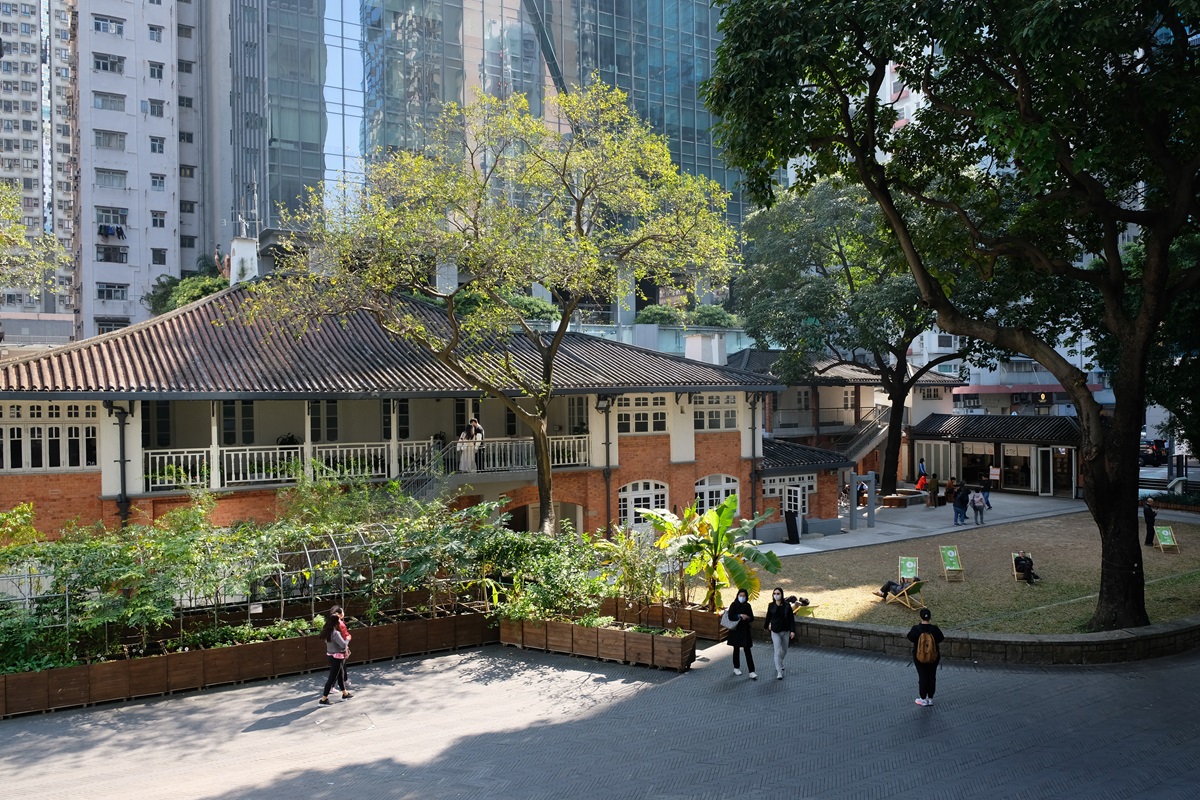
The former headquarters and clubhouse of the Royal Hong Kong Yacht Club that is now Oi!

 What an Amazing World!
I share your enthusiasm and interest in urban renewal projects, Bama. I always feel that a city is advanced and cultured when it finds that sweet spot between development for the future and preservation of the past – and Hong Kong seems to have found that sweet balance. The photos are lovely and you can really see the juxtaposition of the past and present – respect to tradition while carving space for innovation. The Central Market looks a great spot and love the art galleries too! I must visit HK again one day.
LikeLiked by 1 person
Razing old buildings to build new ones is easy. However, by doing so a city risks losing a part of itself that, in many cases, is often charming. I’m not against constructing modern structures, but I do see the value of preserving heritage buildings. Adaptive reuse projects excite me because they demonstrate that being old doesn’t mean a place is irrelevant today.
Thanks Ab, and yes, a visit to Hong Kong sometime in the future is a good idea!
LikeLiked by 1 person
I alos hate it when cities tear down old buildings to erect shiny new ones (like my city, Calgary does). To use them for public spaces is one of the best solutions. You certainly need to know a city or spend enough time there to be able to find these buildings and realize the extent of the transition. I can tell you’ve gotten to know Hong Kong quite well. Maggie
LikeLiked by 1 person
Exactly! When heritage buildings are repurposed to serve the interest of the community, they become relevant. And when that happens, tearing them down would be unpopular. I have to thank James for introducing me to so many corners of his hometown many tourists are unaware of.
LikeLiked by 1 person
It’s great to learn that HK is preserving its old buildings and I agree that the natural vegetation preserved around the site makes it more pleasing. I also loved that the Central Market’s beautiful Art Deco stairs were preserved.
LikeLiked by 1 person
The realization that preserving heritage buildings can actually benefit the city came a bit late for Hong Kong. Many beautiful structures from the past are forever gone now. But luckily when the city finally saw that there is another way of moving forward apart from tearing down its old buildings, they do it really well.
LikeLiked by 1 person
I love this, and thank you for taking me on a tour. It’s great to hear that some of these old buildings in HK are being preserved; I love the fact it’s preserving tradition and history, whilst also renovating many places to be ultra modern.
LikeLiked by 1 person
What you said is exactly one of the reasons why I find Hong Kong very fascinating. Glad you enjoyed this, Hannah.
LikeLiked by 1 person
Very beautiful! Glad that a good handful of the historic buildings in Hong Kong are being preserved, even being repurposed. Hong Kong has eluded me, despite having been to China a handful of times, and I hope to head over there some day to see these buildings for myself! Thanks for sharing, Bama 🙂
LikeLiked by 1 person
You should visit Hong Kong, Rebecca. And when you do, try to go there in winter (December or January) when the air is cool and crisp. There are so many things this city has to offer!
LikeLiked by 1 person
Wow – I love these urban renewal projects. It would have been a waste to demolish all these places. If things go well, I might be visiting HKG in a couple of months. I’ll be using your blog and James’s blog as a reference instead of guidebooks. I mostly just want to see my elderly aunt and uncle so we’re not spending a lot of time sightseeing.
LikeLiked by 1 person
Oh how exciting! You know, even with a very short amount of time you can still see different parts of Hong Kong, thanks to its efficient public transport network.
LikeLiked by 1 person
They have done some great things with the architecture here! So cool to see!
LikeLiked by 2 people
They really have. Their attention to detail in these projects is truly remarkable.
LikeLiked by 1 person
I think it’s genuinely a good thing too to preserve and repurpose heritage buildings and transform them into something new. It definitely adds some charm and character to the city. It’s a great way to acknowledge the past and also refocus on the needs of the present (and future). Beautiful pictures to showcase some of the successful urban renewal projects.
LikeLiked by 1 person
It’s very encouraging to see more and more cities in the region treating their heritage buildings with more respect. And I genuinely think hanging out at such places is much cooler and more atmospheric than at malls — which in this part of the world can look very similar with one another. Thanks Linda.
LikeLiked by 1 person
I’m a big fan of adaptive reuse also. I like it aesthetically, economically, and most of all, as an antidote to waste!
LikeLiked by 1 person
Exactly! There are cases where I personally think old buildings should be repurposed instead of demolished. A city like Hong Kong, with its dense concrete jungle, can definitely benefit from such projects as these four sites demonstrate.
LikeLiked by 1 person
An enthusiastic thumbs up for re-inventing and reusing older structures for me as well. The bridge/boardwalk through the foliage connecting the different parts of Asia Society is genius! As is the mural commemorating Bird Street. Most old cities used to have them and some still do. The one in Sulaymaniyah, Kurdistan is still going strong!
I had pickled eel in Finland recently, but your version looks far more appetizing. 😉
LikeLiked by 1 person
The reimagination of the Hong Kong outpost of Asia Society is truly remarkable. It really embodies the spirit of harmonious coexistence between old and new. Where I’m from, keeping pet birds is a part of the culture. My dad used to have several, including some roosters as well. I remember I wasn’t so keen on their droppings though. 😄
I don’t think I’ve ever tried Finnish pickled eel. The only thing from Finland I’ve had is this mineral water brand called Bonne which tasted… well, water.
LikeLike
Recently, I have been reminiscing about Hong Kong… such a beautiful and historical city, and you paint its future so beautifully with this post, Bama. Great opening shot—I can’t tell you how many times I walked through those columns, with almost every time wondering what it was like “way back when…” Like you, I too have a soft spot for Urban Renewal projects as they add to the vibe of the present, with the special vibes of the past. I’m thrilled to see HK doing such a fantastic job of this. The walkways in Hong Kong have always been superb, and to know that they are adding and creating even more access is perfect… You can walk anywhere, go anywhere in HK with such ease.
A beautiful series of photos matches your writing and brings back such great memories. The Central Market was another area I walked through thousands of times, and as you mention, it was really a sad sight in the early 2000s—and even when they were in the process of renovating, many of us didn’t think it would be pulled off. So happy to be proven wrong (and I should know better than to ever discount the people from HK when they want to do something!). Wonderful, nostalgic post, Bama, and thank you very much! Enjoy the beginning of autumn, and safe continued travels.
LikeLiked by 1 person
Hong Kong is a very special place for both of us, for different reasons. Despite the city’s penchant for razing its historical buildings in the past, I’m glad to see where it is heading, conservation-wise. These four projects show how urban renewal through adaptive reuse is not only a concept people talk about, but also something they believe in. These sites make Hong Kong an even more exciting place to visit, in addition to the ease of going anywhere that you mentioned.
Thanks for sharing your memories of Central Market, Randall. I can imagine the doubt, or even the opposition, at the beginning of the project. But this must be one of those occasions where most people are happy when they’re proven wrong.
Enjoy autumn too! This year has been unseasonably wet in my part of the world.
LikeLike
This is such a fascinating post. I think that preserving heritage buildings in any city is a fantastic idea because it safeguards the city’s unique identity, cultural memory, and “social capital” for future generations. These buildings offer authentic links to the past, contribute to tourism and urban quality of life, and can be revitalised for new public uses. In Latvia, there is a town called Kuldiga, a place that has always been keen on preserving traditional architecture through strict building regulations and support for residents’ restoration efforts, leading to UNESCO recognition and attracting visitors. Thanks for sharing, and have a good day 🙂 Aiva xx
LikeLiked by 1 person
I like the term “social capital”. It reminds us of the importance of things that make us, well, human. Money, after all, is not everything. I have to admit I wasn’t aware of Kuldiga before. So, thanks for bringing this Latvian town to my attention, Aiva.
LikeLike
Like you, I really appreciate it when cities down demolish buildings, but reinvent them for the current needs of the inhabitants, Bama. The urban renewal projects you showcase here are simply wonderful. It got me thinking that I’ve actually been to the old Bird street when I saw your pictures of 618 Shanghai Street, and I had a quick glance at the map. I only spent two weeks in Hong Kong back in September 1999, so my memories of it is very vague, but I remember clearly the area where all the birds were sold, and old men walking around and sitting on benches with their little songbirds.
LikeLiked by 1 person
How cool that you’ve actually been to the old Bird Street! I wonder how much of this neighborhood you would still recognize if you ever come back to Hong Kong. But maybe visiting 618 Shanghai Street will further rekindle your memories of that trip in 1999.
LikeLike
I suspect I may not recognise anything in the Hong Kong of today, Bama. Also my trip there was unintended. It was born from the refusal to re-enter Taiwan where I worked at the time, spending a night in the airport detention centre, before flying to Hong Kong to see if the school could sort out the mess. Just to wake up to the news of a huge earthquake in Taiwan, trying to get hold of my family in South Africa via payphones to tell them I am actually in Hong Kong . . . Let’s just say that the fragments I remember involved an enormous amount of stress, before I ran out of money after two weeks without any solution, and had no choice but to return to South Africa. Maybe, when we meet one day on your Portugal trip, I will tell you the whole story. 😇
LikeLiked by 1 person
Oh my! That chain of events surely wasn’t ideal for experiencing this otherwise fascinating city. Communication technology has definitely improved by leaps and bounds since that time when payphone was the only option you had to tell your family on the other side of the globe that you were okay. I will for sure let you know if that Portugal trip materializes, Jolandi.
LikeLiked by 1 person
Every time I see your photos of Hong Kong, and read the post, I wonder why I don’t plan to make a stop when I change flights. I must do it next year.
LikeLiked by 1 person
I hope my posts on Hong Kong convince you that the city is worth exploring. Even if you’re just there for a brief visit, its efficient public transport system will take you to a lot of places in no time.
LikeLiked by 1 person
Asia Society Hong Kong has been there for quite a few years, but when I went with you two Christmases ago it was only the second time I’ve been! The attitude to heritage preservation there has completely changed (for the better) since my school days – back then developers and the government would knock down gorgeous historic buildings without a second thought. Projects like these and Tai Kwun are such great examples of the value of finding creative new uses for them. I hope Indonesian cities like Jakarta can learn from Hong Kong’s success on this front.
LikeLiked by 1 person
I remember the photos you showed me of beautiful old edifices Hong Kong used to have, like the General Post Office building. It’s such a shame that wrecking balls easily demolished them despite their history and artistic value. But a change for the good, however late, is still commendable. It’s also encouraging to see how more and more people in Indonesia realize the importance of preserving historical buildings. They can be such cool venues for various events!
LikeLiked by 1 person
Fantastic post, Bama. I’ve only been to two of these sites, Central Market and Asia Center, and the latter was for a company event so I couldn’t look around. Each of these sites is quite interesting and attracting, and does a good job of making use of Hong Kong’s heritage. I’ll definitely check out the Mongkok Shanghai Street site the next time I’m in HK (I was born there, though I grew up in Trinidad, so I have a special interest in HK historic places).
LikeLiked by 1 person
Thanks Hilton. The next time you’re in Hong Kong, you should check out 618 Shanghai Street. I personally prefer this place to Central Market because in a way it felt more intimate. I loved the independent shops there, especially the one selling Hong Kong-made goods, many of which reminded me of my childhood.
LikeLiked by 1 person
I think 618 Shanghai Street seems more interesting than Central Market, which has a lot of empty space and is more of a space to pass through than a destination in itself. Of course, it’s much better than what it was before when it was boarded up and a eyesore in the middle of Central. The urban renewal body and people who renovated all these spaces deserve a lot of credit.
LikeLiked by 1 person
On a side note, last night I watched a vlog about Taichung. It looks like there are quite a lot of successful cases of adaptive reuse in this city. I love how more and more places in the region embrace this approach.
LikeLiked by 1 person