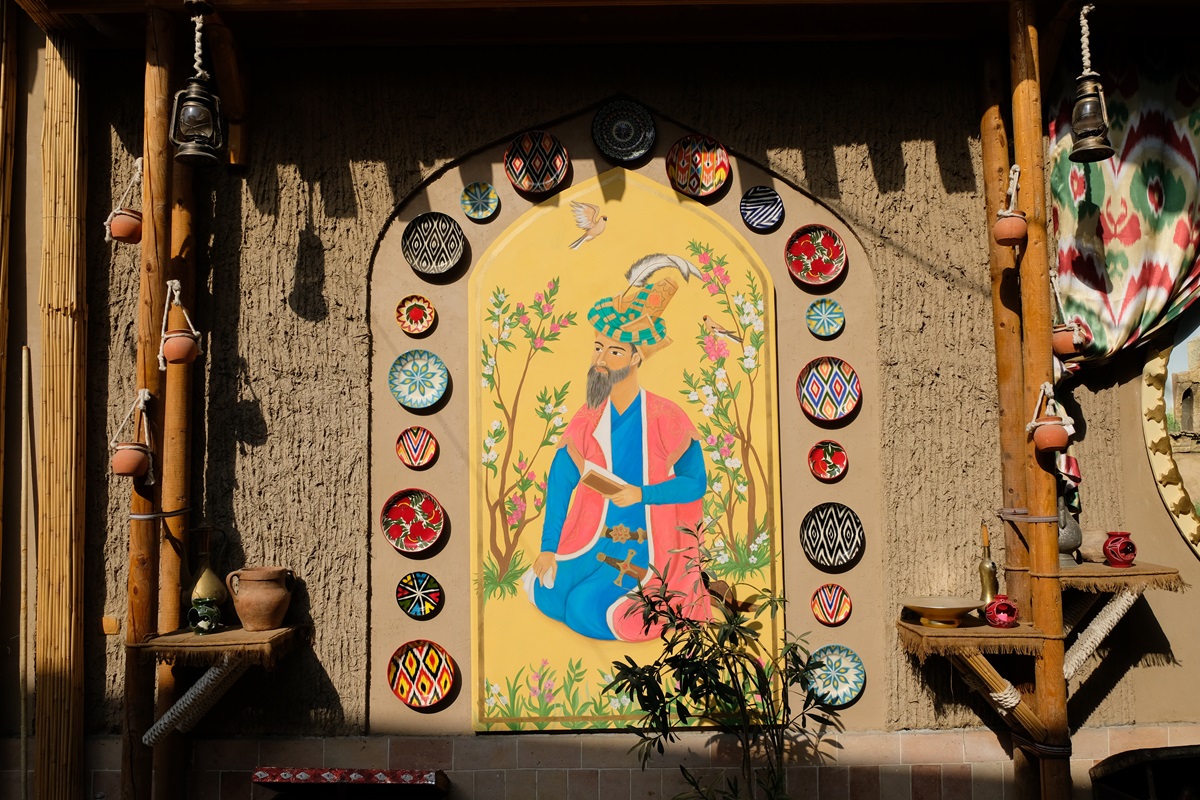
A modern-day mural at our accommodation in Samarkand
On our penultimate day in Samarkand, grey clouds persistently hung over the city. But we had anticipated this and decided that we would spend the day visiting the sites further away from the city center, on foot. I have mentioned this before, but we do love walking when exploring a new city. However, since none of us are familiar with the place, we always do a little research in advance on the route we should take and what to see (or avoid) along the way. This was exactly what we did in Samarkand. After marveling at the centuries-old architectural wonders commissioned by Timur and his grandson Ulugh Beg, we realized we should also check out the ruins of a 15th-century observatory which was the brainchild of the latter who established his capital as an important center of science and learning.
The problem is, what is known today as the Ulugh Beg Observatory is located around 5 kilometers uphill to the northeast of the Registan. So, we knew we had to devise a plan to make the excursion worthwhile by including other places of interest in the itinerary. But where should we begin? Thankfully, Maggie and Richard from Monkey’s Tale had written about some sites around Samarkand that piqued my curiosity. One particular mausoleum that is purported to be the final resting place of Doniyor (also known as Daniyar, Daniel or Daniil), a prophet/saint revered by Muslims, Christians, and Jews, is supposedly only a few minutes’ walk from the observatory. And thanks to Joanna Lumley’s Silk Road Adventure documentary series, I figured that visiting the Afrasiab Museum further down the hill on the way back to the city center is a must to better understand the Sogdians, an important ancient civilization that once ruled this region.
Under the grey skies, we hailed our only taxi for the day from right across the ever-impressive Registan. As usual, we memorized the Uzbek names of the places we wanted to see beforehand, just in case we would need to ask the locals for directions, or take a taxi. We learned that rasadxonasi means observatory, but luckily our taxi driver understood the English word. So, off we went. By this time, I was no longer surprised that the car we were in was a Chevrolet since the US manufacturer’s decision to build an assembly facility in Uzbekistan almost two decades ago ensured their vehicles’ affordability in the domestic market, ensuring their ubiquity on roads throughout the country today.
Later, the taxi driver dropped us off near a large statue of Ulugh Beg, seated on a pedestal in front of a blue backdrop depicting planets and constellations. To its left were the steps to the ruins of what used to be a colossal structure which produced among the most accurate measurements in astronomy at that time, from the length of a solar year to the Earth’s axial tilt. The Timurid ruler himself, out of his love for science and mathematics, probably preferred to spend more time at this place rather than governing his empire, which is why he only reigned for two years before being assassinated. Today, only the lower parts of the once massive sextant of the observatory remain, and a small museum within the compound provides information on Ulugh Beg’s achievements in astronomy.
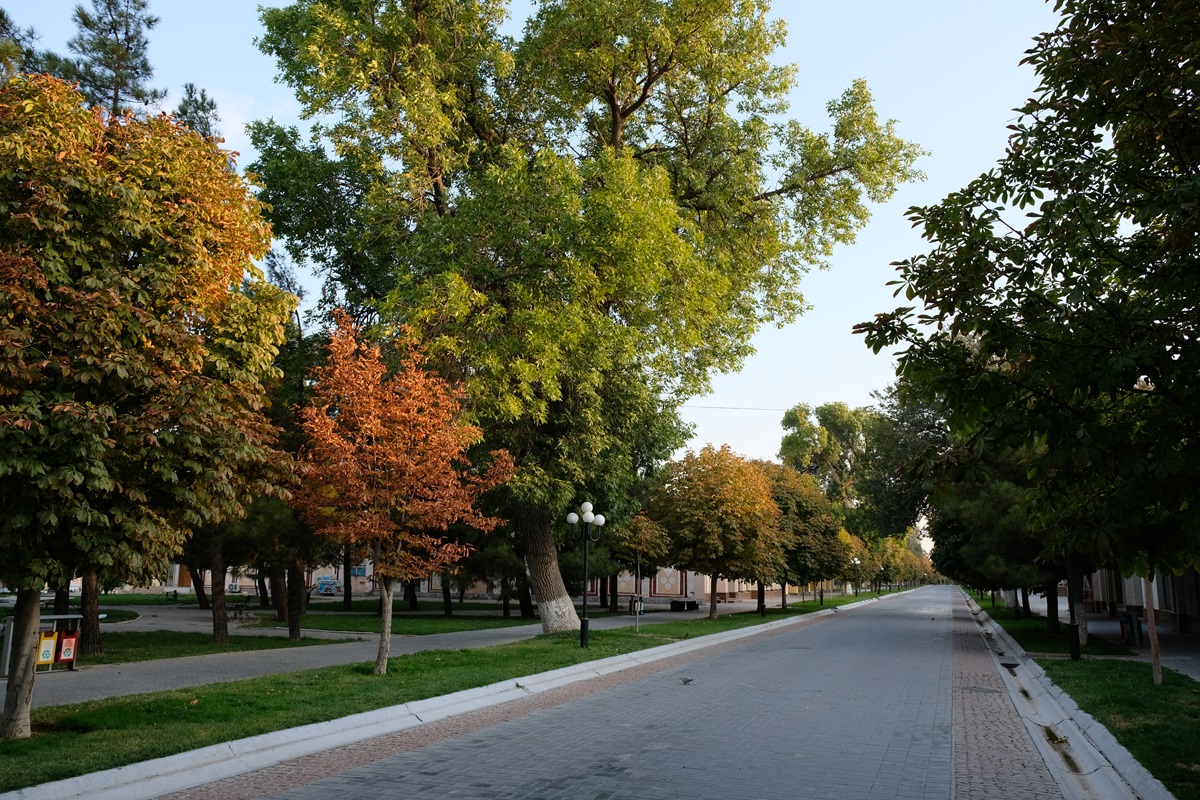
Autumn foliage along the main thoroughfare that connects the Registan with the Bibi-Khanym Mosque
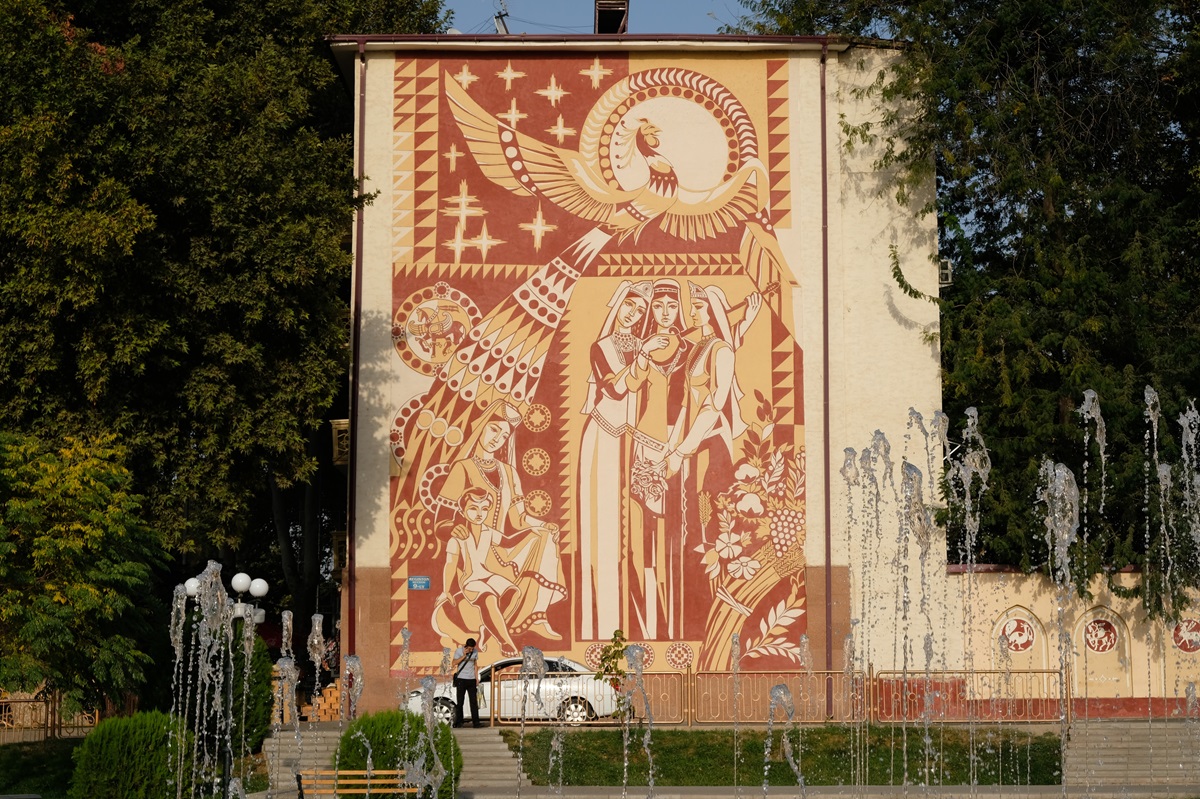
A Soviet-style mural in downtown Samarkand

Apartment buildings from the time when Uzbekistan was part of the Soviet Union
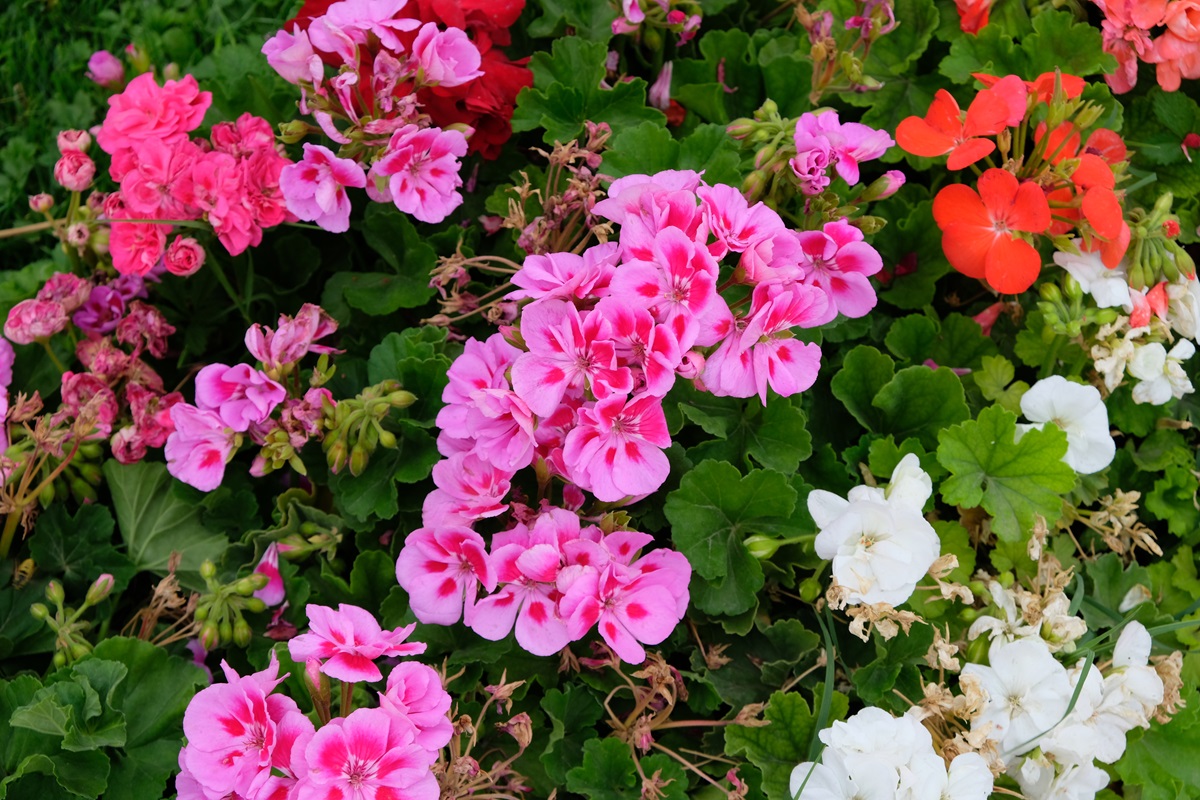
Colorful blooms near the Ulugh Beg Observatory

Underneath this structure is what remains of the sextant of the observatory
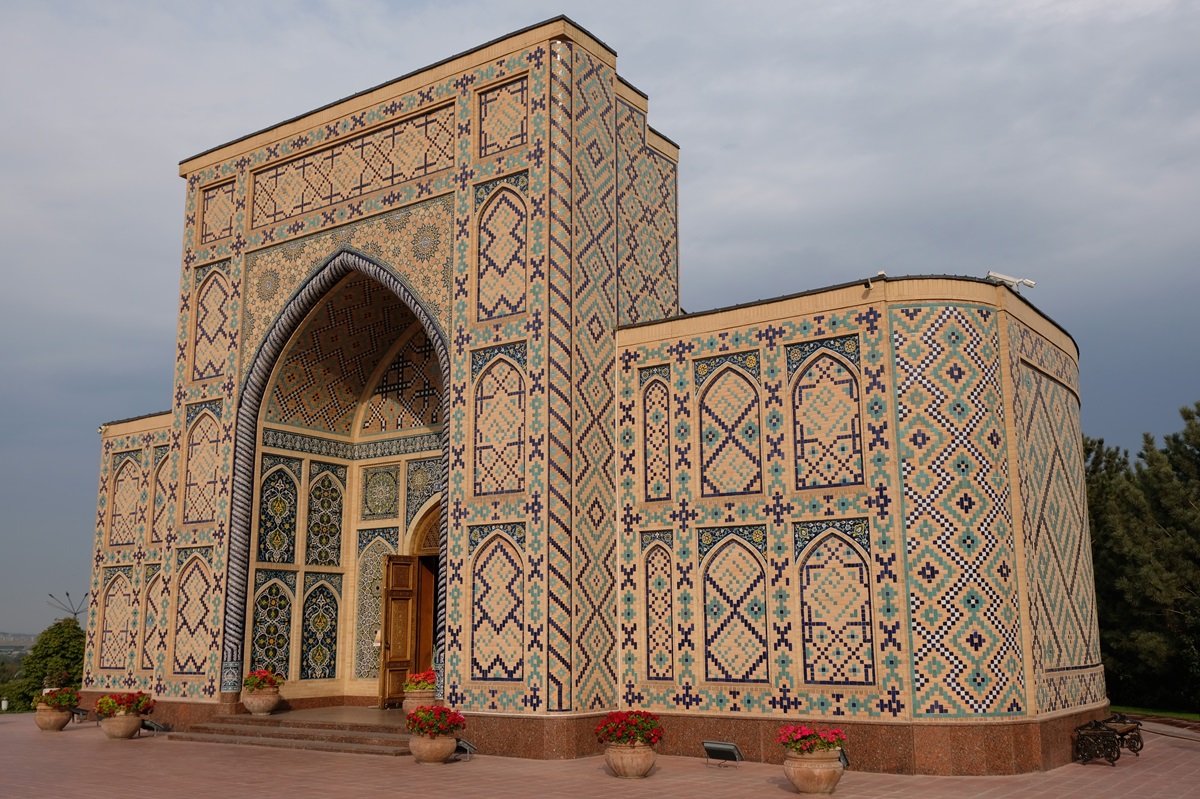
This small museum showcases the achievements of Ulugh Beg as an astronomer

Go inside to see the sextant

A cross-section of what the observatory used to look like (note that only parts of the sextant below the ground survive to this day)

Left: the sextant that helped Ulugh Beg produce accurate measurements of the movements of celestial bodies; Right: a larger-than-life statue of Ulugh Beg
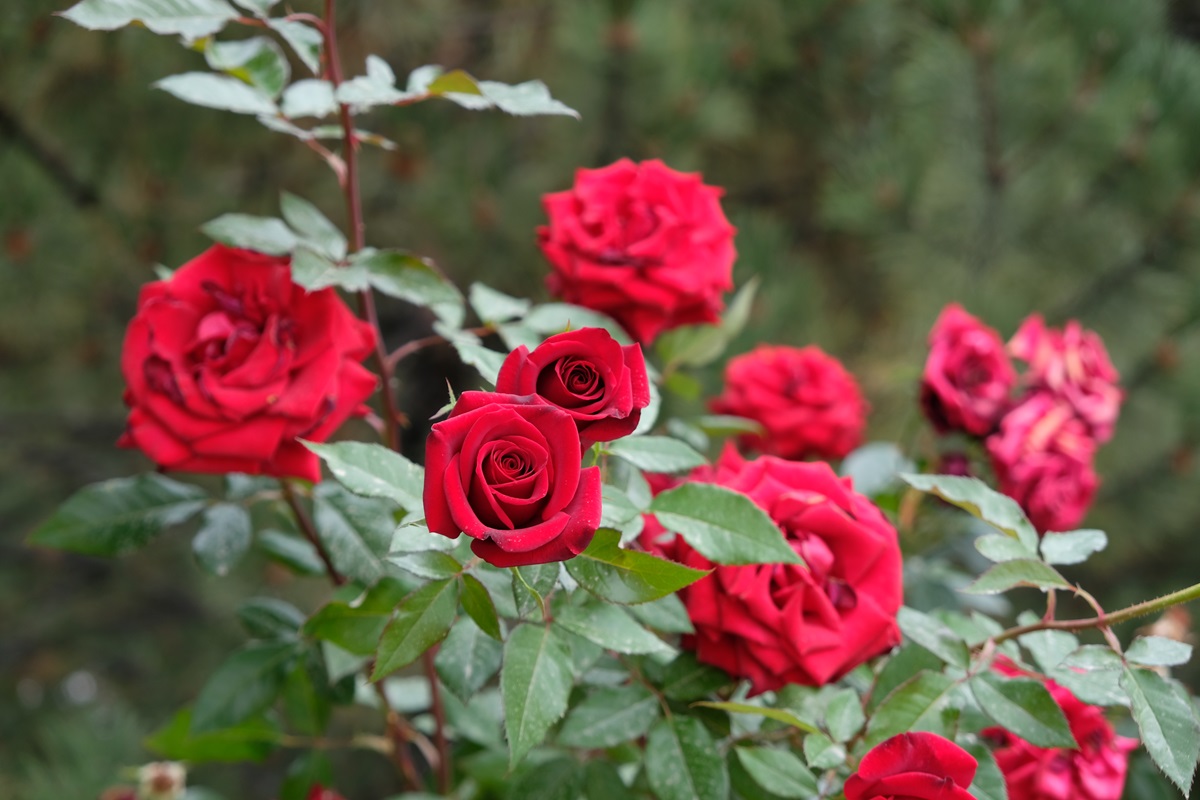
Roses around the observatory
Long after his death, Ulugh Beg’s works continued to be studied as they were translated into different languages by European intellectuals. However, it wasn’t until 1908 – almost five centuries after it was constructed – that what was left of the observatory finally saw the light again, following excavations carried out by Russian archaeologist Vassily Vyatkin. To honor the late Timurid sultan’s contributions to science, one of the craters on the Moon as well as a large asteroid were named after him, aptly immortalizing him among the celestial bodies he was fascinated with and studied fervently.
Ulugh Beg had undoubtedly left a deep impression on me, but now it was time for us to move on to the mausoleum of Daniel who had lived centuries before the time of the Timurid ruler himself. As we walked to the southwest then turned right following the calm Sieb River, the sun began peeking out from behind the clouds. In the distance, there were structures sitting at the foot of a barren hill. But this was no ordinary hill as it was exactly where the Sogdians once ruled this region from, making it the oldest part of Samarkand. As we drew closer to the mausoleum, we encountered more pilgrims who were mostly locals. We took a short flight of stairs to reach the tomb – an incredibly long one, draped in a dark cloth with Arabic calligraphy on it – while most other visitors were praying with both of their hands raised just below their faces. There was an undeniably strong sense of deep reverence toward the prophet/saint, although Samarkand is apparently not the only place claiming to be his final resting place.
On our way to our final destination of the day, we went through the park right outside the mausoleum and were delightfully surprised to see beautiful wooden pavilions, each adorned with intricate carvings. Though not exactly the same, these works of art briefly reminded me of Java – and my parents’ former house – where such artistry is fortunately also still alive and well. We walked around the same barren hill where Afrasiab, the great capital of the Sogdians, once stood before it was taken by the Turkic Karakhanids, then Khwarazm, before the Mongols destroyed it during their expansionist campaigns in the 13th century. To untrained eyes, today this hill seems to be filled with irregular earthen mounds, but they are in fact the ruins of the former settlements. Little was spared from the destruction, and what could be salvaged was then permanently housed in a museum established in 1970 when Uzbekistan was still part of the Soviet Union.
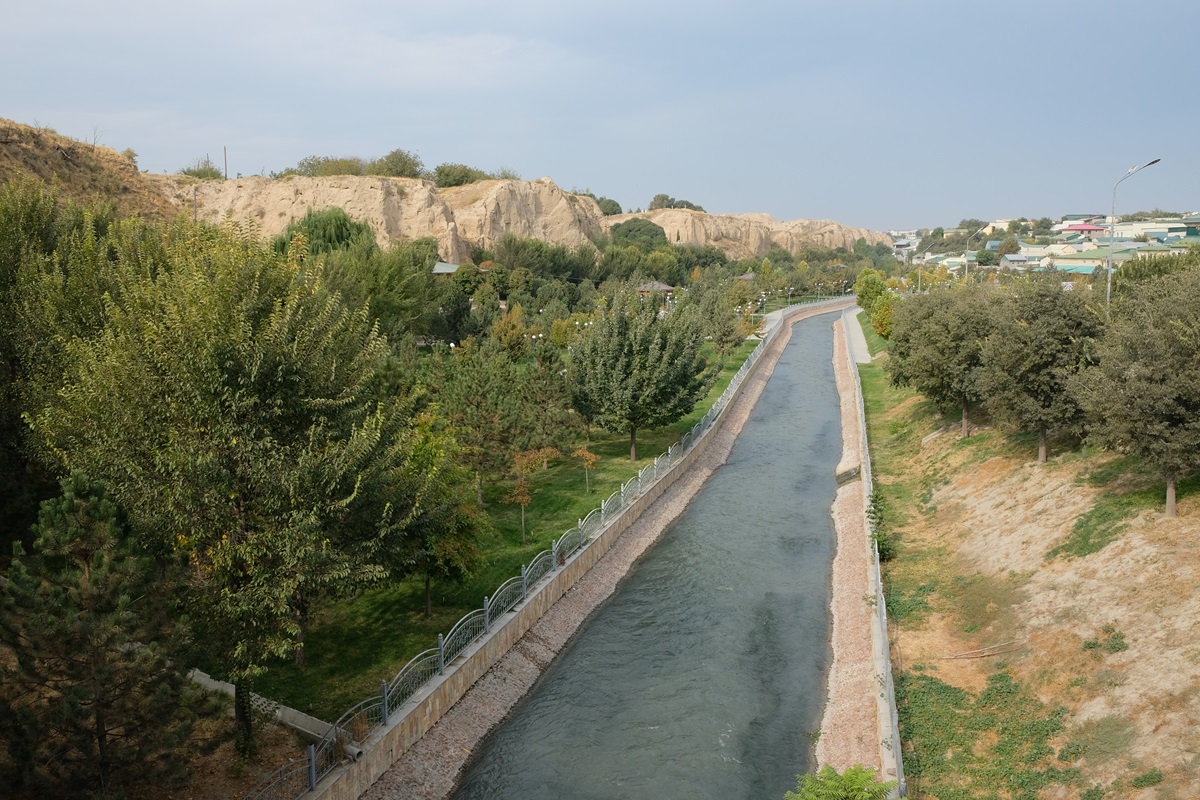
We followed the calm Sieb River to get to the mausoleum of Daniel
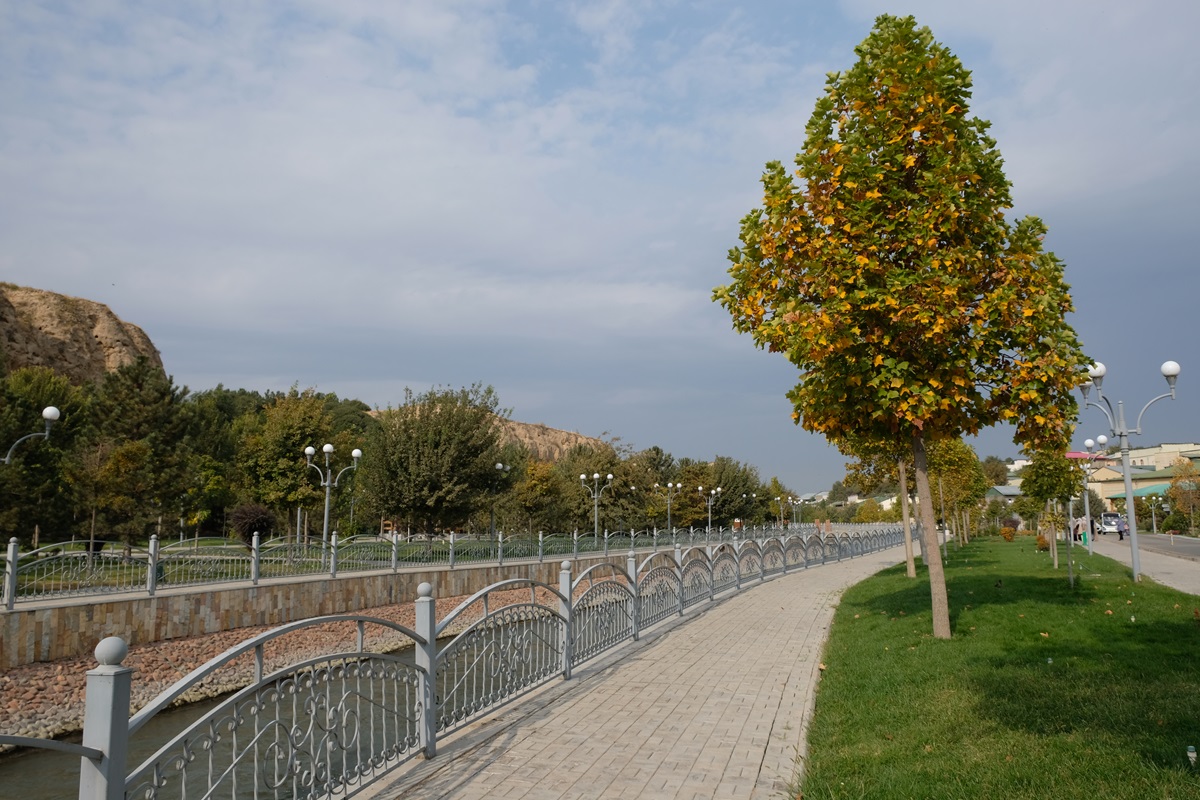
A nice and clean promenade along the river
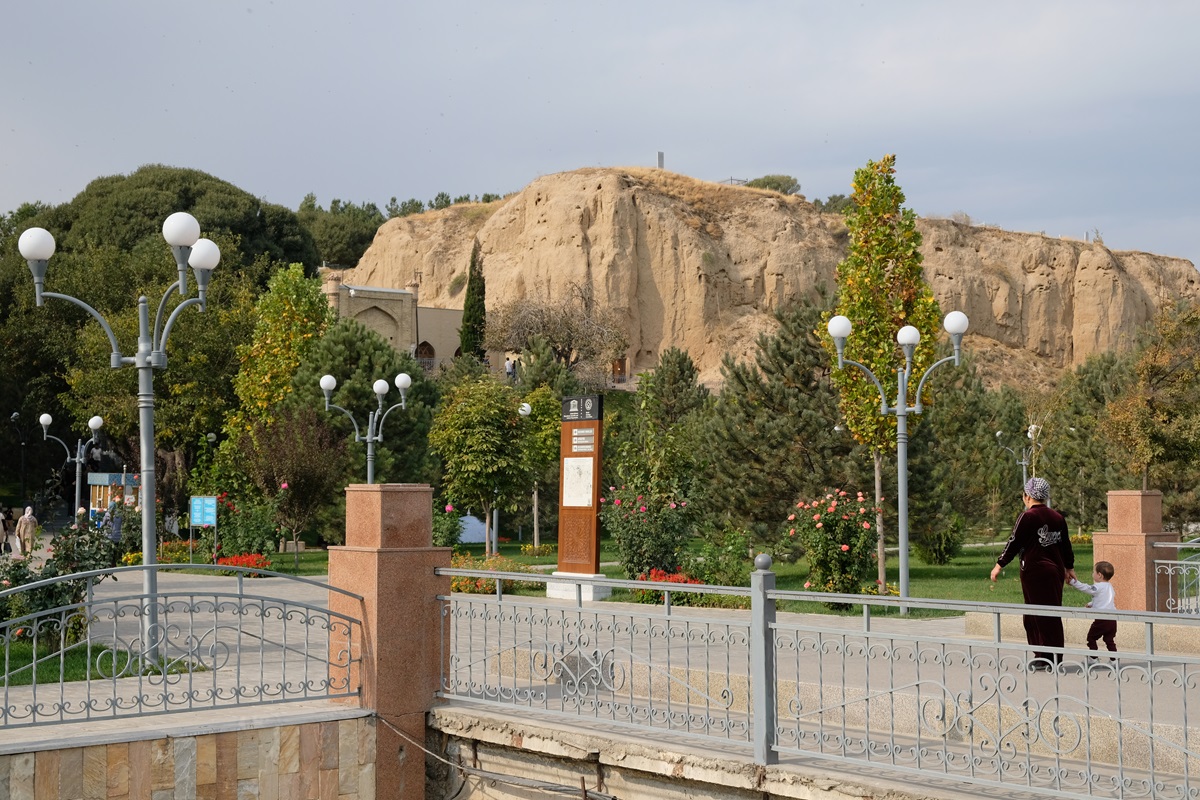
That structure, partially shrouded by the trees, is the mausoleum

Local pilgrims gathered in one corner to pray

Others lined up to see the tomb of Daniel
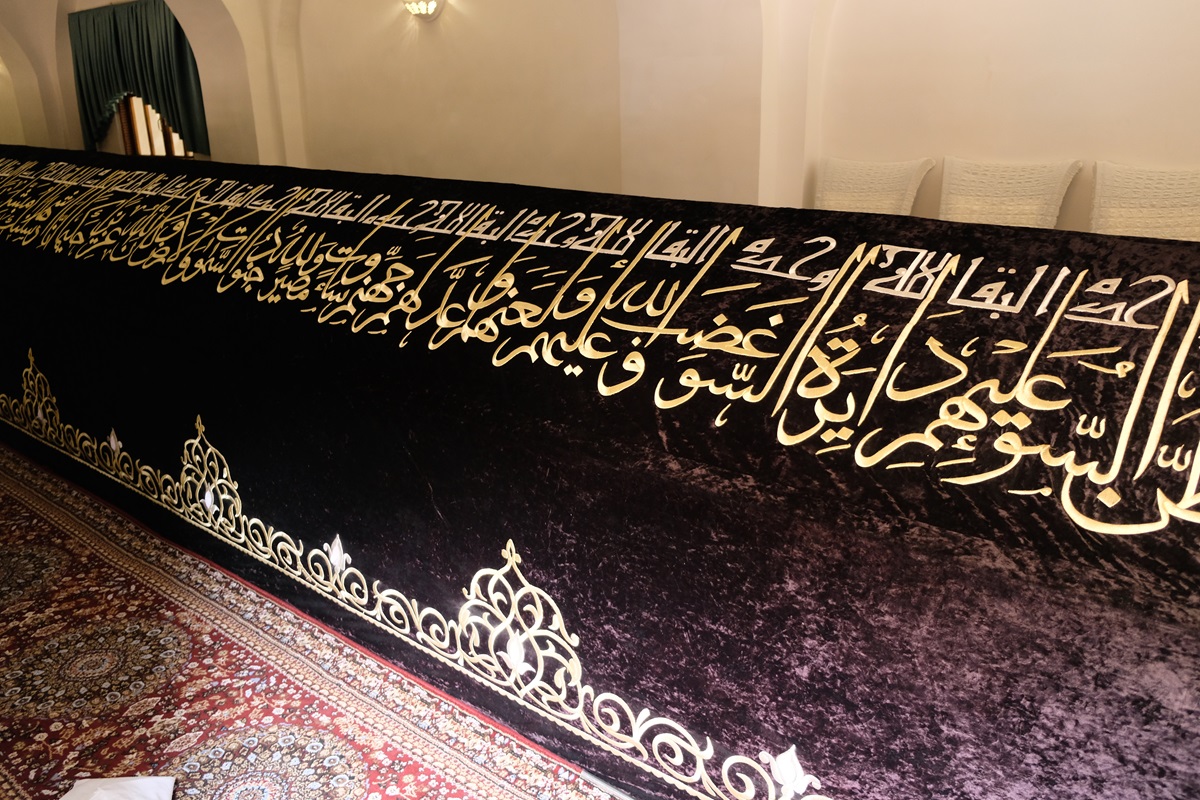
It was impossible to capture the full length of the tomb in one photo

What does this beautifully carved door open to?
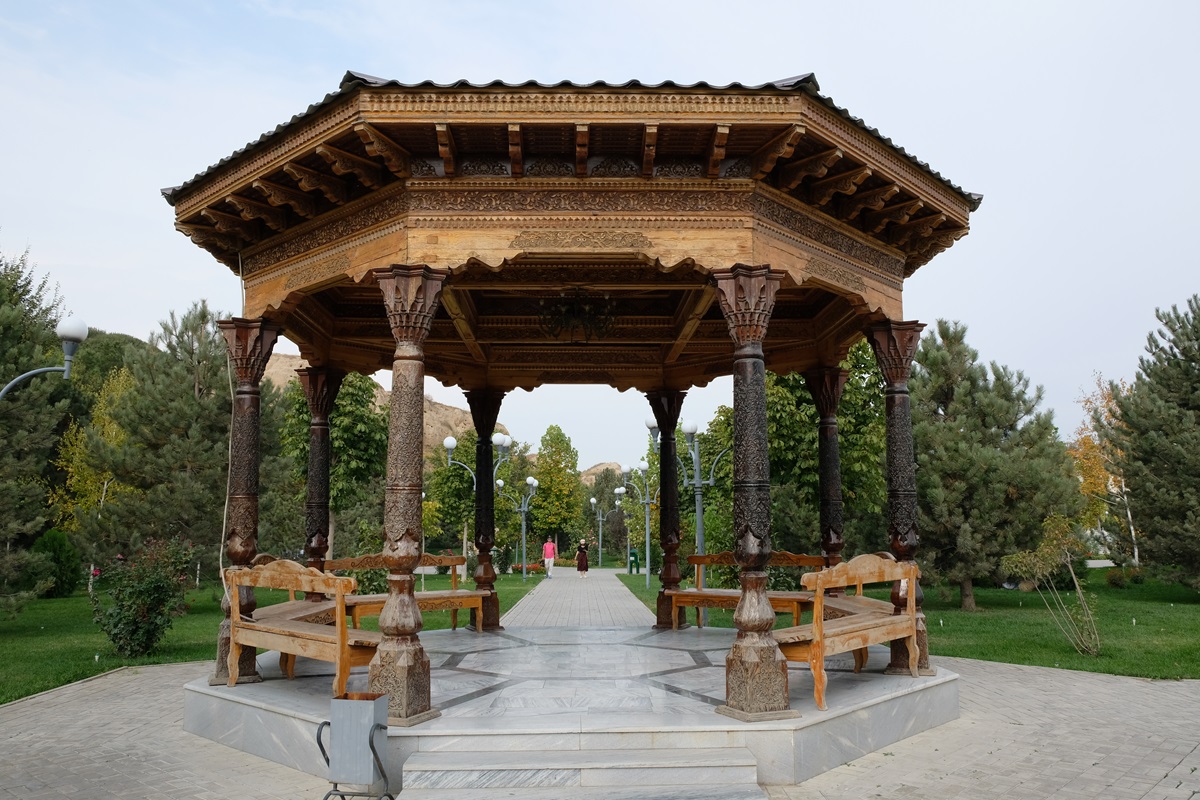
One of several beautiful wooden pavilions in the mausoleum’s park
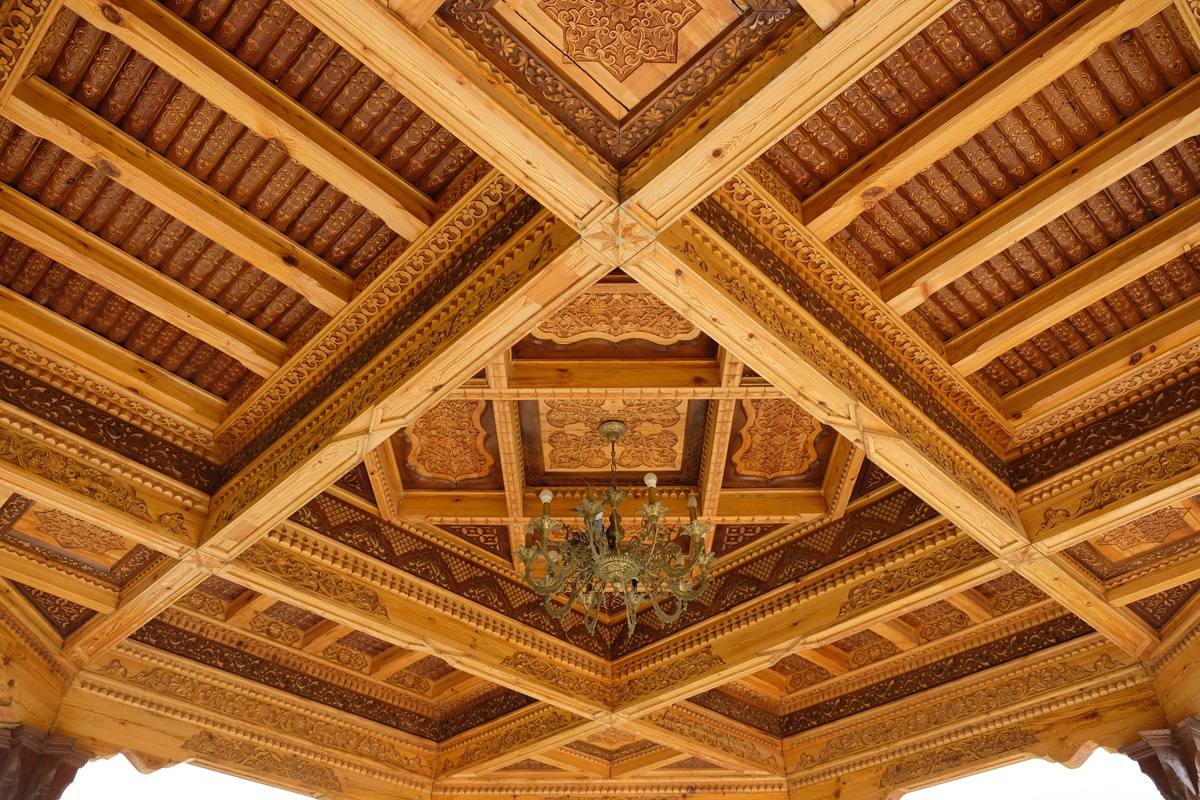
Amazing craftsmanship at every corner of the pavilion
We kept walking downhill, past bright and pretty beds of flowers, before arriving at a decidedly Soviet structure. While from the outside it came across as austere, inside the museum a wonderful and colorful world welcomed us. Displayed at the main exhibition hall were murals dating back to the Sogdian era. This was a period in history between the fifth to the ninth centuries CE when the ancient Iranian people who were adherents of Zoroastrianism controlled the strategically important trading region along the lucrative Silk Road that is now in modern-day Uzbekistan, Kazakhstan, Tajikistan, and Kyrgyzstan. During this time, Sogdian art reached its apex, resulting in the creation of brightly-painted murals decorating Sogdian structures. Among the most famous of these are the Afrasiab murals, depicting nations that were contemporary to Sogdia (also known as Sogdiana).
James and I joined other visitors marveling at the ornate paintings. It was mind-boggling to think that they are more than 13 centuries old, but at the same time it was also sobering to realize that many such works of art from this ancient civilization have been lost forever to the ravages of wars and conquests. From these surviving specimens of Sogdian art, we learned that the Sogdians were, in Lumley’s words, “the enablers of the Silk Road”. These frescoes show the nations the Sogdians traded with, including the Chinese, the Indians, the Koreans, the Tibetans, and the Turks. The seventh-century Chinese envoys, in particular, were depicted bringing silk to Varkhuman, the king of Sogdia. The Sogdians were so adept at trade even the Chinese (who themselves are known for their business acumen) were suspicious of them. Lumley also spoke of this Chinese saying: “when a Sogdian boy is born, they put honey in his mouth, and glue on the palm his baby hand. So that when he speaks, he speaks sweetly, and when he sees money, it sticks to his hand.”
In another part of the museum, we saw other remnants of Sogdia. However, this time these weren’t something the Sogdians created. But rather, they were the Sogdians themselves. In the past, some people from this civilization practiced cranial deformation which resulted in elongated skulls. Seeing them myself, I wouldn’t blame anyone for thinking these belonged to aliens. Overall, this rather compact museum was far more interesting than I expected it to be, thanks to its invaluable collection that provides visitors with a glimpse of ancient Sogdia. But it was time for us to head back to the city center. We followed the path that went downhill, and shortly afterward the magnificent Bibi-Khanym Mosque came into view. Samarkand was absolutely impressive, but we were ready to move on to the next ancient Silk Road city: Bukhara.

In those seemingly irregular mounds lie the remains of Afrasiab
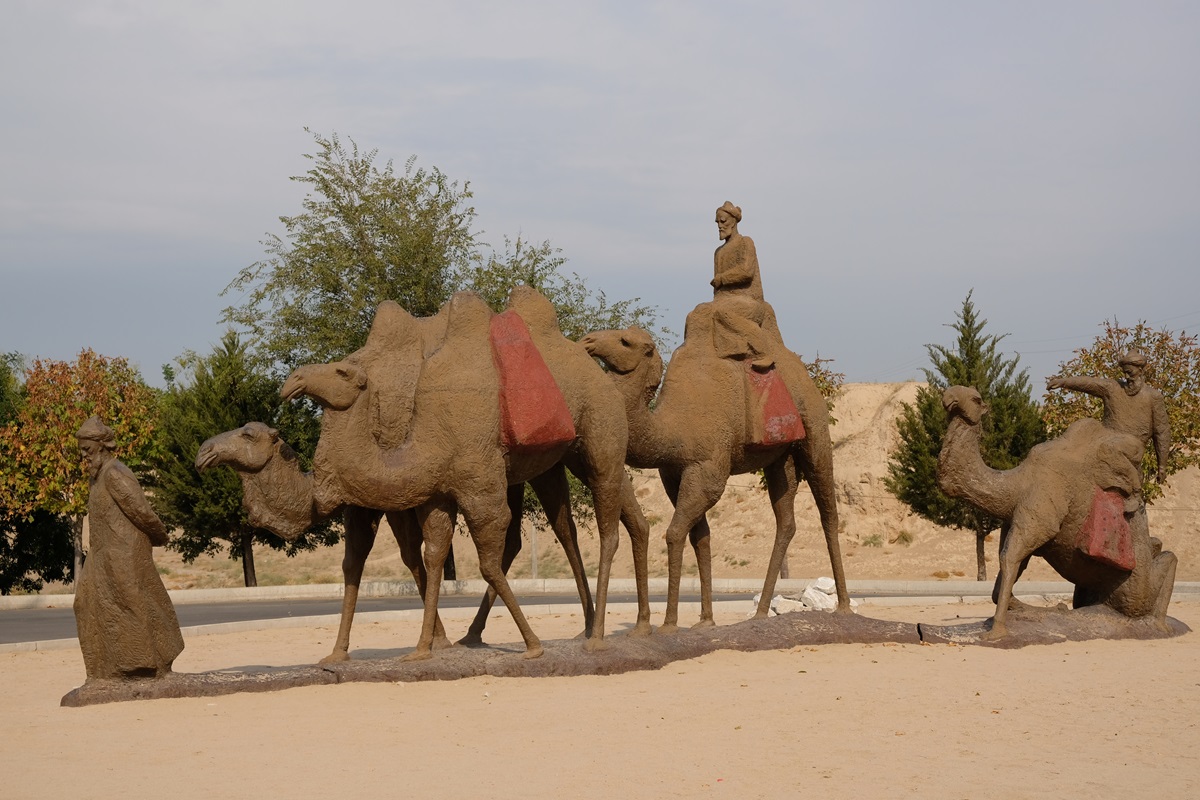
Echoes from the times of the ancient Silk Road

Bright scarlet sage (Salvia splendens) brought colors to the area near the museum

These marigold cultivars also caught my attention
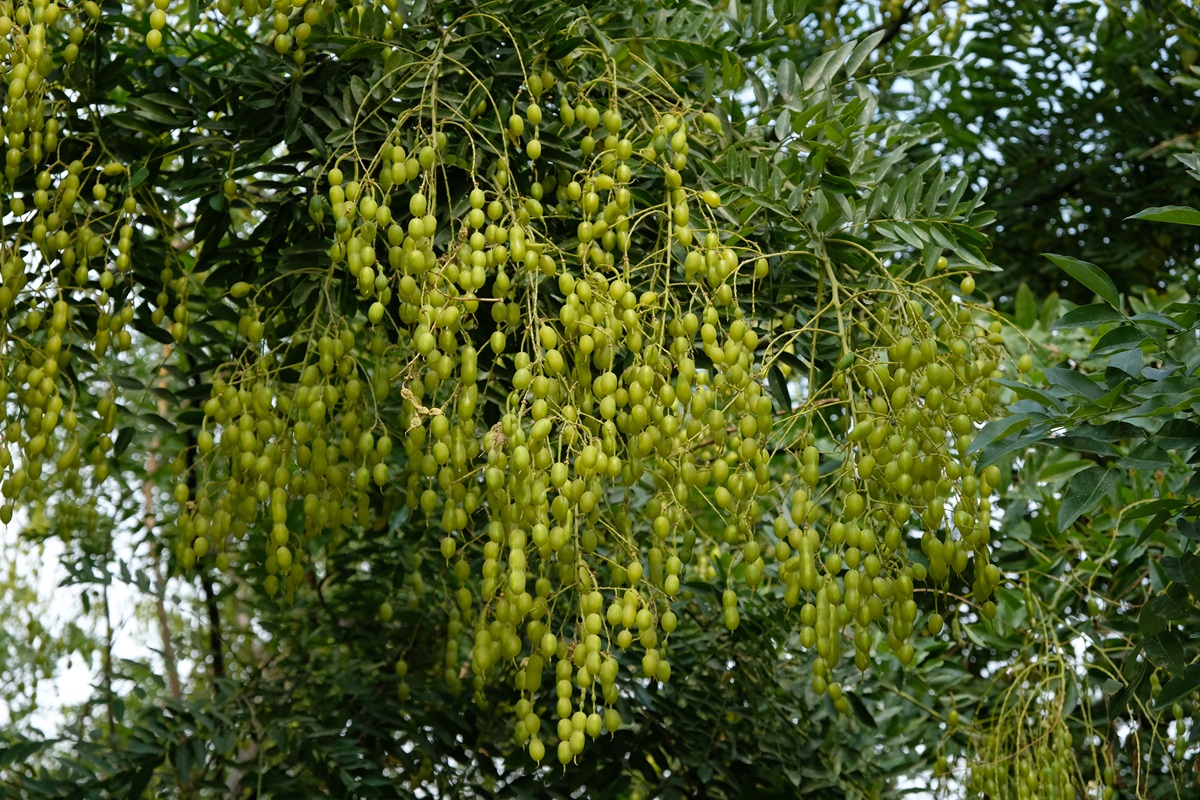
The beans of the Japanese pagoda tree (Styphnolobium japonicum)
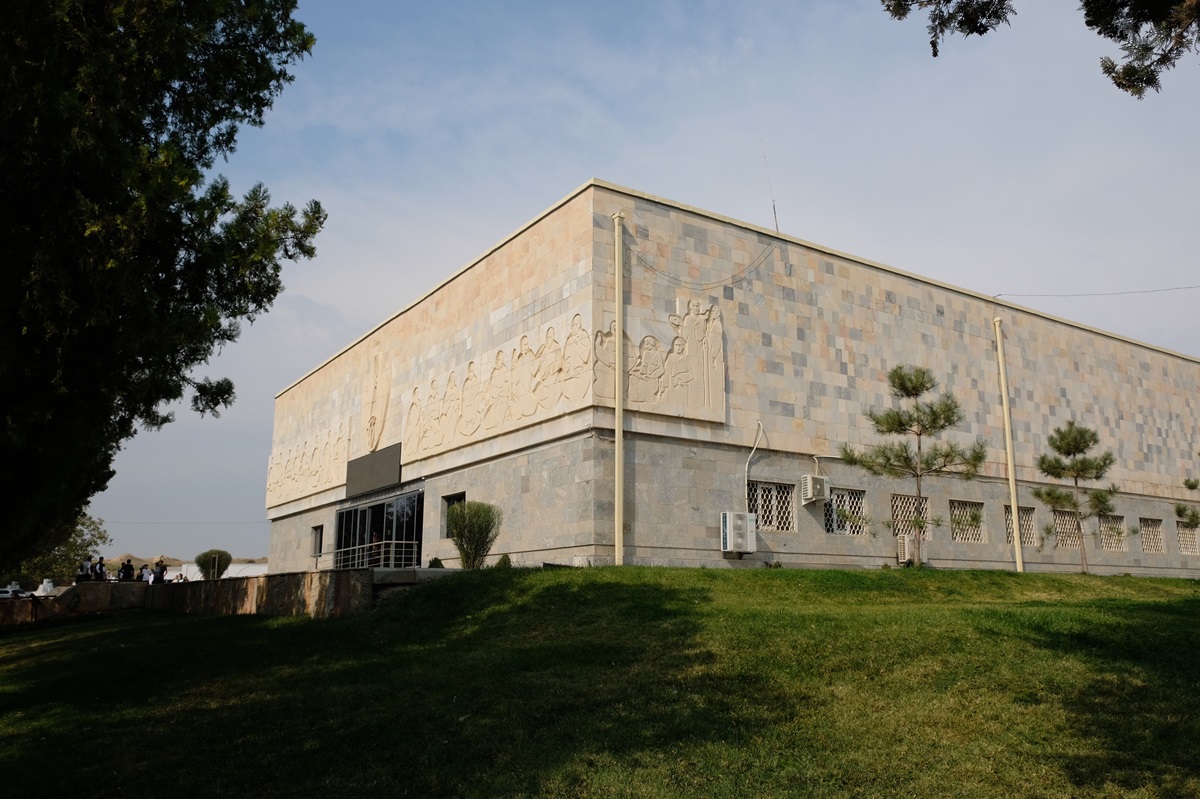
The Afrasiab Museum has an unmistakably Soviet look
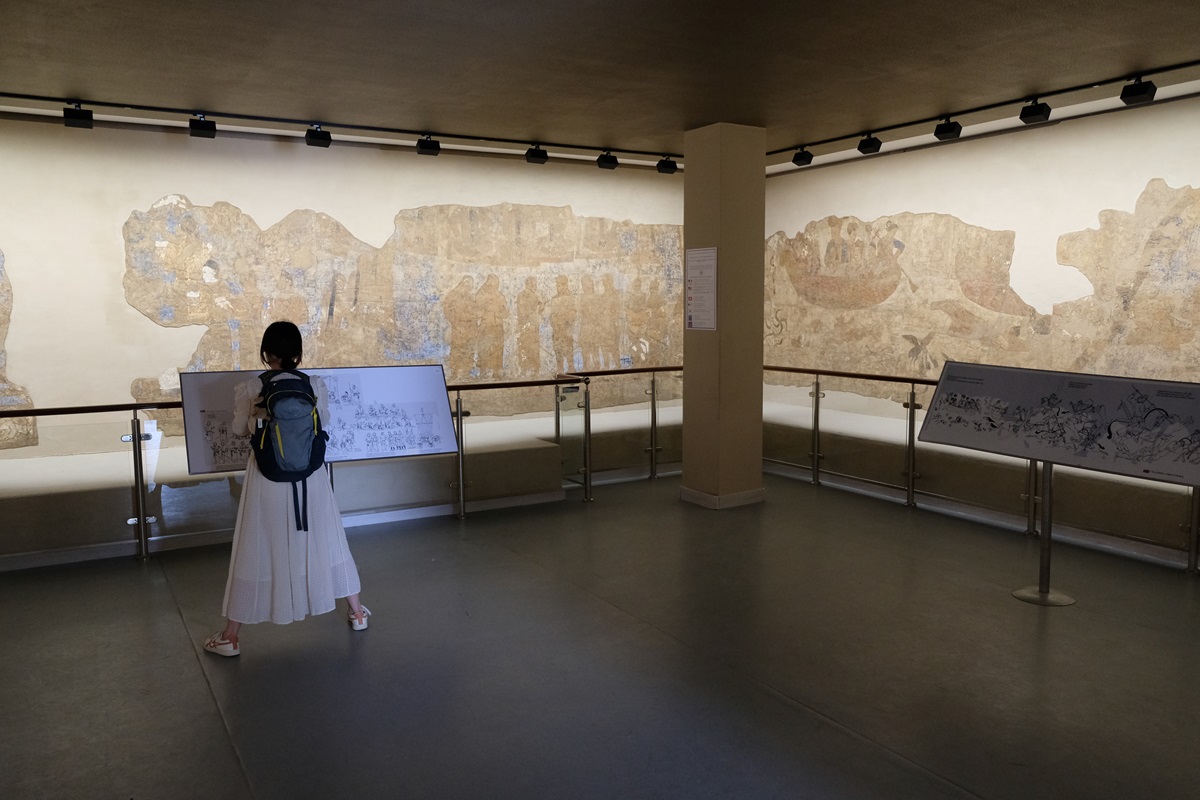
Fragments of the so-called Afrasiab murals

This section depicts ambassadors from neighboring principalities carrying presents and necklaces
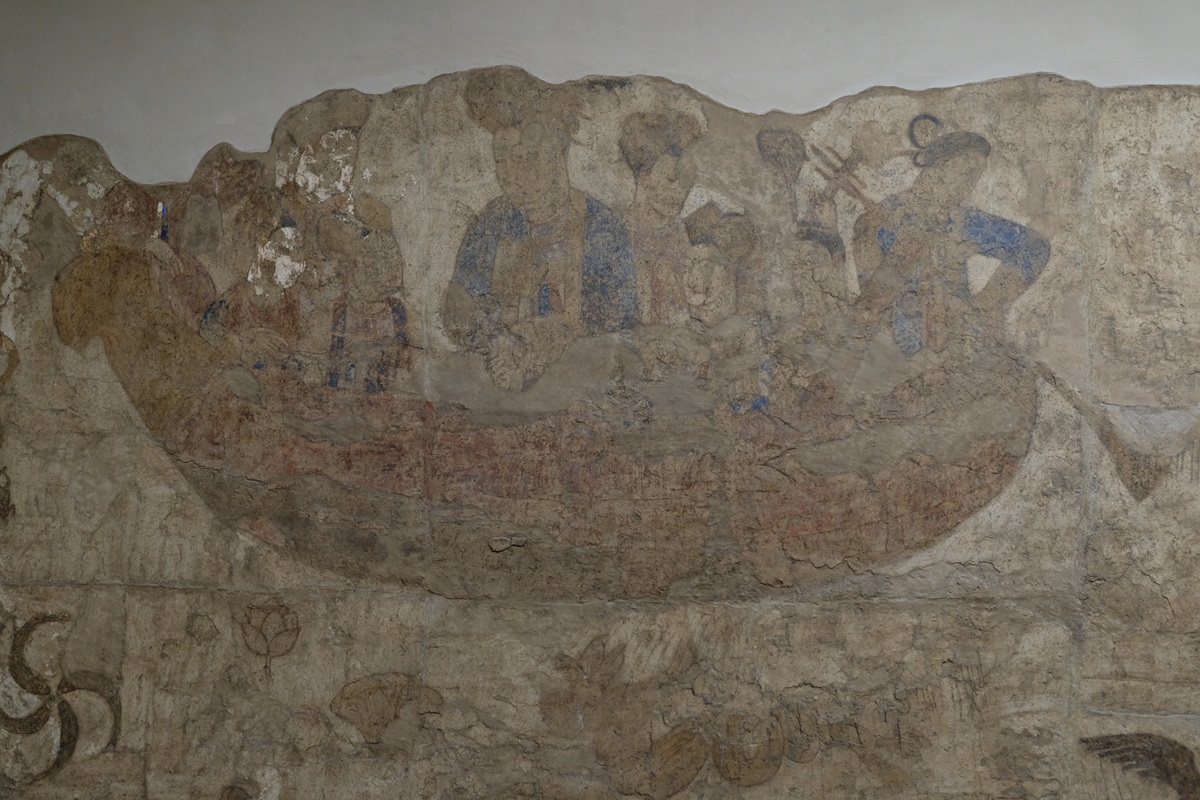
The Chinese empress Wu Zetian aboard a dragon boat
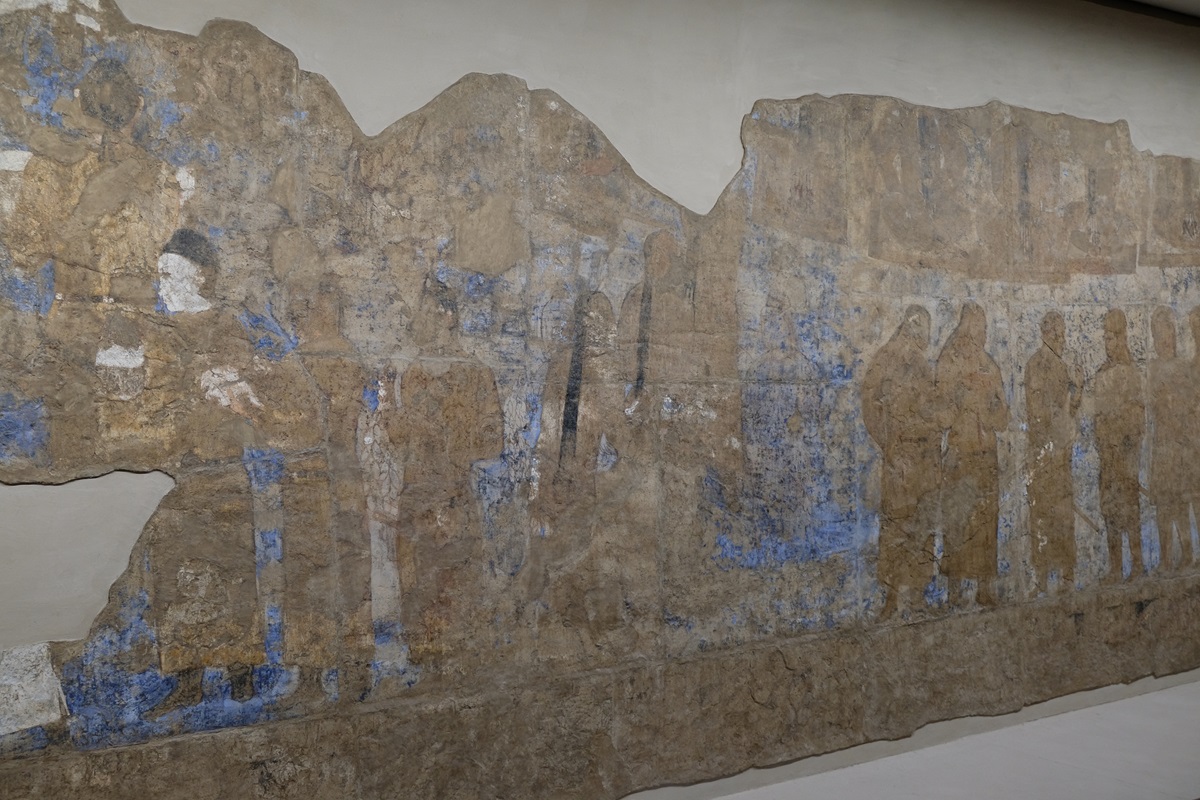
Chinese envoys bringing silk to Varkhuman with some Turkish guards standing nearby

Elongated skulls that belonged to some ancient Sogdians

A Sogdian-era box-shaped ossuary (a vessel in which the bones of a human corpse were preserved)

Leaving Samarkand for Bukhara

Inside Samarkand railway station, which was actually grander than the one in Tashkent
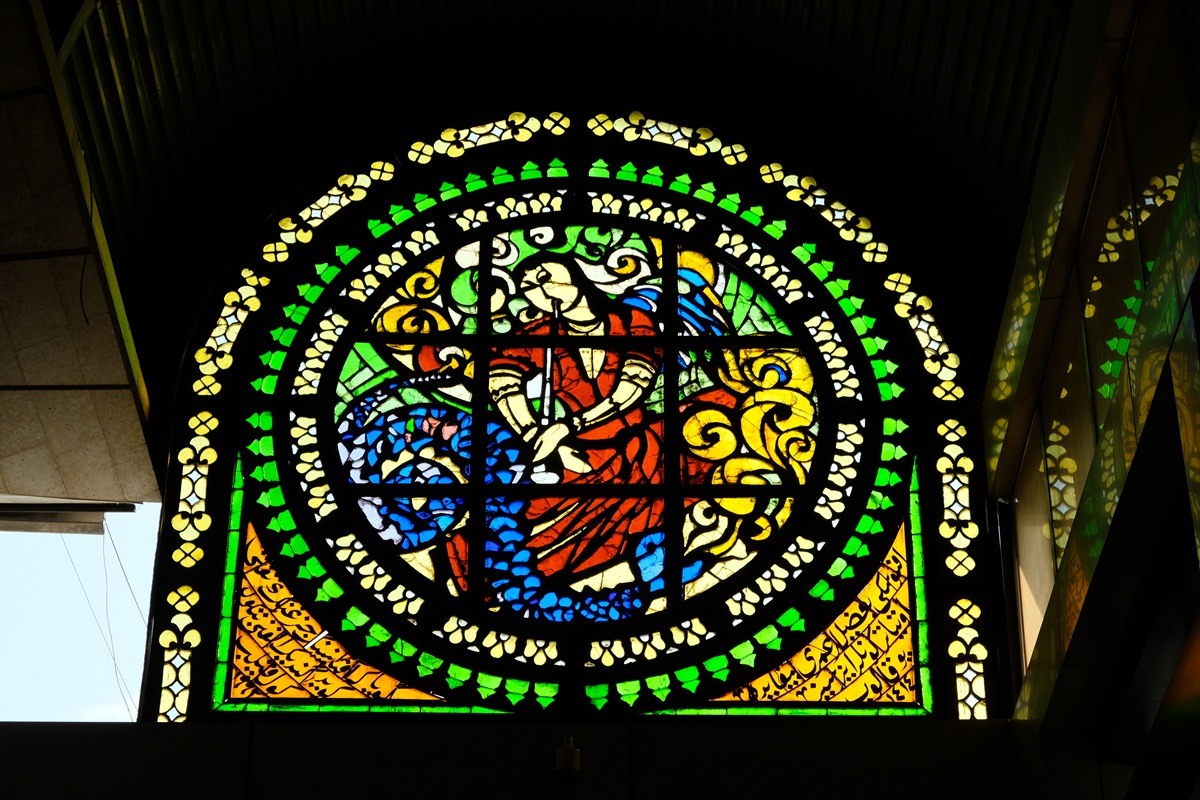
A stained-glass window at the station

The Spanish-made Afrosiyob high-speed train that would take us to Bukhara

 What an Amazing World!
Wonderful post 🎸thanks for sharing🎸
LikeLiked by 1 person
And thank you for reading.
LikeLike
Great pictures of a country with a fascinating history. Thanks
LikeLiked by 1 person
Glad you enjoyed this post.
LikeLike
Thanks for the shout out. I’ll never forget that incredibly long coffin of the profit Daniel. I wish I had known about the Sogdian museum, though. Honey in the mouth of babies, head deformation. What a fascinating culture that was. I had completely forgotten about the massive amount of Chevrolets, especially white I think! Maggie
LikeLiked by 2 people
There seems to be a pattern here where I keep following your footsteps, Maggie. So, you can expect more shout outs to your blog posts in the future. From what I learned, the Sogdians sound like a very interesting people. If only more of what they built and created had survived.
LikeLiked by 1 person
You’ve just given me a reason to re-visit Uzbekistan. Yay!! I never visited the observatory. Thanks! If you haven’t already visited the Sogdian ruins in Tajikistan, I’d recommend them.
LikeLiked by 1 person
Ha! There will always be reasons to go back to Uzbekistan. A while ago, I did read about the ruins that you mentioned. I don’t know when I’ll revisit this part of the world (and go to Tajikistan), but I will definitely keep them in mind.
LikeLike
Beautiful photos of Samarquand and the history and architecture of the Sogdian people and the early Silk Road history. Art and artifacts that can transcend 13 centuries is amazing and so much of them seem to be well preserved. It’s too bad that so much of it have been lost through war and conquests.
I love traveling by foot to explore a new place as well as so much of the local ambience can be absorbed that way. A gray day in a hot place is also not necessarily a bad thing. 🙂
Thanks for taking us along on your tour!
LikeLiked by 1 person
It’s really sad to think of what have been lost from the Sogdians. But from what remain to this day, you can tell that they achieved so much.
I am in fact traveling in a relatively remote corner of eastern Indonesia at the moment, and I surely have been walking a lot. It’s much hotter here than in Jakarta, but the cool breezes really help.
LikeLike
Central Asia has a terribly deep history. I’m sure that much is lost in spite of the so much that we know. There were just such a large number of migrations across the steppes, and movement along the trade routes.
LikeLiked by 1 person
Being from India, I can imagine how much more connection you must feel toward Central Asia. It’s an incredibly fascinating part of the world with a lot of history to delve into.
LikeLiked by 1 person
I confirm that it was wonderful to walk around in Samarkand! Your great post makes come back my memories:)
LikeLiked by 2 people
So glad this brought back a lot of good memories from your own trip to Samarkand, Martina.
LikeLiked by 1 person
What a lovely stroll through Samarkand! The Ulugh Beg Observatory looks extensive and architecturally-gorgeous! Also incredible to learn that a sultan was also accomplished in math and science. Thanks for sharing more of your time in Uzbekistan, and I can’t wait to read more of your adventures in the country! Thanks for sharing, Bama 🙂
LikeLiked by 1 person
If only the rest of the observatory had survived to this day, it would have been a sight to behold! But even with only a small part of the original structure that can be seen today, it was still quite impressive. My next post on Uzbekistan will be about Bukhara. It happened to be my favorite ancient Silk Road city in the country.
LikeLiked by 1 person
So interesting! Looking forward to Bukhara.
LikeLiked by 1 person
Bukhara was my favorite city in Uzbekistan. Its old town area was very charming.
LikeLiked by 1 person
I can see that it is difficult for you to leave Samarkand, a dream city for travellers, with so many monuments restored to their former glory. It was a series of readings that reinforced my desire to travel there myself.
LikeLiked by 1 person
Samarkand has the most impressive ancient monuments in all of the cities in Uzbekistan that we visited. They are silent witnesses of the greatness of the empire from which it was ruled. I hope you’ll get to see them in person one day!
LikeLiked by 1 person
The Afrasiyab museum was fantastic wasn’t it? I loved exploring the artefacts and frescoes in there. The tomb of Daniel was so cool too. You made me relieve some great memories. I just realised I didn’t finish my Uzbek series – maybe I should try one day and finish the Samarkand post! lol
LikeLiked by 1 person
It was small, but I loved it! The frescoes were particularly impressive. Can you imagine how cool it would have been if the palace of the Sogdians had still been standing today! When the time is right — or when you do have the time — maybe it’s a good idea to write about Samarkand. I think it will help relive your memories from the trip. 😀
LikeLiked by 1 person
What an interesting history! It also seems like in one day alone you saw so many different types of architecture – Uzbekistan really sounds like a very interesting country. It has been on my list for many years now and each time I read more about it, it goes up and up!
LikeLiked by 1 person
Exactly! It was a day well spent, and it was nice that we picked all these three sites because each of them offered something different. I hope my future posts on Uzbekistan will make the country climb even higher in your wish list!
LikeLiked by 1 person
What a beautifully written post on your day in Samarkand! I like that you’ve combined practical travel tips with the history of Ulugh Beg and his observatory. It’s unbelievable that such precise astronomical measurements were made there centuries ago!! Doniyor’s mausoleum and the Afrasiab Museum also sound like must visits. Like Juliette below, the more I read, the higher up Uzbekistan climbs on my list!
LikeLiked by 1 person
Much appreciated, Hannah. Ulugh Beg’s dedication and passion for science is truly inspiring. His achievements truly were remarkable. It’s unfortunate that he didn’t live that long. I’m glad that Uzbekistan is also climbing on your list. I think you would enjoy the country as much as I did, if not more.
LikeLiked by 1 person
Walking is the best way to explore a city. It’s too bad that only the lower parts of the observatory remain. It was neat to learn more about Ulugh Beg. It’s hard to wrap your head around how ancient those ornate paintings are. It’s remarkable that some of them are still here.
LikeLiked by 1 person
I wonder if they could find a way to rebuild the observatory. But that would probably be too expensive. The age of those murals is exactly what makes them so special. It’s amazing how much we can still discern.
LikeLiked by 1 person
One of the first things I did was to check of the places you mentioned was checked on my Google Maps. They are. 😇 The joy of this post is that I could see them through your eyes, Bama, which confirmed to me that they should stay firmly on my ‘things to see’ list when I make it there one day.
It also took me down the rabbit hole of watching various episodes of Joana Lumley’s Silk Road, but also Greek Odyssey travel series, which was pure joy. She is so charming and lovely, and experiencing or seeing places this way always either confirms why I want to go there, or make me decide otherwise. A lovely way to do some research on potential travel destinations.
LikeLiked by 1 person
I’m not surprised you were also looking up the same places, Jolandi. I wonder if one day our paths will cross at some random location.
I think Greek Odyssey was the first time I learned about Joanna Lumley, and I was immediately captivated by her storytelling. Apart from that and Silk Road Adventure, I’ve also watched some episodes from Nile, as well as the entire series of Trans-Siberian Adventure and Japan. What I really want to see is her relatively recent work called Spice Trail Adventure.
LikeLike
That wouldn’t surprise me either, Bama. I should check out more of her different travel series. In the comfort of one’s own home is still a wonderful way to travel when money is tight.
LikeLiked by 1 person
I remember watching some of her travel series during the pandemic, and it was so fun seeing the world through her eyes.
LikeLiked by 1 person
Great post as usual. Very interesting town…(Suzanne)
LikeLiked by 1 person
Thank you, Suzanne. Sorry for the delayed response as I just returned from a week-long trip to a relatively small island in eastern Indonesia.
LikeLike
Looking forward to seeing the posts on your trip to this small island…
LikeLiked by 1 person
I will eventually write about it, but I still have so many posts to write from my trips to Uzbekistan, Mexico, and a few other places. So, please bear with me.
LikeLike
Fascinating area.
LikeLiked by 1 person
Absolutely. It must be one of the most beguiling corners of the world.
LikeLike
Looks like a great walk around the city in what also appears to be beautiful fall weather and scenery. The sites offer so much history, much of which is totally new to me. I look forward to seeing this stuff myself someday!
LikeLiked by 1 person
I think Uzbekistan Airways flies to New York, so that might be a good option if you’re thinking of going. You really should plan that trip to Uzbekistan, Lex, before the country gets even more popular.
LikeLike
Those Sogdian murals alone are worth a trip, Bama! 🙂 It’s a nice surprise to see that the blue pigments (maybe lapis lazuli) are still vivid to this date. I have read about Sogdian murals, but most are found in Tajikistan or Russia’s Hermitage. This is my first time seeing them in Uzbekistan.
Was it easy for you to travel independently in Uzbekistan? I’ve heard that booking train tickets is quite troublesome.
LikeLiked by 1 person
I know, right? It’s incredible that despite what had happened to the buildings where they once belonged, the murals are still quite discernible today with some of their original color pigments well-preserved.
You’re right about the hassle in booking the high-speed train tickets. I had to check the Uzbekistan Railways website almost everyday to see whether they had started selling tickets for the dates I wanted or not. In addition to that, the booking experience was not always smooth, and the tickets sold really fast. While I managed to secure seats for the Tashkent-Samarkand and Samarkand-Bukhara legs of our trip, I couldn’t do so for the Bukhara-Tashkent journey. But apart from that, Uzbekistan was quite easy to explore actually.
LikeLike
Bama, again wonderful writing – and this time, in part because I had no idea what to expect from Samarkand, your images really helped walk me through this adventure. Fascinating place, such rich history and vibrant culture, which is why you chose to go there, I suppose, and your writing shows it: ancient sites like the Ulugh Beg Observatory and Afrasiab Museum come alive with it. Your reflections on the Sogdian artifacts, the multi-faith reverence at Daniel’s mausoleum, and even the everyday sights like Chevrolets on the street… a window into the soul of Samarkand. Well done 😊! I’ve never thought too much about visiting the ‘Stans, but I’m am hearing more & more fascinating tales of them… thank you for another!
LikeLiked by 1 person
Much appreciated, Randall. Central Asia was once a corner of the world only the most intrepid travelers went to, thanks to the hangover from the Soviet era which made “the Stans” very complicated places to enter. But most countries in this region are becoming more and more open to international tourists. When I was in Samarkand, there were already signs of mass tourism, although it’s nothing as pervasive as what one would see today in places like Barcelona and Venice, I believe. So, if you’re curious about the Sogdians, Ulugh Beg, and centuries-old monuments covered in blue tiles, I suggest you to go to Uzbekistan sooner than later.
LikeLike
Nice post about Samarkand. I’m not surprised that it has historic places like the Ulugh Beg observatory and the tomb of Daniel, but they also look quite attractive and well-maintained. The museum at the Ulugh Beg observatory is quite beautiful.
LikeLiked by 1 person
The sites we went to in Samarkand were in fairly good condition. Some, like the Afrasiab Museum, definitely felt dated. But they were quite well-maintained.
LikeLiked by 1 person
You captured so many beautiful photos from a truly fascinating part of the world, Bama. I especially love Sogdian murals because of their vibrant colours, dynamic compositions, and intricate details that offer a rich glimpse into Sogdian society, their role on the Silk Roads, and their complex religious life. Thanks for sharing, and have a good day 🙂 Aiva xx
LikeLiked by 1 person
Aren’t those Sogdian murals fascinating? This ancient civilization really deserves more attention given their significance in the past. If only more of what they built had survived to this day.
LikeLike
The weather might not have been the best when we visited the Observatory of Ulugh Begh and Daniel’s Tomb, but it was still a lovely walk through a less touristy part of town – I relished leaving the crowds at the major sights like the Registan far behind. And weren’t the Sogdian murals at the Afrasiab Museum fantastic? They really illustrate how 7th-century Samarkand was already a crossroads of so many cultures.
LikeLiked by 1 person
In hindsight, the not-so-ideal weather was probably better for walking around since we covered quite a lot of ground on that day. Seeing those Sogdian murals was one of those occasions when I wish I could travel back in time to see how places that are now anything but gone used to look in the past.
LikeLiked by 1 person