
We spotted this scenic part of Gushan in Kaohsiung on our way to the former British consulate
Imagine having a front-row seat to a spectacle that lasts not merely for a few hours, but for centuries.
The southern tip of a hill that guards the northern side of the narrow entrance to Takao Harbor (in present-day Kaohsiung) had always been a prime location for anyone who wanted to monitor the trade activities between the city and the rest of the world. That is why following the signing of the Treaty of Tianjin in 1858 and the Treaty of Peking in 1860 to conclude the Second Opium War, the British as the victors would soon establish a consulate at this site in the southwestern part of Taiwan.
In 1878, construction started on the structures that would host London’s diplomatic and trade offices as well as the consular residence on top and at the foot of the hill. Using red bricks produced in Amoy (modern-day Xiamen in mainland China), the consulate building was completed in 1879. Once operational, the British orchestrated their economic and political affairs on the island from these premises. However, as a result of Japan’s victory over China in 1895 that ended the First Sino-Japanese War, the Qing dynasty had to relinquish its control over Taiwan. At first, this didn’t have a significant impact on the British mission there. But in 1910, the consulate was officially closed as it was seized by the Japanese colonial administration.
During World War II, the former British consulate building was spared from destruction. But it did witness bombs being dropped by American forces on the harbor of Kaohsiung. We all know that the Japanese eventually surrendered in 1945, and we also know how four years later the nationalist government of China fled to Taiwan, concluding the decades-long Chinese Civil War. In the aftermath of the many wars that engulfed the region, the economic conditions on both sides of the Taiwan Strait were in a dire state.
However, decades later, Taiwan emerged as one of the Four Asian Tigers with the port of Kaohsiung being one of the most important gears in the country’s growth engine. And at the moment, the former British consulate is witnessing yet another interesting chapter in the Taiwanese city’s history where it is transforming into a world-class creative hub without completely abandoning its industrial legacies.
If the red brick walls of the former British consulate* could talk, I wonder what stories they would tell us after seeing multiple wars and conflicts, the city’s destruction, the constant flow of boats and ships, and the dramatic change of the skyline. In 1986, the municipal government of Kaohsiung commissioned the restoration of the former consulate after it was severely damaged by a typhoon almost a decade earlier. In the early 2000s, the work continued, and in 2013 it finally reopened its doors to the public as a café. We didn’t dine there and we opted for spending more time standing at the building’s east veranda, marveling at the sweeping views of Kaohsiung right before our eyes. This compound really occupies a front-row seat to everything that has happened and will happen in this dynamic city.

One of the boats that ferry people across the harbor
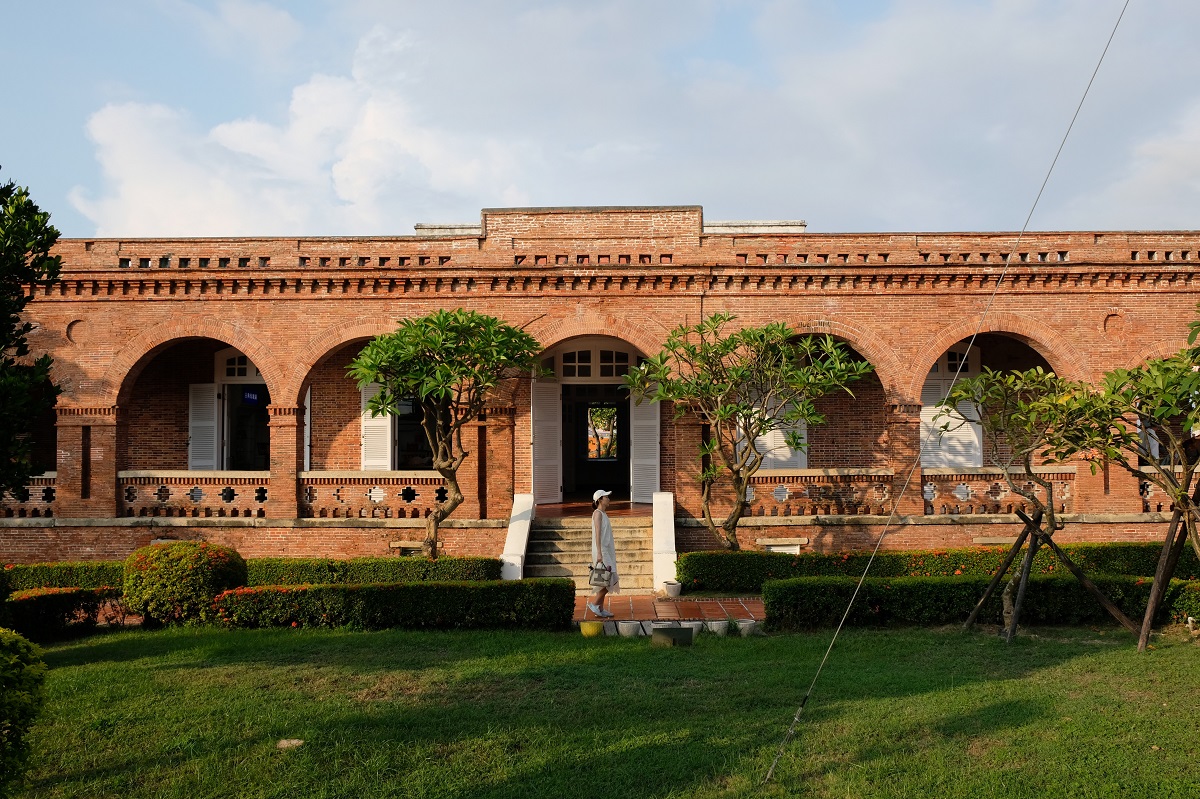
The former British consulate at Takao (the old name of Kaohsiung)

This red brick building underwent a years-long restoration and reopened in 2013
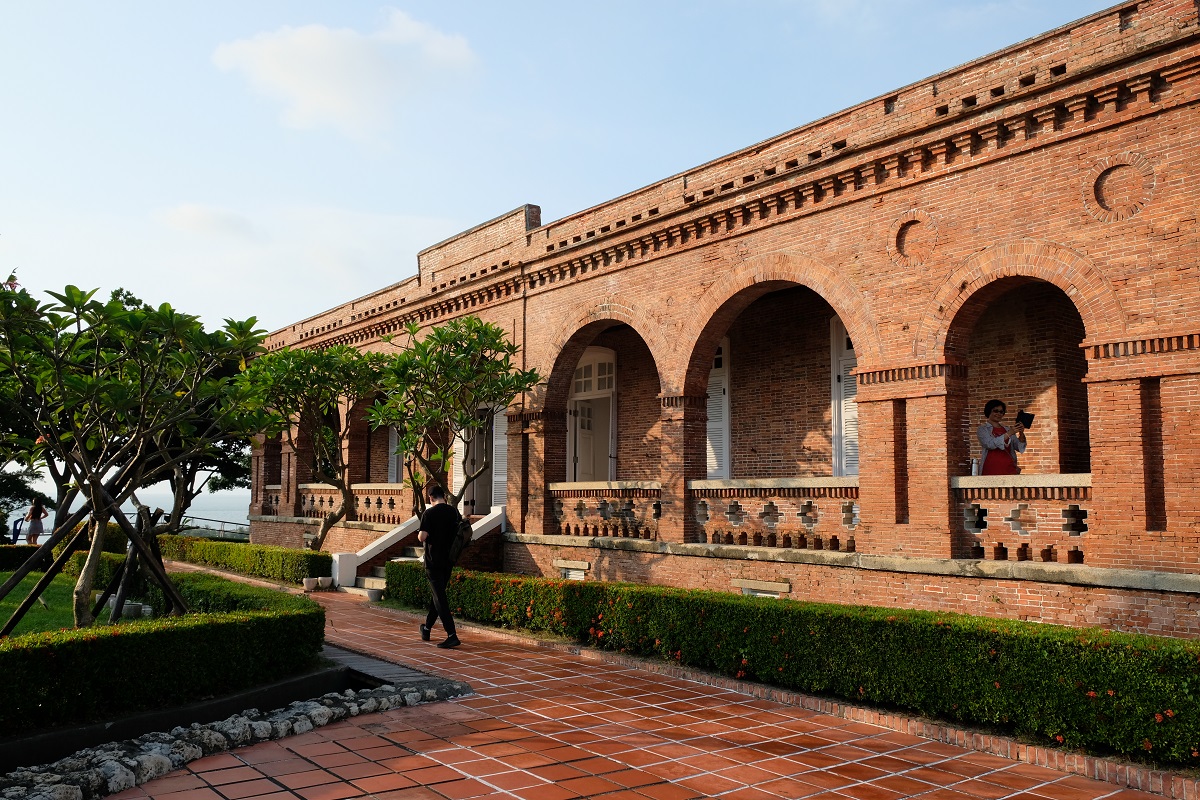
This compound has seen many things, from wars and regime changes to the dramatic economic growth of Taiwan

In recent years, it has been witnessing the city’s transformation into a thriving cultural hub

My favorite part of the structure
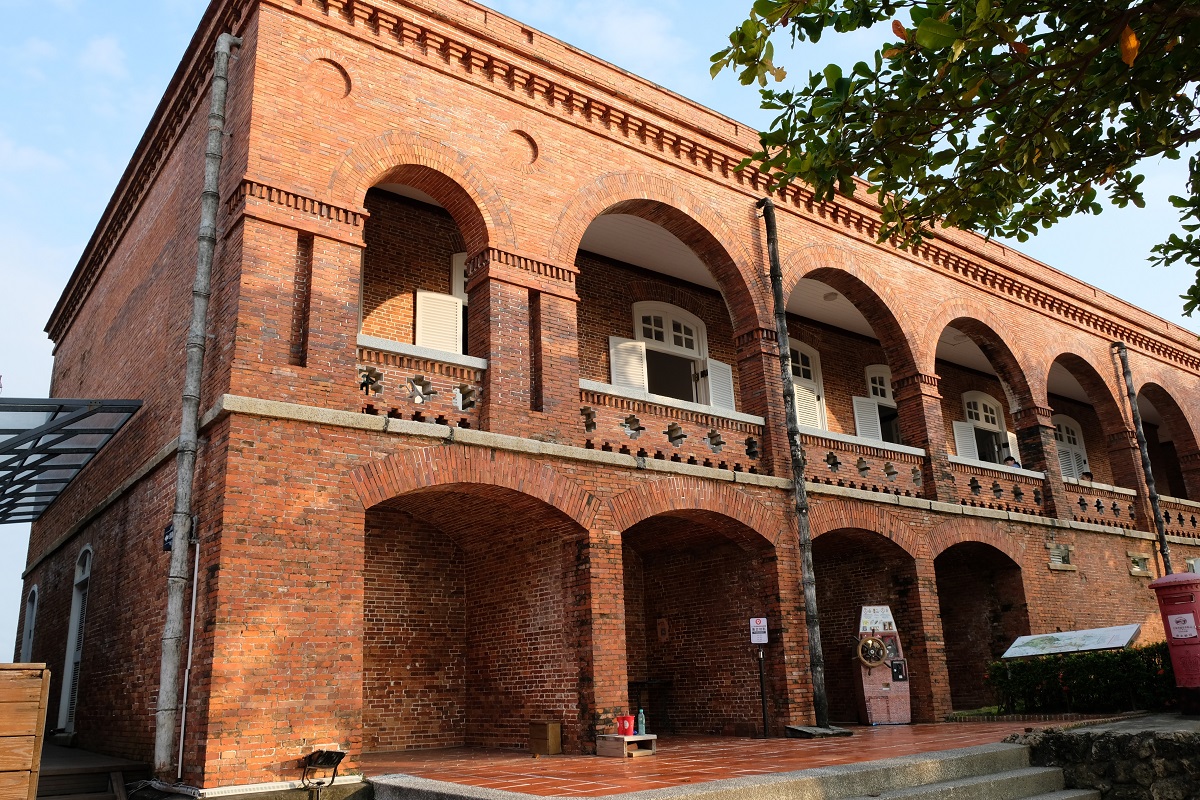
We walked around it and noticed that at the back of the building, it morphed into a two-story structure

A bomb shelter within the consulate compound
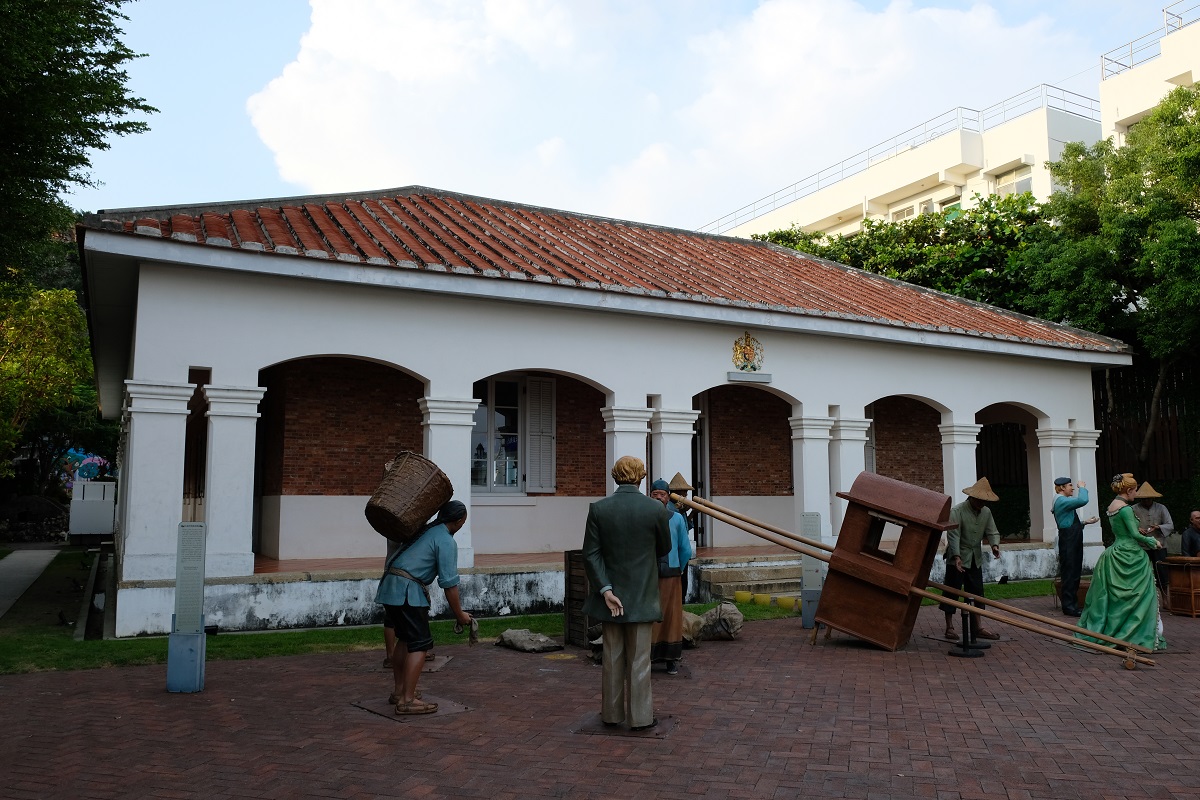
The lower section of the compound

The ever-changing skyline of Kaohsiung
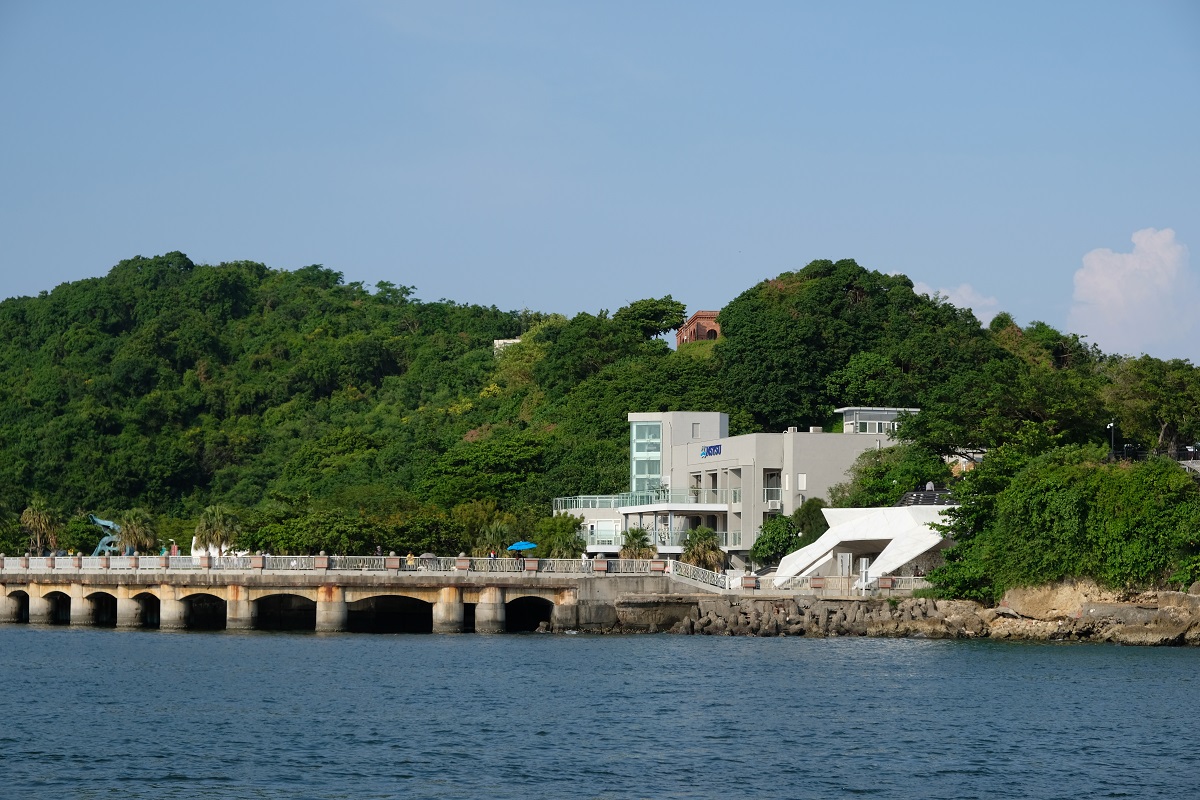
The former British consulate viewed from below
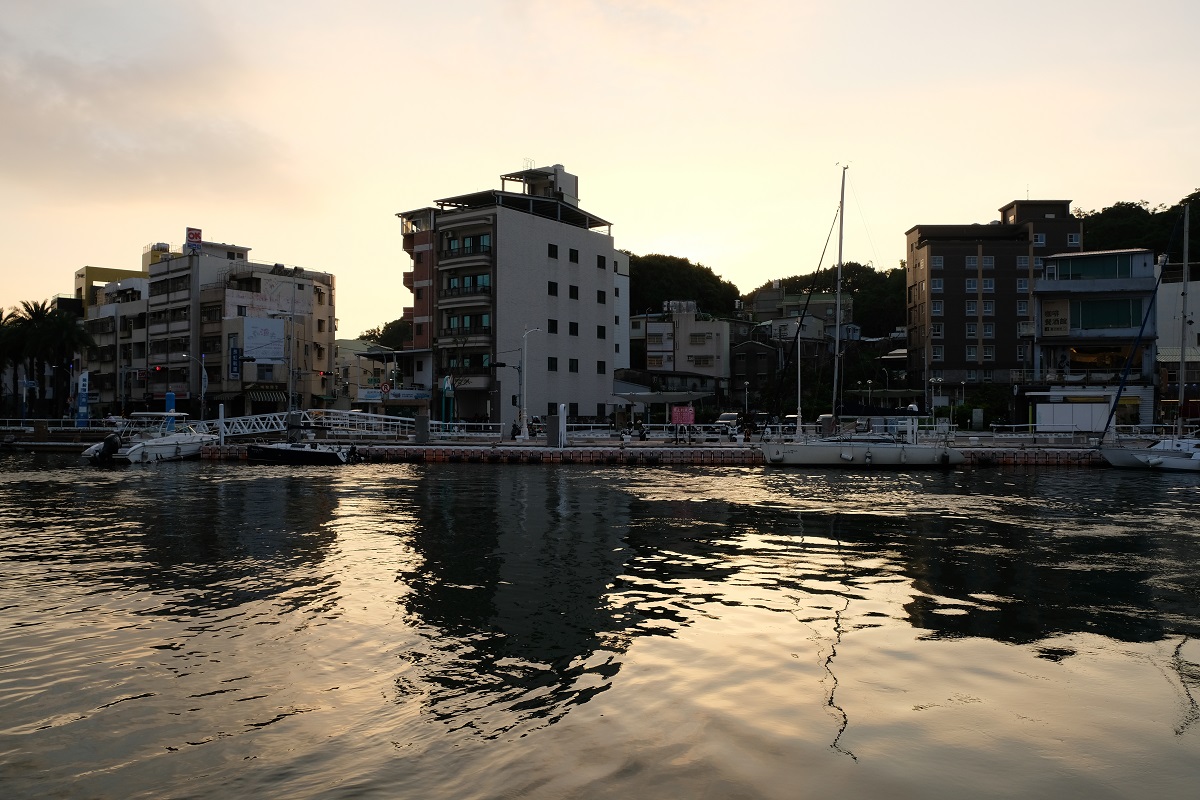
It was almost sunset when we finished exploring the former consulate compound
*Later on, based on the documents found at the British National Archives, it was discovered that what for more than a century had been believed to be the consulate building was in fact the official residence attached to the consulate (which is located at the foot of the hill). However, generally the structure at the top of the hill is still referred to as the former British consulate.

 What an Amazing World!
It looks like a great building, and to make it better, they chose a great location. If those walls could talk, as you said. 😊 Maggie
LikeLiked by 1 person
It’s a small but very photogenic building. The British certainly had chosen a prime location to build their consulate. I wonder how the skyline of the city looks at night from this vantage point.
LikeLiked by 1 person
Oh it would probably be nice at night!
LikeLiked by 1 person
Interesting. I never knew the British were in Taiwan.
LikeLiked by 2 people
Before visiting Kaohsiung, I also didn’t know that the British once had a significant presence in Taiwan.
LikeLiked by 1 person
Another interesting story about Taiwan, a country I don’t know much about…always good to discover something new. (Suzanne)
LikeLiked by 1 person
Happy to introduce this part of Taiwan to you, Suzanne. Despite its relatively small size, Taiwan does have many interesting historical places to explore, thanks to its strategic location.
LikeLike
What a beautiful place and such a spectacular view of the harbor and the city skyline. Your post reinforced to me the importance of history, and studying history, to appreciate all the things that led up to the present day cafe. If the walls could talk indeed! 😊
LikeLiked by 1 person
Imagine watching New Year’s Eve fireworks from this place! The more I learn about history, the more I realize how things we see and experience today are very much the products of the decisions made in the past, and how many events were intertwined. It’s always interesting to read about how places like this former British consulate came to be.
LikeLiked by 1 person
We’re just a piece of a larger puzzle and so interesting to connect all the pieces together!
LikeLiked by 1 person
Exactly!
LikeLiked by 1 person
How interesting, I didn’t know the British were there. This building is definitely all British in looks! In some sad news I’ve just pulled the pin on my UAE/Azerbaijan trip for two weeks time… a tough decision but it had to be done.
LikeLiked by 1 person
And the good thing is no one tried to change the look of the building even long after the British had left this part of Taiwan.
I’m so sorry that you have to cancel your travel plans, Anna. But I think it’s a wise decision to avoid the Middle East for the time being. Let’s just hope that things won’t get even worse.
LikeLiked by 1 person
Thanks Bama. I’m so bummed but my safety has to come first. I hope that this settles down asap.
LikeLiked by 1 person
It took a long time to restore the former consulate. It’s a lovely building with a beautiful view of the skyline of Kaohsiung. Too bad you couldn’t go inside the bomb shelter.
LikeLiked by 1 person
I’m glad that a lot of effort was taken to preserve this building. It would have been such a great loss for the city if it was demolished. The bomb shelter was actually rather small.
LikeLiked by 1 person
Apart from that wonderful view of the harbor and the Kaohsiung skyline, what struck me the most about the old British consulate was how similar it looked to the colonial red-brick buildings that still exist in Hong Kong. Especially in the combination of Western verandas and archways with Chinese tiled roofs. And it’s funny how a section of the hilltop building is now a café that serves high tea — I wasn’t tempted though as we were far more interested in trying Taiwanese food!
LikeLiked by 1 person
That was exactly what I had in mind when I saw it! I wouldn’t be surprised if some people think this building was in Hong Kong. High tea vs cold boba? In such an oppressive heat and humidity, I would always pick the latter.
LikeLiked by 1 person
The British built this style of red brick buildings all over Asia at one time. They deserve to be kept in memory of that part of history, and this one looks like it has been well restored.
LikeLiked by 1 person
It’s good that no one thought of demolishing this compound in Kaohsiung — or if someone did think of that, I’m glad it didn’t happen.
LikeLiked by 1 person
Colonialism was at best a mistake, at worst a crime but… man, they built some nice buildings (unlike that skyscraper in the background).
By the way, Taiwan is a cycling mecca! just saying….
Fabrizio
LikeLiked by 1 person
I can’t say the same thing about the Dutch colonial buildings here in Indonesia. While some are pretty, most of them were clearly built with function in mind, not beauty, because… the Dutch.
Have you cycled across Taiwan? I remember seeing this book about a Taiwanese who explored his home country by bike, and to be honest his adventure looks (I could only enjoy the photos as I can’t read Chinese) quite amazing.
LikeLike
Well, the VOC buildings in Galle, Sri Lanka I saw weren’t half bad to look at! They surely are better than what the Dutch are building in Rotterdam these days.
No, never been to Taiwan, but I heard that – besides making a lot of the world’s bikes – there’s some great riding to be found….
Fabrizio
LikeLiked by 1 person
You have a point. I agree that the Dutch buildings in Galle are quite pretty. Well, to be fair there are indeed nice Dutch buildings in Indonesia, given the latter’s significance as the Netherlands’ most precious and profitable colony. But my recent visit to the historic center of Mexico City made me think of how much more ornate the Spanish colonial buildings are.
Taiwan is a nice place to visit. It’s relatively small, but it has a lot to offer. You should go there, Fabrizio!
LikeLike
It’s great that this historic former residence has been preserved. Being able to link historical memories with something tangible certainly helps to pass them on.
LikeLiked by 1 person
I couldn’t agree more, which is why it always saddens me every time I read about ancient civilizations whose monuments have been lost to the ravages of time.
LikeLiked by 1 person
Intriguing. Do you know what the figures if in the lower compound were meant to depict a particular event?
LikeLiked by 1 person
If I remember it correctly, they were meant to depict the quotidian life within the compound without referring to any particular event.
LikeLike
Interesting history! I didn’t know the British had been around in Taiwan (although to be fair, I’m not surprised, given the British Empire touched pretty much all corners of the world). Very fascinating to see the historic buildings and ruins still standing, to showcase a time that once was. Thanks for sharing, Bama!
LikeLiked by 1 person
The British were indeed everywhere, or at least they tried to be. Even in Indonesia, which the Dutch controlled for a very long time, there are traces of British short colonial period here and there. I have to say I like the look of those red brick buildings the British built in places like Taiwan and Hong Kong though.
LikeLiked by 1 person
How fascinating to explore. I had long heard about Britain’s colonial rule of Singapore and Hong Kong, but I hadn’t realised of their presence in Taiwan. I shouldn’t be surprised, that Empire was everywhere. It always makes me feel slightly ashamed, even though of course I wasn’t even born! It’s important we remember its impacts though, and the fact they preserved this building is great. It really does look very British in the red brick.
LikeLiked by 1 person
The vastness of the British Empire was really mind-boggling. No wonder there was even a saying that “the sun never sets in the Empire”. I understand why you feel that way, but I think most people won’t blame you for what the Empire did in the past. I do love the look of British colonial buildings, especially those made with red bricks.
LikeLiked by 1 person
Very informative. We have Taiwan on our list but who knows when.
Cheers!
LikeLiked by 1 person
With the current geopolitical tensions, my suggestion is to visit Taiwan sooner than later.
LikeLike
What a beautiful building, Bama. The veranda is particularly pretty, and I love how it becomes a double storey at the back. Imagine what it must have been like to live there!
LikeLiked by 1 person
The veranda really is my favorite part of the building. Imagine sleeping in a bedroom with the view of the harbor!
LikeLiked by 1 person
What an interesting place! The consulate looks so beautiful and it contrasts a lot with the tall and modern skyline of the city. It is amazing to think of all the transformations the city went through, and I am glad it is now thriving as a cultural hub! Thanks for taking us on your exploration!
LikeLiked by 1 person
This is a good example of how preserving heritage buildings can make a city more appealing. I’m glad that this former British consulate retains its charm.
LikeLiked by 2 people
So this is the predecessor of those “international” structures that I saw in Gulangyu 🙂 Such a nice restoration! Love how the brick facade glows under the soft sunlight.
LikeLiked by 1 person
That’s unsurprising since Taiwan and Xiamen do have historical connections. I’d love to see Gulangyu myself one day. There are actually direct flights from Xiamen to Jakarta, so I probably should think of a trip there.
LikeLike