
The main thoroughfare of Penglipuran
I first tasted loloh cemcem at a Balinese restaurant in Jakarta days after its opening in June 2022. When we saw it on the menu, James and I decided to give it a try out of curiosity, thanks to the green elixir’s color and unfamiliar name. It came in a medium-sized clear glass bottle with a resealable swing top, just enough to contain two shots of the herbal drink. It obviously looked healthy, but its taste was harder to describe: there was a hint of sweetness with subtle tanginess as well as a touch of saltiness and a slightly warming sensation that together was unlike anything we’d ever had. Little did we know that our trip to Bali exactly two years later in June 2024 would take us to Penglipuran, the village where this healing potion originated.
Despite its location in the lush interior of Bali far from the island’s mass tourism hub in the south, Penglipuran is quite popular among tourists. A picture-perfect traditional village that always appears to be neat and clean certainly attracts curious visitors who will then share their photos on social media. In fact, this was how this place came to my attention many years ago. However, having visited numerous traditional villages in Indonesia, I wasn’t too convinced with the images of Penglipuran that all seemed too good to be true. I wondered if it would turn out to be a tourist trap.
Years later, after several more trips to Bali and further research on Penglipuran, I realized that it is indeed a real village where people actually live, not one set up as a theme park. Naturally, I was intrigued. And on our latest trip to the island, we thought it would be a good idea to check it out while also visiting other interesting places in the area. With Yana at the wheel, we headed to Bangli in the eastern-central part of the island.
As one of the regencies (the administrative unit of a province in Indonesia) of Bali, Bangli occupies parts of the island which roughly correspond to the region an eponymous kingdom once controlled. Established in the 15th century as a vassal of a larger kingdom that ruled the entirety of Bali and a few neighboring islands, Bangli only gained its sovereignty two centuries later in 1686. In the early 19th century, following the demise of the Dutch East India Company (the VOC), the Dutch colonial government took control of the company’s former possessions, including the highly strategic and economically important ports in what is now Indonesia. It was during this period when the Dutch consolidated its colonial grip on the vast archipelago through political interventions that pitted local kingdoms against each other, resulting in agreements that often benefitted the European power. Bali was no exception. And in 1909, Bangli became the last kingdom on the island the Dutch subjugated.
It is said that the centuries-old village of Penglipuran situated in the southern part of his realm was a gift from the king of Bangli to his people who helped fight a neighboring kingdom to the west. The 21st-century Penglipuran, however, was a busy place when we arrived. While the numbers of independent visitors and foreign tourists were relatively small, there were large groups of students from different schools in Java who were bused to this place on their field trips to Bali. Busy is an understatement, although luckily in general they behaved in quite an orderly manner. But I can imagine how peaceful this village must be early in the morning or late in the afternoon without the presence of big tour groups.
We walked along the main street of the village (where everyone was), and explored some of its alleys and backyards (which only a trickle of visitors bothered to check out). It was here, at one of the houses that left their gates open, where I spotted the green elixir that turned out to be loloh cemcem. Made from the leaves of Spondia pinnata (a relative of the ambarella) mixed with the flesh of young coconut, chilies, palm sugar, and tamarind, the drink really is the product of the biodiversity of plants around the village. “It’s very typical of Penglipuran,” Yana, who is from Ubud, explained. With a bottle of cold loloh cemcem in our hands, we walked toward the exit to end our poorly-timed visit to what was otherwise a very photogenic, living traditional village.

One of the Hindu temples in the village

Small shrines, ubiquitous all over the island
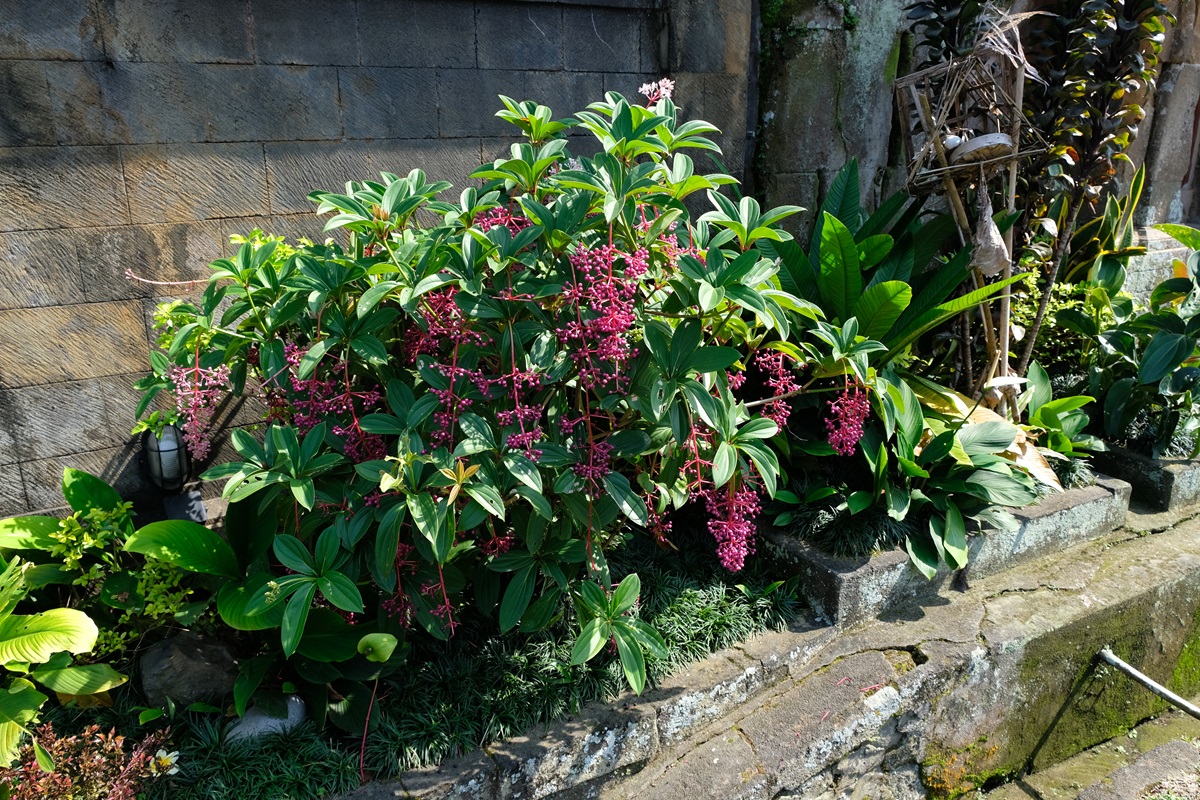
Medinilla myriantha, one of the most common ornamental plants in Penglipuran

Some of the roofs I saw in this village were unique to this place

Who wouldn’t be happy to have a neighbor like this, with a house so beautiful and front yard well taken care of

Traditional aesthetics rule this corner of Bali
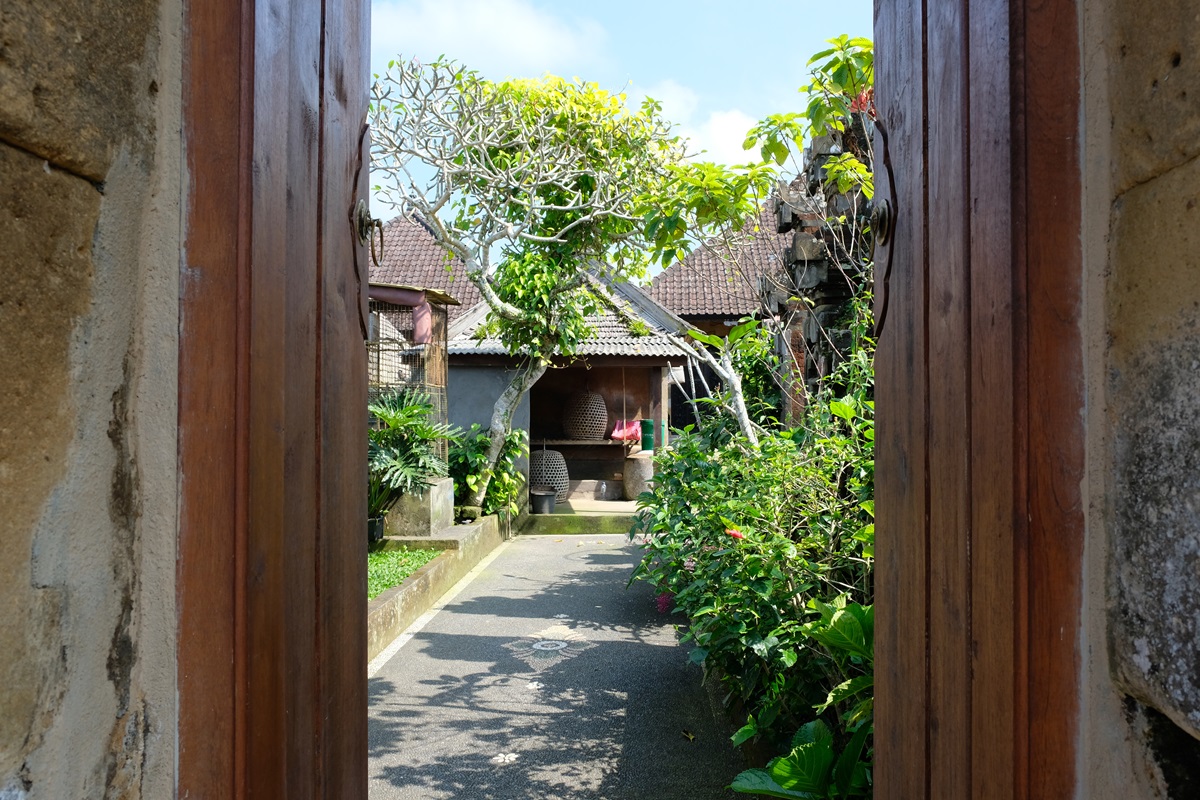
Some houses in the village are open to visitors
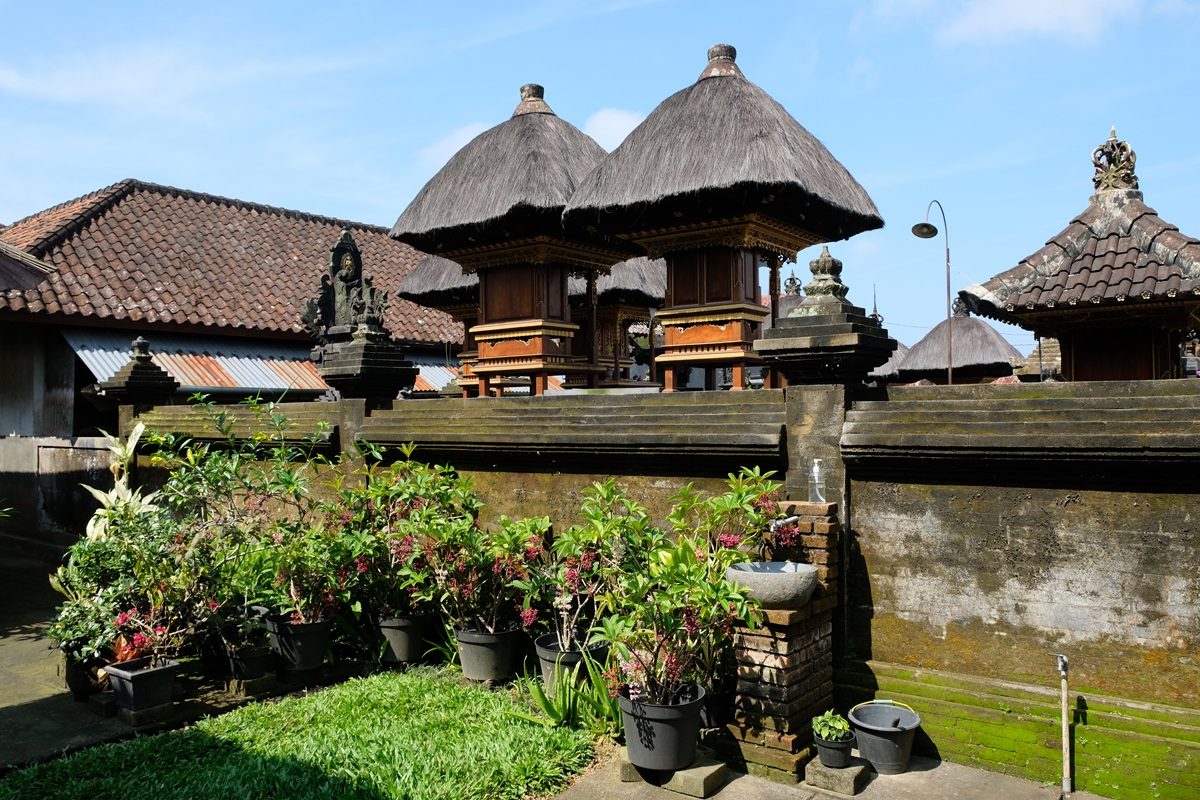
A view from the backyard of one of the houses

I randomly entered a house and found this beautiful corner

Highly ornate doors embellished with characters from the Ramayana

The owner of this house chose to close the doors to his/her property, which is totally okay for me
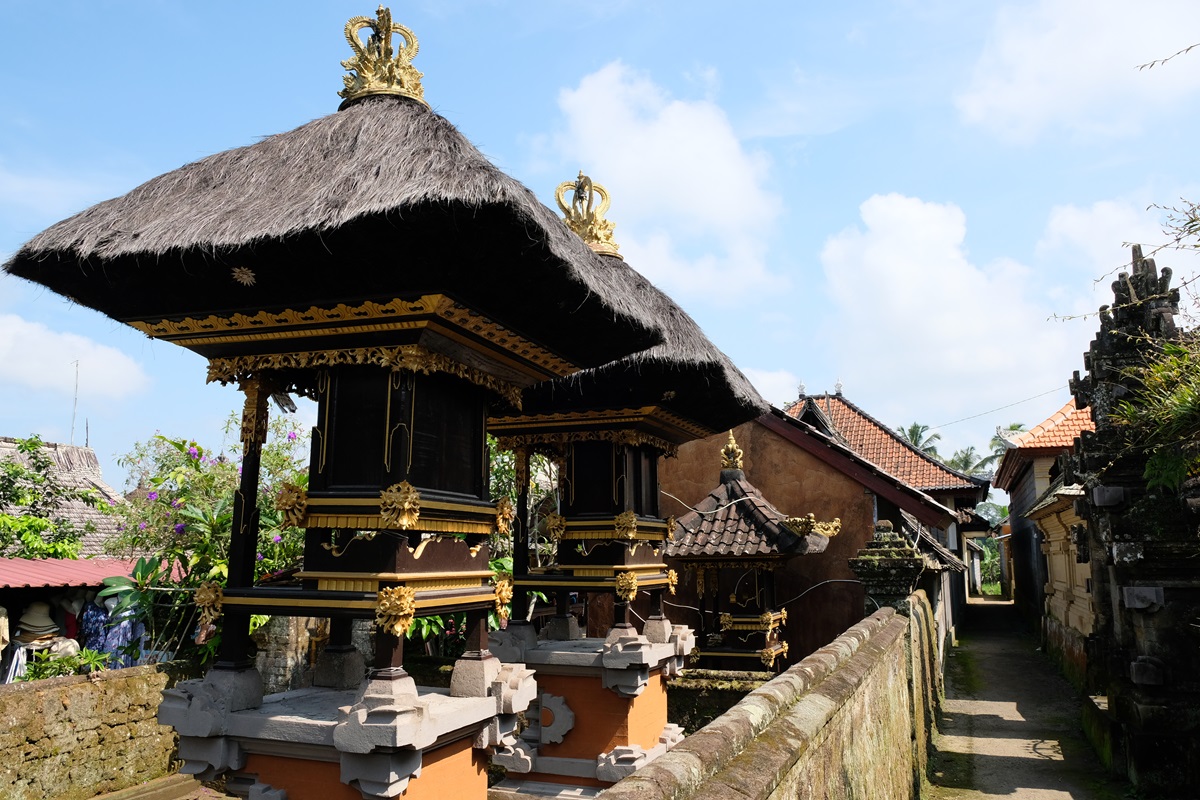
A narrow alley which begged to be explored
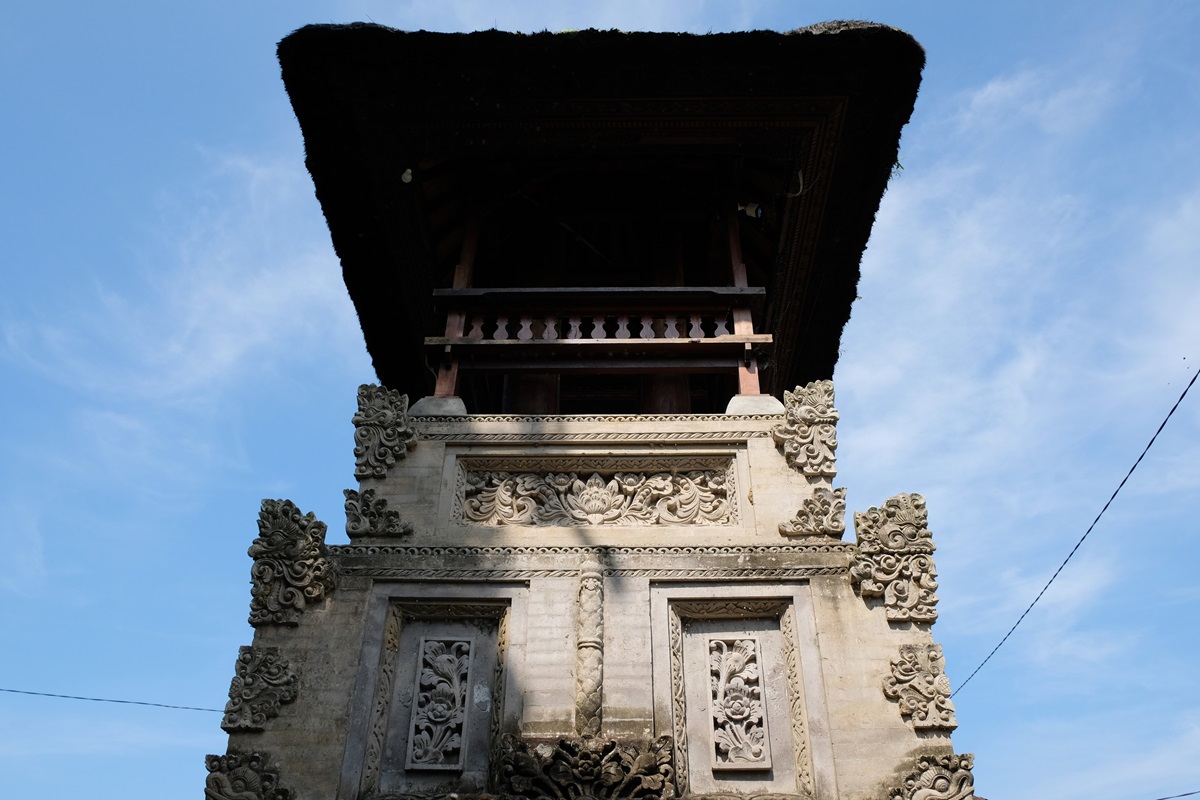
The bale kulkul (essentially the Balinese version of a drum tower) of the village

Intricate carvings at the base of the bale kulkul
We continued our exploration of Bangli at Pura Kehen, an ancient Balinese Hindu temple located a 4-kilometer-drive to the south of Penglipuran. In stark contrast to the village, the temple was almost deserted, with only a handful of other visitors in sight. There is no definitive answer to the question of when this compound was built, apart from some inscriptions indirectly suggesting that a temple might have existed at this location since the ninth or tenth century CE. However, Pura Kehen’s dramatic location on the slope of a hill is enough to distract anyone from their curiosity about its origin.
First, you need to take a flight of stairs to reach the highly-ornamented gate. Then, in the lower courtyard you will be greeted by a large banyan where a structure is curiously perched on the tree as if it was hugged by the stranglers. Going up to the main courtyard – where the compound’s most sacred ensemble sits – will most likely bring your attention to the blue porcelain plates mounted along the inner enclosure, a rare sight at Balinese Hindu temples. Finally, as you arrive at the main courtyard your eyes will be pleased by the captivating beauty of multi-tiered ijuk roofs sitting atop brick and wooden structures, each embellished with intricate carvings. This serenity must have been omnipresent all over the island before it became a tourism hotspot. If anything, Pura Kehen is proof that the old charm of Bali is still alive.
After soaking in the calm ambiance, with the occasional sound of passing motorbikes and cars breaking the silence, we ambled across the temple toward the exit. From here, tall coconut palms piercing the sky amid roofs of traditional houses provided a vista many would describe as “exotic”. We rendezvoused with Yana, and before going back to our homestay in Bedugul, we asked him to stop at a local eatery known for its mujair nyat-nyat.
Nyat-nyat itself refers to a Balinese cooking method where liquid (water or broth) that is added to cook the protein is reduced until it becomes a thickened sauce. Due to Bangli’s landlocked location, freshwater fish is widely used to make the dish, and we opted for the place’s specialty: mujair (a type of tilapia). The fish which was generously coated with the yellowish sauce came with plecing kangkung (blanched water spinach served cold with sambal made from red and bird’s eye chilies, kaffir lime, shallot, garlic, candlenut, and a few other ingredients), jukut undis (Balinese stew made from a type of legume known as the pigeon pea), and two types of sambal. We really enjoyed it, so much so we recommended it to our blogging friend Madhu who visited Bali for the first time just two months later. She told us that it was among the most delicious Indonesian dishes she had on the island.
With full stomachs, we were tempted to call it a day and return to our homestay. But not before visiting an art museum in Ubud since it wouldn’t require a major detour. Nevertheless, the rest of the day felt easy, just like the lunch we had.

The street-level entrance to Pura Kehen

The main gate to the Hindu temple compound
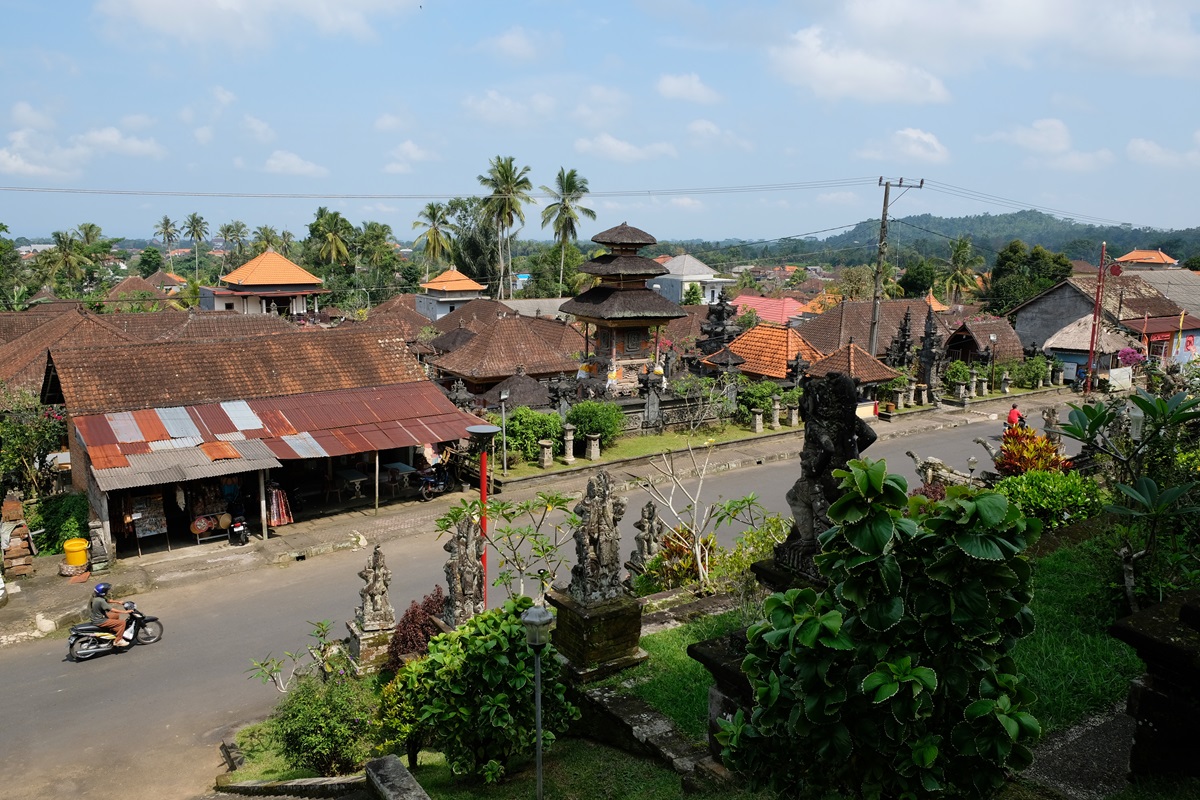
A view of an unhurried life far from Bali’s tourism hub

The big banyan tree in the lower courtyard of the temple
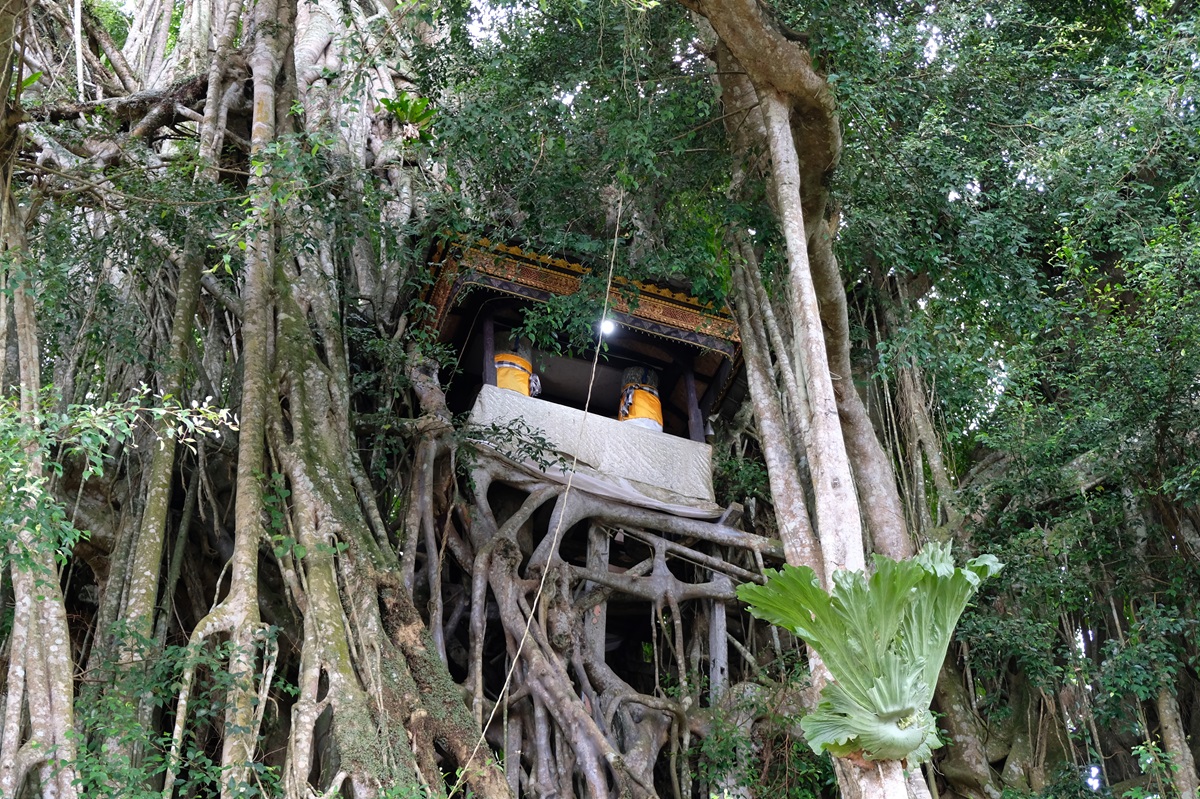
A shrine perched atop a string of stranglers of the same banyan tree
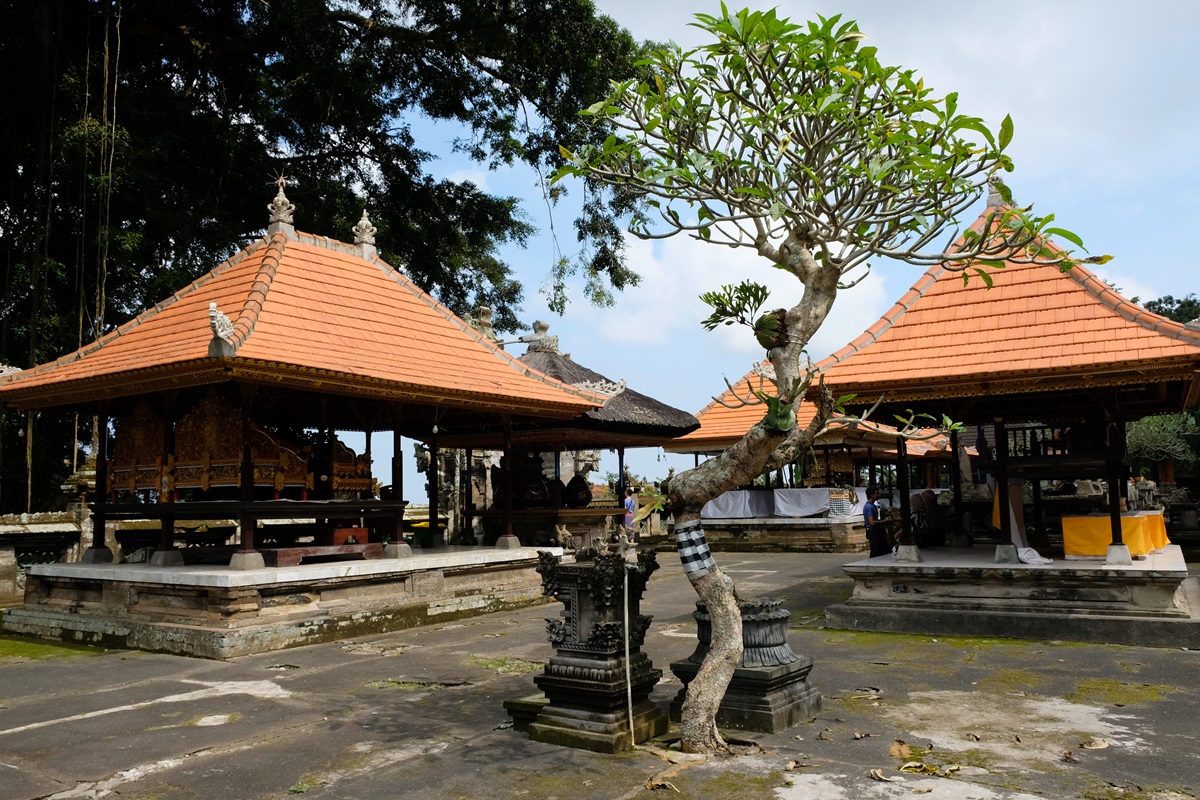
The calm ambiance of the lower courtyard
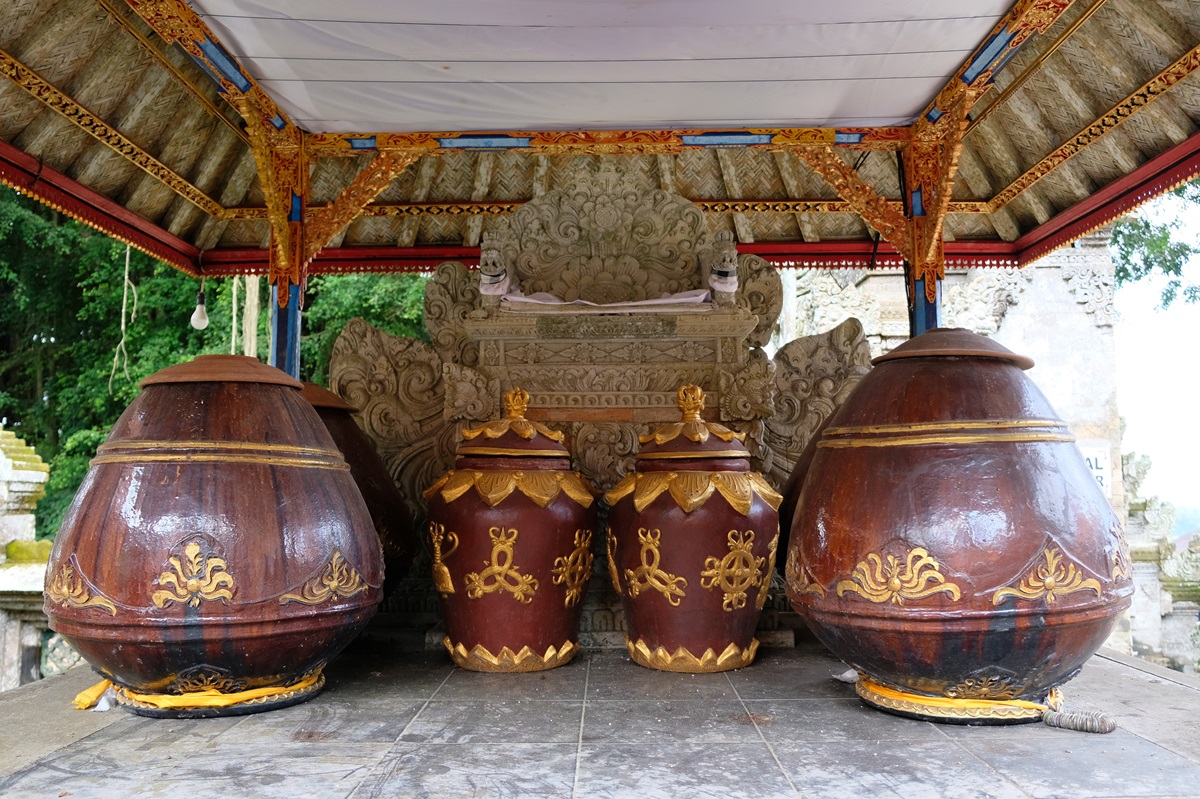
A guide would have probably been useful to explain what these were
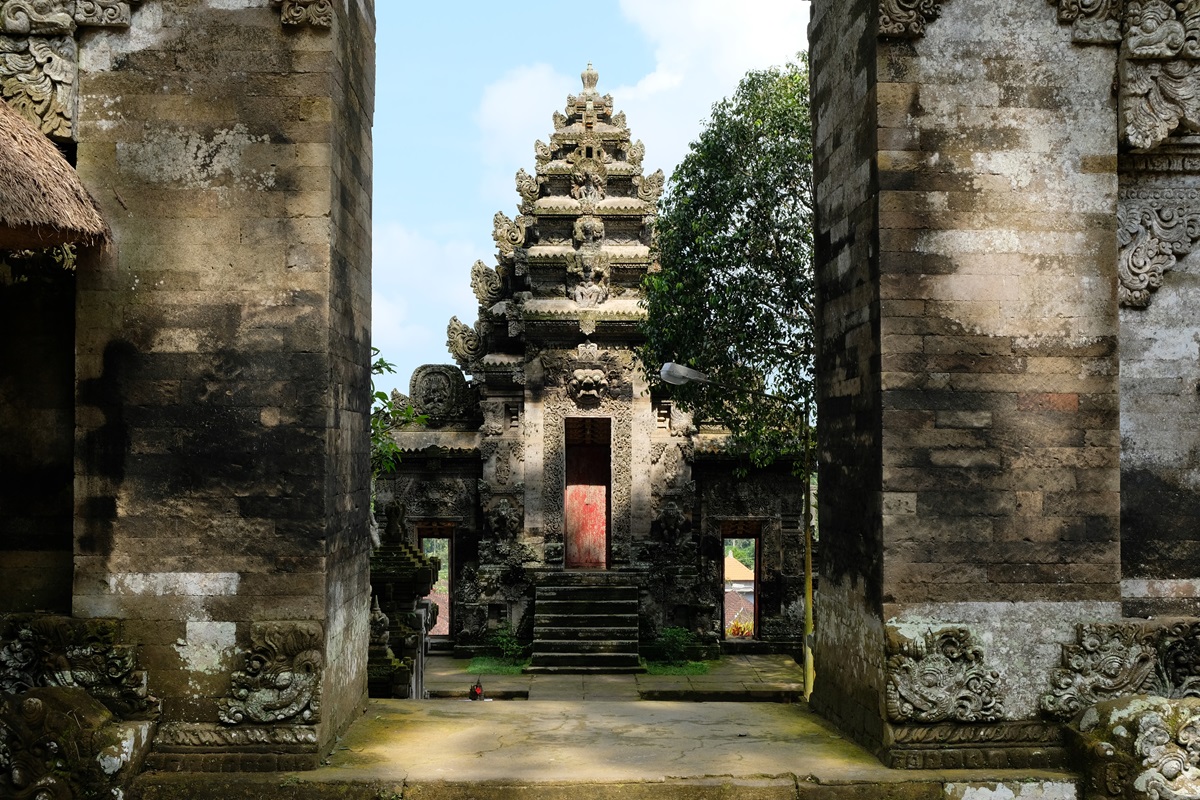
With a touch of sunlight, the gate turned much more enchanting

Blue porcelain plates within the temple compound
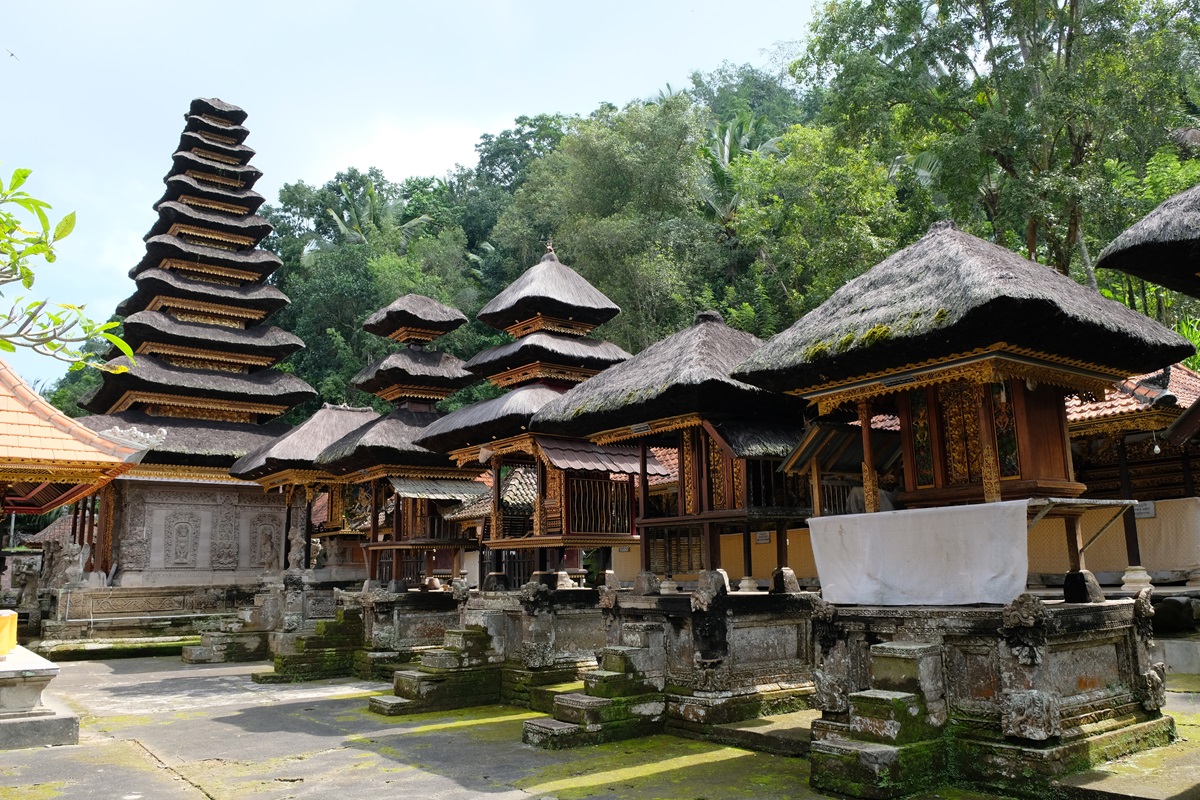
The most sacred section of Pura Kehen
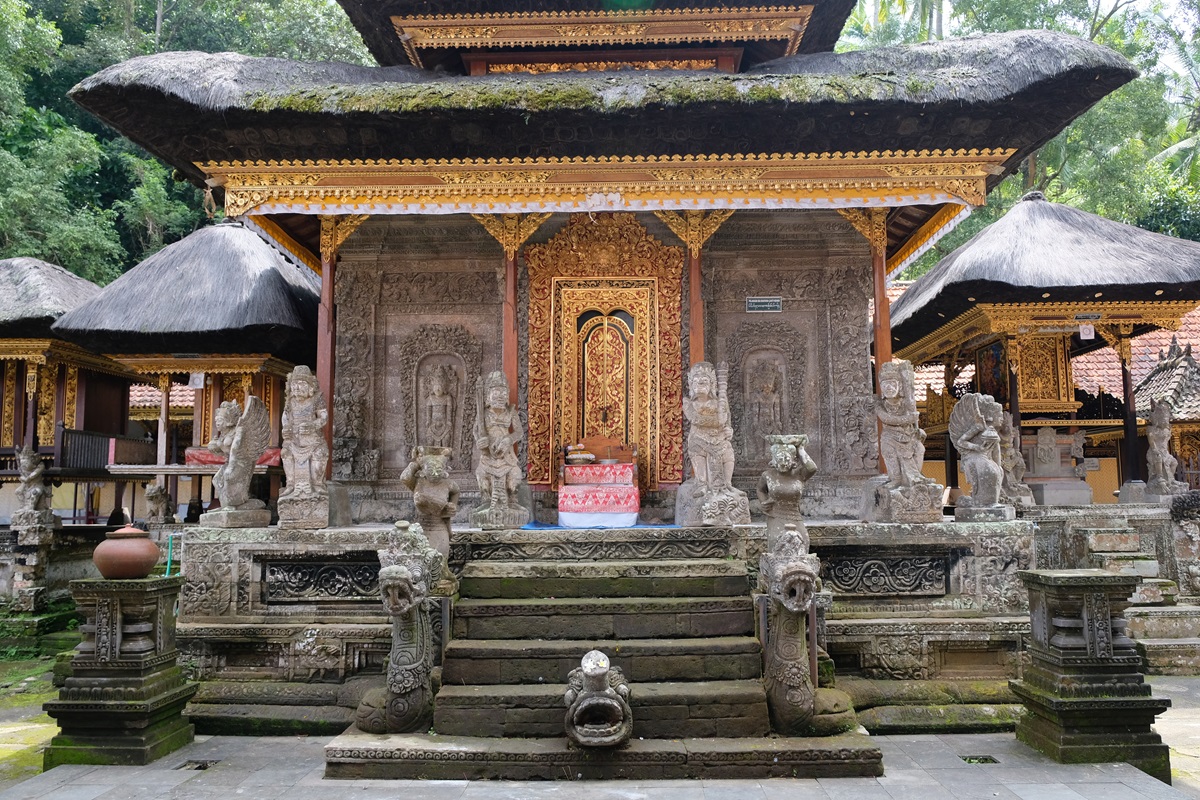
The tallest shrine was incredibly ornate

A moss-covered structure at one corner of the inner courtyard
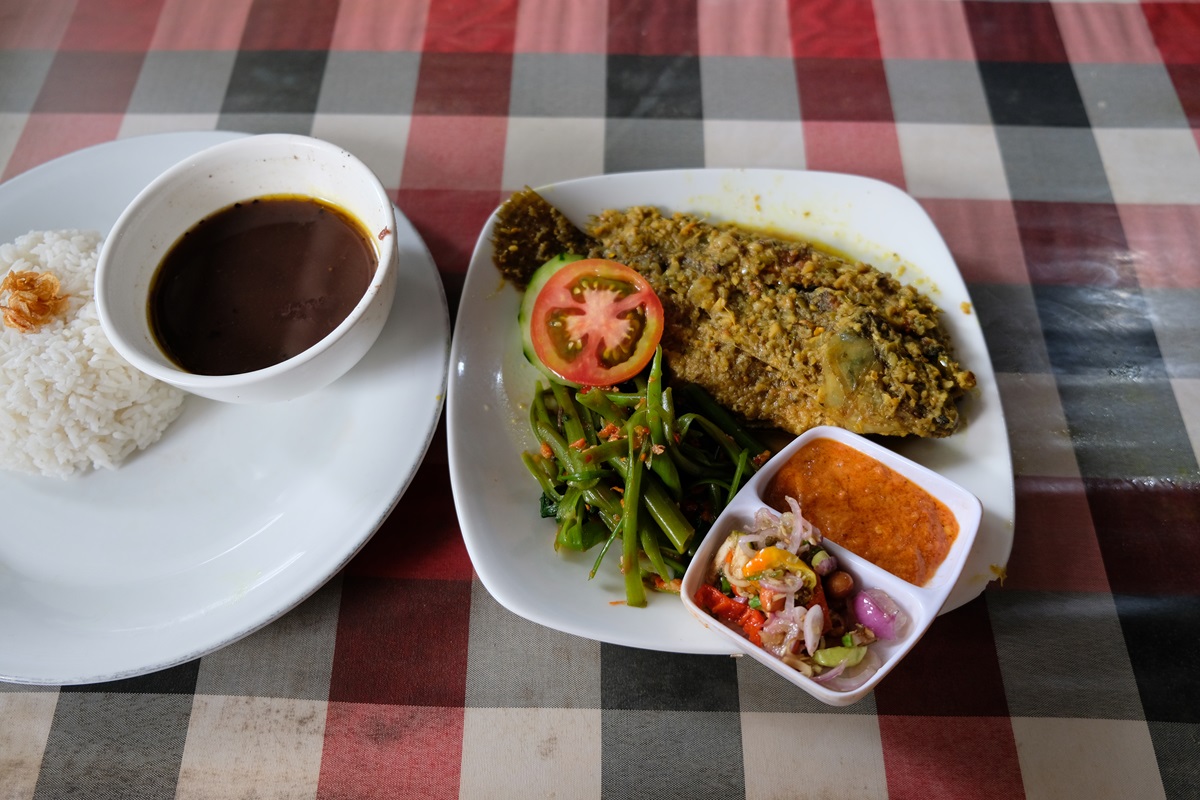
Our satisfying lunch of mujair nyat-nyat

 What an Amazing World!
Taking it easy, indeed! While some destinations are action-packed with many things to do and see, it looks like Bali (especially Bangli) is the opposite! Looks absolutely tranquil and a great way to sit back, relax, and enjoy a slice of paradise. The biodiversity is impressive, as is the delicious dishes you had! Thanks for sharing with us, Bama 🙂
LikeLiked by 2 people
This part of Bali is admittedly quite far from the main draws of the island, but that makes it even more interesting to explore, doesn’t it? I can’t believe this trip was almost a year ago! Thanks for reading, Rebecca.
LikeLiked by 1 person
This is the side of the island I would love to explore, I love the traditional style of building! It’s so beautiful! Thanks for sharing this side with us Bama!
LikeLiked by 1 person
And for sure, we didn’t see any of your fellow countrymen and women in this part of Bali. 😆 If you ever think of going to this island, you should let me know. I can help you with the planning so that you can avoid all the tourist traps.
LikeLike
🤣🤣🤣 you know me too well!!
LikeLiked by 1 person
Haha, because you’re not the first Aussie I know who wants to stay clear of Bali exactly for the same reason. 😂 I can see why, though.
LikeLiked by 1 person
You saved the food photo for the very end. What a tease! 😆
This was a really lovely tour of such a quaint, beautiful and very tidy village. I love that it’s real, with its rich history, and not a theme park as you said. The architectural detail are stunning and the ornamental staircase leading up to the temple is beautiful. Banyan trees are such a treat to see in real life too. Tall, strong and majestic.
The green elixir drink sounds interesting especially with the list of ingredients described!
LikeLiked by 2 people
Haha. I wish I’d taken a photo of the restaurant as well as it was quite rustic. And I don’t remember seeing any other foreigners there.
I love how the villagers put a lot of effort to keep this corner of Bali clean. Also, the fact that the houses were all built in Balinese traditional architecture makes this village even more beautiful.
Speaking of banyan trees, actually a lot of Indonesians I know see them as spooky. To me, they just look majestic, like you said.
LikeLiked by 1 person
I didn’t know about the spooky reaction to Banyan trees. I’ll have to read up on it!
LikeLiked by 1 person
Some Indonesians believe they are where ghosts reside!
LikeLiked by 1 person
Sounds like fun times to me!
LikeLiked by 1 person
We clearly need another trip to Indonesia. We only had a few days in Bali on either end of our Carstenz Pyramid climb. We saw the most touristed sites but didn’t have time to explore. I always find it so interesting that most people stay on the main road/site and don’t stray too far away. You’ve shown that even in these busy areas you can get away from the crowds. Penglipuran does look too perfect to be real. 😊 Maggie
LikeLiked by 2 people
Maggie, knowing your penchant for exploring many corners of the country you visit, I actually wonder how much time you would need if you ever return to Indonesia. Even on one island like Bali there are so many different things that are worth seeing. Maybe I’m biased, but I would definitely recommend Java as well.
LikeLiked by 1 person
Raja Ampat is high on the list right now, so you never know 😊
LikeLiked by 1 person
If you go to that part of the country, you might as well visit the original Spice Islands which are technically in the same region. Getting from the former to the latter is not so straightforward though.
LikeLiked by 1 person
Okay, I’ll contact you when we start planning. 😊
LikeLiked by 1 person
What a place! Thanks for sharing. It must have felt wonderful walking around. It is nice to at least learn about the world through photos. Thanks.
LikeLiked by 1 person
I kind of wish I’d stayed in the village so I could see how it’s like early in the morning and in late afternoon. Even more peaceful, I believe.
LikeLiked by 1 person
The roofs are so cool! When you said the loloh cemcem gave a warm sensation, I wondered if it had some alcohol in it, but from your later description, it sounds like it’s not fermented at all. A little drive away from busyness, a nostalgic drink, a fine lunch, and a museum visit all sound like the makings of a perfect day for you two!
LikeLiked by 1 person
I’m glad the villagers keep the Balinese traditional architecture alive as opposed to turning their houses just like everyone else’s elsewhere. Speaking of loloh cemcem, at first the warmth was like something you would get from ginger. But I think it was really the chili that gave that sensation. I think you would enjoy this excursion too, Lex. If only Indonesia were closer to you!
LikeLiked by 1 person
Your photos capture it absolutely beautiful, and it looks really peaceful and well maintained. I love all the intricate carvings and architecture, and plenty of trees and green around too. It’s nice you escaped the crowds a bit – I really need to explore more of Indonesia!
LikeLiked by 1 person
Much appreciated, Hannah. You definitely should go back to Indonesia and explore more. I’d recommend Java if you want to see some impressive ancient Hindu-Buddhist temples. Or the eastern part of the country for incredibly beautiful beaches. But anywhere you go, I’m sure you’ll experience really unique and colorful local cultures that can be so different from one island to another.
LikeLike
Wow! What a perfect place. I hope it always remains that way. Perhaps those big brown elaborate urns in your photo contained loloh cemcern.
LikeLiked by 1 person
I surely hope so, Mallee. Penglipuran can set a good example for other villages in the country. Speaking of the urns, I think they look too big to contain loloh cemcem. But who knows?
LikeLiked by 1 person
What a wonderful post, Bama. I honestly feel like I’ve just visited all the places you write about myself. I particularly love your description of loloh cemcem. It is a taste that sounds very intriguing, and something I certainly would have tried too. I wonder what it must feel like to live in Penglipuran. It is such a gorgeous village. I can understand why people would want to visit, but as always, I marvel at how easy it is to step off the beaten paths and explore the hidden alleyways without the crowds. Like you say, if one could stay there overnight, the experience would be so different. I’ve never had an urge to visit Bali, but these non-touristed places you write about would make me reconsider, as I loved the little bit of time I spent in Indonesia.
LikeLiked by 1 person
Thank you, Jolandi. Because it’s Bali, I’m sure the villagers at Penglipuran perform all the Hindu rituals in a daily basis, making this part of the island even more colorful and enchanting. I think there are actually homestays there, so that can be a good option for anyone who wants to see the more traditional face of Bali. I can understand why some people, like you, are not that interested in visiting this island, because admittedly some parts of it have been extremely commercialized. However, Bali is also bigger than what most people think, which means there are corners on the island that still exude that old charm which brought this island to foreigners’ attention decades ago.
LikeLike
So fascinating. Great post!
LikeLiked by 1 person
Glad you enjoyed it!
LikeLike
Beautiful writing, Bama ~ and your photos bring the ease and wonders of Bangli culture to the forefront. This post has such peace and tranquility, a perfect recipe for me to start my Sunday and enjoy such a paradise. Beyond the beauty and diversity of the land, I always enjoy your take and introduction on the local dishes you share… you really could put together a book on travel cuisine 😊. Cheers to a great week ahead.
LikeLiked by 1 person
Thank you, Randall. Such calm and tranquil corners of Bali are the reason why I still think it’s a great island to explore despite the mass tourism in some parts of it. When it comes to writing about local dishes, I have to thank James. Because of him, I now have an even greater curiosity and appreciation toward the traditional dishes of the places we visit. Hope you’ll have a wonderful week ahead!
LikeLike
I’m surprised to hear that despite its popularity, Penglipuran is still an authentic traditional village where people work and live. I imagine it would be neat to visit without the big tour groups around. Glad to hear you found some quiet areas without the crowds though. The green elixir sounds interesting. Love the big banyan tree. Beautiful set of shots. Thanks for the tour.
LikeLiked by 1 person
I guess the villagers of Penglipuran are now used to seeing a lot of visitors in their village during the day and having the calmness and tranquility back when the sun is down. Nevertheless, it was encouraging to see this part of Bali preserving its traditional architecture and customs. That health drink was really interesting, although I can’t imagine someone who doesn’t like vegetables enjoying it.
LikeLiked by 1 person
Ah yes, there’s nothing quite like going straight to the source for some authentic loloh cemcem; it was even sweeter and tastier than the one we found in Jakarta. In my opinion, the mujair nyat-nyat we ate for lunch was also worth the detour alone! Had we known Penglipuran was already this popular, we would have arrived much earlier before the huge tour groups descended on the village. Thankfully the situation at Pura Kehen was completely different — it felt practically deserted by comparison.
LikeLiked by 1 person
But to be fair we stayed quite far from Penglipuran. So, if we wanted to come to the village earlier, we should’ve left Bedugul probably at 4 or 5 in the morning. That’s why I’m now curious about the experience of staying in the village to see it before the crowds arrive. But having loloh cemcem right at the source was really great, and I agree with you that it tasted better than what we had in Jakarta.
LikeLiked by 1 person
Bangli looks like a wonderful place to visit, especially for those who are seeking a more authentic and less crowded experience. I, for one, love how it offers a unique blend of natural beauty, cultural immersion, and spiritual experiences, often overlooked by the island’s main tourist areas. I also love your beautifully captured photos! Thanks for sharing, and have a wonderful day 🙂 Aiva xx
LikeLiked by 1 person
Much appreciated, Aiva. I have a feeling you would enjoy visiting places like Pura Kehen because of the peaceful ambiance. What I really liked from this trip to Bali last year was the fact that there are still traditional villages and temples on the island that most tourists (fortunately) seem to overlook.
LikeLiked by 1 person
🥰🥰🥰
LikeLiked by 1 person
The architecture looks really good, especially those stone carvings and thatched roofs. It’s very understandable why this is a very popular place to visit.
LikeLiked by 1 person
The traditional architecture is one of the main reasons why I will keep returning to Bali despite the negative effects mass tourism brought to parts of the island.
LikeLiked by 1 person
If I ever visit Bali, it will be to see that architecture and other traditional aspects of the local society and not the beaches.
LikeLiked by 1 person
That’s exactly what I do every time I visit Bali. In my opinion, the neighboring island of Lombok has much more beautiful beaches than Bali.
LikeLiked by 1 person