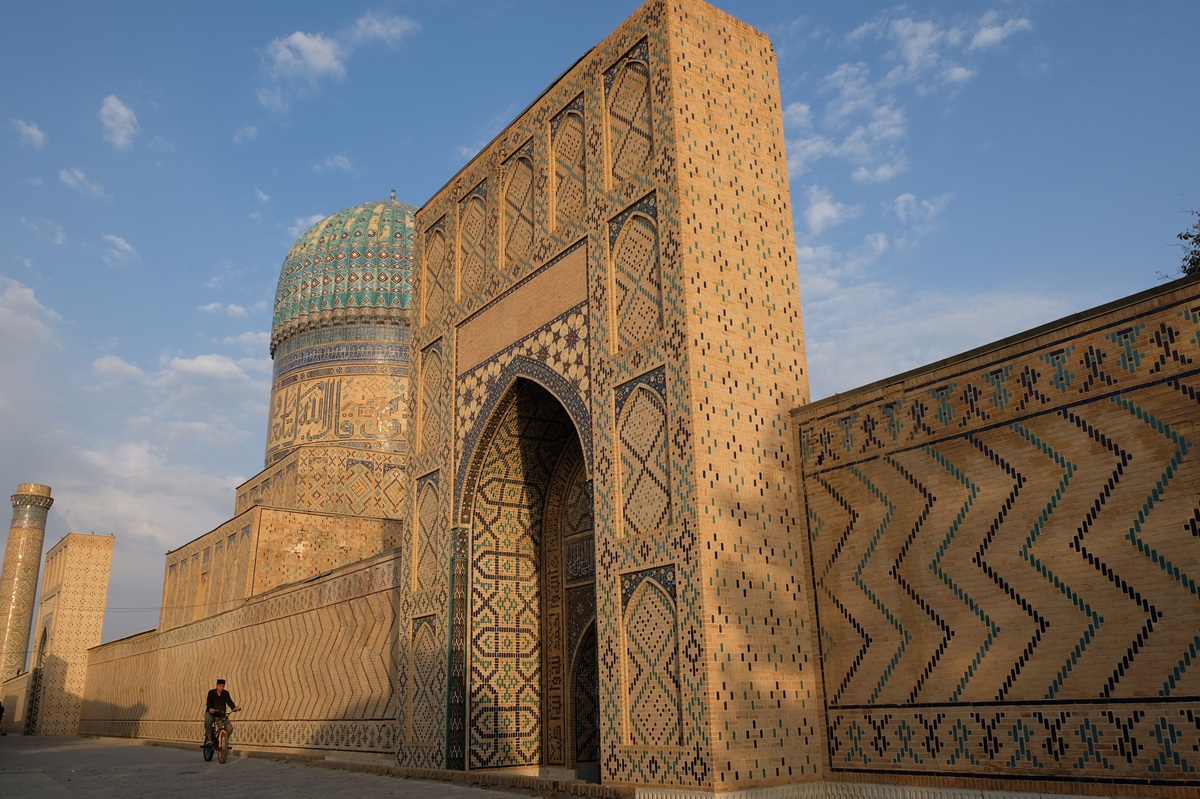
The southern wall of the mosque bathed in the soft morning sun
When one strolls around the downtown area of Samarkand, the Registan will undoubtedly take the spotlight. It is to Uzbekistan what Machu Picchu is to Peru, the Great Pyramid of Giza is to Egypt, or the Great Wall is to China. Simply put, they all belong to an elite club of the world’s most impressive and awe-inspiring ancient sites. However, I’m not talking about the Registan just yet as I’m inviting you to take a look at another equally magnificent monument from the past that left me wondering: why was it built on such a scale?
Just a few hundred meters to the northeast of the crown jewel of modern Uzbekistan’s tourism industry is a gigantic mosque in a partially ruined state that could only have been conceived by rulers with lofty aspirations. In this case, it was none other than Timur himself. In 1399, the great conqueror of nations along the ancient Silk Road ordered the construction of a new mosque in Samarkand, the new capital of his rapidly expanding empire, to probably impress both his own subjects and foreign dignitaries alike. Other historians, however, believe it was in fact Timur’s wife, Saray Mulk Khanum, who gave the order.
The pace at which Timur (or his wife) wanted the new mosque to be completed was ambitious, to put it lightly. Since the beginning, the project already faced several problems, including ones related to the building’s structural integrity. When the mosque was nearing completion, Timur was purportedly not satisfied with the almost-finished edifice and instructed adjustments to be made. Consequently, parts of the mosque had to be reconstructed and reinforced to suit his taste. However, Timur’s vision for the structure proved to be way ahead of what construction technology in the early 15th century could provide. And unfortunately, he didn’t live long enough to see the completion of this expensive undertaking, which was then named the Bibi-Khanym Mosque, after Timur’s wife.
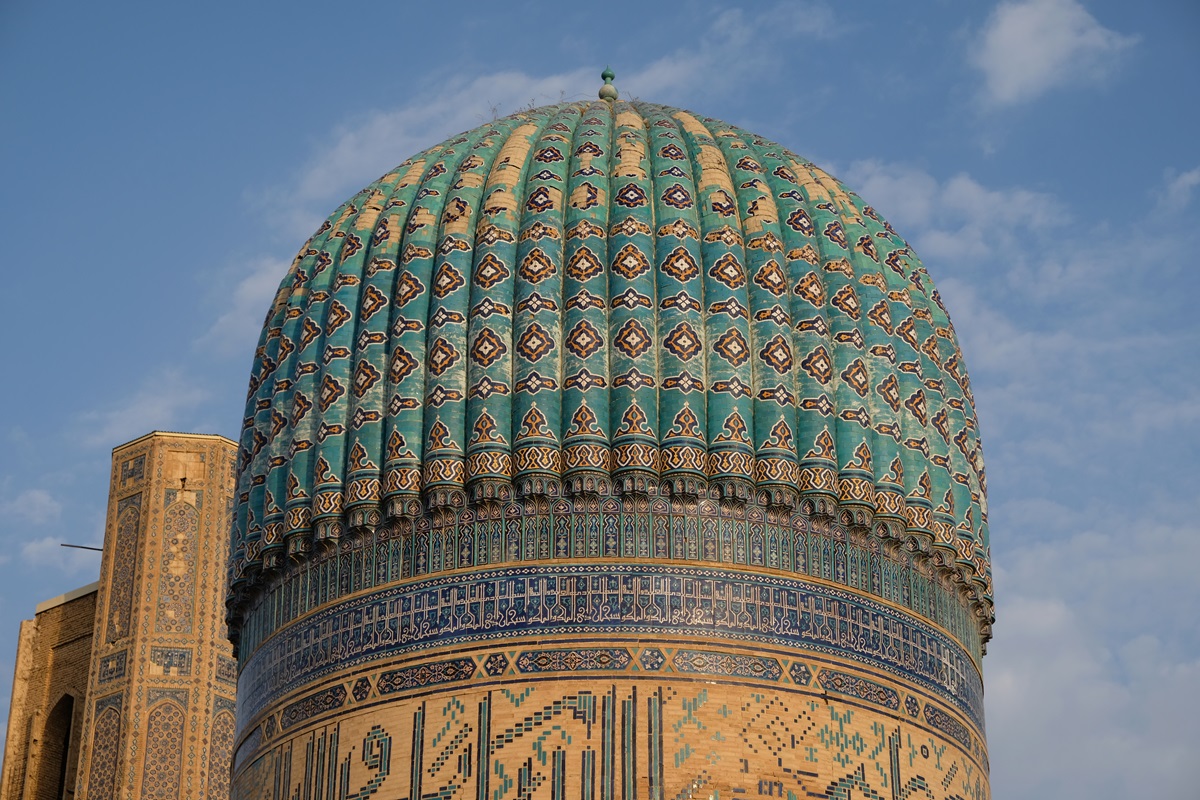
Ribbed domes are one of the most unique characters of Timurid architecture

A fine example of excellent color coordination
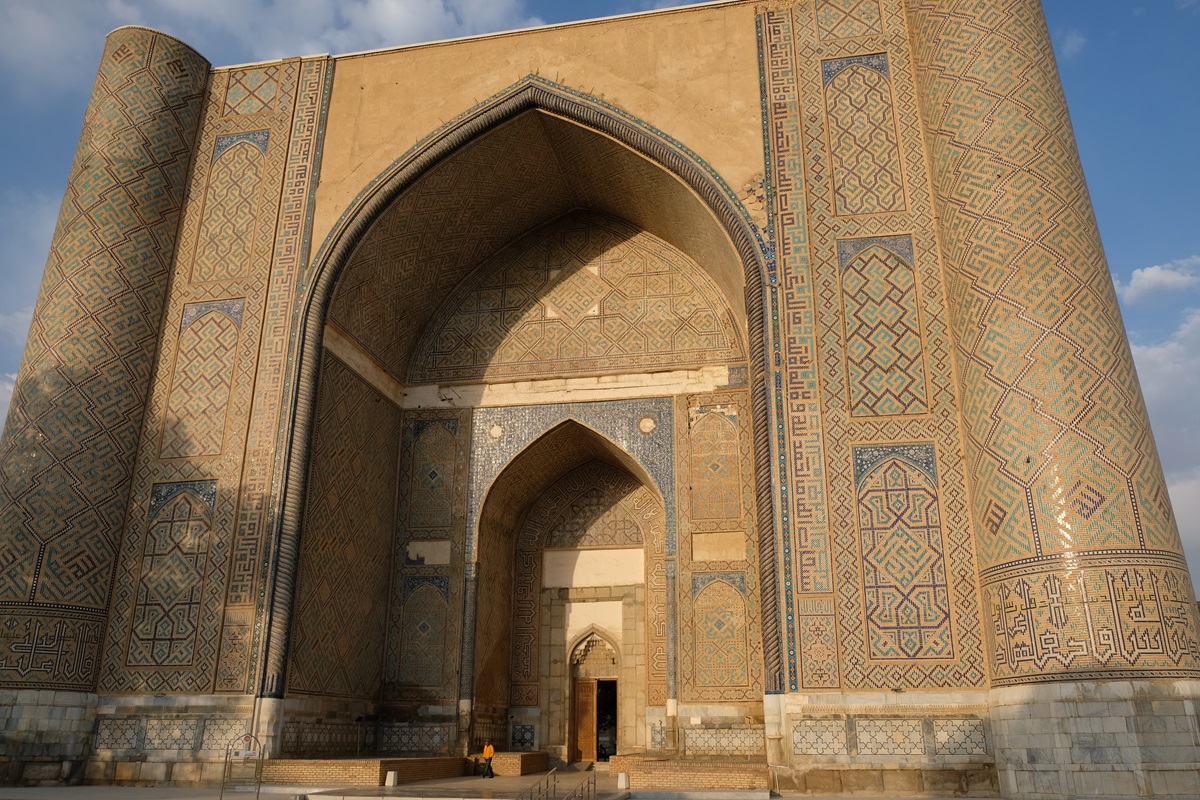
The massive pishtaq of Bibi-Khanym Mosque

These women were heading to the adjacent Siyob Bazaar

We returned to the mosque when the sun was higher
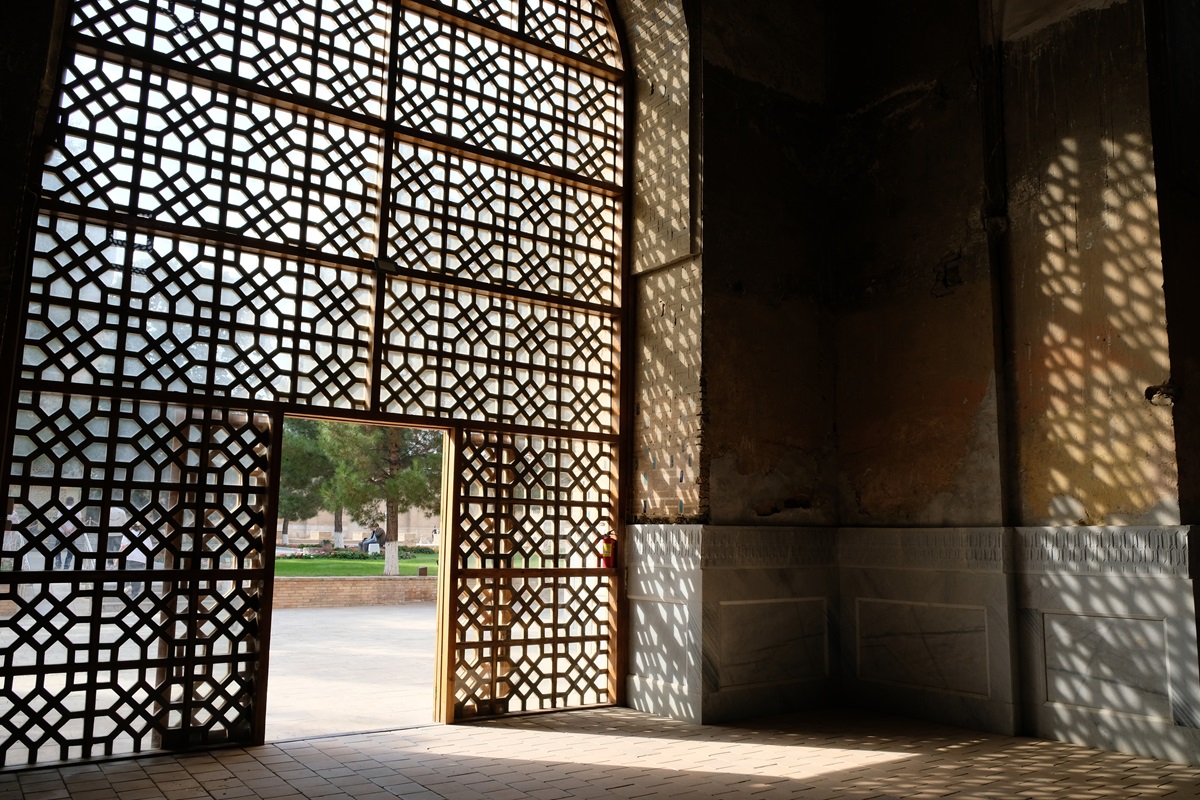
Latticework and shadow play
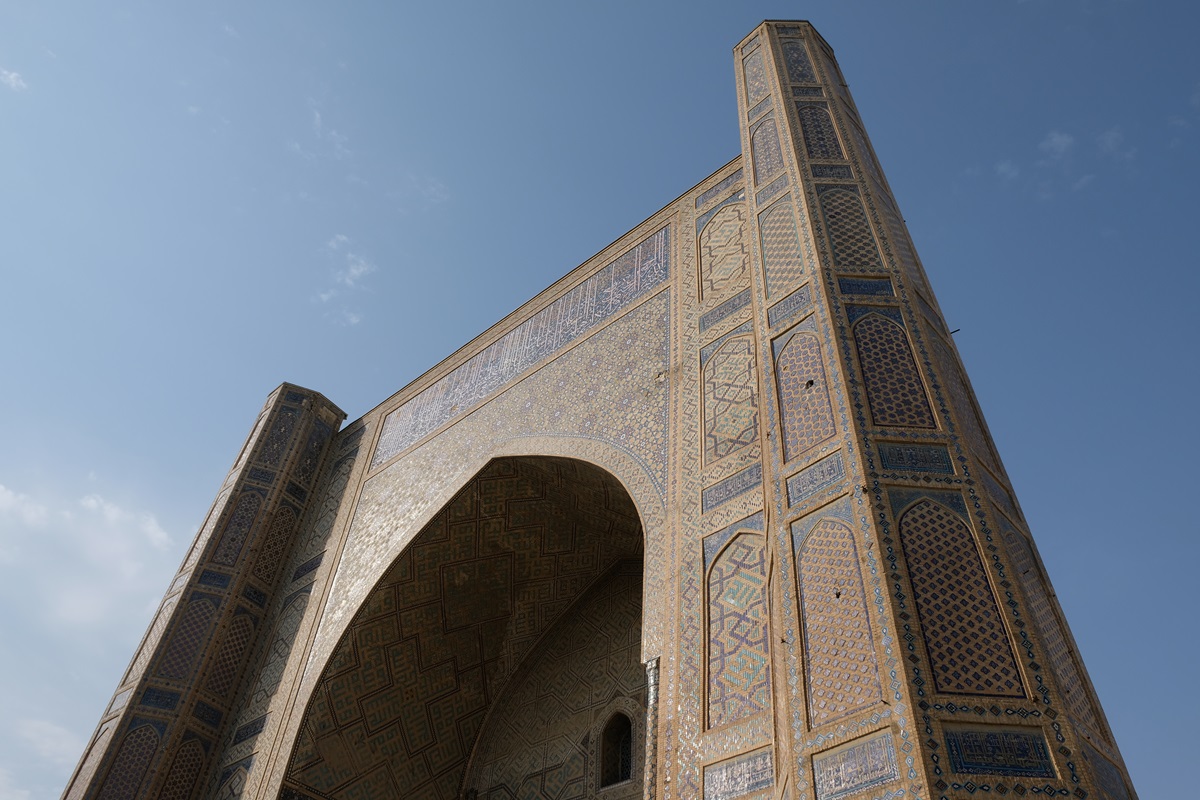
The sky is the limit
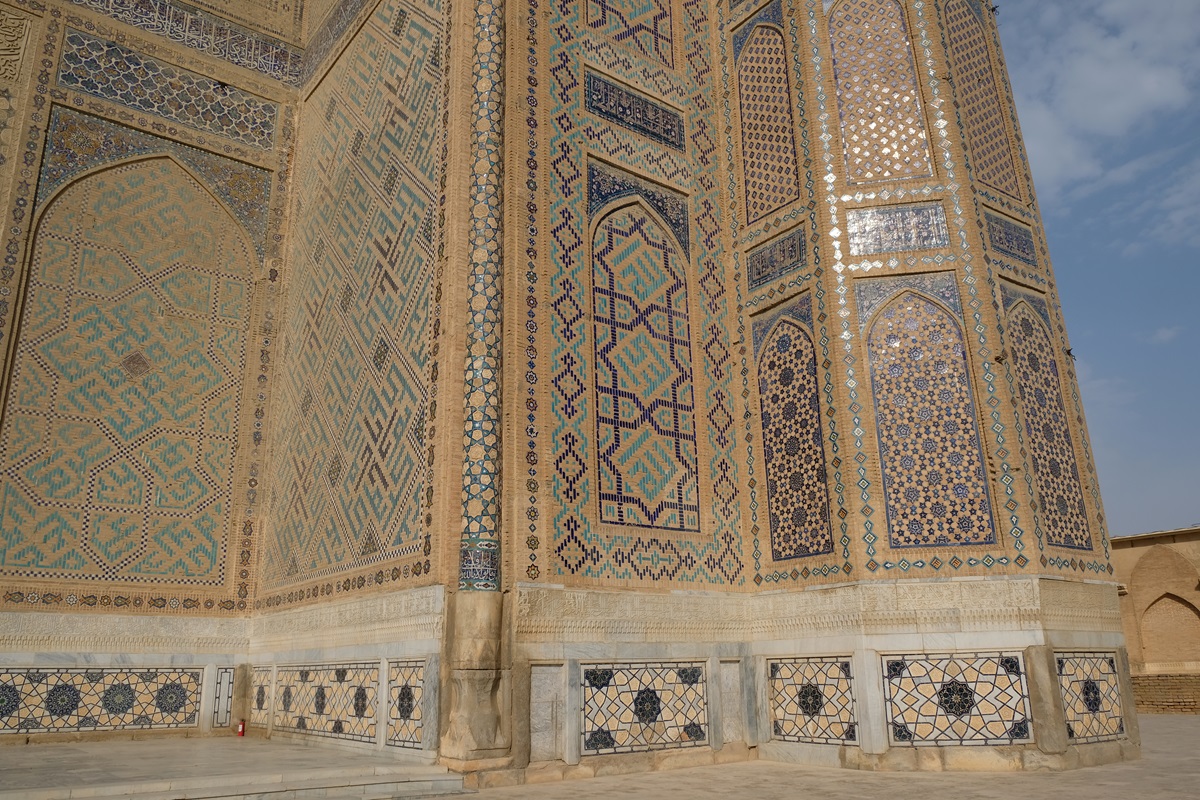
Exquisite geometric patterns

There is something so attractive about this style of calligraphy on the tiles

Ornate decorations fit for a stately mosque
Completion, however, is something this mosque has never seen. The Timurid Empire eventually collapsed in the early 16th century, paving the way for other regional powers to carve out the lands once consolidated under the rule of Timur and his descendants. Almost a century later, when Samarkand was under the control of the Khanate of Bukhara, an edict was issued which practically ceased all construction work at the Bibi-Khanym Mosque. Gradually, the building deteriorated. This was further exacerbated by the multiple earthquakes that rattled the region over the centuries. What remained of the edifice was then stripped of its building materials by the local residents to be repurposed into other smaller structures. It wasn’t until 1974 when Uzbekistan was part of the Soviet Union that reconstruction of the mosque was taken.
Even if you find yourself walking down the streets of downtown Samarkand today without knowing the history of the Bibi-Khanym Mosque, its immensity will not escape you. Standing in front of the outer walls of the compound, we were awestruck by the sheer size of its pishtaq (main gateway). And when we went to the inner courtyard, the scale of Timur’s ambition became even more evident. At the center of the open space was the largest Quran stand I have ever seen, enclosed in a protective glass/acrylic cover.
Toward the end of our two-week trip across Uzbekistan last October, we came across a model of the Bibi-Khanym Mosque at the Amir Timur Museum (also called the State Museum of the Temurids) in Tashkent and we were blown away by how the mosque was intended to look like. The height of the pishtaq that visitors see today is only around half of the mosque’s original main minarets.
Despite its imperfections, it’s unsurprising that the Bibi-Khanym Mosque had a far-reaching influence on the Islamic architecture across Central Asia and the surrounding regions, especially to the south. Its bricks might have started falling even before its doors were opened for devotees. But it was remarkable nonetheless, a source of inspiration for successive Timurid rulers who left their own marks in Samarkand and beyond.

This smooth turquoise dome provides a great contrast to the ribbed domes within the compound

A glorious reminder of the golden age of the Timurid Empire
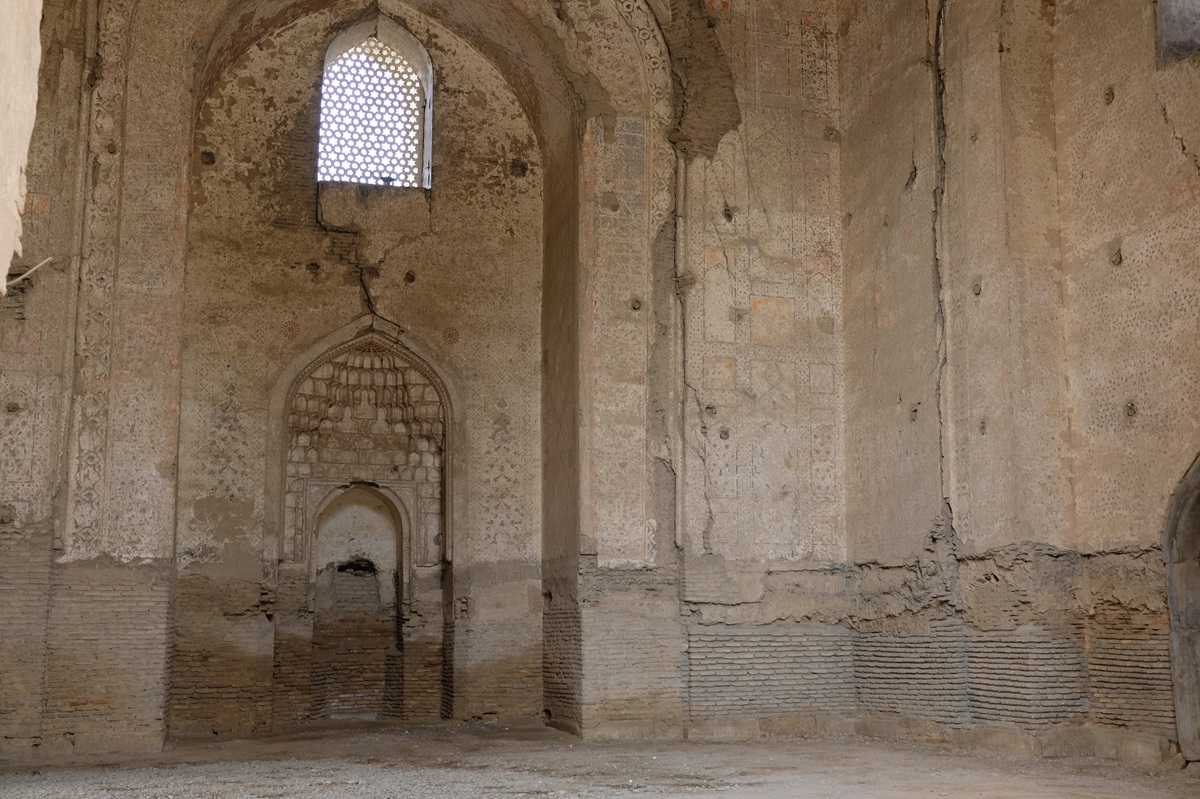
Underneath the domes were empty spaces like this one
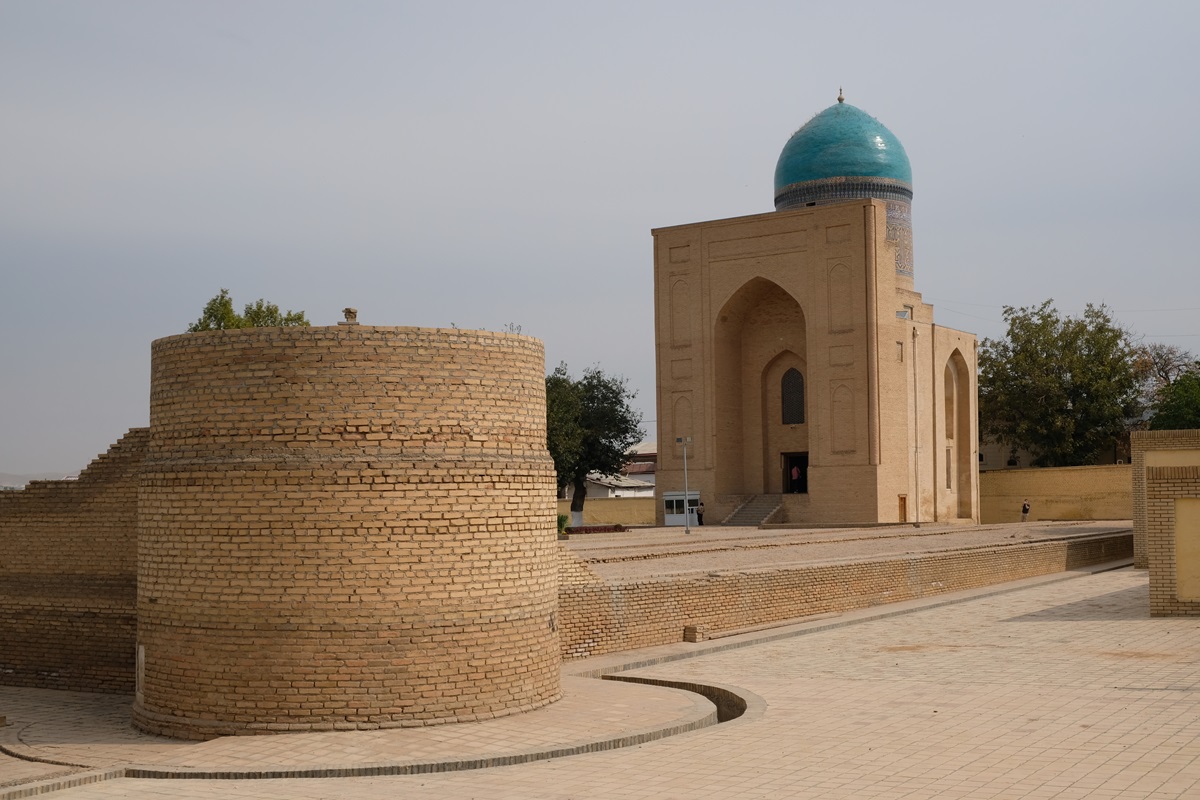
The Bibi-Khanym Mausoleum sits right opposite the mosque

Housed inside the mausoleum are these tombs

Looking up from below

Uzbekistan is a place where wooden doors are never left unembellished
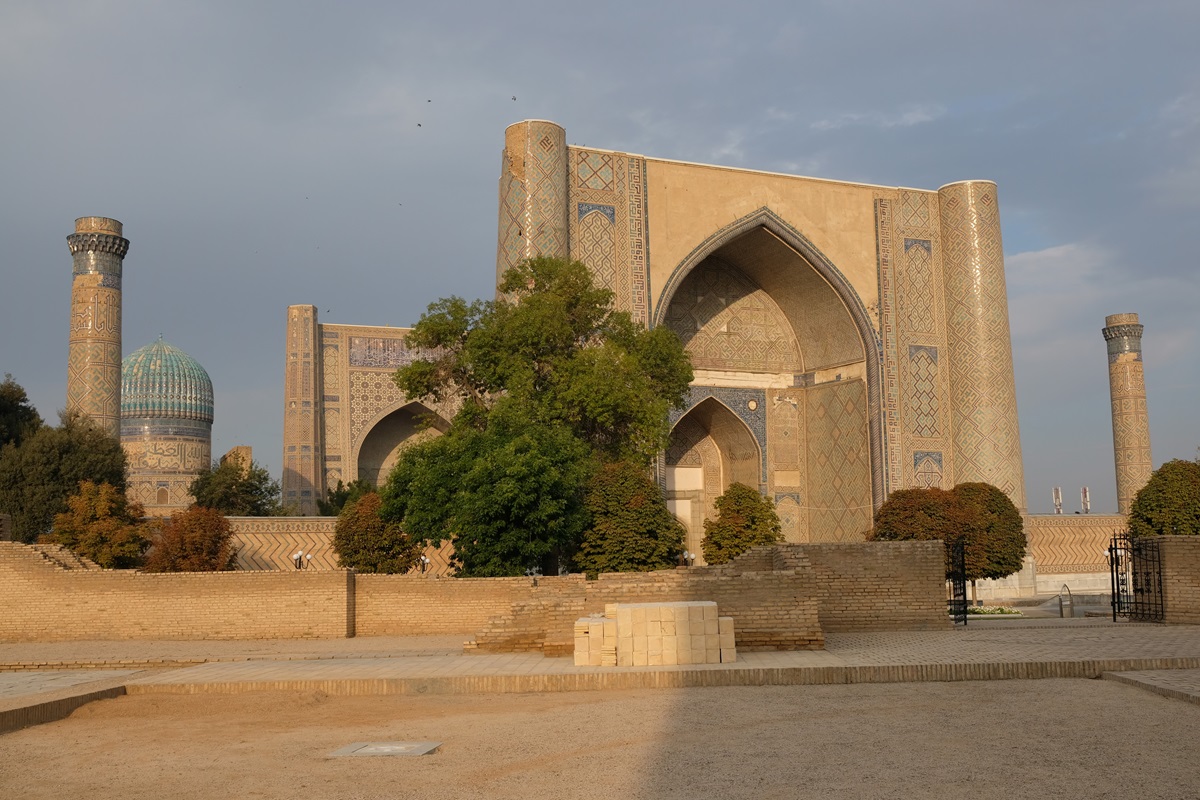
The Bibi-Khanym Mosque as viewed from the mausoleum

The immensity of the mosque is astounding


What an incredible complex.
LikeLiked by 1 person
It truly was. This mosque is one of those places that will make you feel small.
LikeLike
Usbekistan was for me a real highlight in my life! Many thanks
LikeLiked by 1 person
It certainly is a fascinating country. And what’s really cool is you went there long before it became increasingly popular.
LikeLiked by 1 person
Absolutely !👏
LikeLiked by 1 person
The intricate design of the tiles is amazing. It must have taken them ages to put it together.
LikeLiked by 1 person
It’s really impressive, isn’t it? The tilework is actually one of my favorite elements of the Timurid architectural style.
LikeLiked by 1 person
Magnificent indeed. Great post and pictures. (Suzanne)
LikeLiked by 1 person
Thank you, Suzanne. It would be even more magnificent if the minarets were still standing.
LikeLike
The mausoleum would really have been impressive if it were completed wouldn’t it. I had forgotten about the model in the museum in Tashkent. I don’t think we took a picture of it, but now I wish we did. Did you go to the restaurant beside it? Maggie
LikeLiked by 1 person
I mean the colourfully tiled restaurant with the view of it.
LikeLiked by 1 person
Exactly what I had in mind, Maggie. Those tall minarets would have made the mosque look even more impressive. I did notice the restaurant next to it and thought of your blog post. But in the end we always ate somewhere else. The small hotel where we stayed also happened to serve the best plov of all the places where we tried the dish, not just in Samarkand, but also in the entire country!
LikeLiked by 1 person
Uzbekistan is a part of the world I know so very little about and I am glad to learn more about it through your travels.
The Bibi-Khanym Mosque is beautiful. They don’t build anything like this in modern times. The stone work and latticework and the attention to detail are just amazing and awe inspiring to look at, especially when you consider the times and the technology available when it was constructed.
I look forward to seeing your post about the Registan!
LikeLiked by 2 people
Many more to come, Ab! 😄 Uzbekistan has so many beautiful and impressive ancient sites it is just impossible for me to condense everything in only a few blog posts.
It is true that people don’t really build magnificent monuments at this scale anymore today. I would certainly love to see more, as long as they’re not funded by corrupted taxpayers’ money.
LikeLiked by 1 person
For a long time, Samarkand lingered in my memory like a mythical name with no real substance. Until travel to Uzbekistan became easier and the images multiplied. Today, Samarkand is firmly established on the travel map and, as you rightly say, is becoming an attraction for Uzbekistan on a par with the great landmarks of the past.
LikeLiked by 1 person
That still holds true for a lot of places out there. Uzbekistan, fortunately, decided to open up for tourists so that people like us can marvel at those great monuments from the ancient Silk Road in person.
LikeLiked by 1 person
What an impressive mosque! I’ve yet to visit Uzbekistan, and I had no idea that Islam is notable in the country. The architecture is almost hypnotic and overwhelming, over-stimulating the senses as one enters its doors…thanks for sharing this incredible piece of work, Bama! Now I’ll have to get over to Uzbekistan sooner than later!
LikeLiked by 1 person
Wait until you see the photos of the Registan (that is my next post). Of all places in Central Asia, Uzbekistan piqued my interest the most exactly because it is home to among the greatest monuments built during the time of the ancient Silk Road.
LikeLiked by 1 person
You’ve done this magnificent site justice with this post mate! Great photos and info! Thanks for taking me back to this special place. X
LikeLiked by 1 person
Thanks Anna! Prior to the trip, I had read about the immense scale of this mosque. But it was mindboggling to see it with my own eyes.
LikeLiked by 1 person
I too was floored by the incredible size of Bibi-Khanym Mosque and its gateway – as you wrote in your reply to Anna above, looking at pictures doesn’t quite prepare you for the experience of seeing the real thing in person! Just imagine if Timur and his wife had lived to see this wonder completed to the tops of its minarets. Walking there first thing in the morning and seeing its tiled walls glow in the sunlight was one of my favorite memories of Samarkand.
LikeLiked by 1 person
Sometimes, some buildings can look bigger in photos than in reality. But this mosque is definitely on the opposite end of the spectrum. I was shocked to see how massive the gateway actually was. It’s a good thing that later on the trip we went to that museum in Tashkent where we learned the true scale of the entire Bibi-Khanym Mosque compound.
LikeLiked by 1 person
The first picture really caught my attention and took my breath away. I love that the pictures show both the scale and the detail. I know nothing about this area of the world – thank you for sharing some of the history.
LikeLiked by 1 person
My pleasure, as always, Matt. I’m glad my posts on Uzbekistan bring this part of the world closer to you. It really is one of the most fascinating countries I have visited.
LikeLiked by 1 person
The size and scale of the mosque is impressive. And it’s interesting to hear how it’s not nearly as tall as it was initially intended. The tilework is beautiful.
LikeLiked by 1 person
I really love the tilework in Timurid architecture. It’s very unique and somehow looks modern, considering that it was conceived hundreds of years ago.
LikeLiked by 1 person
Do they still have the nightly tending-to-cheesy music and lights?
LikeLiked by 1 person
I went to this mosque only during the day and wasn’t aware of such thing. The Registan, however, was where all the lights and music was. On certain days, they put up speakers in the square, and that’s how I found out about it.
LikeLike