
Bình Tây Market, the landmark of Cholon
The Year of the Wood Snake is just around the corner, and ethnic Chinese communities across the globe are gearing up for the festive season. Families gather, people travel long distances to be reunited with their loved ones, even many shops, factories, and offices are temporarily closed despite business owners’ perceived notoriety for putting profit over people. But money is indeed one of the most important aspects in Chinese culture, as attested by James (who grew up in Hong Kong) and my Chinese-Indonesian friends. Better wealth and prosperity are among the most common wishes expressed during the Chinese New Year celebration.
In Cantonese culture, for example, the ubiquity of certain fruits, dishes, and paraphernalia that begin showing up weeks before Chinese New Year can be attributed to how they sound. In Cantonese – a language spoken in Hong Kong, China’s Guangdong Province, and by the Cantonese diaspora worldwide – the word for “tangerine” is homonymous with “luck”, “fish” with “abundance”, and “black mossy fungus” with “get rich”. Unsurprisingly, it is very common to find these served at restaurants in Hong Kong during the festivities. In Indonesia, on the other hand, lapis legit is usually eaten for the special occasion due to the many layers of the cake symbolizing an abundance of good fortune. The rich dessert traces its origins to the Dutch colonial period in Indonesia where spices from across the sprawling archipelago were added to give this layered cake a delectable twist unlike its other Southeast Asian counterparts. The Chinese community in what is now Indonesia then embraced it – a cultural adaptation (not appropriation) at its best. And don’t forget about lai see or hongbao or ang pau, the red envelope filled with money handed out by adults to unmarried members of the extended family during the celebration.
This love for wealth is also what drove a lot of Chinese people to leave their homes for foreign lands to seize business opportunities abroad. It is not uncommon to read and hear stories about Chinese immigrants and their descendants who successfully built business empires wherever they settled. This, in turn, fueled even greater numbers of people leaving the Chinese mainland to chase their own business dreams abroad. Saigon (also called Ho Chi Minh City today) and its surrounding areas were among the places that received a lot of Chinese immigrants (especially from southern China), a practice which was in fact encouraged when this part of Vietnam was controlled by the Nguyen lords. Over time, their settlements in the city, an area known as Cholon (Chợ Lớn), grew in size and population, so much so it has now become one of the largest Chinatowns in the world according to some estimates.
The residents of Cholon, however, are anything but monolithic. Contrary to what many people might think, Chinese communities are as diverse as Romance language speakers in Europe – the Italians, French, Spaniards, Portuguese, and Romanians. The southern Chinese immigrants who settled in Cholon came from different cultural backgrounds, each with its own language, customs, and traditions, including vernacular architectural styles. In one of his posts, James explains the history of Cholon, including how the area’s central Bình Tây Market came to be. But you don’t really need to be a history buff to appreciate the neighborhood’s many gems.
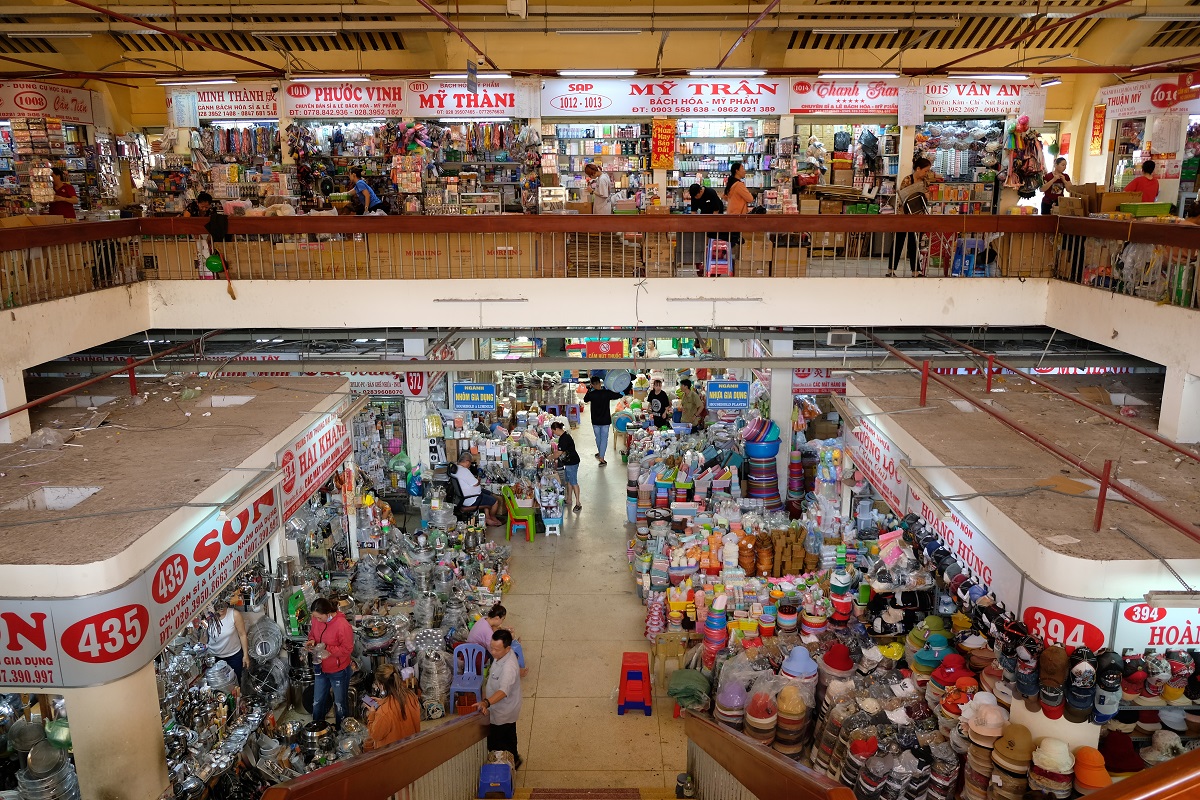
Whatever you need, this market seems to have it

A fountain in the central courtyard of the market

The market’s iconic clock tower

Wandering around a traditional market is always fun

Glow in yellow

The early 20th-century St. Francis Xavier Church

The Virgin Mary in a Chinese-style pavilion

Hà Chương Assembly Hall, a Mazu temple of the Hokkien community
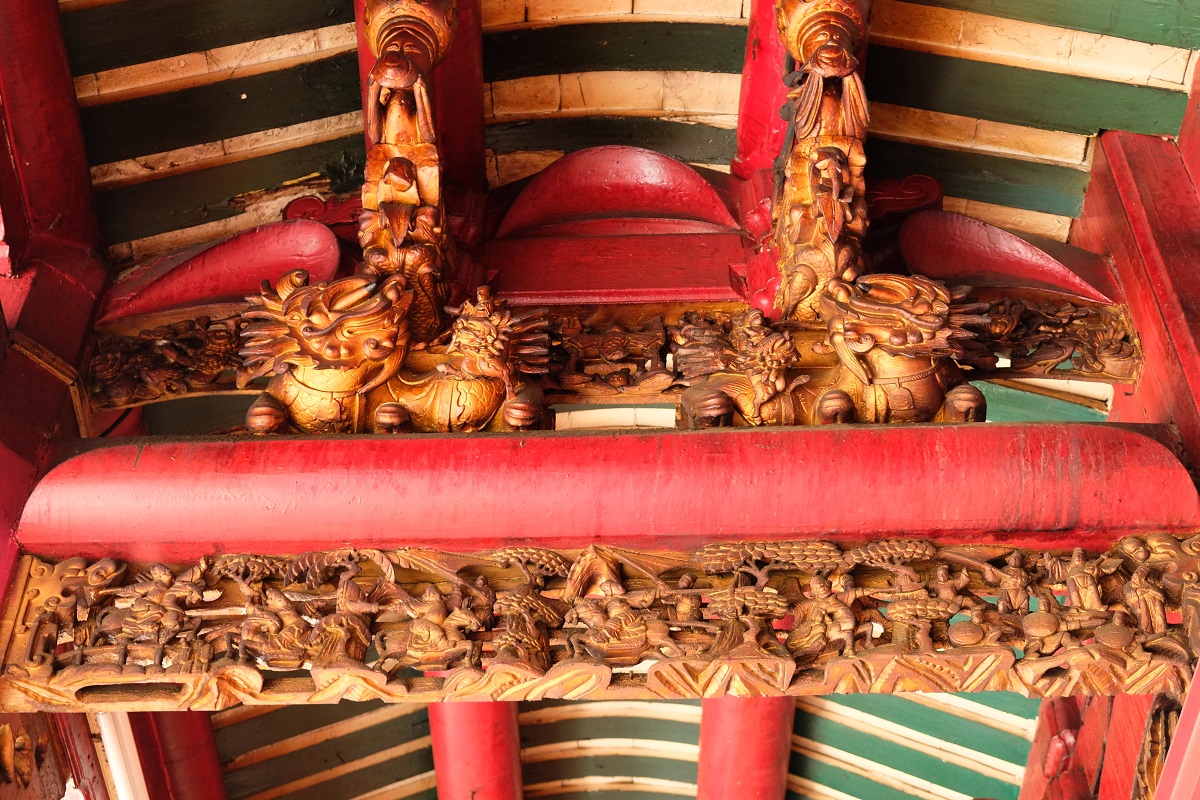
A feast for the eyes

Parts of this temple reminded me of the Hokkien temples in Indonesia
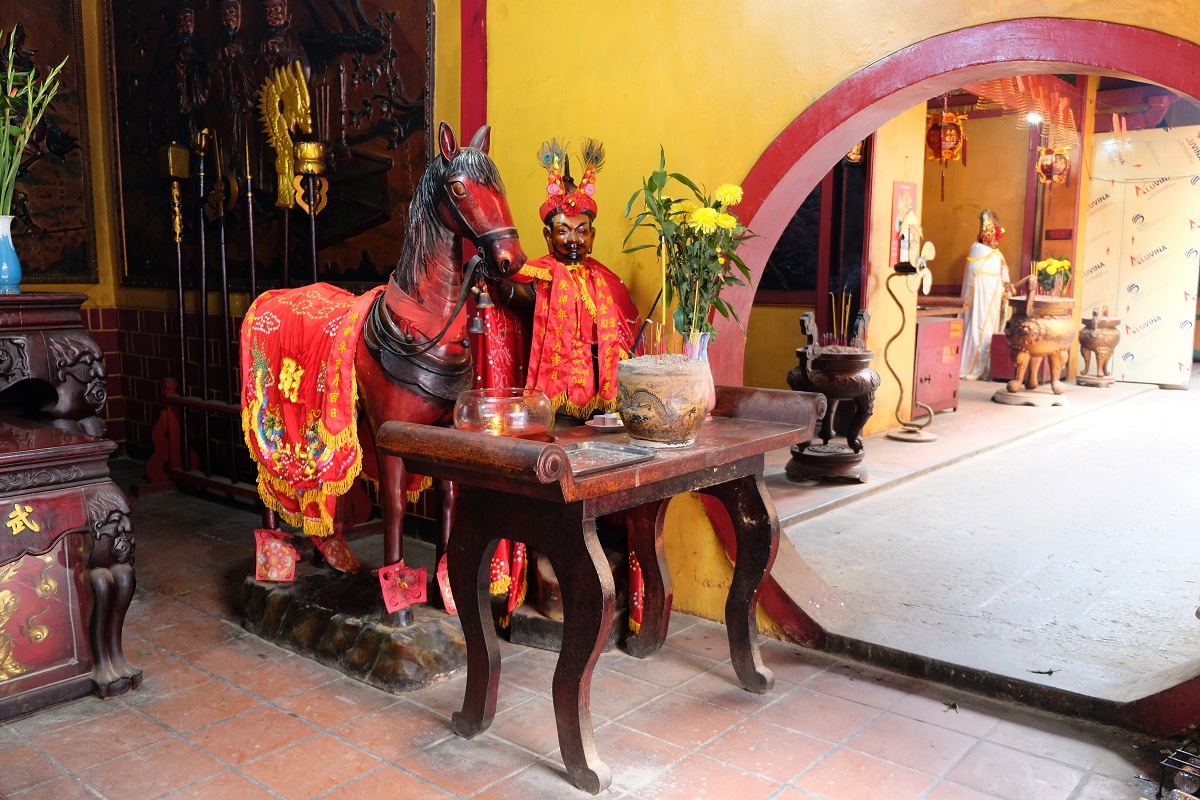
Visiting places of worship are a great start to understand other cultures

Sticky rice dumplings with mung bean paste filling served with dried shrimp, the snack we had at an old-school dessert shop Len took us to while temple-hopping

Quan Âm Pagoda, a Buddhist temple dedicated to Guanyin
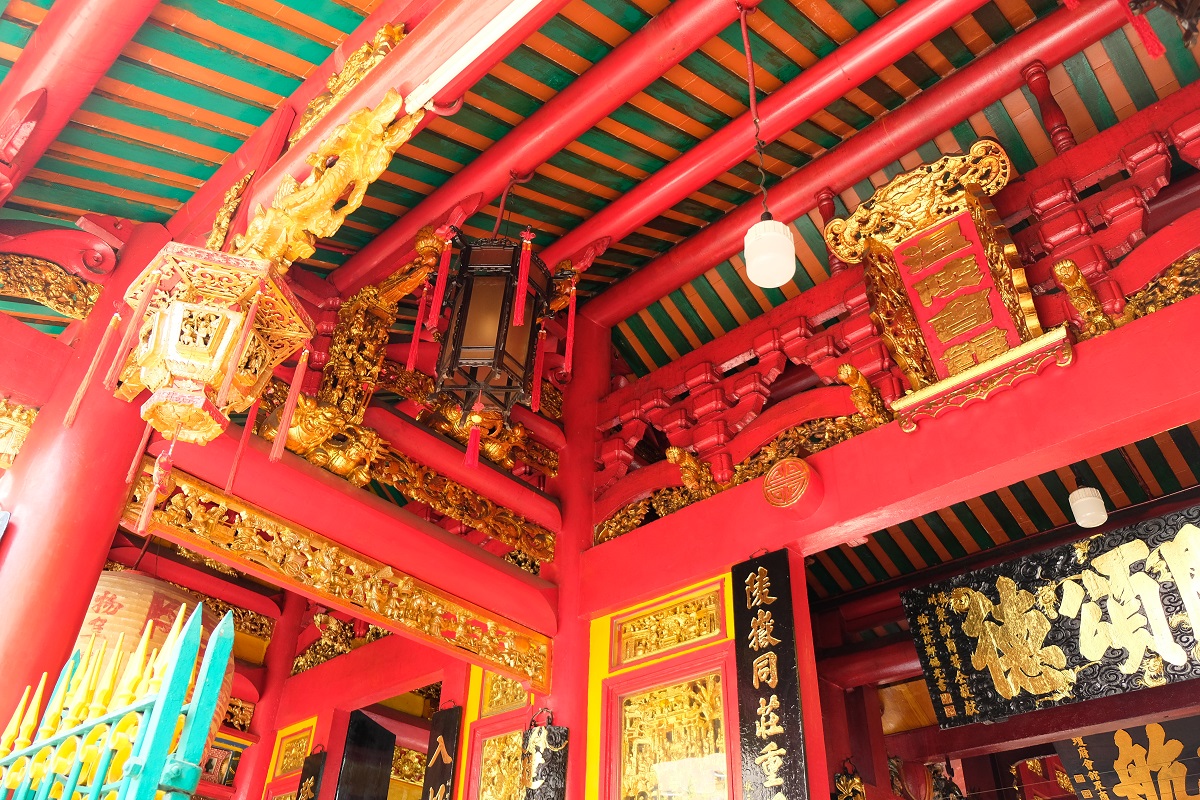
Red galore

Guanyin, the Bodhisattva of compassion and mercy

One of the altars at the Buddhist temple
We were lucky that Len, our blogging friend who lives in Saigon, was able to take a day off work to show us around parts of his city, including Cholon. Our explorations began at the market, unmistakable for its clock tower. The entire compound was painted in a shade of yellow that is very emblematic of Vietnam and is reminiscent of ripening rice paddies. For the locals, the color represents, you guessed it, prosperity and wealth. We walked inside, which was apparently also Len’s first time, and went upstairs to watch a motley of activities below. After checking out different corners of the market, we headed to the next place some 700 meters away: St. Francis Xavier Church. The early 20th-century Catholic church is known for its eclectic design, incorporating East and West architectural elements as evident in its central courtyard where a statue of the Virgin Mary is housed inside a Chinese-style pavilion.
A few blocks away was Hà Chương Assembly Hall, a temple built by Hokkien settlers from Fujian. It is dedicated to Mazu, the sea goddess revered by many in southern China. Also in the vicinity was another place of worship commissioned by Cholon’s Hokkien community: Quan Âm Pagoda, a Buddhist temple first established in the 18th century which has undergone multiple restorations throughout its history. The architectural styles of both places unsurprisingly reminded me of the Chinese temples found in Java where the Hokkien people are the dominant Chinese community on the island.
Around 300 meters away from the Buddhist pagoda, however, was a temple that instantly rekindled my memories of Hong Kong. The Cantonese-style Thiên Hậu Temple is dedicated to Tin Hau, the same goddess the Hokkien call Mazu. To my eyes, the straight horizontal elements found on top of the roof and between the pillars are among the most discernible characters of a Cantonese temple, which happened to be the first things I noticed from the structure at this fifth stop. I particularly loved the dioramas of ceramic miniatures adorning the temple – regular readers of this blog know how I have a soft spot for such finely-crafted figures.
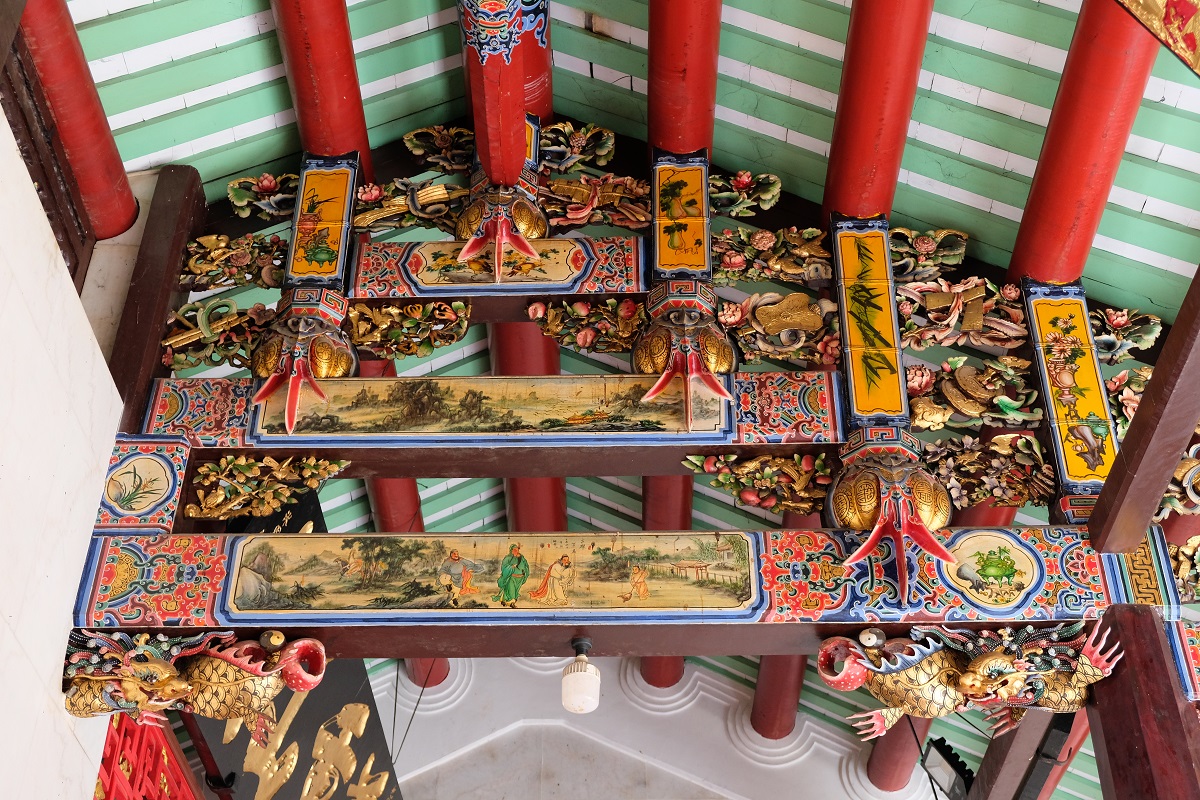
Finally, our sixth as well as final stop for our half-day excursion around Cholon was the recently-renovated Nghĩa An Assembly Hall (also known as Guan Di Temple), a stone’s throw away from Thiên Hậu Temple. Built by the Teochew community in the early 19th century, this shrine is used for the worship of Guan Yu, a legendary military general of the Han dynasty (third century CE) whose name was immortalized in the 14th-century Romance of the Three Kingdoms. The vibrant colors of Guan Di Temple were so mesmerizing I couldn’t stop looking up to marvel at the brightly-painted and intricately-decorated beams and rafters. Gold and red were used rather liberally, of course, as they symbolize wealth and good luck, respectively.
It was absolutely a delight to visit all these temples, a testament to the unwavering spirit to achieve prosperity shared by ethnic Chinese communities across the globe. If you happen to belong to one of them, I wish you health and may your heartfelt wishes come true. Oh, and may a lot of fortune come your way too! Happy Chinese New Year!
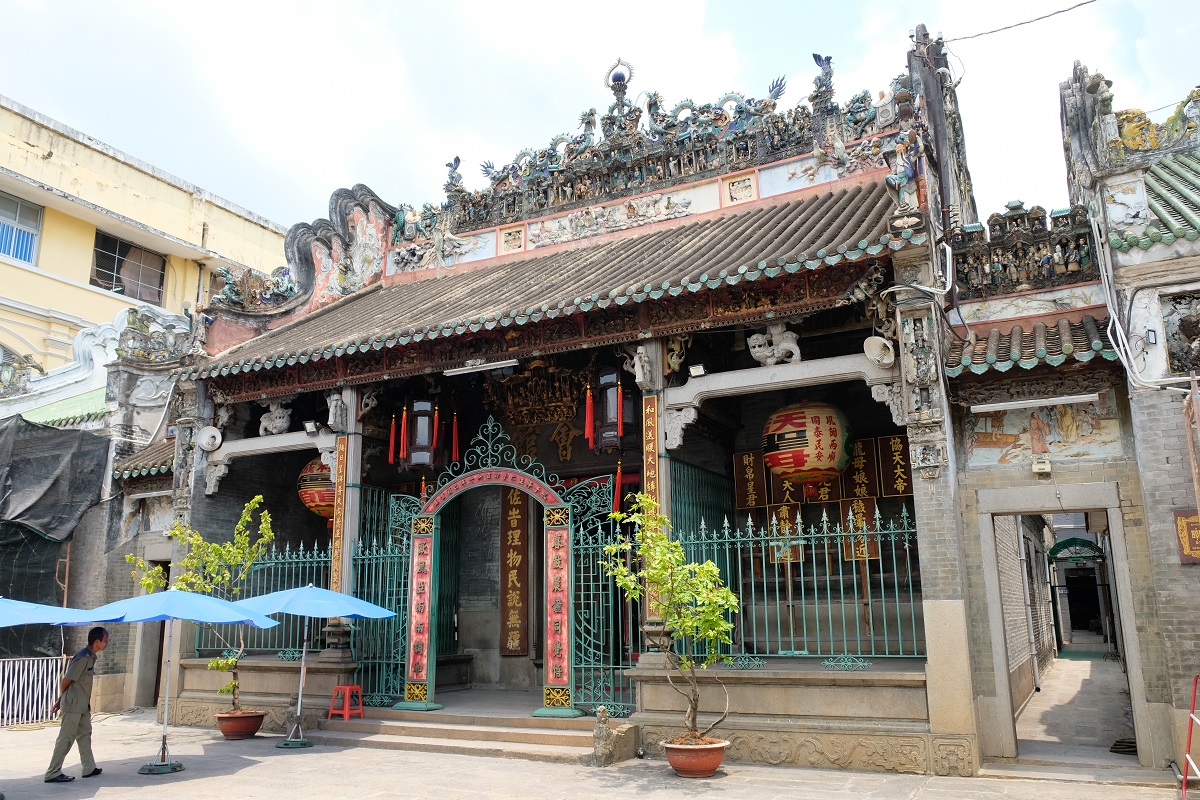
The Cantonese-style Thiên Hậu Temple
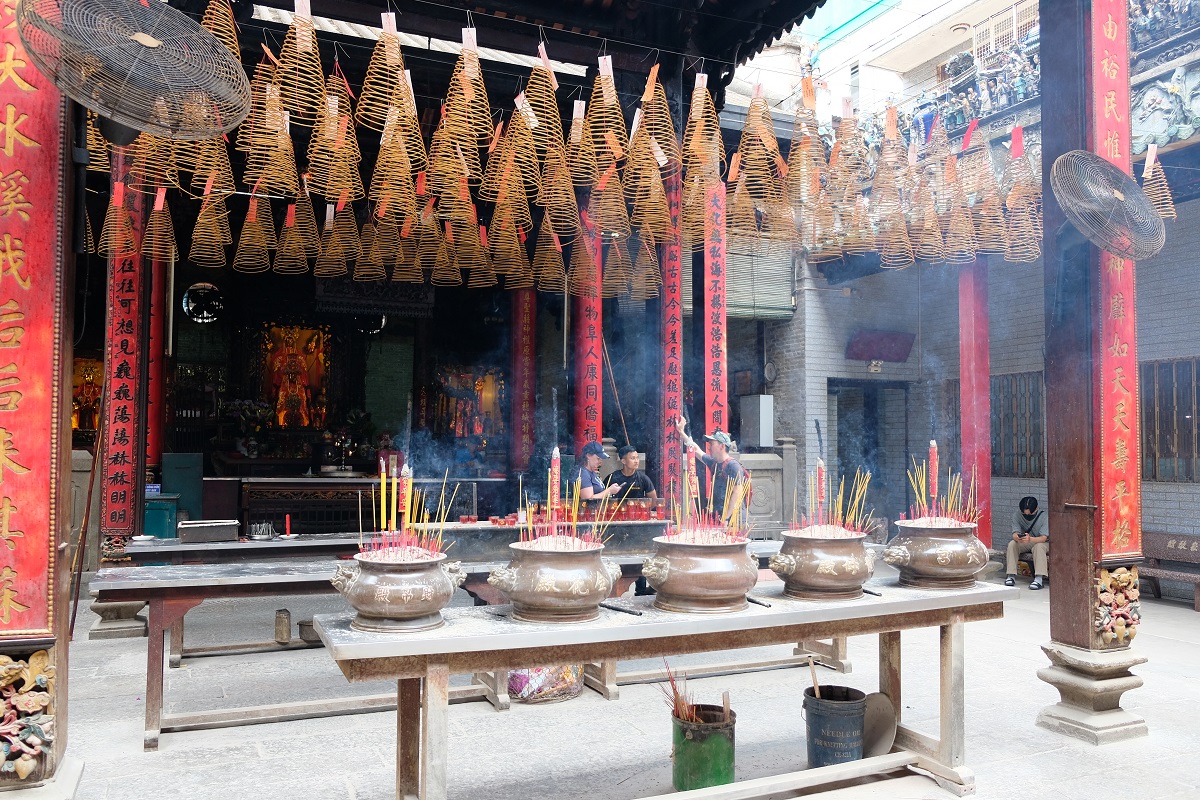
Incense sticks and coils inside the Tin Hau temple
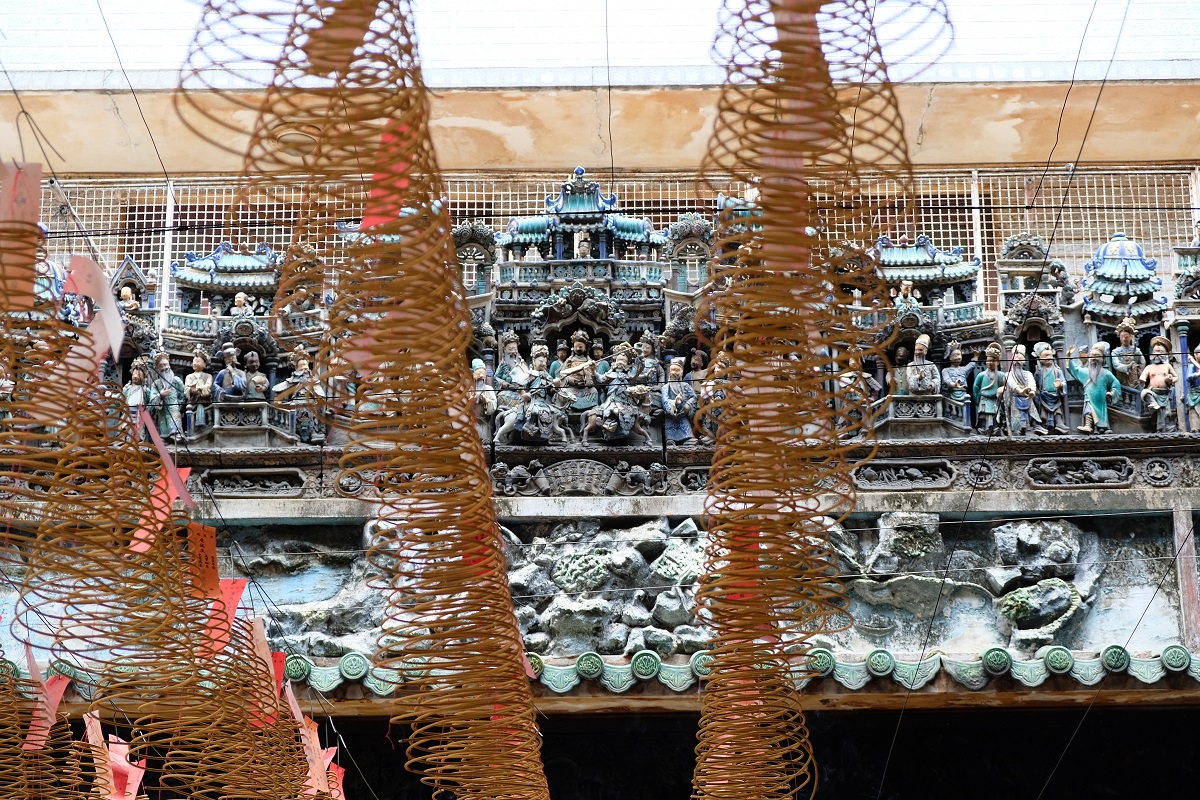
Exquisite figurines adorning the temple’s central courtyard

So delicate and refined
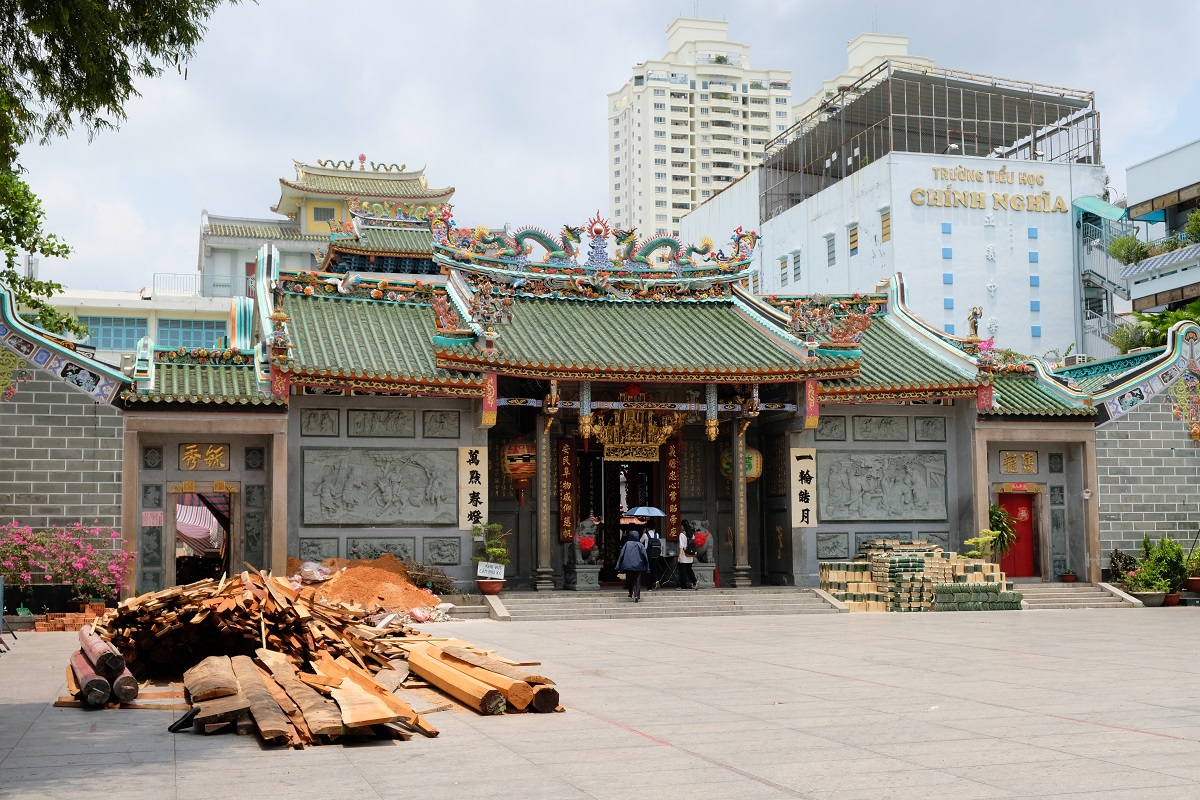
The vibrant Nghĩa An Assembly Hall, also known as Guan Di Temple
The Teochew temple had been recently renovated when we visited, which explains its bright colors
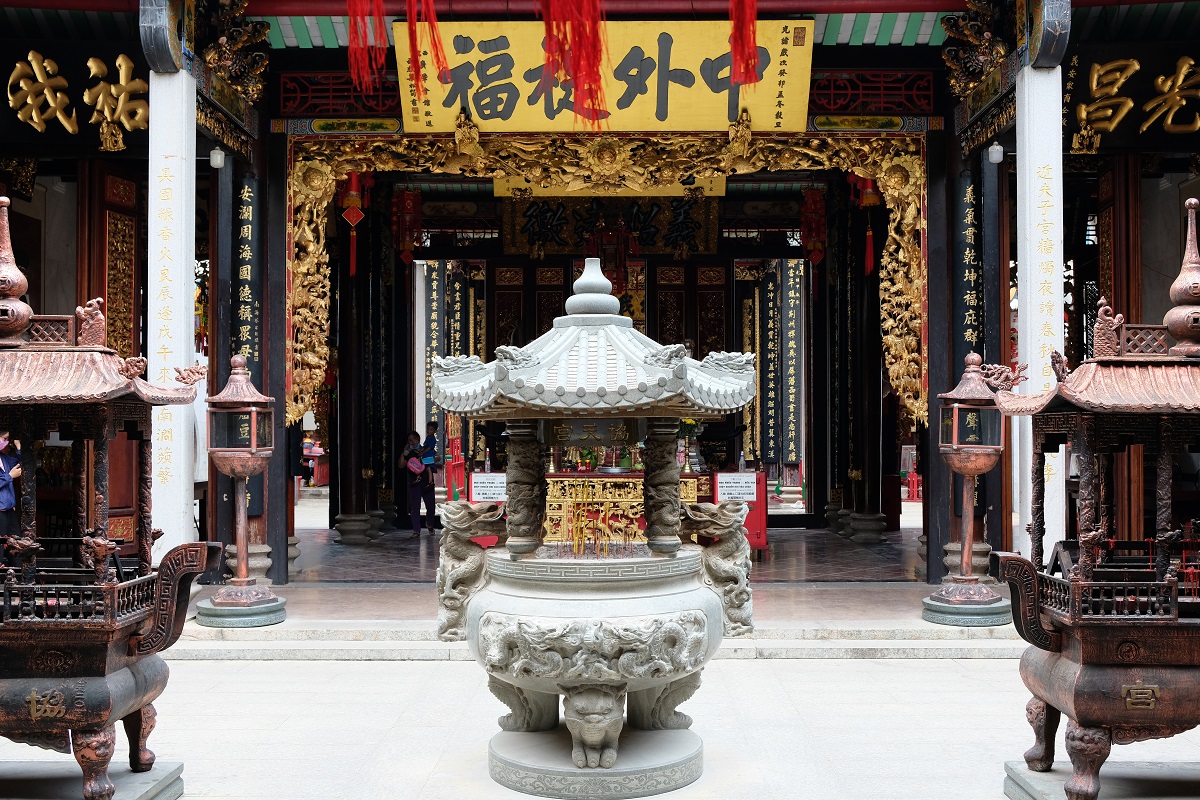
An incense urn in the middle of the temple

Probably the most colorful decorations I have ever seen on a Chinese temple

Guan Di Temple is dedicated to Guan Yu, a legendary military general

The colors were very pleasant to look at
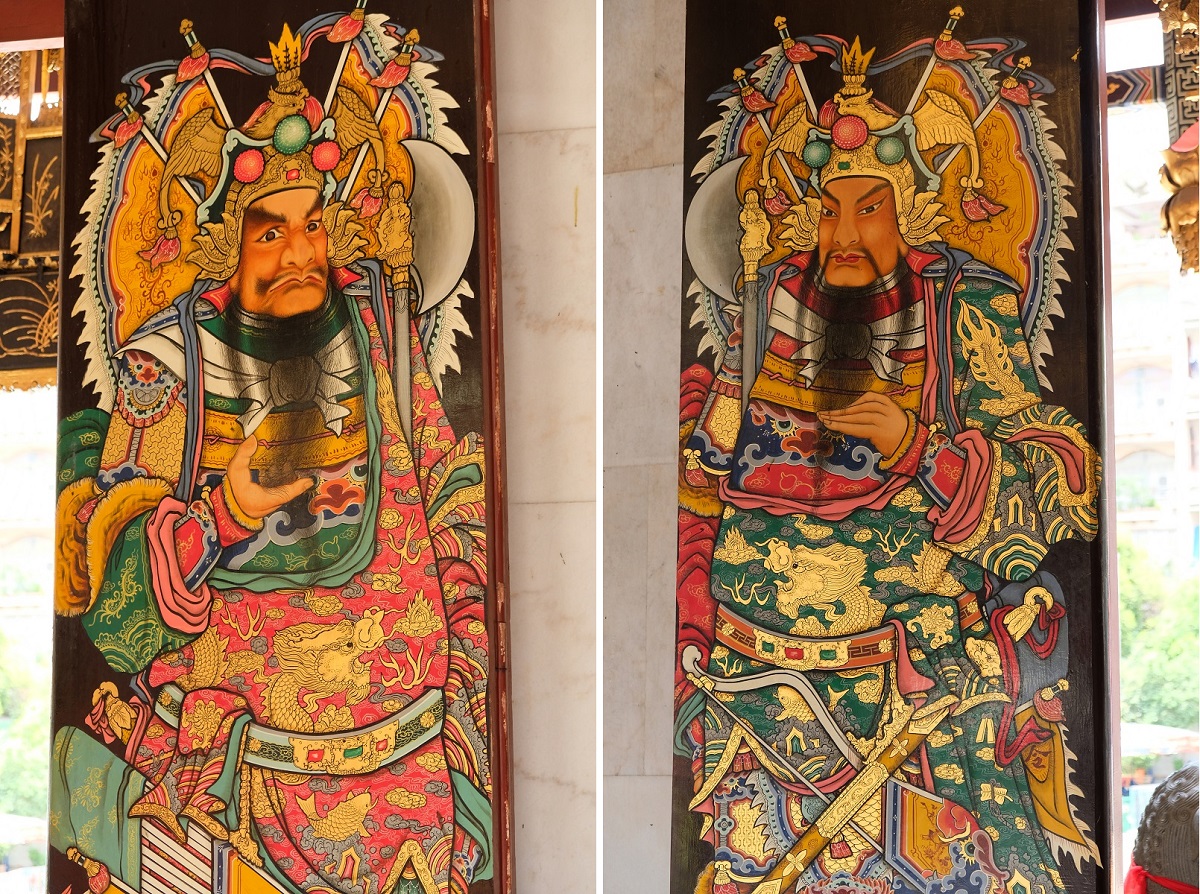
Guardians of the entranceway
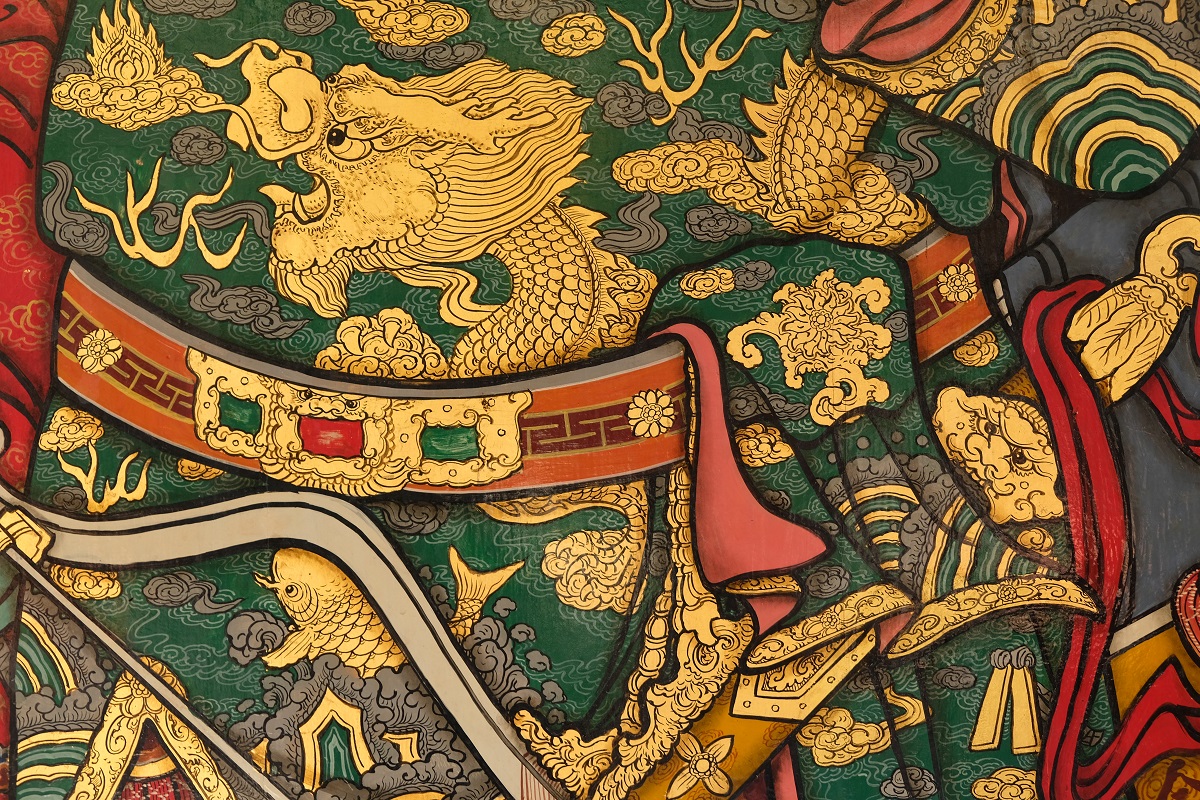
A close-up look of the robe

Happy Chinese New Year!


It makes me sad to see this overrated importance to money, which I also see worldwide! many thanks, Bama, for this interesting post:)
LikeLiked by 1 person
I think the younger generation, even in China, sees that while money is important, it’s not everything. I’ve read stories about how more and more people realize the hidden costs of the endless pursuit for money. Thanks for reading, Martina.
LikeLike
🌺🌺
LikeLiked by 1 person
Thanks Bama for this very informative post about Cholon. Some of the images remind me of Hong Kong. Very interesting story. (Suzanne)
LikeLiked by 1 person
The Tin Hau temple in Cholon particularly looks very similar to the ones in Hong Kong. Thanks for reading, Suzanne.
LikeLike
I was in Ho Chi Minh City just last December. I visited some of the temples in your blog. I have almost similar photos 😅
LikeLiked by 1 person
Ha! I wouldn’t be surprised to see many similar photos of those temples in Cholon. Their details are just astounding!
LikeLiked by 1 person
Beautifully photographed and excellent information. Thanks Bama
LikeLiked by 1 person
Much appreciated, Flow.
LikeLiked by 1 person
I guess you’re proving that we shouldn’t have dismissed HCMC so quickly. Cholon looks to be a vibrant neighbourhood filled with an eclectic mix of architecture. I really appreciate your zoomed in shots of the details in them especially the roofline of Thiên Hậu Temple. And how nice to have a blog buddy meet up! Maggie
LikeLiked by 1 person
I didn’t go to Cholon either on my first trip to the city back in 2011. It was James’s old post about it that piqued my interest in the area. We had a great time exploring it with a local friend.
LikeLike
I never visited Cholon. What an experience! Many of the temples appeared similar to Singapore, but way more vibrant. I checked lapis legit to see if I might try making it as you made it sound so delicious, but it looks way too complicated.
LikeLiked by 2 people
Some of the temples in Cholon are indeed architecturally very similar with the Chinese temples found in other Southeast Asian countries. I guess lapis legit is too difficult to make at home most people just buy it. One day if you’re able to find it somewhere, I really recommend you to try it.
LikeLiked by 1 person
The lapis legit photo looked good on the website I found.
LikeLiked by 1 person
I hope you’ll get to taste it!
LikeLiked by 1 person
It’s so different from the world I know, Bama. Thanks for bringing it to my doorstep.
LikeLiked by 1 person
So different from the world we know, and that is why we travel, don’t we? Thanks for reading, Jo.
LikeLike
Lovely! It’s incredible to see Lunar New Year celebrated throughout the world by the Chinese diaspora. It’s also important to note that many non-Chinese cultures celebrate their type of Lunar New Year, and it makes for a fruitful celebration. Cholon looks gorgeous, and it must’ve been a real treat visiting this vibrant corner of Saigon! Thanks for sharing, Bama 🙂
LikeLiked by 2 people
The Vietnamese themselves celebrate Tet, which usually falls on the same day with Chinese New Year. However, the details of the paraphernalia they use in Vietnam look slightly different from the ones used by the Chinese communities. But yes, both are such colorful festivities. Thanks Rebecca.
LikeLiked by 1 person
Happy Chinese New Year! That’s awesome that you got to meet up with a fellow blogger who was able to show you around Cholon. The architecture looks so colourful. The sticky rice dumplings look good!
LikeLiked by 1 person
Thank you, Linda. Meeting blogging friends who we have known for many years is always fun. From Hong Kong to Chennai in India and Cholon, I have experienced firsthand how having a local to show me around is such a great way to explore a new city. It’s a bonus if that person is also a foodie!
LikeLiked by 1 person
Happy Chinese New Year to you and James, Bama! I enjoyed reading your post and your as it reminded me so much of my childhood, especially when my parents were alive, and the CNY traditions, such as red envelopes, the sticky rice cakes and the yummy meals.
I agree that there is an emphasis on prosperity and money in Chinese culture and I for one rebel against this. I see that the true wealth in life are not monetary, as much as we need it to live comfortably.
Nice to see that there is a Hokkien community in your part of the world. My ancestors were from the Fujian part of China and it’s the dialect that I can speak!
Hope you enjoy the upcoming festivities as well!
LikeLiked by 1 person
Thank you, Ab. And Happy Chinese New Year to you too! I have to admit, getting the red envelopes is one of the most exciting parts of the celebration. Being unmarried does have its perks. 😂
I totally agree with you about money. For me, it’s just a tool to get certain things that we want or need. But it shouldn’t be the main goal in life.
How nice to learn that you’re also a part of the Hokkien community. You’ll probably feel at home if you ever visit the Chinatown of Jakarta and talk to the locals.
LikeLiked by 1 person
😂
Visiting a Chinatown in any part of the world is always grounding. Feels like home regardless where you are.
LikeLiked by 1 person
Wishing you a Happy Lunar New year to you and James! When my family moved to Canada, we didn’t really celebrate the Chinese New Year formally because of work and school. We did have a nice meal usually on the weekend. My siblings don’t really celebrate it. I am with my bf and his family since they celebrate it although it’s not easy to get all the kids together because of school.
I do agree with you about learning a lot about a culture from their temples (and food of course). I have so many pictures of temples from previous trips.
There’s a good chance we will be making a trip to Asia (so far Malaysia and Hong Kong). I’ll be using your blog and James’s blog as a reference.
Take care!
LikeLiked by 1 person
Thank you, Matt. Happy Lunar New Year to you and your loved ones! Is there any tradition or food that you and your boyfriend usually have during the festivities?
How exciting that you’ll be traveling to Asia! Please feel free to drop me (or James) an email if you need suggestions.
LikeLiked by 1 person
It’s usually a family dinner at his place. He sticks to the old family traditions of making offerings to the various gods and ancestors. Then it’s red pouch for the young ones. He doesn’t give them a red pouch anymore – he et-ransfers the money to them now. Then he goes to a Buddhist temple at midnight.
LikeLiked by 1 person
Well, I can imagine transferring hongbao/lai see being a lot more practical than withdrawing money and buying red envelopes first.
LikeLike
This is such a wonderful post, Bama! I especially immensely enjoy your skilfully captured photos as pretty much each of them tells a story, conveys emotion, mood, and messages—even evokes understanding that words can’t. It looks like the city’s iconic district is full of colour and character, its buzz constant and infectious. It seems fun to weave through traffic to reach century-old pagodas, or get in on the action at some of the city’s most hectic markets — this is Vietnam unfiltered. Thanks for sharing, and have a good day 🙂 Aiva xx
LikeLiked by 1 person
You’re very kind, Aiva. I’m glad I went to Cholon since it was such a really interesting and colorful part of Saigon. Its colorful temples will definitely inspire anyone who makes the time to explore them.
LikeLiked by 1 person
🥰🥰🥰
LikeLiked by 1 person
Your photos are truly beautiful 🙂 Having been in Asia for Chinese New Year a couple of times now, it’s absolutely magical and a celebration that is such an event to be a part of. Those sticky rice dumplings look delicious! My work office are putting on a celebration next week to mark the occasion, which is the first time they’d done it so I’m really looking forward to it. I’m also going to give Len a follow as his blog looks awesome.
LikeLiked by 1 person
Thank you, Hannah. I didn’t expect a European office to celebrate the Chinese New Year, which is a nice surprise. It would be cool if there are red envelopes as well for the employees! 🙂 Len takes really great photos, and I have to admit sometimes I steal his ideas especially for architectural shots.
LikeLiked by 1 person
Bama we visited Saigon in 2018 and I must say it was a bit overwhelming. It was at the end of our cycling tour through Thailand, Cambodia and Vietnam and I admit to being quite done in. Seeing your photos and reading the description of Cholon makes me think we should have hired a guide.
LikeLiked by 1 person
I remember that cycling trip you did in Southeast Asia, Sue. How time flies! I can imagine how Saigon is the exact opposite of Calgary in so many ways. Any plans to go back to this part of the world?
LikeLike
Am planning on going to Vietnam, so your post has come in super handy. 🙂 Was not sure whether I should go into Cholon as well, but after reading this post–haha, I guess I should. One question. How much time for Cholon? Half a day or a full day?
LikeLiked by 1 person
Ahh so excited that you’re traveling to Southeast Asia! I think half a day should be enough to cover the most interesting sights of Cholon, although adding a few more hours wouldn’t be a bad idea either. Have fun!
LikeLike
As a culture vulture, you should definitely visit Cho Lon. The vibe is different from the center of Saigon 🙂 The area used to be a separate city until it was merged with Saigon in the 20th century.
LikeLiked by 2 people
I just had to visit again. Thank you Bama. Some day I will see it with my own eyes.
LikeLiked by 1 person
I surely hope you will.
LikeLiked by 1 person
Happy Lunar New Year, Bama! Wish you a lot of “tangerine” and “black mossy fungus” this year. Having some “noodles” as well, for good health 🙂
LikeLiked by 1 person
Thank you, Len! Happy Lunar New Year to you too. Haha, while I did have some noodles, I was feasting ,more on strawberries during the CNY holiday — at least the fruit is red!
LikeLiked by 1 person
What an insightful post and fascinating glimpse into a place and culture that is so nuanced and varied, Bama. Love the photos, as always.
LikeLiked by 1 person
Much appreciated, Jolandi. Cholon was such a vibrant place with so many colors and interesting history.
LikeLiked by 1 person
That half-day we spent in Cholon with Len was really the highlight of our time in Saigon. I didn’t get to visit any of the historic temples the first time around, so I loved having the time to wander in and see the different artistic styles of the various southern Chinese immigrant communities that settled there. The Thien Hau temple, though in definite need of some TLC, had a super-Cantonese look; when we were there I couldn’t help feeling deeply connected to my own roots. Thank you for bringing back these fond travel memories. 🙂
LikeLiked by 1 person
It’s always a great idea to explore a foreign place with a local friend. I remember how instrumental Madhu was in making our stay in Chennai an enjoyable one. I do remember the market from your old post on Cholon, but you’re right, there was no mention of the temples. I can understand what you felt when you saw the Thien Hau temple. It’s probably what I will also feel when I see a rumah joglo somewhere abroad.
LikeLiked by 1 person