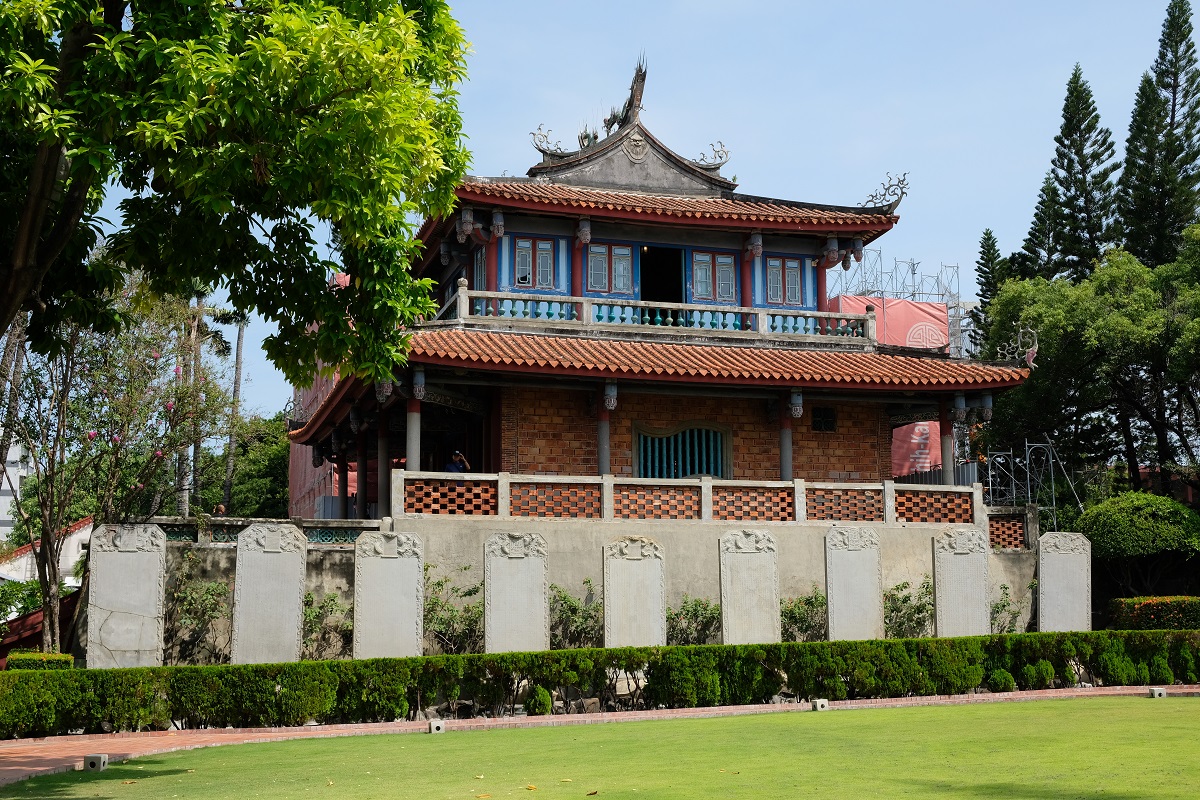
Chihkan Tower stands on the foundations of Fort Provintia
When James and I were planning our trip to Kaohsiung, I was fixated on making a mental list of interesting places to see in this southern Taiwanese city. However, he was very insistent on visiting Tainan as well, some 50 km north of Kaohsiung. I hesitated at first, thinking that it would probably be better to focus on just one city. “But Tainan to Taiwan is like Kyoto to Japan!” he alluded to the historic significance of both places to their respective countries. After looking it up online, I was convinced that it would be a good idea to visit Tainan as well.
Thanks to Taiwan’s extensive railway network, especially along the west coast, it only took us around one hour to get to Tainan from Kaohsiung Main Station. As soon as we stepped out of the train station at our destination and walked down the covered walkways of Tainan, the city immediately struck me as being more laid back with significantly cooler temperatures. It was a nice change from the heat and humidity of Kaohsiung, although I couldn’t help but wonder why since geographically Tainan is not that far from the sea.
The cooler air was not the only thing that was starkly different from Kaohsiung. Tainan was noticeably more historic too with the presence of numerous heritage buildings dating as far back as the 17th century. Due to the island’s location between Japan and China, fishermen and merchants from both places had already established trading ports along the western coast of Taiwan by the 16th century – forcing the indigenous communities to move further inland as a result. However, the modern history of the island nation really began when the Dutch East India Company (the VOC) – the same quasi-state company that controlled important spice trade routes out of present-day Indonesia and Sri Lanka – set foot on the strategically-located island in the 17th century.
On a sandy peninsula called Tayouan (also spelled Taioan), the VOC established their first-ever fort on the island. If you think the name sounds very similar to how the country is called today, that’s because it is indeed where the name Taiwan is derived from. As the company’s power and influence grew, the once modest fort was expanded and christened Fort Zeelandia.
Through a series of military as well as diplomatic campaigns, the VOC managed to subdue aboriginal villages in the southwestern part of the island and defeated the Spanish who had previously built their garrison on a small isle off the northeast coast, outside what is now Keelung. This was achieved with additional reinforcements from Batavia (modern-day Jakarta) which was at that time the company’s main hub in Asia. Finally, after several failed attempts to establish a strong trading port in Macau, Hong Kong, and Penghu (also called the Pescadores), the VOC managed to do so out of Fort Zeelandia. But as history has shown over and over again, no heavy-handed exertion of power can last forever.
Almost two decades after the completion of Fort Zeelandia, the VOC built another fortification in 1653 called Fort Provintia, around 5 km to the east of the former. Located in a village of the Sakam people – the indigenous community of this part of the island – the fort was intended to be a center of the cash crop industry which employed cheap labor from China. However, the completion of the new fort happened during a period of instability following a rebellion by Chinese farmers on the island who were angered by the heavy taxation imposed by the Dutch as well as the corrupt practices of the VOC.

A Chinese garden in the grounds of Chihkan Tower
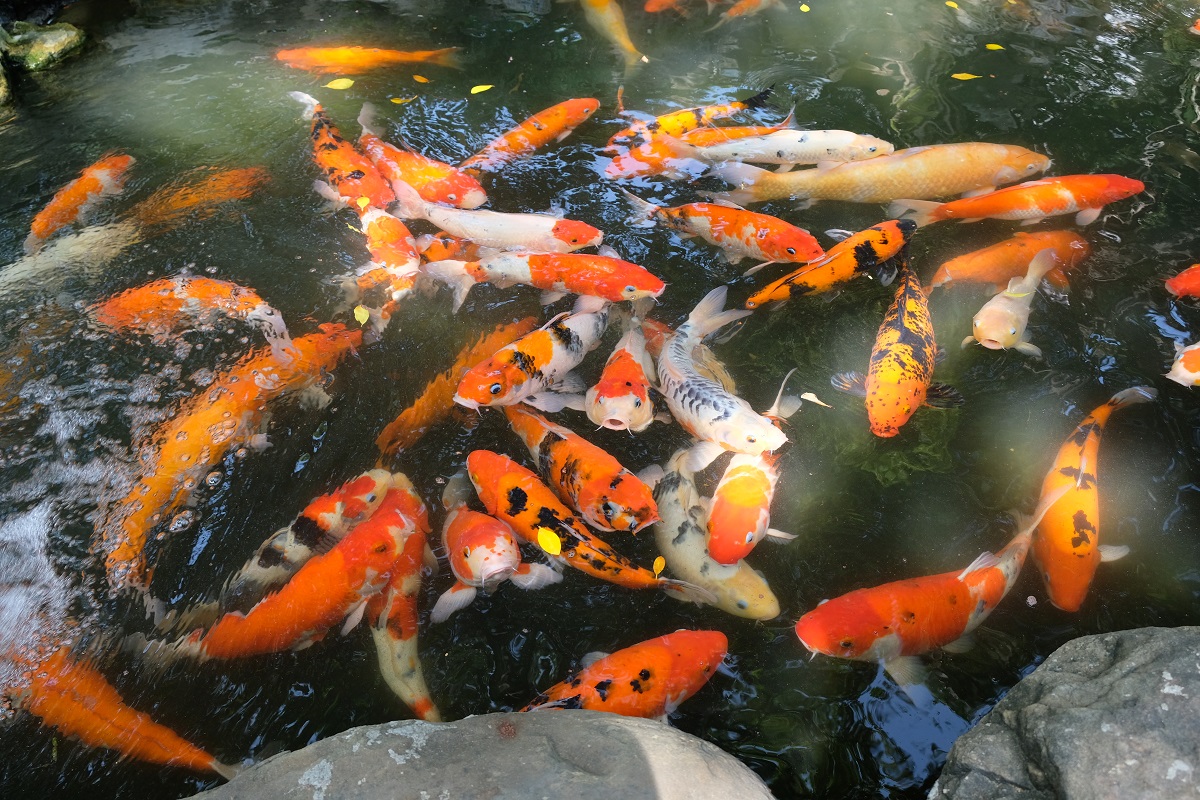
Colorful koi, a symbol of wealth in Chinese and Japanese cultures
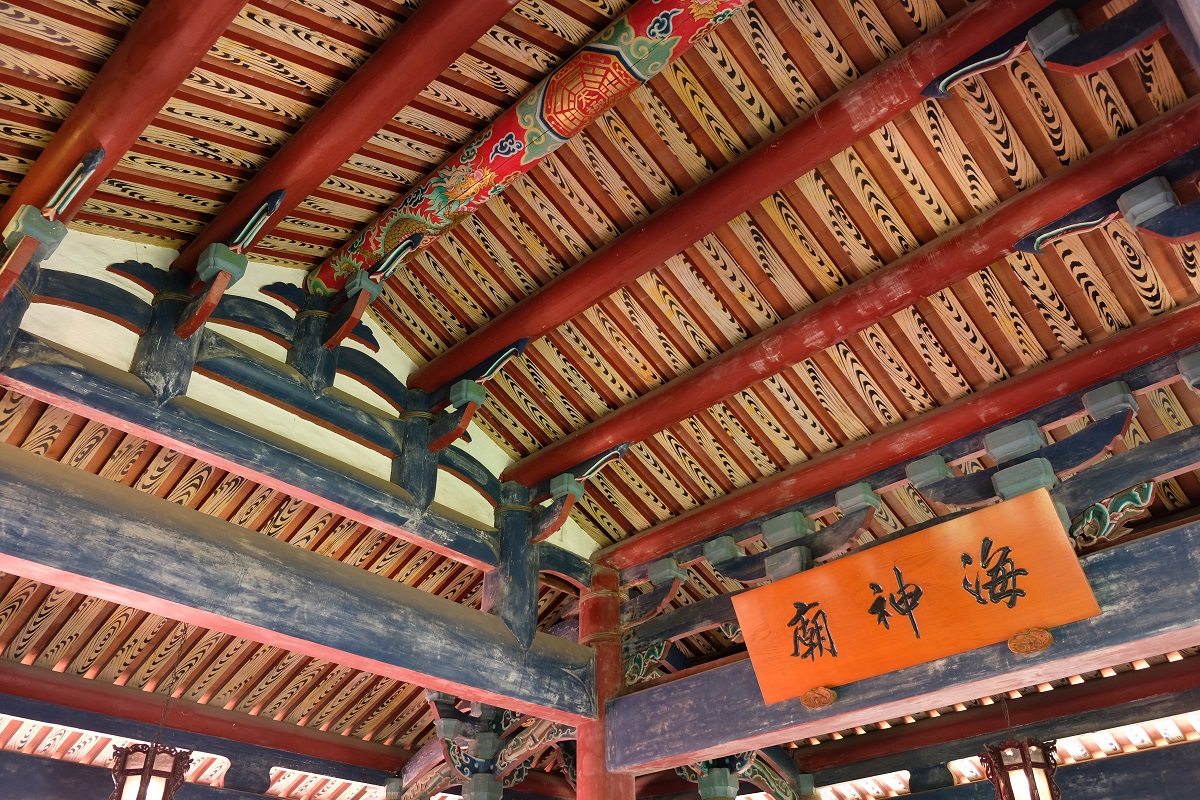
Interesting ceiling patterns inside the tower
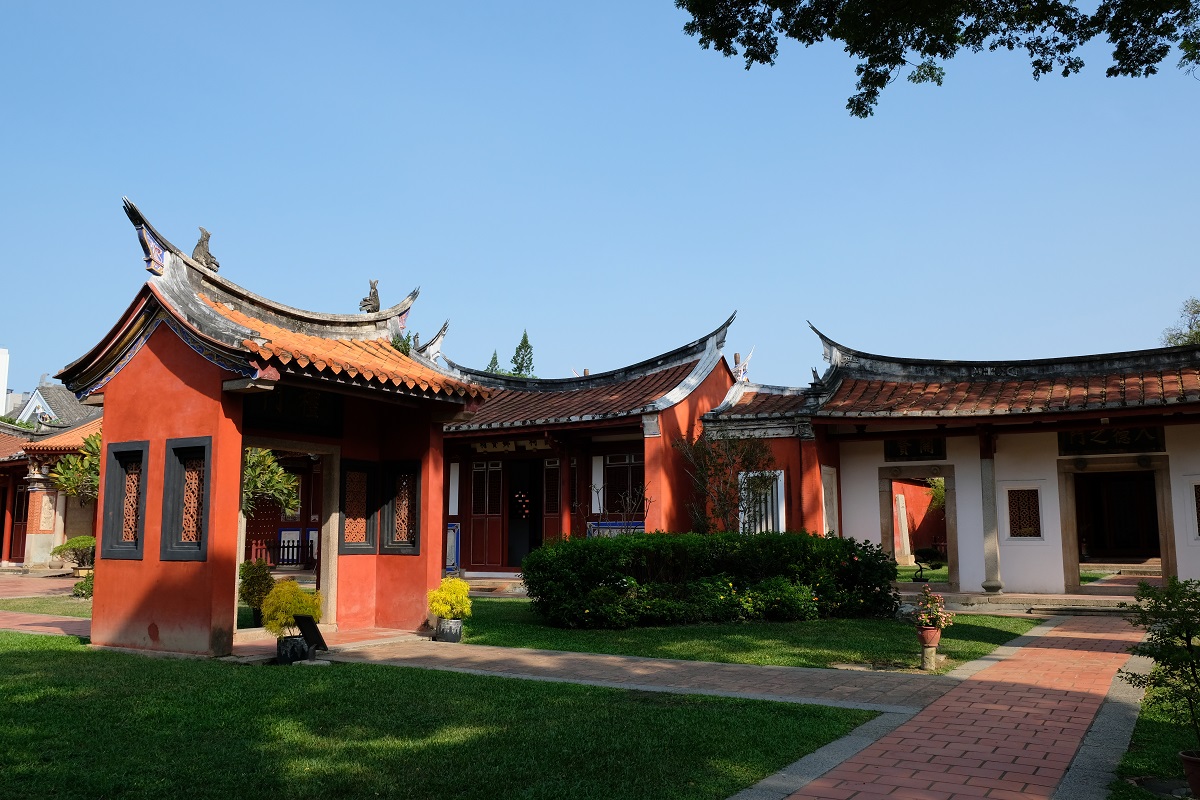
Entering the Tainan Confucian Temple

This tree was so old it needed to be tied to the ground

Looking through the past and the future (in the far background is part of the roof of the Tainan Art Museum)
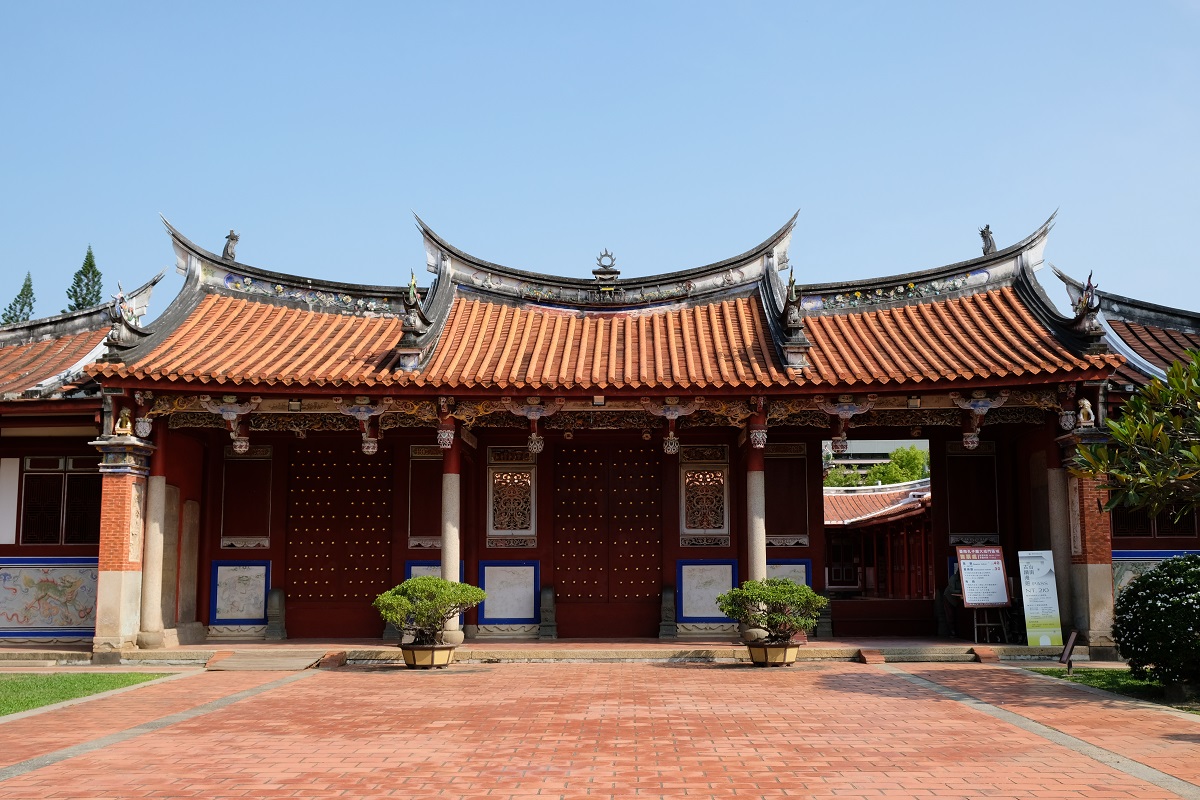
The Dacheng Gate, separating the Dacheng Hall from the temple’s front yard

Ornate wood carvings at the Dacheng Gate
Across the strait, a great shift in the political landscape of Imperial China was unfolding. The Ming dynasty that had ruled China for almost three centuries since 1368 was crumbling, to gradually be replaced by the Qing dynasty, the last imperial dynasty in the long history of the country. As the former’s influence dwindled, a Ming loyalist called Koxinga saw an opportunity to defeat the Dutch in southern Taiwan and turn this part of the island into his base to attempt a takeover of China from the hands of the new Qing rulers. In 1661, Koxinga launched an attack on the VOC’s strongholds of Fort Zeelandia and Fort Provintia, and after a nine-month siege, the Dutch finally surrendered.
From his newly conquered capital, Koxinga established his own dynasty and began the Sinicization of Taiwan by promoting Han Chinese values and cultures. However, only four months after his successful military campaign, he died of malaria. Koxinga’s son succeeded his father, and three years into the new ruler’s reign, a new Confucian temple was built in 1665 beside an academy for cultivating intellectuals. As the Qing dynasty consolidated its grasp on power in mainland China, in 1683 they successfully subjugated the House of Koxinga too, ending the Ming loyalists’ rule in Taiwan.
Walking down the streets of Tainan today will present you with a close-up look at the buildings that witnessed all of these upheavals centuries ago. Present-day Chihkan Tower may not look like how it was when the compound was still called Fort Provintia, thanks to the damage caused by past rebellions and a powerful earthquake in the 18th century, before it was rebuilt by Qing rulers with Chinese aesthetics in mind. But if you take a closer look, the foundations of the Dutch fort are still there, sitting underneath layers of history.
Unlike Chihkan Tower which, given the number of visitors when we went, seemed quite popular among domestic and foreign tourists, the Tainan Confucian Temple was very peaceful and quiet with an unhurried ambiance. One can be forgiven for being unaware of the fact that this temple is actually located right in the heart of a city of 1.2 million people. We explored the temple at a leisurely pace while marveling at its architectural details. Parts of the compound were dedicated to showcasing different paraphernalia and traditional musical instruments used in Confucian ceremonies and rituals. However, the most precious artifacts stored in the temple are housed in the Dacheng Hall, the most important structure in the entire complex. Wooden plaques honoring Confucius which were presented to the temple by successive Qing emperors were fixed to its rafters and beams. “Teacher for all generations”, “Confucius combines the virtues of all prior saints in one”, and “Confucius has the perfect academic ideas and personal conduct” were among the words of praise written on the colorful plaques.
The presence of artifacts of such importance can be attributed to Tainan’s long-standing position as the seat of power in Taiwan for more than two centuries since Dutch colonial times. But in 1887, when the island was still controlled by the Qing dynasty, a new capital was developed further north in what is now the modern city of Taichung – Taiwan’s second largest city by population – although eventually it was Taipei that truly replaced Tainan’s status as the island’s seat of government. Less than a decade later, however, following the Qing defeat by Japan (which had undergone rapid modernization as a result of the Meiji Restoration), in 1895 Taiwan and some smaller islands around it were ceded to the Japanese imperial government in Tokyo.
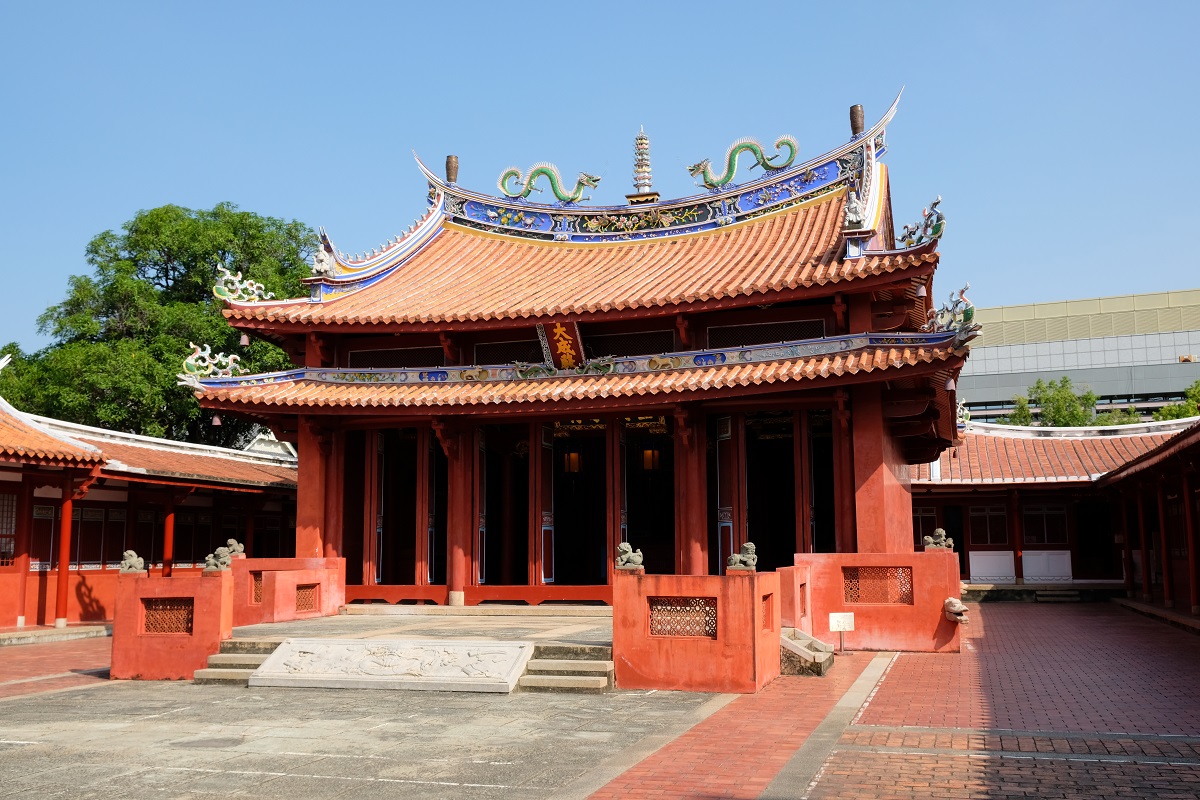
The Dacheng Hall, the most important structure in the entire compound
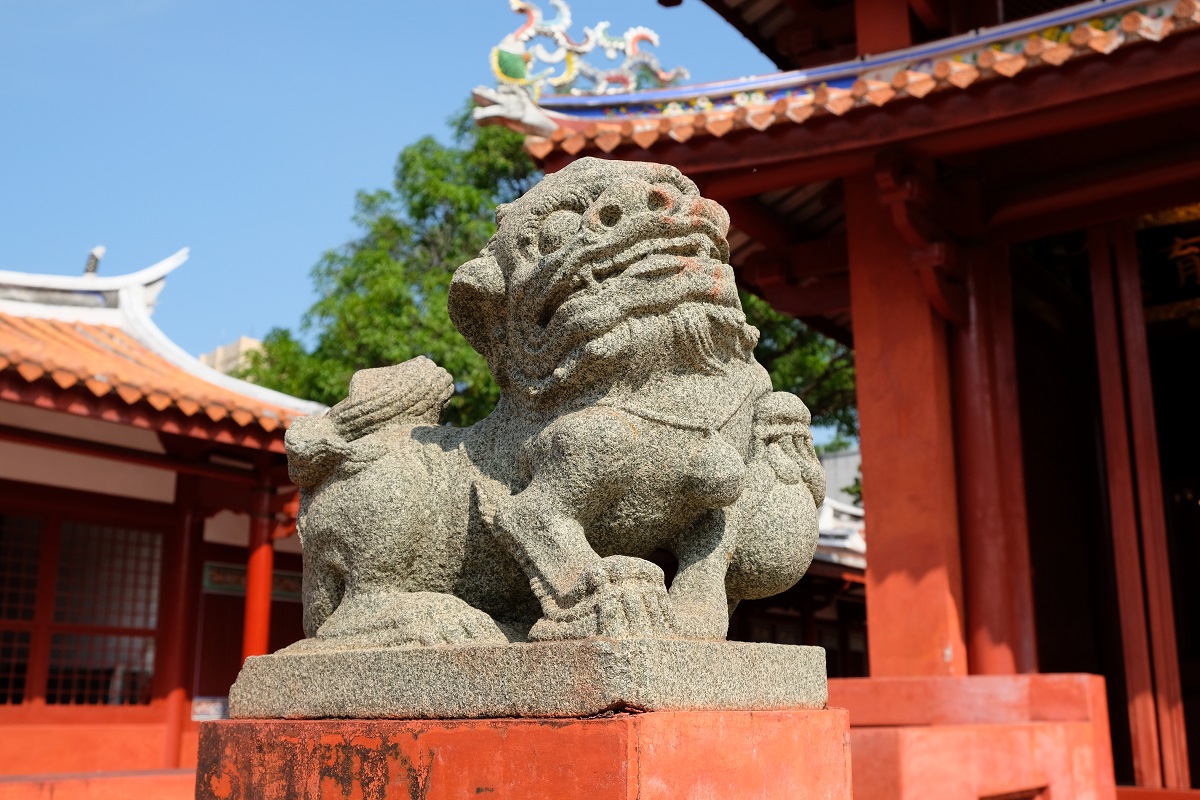
One of the hall’s guardian lions

Wooden plaques honoring Confucius

The temple is one of the most important remnants of the House of Koxinga
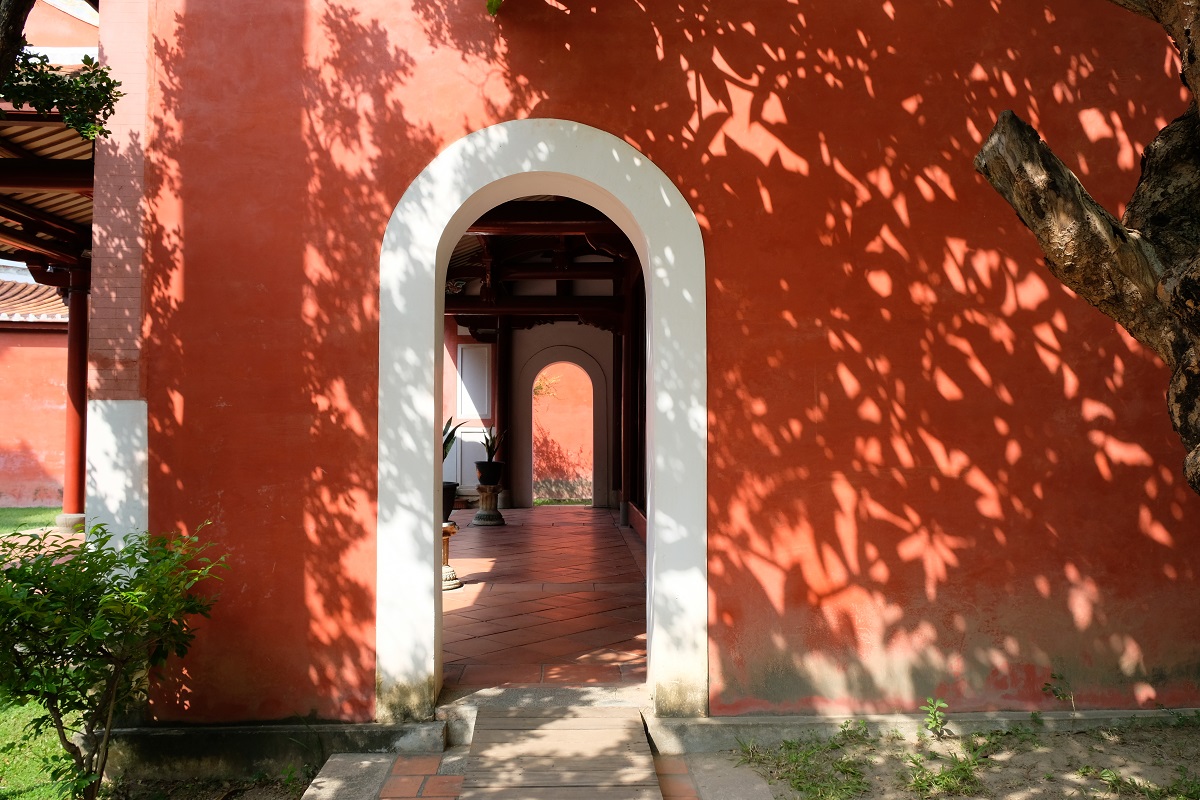
Shadow play on one side of the Edification Hall

The Wenchang Pavilion in the northeastern corner of the complex
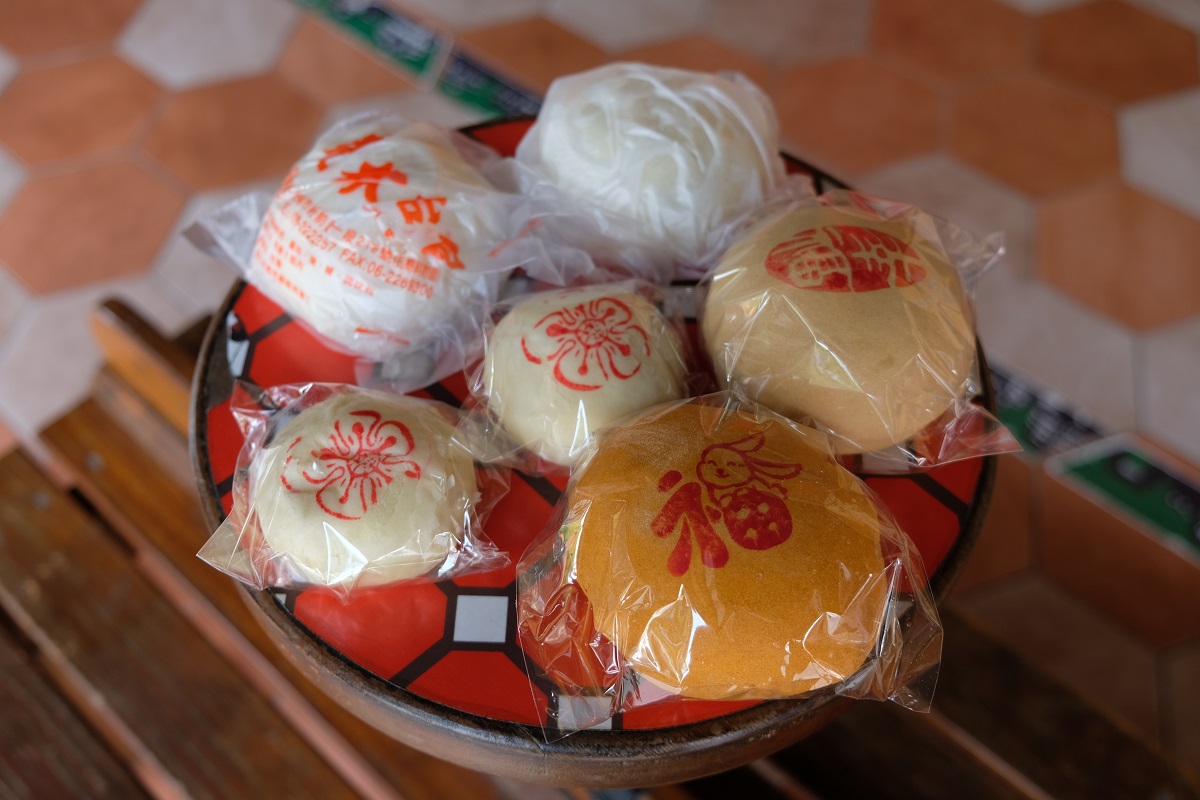
Just around the corner was a bakery specializing in local Tainanese buns

A quick bite before exploring the city further
Around 500 meters from the Tainan Confucian Temple stands one of the most emblematic heritage structures from the Japanese colonial period in Taiwan. Situated at a busy intersection, the five-story Hayashi Department Store which was first opened in 1932 was among the first buildings on the island to be equipped with elevators. On its rooftop, a Shinto shrine was erected six months after the opening, dedicated to the patron god of the store. However, more than a decade later during the height of World War II in the Pacific, the building suffered damage from U.S. air raids. It wasn’t until 2006 that renovation works began on the old department store. Eight years later, it reopened its doors to the public, and today it showcases curated made-in-Taiwan products with some interesting eateries on the upper floors.
But colonial vestiges in Tainan are not only limited to its plethora of old buildings. In the 1700s, this corner of the island witnessed the rise of sugar cane plantations, and the newfound availability of the cash crop prompted the local population to incorporate this sweet produce in the food they ate. This story reminds me of what happened to the central part of Java where the local dishes tend to be sweeter than those in other regions of Indonesia. If you’ve never added sugar to your cooking, you should try it, for it will do wonders no other ingredient can. Tainan itself has a reputation of being the food capital of Taiwan, but on the flip side the city also has the highest rate of obesity in the country.
I can’t blame them, though. We sampled firsthand what the locals eat, from wa gui (steamed rice cake with pork and shiitake mushrooms) to a round pastry filled with mung bean paste and ground pork which reminded me a lot of what we call bakpia in Indonesia – although the latter is usually halal and comes with different fillings, including cheese and chocolate. It’s always interesting to see the connections between similar dishes from different countries and how they adapt to local tastes and dietary requirements.
You really can’t escape history in Tainan – it’s everywhere you look. But it doesn’t mean the city is trapped in its own past. Just a stone’s throw away from the Confucian Temple is an ultramodern building that is now part of the Tainan Art Museum. Designed by Japanese architect Shigeru Ban (who in 2014 won the Pritzker Prize – the world’s most prestigious accolade in modern architecture), the whitewashed structure with a pentagonal roof canopy would definitely turn anyone’s head. The city’s modern side, however, fell short of what other big cities in Taiwan have: an MRT/metro network. There were only buses, and we took one of them to reach a district to the west of the city center where it all began. It was where Fort Zeelandia was built by the Dutch. Let’s go to Anping!

The National Museum of Taiwan Literature, commissioned in 1916 by Japan as the Tainan Prefecture Hall
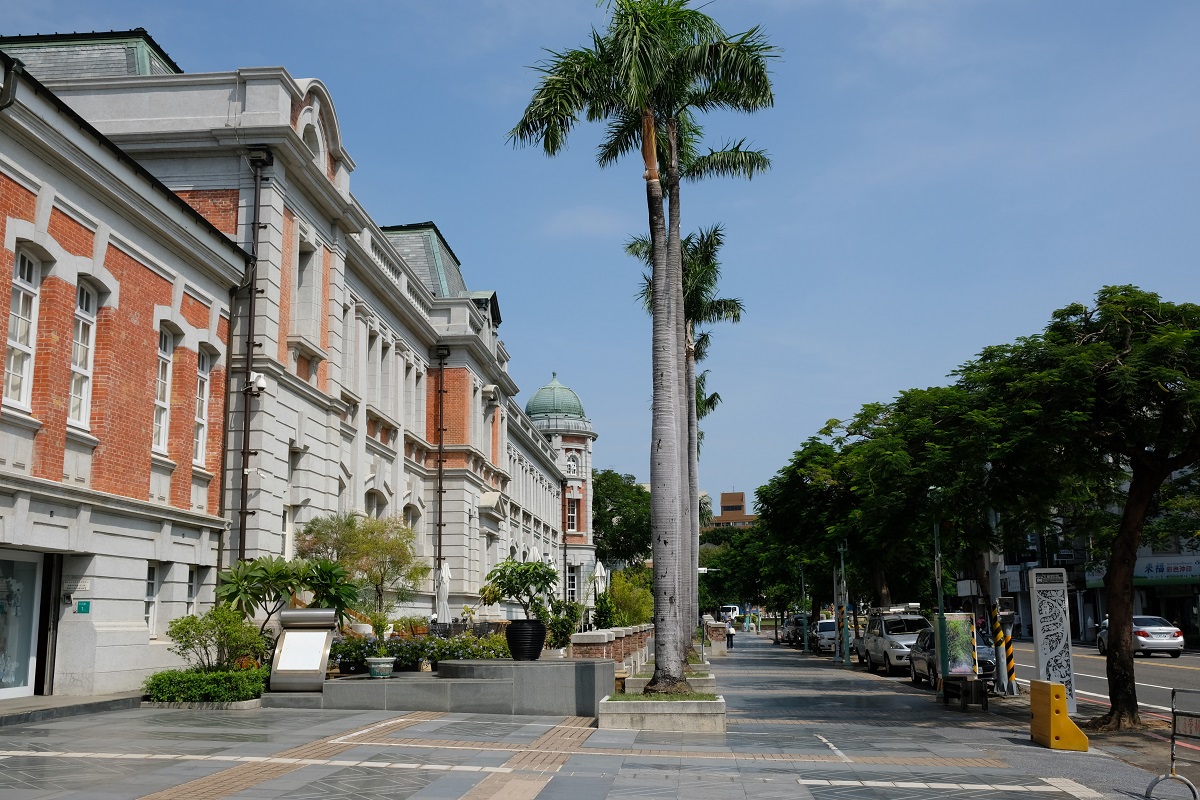
A wide sidewalk next to the museum

The city’s Japanese-era fire station, right across from the literature museum

At a memorial park dedicated to Thng Tik-Tsiong (also spelled Tang Te-chang or Tang Dezhang), a local hero
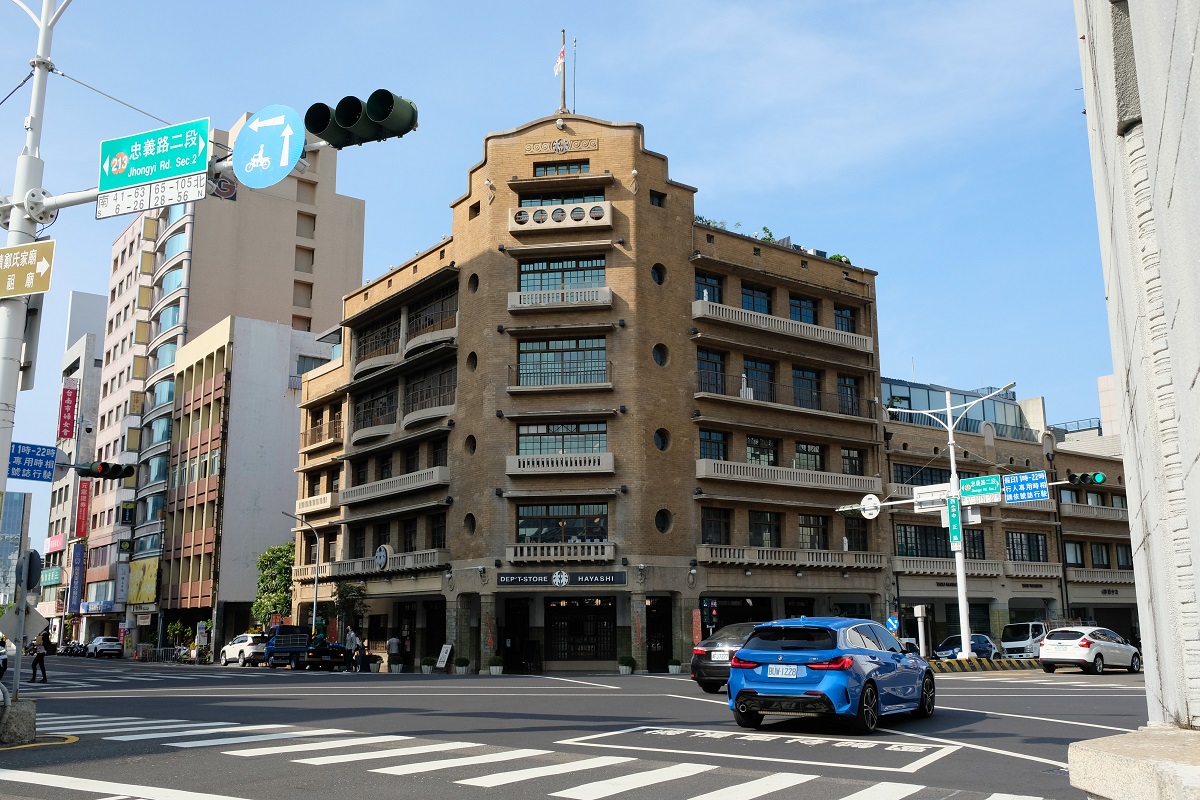
Hayashi Department Store, one of the first buildings in Taiwan to be equipped with elevators
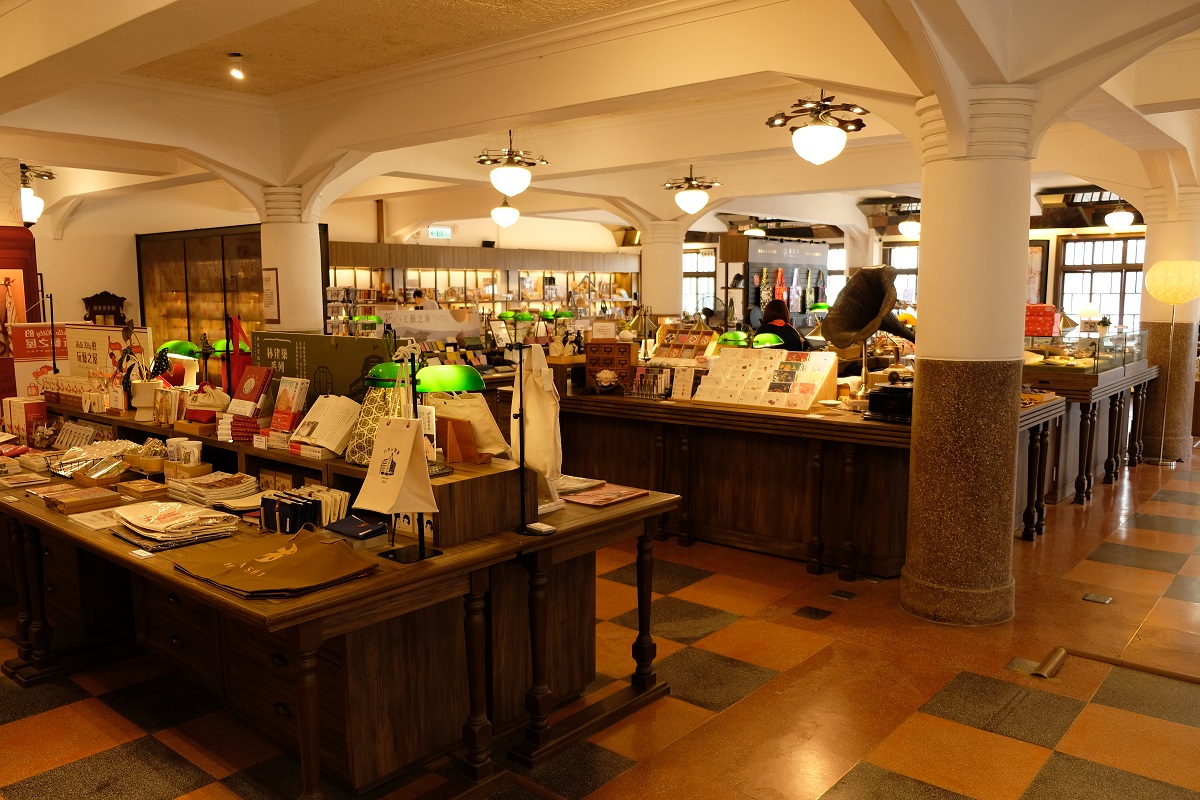
The interior of the department store evoked the past

Behind that glass on the upper left parapet is damage caused by U.S. air raids during World War II
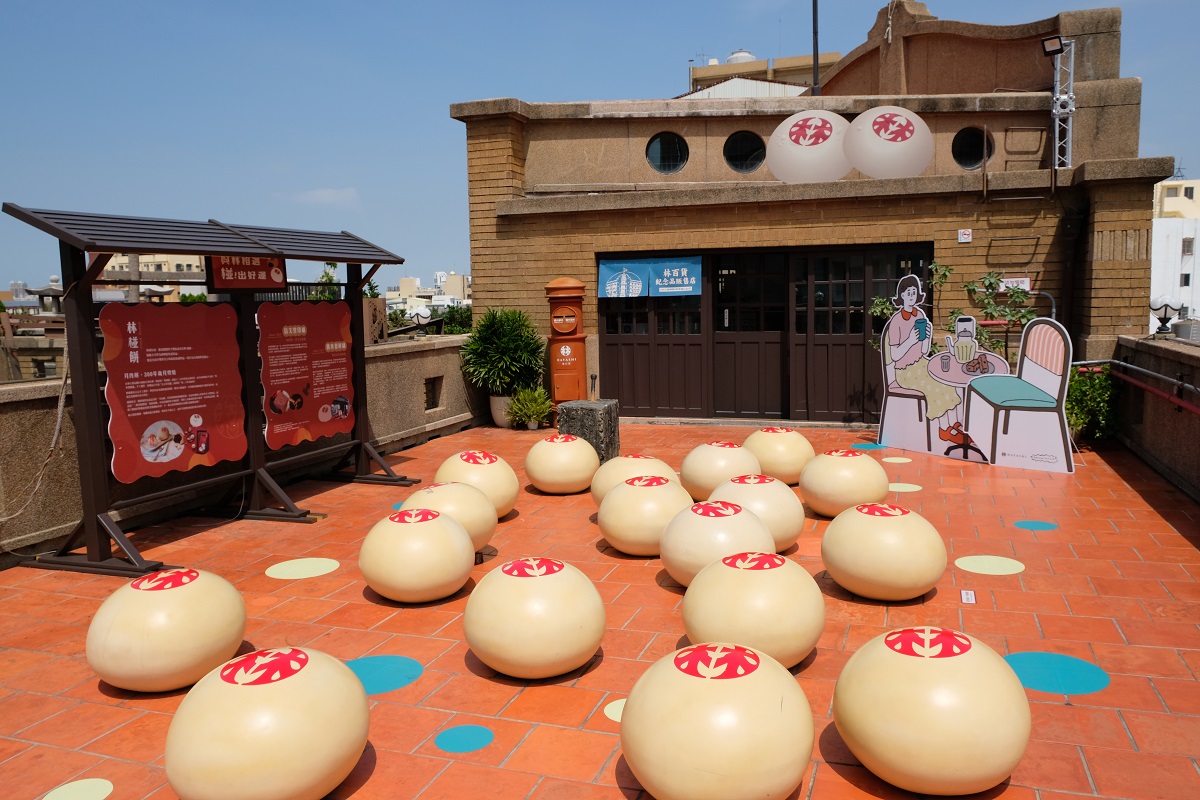
Decorations inspired by Tainan’s own local delicacy

The Suehiro Shrine, dedicated to the Shinto patron god of the store

A restaurant at Hayashi where we had our lunch
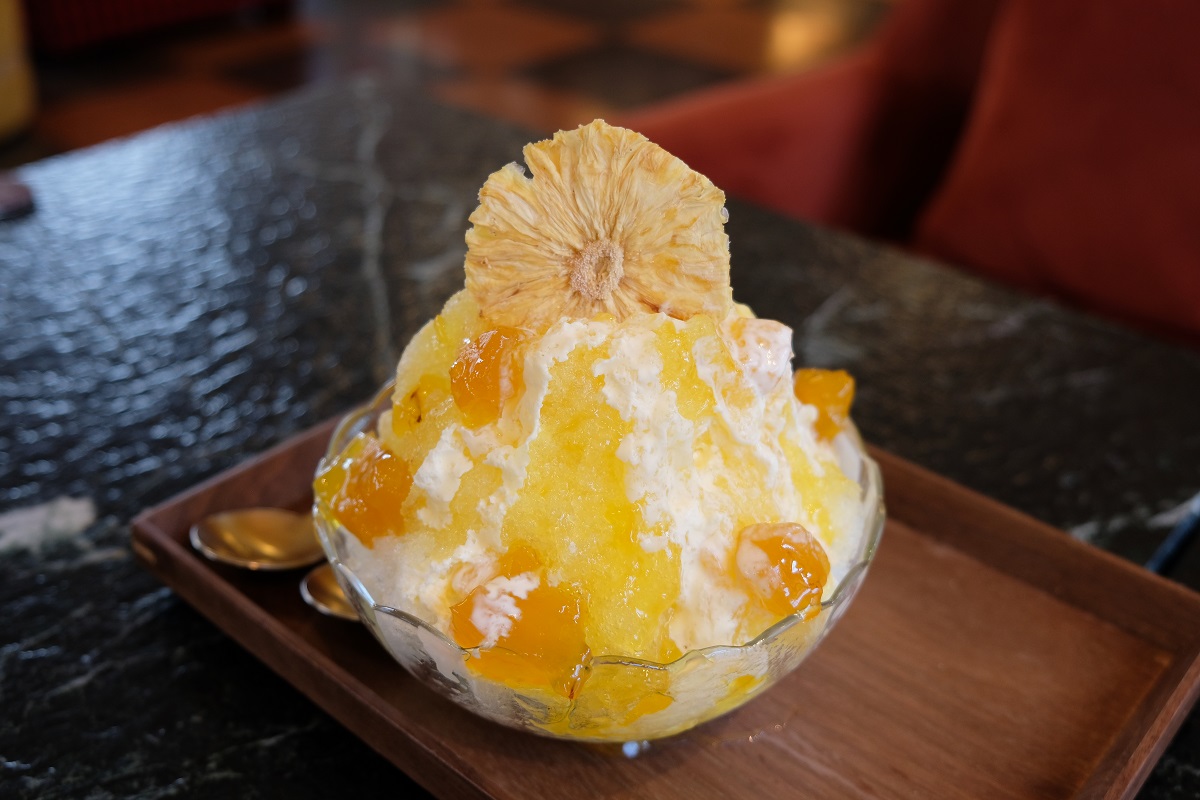
A generous heap of pineapple shaved ice for dessert

Right across the intersection from Hayashi is the former branch of Nippon Kangyo Bank, which is now used by Land Bank
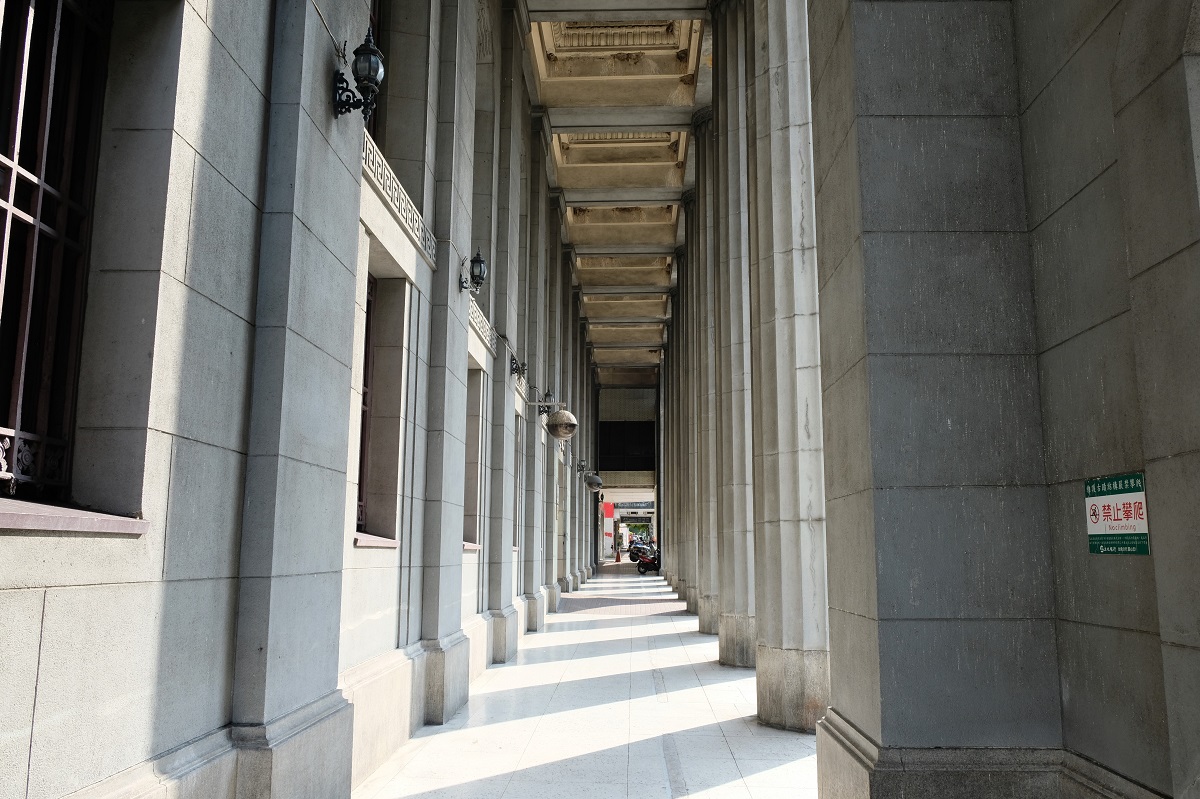
This corridor has witnessed a lot of upheavals in the past

Wa gui, one of Tainan’s most unique local dishes

Building 1 of the Tainan Art Museum, formerly a police station during the Japanese colonial period
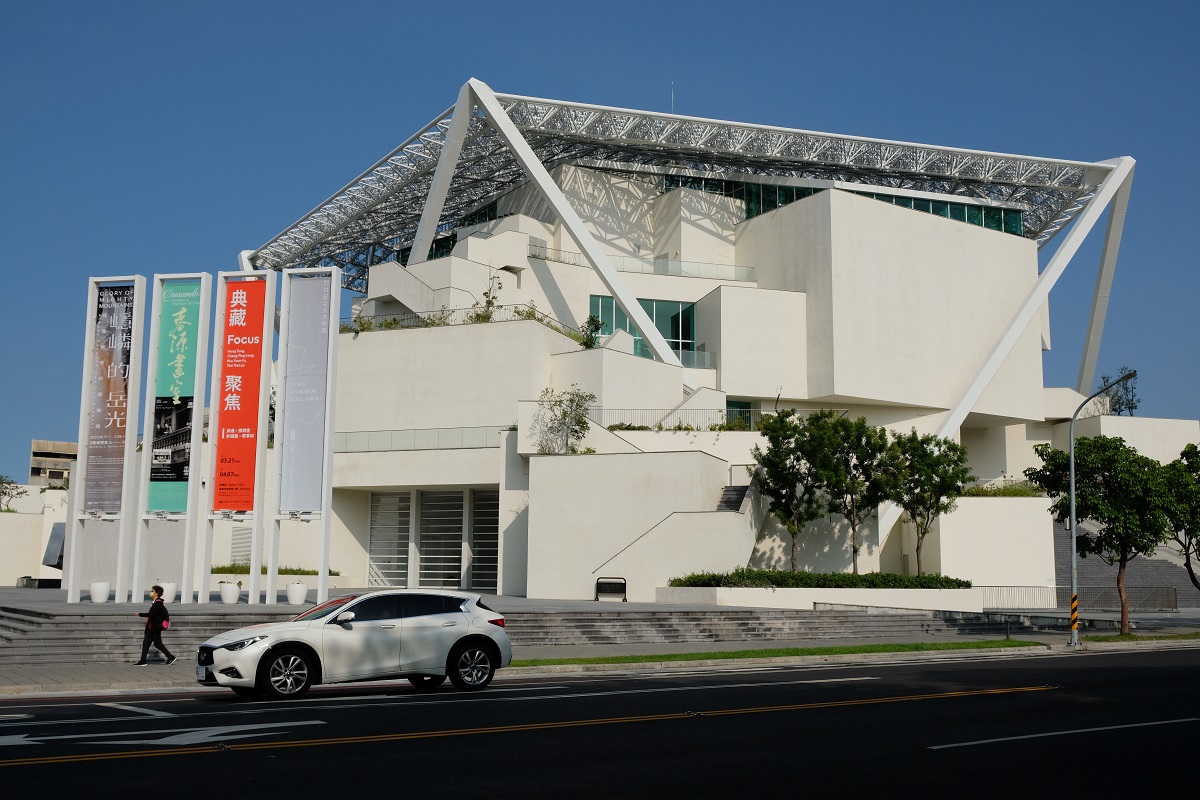
The ultra-modern Building 2 of the Tainan Art Museum, designed by Japanese architect Shigeru Ban

 What an Amazing World!
it looks like a beautiful place to visit
LikeLiked by 1 person
I did notice a lot of photogenic corners in Tainan. Overall, there was this harmonious juxtaposition of old and new in the city which I really appreciate.
LikeLiked by 1 person
Ah, now this is a place I’ve been to! I visited Tainan and the Chihkan Tower during a brief trip down from Taipei and Taichung a few years ago. Despite visiting in the sweltering summer, the sites of its former colonial past were still fascinating to check out. Even more rewarding was the refreshing cold drinks at the end (and you, with your pineapple shaved ice)! There’s a lot to Taiwan besides just Taipei, and I’m glad you explored Tainan. Thanks for sharing, Bama!
LikeLiked by 1 person
I can imagine how easy it must have been going to Tainan all the way from Taipei thanks to the high-speed rail. As my day progressed, I realized that the city could get hot and humid too, just like Kaohsiung, despite the surprising cooler temperatures earlier that day. Thanks for sharing your experience, Rebecca!
LikeLiked by 1 person
I can see why it’s compared to Kyoto in Japan, it gives me that vibe. Looks like such a beautiful place to explore. Thanks for sharing Bama!
LikeLiked by 1 person
I’m glad James insisted on visiting Tainan as the city turned out to be so interesting to explore, thanks to its many historical sites. I think you would enjoy it too, Anna.
LikeLiked by 1 person
Bama, I would enjoy anywhere that is not Perth!!! 🤣🤣🤣
LikeLiked by 1 person
Lol! That’s funny. Actually, I have been curious about Perth for quite some time now, especially given its relative proximity to Jakarta.
LikeLike
Haha Perth is great, it’s just home you know? We all think our homes are boring but in reality it’s a great place to live. Make sure you do tell me when you come down, I’ll take you out some places! X
LikeLiked by 1 person
That’s true. I will surely drop you an email if I do plan to visit your city. Likewise, if you ever come to Jakarta please let me know.
LikeLiked by 1 person
Will do mate!
LikeLiked by 1 person
Such a colourful history, Bama. Thanks for showing me this lovely place.
LikeLiked by 1 person
My pleasure, Jo. Thanks to its scale, in some ways Tainan also felt more walkable than Kaohsiung, although the city government could definitely do a lot more to improve pedestrians’ experience.
LikeLike
This is such a beautiful post with many, wanderlust-inducing photos, Bama, perfect for an armchair travel on a wet and windy day on Ireland’s coast. It looks like a city of tradition, ritual and folklore, and with heaps of history to uncover. One of the things I would be very keen to discover would be its many temples and heritage buildings. Thanks for sharing, and have a lovely weekend 🙂 I hope all is well in your corner of the world 🙂 Aivaxx
LikeLiked by 1 person
If only I had more time in Tainan, I think I would have visited more museums there. It was such an interesting city with so much history. The food is also another reason to go. Rainy season seems to have started in my part of the world, making the commute to and from work a little wet these days. I hope all is well for you, Aiva.
LikeLiked by 1 person
All is well, here. It seems like the rainy season never ended in Ireland this year as we had a very wet and cold summer which resulted in fewer camping and hiking activities and other outdoor pursuits .…( insert a very big sigh here…)
LikeLiked by 1 person
What a bummer! I hope the weather improves in your part of the world before winter comes.
LikeLiked by 1 person
Thank you, I hope so too 🥰🥰🥰
LikeLiked by 1 person
So in the end I guess you’re happy James insisted on visiting Tainan. The historic area seems so peaceful in the midst of its modern surroundings and its rather tumultuous past. Thanks for the introduction Bama. Maggie
LikeLiked by 2 people
I’m glad we went. I think the next time we go to Tainan, I would suggest to him to stay a few nights in the city. We barely scratched the surface on that day trip we took from Kaohsiung!
LikeLiked by 1 person
I very much enjoyed reading your post about Taiwan and Tainan, Bama! Many thanks:)
LikeLiked by 1 person
Much appreciated, Martina. If you’re thinking of visiting Taiwan one day, I highly recommend staying a few nights in Tainan.
LikeLike
👍🌻
LikeLiked by 1 person
I can imagine how glad you must have felt with James insisting on Tainan. I loved my time there and enjoyed revisiting it through your post. Weren’t the Japanese goods in the Hayashi Department Store arranged artistically? Even the lights and the washroom was tastefully done.
LikeLiked by 1 person
I’m glad he did. I agree with you about the goods in the department store. They made everything so pleasant to look at, and very irresistible too. Places like this always give me a big smile, for everything seems to be thoughtfully done.
LikeLiked by 1 person
What a wonderful tour, Bama. I love the old heritage sites and architecture, like Chihkan Tower. A lot of older East Asian countries have similar style buildings and they seem so classy and iconic from that time.
I love that Tainan has these places, like the Confucius temple, while you can clearly see the modern era beyond the short walls. A nice blend of the past, present and future.
Those buns and shaved ice pineapple dessert look delicious!!!
LikeLiked by 1 person
I think as I get older, my appreciation for traditional architecture grows. Today, many modern buildings incorporate elements of the local culture to evoke a sense of place, but in my opinion they can never beat the classic ones.
It must have been a huge relief that the city’s historic structures survived World War II, just like those in Kyoto. Otherwise, I just can’t imagine the insurmountable loss shared by Tainan’s residents.
The bun filled with minced meat was my favorite. Surprisingly, some of the other ones in my photos were actually hollow inside.
LikeLiked by 1 person
Modern architecture seems to emphasize efficiency and economical materials. I don’t think they will stand the test of times as these older structures.
LikeLiked by 1 person
It’s really about efficiency these days, often at the cost of intricate beauty.
LikeLike
Seeing all your posts on Taiwan makes me envious. I’ve been to Taiwan several times but all these visits have been business trips. I’ve never got to see much of the country besides just a couple side trips with local colleagues in between meetings and nights out.
LikeLiked by 1 person
Then you’ve found an excuse to go back to Taiwan! 🙂 The next time you go there I’d also recommend the Orchid Island (Lanyu) just off the coast of Taitung in the east. It’s small but incredibly scenic. It’s also home to an indigenous community that still speaks an Austronesian language.
LikeLiked by 1 person
This is a wonderful write up. I enjoyed the history of the city and the write up of the buildings (and of course the food).
LikeLiked by 1 person
Thanks Matt. For a city which played a pivotal role in Taiwan’s history, Tainan’s streets and places of interest were surprisingly not too busy with foreign tourists. If you’re interested in seeing it, I think you should go sooner than later.
LikeLiked by 1 person
The cooler weather sounds like a nice change of pace. Chihkan Tower looks beautiful. I’m curious as to how old that tree is that’s tied down to the ground.
LikeLike
What an interesting side trip, Bama. Being in a cooler place is always wonderful when out exploring, especially when it is a respite from excessive humidity. That pineapple shaved ice looks like the perfect dessert for summer.
LikeLiked by 1 person
Even for someone from the tropics like me, excessive humidity can be punishing. Tainan was surprisingly pleasant, and I kind of wished we had stayed one or two nights in the city. Although shaved ice is usually not my go-to dessert, I must say the one I had at Hayashi was quite nice.
LikeLiked by 1 person
This sounds like a great side trip, and it looks like you really saw a lot when you were there. The tower is beautiful, and I really enjoyed some of your photos of the traditional temple architecture. Especially loved the elaborate dragon roof ends on the House of Koxinga temple.
Alison
LikeLiked by 1 person
Tainan definitely deserves more than a day trip. But with such short amount of time in the city, I would say we did manage to see quite a lot. If Taiwan was a member of UNESCO, multiple sites in this historic city would easily make it to the World Heritage list.
LikeLiked by 1 person
Ah, Bama, this is a great reminder for me to share my own photos and write a blog post about Tainan. I’d heard so much about the place from work that I knew we had to make the time for a short visit. Thankfully we got to check out some of the major attractions and try a few local dishes or specialties along the way. We picked such a beautiful day for the excursion – I’d go back in a heartbeat if it was a little easier to get to from Jakarta. I’m looking forward to your future post about Anping and the former Fort Zeelandia!
LikeLiked by 1 person
Thank you for insisting on seeing Tainan, James! I don’t know why it took me some convincing to finally agree with your plan. I liked Kaohsiung, but Tainan was a nice change of pace and scenery. As for the local dishes, I wish we had more time to try them all. I can imagine they would probably suit our taste well since sweetness is something we’re both familiar with thanks to the foods we grew up eating.
LikeLiked by 1 person
Amazing! . Your photography is always so colorful. Saving this!
LikeLiked by 1 person
I tried to do black and white in my early years of having my old SLR camera, but it just wasn’t for me. I prefer showing the colors of the places I’ve been to. I hope you’ll get to Tainan one day!
LikeLike
Such a lovely city. Glad you decided to visit to show it to us…(Suzanne)
LikeLiked by 1 person
I really enjoyed Tainan. Unfortunately the limited time we had meant we could only see the main sites. If you ever find yourself booking a trip to Taiwan one day, make sure to give this particular city at least a few days.
LikeLike
Interesting juxtaposition, all that turbulent history, interposed with the serenity of the temple gardens.
LikeLiked by 1 person
Calmness in Taiwan should be taken with a grain of salt, though, as its giant neighbor across the strait constantly flexes its muscles. I don’t think a real war is in everyone’s interest.
LikeLiked by 1 person
I want that pineapple shaved ice 😛 It looks so great for a hot day! The wa gui is no less tempting. I mistook it for a flan, with the sauce looking like caramel sauce. An excellent article about the layered history of Tainan!
LikeLiked by 1 person
If you like sweet food, you’ll definitely enjoy what Tainan has to offer. To be honest, I think that pineapple shaved ice tasted better than the shaved ice I had in Taipei back in 2013. Ha! I can see why you thought of a flan when you saw that shot of wa gui. The latter was savory though.
LikeLiked by 1 person
Fascinating history, as always! Those giant buns (used for decoration) makes me think it would be cool to have a checkers board using the buns for pieces. 🙂
Do you know much about Taiwan’s history prior to the 17th century? Given its location, was it equally influenced by Chinese and the Japanese, or predominantly one of them?
LikeLiked by 1 person
Haha, I was thinking the same thing when I saw them, until I realized that they were actually giant buns!
What I read about Taiwan before the mass migration of Han Chinese from the mainland was that the island was predominantly inhabited by different Austronesian peoples. Their languages and cultures have similarities with those found in maritime Southeast Asia today in places like Indonesia and the Philippines. Japanese and Chinese merchants might have had presence along its coasts though.
LikeLike
I very much enjoyed this post, Bama. I was supposed to travel to China this month, but this year has bounced me around so much this year – I stayed here in Czechia instead but dreamt about all the great Chinese food I was missing 😂. Your post did not help my situation – even my friends in Hangzhou are in awe of the food in Taiwan (the wai gui/gao specifically)! Taiwan, like China, has such a proud and unique local food which attracts foodies. Beautiful photos of Tainan. It is impressive to see how they fold the old and new together seamlessly… from Chinese concepts to Japanese and Western architecture. And with the history you describe of the place, I’d love to visit Tainan and take it in myself.
LikeLiked by 1 person
Much appreciated, Randall. Some of the people I know just came back from separate business trips to China (Shanghai and Hangzhou) and I must say the photos they shared on their social media made me want to go back to country — I’ve only been once back in 2012.
What’s interesting about the dishes in Taiwan is despite the island’s relatively small size, the food varies from one region to another. I liked what I ate in the south than the ones I had in the north though.
I hope you’ll make it to Tainan one day. It’s such an interesting city with so much history.
LikeLike
Thank you for this post! I currently live in the US, but get to go back home to Japan for a few months to spend much needed time with my family. While I am there, I plan to take my sister and niece for a girl’s trip to Taiwan. They are very excited. We land in Zaoshiung, so my original plan was to do 2 nights there then move onto Taipei for 4 nights (before flying back from Taipei). Reading your beautiful and informative post, I changed our plan to include a stop in Tainan. I think my niece will especially love the experience of hanging out in the old town. Thanks again!
LikeLiked by 1 person
I’m glad this post helped you plan your trip to Tainan. I hope you, your sister, and your niece will enjoy this historic city as much as I did. Make sure you try some local dishes too.
LikeLike