
The entrance to Preah Khan from the west
What would you do if you became the ruler of an empire with a history spanning centuries and known among its neighbors for its majestic temples? For Jayavarman VII, the king of the Khmer Empire in the late 12th century CE, the answer was simple: build more.
His realm was no stranger to grand monuments. From Pre Rup which was made from laterite to the magnificent Angkor Wat, generations of ancient Khmer people certainly knew how to build to impress. After ascending the throne following his successful military campaigns against the occupying Cham forces, Jayavarman VII embarked on a construction spree with a scale the empire had rarely seen before. He commissioned Angkor Thom, an entirely new capital with an extraordinary Buddhist state temple, known today as Bayon, right at the heart of the walled center of power. He also improved the infrastructure in and around the city, while adding public facilities for the benefit of his people.
While enigmatic giant faces are among the most distinctive architectural features from this period in the empire’s history, modern-day visitors are also drawn to the atmospheric setting of some temples and monasteries built during Jayavarman VII’s rule. One of them is now famous for the many giant roots enveloping the stone walls and roofs of the edifices, resulting in a precarious situation where nature is slowly consuming the man-made structures. Better known today as Ta Prohm, the photogenic ancient compound to the east of Angkor Thom is believed to have been built to honor the king’s mother. Of course, he made sure to commission another one to be dedicated to his father.
Situated directly to the northeast of the capital, Preah Khan was conceived as an important religious and education institution comprising a Buddhist temple and a university. Occupying 56 hectares and now largely covered in trees, the moat-surrounded compound was like a city within a city, with tens of thousands of people working and studying there. Entrances to the walled enclosure were built at the four cardinal directions, each adorned with devas on the left and asuras on the right holding the body of a naga, mirroring the same statues found along the bridges to Angkor Thom. The main structure of Preah Khan sits right in the middle of the nearly square plot with each gopura (gateway) bearing a lintel decorated with different scenes from Hindu mythology.
Like Ta Prohm, Preah Khan was only partially restored with the rest of the compound purposefully left in its ruined state. But unlike Ta Prohm that sees a steady stream of visitors, Preah Khan was a lot quieter when we went, allowing us to explore this single-story structure at a more relaxed pace. It was fun walking from one chamber to another, marveling at the elaborate carvings with the sight of leaning walls supported by wooden beams appearing every now and then. A few steps away from a hall decorated with dancing apsaras, the only two-story structure within the compound came into view. It is in fact the only surviving building in such form in all of Angkor.
Vonn, our trusted remork driver, told us that Preah Khan was his favorite ancient Khmer temple, and it was easy to see why. However, this impressive monument experienced a bout of violent change with a lot of Buddhist iconography damaged when the grandson of Jayavarman VII ascended the throne and restored Hinduism as the state religion. But the irreversible decline of this compound truly began around the 15th century when the royal family ended their support of the temple, depleting the resources the institution needed to continue running.
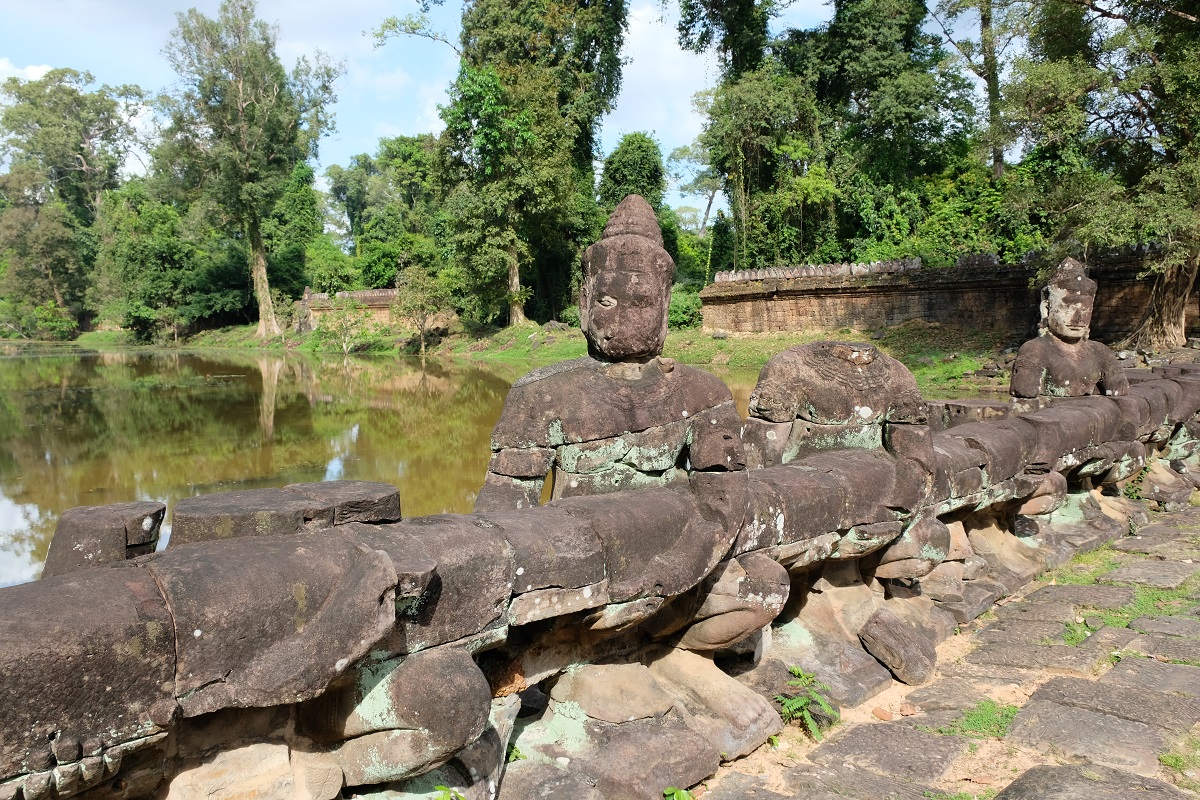
Devas holding the body of Vasuki, a naga, during the so-called Churning of the Ocean of Milk

A leafy approach to the ancient temple compound

One of the inner gateways to the main temple
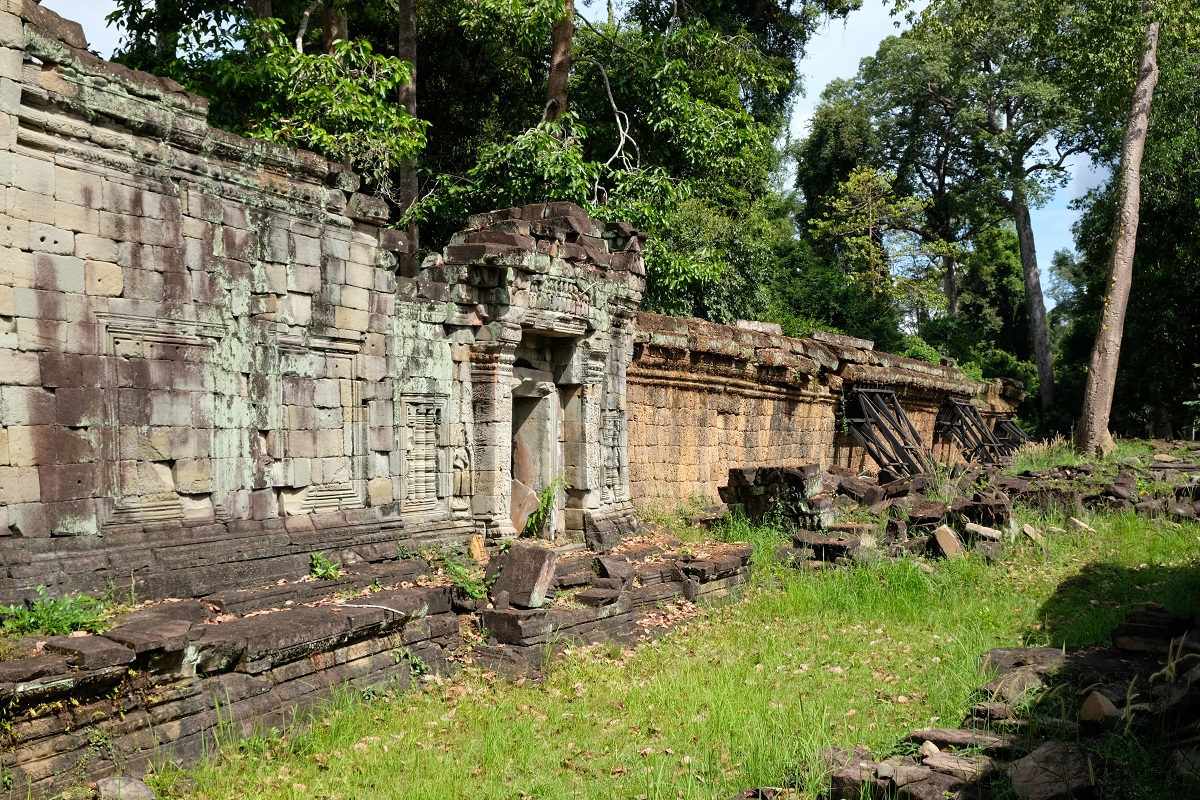
Parts of Preah Khan are purposefully kept in their ruined state

Whichever way you look, there is always an interesting chamber to explore
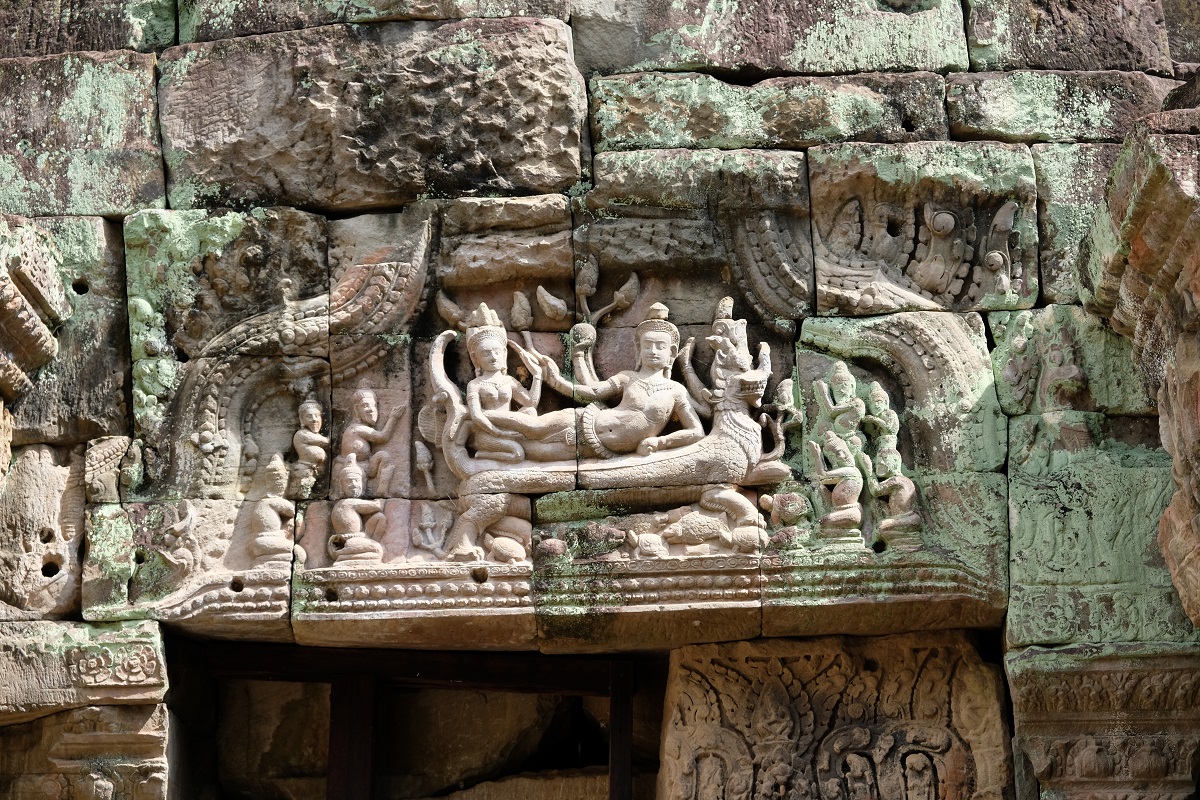
This lintel depicts Vishnu reclining on Shesha, another naga, with Lakshmi sitting near his feet

We enjoyed this temple with few other visitors in sight

Hermits sitting cross-legged underneath trees
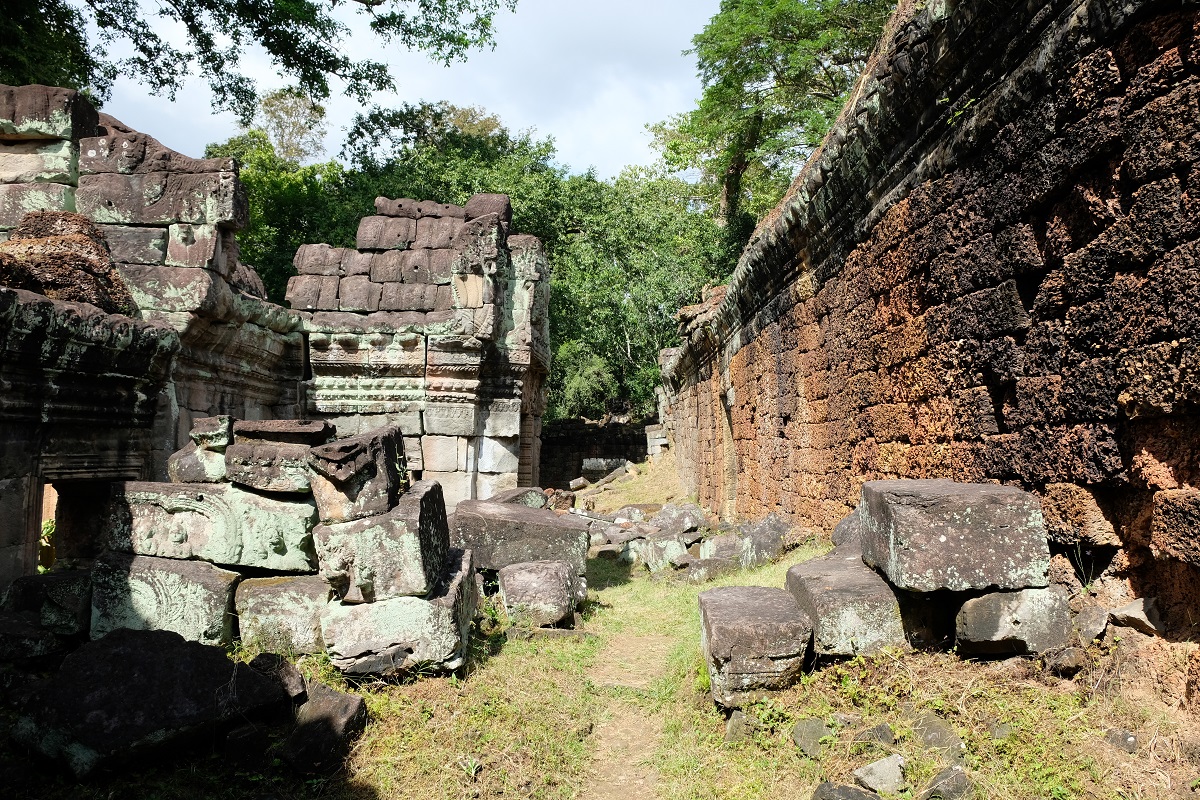
A path that was so tempting to investigate

Carved windows from the 12th century

Preah Khan’s western gopura

The Battle of Lanka
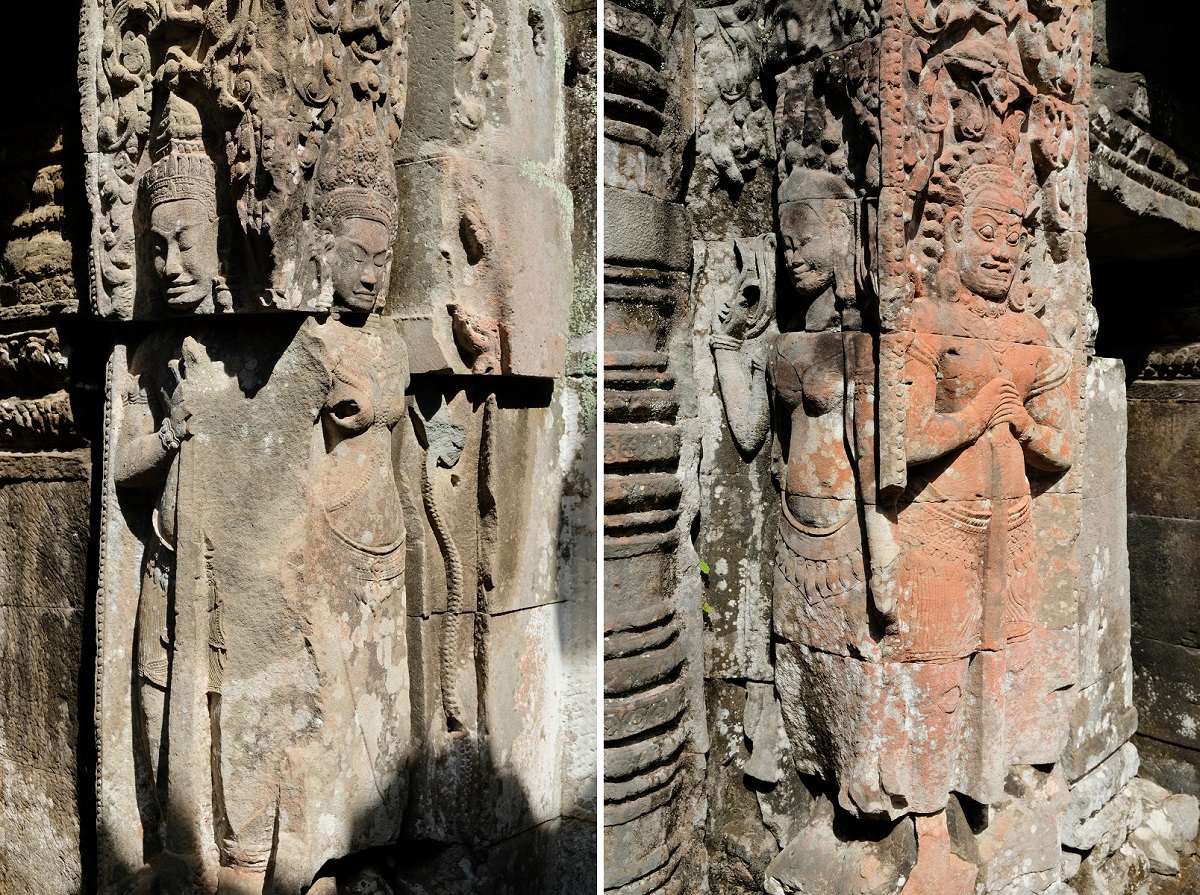
Devas on some of the doorways at Preah Khan
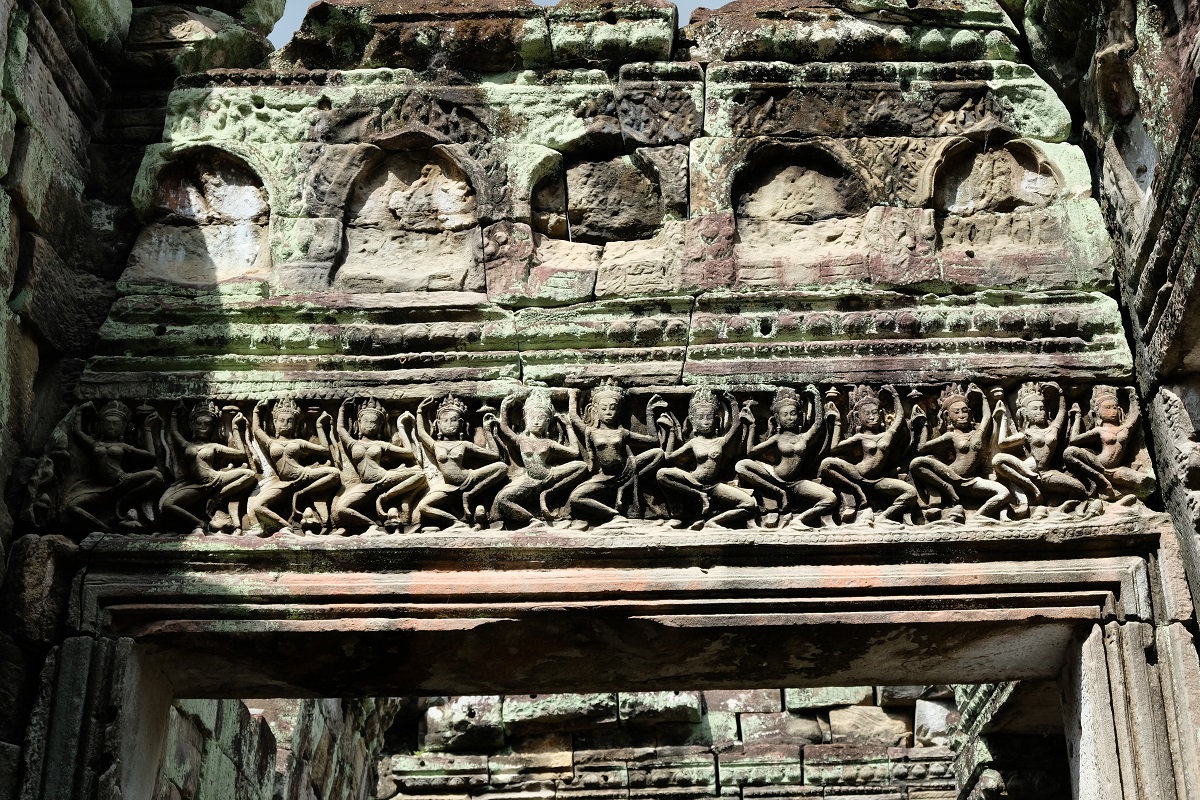
Dancing apsaras with niches above them which were once adorned with Buddha images
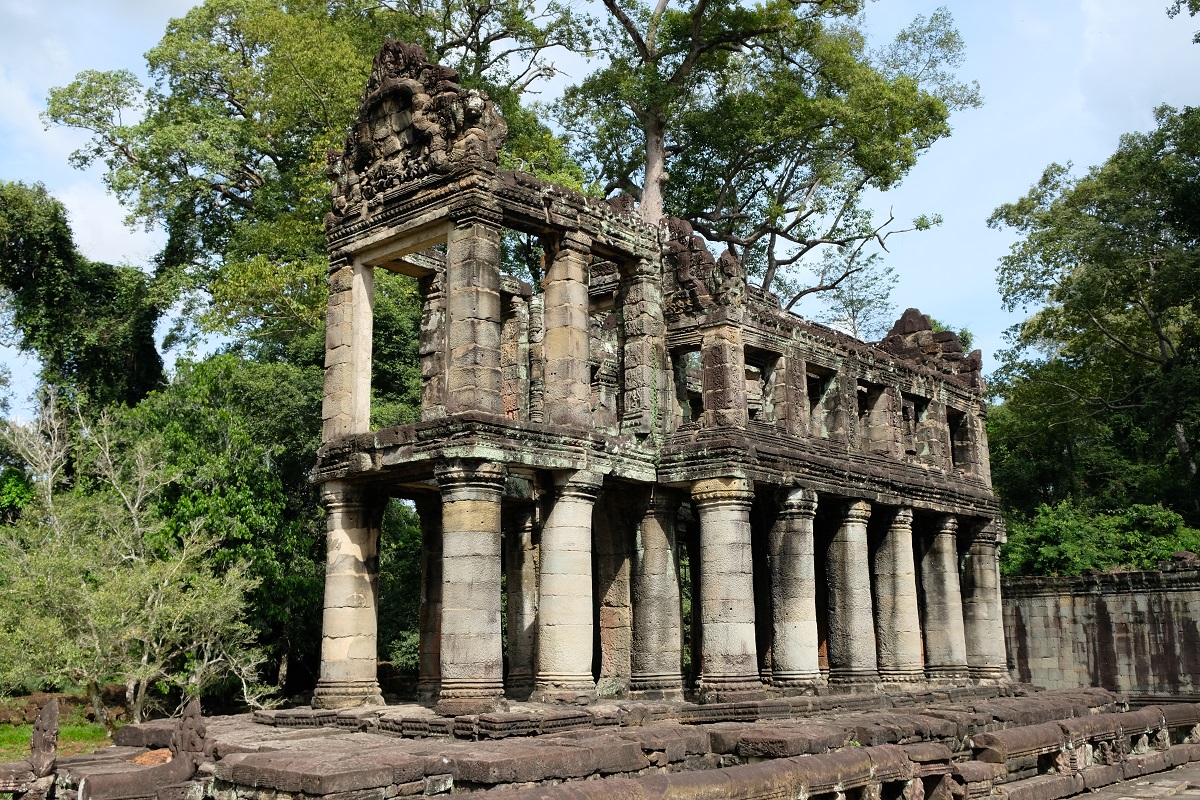
A mysterious two-story structure within the compound

Nature slowly eats away these man-made sculptures

Seeing through the long passageway inside the main temple

A beauty from the past
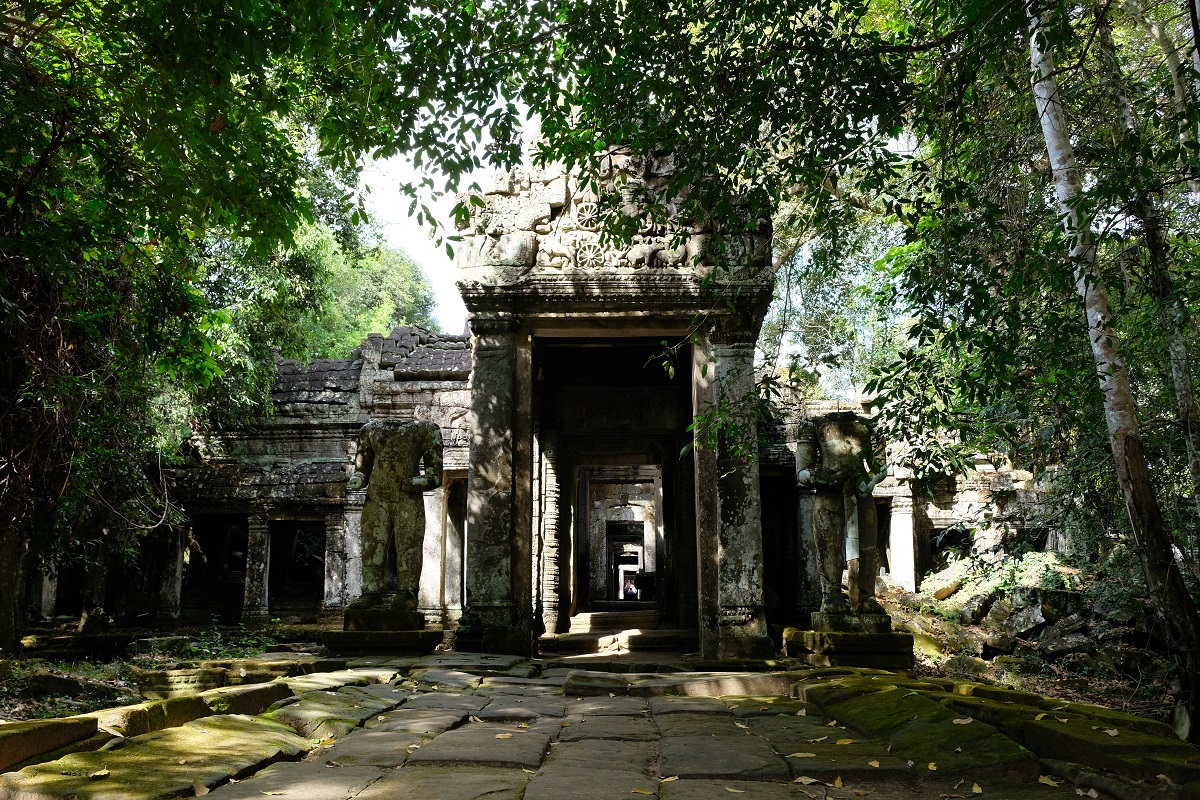
A more secluded gopuram
A great city would not survive without securing its access to water all year round. Probably inspired by the gigantic East and West Barays, man-made rectangular lakes constructed between the 10th – 11th centuries CE near the administrative seat of Angkor, Jayavarman VII commissioned a new, albeit smaller, reservoir directly to the east of Preah Khan. Called the Jayatataka Baray, it was dug out in similar proportions following a rectangular plan like the other two. And as dictated by tradition, a mebon temple was built in the middle of the artificial lake.
Neak Pean, the present-day name of Jayatataka Baray’s mebon temple, was constructed as a hospital, although not in a modern sense. Instead, it was equipped with four square tanks connected to the main pond via stone conduits. Bathing in these pools was believed to cure ailments by balancing the sick person’s elements. At the center of it stood a temple originally dedicated to Avalokitesvara, the bodhisattva of compassion.
The name of the temple itself is attributed to the sculptures of naga – celestial serpentine beings often depicted in ancient Hindu and Buddhist temples in Asia – found at the base of the structure. In fact, the word neak is the Khmer pronunciation of naga. Curiously, as we were crossing the long footbridge to reach the temple in the middle of the lake, a ‘naga’ was spotted coiling around a wooden pole of the railing. Not knowing whether it was venomous or not, we warned some people to be careful around the snake. As we cautiously walked past it, I observed the serpent’s green scales glistening in the sun. It was quite a beautiful sight to be honest, although I later learned that it might have been a Chrysopelea ornata, also known as the gliding tree snake. (I am glad we didn’t see it gliding from a tree toward the footbridge!)
The stele of Preah Khan tells us what Jayavarman VII thought about his artificial lake which, in his words, was like “a mirror with an island charmed by pools that cleanse the sins of those who come into contact with the water, serving as a vessel to cross the Ocean of Existence.” Although no one dipped their toes in the water to test whether it would really cure their ailments, one thing still holds true. The Jayatataka during our visit was still like a mirror as the king had intended it to be many centuries ago.
As my eyes gazed upon the dense forest at the eastern end of the lake, another temple believed by some to also honor the king’s father lurked behind the trees.
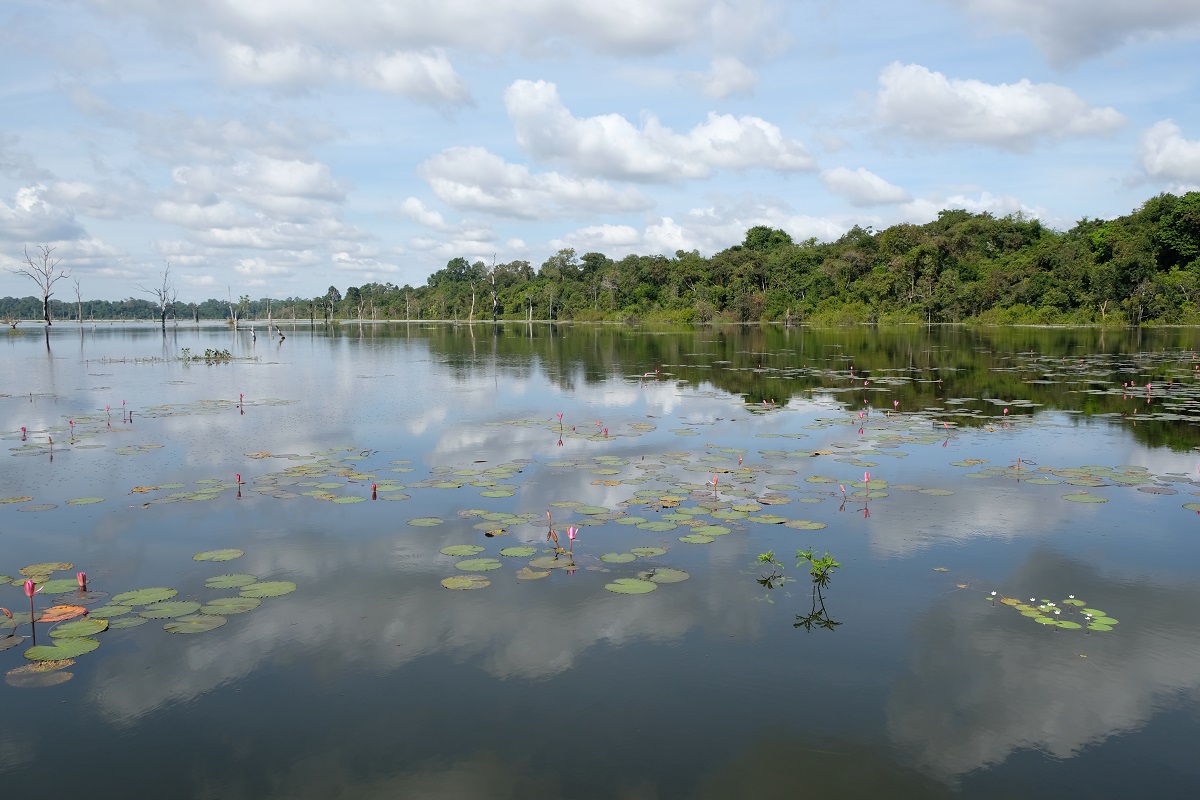
Reflections of the sky on the Jayatataka Baray
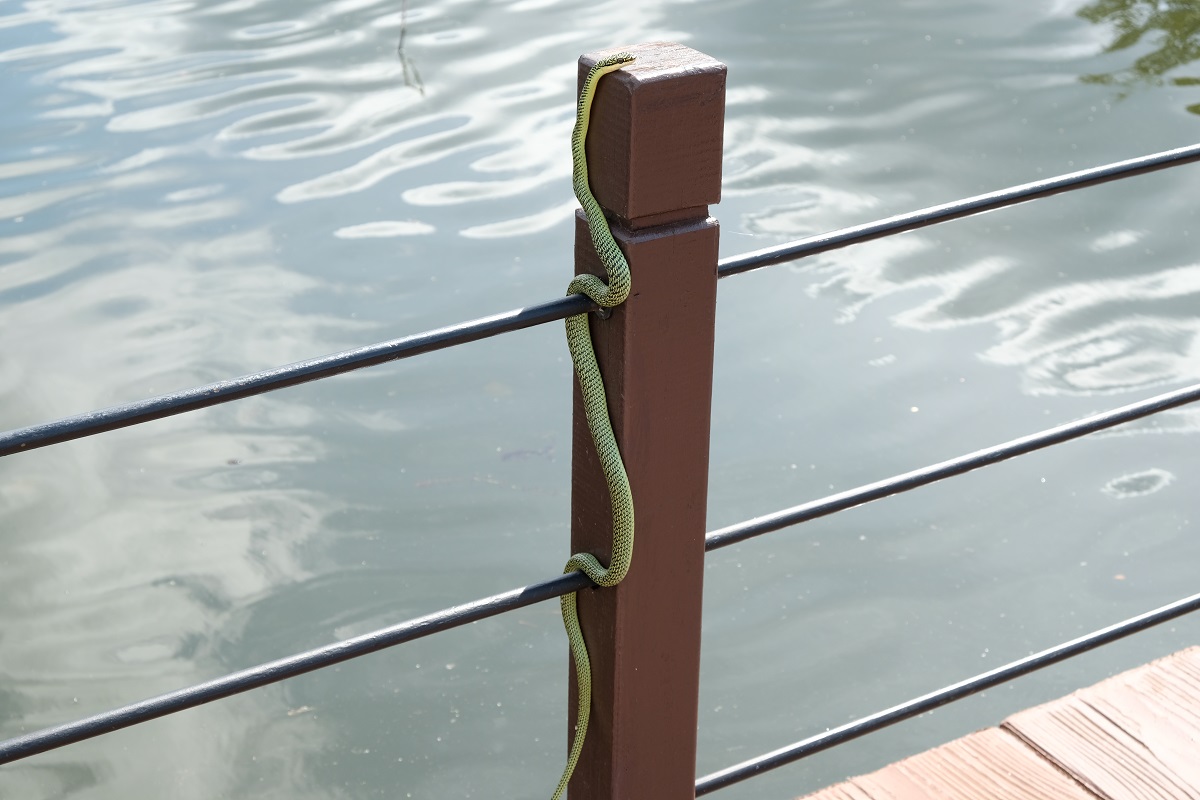
The snake we saw on the bridge to Neak Pean (probably a Chrysopelea ornata, or the gliding tree snake)
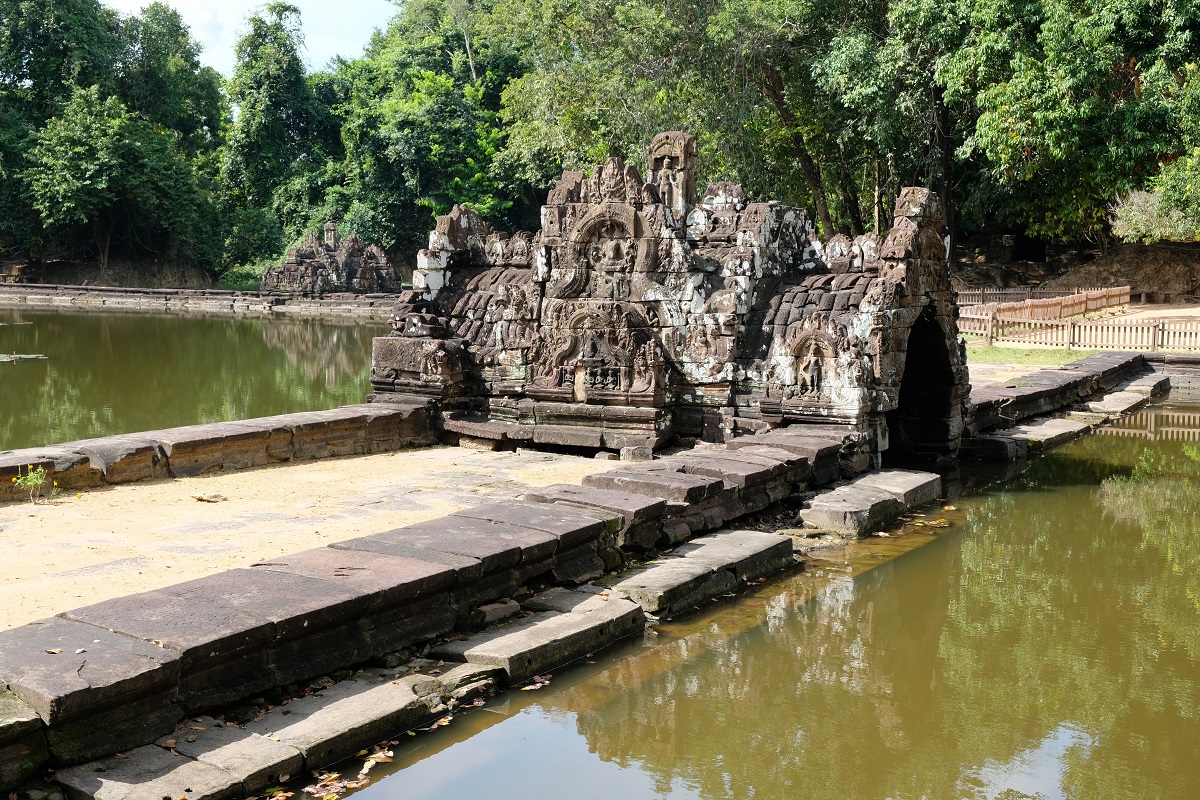
The pools at Neak Pean are connected via stone conduits like this
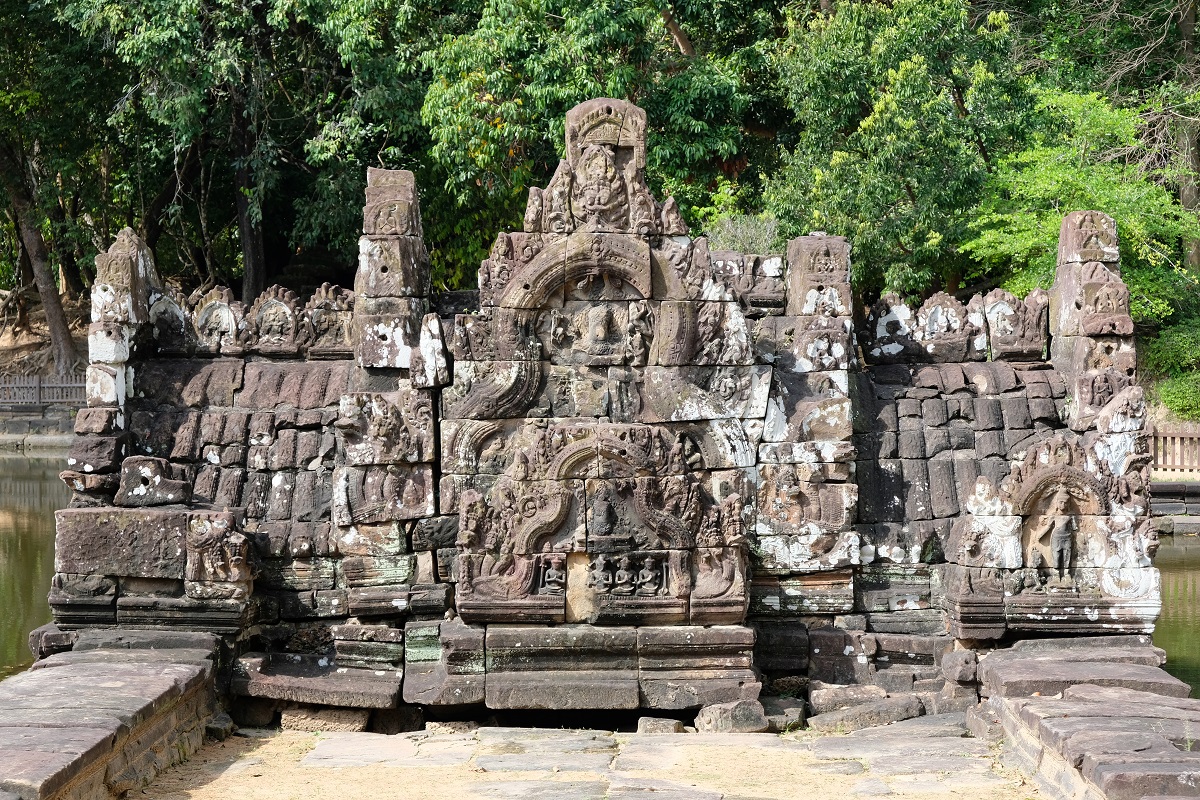
One of the conduits, adorned by Angkorian-era sculptures
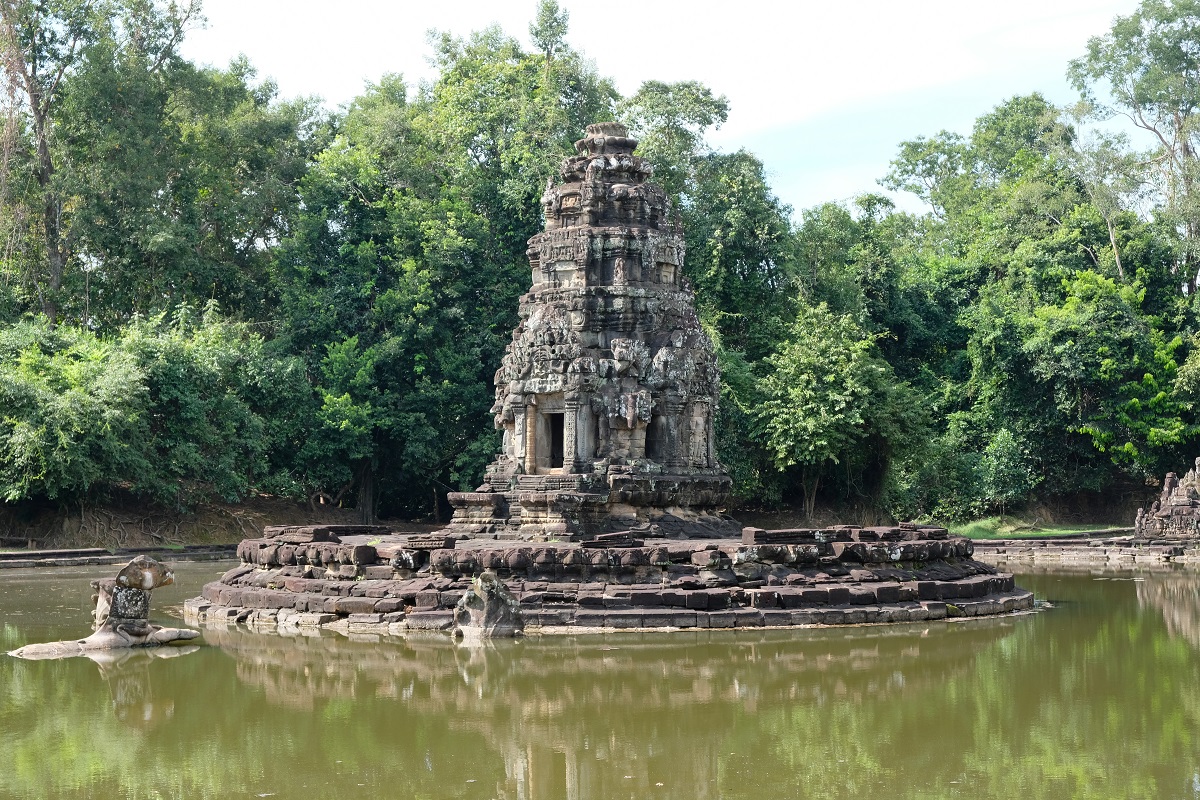
The main structure of Neak Pean
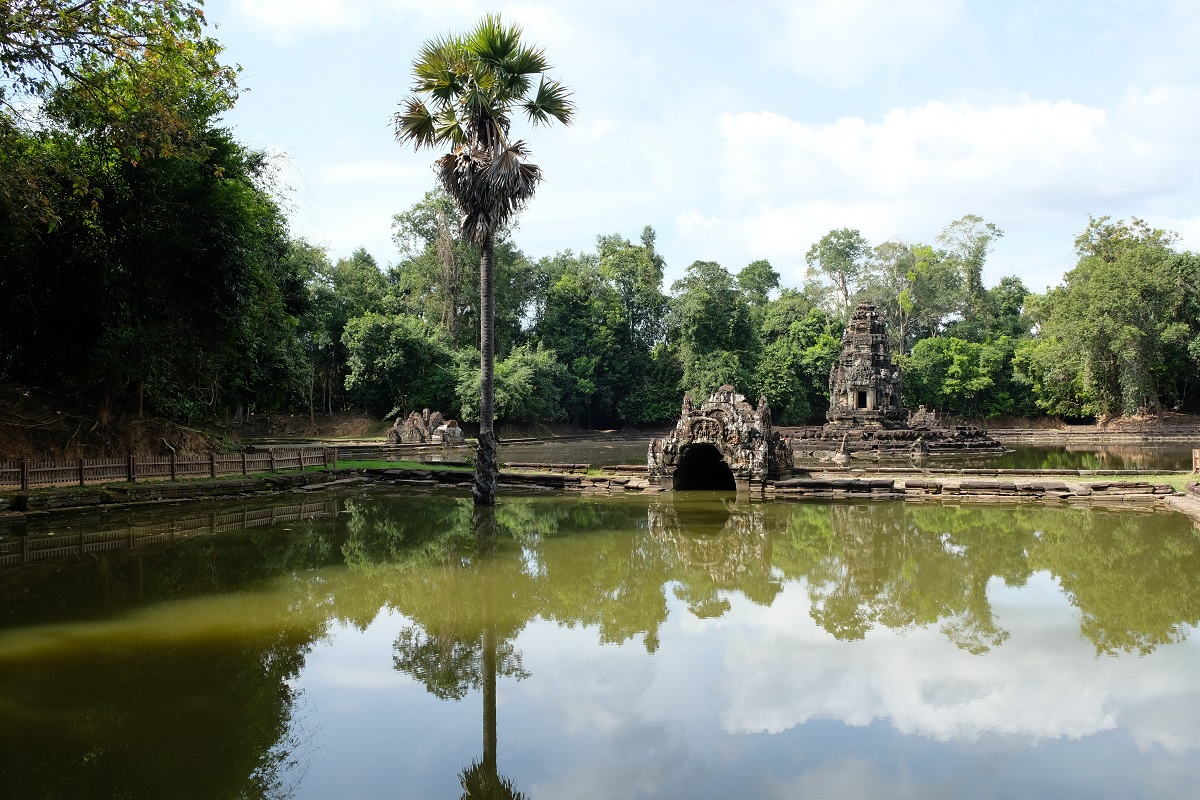
In the past, this served as a ‘hospital’ during the reign of Jayavarman VII


So much detail and beauty here! Unreal that such a place exists in this world. Thanks for taking us along your journey, Bama!
LikeLiked by 2 people
And what makes it better is the fact that there were only a few other tourists during my visit. It really made exploring this ancient temple such an enjoyable experience. Hope one day you’ll get to visit this part of Cambodia, Rebecca!
LikeLiked by 1 person
This brings back fond memories!!! As always, a great post Bama! X
LikeLiked by 1 person
Thanks Anna! Writing this made me miss Angkor. It is such a fascinating corner of the world — and I already have quite a list of temples to visit if the opportunity to go back there arises.
LikeLiked by 1 person
I would love to go back too, I loved exploring the temples and there is so much more to see!
LikeLiked by 1 person
Absolutely! There are so many ancient temples around Siem Reap it’s impossible to see them all in just one trip.
LikeLiked by 1 person
I remember exploring Preah Khan. We had it almost to ourselves too so I think we also liked it a little more. I had forgotten about Neak Pean. I’m actually not sure that I knew much about it. If I did I’ve forgotten. I am glad that I didn’t see your little green friend though. Maggie
LikeLiked by 1 person
It makes me think, maybe there were snakes on those trees hunting their prey when I was visiting Preah Khan. Yikes! The fact that the temple was not completely restored actually made it look even more atmospheric.
LikeLiked by 1 person
Yikes! I’m glad I didn’t see any!!!
LikeLiked by 1 person
Building more is not necessarily a bad legacy to leave behind. Preah Khan looks like a neat place to explore. I’m sure it was even more special that it wasn’t very busy.
LikeLiked by 1 person
In Jayavarman VII’s case it certainly isn’t. It’s really amazing to think that these were built more than eight centuries ago. If you ever come to Cambodia, you should put Preah Khan in your list of ancient temples to see, Linda.
LikeLiked by 1 person
A wonderful tour Bama. I don’t think we went to Preah Khan though the other places you mention are familiar. The Neak Pean pools look beautiful, and your photos really capture the artistry of the people who created the whole complex.
Alison
LikeLiked by 1 person
Preah Khan is located just north of Angkor Thom. But because the main tourist route takes visitors from the south to the east of the ancient capital (which leads to sites like Ta Prohm), many people missed what lie to the north of the so-called Small Circuit altogether. The scale of ancient Angkor is really incredible!
LikeLiked by 1 person
Such a wonderful place! I just googled, and the two-story structure is believed to be a library 😛 I though it was a viewing gallery where the royals could look around the courtyard.
LikeLiked by 1 person
Yes, some scholars believe it used to be a library, but others are not too convinced. Whatever it was, it’s undoubtedly intriguing thanks to its rather unusual design. The idea of members of the royal family using it as a viewing platform sounds plausible though.
LikeLiked by 1 person
How apt to see a naga in the naga-adorned temple! Glad it wasn’t a closer encounter.
Any thoughts on why Preah Khan was intentionally left partially restored?
LikeLiked by 1 person
It was quite an unexpected encounter, really. I read that the reason for the partial restoration of Preah Khan is because of the limited information conservationists have on the temple. They could only go so far.
LikeLike
It’s interesting you ran into a snake on your tour! It kinda looks cute. 😆 Probably a good idea you stayed away.
I enjoyed the tour of this temple. So beautiful and it’s a shame there was a period of time when the royal family stopped investing in its care. These are what connects us to the past.
Also interesting to see how medicine has changed over time. There seemed to be some superstition based approach to medicine with swimming in certain waters to cure ailments. And how it’s changed to our modern and more science based approach.
Looks like you enjoyed a nice and quiet visit!
LikeLiked by 1 person
Haha, it does look cute in photo, but seeing it up close was quite nerve-wracking!
One can only imagine what the temple would have become if different circumstances have happened in the past. But it’s great that we can still visit ancient sites like this and learn a thing or two about the people who built them.
In terms of medicine, humankind has definitely come a long way. Centuries ago, who would’ve thought that humans would eventually be able to see our own cells and map our DNA?
This visit was such a bliss. However, there is another temple to the east of Preah Khan that I really fell for. But that’s for my next post.
LikeLiked by 1 person
Look forward to the next post!
LikeLiked by 1 person
While visiting Preah Khan, I also wondered about this mysterious two-story structure, particularly its round columns, which are so evocative of European architecture at that time, in the 13th century. But I haven’t found any evidence of contact between the two civilisations.
LikeLiked by 1 person
My thoughts exactly. Of all features of the two-story structure, it’s the round columns that piqued my interest the most. There might or might not have been any direct contact between ancient Khmer and their contemporary European counterparts. But cultural influences tend to travel far through different civilizations.
LikeLiked by 1 person
It’s amazing the historical places you visit. Fascinating and very educational.
LikeLiked by 1 person
We learn more about our world through our blog posts. I certainly learned a lot about South Georgia Island from your marvelous post!
LikeLiked by 1 person
Thanks Bama.
LikeLiked by 1 person
I love how your photographs bring back my own memories long after I’ve forgotten the names of these temples, Bama. I can remember that it was also quiet during my visit, which is always such a delight when there are so many tourists around. It must have been magnificent in its heyday. Oh, and I love how you’ve captured the snake on the bridge. They don’t tend to hang around for photos, and this one looks like it was posing. What a stroke of luck.
LikeLiked by 1 person
I know that feeling, Jolandi. As the Paris Olympics began two weeks ago, images of the streets and the buildings in the French capital reminded me of my own trip there 17 years ago. And like you, I’ve forgotten the names of some of the places I went to back then.
While at first I was shocked to see that snake, I’m glad I managed to get some clear shots of it before it slithered away, probably hunting its prey.
LikeLiked by 1 person
I was immediately struck by the majesty of the trees, for they are just as impressive and monolithic as the structures that root them, creating a mystical atmosphere that is this temple’s very own. There appears to be a symbiotic relationship in how the trees embrace the ruins, their roots growing around columns that would otherwise be crushed by their mammoth weight, and instead of crashing through the roofs they stretch around corridors, becoming an integral part of these incredible relics. Thanks for sharing, and have a lovely weekend 🙂 Aivaxx
LikeLiked by 1 person
Those tall trees really helped to create a rather mysterious atmosphere at Preah Khan. Without human intervention, the ancient structures would have succumbed to Mother Nature, leaving us only fragments of this temple. Thanks for reading, Aiva, and enjoy your weekend too! We’re having a long one here in Indonesia.
LikeLiked by 1 person
It is astonishing to think that Jayavarman VII had Ta Prohm and Preah Khan built to honor his parents. The ancient Khmer king must have been so powerful and admired by his subjects to have the ready labor (plus the finances!) to get these ambitious projects done. I didn’t know what to expect of Preah Khan, but found it such an underrated gem compared to the more famous temples like the Bayon. Walking across the bridge over Jayatataka Baray to Neak Pean was a memorable experience, to say the least! I too enjoyed the views of the mirror-like waters, and I recall a local guide telling people in front of us that seeing the snake was actually a good omen.
LikeLiked by 1 person
The monuments Jayavarman VII left really show how powerful he was. Even long after the fall of the empire he once ruled, these structures are still a source of admiration and fascination. I hope they can last for more centuries to come! Actually I didn’t hear what that guide said. I was too fixated on the snake, I guess. But it’s nice to learn about what such close encounter means to the locals.
LikeLiked by 1 person
Mas Bamaaaa,
Kalo bicara Preah Khan, hihihi… sedikit trauma, kaget aja soalnya sempet liat yang ga bisa dilihat mata awam wkwkwk, salah aku juga sih, terlalu heboh masuk-masuk ke area yang jarang dilihat. Lagi pula temple ini relatif ga terlalu crowded kan yaa.. Masalahnya keinget terus hahahaha… Selain itu aku juga kena sedikit scam hahaha, dibantuin foto pake gaya tau-tau ditodong deh. Yaudah gpp, anggap sedekah aja hahahaha…
Tapi disini tatahannya cantik-cantik yaa… aku suka…
LikeLiked by 1 person
Wow! Tapi memang Preah Khan ini kan cukup luas dan banyak bagian-bagiannya yang sepi sih. Saya untungnya gak bisa lihat yang ‘begituan’, jadi pas eksplor di sana yang teringat lebih ke suasanya sepi dan rindangnya. Tapi saya kaget Mbak Riyanti ketemu scam di Preah Khan. Lagi apes aja sih itu mbak.
LikeLiked by 1 person