
On the western bank of Lotus Pond
Big cities often have humble beginnings. Manhattan was once a land where the local Lenape people harvested wood for their bows, while Tokyo and Dubai used to be merely fishing villages. Kaohsiung, an economically-important industrial hub whose port is the largest in Taiwan, is no exception. The lowland areas that are now part of this southern Taiwanese city were once home to the indigenous Makatao people, a subset of the Austronesian peoples who inhabit the many islands across the Pacific Ocean as well as Madagascar off the eastern coast of Africa. When the Qing dynasty of China exerted its influence across the strait to Taiwan and eventually controlled it, they set up settlements along the coast of the island, including in areas that are now Kaohsiung. The influx of immigrants from China gradually pushed the Makatao people further south and east.
The Qing rulers then established the administrative seat of Fongshan – one of the counties that made up Taiwan at that time – in a district known today as Zuoying, north of the downtown area of modern-day Kaohsiung. This area was deemed strategically important which led to the decision to set up government buildings as well as a Confucian temple. Originally, it had no fortifications. But in 1721, a rebellion broke out, which prompted local authorities to build defensive walls around the town a year later. In 1787, however, another rebellion managed to break into these walls, an event that convinced the local Qing officials to move the administrative seat to what is now Fongshan District to the east of Kaohsiung city center.
Prior to this trip, James, who went to this Taiwanese city in early 2023, had told me about the remnants of the old defensive walls. Of course, I was interested in the idea of seeing this part of Kaohsiung, for visiting areas with historical significance always helps me understand a city better. But what made our explorations even more exciting and fun was the fact that we were joined by a long-time blogging friend Jeff Bell and his wife Kristi. Hailing from the US, they have been living in Asia for quite some time now: first in Bangkok, and since 2020 in Kaohsiung. I had always wanted to meet them, especially after reading Jeff’s entertaining blog posts which in the past were often accompanied with hilarious Microsoft Paint illustrations. My all-time favorite is the one describing their experience in Hong Kong when James took them on a speed-walking tour around the city.
On a fine Saturday morning, James and I went to the southern side of Lotus Pond, a man-made reservoir situated not too far from where the Bells live, and close to the old walled city of Fongshan County. James wanted to see the Dragon and Tiger Pagodas, two iconic structures at the edge of the artificial lake. However, both of them turned out to be covered in scaffolding when we got there. Fortunately, our disappointment didn’t last long as Jeff arrived a little after 8am. He immediately took us to a pavilion in the middle of the lake connected to land by a bridge. On the upper floor of the “floating” structure, where a constant gentle breeze provided much-needed relief from Kaohsiung’s intense humidity, Jeff told us about how Kristi got a job in this Taiwanese city, and how they’ve been doing in their new adopted home. And speaking of her, she eventually joined us when we crossed back to the other side of the bridge.

While waiting for Jeff to arrive, this temple caught my attention for its details
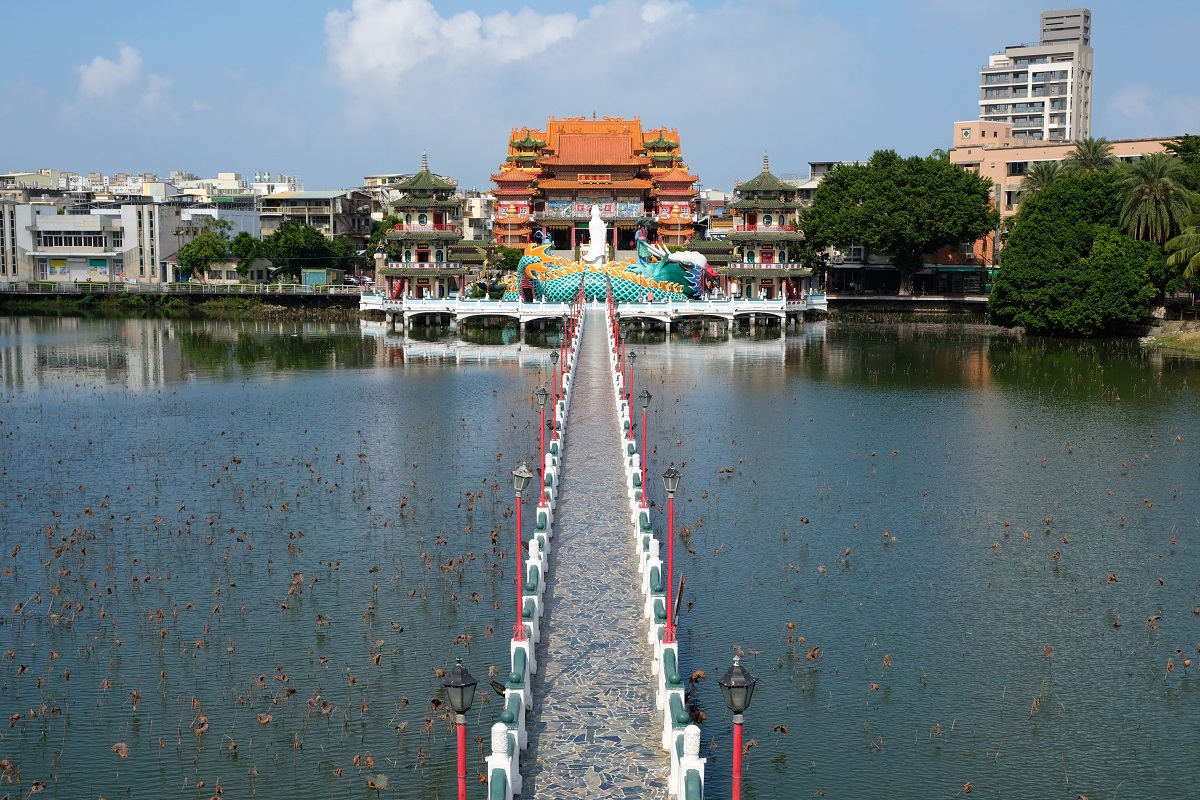
The view from the upper floor of the pavilion

The Dragon and Tiger Pagodas under scaffolding

It was nice to cross to the hill on the other side without having to worry about the traffic underneath

Jeff, Kristi, and James on a boardwalk inside the forest
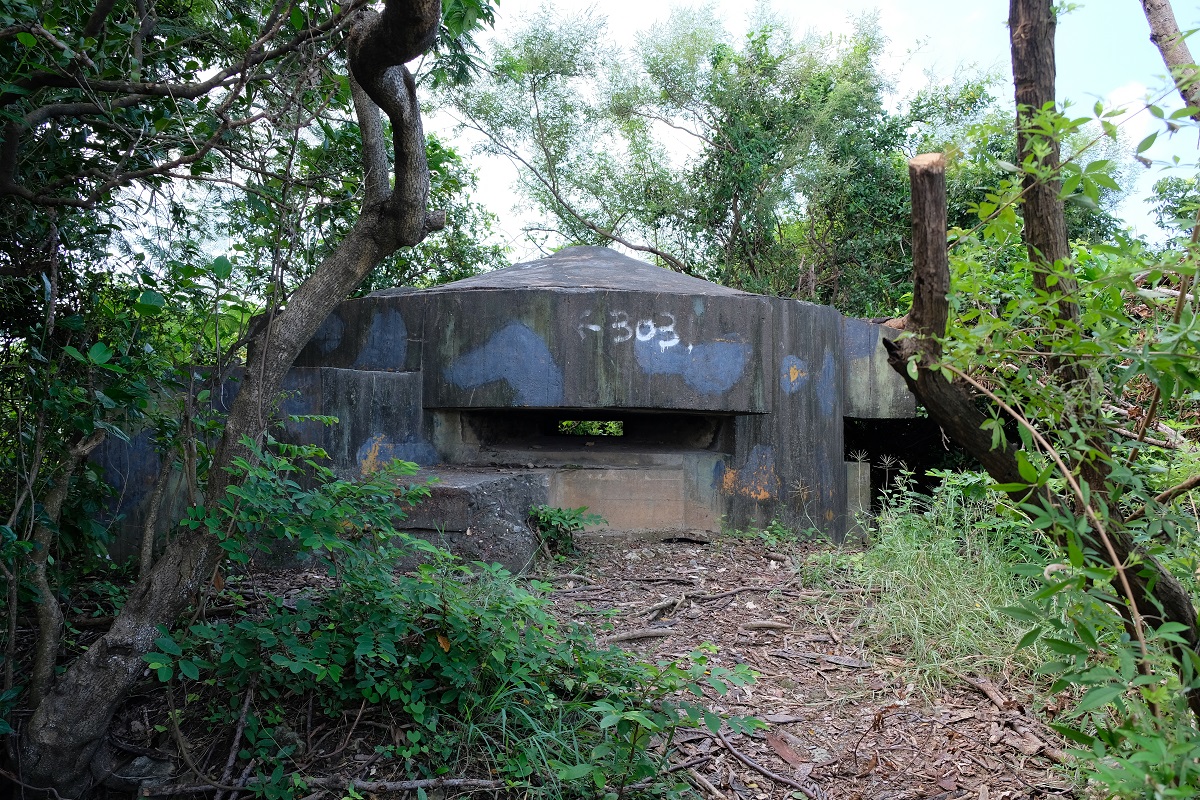
A former Japanese pillbox
James, who had done some research about the old walls, convinced us to head to the hills at the southwestern edge of the lake before the day become too hot, which we agreed to. Near the main road, a hiking trail began, marked with paved steps under a lush green canopy of the forest. We soon reached a vantage point that afforded us better views of the lake, with another green hill sitting across the water at the opposite end from where we were. Farther down the trail, not only did we stumble upon some old Japanese pillboxes, but we also got a bird’s eye view of sections of the old walls below. Things surely looked more and more interesting. And finally, about half an hour after we started the hike, a small modern building suddenly appeared behind the trees. It is the Center of Old Fongshan City History, a local museum James had learned about a few days earlier.
We went inside, and ahhh… there was cool air-conditioning! The friendly staff members greeted us in Mandarin, which was a telltale sign of what was to come. Since the museum is geared more toward the local Taiwanese, most information displays were in traditional Chinese characters, with only a few of them also written in English. Realizing that James was the only one in our group who could speak Mandarin, a senior staff member began explaining the history of Fongshan to him as we were gathered around an impressive miniature of the old walled town. Taking the hint, James took on the role as our impromptu translator with the speed of a pro. This probably convinced the staff member to share even more information with him, hoping that he would immediately pass it on to us in English, which he did impeccably. This abruptly stopped as the lights in this part of the museum were dimmed, and a minutes-long video started to play. What no one seemed to have anticipated was that the miniature actually had moving parts hidden underneath, which allowed the houses and the walls to rise and sink in tune with the video. When this short presentation ended and the lights were turned back on, the same staff member continued narrating Kaohsiung’s history, with James dutifully providing us with English translations. When it ended, Kristi immediately expressed her deep gratitude: “Thank you so much, James!”
Even if you don’t speak Mandarin, I would still recommend this museum, for it really was a cool place, both literally and figuratively. You’ll be handed a tablet mounted on a handheld frame for an easy and fun experience with Augmented Reality (AR). You only need to point the device to a number of miniatures displayed on the wall, and interesting animations will appear on the screen. And don’t miss the outdoor space on the upper floor where, through a pair of binoculars, you can watch a very interesting video (available in English and Mandarin) about the history of Fongshan and the conservation work that has been carried out to restore parts of the old walled city. The four of us took turns watching it, and when we were all done, we went back downstairs. This museum might be small in size, but it was a lot more well-managed and engaging than most museums I’ve been to back home in Indonesia.
We left the place and headed downhill. At the end of the hiking trail was a restored section of the old walls with the East Gate (Fongyi Gate) serving as an exit to a main road. Jeff and Kristi then led us to a local neighborhood filled with high-rise residential buildings which looked rather unassuming. Then suddenly, a nice scent in the air caught Kristi’s attention. The aroma came from a shop nearby selling scallion pancakes, one of the most ubiquitous snacks in Taiwan. James and I had tried it in Taipei, but I must say we were not too impressed. However, this time it smelled really good, and after seeing how Kristi’s order turned out, we admittedly had food envy and decided to get one for each of us. I’m glad we did. Cut into smaller pieces, the freshly fried snack which looked deceptively simple tasted way better than what we had in the Taiwanese capital a decade earlier. As there were no seats in or around the shop, Jeff led us to find a picnic spot a few blocks away, still within this dense residential area. At the center of it, two semi-circular buildings stood tall with the leafy Guomao Community Park situated right in the middle of the circle. It felt very atmospheric and looked cinematic. Eventually, we found an empty bench tucked away in a corner of this friendly-looking neighborhood, and while munching on the rest of the scallion pancake, we talked about travel, politics, life, and cats.
With our stomachs full, the Bells and us decided to call it a day. We parted ways near a major intersection where James and I continued walking southwest to reach a local train station, while Jeff and Kristi went back home. That wrapped up one half of our exploration of Kaohsiung’s old city. To complete the other half, we had to go further east to Fongshan District where the Qing dynasty rulers moved their administrative seat from the areas within the old walls, as the latter was deemed inauspicious following the rebellions that broke out in the 18th century.
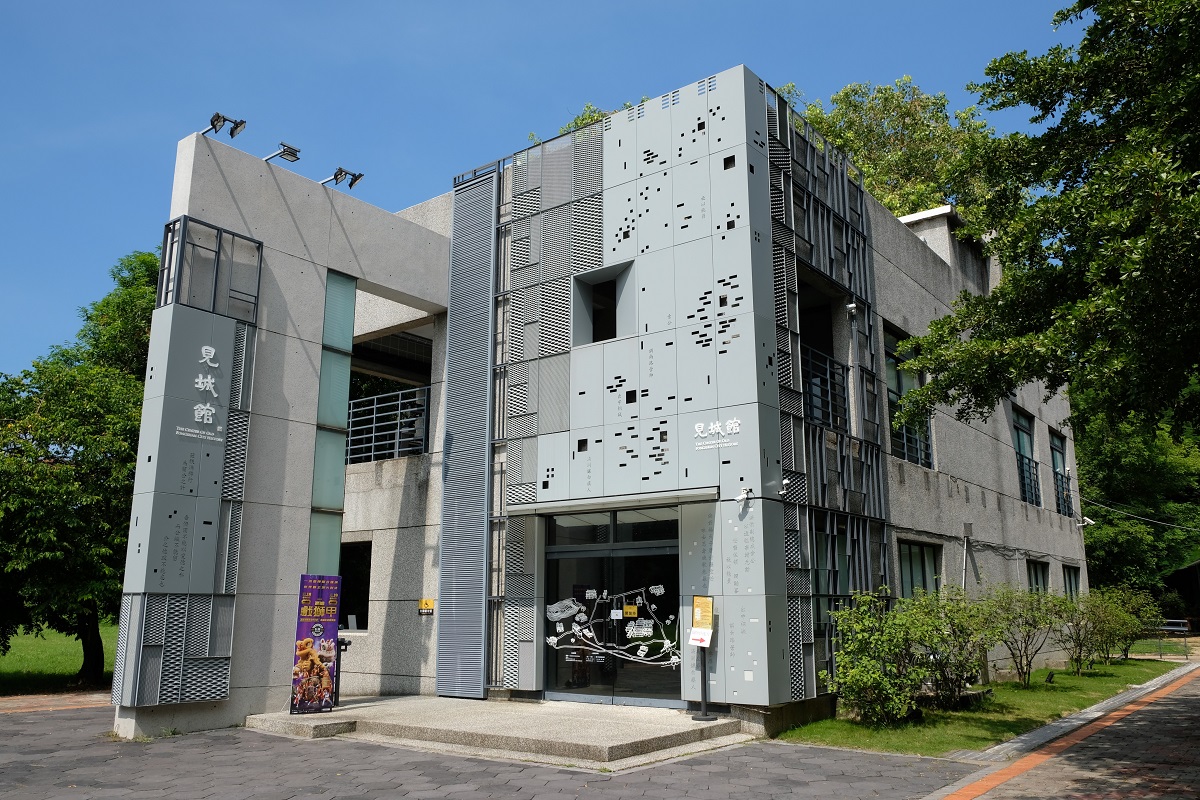
The Center of Old Fongshan City History, a very interesting local museum

These impressive miniatures have moving parts underneath
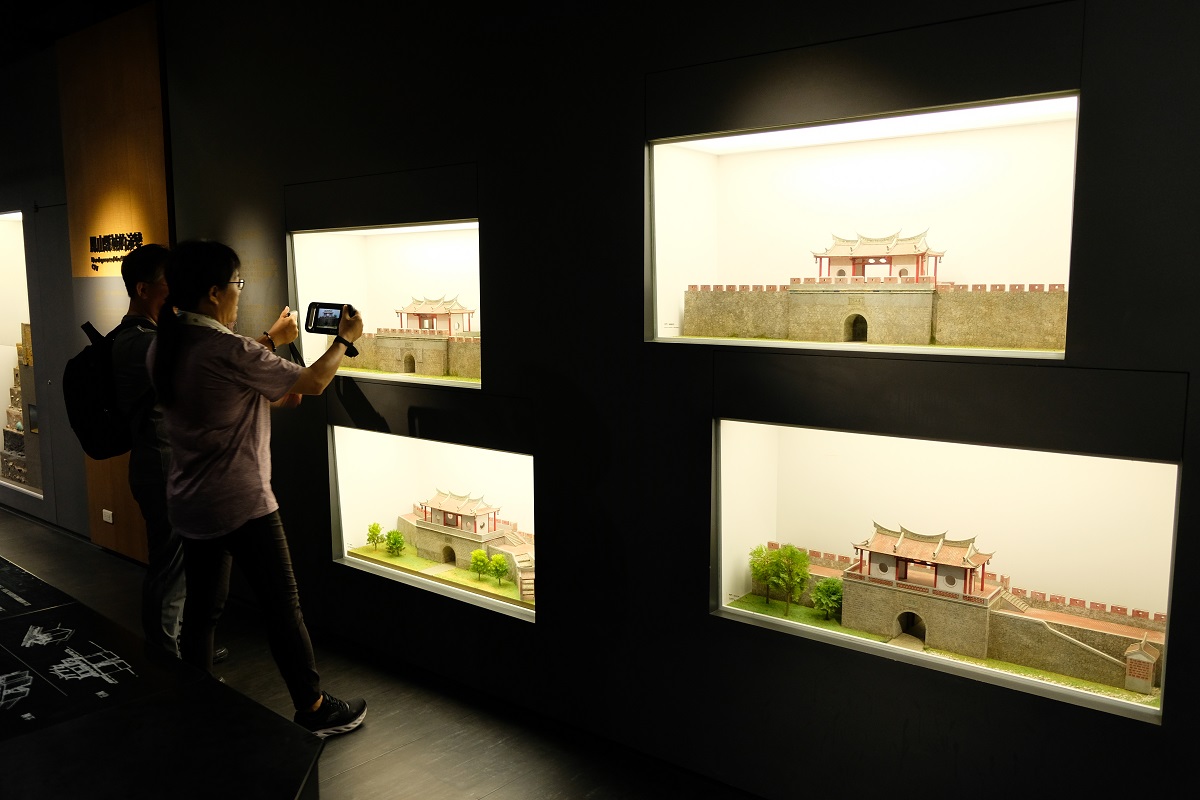
Utilizing AR to make a visit to this museum more exciting

The East Gate (Fongyi Gate) at a restored section of the old walls
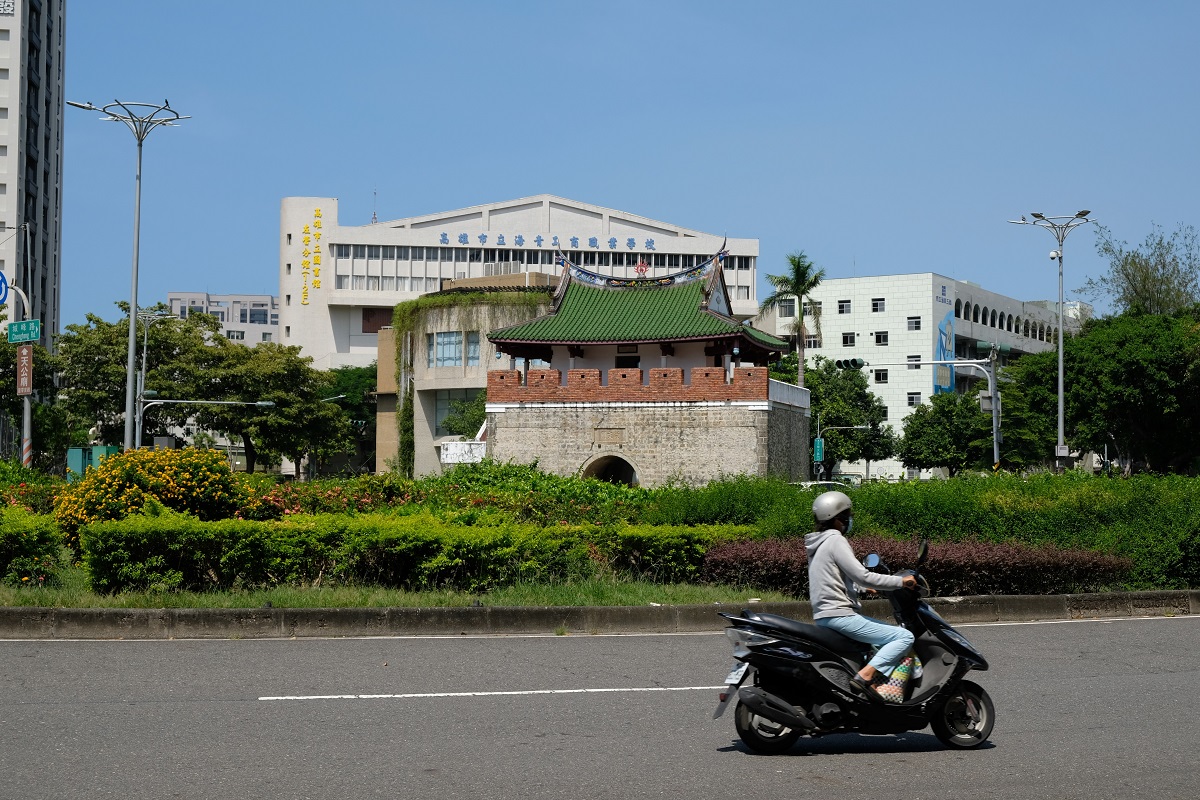
The South Gate (Qiwen Gate) is now located in the middle of a roundabout

Walking in Guomao Community Park
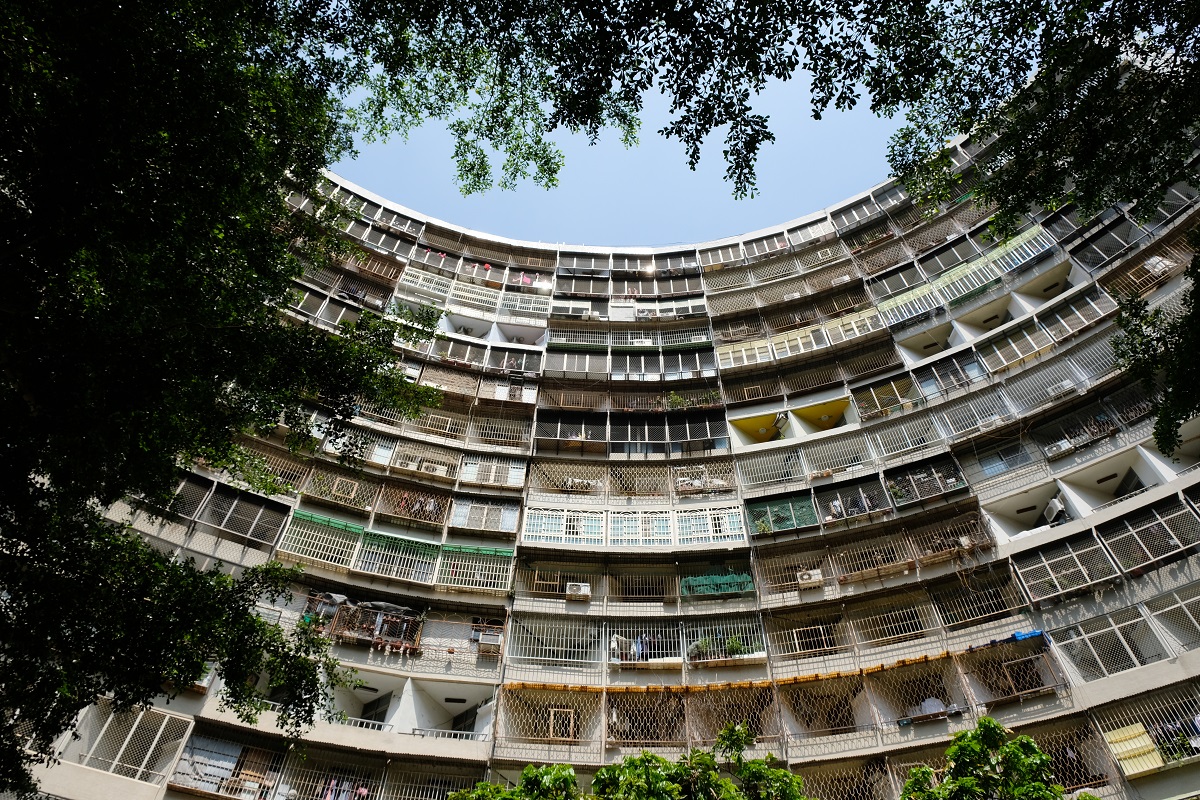
Beauty in symmetry
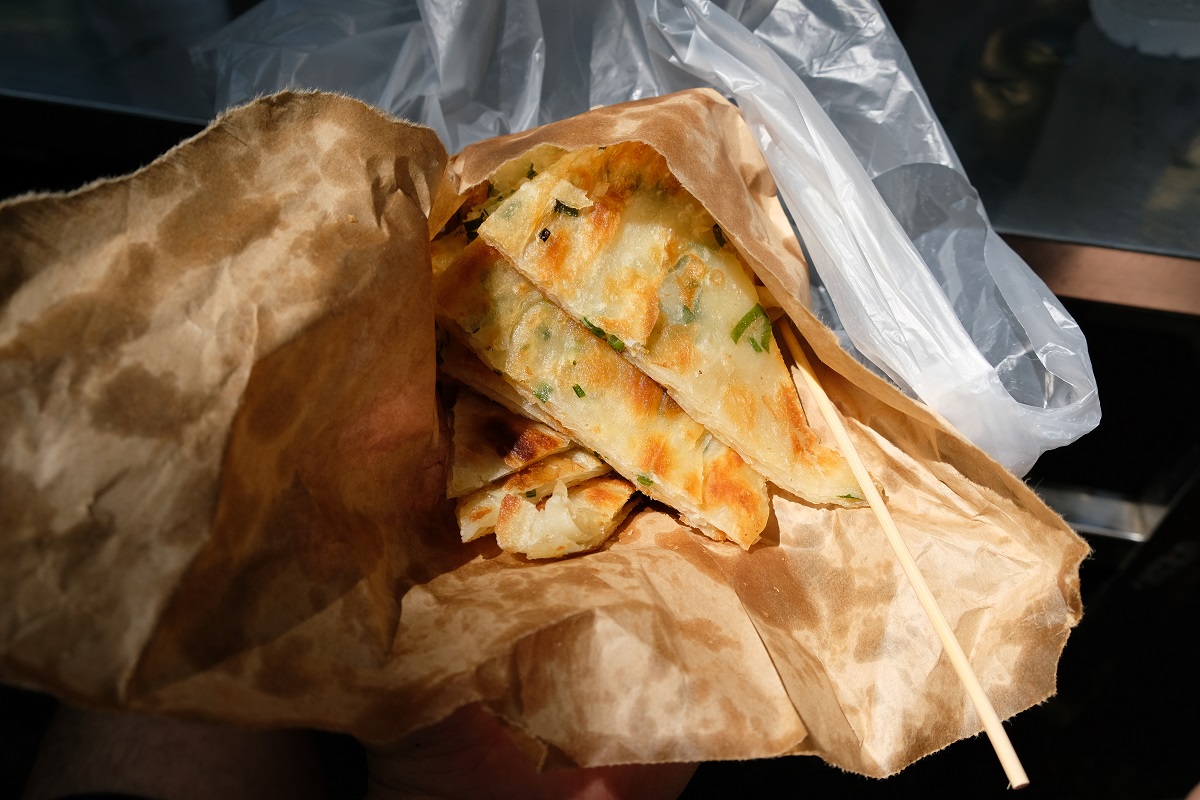
Slices of a delicious scallion pancake
Today, one of the most emblematic structures in what was Qing dynasty’s new capital of Fongshan is the Fongyi Academy. Built in the early 19th century, the Confucian learning institution served as the venue of the imperial examination, an important merit-based system in selecting candidates for the state bureaucracy. Basically, you had to take this exam and get excellent grades to secure a good job or position in the civil service functions of Imperial China. When Taiwan was under Japanese control, this compound was turned into a military hospital, then a silkworm-breeding house, before being used as a government office. Following the Japanese defeat in World War II, the Fongyi Academy complex was rented to multiple lessors. Due to its historical significance, however, in 2007 the city government of Kaohsiung acquired the property and two years later a restoration project was started. The academy reopened its doors to the public in 2013, and since then it has become a place where parents would take their kids to learn about a piece of the city’s history. The installation of 3D cartoon characters comically depicting the learning center’s students during its heyday definitely helps to make this place more appealing to a younger audience.
Right next door is Fengshan Chenghuang Temple, a place of worship dedicated to the god who protects settlements and weighs the deeds and misdeeds of their residents. The presence of this deity in this place can be attributed to the transfer of the administrative seat from the area near present-day Lotus Pond to what is now Fongshan District, a process which involved relocating the god previously worshipped in the old city’s main shrine to a new temple adjacent to the Fongyi Academy. Despite the modernity of Taiwan, from what I could see old traditions seemed to still be respected by a large part of the society, evident in places like this temple which saw a steady stream of worshippers. However, today Kaohsiung not only relies on protection from the deity, but also one that is more tangible. Housing Taiwan’s largest naval base, Kaohsiung will undoubtedly play a pivotal role should any military conflict between China and Taiwan ever break out – something no one wants to see happening.
But why did Taiwan build its biggest naval base in Kaohsiung? This decision might have been taken due to the city’s historical importance for the country. As the main trading port of the island, protecting it is paramount to safeguarding the nation’s economy and prosperity. And to understand why this southern Taiwanese city holds such a crucial role, we need to look back to the Japanese colonial period. And there is no better place to start than Hamasen, a part of the city where I will take you next.
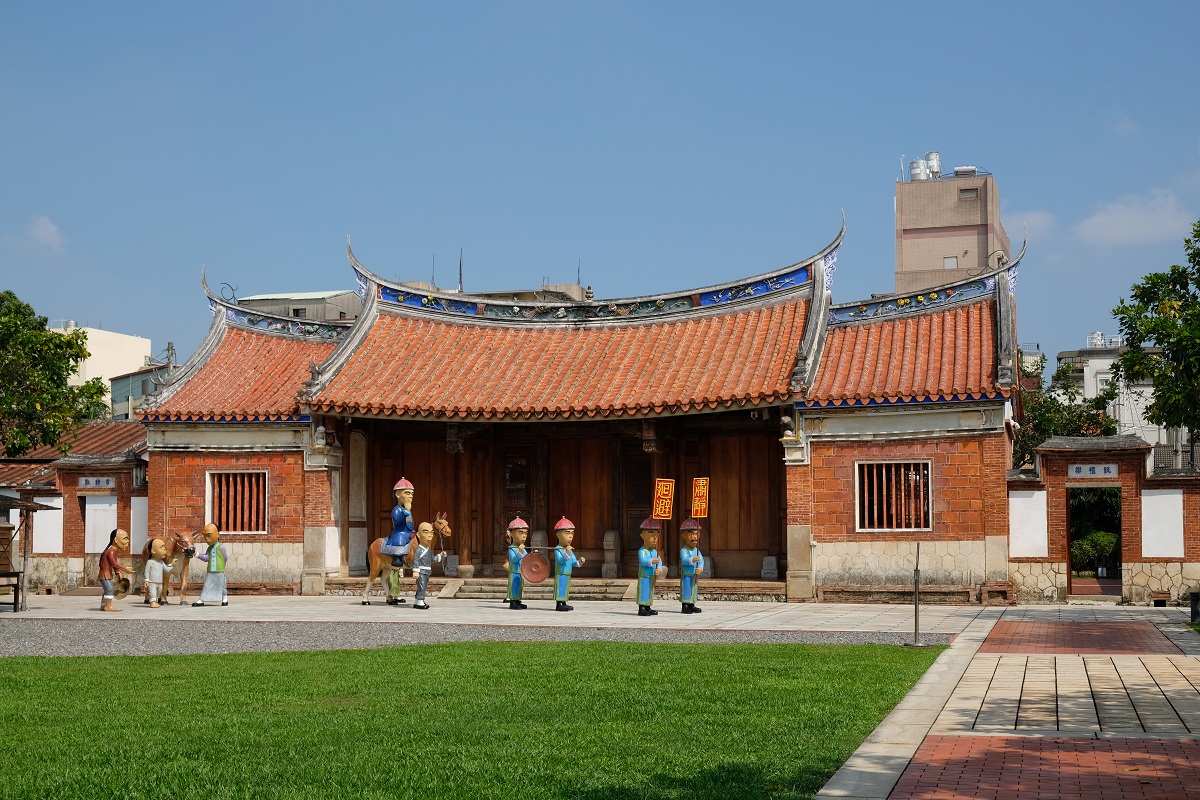
The front yard of the Fongyi Academy

A popular place for families with kids

Studying hard to get good grades

A monochromatic elegance

Inside the former education compound
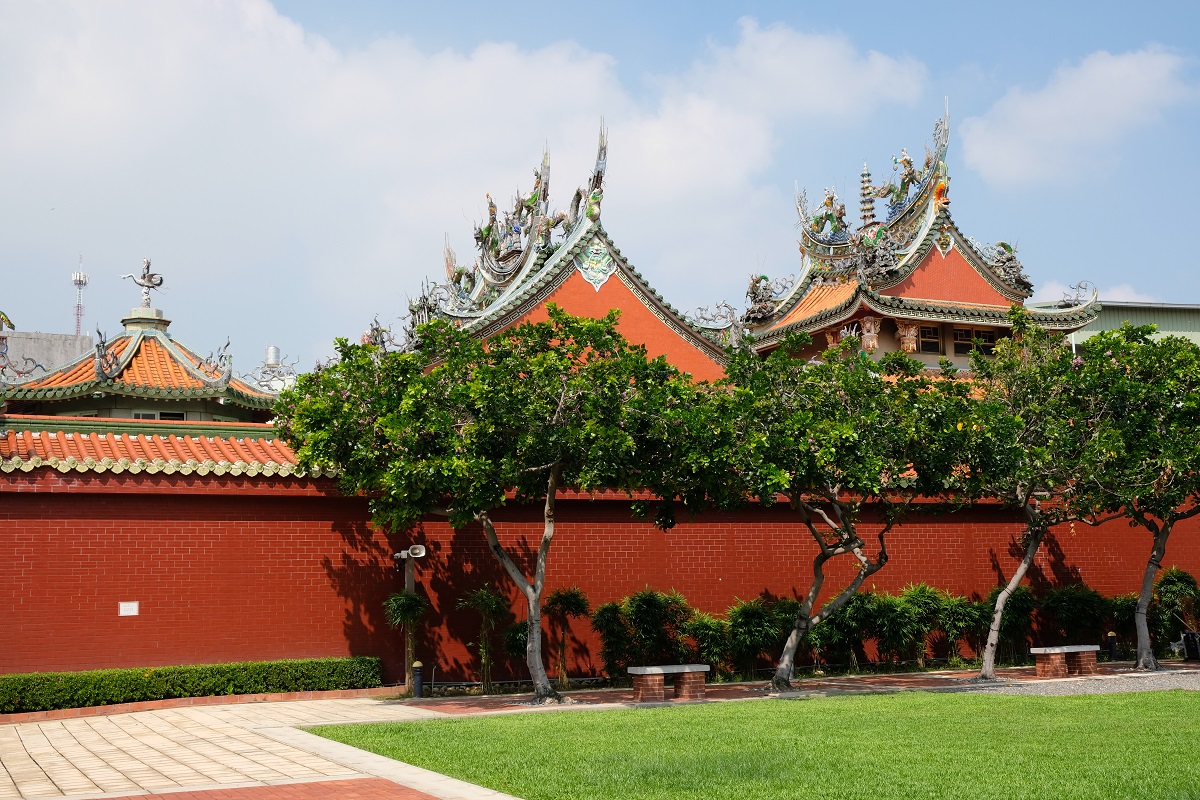
Fengshan Chenghuang Temple viewed from the Fongyi Academy

Intricate details of the temple

Prayers of the people

A green alley in Fongshan District
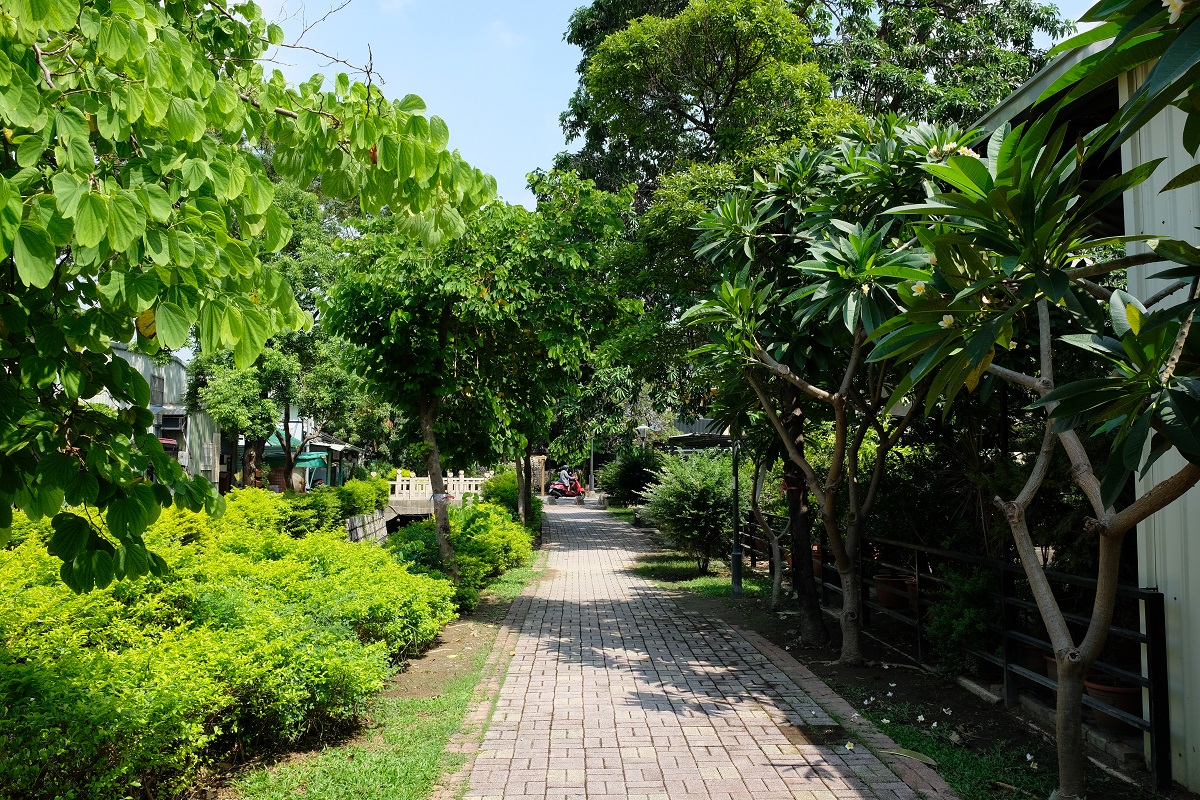
I wouldn’t mind living in a neighborhood this lush and leafy

 What an Amazing World!
Humble roots, indeed! It’s impressive just how far Kaohsiung’s come in expansion and development over the decades, even centuries. It’s awesome you got to meet and spend the day with some blogger friends; I’ve done so myself a few times on my travels, and it’s nice to meet in person and see who we really are as people, instead of just bloggerd. Scallion pancakes are ubiquitous in Taiwan and, if done well, are incredibly crispy, aromatic, and delicious. Glad you had a wonderful time exploring Kaohsiung!
LikeLiked by 1 person
And from the way things appeared to be, I’m even more excited to see how Kaohsiung will become years and decades from now. It is indeed nice to meet blogging friends in person. I often get to know their cities better when they take me around. I was at first a little bit skeptical about the scallion pancake. But I’m glad I tried that one in Kaohsiung because it was so good!
LikeLiked by 1 person
That’s so great that you met up with Jeff, and in his new hometown! So much to explore in this post from the lotus pond, old city wall and gates the fabulous temple. It looks like the city could grow around its history but leave a lot intact. And to have a personal translator makes a huge difference too. Maggie
LikeLiked by 1 person
I almost didn’t recognize him at first because of his longer hair! I’m glad despite the rapid industrialization Taiwan experienced starting around the 1970s, Kaohsiung managed to keep many of its historical buildings relatively intact. It would have been a great loss had those walls been completely demolished to make way for new developments.
LikeLiked by 1 person
I really enjoyed this piece and loved the photos. What you say about beginnings of a lot of cities is also true of London, where I was born. It used to be marshland in the Thames Valley Basin and was the habitat of a great variety of indigenous flora and fauna. A tiny percentage of these wetlands, particularly in the Lee Valley (the River Lee is a tributary of the Thames) have been preserved as sites of scientific interest and are open to the public.
LikeLiked by 1 person
Yes, of course. I remember reading an article on NatGeo about layers of history hidden beneath modern London. I guess back then no one could have envisioned that the marshland would one day turn into one of the world’s most important economic and business hubs!
LikeLike
The growth of cities is such a fascinating thing to explore. If the people back then came to their city now I’m sure they’d fall over in shock! A great article as always – so much to learn about this big wide world!
LikeLiked by 1 person
And the same thing also happened to Perth. I read somewhere that major developments in the city only began in the 1950s?
LikeLike
Yes we are a young city… very modern but we do have pockets of older stuff (when I say old its 1800s old 😂)
LikeLiked by 1 person
Ha! That’s old enough to entice me to visit.
LikeLike
haha we do have some beautiful heritage buildings, especially in Fremantle. I take any overseas friend that comes to visit on my “Fremantle walking tour”… my husband laughs and says I should be a tour guide, lol. If you come visit I’ll take you on my “famous” tour!
LikeLiked by 1 person
That sounds like right up my alley!
LikeLiked by 1 person
Lovely photos and always so informative. We have never been to Taiwan so one more place to add to our list…too many places to do in the lifetime we have left! (Suzanne)
LikeLiked by 1 person
Merci Suzanne. The more we read, the longer the list becomes, and we only have so much time. That’s why I always enjoy your adventures to far corners of the world.
LikeLike
I agree with you though you have a bit more years ahead of you than we do…I also enjoy your adventures in parts of the world that is a bit difficult to access for us being so far away.
LikeLiked by 1 person
If only we could temporarily swap places. 🙂
LikeLike
I loved the tour of Kaohsiung and how nice that you and James were able to enjoy it with blogging friends. I love the old homes and the bridges. Good thing James could help translate.
It was cool to see how the modern museum experience incorporates the use of technology such as augmented reality.
Those statues are old temples and homes made me chuckle. They are quite charming!
And I do crave some scallion pancakes now. Always a nice treat! And a nice way to end your day of sightseeing together!
LikeLiked by 1 person
Traveling with someone who can speak the local language certainly helps a lot. While trying to figure out things is a fun part of any travel experience, knowing that you won’t be lost in translation gives us comfort, doesn’t it?
I was so impressed by that small museum. It’s definitely worth a visit. And in my opinion, those figures at the Fongyi Academy really made the place more appealing for kids.
I think scallion pancakes are relatively simple to make. But the one I had in Kaohsiung reminded me that humble snacks, when done correctly, can taste satisfying.
LikeLiked by 1 person
Thank you Bama for your relentless touring in spite of your life, we should enjoy your blog in narrative way’ of experience in capturing pictures as well as,it plunge deeply with you,thank you Bama and wish you meet if you could visit Bangalore, Karnataka, India
LikeLiked by 1 person
Thank you for reading and for your kind words. Speaking of Bangalore, I stayed briefly in that city during my month-long trip across southern India in 2015. Unfortunately, one thing I remember most about it is its traffic congestion, which at that time felt even worse than what I had back in Jakarta.
LikeLike
What a wonderful post, Bama. I am salivating thinking of those scallion pancakes. I remember how I used to cycle to where a little old lady were selling them on the street almost every night after I finished teaching. And was deeply disappointment when she wasn’t there. They are SO adictive. Glad you got to experience some really good ones.
LikeLiked by 1 person
If you told me this story before I had the snack again in Kaohsiung, it would probably be hard for me to believe that scallion pancakes could be delicious. I can see why you really loved it. It’s amazing something so simple can taste so good!
LikeLiked by 1 person
What a great exploration of the city. And some of those temples are so beautiful.
Alison
LikeLiked by 1 person
I think you would enjoy Kaohsiung as well, Alison. It was such an interesting city with so many old and new places to check out.
LikeLiked by 1 person
Another great post packed with helpful information.
LikeLiked by 1 person
Always appreciate your comment, John and Susan!
LikeLike
I didn’t know about the old wall and the old pill boxes. But I did visit the temple(s) by the lake. Next time I travel, I’ll need to do my research on your blog and James’s blog. Also, can I borrow James on my next trip to translate?
LikeLiked by 1 person
Ha! That’s funny. Jeff actually offered to take us to go further north of the lake. But then we decided that the hills (and what’s behind them) were more interesting to explore.
LikeLike
It is lovely to read about another trip that you and James did together, this time to Kaohsiung. So lovely to have Jeff and Kristi showing you around like your personal tour guides. The air-conditioning in the museum seemed delightful to you! It’s always helpful when someone can speak the local language like James and how he was able to translate everything, especially of the short presentation that gave depth about history. He must have been quite popular with the locals 😛
Sometimes you just don’t know what’s around the corner. Scallion pancakes are delicious and you must have been so happy to get your own share of them. Amazing photos all round, Bama. You captured some old and some new facets of Kaohsiung. Wishing you well this season and wonderful year ahead 😊
LikeLiked by 1 person
I feel like I contributed the least in the group. While James took the role as an impromptu translator and the Bells were the local guides who showed us around, I was just a very lucky tourist who gladly went wherever everyone took me. 😄
That scallion pancake was a delicious find, indeed. I’m glad I tried it.
Happy holidays, Mabel!
LikeLike
You probably learned a lot being a very lucky tourist with your helpful friends. I hope James continues to be an amazing travel buddy on your future travels 😄 Many more delicious food finds too. Enjoy the end of the year, Bama!
LikeLiked by 1 person
I remember this bridge, Bama. Back then, I wondered where this long bridge led to. But I couldn’t walk on it because the bus had to leave. The Fongyi Academy looks nice. I like how they use cartoon-like figures to illustrate history. It’s certainly more appealing than those creepy wax models that we often see in museums 😛
LikeLiked by 1 person
You would probably still recognize this part of Kaohsiung, Len. But if you go to the harbor area, I believe it’s a completely different place than how you remembered it from your trip. I understand what you mean with the usual wax models being creepy. 😄 I think they are part of the reason why some museums look so outdated and unappealing. It was very refreshing indeed to see those figures at the Fongyi Academy.
LikeLike
I’m glad we had enough time in Kaohsiung to tour both the “old” and “new” settlements of Fongshan. Were it not for one of the Taiwanese Twitter users I follow, we may never have learned about the Center of Old Fongshan City History. I did not expect to be recruited as an on-the-spot translator by the local guide. I should probably have brushed up on my Taiwanese history before going but those Chinese-language history lessons I took at school were a big help when it came to the terminology. It was great that Jeff and Kristi could show us the Guomao residential neighborhood and the humble street-side stall selling the fantastic scallion pancake.
LikeLiked by 1 person
It’s a good thing you checked your Twitter before we went to that part of Kaohsiung! I was really impressed with how fast you did the translation. If I were to do the same thing, from Bahasa Indonesia to English, I think I would need more time. Had Jeff and Kristi not taken us to the Guamao area, we would’ve missed that scallion pancake completely. I must admit I was a bit skeptical at first, but that first bite really was a revelation.
LikeLiked by 1 person
Sounds like you got the best of both worlds from spending some time in nature to visiting a local museum. Good thing that James could help translate!
LikeLiked by 1 person
I surely did. I’m in chilly Hong Kong now, so different from the sweltering heat of Kaohsiung in October. But I know for Canadians this is like a walk in the park. Many local Hong Kongers are already in their winter coats!
LikeLiked by 1 person
Spending an amazing day hiking around to explore a city’s past with like-minded blogger friends…how awesome is that! To add on to all that, the ease of traveling with someone who can speak the local language. The museum experience with AR must have been so fascinating. Yet to experience something like that. Your elaborate posts coupled with great pictures are always power packed with information.
LikeLiked by 1 person
It’s always a good idea to explore a new place with someone who share the same interests with us. My experience in Chennai was a lot better than those of many other tourists because I have a local friend who also loves history to take me around. The AR definitely made the visit to that small museum more engaging. But I think they should also provide explanations in English to make it more appealing to a broader audience.
LikeLike
I am so glad I’ve stumbled upon your wonderful travel blog, Bama, as this way I get to travel to places I haven’t even heard of. And I am glad to hear that you had a great day out with James and a travel blogging couple ( I actually have to check out their blog as I was intrigued by Microsoft Paint illustrations). I find that a local’s perspective on travel is a wonderful way to immerse yourself in the culture, traditions, and lifestyle of a new city. By embracing the local way of life, you can have a more authentic and meaningful travel experience. Thanks for sharing, and have a good day 🙂 Aiva xx
LikeLiked by 1 person
Likewise. Your travel blog introduces me to many interesting places, especially across the UK, I haven’t heard of before. Exploring a new city with someone who knows it well really makes a big difference. That’s why whenever a friend comes to Jakarta, I try to not only show that person some interesting corners of the city, but also to tell a story about each place. Thanks for reading, Aiva!
LikeLiked by 1 person