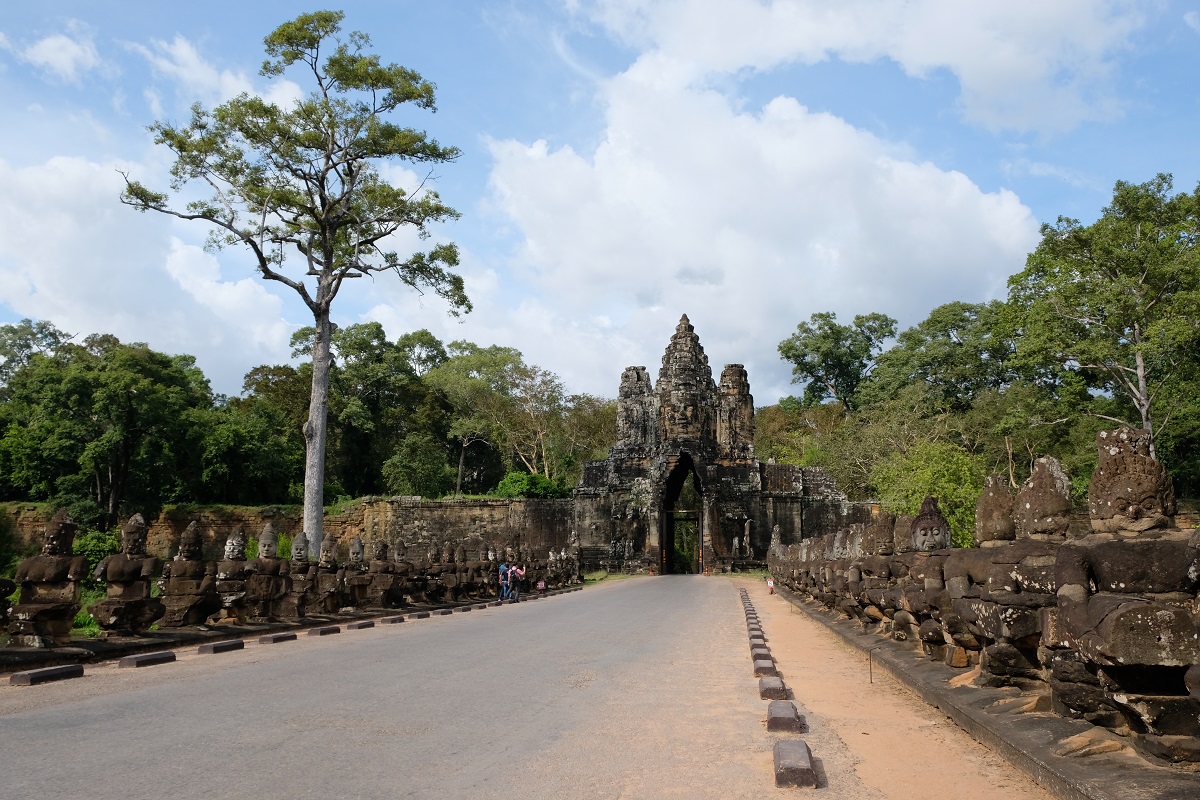
Entering Angkor Thom from the south
There’s probably nothing more humiliating for the rulers of a nation than being defeated by another nation they once conquered.
In 1177 CE, Champa occupied Angkor following their successful naval attacks right at the heart of the subjugated capital. This was an unprecedented event as the Khmer Empire was usually the one sacking Cham cities and raiding their temples. It probably never even crossed the Khmer rulers’ minds that Champa would do something this brazen so successfully. Adding to the insult was the fact that this happened just a few decades after the construction of Angkor Wat, the biggest temple ever built by the Khmer civilization, which was supposed to mark the empire’s prominence in the region.
However, during the years of Champa’s occupation, a prince within the mentally-degraded Khmer Empire had what it took to stage a counteroffensive against the occupiers. He was the son of one of the cousins of Suryavarman II, the Khmer ruler who commissioned Angkor Wat as well as the one who launched military campaigns to attack Champa due to the latter’s decision to make peace with Dai Viet, a monarchy in what is now northern Vietnam that Suryavarman II wished to conquer. The prince wasn’t a new face in the long chapter of animosity between the two neighboring Hindu powers, for he had already taken part in battles against Champa since he was young.
Eventually, he managed to repel the Chams who, after occupying Angkor for four years, retreated to their coastal realms in modern-day south-central Vietnam. In 1181, the Khmer prince ascended the throne and took the title Jayavarman VII. Unlike most of his predecessors who were Hindus, the new ruler was a Buddhist, and this guaranteed a special place for Buddhism in the royal court. Jayavarman VII is not only remembered as the king who defeated the Cham occupiers, but also for his massive development programs which resulted in the construction of hospitals, rest houses, reservoirs, as well as grand temples in the capital and beyond. I like to picture this as his effort to bring back his people’s confidence in the empire, and to instill pride in a society which had just recently been subjugated by foreign invaders. (Although from the ancient Cham people’s perspective, what they did was probably mere revenge for all the raids the Khmer Empire had conducted on their lands over the course of centuries.)
Jayavarman VII commissioned a new walled capital north of Angkor Wat from which the empire’s political matters were decided. This protected center of power was probably conceived as the memories of the fall of lightly-defended Angkor to Champa were still fresh in the Khmer king’s mind. In the previous iterations of Khmer temple building, a moat was often featured in the design of an important sanctuary. However, Jayavarman VII took this tradition to the next level by incorporating a giant moat around the entirety of his new capital.
Better known today as Angkor Thom, Jayavarman VII’s capital was more than three times bigger than the Vatican City and Monaco combined (two of the world’s smallest sovereign states today). Anyone who wished to enter it would do so by crossing one of the bridges at the four cardinal directions. Unsurprisingly, these were no ordinary causeways as each of them was decorated with two rows of statues on both sides: the devas on the left and the asuras on the right, both holding the body of a naga, a reference to the Churning of the Ocean of Milk which is a very popular Hindu story in mainland Southeast Asia. Across the moat at the end of each bridge stood a towering, monumental gateway onto which giant faces were carved, an indication of what one could expect to see at the very heart of the walled city: a state temple unlike anything the Khmer Empire had seen before.
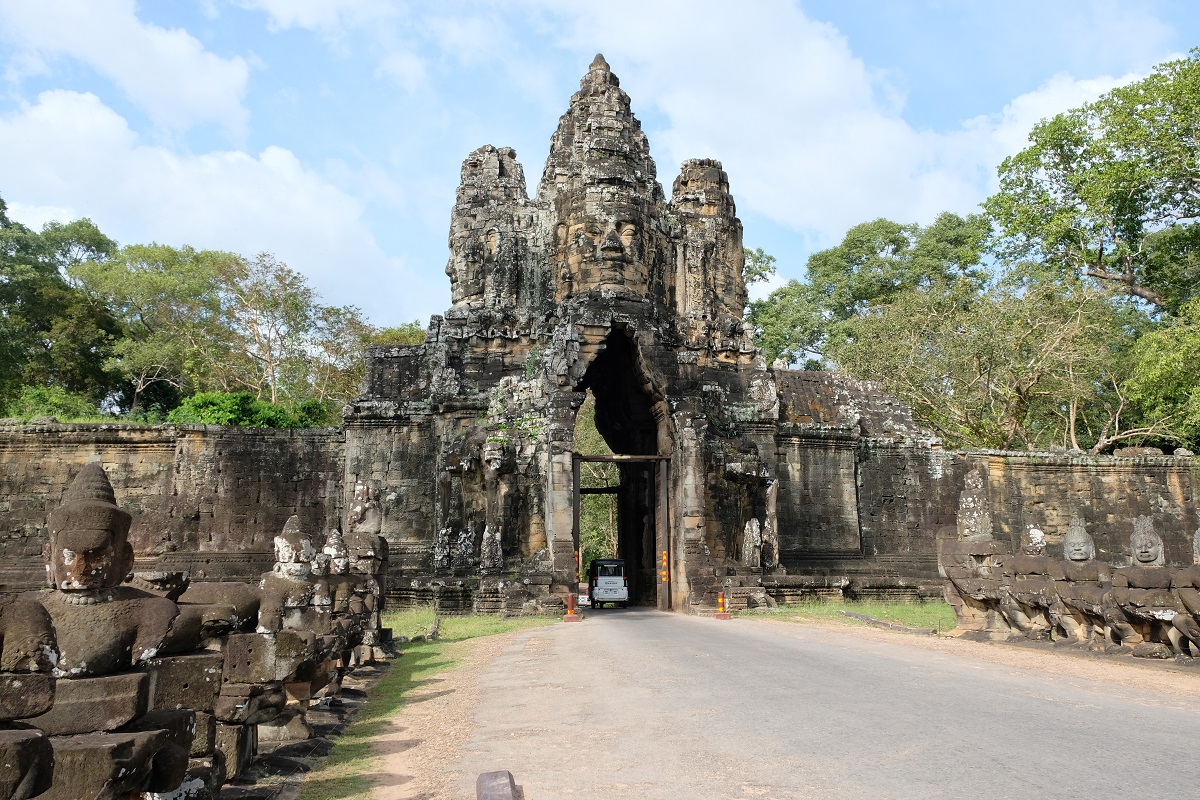
The southern gate with the devas on the left and the asuras on the right

The moat that encircles Jayavarman VII’s capital
At first sight, Bayon might not come across as lofty as some other state temples of Angkor. But upon closer inspection, it becomes clear that this sanctuary in fact consists of layer after layer of different structures crammed into a relatively small space. Built as the only Buddhist state temple in the history of the empire, Bayon’s most distinctive feature is its hundreds of massive sculpted faces which today not only draw admiration, but also different interpretations of who they actually represent. Many believe they depict Avalokitesvara, a bodhisattva (a person who is on the path to Buddhahood) of compassion. Others think they might have been created to look like Javayarman VII himself. But quite a few suggest that the figure’s four faces on each spire resemble the classic portrayal of Brahma, one of the central deities in Hinduism. Unfortunately, we may never know the definitive answer to this. My curious self, however, wonders if this was intentional so that on the one hand the temple was true to the king’s Buddhist belief, but on the other hand it wouldn’t feel too foreign to the empire’s Hindu population.
Unlike older state temples of Angkor which were richly decorated with friezes and relief panels inspired by stories from Hinduism, Bayon’s outer gallery depicts only historical events and the quotidian life of the people. A heavily recurring theme is the battles between the Khmer troops and the Cham invaders, including the infamous naval battle, as well as the overland clashes involving elephant-mounted forces equipped with crossbows. Also immortalized on the outer gallery are scenes of a market, a cockfight, and a royal procession, among others.
The first time I went to Bayon, I immediately fell for it, for its tranquility and maze-like layout made me feel like Indiana Jones exploring some abandoned ancient temple. Yet it was only on my second visit when I got the impression that the temple seemed to have been constructed haphazardly which resulted in the very tight space between its different structures, a stark contrast to Angkor Wat’s airiness. But it was still fun walking around the Buddhist sanctuary, checking out the many nooks and crannies, and examining its bas-reliefs, although this time around the upper terrace from which you can get a closer look at those enigmatic giant faces was off-limits to the public.

The eastern approach to Bayon
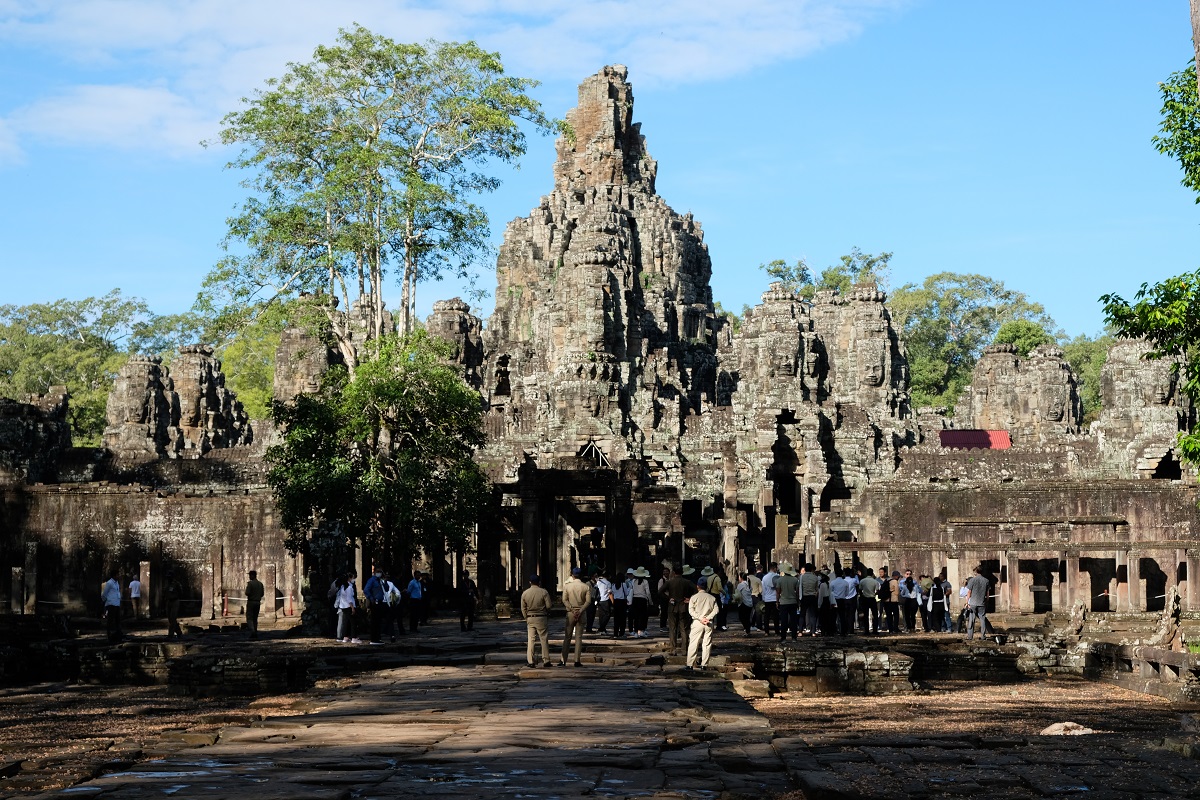
There was a big group of Cambodian officials during our visit
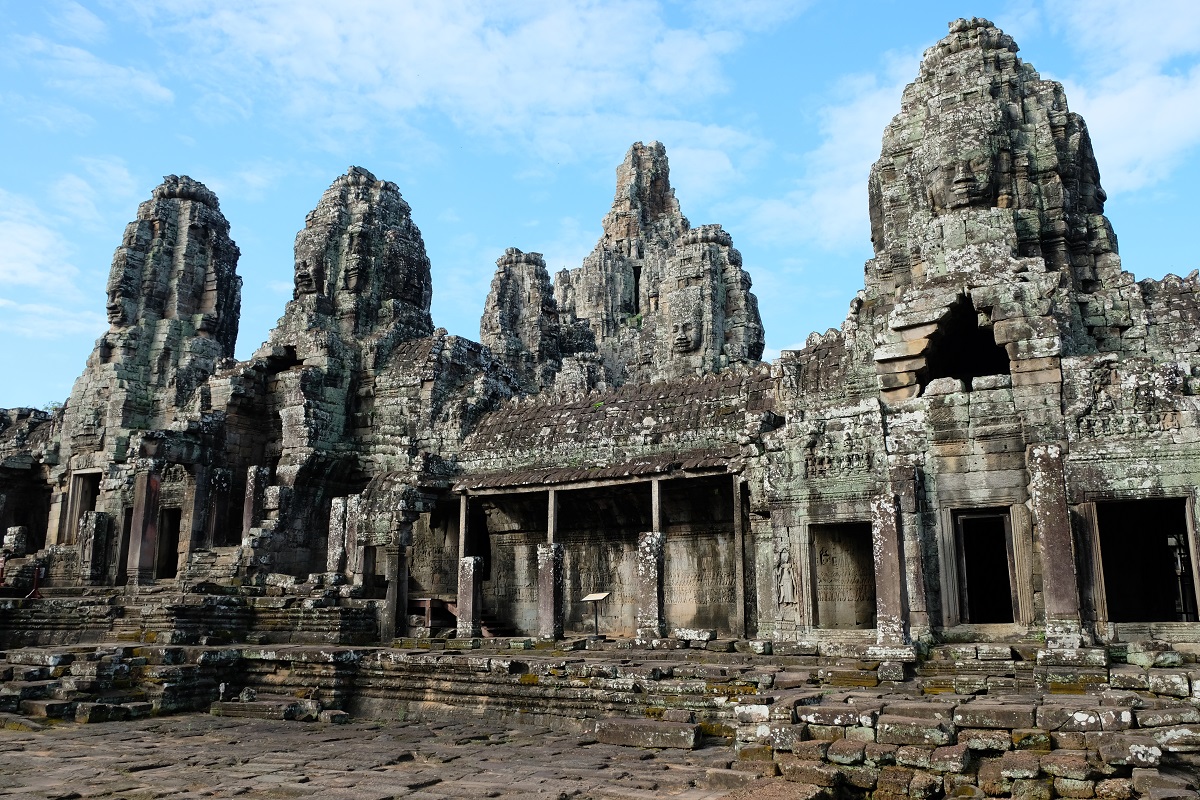
Bayon’s north façade

A Buddha statue at Jayavarman VII’s state temple

Among the many apsaras at Bayon
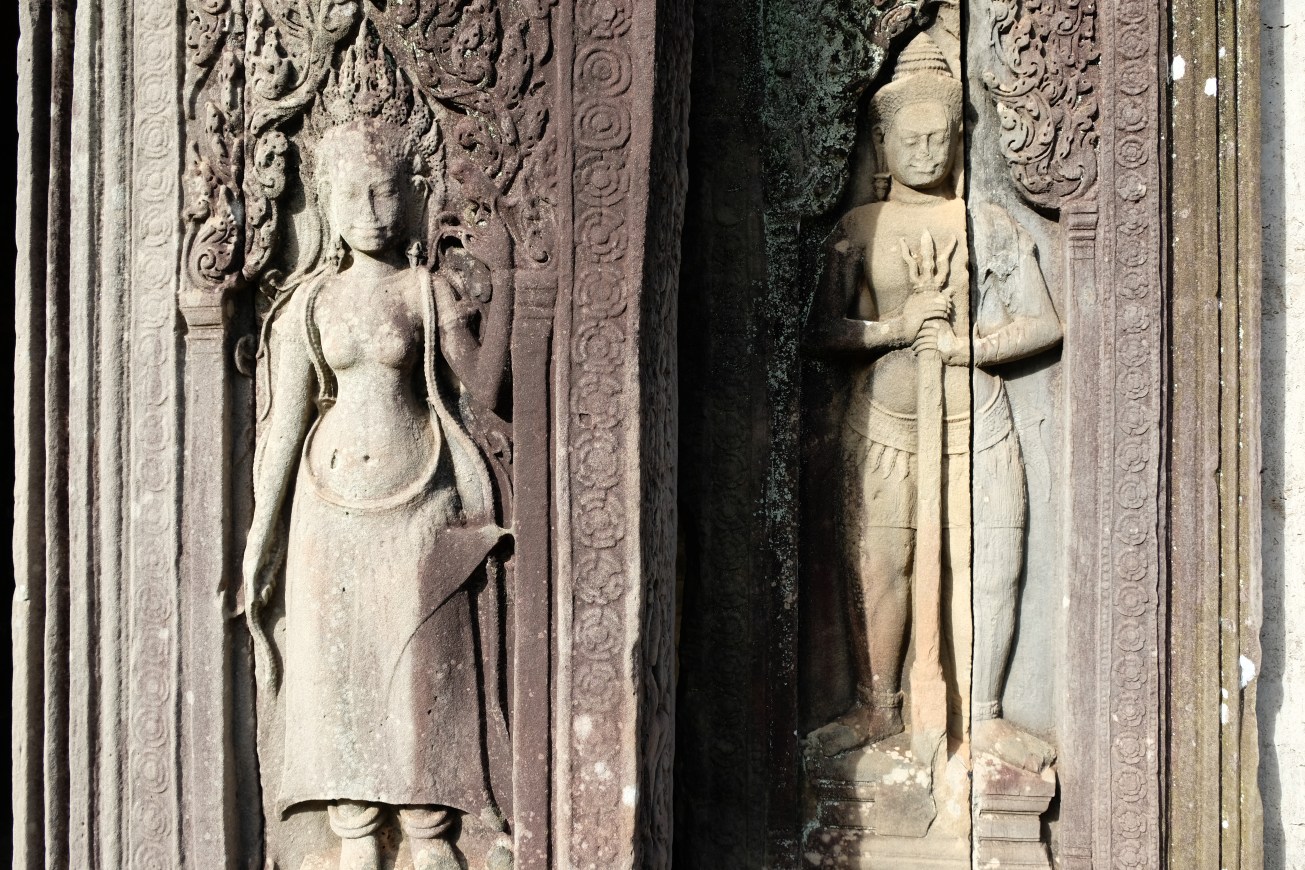
Despite its unique architecture, Bayon still incorporates the usual Khmer architectural elements, including these devatas

When in Bayon, you can’t escape those giant faces
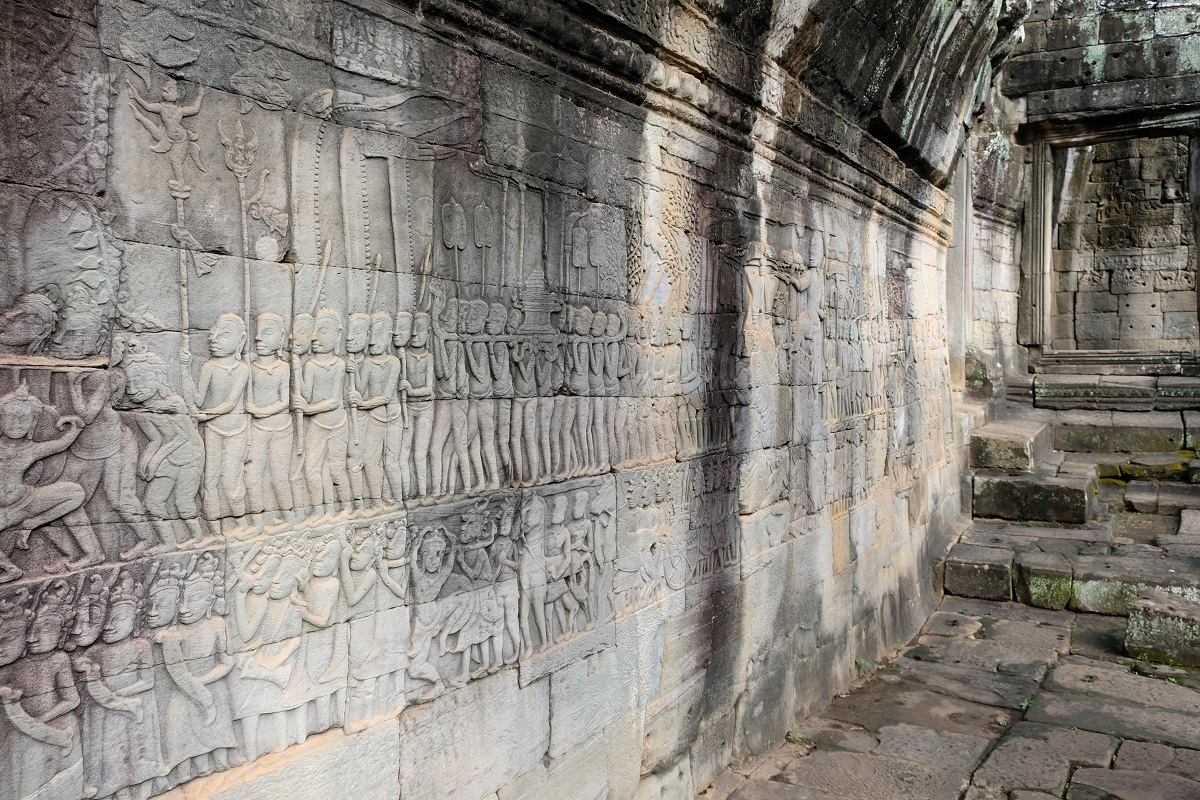
Bayon’s outer gallery is embellished with intricate bas-reliefs like this
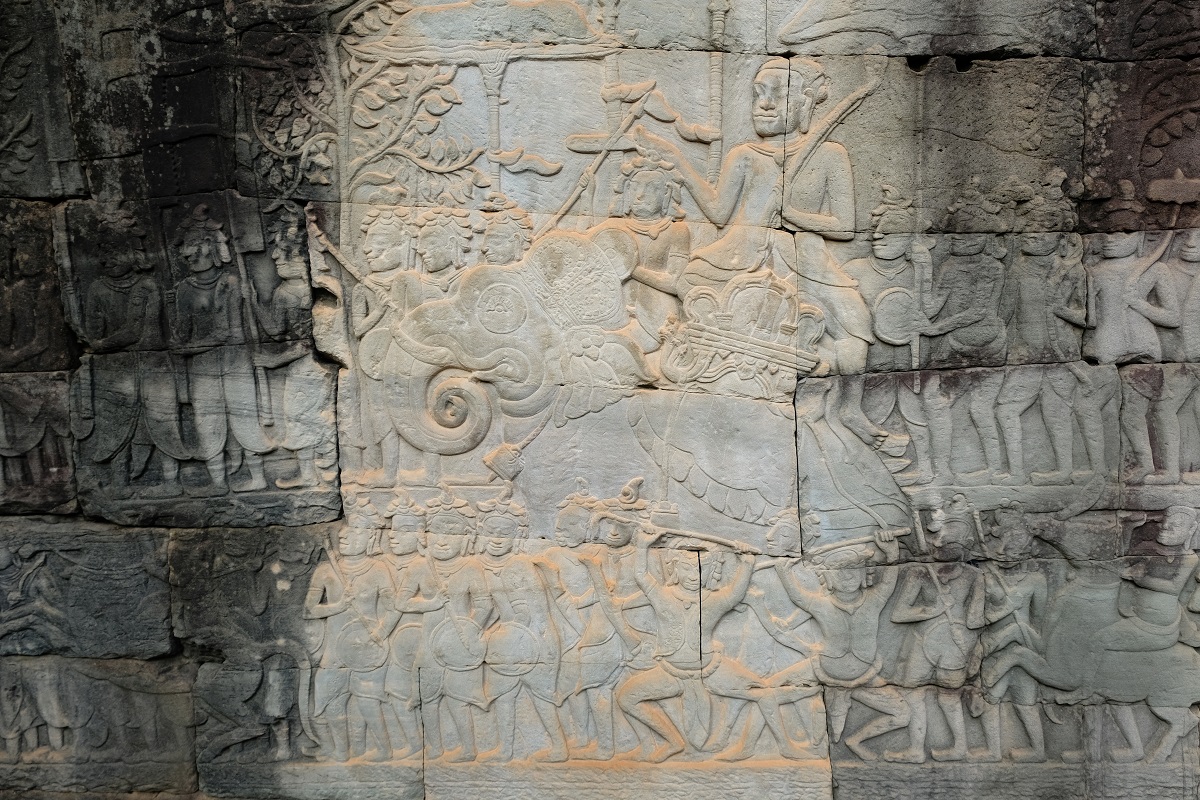
Elephants were such an important aspect of life in mainland Southeast Asia
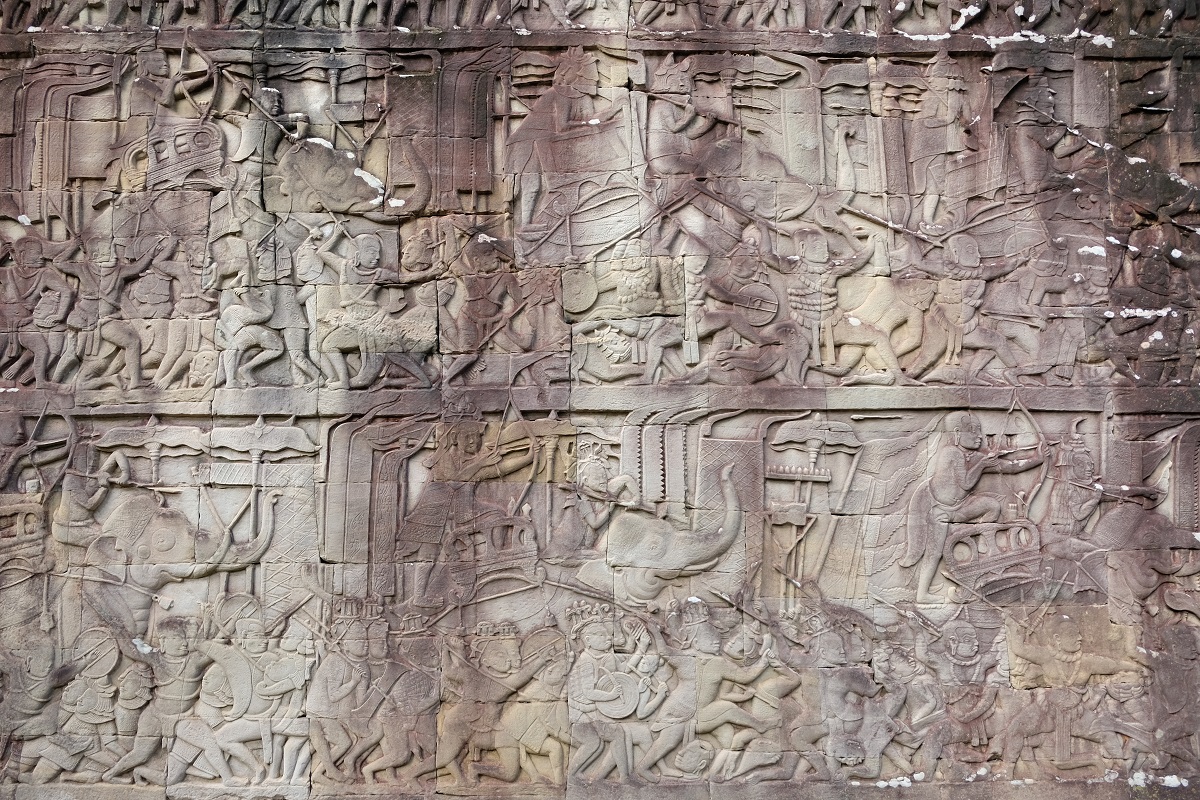
One of the multiple battles between the Khmer Empire and Champa

The elephant-mounted army of Champa
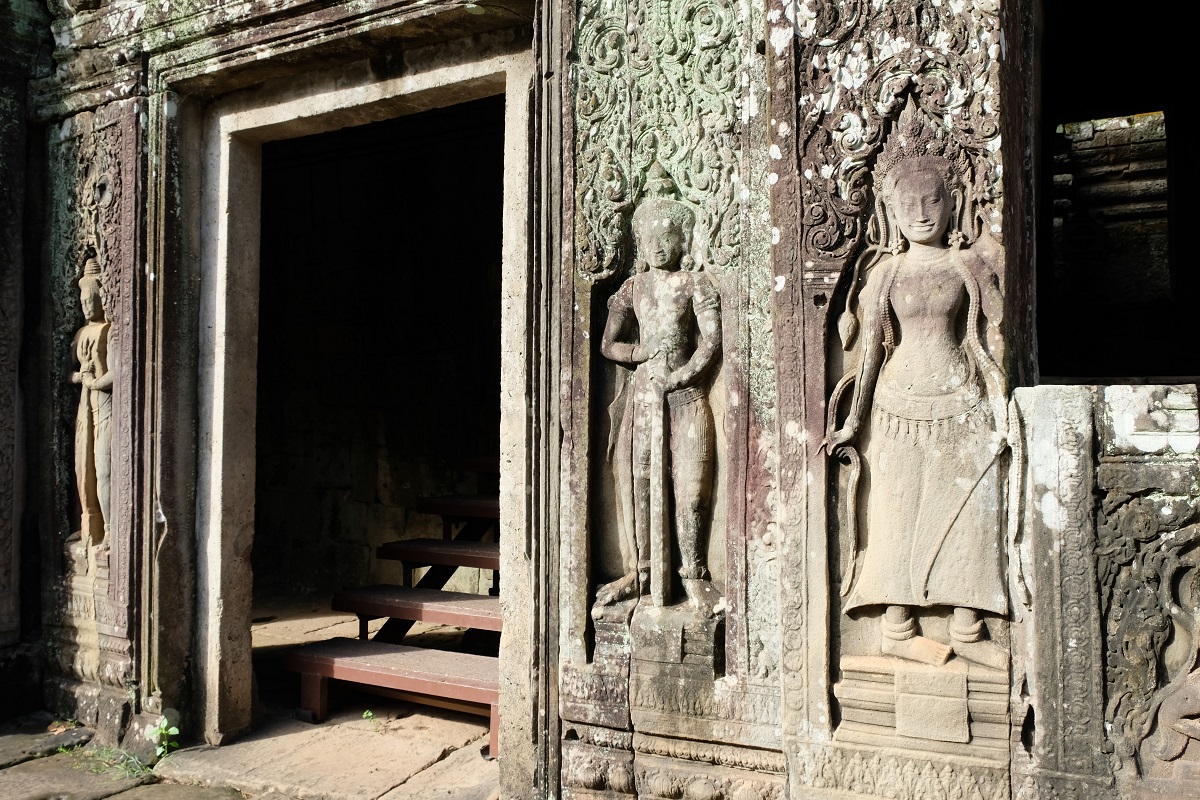
Entering the inner enclosure
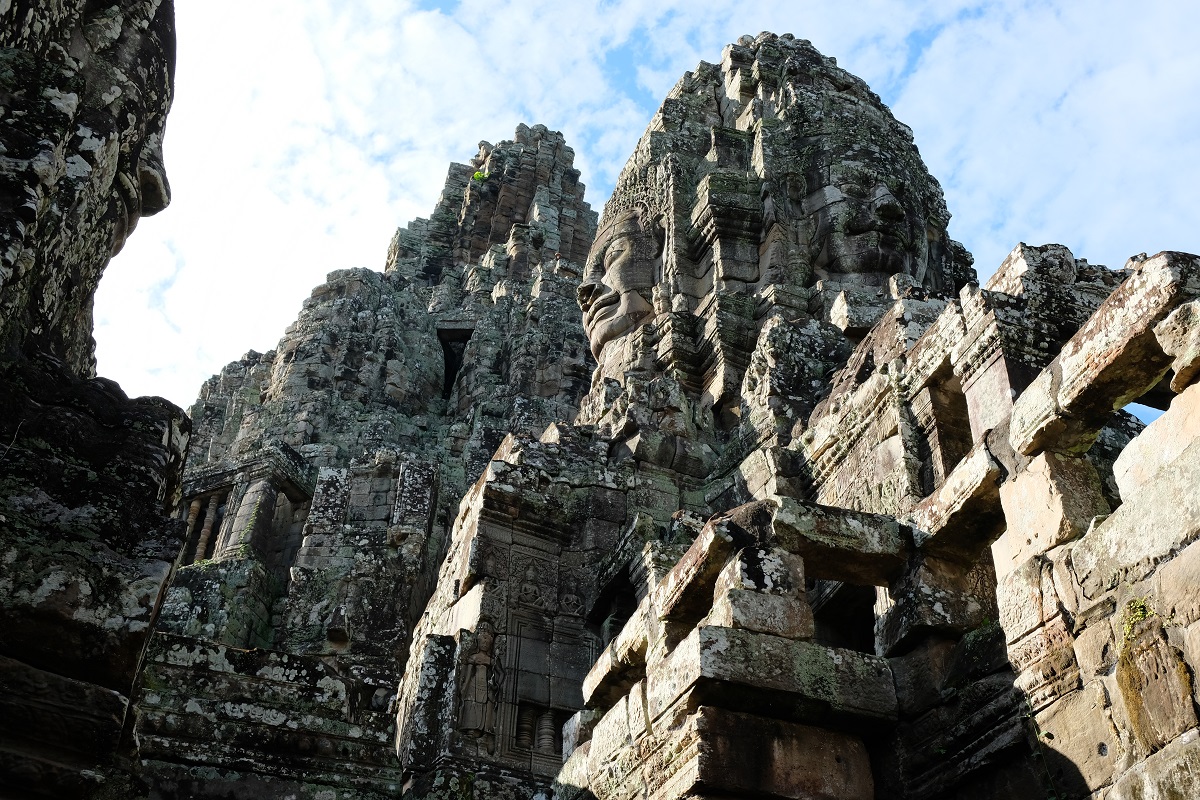
In the past, visitors could go to the upper terrace to get a closer look at those faces
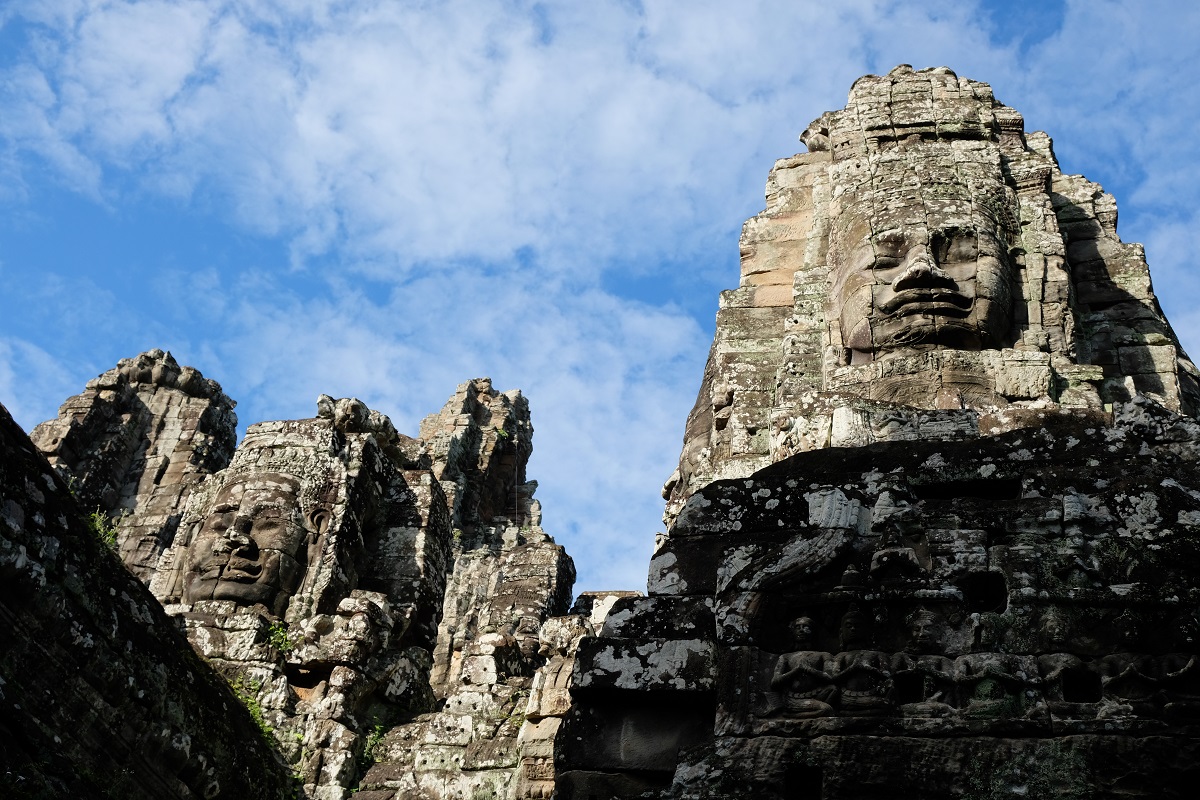
Are they Avalokitesvara, Jayavarman VII, or Brahma?
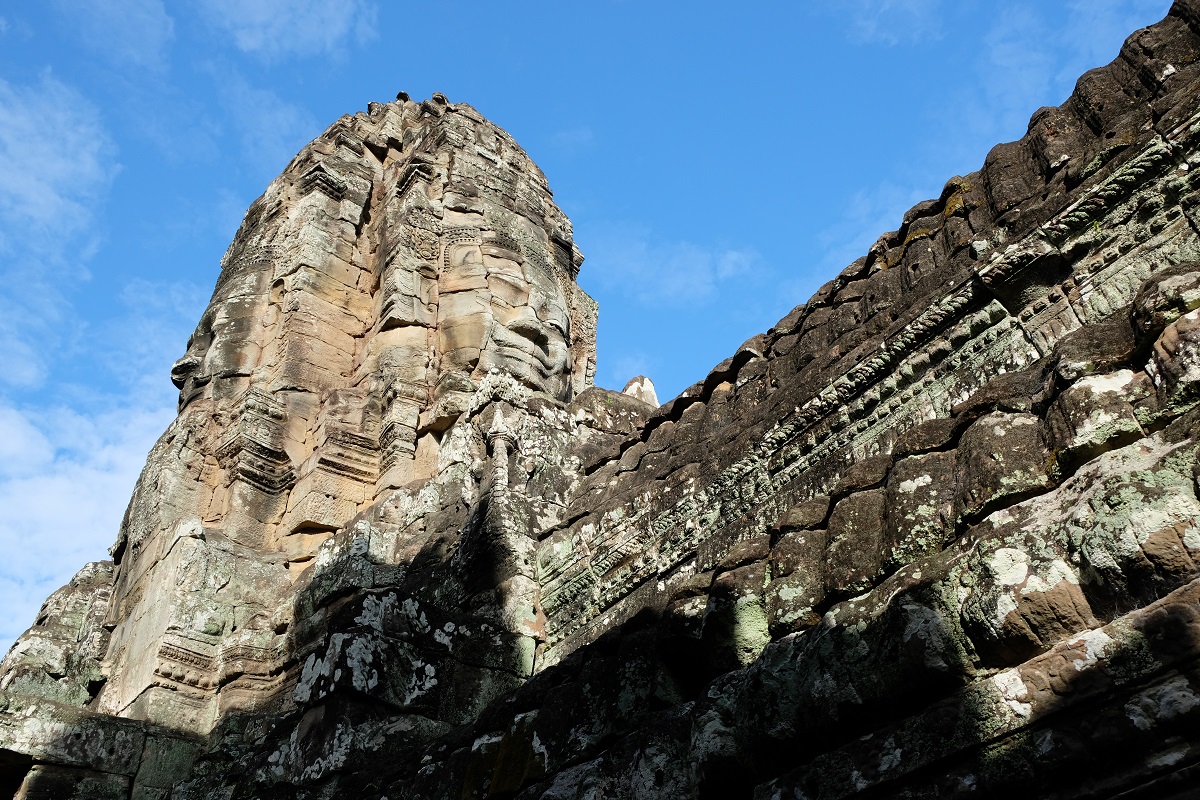
Bring a telephoto lens if you want to take close-up shots of the enigmatic faces
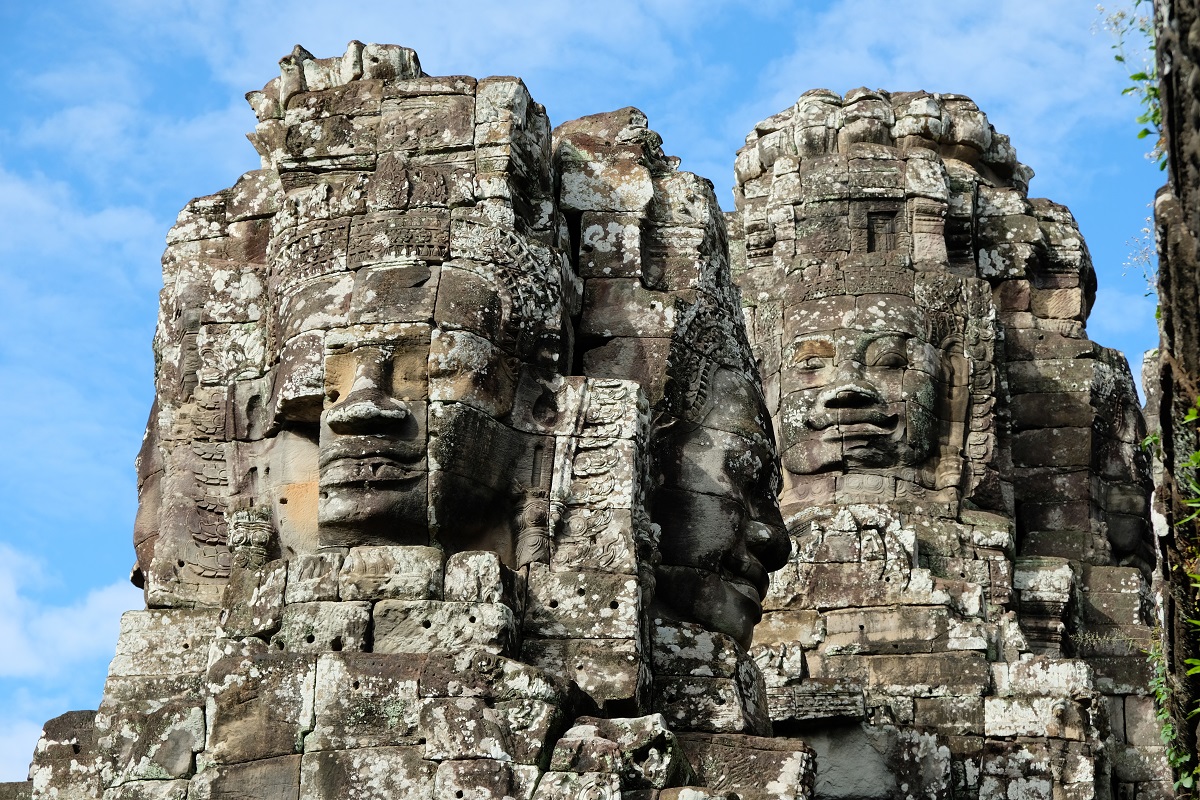
Wherever you look, they will look back at you
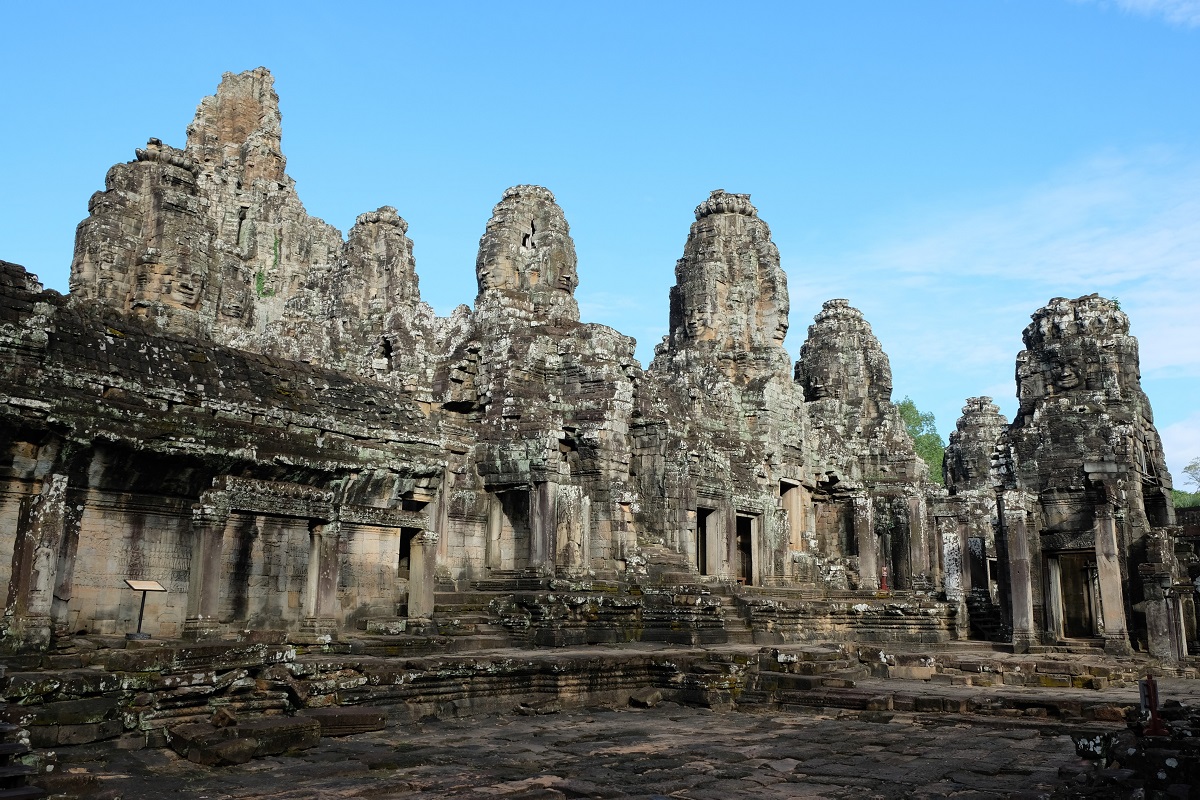
In total there are more than two hundred giant faces adorning Bayon
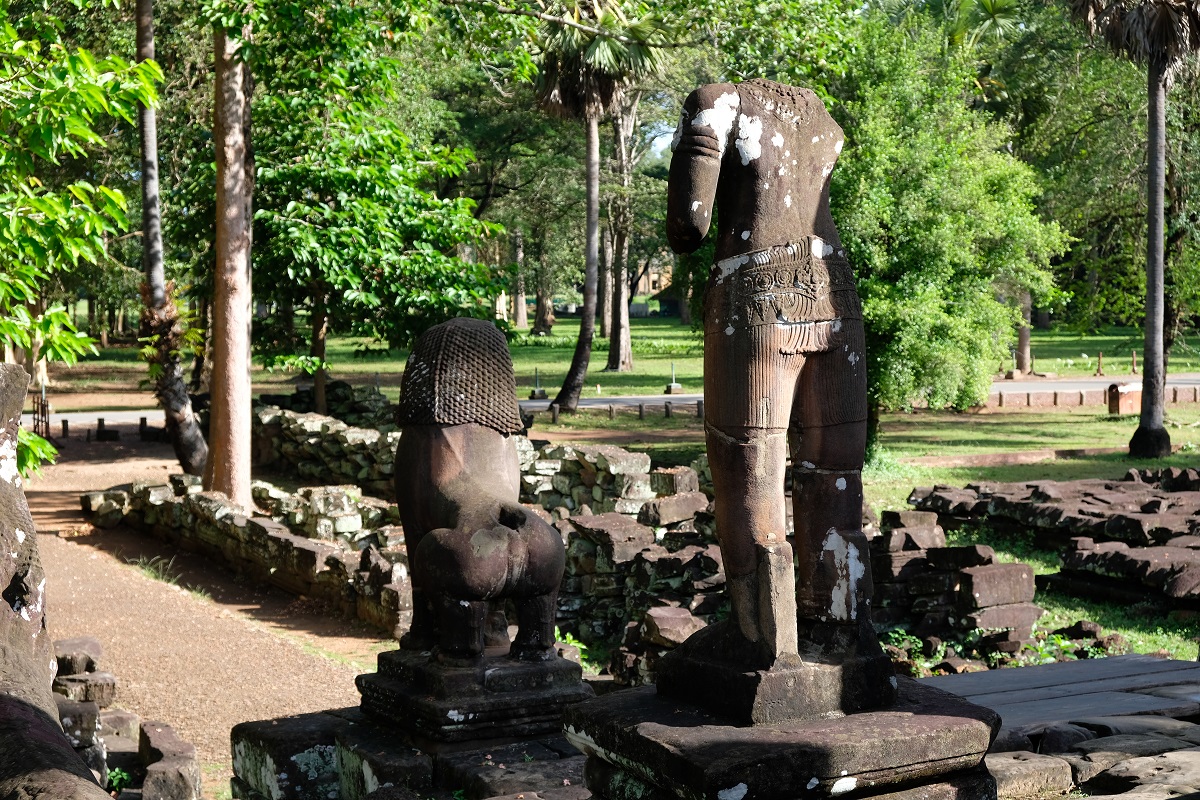
Guardians of the northern entrance

The last grand state temple in the Khmer Empire
Jayavarman VII’s push for large-scale construction projects didn’t stop at Angkor Thom. Beyond the walls of the new capital, he commissioned a few other grand religious structures including Ta Prohm, a Mahayana Buddhist monastery which was purportedly built to honor the king’s mother. However, most modern-day visitors flock to this ancient site because of the images of giant roots wrapped around the temple’s stone walls which were popularized by the 2001 film Lara Croft: Tomb Raider, starring Angelina Jolie as the titular character. Unlike my memories of Angkor Wat and Bayon from that first trip in 2011 which I could still clearly recall 11 years later, for some reason I didn’t remember much about Ta Prohm except for one specific corner where a platform was set for people to take photos with one of those famous roots as the background. This time, I was surprised to see how big the temple compound actually is, although the Hall of Dancers clearly was the highlight.
Closed off to the public in 2011 for a Cambodia-India joint restoration project, Ta Prohm’s Hall of Dancers was only reopened last year, less than a month prior to our visit. Situated directly across from the famous photo spot, the hall was previously in a ruined state with its pillars and roof almost completely fallen to the ground – which is probably why I had no recollection of it. Understandably, it took a long time for the team to meticulously restore the temple, fragment by fragment, one stone block after another. As I walked inside the dimly-lit chambers of this centuries-old building, marveling at the fine carvings of dancing apsaras above my head while carefully choosing what to shoot since my memory cards were almost out of space, I vaguely heard James talking in the distance. I thought a journalist was interviewing him, but it turned out he stumbled upon one of the people he knew back in Hong Kong. Of all the places to have a reunion!
Jayavarman VII’s rule lasted for almost four decades until his death in 1218. His son then ascended the throne and reigned over the empire for a quarter of a century, a period of peace marked with the completion of some of Jayavarman VII’s temples. In 1243, a new king emerged. Taking the title Jayavarman VIII, the Shaivite king embarked on a campaign to restore Hinduism as the state religion. He did so by converting Bayon into a Hindu temple, a chapter in the Khmer history when Hindu iconography was added to the inner gallery of the former Buddhist state temple, as well as by defacing images of the Buddha at the temples Jayavarman VII built. In an ironic twist of events, Jayavarman VIII’s successor – his son-in-law – made Buddhism the state religion again, but the king after him returned to Hinduism. Probably because of this tug-of-war between Hindu and Buddhist royalists, and the waning influence of the Khmer Empire in the region thanks to the rise of Sukhothai in present-day Thailand, exacerbated by Mongol incursions from the north, the tradition of building grand state temples virtually ended with Bayon.
An empire’s decline is a boon to its competitors. As Angkor gradually lost its stature in the region, its neighbor and perennial rival to the east tried to take advantage of this, bringing Champa back to its former glory before its eventual fall.

Approaching Ta Prohm

At Ta Prohm, big trees rule

The famous photo spot

A richly-decorated pediment of the Hall of Dancers

Views from the Hall of Dancers
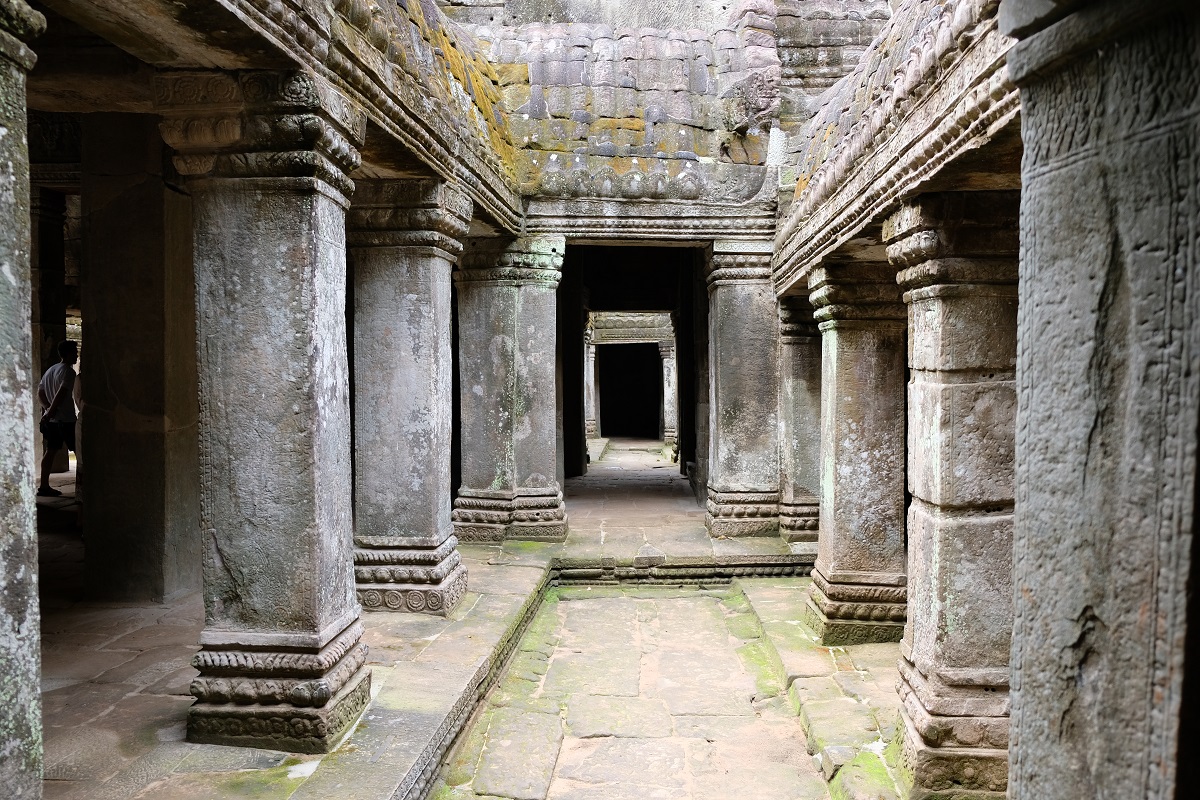
On my first visit, this structure was probably still in ruins

Ta Prohm is where visitors can see how nature slowly reclaims her space among the ruins

One of many photogenic corners at Ta Prohm

Gigantic roots of Tetrameles nudiflora dominating over these man-made structures

 What an Amazing World!
So much history and detail in the walls and ruins of this part of Angkor! Goes to show that a day isn’t enough to see it all– the depth you wrote about this section is incredible, and it makes me want to visit Cambodia sooner than later!
LikeLiked by 1 person
Back in 2011 on my first visit to Cambodia, I thought a day or two would be enough to see Angkor. Of course, I was wrong. That’s why when I returned last December, I decided to focus on only one part of the country. I hope you’ll get there soon, Rebecca!
LikeLiked by 1 person
Absolutely awesome photos Bama! You’ve bought these places to us through the internet wonderfully! I prefer reading to listening to tour guides so this was perfect for me! Lol. Appreciate your work! X
LikeLiked by 1 person
Thanks Anna! I know what you mean — while a good tour guide can certainly help us appreciate a place more, reading about it myself is still my preferred option since it allows me to digest all the information at my own pace.
LikeLiked by 1 person
This was a great history lesson, Bama – or should I call you Indiana? I enjoyed reading the post and viewing your fantastic photos!
LikeLiked by 1 person
Ha! Sometimes I wonder how it’s like to be an archaeologist, without having a giant ball coming down my way though! Much appreciated, Mike and Kellye.
LikeLiked by 1 person
Thanks for the virtual visit. Lovely photos; it was as if were there with you… I particularly enjoyed the pictures with the details of the carvings. (Suzanne)
LikeLiked by 1 person
Thanks Suzanne. Ancient carvings are among the main reasons why I love visiting places like Angkor. It’s just mind-boggling to think that those were created a long time ago.
LikeLike
Great photos and an excellent history lesson. I’d love to see that place back in its heyday, bustling with people and full of color. I guess it still bustles with people but in a different way! Has it returned to pre-Covid levels of tourism do you think?
LikeLiked by 1 person
Hey Jeff! Good to “see” you again. When I went last December, there were already a lot of international tourists but not quite at pre-pandemic levels. My suggestion is the sooner really is the better. You’re definitely right about the colors — ancient sites that we see today were often brightly painted back in the days.
LikeLike
I enjoyed this detailed and photogenic tour of Bayon and Ta Prohm, two places I’ve never heard of.
I love the detailed intricate carvings in Bayon and there’s something reassuring and calming about knowing wherever you’re walking, 200 carved faces are watching over you.
I love the moss covered stones in Ta Prohm, as you said, nature slowly reclaiming the land. I can see why the Tomb Raider chose it as a filming location.
LikeLiked by 1 person
Just now I was thinking Bayon could be a nice place for you, your husband, and T to have a holiday. But then I realized that is probably not the best idea since if you lose sight of T, you’ll probably have to scour the entire temple compound. Those giant faces will keep watching you wherever you go, though.
It’s easy to understand why they chose Ta Prohm as one of the locations to shoot the first Tomb Raider movie. This place was so photogenic!
LikeLiked by 1 person
T can be loud. He won’t be hard to find. 😆
We would love to do a Cambodia, Indonesia and Vietnam tour one day when T is a bit older. The photos and stories you’ve shared are wonderful.
We just need to figure out how to survive the long plane ride with T. 🙂
LikeLiked by 1 person
Ha! Ok that would make it easier. 😄
How did T do during the flights when you went on a holiday with him to Mexico and then back to Canada?
LikeLiked by 1 person
He is mostly ok but he is very loud and when he gets disregulated, it can be quite unbearable. The last 45 minutes of our flight back from Mexico, I wanted to jump out of the plane. 😆
LikeLiked by 1 person
Oh! 😆 I guess you’re right. You should wait until he gets older before taking that trip with him to Southeast Asia.
LikeLiked by 1 person
Mas Bama, tbh reading your post ini bener-bener bisa menghilangkan kerinduan ke angkor, udah mau berangkat, aduuh banyak banget kasus-kasus aneh disana sehingga permit dari rumah agak susah keluar nih😁.
Bayon, selalu aku datengin buat liat relief-relief keren di dindingnya… dan bener ya, tuh candi emang compact banget shg buat turun aja agak serem.
Di bagian Ta Prohm sendiri aku jadi mengingat-ingat situasi di Hall of Dancers, kok aku merasa udah clear lama yaaa… bs jadi salah lokasi hahaha…
As usual foto-fotonya bagus banget mas Bama, sukaaaak banget 👍👍👍
LikeLiked by 1 person
Wah, tadinya rencana berangkat ke sana kapan mbak? Kemarin Desember pas saya ke sana turis-turis sudah mulai banyak tapi belum se-crowded dulu.
Agak sayang sih sekarang sudah gak bisa naik ke bagian atas Bayon, soalnya saya inget pas lihat wajah-wajah itu dari dekat ada perasaan spesial gitu yang susah dijelaskan dengan kata-kata.
Masih banyak nih candi-candi di Kamboja sana yang saya perlu datangin, sekalian mengikuti jejak Mbak Riyanti yang sudah duluan ke sana, misalnya Preah Vihear. Itu keren banget sih mbak!
LikeLiked by 1 person
Those are gigantic trees. They kind of underscore how old the city is
LikeLiked by 1 person
Absolutely! And those trees were probably only saplings decades, even centuries, after Angkor was abandoned.
LikeLiked by 1 person
Bayon definitely looks like it could fit in perfectly with the whole Indiana Jones theme. Looks like an interesting place to explore with its unique architecture and sculpted faces. Good thing you brought the proper lens to zoom in on those faces! It’s neat to see that nature is reclaiming its space within the ruins at Ta Prohm. This makes me want to re-watch Tomb Raider.
LikeLiked by 1 person
Those faces are so big you can actually use a standard lens to capture their images. I ended up re-watching the scenes where Lara Croft explores the deserted corners of that ancient temple. Luckily, unlike in the movie, no statues came to live during my visit!
LikeLiked by 1 person
Loving my history lessons from across the globe. As always. 🙂
LikeLiked by 1 person
Much appreciated, Ani. So many places to explore, so much history to learn!
LikeLike
Such an extraordinary place. This post brought back so many memories – those huge faces, the exquisite bas-reliefs, and the tree roots of Ta Prom among others. Thanks for the journey Bama, and for the history lesson.
Alison
LikeLiked by 1 person
Thanks to its unique features, Bayon is indeed one of the most memorable ancient temples in the entire Angkor area. One can eventually feel templed-out after seeing so many historical sites in this part of Cambodia. But if you’ve been to Bayon, you’ll remember it.
LikeLiked by 1 person
Bayon was one of the places I wish I had had more time. The bas-reliefs alone drew me in deep, and I could have spent hours poring over them. The faces were almost as cool, and I would have liked to circle the property and see them from many angles. Alas, that day was the hottest of our trip – well over 100F/40C – and we were all wilting in the direct sun. On my own, I might have gone back in the evening or the next morning. Happy to see and learn more about it here!
LikeLiked by 1 person
40C is brutal, even for me! In both visits — July 2011 and December last year — I went to Bayon early in the morning and the temple’s quiet ambiance really added to the magic of this place. Because of its level of detail, it really is a good idea to circle the compound, enter its many doors, and check out its corners to get a better idea of the incredible craftsmanship the Khmer society had managed to achieve.
LikeLiked by 1 person
What a wonderful history lesson and stunning photos, Bama. Angkor Thom and what’s around looks stunning, every part of it rich with stories of the past and stories very much alive today. The moat with sculpted faces look magnificent, and interesting to read that the faces may represent different people and themes. Sometimes you really can’t imagine how big these structures are or what you see, until you are actually here like you did here. That is amazing James bumped into a friend he know back in Hong Kong. Of all places indeed.
You may want to take some extra memory cards with you next time 😛 That said, there have been times where I have had extra memory cards and still, not enough space. Hope you have been well and more travels lined up soon 🙂
LikeLiked by 1 person
Angkor Thom was really cool, especially because of Bayon itself as well as those iconic gates. One can only imagine how the walled city was like during its heyday! You’re right about how photos can deceive us when it comes to the scale of a building. That’s why now I tend to include people in one or two shots as opposed to no single soul at all in a frame which was my preference in my early years of blogging.
I should definitely bring more memory cards next time I go to a place like Angkor. Have a nice weekend, Mabel!
LikeLiked by 1 person
We visited there Angkor Watt years ago. So much to see and do.
I love all of your images. Anita
LikeLiked by 1 person
So much to see and do, indeed. The size of this ancient city really is incredible! Thank you, Anita.
LikeLiked by 1 person
Another insightful post that was such a joy to read, Bama. Not to mention that it woke up my own wonderful memories of a place I find totally enchanting.
LikeLiked by 1 person
Much appreciated, Jolandi. I also find reading other bloggers’ experience of a place I have visited very enjoyable, for it allows me to remember my own trip. Even more so when that place was, as you said, enchanting. How has summer been in Portugal so far?
LikeLike
Summer has been milder than last year, although still between 35 and 39°C on most days to make it unpleasant. But on those I just hide inside with the aircon on. I definitely prefer days no hotter than 32 °C.
LikeLiked by 1 person
You bring these places to life. If you ever want another stream of income, you could be a tour guide. 🙂
Love the pics.
LikeLiked by 1 person
Ha! Actually there was a time when I had that thought. But knowing how difficult to handle some people can be, I think I’ll give it a pass, at least for the time being.
Thanks Matt!
LikeLiked by 1 person
I always love reading your descriptions of the sites with such an in depth understanding of the history. Reading of these sites that I’ve visited was like touring again, but this time with a knowledgeable guide. Funny what you sad about Ta Prohm, I actually only remember the roots taking over the door at the back of the site too!
LikeLiked by 1 person
It also happens to me when reading blog posts out there about the places I’ve been — re-learning about them from other people’s perspectives often ends up in a better understanding of those sites. About our similar recollections of Ta Prohm, probably it’s because of just how iconic the roots are!
LikeLiked by 1 person
What fascinating history that you bring across so well. Considering the age of these structures they look pretty well preserved.
LikeLiked by 1 person
Since Angkor is pretty much Cambodia’s number one tourist destination, contributing significantly to the country’s economy, the ancient temples within this area are relatively well-preserved.
LikeLike
Angkor Thom was one of my favorite sites at Angkor. It is remarkable that Champa managed to defeat and occupy the mighty Angkor Empire for a few years. I enjoy these write-ups – I’m learning a lot of history.
LikeLiked by 1 person
Its unique features really make Angkor Thom stand out among other ancient ruins around Siem Reap. I think it would be cool to see the Cham naval attack on Angkor reenacted in a documentary or reimagined in a movie.
LikeLiked by 1 person
Yeah, I think it would be great to see movies or documentaries about Angkor and the Cham naval attack.
LikeLiked by 1 person
Bama, I really wonder what Bayon looked like during its heyday – whether the giant faces on the towers were gilded, if the bas-reliefs were painted, and how it felt as a very active place of worship. You did a lot more research than me ahead of our trip, and I had no idea Ta Prohm and Bayon were commissioned by the same king. Their designs and layouts just seem so different. I also hadn’t anticipated that Ta Prohm would be so expansive, nor that I’d bump into an old friend there! The archaeologists and restorers did such a great job piecing the Hall of Dancers back together again; it’s hard to imagine it being a pile of stones the first time you went in 2011.
LikeLiked by 1 person
I like colors, and I know a lot of ancient monuments were brightly painted when they were still used as places of worship. But I won’t lie I actually prefer to see them with the true color of their building materials exposed to the sun. Ta Prohm was definitely bigger than how I remember it from my first trip. Although maybe at that point I was starting to feel exhausted from all the cycling so my memories of Ta Prohm were not as vivid as the ones from Bayon. I wonder how many more structures within Angkor that can still be restored, like the Hall of Dancers.
LikeLiked by 1 person
For all the magnificence of Angkor Wat and the incredible beauty of Banteay Srei, it is this mysterious temple that I would return for. And not just for the hall of dancers that I missed.
Incidentally, sculptures of principal deities facing the cardinal directions was a particular Jain concept at the time (in India). They were known as Chaturmukha shrines with four full statues facing each direction through a corresponding doorway. What is a – quite daring – departure here, is bringing the monumental deity out of the sanctum and onto those imposing towers. Doubt there is another example of that anywhere!
Thank you Bama, for another insightful post that had me reflecting on stuff I should have added to my original post 🙂
LikeLiked by 1 person
I must say Ta Prohm felt more interesting on my second visit than my first time. Probably because of the reconstructed structures, but the fact I wasn’t rushing around definitely helped.
I’m incessantly amused by how much Sanskrit loanwords there are in the languages I speak. Catur means four in old Javanese — if someone’s name has that word it’s almost certain that he/she is the fourth child — and muka means face in Bahasa Indonesia. Speaking of which, I think you would be reminded of this ancient concept when you visit the Prambanan temples in Java one day!
The pleasure is mine, Madhu. I do miss reading your travel stories! 🙂
LikeLiked by 1 person