
Tháp Dương Long comes into view
Trying to imagine how Vijaya looked during its heyday is difficult when you see what it’s like in the present.
The day after we went to Tháp Bánh ĺt and Tháp Bình Lâm, we ventured even closer to what used to be the center of Vijaya, which from the 12th to the 15th centuries was the most important principality of the Champa mandala. If there hadn’t been any Cham towers, this part of Vietnam would have appeared just like normal countryside dotted with small houses and vast expanses of rice fields, bordered by verdant hills and mountains. But that morning, through this very landscape, we were on our way to see the tallest temples ever built in Champa.
Also called les tours d’ivoire (“the ivory towers”) by the French in the past, Tháp Dương Long is a group of three towers constructed around the 12th – 13th centuries reaching a height never achieved before and after by the ancient Cham people. In fact, this project was conceived during a period of time of intensifying hostility between the Khmer Empire and Champa. Suryavarman II, the ambitious Khmer king who commissioned Angkor Wat, was on a mission to expand his realm even further. This time, he demanded the emperor of Dai Viet (Đại Việt) from what is now northern Vietnam to pay tribute, which was rejected outright. Unsurprisingly, this sparked a series of Khmer military campaigns northward. However, due to the difficulties his troops encountered, Suryavarman II persuaded the crown prince of Champa to join his offensive against Dai Viet which had by then established themselves as Champa’s main rival to the north.
Initially, Champa agreed to forge an alliance with the Khmer Empire to wage war against Dai Viet. However, due to the joint forces’ limited success in conquering the latter, the Cham crown prince grew weary of the conflict. Following his ascension to the throne in 1139 taking the title Jaya Indravarman III, the new king of Champa decided to make peace with Dai Viet, a decision which angered Suryavarman II. ‘What could the Khmer ruler possibly do to us?’ was probably what the new Cham king had in mind.
Unfortunately, Suryavarman II’s ambition was too big to contain.
In 1145, the Khmer king invaded Champa and sacked Vijaya, effectively putting an end to Jaya Indravarman III’s rule. Suryavarman II’s troops went even further by destroying the temples at My Son (Mỹ Sơn) which had for a long time served as the religious center of Champa. However, despite this the Khmer never really conquered the entirety of Champa as the Cham resisted and staged an uprising against the newly-installed puppet king appointed by Suryavarman II. Led by a prince from Panduranga, one of the principalities of Champa, the Cham people revolted and managed to regain control of Vijaya. The prince then assumed the throne of the kingdom and became Jaya Harivarman I, and soon enough he embarked on a mission to consolidate his reign over Champa and to keep the Khmer at bay. Meanwhile, Suryavarman II’s sudden death in 1150 – probably during one of his campaigns to reconquer Vijaya – significantly weakened the Khmer Empire. In the years that followed, skirmishes between the two neighbors remained. But it was more than two decades later when Champa accomplished something they had never done before.
Under the rule of Jaya Indravarman IV whose reign over Champa started in 1167, the kingdom began a series of military campaigns against the Khmer Empire, their neighbor to the west which had repeatedly invaded and sacked Cham cities since the 10th century CE. This marked a period when it was the Khmer who were on the defensive, not the other way around. However, Champa’s land-based attacks proved ineffective in advancing their positions deeper into the Khmer realm. Because of this, Jaya Indravarman IV sought to purchase horses from China to reinforce his troops, a request which was rejected by the Song dynasty ruler. The Cham king then devised an alternative strategy: a naval attack. Given the fact that the ancestors of the Cham people were highly-skilled seafarers from Borneo, I wonder why it took so many centuries for Champa to eventually come up with this idea.
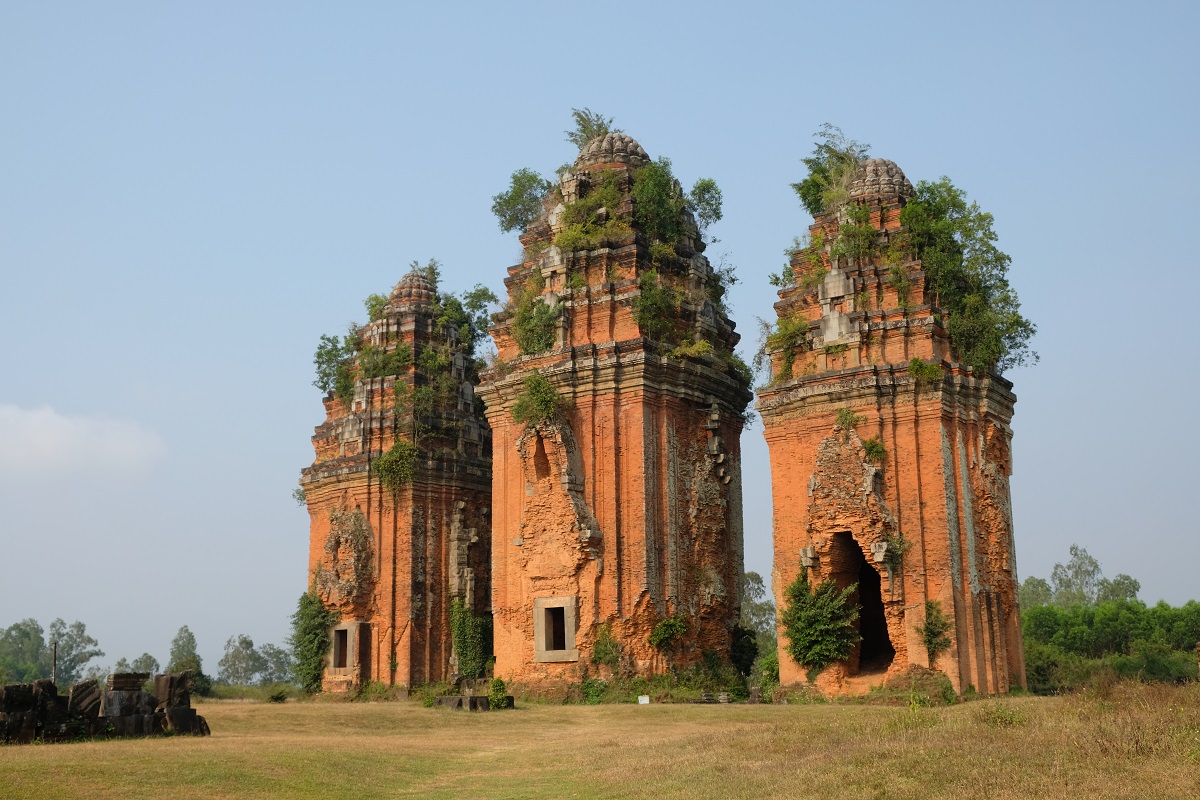
The three towers of Tháp Dương Long
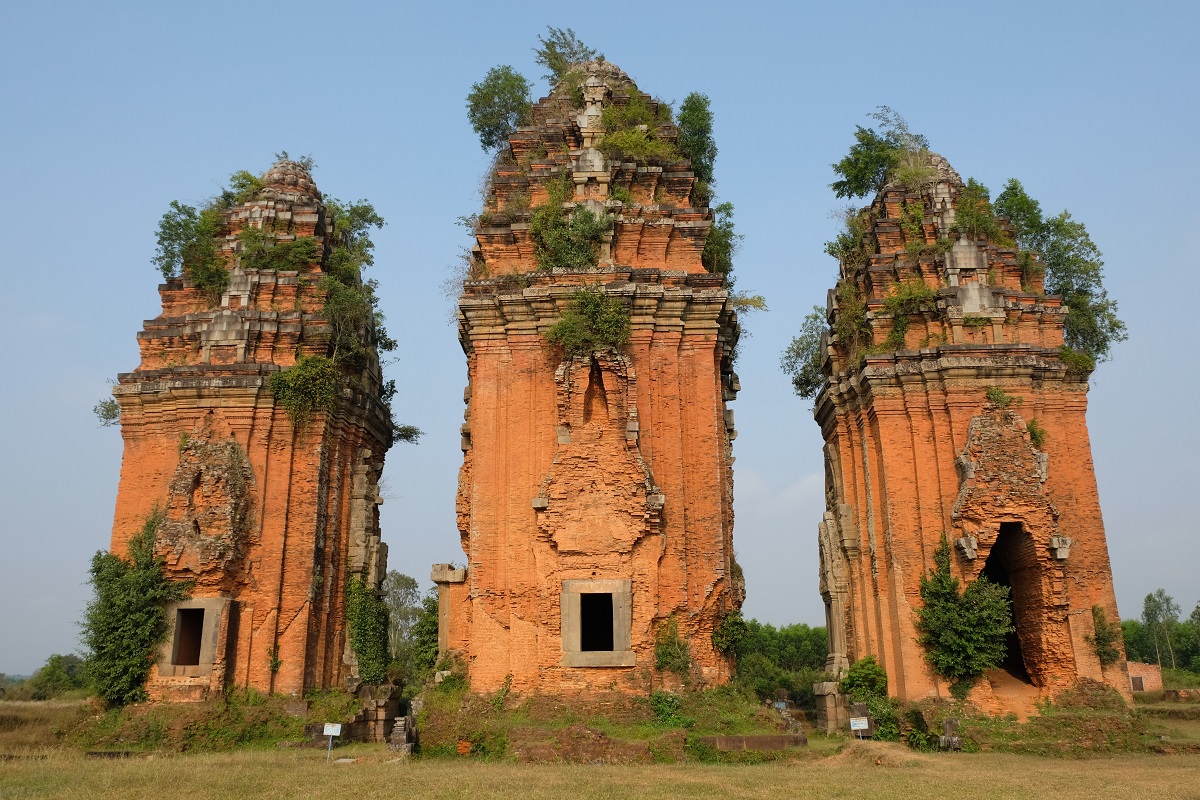
These are the tallest structures ever built by the ancient Cham people
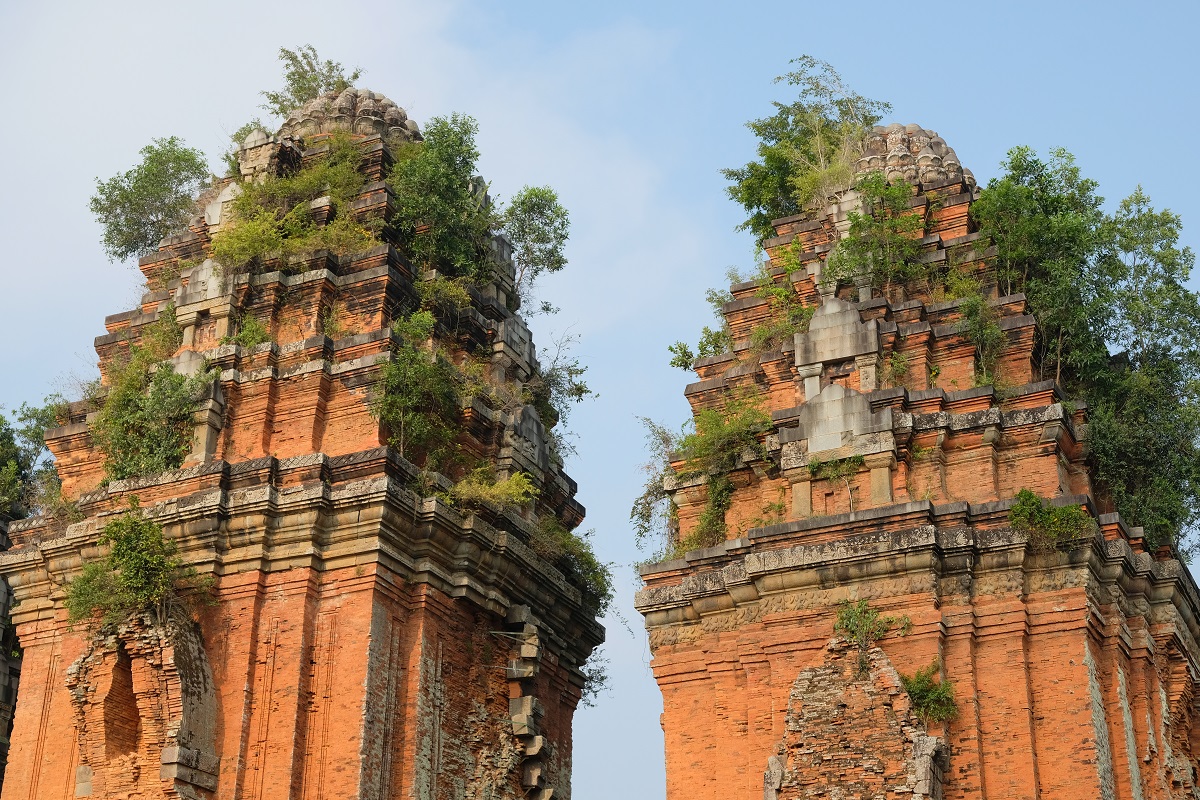
Nature relentlessly trying to take over
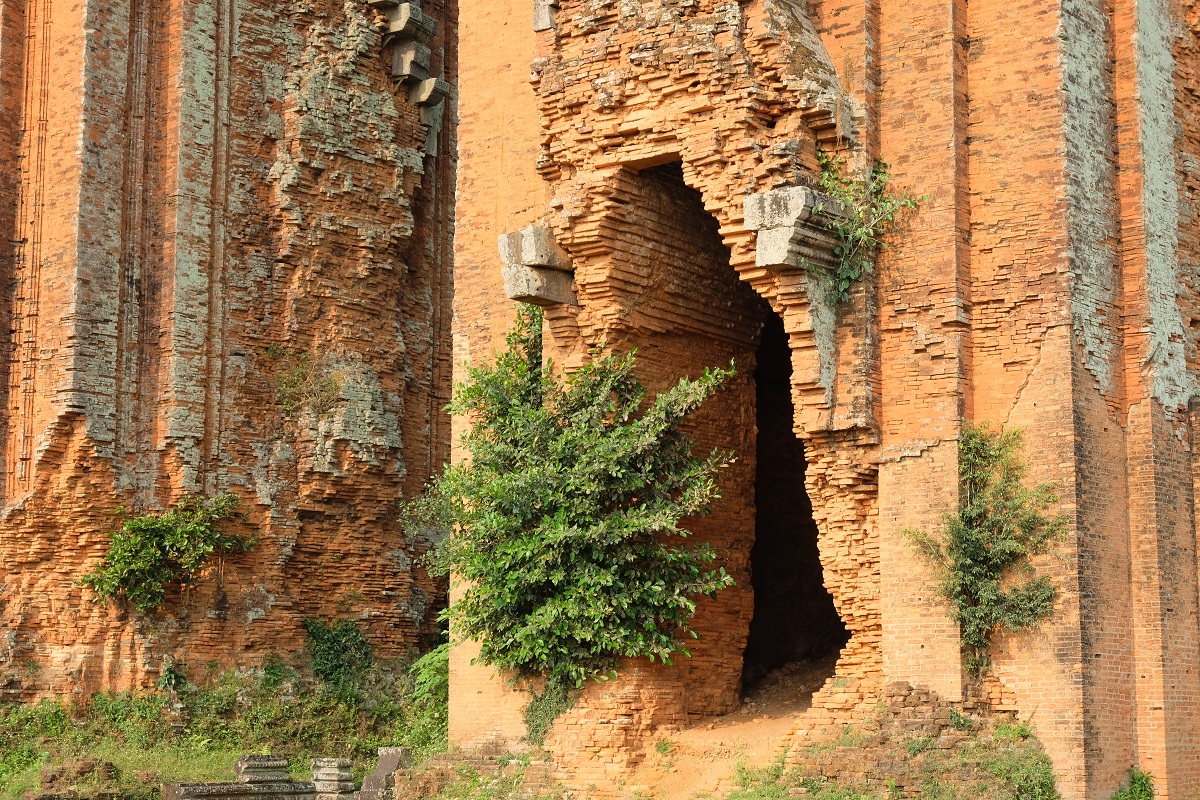
Walking too close to the base of these structures was not permitted during our visit
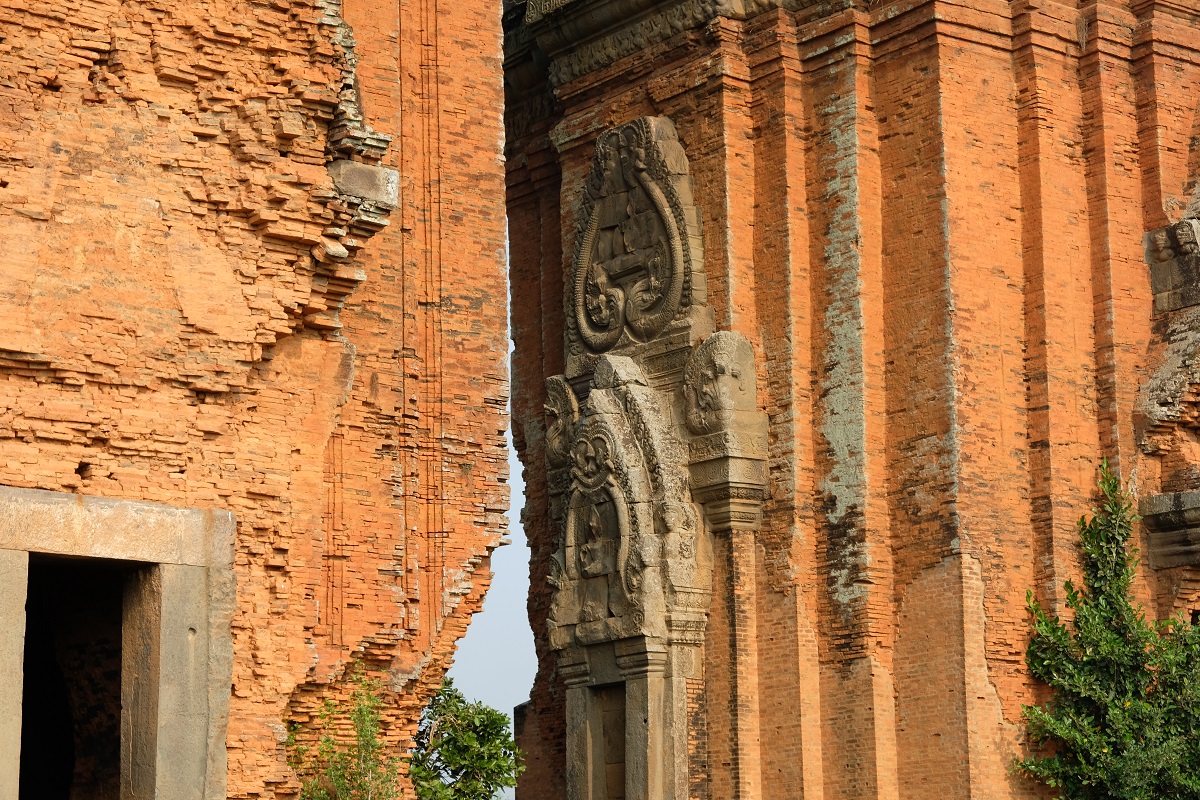
Among the few original carvings still attached to the towers

Will this ever be restored to where it was when the temple was still used?
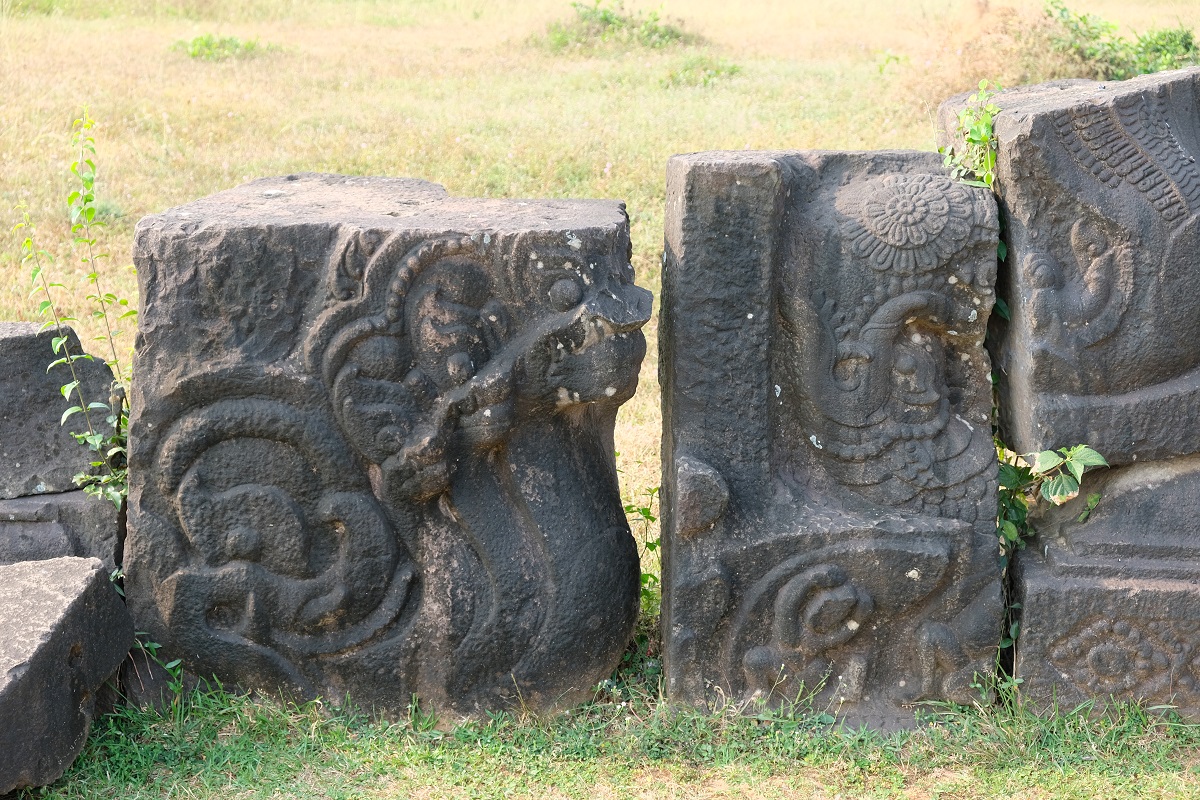
The three towers were once covered with these carved artworks

Like other ancient Cham temples, Tháp Dương Long faces east

A five-headed naga longing to return to its original position at the temple
In 1177, the warships of Champa sailed upstream on the Mekong River. As they arrived at Tonlé Sap, a major lake and important source of water for the Khmer living in Yasodharapura (the capital of the empire, better known today as Angkor), the Cham fleet launched a surprise attack on the Khmer right at the heart of their center of power. Probably no Khmer ruler could have envisioned something like this happening on the doorstep of their palace. As a result, the mighty Khmer Empire suffered a humiliating defeat and their king, Tribhuvanadityavarman, was killed. This ushered in an era of Cham occupation for the next four years.
Reading about what happened during this particularly bloody period of the history of both ancient Hindu kingdoms makes me wonder, was Tháp Dương Long commissioned to show the Khmers that Champa could build temples at a grand scale as well? We will never know. What we can tell for certain is despite the enmity between the two, cultural exchanges did happen. While Tháp Dương Long was most likely constructed as a symbol of pride of the Cham people, designed with Cham architectural style in mind, elements of the Khmer culture were also incorporated in the structures. Using red bricks as the main construction material, intricate reliefs were carved out of sandstone, a telltale sign of the Khmer influence. (On the other hand, there is a temple in Angkor with obvious Cham artistic influences which we, unfortunately, didn’t have time to see.)
At the time of our visit, Tháp Dương Long was one deserted site situated far from the nearest big city. Hindu pilgrims most likely flocked to this temple during its heyday, but when we arrived there the fence was locked. Our driver, who spoke zero English, then called the number written on a small signboard hung over the fence – the caretaker’s phone number. Soon enough, a middle-aged man came on his motorbike. We paid the entrance fee and had the entire site to ourselves. It was sad to see the crumbling state of the three towers of Tháp Dương Long, and due to safety reasons visitors were not allowed to venture too close to the base of the structures. While they certainly were impressive, most of the stone elements were conspicuously absent. This is because the majority of the centuries-old stone carvings from this temple are now kept in a museum in Quy Nhon (Quy Nhơn), the capital of Vietnam’s Bình Định Province in which Tháp Dương Long is situated. Maybe this decision was taken considering the relatively remote location of these Cham towers, making it difficult for storing those invaluable works of art securely at their original places. Interestingly, as we were taking photos of these silent witnesses of the apogee of Champa, a church bell was ringing in the distance, a reminder of how much things have changed since the day the foundation of Tháp Dương Long was laid.
Our second destination on that day was another ancient Cham tower called Tháp Phú Lốc, also called le tour d’or (“the gold tower”) by the French – a recurring theme of how the former colonial power preferred to name these ancient monuments. Initially, when we booked the driver through our hotel the day before, he didn’t want to take us there due to the lack of proper access. However, being the first Cham tower anyone coming to this part of Vietnam by plane will see, we knew Tháp Phú Lốc was something we shouldn’t miss. After convincing the driver – through our hotel front desk staff member – that it was okay for us to pay more and to walk a little bit along an unmarked path while the car is parked some distance away, our driver finally agreed.
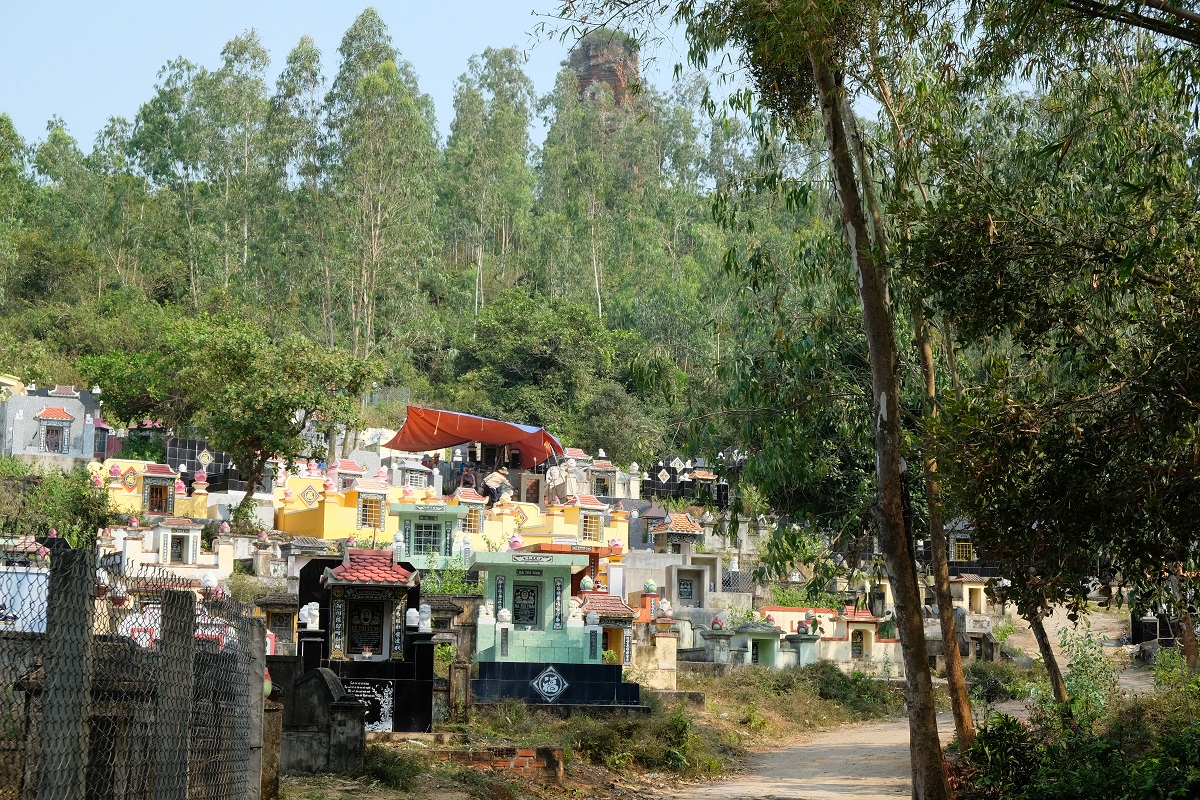
Tháp Phú Lốc rises right above the cemetery

The unmarked path ends at this worn-out staircase

Tháp Phú Lốc standing in solitude

This is the first ancient Cham temple anyone coming to this part of Vietnam by plane will see
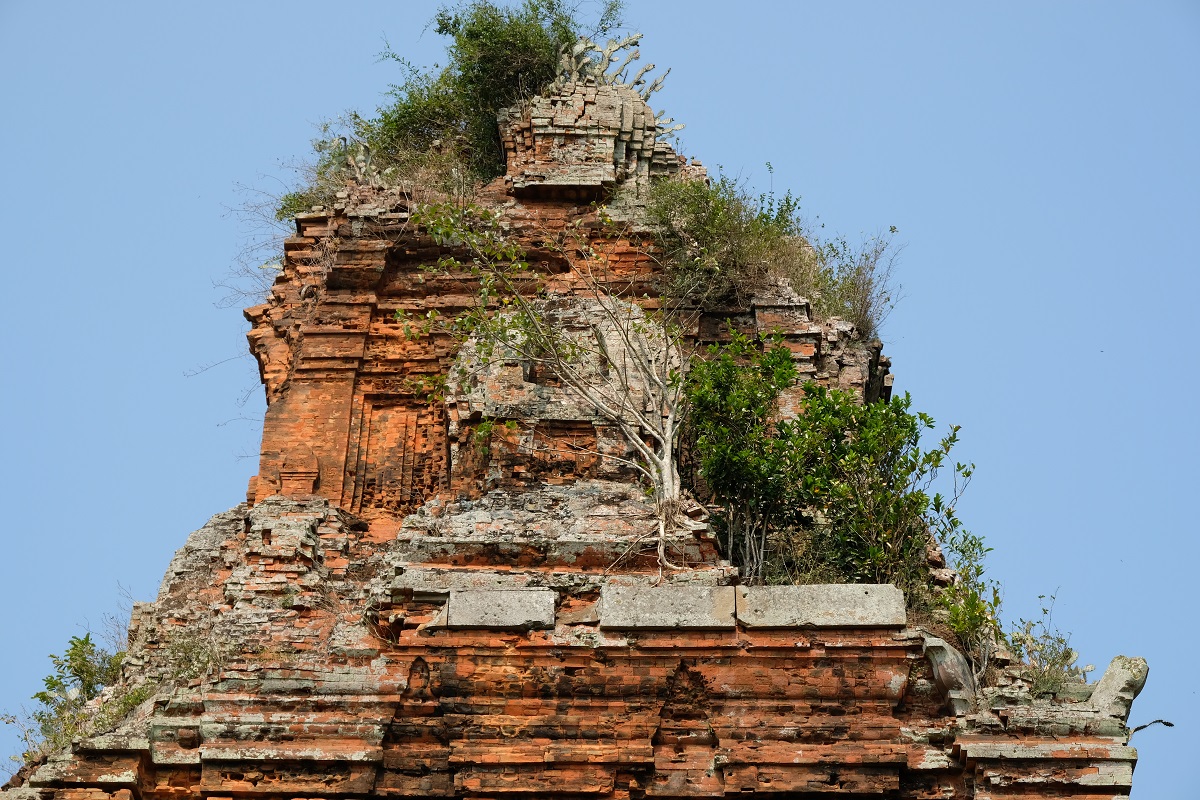
Battered by the elements for centuries

A Vietnam Air Force fighter jet flies over the temple

Calotropis gigantea, a poisonous plant with beautiful flowers native to parts of Asia
From the highway that connects the airport to the city of Quy Nhon, Tháp Phú Lốc is a prominent sight to your left-hand side, thanks to its hilltop location. Geographically speaking, this ancient tower sits at the highest point compared to other Cham temples. But it is also the least accessible of them all. Our driver had to get off the main highway and drove toward a village at the foot of the hill. Once there, he had to ask a few locals for directions, which then led us to a cemetery. I had read about how the pathway to the temple is located near it. But luckily I traveled with James who correctly pointed out an unassuming trailhead that would take us directly to our destination. After a short hike under the scorching sun, we arrived at Tháp Phú Lốc, another Cham temple constructed in the 12th century. Probably because of its hard-to-access location as well as the constant battering of the elements, Tháp Phú Lốc’s state of preservation was the worst of all the Cham temples we visited on our recent trip to Vietnam. However, the experience of standing in front of it was enough to compensate for the effort we made to reach it – and now our driver knows where to park should there be other guests in the future who are crazy enough to ask him to go to this particular temple.
Our third destination was just on the other side of the highway, and the closest to the center of Vijaya. Tháp Cánh Tiên is another hilltop Cham temple built in the 12th century. But what makes it unique and worth seeing is its relatively intact architectural and decorative elements including the iconic cánh tiên (“fairy wings”), a set of carved stones protruding from the edges of the roof after which the monument got its modern-day name. Stacked on top of one another, these wings were truly hard to ignore. Prior to this visit, I had read about the criticisms aimed at the way this monument was restored, for the replicas used in place of some missing decorative elements stand out too much and distract from the original building materials. However, as a non-archaeologist I actually thought it wasn’t as bad as I had anticipated. Yes, the new materials could have been more subtle while staying discernible from the original stones, but I still found myself enjoying this beautiful temple.
About 1 kilometer away from Tháp Cánh Tiên is the site where the citadel of Vijaya once stood, arguably the beating heart of Champa itself. But that was not what we wanted to see, since what remains now is in fact the vestiges of another citadel built in the 18th century by the Vietnamese on top of the older Cham structures. It was two Asian elephant statues purportedly dating back to the Champa period that intrigued us more. Standing for centuries directly to the south of the citadel, these figures were carved out of stone probably to remember the elephantine troops of Champa that were instrumental in their military campaigns. These elephants have obviously lasted longer than the Cham occupation of the Khmer Empire.
Beginning in 1177, Champa controlled Angkor until 1181 when the son of Suryavarman II’s cousin managed to assemble Khmer loyalists and led them to repulse the foreign invaders. Once the Khmer regained control of Angkor, the prince ascended the throne and took the title Jayavarman VII. He was only the second Buddhist ruler of the empire, after Suryavarman I, the king who built Baphuon. Jayavarman VII brought confidence back to his realm and commissioned major projects including the construction of Bayon, the only state temple dedicated to Buddhism in the history of Angkor. Naturally, his victories over Champa were immortalized on the walls of this sanctuary. And now after having visited the ancient temples in and around Vijaya, the scenes at Bayon depicting the battles between the two neighboring kingdoms come to life in my imagination.
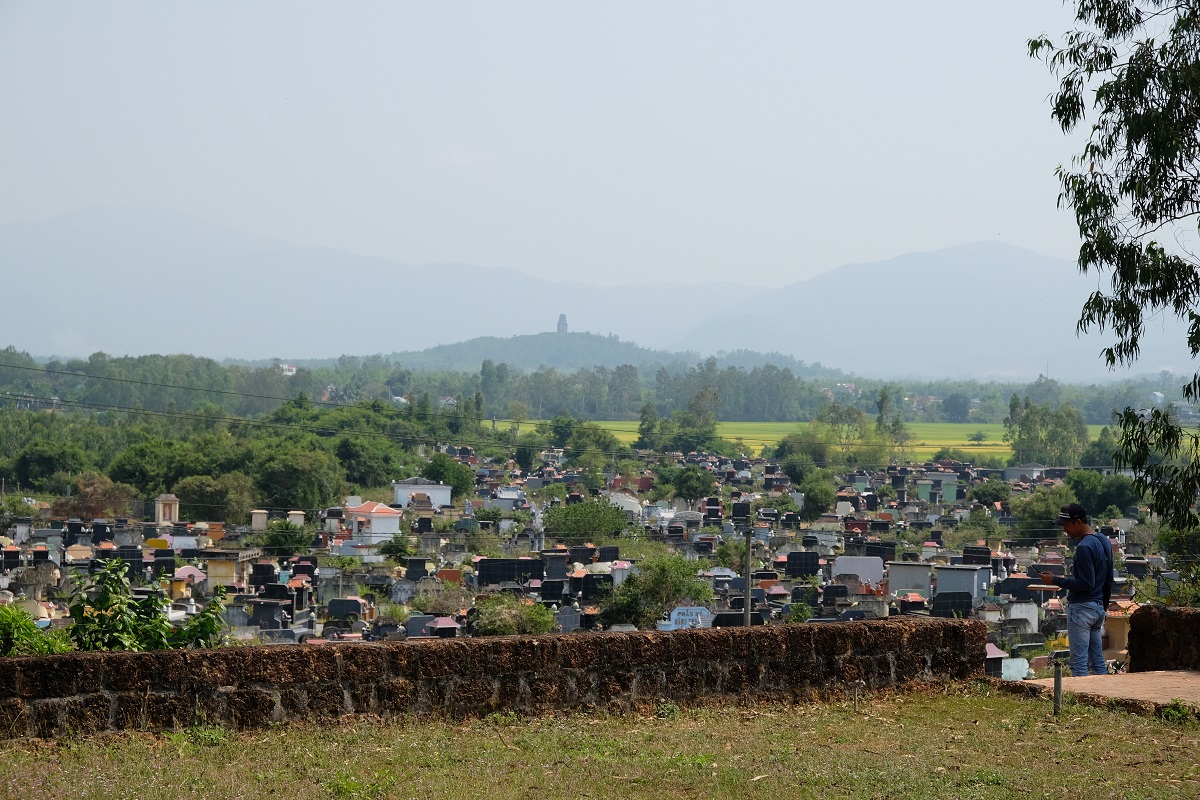
That lonely tower on top of the hill is Tháp Phú Lốc

Tháp Cánh Tiên, the ancient Cham temple closest to the citadel of Vijaya
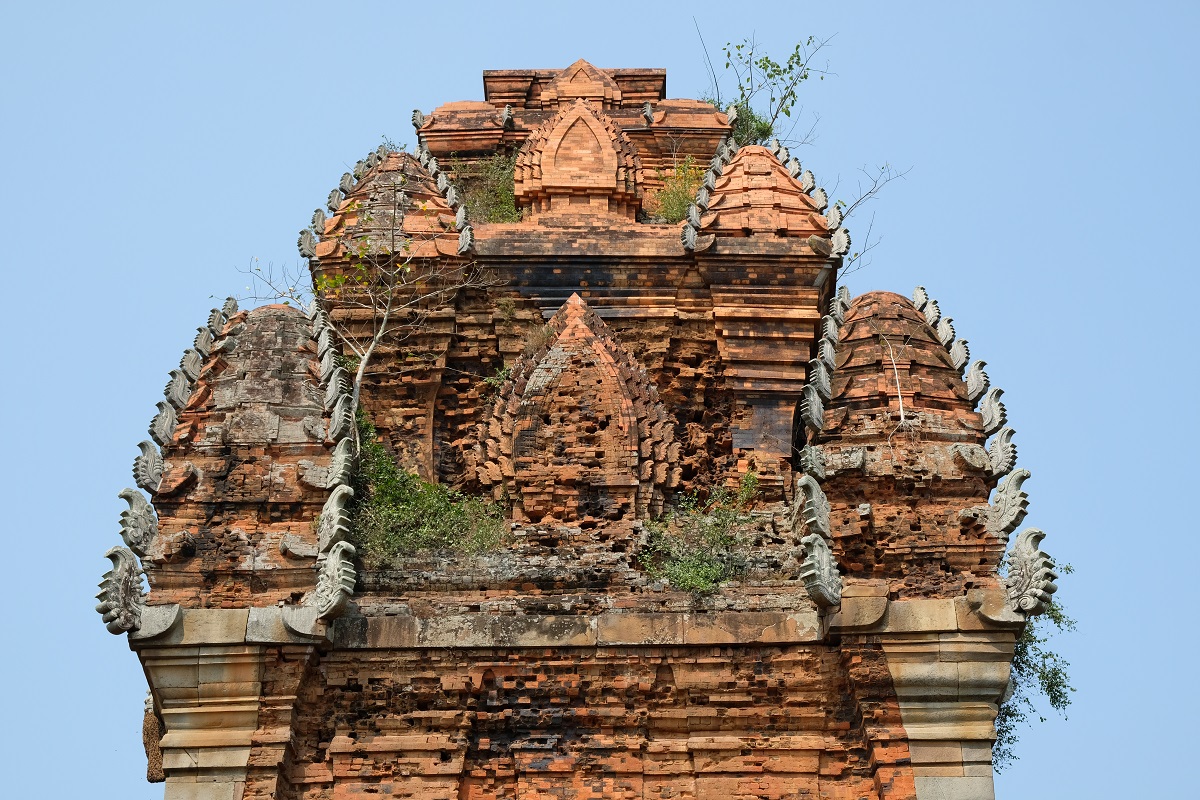
Tháp Cánh Tiên’s “fairy wings”

Inside the sanctuary
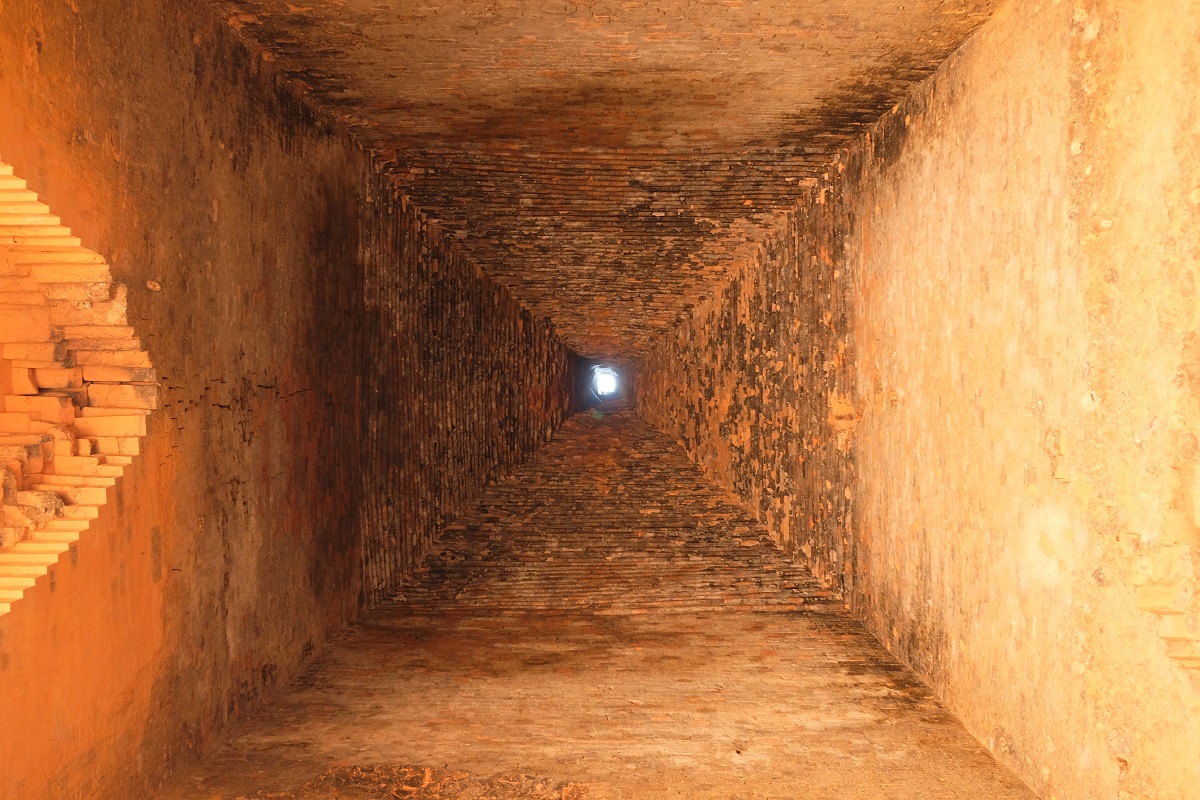
Among the few ancient Cham towers we went to that didn’t have bats living inside

While those wings won’t fly this temple anywhere, they surely are pretty

The bigger elephant near the former citadel of Vijaya

The smaller, but more decorated elephant
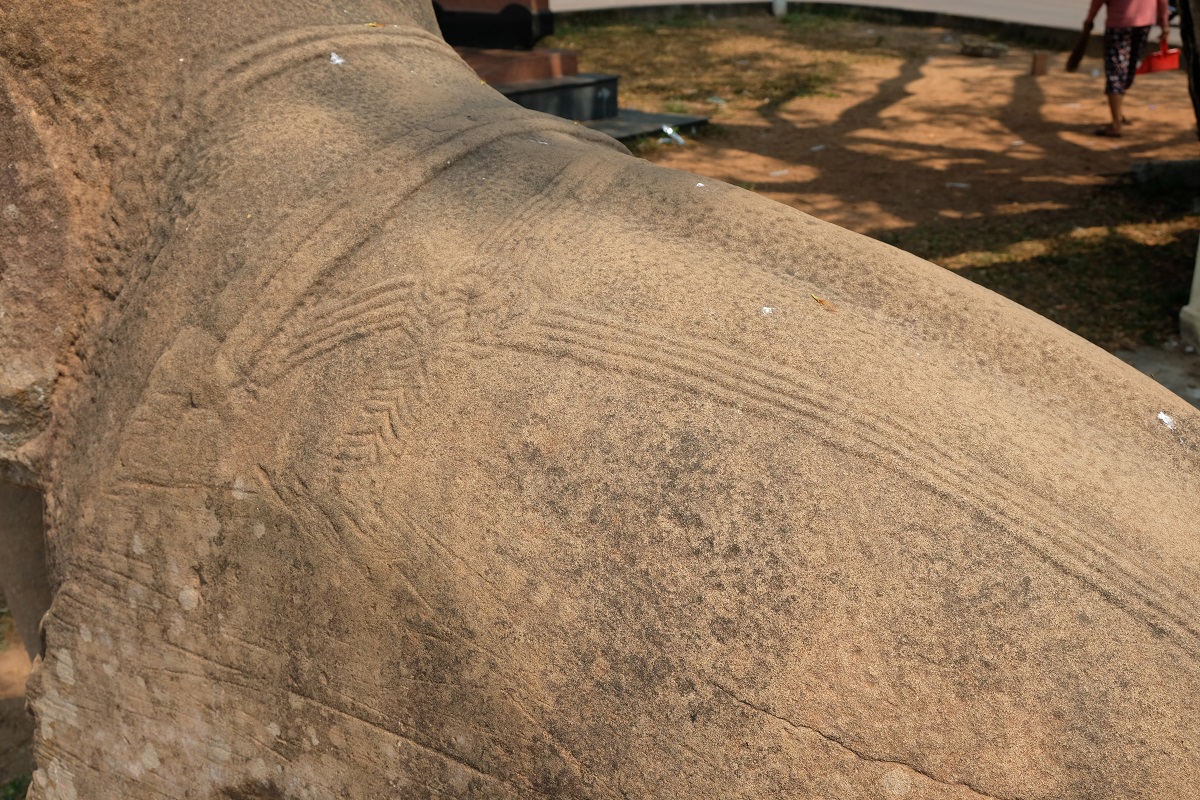
Carvings on the back of the smaller elephant

 What an Amazing World!
Fascinating! Goes to show that the ancient history of the region is rich and layered. This is a part of SE Asia I haven’t explored yet, but would like to visit. Thanks for sharing your adventures here!
LikeLiked by 1 person
Due to its geographical significance, Southeast Asia is indeed steeped in history as different kingdoms and empires ruled over parts of the region which also attracted great powers. While some of them, like the Khmer Empire, need no more introduction, others like Champa definitely deserve more attention. Thanks Rebecca!
LikeLiked by 1 person
So interesting to read about the other side of the usual history we get. It dies help put the pieces together. The red sandstone towers must have been very awe-inspiring in the day. The restoration of Tháp Cánh Tiên doesn’t look too bad, we have seen a few very poor ones. The elephants are awesome, I love the ears of the largest one! Maggie
LikeLiked by 1 person
And for me it has been very enlightening to learn more about the history of a kingdom that is only briefly mentioned in most accounts about the Khmer Empre. If only those structures, like Tháp Dương Long, were restored as closely as possible to their original look! It’s good that when Champa was defeated and their palace was razed, those elephants were spared.
LikeLiked by 1 person
A fascinating history! Love the colouring on the sandstone towers, simply stunning!
LikeLiked by 1 person
That color makes early morning or late afternoon photography ideal to capture the moments when the sun illuminates the structures.
LikeLiked by 1 person
I enjoyed this tour, Bama. I’m glad that from the three tower sites you visited, you got to go inside one of them. It’s nice to see them lasting all these centuries later although it’s also sad to see them get battered by nature over time. I wonder how often the governments goes to tidy up the greenery growing on them.
It’s also interesting to learn about the political conflicts and maneuvering happening during the earlier times. Makes you think about how warfare has changed especially today! It’s all about the tools and heavy artillery now.
PS. Still waiting for your Vietnam food post. 😆
LikeLiked by 1 person
Judging from the size of the plants growing on parts of those structures, I guess maintenance is performed probably only once or twice in a decade, which I think is far from adequate.
Wars have definitely become more destructive now. Sometimes I do wish battles were still fought the old way, if that makes sense.
Haha… That food post is scheduled for early September (finally!).
LikeLiked by 1 person
😋
LikeLiked by 1 person
Fabulous history and fabulous photos, Bama! Wow!
LikeLiked by 1 person
Thank you, Mike & Kellye! I’m glad it was more or less sunny when I was visiting those ancient temples.
LikeLiked by 1 person
Interestingly, Tháp Dương Long is the only Cham remains that I’ve seen. I was quite surprised by the carved bricks, I’d never thought of them as raw material for sculptors. I didn’t realize that sandstone was unusual. Also, I hadn’t really noticed that they face east; after all, Hindu temples are supposed to.
LikeLiked by 1 person
Although less common, brick-carving was indeed practiced in places across the region where harder materials were not found in abundance. Many ancient temples in the eastern part of Java as well as in Sumatra incorporated this. When you visited Tháp Dương Long, how was the state of preservation of those towers? Did you find a lot of overgrowth?
LikeLiked by 1 person
It was highly overgrown.
LikeLiked by 1 person
No matter how hard you try, you can’t beat entropy. Eventually all empires fall. But at least we do get beautiful ruins in their wake! Thanks for the trek, Bama.
LikeLiked by 1 person
Indeed, and that makes me wonder if centuries from now the people in the future will find what we’ve built today fascinating as we do those ancient ruins.
LikeLiked by 1 person
I wonder if what we’re building is going to last that long!
LikeLiked by 1 person
I doubt that too!
LikeLiked by 1 person
It’s pretty incredible to hear how these three towers were the tallest of their time and were built before many modern day technologies. It’s equally impressive that they’re still around today. Thanks for sharing another fascinating glimpse into the past of the Champa and some of their struggles and successes.
LikeLiked by 1 person
Seeing ancient ruins like these up close always makes me curious about how they were built and how those carvings were made. In the end, I have an even deeper admiration toward those ancient people.
LikeLiked by 1 person
So much history! Very interesting 🙂
LikeLiked by 1 person
Visiting places like this always reminds me of how much there is in the world that I didn’t know.
LikeLike
It’s so interesting to read about the layered history of this part of the world. And to see the Cham towers. It sounds like you two had some real adventures when you went to Cambodia and Vietnam.
Alison
LikeLiked by 1 person
And I feel the history of ancient kingdoms like Champa becomes even more meaningful when we put it in context — in this case its relation with the more famous Khmer Empire. We sure did! It felt so good to be able to travel abroad again!
LikeLiked by 1 person
Thanks for the vicarious trip. Methinks I’ll have to re-visit this area, now that I learned a little more of its history. Your photos are stellar!
LikeLiked by 1 person
This part of Vietnam has so much to offer for people like us. And these ancient Cham temples I went to are only a few of all the remnants of Champa that still survive today.
LikeLike
History is so fascinating and so damn vast. There are always new things to learn. Such amazing pictures. Especially with the green growth, makes for stunning images. Tháp Cánh Tiên seems to be maintained to some extent compared to Tháp Phú Lốc and the towers of Tháp Dương Long. I may be wrong. But I wonder why no initiative is being taken to restore and maintain them.
LikeLiked by 1 person
Indeed. When we learn about something, it opens up new doors which make us realize that we barely know anything about the world. Tháp Phú Lốc is just too difficult to access, while Tháp Phú Lốc is too far from the city. This partly explains why they’re not as well-maintained as Tháp Cánh Tiên. There had been restoration works done in the past. But I do think it has to be carried out more often.
LikeLiked by 1 person
Another fascinating post on your trip. You do do lots of research on the history of the places you visit which is very interesting. Thanks for this virtual visit. (Suzanne)
LikeLiked by 1 person
I happen to really enjoy learning about the history of the places I visit, especially when there is an interesting fact that most people are not aware of. Glad you enjoyed this, Suzanne.
LikeLike
What a fascinating history, Bama. I love those ´angel wings´ on the last tower. These towers are all very impressive, and I wish I could have time travelled to see what they looked like in their heyday.
LikeLiked by 1 person
Aren’t those ‘wings’ pleasing to look at? In my opinion, this decorative element is distinctively Cham. Ahh yes, a time machine would be great! But only to ‘view’ the past, not ‘edit’ it.
LikeLike
They are! And yes, I completely agree on the not editing part. Who knows what mess one will be able to create by thinking one is ´fixing´ something. 🙈
LikeLiked by 1 person
Exactly!
LikeLike
Although we were given a lot of information about both the Cham and Khmer empires on our trip to Vietnam and Cambodia, it’s hard not to let the Khmer stuff overwhelm all the others because of the scale of the buildings and what remains. But these towers are very cool, and the red stone is magnificent. I know the greenery was not to be part of the look, but it is a beautiful contrast! Your intrepid tracking down of the lone tower is indicative of your interest in really piecing together these regional histories; I am always impressed by how much you learn and retain!
LikeLiked by 1 person
Understandably so. That’s also why a lot of people know about the Ancient Egyptians, but are unaware of their contemporaries in the region, because the former left more impressive and long-lasting monuments. I agree with you about the greenery. Its existence is detrimental to those structures, but it surely makes them more photogenic. You know, I actually almost gave up Tháp Phú Lốc when our driver didn’t want to do it at first. But it was James’ determination that really took us there, which I’m grateful for because I don’t know when we will go back to this part of Vietnam.
LikeLiked by 1 person
Wow – this was like reading history lesson combined with your travel adventure. You did quite a bit of research here. I wouldn’t even know where to start. I also applaud both you and James’ determination to get to Tháp Phú Lốc. Thanks for sharing this.
LikeLiked by 1 person
I think I’ve cultivated a habit of adding a little bit of history into my travel stories, and that’s because in my opinion understanding the historical context of a place helps us appreciate it more — I just hope I won’t make my readers yawn! 😄
LikeLike
Well, I know it’s usually not a quick read so I set aside some quiet time so I can slowly read it. It’s a lot more like a longer magazine article. I think you take your time double checking some of the history before you publish it in addition to checking grammar etc…
I’m curious how you and James met. I kinda have the feeling it was during both your travels and you probably bumped into each other at a museum, restaurant or an airport.
LikeLiked by 1 person
Really appreciate it, Matt! Usually it takes me weeks to finish a post — from the pre-writing stage (choosing the photos as well as doing some research and fact-checking, to planning the angle from which I will write my post) to actually start writing it, followed by at least two rounds of editing. However, there were occassions when I felt extremely inspired I could wrap up a post in just hours.
It was in 2011 when I stumbled upon James’ blog for the first time and left a comment. Then he offered to take me around when I eventually came to Hong Kong, which I did in early 2012. We found out that we have a lot of similar interests, and started traveling together a few months later to Laos. And the rest is history.
LikeLiked by 1 person
What an incredible place to visit Bama. It is hard to imagine what it must have looked like when it was built. So much more of the world that I want to see. Thank you for sharing with us!
LikeLiked by 1 person
So much of the world we want to see and the list keeps getting longer and longer, doesn’t it? There are so many places in your part of the world I’ve been wanting to visit!
LikeLike
This is a fascinating article about the history and architecture of Vijaya and Angkor. I learned a lot from your detailed descriptions and beautiful photos. You have captured the essence and the mystery of these ancient civilizations.
LikeLiked by 1 person
Thank you. I’m glad this blog post turned out how I intended it to be: to shed a light on a lesser-known political entity in Southeast Asia called Champa.
LikeLike
If there is one thing that churned in my mind in the past when I visited this area, and once again while reading your post is the number of lesser-known sites that dot the area. The artistry and creations from more than a millennium ago blows my mind… and it is nice to learn more about the history and life back when these places were in there glory. Beautiful posting once again Bama.
LikeLiked by 1 person
Places like Cambodia and Vietnam have so many ancient sites which due to their locations are often not mentioned in any guidebooks and most websites. And if you include places like Java where earthquakes and volcanic eruptions have been a major part of people’s lives, there are so many ancient ruins still buried waiting to be discovered one day.
LikeLike
What incredible places you visit! Amazing. Keep them coming.
LikeLiked by 1 person
You also went to some really cool places in your part of the world. I hope one day I’ll make it there!
LikeLike
We hope you do it before we move to Spain! There is a lot to see in South America and it’s very inexpensive.
LikeLiked by 1 person
The only expensive thing is the flight to get there! How soon will you move to Spain, by the way?
LikeLike
Understand. But once here air travel in South America is reasonable. Our target move date is December 2024. But, nothing in stone with us! 😃
LikeLiked by 1 person
I hope I’ll make it there before end of next year!
LikeLike
Thank you, Bama! I think you have nicely summarised the complex (and occasionally dramatic) relationship between Khmer, Champa, and Dai Viet 🙂 I haven’t been to Quy Nhon, but I was quite upset to see the towers in such bad shape, especially Duong Long. Careless restoration and so much overgrowth! The towers in Nha Trang (Kauthara), and Phan Rang (Panduranga) are better preserved. In Phan Rang, even the fairy wings are intact. If you are interested in Cham culture, I suggest you go there in late September or early October when the people celebrate Kate (somewhat like the Day of the Dead).
LikeLiked by 1 person
The pleasure is mine, Len. Things definitely got really messy among those three kingdoms, but this is exactly how the world’s history has been shaped: endless power struggle among nations. It’s sad, but it’s us, humans.
I remember how nice your photos of the Cham temple in Phan Rang are! I’ve read about Kate and I think it would be really cool to go there during this festival. I’m particularly intrigued with your comparison with the Day of the Dead!
LikeLiked by 1 person
Bama, I agree with Len’s thoughts about the state of the Cham towers we visited that day. Duong Long and Phu Loc struck me as being neglected, forgotten almost, and it was a real adventure just to get to Phu Loc. Funny how determined we had to be at the hotel when booking the excursion, and I’m glad the driver was patient when it came to finding his way to the trailhead. On the topic of the history, it amazes me that Champa could launch a surprise naval attack right at the center of the Khmer Empire and bring Angkor to its knees. Surely that must have been no small feat!
LikeLiked by 1 person
They really should apply the same level of maintenance to those Cham temples we saw like many other ancient temples in the region receive. Those trees certainly can’t be good to the centuries-old structures. We were so determined not only about including Phu Loc, but also the order of the visits. I had to explain to the driver, with the help of the hotel staff, that we wanted to see Duong Long first. That naval attack truly was unprecedented. Quite possibly no one in Angkor could have predicted such thing to happen.
LikeLiked by 1 person
But the Khmers defeated all of the Cham kingdoms and incorporated them to Angkor’s imperial administration during King Jayavarman the 7th (1180-1220 AD) for a period of over 20 years. You can see the evidence of the sandstone workmanship of the khmers carvings incorporated into Cham culture in Duong long temples. This fusion of Khmer-Cham cultural artwork in those temples reflect King Jayavarman the 7th idea of a harmonious relationship between the two people living together. The Khmers also built a massive road system that connects all of the Cham cities to Angkor during the Khmers occupation of the Champa kingdoms ensuring effective and transparent administration on all levels. Therefore, all the port cities in Champa are controlled by the Khmers which boosted the power of Angkor’s wealth even further than before.
LikeLiked by 1 person
Hi. Thank you for adding more information on this topic. As you can see, my post on Jayavarman VII came right after this one as I intentionally published my blog posts on the ancient Khmers and Chams rather chronologically.
LikeLike