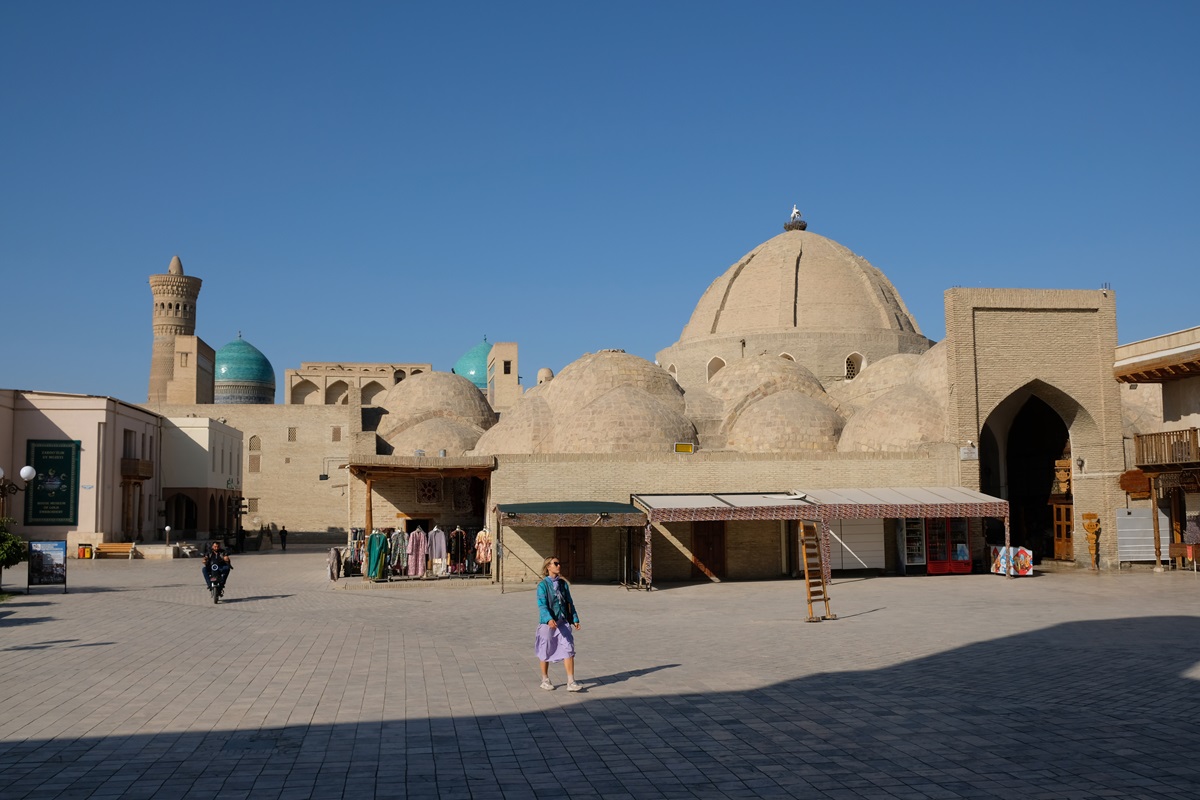
Toqi Zargaron, one of Bukhara’s trading domes with the Kalyan Minaret in the background
The ancient trading posts along the fabled Silk Road have captured our imagination for centuries, thanks to not only countless stories about their grand monuments and lively bazaars, but also the cultural and intellectual exchanges between the East and the West that shaped people’s lives. Of all countries crisscrossed by the vast ancient trade routes, Uzbekistan boasts the highest concentration of what are arguably the most beautiful and captivating historical sites in Central Asia, a region at the nexus of the land-based commercial network between Asia and Europe.
We were awed by the magnificence of the centuries-old buildings in Samarkand, a city graced by the likes of the incredibly ornate Registan and the colossal Bibi-Khanym Mosque. But when we came to Bukhara, we were treated with a different ensemble of historical significance. The stately Ark and the photogenic Po-i-Kalyan complex left great first impressions on us. However, we knew there was more to Bukhara than the two places. In fact, both of them beckon visitors to go deeper into the city’s old town district, a relatively compact area that is replete with invaluable heritage buildings constructed during the heyday of the Silk Road.
As opposed to Samarkand’s more spread-out historical sites, the ones in Bukhara are mostly concentrated within approximately 2 square kilometers, the size of the city’s UNESCO-listed historic center. Walking along the main roads in the largely well-preserved old town, you would immediately notice two types of structures that appear to be a recurring theme in this area: madrasahs (Islamic learning institutions) and toqis (trading domes). This is probably the closest thing one could have when it comes to getting a glimpse of what the ancient Silk Road looked like, where exotic goods were traded and different faiths were preached.
The madrasahs were in various states of preservation, but the trading domes were never empty. The latter were where I witnessed firsthand the legendary craftsmanship of Bukharan artisans: from miniature illustrations with minute details created by highly-skilled painters, to bird-shaped scissors forged by experienced blacksmiths, there was no shortage of awe-inducing artwork for sale. Obviously, there were more generic items geared toward tourists too, but seeing how the city’s centuries-old traditions were still alive and well was very encouraging.
One of the largest trading domes in the historic center of Bukhara is the 16th-century Tim Abdullah Khan. Built in the Persian style, the structure was occupied by carpet vendors at the time of our visit. However, despite its location along the main pedestrianized street that connects Po-i-Kalyan with Lab-i Hauz at the very heart of Bukhara’s old town district, only a trickle of visitors checked out this particular trading dome. The prices of the carpets might be high (understandably so since making one requires great skill and a lot of time), but you can just walk in and marvel at the designs of the textile product as well as the structure from the inside. No one pressured us to buy anything, making the little detour a very pleasant experience.
The atmosphere of old Bukhara grew even stronger the deeper we were in the historic center. While each structure was interesting, together they made such a great ensemble of monuments that will likely impress even the most seasoned travelers. During its heyday, Bukhara was a melting pot and a true cultural hub, especially for Persians. It was in this city where Imam Al-Bukhari, one of the most revered and influential figures who collected and interpreted hadiths (actions and sayings of Muhammad), was born. But it was also home to a sizeable Jewish community who developed their own unique traditions. Bukhara was the seat of the Samanid Empire who made it its capital toward the end of the 10th century, and it was here where the court’s poet and musician Rudaki flourished. Even today, more than 1,000 years after his death, he is still celebrated as the most consequential figure in Persian poetry and literature.
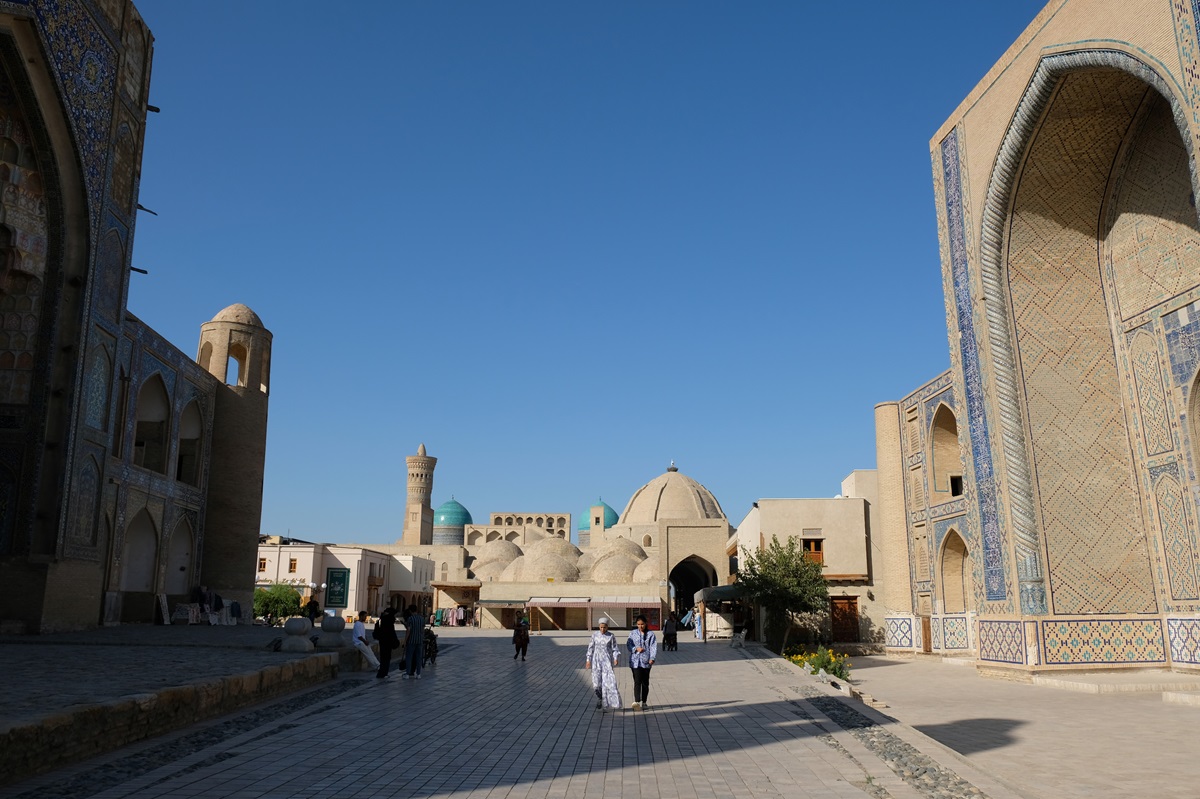
A viewpoint of Toqi Zargaron between the 17th-century Abdulaziz Khan Madrasah (left) and the 15th-century Ulughbek Madrasah (right) – not to be confused with the Ulugh Beg Madrasah in Samarkand
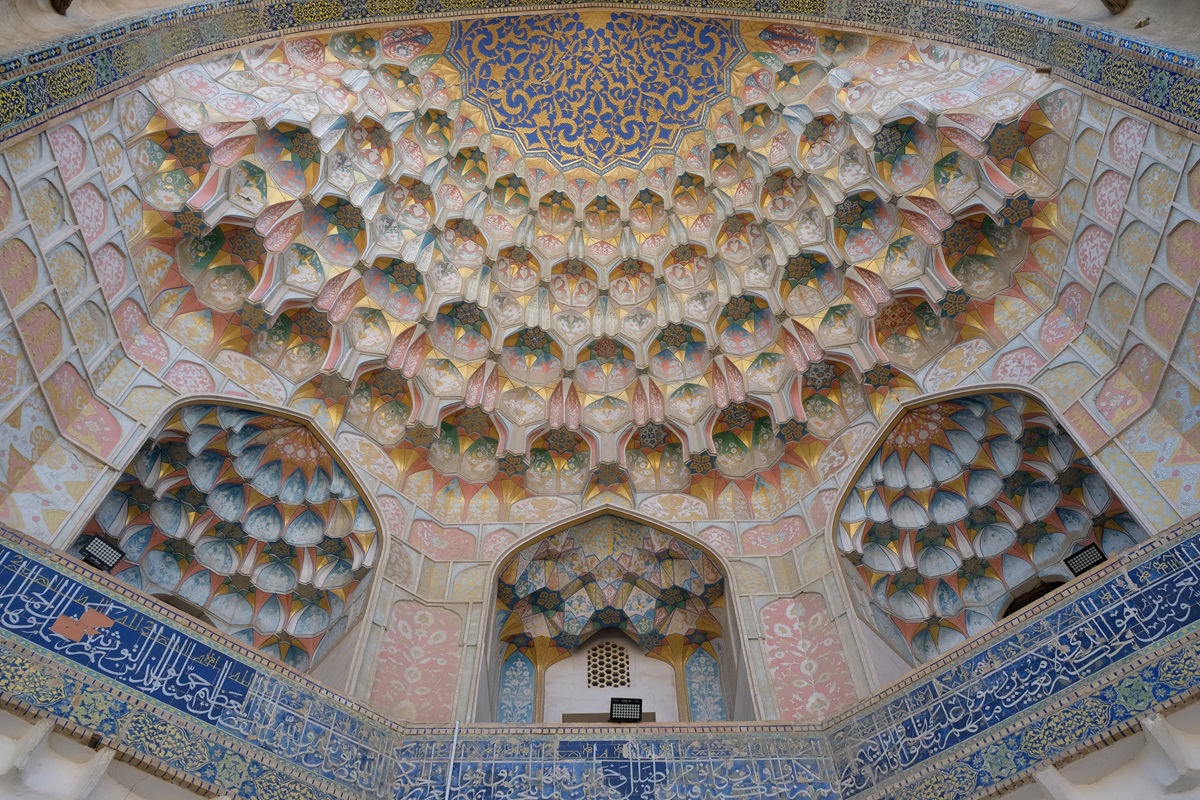
The muqarnas at the entrance of the Abdulaziz Khan Madrasah
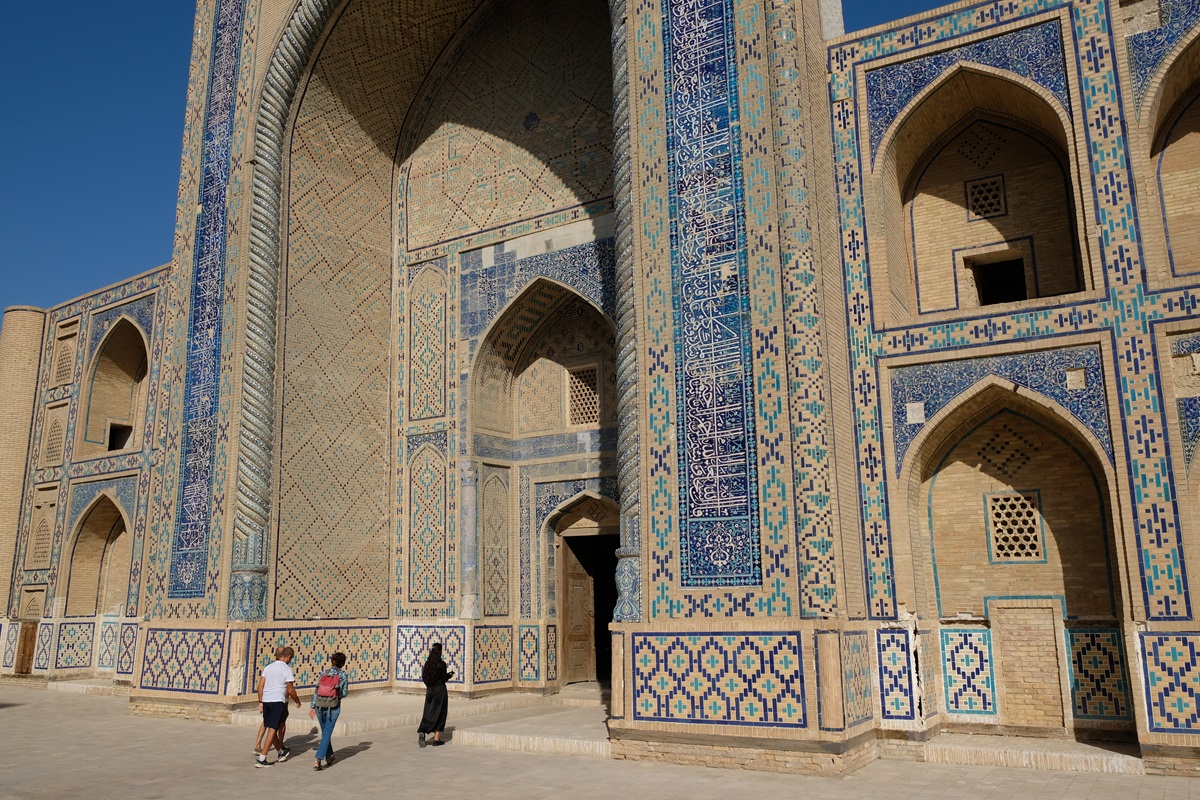
Entering the Ulugbek Madrasah
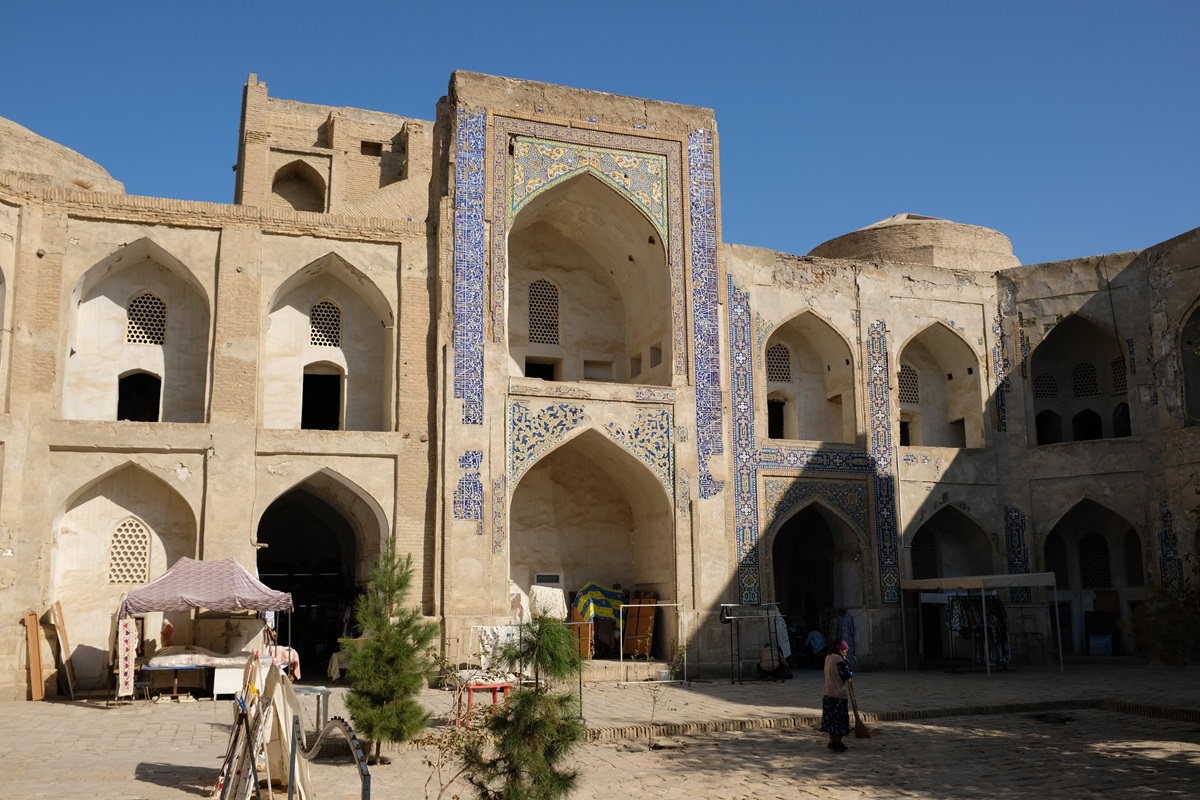
The Ulugbek Madrasah has clearly seen better days
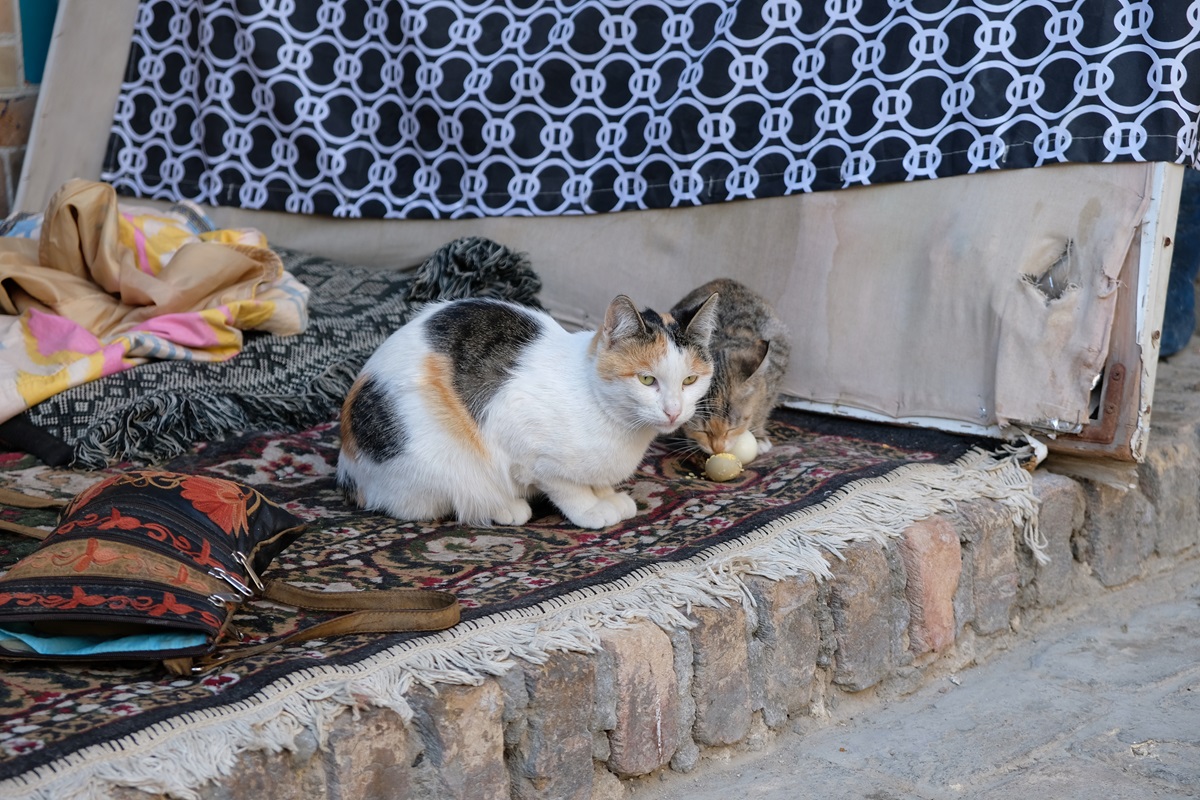
Resident cats of the Ulugbek Madrasah
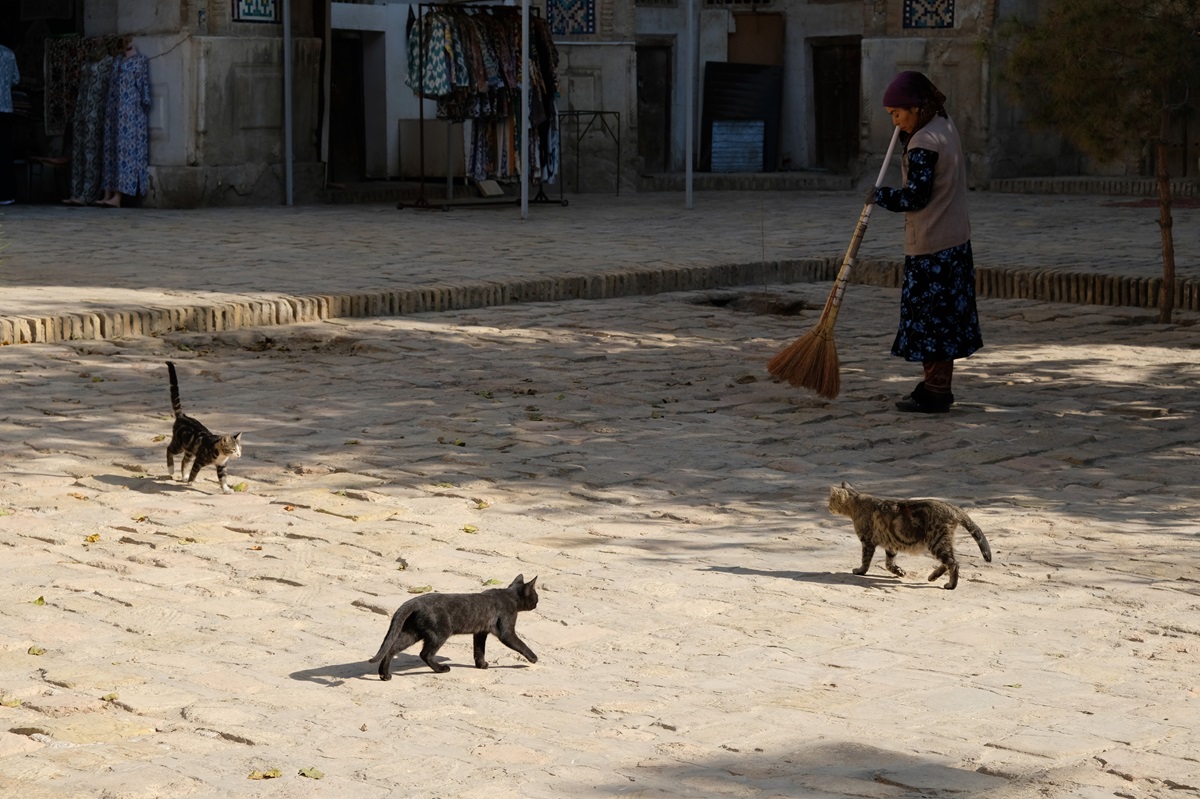
A third wheel is entering the scene
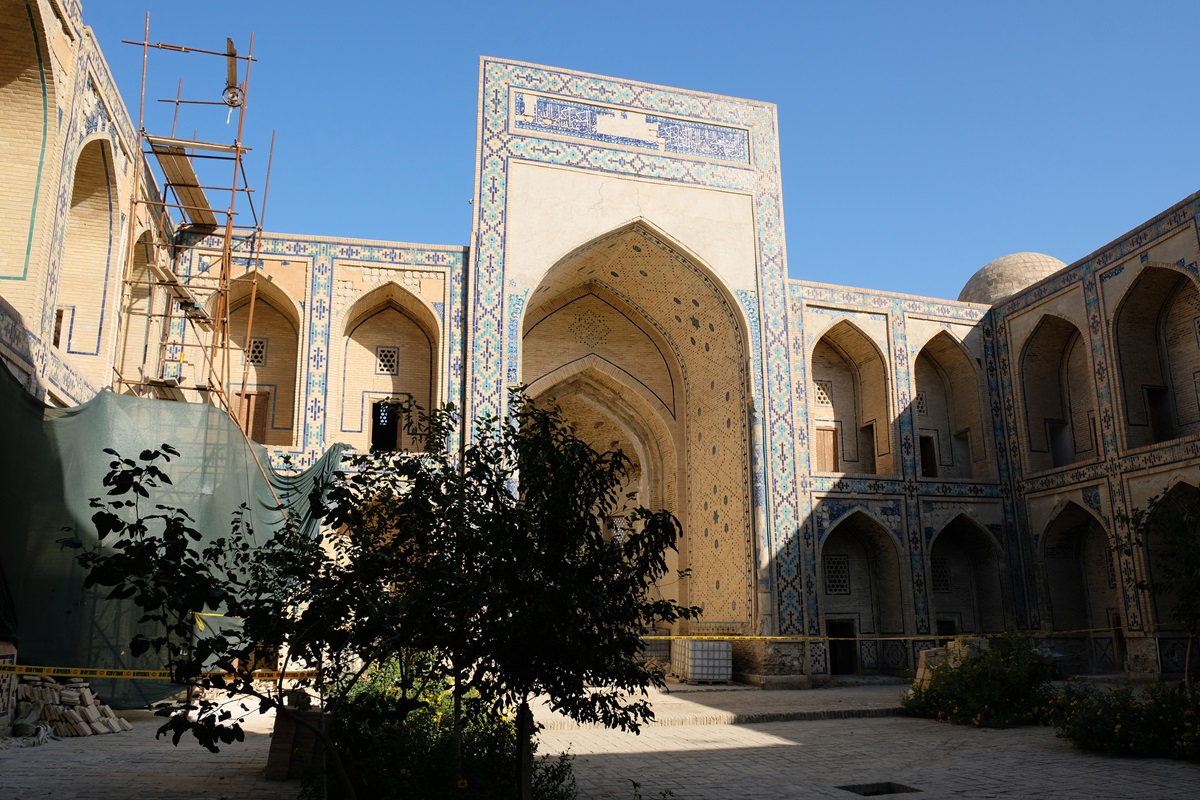
I hope the Ulugbek Madrasah will one day be restored to its former glory
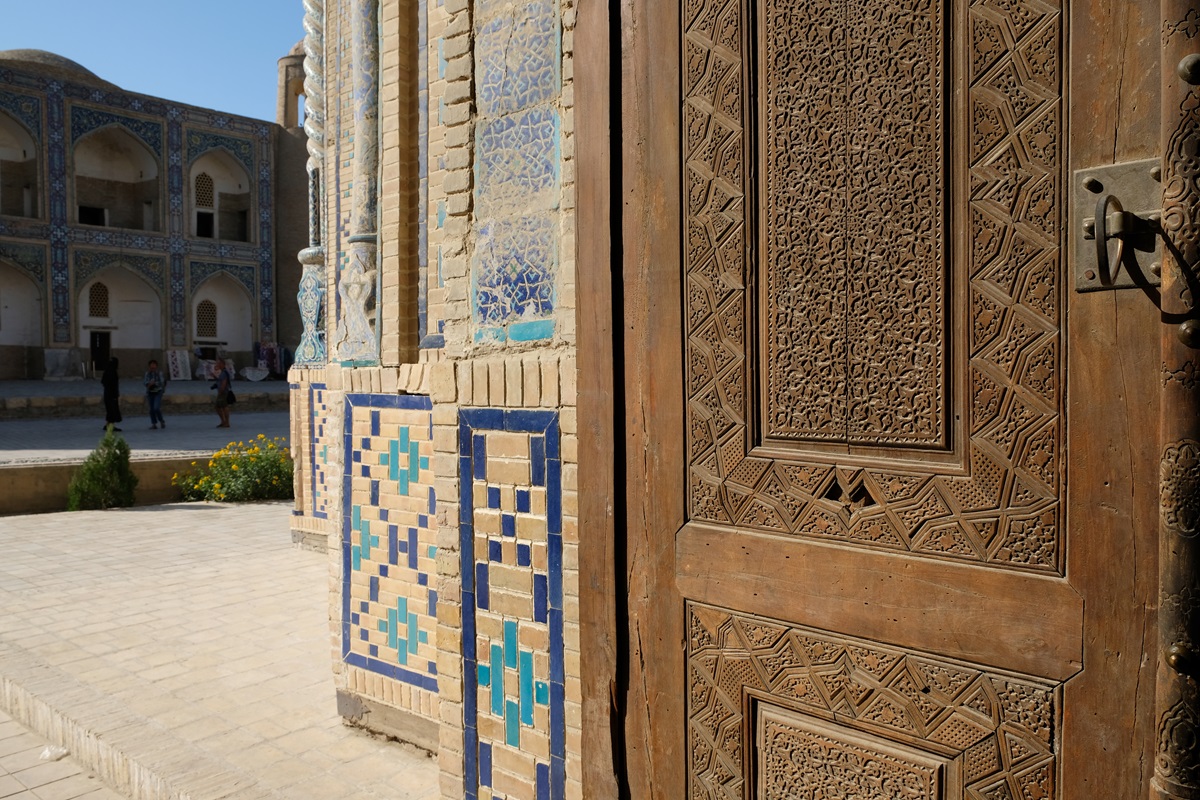
A closer look at the details of the Ulugbek Madrasah
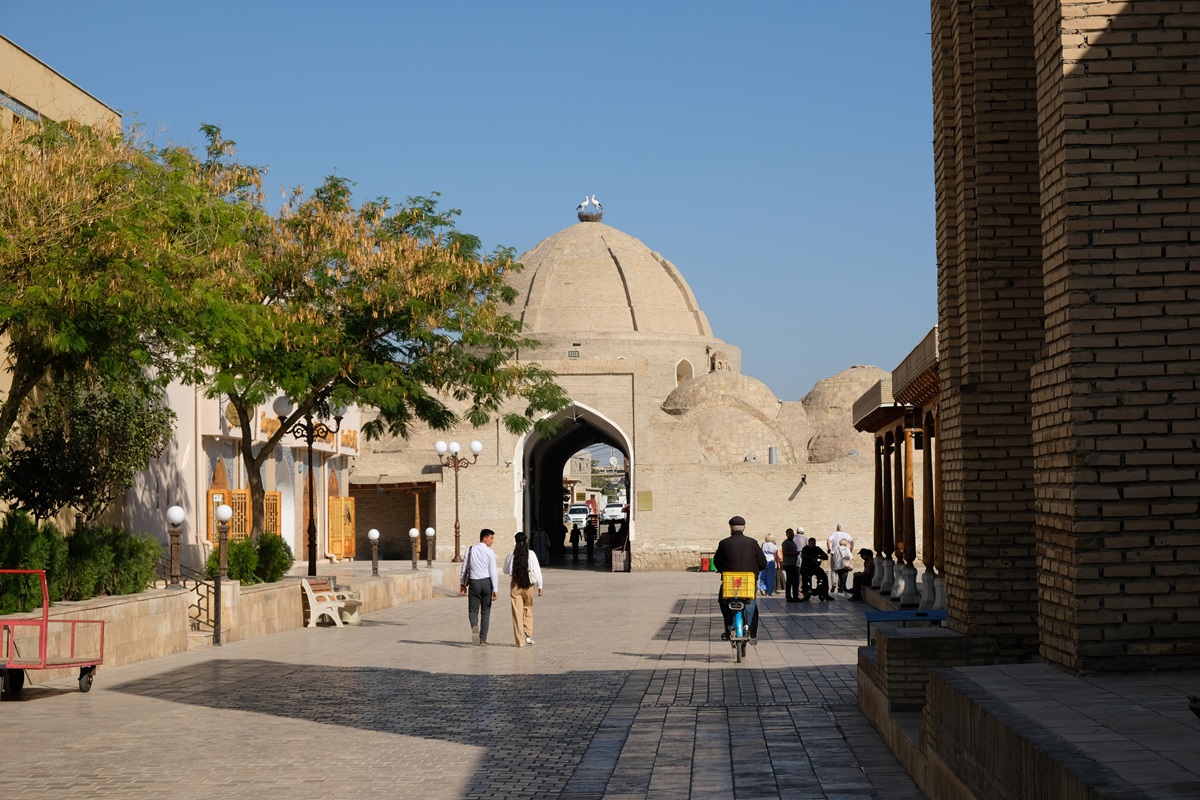
Toqi Zargaron as viewed from the street where Tim Abdullah Khan is located
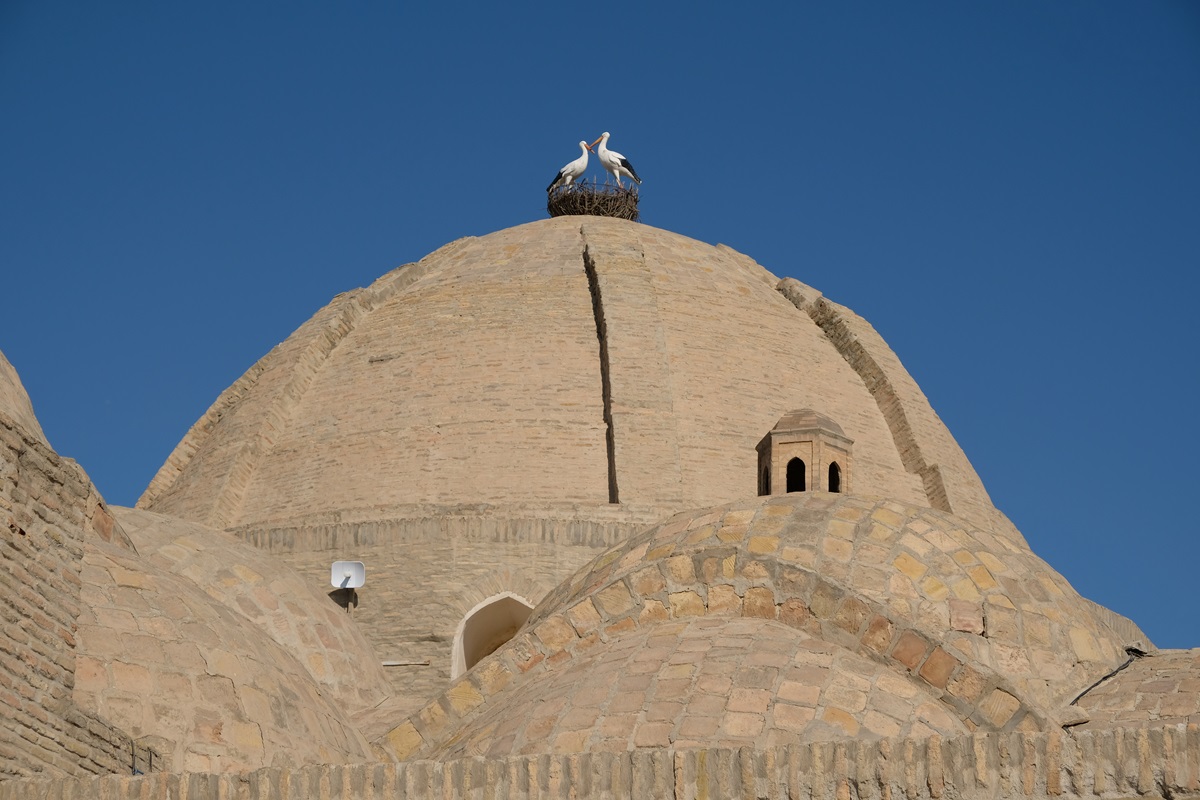
You will find stork statues in Bukhara, a reminder of the past when a lot of these birds nested on top of the city’s old buildings
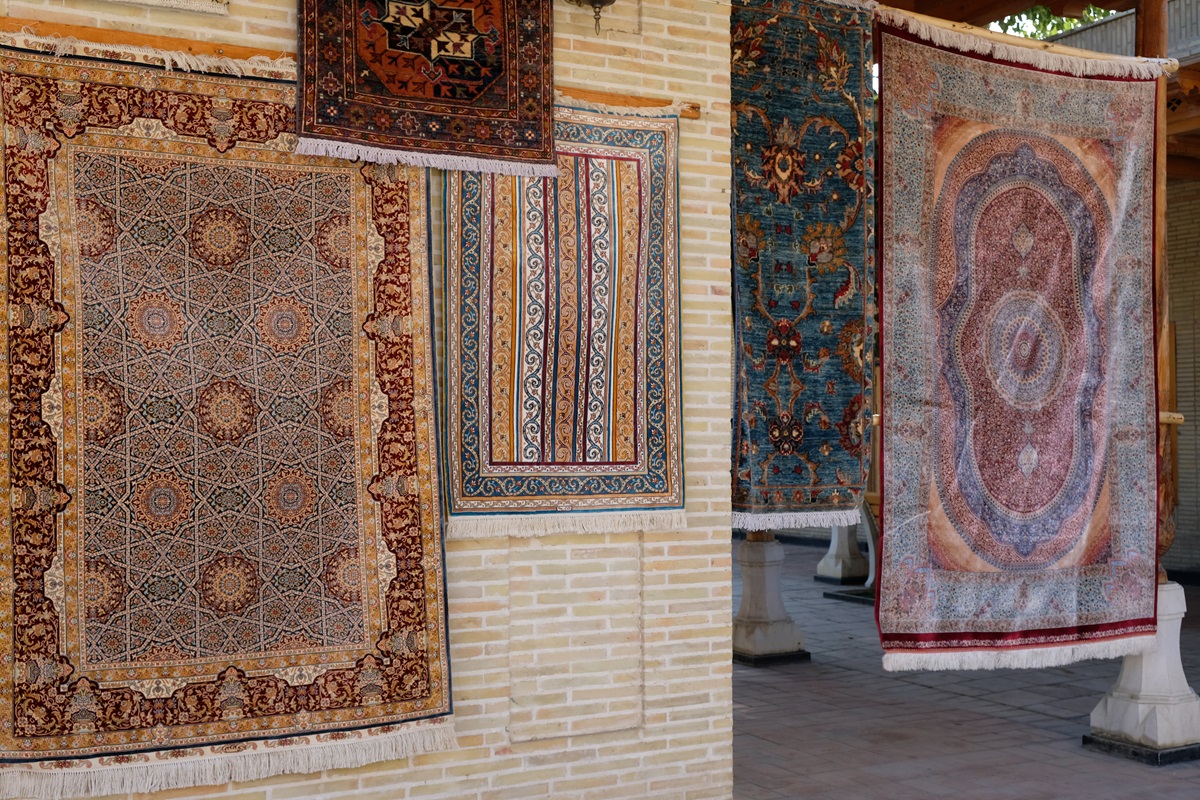
Exquisite Bukharan carpets
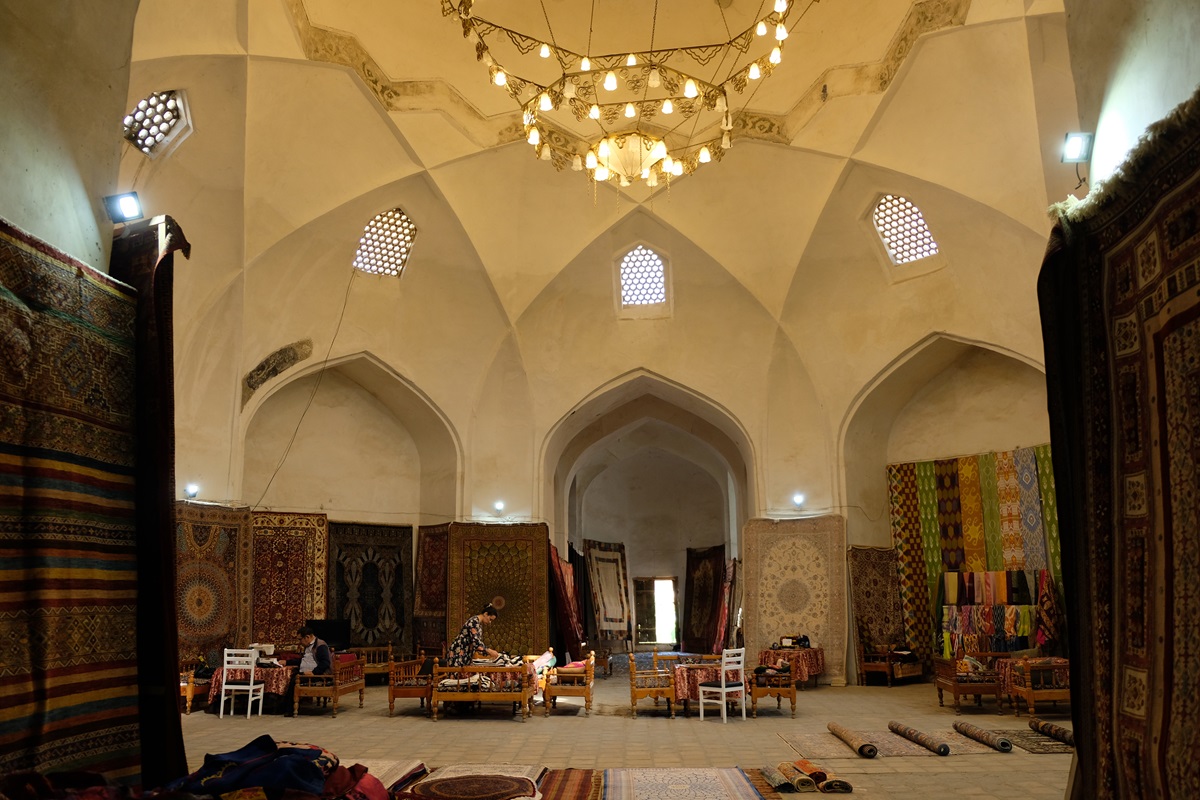
More carpets inside Tim Abdullah Khan
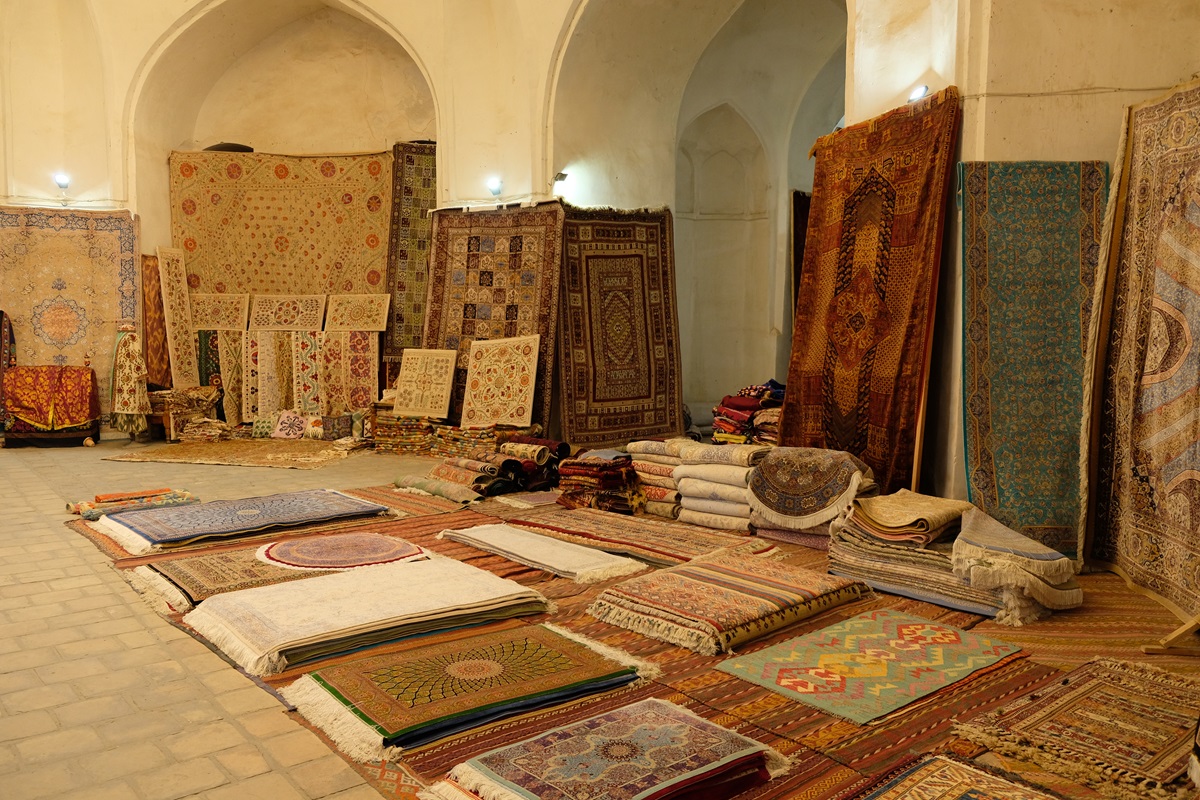
You can marvel at those beautiful pieces of art without anyone pressuring you to buy them
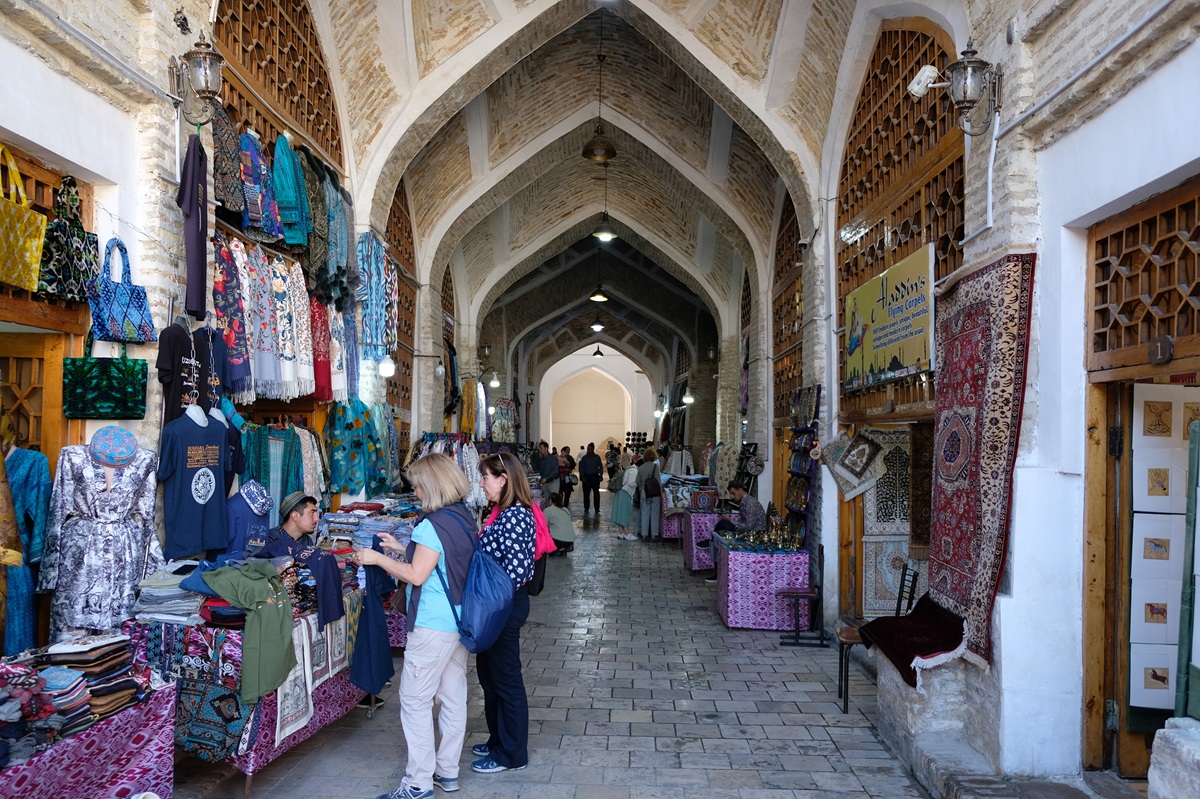
Toqi Telpak Furushon, a busier bazaar that dates back to the 16th century
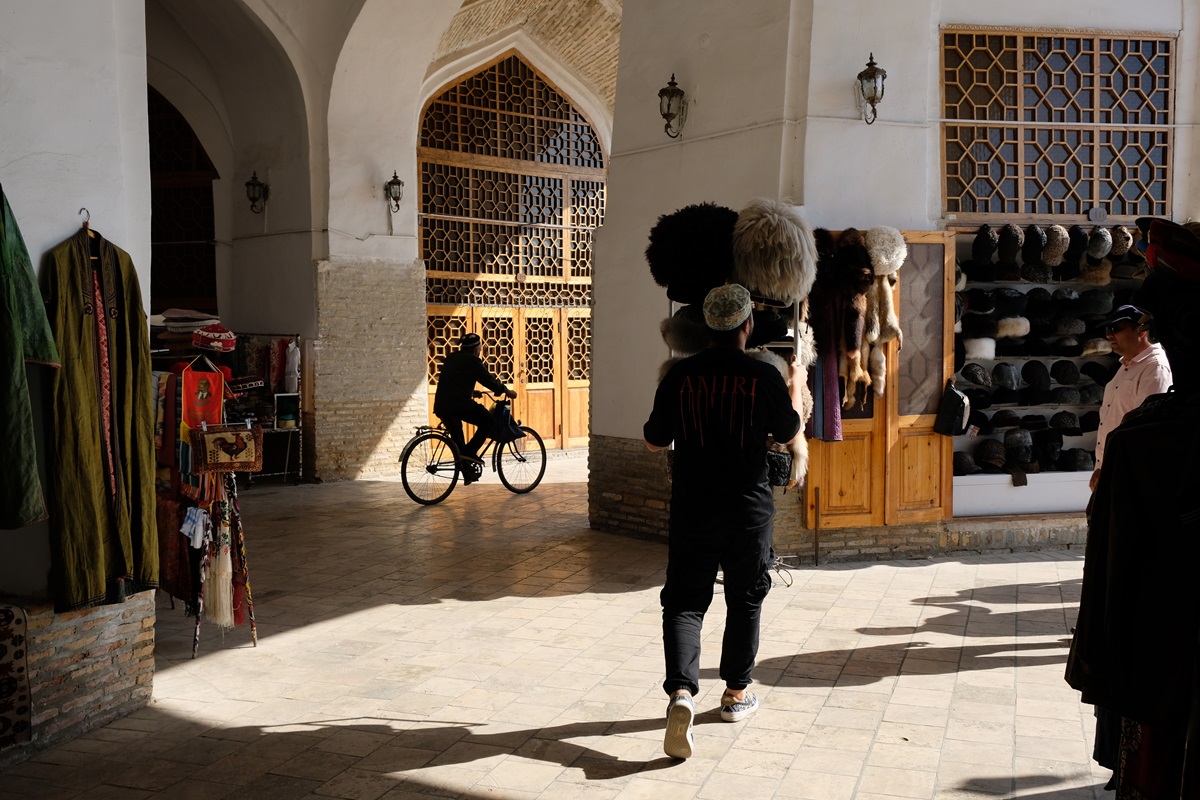
Bukhara-style morning rush
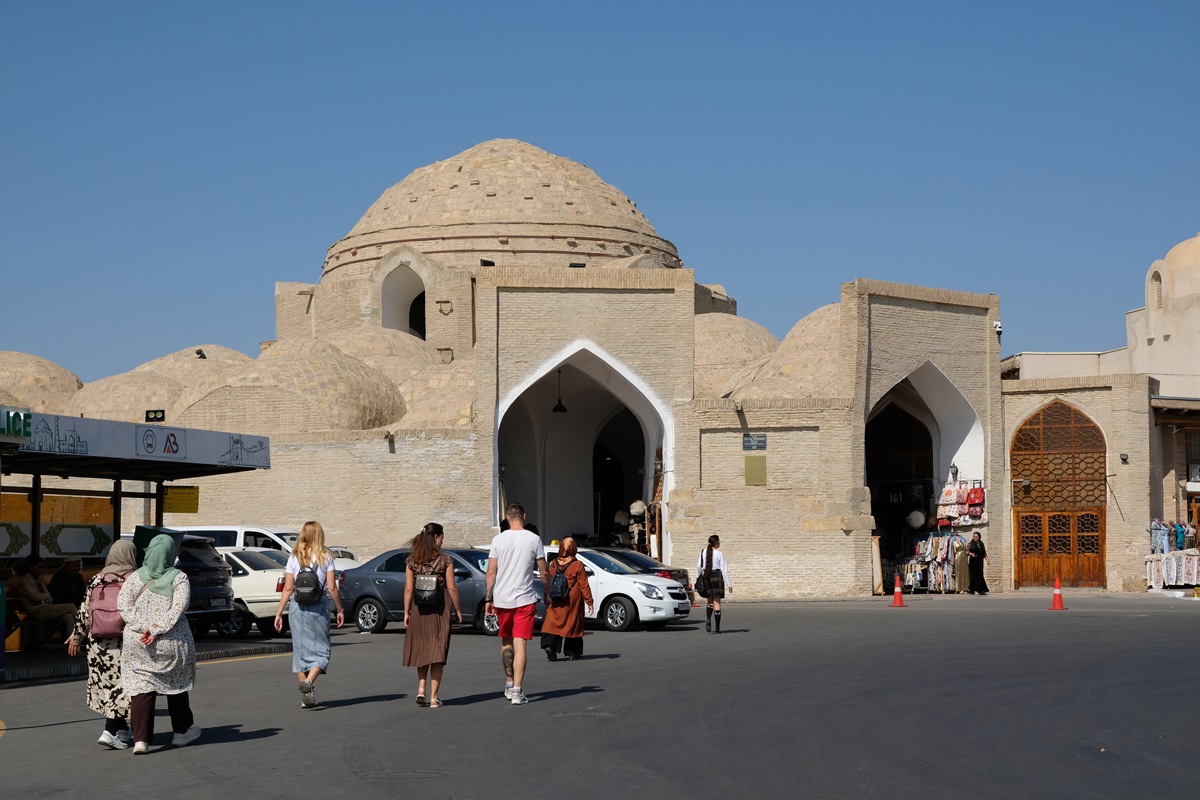
Toqi Telpak Furushon from the outside
Unlike Samarkand’s colossal ancient monuments, I found the ones in Bukhara more constrained both in size and intricacy. But that doesn’t mean they were less attractive. Take Maghoki Attori Mosque, a millennia-old mosque believed to have been built over the remains of a Zoroastrian temple. It is one of the few structures in the city that were spared from utter destruction following the Mongol invasion, and it is now a carpet museum showcasing the unique designs of carpet-making communities across Central Asia. (I found the ones from Turkmenistan particularly fascinating to look at.)
The 17th-century Nadir Devanbegi Madrasah is another structure that is hard to miss, thanks to its brilliant tile decorations depicting the Huma, a mythical bird of Persian origin that is said to live its entire life flying high above the earth. In front of the seemingly well-maintained edifice, a bronze statue appeared to be particularly popular among the locals. But even if one was unaware of who he is, the humorous style of his portrayal would almost guarantee a gaze or two. It is Nasreddin Hodja (also known as Affandi), a 13th-century character commonly recounted in tales across the Muslim world, and often described as a foolish yet witty person whose words carried wisdoms and truth.
The truth about Bukhara, as I learned in every step I took when exploring its atmospheric corners, was that it turned out to be a lot more captivating than I previously thought it would be. Take Kukaldosh Madrasah, for example. This centuries-old structure, embellished with more subdued ornaments than Nadir Devanbegi Madrasah that sits right across the street, might not seem that interesting from the outside and looked rather austere. But that shouldn’t stop you from going inside, which I’m glad we did.
At first, we stumbled upon the usual stalls selling souvenirs like in other places in the old town. However, as we emerged from the interior into its vast and airy inner courtyard, one particular miniature painter caught my attention. All artisans in Bukhara who were completing such delicate works with a steady stream of onlookers walking past them were men. But the one I saw at Kukaldosh Madrasah was a woman, a young one no less. We approached her and took a closer look at her works, each of them beautifully well-made, before being fixated on one where blue is the dominant color with shades of gold. Out of curiosity, I asked her about the characters depicted on it.
“This is Marco Polo, and behind him is [the Mughal Emperor] Shah Jahan carrying a picture of the Taj Mahal,” she explained, adding, “that person riding the donkey, that’s Affandi.” She further elaborated on the landmarks she painted behind the characters: St Mark’s Campanile of Venice, Kaltaminor of Khiva, the Kalyan Minaret of Bukhara, the Registan of Samarkand, and a building that looks undisputedly Chinese. We rarely buy things when we travel, but we make exceptions for items we consider special, and this miniature painting was one of them.
Shoxista. She wrote her name in the Latin alphabet – a script that has been promoted by the Uzbek government to replace Cyrillic – and added her signature at the back of the painting before carefully wrapping it. After exchanging rahmat (“thank you”) and marhamat (“you’re welcome”) with her, we left the peacefulness of Kukaldosh and delved back into the beating heart of Bukhara’s old town district. I know we paid for this painting, but somehow it felt more like a gift because it came from a place of deep reverence and love for the arts. And it certainly boosted our mood even further to explore the rest of Bukhara’s historical sites. One thing’s for sure: when you are in Bukhara, never hesitate to pop into an old madrasah or a former caravanserai as you may be in for a delightful surprise.
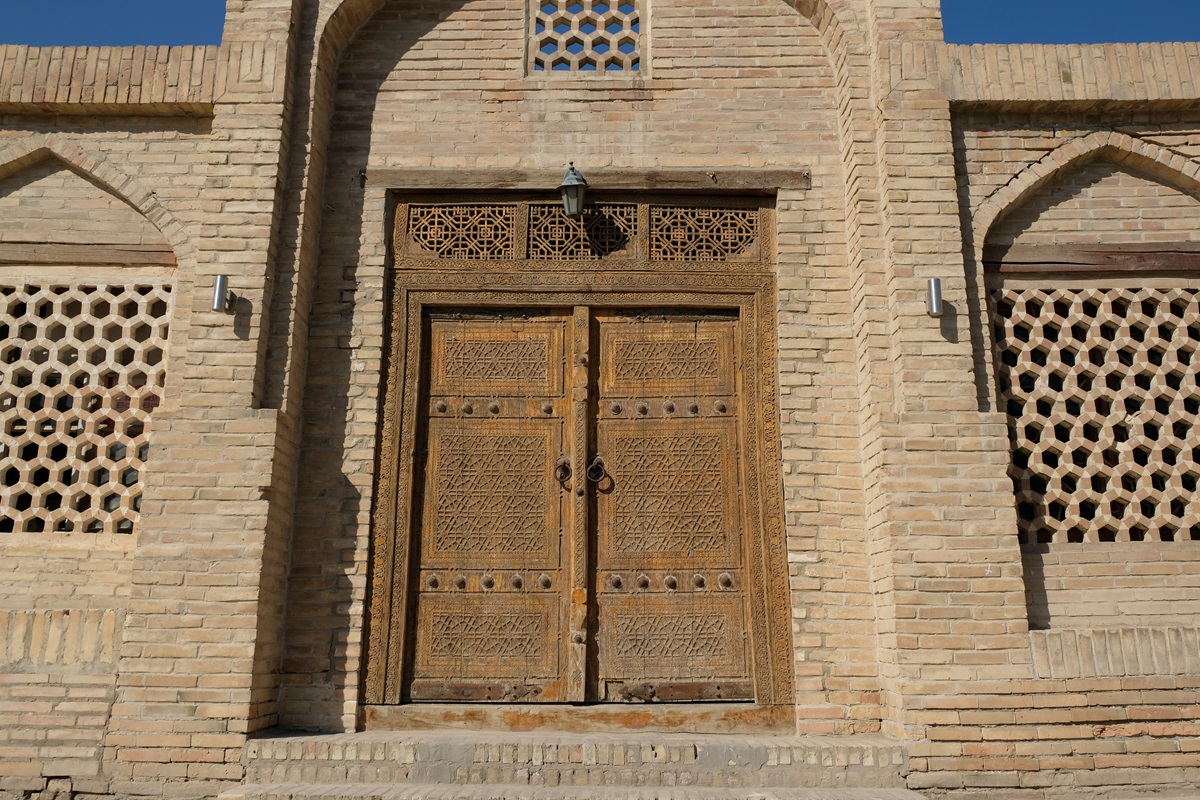
The front door of the 19th-century Fathullojon Caravanserai
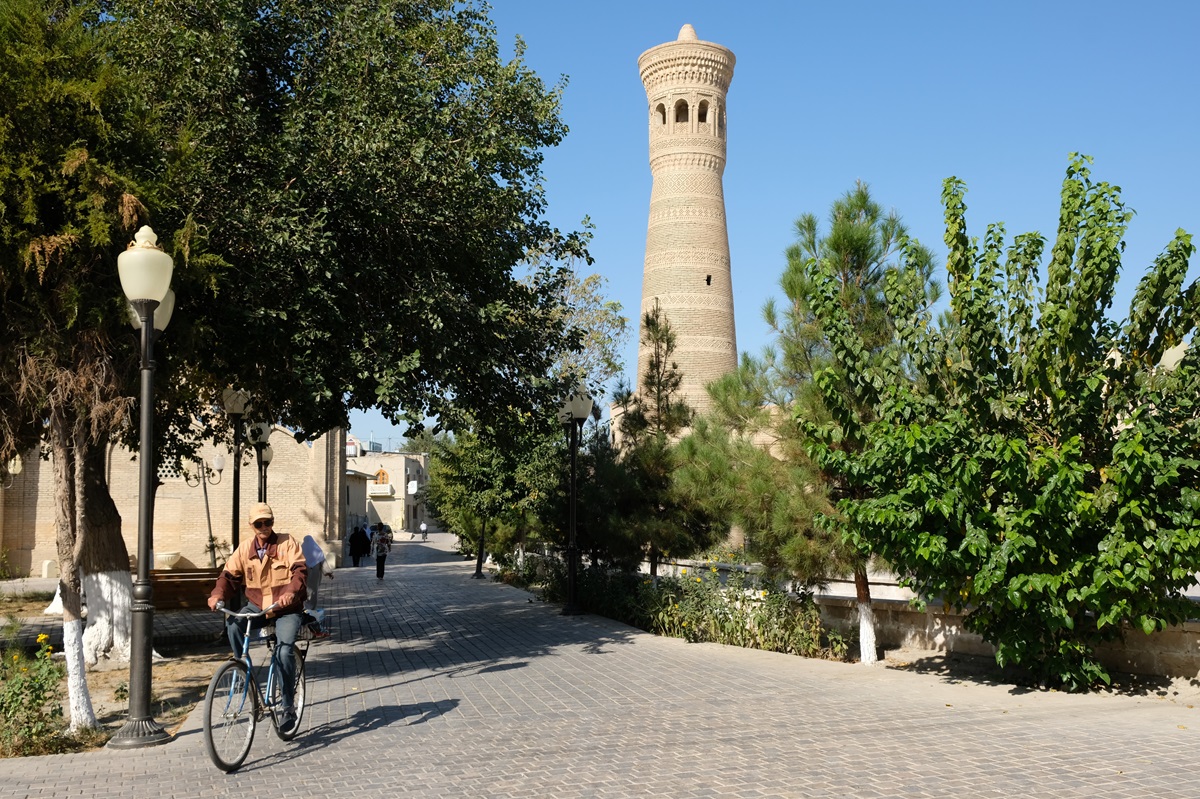
The minaret of the 16th-century Khoja Gaukushan Mosque, modelled after the iconic Kalyan Minaret
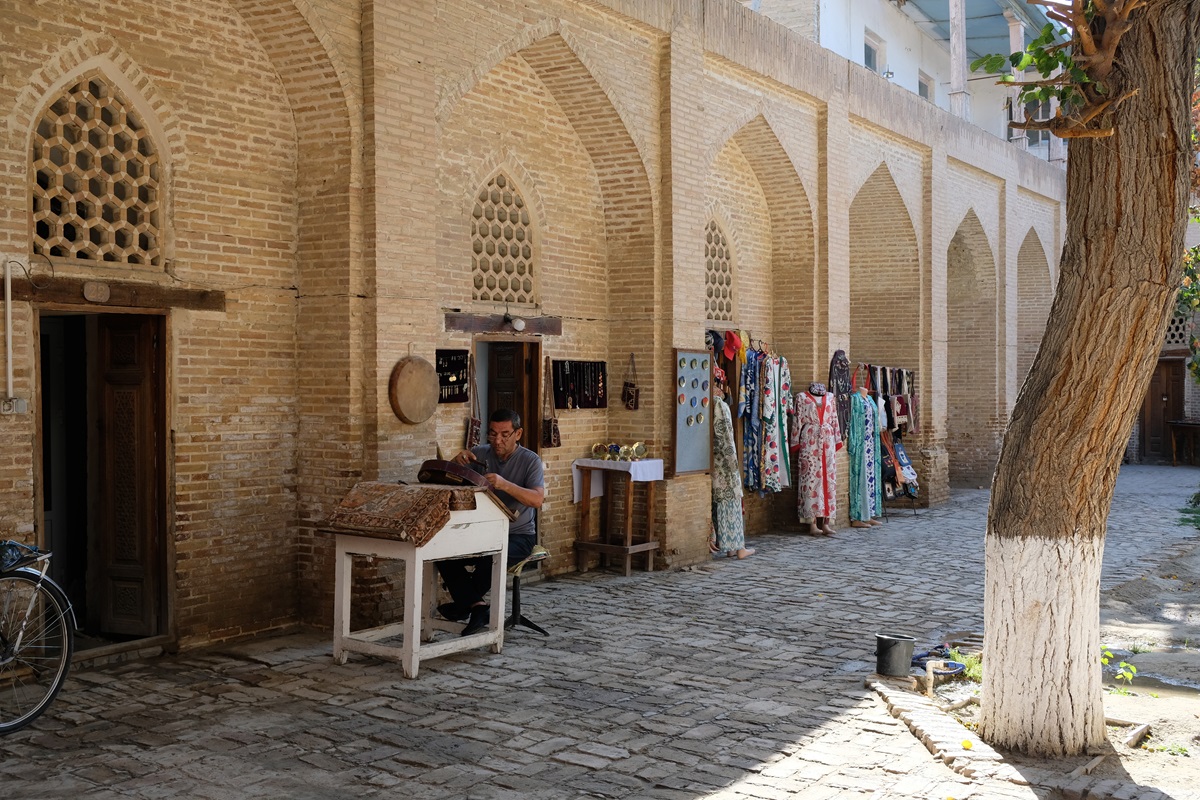
A local artisan at work inside the 19th-century Olimjon Caravanserai
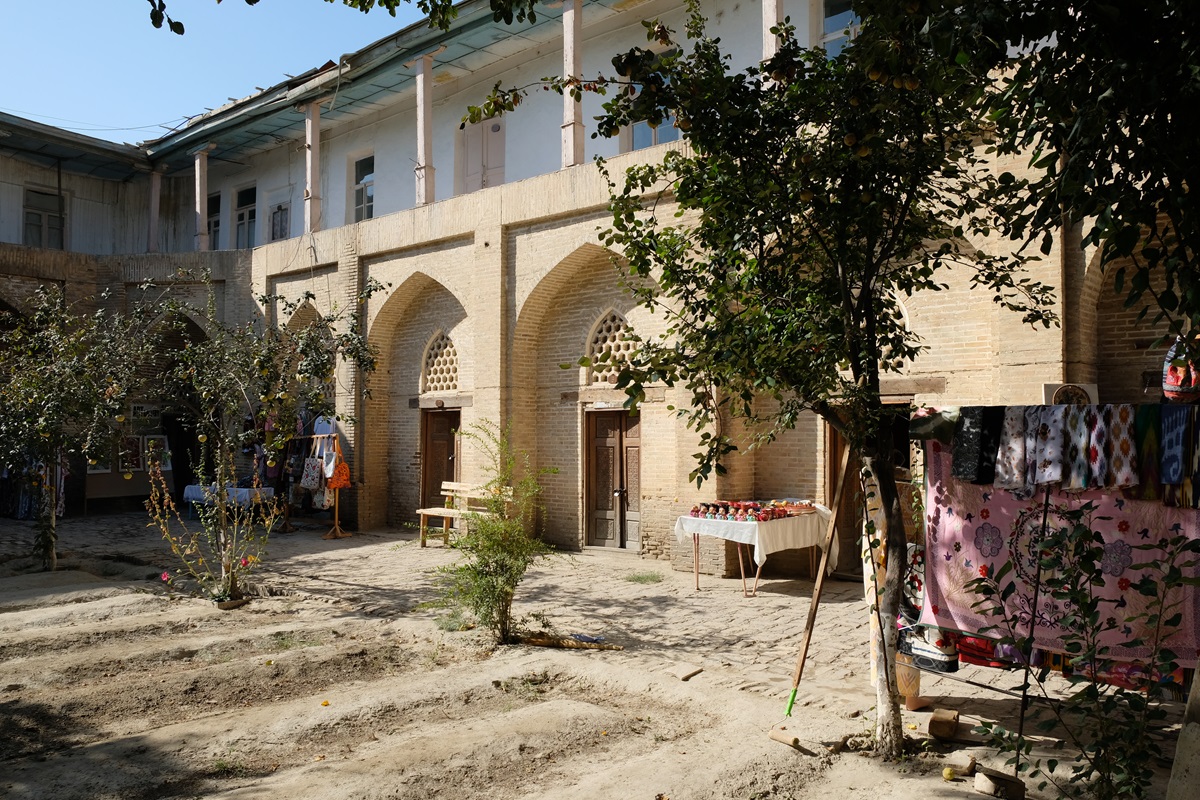
The former caravanserai was home to a number of small stalls
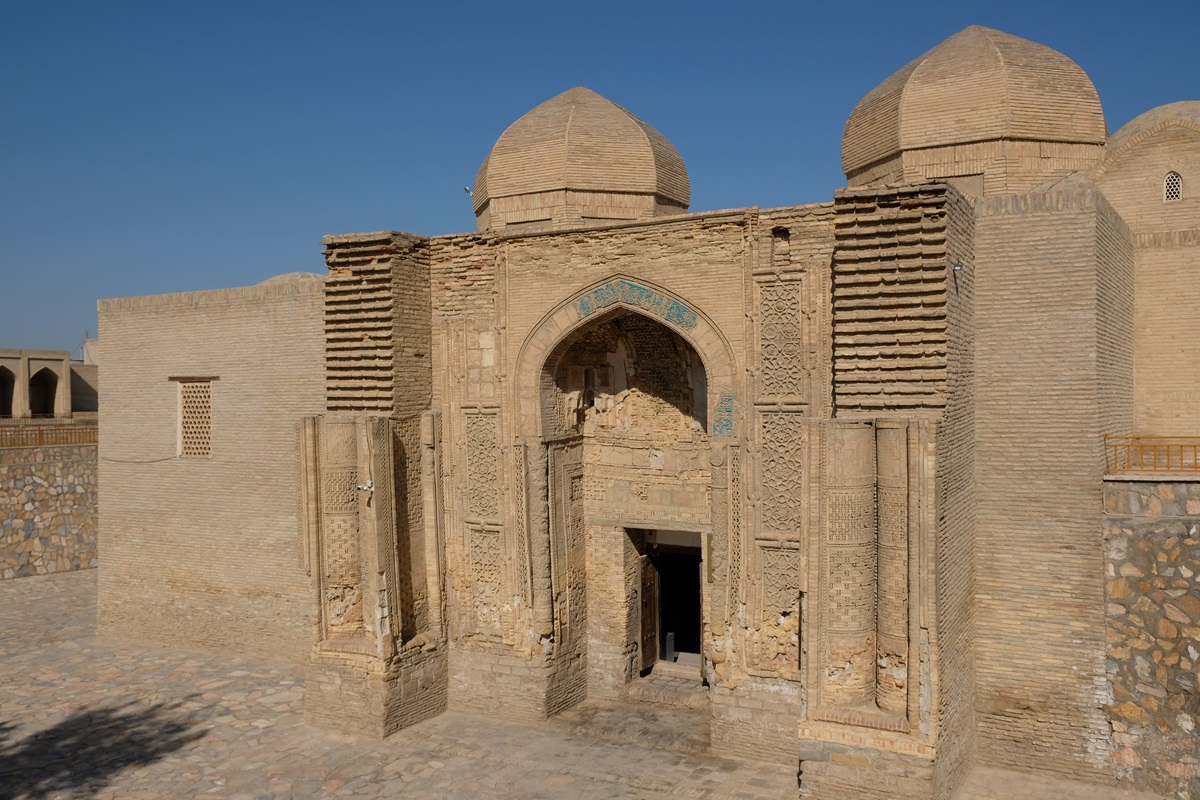
Maghoki Attori Mosque, one of the buildings in Bukhara spared by the invading Mongols in the 13th century
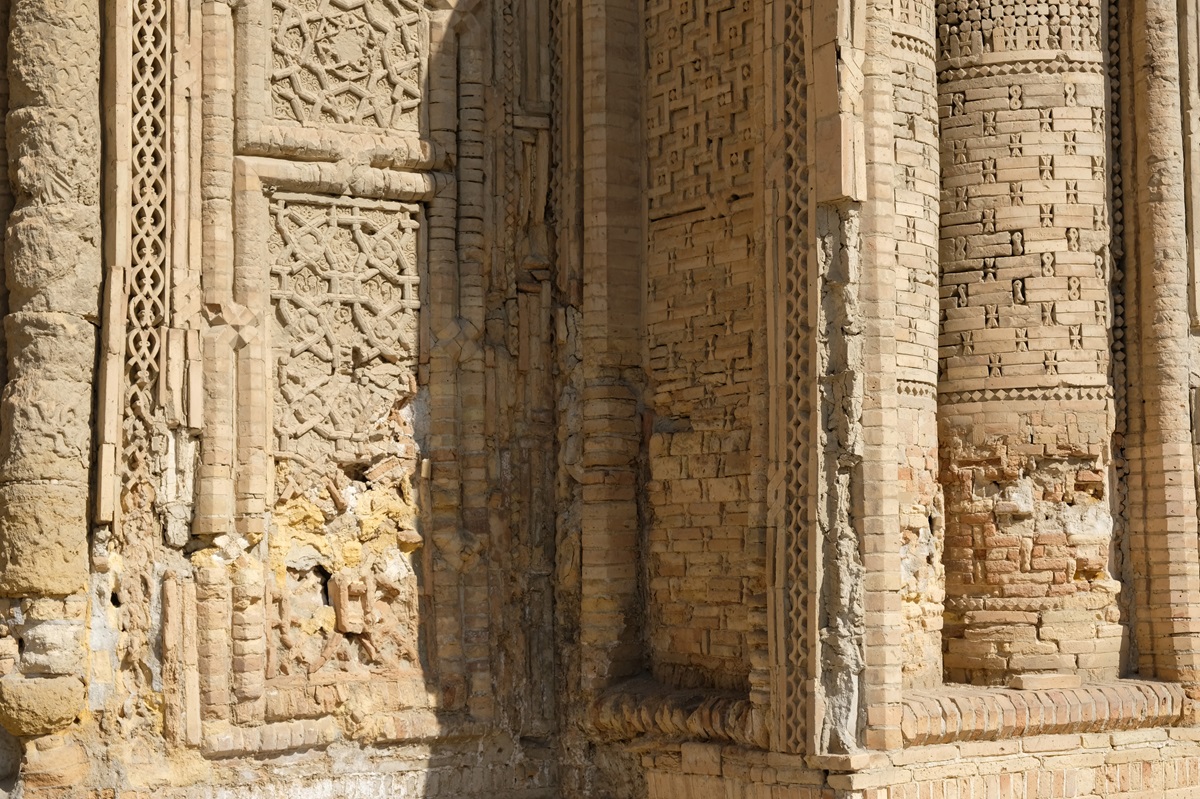
Decorative elements of the mosque that survived the test of time
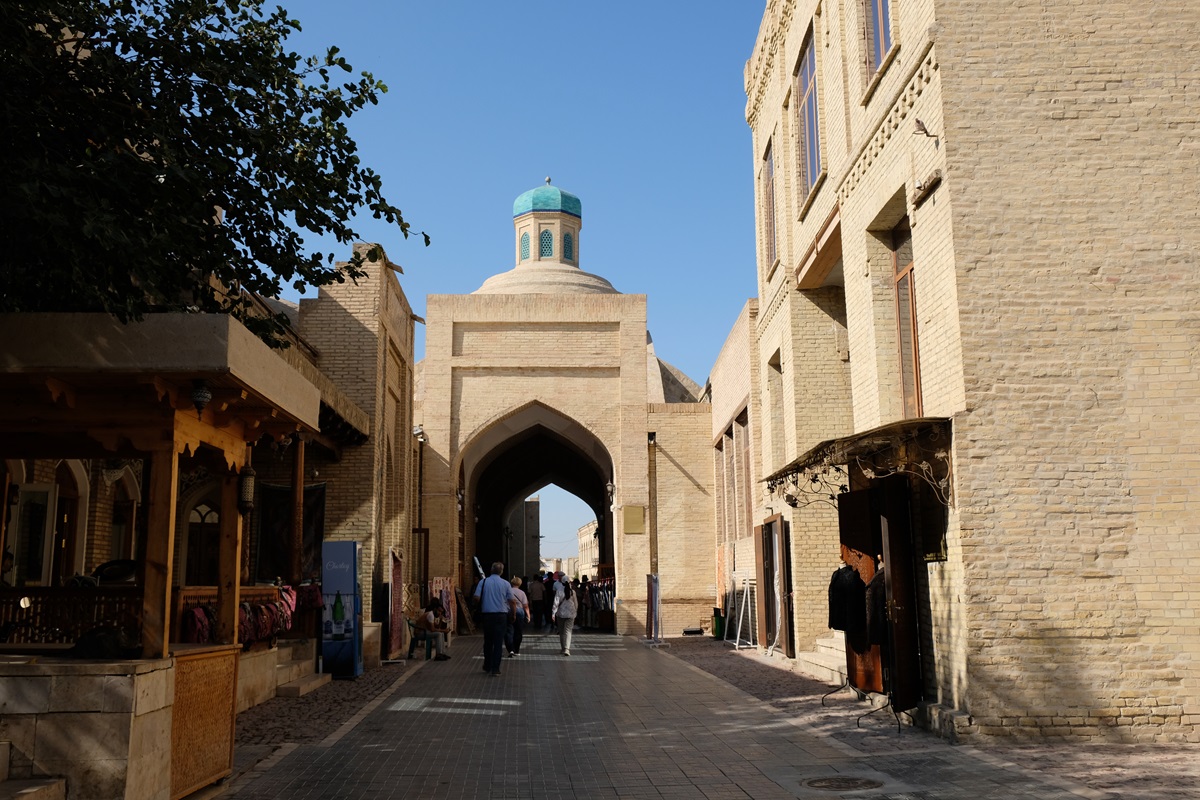
Toqi Sarrofon, a 16th-century trading dome which was chiefly used by money changers in the past
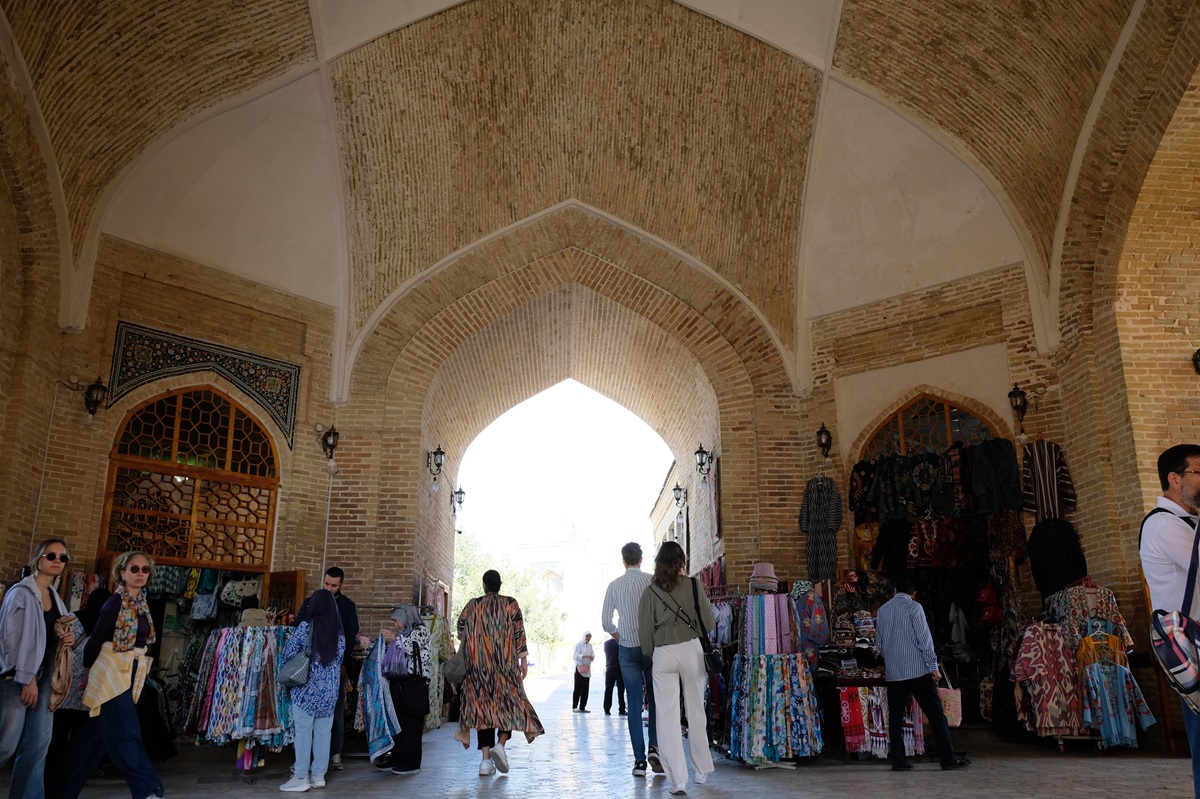
Underneath the dome of Toqi Sarrofon
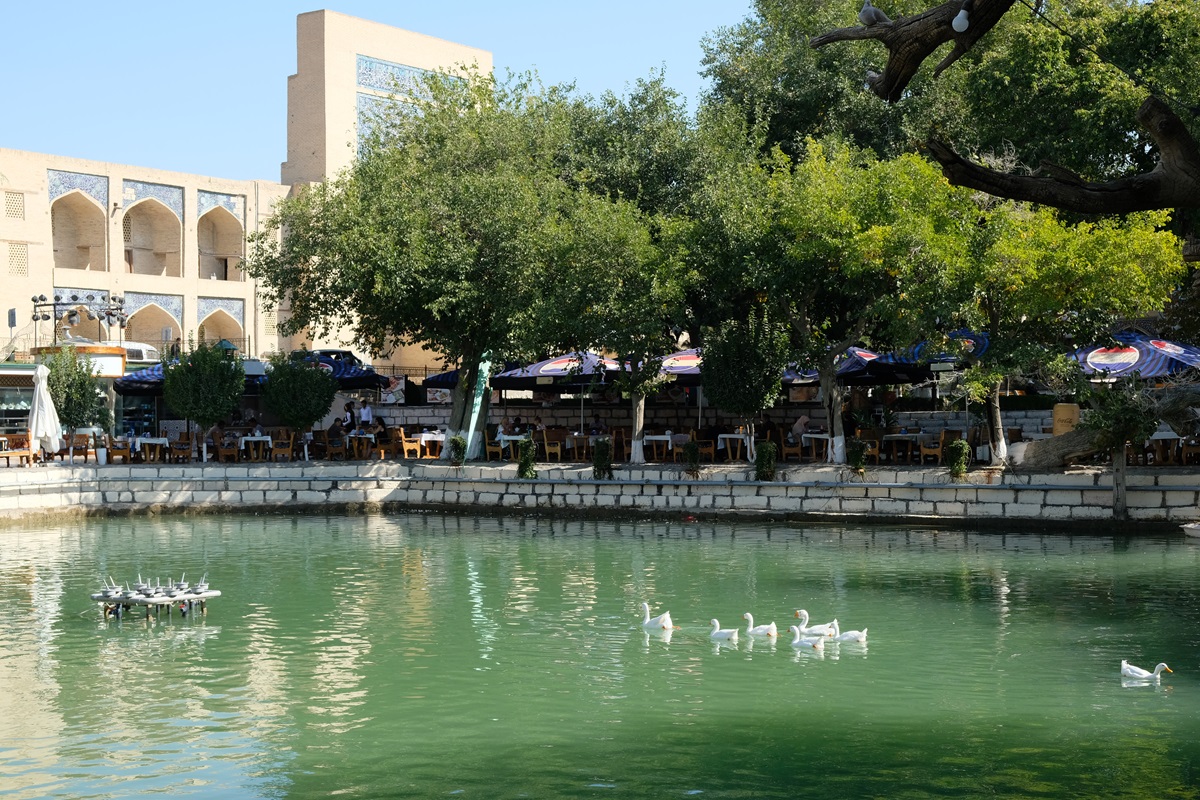
Lab-i Hauz, a popular spot next to one of the few remaining hauz pools (what storks came for in the past) in Bukhara
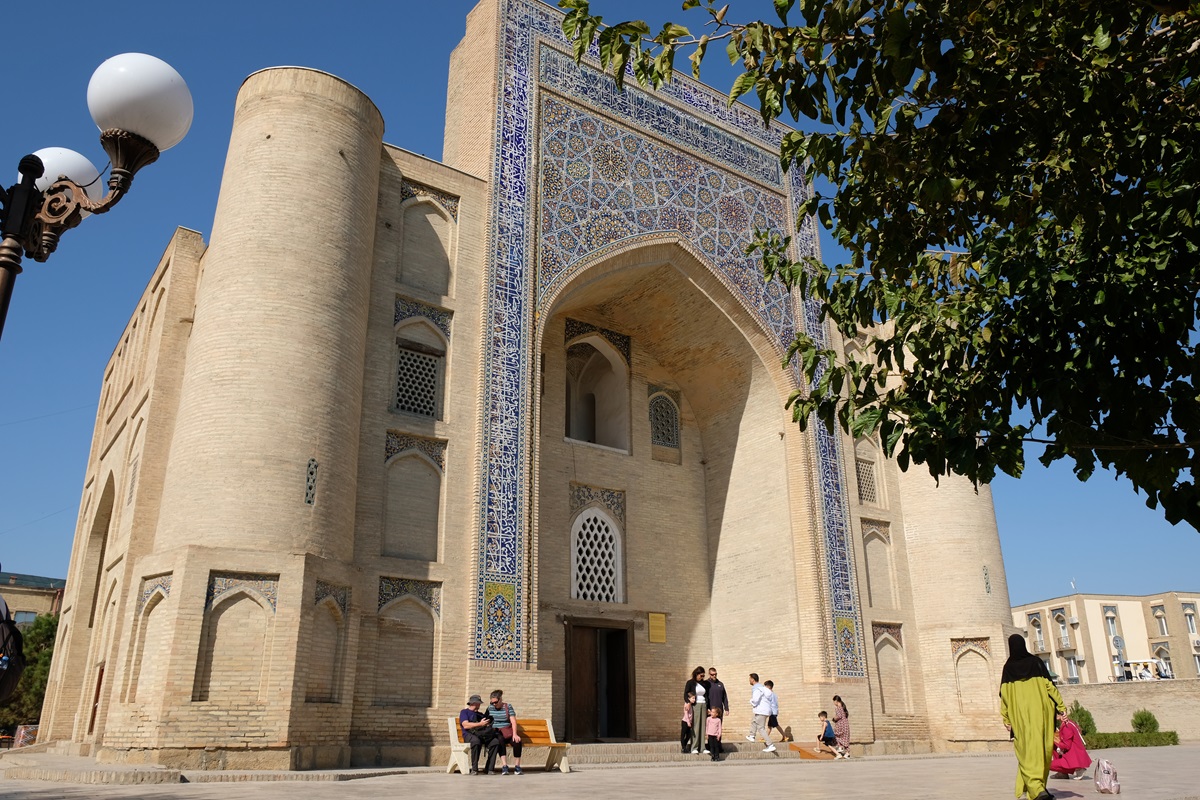
The 17th-century Nadir Devanbegi Khanqah (Sufi lodge)
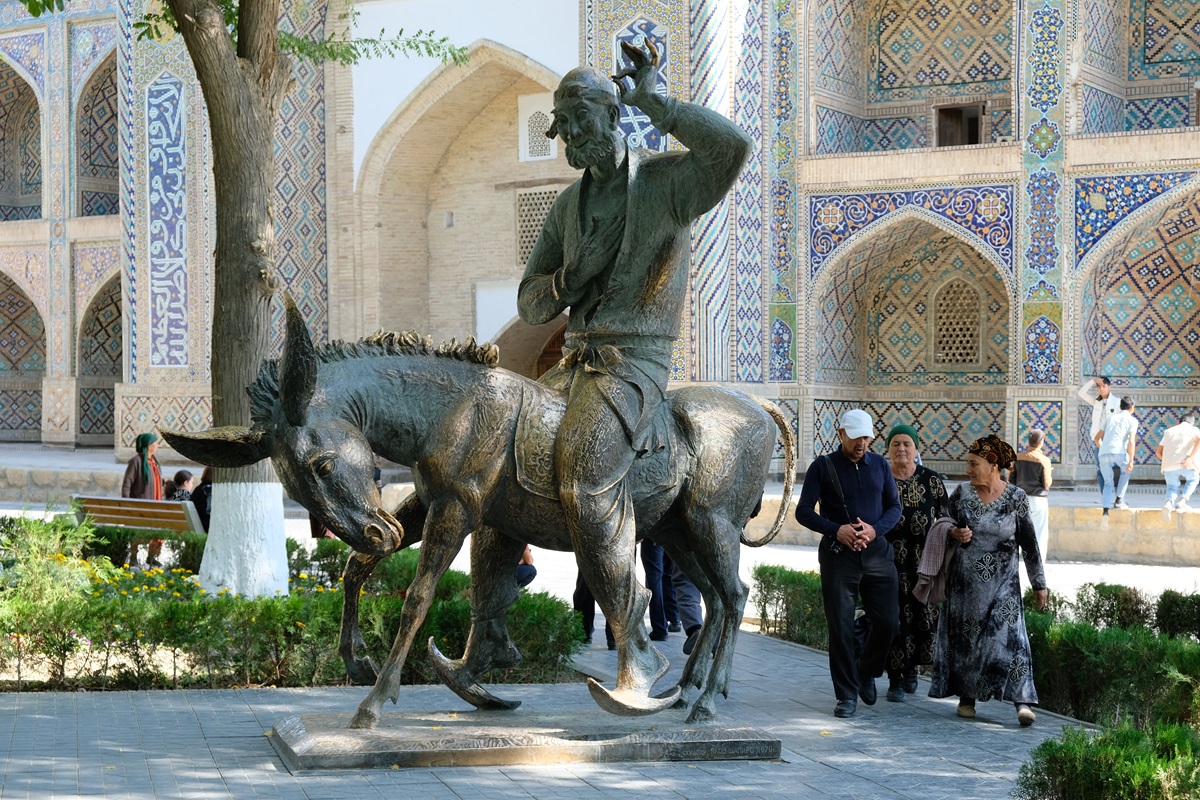
Nasreddin Hodja riding a donkey in front of Nadir Devanbegi Madrasah
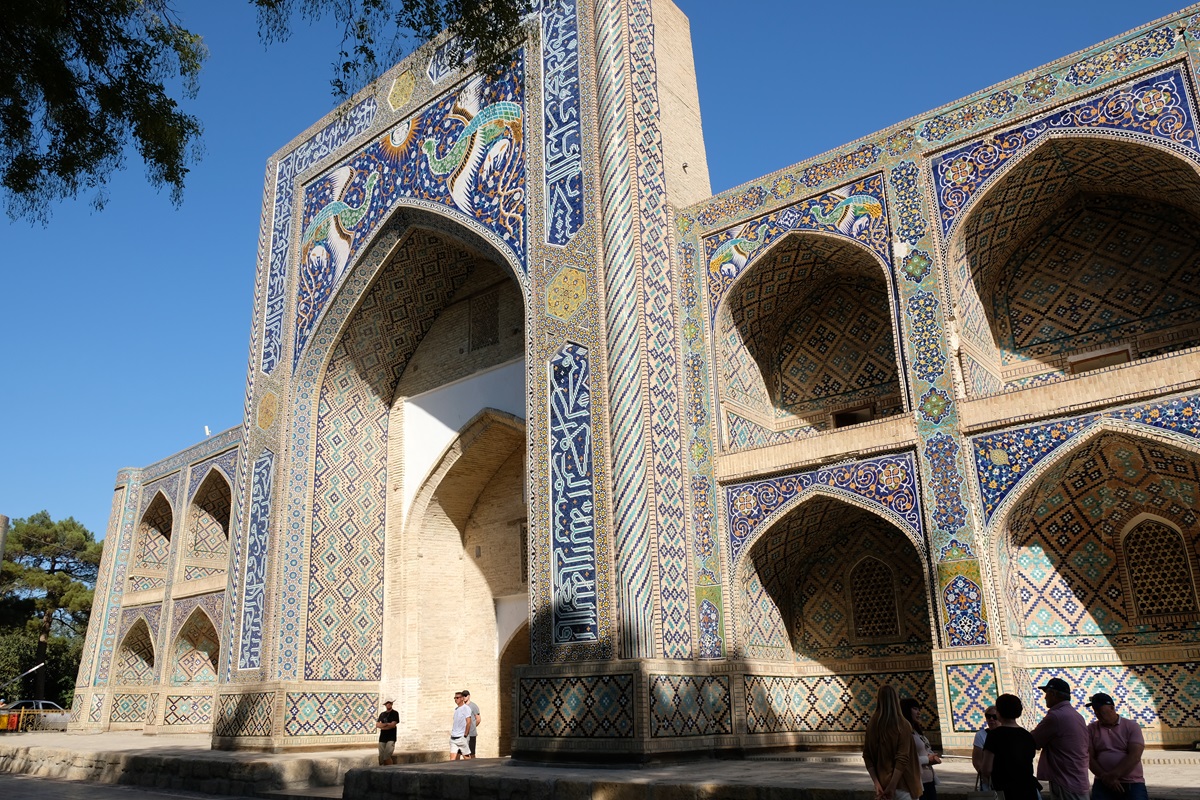
The beautiful 17th-century Nadir Devanbegi Madrasah
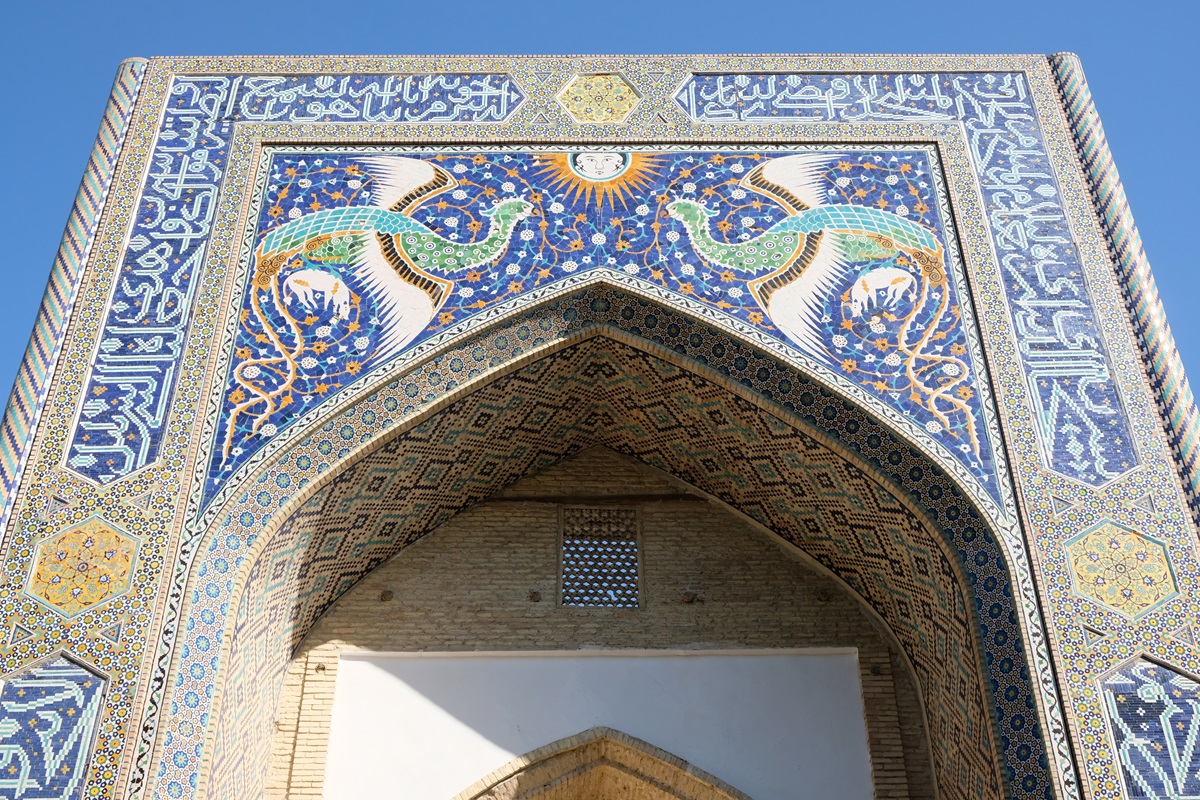
The Huma, a mythical bird from Persian mythology
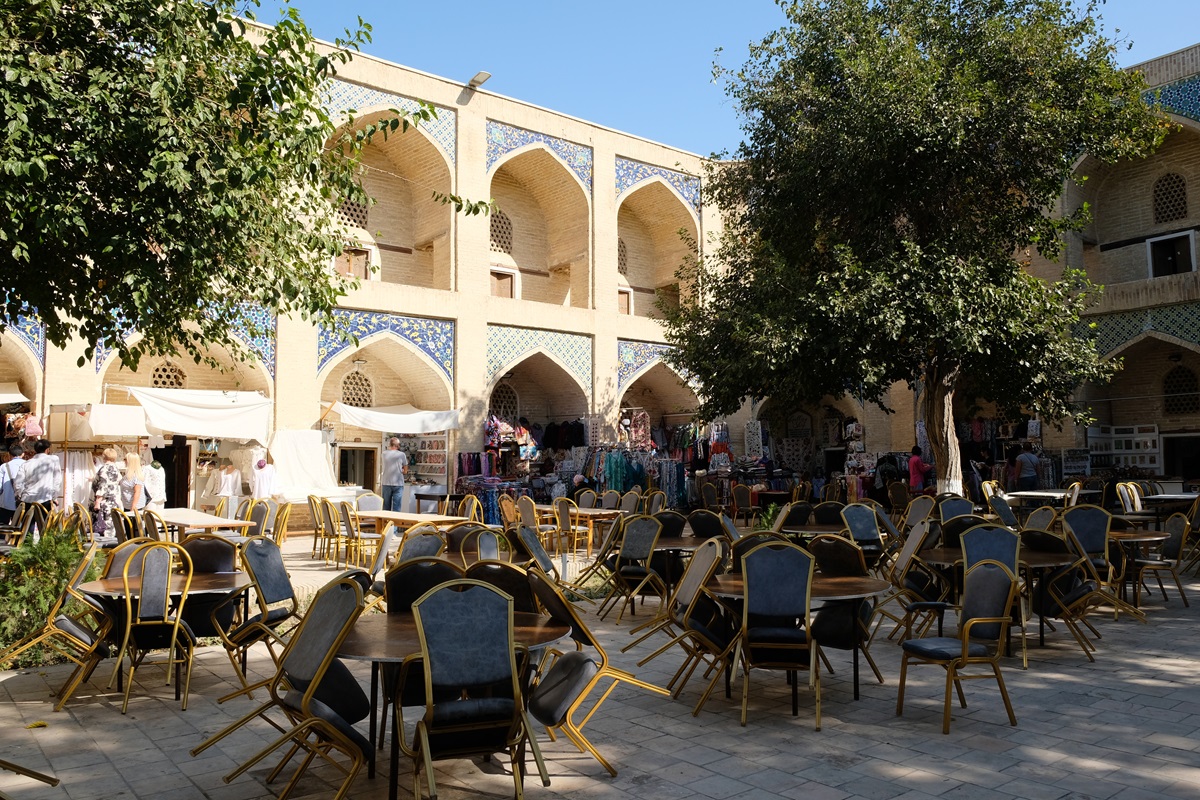
Inside Nadir Devanbegi Madrasah
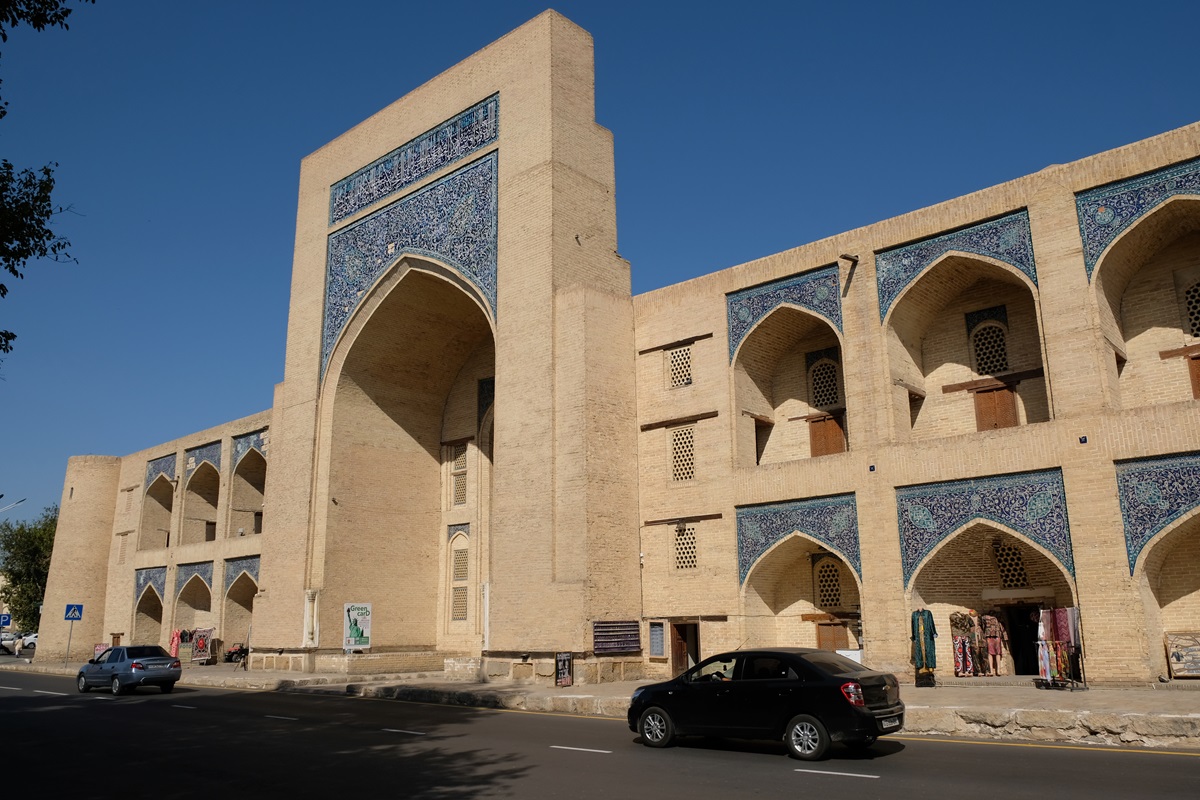
In comparison, Kukaldosh Madrasah directly across the street looked rather austere
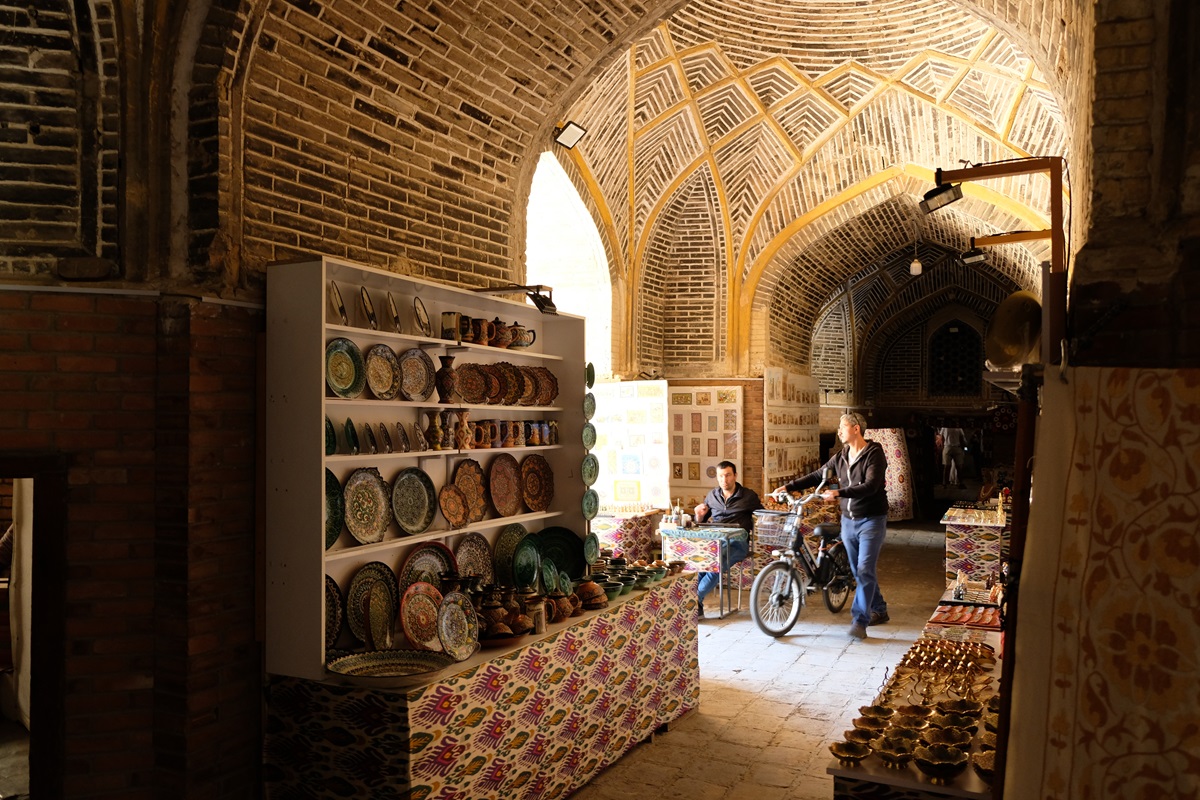
Going inside Kukaldosh Madrasah
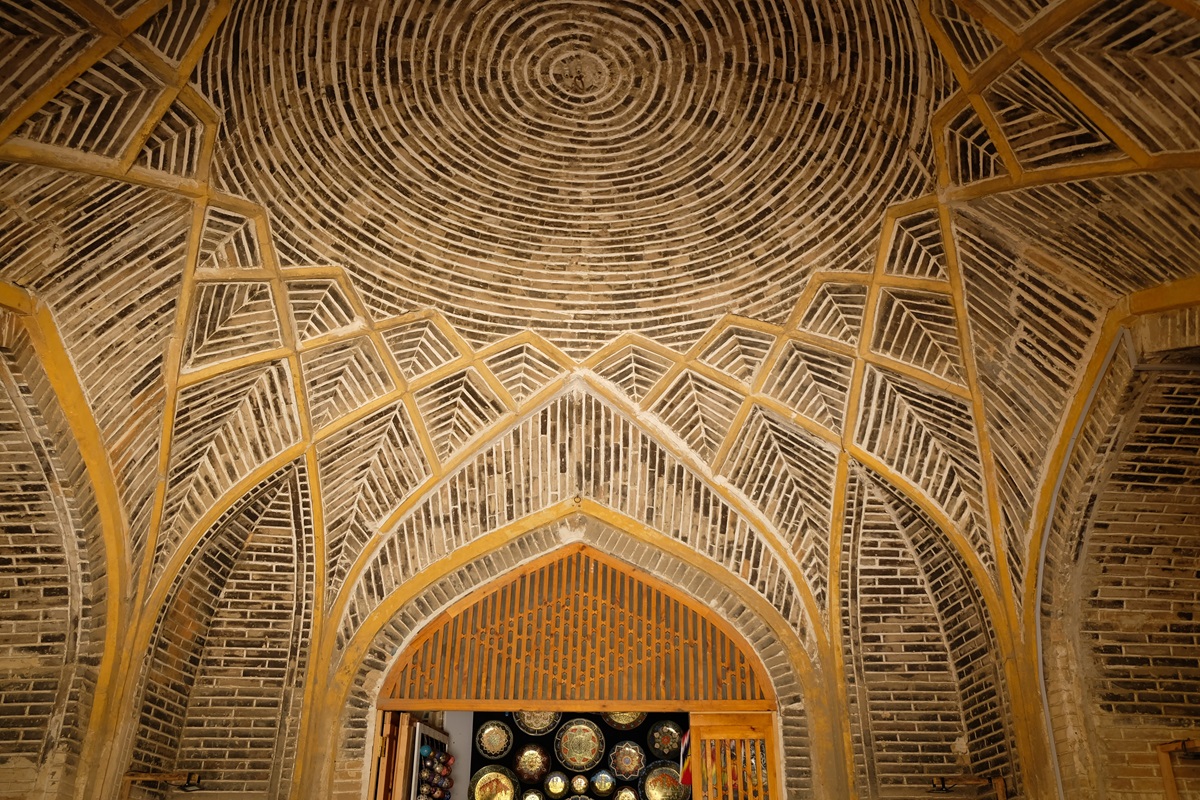
There is something beautiful about these simple lines
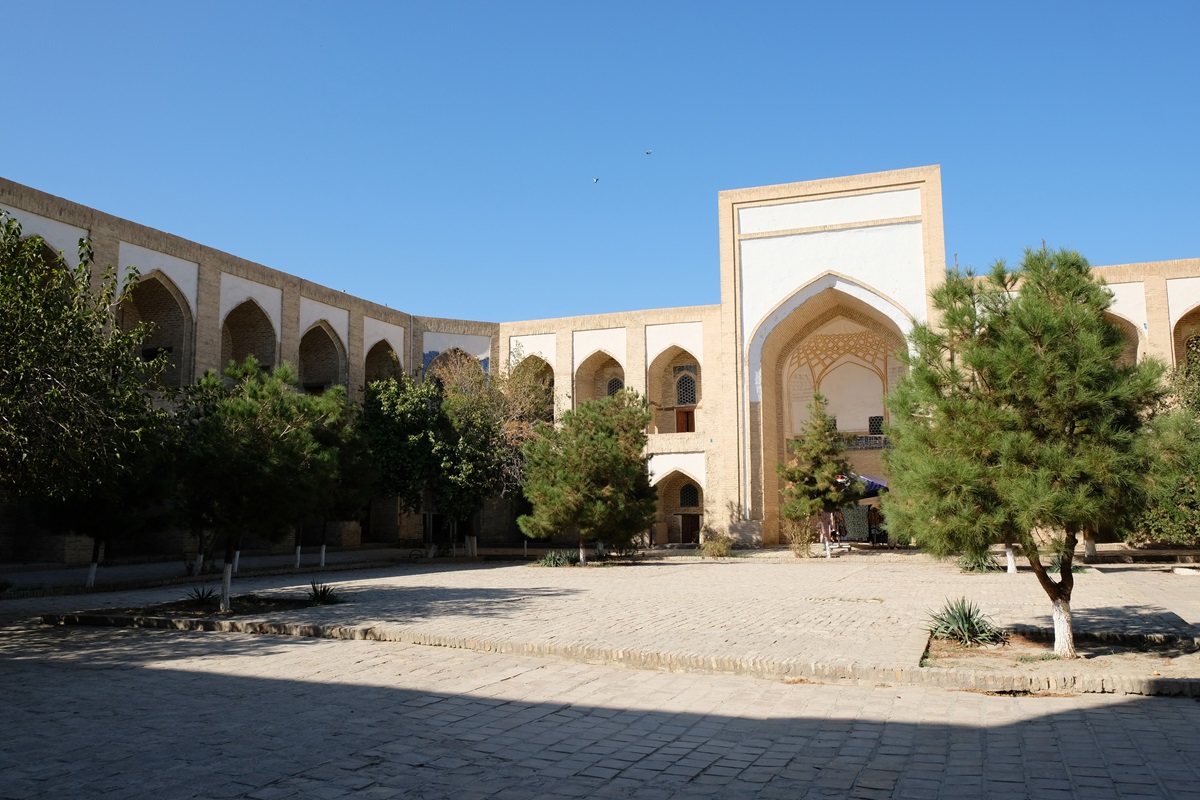
At the peaceful courtyard of Kukaldosh Madrasah
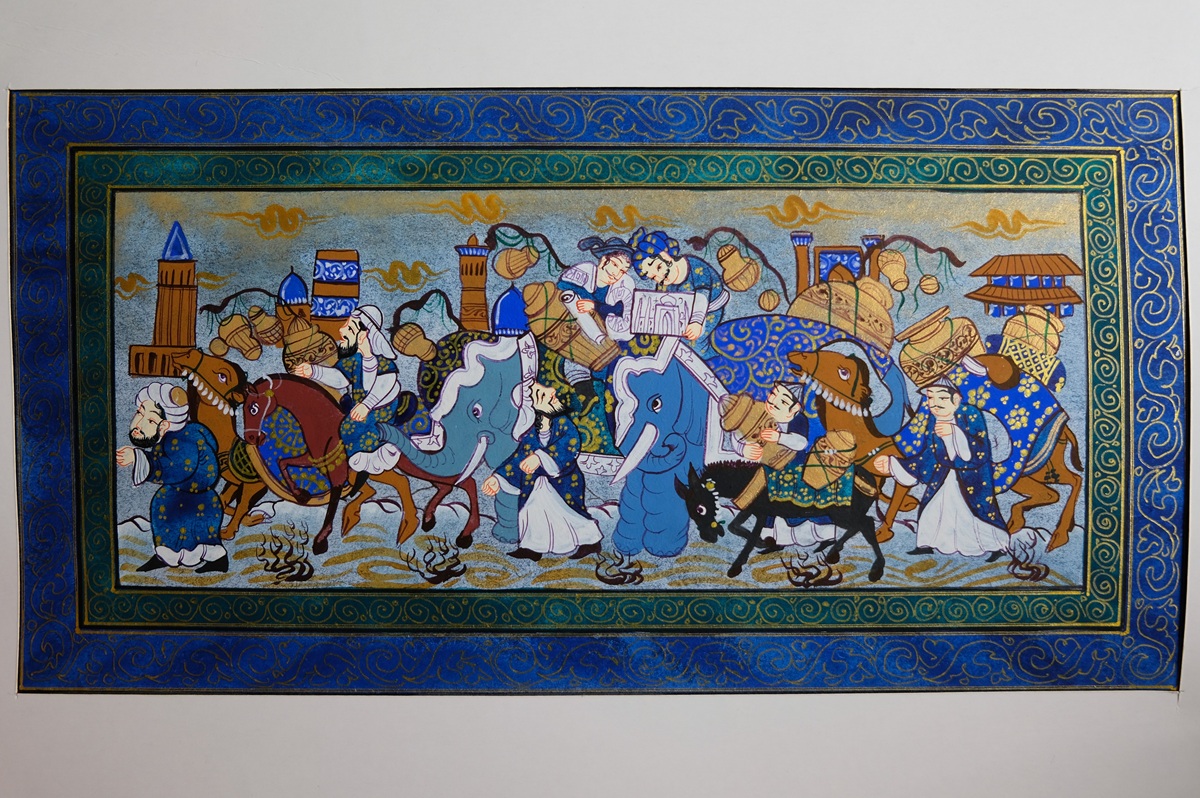
A memento from Bukhara, painted by Shoxista

 What an Amazing World!
Gorgeous! Bukhara’s landmarks might be more concentrated than those in Samarkand, but that makes for an easier move-around from place to place within the city. I’m surprised that there are storks in Uzbekistan; I guess they’re indigenous to the country? All the same, the architecture, while more-constraint than those in Samarkand, are still stunning! Looks like I’ll need to look into booking a trip to Central Asia to see these places for myself, perhaps in the next year or two. Thanks for sharing, Bama!
LikeLiked by 1 person
That is true, Rebecca. Everything was within walking distance, which was great. Apparently storks were quite common in Bukhara in the past when there were still a lot of hauz pools in the city. But over time the authorities deemed them unsanitary and decided to fill most of them. Central Asia is such a fascinating region indeed. I hope you’ll get there sooner than later!
LikeLiked by 1 person
Your article is captivating, and the photos really capture the grandeur of Bukhara’s architecture.
LikeLiked by 1 person
Much appreciated! Bukhara really was impressive and fascinating. It ended up being my favorite city in Uzbekistan.
LikeLiked by 1 person
I just love to go back to this exceptional city! Many thanks for yourhelpful presentation:)
LikeLiked by 1 person
That would be cool, Martina. But when you do return to this city, you should expect more tourists than when you went for the first time.
LikeLiked by 1 person
What a pity, Bama,so for the moment it is better to renounce!
LikeLike
Well, realistically a place that is so beautiful will eventually get more and more attention, leading to an increase in its popularity. But Bukhara can definitely learn a lesson or two from other cities on how to manage a healthy number of tourists so that in the end the benefits will outweigh the risks.
LikeLiked by 1 person
Yes, Bama, let’s hope for what you say and, of course it’s also going to depend on the money people have at disposal!
LikeLiked by 1 person
Wow, what an incredible place. Your photos are really beautiful in the way you’ve captured the texture of the trading domes and ancient madrasahs. The concentrated heritage of the Historic Centre of Bukhara is such a joy to see through your lens.
LikeLiked by 1 person
Thank you, Hannah. At first, it could probably feel a little overwhelming to see all the patterns and textures of the old buildings in Bukhara (and other Silk Road cities in Uzbekistan). But once your eyes are used to them, taking photos of the details is a lot of fun.
LikeLike
I felt as though I was entering those trading domes with you. They were my favourite part of Bulhara so I thoroughly enjoyed the re-visit. I think we have a picture of the yellow lined ceiling in Kukaldosh Madrasa too. 😊 Maggie
LikeLiked by 1 person
The trading domes were really cool, both literally and figuratively. They really add so much character to the city, giving us a glimpse into its past role as a trading hub. And yes, I do remember your photos from Kukaldosh Madrasah. I actually used your blog posts as a reference to explore Bukhara’s historic center.
LikeLiked by 1 person
that’s so amazing
LikeLiked by 1 person
Absolutely! Bukharans are lucky to live near those impressive monuments from the past.
LikeLiked by 1 person
I’ve been so busy lately I can only dream of my time in Bukhara. Really feels like a lifetime ago! lol. Great article as always Bama!
LikeLiked by 1 person
Time flies indeed. It’s hard to believe that our separate trips to Uzbekistan were almost two years ago! By the way, how was Brunei?
LikeLike
Brunei was…. Interesting! lol. I liked it but I would like anywhere where I don’t have to cook and clean! lol. My daughter found it too quiet and a bit weird as we were in a fancy huge resort but it felt like we were the only ones there as it was empty! It gave weird vibes. Pretty boring place for a kid who loves the city and shopping but I enjoyed it for the peace and quiet!
LikeLiked by 1 person
I can imagine how bored your daughter must have been! I think it’s common for Bruneians to go to other cities in the region for shopping.
LikeLiked by 1 person
Yes they all hop over the border to Miri and go shop (and maybe have a cheeky drink) apparently!
LikeLiked by 1 person
That makes sense. Of course they want to get a taste of what they can’t get back home.
LikeLiked by 1 person
I love your travel posts because it feels like stepping into another planet – our Earth is so rich in history and culture. Bukhara’s old building and architecture are wonderful – the domed rooftops and minarets feel like something from a sci-fi movie and the domed and decorated ceilings viewed from the inside are stunning. I’m glad restoration projects are in the works.
The local artisans and their beautiful art work also bring the culture to life. So much to be appreciated!
LikeLiked by 1 person
This planet is indeed filled with so many fascinating places. Central Asia is definitely one of the most intriguing corners of the world, thanks to its strategic location between East Asia and Europe. Does the architecture of Bukhara remind you a little bit of Star Wars?
Speaking of the local artisans, I kind of regret that I didn’t buy the bird-shaped scissors as they looked so unique.
LikeLiked by 1 person
Yes, Star Wars was exactly the reference I thought of! 😊
You’ll just have to go back for those scissors!
LikeLiked by 1 person
Bukhara is probably – nah, scratch that, certainly – my favourite city in Central Asia. I adored losing myself in those tiny alleys, meeting all sorts of people. It was such a treat, and one of my best experiences as a traveller. I’m so happy you liked it as well, Bama! And I’m relieved to read that it hasn’t turned into a shop, a luna-park, or an open-air museum. Long may it continue that way.
LikeLiked by 1 person
Fabrizio! Bukhara was such a beautiful, atmospheric place. It certainly helped that the weather was always nice throughout our stay, and the people we met there were among the friendliest of all places in Uzbekistan that James and I went to. Bukhara is definitely getting more popular. But I hope the local authority has the wisdom and vision to keep the charm of the old city for many generations to come.
LikeLike
I’ll light a candle to that!
LikeLiked by 1 person
Bukhara’s architecture is tasteful and I noticed from your photos the streets are devoid of garbage—impressive. Great choice of artwork. You’ll be able to admire it for years to come.
LikeLiked by 1 person
Bukhara’s charm lies within the details indeed, including the clean streets. I love that artwork, but I need to do it justice with a proper frame.
LikeLiked by 1 person
The architecture, patterns and tile work is so pretty. Glad to hear no one pressured you to buy anything, which always makes for a nicer browsing experience.
LikeLiked by 1 person
I always appreciate shops and stalls who don’t pressure people who happen to be looking at their goods to buy them. I personally tend to avoid places that do.
LikeLike
Like you, I adored Bukhara and consider it my favorite of Uzbekistan’s three most famous Silk Road cities. It is obviously a tourist magnet these days, but at the same time the old city felt so full of life and the sounds of craftspeople making beautiful things by hand. The trading domes were such a joy to wander and I distinctly remember the warm hospitality from people we met in Bukhara. It was so good to see ordinary people still living and doing everyday things (like buying produce and household supplies) in the historic center as well.
LikeLiked by 1 person
To be honest with you, prior to the trip I expected to like Samarkand or Khiva more. But Bukhara proved to be a very fascinating place. Its relatively intact historic center was so photogenic and atmospheric I could almost imagine how it must have looked like during the heyday of the Silk Road. The place we stayed (and Nozim) definitely helped to make this part of the trip so memorable.
LikeLiked by 1 person
What a stunning place! Being surrounded by such beauty and long history must certainly be awe-inspiring. This is also the perfect example of why we should always go “deeper” when travelling instead of sticking to the surface: that’s how we find treasures, unforgettable memories and that’s how we really get to know a place. I’d love to go to Uzbekistan one day, but in the meantime, thanks for taking us along!
LikeLiked by 1 person
You said it well, Juliette. Spending more time in a new city allows us to get to know it better. I know we don’t always have the luxury to do that, but whenever possible it’s a good idea to spend at least a few days in each place we go to. Bukhara definitely deserves more than just a brief stop, and I hope one day you’ll get to experience this magical Silk Road city yourself!
LikeLiked by 1 person
Love, love, LOVE this, Bama. What a delight it always is to travel through your eyes!
LikeLiked by 1 person
I still have one more post on Bukhara to come, Jolandi. I know I’ve said this before, but I have a feeling you would enjoy this ancient city as much as I did.
LikeLike
I suspect I will! Looking forward to your next Bukhara post.
LikeLiked by 1 person
Truly beautiful. Such a fascinating place. (Suzanne)
LikeLike