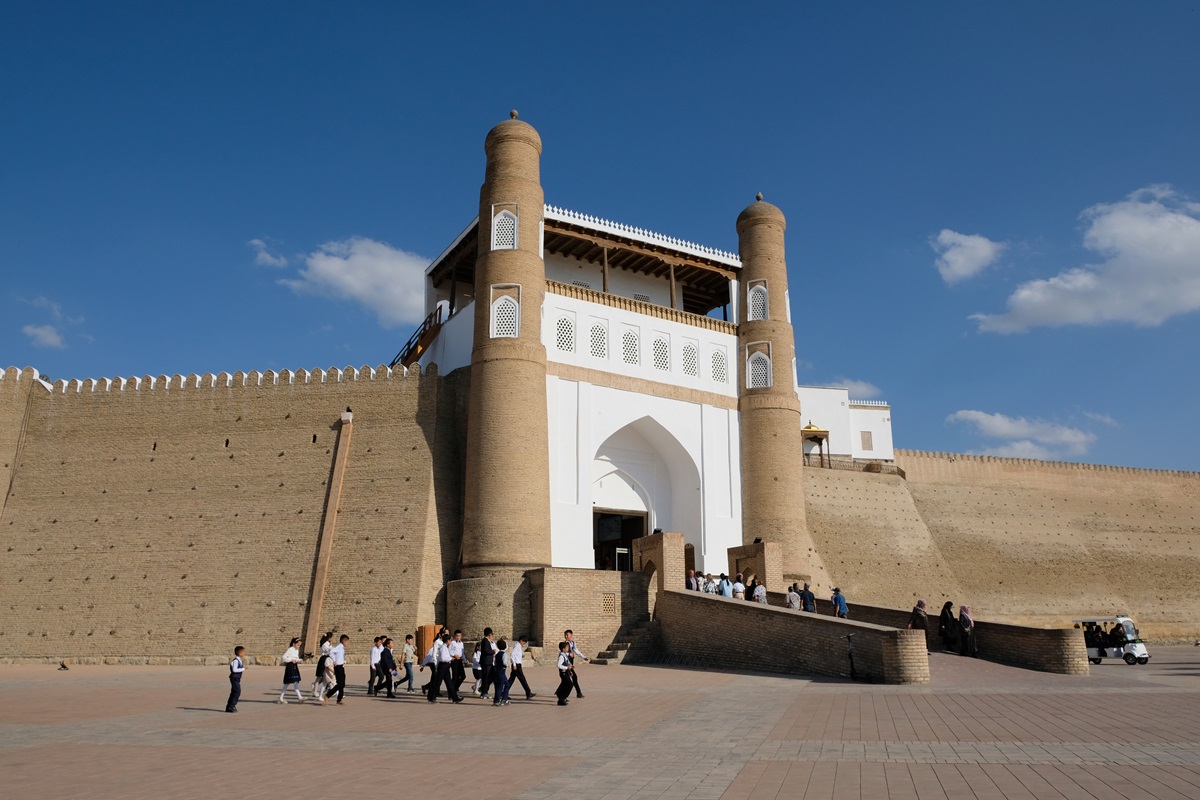
The imposing gate of the Ark of Bukhara
The Spanish-built Afrosiyob high-speed train whisked us through a landscape that gradually changed from one filled with endless cotton fields at the peak of harvest season, to vast steppes, before eventually giving way to barren hills. We left the wonders of Samarkand behind and arrived in Bukhara, although one would be forgiven for having the impression that the latter – which was also part of the fabled Silk Road – looks rather unassuming. That’s because the station serving the high-speed rail line is in fact located in Kogon (also spelled Kagan), a satellite city some 15 kilometers to the southeast of the old town district of Bukhara.
Outside the train station, we were trying to look for a taxi driver and settled with one after realizing that there were not many of them as most people seemed to have arranged transport either with their hotels or travel agents, or through online apps. As expected, this would cost us more than it should. But with the limited options we had, we thought it was fine as long as he took us to our accommodation. Along the way, colorful banners emblazoned with the emblem of the 2024 FIFA Futsal World Cup, held in three cities in Uzbekistan, were spotted in some strategic corners of Bukhara. This was in fact the first FIFA tournament ever hosted by any Central Asian country, hence the palpable enthusiasm.
It didn’t take that long for us to arrive at the lodging, our home away from home for the next four nights and right outside the UNESCO World Heritage-listed historic center of Bukhara. The skies were gloriously blue, but since the early afternoon sun was still too strong for taking photos of the city’s centuries-old buildings, we decided to walk to a modest local joint not far from where we stayed to have lunch. Flaky warm somsas, delicious plov, and refreshing achik chuchuk salad not only sated our hunger, but they further opened our eyes and palates to the little-known wonder that is Uzbek cuisine – I will eventually write a blog post dedicated to the food we had throughout our trip to Uzbekistan. We left the place with full and happy stomachs. And as the sun was already lower in the western sky, we made our way to a part of the old town area closest to where we stayed: the Ark of Bukhara.
If you wonder why this ark in Bukhara does not resemble a chest or a large box, like the legendary Ark of the Covenant, that’s because the word to describe this particular structure was actually derived from arg, Persian for “citadel”. The 18th-century ceremonial entrance at the west side of the compound immediately caught my attention for its imposing architectural style. The ramp further accentuates the structure’s significance as it gives a dramatic experience to anyone walking on it to enter the ark. The undulating defensive walls which were aesthetically pleasing and strangely soothing to look at – not a quality I would typically attribute to fortresses – were another aspect of the compound I couldn’t take my eyes off.
Soon, we walked through the impressive gate and entered the ark. At the end of the ramp was the small but beautiful Juma Mosque, which was also commissioned in the 18th century. The history of this citadel, however, goes back more than two millennia. It is unclear who first erected a structure at this very location, but over the course of centuries, multiple edifices were built and rebuilt on the exact spot. At one point, there was even a Zoroastrian temple standing inside the citadel, signifying the influence the ancient Persians had over Bukhara.
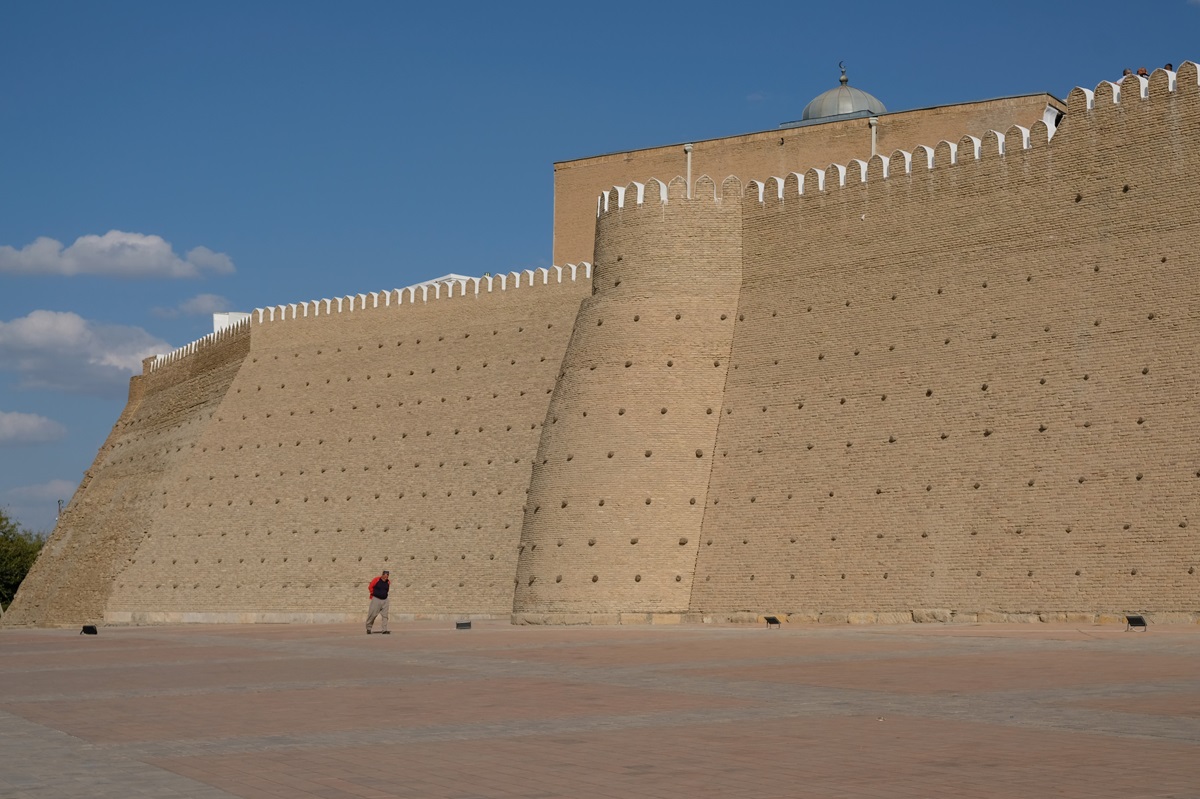
It is worth exploring the outer parts of the defensive walls before entering the citadel
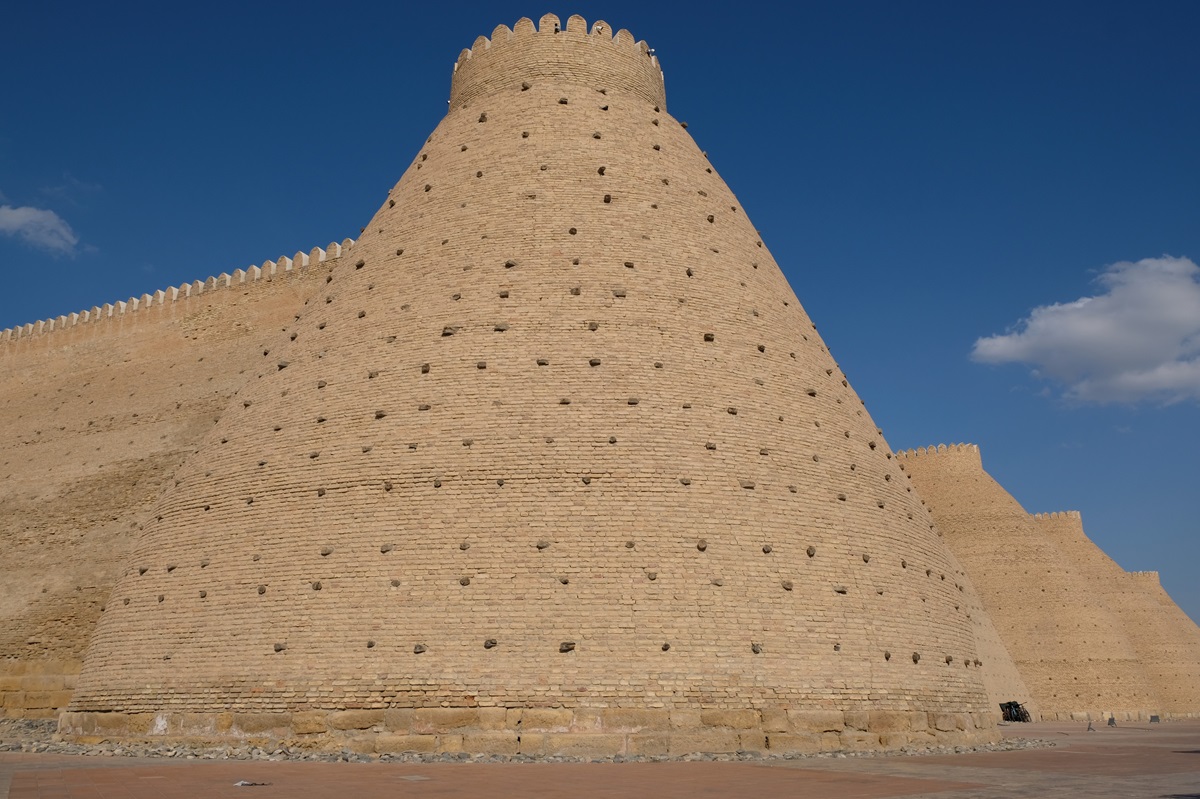
There is something soothing and aesthetically pleasing about these undulating walls
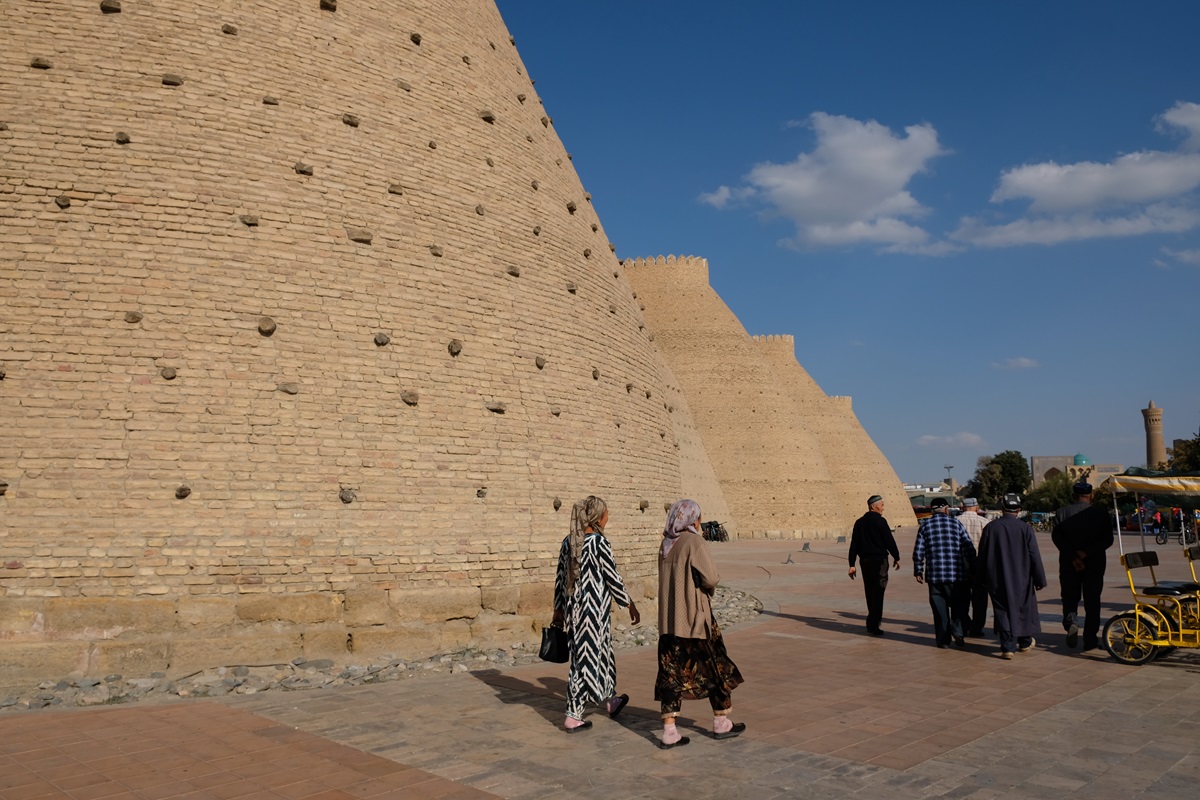
Local men and women on their way to the historic center of Bukhara
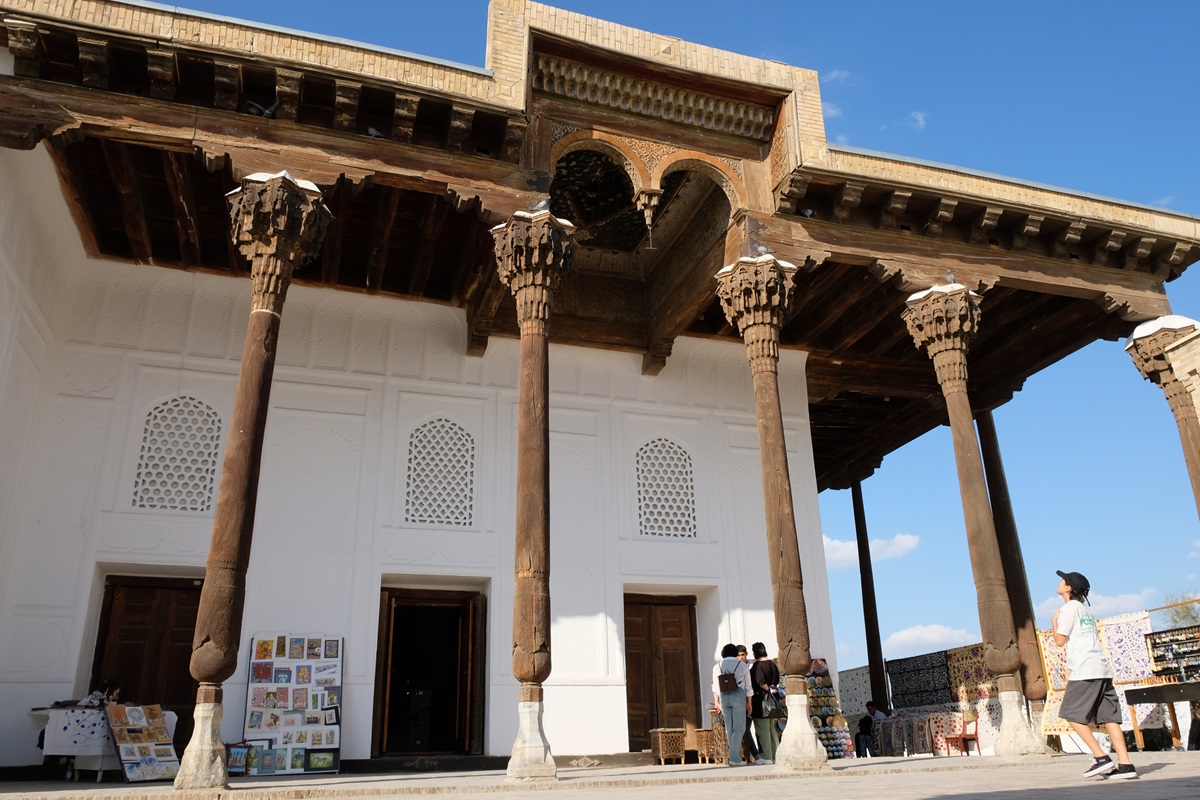
The 18th-century Juma Mosque within the citadel

Look up to appreciate the beauty of the mosque
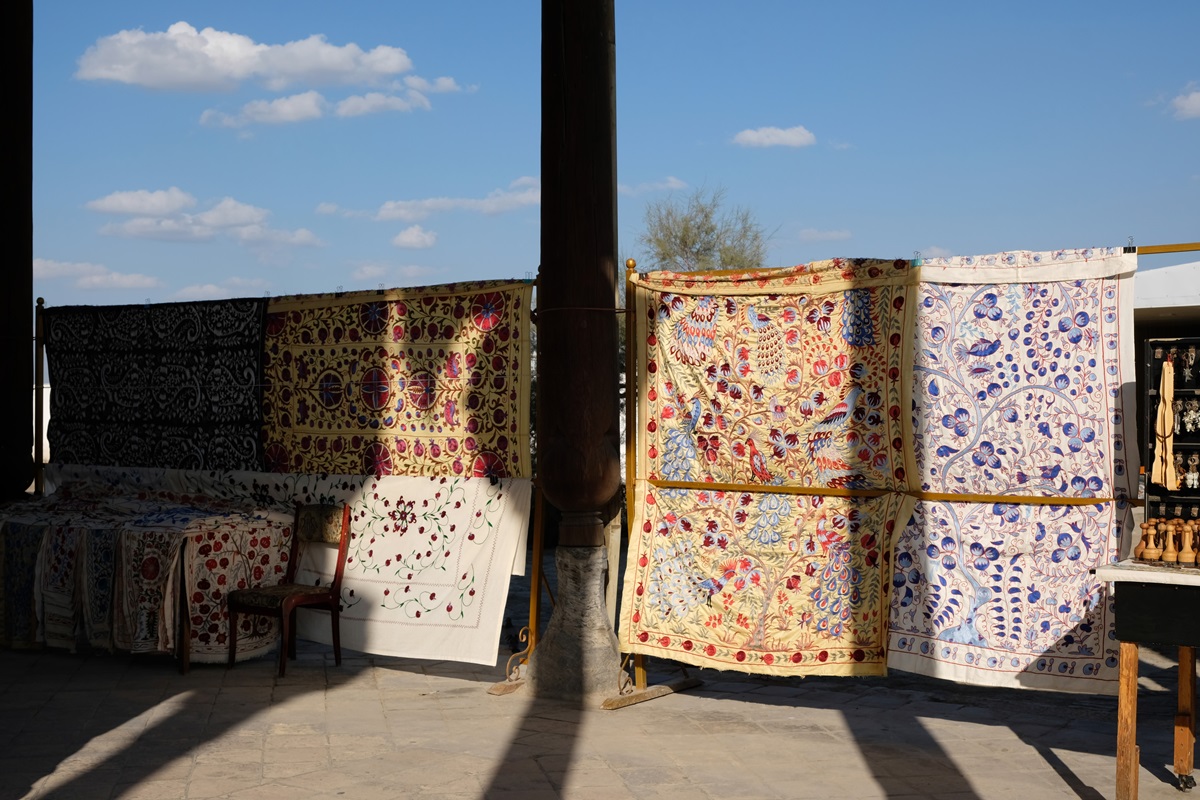
Local carpets on sale next to the mosque
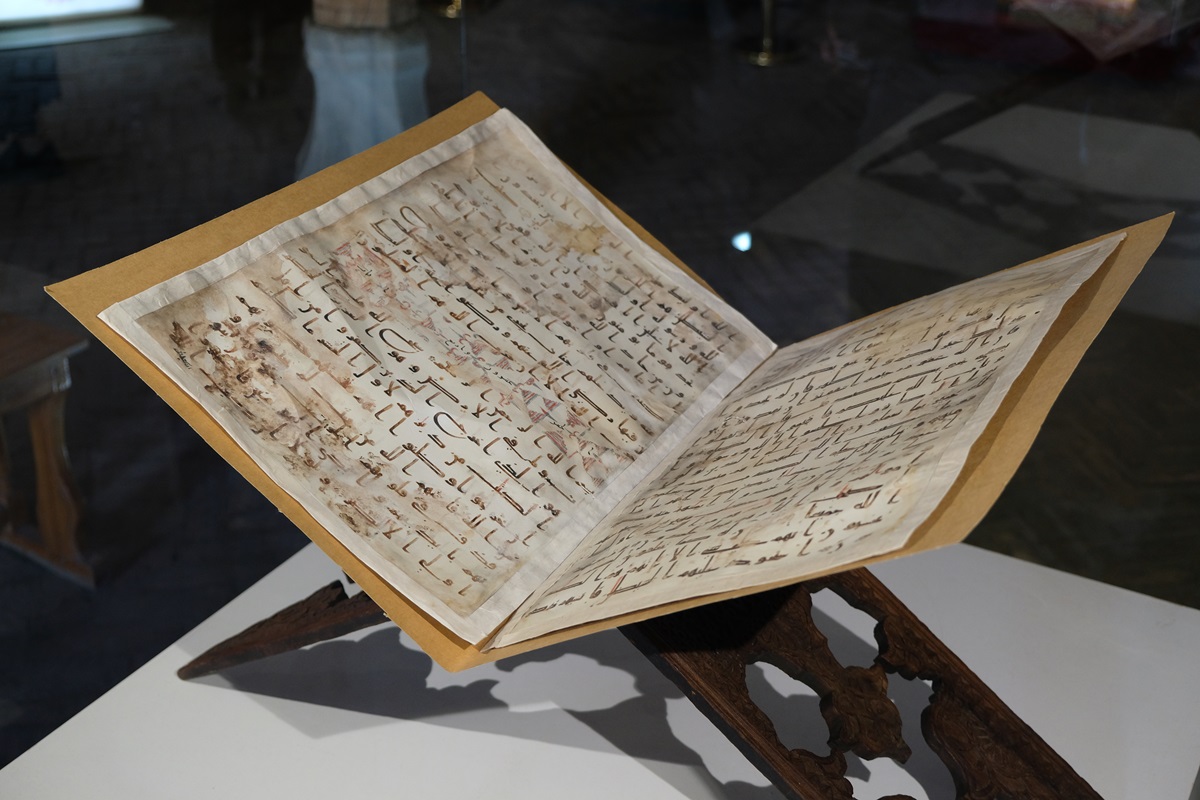
An eighth-century copy of the Quran written in the Kufic script
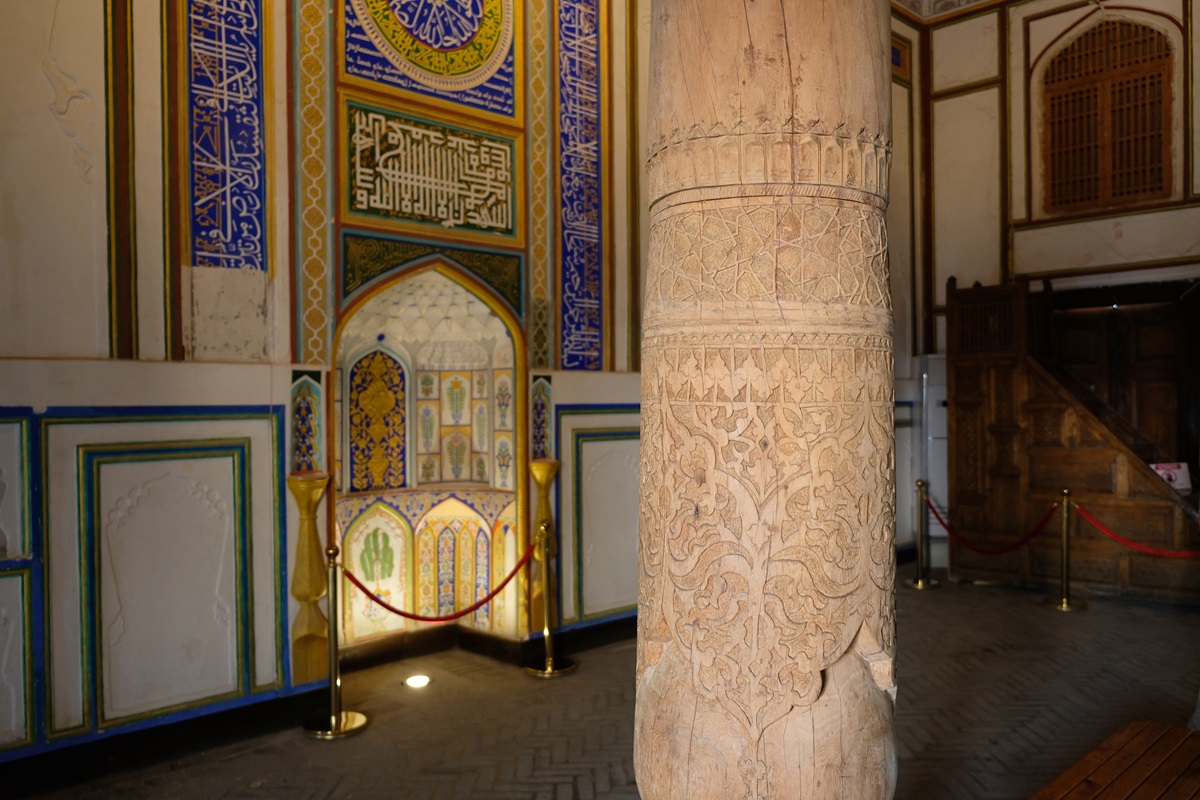
The mihrab of the mosque and an intricately-carved wooden pillar
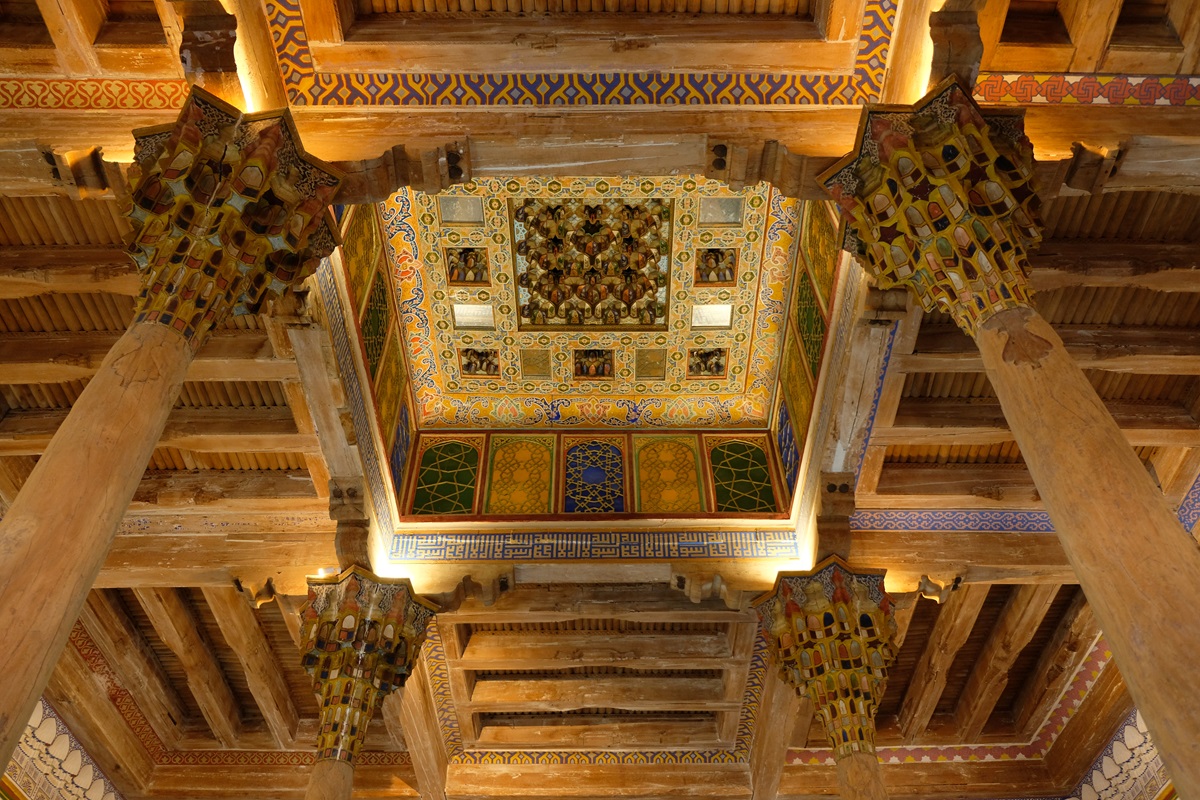
There was even more to look at inside the prayer hall
Due to the destruction suffered by early iterations of the ark, it is believed that at one point the ruler of Bukhara, after consulting his advisers, demanded the citadel to be rebuilt with the guidance of the stars, quite literally. Taking the Ursa Major constellation with its seven main stars (collectively known as the Big Dipper) as the inspiration, the compound was reconstructed with seven stone markers placed at seven corners of the structure. Following the conquest of the city by the Muslim army of the Umayyad caliphate in the eighth century, the vanquishers didn’t change much of the structures within the citadel, except for the replacement of the Zoroastrian temple with a mosque. But this was different from the Juma mosque I mentioned earlier. In fact, with a total area of a little less than 4 hectares, the Ark of Bukhara is only slightly smaller than the Vatican City – the world’s smallest country today. And just like the seat of the papacy, a multitude of buildings serving different purposes were once contained within the ark’s walls.
As kingdoms and empires rose and fell, control of Bukhara changed hands multiple times. In spite of this, the ark remained the center of power for whoever governed this important trading hub and its surrounding regions. In 1785, the Emirate of Bukhara was established, but most people would probably have never predicted that it would eventually become the last Muslim polity to ever rule this city. In 1868, the Russian Empire defeated the emirate and took a lot of its territories, including the city of Samarkand, while Bukhara itself became a Russian protectorate in 1873.
In 1911, a new emir, whose power was limited to internal affairs, ascended the throne of Bukhara. Being rather unpopular, the new ruler further alienated himself from his own people due to his conservative leanings, and this provided the impetus for reformists to remove him from power. The Bolshevik Revolution that swept across Russia only hardened the anti-monarchist elements in Bukharan society. And eventually, in 1920, after a continuous assault on the Ark of Bukhara by the Red Army, and an aerial bombing that severely destroyed parts of the citadel, the emir fled to Dushanbe, Tajikistan then Kabul, Afghanistan. This marked the end of the Emirate of Bukhara and the full absorption of its former territories into the Soviet Union.
Contrary to the fate of the once formidable USSR which collapsed in 1991, the Ark of Bukhara has seen waves of revival, especially since its inscription on the UNESCO World Heritage list in 1993. Today, the ark provides a good starting point to explore the ensemble of old buildings within the historic center of Bukhara, which was exactly what we did. After navigating the narrow alleys that weaved through the structures within the citadel, we arrived at the southeastern corner of the ramparts with a view of old Bukhara that evoked my imagination of the long-lost past when caravans were still a common sight in this bustling Silk Road hub. Meanwhile, the turquoise domes and the iconic Kalon (Kalyan) Minaret that stood proudly before our eyes not only exuded a deep sense of reverence; they were also silent witnesses to the vicissitudes of the Tajiks of Bukhara, a people whose struggle to adapt to the new realities around them is as intriguing and fascinating as the place itself. But that is a story for another day.
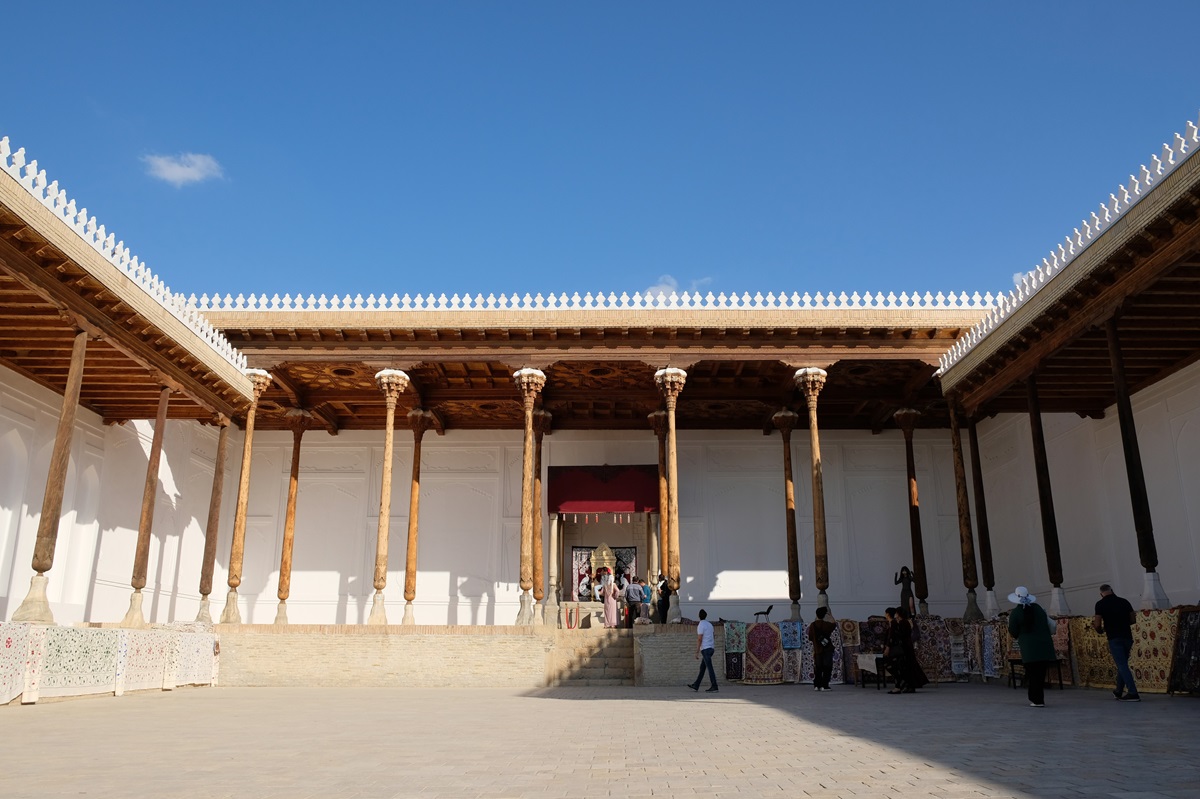
The coronation court within the citadel
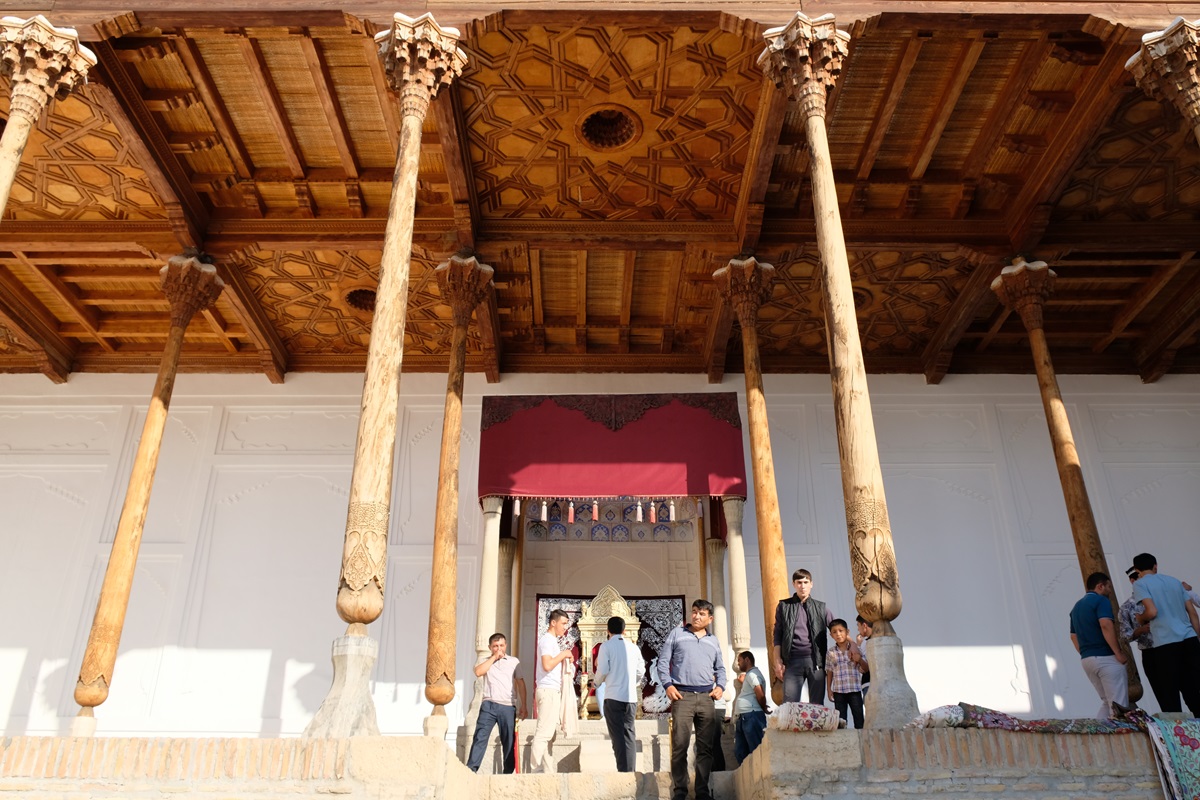
Visitors taking a closer look at the throne
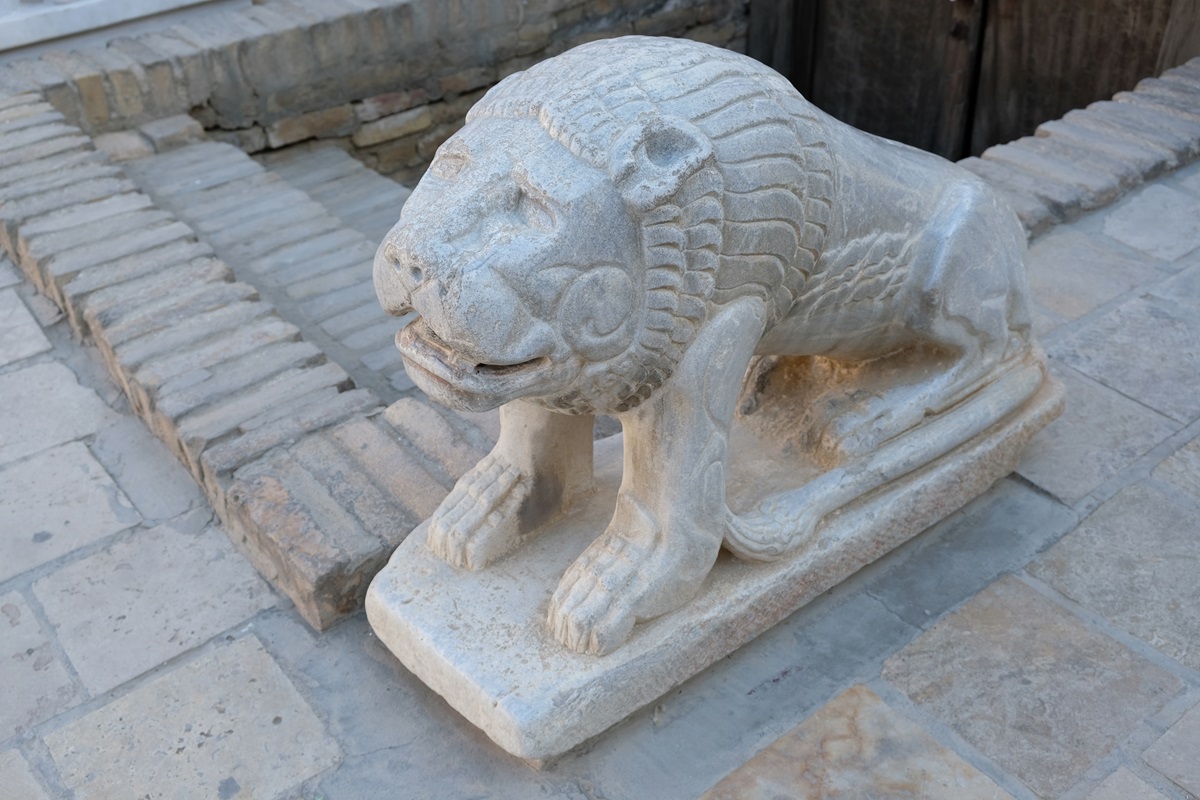
A small lion statue inside the coronation court
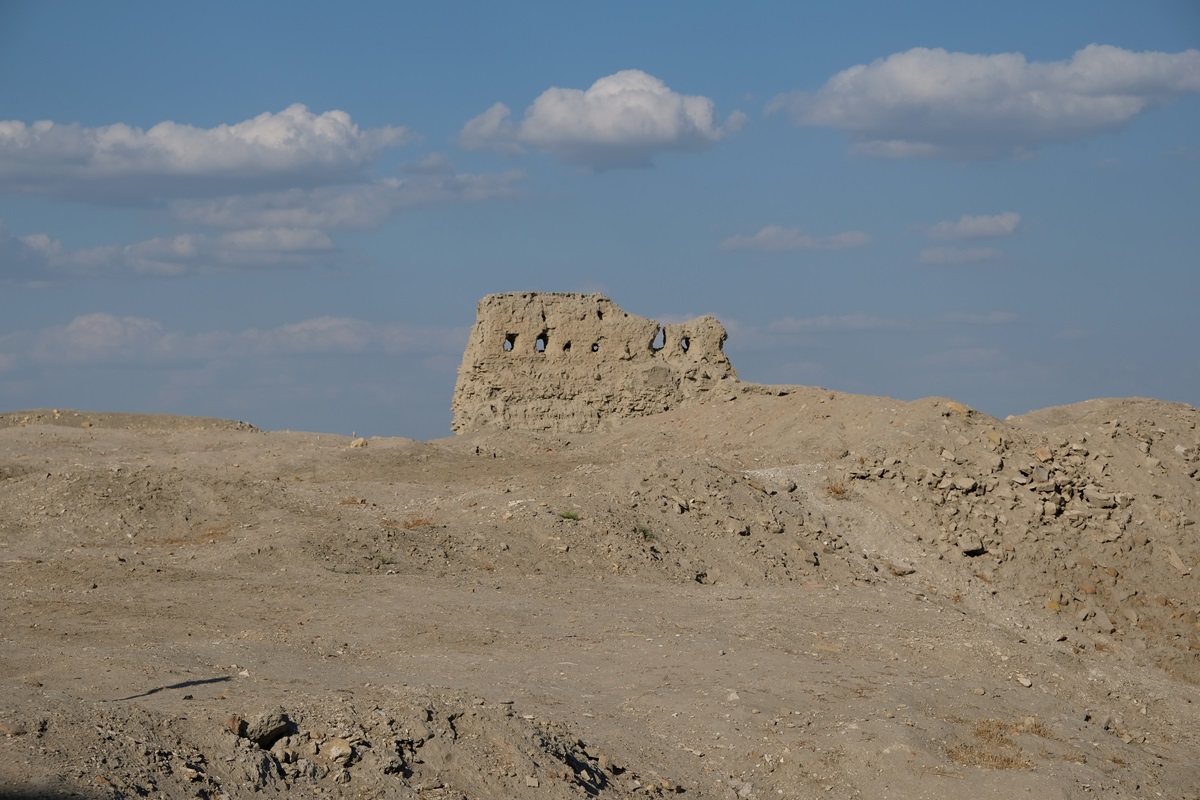
Some of the old buildings within the citadel were left in their ruined state
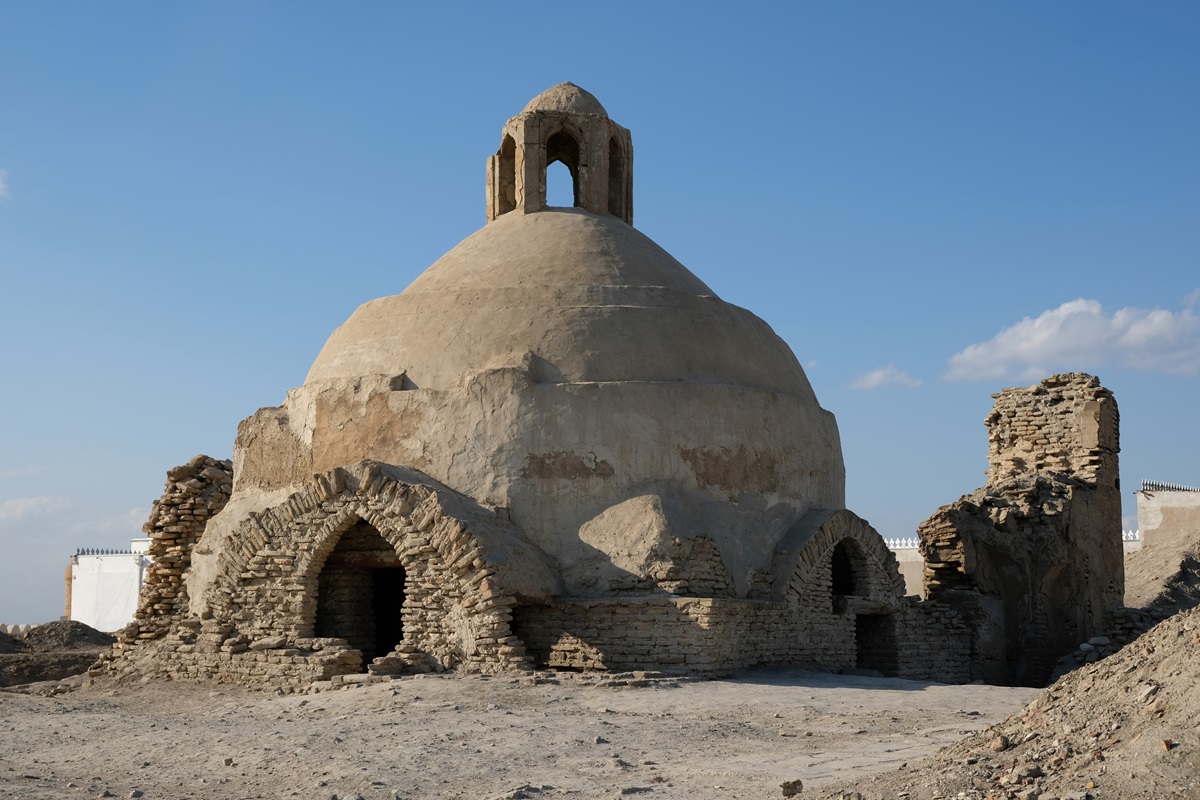
What was left of the Khanaqah (Khonako) Mosque, another mosque within the ark that was built in the 18th century
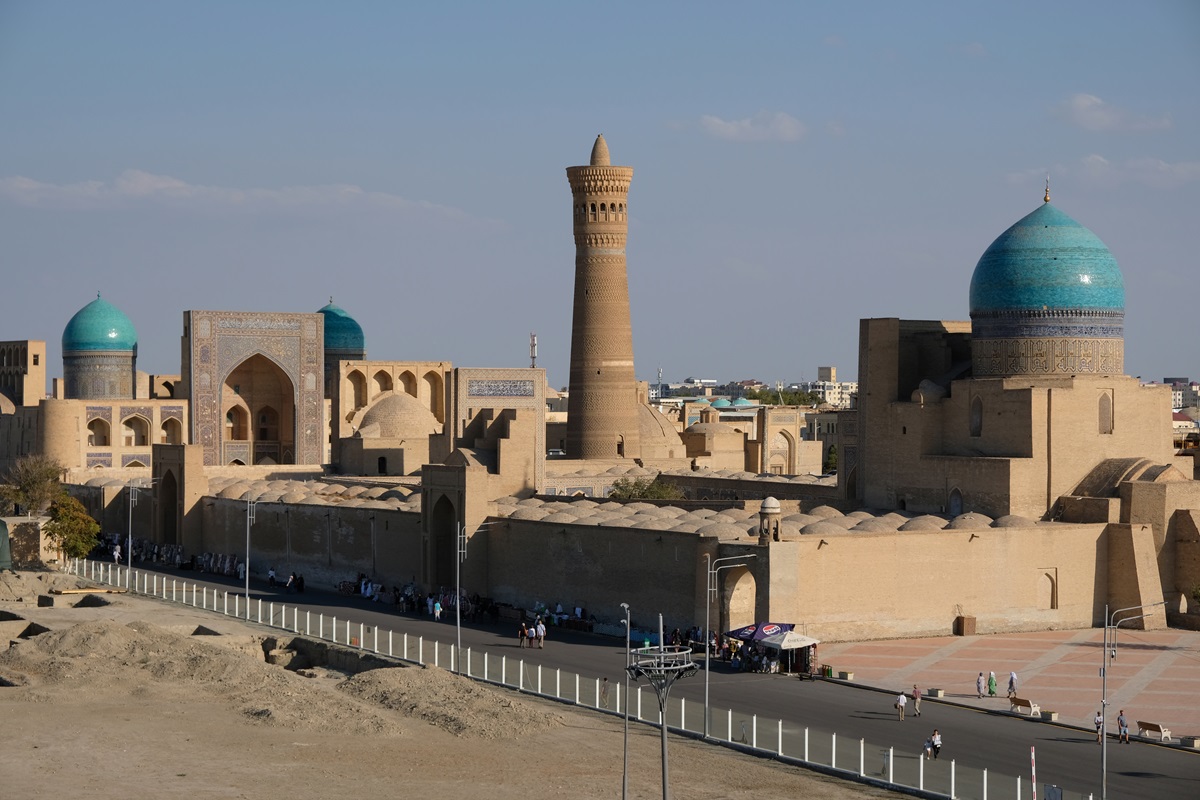
The domes of the Kalyan Mosque and the Mir-i Arab madrasah, and the iconic Kalon (Kalyan) Minaret in the middle
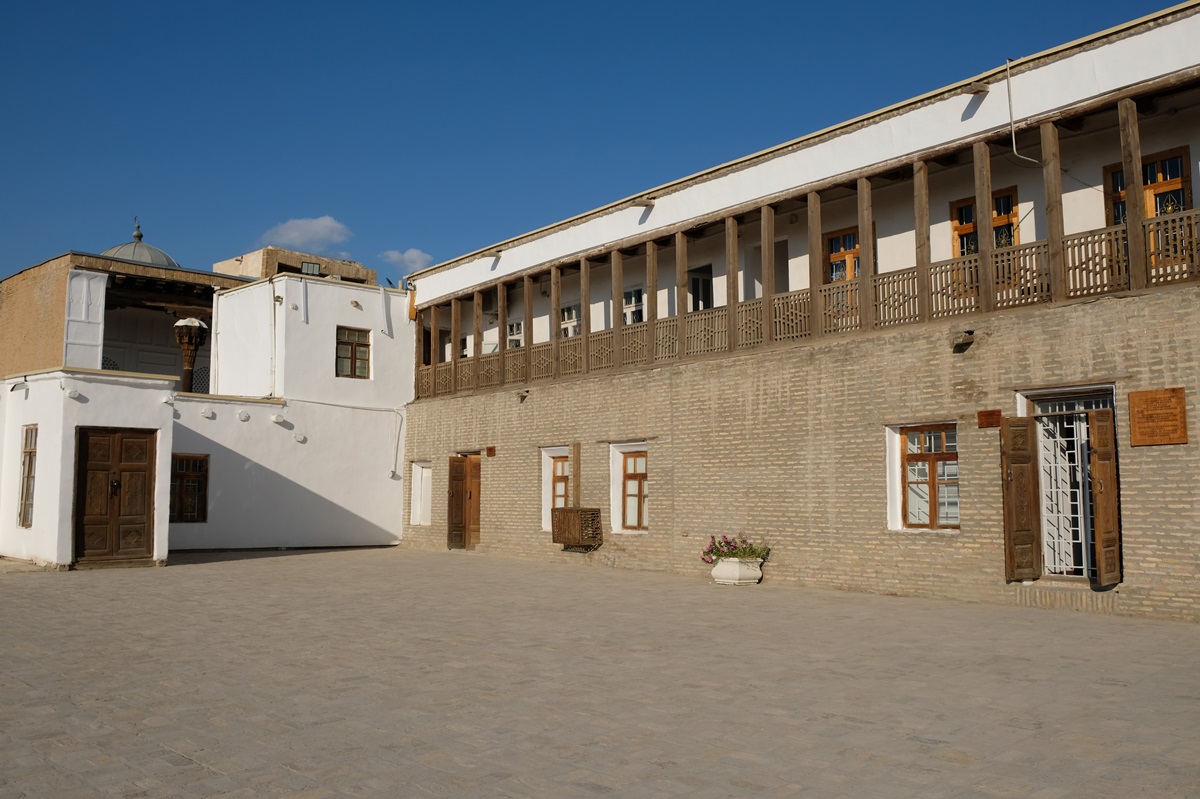
This was once the stable for the emir’s horses
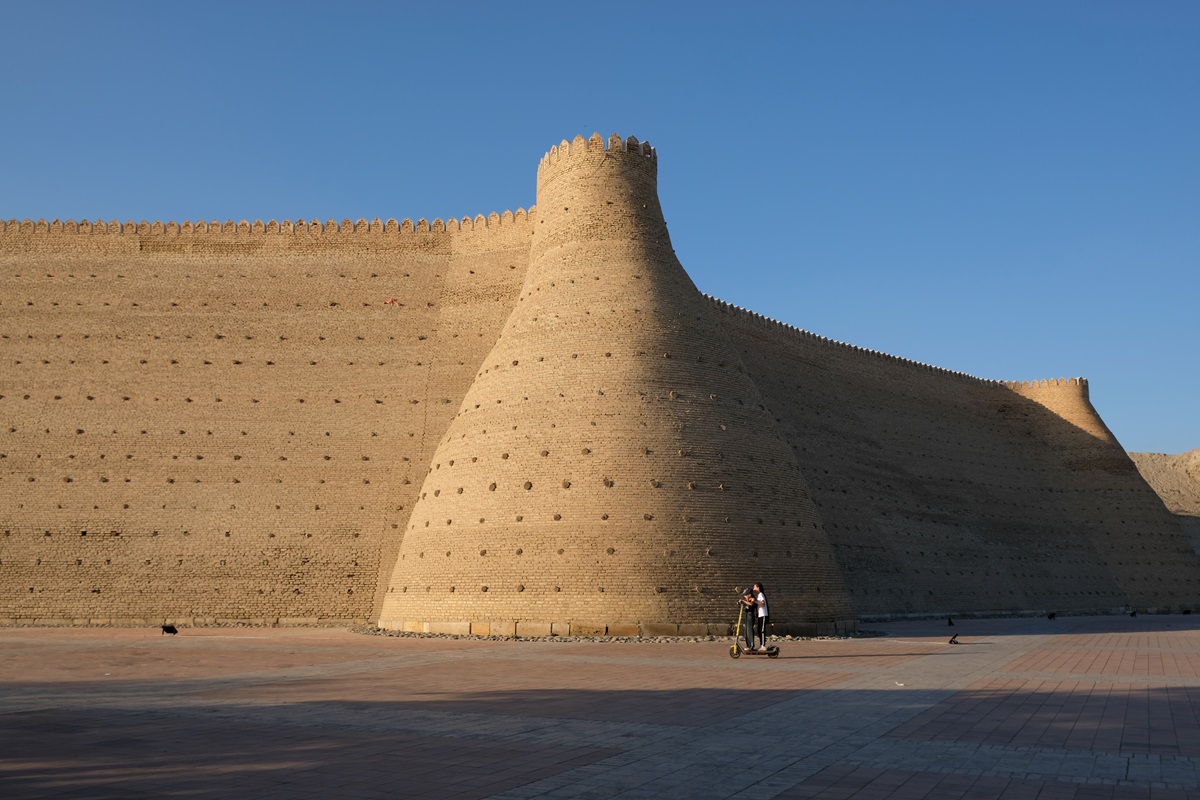
The walls of the Ark of Bukhara in soft afternoon light

 What an Amazing World!
What a beautiful trip over to Bukhara! Very fascinating to learn about the emir and a bit more history of Uzbekistan, which I definitely didn’t learn in history textbooks growing up. The architecture is sublime, and I can see why one would get star-struck (pun intended) by its design. Thanks for sharing this place with us, Bama! 🙂
LikeLiked by 2 people
Ha! Star-struck one would certainly be upon seeing this place up close. I think one of the reasons why many people find Uzbekistan fascinating is the fact that most of us didn’t learn much about the history of this country. Each Silk Road city, including Bukhara, has its own story, waiting to be retold over and over again by generations of visitors and travelers. I’m glad you enjoyed this, Rebecca.
LikeLiked by 1 person
Wonderful. Interesting point about transport from Kogon to Bukhara. It’s nice to arrive in the afternoon; gives you time to orient yourself before the hour for photography comes along.
Looking foward to the post on Uzbek food. I’m sure that outside samsa and plov there will be lots of difference between the cuisines of the different Central Asian countries and regions.
LikeLiked by 1 person
It’s always nice to get the feel of a place before we start taking pictures of its interesting sites. This was exactly what happened to us in Bukhara. The lunch we had definitely helped bring a good mood to us.
You have to be patient a little bit for that blog post on Uzbek food. But I think you’ll be familiar with some (if not most) of the dishes that I will include in the post. They might bring back your memories from Kazakhstan.
LikeLiked by 1 person
This reads like a love story to Bukhara Bama. I can tell that you loved this city, as did we. What I didn’t love though, was Uzebk food (or Kyrgyz), I found it quite flavourless, so did Richard, and he had the meat dishes.. But those differences are what makes the world go round. 😊 Maggie
LikeLiked by 1 person
To me what made Bukhara so special was its relatively intact historic downtown. We also thought the people we met in this city were so nice and friendly, and the good weather was the icing on the cake. When it comes to the local food, I was actually mentally prepared to have bland food throughout this trip. But that very low expectation turned out to be a boon.
LikeLiked by 1 person
And I really fell in love with the trading domes. 😊
LikeLiked by 1 person
Yes, I could tell from your blog post on Bukhara. 😀
LikeLiked by 1 person
What a joy to wake up to this post, Bama. It went perfectly paired with my first cup of coffee. Despite similarities, I get the sense that these ancient cities are all very distinct from one another, and I guess as a traveller one falls in love with a different quality of each one. Does that resonate with you?
LikeLiked by 2 people
Absolutely, Jolandi. It’s often not easy to answer the question of which place/city is my favorite from a particular trip, because usually I have several since each of them has their own unique character. Having said that, Bukhara did leave a deep impression on me.
LikeLike
Your posts always give me goose pimples, Bama, and especially Usbekistan or Bukhara! When we were there our guide, however, recommended us to not eat anything besides the places he indicated us, because of the danger of getting ill! Many thanks also for these great pictures!
LikeLiked by 1 person
Luckily, we didn’t have any problem with our digestive system during our trip to Uzbekistan. We actually ate really well! I have a feeling that you also enjoyed Bukhara as much as we did. But again, when you went, there must have been a lot less visitors at the historical sites.
LikeLiked by 1 person
Good to hear this and yes it was before tourism arrived and it was great 👍
LikeLiked by 1 person
How good was the ark? I loved exploring this special place, and your thorough recount has bought back wonderful memories! A year ago today I was flying back from my trip… still think about the places and people I met very often.
LikeLiked by 1 person
When I saw that gate for the first time, I couldn’t help but feel as if I was transported to a magical land. Well, Bukhara was magical. I can’t believe how time flies! Any trips planned for you in the near future?
LikeLiked by 1 person
Hey Bama! Going to Brunei and Singapore in December! Never thought I’d ever end up in Brunei but friends have moved there for work so I’m paying them a visit. Singapore for shopping of course! 😛
Any travel plans for you??
LikeLiked by 1 person
Oh wow! Never thought you’d go to Brunei either! But it’s a good thing that you have a friend there, because when I went, what I found was a country that was very… underwhelming, to put it nicely. I can imagine having someone who actually lives there to take you around would make a big difference.
I’m thinking of Europe for early next year. But I need to sort out all the requirements for my visa application. This is why I haven’t gone back to that part of the world since 2007 because it’s too much of a hassle to prove them that I have no intention to find a work and live there. But I feel like now is the right time. We’ll see though.
LikeLike
Haha yep I know there is nothing in Brunei! lol. Would never go if it wasn’t for my friend. She is struggling with the quietness and being alone too while her husband works, so I’m going to give her something to look forward to. We will just sit around and drink coffee all day I imagine! Haha
I can imagine it’s hard for you to get visas etc. Europe is easy for me but even I haven’t been for a while – it’s just so far and so expensive these days! I still have flight credits with FLYDUBAI I need to use from my cancelled Azerbaijan trip but I don’t know about the region anymore… you never know what’s going to happen tomorrow in the Middle East. I think I might stick to Asia for a while now. Maybe see you somewhere!!! X
LikeLiked by 1 person
Haha, it’s good that you know what to expect. I read that Kampong Ayer in Bandar Seri Begawan is quite interesting. Maybe you and your friend want to check that out.
The current circumstances in the Middle East is also one of my main considerations to choose where to go next year. New Zealand is also a place I’ve been looking up as a viable alternative.
I have a feeling that one day our paths will indeed cross!
LikeLiked by 1 person
Thanks for the tip about Kampong Ayer.
Yes agree – see you somewhere in this big wide world!
LikeLiked by 1 person
this all looks amazing !
LikeLiked by 1 person
Absolutely! The Ark of Bukhara gave the impression that it was straight out of a fantasy book.
LikeLiked by 1 person
yes, indeed
LikeLiked by 1 person
Enjoyed these images.
LikeLiked by 1 person
Much appreciated, David.
LikeLike
Thanks Bama for this stunning and informative tour of Bukhara. I’ve never heard of this place before and loved your photos of the architecture, a glimpse of the people and culture, the reverence to history and the religion and those undulating walls are soothing to the eye indeed.
It’s amazing the juxtaposition between ancient history and the modernity of the high speed train that took you there and the current FIFA World Cup buzz.
I look forward to your dedicated food post!
LikeLiked by 2 people
Bukhara is one of the most fascinating ancient cities I’ve been to. Wherever I looked, history was waiting to be explored. What I also loved about this place was the fact that it still somewhat retained its old charm while at the same time welcoming modern-day tourists. I hope it will remain this way.
We’ll get to the food post, Ab… eventually. 😄
LikeLiked by 1 person
The sites that preserve its sense of history are the best. 💕
LikeLiked by 1 person
I couldn’t agree more!
LikeLiked by 1 person
Ever since I came across a picture of the Ark of Bukhara’s imposing gateway and massive walls while working in Hong Kong 10 or 11 years ago, I’ve been wanting to see it for myself. So it was such a treat to finally visit Uzbekistan and spend time in Bukhara last October. Exploring the citadel was just the thing we needed after our hearty lunch of plov and freshly baked somsas. As you said here, it made for a great introduction to Bukhara and its UNESCO-listed historic center.
LikeLiked by 1 person
The timing of our trip to Uzbekistan couldn’t have been better — it’s unfortunate that Uzbekistan Airways no longer fly to Jakarta from Tashkent. I had no idea that you had wanted to see the Ark for Bukhara for that long. I’m glad you could finally see it in person on such a beautiful day.
LikeLiked by 1 person
Interesting to hear that the Ark in Bukhara was derived from the term citadel. You’re right, the curved and clean walls do look visually appealing. Your photos are beautiful. Thanks for sharing the history of this place.
LikeLiked by 2 people
Thank you, Linda. Whether it was intentional or not, the design of this citadel’s walls really makes them look elegant.
LikeLiked by 1 person
Beautifully written, Bama! I love how you wove the Ark’s cosmic inspiration with its rich history — the idea of aligning the citadel with Ursa Major is fascinating. Your blend of architectural detail and modern impressions make Bukhara feel truly alive. Can’t wait to read your upcoming post about its food scene!
LikeLiked by 1 person
Much appreciated, Hannah! Bukhara is one of those places that will spark one’s imagination. There are stories to tell in every nook and cranny, and the alignment of the Ark with Ursa Major is only one of those fascinating narratives waiting to be learned.
LikeLiked by 1 person
So much to love here! I agree with you about the soothing nature of the curved walls, and the rugs and the 8th century Quran are really beautiful. As a linguist, I also found the etymology of the word ark/arg to be fascinating. I’m hoping to get to Bukhara someday!
LikeLiked by 1 person
I have a feeling that you might enjoy Bukhara a lot more than other Silk Road cities in Uzbekistan, Lex. Samarkand and Khiva were wonderful, but Bukhara was special. And this citadel was a good introduction to what the rest of the historic center had to offer.
LikeLiked by 1 person
I have always thought that but for no real reason … I think I just like the sound of it! Someday I will let you know if we were both right.
LikeLiked by 1 person
I loved Bukhara, possibly the part of the country I loved the most. Especially going around in the old town without a map, getting utterly and hopelessly lost. It still felt like a place where people lived. That was way back in 2018, or 2017. I hope it hasn’t changed much.
LikeLiked by 1 person
Your description of Bukhara is exactly how I feel about this ancient city. It’s great that the historic center is very much intact, and that people still actually live and work there. I also appreciate the large number of local artisans one can find under the city’s trading domes and former madrasahs.
LikeLike
Oh, I’m so happy they haven’t turned it into Disneyland (yet)!
LikeLiked by 1 person
I hope they never will.
LikeLike
You capture the magnificent architecture of Bukhara beautifully. The exaggerated forms of its architecture make it so photogenic, with the added help of the sun.
LikeLiked by 1 person
Thank you! The sun definitely made a huge difference in my photos from Bukhara. But I think I would have still enjoyed the old part of the city if the weather hadn’t been ideal.
LikeLiked by 1 person