
The massive Pyramid of the Sun
In the second century CE, the Roman Empire was at its height, and so too was the Parthian Empire directly to its east. In East Asia, the Han dynasty reigned over ancient China, a period marked by advances in science and technology, among other things. However, despite their differences, the rulers of these great powers shared the same ambition: expanding their territory as far away from their respective centers of power as possible to control more subjects. This was not the only thing they shared in common though. All of them were oblivious to the existence of a vast landmass across the oceans, a part of the world we now know as the Americas.
In antiquity, ancient civilizations flourished in the regions that are now parts of Mexico. They were similarly unaware of the kingdoms and empires of the Old World, let alone the presence of impressive monuments like the Egyptian pyramids, the Colosseum in Rome, the early iterations of what would be the Great Wall of China, and the highly-intricate Buddhist temples commissioned by the Satavahanas in India, among many other great structures elsewhere across Asia, Europe, and Africa. Independently, the ancient peoples of Mesoamerica developed their own architectural styles, shaped by their indigenous religions and the cultural exchanges among themselves. And among the most consequential civilizations in the New World was arguably what is known today as Teotihuacan.
In the second century CE, Teotihuacan experienced rapid growth fueled by the dramatic increase of its population. At one point in its history, the city of Teotihuacan was home to at least 25,000 people, making it the largest urban center in the Americas. (Around the same time, New York City was still marshland.) This phenomenon was partially caused by volcanic eruptions that decimated many settlements in the region, pushing their residents to move elsewhere, especially to Teotihuacan. As the city grew, so did its wealth. Consequently, it witnessed a construction boom when gigantic monuments as well as beautifully-decorated residential buildings were added to the skyline. It was during this period that Teotihuacan saw the completion of three of its largest structures: the Pyramid of the Sun, the Pyramid of the Moon, and the Pyramid of the Feathered Serpent.
On our visit to the Museo Nacional de Antropología earlier on this trip, I was pleasantly surprised by a section of the museum filled with replicas of parts of some buildings in Teotihuacan. Vivid colors adorned the walls, each painted with intricate images of deities as well as imaginative illustrations that wouldn’t be out of place in the world’s modern art museums today. Such rich artistic expressions are an indication of the affluence of the city’s residents during the apogee of this civilization. This can be attributed to Teotihuacan’s position as an important economic power in Mesoamerica, especially in the trade of obsidian where the city held a monopoly. Other than that, textiles were also an important commodity its residents traded across the region. This economic prowess, supported by a formidable military, further cemented Teotihuacan’s prominence and influence all over Mesoamerica.

The god of fire Huehueteotl on display at the Museum of Teotihuacan Culture near the Pyramid of the Sun (a similar statue can be viewed at the Museo Nacional de Antropología in Mexico City)
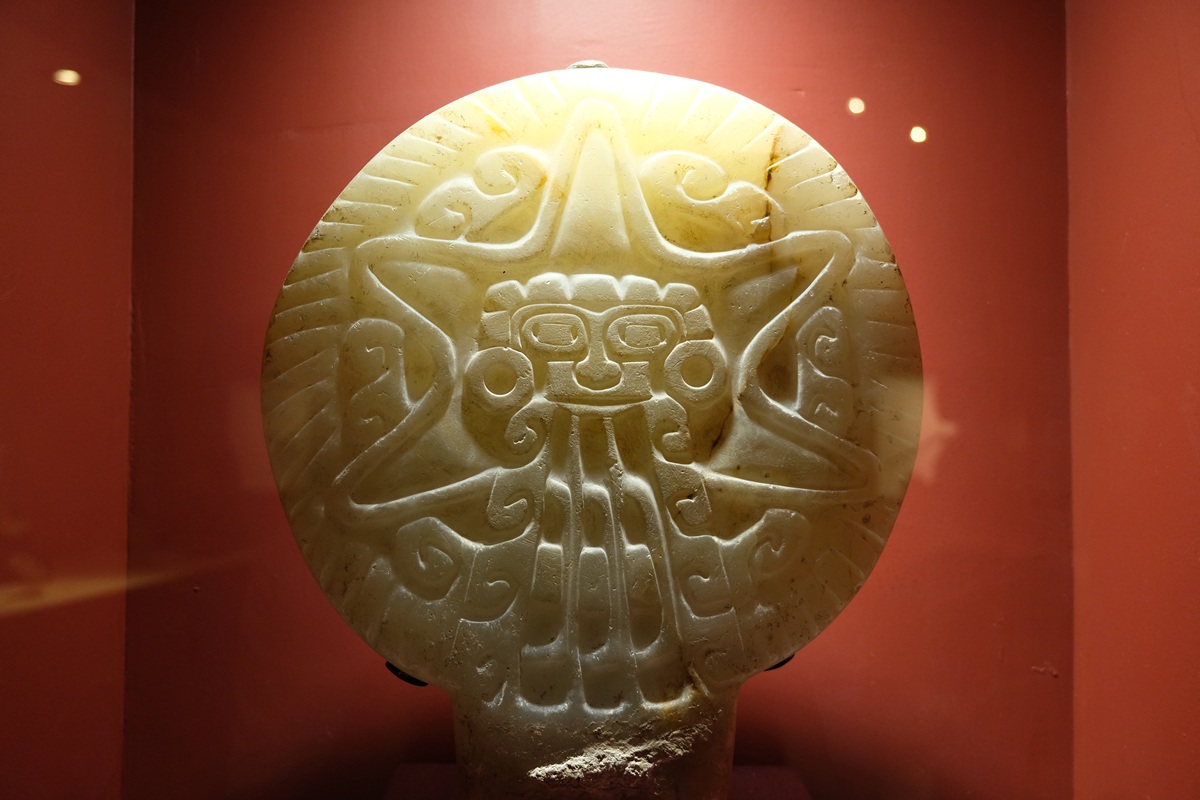
The planet Venus depicted with attributes of Tlaloc, the god of rain worshipped by the ancient residents of Teotihuacan as well as the Aztecs centuries later
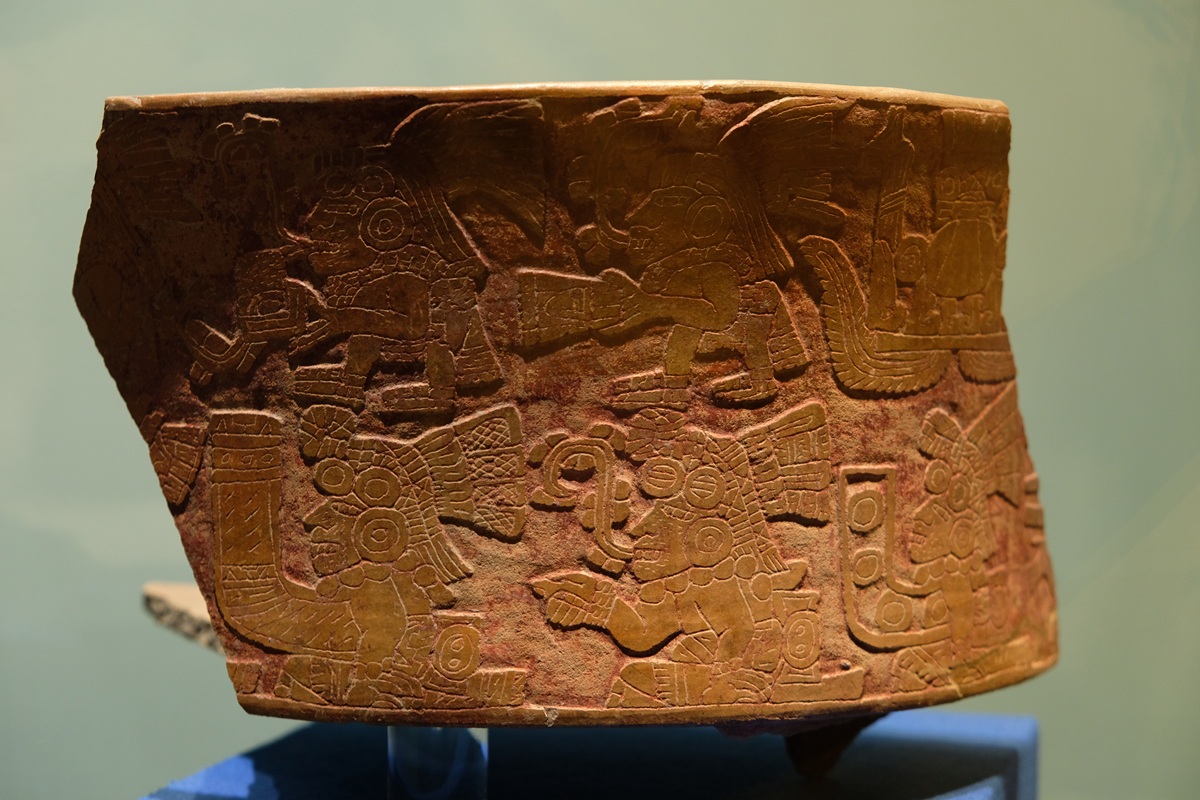
An artistic expression of the ancient people of Teotihuacan
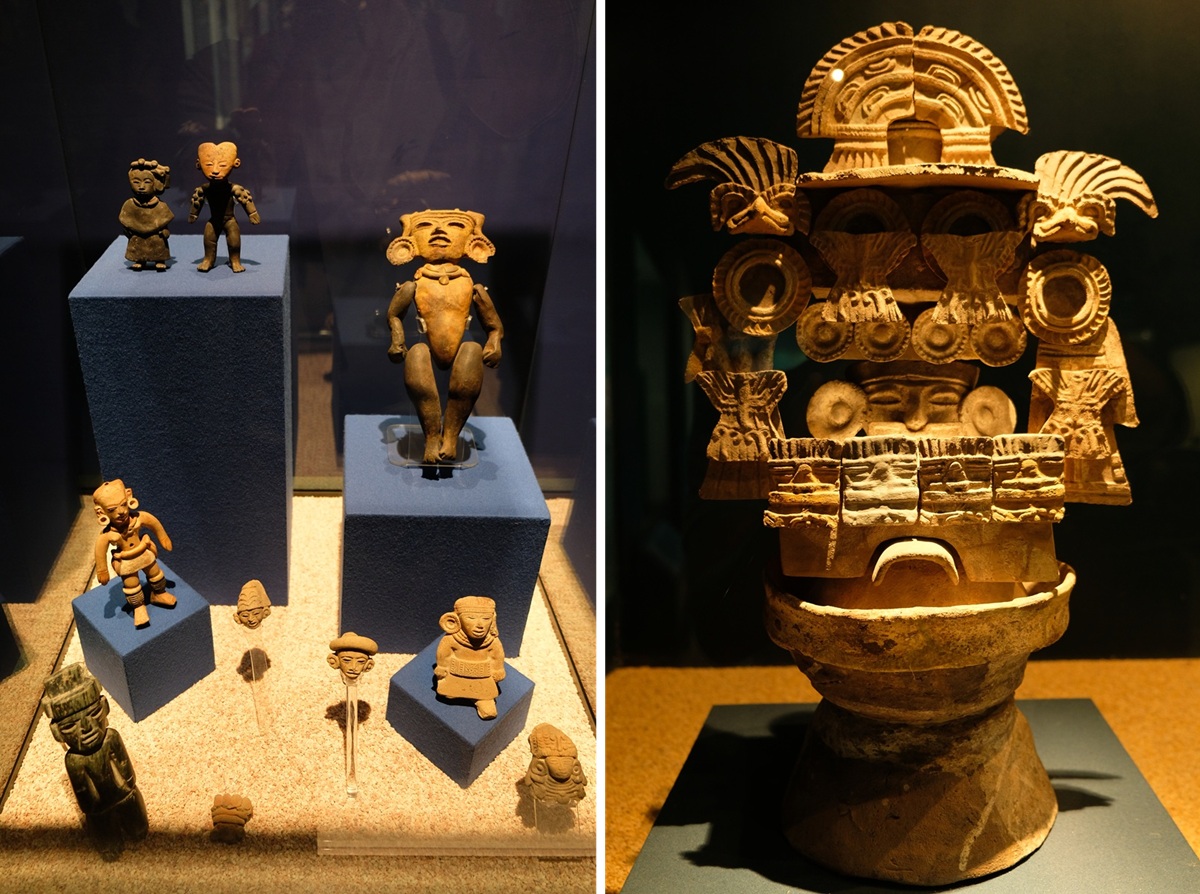
More artifacts discovered at Teotihuacan

Fragments of a mural depicting two felines with feather headdresses

Another portrayal of Tlaloc

A fragment of an architectural crest

The Pyramid of the Sun viewed from inside the museum
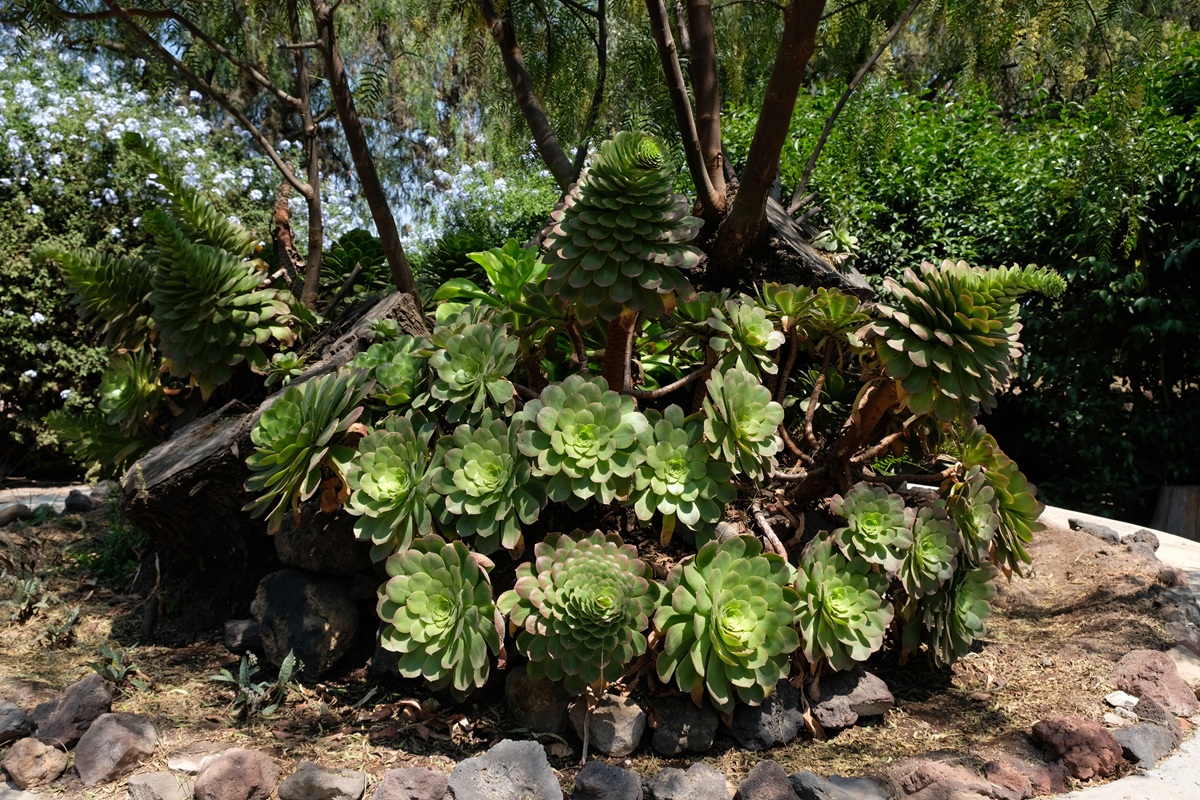
The biggest succulent plant I have ever seen
Despite these achievements, there was one big problem: no written records in the native language of Teotihuacan have ever been found. Instead, a lot of information about this magnificent city was derived from manuscripts and inscriptions recorded by the Maya peoples (Teotihuacan’s contemporary) as well as the Aztecs who lived centuries after the fall of Teotihuacan. Even the name of the city itself, which means “place where gods were born” or “place of those who have the road of the gods”, was given by the Nahuatl-speaking Aztecs who were probably humbled by what they saw when they entered the ruins of the once powerful state. Meanwhile, in Maya texts Teotihuacan was referred to as puh, or “place of reeds”.
Right after lunch, James and I began our exploration of Teotihuacan at the site’s museum. Situated in the vicinity of the Pyramid the Sun, it provides a great introduction to the ancient ruins which were inscribed on the UNESCO World Heritage list in 1987. Fragments of murals that once adorned the structures in the city and richly-embellished smaller objects – items like braziers, vessels, and effigies – were among the highlights for me as they gave an idea of the opulence enjoyed by the city’s residents during its heyday. Images of the rain god Tlaloc are a reminder of the similarities and exchange of ideas among different Mesoamerican civilizations as each of them has their own version of the deity: Chaac for the Maya and Cocijo for the Zapotecs, for example.
As the museum was relatively compact, it only took us around half an hour to see its collections before setting foot on the Avenue of the Dead, the main thoroughfare that runs through the middle of Teotihuacan. Most visitors seemed to go straight toward the Pyramid of the Moon at the northern end of the central axis, but we opted to head south first to visit the most ornate structure in all of Teotihuacan: the Pyramid of the Feathered Serpent.
Miccaotli, which means the “Avenue of the Dead”, was the name given by 16th-century Nahuatl-speaking people when they walked along this wide avenue. They believed the empty talud-tablero platforms on both sides of the passage were tombs, hence the epithet. Now we know that it is not the case, but the nickname endures to this day. What I loved about walking down this section of the ancient avenue was the fact that it was very quiet, which helped me appreciate the scale of Teotihuacan even more. It’s mind-boggling to think that this place is almost 2,000 years old.
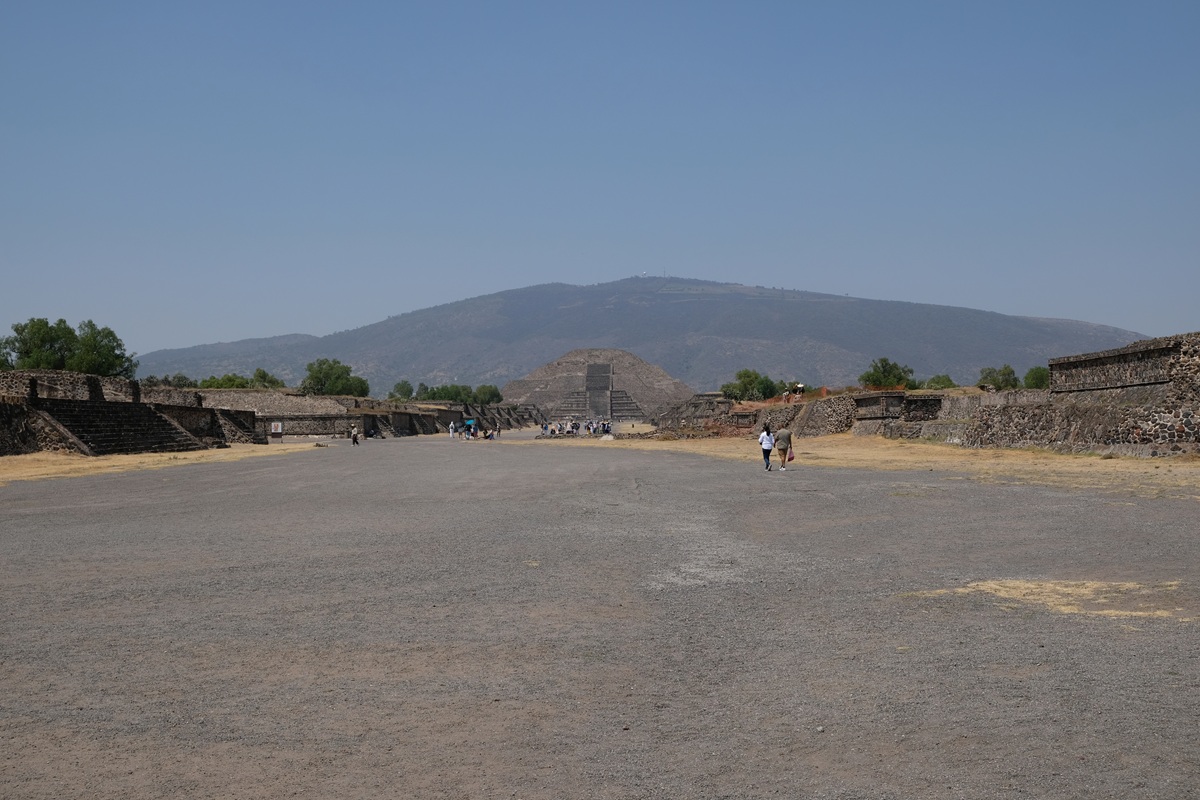
Looking at the Pyramid of the Moon from the Avenue of the Dead with the Cerro Gordo mountain in the background

Platforms along the Avenue of the Dead, built in the talud-tablero architectural style
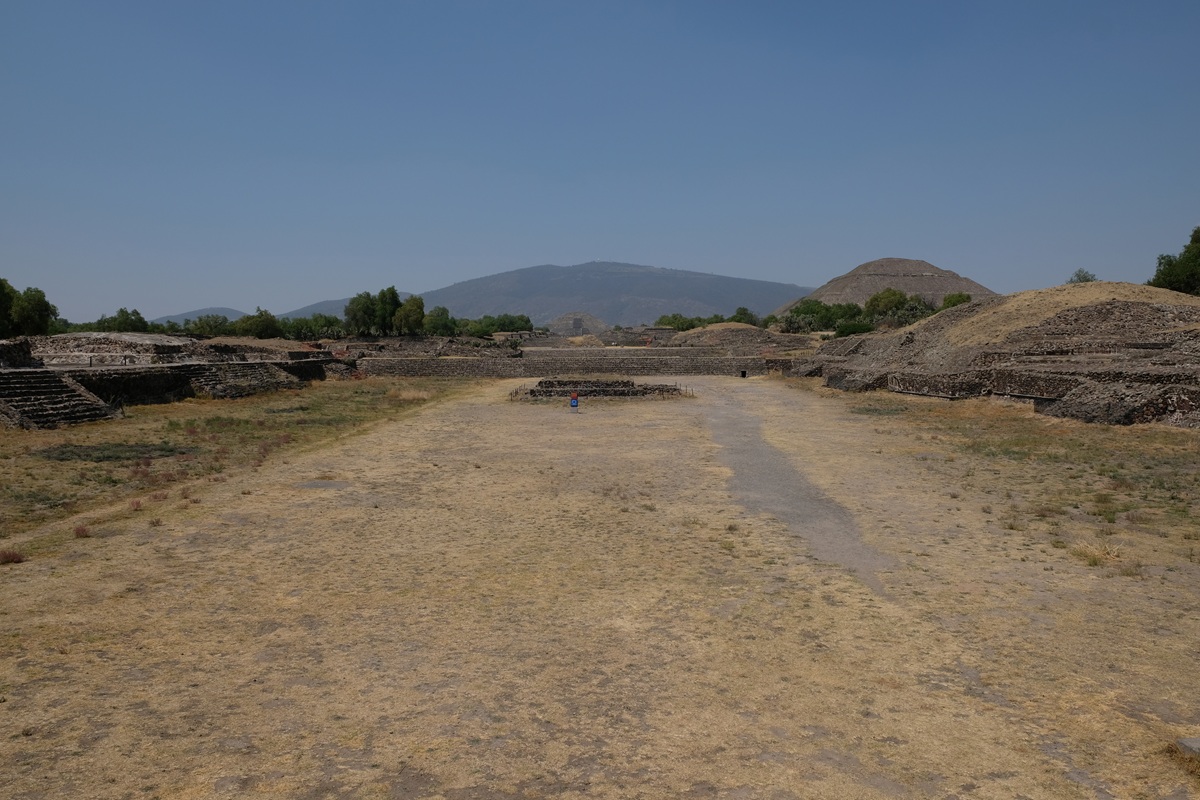
We kept walking south and from this angle both the Pyramid of the Sun and the Pyramid of the Moon can be seen
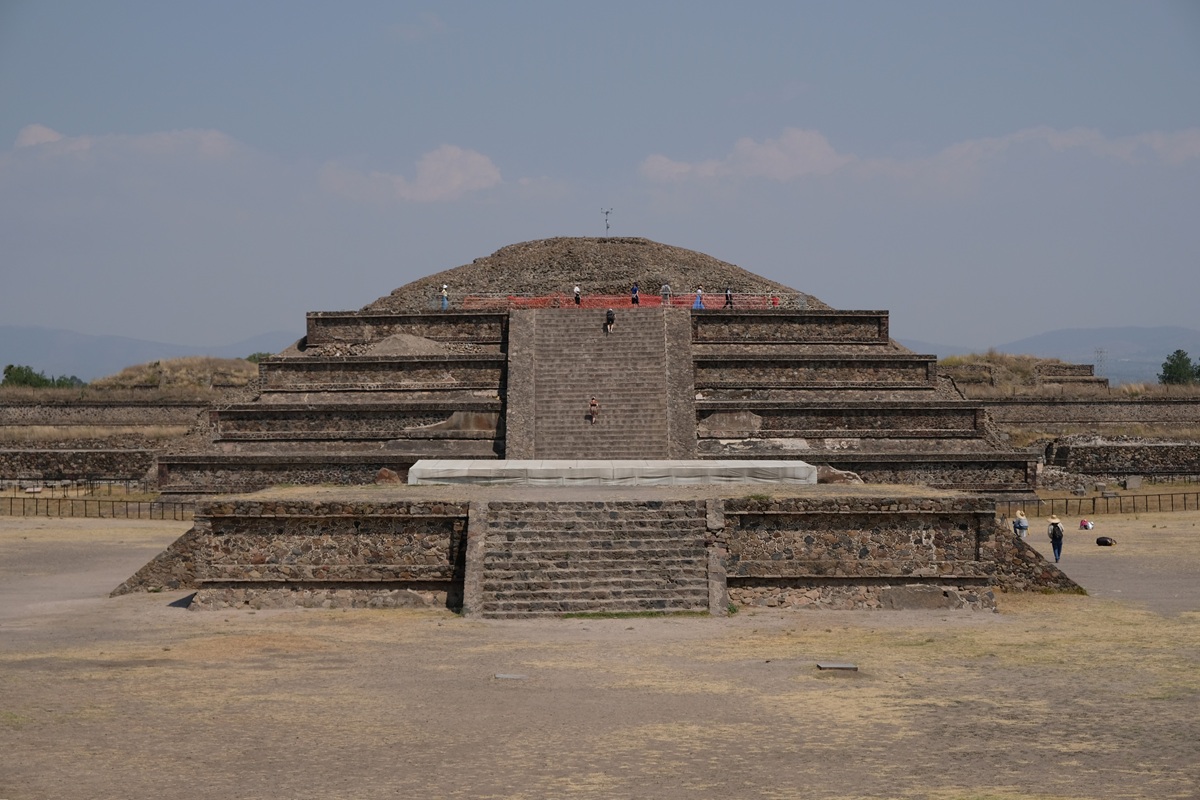
Arriving at the Ciudadela (Citadel), the former center of power of Teotihuacan
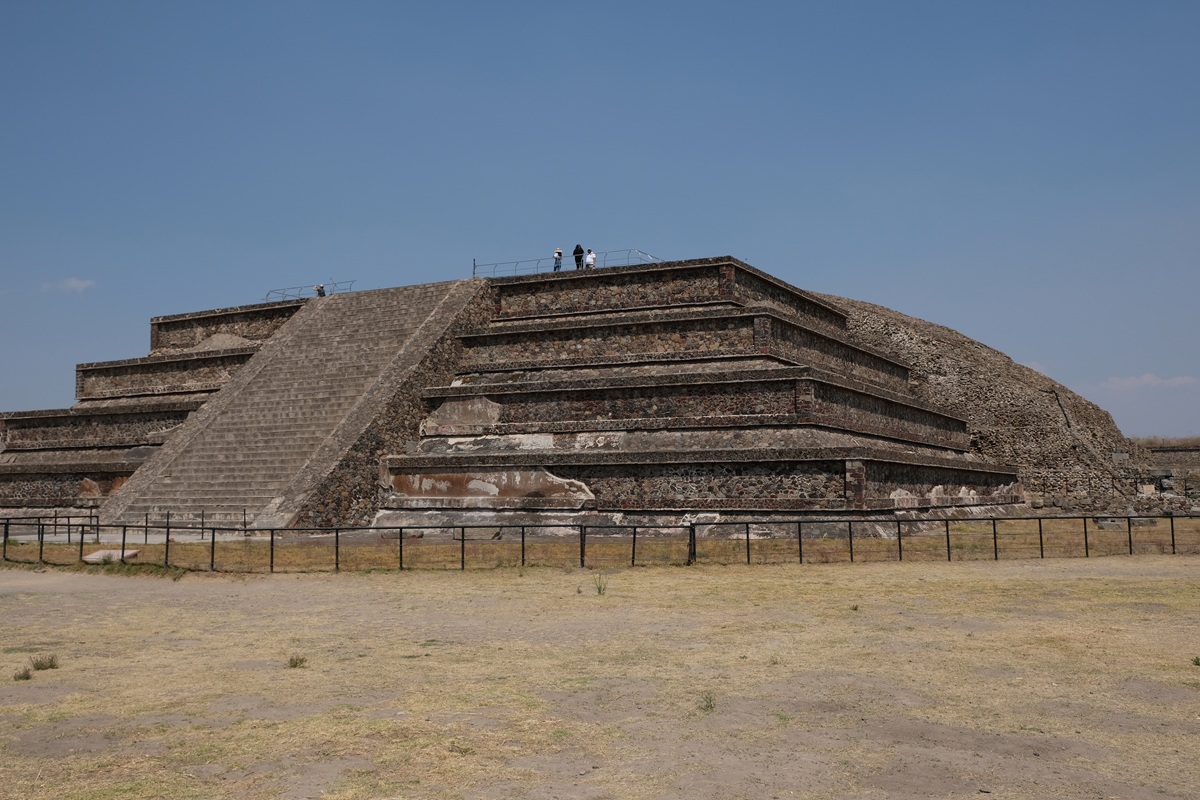
Behind the so-called “attached pyramid” is the true gem of Teotihuacan: the Pyramid of the Feathered Serpent
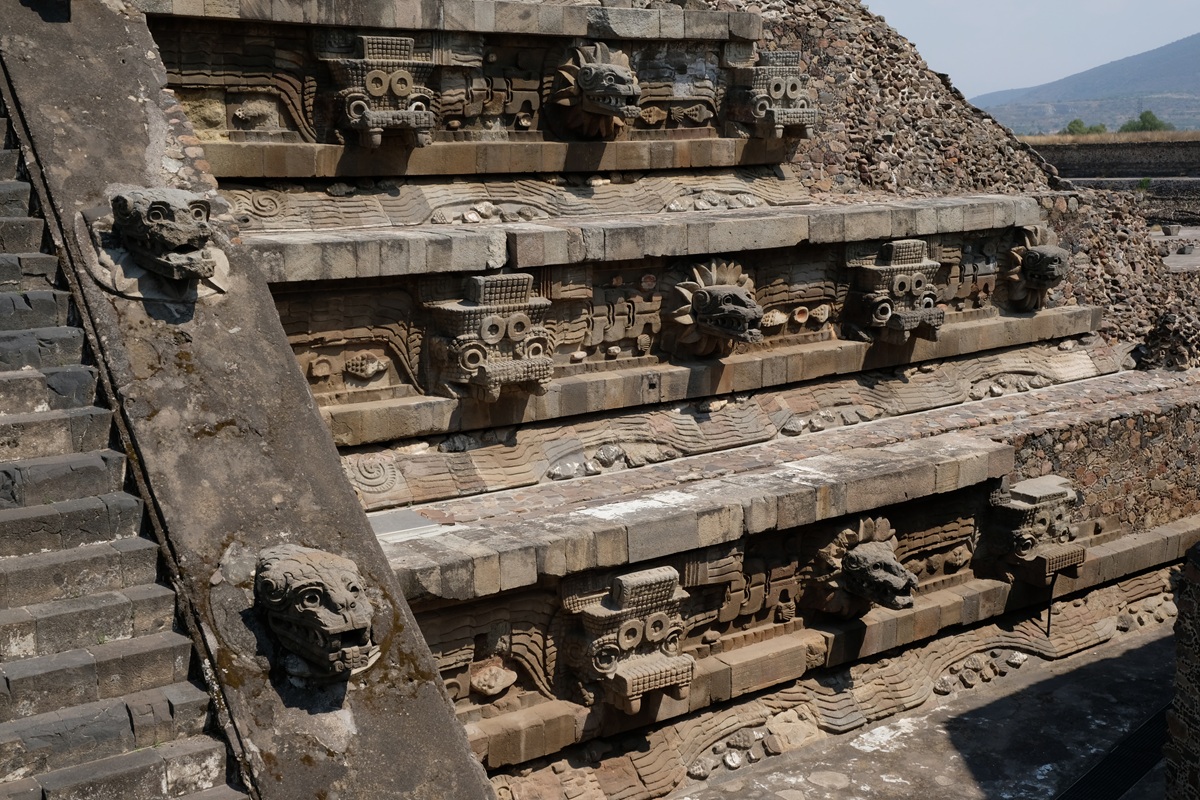
This was the reason why we walked all the way to the southern end of the Avenue of the Dead
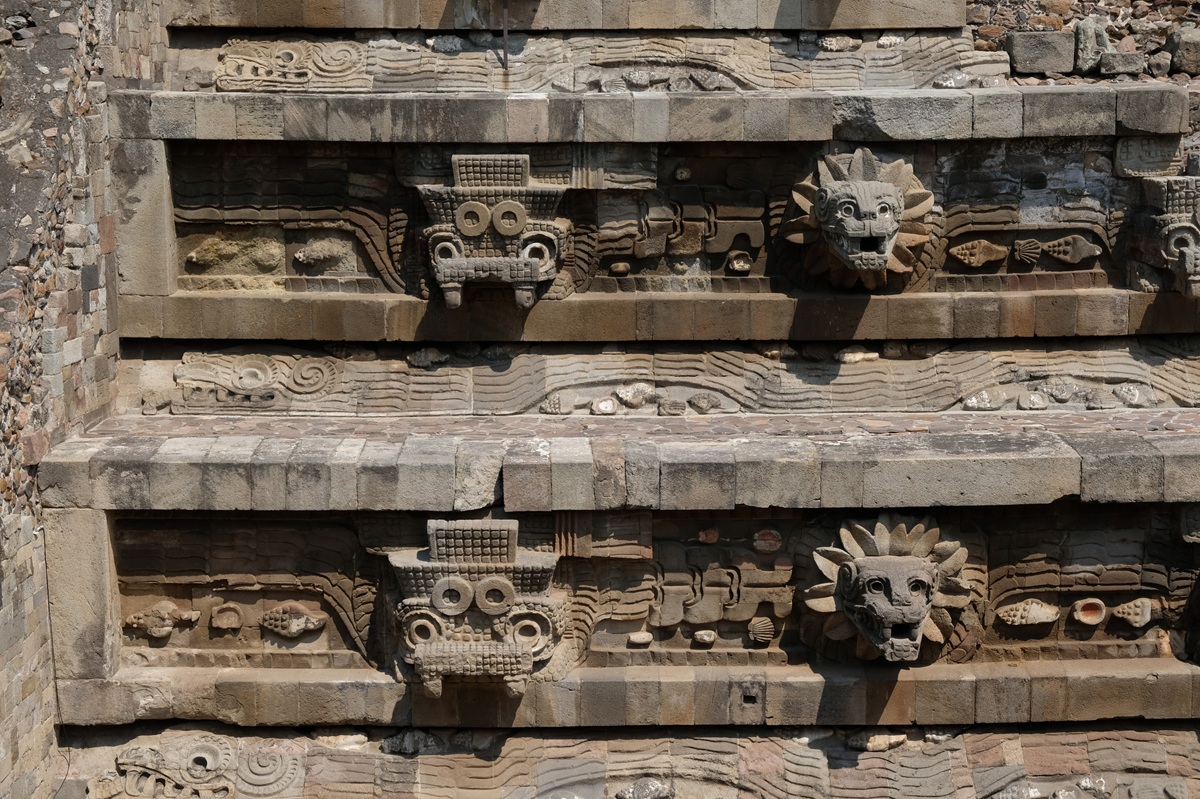
Depictions of Tlaloc (left) and Quetzalcoatl (Feathered Serpent), among the most important gods for the ancient people of Teotihuacan
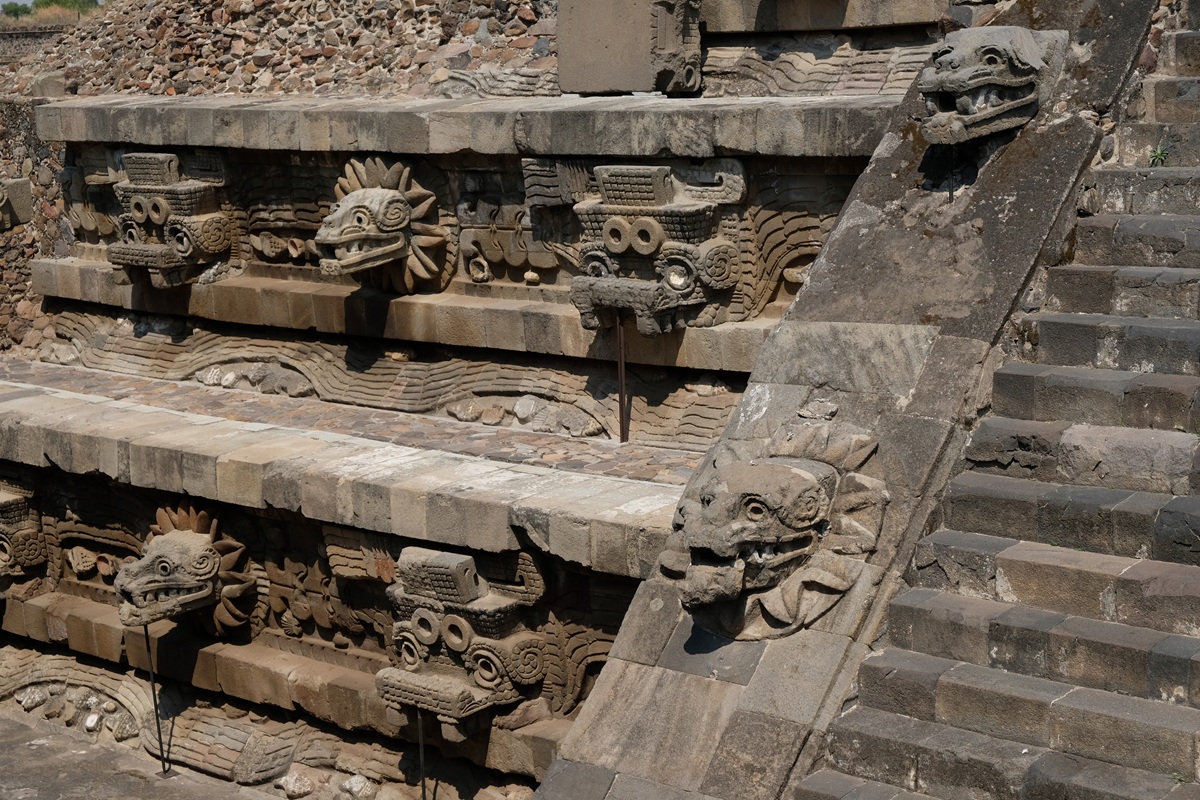
Some required extra support to remain at their places
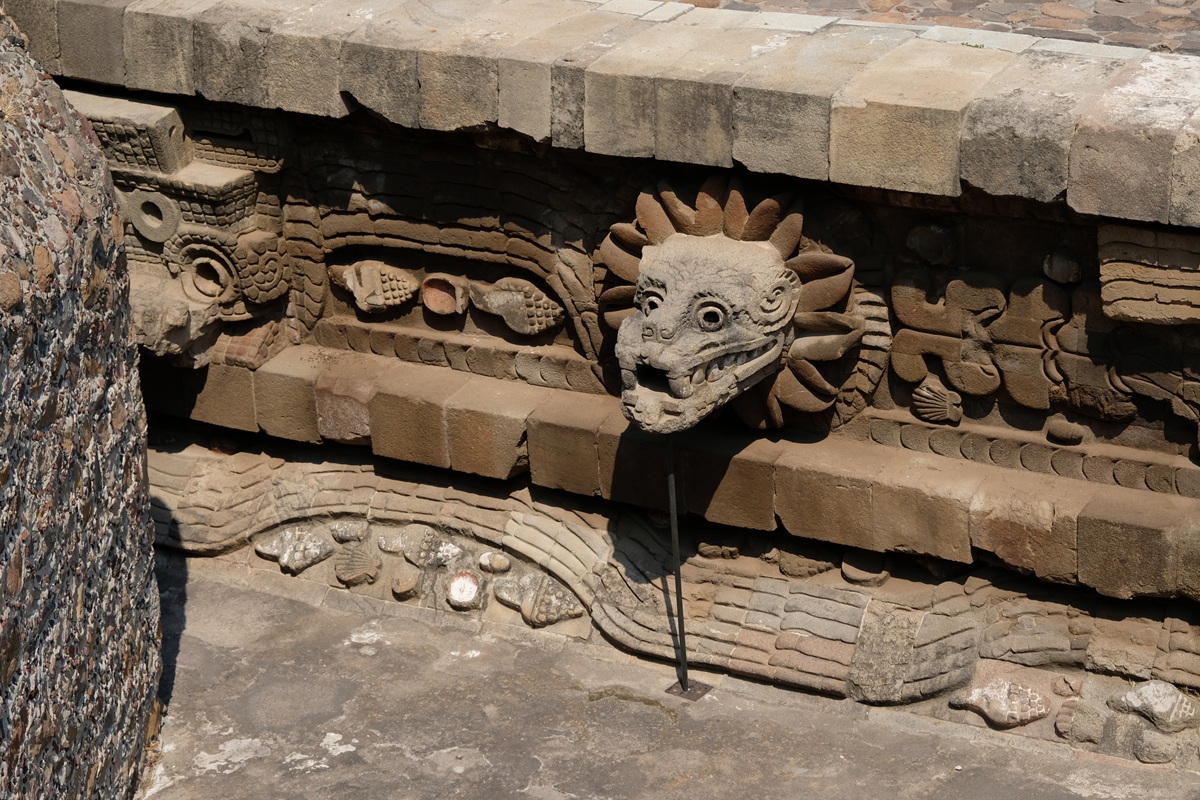
Did you notice the ears of corn?
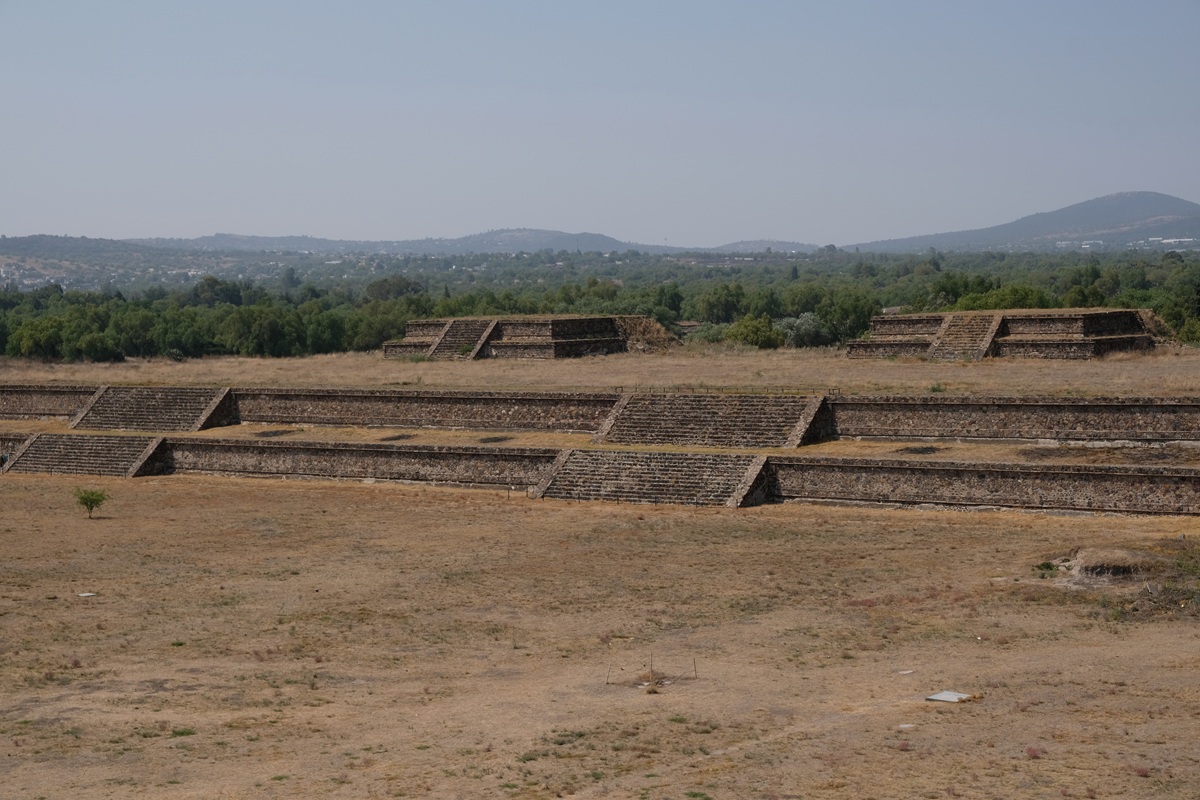
Some of the structures within the Ciudadela
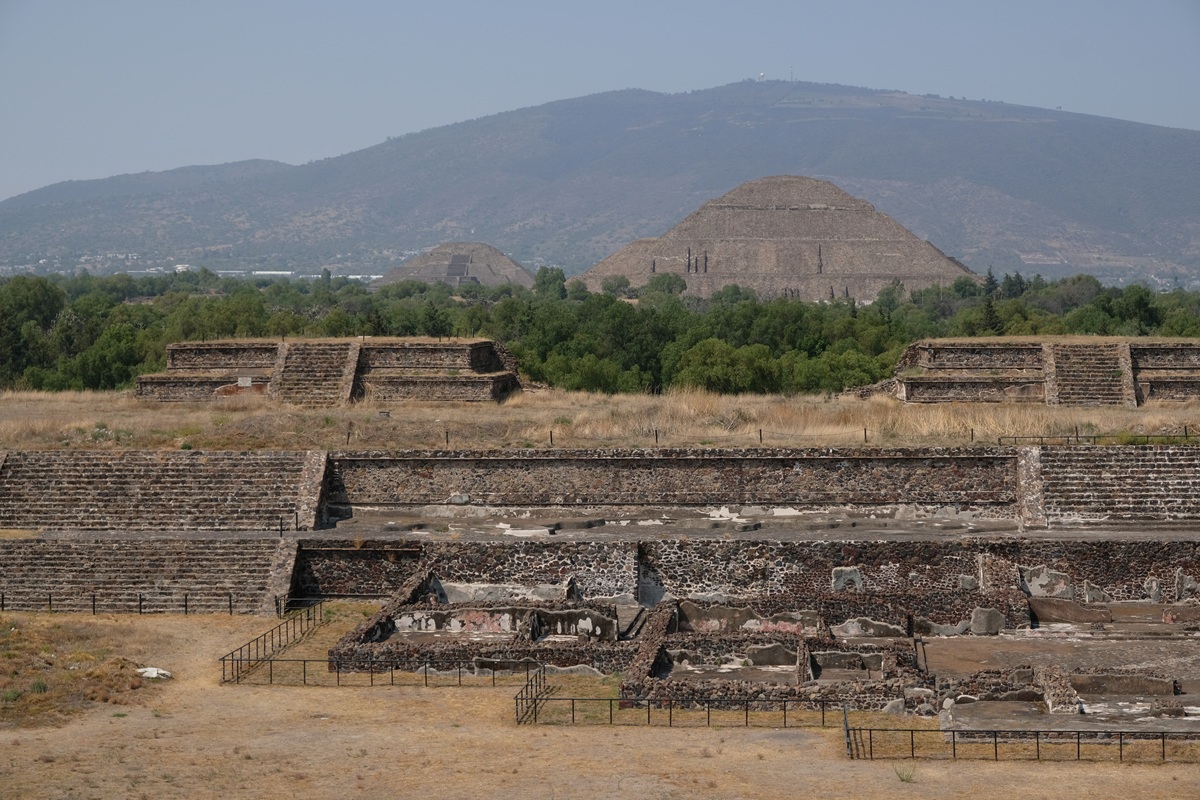
The Pyramid of the Sun and the Pyramid of the Moon as viewed from the Ciudadela
We kept walking south, went up and down some steps, before finally arriving at what is called the Ciudadela (or the “Citadel”), a name given by the Spanish colonizers as they thought this compound was a fort. If we didn’t know, we would’ve probably assumed that the central structures of the Ciudadela were just another example of the talud-tablero buildings that are emblematic of Teotihuacan. But we knew something special was hidden from plain sight. The view of the Pyramid of the Feathered Serpent is curiously blocked by an “attached pyramid”. Just like everyone else, we climbed the latter, and when we reached the top, there it was. In front of us was the ornately decorated Pyramid of the Feathered Serpent with its iconic sculptures of Tlaloc and Quetzalcoatl (the Feathered Serpent himself). It was just as magnificent as how I pictured it would be, although I couldn’t help but be inquisitive about the attached pyramid. Why was it built right there to obscure this richly carved ancient wonder? No one knows for sure, although some speculate that the addition of this later structure was probably due to a change in the city’s politics or religion.
From the Ciudadela, we gazed upon the northern section of the Avenue of the Dead with the two largest pyramids of Teotihuacan looming in the background. That was where we headed next.
In the past, visitors could climb both the Pyramid of the Sun and Pyramid of the Moon. However, that’s not the case anymore as the authorities want to preserve the ancient monuments from further erosion caused by tourists. I know this is best for the structures, but I won’t lie that I like the idea of viewing the entire ancient city from those high vantage points. We kept walking north and as we got closer to the end of the avenue, the more people there were. After checking out the famous puma mural (the feline is often incorrectly referred to as a jaguar), we headed to the Palace of Quetzalpapalotl. Created in the 5th century CE, the reliefs on the pillars of its courtyard depict a hybrid animal with the head of a mythological bird (quetzalli, or “precious feather”) and the body of a butterfly (papalotl), hence the portmanteau. In addition to that, a few sections of the structure still bear some original murals, making this compound as intriguing as the pyramids themselves.
A lot of information about Teotihuacan might have been lost forever. But visiting this ancient city really gave me an idea of the great power and influence it had over Mesoamerica. Unsurprisingly, its demise opened a new chapter in the history of this region, one that saw the rise of the civilizations that for a long time dominated their core realm in the Yucatán peninsula: the Maya. Subsequently, over the centuries, different political entities of the Maya peoples rose to prominence. And alongside their resurgence, splendid cities were built, filled with a plethora of magnificent monuments. One of the most impressive of all is situated in the middle of a lush jungle in what is now the state of Chiapas, and that is where I will take you next on this journey across Mexico.
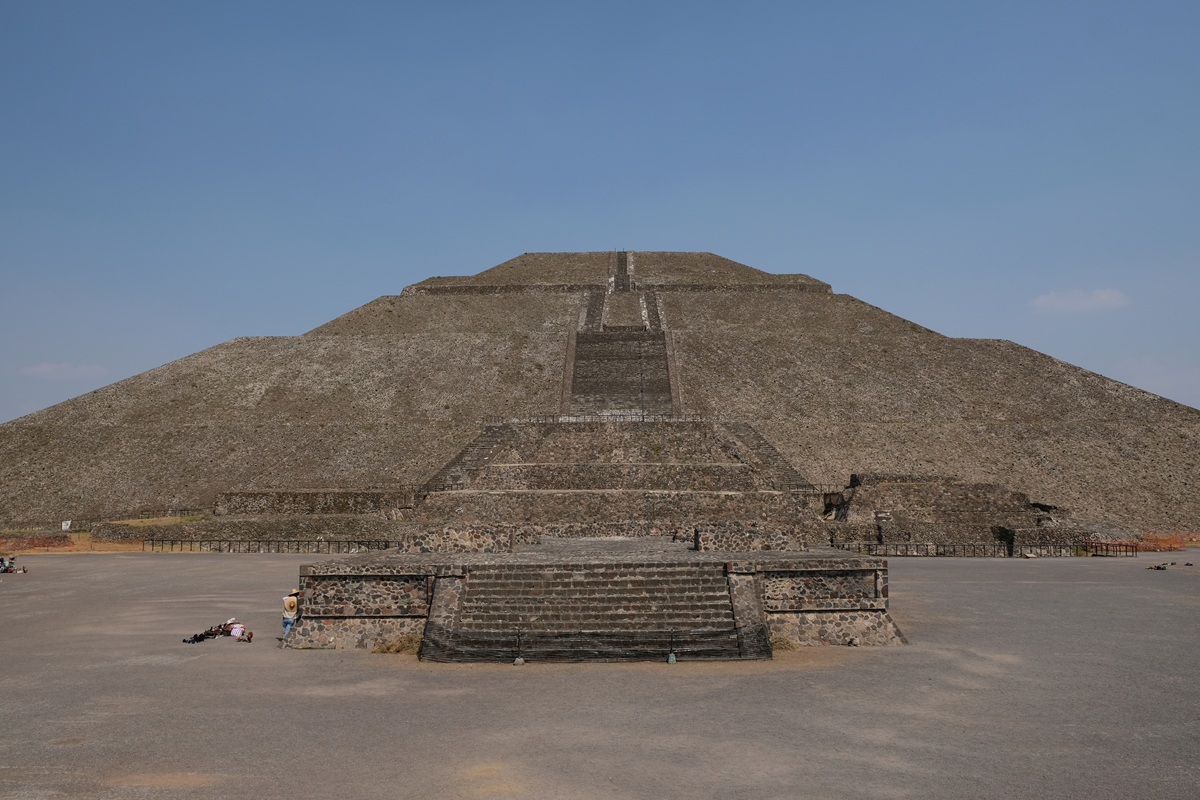
Constructed in the second century CE, the Pyramid of the Sun is the largest structure in Teotihuacan
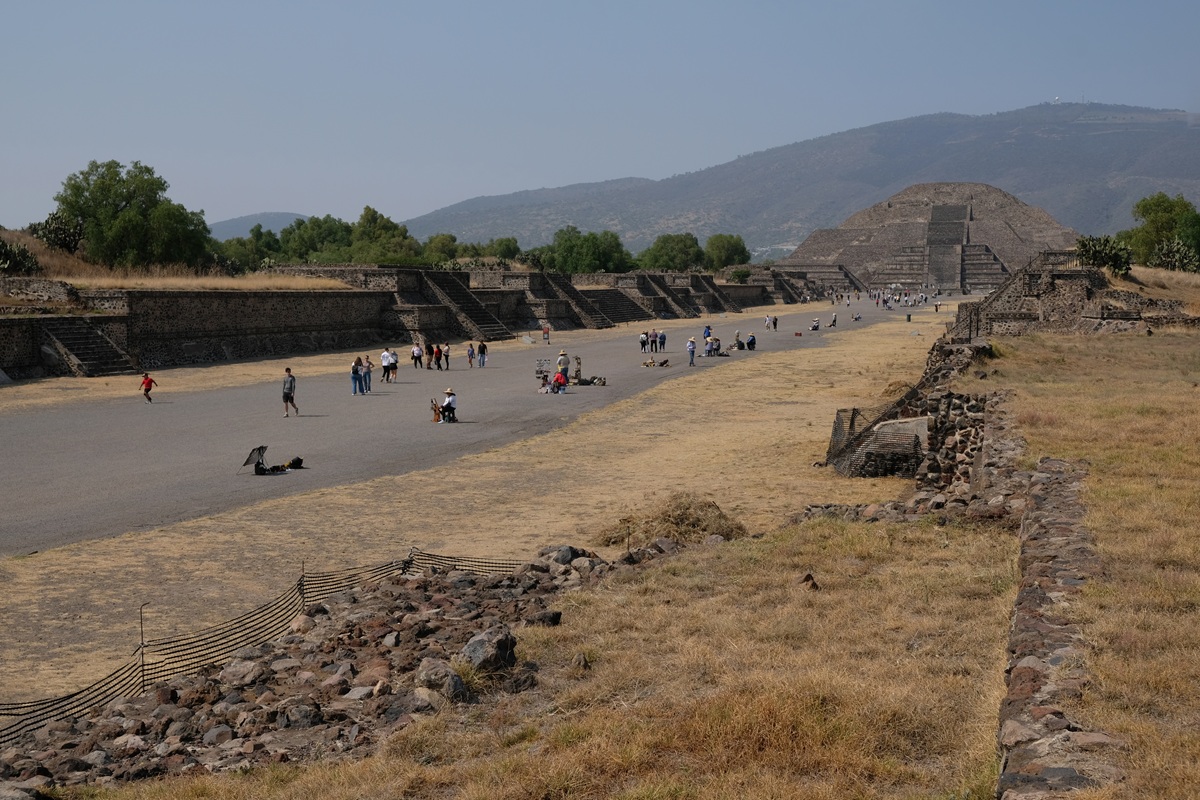
The Avenue of the Dead with the Pyramid of the Moon at its northern end
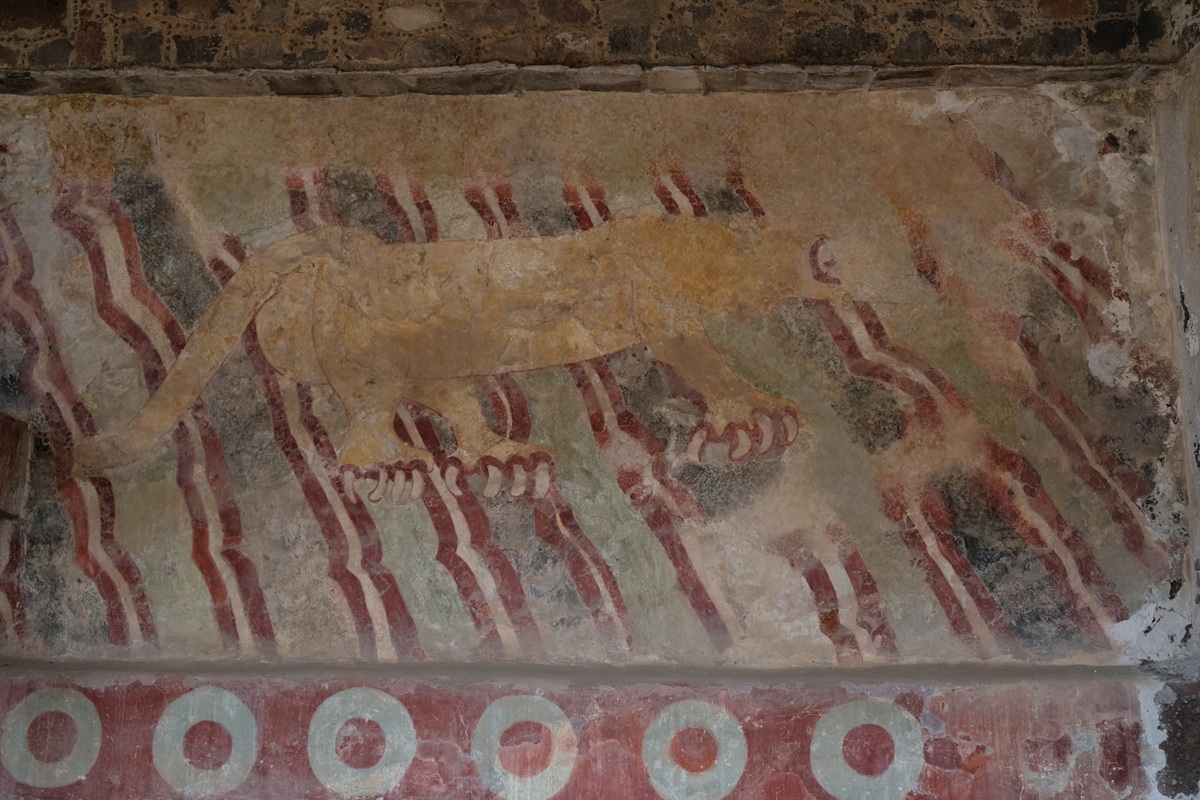
The puma mural, the largest surviving wall painting in Teotihuacan
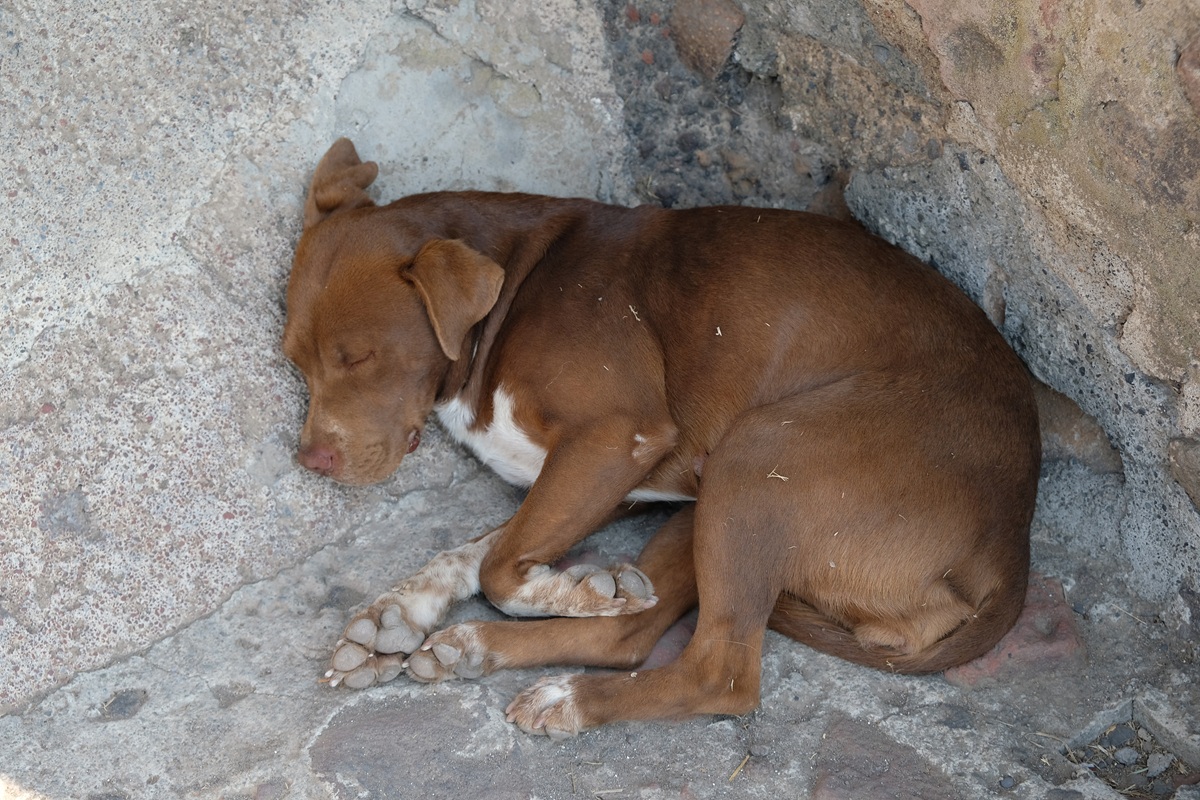
A sleeping beauty next to the mural
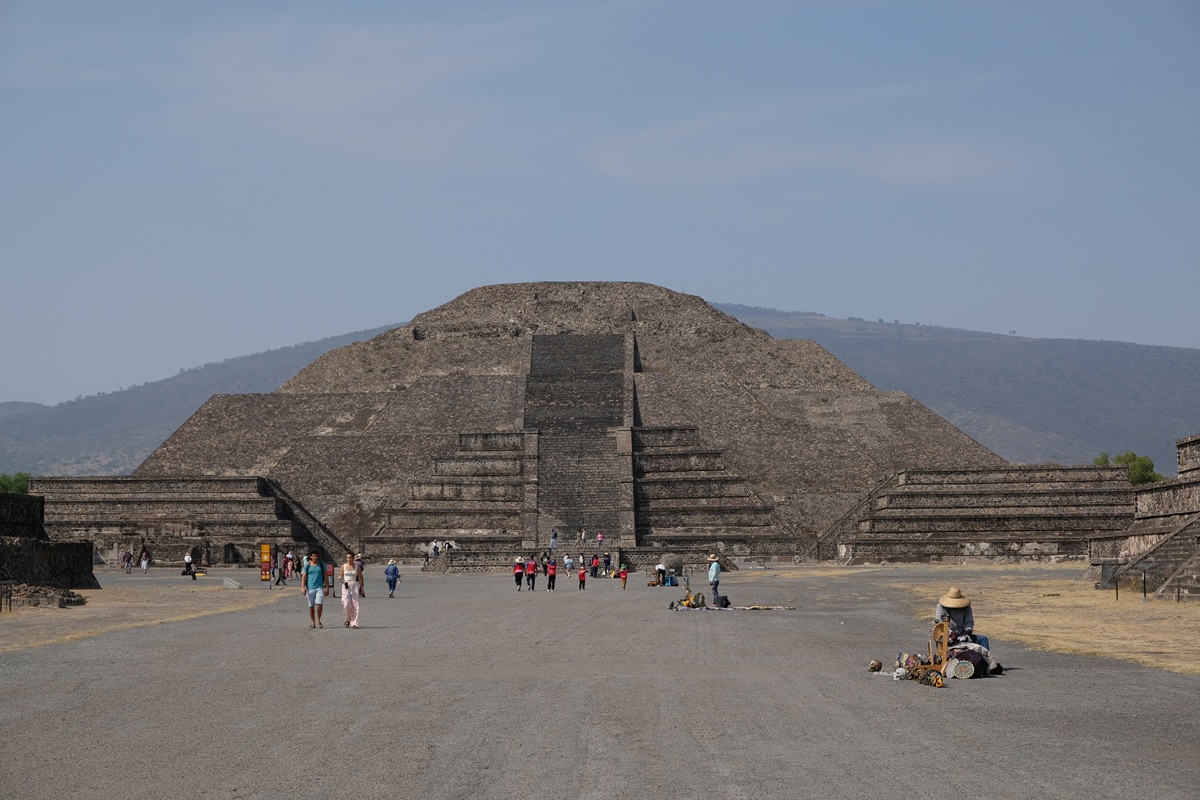
The Pyramid of the Moon was built on top of an older structure
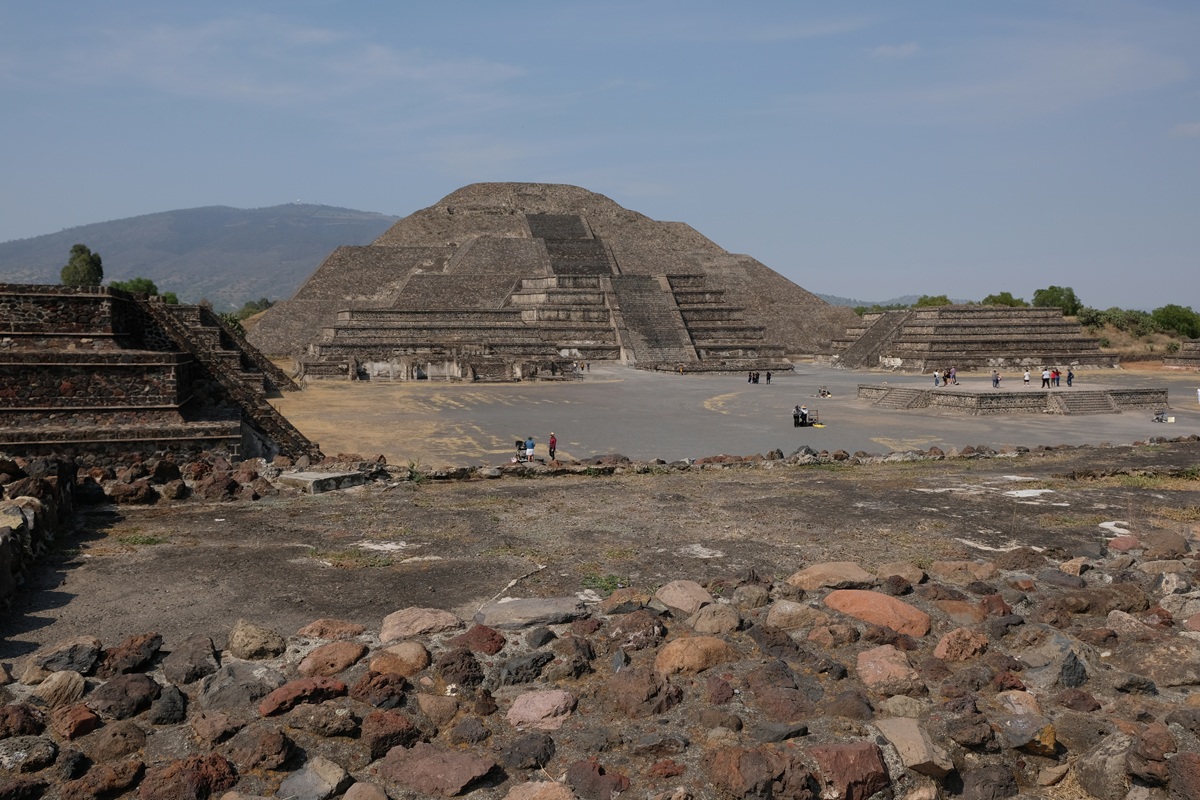
The Plaza of the Moon, the most popular corner of Teotihuacan among modern-day visitors
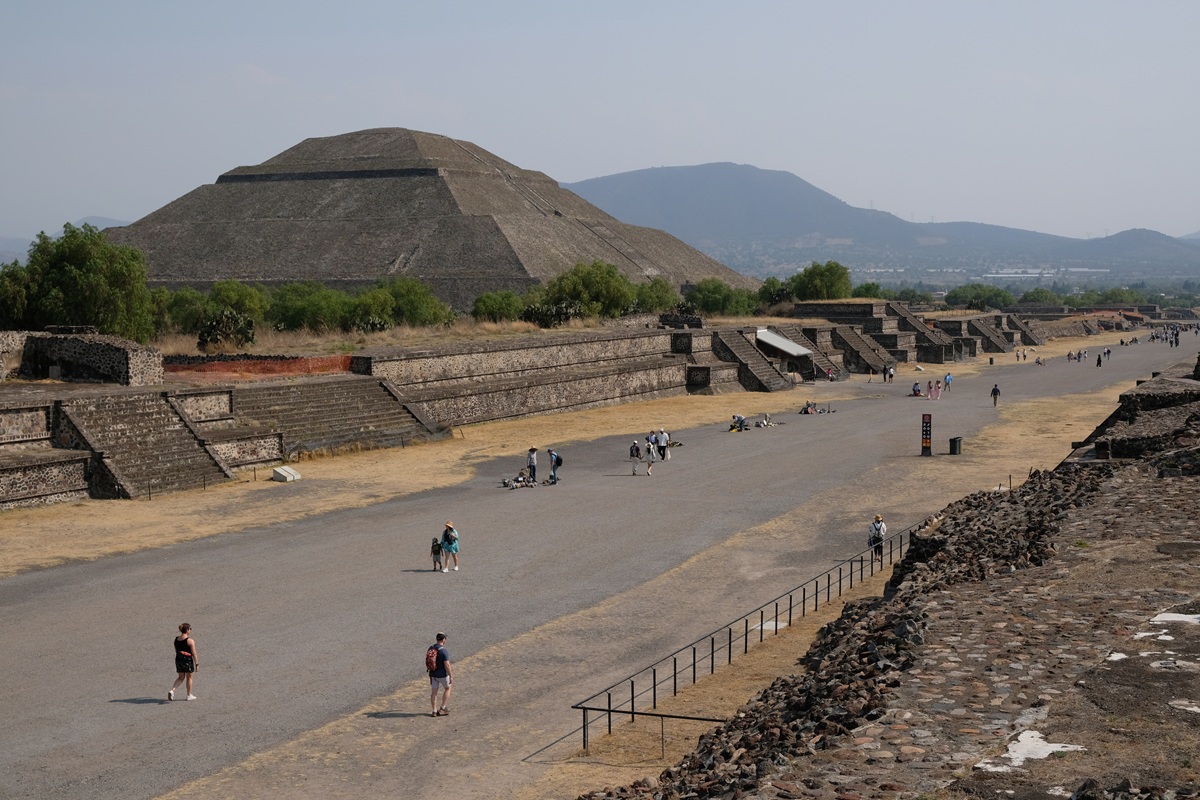
The imposing Pyramid of the Sun as viewed from the northern part of the Avenue of the Dead

Intricate carvings at the Palace of Quetzalpapalotl

This talud-tablero style with the different colors in stone is emblematic of Teotihuacan
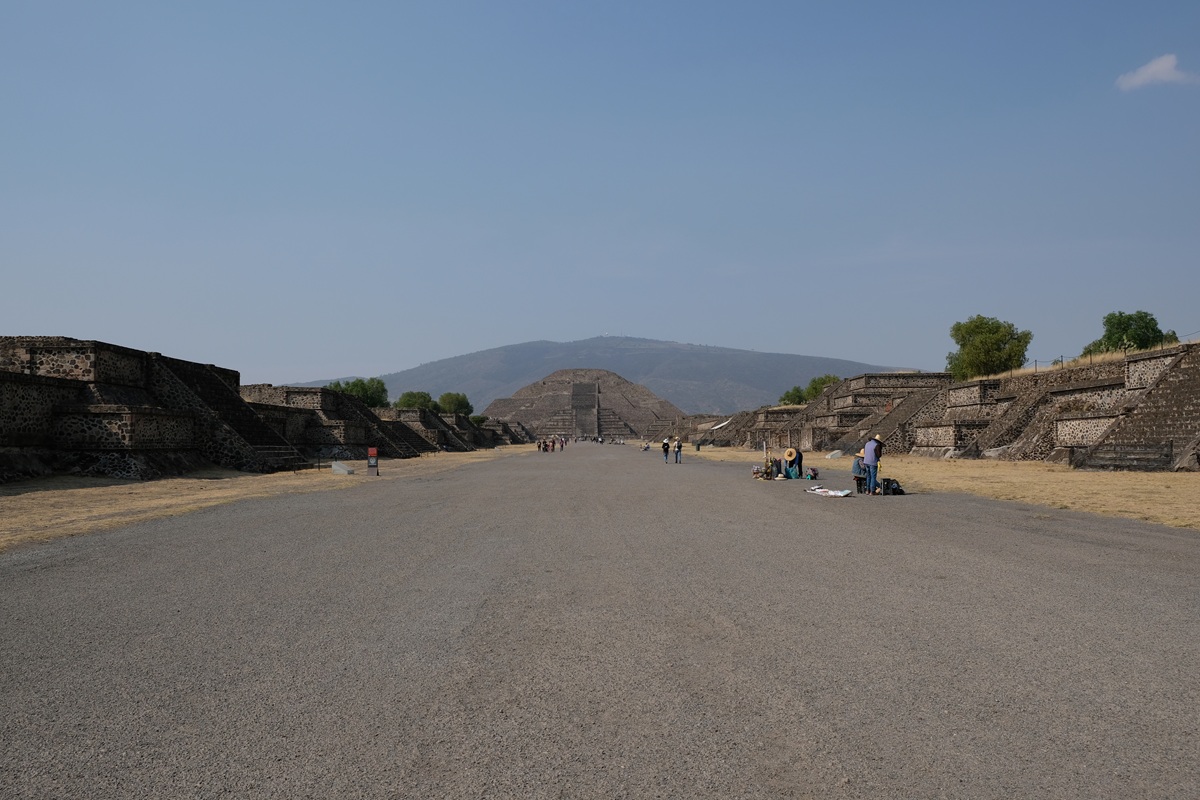
One final look before going back to Mexico City

 What an Amazing World!
I’m so glad you went to the Pyramid of the Feathered Serpent. Isn’t it crazy that most visitors don’t see it, and yet it’s the most brilliant building there!? I also really appreciated being able to connect pieces in the museum (especially the one in CDMX) with the site to fully appreciate it. I really enjoyed revisiting Teotihuacan with you today Bama. Maggie
LikeLiked by 2 people
Maggie, I have to thank you because your blog post on Teotihuacan was the main reason why we decided to see the Pyramid of the Feathered Serpent first before exploring the rest of this ancient city. The fact that a lot of people just go straight to the two bigger pyramids and miss the most ornate one only makes the latter even more special.
LikeLiked by 1 person
It does, and the fact that it’s hidden behind the other pyramid makes the reveal even more special, doesn’t it?
LikeLiked by 1 person
Exactly! When I saw the “attached pyramid”, I was so excited because I knew what lies behind it from your photos.
LikeLiked by 1 person
😊
LikeLiked by 1 person
Thanks Bama for bringing back wonderful memories of our own visit to Teotihuacan. I agree with Maggie that it is strange that tourists don’t often explore the full site; here or elsewhere. I am not certain why as if you have come all of this way, it is worth taking the time to visit everything. Obviously, if you come on a tour, you are often limited in what you see… (Suzanne)
LikeLiked by 1 person
Some people are happy enough for having seen only a few parts of an ancient site, and I think that’s fine because that means people like us can still find corners that are often no less interesting mostly to ourselves. This is why going on a group tour usually doesn’t appeal to me.
LikeLike
You are right that it is better for those who want to explore that there is fewer people.
We do appreciate a tour in certain circumstances as it sometimes help better understand a site or a country or it allows you to go to hard to reach places. So we do a mix of group and independent tours depending of the country we visit. Sometimes we are also lazy and do a group tour as it doesn’t require lengthy planning…
LikeLiked by 1 person
You’re right. I do appreciate a tour that really helps me understand more about a place though.
LikeLike
The architecture and details of Teotihuacan are stunning, and it’s quite remarkable just how much of it has been preserved over the centuries, even millennia! Despite being just a hop away from Mexico, I haven’t explored as much of the country as I would like. Given that Mexico has some incredible sites (including Chichen Itza, one of the Seven Wonders of the World), I will need to return to the country to see more. Looks like you dove deep into Mexico’s ancient history, and I appreciate you sharing your adventures there, Bama!
LikeLiked by 2 people
Seeing ancient places like Teotihuacan was my main motivation to travel halfway across the globe by taking two very exhausting long-haul flights. When I was standing on the Avenue of the Dead, I couldn’t help but feel grateful for having made the long journey there. Chichen Itza was a lot busier with more crowds, but it’s still worth visiting. I guess by now you’re no longer surprised with my fascination for ancient sites, Rebecca. 😀
LikeLiked by 1 person
Wow such ornate details on both the structures and the exhibits inside the museum. It’s hard to believe how past civilizations made such impressive artwork and it’s lasted for so long. We have definitely changed over the years with our throwaway purchases.
LikeLiked by 1 person
We’re so used to buying things that don’t last that long now. People say it’s good for the economy, but in the bigger scheme of things I’m not sure if we should pursue this obsession forever. Every time I see places like Teotihuacan I often think of why it seems like we can no longer make something that lasts a very long time.
LikeLiked by 1 person
I am in awe of the incredible buildings and artifacts that are still around from soooo long ago. You are very right about no longer making things that last for very long. I suppose buying things helps the modern economies thrive.
LikeLiked by 1 person
Sometimes I wonder, hundreds of years from now what will the future generations find out about ourselves.
LikeLiked by 1 person
I appreciate your introduction, which refers to the great European and Asian civilisations. Indeed, when I visited Teotihuacan, I experienced the same feelings I felt when visiting the great ancient sites. These massive monuments that have stood the test of time and all the fragments of life that archaeologists are trying to give shape to take us back to the past. At the time of my visit, it was still possible to climb the pyramids, only the summits were forbidden. Seeing from above helps to understand the city around. We can see as much as we can imagine.
LikeLiked by 1 person
Ahh I envy you for having visited Teotihuacan when climbing the pyramids was still possible. Imagine how awestruck the Spaniards must have felt when they saw Teotihuacan (and other ancient sites in Mexico) for the very first time! Even for us, who had seen images of those pyramids prior to our visit, the site still left a deep impression.
LikeLiked by 1 person
It’s incredible to hear how old Teotihuacan is and that the ruins are still in such great shape. It’s too bad that so much information and history of this place is unknown though. The carvings on the Temple of the Feathered Serpent are amazing.
LikeLiked by 1 person
I wonder if the relatively low humidity levels in the area helped preserve the ancient structures. Wouldn’t it be great if at least a few texts written by the local people of this city had survived? We could’ve learned more about them.
LikeLiked by 1 person
Bama,
As always your post are educational with history and geography. Are you a teacher in those areas?
Well done.
LikeLiked by 1 person
In another life, maybe I would be a historian, or an archaeologist. But in this life, I’m just a normal guy working in the financial industry who happens to love history.
Thank you!
LikeLike
What a treat this is to read about and I can only imagine what it was like for you and James to experience this in person. Such fascinating and intricate architecture and the remnants and artifacts from that time are stunning.
It’s so interesting to think about how cultures and civilizations developed completely unaware of each other back then. Something that would so difficult in our hyper connected world today. But it does make me think about interstellar travel one day and the other planets and life developing at the same moment in time as us. Sad to think we will likely not experience this in our lifetime.
The Teotihuacan stories being retold and documented by the Maya does reinforce to me why history, preserving and studying it, is so so important. Who knows what will be recorded and discovered of our time hundreds of years from now!
LikeLiked by 1 person
Teotihuacan was really impressive, and the scale of everything — the pyramids and the layout of the city itself — was truly mindboggling!
In the world we live today, it’s really hard to claim if something is truly original as everyone is often inspired by things from other eras and cultures. But to think that the ancient peoples of Mesoamerica came up with the idea of building pyramids without knowing that other civilizations across the oceans also did the same thing is really fascinating.
You know, what you said about life in other planets faraway from Earth is also something that crossed my mind too!
The more I learn about history the more I realize the importance of keeping a record of everything. Something so mundane today can provide valuable information in the future.
LikeLiked by 1 person
Pyramids are so fascinating and you’re right, it’s amazing to see pyramids emerge in different cultures that were separated through geography and time. Have you heard the theory that pyramids are just the tip of a larger structure buried underneath?
LikeLiked by 1 person
I don’t think I’ve heard of it. But what I learned from my trip to Mexico was that some pyramids were built on top of older structures.
LikeLiked by 1 person
Wonderful work as always Bama! Always great to see a post from you because I know I’m going to learn something new!
LikeLiked by 1 person
Much appreciated, Anna! I definitely learned a lot about Teotihuacan from my trip, so sharing it with you and everyone else was naturally the next thing I did.
LikeLiked by 1 person
I really love your posts Bama – I feel you’re like me that when you go somewhere you want to understand not just the culture of a place now, but its history and origins. I work in finance but I really do wish I’d studied ancient civilisations sometimes (my Mum did, specialising in ancient Greek history). It’s incredible how these structures were built and survived!
LikeLiked by 1 person
Exactly! Understanding how a place came to be helps me to appreciate it even more. Oh how cool that your mom studied ancient Greek history! This shows that our love for history didn’t just pop up randomly. There’s usually someone in our family who, one way of another, told us many interesting stories that helped spark our interest in what happened in the past — in my case it’s my dad. Thank you, Hannah!
LikeLiked by 1 person
I concur – a fellow addict to understanding ancient civilizations!
LikeLiked by 1 person
I totally missed the palace of Quetzalpapalotl when I was there; a reason to go back. Nor did I know this much about this ruin. Thanks! Btw, in between Parthian and the Hans stretched the Kushan empire at that time roughly 30-375 BCE. There are still ruins as far as Turkmenistan from this era.
In Asia, I think there was contact between them via trade etc but I wonder if there were any with further reaches of the globe. Any idea?
LikeLiked by 1 person
I wonder if the palace of Quetzalpapalotl was being restored when you went to Teotihuacan because to me that might have been the only reason why you missed it. I have to admit I don’t know that much about the Kushan empire, but I did visit one of the structures left by them in Uzbekistan.
Your question makes me think of the ancient Austronesian peoples who sailed across the Pacific and the Indian Oceans to reach places as far as Madagascar and Easter Island. They might have even reached South America aboard something like Kon-Tiki. We’ll never know for sure.
LikeLike
Omit the B in the BCE! 🙂
LikeLiked by 1 person
I love how you draw comparisons with other empires to place the history of the site and civilisation in context, Bama. I always admire your meticulous research, and this post is another fascinating example of how history and archaeology can become accessible to the armchair traveller. It was wonderful to be transported to Teotihuacan for a moment, and to see it through your eyes.
LikeLiked by 1 person
You’re very kind, Jolandi. Thank you! I’m happy to know that the way I tell the history of the places I went to resonates with you because when what happened in the past is recounted with a context, it helps me understand things better. Teotihuacan truly was a magnificent place. It’s mind-boggling to think of how old everything is!
LikeLiked by 1 person
Life is swamping me at the moment so I kept saving this for later reading. Alas, I fear I may never get to it so I scrolled through all the photos this morning and reminisced about my own Mexican visit! Hope to read future posts more thoroughly. Love the doggie!
LikeLiked by 1 person
I hope all is well with you. Life does get in the way, and I feel that the older I get, the more often this happens. I wonder if you could still climb the pyramids when you went to Teotihuacan.
LikeLike
I guess it shows my age to say that we have climbed many a pyramid in Mexico! And of course we were young and dumb enough to not realize the damage we were doing to these ancient structures.
LikeLiked by 1 person
Mass tourism really puts a lot of pressure on ancient structures around the world. Different places have their own way of dealing with this. At Borobudur, that massive ninth-century Buddhist temple in the heart of Java, now they restrict the number of visitors, and those who wish to go to its upper levels can only do so in small groups with an official guide (who will remind them not to touch anything). They must also don this special footwear that is less abrasive to the structure’s original stones.
LikeLiked by 1 person
Teotihuacan looks like an amazing destination, Bama, especially for those interested in history and archaeology. The site is impressive in scale, and the pyramids, particularly the Pyramid of the Sun, are quite striking. It is quite remarkable that the pyramids and structures of Teotihuacan have survived for so long, and that the site itself remains remarkably well-preserved, despite being abandoned centuries ago. It’s one of the places I’d like to visit one day so I can marvel at its scale and architectural achievements. Thanks for sharing, and have a good day 🙂 Aiva xx
LikeLiked by 1 person
Teotihuacan was really amazing. This ancient city is so massive it can easily fit multiple ancient monuments within its borders. I really hope you’ll get the chance to see it one day, Aiva.
LikeLike
I loved Teotihuacan and the Museo. Amazing insights into a world so different from the one I grew up in. Did you see, in the Museo, the statue of that god (we called him, for lack of a better word, the Mesoamerican answer to Dyonisus) that was depicted right in the middle of an allucinogenic trip?
LikeLiked by 1 person
Is it the one with bended knees with the face that looks up to the sky? I just checked the photo I took of the written explanation of the statue (in Spanish), and it says something about representation of the cacao leaves.
LikeLike
It’s Xochipilli: https://en.wikipedia.org/wiki/X%C5%8Dchipilli
LikeLiked by 1 person
Ahhh, yes I remember that statue. It really stood out because of the facial expression and the body gesture.
LikeLike
Indeed! It was something I’d never seen before.
LikeLiked by 1 person
I think the Pyramid of Quetzalcoatl is far more interesting. Though the other two are immense, they lack decorations. The sculptures are amazing, as though they were made with modern technologies. I didn’t find out the corns, but I noticed some seashells. Perhaps food for the Serpent God 🙂
I also found the talud-tablero style intrigue. From afar, you cannot see them. Just massive blocks of black stone.
LikeLiked by 1 person
I agree with you. Can you imagine if the Pyramid of the Sun and the Pyramid of the Moon were also covered in such elaborate sculptures? Doing that would have taken so many years to complete though.
Teotihuacan really was amazing. It’s not a place you would want to miss if you go to Mexico one day!
LikeLike
Your post brought back such wonderful memories of my own time at Teotihuacan. “A lot of information about Teotihuacan might have been lost forever. But visiting this ancient city really gave me an idea of the great power and influence it had over Mesoamerica.” — I too felt this way while exploring the area and was deeply enveloped in the mystery of this amazing society and it’s many remnants yet to be discovered.
LikeLiked by 1 person
Isn’t Teotihuacan magnificent? I was particularly awestruck by the scale of this ancient city. I have so many questions about it and its people I wish we had the answers. Glad this post brought back fond memories from your trip, Atreyee.
LikeLiked by 1 person
Hi Bama, I really enjoyed your post about Teotihuacan. I was born in Mexico but I haven’t had the opportunity to visit Teotihuacan. Your post just convinced me that I must visit there soon! 😊I really appreciate that you allowed your readers to see the full images in your post as we can appreciate the intricate details of these amazing murals and structures. I’m so glad that you got visit Mexico and got to see these archaeological sites in person.
LikeLiked by 1 person
Hi Liz. You probably remember how I had wanted to go to Mexico for so many years to see the archaeological sites in the country. Teotihuacan was absolutely amazing! The architecture and decorative elements were so fascinating as they look completely different from the ancient art in my part of the world. I hope you’ll get to see this spectacular place in person sooner than later.
LikeLike
Fantastic post and photos, Bama. I’ve always known about the Aztec and Maya, but I don’t seem to have heard of the Teotihuacan. Indeed, their structures and pyramids are quite impressive, especially for a people who existed long before the Aztecs. I know about Quetzalcoatl being one of the Aztec’s gods so I guess the Aztecs borrowed that from the Teotihuacan. Nice photo of the sleeping dog, ha.
LikeLiked by 1 person
Before I got really interested in Mexico, I too also only heard about the Aztec and the Maya peoples. I learned about Teotihuacan much later, but oh my! What a great civilization it once was! The Aztecs did borrow some cultural and religious aspects of ancient Teotihuacan. But in this region, everything was interconnected and you may see similar deities called with different names.
LikeLiked by 1 person
It’s remarkable and impressive that the Teotihuacan pyramids have been so well-preserved. I’m guessing as they are near Mexico City, they aren’t in the deep forest like the Mayan pyramids.
I see that the Aztecs are said to also have claimed to be descended from the people of Teotihuacan, which makes sense for them.
I do think it’s sad that these great civilizations have mostly died out, as I don’t think Aztecs still exist though some Maya still exist.
LikeLiked by 1 person
Also, this part of Mexico is very dry. During my stay in the capital I was surprised to find out how dry it could get. I think at one point the humidity level even dropped below 10%.
Some aspects of the Aztec culture can still be observed today among the Nahuatl-speaking communities across the country. The Aztecs were in fact a subset of the Nahua ethnicity.
LikeLiked by 1 person
Dry is ok for me, ha. It’s high humidity such as Taiwan during the summer that is unbearable for me.
That’s good that part of Aztec culture lives on among Nahuatl-speaking communities.
LikeLiked by 1 person
Me too. I’d rather have chapped lips (which can be prevented with lip balm) than sweat profusely.
LikeLiked by 1 person
I love how you place Teotihuacan in the broader context of world history, Bama. I think your travels throughout Asia help in how you can show Teotihuacan’s uniqueness and its connections to other ancient civilizations. Your photos are excellent and complement your writing well, making it easier for me to understand the preservation and the mysteries still surrounding the site. Bringing the ancient city to life. This trip to Mexico was clearly very special for you. Cheers to a great weekend.
LikeLiked by 1 person
I think we tend to be more fascinated by cultures that are so different from what we’re used to seeing back home, don’t we? This clearly was how I felt at Teotihuacan and the ancient Maya sites in the Yucatán Peninsula. Have a relaxing weekend, Randall!
LikeLike
Bama, I’m grateful you did your research before our trip and led us straight to the Temple of the Feathered Serpent after visiting Teotihuacan’s Site Museum. It was incredible to think that its well-preserved architectural details were carved and put together all the way back in the 2nd century CE. Teotihuacan as a whole was far bigger and more impressive than I’d imagined, and we were so lucky we could spend as much time as we wanted exploring its various corners, including the Palace of Quetzalpapalotl.
LikeLiked by 1 person
I’m glad we went to the Temple of the Feathered Serpent first before exploring the rest of Teotihuacan. I still can’t wrap my head around the fact that this city was built almost two millennia ago! It’s very impressive today, and I can imagine how spectacular it must have looked like during its heyday — its rivals might have perceived it as highly intimidating.
LikeLiked by 1 person