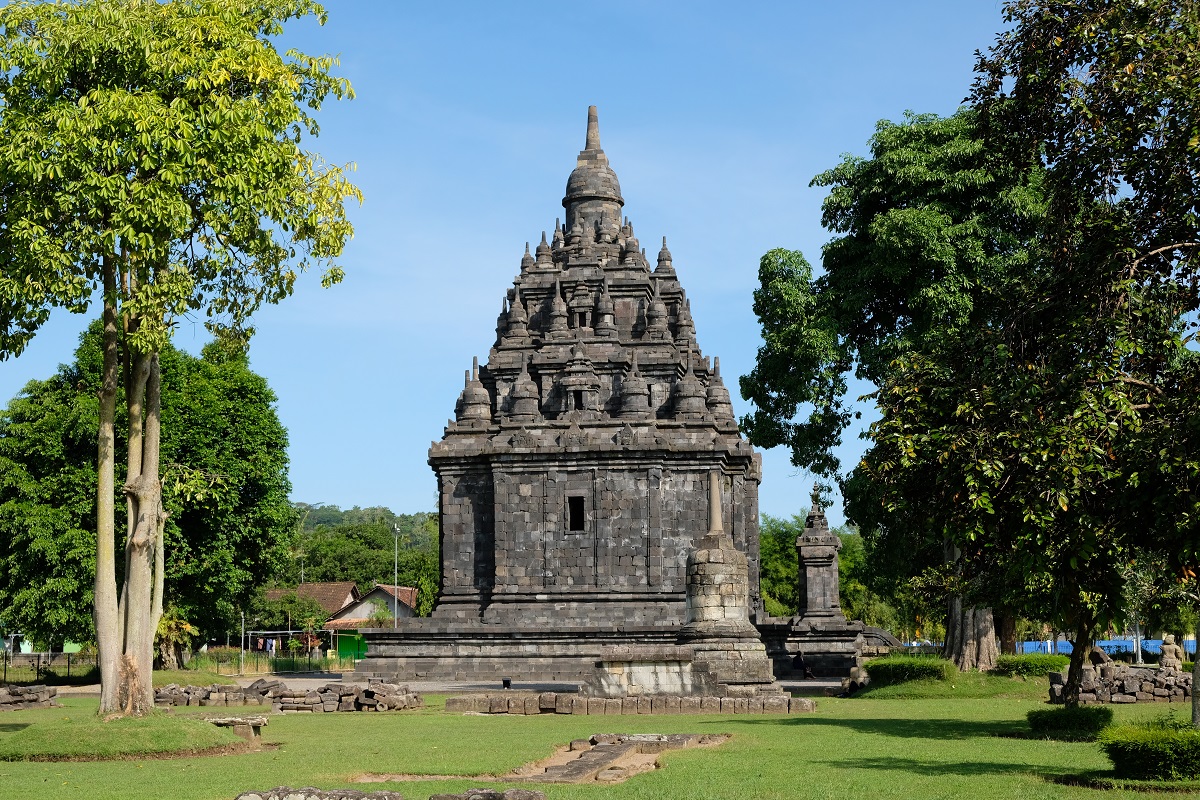
Candi Sojiwan on a beautiful, sunny morning
Today, teaching life lessons to help others become better human beings can be done in many ways. Some people prefer to make educational videos, others choose to do this through engaging social media content, and quite a few still enjoy sharing their thoughts and experiences in the form of articles and books. But before the invention of all these, what did people do to share wisdoms with a broader audience?
When you have a piece of rock and a chisel, you make carvings with them.
In ninth-century Java when a large portion of the island was ruled by a Hindu king and his Buddhist queen, a medium-sized Buddhist sanctuary better known today as Candi Sojiwan was commissioned not too far from Prambanan, one the largest Hindu temple compounds ever built in Southeast Asia. Following the gradual decline of both Buddhism and Hinduism throughout the archipelago, except in Bali, shrines of both religions were eventually abandoned. The frequent earthquakes and volcanic eruptions on Java further damaged the island’s hundreds- and thousands-year-old structures.
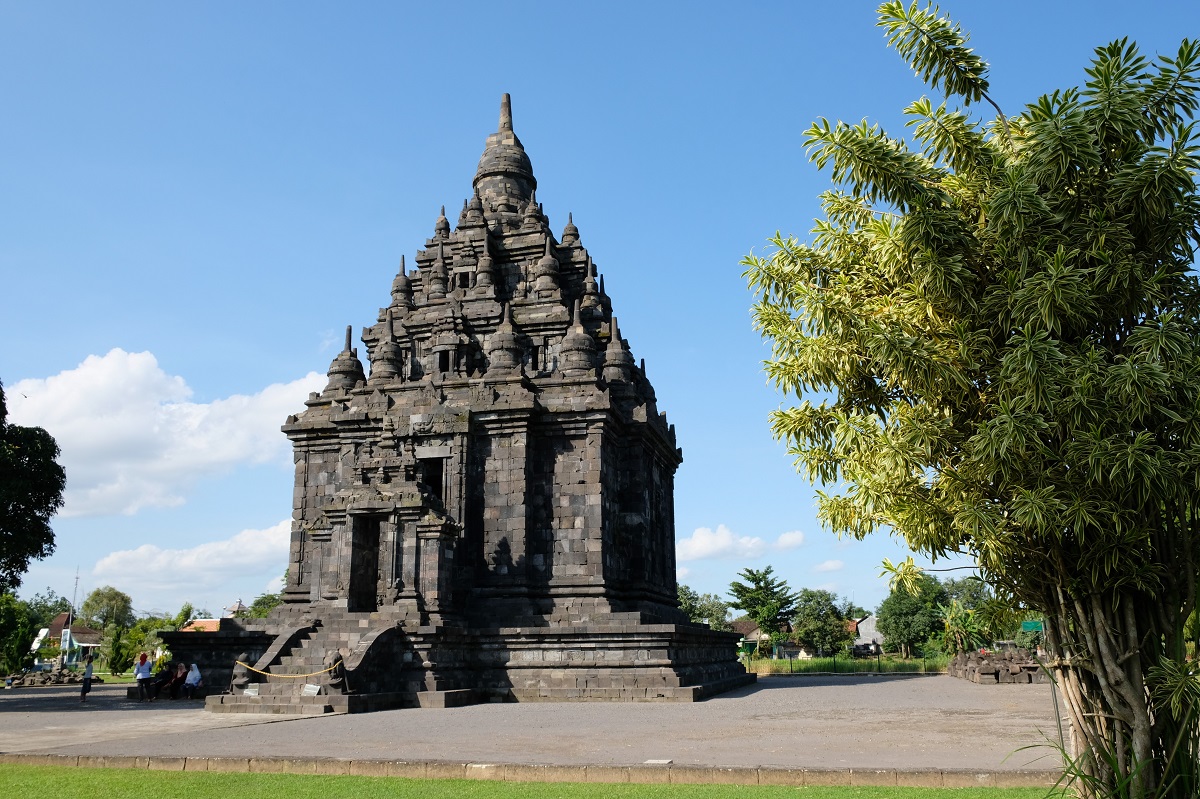
In 1813, during the brief period that Java came under British control, Scottish surveyor Colin Mackenzie, who worked under Stamford Raffles, reported the existence of Candi Sojiwan which was, unsurprisingly, in a ruined state. However, it was only in 1986 when a reconstruction project was launched to bring this temple as close to its original appearance as possible. Finally, the multi-year, inter-disciplinary endeavor was completed in 2011, the year when the structure was restored to its 27-meter height. The west-facing sanctuary was formerly decorated with carved floral patterns. But due to the lack of original pieces, the stone blocks used during the reconstruction were left bare in accordance with the widely-accepted guidelines for anastylosis – a technique to reconstruct ancient monuments using original architectural elements to the greatest degree possible, combined with the use of modern materials when necessary. This is to allow us to differentiate between the pieces from the past and those from more recent times. However, since 2015 there has been a cautious change in the way UNESCO lays out such guidelines, now allowing for a selective total reconstruction as long as legitimate and complete documentation of the structure is available.
While from afar Candi Sojiwan’s rooftop stupas are undoubtedly eye-catching, ancient architecture enthusiasts are particularly drawn to the relief panels adorning the temple’s base. Inspired by the Jataka tales – a collection of stories about the previous lives and rebirths of Gautama Buddha – these ancient works of art, or at least most of them, fortunately survived the elements, the natural disasters, and the social upheavals on Java over the course of centuries. I had almost zero knowledge about these stories, which was why upon my visit I made sure to take clear shots of most of the panels so when I got home I could match these with reliable online sources.

Reconstruction of the ninth-century Buddhist temple was completed in 2011
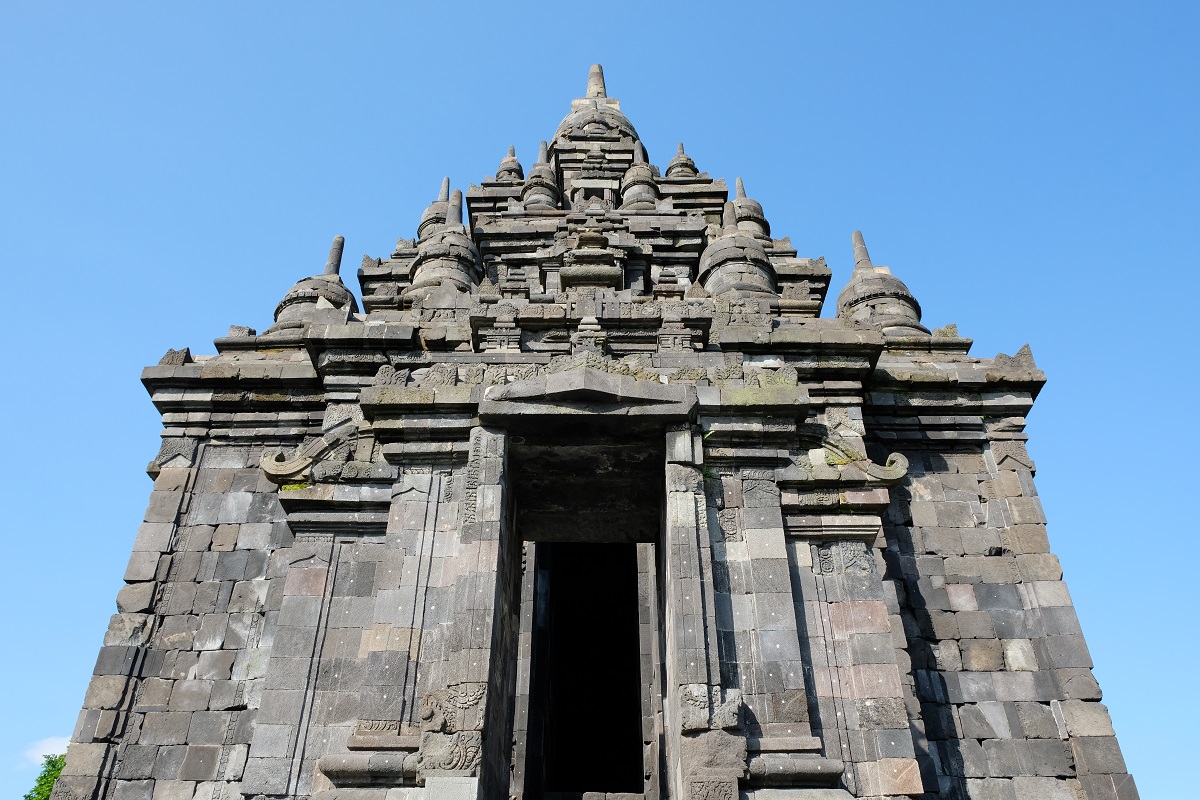
Standing tall again after centuries in a ruined state
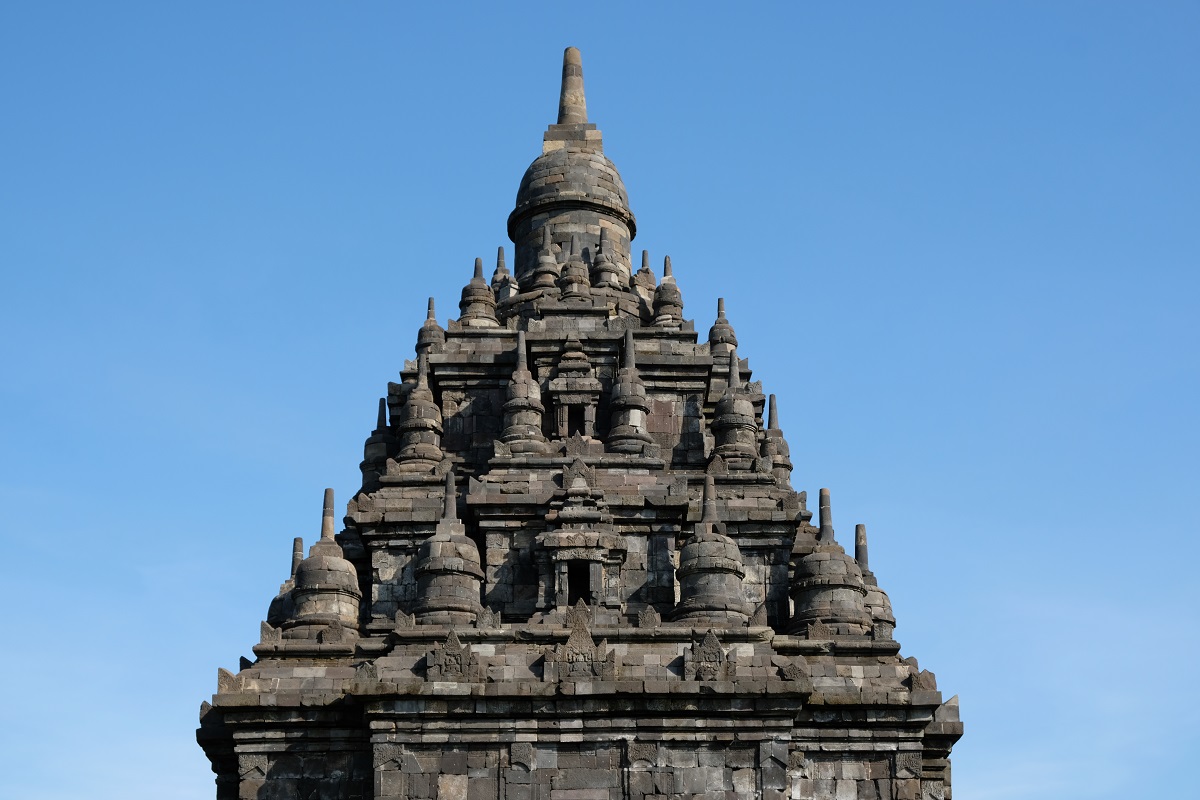
Distinctively Buddhist stupas of Candi Sojiwan

Kalpavriksha, a wish-fulfilling tree often found at Hindu and Buddhist temples

High reliefs of Gana, dwarf-like creatures often depicted in a position of supporting a temple’s base
First, a relief depicting two men. Unfortunately, I couldn’t find much information about it except for some suggestions that this was inspired by a chapter in Kathasaritsagara. The problem with this theory is, this collection of tales and legends is an 11th-century creation, while Candi Sojiwan was built two centuries earlier. Next, a panel of a monkey and a crocodile. This tells a story of a bodhisattva (a being on the path to Buddhahood) in the form of a monkey who outsmarts a cunning crocodile trying to eat it. The crocodile tells the monkey that there are delicious fruits across the river, and it offers the simian a ride, only to eat it later. But en route, the monkey tells the crocodile that its heart is hung at one of the trees on the other side of the river. Believing the monkey’s story, the crocodile takes it across safely and the monkey immediately runs away from danger. Probably the lesson here is to always use our wit especially in the most pressing situations.
Another panel depicts two friends: a bull called Syatrabah and a lion. But because of a provocation by a wolf called Dimnah, the two become suspicious of one another and start a fight until they both die. This lesson teaches us to be careful of who we listen to and to never trust a warmonger. On another side of the temple, a relief panel shows a man called Bhimaparakrama who’s about to be attacked by a lion. But thanks to the sword and the shield he carries, the lion runs away. Maybe this tells us to always be prepared for the worst in life.
Other panels show a multitude of animals and celestial creatures, from kinnara (a part human and part bird often associated with music and love), to a goose and a turtle, a Garuda and another turtle, a mouse and a snake, an elephant and a goat, and my favorite… a wolf and a bull. As the story goes, a wolf follows a bull because it is attracted to the bull’s testicles, thinking they were fruits. What lesson does this story try to tell? I have no idea!
What’s really fascinating about Candi Sojiwan is despite the very simple depictions of characters in each relief panel, and the worn-out state of some carvings, most are fortunately still decipherable today. We can still learn a thing or two from those stories, although the rest is anyone’s guess. Maybe one day, when we’ve managed to gather more knowledge from the past, we can finally understand the full meaning of these reliefs that currently leave us with more questions than answers.
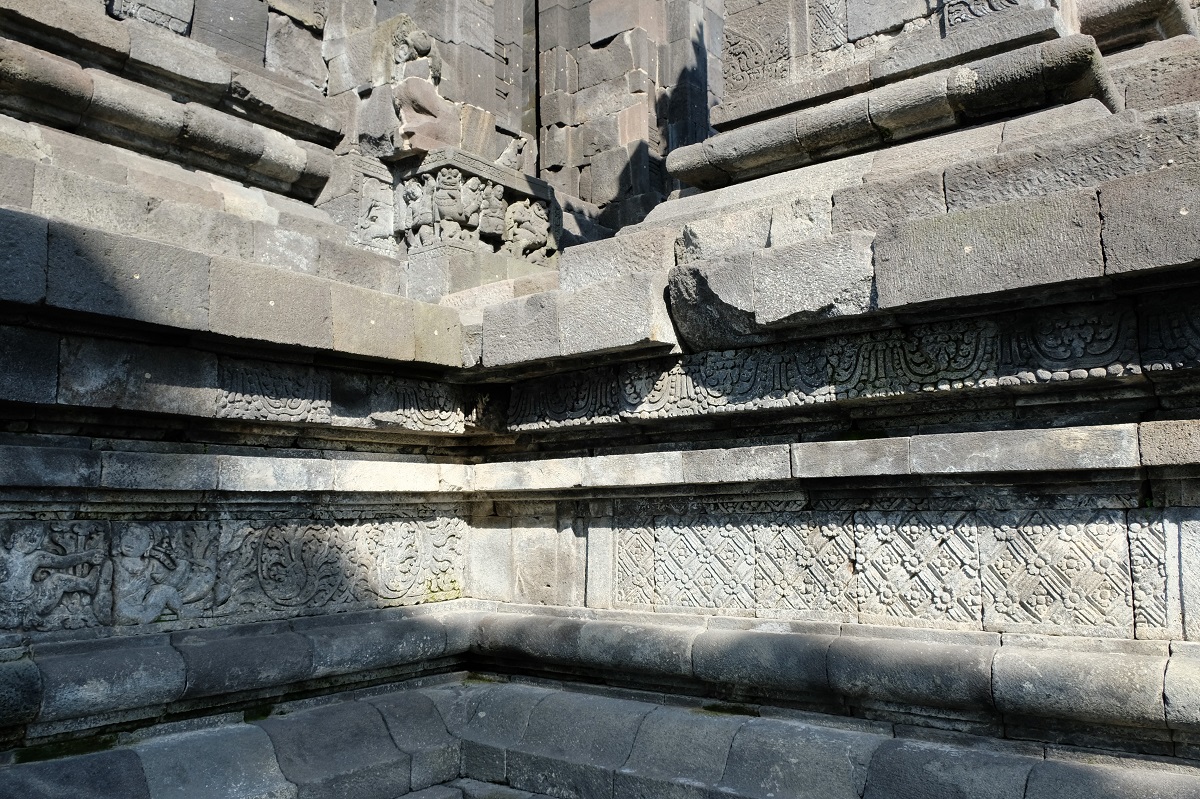
The panel to the bottom left depicts the enigmatic two-men scene

When a monkey outsmarts a crocodile
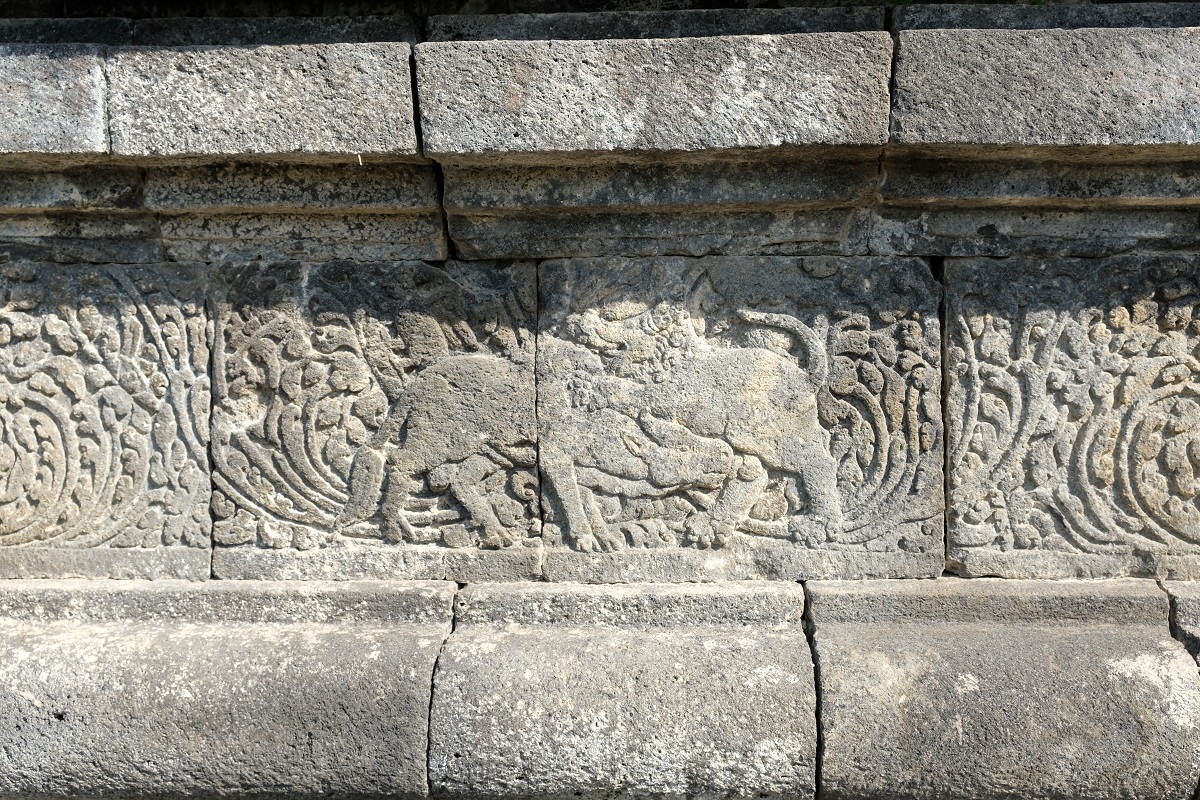
A lion and a bull killing each other because of a provocation from a wolf
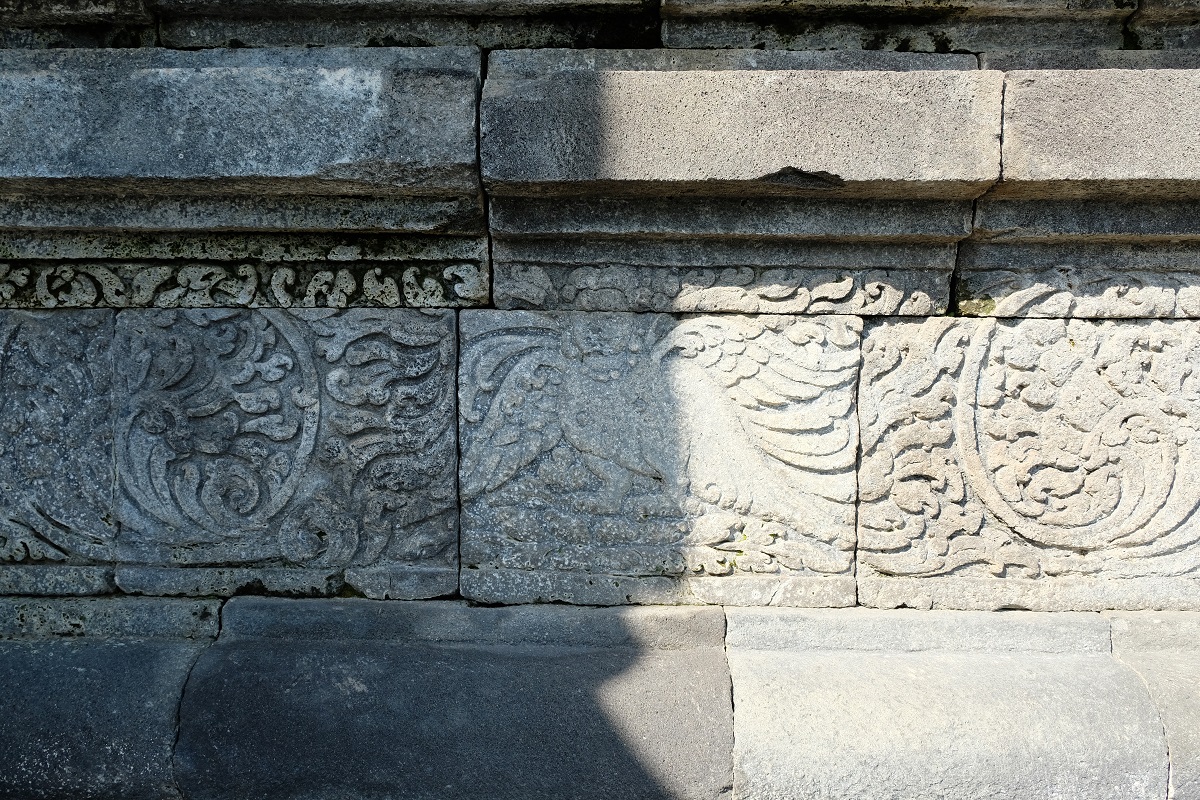
A kinnara (a celestial being found in Buddhist and Hindu mythologies)
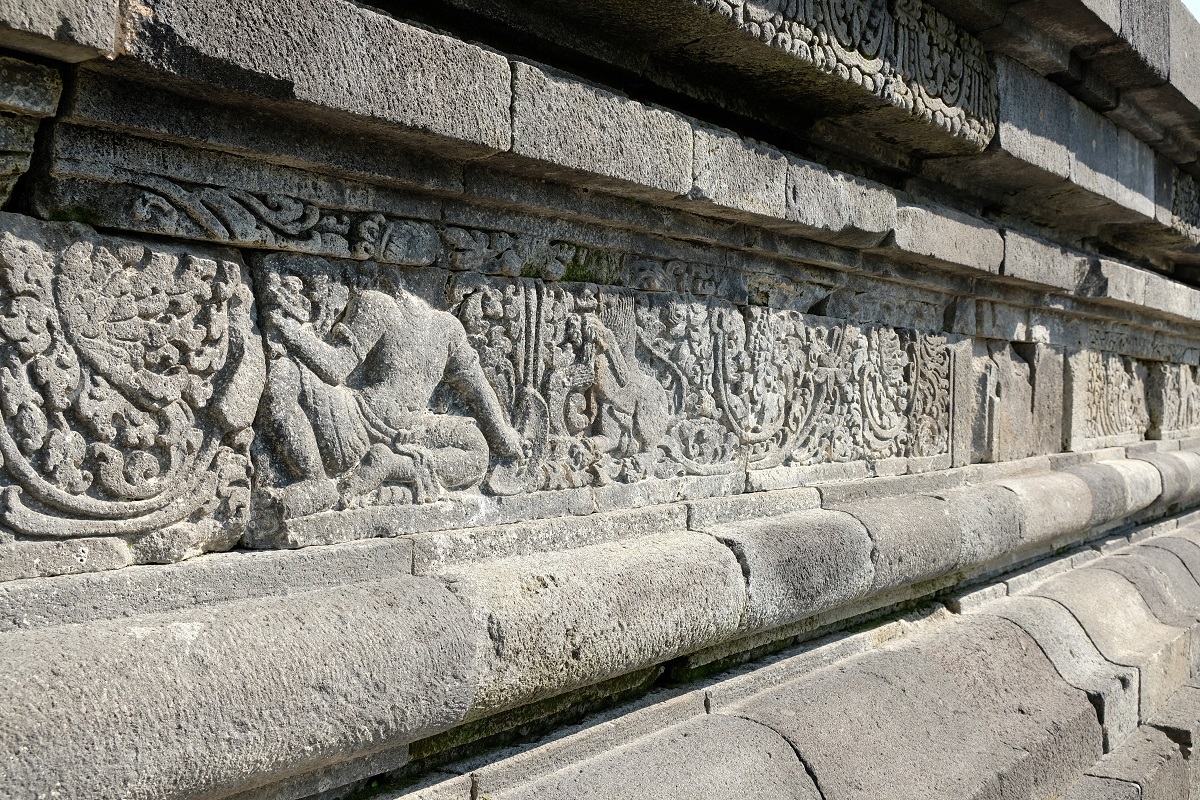
A man thwarting a lion
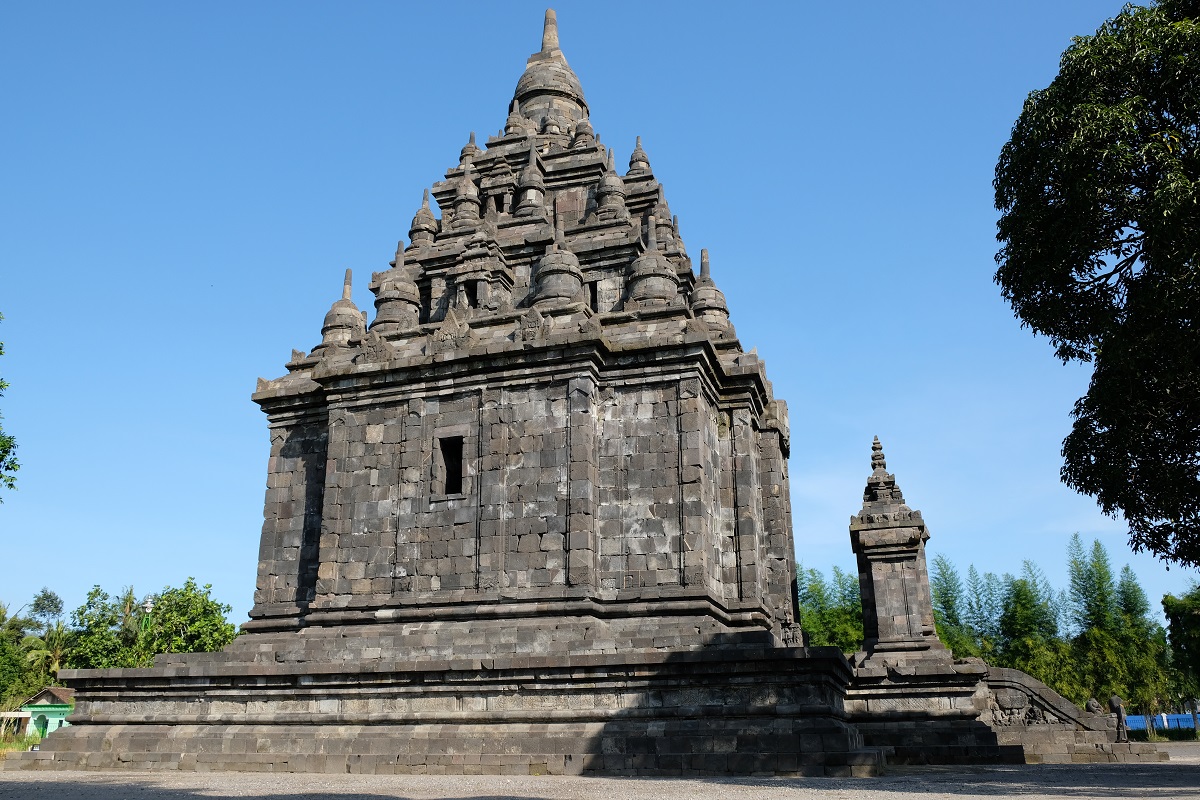
This 27-meter temple is hard to miss amid the low-rise houses nearby
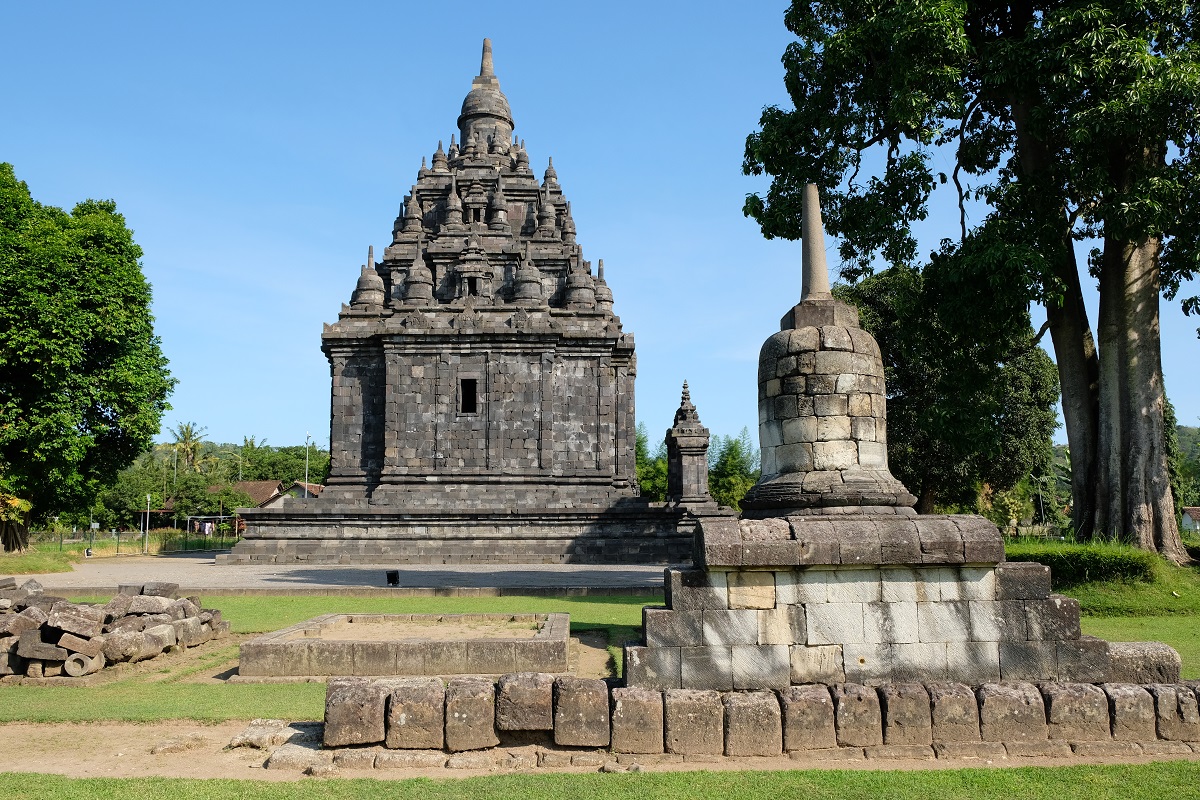
The temple viewed from the main entrance
Song of India (Dracaena reflexa) in the temple’s ground, echoing Buddhism’s roots in the Indian Subcontinent – despite the name, the plant is in fact not native to India

 What an Amazing World!
This is beautifully restored. How easy is it to reach archaeological complexes like these?
LikeLiked by 1 person
This particular temple is quite easy to reach. It’s only half an hour away from the city center of Yogyakarta — which itself is served by a well-connected airport with flights to different cities in Indonesia as well as to Singapore and Kuala Lumpur.
LikeLiked by 1 person
The relief panels are incredible. The fact that you can still clearly see the depictions after being left to the elements for so long is amazing. I love that you took the time to research the stories behind the reliefs. I had heard the crocodile monkey story before but didn’t know it was such an old story, or that it was a Hindu story. And the wolf and the bull? Funny that there is no moral for that one! Maggie
LikeLiked by 1 person
It’s good that the many people who had seen those relief panels in the past when the temple was no longer intact didn’t alter them or use them for something else. There must be a meaning behind the wolf and the bull story, I just have to look for the answer somewhere else.
LikeLiked by 1 person
A temple that might look unassuming from a distance, but in fact carries such a weighted history in its details closer up! I have little knowledge about Javanese history and culture, and it’s great you brought to light this part of Indonesian culture, in Candi Sojiwan!
LikeLiked by 1 person
Java is filled with ancient Hindu and Buddhist temples dating back centuries ago. Many of them, like Candi Sojiwan, have their own unique features which I find incredibly fascinating!
LikeLiked by 1 person
Thanks for the tour through Candi Sojiwan. It looks beautifully restored and I wouldn’t have thought any different had you not pointed out the differences in the materials – old and modern.
In the few times I’ve visited similar sites, it is often easy to just walk by the details and not notice the story they may be telling. It’s a good reminder to look closer and savor each detail put in by the past.
Love the monkey and crocodile story. I anticipated a different ending and glad that monkey used his wits to escape danger! 😆
LikeLiked by 1 person
They really did a great job restoring this temple, which makes me hopeful for the same thing to happen to other ancient ruins on the island.
It’s always a good idea to look at the details of such places more closely as they often tell stories we might otherwise overlook.
I feel like monkeys are often depicted as either smart or cunning. This one happens to be the former. 😀
LikeLiked by 1 person
It’s pretty neat how humans have always been interested in telling stories and have found creative ways to try to pass them down for future generations. I can’t imagine how much time it must have taken to make carvings with a rock and chisel! Glad to hear that the Candi Sojiwan was eventually reconstructed and that some features have withstood the elements.
LikeLiked by 1 person
I guess human beings have always had the urge to tell others stories, whether it’s based on fact or imagination. We just can’t keep things to ourselves!
LikeLiked by 1 person
I’m so glad they restored it! It looks wonderful, almost back to it’s former glory. And I enjoyed the stories too. What couldn’t be said in words could be said in pictures that would last for eons.
Alison
LikeLiked by 1 person
It really is encouraging to see restoration works like this happening elsewhere across the country. By the way, I’m sorry for the much delayed reply as I’m currently traveling in southern Taiwan, which is amazing. But a typhoon is coming our way in a few days’ time!
LikeLiked by 1 person
What incredible attention to detail of these stone carvings. Amazing!
LikeLiked by 1 person
As you can imagine, I myself am continuously amazed by such ancient reliefs. I wonder how long it took to create just one panel.
LikeLike
It’s great that these stories have survived. The wolf and bull had me searching and I came across this.
https://www.google.com/url?sa=t&rct=j&q=&esrc=s&source=web&cd=&ved=2ahUKEwjUscTcr86BAxUJj4kEHQ0RBzYQFnoECCAQAQ&url=https%3A%2F%2Fojs-jireh.org%2Findex.php%2Fjireh%2Farticle%2Fdownload%2F92%2F61&usg=AOvVaw32TViimQ275ZUAHxzXC44A&opi=89978449
Perhaps you did as well and I have no idea about the accuracy and thoroughness.
LikeLiked by 1 person
Thank you so much for sharing that link, Matt! Much appreciated. Now I’m even more intrigued by that particular story. So it teaches us that despite our love for our loved ones, we must always use our logic? It still leaves so many questions in my head, but at least you’ve nudged me to the right direction.
LikeLike
You’re welcome. I hope you won’t remember me just as the guy who shared the link to the bull testicle story. lol….
LikeLiked by 2 people
Haha! Of course I won’t. Although if we ever meet, I would probably bring up the testicle story again. 😆
LikeLiked by 1 person
Like all the others, your posts are wonderful to read but for this one, I love the intro even more.
LikeLiked by 1 person
You’re too kind, Ani. This ancient temple was just too fascinating to marvel at without a little imagination.
LikeLike
Fascinating as always, Bama. I love how you bring these wonderful structures to life with your research.
LikeLiked by 1 person
Thank you, Jolandi. Due to the lack of information on the history of this temple, I thought it would be interesting to write about it from a different perspective. Hence the little research I did that brought me to all those fascinating stories.
LikeLiked by 1 person
Such an exquisite little temple. Guessing the main dilemma on an Indonesia visit will be the shortlisting of places to visit in a limited time frame 🙂
LikeLiked by 1 person
Ha! You should definitely focus on the “big sights”. We’ll help you with recommendations on smaller sites that are easy to reach.
LikeLiked by 1 person
I think all stupas are beautiful and this one especially so, as it is so large and well preserved and stands alone. I enjoyed the carved stories very much. It reminds me of a cross I saw in a cemetery in Ireland, that had been carved with scenes of Bible stories. The guess was that it was a teaching tool for people who couldn’t read, and maybe the scenes at Candi Sojiwan were appreciated in that way too. My first thought about the wolf and bull was “Be aware of the big picture.” Now that I read the .pdf that Matt shared, I’m not so sure, ha ha.
LikeLiked by 1 person
It always fascinates me how ancient people who lived in opposite parts of the world could have the same idea of doing something. The Egyptian pyramids and the ones built by the Maya peoples in Central America, the cave paintings found in Europe and in Indonesia, and that cross in Ireland and Candi Sojiwan on the island of Java.
LikeLiked by 1 person
I remember we visited quite a few temples in this area during the first month of our 2015 Spice Odyssey, and wonder why we skipped this particular one. Was it because we ran out of time? Candi Sojiwan’s reconstruction is more than impressive – it amazes me how archaeologists can work out the original form by piecing together the fallen stone blocks that have remained. I’m not surprised the ancient Javanese used architecture as a storytelling device; it reminds me of what medieval European stonemasons and stained-glass artisans did for illiterate church-goers.
LikeLiked by 1 person
If I remember it correctly, we did see Candi Sojiwan from afar, but it was already getting dark so we decided to skip it. Based on what I read a lot of experts mentioned this temple as a good example of how a reconstruction work should be. I hope more ancient ruins out there will be restored to how they used to look. You raised a good point here about the reason why people in the past often used visual platforms to teach virtues: illiteracy.
LikeLiked by 1 person