
Approaching Tháp Đôi in the city of Quy Nhon
The 13th century was not a good time for many empires and kingdoms across Asia and Europe as this period marked the incredibly rapid expansion of the Mongols, who also happened to be the Yuan dynasty rulers of China.
The Khmer Empire, a long-dominant power in mainland Southeast Asia, was among those preoccupied with preventing the troops of Kublai Khan from entering their domains. At the same time, the Khmer royal court was dealing with its own internal strife that saw a protracted tug-of-war between the Hindu and Buddhist factions. In Champa to the east of the declining empire, the Yuan navy even managed to launch an attack from the sea and capture Vijaya, forcing the Cham ruler Indravarman V and the crown prince to flee the capital and stage a resistance against the foreign invaders. In the face of defiance from the Chams, Kublai Khan ordered a land invasion of Champa via Dai Viet (Đại Việt).
While Champa and Dai Viet had rocky relations, allowing the Yuan troops to cross the land of the Vietnamese to subjugate the coastal Hindu power of the Cham people would have been a strategically catastrophic move, for it would be the Vietnamese themselves that would become the next target. Facing the same existential threat posed by Kublai Khan, Dai Viet decided to forge an alliance with Champa to drive the Yuan troops out and push them back to China. In 1285, the joint forces successfully repelled the foreign invaders. Three years later, the Cham prince was crowned as king and took the title Jaya Simhavarman III. Following the new Cham ruler’s decision to cede some land in northern Champa to Dai Viet – probably a gesture of gratitude for the latter’s courage to stage a war against their common enemy from the north – the Vietnamese emperor then married his daughter Huyen Tran (Huyền Trân) of the Trân dynasty to the new Cham monarch to further improve ties between the two nations.
Interestingly, Jaya Simhavarman III also married another woman, a Javanese princess called Tapasi who was the younger sister of Kertanegara, the king of Singhasari. This alliance benefitted the Javanese kingdom. Thanks to it, Champa refused to give the Yuan dynasty’s naval forces access to any of its ports during their punitive expedition to Java following Kertanegara’s refusal to pay tribute to Kublai Khan.
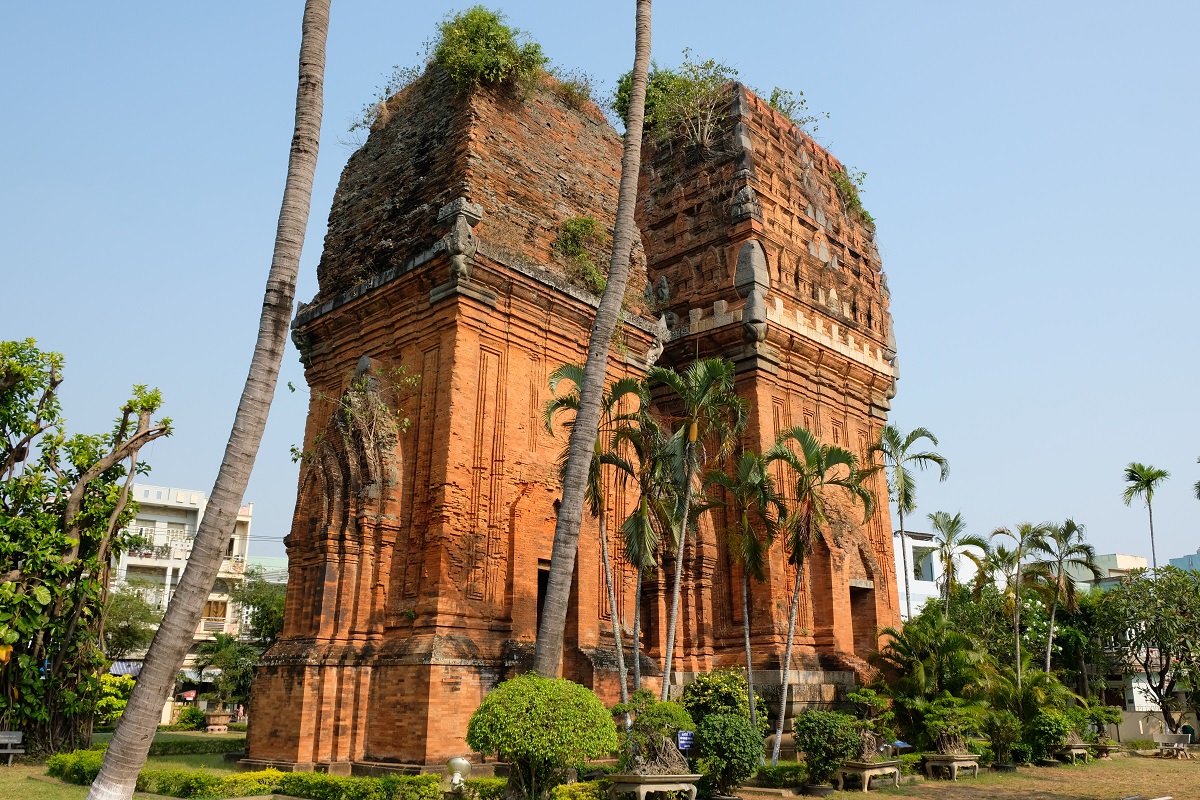
The south and central towers of Tháp Đôi

Between the two towers
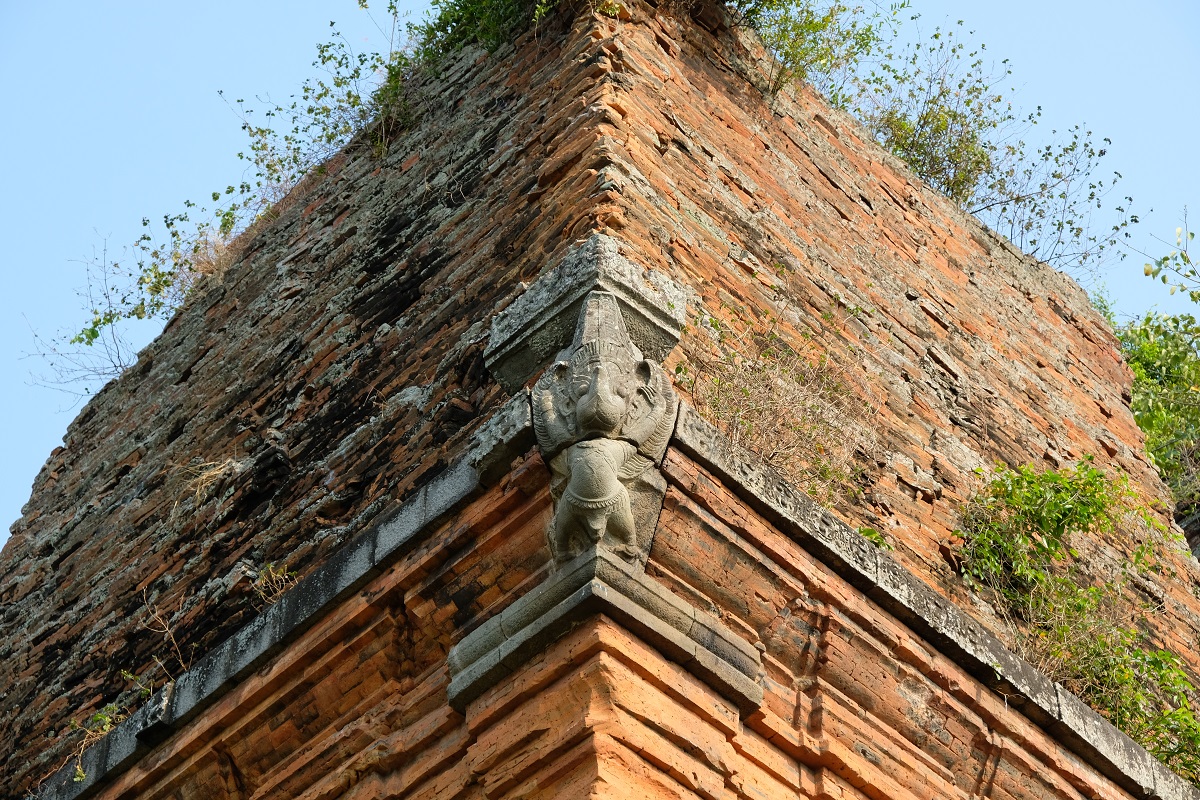
A Garuda on one of the corners of the south tower’s roof structure

A worn-out pediment of the central tower’s south façade
In 1307, only one year after he married Huyen Tran, Jaya Simhavarman III died. Back in the day, the practice of sati was common in Hindu kingdoms across South and Southeast Asia. According to this tradition, a widow must sacrifice herself upon her husband’s death, doing so by jumping onto or sitting atop her deceased husband’s funeral pyre. As per the prevailing custom at that time, Huyen Tran was expected to perform this ritual. But she refused, probably because this was never a part of her culture. To no one’s surprise, this caused a controversy within Champa which prompted the new Cham king, Jaya Simhavarman IV, to launch military campaigns to recapture districts that were ceded by his father to Dai Viet. Unfortunately, things didn’t go as planned, and in the end, he was defeated and taken prisoner by Dai Viet. This marked a decline of Champa which lasted for decades, until the rise of a new ruler in 1360 by the name of Po Binasuor, also known as Che Bong Nga (Chế Bồng Nga).
The new Cham king not only managed to halt the setbacks suffered by Champa, but he also tipped the balance of the power dynamics between his realm and Dai Viet, giving the Hindu kingdom the upper hand. First, in 1361 he raided the southern coastal areas of Dai Viet. Then, in 1368 he demanded the return of the former Cham lands ceded to the Vietnamese by Jaya Simhavarman III, which was rejected outright by the Trân dynasty ruler. Eventually, in 1371 the Cham king led a naval attack on Thăng Long, the capital of Dai Viet we now know as Hanoi. This was only the first of a series of Cham military campaigns to sack the political center of their rival to the north. Che Bong Nga’s naval prowess was so great Champa successfully took control of many territories from Dai Viet and pushed the Trân dynasty to the brink of collapse. However, the deployment of firearms by the Vietnamese – a technology procured from the Ming dynasty of China – proved catastrophic to Champa’s northward expansion. In 1390, Che Bong Nga was killed aboard his ship en route to the north when a bullet put an end to his life. With the strongman gone, Champa entered a period of long and slow decline.
Over the course of centuries, Dai Viet under different ruling dynasties gradually pushed southward, capturing one Cham land after another. In 1471, Lê Thánh Tông, a Vietnamese emperor of the Lê dynasty, launched a particularly devastating attack on Vijaya, an event which further weakened Champa. However, the Dai Viet emperor was on a bigger mission, not only to avenge the Cham assaults on Thăng Long, but also to spread Confucian and Sinocentric teachings as well as the Ming dynasty’s bureaucratic style of governance to Champa and its population. This resulted in the purging of Cham culture – which was cosmopolitan in nature – and the forced assimilation of the Chams into the Vietnamese culture. Because of this, many Chams fled to the Khmer homeland in the west, or sailed southward to the Muslim communities in the coastal areas of today’s Indonesia and Malaysia. But why go to the latter? You may ask.
Although throughout its history Champa was mostly Hindu, in the ninth century Islam reached the land of the Chams following its introduction to other coastal communities across Southeast Asia by traders from South Asia and the Middle East. However, it wasn’t until the 17th century when a member of the ruling dynasty of Champa converted to Islam, which was a part of a wider trend of the conversion of many Cham people into the new religion. Over generations, however, two groups of Muslim Chams emerged: Bani Chams who practice a syncretic interpretation of Islam mixed with some aspects of pre-Islamic beliefs, and the regular Muslims who practice Sunni Islam just like 90% of the adherents of the religion across the globe.
As successive Dai Viet rulers continued their expansion southward, along the way assimilating the locals into the prevailing Vietnamese culture, Champa’s territory kept shrinking. By the mid-17th century, Kauthara fell to Dai Viet. And in 1832, the last Champa principality of Panduranga was formally absorbed into Vietnam by Emperor Minh Mang of the Nguyễn dynasty (whose expansive tomb I visited in 2017), the final nail in the coffin for the once influential Hindu power.
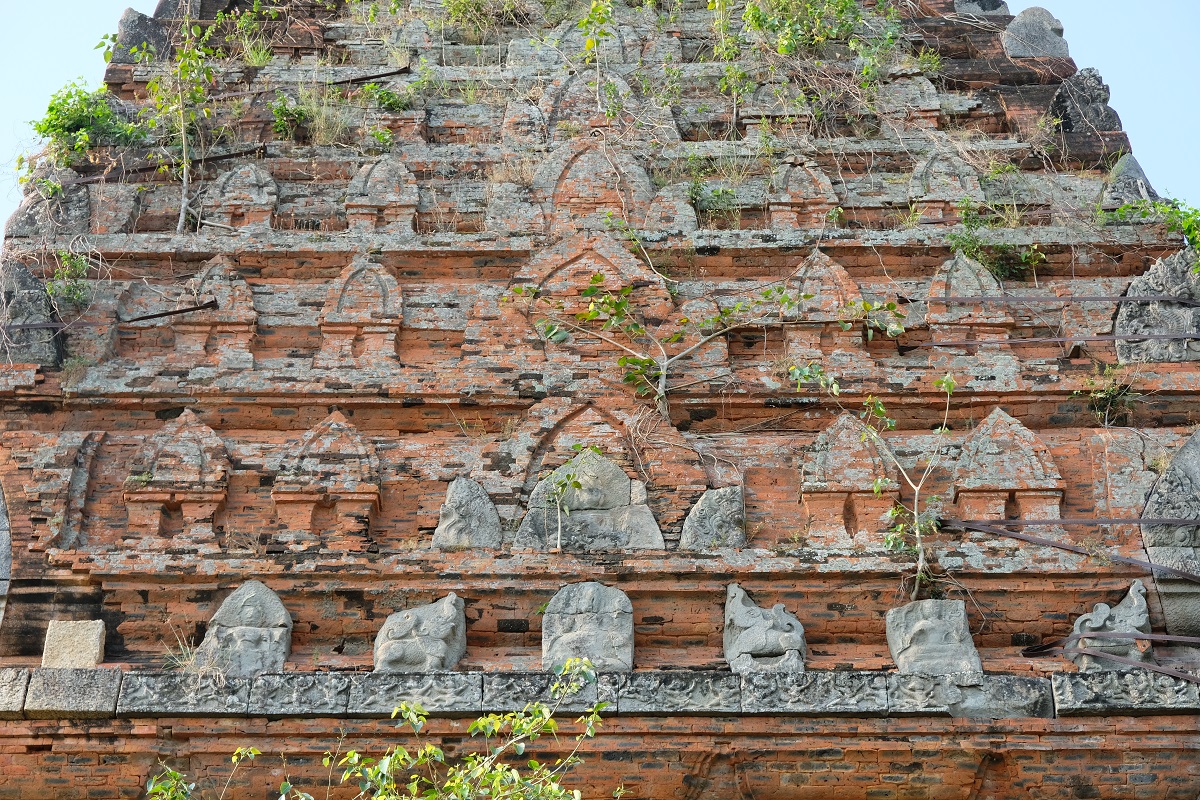
Decorative elements made from stone are an indication of Khmer influence

Trees on top of the central tower

It’s greener on the other side

Tháp Đôi is the easiest Cham temple to reach from downtown Quy Nhon
Today, there are less than 200,000 Chams living in Vietnam who make up only around 0.2% of the country’s population of almost 100 million. On the contrary, there are about 600,000 Chams in Cambodia (around 3% of the country’s population), descendants of those who fled Champa in the wake of Dai Viet’s southward expansion. As a minority, Cham people and their culture are not what usually come in mind when people think of Vietnam. But if you look around, especially in the central and southern regions of the country, you’ll find centuries-old Cham temples as silent reminders of what the ancient Chams managed to achieve.
One of the easiest Cham monuments to visit today is Tháp Đôi, situated in the city of Quy Nhon (Quy Nhơn). Commissioned around the 12th-13th centuries, this temple’s location is unique compared to other Cham sanctuaries. Instead of sitting at an elevation, Tháp Đôi was constructed at the foot of a hill near the mouth of what is now called the Hà Thanh River that empties out to the sea. It is unknown to which deity this temple was built, and one shouldn’t mistake it as a Shiva temple, for the linga and yoni now placed inside the central tower of this temple compound were not originally from this site. Central tower? But there are only two! Just like Tháp Dương Long, Tháp Đôi used to consist of three towers built along a north-south axis. Unfortunately, in the 19th century the northernmost structure collapsed, leaving us only the remaining two to marvel at.
The present-day Cham communities in Vietnam are known for their pottery, an artistic skill that has fortunately survived the turmoil that engulfed Champa which led to its demise. To understand the level of craftsmanship the ancient Cham people achieved, one only has to visit the Binh Dinh (Bình Định) Museum at the heart of Quy Nhon. As the main museum of the namesake province (of which Quy Nhon is the capital), this institution is home to a large number of Cham sculptures, many of them salvaged from Tháp Dương Long. Seeing them up close made me think of how the tallest structures ever built by the ancient Cham people could have looked if these decorative elements had been put back in their original places on the temple. However, it’s probably safer to keep them closer to the city given the ever-present threat of ancient art theft across Southeast Asia to feed a lucrative, albeit illegal, industry.
For me, this trip to Vijaya (or what’s left of it) to visit the ancient temples the Cham people built has shed a light on a civilization often overshadowed by its more illustrious neighbor to the west – the Khmers. It gives me a deeper appreciation toward Cham ingenuity, as well as a better understanding of the intricate trade network in the region which helped open the door for cultural exchanges. The sun might have set over Champa, but the Chams are here to stay for many more generations to come.

The Cham sculpture section at the Binh Dinh Museum with the image of Tháp Dương Long in the background

A 12th-century Cham depiction of Saraswati, the Hindu goddess of knowledge, music, and art

A Cham interpretation of Durga Mahishasuramardini, also from the 12th century

A makara with a three-headed naga, from Tháp Dương Long
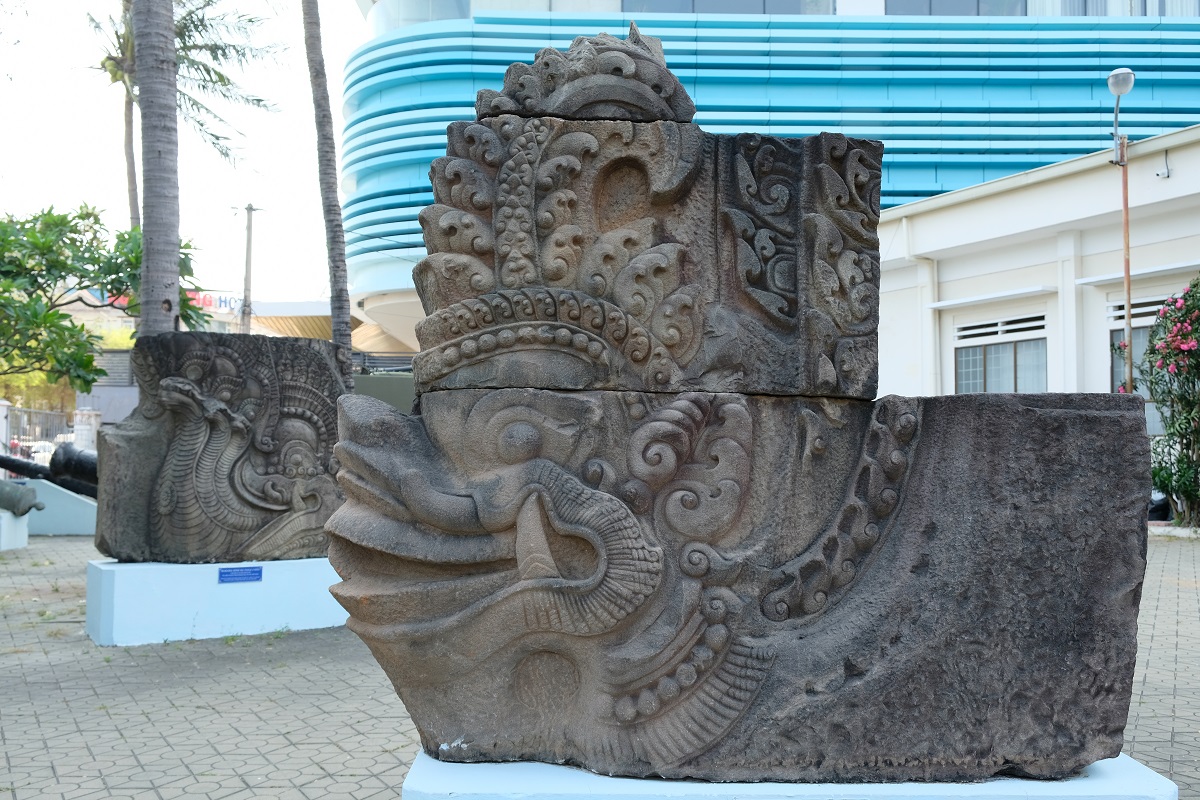
Another piece of decorative sculpture from Tháp Dương Long

This fragment was once part of Tháp Bánh ĺt
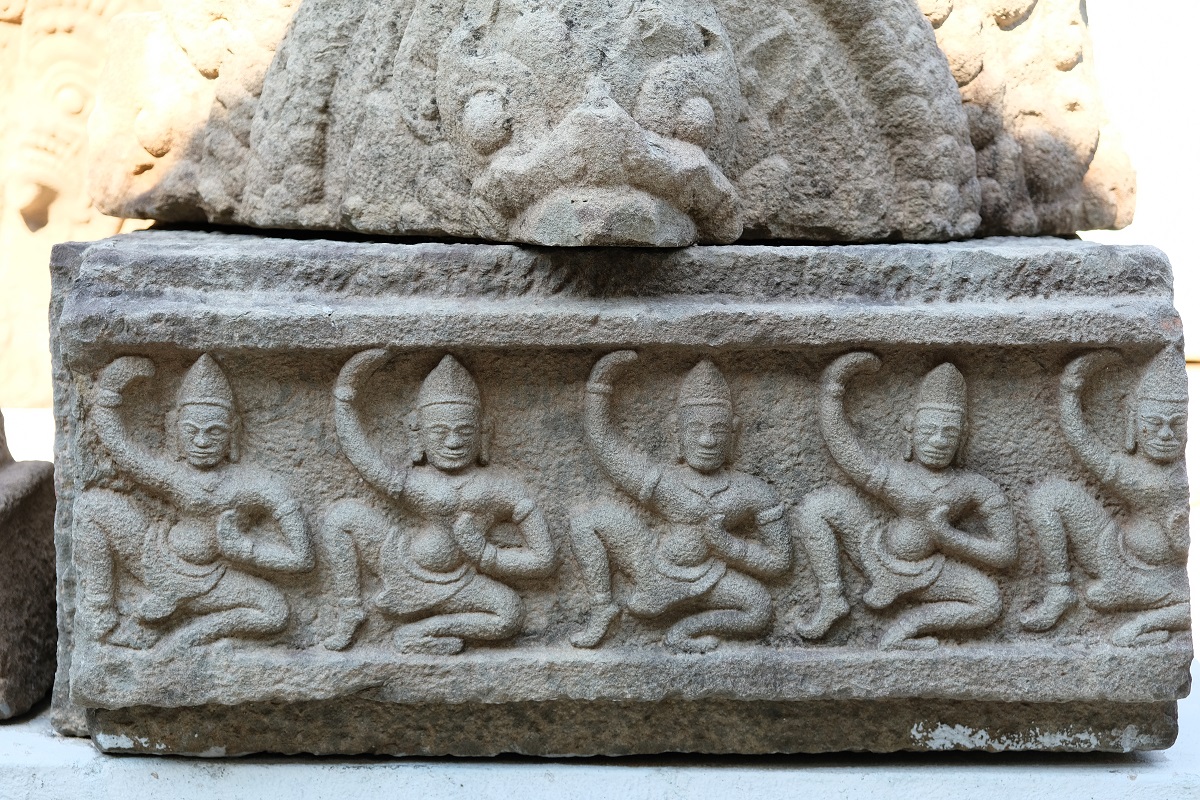
One of the unlabeled Cham artifacts stored at the back of the museum
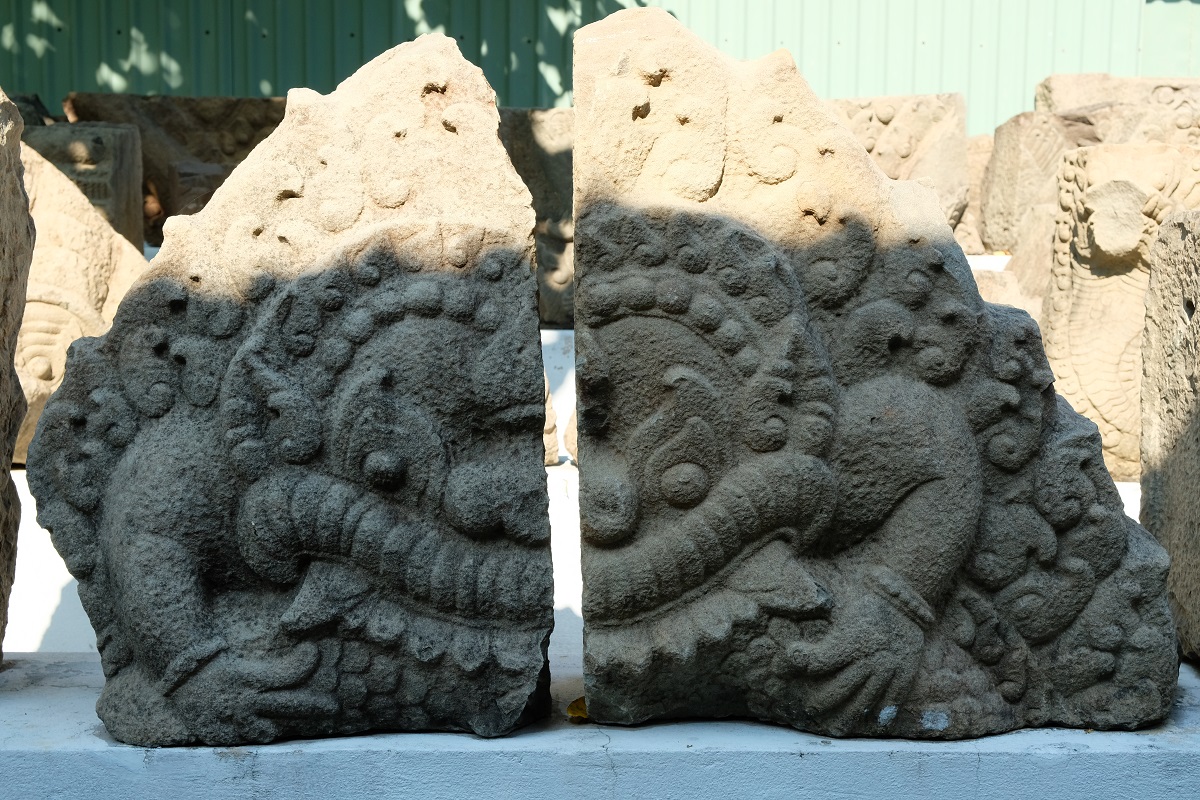
Two pieces of a kala

Among the many invaluable treasures at the Binh Dinh Museum

 What an Amazing World!
What a detailed and well-researched post! I got to learn about the Chams and their long and rich history. It’s remarkable just how long they’ve survived, especially through changes in religious hands and dynasties. Although they make up the minority in their respective countries of Vietnam and Cambodia today, they are without a doubt a force to be reckoned with! Thanks for sharing your insight into this during your travels.
LikeLiked by 1 person
Much appreciated, Rebecca. After reading about their history, I have nothing but admiration toward the Chams. They’ve managed to survive throughout the centuries, and although their number has dwindled, they still seem to be going strong with their cultural identity relatively intact.
LikeLiked by 1 person
This reads like a labour of love for you Bama. You’ve given us so much information on the Cham people, a group that most of us had never heard of. It’s quite surprising that they were around for so long and yet they’ve been hidden in the history books. And to know that there are still some Cham people remaining today, and yet their history is almost lost. Great article. Maggie
LikeLiked by 1 person
That is a really nice way to put it, Maggie. Since the first time I learned about them, I’ve been not only intrigued, but also fascinated by these people and what they’ve left behind. I’d love to go back to Vietnam and time my next visit with a festival of the Chams to see how the community is thriving against all odds.
LikeLike
I would never have known about the Cham people without your post Bama! Your research and dedication to each of your posts always amaze me! Thanks for sharing this interesting history with us!
LikeLiked by 1 person
Thanks Anna! I decided to take a break from writing about ancient history, so my next post will be on this very interesting Vietnamese city which was surprisingly pleasant during our visit. Even a history buff needs a change of scenery!
LikeLiked by 1 person
amazing
LikeLiked by 1 person
The Cham people and the civilization they built truly are a source of admiration.
LikeLiked by 1 person
Thank you Bama for this detailed and interesting read. I know very little about Vietnamese history and so this tidbit from the 13th and 14th centuries was nice to read. It’s always interesting to read about how different groups go into conflict and how news technology – firearms in this case – tip the favour for one group.
And the photos you shared and experienced at Tháp Đôi are amazing.
I got the biggest laugh from the widow who refused to participate in the cultural sacrifice. I’d be like hell no too! 😆
LikeLiked by 1 person
Admittedly this part of Vietnamese history is not really well-known even among its neighboring countries like Indonesia. The more I dig into the past, the more I learn how intertwined we have been for millennia. Something that happened in a distant land could have repercussions in other parts of the globe.
Fortunately sati has pretty much become a thing of the past, even in Hindu-majority places like Bali. I can totally understand why the Vietnamese princess said no to that!
LikeLiked by 1 person
I certainly missed this on my Vietnamese trip—fascinating!
LikeLiked by 1 person
The next time you go to Vietnam you know what to look for! You need to go to the southern-central regions of the country to see the Cham people and those interesting temples their ancestors had built.
LikeLiked by 1 person
A captivating story told well. Thanks! Vietnam is another country I’ll have to re-visit but this time armed with tales of its history.
LikeLiked by 1 person
Vietnam has so much history, and some of its many chapters are relatively unknown outside of the country. You definitely have to go back, Ani.
LikeLike
What a fascinating history, Bama. I always, when I read historical accounts like this, wonder what life for the ordinary person looked like amidst all this political turmoil.
LikeLiked by 1 person
Unfortunately, ordinary people have always been the ones bearing the brunt of conflicts among those in power. However, during peaceful periods, I can imagine the arts flourished, among other things.
LikeLiked by 1 person
I was never a fan of history while in school, but have so much more of an appreciation for it now through travelling. I continue to be amazed at how rich the history is in Vietnam and how many temples, monuments and sculptures still exist from such a long time ago. I love the shot between the two towers.
LikeLiked by 1 person
Neither was I. Back then, for me history was mostly about memorizing dates and names, as opposed to learning about why things happened and their impact on the world. From this trip alone, I learned so many new things, including how events in Champa were related to other circumstances in the region, including in my home country.
LikeLiked by 1 person
What an incredible history of the Chams people… I’d like to meet some of their descendants and hear what they have to say about their ancestry. Something to be proud of and reflective given today’s global situation. I have never heard about the Chams people, and I suppose not even been introduced to the rich history of SE Asia properly – it is fascinating. And what is beautiful to see is how the art and creativity of the Champa empire shine through today. I love your photo of the “Between the two towers” ~ an excellent post, Bama.
LikeLiked by 1 person
I’m sure modern Chams must be proud of what their ancestors had achieved — the centuries-old Cham temples scattered across this part of Vietnam are a testament to the level of craftsmanship of the ancient Chams. Sometimes I wonder why I haven’t traveled further to places halfway across the globe from where I live. But then I also find myself exploring fascinating places like this that are closer from home. Thanks Randall! I hope you’ll get to meet the people from the Cham community one day.
LikeLike
Thanks for this detailed and well researched post Bama. Such rich culture! Your photos are amazing!
LikeLiked by 1 person
Thank you, Sue! I love your latest post about ice age mementos near Calgary. That’s really neat, and it made me think of my own surroundings. There might be interesting geological formations around me that I never really pay much attention to.
LikeLike
As a fellow History enthusiast, this was really a fascinating and very informative read.
LikeLiked by 1 person
Thanks for reading!
LikeLiked by 1 person
Such an interesting post about the Cham culture, Bama. As always, your photos are travel brochure worthy!
LikeLiked by 1 person
Travel brochure worthy is such a nice compliment, because the brochures I had more than a decade ago contributed to my decision to travel more and see the world. So, thanks!
LikeLiked by 1 person
Given the small number of Chams still in Vietnam and Cambodia, it seems like their cultural mark has been very strong! Even I, pretty ignorant of the history of Southeast Asia, feel like the Cham civilization stands out there. I really love your photo labeled “Between the two towers.” I had to stare for a minute and orient myself to realize you had taken it looking up at the sky!
LikeLiked by 1 person
Absolutely! Even if one is not really into history or ancient sites, it shouldn’t be too hard to stumble upon anything Cham when traveling in this part of Vietnam — the travel brochures usually feature a photo or two of the centuries-old Cham temples. Ha! Surprisingly, that photo seems to have intrigued quite a few people. When I took it, I was literally standing in the middle of the two towers and looked up. Et voilà!
LikeLiked by 1 person
Such amazing history and a large part of it has to do with power and control. Nothing has changed!
LikeLiked by 1 person
Nothing has changed, indeed. Sadly, too often we see how history keeps repeating itself.
LikeLike
I love that you’re keeping the history alive here. This is better than the history textbooks I used to fall asleep to in class.
LikeLiked by 1 person
This will be the last post on the ancient Khmers and Chams for the time being as I’ll switch to talking about the cities I went to this year. Really appreciate your kind comment, Matt.
LikeLiked by 1 person
The history makes my head spin. Last year after Russia’s invasion of Ukraine I listened to a 20 part Yale lecture series called The Making of Modern Ukraine. The lectures began at the very beginning so I learned a lot of European history. The history of this small part of Asia is similar – wars, alliances, territory grabs, on and on. Although I don’t have a background in history at all, I do know a tiny bit more than nothing about European history having been raised in a white family of European descent, but reading this and your other posts it seems to me it’s the same the whole world over. Only the names have been changed.
Lovely photos, and some of those sculptures are truly beautiful.
Alison
LikeLiked by 2 people
Power struggles really have been a major part of the history of mankind, and will always be. They shaped the borders of nations, created invisible lines on the globe with wide-ranging consequences, and divided humans between us and them. You’re absolutely right about how the same things keep happening the world over, with different names from one place to another. Thanks Alison!
LikeLiked by 1 person
It is interesting that Cham states managed to exist until the early 19th century though it is sad their decline took place gradually over centuries. You are right, though Champa may be gone, the people and their legacy still exist.
LikeLiked by 1 person
The Champa of the 19th century, however, was very different from the one in the 12th century due to the shift from Hinduism to Islam. But the Cham people sound resilient, which helps to ensure the continuity of their culture for many more generations to come.
LikeLiked by 1 person
It is interesting that marriage was so often used as a way to make peace and/or cement ties between neighboring kingdoms – I remember reading somewhere that Europe’s royals are all related to each other by blood. What surprised me about Thap Doi was how quiet it was even though it’s right inside the city and the most accessible of the Cham towers. And I do wish the intricate sculptures outside the Binh Dinh Museum would be moved indoors; being exposed to the wind and rain can’t be good for their preservation in the long term. Just imagine how south-central Vietnam might look like if Dai Viet hadn’t carried out those cultural assimilation policies!
LikeLiked by 1 person
I think marriage is still used to cement ties, only this time it also includes business empires in addition to kingdoms in a more traditional sense. To be honest, I was actually expecting to see a lot of tourists at Thap Doi. So finding the place mostly quiet was a nice surprise. I was also worried about the placement of those Cham sculptures at the museum knowing that this part of Vietnam can get violent typhoons from time to time. Plus, the museum was really old.
LikeLiked by 1 person
Bama, as someone else said, you’ve given a rich, detailed history of a group that we had no idea existed – and we were in Vietnam not long ago. Posts like this remind me that there’s an unbelievable amount of interesting history out there and luckily, there are devoted bloggers like you digging out the details and compiling them into entertaining and informative posts. ~James
LikeLiked by 1 person
I believe history can be more interesting if it is told in a more engaging way — one where people can understand the context. When we dig deeper into the past, it is not unusual to find out how events that happened decades, centuries, or even millennia ago might have contributed to why the world is like what it is today. And for me that’s interesting. So I’m glad to know that there are people who also enjoy the things that I learned from my travels. Thank you, James!
LikeLiked by 1 person
Such an interesting (and quite complex) history! I didn’t know anything about this so this was really a fascinating read! Thank you for sharing!
LikeLiked by 2 people
The more I travel the more I realize that there are so many things in the world I didn’t know about. Even by traveling to places that are closer to home we can learn a thing or two if we know where to look. Thanks for reading!
LikeLiked by 1 person